Home Blog Page 2108

Cryptocurrency market spikes by $13 billion after recording poor trades in March

THE cryptocurrency market has recorded a $13 billion market capitalisation rise which was largely driven by bitcoin trade that made the most of the figure, putting the value of the entire market at $268.07 billion.

According to the report, a number of factors like Central Bank monetary policies, increased interest rates influenced the heavy spike in market capitalisation of the cryptocurrency market.

Bitcoin spiked up by over 150 per cent after suffering a low price of $3,867 in March, as at today bitcoin crossed $10,000 since March.

Bitcoin tumbled as much as 18 per cent in March with risk aversion the dominant theme across asset classes amid the COVID-19 outbreak.

The market players have said the market has picked up very well and investors are happy to investments to yield greater returns.

While many in the bitcoin industry have been hailing bitcoin as a new safe-haven asset, at this point it seems clear that proponents of this status have probably gotten a bit ahead of themselves, sai the market player.

According to the report, these miners receive 12.5 bitcoin per block mined, the reward is halved every few years to keep a lid on inflation. By May 12 the reward per miner would be cut in half again to 6.25 new bitcoin.

The effect is that the supply of bitcoin coming into the market is reduced, previous halving events that happen every four years have preceded big price increases in bitcoin.

Additional players have entered into the market as prices have trended upwards in anticipation of the halving events as bulls saw this as an opportunity to buy bitcoin ahead of a price pop, the report showed.

Market players are optimistic that the market might pull back to $8,000 and then back up to $15,000 price range.

Why Supreme Court annulled conviction of ex-Gov Orji-Kalu

FIVE months after a Federal High Court sitting in Lagos State convicted and sentenced an ex-governor of Abia State, Orji Kalu, to 12 years in prison for N7.65 billion fraud, the Supreme Court on Friday, annulled the conviction.

Kalu was tried alongside his company, Slok Nigeria Limited, and Udeh Udeogu,  a former Director of Finance and Accounts at the Abia State Government House during Kalu’s tenure as governor.

In an amended 39-counts charge, the Economic and Financial Crimes Commission(EFCC) accused them of conspiring and diverting over N7 billion from the state’s coffers.

As a result, in a judgement delivered by Justice Mohammed Idris, he was declared guilty of the charge against him and sentenced to a 12-year jail term.

However, in a new development, the apex court through a decision reached by a seven-man panel of Justices, led by Justice Amina Augie held today, that the Federal High Court in Lagos acted without jurisdiction when it convicted Kalu, his firm and Udeogu.

According to the panel, Justice Idris who delivered the previous judgement had already been elevated to the Court of Appeal, and as such, had no power to sit as a High Court Judge.

It also held that the fiat that was issued to him (Kalu) by the Court of Appeal pursuant to section 396 (7) of the Administration of Criminal Justice Act was unconstitutional.

As a result, the apex court quashed the judgement that convicted the defendants and ordered a fresh trial process.


We will launch new trial – EFCC

Meanwhile, the EFCC says it will immediately commence the re-arraignment of the former governor.

The Commission in a statement issued by Dele Oyewale Head,  Media and Publicity described the apex’s court judgement as ‘unfortunate’ and ‘technical ambush’ against trial of Kalu.

It emphasised its readiness to commence a fresh and immediate retrial as the evidence against Kalu and others joined in the suit were enormous.

“The corruption charges against Kalu still subsist because the  Supreme Court did not acquit him of them. The entire prosecutorial machinery of the EFCC would be launched in a fresh trial where justice is bound to be served in due course,” the statement partly read.


I look forward to joining my colleagues in the Senate-Orji-Kalu

However, the former Governor expressed readiness to resume his duties at the upper chamber of the National Assembly.

The ICIR earlier reported why the lawmaker would continue to retain his seat despite serving term.

But Orji-Kalu said his five-month in jail, although challenging, provided him with the opportunity to learn invaluable lessons about Nigeria’s justice system and the country as a whole.

The lawmaker, in a statement issued and signed by him after the judgment, maintained that he was unjustly convicted, stressing that his case had broadened his perspective on issues of justice and injustices in Nigeria.

“My case is a true Nigerian story with a bold MADE-IN-NIGERIA stamp on it. It is a story of initial injustice that was caught and ultimately corrected. It is a story of restoration,” he stated.

“It is a story of how wrong was righted and how justice and truth prevailed in the end.”

In view of this, Kalu vowed to pursue justice for Nigerians irrespective of tribe, noting that a system where over 70 per cent of all prison inmates population is made up of people awaiting trial should not persist.

“A situation where innocent people are falsely charged with murder just to get them out of the way does not dignify our country and cannot continue. Justice must now mean justice for all. That is my pledge to Nigerians,” he stated.

COVID-19: Groups demand action as survey reveals poor attention to journalists’ safety

JOURNALISTS covering the Covid-19 pandemic in Nigeria have said they lack sufficient protection and are not adequately catered for.
The journalists disclosed this in a survey conducted between April 27 and May 1 by a group of media and civil society groups.

The survey was designed by the coalition to assess the support available to journalists covering COVID-19 pandemic in Nigeria.

The groups include: The Wole Soyinka Centre for Investigative Journalism (WSCIJ), Enough is Enough (EiENigeria), International Press Centre (IPC), the International Centre for Investigative Reporting (ICIR), and Premium Times Centre for Investigative Journalism (PTCIJ)

The coalition commissioned the survey following the perceptions that journalists might be having a hard time doing their jobs during this period.

The participants, 463 in number, comprise correspondents, reporters, editors, freelancers and presenters from 73 print, broadcast and online media across 33 states and the Federal Capital Territory.

Of the 463 respondents, 65 per cent said their employers had not provided them with any support during assignment while only 35 per cent said they had been provided with some form of support.

Findings of the survey showed  that the topmost needs of journalists covering the COVID-19 pandemic include
additional monetary allowance separate from salary and payment of outstanding salaries by owing employers, special Covid-19 coverage insurance package,
specialised training on COVID-19 reporting, provision of face masks and provision of specialised equipment to enable social distancing while on the field.

The groups have therefore recommended the following to media owners and managers:
Widen the scope of their support to ensure that reporters on the field are adequately insured and financially empowered while those owing
salaries should have them paid; establish workplace policy and follow the same to equip their journalists with specialised and personal protective equipment including for observation of social distancing while on the field; provide training to journalists on how to crowdsource information for their stories without having to necessarily go to the field; and finally, explore technological options for interviews while in-house infrastructure should be put in place to ensure the safety of employees
and guests (particularly for broadcast media) in line with the safety advisory of the government and health authorities.
They also enjoined freelance journalists to take advantage of reporting grants and other opportunities available during this period.

The six organisations also charged media development, civil society groups and other stakeholders to lead campaigns and advocacy for the safety of and support for journalists covering the COVID-19 pandemic.


NAFDAC obtains approval to assess herbal mixture as possible COVID-19 treatment

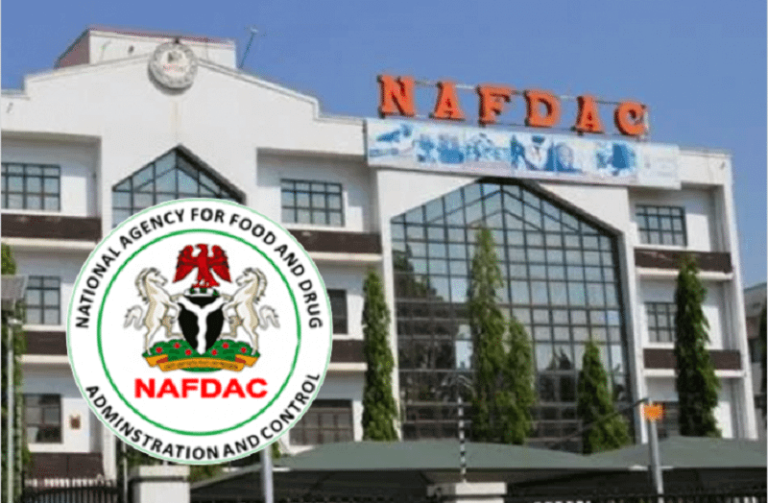
THE Federal Government of Nigeria has given approval to National Agency for Food and Drug Administration and Control (NAFDAC) to carry out necessary procedures for the assessment of a plant-based cough mixture as a possible treatment for Coronavirus disease (COVID-19) pandemic.

The directive was sent to NAFDAC DG, Mojisola Adeyeye, through a memo from the Ministry of Health with REF no. TCAM/077/I/6.

Also confirming the development is the personal assistant to President Muhammadu Buhari, Bashir Ahmad on his official Twitter page, on Friday.

This is coming as a follow up on The ICIR’s report on the Federal Ministry of Health plans to unveil a herbal formulation for the treatment of cough associated with COVID-19 and respiratory infections.

It also came amid growing calls to the government to consider local herbal mixture alternative as a possible cure to COVID-19 since there has been no vaccine yet to fight the virus.

Nigeria is not the first country to consider herbal medicine as an alternative treatment for COVID-19 patients.

Last Month, the Madagascan president, Andry Rajoelina, launched a herbal remedy that he said could prevent and cure patients infected with the virus. Countries like Tanzania, Comoros, Guinea-Bissau, and the Republic of Congo have indicated interest in the herbal remedy.

Meanwhile, the World Health Organisation (WHO), has said it did not recommend “self-medication with any medicines as a prevention or cure for COVID-19”.

There are “no short-cuts” to finding effective medication to fight COVID-19, WHO has said.


Wike arrests 14 men transporting cattle to Port Harcourt

THE Rivers State Governor, Nyesom Wike, has arrested 14 men caught transporting cattle from Adamawa state to Port Harcourt.

According to a press statement signed by Simeon Nwakaudu, Special Assistant to the governor on electronic media, the violators were arrested on Thursday at Rumuigbo in Obio/Akpor Local Government Area on the tip-off from concerned citizens.

One of the transporters, Ahmed Aliyu said they offered a bribe of N1,500 to security officials before they were allowed into Port Harcourt.

Trailer transporting cattle into Port Harcourt

Consequently, Wike ordered the prosecution of the 14 persons by Mobile Court under the Executive Order 6 signed in respect of the declaration of the state lockdown.

He also directed the State Ministry of Health to conduct tests on the 14 persons to ascertain their coronavirus status.

“This fight has nothing to do with individuals. The law must take its course. You are aware of what is happening and then some people want to illegally smuggle persons into the state,” Wike said.

“The Port Harcourt and Obio/Akpor are under lockdown and the law must be obeyed. The trailers and the cows will be auctioned tomorrow.

He lamented the compromise of the security officials responsible for enforcing the state lockdown after accepting bribe.

Some of the arrested transporters

“You heard them saying that they gave money to the security agencies before they were allowed to cross the border,” Wike noted.

COVID-19: Be wary of rising online scams, Magu cautions Nigerians

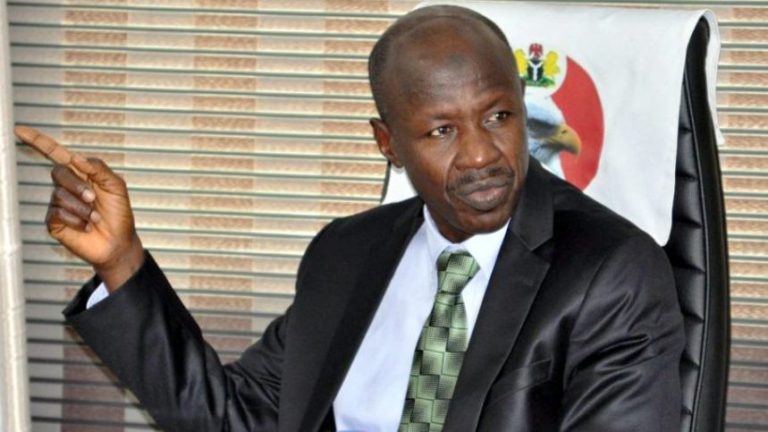
IBRAHIM Magu, The Acting Chairman of the Economic and Financial Crimes Commission (EFCC), has advised Nigerians to be wary of scammers who have flooded the online space and social media platforms, looking for who to victimise of their fraudulent act.

Magu, through Head, Kaduna Zonal Office of the Commission, Mailafia Yakubu, who spoke on his behalf disclosed this in Kaduna on Thursday.

During a live Hausa radio programme: “Chirin Kasanmu Ayau,” on Kaduna State Media Corporation’s (KSMC), he said, “Any phone call demanding for your bank information, especially your BVN, may be a scam because no bank will ask you for such.”

Additionally, he advised the public to shun online investments, which claim to pay huge percentages within a short period of time, stating that such investments may be fraudulent.

He further charged parents to properly guide their children and wards, on the use of the Internet in the face of lockdown.

Magu admonished parents on close monitoring of their children and wards, on the use of the Internet, as the ongoing stay- at-home may expose them to fraudulent activities.

“Some children will be busy on the Internet, which might lead to more harm than good,” Magu noted.

He also warned fraudsters to desist from criminal activities or be prepared to face the wrath of the law.

COVID-19: German government donates protective equipments to Nigerian Police

THE German government has donated personal protective equipment (PPE) to the Criminal Investigation and Intelligence Department of the Nigerian Police Force.

The German Deputy Ambassador, Helmut Kulitz handed over the equipments in Abuja on Thursday.

According to Kulitz, the equipments are to aid the NPF’s fight against Coronavirus (COVID-19) pandemic in Nigeria.

He added that the donation is part of a joint three-year programme with aim to strengthen the NPF on capacity building in forensics, processes and procedures for criminal investigation, human rights, as well as strengthening cooperation mechanisms.

“The NPF is at the forefront of ensuring that various measures taken by the government are respected and enforced, in line with Nigerian law and international human rights standards, and therefore needs additional protective equipment.” Kulitz said.

Part of the donated equipments includes, hand sanitisers, disposable coveralls, sanitizing spray, KN95 face masks, handheld digital infra-red temperature readers and disposable latex hand gloves.

The equipments were handed over to the Deputy Inspector General of Police, Anthony Michael Ogbizi, represented by DCP Umar Sanda.

The three-year programme with the Nigeria Police Force is sponsored by the German government with € 3 million.

The scheme which started in July 2019 is implemented by German Development Cooporation (GIZ).

The Nigeria Police authorities on Thursday also confirmed the donations in a tweet post on its official Twitter handle.

COVID-19: Buhari approves import duty, VAT waivers for critical medical equipment

President Muhammadu Buhari has approved the waiver of import duty and Value Added Tax (VAT) for critical medical equipment and supplies.

The Presidency said in a series of tweets on Thursday,  that the waiver was for a period of six months in the first instance.

According to the tweets, these waivers are the latest of the fiscal policies measures introduced by Nigerian government to combat the economic implications of the Coronavirus disease (COVID19) pandemic, and to support the strengthening of health infrastructure in Nigeria.


Read Also:

Similarly, Buhari directed the Nigeria Customs Service to ensure critical medical equipment and supplies were given expedited clearance at all times.

The President said this should be done in line with the standard operating procedures for the clearance of humanitarian and relief materials.

He noted that the measures to facilitate the importation of some COVID-19 essential medical supplies were in line with the indicative list recommended by the World Customs Organisation and the World Health Organisation (WHO).

He added that the list was reviewed by the Ministry of Industry, Trade and Investment, as well as the Ministry of Finance, Budget and National Planning.


Despite advice to try local cure, FG insists on not releasing COVID-19 patients to herbal practitioners

Despite being advised to  follow the steps of other Africa countries by trying some herbal medicines in treating Coronavirus disease patients, the Federal Government has insisted that no patient will be released to herbal practitioners to test the efficacy of their drugs.

Osagie Ehanire, Minister of Health made this known at the daily Presidential Task Force on COVID-19 briefing on Wednesday.

Ehanire said many traditional medicines being suggested as cure for COVID-19 have not been tested and might be toxic.

“On the cure of COVID-19, the traditional medicines that people said they had, we have referred them to Traditional Complementary Medicine Department of the Federal Ministry of Health and to the Nigerian Institute of Pharmaceutical Research and Development to evaluate.

“But some of them, who have written to me that they have medicines, have asked me to give them 10 patients so that they can cure them.

“But we don’t do it like that in medicine. We don’t have human guinea pigs. Anybody who knows that he or she has a cure must prove to me that it was tried and it worked,” he said.

It will be recalled that last month, the Madagascar’s President, Andry Rajoelina, launched a herbal remedy that he said could prevent and cure patients infected with the virus.

Countries like Tanzania, Comoros, Guinea-Bissau, and the Republic of Congo have indicated interest in the herbal remedy.

The World Health Organisation (WHO), has said it did not recommend “self-medication with any medicines as a prevention or cure for COVID-19”.

There is “no short-cuts” to finding effective medication to fight COVID-19, WHO said.

Mr Ehanire said all herbal medicines must go through the research cycle to ensure they are not toxic.

He also said such drugs will first be tested on animals before it can be certified.

“Of course, I am not giving them anyone to go and carry out their tests. That is why they have to go through the research cycle to make sure that their medicines are not toxic and you can also check the efficacy.

“Any kind of medicine can be toxic. The toxicity can be checked and you can also check the efficacy. And as you know, you have to try it on animals such as rats and mouse, before it is certified,” he said.

ECOWAS denies endorsing Madagascar’s herbal cure for COVID-19

THE Economic Community of West African States, ECOWAS, Commission has distanced itself from reports that the West Africa Health Organisation, WAHO, its health arm has endorsed herbal medicine developed by the Malagasy Institute of Applied Research, Madagascar, for COVID-19 treatment.

In a statement released by the regional body in Abuja, stating that several claims of COVID-19 cures have emerged from different parts of the world, only products shown to be effective through scientific study would be endorsed by the commission.

“We wish to dissociate ECOWAS and its health institution, West Africa Health Organization from this claim and to inform the general public that we have not ordered the said CVO medication,” the statement reads in part.

Madagascar had turned to herbal organics as a cure for the coronavirus disease as President Andry Rajoelina celebrated the herbal drug which contains artemisia at an African Union, AU, gathering.

The Indian Ocean island nation with a population of 26 million people, has 128 recorded cases of COVID-19 with no deaths.

The commission stated that WAHO was collaborating with relevant partners which include the World Health Organisation, Africa Centres for Disease Control as well as national, regional, and international research consortium to promote the scientific search for a cure.

“We are working with member states on some of the medications available for clinical practices and for use on a compassionate basis in selected severe cases.

“Some of the traditional medicine centres of excellence in the ECOWAS region are also currently investigating products of potential efficacy,” the statement reads.

WHO warns against alternative medicine which includes certain herbal therapies and teas for treating or preventing COVID-19, saying there was no evidence they work and some may be unsafe.

Stephen Barrett, a retired psychiatrist who operates Quackwatch, a network of websites about unproven medical therapies says unless there’s a scientific evidence-based approach accompanies the herbal medicine it can’t be accepted as valid.

“It’s the responsibility of those who make a herbal drink to show the scientific evidence that their claims are valid,” he said.

ECOWAS says WAHO remains committed to promoting rational traditional medicine practices and products in the region since it is an institution that has worked consistently for years with the member States to scientifically investigate plant medicines of proven efficacy.

The commission also added that such products were documented in ECOWAS Pharmacopoeia of Traditional Medicines, the second edition of which would be published in the next few weeks.