THE World Health Organisation (WHO) has warned against the use of immunity passports being considered by countries to be issued to people who have recovered from Coronavirus disease (COVID-19).
With the global death toll from the Coronavirus pandemic beyond the 200,000 mark on Sunday, the global health body said the move by some countries to re-open their economies by granting “immunity passports” to recovered COVID-19 patients was unscientific.
In a scientific briefing note, the WHO warned that there was currently no evidence that people who have recovered from COVID-19 and have antibodies were protected from a second infection.
It further warned that the passports could pose a health risk by providing unjustified assurances of protection to individuals and their communities.
“At this point in the pandemic, there is not enough evidence about the effectiveness of antibody-mediated immunity to guarantee the accuracy of an ‘immunity passport’ or ‘risk-free certificate.
“People who assume that they are immune to a second infection because they have received a positive test result may ignore public health advice. The use of such certificates may, therefore, increase the risks of continued transmission,” WHO said in the note.
Several countries have suggested a gradual return to work, as restrictions imposed on movement to curb the spread of the virus have crippled economies around the world.
Chile has also announced plans to give “health passports” to patients who have recovered from COVID-19 if checked for the presence of antibodies, they would be allowed to go back to work, officials stated.
Tarik Jaserevic, WHO spokesperson in an interview said the idea of granting an immunity status was unscientific.
“We understand the intention of trying to see who can go safely back to work or who could be eventually risk-free of infecting other people but, unfortunately, from a scientific point of view, we simply don’t know if a person who has been infected by the Coronavirus gets this immunity, and if a person gets this immunity, how long it’s lasting,” he said.
Confirmed cases of COVID-19 infections across the world rose to 2.86 million and deaths rose beyond the 200,000 mark which has doubled since April 10.
Europe is the hardest-hit region recording 122,171 Coronavirus deaths, while the US toll rose by 2,494 over the past 24 hours to hit 53,511 deaths.
The number of confirmed COVID-19 cases in the United States also rebounded by nearly 46,000 to 936,293 since Friday.
In Italy, the number of COVID-19 fatalities rose to 26,384, Spain 22,902, France 22,614 and the United Kingdom 20,319.
The world is on tenterhooks as companies and governments are racing to develop treatments and, eventually, a vaccine for the virus, which first surfaced in China in late 2019.
WILLIE Obiano, Governor of Anambra State, has ordered the suspension of the 14-day lockdown imposed in the state to contain the spread of Coronavirus disease (COVID-19) pandemic as he contemplates reopening of schools and offices.
Obiano made this pronouncement during a broadcast to residents of the state on Saturday evening.
“When to re-open the schools as well as when civil servants will be allowed to go back to offices will be announced soon,” he stated.
The governor also said religious services should resume across the state as he advised adherence to World Health Organisation (WHO) recommendations.
“With regards to religious groups, leaders of the church should ensure that worshippers comply with the standards protocols of COVID-19 which include wearing of face masks to church, use of hand sanitizers, social distancing and regular washing of hands,”Obiano said.
He stated that the mode of observation of church activities shall be left at the discretion of church leaders.
“Church leaders should decide how best to conduct mass and service in strict adherence to the principles of social distancing to ensure that worshippers are not endangered,” Obiano said.
“Please note that there should be no crusades and vigils for the time being.”
He added that on Monday 27, he would meet with market leaders for extensive discussions.
“I will meet with market leaders on Monday, 27th April, for further discussion,” he added.
As at the time of filing this report, Anambra State has recorded only one case of COVID-19 according to data from the Nigeria Centre for Disease Control (NCDC).
The Nigeria Governors’ Forum (NGF) has asked President Muhammadu Buhari to include compulsory wearing of facemasks for all Nigerians, interstate free movement with restrictions, and lockdown of flights in his next presidential announcement on Coronavirus disease (COVID)-19 pandemic.
The NGF also demanded that over night curfews and interstate lockdown excluding movement on essential supplies such as foods, beverages, medical and pharmaceuticals, petroleum supplies and agricultural products be also included in the president’s address.
The demands were contained in a letter signed by Kayode Fayemi, Chairman of the Forum and Governor of Ekiti State addressed to Boss Mustapha, Secretary to the Government (SGF) and Chairman, Presidential Task Force on COVID-19.
Fayemi explained that the demands in the letter followed a teleconference meeting with Vice President Yemi Osibanjo on April 22.
He stated that it was agreed during the meeting that the NGF would be allowed to articulate issues it would want to be included in the next presidential pronouncement on the COVID-19 so as to have uniform and coordinated policy at both national and state level.
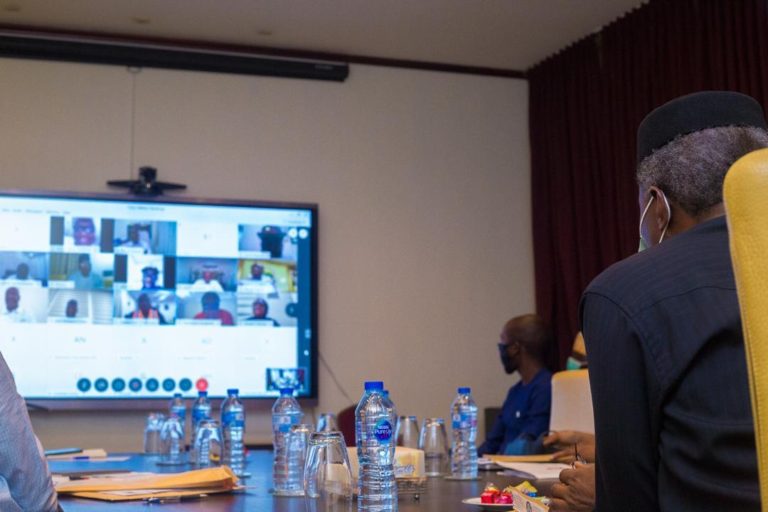
The meeting which was chaired by the Vice President focused on how to coordinate the plans of the states with those of the Federal Government on management of the COVID-19 pandemic.
It would be recalled that President Buhari on March 29, after due consultations with the PTF ordered a 14-day lockdown in Lagos, Ogun states and the FCT which was extended by another 14 days on April 13.
Some states have followed suit by shutting their boarders to all intending travellers, imposing ban on religious and large gathering and other measures listed by health authorities.
According to the Nigeria Centre of Disease Control (NCDC), Nigeria now has a total of 1, 095 confirmed cases of COVID-19, 208 discharged with a death toll 32 persons.
THE Federal Inland Revenue Service (FIRS) has appealed to some sectors of businesses flourishing during the lockdown to cooperate and pay their taxes before the due date.
Executive Chairman of the FIRS, Muhammed Nami, in a press statement, urged the business owners who, according to him, are ‘experiencing boom’ in their businesses to meet their tax obligation before the due date.
“I wish to appeal to a section of taxpayers, whose sectors are experiencing a boom and significant increase of income at this point in time for a high level of cooperation in payment of their taxes,” Nami said.
He added that the agency’s appeal is part of measures to ease the economic outcome of the pandemic on taxpayers and the government.
The Chairman listed Telecommunication companies, E-Commerce, Supermarkets, Financial Institutions, and manufacturers of certain products as business enterprises that have seen increase in patronage during the ongoing COVID – 19 lockdown.
According to Nami, the listed business owners are experiencing an increase in number of transactions due to the lockdown in many parts of the country.
He urged the business owners to make ‘special arrangements’ in paying their taxes so as to reduce the burden of revenue generation on agencies such as FIRS.
“They may consider, for instance, a situation where they can commence payment of their annual returns earlier the due date apart from their normal obligations,” he noted.
THE Coronavirus disease (COVID-19) pandemic has disrupted some of the world’s largest economies, killed thousands of people, weakened the health care system of many nations but somehow, it has also improved the fashion sense of Babajide Sanwo-Olu, Governor of Lagos and Ben Ayade, Cross River State Governor.
Since the outbreak in Wuhan, China in December 2019, COVID-19, which spreads through droplets has made necessary the use of face masks and other personal protective equipment, at first for the frontliners but now for the general public.
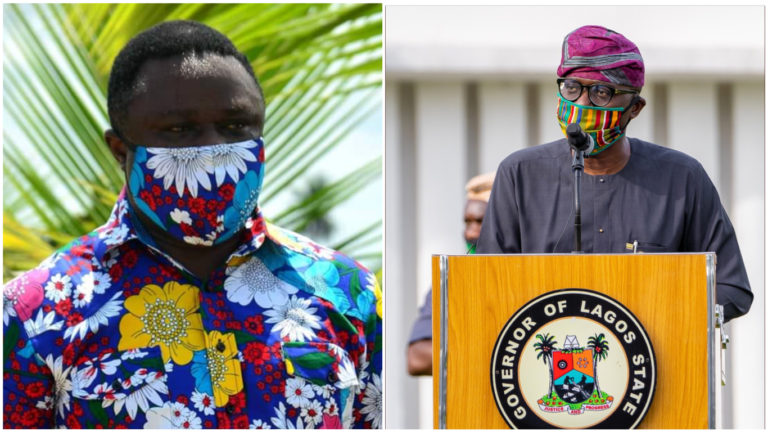
The use of surgical face masks which started as a necessity to protect people from contracting the novel virus is gradually becoming a fashion accessory and the likes of Sanwo-Olu and Ayade are spearheading the movement in Nigeria.
Asides championing the fight against COVID-19 in their states, both governors have made headlines for embodying a new form of sensitization; by wearing fashionable face masks in a bid to encourage its use among their residents.
For Ayade, Governor of Cross River State, who is a microbiologist, the fight against COVID-19 could be won if people religiously wear face masks.
Ben Ayade – Governor of Cross Rivers wearing fashionable face masks CREDIT: Twitter
In fact, the governor, once said there is no need to observe social distancing in preventing coronavirus, once citizens wear face masks in public.
“You don’t need social distancing when you are properly protected because for mucal gland that secretes the mucus and the mucin has already formed a network of coats that, of course, attack the virus.”And to enforce its use, he ordered that defaulters would be fined N300,000 if caught.
Ayade’s belief in the effective use of face masks has birthed the mass production of face masks made of ankara in Cross River Garment Factory in Calabar, Cross River State.
With materials sourced from Abia State, the ankara face masks are said to be made with 100 percent cotton and are fast gaining ground in the state that is yet to record a single case of COVID-19.
On the other hand, Lagos state which has recorded the highest number of COVID-19 (657) cases in Nigeria only just recently mandated the use of face masks.
To encourage its use, Sanwo-Olu, the governor of Lagos State adopted the use of fancy, colourful face masks to express individuality as well as promote a cause.
Babajide Sanwo-Olu – Governor of Lagos State wearing fancy face masks Photo: Twitter
While facemasks are the ultimate symbol of protection and safety in a pandemic, its emergence as a fashion statement is gradually becoming a global phenomenon.
PROFESSOR Charles Soludo, former governor of Central Bank of Nigeria, CBN, and a member of President Muhammadu Buhari’s Economic Advisory Council in an article has faulted Africa’s response to the Coronavirus disease(COVID-19) by issuing lockdowns without creative solutions suited for its people as an ineffective approach.
He described the lockdown/closure of the borders in Africa as ineffective posing a two-pronged problem that has the potential to worsen the continent’s health and economic challenges if not handled with creative solutions.
“All lives matter and African governments must do everything to protect or save every life from the pandemic. The challenge is how. Africa faces two unsavoury options: the conventional template, including lockdowns versus heterodox (creative local), approaches without a lockdown,” he said.
According to him, lives would be lost in both approaches as Africa has no credible exit strategy aside from the lockdowns that have no reasonable timeline which is a suicidal approach to its economy.
“The idea of a lockdown (and border closure) implies that you will continue to do so (with extensions) until such a time that you are satisfied that the spread of Covid-19 has been arrested or on the decline (with the possibility of imposing another round of lockdown if new infections surge).
“The length of time required for such lockdowns to ensure “effectiveness” in arresting the spread would make it near impossible in much of Africa. If the strategy is to lockdown until infections stop/significantly decline or so, then we would have a suicidal indefinite waiting game,” he stated.
Professor Soludo outlined the problems associated with the disease which has made it difficult for African countries to effectively address because of its economic capacity and cultural disposition to communal living.
“African states cannot pay for lockdowns. Many countries depend on budget support from bilateral and multilateral donors, and with its acute balance of payments problems. Most are now begging for debt relief and applying for urgent loans from the IMF and the World Bank. In Africa, both the governments and the people are begging for “palliatives”.
“The most that African states and their private charities can do is “photo charity” with much fanfare, drop a few currency notes or grains here and there for some thousands when millions are in desperate need, just to be seen to have “done something”, he said.
In a report, the World Bank warns that Sub-Saharan Africa, the world’s largest rice-importing region, could be heading from a health crisis straight into a food security crisis due to the disruptions caused by the coronavirus.
The former CBN governor stated that the African continent cannot identify its vulnerable to benefit from its “palliatives” because of its inability to harness a credible demographic data of its citizens.
“At a fundamental level, most African states do not have credible demographic data to identify and target the most vulnerable. In the western societies from where we copied the lockdown/border closure, their citizens are literally paid to stay at home (by silently dropping monies into their accounts plus other incentives),” he said.
On the social distancing, Soludo highlighted it is impractical to practice in Africa because social clustering amongst people on the continent has an economic advantage.
“From the shanties in South Africa’s townships to the crowded Ajengule or Mararaba in Abuja/Nasarawa, or Cairo or Kinshasa to the villages and poor neighbourhoods in much of Africa, social clustering, not distancing, is the affordable, survivalist culture.
“The question is the end game for a poor society such as Africa? New infections have re-emerged in Wuhan, and both Singapore and South Korea are going back to the drawing board. Since we cannot sustain lockdowns indefinitely or even until the spread declines, it means that we would sooner or later remove the restrictions. What happens then?” he queried.
Without adaptable sustainable solutions suited for the African continent, Soludo said opening the borders of the African continent is a smart solution consistent with Africa’s financial and social realities.
“Our model should be learning-by-doing while mainstreaming basic common-sense tips such as the mandatory wearing of masks in public, basic hygiene, disinfection of all open markets every early morning and all places of public gatherings, practical social distancing tips, etc,” he affirmed.
Stating that the pandemic was an opportunity for Africa to exploit its economic survival options without putting the lives of people on hold.
“Can you imagine the thousands of jobs to be created in producing face masks, hand sanitizers, gloves, etc for 1.3 billion people? But this cannot happen under a lockdown. New opportunities! Everyone wants to live, and Africans will learn and adapt quickly.
“Staying at home will become a choice, not a compulsion. The slogan could be: “stay at home if you can, or smartly go to work if you must”. We can only defeat the challenge by confronting it, and not by playing the ostrich only to still confront it the day after,” he said.
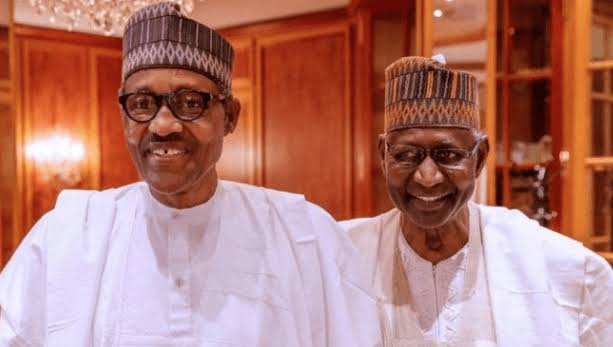
Many people are troubled by what appears to be a carefully coordinated cascade of cloying, revisionist, and, in some cases, outright mendacious posthumous rhetorical rehabilitation of Abba Kyari by people who had misled their readers into seeing them as disinterested sentinels of the wielders of power.
The summary of all the gushy Kyari tributes is basically this: Abba Kyari was an uncommonly kind, deeply intellectual, obsessively bibliophilic, fiercely loyal, hardworking, cosmopolitan Nigeria who had more loyalty to Nigeria than he had to his primordial ethnic, regional, or religious constituencies, and who didn’t have even a fraction of the power and influence often attributed to him.
Every empirical evidence that contradicts the torrents of synchronized, saccharine, superhuman portraits of Kyari, his friends want the world to believe, is mere conspiratorial whisper that is wholly dissociated from reality.
Kyari, his friends imply, was a nearly flawless saint. Lack of access to him caused some people to unjustly demonize him. But his confidence in the favorable judgement of history—and of his boss, to whom he was loyal like nobody had ever been in human history—restrained him from correcting reputationally injurious falsehoods against him that took firm roots in the media and in the national popular imagination.
If my recapitulation of the tributes strikes you as annoyingly hagiographic, exaggeratedly mawkish, and overly disingenuous, it is because they really are. And they are dangerous for at least three reasons.
One, there is no one on the surface of this earth who is that perfect. Most people are smart enough to know that. People who peddle a narrative that a human being is untouched by any stain, and that evidence to the contrary is a consequence of “sponsored attacks,” are two-bit spin doctors. It’s worse if they’re journalists.
Two, the minority of people who believe effusive, sanitized, pumped-up portraits of people often suffer self-esteem deficits. They vicariously compare themselves to the perfect person and come up short. They can’t relate to perfection because perfection is not a human quality.
Third, when unassailable and irrefutably firm evidence emerges that contradicts the unrealistic idealization and deodorization contained in posthumous tributes, the reputation of the target of such tributes falls precipitously and irrecoverably.
Nonetheless, I know why people who personally knew Abba Kyari have chosen to venerate him after death. Personal access reveals a part of people’s personality traits that is often concealed to the public.
The English proverb that says “Familiarity breeds contempt” is not always true. Familiarity can also activate warmth and deep connection. It allows some people to become captives of other people’s charm offensives.
In the late 1990s, a senior northern journalist who used to be censorious of Ibrahim Badamasi Babangida finally met him for an interview. That meeting radically overhauled his opinion of the general. He told me—and other young reporters—that anyone who wanted to sustain his hatred and resentment of IBB should not get close to him. “You might go from hating him to loving him,” he said. For some reason, those words have stuck in my mind like glue.
Personal familiarity with people changes perspectives about them. I can guarantee that people who have met Boko Haram leader Abubakar Shekau have a view of him that departs radically from the mainstream characterizations of him.
This might seem like a wild stretch, but people who want to engage in a guilt-free denunciation of Shekau for all his atrocities should do so now while he is alive because in the aftermath of his death, we might be deluged with a cornucopia of syrupy tributes from people who had personal access to him and who can attest to his charm, warmth, humanity, faculty of humor, pan-Nigerianism, and intolerance to injustice. We might read how he was misunderstood and maligned by people who didn’t know him.
No one—not even Shekau, Hitler, Mussolini, etc.— is entirely bad. Personal, often privileged, access to otherwise notorious, reviled personages allows us to see their good sides. But should journalists court and cultivate the friendship of people in power to the point of becoming their spin doctors?
Anyone with even the most rudimentary familiarity with the ethics of journalism would know that journalists should not be chummy with the people they cover or comment on. The Society of Professional Journalists Code of Ethics enjoins journalists to “Refuse gifts, favors, fees, free travel and special treatment, and avoid political and other outside activities that may compromise integrity or impartiality, or may damage credibility.”
Many of us who write critical commentaries about governance have rejected opportunities to have privileged personal access to the people we write about. For instance, between 2018 and 2019, I repulsed invitations to meet with Atiku Abubakar or to join his campaign.
Similarly, a few northern governors and a minister had told me they had arranged a meeting between Buhari and me to “reconcile” our “differences.” I politely rebuffed their overtures. Sometime last year, a friend who is close to the inner circles of power in the Villa told me Abba Kyari had proposed to give me a “juicy” appointment that I couldn’t resist but that a minister and a top Buhari aide who know me personally said I would not only reject the appointment, I might disclose it publicly.
I don’t know how true this claim is, but the minister and the presidential aide certainly know me well enough to know that my criticism of the government isn’t animated by self-aggrandizement. If I wanted to be wealthy from access to people in government, the Buhari regime is one government where I would have “hit it big.”
I know more people at close quarters in the regime than I ever did in any government in Nigeria. I admit, though, that it is easy for me to sustain my independence and spurn invitations to partake in the looting of the public treasury because I have an independent source of livelihood as a university teacher in America.
You can’t say the same of journalists who work for newspapers that don’t pay salaries and that brazenly tell their reporters and editors to use their work ID cards as their “meal tickets.” For such reporters and editors, privileged personal access to people in power is an existential necessity. Their very survival depends on it.
The flurry of frenzied posthumous canonizations of Abba Kyari—and the revelations of the privileges that access to Kyari conferred— by supposedly detached, non-partisan journalists speak to the death of any pretense to ethical journalism in Nigeria.
Nonetheless, I’m generally an advocate for posthumous kindness to the dead, not so much because of the dead for whom such kindness is actually pointless but for the survivors of the dead. I lost my wife to a car crash in 2010. I can’t tell you how much the kind words written about her sustained me in my most difficult moments.
Whatever Abba Kyari was, he left behind a wife and children who didn’t make for him the choices that made him a byword for scorn and opprobrium. His family members deserve to read celebrations of his good deeds from people who are familiar with them.
In my December 3, 2011 column titled “Femi Kusa’s Perverse Dance on Ibru’s Grave,” I wrote that “it’s distasteful and insensitive to the survivors of the dead to so carelessly traduce their departed kin just days after his passing. Of course, clearly evil people who brought death and misery to large swaths of people are exempt from this consideration.”
Abba Kyari was a public official who directly influenced public policy, whose choices had consequences for millions of Nigerians. I have no problems with people who traduced him in death even though I wouldn’t do that, but I also have no problems with people who have chosen to celebrate the good sides of him that weren’t available to the public.
I also have problems with the demonization of people who are giving expression to their genuine angst over the untoward choices he made when he was alive. Kyari might not have been the devil, but he was no saint either.
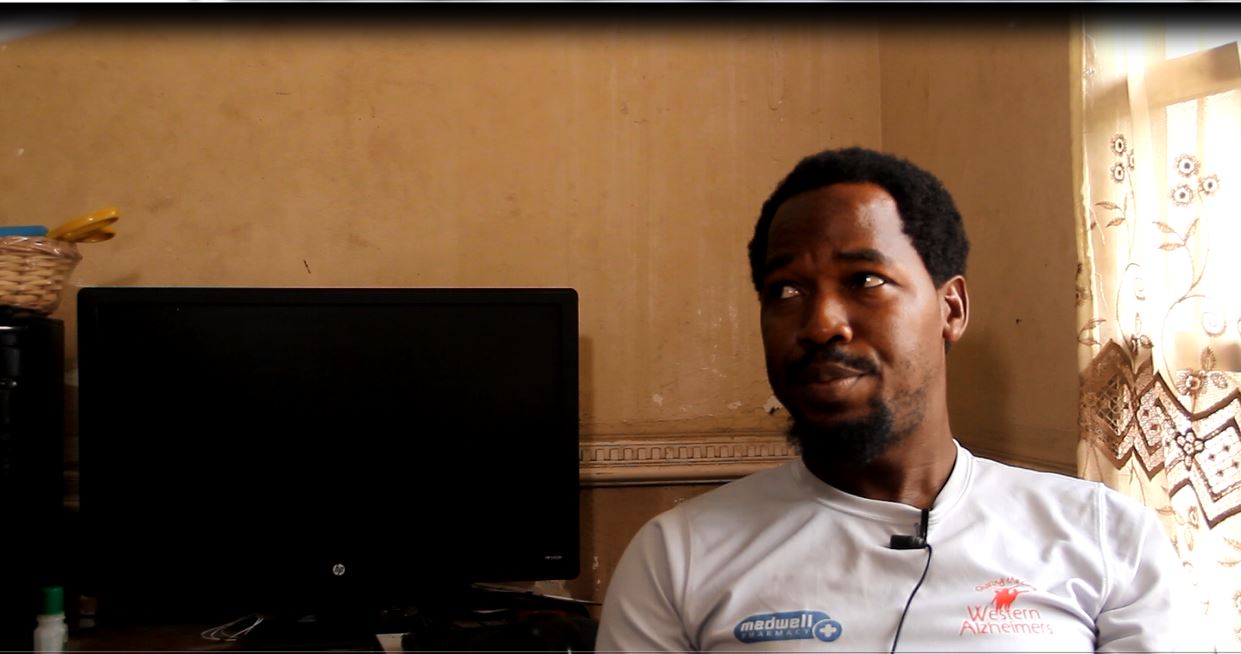
KEHINDE Williams was once a Uber taxi driver in Abuja, Nigeria’s capital, despite being a university graduate. After the outbreak of Coronavirus disease (COVID-19) pandemic in the country, he is now jobless and hopeless.
Kehinde William, an uber driver in Abuja Photo credit: Paul Owolabi/TheICIR
For Williams, life became difficult shortly after President Muhammadu Buhari announced a 14-day lockdown on March 29 in Lagos, Ogun states and Abuja to contain the spread of Coronavirus disease (COVID-19) pandemic.
When he graduated from Adekunle Ajasin University, Akungba-Akoko, Ondo State some years ago after studying of Psychology, the young Williams, now in his early 40s was full of hope of a brighter future, particularly securing a well-paid job. But he was pushed to becoming a taxi driver in Abuja when his efforts at landing a white-collar job became futile.
“I came to Abuja to search for a job but ended up being a taxi driver,” he told The ICIR.
He was about to be admitted in the hospital when approached by The ICIR. Williams was diagnosed of Typhoid fever since the day lockdown imposed by the president was extended by another 14 days.
Sadly, his situation became worse like several others in that line of business. The COVID-19 global pandemic has crippled his only source of survival, his savings depleted and, still literally struggling to survive. Yet, the owner of the taxi he was operating expected some returns.
“Yesterday made it two weeks that I dropped the car to the owner due to low patronage and the pandemic,” he lamented.
“That was my only source of income,” he said, adding that despite not having a nuclear family, there are his siblings, including his aged mother that he caters for from his earnings as a Uber taxi driver. With the lockdown order, he said their hopes are all hanging in the balance.
“All my savings have been depleted because I have no other source of survival. I have spent so much money even the remaining cannot last me for a week.”
But Williams is not alone in this predicament. Isa Daniel, a father of three who is also an Uber driver is facing the herculean task to feed his family.
Isa Daniel, an uber driver in Abuja Photo credit: Paul Owolabi/TheICIR
Daniel said since the stay at home order, he had parked his taxi with no alternative to meet the immediate needs of his family. Sadly, he has run out of food items bought in the wake of the lockdown.
”Something is happening to me and my family that I can’t even explain,” he told The ICIR.
“ I have exhausted all the money in my savings, the food I bought has finished, I am thinking if there is a way out, and I don’t know yet.”
According to him, the extension of the lockdown is a terrible experience for him and his family.
”If the government really wants to help us they should give money through the Bank Verification Number (BVN) and not saying they gave money to people we cannot see”.
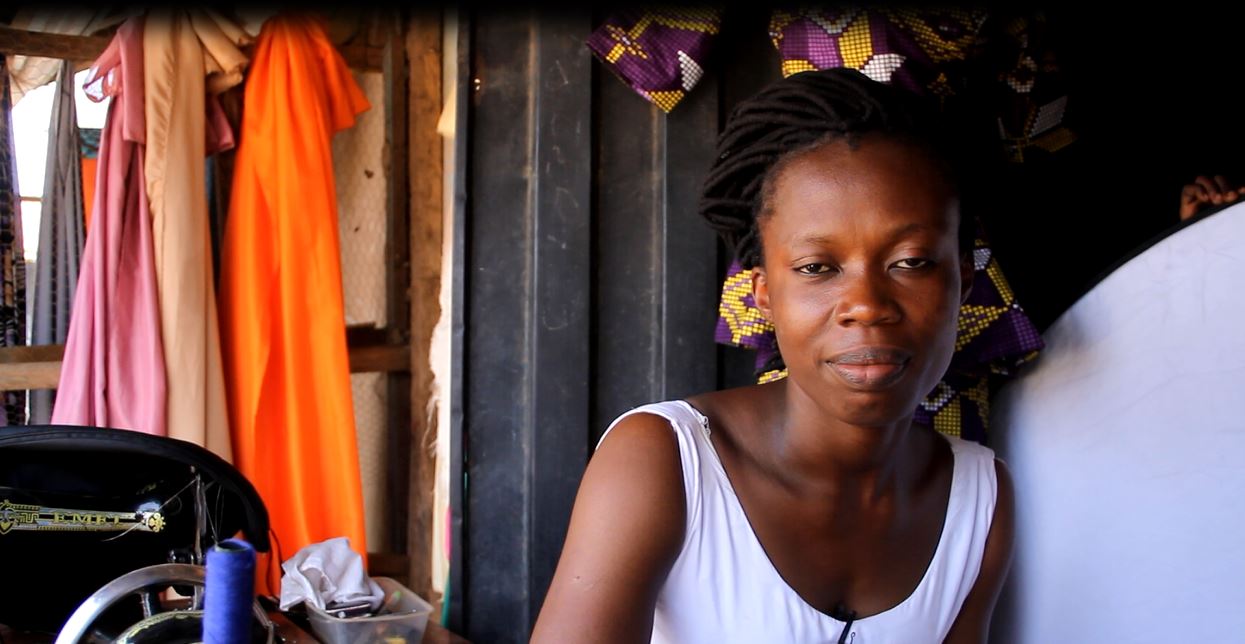
Survival has been tough, I only visit my shop so as not to commit suicide —Tailor
Abigal Imobi, a tailor in Abuja Photo credit: Paul Owolabi/TheICIR
Abigal Imobi, a fashion designer whose shop is situated in Gbagy village, Karu area of Abuja is battling depression and only goes to her shop in order not to commit suicide as according to her, coping with life and taking care of her aged mother has been difficult due to the lockdown.
Imobi said prior to the lockdown, clients who brought their clothes for stitching had refused to pay due to economic hardship induced by the COVID-19 lockdown.
But for her resilient, she said she would have committed suicide.
“…I tried calling my customers to send me money for the clothes, their response was that the money they have they also need it to eat and take care of their family,” she said when asked how the lockdown has affected her business.
“You can’t expect someone that has three or four thousand at home to use and come and collect clothes, while the family members are hungry.
“I am still coming to my shop so I don’t commit suicide at home or do something bad, the more you stay indoors the more you get frustrated.”
According to her, a man collapsed and died few days back allegedly due to hunger and frustration from the lockdown.
“We are doing our best to obey the government, the government too should help us; we can’t afford one square meal at times, talk more of three square meals,” she said.
“Giving people a measure of rice would not help Nigerians in times like this, with time there would be robbery everywhere in the neighbourhood”.
The ICIR probed further how Imobi intends to manage through the period, with her aged mother, she said the government would need to assist otherwise there might be more casualties.
She added that some people within her residential area asked residents to write names a week earlier, for possible intervention but no feedback has yet come through.
“It is really painful that the government had to extend it without giving people anything, you can’t send someone to the farm without giving the person a cutlass.”
I’m tired of borrowing – motor mechanic laments
Kehinde Olumogunje, a car mechanic in Abuja Photo credit: Paul Owolabi/TheICIR
Unlike others, Kehinde Olumogunje, a car mechanic has been living on credits to support his family. He resides in a one-room apartment with his wife and two children around Tudunwada, a slum in Lugbe axis of Abuja.
“That I am still surviving up till now is the grace of God,” Olumogunje told The ICIR. “It is very hard now that I can’t even buy anything on credit, things have gone worse for me.”
“I can’t get parts to fix people’s cars, so how do I get money for myself, some customers call me to come to fix their cars but no way to reach them.”
He explained that he had to manage with his savings which he said is already exhausted.
When The ICIR asked Olumogunje, if he has gotten any palliative from the government, his response was No! “I have not gotten or seen anybody, I only heard a rumour that if I have a BVN I would get.”
Where do I run to in search of food – metal fabricator
Timothy Abass, a fabricator in Abuja Photo credit: Paul Owolabi/TheICIR
Timothy Abass, a father of four who is into fabrication spoke on how he has been struggling to feed his family, due to the lockdown. He resides in the Kuje axis of the Federal Capital Territory.
“My shop is currently under lock and key, I live from hand to mouth because all the food at home has finished, surviving another two weeks is a big problem that I don’t know how,” Abass lamented
“I don’t know where to go and get food, I have not done anything since the lockdown.”
“People that even have money are not giving jobs out anymore, they are scared that if they give us money we might run away,” he added.
When asked if he has received his own palliatives from the government he said; “I haven’t seen anything from the government no foodstuff nothing, this government are just deceiving us.”
If the lockdown continues I would be affected seriously–Barber
Joshua Oyedoke, a barber in Abuja Photo credit: Paul Owolabi/TheICIR
Joshua Oyedoke who is also known as Akala, a father of four and a barber, living in a one-bedroom apartment in Kwali area an outskirt of the FCT lamented heavily that things have been so rough for him, he can’t work to feed his family and the extension of the lockdown would seriously affect him and his family.
“They did not allow me to open my shop, there is no market and everything is on shutdown. If things continue like this it would affect me,” Oyedoke said.
To feed his kids, he said, has been a tough one and needs the intervention of the government.
“My children are crying of hunger, it is not easy at all, at all,” he said in an emotion-laden voice.
When asked by The ICIR if he has received his own share of palliatives Oyedoke responded, “I have not seen anything from the government.”
I have to make refunds to customers – photographer
Temitayo Samson, a photographer in Abuja Photo credit: Paul Owolabi/TheICIR
Temitayo Samson, an unmarried photographer and videographer who resides in the Apo area of the FCT where he also has his small studio inside his apartment said the money he had received for jobs was returned due to cancellation of planned events.
“I am faced with the challenge of refunds to my customers which has left me with nothing to survive till the lockdown is over, even what I had has been taken back by clients,” Samson said.
”My business has been on a total standstill, I don’t get jobs everybody are celebrating indoors,” he added.
According to him, he urgently needs to work or if the government can help him with a token it has promised Nigerians.
When also asked by The ICIR if he has received his own share of palliatives he said;“I haven’t seen anything, I keep checking my phone for it.”
“Surviving the weeks has been tough I must say and an extension is more hardship for me,” he added.
If I don’t go out daily, I can’t get something to feed my family – Phone seller
Jude Ibe, a phone seller in Abuja
Photo credit: Paul Owolabi/TheICIR
Ibe Jude is a small scale businessman and a father of four children that deals on phones at GSM village Abuja. He narrated how his inability to go to his shop has made things difficult financially for him and his family.
“The nature of my business is without going to the shop, I can’t see anything to feed my children.”
“I need to go back to work, I don’t have money to feed my family except for the small petty trading my wife is doing in the house,” Jude said.
“An extension of the lockdown would affect me if they want to lock us down let the palliatives get to all of us, we are facing difficulties.”
Jude also confirmed to The ICIR, that he has not received anything in form of palliatives from the government.
The work is not there and nobody to pay – IT expert
Abel Abukar, an IT expert in Abuja
Photo credit: Paul Owolabi/TheICIR
Also, Abel Abukar an Information Technology expert explained the challenges of his kind of job where he has to work and get paid and not a salary kind of job.
“I run a private organisation that depends on how we work, the money is not coming because you work and you get paid, now the work is not there nobody to even pay, so you end up eating up what you have in store,” Abukar said.
“Its been funny and very challenging, but then what do we do.”
“I am just managing to see if I would be able to cope with the two weeks, the government talks about palliatives we have not seen any yet, we just see a lot of things flying in the media”. he added.
If it continues I would have to cut my staffs’ salary –Financial Investor
Moses Anayo, a financial investor in Abuja
Photo credit: Paul Owolabi/TheICIR
Moses Anayo who is the Managing Partner at Ceder Worth Investments narrated how his business has been without income for three straight weeks and would have no choice than to cut his staffs’ salary if the lockdown continues for a while.
“We are still going to pay our staffs but if this lockdown continues we would have to do some cut down in salaries because our income has gone down drastically at this point,” he said.
“It hasn’t been really easy as all my business are shut down and all my staffs are at home doing nothing.”
“We can’t give out loans, we can’t do training,” he added.
What I spent in the market would last me for three months – Civil servant
Timileyin Adeleye, a civil servant in Abuja
Photo credit: Paul Owolabi/TheICIR
Timileyin Adeleye, a civil servant who lives at the Wuse axis of the FCT lamented bitterly on the amount he had to spend during the panic foodstuffs pilling prior to the lockdown.
“Before the lockdown, we had to make some panic foodstuffs pilling, the amount of money I spent in the market would last me for three months, because the prices tripled.”
Adeleye said, “before the government locked people down they should have made adequate arrangement for people, announcing a lockdown 24hours to the time of the lockdown without giving us time to prepare was not the right thing to do.”
“The government has the BVN of everyone, all the money they have been spending, to me its audio money,” he said.
“Spending N11 billion in 24 hours on palliatives, I have not received an alert, have you received an alert? he asked The ICIR reporter.
“A relative in Kwara State said his household was given a peak milk tin of rice to eat as palliative, if you want people to obey your lockdown, make life bearable for them,” Adeleye said.
However, Sadiya Farouq Minister of Humanitarian Affairs and Disaster Management, disclosed on Tuesday, April 21 in Abuja that the Federal Government was set to expand the social register for palliative distribution by employing digital models including the use BVN.
One-sided social intervention
The Federal Government as part of palliative measures to cushion the impacts of the lockdown on Nigerians initiated distribution of palliatives and conditional cash transfer through the National Social Safety Nets Coordinating Office (NASSCO). It is executing the scheme through the National Social Register for poor and vulnerable households at the states.
As of Friday, 10 April 2020, it has captured 2.64 million households and 11.04 million individuals.
Going by the social register and NASSCO assertion, more than 11 million Nigerians might benefit from the Federal Government’s COVID-19 response measures targeted at the poor and vulnerable.
However, residents who spoke to our reporter in separate interviews revealed that they had not received anything in form of palliatives from the government.
According to the World Health Organisation (WHO) each year an estimated 40 million people are in need of palliative care, 78 per cent of whom live in low- and middle-income countries.
Palliative care needs to be provided in accordance with the principles of universal health coverage, the WHO reported.
“All people, irrespective of income, disease type or age, should have access to a nationally determined set of basic health services, including palliative care.”
The WHO report indicated the need for financial and social protection systems as a form of human right to palliative care for poor and marginalized population groups.
For instance, in the United States, it was reported that Congress pushed through a $2 trillion stimulus bill on March 20 and some Americans could expect financial support from the government to cope with the economic devastation stemming from COVID-19 crisis.
Those payments are expected to be $1,200 for individuals, or $2,400 for those who are married and file income taxes jointly. It also includes $500 per child.
Also in Canada, the government is to spend C$107 billion ($75 billion, £64 billion) in emergency aid and economic stimulus to assist Canadians struggling financially.
The bill would give C$2,000 a month for the next four months for people who lost their job because of COVID-19.
It would apply to people who are quarantined. Those helping a sick family member, and those that have been laid off or have not received payment from their employer.
All these from the developed nations appeared transparent but Nigeria’s case seems different.
THE Oyo State Government has rejected and returned a total of 1,800 bags of pest-infested rice back to the Federal Government, The ICIR can confirm.
Dr. Debo Akande, Executive Adviser to Governor Seyi Makinde on Agribusiness, disclosed this in Ibadan, the state capital after the state committee on distribution of relief materials and palliatives inspected the warehouse were the grains were kept.
Akande said the committee found out that the rice was unhealthy for human consumption.
“The state government discovered that the grains of rice were infested by weevil and other pests, and took the decision in the interest of residents of the state,” he said.
“We initially assumed that it was just some part of it that was infested but some commissioners from five or six ministries came with me to inspect and we realised that it is not just some but quite a lot of them were infested.”
Akande however said the return of the 1,800 bags would not affect the state’s distribution of palliatives, noting that the state has purchased enough rice for distribution to the citizens.
“And it was in the process of further inspection, that we discovered that almost all the grains of rice has been infested by weevil and other pests,” he said.
“On that basis, we formed a committee to inspect it again so that we are really sure of what we have received and we think this rice is not consumable for human being.
“As such, such material cannot be distributed as part of palliatives in the state. We don’t want to start providing solution to a problem and then create another problem. We have done random selection we see that similar thing applies across board and the committee has agreed to return to its source. And if there is any replacement of good quality that will be sent to us, we will be glad to receive it.”
On Monday, the Federal Government had donated the 1,800 bags of rice to Oyo, Osun and Ekiti states.
Helen Ngozi, Area Controller of Oyo and Osun Command, of the Nigeria Customs Service, handed over the 1,800 bags of rice each to the governments of the three states, while she handed over 600 bags to Ondo State Government.
She said the command received the items from “the Federal Government via the Federal Ministry of Humanitarian Affairs and we brought them here to the warehouse.
Earlier, Bashir Ahmad, an aide to President Muhammadu Buhari on Digital Media, tweeted that the president has directed the Nigeria Customs Service to release 150 truckloads of rice seized from smugglers for immediate distribution across the country as part of the Federal Government’s palliative measures to cushion the effect of the COVID-19 pandemic.
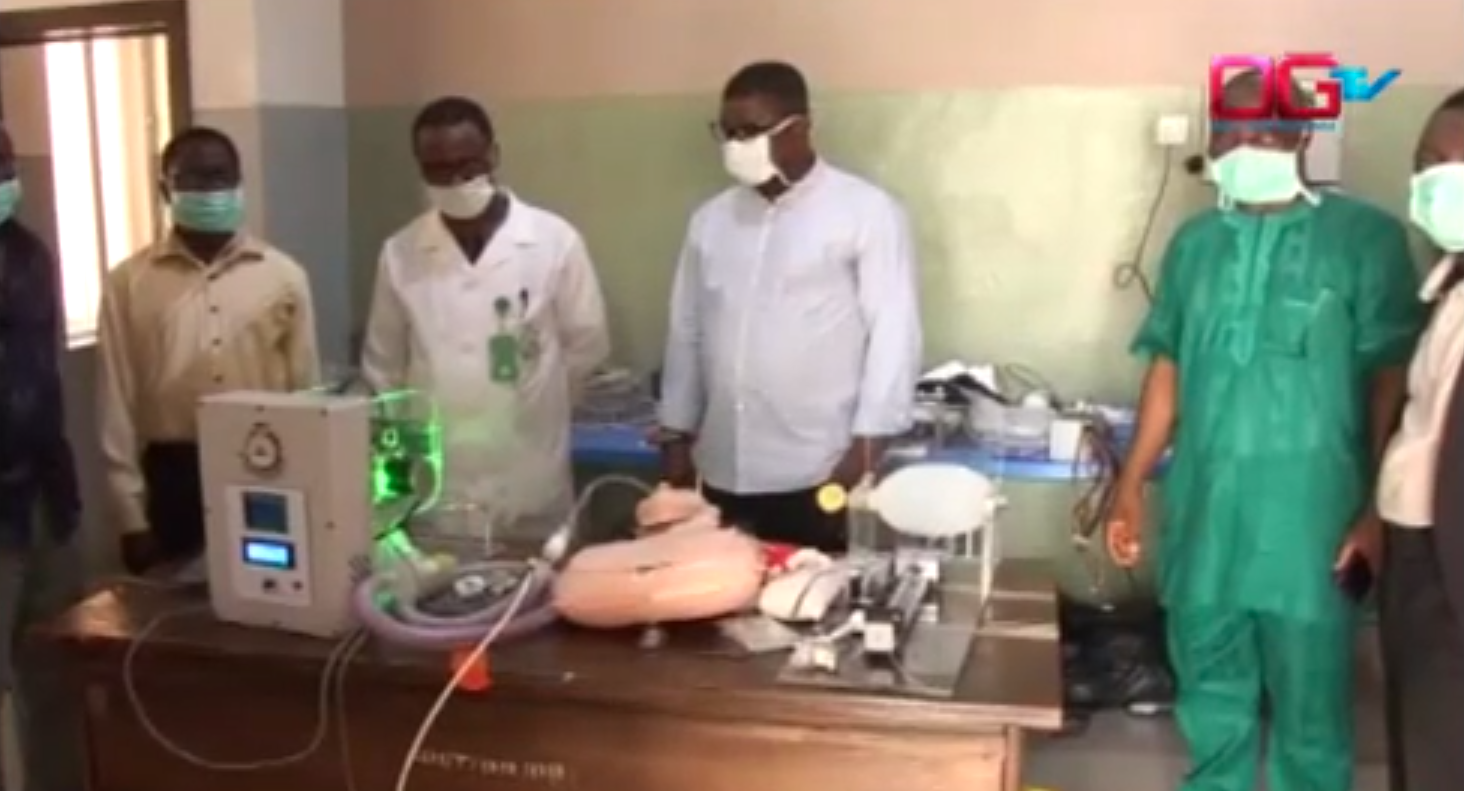
THE management of Federal polytechnic Ilaro, Ogun State has unveiled a locally made ventilator amidst the ongoing COVID-19 pandemic.
According to the management of the polytechnic, the challenge of getting a ventilator that costs thousands of dollars made the school to set up a 14-man technical team to build a ventilator within a week at a very low cost.
The management of Ilaro Polytechnic during the interview with OGTV
In an interview with OGTV, Olusegun Aluko, Rector of the Polytechnic, said staff of the polytechnics made frantic efforts towards building the ventilator
“Our scientists, engineers and medical experts that are here, sleep and wake up here and exactly a week after thorough work, they came up with this,” Aluko said.
“We have studied a lot of literature and worked with medical people. Then, what are the parameters we needed in terms of pressure, air volume, heart rate, heart beat, all those ones were taken into consideration and they were coded accordingly into the system.”
Samson Odunlami, Dean of Faculty of Engineering of the institution, who is also the research team lead, noted that “the mechanical team worked on the principle of the term and follower as well as the gearing system without using human hand to do it.
“So we have to automate it so that it will be working on its own, that’s why we came up with a roller,” Odunlami explained.
Dr. Tunde Jesuseun, Medical Director of the polytechnic while speaking on the invention said “What we did was to pass a tube called endotracheal tube into the trachea of the airway of the patient so that air can get to the lung,”
Olumide Afolayan, Head of Scientists at the polytechnic, said if there was power failure, the machine would record where the program stopped and when the light was restored, noting that there is no need to set anything as the device automatically goes back to where it stopped and the patient won’t feel anything.
Commenting on the development, Lateefat Ajayi, a member of Ogun State House of Assembly representing of Yewa South Constituency, who paid an unscheduled visit to the polytechnic promised to support the initiative
“I have seen this laudable ventilator and it is very impressive that something of this nature, came out of here,” she said .
Speaking further, she promised to inform the speaker of the state House of Assembly to ensure that the Ogun State Government supports the project.