Home Blog Page 2119

COVID-19: FCTA extends market opening hours, orders use of face mask

THE Federal Capital Territory Administration on Friday approved the extension of business hours for markets in Abuja to operate from 8a.m. to 3p.m. on Wednesdays and Saturdays.

Muhammad Bello , Minister of FCT said in a press statement that the directive would take effect from Saturday, April 25.

Before this new directive, Abuja markets were allowed to operate from 10a.m. to 2p.m.

Bello also directed the decongestion of the existing markets through the establishment of Neighbourhood Selling Points in the various districts within the Federal Capital City by Abuja Markets Management Agency.

He urged Abuja Markets Management  to liaise with the FCT Area Councils to ensure full implementation of all Coronavirus disease (COVID-19) pandemic protocols with regards to the markets across all the nooks and crannies of Abuja.

While urging FCT residents to support the intent of the lockdown by patronising markets in their neighbourhoods, the minister ordered law enforcement agencies to clamp down on residents who use the pretext of going to the market to disobey government directives.

“The concept of Neighbourhood Selling Points is aimed at taking pressure off the existing markets in the FCT through the provision of an initial 40 units–adopting either public schools or green areas where they exist- across the various districts in the FCC .

“This will further enhance the attainment of social distancing among residents which is a key requirement for eventual winning of the battle against the dreaded virus,” he added.

The minister further directed relevant FCTA secretariats, departments and agencies to support Abuja Markets Management agency to actualise the mandate with a view to ensure quick set up of the selling points.

COVID 19: How hunger, deaths and threat of community infections haunt IDP camps

By, Titilope Fadare


“I left the camp since morning. We (children) went to pluck cashew nuts from the bush. We roast and eat because there is no other food. I go everyday.”

Those were the words of Mary Nuhu,14, living in an Internal Displaced Person (IDPs) camp at Durumi, Area 1, Abuja.

This camp is located within the city centre of the nation’s capital with 2,830 persons in it.

Nuhu and other residents were displaced in 2014 from Bama and Gwoza local governments in the northeastern state of Borno. They have now found solace in Abuja and gotten approval from the Nigerian government to settle in the community.

On this sunny Saturday morning, when OrderPaperNG visited the camp, Nuhu and other children had gone to the bush.

The premises house a clinic, store and over 30 makeshift apartments positioned strategically at the corners of the camp. Some men, women, and children sat at one side in clusters having a conversation and peeling off ‘dawadawa’, an African locust fruit from the pod.

“Some of us go to the bush to get locust beans. The yellow part we eat and sell the dawadawa part. When our children are really hungry and have cried for a while, they settle to eat this and drink water”, the chairman of the camp, Ibrahim Ahmed, told OrderPaperNG.

In order to feed this period, the minors are left with no option than to perform odd chores to survive the hunger fuelled by the lockdown directive from the federal government to contain the spread of coronavirus.

At 1:16 pm, Mary and the other kids in their hundreds, returned to the camp, giggling and laughing.

She was able to pluck a 150 cl bottle full of cashew nuts after spending over five hours in the bush. Clutching unto the bottle as though she had just been awarded a trophy, she said she could not wait to show her family of 7, the proceeds of her fruitful venture.

The Public Relations Officer (PRO) of the camp, who gave his name as Umar Ali, said women and children are the primary focus in the camp when members of the executive share resources from their private allowances or donations from well-meaning donors.

“Both women and children enter the bush to get cashew. If there are items in the store, the chairman will share for the children because they are the ones who suffer the most. It is not easy. This coronavirus is ‘hunger-virus’.

“Sometimes we (Excos) remove money from our pockets to buy food for the children. Now, we don’t have much money again to take care of them because of the lockdown. It is supposed to be the federal government that should take up this responsibility.” Ali said, adding: “The first project of the federal government should be IDPs because they do not have any source of income, only through donations from people.”

Vulnerable and Forgotten…

The announcement of the lockdown caused intense apprehensions in Durumi camp due to their daily fight for survival. The restriction of movement has brought untold hardship in the camp as most of the residents largely rely on income from their daily hustle.

There was respite when the National Commission for Refugees, Migrants and Internally Displaced Persons (NCFRMI) reached out to the secretary of the camp requesting for their bank details. But three weeks have gone and the IDPs are yet to receive palliatives from the federal government.

“The Government did not check on our people or bring anything. The Refugees Commission promised to bring something but they have not done that for close to three weeks. Even the bank details we collected, the commission has not come to collect it.

“If you go to different IDP camps, it is the same situation. Others living around us who are not displaced- Igbos, Gbagyi, Calabar, they came here after hearing that the government will bring food for us but we told them we have not received anything”, Ahmed lamented bitterly.

The ‘hunger-virus’ that killed two…

Residents of the camps were sensitized about the effects and safety guidelines of coronavirus by media stations who had earlier visited the camp.

As a means to prevent the virus from getting to the camp, the Chairman advised that they remain around or within the premises.

While they had so far complied, the rules were temporarily suspended on the 15th of April, when they were alerted that a food truck on the expressway of Apo, an area close to the camp, was distributing food items.

Two brothers, Umar and Ibrahim, who were bike riders, dashed off to the scene and were fortunate to get a bag of rice despite the stampede.

On their way back to the camp, the duo sighted the Police and tried to make a U-turn to avoid being caught: they got hit by an on-coming jeep. One of the brothers was preparing for his marriage before the sad incident occurred.

“It was people who were equally looking for food that saw their bodies, identified them and traced them to our camp. Then, the Road Safety officials brought their corpse to us. No government official has condoled with us over their death”, Ali recounted in dismay.

‘Hunger-virus’ is not the only threat to their livelihood but how to practice social distancing in a tightly contained environment which serves as an avenue for the virus to thrive. They are worried.

“It is God saving us here. If coronavirus gets here, it will kill our poor families. Allah! If it enters our camp, many people will die. I swear. We warn our people not to go to town to look for food so they won’t bring the virus to the camp”, the Chairman said.

Arrival of the ‘Saviours’…

Since the palliatives from the federal government stopped in July 2019, aids from religious institutions and Non-Governmental Organisations (NGOs) have helped to mitigate the effect of poverty in the camp. But the lockdown has impeded these efforts.

Then, ‘saviours’ from a private company appeared and made it their responsibility to bring lunch to the camp daily to all the children and some women.

This day of visiting the camp was no exception as two vehicles from the organisation entered the premises of the camp at 2:05 pm to dish out food.

The donor taught the minors social distancing, made them wash their hands before collecting a plate of beans.

The Chief Executive Officer of the organization, Kingsley Obokhare, said he was prompted to support when it occurred to him that displaced persons will be one of the worst-hit due to the restriction of movement.

“When the lockdown started, it was so clear that we had to stock our homes with food following the directives from the government. Then I thought, (IDPs) do not have the money or the means to stock up. We then decided to put somethings together and started coming to the camp. We had collaborations with a club- corporate kickers and some well-meaning Nigerians. This is the 19th day of coming here”, he said.

COVID

Obokhare stays in Mararaba, a town in Nasarawa State and drives through several checkpoints to put a smile on the children’s faces.

“I don’t stay in town. I stay in Mararaba. Do you know the checkpoints to pass before I get here? It is killing! But I know a child is going to be happy when I come to town. It is painful to know that no money has been issued out. There was a time when we came late and it was scorching.

“They saw us and screamed with excitement. In other countries, they are giving these things free. We give a meal of N500 per child. If this medium can help us, we can do more for the women”, he added.


The ICIR obtained permission from OrderPaperNG to publish this report.

Despite 72 percent fall in global average crude oil price, FG slashes petrol price for Nigerians by just 13 percent

ORGANIZATION of the Petroleum Exporting Countries (OPEC) basket has shown that the average price of crude oil has fallen over the last twelve months by 72.63 per cent yet the federal government has reduced petrol price to N125 from N145 representing a 13.79 per cent decrease.

In April of 2020, the average price of the OPEC basket so far this month is 19.36$ per barrel, while the price was 33.91$ per barrel in March of 2020.

The OPEC basket is a weighted average of prices for petroleum blends produced by OPEC countries in which Nigeria is an active member.

The federal government has remained the sole importer of petrol through the Nigerian National Petroleum Corporation (NNPC), which equally swaps crude oil for the product.

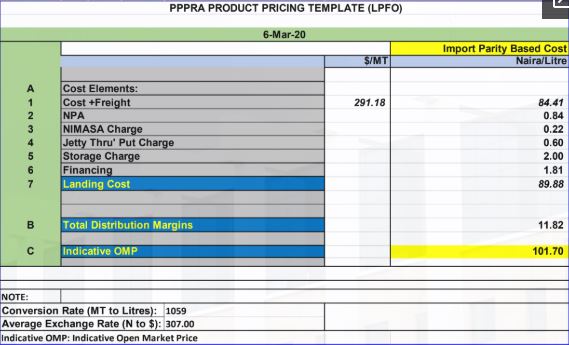
According to the report published March 6, 2020, by the Petroleum Products Pricing Regulatory Agency (PPPRA).

The landing cost of petrol with all cost elements, including the actual cost of product and freight, lightering expenses and other charges, showed that it stood at N89.88 which is a huge slash in price from what it has been previously, yet the federal government still choose to give Nigerians a 13.79 per cent cut selling petrol at N125.

The PPPRA has also released via a press release that in line with government approval of a new pricing regime, effective 19th March 2020, in which there was a provision for the establishment of a price band within which Oil Marketing Companies (OMCs) are expected to sell at the retail stations.

Effective 1st April 2020, there, would be an introduction of the band system where N123.50 per litre – Lower Band (LB) and N125.00 per litre – Upper Band (UB).

“The federal government has now introduced a modulation mechanism – if crude oil prices go down we will see a reduction in petrol prices. If prices go up we will see an increase,” Bashir Ahmed the personal assistant to the president on new nedia said in a tweet.

Fred Tunde of Watchright financials limited said: “The government is shortchanging Nigerians giving us petrol at N125 with a landing cost of less than N90, there is a huge spread they are making with the global oil price splash, lets Nigerians benefit to the fullest.”

Financial Analyst Seyi Kolawole of NASD Plc who also spoke to The ICIR said: “There is a lot more the government can do for citizens this period where the global oil price has crashed.

“Personally I feel petrol should sell for less than N90 at filling stations with an over 70 per cent price drop in average global oil price.”

Phone calls and text messages  to Environmental Rights Action (ERA) for comment was unsuccessful.

According to a report by Barrons an investment and financial body, more than $9 billion would be saved by airline companies with the global drop in oil prices, but it won’t do them much good given the drop in passengers.

Group condemns Gov Umahi for banning journalists from govt house

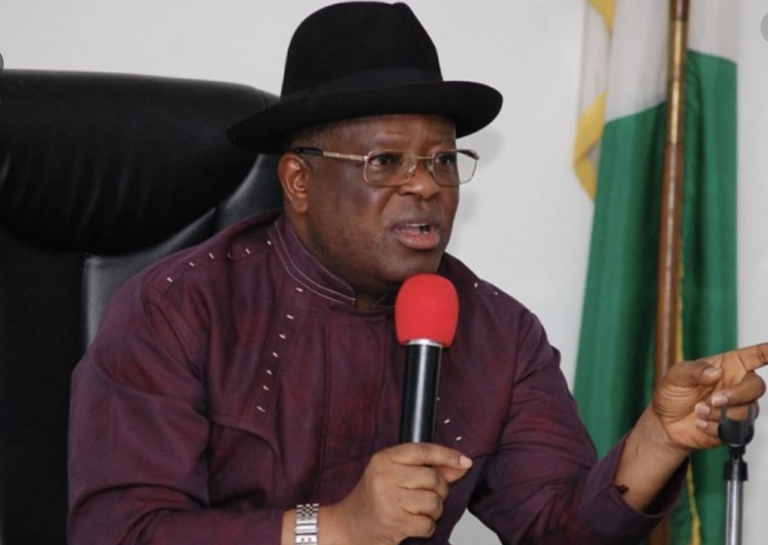
The Coalition for Whistleblowers Protection and Press Freedom (CWPPF) has criticised David Umahi, Governor of Ebonyi State for placing a life ban on two journalists from the Government House.

Umahi has  recently come under criticisms for banning correspondents of The Sun newspaper, Chijioke Agwu, and the Vanguard Newspaper, Peter Okutu, from the State House or any government facility in the state.

In a statement signed by the CWPPF, the group condemned the governor’s continuous war against the media houses and journalists, describing it as  “blatant intimidation and harassment.”

“CWPPF condemns the illegal banning of the correspondents of The Sun newspaper, Chijioke Agwu, and the Vanguard Newspaper, Peter Okutu, from entering Government House and Government facilities in the State for life. This decision by the governor is absurd considering that the government house is not private property,” the statement read in part.

The group further urged the governor to respect the Constitution that guarantees the rights of journalists to gather and disseminate information in public interest and to hold the government accountable.

It added that the life threats placed on the banned journalists has been noted, and if anything happens to either Agwu or Okutu, the governor would be held responsible.

Umahi had in a state-wide broadcast on Wednesday, expressed displeasure over the activities of the journalists for doing their job.

The governor, while addressing residents of the state in the broadcast also threatened to seize the allowance of the Nigeria Union of Journalists (NUJ) leadership, saying they failed to discipline their members.

“If you think you have the pen, we have the koboko,” the governor said.

He added, “I want to say that I am very displeased with the president and leadership of the Nigeria Union of Journalists and I am going to seize their allowances for two months because they have failed to discipline their members.”

Okutu was declared persona non grata over a report he did on the alleged military invasion of Umuogodoakpu-Ngbo community in the council area, while Agwu was declared  unwelcome in the state over a report he did on the Lassa Fever outbreak in the state.

COVID-19 could expose hundreds of thousands of vulnerable Nigerian children serious child rights crisis —Save the Children

THE Save the Children International says it is extremely concerned that the Coronavirus disease (COVID-19) pandemic could turn into a serious child rights crisis in Nigeria.

The humanitarian organisation expressed worry that hundreds of thousands of the most vulnerable children could be exposed to a dangerous mix of extreme poverty, malnutrition and hunger as a result of the virus.

The socioeconomic impact of the pandemic will push many poor households to turn to desperate measures just to survive, said Mercy Gichuhi, the acting Country Director, Save the Children International Nigeria.

This was contained in a press statement issued in Abuja on Thursday by Amanuel Mamo, Director of Advocacy and Campaigns, Save the Children International, Nigeria.


READ ALSO:

Gichuhi stated that children could face increased risk of child labour or sexual exploitation or of child marriage, as families struggle to feed their families.

The organisation, according to her, urged the Nigerian government to scale up social protection measures such as provision of cash and food assistance for the most vulnerable children and families, to urgently mitigate the impact of the COVID-19 pandemic in the country.

 “As the numbers of COVID-19 cases rise in Nigeria to 782, and the virus is spreading to different States, we are working hard to mitigate the negative impact this will have on the most vulnerable children, especially in fragile communities,”Gichuhi said.

“Children are seriously affected when parents and caregivers are infected by the virus and taken away for care. We are working closely with the government to support efforts to contain the virus and keep children safe and protected amid the pandemic.”

Also in the statement, Ibrahim Maharazu, Speaker, Katsina State Children’s Parliament, said: “The Corona virus is threatening our right to participation, protection, education and healthy life. I can see a possible increase in child abuse as children from poor households might go to rich people in the community for food. They may be emotionally, physically or sexually exploited in exchange for food and financial support. There are people who take advantage of the poor families and the pandemic. This is very bad for children and it can have a long lasting impact on them. The government should hold such perpetrators accountable.”

The acting Country Director added that Save the Children would work with all stakeholders towards better accessible social protection services to reach the most vulnerable people – including through the scaling up and reform of existing social protection and livelihood programmes.

She said that the organisation urged the government to provide appropriate care and protection for children, including children who are orphaned or left without proper care because their caregivers are in hospital because of the virus.

Through existing social safety net programs, Gichuhi noted that the government should also provide immediate income and livelihood support to vulnerable families, to reduce the risk of people taking desperate measures that would put children, particularly girls, at risk.

“We must act now and rapidly scale up support for children whose families’ income is insecure and live in fragile communities. There is a need for increased protection for children, especially girls, displaced children, and other vulnerable groups. Our collective efforts and sustainable actions in responding to the pandemic should ensure that no child is left behind, vulnerable or unprotected”, explained Gichuhi.

Maryam Ahmed, Youth Ambassador, Save the Children International Nigeria, said: “It is important that children and other marginalized groups are not excluded in Covid-19 response activities They should be safe, and also consulted on proper education and protection measures to be in place.”

Purity Oriaifo, 14, Girl Champion, Save the Children International Nigeria, said: “COVID-19 is a disaster. It has affected our ways of living and disrupted our routines – including school attendance and raising an income. I know children whose parents are petty traders who find it difficult to get proper food these days.

“They may not be able to afford even one meal per day. These families live from day to day, they don’t have food stocks or savings to depend on. Therefore, the government needs to provide financial assistance or sufficient foodstuffs – ensuring that assistance reaches the people now. This will reduce the risk of exploitation, domestic violence and abuse of children, especially the girls.”

Save the Children welcomes the government’s efforts to carry out several awareness programmes to educate the public about the coronavirus and preventive measures.

The organisation said called upon all government stakeholders at national and subnational level to ensure that children’s voices are heard, and they are at the centre of the COVID-19 preparedness, response, prevention and control plans.

Recalcitrant COVID-19 patients to be forcefully evacuated to treatment centres —FCTA

THE Federal Capital Territory Administration (FCTA) says it will invoke the relevant laws that enables it to mandatorily evacuate recalcitrant COVID-19 patients to treatment centers.

This was part of the decisions taken after a meeting of the FCT COVID-19 Emergency Response Team and the FCTA Management which took place on Tuesday in Abuja.

A statement by Anthony Ogunleye, Chief Press Secretary to the FCT Minister disclosed that Muhammad Bello, the Minister expressed dissatisfaction that some COVID-19 positive individuals were refusing to go to treatment centers and instead preferred to treat themselves in their homes.


READ ALSO:

According to the statement, Bello said existing laws would be used to force such persons to go to treatment centers explaining that their staying at home posed great risks not just to their families but also immediate communities.

“Since we have begun to witness community transmission of the virus, it is imperative that we must do everything within our power to stop the spread even if we have to compel such persons to go to treatment centers,” the Minister said

In order to prevent further spread of the virus within the communities, Bello said it was resolved that massive testing would be carried out in areas where community transmission has been established, including Mabushi, Gishiri and Utako.

The statement said the Response Team also encouraged all residents to wear face masks when outside in the public and also encouraged them to make their own face masks from cloth and wear them always.

It added that the meeting also reviewed the current situation of the COVID-19 pandemic in the FCT and the measures taken to contain it.

“So far, a total of 263 staff made up of 66 doctors, 103 nurses, nine pharmacists, 15 laboratory scientists and 70 other staff have been trained while 337 others are slated for training which is on-going in batches,” it said.

The FCT has recorded 119 cumulative confirmed cases of COVID-19, second behind Lagos state that has recorded 504 confirmed cases.

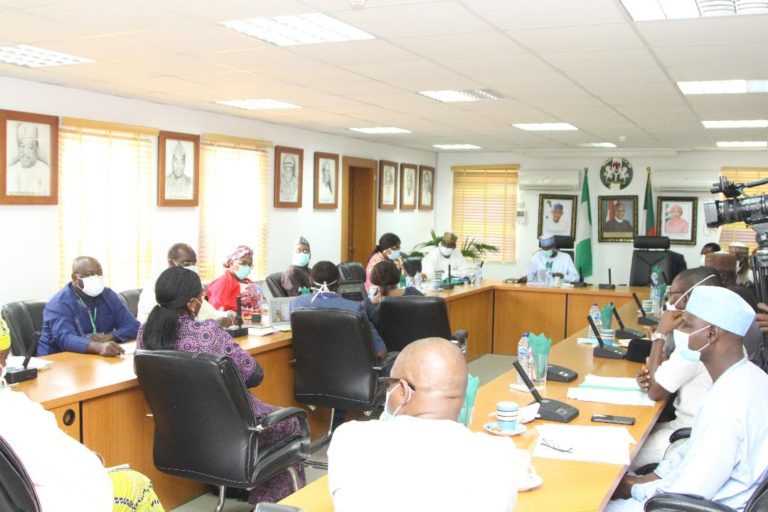
The meeting was chaired by  Malam Muhammad Bello, FCT Minister, and had in attendance Ramatu  Aliyu,the Minister of State, Chinyeaka Ohaa, Permanent Secretary,  Dr Mohammed Kawu, Ag Secretary of the Health and Human Services Secretariat, Dr. Josephine Okechukwu , the Director of Public Health, heads of the various sub committees of the Response Team and other senior staff of the administration.

Increase of fatalities in Kano causes fear, authorities in denial, have no explanation

WHILE accounts of multiple deaths in Kano have flooded social media platforms, the situation of things in the state with over three million citizens remain uncertain, as authorities keep silent.

Since registering its first coronavirus disease (COVID-19) pandemic death on April 16, fatalities in Kano reportedly have been on the rise. The Cable reports that about 180 persons were buried within four days in the state.

Areas where deaths have been reported include; Zage, Kano Municipal, Tarauni, Gwale, Kurna, Dala, Chiromawa, Zango, Kofar Mata, Fagge, Kumbotso, and some local government areas outside the metropolitan like Bichi, Kunchi, Wudil, Gwarzo, and Shanono.

A journalist in Kano, Alee Ameen also confirmed to The ICIR that there have been an increase in the number of deaths in the past couple of days in Kano, revealing that official estimates put the figure at 150 while the unofficial figure is said to be as high as 300.

According to Ameen, a medical doctor in the state confirmed an increase in the number of deaths and submitted that the cause “may not be unconnected with COVID-19.”

He also disclosed that medical staff have refused to attend to patients on account of unavailability of Personal Protective Equipment (PPEs).

However, authorities have denied a record of deaths in the state and the Nigeria Centre for Disease Control (NCDC) have kept mum despite Kano recording a spike in confirmed COVID-19 cases in a short period.

Since recording its first COVID-19 case on April 11, Kano now has 73 confirmed cases, the third highest state in Nigeria.

The commissioner of health, Aminu Ibrahim Tsanyawa in a statement asked people to disregard rumors of having mass deaths recently in Kano metropolis.

Tsanyawa who asked that the rumours be disregarded also informed the public that the task force has activated community informants’ structure of World Health Organisation (WHO) to report death and cause of death.

He added that they have also deployed officers to all burial grounds to count bodies brought in for burial daily.

“Honestly, the media and rumor mongers have been trying their best in making us dispense energy in warding them off. This particular rumor has been investigated and found to be untrue so it must be dispelled,” the statement read in part.

The health commissioner never explained why officers were being deployed to count deaths, raising concerns on whether deaths in the state were ever being recorded in the first place.

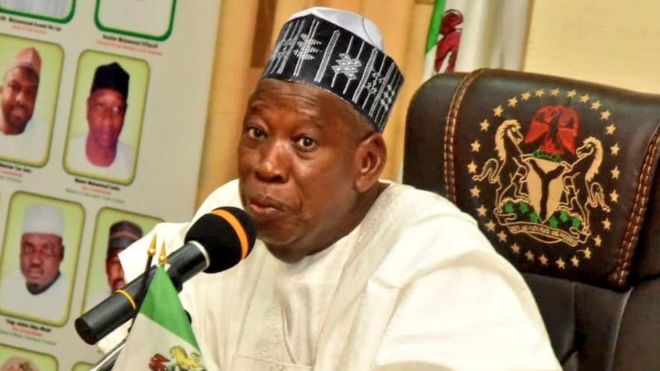
Similarly, Abdullahi Ganduje, Governor of Kano State refuted reports that mass deaths were occuring in the State.

Ganduje, who spoke on Politics Today, a programme of Channels Television on Wednesday, stated that an investigation of the allegation was being carried out.

“We will soon get a complete report but I assure you that information is not correct. Looking at previous burials, there is nothing to show that there is an unusual frequency of deaths in Kano State.

“But there is a lot of fake news going around. We have already started arresting some people who are peddling such rumours. Only one death so far has been recorded from coronavirus infection,” the Governor said.

According to Ganduje, Kano is a cosmopolitan area and people die from different types of diseases.

Similarly, a medical doctor in Kano  told Ameen that the heat period in Kano has its own peculiar illnesses such as meningitis and high rate of deaths.

It was also gathered that the lockdown effected by the state government has hindered families and individuals who survive on lower income to purchase necessary drugs.

He added that it is uncertain that COVID-19 is killing people in the state, giving that the deceased weren’t tested.

He however disclosed that doctors have recorded a high number of patients displaying symptoms similar to COVID-19.

Despite growing concerns, Kano has suspended testing for the disease.

A member of Kano COVID-19 taskforce, Sadiq Isah, a professor, told BBC Hausa Service that testing was suspended in Kano centre because they lack some basic needs in the centre.

Though suspending testing, the state government has also applied for N15b from the Federal Government to fight the coronavirus pandemic.

The Governor, Ganduje explained that the N15b would be expended in paying voluntary health workers engaged by the state to support the health personnel, personal protective equipment (PPE) and the creation of other testing centres.

Amidst the denial, confusion and unclarity, the NCDC has remained mute over the situation in Kano. Messages sent to the official NCDC phone line got only automated responses that didn’t adress questions asked.

ECOWAS appoints Buhari as champion of COVID-19 response

0

PRESIDENT Muhammadu Buhari on Thursday has been appointed the champion of the Coronavirus (COVID-19) response at an extraordinary summit by ECOWAS leaders

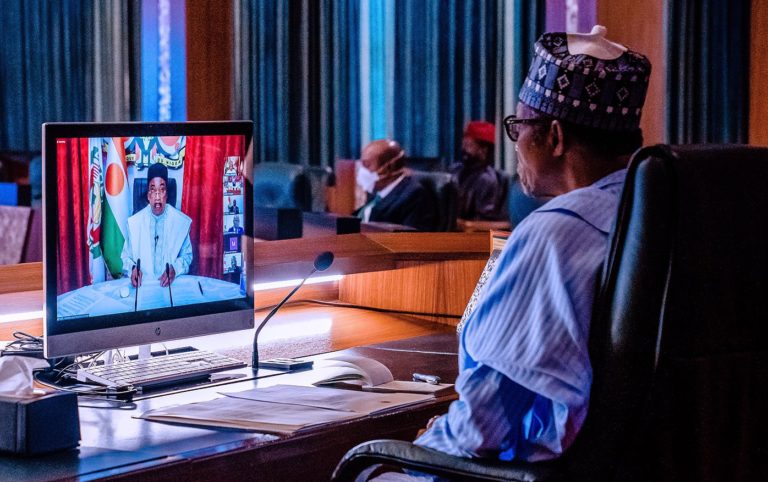
The appointment took place at the Extraordinary ECOWAS Summit on COVID-19 which was held via teleconferencing under the Chairmanship of His Excellency, Mahamadou Issoufou, President of the Republic of Niger.

During the teleconference, Buhari called on fellow ECOWAS leaders to look beyond the challenges posed by the COVID19 pandemic and tap into various opportunities that it presents for the betterment of lives in the member-states.

“In every challenging situation such as the current one, there are also opportunities.

“Our region must, therefore, seek to find those opportunities provided by this gloomy global outlook for its benefit by embarking on the implementation of such critical policies, which before now, will be difficult to accept.” –Muhammadu Buhari

While calling on his colleagues to intensify collaboration in order to save the region from “this deadly pandemic through sharing our experiences and best practices,” Buhari outlined some measures taken by his government in response to the pandemic.

The reduction of interest rates by CBN, the inauguration of the Presidential task force, the provision of relief materials including medical, food and cash supplies among others.

Buhari also added that unprecedented economic uncertainties, including severe fiscal and foreign exchange constraints, amid a slowdown in global economic growth that most nations are grappling with, have made it imperative for the sub-region to refocus on accelerating the implementation of the popular vision of ‘ECOWAS of the people’ by adopting dynamic regional policies aimed at providing relief to its citizens. 

The President affirmed Nigeria’s solidarity with other member states as they battle the virus.

“At a time of global uncertainty such as this, caused by the devastating impact of the COVID-19, let me convey Nigeria’s solidarity with all the Member States as we collectively battle to defeat the pandemic,” Muhammadu Buhari

Buhari on 31 ordered the lockdown of Lagos and Ogun state including the FCT after the NCDC confirmed 139 number of cases of the novel virus, this as an immediate response to curb the COVID-19 pandemic.

The lockdown which was extended by an additional two weeks has experienced a surge of the virus which is now at 879 cases across 26 states of the federation.

Nigeria has tested only about 9,500, with a testing capacity of 500 tests per day in recent times since the arrival of novel coronavirus in the country.

Army destroys armed militia camp, recovers ammunition in Benue

0

TROOPS of Operation Whirl Strokes under the Nigerian Army has destroyed a camp of the armed militia operating at Anku Mbagen in Atera -Jange Torov council ward of Ukum LGA of Benue state, and recovered a cache of arms ammunition and other items.

The special operation which was carried out at about 4:30 am on Tuesday raided a suspected militia camp in Benue state.

This was made known by the defence headquarters in an official press release on their verified Twitter page which also revealed items recovered during the raid.

The items include large cache of arms, ammunition, one 81mm Mortar gun, Five 60mm Commando Mortar gun, Seven locally fabricated Mortar tubes guns, three SMG rifles, three double-barrel rifles.

Two locally-made rifles, One G3 rifle, one locally made pistol, Five AK 47 magazines, 166 rounds of 7.62mm NATO ammunition, One car battery,

Fifteen rounds of locally made ammunition, Two bags of gun powder, Nine pairs of Camouflage uniforms, One generator, Three motorcycles, One cellular handset, charms and assorted hard drugs.

The Press release added that the operation was sequel to timely and credible information received on the activities of Tiv armed militia operating around the border areas of Benue and Taraba states

Adding that the troops of operation whirl stroke made up of Sector 2 deployed at Katsina-Ala, Ukum and Logo LGA’S of Benue state and those of Sector 4 drawn from parts of Taraba state.

“The armed militia on sighting the troops opened a barrage of fire on own troops. The Special Forces troops responded swiftly and neutralized Three gang members while others abandoned their position and weapons and fled into the bush with gunshot wounds, There was no casualty on own troops,” the statement read.

The Armed Forces of Nigeria further restated its commitment to restoring peace in all parts of the country.

It also requests the general public for credible information which will assist the military to rid the country of criminal elements.