Home Blog Page 2120

NHRC partners CSOs to develop online platform for reporting human rights violations

THE National Human Rights Commission (NHRC) together with five Civil Society Organisations (CSOs) has designed an online platform for reporting human rights violations in the country.

The CSOs include Shehu Musa Yar’Adua Foundation, Open Society Initiative for West Africa (OSIWA), Nigerian Civil Society Situation Room, Department for International Development (UKAID), and Policy and Legal Advocacy Center (PLAC).

An assessment of the online platform carried out by TheICIR revealed that the website allows Nigerians to upload pictures of event with indication of location, time and nature of violations.

The user can also input other information like the name of the alleged violator(s) and victim(s) and other real time information that can be further verified by the responders.

The online platform is also able to collate, analyse and generate results and data for the reports and provide dash-board information for the public.

According to NHRC, the platform will be used in upscaling the efficiency and effectiveness of the commission in the performance of her functions as the online platform will help victims to report abuses and abusers be brought to book.

“The Commission’s primary mandate is the monitoring and investigation of human rights violations. This includes the publication of annual state of human rights report for the country; this platform is therefore key to efficiency and effectiveness in the discharge of the mandate of the Commission.

“The online platform will not just help victims report abuses and abusers, it will bring the individuals and agencies behind any human rights violation to account.

“The platform will also be used by the Commission to scale up its efficiency and effectiveness in the performance of its functions.

The ICIR reported how Maryam Ibrahim, a noodle seller, was allegedly shot by men of the Nigerian army last Saturday through a stray bullet during a face up between the officers and the youths of Orile Iganmu over motorcycle. As at the time of filing report, Maryam’s corpse is still at the mortuary.

Earlier, The ICIR also reported here a case of another victim who was also hit by a misfired bullet from men of the Mopol 75 Squad of the Nigerian Police Force, Cross River Command.

Last week, NHRC disclosed that security operatives have killed 18 civilians during enforcement of a total lockdown in major cities in the country over the novel coronavirus.

Anthony Ojukwu, the commission head, said on a television programme that civilians’ complaints of “brutality and killing” by security operatives were received from 24 out of Nigeria’s 36 states between March 30 and April.

Why we demolished houses during Lockdown – Lagos State government

THE Lagos State Ministry of Environment has said the demolition of houses during the total lockdown of Coronavirus pandemic (COVID-19) is a preparatory measure aimed at securing lives and properties of residents of the state.

The ministry’s director of public affairs, Kunle Adeshina, told The ICIR in a phone interview that the action was necessary considering what is at stake.

Adeshina said notice has been served to the houses since November 2019 but the residents failed to comply.

” We sent them a notice of demolition since November last year but they did not conply, we even sent a reminder last month,” said Adekunle.

He added that although contracts had been awarded to drainage companies for clearing of the areas before the spread of COVID-19 in the nation.

“The government had awarded the contracts to the companies way before the index case in Lagos state and there is a timeline for the execution,” he noted.

He said the government gave a timeline following a forecast that there maybe heavy rainfall this year.

“We made the forecast public, Lagos is surrounded by water and we needed to be ahead of the rain to curb flooding, if there is flooding, the government would still be held responsible but they are not allowing us do our job,” he told The ICIR reporter.

Contrary to Adeshina’s claim that a notice had been served since November 2019, Sunday Unah, a resident of Oke – Ara in Ogba whose house was domilshed, said he received a 48 hours notice from from the ministry.

Thereafter, the government officials came with armed security forces including Mobile Police and officers of the Nigeria Security and Civil Defense Corps (NSCDC) to effect demolition.

Unah said the armed law enforcement agencies had threatened them not to resist demilotion.

An eyewitness at the scene of demolition said a sick woman in her sixties, Regina James who was receiving a drip in her house, was carried outside when the demolition team stormed the area.

Betty Abah of The Centre for Children’s Health Education, Orientation and Protection, CEE-HOPE who was present at the scene of demolition told The ICIR that more than 30 houses were demolished in Ogba.

She said the action of the Lagos State government has left many families  left homeless and hopeless.

She said houses that were not completely demolished have been left with trembling foundation, putting residents at greater danger.

“Now that their houses have been demolished, where does Lagos State government want them to go during this lockdown,” she asked rhetorically.

COVID-19: Virtual learning widens digital divide between Nigeria’s public and private schools

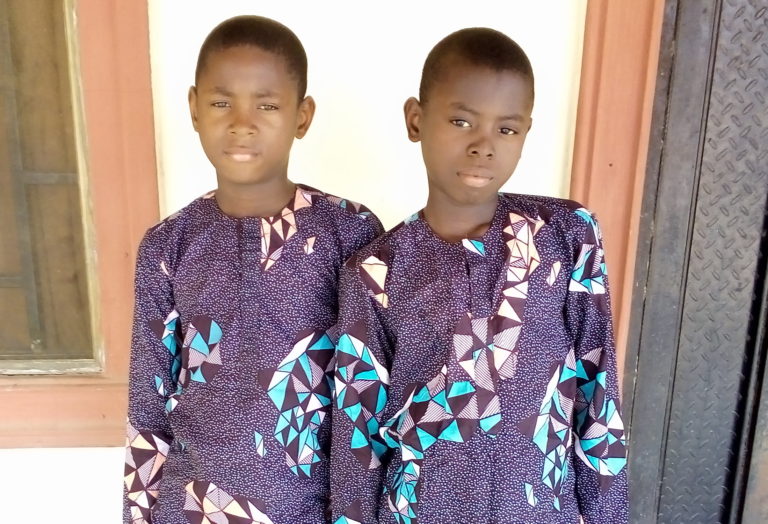
GRACE Agada, 40, is a trader in Makurdi, Benue State. She runs a small stall where she sells local beans cake popularly known as “Akara”, while her husband, Matthew, a livestock trader also owns a shop at Makurdi’s cattle market where the bulk of their income is earned. 

With a family of six children, of which two boys are still in secondary school, Grace felt the hard impact of the coronavirus lockdown when it was announced that schools were to be closed for two weeks to prevent the spread of the disease.

That news meant that there won’t be customers to buy her Akara snack. Not only that.

Her two children who both attend Gateway Comprehensive Secondary School, a community school based in Makurdi were going to be at home without learning for the duration of two weeks.

“Home teachers would have been an option, but since everyone has to stay at home then they don’t have a choice,” Grace told The ICIR.

However, she did not anticipate that the lockdown would be extended for two more weeks which means for over a month the education of her children would be interrupted until the lockdown is lifted.

Ondugbe and Ofoyi, Grace’s children have never been exposed to any form of virtual learning neither do their school have the resources to carry out an e-learning programme for kids from a remote location.

“The school my children attend does not have any program that will keep them engaged while at home which means they will remain at home if the lockdown continues, we will only hope that the virus becomes a thing of the past,” she said.

Its unlikely things will ever be the same, as over 180 countries have closed down schools.

This has created a huge loss of learning time for students estimated to impact 87 per cent of the world’s student population according to a United Nations Educational Scientific and Cultural Organisation, UNESCO, report.

As schools across the country remain closed for a 28-day period due to COVID-19 lockdown, parents like Grace whose children are in public schools have no idea when their kids will go back to school.

Some privately owned schools with capacity have provided a virtual alternative education for their students to fill the learning gap.

However, kids like Ondugbe and Ofoyi will have to catch up with school work after the lockdown is called off, as COVID-19 widens the digital divide with concerns that some kids will be left behind.

Learning beyond walls

On March 16, the Ministry of Education in Rwanda announced the closure of schools in the country to prevent the spread of COVID – 19, while it made several e-learning platforms available to students free of charge for the period of the lockdown.

The education ministry partnered with telecommunications companies to provide free e-learning resources for Rwandan students from primary to tertiary institutions by simply logging into the approved websites.

In South Africa, the basic education department is yet to roll out plans for schools to switch to remote learning since the extension of the lockdown was announced, fewer higher institutions in the country have made the transition.

Edutech firms are providing homeschooling solutions in South Africa, for a fee with charges ranging from R2,500 to R14,000.

To cushion the effect of the lockdown on learners and parents, the education department outlined a number of free virtual learning resources in line with South Africa’s school curriculum from grade R to grade 12 to be available temporarily until after the lockdown.

The virtual learning model employed by South Africa and Rwanda educational authorities is made possible by its partnership with telecommunications companies like Vodacom e-school, amongst others who offer data free of charge to enable students with internet connectivity access it.

Nigeria’s education ministry has not publicly announced any virtual learning intervention measure to assist learners in public institutions from primary to tertiary institutions who have been on lockdown since schools across the country were closed since March 20.

On April 3, Minister of Education, Adamu Adamu, had directed tertiary institutions in the country to activate their virtual learning environment to reduce the time lost to the lockdown occasioned by the COVID-19 pandemic.

Several universities with the resources have complied with the directive.

Kaduna State University, post-graduate students make use of Zoom, a video conferencing application for their lectures.

Lagos State University, LASU, undergraduates use a virtual learning platform called Envivo, a collaborative learning platform that combines video conferencing with

Some private schools have also set up virtual learning programmes for primary and secondary students to help learners regain lost time as their schools remain closed by giving them homeschooling via remote learning.

The tools mostly used by these schools used include Google Classroom, Khan Academy Kids, Montessori Preschool, amongst others which depends on the curricular explored by the educators involved.

In the Federal Capital Territory, FCT, Abuja, public secondary and primary schools are without the requisite infrastructure to offer remote learning as parents whose wards are in these schools resort to other alternatives they can find.

Virtual School not without challenges

Agodi Alagbe, Head of School, Center for Teaching and Learning, CTL, Academy in Katampe Extention, Abuja, which offers virtual tutoring to learners in primary and secondary school, told The ICIR that its curriculum was tailored after the American education system and not the suited for learners without that background.

“The online teaching is a lot easier for our students because we practice the American based curriculum. So students who are coming from British styled curriculum schools will find it difficult to cope, especially as we take lessons from a google classroom and our teachers are online to attend to questions from the kids live,” she said.

The Nigeria Educational Research and Development Council, NERDC, launched an innovative e-curriculum in 2014 to suit the need of Nigerian learners but several virtual learning platforms in the country do not make use of it. Rather schools adopt the US and British styled curriculum.

Akinnwale Yekeen, whose kids attend Excellent Kiddies Academy, Bwari vividly remembers that after the COVID-19 lockdown,  the school set up an online application where they are given daily exercises to keep them pre-occupied.

Grades Two and Four were selected to participate in the programme which involves using computers with an internet connection.  The online application is accessed via Google chrome.

This form of remote learning does not involve a one – on – one interaction with a teacher via video conferencing but rather the pupil has to be guided by a parent or guardian to answer questions on a particular subject for the day which is subsequently submitted.

Speaking on the challenges, Akinwale attributed a major hitch to facilitating access to the online learning application as lack of internet devices.

“Most kids still need to be assisted with the system while parents may not be able to be online all the time if they don’t own a computer with an Internet connection. Also, some parents have complained of not being able to access the website,” he said.

Has virtual learning come to stay

Marline Oluchi, Communications Adviser for Edutrust Foundation, a social enterprise aimed at promoting access to quality education said that online learning would not substitute regular classroom interaction in the country just yet.

“Online tutoring in Nigeria is not going to replace or even compete with regular classroom tutoring anytime soon because as much as its relevance is becoming more visible, there is still a lot of structure that has to be put in place before the public will embrace online tutoring,” she said.

She also underscored the challenges associated with online tutoring with an emphasis on the lack of sensitisation on the resourcefulness of online tutoring.

“I think it’s more popular as an alternative form of learning for young adults, as opposed to a form of education for children but with the present COVID-19 lockdown Internet literate parents will get to take advantage of it,” she said with optimism.

Yakassai Ibrahim, the spokesperson of the National Universities Commission, NUC, told The ICIR that he was not authorised to speak on the issue of virtual learning in Nigerian universities but he stated that the Executive Secretary of the commission was the appropriate authority.

“I don’t have any thoughts on the issue because I am just the spokesperson I do what I am told to speak about bu the Executive Secretary is the person you should be talking to,” he said.

Efforts to reach the Abubakar Rasheed, Executive Secretary of the NUC proved abortive at the time of filing this report.

Abiodun Ogunyemi, National President of the Academic Staff Union of Universities, ASUU, failed to respond to text messages or calls when queried on the preparedness of Nigerian Universities to adopt virtual learning as an alternative form of learning in the country.

Coalition of 70 CSOs petitions Buhari to sack COVID-19 Committee Chairman, replace with Osinbajo for flouting NCDC guideline

A COALITION of 70 Civil Society Organisations (CSOs) has made a number of recommendation to President Muhammadu Buhari which includes the sack of Boss Mustapha, Chairman of the Presidential Task Force on Coronavirus disease (COVID-19) for flouting guideline of the Nigeria Centre for Disease Control (NCDC).

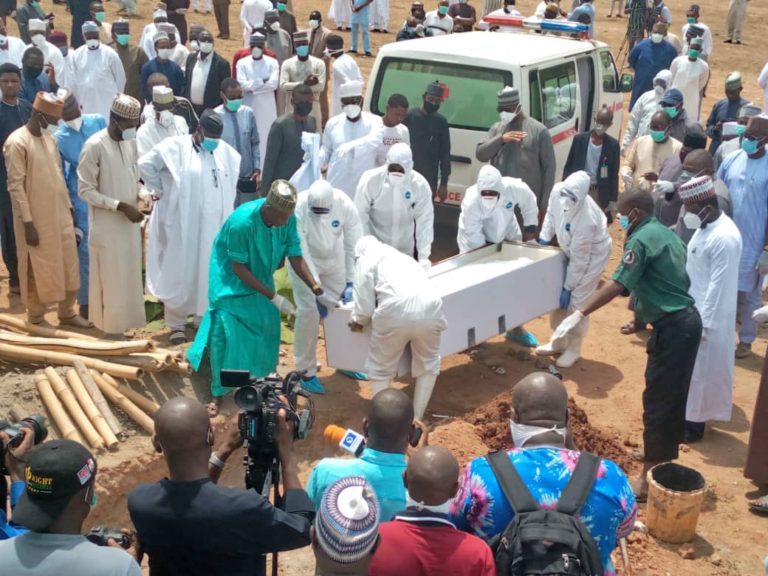
The group, in a petition to the President, disclosed that Mustapha put at risk every effort of relevant institutions including the NCDC to curtailing the spread of the COVID-19 pandemic at the burial of the late Chief of Staff to the President, Abba Kyari held recently at Gudu Cemetery, Abuja.

The group asked the president to appoint the Vice President  Yemi Osinbajo to take over from Mustapha while the Ministry of Women affairs is drafted into the presidential committee for better coordination.

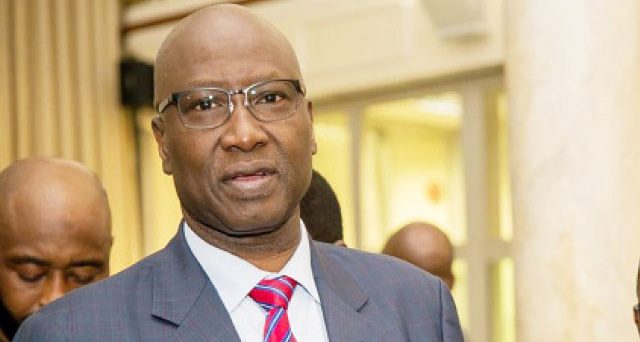
File Photo: Boss Mustapha, Secretary to the Government of the Federation (SGF) and Chairman of the Presidential Task Force on Coronavirus disease (COVID-19) 

“We, therefore, call for the removal of the Chairman of the Presidential Taskforce on COVID-19 for the lack of leadership he displayed which has the potential to damage all the work the NCDC and other institutions, including civil society, are doing to prevent the spread of the virus,” the letter read.

“Strengthen the Presidential Task Force on COVID 19 by including the women affairs ministry and other stakeholders and place it under the direct oversight of Vice President Yemi Osinbajo for better coordination and alignment. As he is already overseeing the Economic Sustainability Committee, this move will accelerate the success of the COVID-19 response through synergistic implementation of the various palliative interventions of the government in the interest of the majority of Nigerians who are on very low incomes.”

In addition, the coalition called for sanctions to serve as deterrence for impunity and other wrongful behaviour during the lockdown.

They called for the prosecution of security officials accused of extra-judicial killings of 18 persons while implementing the lockdown order.

“Impose lawful consequences on those who recklessly endanger others by disobeying NCDC guidelines so that such behaviour does not continue with impunity. As such, we call for an investigation into, and prosecution of, the following groups of people: (1) the security personnel responsible for the extra-judicial killings of 18 Nigerians under the guise of enforcing the lockdown; and (2) those who organised and supervised the funeral of Mallam Kyari.”

It could be recalled that Nigerians criticised the government officials who met to hold prayer rites and subsequent burial of the deceased Kyari for disregarding the social distancing guideline, lockdown order, and other spelled out guidelines.

Read the full recommendations here

FACT CHECK: Was Abba Kyari flown to UK for treatment and cremated?

By ‘Kunle Adebajo


On Sunday, April 19, two days after the death of Nigeria’s former Chief of Staff Abba Kyari was announced, a Twitter user claimed, among other things, that prior to his death, Kyari was flown to the United Kingdom for medical treatment and his body was later cremated. Checks by The ICIR have, however, found this to be false.

The anonymous account, 99% OPPRESSED (@Truthfully83), wrote in a thread titled ‘The Mystery Behind His Death, And The Conspiracy Theories Ahead’ that a reliable source informed him that Kyari was flown to the UK, rather than Lagos as officially stated, for treatment.

“I got reliable information that the CoS was too sick, his condition was so critical, he was flown on an air ambulance abroad to London. And was admitted in the ICU of Wellington Hospital, St. John’s Wood, London,” the account tweeted.

The Twitter user continued: “Based on his medical history from Wellington Hospital, he was battling severe asthma, diabetes, and high blood pressure. His condition became complicated, and he died in the early hours of Thursday, 2nd of April 2020, at the Wellington hospital in London.

“Based on NHS standard policy in the UK over covid-19 bodies, his body was retrieved and cremated. After a series of failed diplomatic agreements, on returning his body to Nigeria for burial, Aso Rock cabals found themselves in between the devil, and the deep blue sea.”

The thread had been shared over 9,100 times and liked by over 6,700 Twitter users at the time of filing this report.

But when we reached out to the account owner for proof that Kyari was flown abroad and cremated, no response was given.

Wellington Hospital does not treat COVID patients

Wellington is the largest private hospital in the UK and part of the HCA International hospital group. According to the claim, Kyari was taken to the hospital likely between March 30 and April 1, was treated for COVID-19, and then passed away on Thursday, April 2.

Information on the healthcare provider’s website, however, makes it clear that it neither tests nor treats people who are suspected to have contracted the coronavirus. 

“Please do not attend an HCA UK facility for any reason if you have a high temperature (more than 37.8 degrees) or have a new continuous cough or streaming nose or flu-like symptoms. If you do have these symptoms or anyone in your household does, please follow Public Health England guidance,” the company warns

“We are not accepting direct admissions of patients that have coronavirus. If you believe you have coronavirus symptoms, please follow guidance from the NHS [National Health Service].”

It also states that it is unable to “offer testing for coronavirus to the public at any” of its sites. What it does, however, is to support the NHS by providing care to “patients whose care and clinical needs are considered time-critical”.

Emmanuel Adesuyi, a Nigerian staff nurse who works in England told The ICIR he does not think the UK “would have jeopardised all its rules and guidelines to take” a foreigner for treatment.

COVID fatalities not cremated against their wish

The Twitter user’s claim stated that standard policy in the UK is for COVID-19 victims who pass away to be cremated. He added that the UK insisted on doing this despite diplomatic pleas from the Nigerian government. But what does the “standard policy” actually say?

According to its Guidance for Care of the Deceased with Suspected or Confirmed Coronavirus (COVID-19), there is a little residual hazard in handling the bodies of deceased persons except during post-mortem examination or from droplets produced during artificial air movements during initial care.

It says that body bags are not deemed necessary except for other practical reasons but masks or other clothing may be placed over the deceased’s mouth.

About, cremation the UK government says it is “permitted where the deceased does not have a medical device that requires removal”. “Since there is a small but real risk of transmission from the body of the deceased, we strongly advise that mourners should not take part in any rituals or practices that bring them into close contact with the body of an individual who has died from, or with symptoms of, coronavirus (COVID-19) for the duration of the pandemic,” it says.

This means COVID-19 fatalities cannot be cremated against their wish and may be buried normally. The regulation accords with that of the European Centre for Disease Prevention and Control (ECDC) which states that “decedents [deceased persons] with confirmed or suspected COVID-19 can be buried or cremated as usual.” 

The World Health Organisation (WHO) has gone further to say that cremation is a matter of cultural choice as well as available resources. “It is a common myth that persons who have died of a communicable disease should be cremated, but this is not true,” it stressed in its interim guidance of March 24.

WHO also particularly advised in 2017 with respect to the Ebola crisis that “deceased Muslims should not be cremated or placed in the body bag naked.”

A medical practitioner based in the UK informed The ICIR that most COVID-related deaths are currently in the mortuaries, and added that citizens, even before the pandemic, usually preferred to be cremated after death.

According to a poll conducted in 2016, up to 58 percent of Britons preferred cremation when they die compared to 17 percent who would rather be buried. So if victims of COVID-19 are cremated, it is because it has always been common practice, not because of scientific or legal reasons.

Conclusion

Abba Kyari could not have been treated at Wellington Hospital and cremated because the healthcare facility does not currently treat coronavirus victims and laws of the UK, contrary to what was claimed, do not mandate the cremation of deceased persons. The claims are therefore false and cannot be substantiated using available evidence.

Sanwo-Olu increases hazard incentives for Lagos health workers

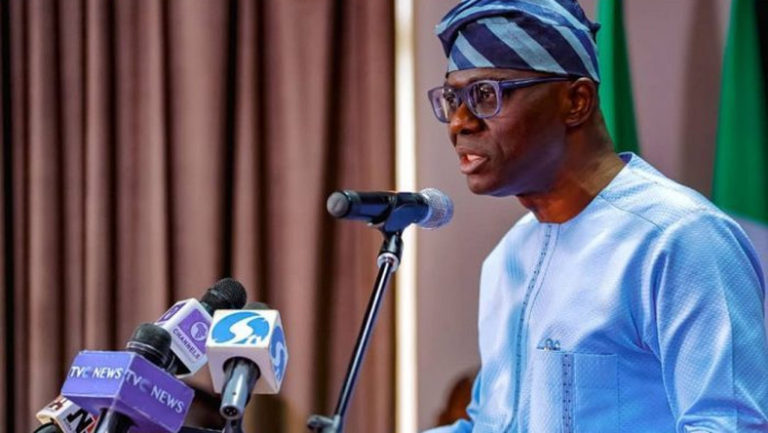
THE Lagos State Governor, Babajide Sanwo-Olu has approved an increment in hazard incentives paid to health workers in the state from N5000 to N25,000 naira.

Sanwo-Olu through a circular from the Office of the Head of Civil service in the state, Hakeem Muri-Okunola, made this disclosure on Tuesday.

According to the circular, increase in the incentive is a gesture in appreciation of dedication of all health workers in the state towards fighting Coronavirus pandemic (COVID-19).

It further read that because health workers expose themselves to hazardous diseases on daily basis, hence an increase in the incentive.

The Lagos State government implored the health workers to reciprocate the gesture through dedication and tolerance towards their responsibilities as health workers in the state.

The ICIR had reported the paltry amount of hazard incentives being paid to health workers throughout the nation.

Sources confirmed to The ICIR that Nigeria health workers are paid N5,000 hazard allowance, a contemptible amount when compared to other African Countries like Liberia, Ghana, South Africa, among others.

However, Sanwo-Olu instructed Accounting Officers of the state to take note of the development.

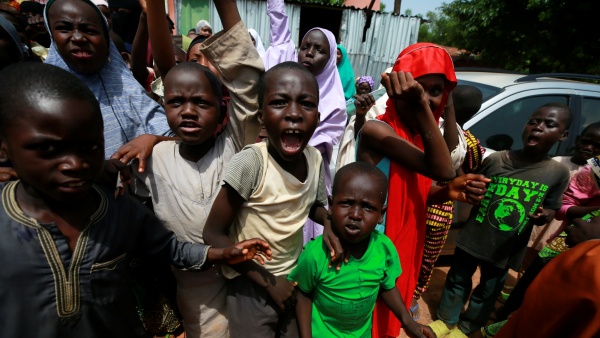
COVID-19: Include Almajiri children in your response plan, Forum urges FG

A group of  six Civil Society Oragnisations (CSOs) under the auspices of Advocates for Dan Almajiri has called for the inclusion of Almajiri children in the Federal Government’s ongoing stimulus plans as the Coronavirus disease (COVID-19) pandemic continues to spread across the country.

The CSOs include Plan International Nigeria, Street Child, Riplington Education Initiative (REI), Almajiri Child Rights Initiatives and ActionAid Nigeria.

According to the group, the need to include the Almajiri children in the government’s response plan was necessary in order to prevent a possible outbreak among the children as they are vulnerable.

In a statement signed by the Advocates for Dan Almajiri obtained by The ICIR, the forum “lauded the palliative measures rolled out by various levels of governments with support from the private sector.”

The group, however, “decried the exclusion of Almajiri children who are already exposed to poor health conditions and the probability of contracting the virus, given their situation”.

“While it is laudable that government is investing resources to maintain law and order during the pandemic, there is no evidence of special attention to issues affecting children, especially the Almajiri and other street kids, who are more vulnerable in periods of emergency which offer a supportive environment for potential predators,” the group said.

“The Almajiri children are far removed from all major sources of information on COVID-19 and the opportunity of parental guidance on the messages and guidelines.”

“Implication of this is that they are not able to protect themselves and will not be able to observe any social or physical distancing or access medical services should they contact the virus.”

The Forum called  for the expansion of the social register to include the Almajiri children to provide food, non-food items and cash palliatives for them at strategic locations close to them.

Other submissions made in the press statement  included provision of temporary shelter and proper safety and protection of the children on transit in line with child protection and safeguarding principles as contained in the Convention on the Rights of Children, African Charter on the Rights and Welfare of the Child and other conventions that the country has signed and ratified.

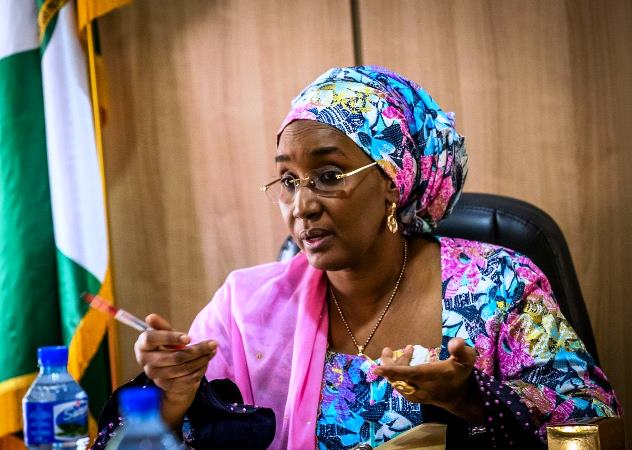
This is coming after the Federal Government through Sadiya Farouq, the Minster of Humanitarian Affairs and Disaster Management, last week disclosed disclosed that People Living with Disabilities (PLWDS) would be considered in the new tranche of palliatives to cushion the effects of lock down on Nigerians.

Almajiri kids are itinerant kids sent by their parents from far and near to Quranic teachers to mentor them through their religious knowledge across the country. Most time, they are left to fend for themselves and they survive through street begging and scavenging.

A factsheet report by the National Council for the Welfare of the Destitute (NCWD) pegs the total number of Almajiri to seven million. The system lacks things like good teachers and basic amenities like proper clothing and shelter.  According to a 2014 report by UNICEF, the Almajiri children constitute 9.5 million of the country’s children within the ages of 3-14.

More than quarter of a billion people could be affected by acute hunger by end of 2020 – UN

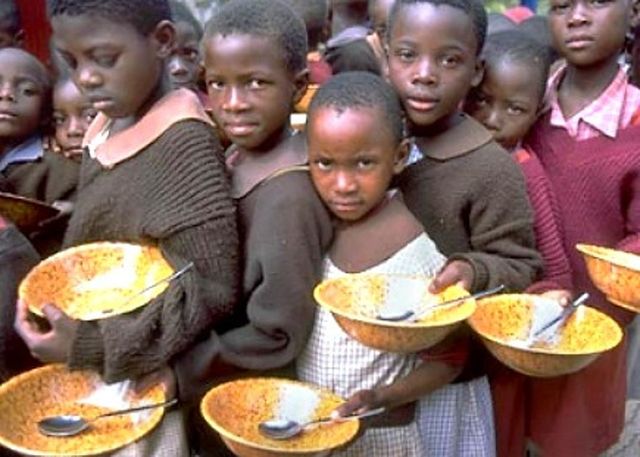
THE number of victims of COVID-19 pandemic could almost double the number of people suffering acute hunger, pushing it to more than a quarter of a billion by the end of 2020, the United Nations (UN) World Food Programme (WFP) warned today in a new report.

According to the UN report, the number of people facing acute food insecurity stands to rise to 265 million in 2020, up by 130 million from the 135 million in 2019, as a result of the economic impact of COVID-19, according to a WFP projection.

Global Report on Food Crises showed that Nigeria was among the ten countries that constituted the worst food crises in 2019: Yemen, the Democratic Republic of the Congo, Afghanistan, Venezuela, Ethiopia, South Sudan, Syria, Sudan, and Haiti.

The estimate was announced alongside the release of the global report on food crises, produced by WFP and 15 other humanitarian and development partners.

It is vital that the food assistance programme is maintained, including WFP’s own programmes which offer a lifeline to almost 100 million vulnerable people globally, the report showed.

WFP’s Senior Economist, Arif Husain said “COVID-19 is potentially catastrophic for millions who are already hanging by a thread. It is a hammer blow for millions more who can only eat if they earn a wage.”

“Lockdowns and global economic recession have already decimated their nest eggs. It only takes one more shock-like COVID-19 – to push them over the edge. We must collectively act now to mitigate the impact of this global catastrophe,” he added.

According to the report, the pandemic was first felt in some of the world’s biggest economies, originating in China, then hitting Italy and Spain, and now the United States has become the centre.

There is less data available on the spread in developing countries, where widespread testing is not being done and healthcare systems are often lacking.

Ganduje condemns organisers of football game despite lockdown order

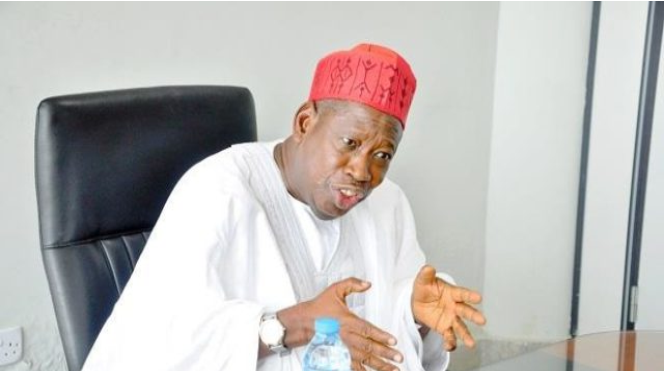
ABDULLAHI Ganduje, the Kano State Governor on Tuesday chastised organisers of a football game in the state despite the compulsory lockdown announced by the state government to check spread of the Coronavirus disease (COVID-19) pandemic.

A viral video of some Kano residents yesterday flooded the social media, where spectators defied the lockdown directive to watch a football match.

He said all individuals should work in support of the government, stressing that 23 additional cases were already recorded in the state.

“It’s a bit unnerving to have select people still disregard the lockdown up to the point of organising football games. We need every hand on deck to beat #COVID19 and I ask that everyone puts in their own shift to make sure we contain this pandemic as soon as possible,” Ganduje announced on his social media handle.


READ ALSO:

“The number of infected persons in our wonderful state of Kano is now 59, while additional 23 cases were registered yesterday and I would like to appeal to everyone to obey the lockdown rules.”

The Nigeria Centre for Disease Control (NCDC) as of 20th April stated that the nation had so far recorded 665 cases, 22 deaths while 188 cases had been discharged.

In its latest public data shared on its verified Twitter handle, 23 cases were confirmed in Kano state.

The recent figure, however, put total cases in Kano at 59. This ranks Kano state third in the list of states with the highest number of COVID-19 cases after Lagos and the Federal Capital Territory as at the time of this report.

Lagos state with the highest number of confirmed infected persons has so far recorded 376 cases while FCT has 89.

Other states with average cases are Osun (20), Oyo (16), Edo (15) and Ogun state (12).

The pandemic which broke-out in Wuhan China, last year December, as reported officially by the World Health Organisation (WHO) has so far spread to 213 countries, killing 163, 097 people among 2,402,250 confirmed cases globally.