Home Blog Page 2137

Ministry of finance asks for assistance of 100 to 500 ventilators from Elon Musk on Twitter

THE Ministry of Finance Budget and Planning through its official Twitter handle @FinMinNigeria asks for assistance from Elonmusk (@elonmusk), saying the Federal Government of Nigeria needs support with 100-500 ventilators to assist with COVID-19 cases arising daily in Nigeria.

Elon musk through his official Twitter handle said his company has extra FDA-approved ventilators and would ship to hospitals worldwide within Tesla delivery regions.

He added that device and shipping costs are free, the only requirement is that the vents are needed immediately for patients not stored in a warehouse.

Elon Musk is the co-founder and CEO at Tesla, overseeing all product design, engineering and manufacturing of the company’s electric vehicles, battery products, and Solar Roofs.

Recall that the Central Bank of Nigeria (CBN) set up a private-sector coalition against COVID-19 and has so far realised about N15.325 billion as contributions to tackle coronavirus in the country.

This was made known by Isaac Okorafor CBN Director, Corporate Communications Department in Abuja on Wednesday.

Beijing is manoeuvring to “seize the opportunity” that the crisis presents – Horizon Advisory

THE Horizon Advisory a consultancy that tracks Chinese government and economic activities showed in its report that as the world wrestles with the pandemic, its human, economic and social cost, Beijing is manoeuvring to “seize the opportunity” that the crisis presents.

According to the report, Beijing intends to use the global dislocation and downturn to attract foreign investments, to seize strategic market share and resources.

The report also showed that China has a temporal advantage, COVID-19 began in China, as at today workers are already returning to the jobs.

In an Aljazeera report, which showed how China is set to unleash trillions of yuan of fiscal stimulus to revive an economy expected to shrink for the first time in four decades amid the coronavirus pandemic, while a planned growth target is likely to be cut, according to four policy sources.

China has already rolled out a series of fiscal and monetary measures to provide credit and tax relief to companies, especially small businesses that have borne the brunt of the outbreak, the report revealed.

The ramped-up spending will aim to spur infrastructure investment, backed by as much as 2.8 trillion yuan ($394billion) of local government special bonds, said the sources.

According to the report, in a surprise move on Friday, China kept its benchmark lending rate unchanged, defying expectations that it would ease borrowing costs as businesses face widespread disruptions from the coronavirus pandemic.

Seyi Kolawole a Financial Analyst with NASD PLC who spoke with The ICIR said, “The unchanged rate suggests policymakers may think recent measures are enough to help the economy in the immediate term”.

“The lack of any cut this month means that the Loan Prime Rate (LPR) is still only 10 basis points lower than it was at the end of last year, following a small cut in February,” Julian Evans-Pritchard, senior China economist at Capital Economics said in a note.

“In COVID-19, Beijing sees the chance to win, this time China benefits from a near-peer strategic position.

It also benefits from first-mover status,” the Horizon report states.

The one-year LPR was left unchanged at 4.05 per cent from the previous monthly fixing while the five-year LPR remained at 4.75 per cent.

They are positioned to out space their global peers and capture global demand once developed economy return online, months behind China, the report revealed.

Authoritative Chinese sources stated in a report that the economic ravages that dislocation that COVID-19 gives China an opportunity to expand its dominance in the global market and supply chain; manufacturing, oil, fintech and e-commerce.

A Washington Post report revealed in its report too that China is planning to overproduce various goods to flood the market and increase its market share while Western companies are on their backs.

China is also setting itself up to be a haven for foreign capital if its markets bounce back before the rest of the world.


Gbajabiamila meets power minister as Nollywood actress laments poor electricity supply during lockdown

THE SPEAKER of Nigeria’s House of Representatives, Femi Gbajabiamila on Wednesday met with the Minister of Power, Sale Mamman and the management of the National Electricity Regulatory Commission (NERCNG) over a viral video by popular Nollywood actress, Ada Ameh.

Ameh had in the video making rounds on the internet, protested the poor electricity supply to Nigerians during the ongoing lock-down in major parts of the country to prevent the spread of the Covid-19 infection.

The Speaker noted the calls and messages from many Nigerians through his social media account, reacting to the protest video and calling for prompt action.

The Speaker in a series of tweets on Wednesday night said, “It has become imperative that I urgently call for this meeting to find a solution to the poor supply of electricity during this lock-down period. If we ask people to stay at home to prevent the spread of the coronavirus, at least we have to make their homes comfortable for them.’’

The Minister of Power, Sale Mamman, on his part, highlighted the challenges encountered by power generating companies (GENCOs) which includes complaints that Discos remit only 20 per cent of their dues.

‘’What the national assembly  can do is to plead with CBN to help with funds to enable the Federal Government to augment the revenue shortfall to enable government pay gas companies and thereafter bring all the critical stakeholders to a table,” the power minister said.

According to the tweet, the Group Managing Director of the NNPC, Mele Kyari had via a call hinted that the problem with the Trans Vocados gas line has been resolved and gave assurance of adequate supply of gas to enable GENCOs to generate power.

Also contributing to the issue, The Minister of Finance Zainab Shamsuna and the Governor of central bank, Godwin Emefiele, gave accounts of complications arising from the non-fulfilment of financial obligations by electricity stakeholders but assured of interventions in the interest of Nigerians.

14-day lockdown: Worshippers attack Lagos State Taskforce during prayers

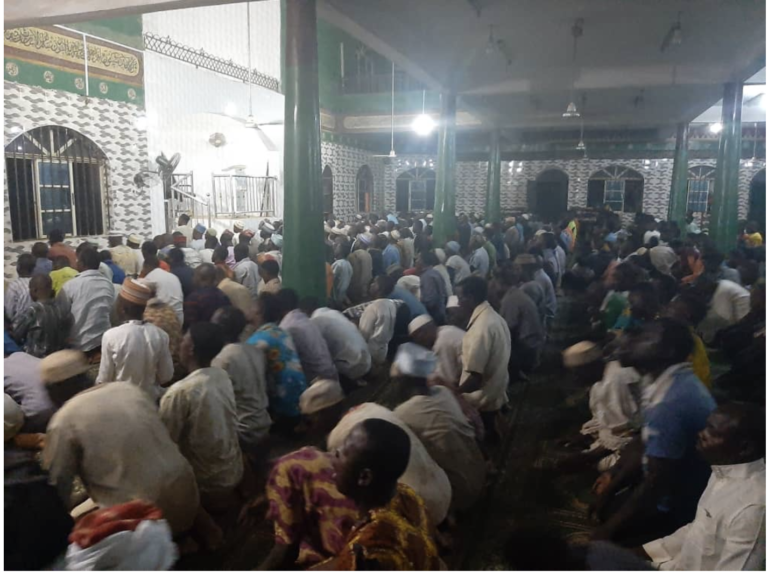
LAGOS State Taskforce officials were on Tuesday attacked by Muslim worshippers at Agege Central Mosque, while enforcing the lockdown order and ban of public gathering mandated by the Governor Babjide Sanwo-Olu.

While speaking about the incident, the General Manager, Lagos State Environmental Protection Agency (LASEPA) and leader of the Taskforce, Dr. Dolapo Fasawe disclosed that the COVID-19 Taskforce team comprising of Lagos State Environmental Protection Agency (LASEPA), Lagos Safety Commission and the Rapid Response Squad were attacked by Muslim faithfuls who against the order of the governor observed evening prayers in hundreds.

In attempt to disperse the crowd and enforce the law designed to curb the spread of coronavirus in the State, the Taskforce team were attacked.

According to Fasawe, the worshippers numbering up to 300 exited the mosque and attacked the Taskforce team with stones, while chanting ‘Allahu Akbar’. It took the intervention of the police escort to stop the attack and restore some peace.

“A drama ensued when some of the Muslim youths sighted the team and became aggressive, unruly and started to attack the team.

Others in the mosque, numbering about 300 rushed out chanting ALLAHU AKBAR and joined them in the attack by throwing stones at the vehicles.

All entreaties to talk to the Imam failed as the youth were persistent. But the Police escort rose to the occasion by curbing further attacks and ensuring the safety of the team,” she disclosed.

Fasawe condemned the incident, stating that the Taskforce officials were only doing their job in protecting the citizens against further spread of the virus and meeting a hostile crowd is both dangerous for the people and the officials.

In response, she stated that the State Government will not hesitate to sanction violators to serve as a warning to others, adding that the Muslim worshippers clearly disregarded the order of the governor and endangered their own lives in so doing.

Fasawe also promised to escalate the matter to appropriate quarters because such gathering should not be allowed to continue in the interest of all.

Meanwhile, the National Human Rights Commission (NHRC) has asked Nigerians to report any case of human rights violation and abuse by security agents enforcing compliance of the of 14-day lock down imposed by the Federal Government to prevent the spread of coronavirus.

[Covid-19: My Lockdown Diary] Day 2: It’s like the end of the world has come

By Theophilus Abbah


Though I announced, on Day 1, that, for me, the lockdown for coronavirus started on Sunday, March 29, Nigeria’s strict social distancing, a preventive measure, officially took effect from Monday, March 30. It would be intensified on Tuesday, March 31 – for two weeks.

I’m no clairvoyant, but I was still curious to know the furnace of fire on the path my family and I as we march through the impending uncertainty. How would we survive the load of famine, dearth and dryness being conveyed in the lockdown? How would the pains and misery of the lockdown on Monday be different from the disillusionment I endured on my uninspiring Sunday?


READ ALSO:

To answer this question, I decided, in the order of armchair and lazy researchers, to turn to Google.com. How? Legal lockdown [because it was pronounced by government] was unimaginable, especially, now that it would take two weeks, not like 12 hours that election restrictions would impose. For me, a nightmare that approximated the legal lockdown was a criminal lockdown I experienced over thirty years ago in a bloody, destructive and unforgettable sectarian violence against the late Evangelist Reinhard Bonnke’s crusade in Kano.

In two days, the killers paralyzed peace in the ancient city and turned us, a starving population, into beggars and hangers-on at Bompai Police Barracks. The city was shut down for almost a week, but the predicament that accompanied it gave us the impression that life had come to a standstill for months or even years.

That was when I realized that starving for one day could obliterate one year of pleasure, abundance and even gluttony. The mayhem was the storyline of my novel, Lost in the Wind (2012).

So, how do I predict what awaited me in the lockdown? I would search for what the people of Wuhan in China, from where coronavirus sprouted in December 2019, would have to say. Yes, I was riding on the crest of an inspiration. Human experiences are similar, so Wuhan lockdown could prepare me psychologically for the odd world I will walk through in the next two weeks.

If you read my experience on the first day, you would, by now realise that my life seems chained to my library. Yes, my library. Before my family struggled out of their bed on Monday morning, I had woken up my laptop, activated my Spectranet modem. Instantly, I noticed that it had begun to lie to me, saying the network was ‘connected and secured,’ when in reality, I could not launch unto Google. Okay, I had come to terms with being let down by one internet service provider. Next. I activated the hotspot of my MTN.

As if it were drowsy, it woke up but was of no use. I turned to Glo. Still useless. Were internet service providers on lockdown, and so early on this first day? I wondered. Then, my eyes caught my daughter lumbering and shuffling from the kitchen to the living room. I asked her if she had internet connectivity on her phone. Yes. Etisalat came to my rescue. After begging it persistently for almost three minutes,

Etisalat, through hotspot, granted me access to the world.

The key words – lockdown, Wuhan, experience. Google pages transported me into a land of misery. Chinese writer Fang Fang was already keeping a diary, a chronicle of the experiences of the people in Wuhan consistently for 60 days. The contents were ghostly. Unbelievable.

Unimaginable. Cities without vegetables to buy. Scarcity of basic items. Water, food, everything had to be ordered from Taoboa, the biggest e-commerce website in China. As the people were quarantined, millions of them, imprisoned in their homes, motorcyclists rode from street to street and house to house, to deliver food and essential items to security men who passed those items to house owners. Previously busy streets were empty; and life effectively came to a standstill.

Is this possible in Abuja? I asked myself. Here anything is possible; could even be worse.

For over two hours I suffered the discomfort of a man laying on a comfortable water bed but plagued by obstructive insomnia. I was not at peace with myself, not sure of what I should do, not afraid, not full of faith, not able to fathom a source of solace, not sure of how to escape the inescapable gloom ahead.

Then, a thought occurred to me. Why not start from the beginning. I returned to my library and began to write down on a piece of paper what I needed urgently in the event of a complete lock-down – fuel to run my generator. Cash – in case of health emergency. Water, water, water. Woo unto me, the water from my borehole is not drinkable; I could drink it, but I would require a hospital ambulance stationed at the gate

of my house if my children would try to drink of it.

As I wrote my list of needs, my phone rang. It was my wife.

“Where are you?” she asked, urgency ringing out of her voice.

“In my library,” I replied.

“Doing what? People are mopping up shops and petrol stations, but you’re on your laptop?”

She runs a small supermarket in our estate and had rushed out early to buy and stock daily needs for customers who would patronize her during the lockdown.

Quickly, I entered my jeans and drove out. First, to a petrol filling station. I met a long queue that frustrated me. Yes, fuel now costs N125/litre, no thanks to the plummeting prices of oil and gas in the international market. Why this queue? Almost every vehicle had multiples of 25 litres plastic containers, as if those containers were the passport to life in Abuja.

At the petrol station that serviced Sun City Estate, the dual queues extended to the estate’s gate. I joined one of them. From behind, I noticed how petrol attendants perspired, overwhelmed by the numbers of vehicles and gallons they had to fill for desperate and impatient customers.

Many forgot their patience at home, so they howled, screamed at petrol attendants for being too slow in attending to vehicles ahead of them in the sprawling row. Five minutes after, my own queue was still and motionless; it made little or no progress.

But behind me, it had elongated, like the ominous row of the dead. After almost two hours, I purchased 50 litres of petrol, enough for my car and generator.

Next, I drove to ATM machines at the Federal Housing Authority (FHA) in Lugbe. Another discouraging queue awaited me as I drove from one bank to another, without reprieve. Close to one of the banks was a supermarket that sold goods in wholesale. Many vehicles crowded around the environment that I had to look for a decoy.

My initial instinct was that a ceremony was being held in disobedience to government’s social distance warning. But I was wrong. Abuja residents, car owners, were filling their car booths and seats with essential items. With the rush, one would think there was Santa Claus, Father Christmas, distributing free items to the people ahead of the lockdown.

Feeling stupid for not joining the buying frenzy, I instantly called my wife, to ask if we had enough meat in the house. Enough for a week? No. I quickly transferred some cash to her to purchase some from Lugbe market. Luckily, she called a butcher she patronized regularly. The man told her that she was late.

There was no meat in the market. The butcher had actually slaughtered three cows on Monday, and before evening, they had all sold out. But he asked my wife to still drive down, promising to reserve some pounds for her. At the market, my wife was shocked as the place had been submerged by vehicles driven by desperate buyers who scrambled for meat as if the world was about to come to an end.

Then, inflation stepped into the rush. First, it hit bread. From my regular bread seller, I met empty shelves in the makeshift bus that had become her stall. There were few loaves of bread, though their prices had shot up. What used to go for N400 now grew an additional N50.

Then, a pack of sachet water that sold for N100 now cost N150. It all sounded stupid. Face masks that I purchased for my daughter at N750 a pack now sold for N500 per piece. Hand-gloves which children played with became an indispensable accessory in the house, so its prices must be jerked up. Yams, food

items were being mopped up. It all looked nauseating, and annoying.

But, in Nigeria, we are used to self-help. We sink our boreholes for water; hire private security to guard our communities; pay children’s school fees with our blood; contribute money to repair feeder roads; satisfy hospital entrepreneurs’ lust for money in order to keep healthy… So, we rush to help ourselves ahead of the impending lockdown over coronavirus.

Though over N22 billion had migrated as donations from the pockets of wealthy Nigerians into government coffers, we are not clear about how the money would be utilized. So much money is pouring into government coffers; how it would be used to cushion the effects of coronavirus on the people we don’t yet know. We’ve been told of funds that would go to the ‘poorest of the poor’ [we don’t know the indices used to fish them out] and for feeding school children who are on compulsory coronavirus break with their parents. Already, doubting Thomases on twitter are smelling corruption and are raising alarm.


For me, being quarantined to my library for two weeks would afford me the opportunity to attend to the backlog of work choking me out of comfort. It looked like a good period for me to settle many matters…
Then, the sad news arrived through my Nokia handset.

It arrived from six hundred kilometres away, from my village. My amiable, hurt-no-fly, compassionate, affectionate, loving, affable, long-suffering uncle, Sunday Jonah, had passed on to glory. He was my uncle, a good accountant.

He would be buried on Friday, April 3, 2020. Being locked down, or rather quarantined in my house in Abuja, I will not make the trip across the border from the Federal Capital Territory (FCT) to Kogi State for the funeral and burial. The police would smell me – I could be a cargo of deadly coronavirus from polluted FCT to my untainted home state.

So sad for me.

My late uncle, Sunday Jonah

Sunday, may your soul rest in peace.

Author: Theophilus Abbah
I’m a journalist, writer, researcher and trainer. I hold a PhD in English Language with specialization in Forensic Linguistics – Language and Law.
Twitter @theophilusa
Facebook Page: Facebook.com/Ngfact

‘An attempt to gag the media’: Journalists on Nigeria’s proposed social media bill

Jonathan Rozen/CPJ Senior Africa Researcher


AT a public hearing on Nigeria’s social media bill held in Abuja last month, the voice of Chris Isiguzo, president of the Nigerian Union of Journalists (NUJ), rang clearly across the room: “This bill…seeks to pigeonhole Nigerians from freely expressing themselves.” The NUJ is “totally opposed” to it, he said.

This strong opposition was echoed by multiple other civil society groups, according to local media reports and a recording of the hearing posted on Twitter with the hashtag #SayNoToSocialMediaBill by Paradigm Initiative, a local digital rights organization. By contrast, a Nigerian army representative welcomed the bill for “reasons of national security,” telling the hearing it would supplement an existing cyber warfare command. The local Guardian newspaper reported in 2018 that the command was established to combat fake news.

At the time of publication, it was not clear whether the COVID-19 crisis would impact the timeline for consideration of the bill, which was scheduled to be sent for a third reading by the senate in April. On March 24, Nigeria’s National Assembly began a two week shutdown with possible extension based on the public health response, Mohammed Sani Musa, a senator from Niger State who is sponsoring the bill, told CPJ. False information related to the coronavirus was an example of the need for the legislation, he said.

Nigeria’s Protection from Internet Falsehood and Manipulation Bill 2019 says that individuals who transmit statements that authorities determine to be “false,” likely to “influence the outcome of an election,” or “prejudicial to the security of Nigeria,” may be imprisoned for up to three years or fined up to 300,000 naira (US$844) or both, according to CPJ’s review of the text. Offenders who are not individuals face fines up to 10 million naira ($27,247 USD). Another section of the bill introduces fines for companies who fail to comply with orders to disable Nigerians’ access to content.

Musa told CPJ that the bill was intended to “mitigate the propaganda of fake news” that travels at the “speed of light.” He said it was important in addition to existing cybercrime legislation, though he did not provide specifics. Nigeria’s 2015 cybercrime act has been used to arrest journalists who criticize officials on social media, as CPJ has documented.

Musa told CPJ the bill was guided by online controls in other jurisdictions, including Singapore, the U.K., the EU, and the United Arab Emirates—where a cybercrime law was passed to suppress criticism on social media, observers have told CPJ. CPJ found strikingly similar language between Singapore’s 2019 Protection from Online Falsehoods and Manipulation Act—which CPJ has condemned—and Nigeria’s social media bill, notably in sections denoting prison time for individuals who post “false statements of fact.”

“If there’s a society like Nigeria, we feel imprisonment is necessary,” Musa said, arguing for deterrence as a tool to manage speech online. He was, however, open to the bill being amended or even dropped. “Any bill that is going to infringe on the fundamental freedom of every Nigerian…I would be against it,” he concluded.

CPJ asked four Nigerian journalists what they thought about the bill. Their answers have been lightly edited for length and clarity.

Ajibola Amzat (Credit: Busola Ajibola)

Ajibola Amzat, editor with the privately owned International Centre For Investigative Reporting (ICIR), based in Abuja

You say we should not share information or transmit information that is false, and then we begin to ask, well, what is falsehood? When you say people should not transmit false information—false information according to who?

Now [the government] realizes that the Nigerian media is getting more critical and having a better sense of awareness of what is going on, and Nigerian people are getting to know a little more about the hypocrisy of the government, and they are talking more freely about it. That is what [the government] does not want to happen, and that is the purpose of bringing up this kind of bill.

The parts that say you can’t transmit information that may affect national security, you can’t transmit information that you know is false, you can’t transmit information that you know will influence the outcome of elections. It’s something that can actually put journalists into easy problems, because you don’t know what the government will consider as “national security.”

How can you jail somebody for saying something? If you think what somebody is saying is false, then bring out the truth, so that the falsehood and the truth can stand together and then people will decide for themselves. But you cannot go ahead and criminalize people, that is like trying to kill people’s spirit to talk.

And don’t forget, apart from journalists, the organization who carries such information is also going to be sanctioned. So the media organization will also pay if you are found to be the one who published such information or misinformation. It’s an attempt to gag the media.

This kind of boldness is coming from places like China and Singapore, and other places where the freedom of expression is being repressed. Nigerian democracy is already broken, but it is going to be more shattered if this kind of bill would be allowed to pass.

The laws that even enable journalists to do their jobs are often disregarded. I mean the laws, like the FOI [freedom of information] law, should enable journalists. Most of them [government agencies] don’t have regard for that law…many agencies of the government are not disclosing information vital for public interest. Those are the laws that are supposed to enable the work of journalists. But those laws are just laws on paper. And now [they] bring some other laws to criminalize what journalists do.

Yecenu Sasetu. (Credit: Toby Martins)

Yecenu Sasetu, health reporter for the privately owned Kiss FM radio station, based in Abuja

As a media person, if this is passed into law it’s going to stifle my voice because the government is going to be in control. They are going to be in control of our online presence.

Now if, as a journalist, I put out content online and the government decides this is “fake news,” of course it won’t fly. Yes, I’ll be penalized. A whole lot of things that we need to put out we may not be able to put out, because it is going to put fear in a whole lot of media people. They will feel they do not want to anger the government.

So you cannot criticize, you cannot give opinions. It’s going to really stifle the voice of traditional media. Forget about the regular, everyday person that just wants to put out content—it will stifle the voice of every media person.

There has been a lot of criticism of the present administration. People are not getting what they expected, especially in terms of the economy. There is insecurity, there are just a whole lot of issues. People come online to vent. People do not really have access to their representatives, their lawmakers, their elected government officials, so the only way they really get to vent is on social media.

I would say it’s just a bid to get people not to say so much, not to be as critical of the government as they are right now. I would say it’s just a bid to control everything and everyone.

Chris Kehinde Nwandu. (Credit: CKN NEWS MEDIA GROUP)


Chris Kehinde Nwandu, publisher of the privately owned CKN News site and president of the Guild of Professional Bloggers of Nigeria, based in Lagos

Some of us have been arrested in the past. I personally was arrested about five years ago, and I stayed about two weeks in jail for some of the information I published [on social media].

For me and my organization, we believe there is no need for another law, the social media bill or whatever. We already have enough laws. In 2015 there was the cybercrime law, but they are trying to come up with another law. We sense there are some political motives behind it.

This may be a law to give more ammunition to some people, to put some level of fear into the minds of journalists. Some people are just trying to wither down the voice of the media, to shut them up. Democracy is about free speech.

I am not totally against a law that regulates what people do. Across the globe there are certain standards that are expected of professionals. [But] this is not China. This is not North Korea. This is not Cuba or one of these countries. This is a democracy.

Amran Aliyu. (Credit: Imona Rage)

Amran Aliou, reporter with the federal government-funded Search FM radio station, based in Minna, Niger State

In Nigeria, the only way people get to talk [and] express their views is on social media. They get to hold politicians and policy makers accountable the only way they can reach them, which is on social media. And so far it’s been working well, because the government feels out of place and tries to right their wrongs.

For example, in Niger State we are battling with potholes, terrible roads jam-packed with trailers and heavy duty cars, to the extent that sometimes these vehicles get stuck or fall off and there are oil spills. People feel fear for their dear lives, so most times they snap [photographs of] these incidences and try to question the government on social media, tagging some notable handles. This has, in a way, put the government to order. They try to right their wrongs [and] in turn post it [their actions] on the same social media through their aides. So social media to some extent has impacted positively on the changes the people get to enjoy.

This article was originally by CPJ.

MRA pledges legal action against Federal Ministry of Information, inducts it into the ‘Enhanced FOI Hall of Shame’

THE MEDIA Rights Agenda (MRA) on Wednesday has inducted the Federal Ministry of Information and Culture into its “Enhanced Freedom of Information (FOI) Hall of Shame” for its “scandalous failure” to comply with the FOI Act, 2011 over the last nine years and vowed to take legal action against the ministry to compel it to comply with the provisions of the Law.

In a statement issued in Lagos, MRA described the  inability of the  Ministry charged with leading and coordinating the country’s public communications to put in place the most basic institutional structures and mechanisms for providing members of the public with information, as required by the FOI Act as a national embarrassment


READ ALSO:

MRA’s Programme Director, Ayode Longe, said in the statement:  “Whether motivated by an arrogant disregard for the FOI Act, institution-wide ignorance or sheer incompetence, this scandalous failure or inability of the Ministry to comply with its duties and obligations under the Act over the last nine years has further served to rob it of essential credibility in speaking on behalf of the Federal Government of Nigeria or in leading and coordinating its public communications.”

Longe explained that the Ministry has been inducted into the “Enhanced FOI Hall of Shame” for a long list of transgressions under the FOI Act, including failing to publish the title and contact details of an appropriate official to receive requests for information from members of the public,  as required by the FOI Act and the Implementation Guidelines issued by the Attorney-General of the Federation; and refusing to perform its proactive publications obligations under Section 2(3), (4) and (5) of the FOI Act.

According to him, other acts of non-compliance by the Ministry include failing to provide appropriate training for its officials on the public’s right of access to information held by the Ministry to ensure the effective implementation of the Act as required by Section 13 of the Act; refusing to disclose information to members of the public seeking information from it under the FOI Act; and persistently failing to submit its annual reports on its implementation of the Act to the Attorney-General of the Federation as required by Section 29 of the Act and the Attorney-General’s FOI Implementation Guidelines.

Citing the Ministry’s statement on its website, which spells out its mandate as: “Management of the image, reputation and the promotion of the culture of the people and Government of Nigeria through a dynamic public information system that facilitates access by the citizens and the global community to credible and timely information about our nation,” Longe described its performance of these tasks as a woeful failure.

Longe stated that “It is ironic that the Ministry, which describes itself as the Federal outfit responsible for the dissemination of essential and vital information which will enhance and facilitate democratic governance of Nigeria, is unable to publish and disseminate information about itself and its activities, which the FOI Act mandates it to publish and which should have contributed to advancing the fulfillment of its mandate.

Elaborating on the issue, Longe said of the 16 categories of information that the FOI Act in Section 2(3) and (4) requires all public institutions to proactively publish and disseminate, the Ministry has only complied with one of these categories by publishing on its website, the list, description and responsibilities of its departments.

He noted that Section 29 (1) and (2) of the FOI Act obligates the Ministry to submit to the Attorney-General of the Federation its annual implementation report of the Act on or before February 1 of each year, observing that “for the past nine years since the Act was enacted, available records show that the Ministry has submitted just one report since 2012.

Thereafter, it has neither submitted any implementation report nor has it published and made any such report available to the public.”

Longe further said MRA was not aware of any single request for information that the Ministry has granted over the last nine years, and that on the contrary, several applications to it for information have simply been ignored, contrary to the provisions of section 4(b) of the Act, which makes it mandatory for a public institution to give a written notice to an applicant for information if it intends to deny access to all or part of the information requested with reasons for the denial.

He also added that although the Ministry has apparently designated an FOI Desk Officer to whom applications for information under the Act should be sent, it has however not published the title and address of the officer, as required by Section 2(3)(f) of the Act.

According to him, there is also no indication that the Ministry has provided appropriate training for its officials on the publics’ right of access to information and for the effective implementation of the Act, as it is obliged to do under Section 13 of the FOI Act.

Longe described the Ministry’s performance of its duties and obligations under the FOI Act as “appalling” and pledged that MRA would institute legal proceedings against the Ministry in the appropriate court to compel it to implement the Act.

Nigeria govt sues H-Medix, Bakan Gizo, others over price gouging of hand sanitizers, face masks

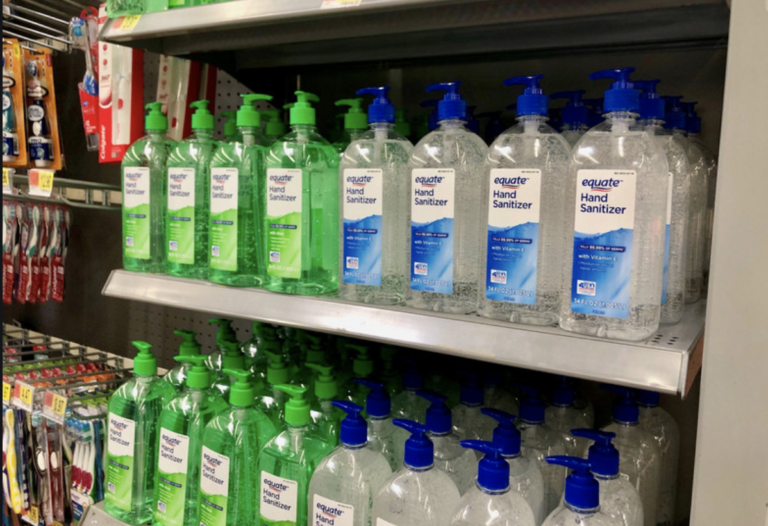
THE Federal Competition and Consumer Protection Commission (FCCPC) on behalf of the Nigerian government, has sued four supermarkets in the Federal Capital Territory (FCT) over price gouging of hand sanitizers, disinfectants, hand-wash liquids and face masks.

The ICIR learned that the stores and their proprietors are to answer to a six-count charge bordering on allegations of “false, misleading, deceptive representation in relation to the price of sanitizers, hand-wash liquids and disinfectants of various existing brands on display at their retail outlets.”

The accused stores in addition to their pharmacies include; H-Medix Pharmacy & Stores Limited, and the representatives, Sandra Ejekwu and John Oluwagbemiga and Prince Ebeano Supermarket Limited and its proprietor, David Ojei.

The others are Bakan Gizo Pharmacy & Stores Nigeria Limited, and the representatives, Ray Opia and Luter Irene, as well as Faxx Stores & Trading Limited and the representative, Adogah Ahmed.

Following the record of coronavirus cases in Nigeria, items such as hand sanitizers, disinfectants and face masks have become necessities.

Due to the increase in demand, some retailers resulted in hiking prices of such items which caused several outcries on social media.

To the effect, the FCCPC issued directives on February 28 and March 24, warning supermarkets and retailers against using the coronavirus pandemic as a means to increase prices of products needed to ward off the virus.

After registering complaints and carrying out investigations, these four stores were found wanting.

According to reports, the charges against them were for violating Section 125 (1) (a) of the Federal Competition and Consumer Protection Act, 2018 and punishable under Section 155 of the Federal Competition and Consumer Protection Act, 2018.

PREMIUM TIMES reports that in the statement of claim filed before the Federal High court, Abuja, the charges were spelled out to be; “exploiting the national public health emergency of COVID-19 (Coronavirus) pandemic to engage in price gouging of hand sanitizers and surgical disposable face masks of various existing brands and thereby engaged in the use of undue influence, pressure, unfair tactics and other obnoxious practices in connection with the supply of goods.”

It was gathered that the Commission accused Bakan Gizo Pharmacy & Stores Nigeria Ltd of committing the offences between February 1 and March 9, 2020, across its retail stores and also accused Prince Ebeano Supermarket Limited and H-Medix Pharmacy & Stores Ltd of committing the offences between February 28 and March 6, 2020.

FAXX Stores & Trading Ltd was accused of committing the offences between February 1 and March 24, 2020.

Meanwhile, Environmental Rights Action/Friends of the Earth Nigeria (ERA/FoEN), has warned that smokers are at higher risk of developing fatal complications if they contract coronavirus.

Quoting a research, the group said “12.4 per cent of current smokers either died, were admitted to an intensive care unit or required mechanical ventilation, compared with 4.7% of non-smokers. Along similar lines, 21.2per cent of current smokers had severe symptoms, as opposed to 14.5% of non-smokers”.

COVID-19: JAMB donates 3 ventilators to FG, urges candidates to stay safe

THE Joint Admissions and Matriculation Board has announced the donation of three ventilators to the Federal Government to aid the fight against COVID-19 in the country.

JAMB disclosed the donation through a statement signed by Fabian Benjamin, the Board’s Head of Public Affairs on Wednesday.

According to Benjamin, the ventilators are to serve University of Abuja Teaching Hospital, Gwagwalada and one to the principal hospital in the Board’s host community, the Bwari General Hospital.

“In the Board’s own little way of ensuring that government strategies and preemptive measures yield fruitful dividends, the Board has donated two ventilators to the University of Abuja Teaching Hospital, Gwagwalada and one to the principal hospital in the Board’s host community, the Bwari General Hospital, in preparation for any eventuality,” the statement read.

JAMB said the ventilators were strategically distributed on preparation for COVID-19 case in any part of Abuja.

“The donation of these ventilators which cost several millions is to strategically place these Hospitals in good stead to give necessary treatment to COVID-19 patients whether in Bwari or any other part of Abuja,” the statement further read.

The Board encouraged prospective students of tertiary institutions, parent and Nigerians to stay safe as well as abide with the government’s instructions aimed at combating the deadly virus in the country.

Abuja vulnerable households receive FG N20,000 relief fund

SOME vulnerable households in Kwali Area Council of the Federal Capital Territory have started receiving N20,000 relief fund being disbursed by the Federal Government.

According to a Channels news report, the Minister of Humanitarian Affairs, Disaster Management and Social Development, Sadia Umar-Farouk, said at the launching of the scheme that the relief fund would continue for the next four months.

Farouk added that the relief fund is being distributed as announced by Nigerian President Muhammadu Buhari during his National broadcast on COVID-19 on Sunday evening.

Buhari had said relief fund would be disbursed to vulnerable households following his order for a lockdown of the FCT, Lagos and Ogun states.

The Minister disclosed that the N20,000 would be given to each person in vulnerable households.

Noting the importance of the cash relief, she said the government is aware that most of the vulnerable groups live on daily wage and the lockdown would hinder their livelihood.

“Because of this COVID-19, the vulnerable groups have to expand, because we are aware that there are people who live on daily wage, so we are also going to look at those groups of people to see how we can get this food relief intervention to them in this period,” she said.