SINCE the outbreak of coronavirus disease (COVID-19) that was first reported from Wuhan, China, on 31 December 2019, the world has been battling with a pandemic that is spreading like wild fire across countries.
According to the World Health Organisation (WHO), the novel coronavirus has been reported in 134 countries while a total of 5,117 deaths have so far been recorded.
While China, where the first case was reported has been the worst hit with over 80,000 cases, reported so far and over 3000 deaths recorded, the novel virus code named COVID-19 by the WHO does not differentiate between social status.
As of March 11, the WHO revealed that over 110, 000 cases have been recorded. Th world health body said more deaths should be expected in the coming weeks and it has since declared it pandemic.
“We have never before seen a pandemic sparked by a coronavirus,” Tedros Adhanom Ghebreyesus, Director General of the WHO revealed while meeting with journalists, in Geneva, to officially recognise the outbreak as a pandemic.
“COVID-19 can be characterised as a pandemic,” he said. “The spread and severity of the deadly new coronavirus, which has infected more than 110,000 people and killed more than 4,000 are “alarming.”
While it continues to ravage the human race, affecting, businesses, social and political activities, prominent personalities are also being reported to have tested positive to the virus.
In this report, The ICIR focuses on prominent personalities that have contracted the virus.
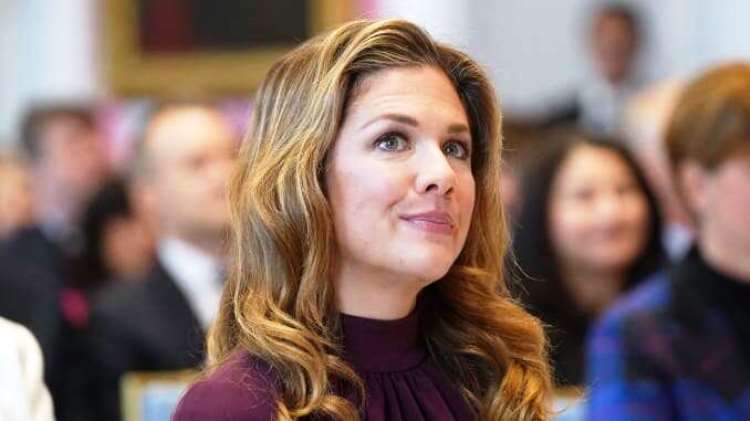
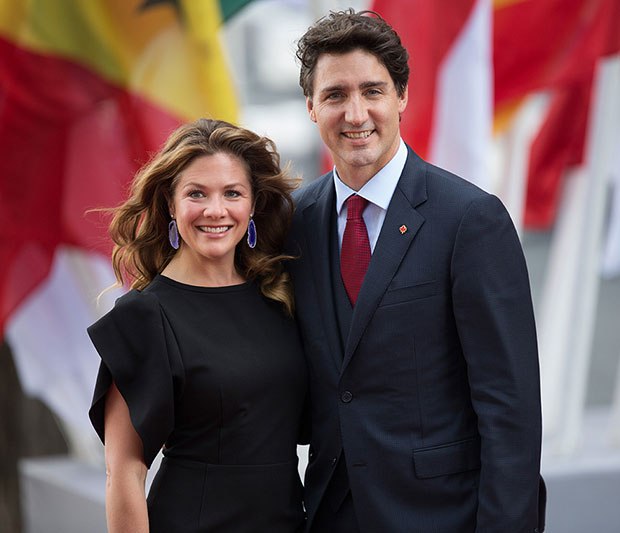
Sophie Grégoire Trudeau – Wife of Canadian PM
The news that Sophie Grégoire Trudeau, wife of Canadian Prime Minister, Justin Trudeau, tested positive for the coronavirus did not necessarily come as a shock following the number of personalities that have so far been confirmed positive.
According to reports, Sophie Grégoire began to experience the symptoms shortly after her return from the United Kingdom on Wednesday night.
“She will remain in isolation for the time being. She is feeling well, she is taking all the recommended precautions and her symptoms remain mild,” a statement from the PM office read.
Though, her husband, Trudeau is still said to be in stable condition without any symptoms, the statement from his office says both couples have been placed on isolation. They are expected to be under observation for the next 14 days.
Irene Montero, Spain Equality Minister. Credit/ Business insider
Irene Montero, Spain’s Equality Minister
Irene Montero is Spain’s Minister of Equality and one of the latest among the world’s prominent personalities to have confirmed cases of the COVID-19 virus. Reports say the news broke barely hours, the cabinet was about to convene an important meeting to discuss an emergency action plan to possibly see ways to contain the virus.
Spain ranks high among nations with high casualties. Live update of the coronavirus showed that the country has recorded over 726 new cases from about 3,003 total cases and 84 deaths since the outbreak.
It ranks 5th in the list of affected nations preceded by South Korea which has so far recorded 7,869 cases.
The cabinet member has since been on observation with her partner, Pablo Iglesias, Deputy Prime Minister since the discovery.
“The minister Irene Montero is in a good condition and second deputy prime minister Pablo Iglesias is also in quarantine due to the situation,” a statement reported by the economictimes read.
Tom Hank and Rita Wilson confirmed positive Photo Source: Forbes
Hollywood’s Tom Hanks, wife test positive
Among the latest confirmed cases of the COVID-19 virus is Tom Hanks and wife, Rita Wilson. The Hollywood star came out publicly Thursday to make the announcement through his verified social media handle.
With his over 7.3 million followers on Instagram, Hanks said he and his wife had initially noticed symptoms of the virus before they resolved to visit the hospital for affirmation.
“Hello, folks. Rita and I are down here in Australia. We felt a bit tired like we had colds, and some body aches. Rita had some chills that came and went. Slight fevers too. To play things right, as is needed in the world right now, we were tested for the Coronavirus, and were found to be positive,” he stated in a report by Forbes.
“Well, now. What to do next? The Medical Officials have protocols that must be followed. We Hanks’ will be tested, observed, and isolated for as long as public health and safety requires. Not much more to it than a one-day-at-a-time approach, no?
“We’ll keep the world posted and updated.
“Take care of yourselves!
“Hanx!”
Nadine Dorries UK MP
Nadine Dorries, United Kingdom Health Minister
Member of United Kingdom Parliament, Nadine Dorries is one of the latest personalities to be confirmed positive for the virus infection after being tested.
The UK Department of Health says Dorries initially showed symptoms of the ailment the very day she attended an event hosted by the Prime Minister, Boris Johnson at Downing Street as part of activities to commemorate International Women’s Day.
She was also in contact with another female lawmaker, Rachael Maskell, who has also been advised to stay in isolation to prevent likely spread of the infection.
On Friday 6th March, the next day after the meeting, Dorries was said to have undergone surgery in her constituency, also witnessed by 12 persons. It is, however; uncertain if the person she came in contact with has also be confirmed positive, they were advised to remain in self-isolation.
So far, about six persons have been declared dead due to the virus with 382 reported cases.
Franck Riester, France Culture Minister
On March 9, Franck Riester, the French Culture Minister has also tested positive to the virus. As confirmed by the Ministry he supervises, Riester reportedly met with about five members of the country’s National Assembly who were confirmed positive for the virus.
Riester is among other notable politicians in Spain, France and other parts of Europe who have tested positive.
Iraj Harirchi, Iran Health Minister
Iraj Harirchi, Head of the Iranian Counter-Coronavirus Task Force was confirmed positive after he reportedly downplayed severe dangers of the virus. Apart from him, report by Times magazine says Esmail Najjar, the head of Iranian Crisis Management Organisation was also placed on isolation after having contact with the virus.
No official record to confirm if they have recovered from the virus, but, just like other confirmed cases, they can only hope until a possible cure is discovered.
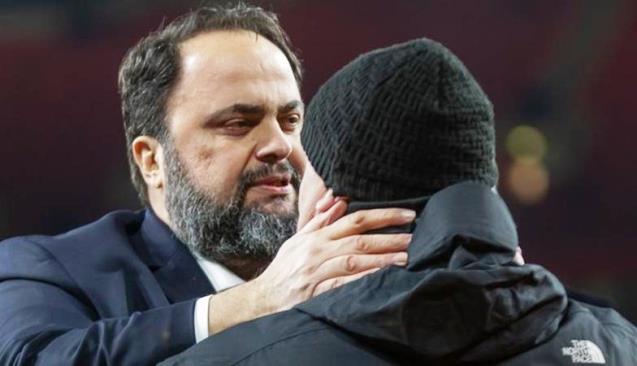
Evangelos Marinakis, Nottingham Forest Football Club Owner Photo Credit: BBC
Evangelos Marinakis, Nottingham Forest Football Club Owner
Football they say communicates a universal language capable of breaching peculiar gaps and fostering unity. So, the news of COVID-19 pandemic resulting to match cancellation became worrisome to football lovers.
Odion Igahlo, Nigerian footballer formerly based in China as a football player was at a time temporarily suspended from resuming in his new football club – Manchester United due to concern of being likely infected until he was cleared. But, the most disturbing news came on Tuesday when Nottingham Forest and Olympiakos Club owner, Evangelos Marinakis was diagnosed and was confirmed positive.
“The recent virus has ‘visited’ me and I felt obliged to let the public know,” Marinakis said. “I feel good as I take all the necessary measures and I discipline to the doctor’s instructions,” he added in BBC report.
THE Minister of Health, Osagie Ehanire on Friday disclosed that the Nigerian who tested positive to the novel virus after having contact with the Italian who first tested to virus, has been confirmed to be negative to the virus.
Ehanire made this disclosure during a press briefing held in Abuja, where he stated that the patient was asymptomatic; which means that he didn’t display any symptom of the disease while in isolation.
The Minister also stated that the index case of COVID-19 in Nigeria, an Italian man remains in isolation ward of the infectious disease hospital in Lagos, where his symptoms are being managed.
Ehanire shared that 42 people have undergone testing for COVID-19 and 40 of them were declared to be negative.
“Between January 7 and March 12, 2020, a total of 42 people who met our case definition have been screened for COVID 19 in Edo, Lagos, Ogun, Yobe, Rivers and Kano states, and the Federal Capital Territory.
“40 tested negative and two were confirmed positive. These two are the index case and a contact with the index case. No death has been recorded,” the Minister said.
The Federal Government has continued to keep the identity of the patient secret.
But health sources disclosed that that the patient is to be discharged immediately following confirmation that his latest test result came out negative.
Meanwhile, globally, over 125,000 persons have been infected with the virus and over 4,500 deaths recorded.
Asymptomatic carriers are a well-known phenomenon. However, in a report by New York Times, Michael Osterholm, director of the Center for Infectious Disease Research and Policy at the University of Minnesota said asymptomatic patients can spread disease efficiently.
GHANA, Gabon and Kenya have all confirmed they have recorded first cases of coronavirus despite imposing travel restrictions within the week.
Kwaku Agyemang Manu, Ghana’s Health Minister said two people who had arrived from Norway and Turkey tested positive for the virus.
In Gabon, Edgard Anicet Mboumbou Miyakou, a government spokesman said the patient was a Gabonese man who had arrived from France.
While in Kenya, Mutahi Kagwe, Health Cabinet Secretary on Friday said the country’s first case was a 27-year-old Kenyan who travelled from the US via London.
The Ghanaian authorities have said the two patients are being kept in isolation and are in a stable condition while they commence investigation to trace everyone who was in contact with them.
Gabon’s spokesman said the patient who had tested positive was feeling better – having displayed symptoms of cough, sore throat and breathing problems earlier.
He said the patient was in an isolation facility and the government was tracing those who had come into close contact with him.
The Kenya government in a statement made by the Health Minister on Friday argued the citizens to remain calm and not to panic as schools will remain open.
However, the country has suspended all public gatherings after the confirmed first case of the novel virus.
On Wednesday, Ghanaian President Nana Akufo-Addo announced the release of $100m (£80m) to enhance coronavirus preparedness and response nationwide.
Egypt and Algeria with 59 and 20 confirmed cases top the list, followed by South Africa that has recorded seven cases.
Meanwhile, according to reports from the Lagos State Ministry of Health, Nigeria might soon be discharging it’s first patient—an Italian—who had imported the virus in February.
VARIOUS corruption indexes have rated the Nigeria Police Force and the judiciary among the top five most corrupt institutions in Nigeria.
The Transparency International TI) in its 10th edition of Global Corruption Barometer Africa 2019, rated the police and judiciary 1st and 3rd most corrupt institutions in Nigeria. Also, in 2019, a public survey by Socio-Economic Rights and Accountability Project (SERAP) ranked the police first, and the judiciary third.
In the report, 70 percent of Nigerians said they have been extorted by an official of the court.
Indeed, these two institutions are peas in the same pod. Equally corrupt with one constantly trying to out beat the other.
“Securing bail is more difficult when we charge suspects to court. It is better you negotiate at the station and get your person released than allowing them to be charged to court,” Saudi, one of the corrupt police officers at the anti-Cultism Unit told this reporter.
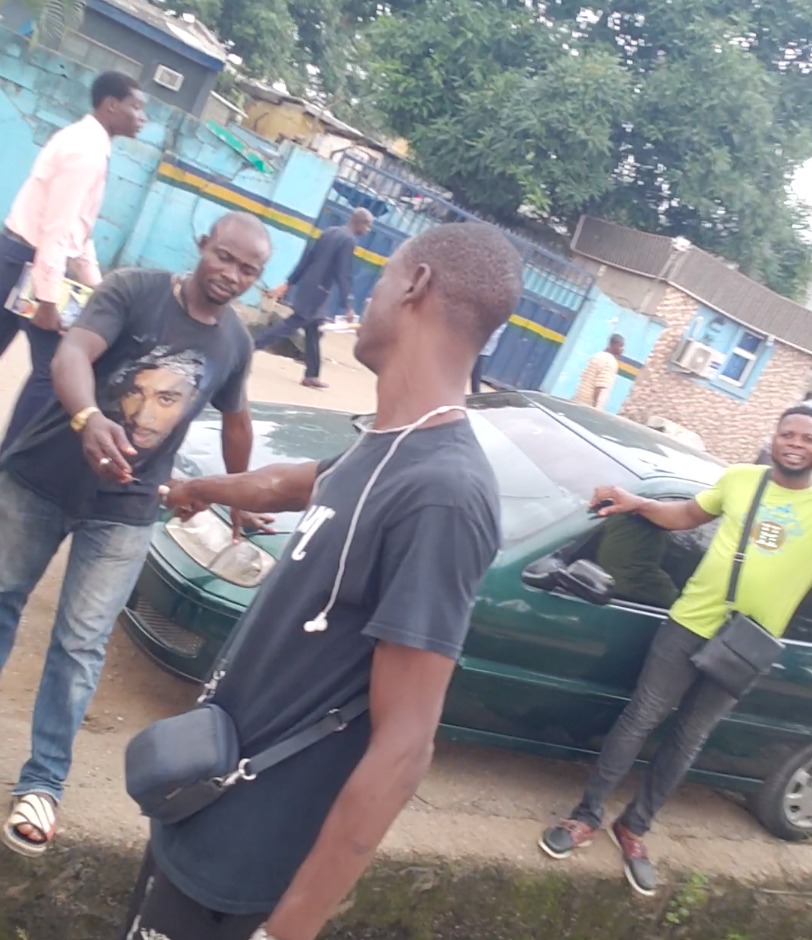
Saudi and Abdul – two corrupt police officers
Sadly, Saudi was right. The fear of being locked up in prison, pending a prolonged process of perfecting bail condition is one of the several reasons many Nigerians succumb to extortion at the police stations. The corrupt policemen know this and milk it.
Paying the ransom demanded at the police and getting charged to court are decisions likened to the red sea and the devil itself for many Nigerians. Pay the ransom at the station or get locked up in the prison while being extorted to the last naira notes by judicial clerks, prosecutors, and prison wardens.
“Within the court system, especially the magistrate which is closer [to the people], the level of rot is killing. It can even lead to a revolution overnight. The moment you’re charged to the court on any case, the magistrate does not have your time, they do not care if you committed the crime or not,” Awosanya said.
Shoddy Investigation, Languid Prosecution
“This case is hereby dismissed for lack of diligent prosecution,” is a familiar verdict in any magistrate court in Nigeria. Of course, such pronouncement comes after months of protracted court hearing with no tangible evidence to prosecute the crime alleged.
The police prosecutors do not have detailed information beyond what is provided on the surface of the charge sheets. They appear before the court in lacklustre attires, and with no enthusiasm. So disenchanted are many of them, they fail to see how incompetent they look in an open court as they seek an adjournment, reciting the same reason as a pupil learning by rote in a kindergarten class.
In one case monitored by this reporter, Michael Unah, a prosecutor at the Lagos State Magistrate Court in Ogba, told the court –for the fifth time — that his witnesses were not in court. The magistrate nodded in agreement, adjourned the matters and the defendants were returned to prison.
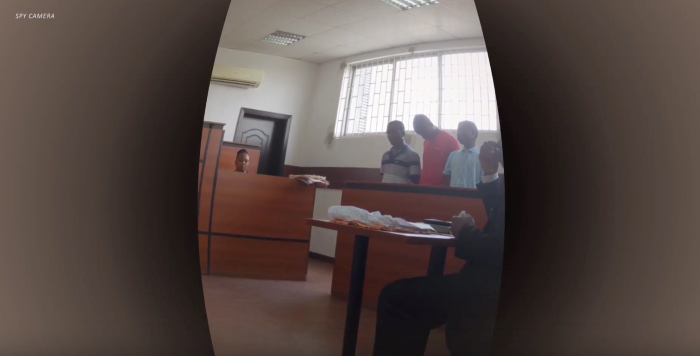
A defendant in the courtroom
Thousands of the inmates in Nigerian prisons experience this. They are remanded in prison custody as their cases get adjourned indefinitely.
Ideally, a case is thrown out after three appearances where the prosecutor presents no new evidence or witness before the court. Although, the discretionary power of the court could sway the judge otherwise.
The lack of diligent prosecution is one of the reasons for protracted legal battles and reason many defendants remain in prison for months, sometimes years.
Dolapo Agbaje, Usman Olamilekan, Chinma Ogbeeze were in prison for more than a year. They were raided and subsequently accused of stealing. The young men denied committing such an offence. They were each granted bail in the sum of N50,000 and two sureties in like sum. As the case dragged, the men, in their early 20s, could not perfect their bail. Ogbeeze said he has no relation in Lagos that could stand surety for him.
Dolapo Agbaje, Usman Olamilekan and Chinma Ogbeeze
Agbaje and his co-defendants appeared four times before Magistrate Fashola and all the while Unah did not produce a single witness or evidence against them.
After one year, Unah had not presented a shred of evidence before the court. He again asked the court for “more time”. In the end, the magistrate struck out the case and released the defendants.
In another case, Babajide Olosande, a 62-year-old bus driver, was charged to court to pacify a complainant who accused him of stealing his bus, the IPO, Ada, later owned up. Babajide’s traducer, Oladipupo Jacob, was becoming an irritating nag to Ada; so, she charged Babajide to court to save herself the trouble. Babajide was accused of theft without any shred of evidence to establish he stole the bus.
“We do not want to charge you to court yet but Baba Ade [Oladipupo Jacob] was coming to the station every day to cry and saying we have collected money from you,” Ada said in the presence of this reporter while trying to pacify Babajide when he made it out of Kirikiri Prison three months later.
Olosande and co-defendant in court
While Babajide was in prison, unable to perfect his bail, the police found the alleged stolen bus parked at an army barracks in Yaba. The prosecutor, Unah, was informed of this development but he refused to follow it up or bring the new information to the attention of the magistrate.
A little investigation by the police could have saved Babajide from wrongful incarceration but for shoddiness and a prosecutor who cared only about his pocket, Babajide was unduly locked up for so long.
Lawyers as cogs in the wheel of Justice
The entrance of a typical court in Nigeria is always crowded with ‘legal’ merchants. There are the non-legal professionals making a business out of the ignorance of potential deponents to affidavits.
“Affidavit, affidavit, swear your affidavit here,” they call out to potential deponents.
On the other hand, there are professional sureties who stand for strangers in exchange for some money. Typically, they charge between N20,000 to N40,0000.
However, the leaders in this ecosystem are the lawyers. They loiter around the court, seeking clients. The slur; “charge and bail lawyer” must have roots anchored in this practice. These lawyers simply represent new suspects brought to court in securing their bail. Thereafter, the suspects can decide they no longer need their service.
But, while this is legal, some of these lawyers, most times, are accomplices in, and other times, facilitators of many extortions that go on daily in Nigerian courts.
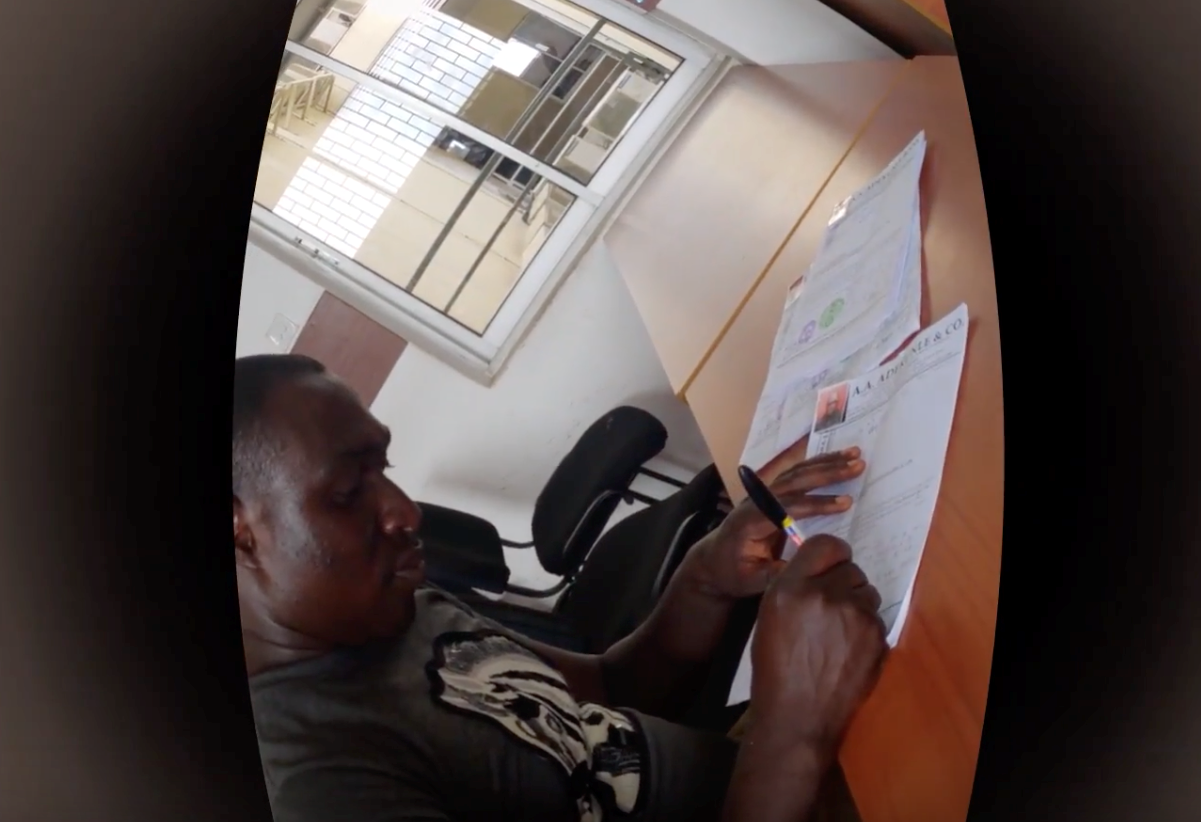
When Babajide was arraigned before Magistrate Fashola, he was represented by a lawyer from A.A Adekunle & Co, a small chamber at Sango area of Lagos State.
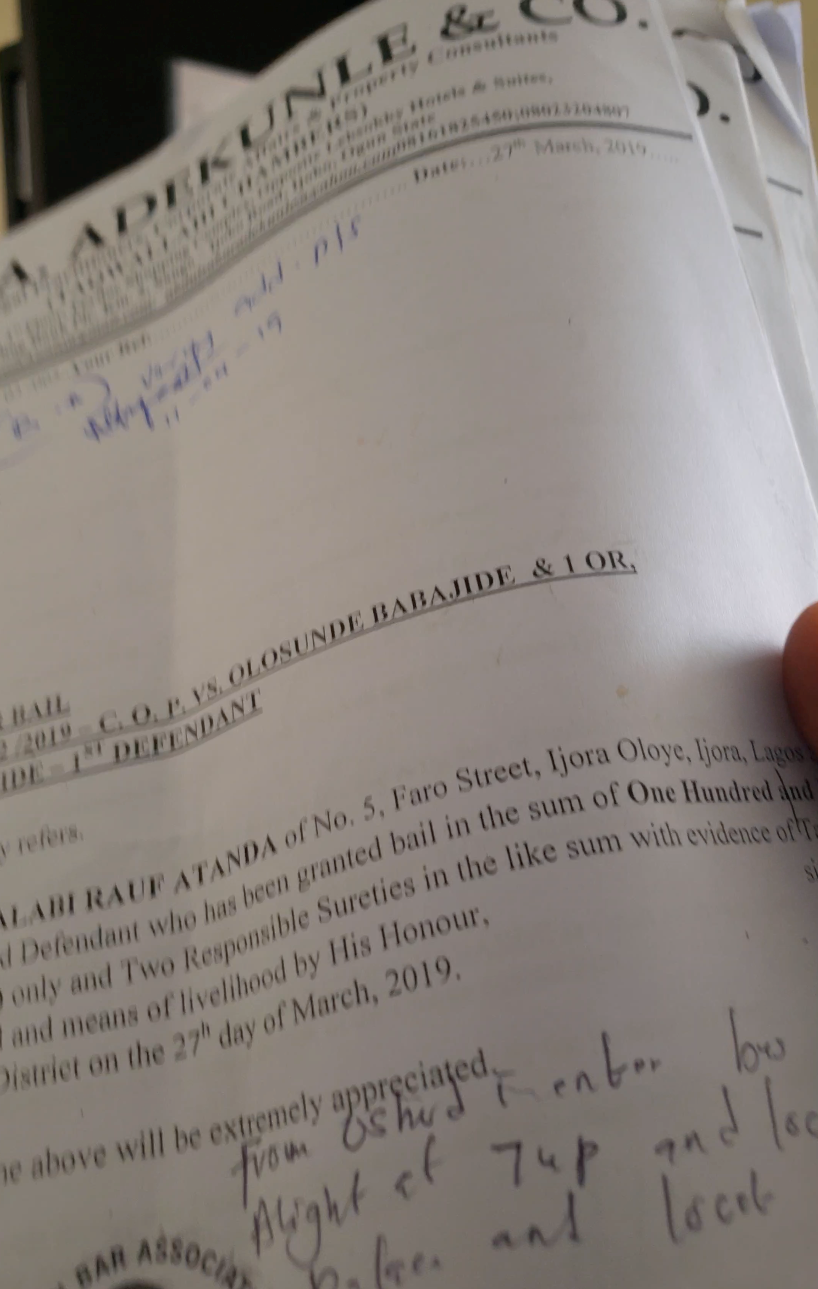
Letterhead of A.A Adekunle & Co
This lawyer was expected to facilitate the perfection of Babjide’s bail conditions but he did none of it, according to Bose, Babajide’s wife. Babajide would later spend over a month in prison with no attempt to get him out by his lawyer.
“The lawyer charged us N250,000 as his professional fee,” Bose disclosed. “We pleaded with him and he agreed to take the first installment of N50,000 which was given to him the night before he appeared in court.”
However, when Babjide was granted bail, it was Adekunle who informed the family members that the prosecutor had requested N40,000 each for verification of the two sureties requested as part of Babajide’s bail conditions.
The family paid the N80,000 hoping it would expedite the release of Babajide. Adekunle did not issue a receipt for this payment neither did he ensure the prompt release of Babajide. He left the family unattended while Babajide was held in Kirikiri prison.
After weeks of failed attempt at perfecting the bail, Bose went back to Adekunle’s chambers. The lawyer insisted he would get his complete legal fees before he released the bail bond to the family.
“When I went back to the lawyer, I told him we’ve been asked to bring [a bail bond],” Bose said. “He then requested he would get his balance before he released the [bond]. I then reminded him that our agreement was that he would get his balance once we have [Babajide’s] vehicle released from the police station.”
Babajie’ wife
She continued, “I took people to his chambers to beg him. He then requested for another N50,000 else he would not release the bail bond. He also told us he had used the N80,000 he said was for the prosecutor to pay for other expenses at the court.”
Adekunle is required to raise a bail bond for Babajide as the legal representative. A bail bond is a legal agreement that guarantees the appearance of a criminal defendant for trial, failure with which a sum of money would be paid to the court. The bail bond is co-signed by a bail bondsman, who charges the defendant a fee in return for guaranteeing the payment.
At the next court hearing, by which time Babajide had been in prison for about 30 days, Adekunle sent a young lawyer who came to court without the case file nor the bail bond. Babajide’s case was again adjourned and he was returned, again, to the prison.
Fraudulent prosecutors
Seeing that her husband might again spend months in prison, Bose gave the young lawyer from Adekunle’s chambers some money for transport back to the office to retrieve the case file.
About 3 hours later, the young lawyer, Kehinde, brought the case file. At this time, the prison warden had taken Babajide into custody.
Kehinde met with the prosecutor Unah, who by duty would verify the residence of the sureties before the document is sent to the magistrate for his signature.
The reason for verification is for the court to ensure the sureties can be traced in the event that suspect jumps bail.
Sunkanmi
Contrarily, the prosecutors hardly do the verification. Instead, they demand bribe, fabricate an address and submit a fraudulent document to the magistrate to assent.
“Verification is not a problem, we can try to bribe the [prosecutor]. Not even bribe [but] to fast track,” the young lawyer from Adekunle’s Chambers told Babajide’s family members, in justification for the nefarious act,”
Unah and his orderly, Sunkanmi, run the verification scam in court 10, Magistrate Fashola’s courtroom. When the bail bond was handed over to Sunkanmi, who fronts for his boss in negotiating the deals. He demanded N30,000. This was what the illegal N80,000 allegedly collected by Adekunle was meant for.
At this point, the Kehinde had also abandoned the case. She had done the part she could. Except her principal or the family members provided the N30,000 being demanded by the prosecutor, she was incapacitated. Without any authority to compel the prosecutor to do his job legally, she simply informed the family of the prosecutor’s demand and left to get further instructions from her boss. She never checked back to know if Babajide was released, neither did her chambers.
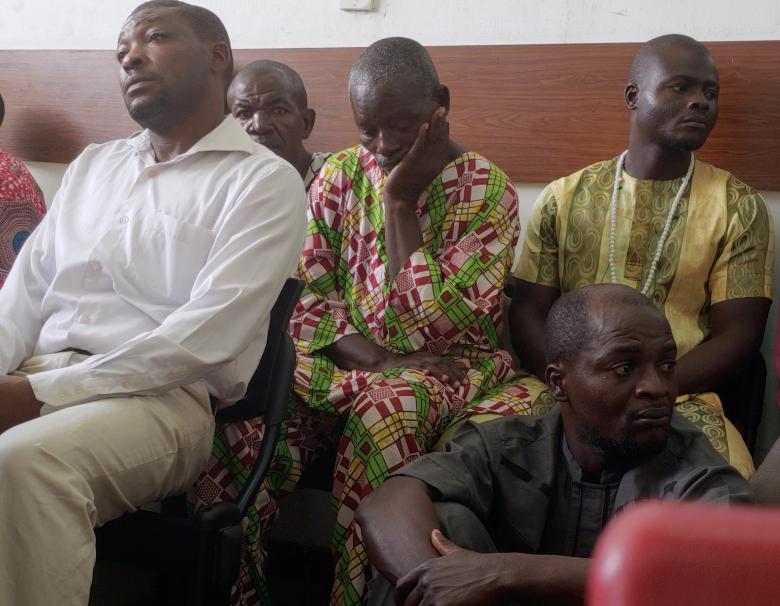
Defendants in the courtroom
The next day, she was not in court. The family members were left once again to find their way through the shrewd legal process. The wife approached Unah for details on the verification process but it was obvious that without paying, the verification would not be done. At least, not soon enough to get Babajide out of prison.
Unah eventually agreed to accept N20,000 which he instructed be given to his orderly, Sunkanmi. Once the bribe was paid, the hitherto tangled process became easier. Right there in the courtroom, Sunkanmi lied on the bail bond that he had verified the homes.
“From Oshodi, enter bus to Ijora, alight at 7up and locate the place and locate the address. I have verified the address and found to be correct,” he falsely declared on the court papers and signed off. Sunkanmi never left the courtroom, neither did he visit the location. Everything he wrote on the court papers were fabricated.
Courtrooms of Injustice
A lot goes on in many of the courtrooms beyond the routine adjudication on matters. There is the power show among the judicial clerks, and the unspoken comradeship between these clerks and the prosecutors against the most vulnerable persons in any courtroom, the defendants. The courtroom, for many Nigerians, does not represent justice. It is in fact where they are stripped of their dignity, restricted to a box for offenses they have no reason to answer for.
The conduct of a rotund, fair complexion woman who is a clerical staff at the courtroom of Magistrate Fashola, is an example of how judicial clerks aid and abet corruption in the courtroom. Rude, condescending and corrupt, this woman recklessly wields her powers as the intermediary between the courtroom and the court’s inner chamber.
When Babajide’s wife approached her for the release order of her husband, she flared up, sparing no insult as she ordered the embattled woman out of a cubicle she called office.
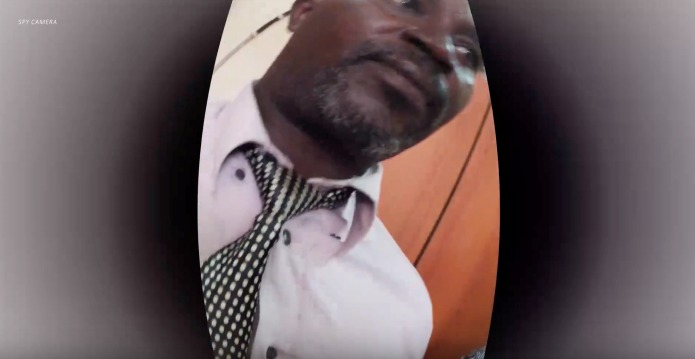
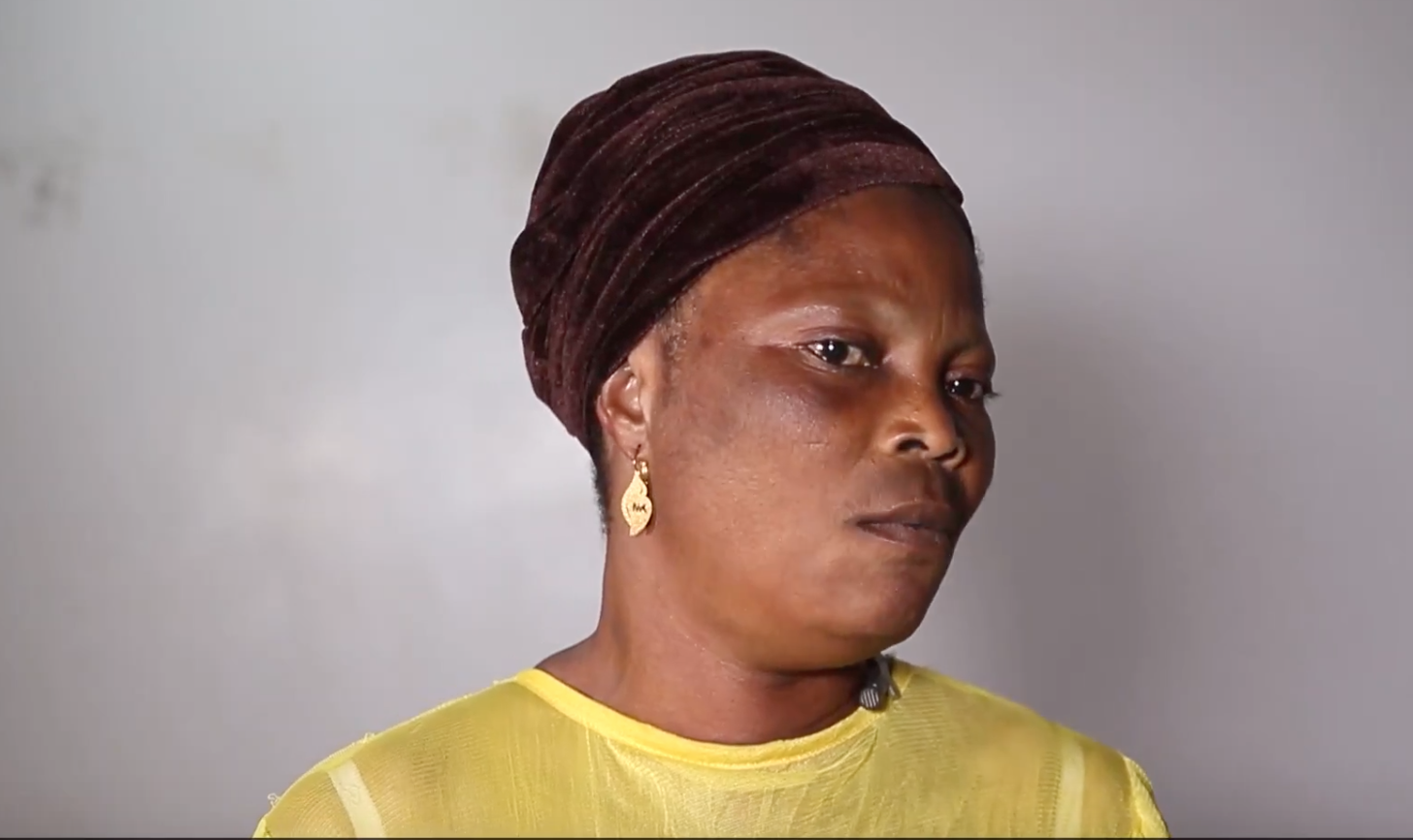
The corrupt registrar
“Why are you disturbing me?” she yelled at an already frustrated wife trying to ensure her husband stay no longer than he had in prison. “Am I the one who kept your husband in prison? If the document is not signed today, you will come back on Monday.”
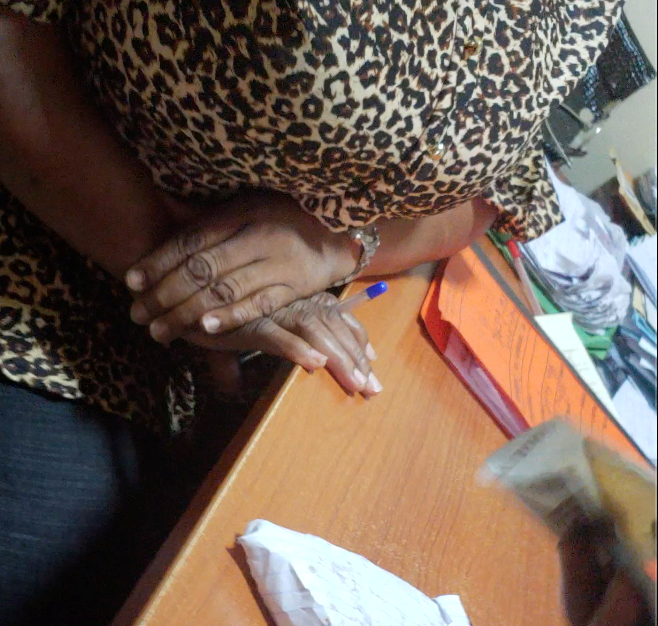
Babajide’s wife remained unmoved by her provocative blares. She quietly retreated from the office, willing to wait as long as the clerk’s chit-chat lasted with her colleagues. About 45 minutes later, she had the signed release paper of Babajide on her table but she would not hand over the papers until her palm was greased.
“You will pay N2,000 for the release order,” she declared. Of course, that was an illegal payment. It was not receipted nor was an invoice issued for it.
Unending legal battles
Perfecting bail and getting released from detention are only half the trouble for many defendants. The other half of the pod is facing trial for the alleged offenses. In several instances, this process can go on, moving from one courtroom to the other, with no definitive end in view.
The ordeal of 17-year-old Daniel started in 2018 and lasted well over a year. Daniel and his friends were arraigned alongside four other boys before the Yaba Magistrate Court. They were arrested from totally different areas.
The boys soon become their nemesis, the reason the trial remained active despite lack of ‘diligent prosecution’ for over a year. The prosecutor did not call a single witness nor was there evidence presented to the court for prosecuting the boys on the alleged cultism offense preferred against them.
But the magistrate said the case has to go on except the other boys arraigned with Daniel and his friends were reproduced before the court. Apparently, the other boys jumped bail, refusing to appear for any of the hearing after they were released from prison upon perfecting their bail.
“We don’t know where the boys are,” Awal said. “The magistrate keeps adjourning the case. She said she cannot strike out the case until they bring in the boys. We don’t know the boys. I have never seen them before until they were arraigned with my apprentices”.
Awal’s apprentices could have been tried differently, Inibehe Effiong, a human rights lawyer said. The lawyer opined that the law provides for the charges to be severed for the young apprentices to be tried separately.
Paraded victims
He explained that when one or more parties in a joint trial abscond, and the prosecutor is unable to effect a re-arrest, the prosecutor should by law split the trial to exclude the names of the fleeing defendants who can be tried separately.
“It is very unfair to allow people who are still presumed to be innocent to suffer for the iniquities of their co-defendants,” he said.
The case of Daniel and his fellow apprentice is only just one instance of how people’s life routines are disrupted by unending legal process. For some others, they are locked up in prison while their case files get transferred from one judge to another without their knowledge.
That was the case for Yussuf Yaya. He was arraigned for theft in July of 2018 at the court 3 of old Ikeja magistrate court. Yaya said he has no relatives in Lagos and no money. It was not surprising that he had remained in prison, though, he was granted bail.
“They [prison authorities] have refused to take me to court. I have only been in court two times since last July,” said Yaya.
He was arraigned with his friend, Azeez Dauda, on allegation of theft. He admitted that his friend indeed stole a phone and necklace but the items had been returned to the victim. The victim also told the police he was not interested in litigation since he had reclaimed his properties.
Brushing aside the intervention of the complainant, Yaya and Dauda were still charged. They were both granted bail in the sum of N100,000 and two sureties. Dauda met his bail conditions and was released from prison in weeks.
Suspects in prison vehicle
In 2018, the Lagos State Government relocated Court 3, which shared the same compound with the Nigerian Bar Association, to Ogba Magistrate Court. With this transfer, Yaya’s case file got lost in transit.
“I don’t know my next adjournment,” Yaya lamented.
Investigation showed that Yaya’s case file was transferred to Court 14 at Ogba Magistrate Court. Dauda, Yaya’s co-defendant, had jumped bail and arrest warrant had been issued against him. In his case file, it was recorded that Yaya has not been produced from prison custody consistently for three hearings.
Inibehe said the judge should have issued a reproduction warrant to the custodian authority. But, as at July 2019, a year after Yaya was first arraigned, the reproduction warrant was not issued. Yaya remained in prison.
Addressing Illegality in Court
Various administrative failures and judicial inefficiencies account for some of the reasons the court system no longer represents justice for many Nigerians. A poll conducted by Gavel, a civic-tech organisation with a focus on the judiciary, showed that 87 per cent of Nigerians do no trust the system.
Inibehe said to restore the confidence of people in the system, the court must purge itself of these inefficiencies and corrupt officials. Ordinary Nigerians must be able to see moral rectitude in the courts, the human rights lawyer opined.
He also asked that there should be a fixed time within which the prosecutors must verify residence of sureties.
“What we need is to have the Chief Judge, the Chief Magistrate championing transparency and accountability in the courts,” he suggested.
“The reason we see what seem like corrupt act or illegality within the court system is primarily because of the culture of impunity. People know they can do whatever they want and get away with it without consequences.
“Form the police officers and prosecutors who file frivolous charges against people to the court officials who collude to extort people who are standing trial need to be made to understand that there is a price to pay.
Effiong Enibehe, human rights lawyer
He said there is a need for a top-to-bottom attitudinal change among the court officials.
“There should also be a life-line, a phone number that is specifically designated for lawyers and defendants to report the misconduct of registrars and prosecutors. There should be a standing committee that should be saddled with responsibilities of receiving complaints arising from perfection of bail and other administrative matters from the courts. When people know that there is a process of seeking redress, it becomes easier to lodge complaints.
“We also need to institutionalize the processes of perfecting bail, which of course is one of the most ways in the criminal justice system that people are susceptible to extortion. Part of the reform we need to insist on is to make it possible for compensation to be paid to people who are wrongfully detained. That compensation should not only be paid by the police, but there should also be legislative framework that makes it very easy to target the salary account of police officer.
“There has to be consequences for filing frivolous charges. When the officers know they will pay personally for injuries and discomfort caused to people, we would have reformed the system.”
Note: This is the final part of the three-part series. Read Part I here, and Part III here.
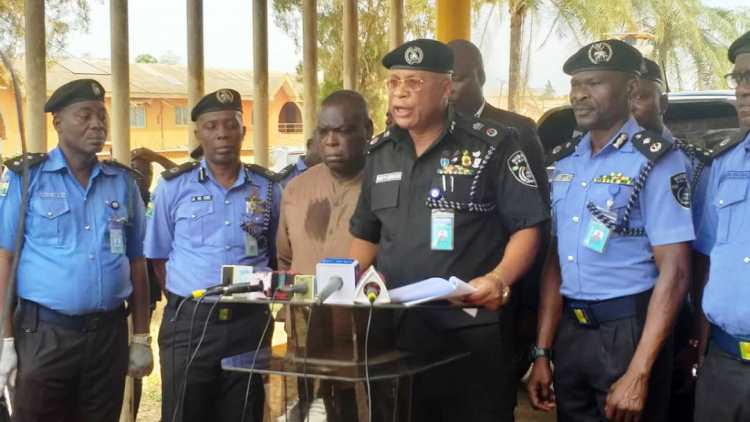
OGUN State Police Command on Thursday disclosed that it has recovered 256 live cartridges and a stolen Toyota Camry car with registration number AKD 942 GA from suspected armed robbers.
Kenneth Ebrimson, the state Commissioner of Police disclosed this during a briefing at the Police State Command, Eleweran, Abeokuta, the Ogun State capital.
He said the arrests and recoveries were made possible through the Operation Criminal Mop-Up being executed across the state.
While parading the suspects, Ebrimson explained that the command received a report on the August 24, 2019, from one Owoseni Olalekan of Government Residential Area (GRA) Road Ijebu-Ode that his house was invaded by three armed men who dressed in military camouflage uniform.
The robbers, he said held the household to ransom and subsequently carted away some of their valuables which include: the Toyota Camry car with registration number AKD 942 GA, one Iphone x and N200, 000 cash.
But, the suspect Fatai Qudus was arrested by the Special Anti-Robbery Squad on February 25, 2020 when he was intercepted at Sagamu interchange among his gang members while the robbed items were recovered.
Aside, a 36-year-old Afeez Raimi was arrested during stop-and-search exercise for being in possession of 143 live cartridges on 9th March.
The exercise was reportedly carried out by a combined effort from the border patrol team and officers of Imeko division along Idofa Oke-Agbede road, Imeko Local Government Area of the state.
“On searching the passenger, 143 live cartridges were discovered in his bag which he was unable to give a satisfactory account of how and where he got the cartridges from,” Ebrimson stated.
In a related case, 120 live ammunition were also recovered from a suspect, Fidelis Elumezie who lives in Ogijo, Sagamu Local Government Area of the state.
The Commissioner of Police while narrating the arrests said Ogijo Division of the Force had earlier received intelligence report about the house located in Kamalo area of the community where arms were allegedly stockpiled.
“Detectives from Ogijo division moved into the area, cordon off and properly searched the house. 129 different calibres of live ammunition were recovered in the house while one Fidelis Elumezie and two others were arrested in connection with the case.”
Other persons arrested include Toheeb Anuoluwapo, Yesiru Rabiu, Azeez Salia and Rasheed Raheem, all murder suspects.
They were accused of killing the deceased before carting away his two motorcycles. The incident was officially reported to the police at Ijebu-Igbo division onFebruary 29.
A group of Chinese medical experts and supplies from Sichuan, a city in China have been sent to Italy on Wednesday to help with the containment of the COVID-19 outbreak.
According to a video by China Daily, the group will help with the effort to contain the COVID-19 outbreak, after Italian Foreign Minister, Luigi Di Maio asked China for help to contain the spread of the virus.
On Tuesday, Italy had shut down the entire nation by put its 60 million population in quarantine.
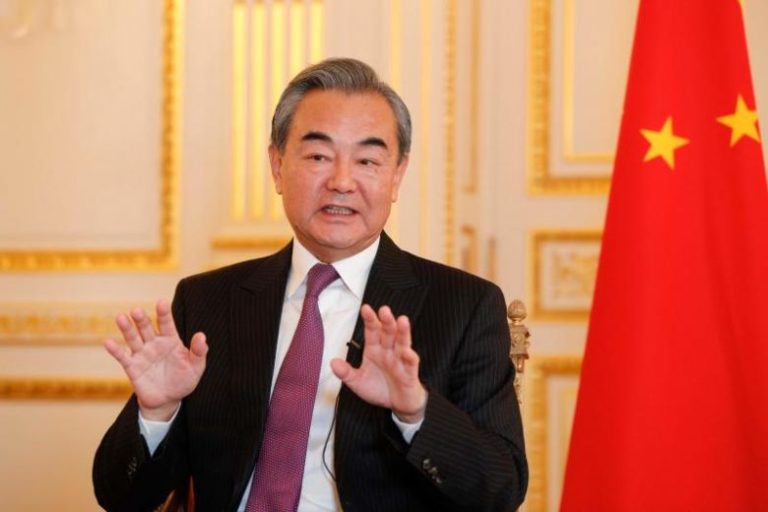
Wang Yi, State Councillor and Foreign Minister of China responded to Italy’s request for help while also assuring that the Chinese government would provide Italy with face masks and other medical supplies.
He stated China’s commitment to further advance its efforts in sending Italy future supplies.
‘’Despite China is still in large demand for medical supplies but we will overcome the difficulties, and we will provide Italy with face masks and other medical supplies and further advance the effort in sending in supplies,’’ Wang Yi said.
China has also sent a team of experts and medical supplies to Iran
Starting from March 10, China has been exporting five million face masks to South Korea while the Chinese government has contributed $20million towards the WHO to fight Covid19
Similarly, according to Reuters on Thursday, the Chinese Senior Medical Adviser, Zhong Nanshan stated that the global coronavirus pandemic could be over by June if countries mobilize to fight it, as China declared the peak had passed them and the increase in new cases is falling to single digits for the first time.
Around two-thirds of global cases of the coronavirus have been recorded in China’s central Hubei province, where the virus first emerged in December but in recent weeks, the vast majority of new cases have been outside China.
The Chinese government’s Senior Medical Adviser, said at a news conference on Thursday that as long as countries take the outbreak seriously and are prepared to take firm measures, it could be over worldwide in a matter of months.
“My advice is calling for all countries to follow WHO instructions and intervene on a national scale,” he said. “If all countries could get mobilized, it could be over by June.”
Zhong, an 83-year-old epidemiologist renowned for helping combat the SARS outbreak in 2003, said viruses in the same family typically become less active in warm months, which could help slow the spread.
“My estimate of June is based on scenarios that all countries take positive measures. But if some countries do not treat the infectiousness and harmfulness seriously, and intervene strongly, it would last longer,” Zhong added.
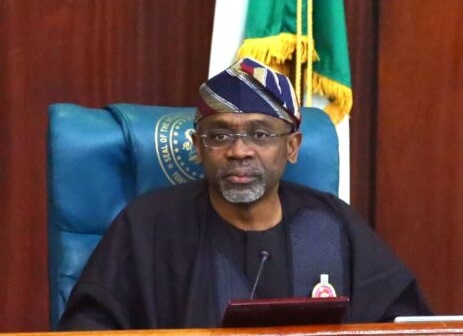
THE House of Representatives has suspended deliberations on the $22.79billion external loan request by President Muhammadu Buhari, shortly after it had been approved by the Upper legislative chamber.
The Senate had last week, approved the loan request despite protests from the opposition senators led by the Minority Leader, Enyinnaya Abaribe, who in his argument against the approval of the request, stated that “who goes aborrowing, goes asorrowing.”
It was gathered that the loan request which was set to be deliberated on by the House of Representatives members on Wednesday was stepped down.
Punch reports that the House was set to consider the request following its listing in the report by its Committee on Aids, Loans and Debt Management on the 2016–2018 Federal Government External Borrowing (Rolling) Plan on Wednesday’s proceeding but halted it.
According to the report, Speaker of the House, Femi Gbajabiamila, had asked that the consideration be stood down, with no new date proposed for consideration.
“We will step that down for today,” Gbajabiamila said on the floor of the green chamber.
A member of the House, Henry Nwawuba, also against the consideration and approval of the external loan, presented a petition by a group of South-East elite at the plenary on Tuesday.
Nwawuba was said to have submitted that there was a disconnect between the loan proposal and the Fiscal Responsibility Act.
It was gathered that some of the proposed projects to be funded with the loan are the Nigeria Electricity Transmission and Access Project ($364,000,000); Social Inclusion and Welfare Advancement project, renamed National Social Safety Net Project, ($500,000) and the Economic Reforms and Governance Project, renamed Fiscal Governance Project ($200,000,000).
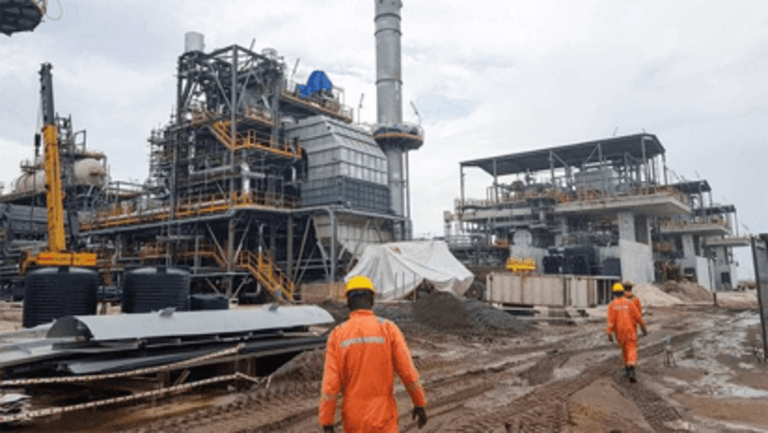
DEVAKUMAR Edwin, Group Executive Director at Dangote Industries Limited says Africa’s richest man, Aliko Dangote would begin production of oil in July with a 20,000 barrels per day output, and subsequently expand to 100,000 barrels.
According to a Bloomberg report, Edwin said Dangote aims to help end Africa’s largest oil producer’s reliance on imported fuel.
While stating that oil production will begin from two assets he bought from Royal Dutch Shell Plc, He added that work will then move to an undeveloped KI discovery on Block 71, a small shallow water asset in Southeastern Niger River delta.
The plant will reach “mechanical completion” in December and full operations are expected to start by the middle of 2021, Edwin said.
“If everything goes well, we can do that in 12 to 15 months because we are already doing the 3D seismic studies,” he added.
“We have several projects ongoing now and most of them are through in-house funding,” Edwin said. “They are all at various stages of completion.”
The billionaire would add the oil production to his fast-expanding business empire that includes cement, flour and sugar firms.
According to Edwin, Chinese and Malaysian contractors have completed a development plan for the Kalaekule field on its Oil Mining Lease 72 asset.
The conglomerate is adding about 10 million tons capacity of cement with new plants in at least five countries including Cameroon, Cote d’Ivoire and Ghana while boosting output in two of its Nigerian plants.
It is also setting up six new integrated rice mills across the country with a capacity to process a million tons of paddy and a 125,000 tons sugar refinery.
Last month, in Addis Ababa, the Heads of State and Governments of the Africa Union, AU, held their annual meeting. The theme of this year’s summit was, ‘Silencing the Guns: Creating Conducive Conditions for Africa’s Development’.
Even as these leaders were brainstorming on this matter, several parts of the continent were boiling from the dastardly activities of armed insurgents and other criminal gangs.
In fact, hardly has President Muhammadu Buhari settled down for the two-day summit than the Boko Haram insurgency group unleashed a ferocious attack on Auno, a suburb of Maiduguri, capital of Borno State. No less than 30 people lost their lives, some burned beyond recognition. The attack was an example of how the easy access to Small Arms and Light Weapons, SALWs, by all manner of people is wreaking havoc on Nigeria.
The global arms trade is a multi-billion dollar business. Experts estimate that there are more than one billion SALWs in circulation globally; majority of them believed to be in civilian hands.
In 2017, at a conference organised by the United Nations Office for West Africa and the Sahel, it was disclosed that between seven and ten million firearms worth about $35 million are illegally trafficked into the sub-region annually, and that Nigeria is their major destination. Aside that, of the about 500 million illegal weapons in West Africa, 70 per cent of them believed to be in Nigeria.
Those who doubt these figures should recall the early days in office of late President Umaru Musa Yar’Adua, who offered amnesty to Niger Delta militants. Part of the deal was that the militants should surrender their weapons. And when those weapons started coming out of the creeks, even many top brass of the military said they were seeing some of the high-grade weapons for the first time.
Unfortunately, because of the Nigerian factor, the mopping up of weapons in the Niger Delta was without any strategy to either sustain it or even extend it to other parts of the country.
Nigerians are now ruing that lack of foresight. At the time, the general assumption was that the number of weapons surrendered was just an insignificant percentage of what is in the private arsenals of the militants.
What are the factors driving the proliferation of firearms in Nigeria? Some of them are the crude nature of the nation’s politics, failure of governance, insecurity, corruption and globalisation. Talking of politics, for many politicians, it is a do-or-die affair.
Thus, many politicians maintain a private army, fully equipped with firearms, either to settle scores with their opponents or to intimidate voters. These thugs are the ones who for a fee readily invade polling stations to snatch ballot boxes, at times in the full glare of security personnel. And when the opposition is aware of such impending invasion, they equally mobilise to offer resistance.
This kind of anarchy speaks volume of how government has failed in not only ensuring the sanctity of the ballot but in ensuring security for the people. Sadly, when the perpetrators of these crimes get into power, they leave many of their foot soldiers in the lurch. The latter who are not only fully armed but educated and jobless use their arms to find a living.
Two years ago, a former President of the Senate and a state government were implicated in the daylight robbery of a bank, in which a former foot-soldier of the top politician was the ringleader.
Several people including policemen were killed in that robbery.
The international community and experts agree that the illicit trafficking of SALWs constitute a serious threat to global peace and security. In Nigeria, it has become a grave source of instability, not only generating mindless violence and insecurity but undermining development efforts.
For more than a decade, because of Boko Haram, no serious development has been pursued in Nigeria’s North-east. In fact close to a million refugees from this area are in several internally displaced camps, while many have fled abroad into neighbouring countries.
These firearms equally fuel violent conflicts in the Niger Delta, kidnapping in the Southeast, robbery in the Southwest, ethnic/religious violence in North-central, cattle rustling in the Northwest, herders/farmers clashes, cultism and terrorism.
Considering the carnage these weapons have wreaked, the United Nations Assembly likens them to “weapons of mass destruction“. According to the Assembly, “The death toll from small arms dwarfs that of all other weapons systems, and in most years greatly exceeds the toll of atomic bombs that devastated Hiroshima and Nagasaki”.
On tackling the menace of small arms and light weapons, the Buhari administration has been largely tardy. For a retired General whose main agenda when he assumed power five years ago was providing security, he should have seen the link between SALWs and insurgency and other violent activities raging all over the country. Lately, however, he has taken steps to rein in the illicit trafficking of firearms. Last April, he attended a One-day Extra-Ordinary Session of the Conference of Heads of State and Government of the Community of Sahel-Saharan States held in N’Djamena, Chad.
A release from Garba Shehu, presidential spokesman, stated that, under Buhari, the nation has been working “closely with immediate neighbours in the last few years to stem widespread availability of small arms and light weapons making their way into Nigeria”. That relationship seemed not to have yielded the desired effects, and perhaps that was one of the reasons that necessitated the Chad meeting.
Shortly after this conference, there was some confusion in the nation’s public space about President Buhari signing an Executive Order revoking all certificates and licences for firearms throughout the Federation. This was said to have been a knee-jerk response to some Niger Delta militants allegedly planning to secede. According to the said Executive Order, those in possession of such licences and certificates were asked to hand their guns over to the nearest police station.
Not a few kicked against the said Order, which many interpreted as insensitive against a backdrop of herdsmen who freely carry arms without police challenging them. The House of Representatives passed a motion calling on Buhari to revert himself as an Executive Order cannot supersede a law. Interestingly, in spite of the fact that this controversy was widely reported in the media, the police said they were not aware of such presidential Order. Till date, mum has been the word on this matter even from the presidency.
While the President moves to tackle the challenges of arms trafficking at the regional and continental levels, sight should not be lost of the fact that arms trafficking has its root in legally produced weapons.
Against that backdrop, the Arms Trade Treaty of 2013 “sets out prohibitions to stop the international transfer between states of weapons, munitions and related items when it is known they will be used to commit or facilitate genocide, crimes against humanity or war crimes”.
This treaty is observed in the breach by traffickers, who easily remove even the international tracing instruments attached to those arms to obliterate their being identified. These weapons simply get underground and into what has been described as the Dark Web, ably aided by globalisation and its inherent contradictions.
While globalisation is supposed to make doing business easier in the course of international trade, in the hands of illegal arms traffickers, it has become a conduit to perpetrate their nefarious trade with little or no transparency.
Thus traffickers of contrabands like arms and hard drugs operate across borders with fewer restrictions. And the fact that their illicit earnings end up in secret bank accounts in tax havens make the trade more lucrative for them.
And talking about a law to combat illegal trafficking in arms, a bill proposed by Senator Smart Adeyemi has passed its second reading in the Senate.
Adeyemi proposes in the bill for the establishment of a National Commission Against the Proliferation of Small Arms and Light Weapons and other Related Matters. When established, the commission will among other things tackle the menace of illegal arms trafficking by not only identifying sources and main routes of these small arms, ammunition and light weapons, but the merchants who feed fat on these deadly goods. Although the mission of the Commission is not going to be an easy one, some of the many routes through which these weapons come into Nigeria are known.
They include trucks involved in cross-border haulage, petroleum tankers inclusive, donkeys, camels, and motorcycles. Equally, arms are believed smuggled into Warri and Bonny towns in the Niger Delta from the Great Lakes region. And smugglers in Mali pack arms in waterproof bags which are attached to the underside of boats which ply countries along the River Niger.
Senator Adeyemi disclosed that even arms trafficking through aircraft is very rife. According to him, “The use of aircraft to transport weapons internationally and regionally is also common in the West African sub-region. Here military planes play active roles in large intercontinental illicit arms transfer by international brokers”.
There are even countries, their back against the wall like Nigeria was a few years ago, which unable to buy needed arms urgently legally resort to the services of these merchants of death.
Many concerned Nigerians think that the government needs to move swiftly to combat illegal arms trafficking if the nation is not to become a Somalia or Libya where rival gangs are battling for supremacy.
All stakeholders in government and civil society must join hands to formulate result-oriented programmes and realistic policies. The fact must be recognised that youth unemployment is at the heart of the many criminalities ravaging the country. If youths are gainfully employed, they will not become handy tools which corrupt politicians can engage as thugs. If youths are gainfully employed, the incidences of cultism and kidnapping for ransom will be greatly reduced.
And without easy access to small arms and light weapons, the frequent ethnic and religious crises that lead to mindless violence will largely be resolved through discussions and negotiations.
If the nation fails to silence the guns, a time will come when the response to a contemptuous look will be the drawing of a gun to settle scores. Those who doubt this kind of scenario should ask Nigerians who reside in places already carved out by street gangs. An imagined slight of a Capone or an innocuous smile at his girlfriend can earn the “fool” a bullet. Is there anything else to tell us that the time to silence the guns is now?
* Ayodele Akinkuotu, a former Editor-in-Chief of TELL Magazine, now writes a weekly column for the International Centre for Investigative Reporting.
THE Nigerian Civil Aviation Authority (NCAA) has mandated all intending travelers to and from Nigeria to possess an electronic Yellow Card.
This was stated in a memo released on Wednesday, signed by the General Manager Aeromedical Services, W.T Haggai.
The NCAA, in activating safety measure at point of entry as directed by the Federal Ministry of Health, demands that intending travelers from Nigeria must present the e- yellow card upon boarding an airplane. While international travelers must present themselves for vaccination against yellow fever once they touch down Nigeria, in absence of a yellow card.
The electronic Yellow Card also known as e-yellow card is a certificate of vaccination to show that travelers have been immunized against yellow fever.
This new directive is Nigeria’s latest reaction to curb the spread of coronavirus also known as COVID-19.
Nigeria confirmed its second case of COVID-19 on March 9, increasing the concern of a possible outbreak in the country.
Already, the World Health Organisation (WHO) has declared COVID-19 a pandemic, after over 118,000 persons have been infected around the world and over 3,800 deaths recorded so far from the novel virus.
While the spread of the virus is slow in Africa, the Western nations have been battling with outbreaks and epidemics since the virus first originated from Wuhan, China, in December 2019.
So far, over 113 countries have registered confirmed cases, with countries like Italy and Iran recording severe cases of an outbreak and deaths.
WHO maintains that there is still no known cure or vaccine for the deadly virus and advises people to wash hands regularly with soap and water as well as frequent use of alcohol-based hand sanitisers.