Home Blog Page 2156

Ezekwesili to lawmakers: Cancel your plan to buy those fleet of cars

0

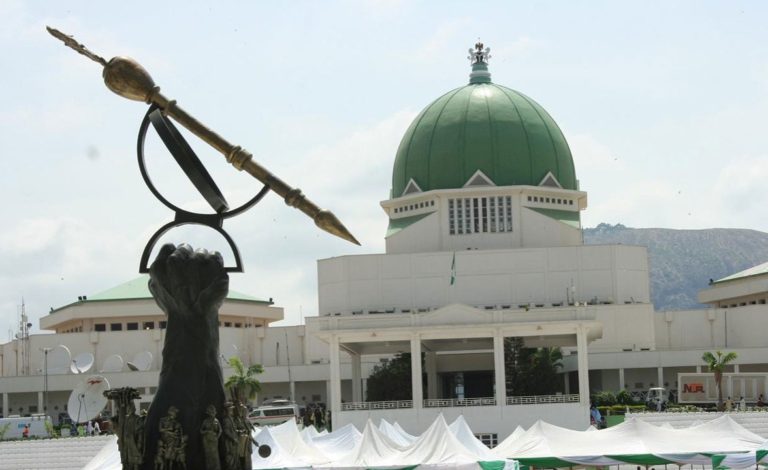
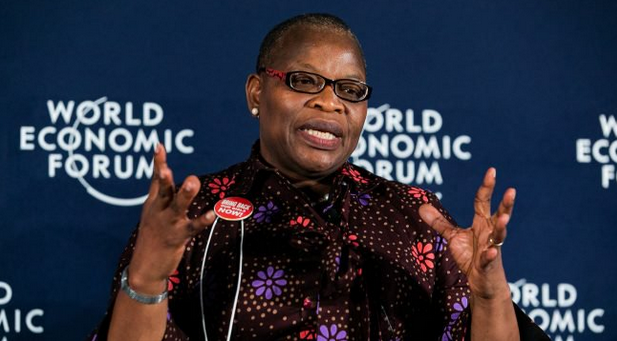
FORMER Minister of Education, Oby Ezekwesili on Wednesday warned the leadership of the National Assembly to desist from reckless spending following an impending economic recession due to fall in the prices of crude oil occasioned by the outbreak of COVID-19.

In a series of tweets, Ezekwesili called on the Nigerian lawmakers to immediately cancel their plan to purchase new fleets of vehicles.

‘’It appears that a global recession will be inevitable at this rate of impact, our country entered this situation already, extremely vulnerable, it saddens me,’’ she said.

Adding that the finances of the country never justified such spending before, adding that the worsened financial condition in the country totally forbids such recklessness at this time of global challenge.

She lamented that  one of the worst things in life that can happen to any people is to have an uncaring set of leaders in time of crisis.

“Nigerians must fasten our seat belts as global economy catches the impact of the health shock from CoronaVirus Global,” Ezekwesili said.

Nigeria recently confirmed its second case of the CoVID-19 infection, which has continued to spread widely in Europe and other countries outside of China.

The virus has recently resulted in the reduction of oil prices, the shutdown of Italy, travel bans to some countries, cancellation of premier league fixtures among others.

President Muhammadu Buhari on Tuesday, in a meeting with leaders of Joint Health Sector Unions (JOHESU) and Assembly Healthcare Professionals Associations (AHPA) lamented that coronavirus is affecting Nigeria’s revenue.

The government is at the moment considering a review of its 2020 annual budget due to the fall in oil prices.


Capital importation fell by 32 percent in 2019 Q4 —NBS

THE National Bureau of Statistics (NBS) has revealed in its latest report that the total value of capital importation in Nigeria stood at $3.8 million in the fourth quarter of 2019, representing a decline of 32.42 per cent when compared to the third quarter.

However, compared to the 4th quarter of 2018 it showed a 77.67 per cent increase.

According to the NBS report, the total value of capital importation in 2019 stood at nearly $24 million, compared to $16.8 million in 2018, representing a growth of 42.69 per cent between the two periods.

NBS showed the breakdown according to each sector in Q4 2019.

Foreign Direct Investment (FDI) which comprised equity and other capital amounted to $934.34, while portfolio investment which comprised  equity, bonds and money instrument amounted to $16,365.46.

Other investments which comprised trade credit, loans, currency deposits and other claim amounted to $6,690.25.

The largest amount of capital importation by type was received through Foreign Portfolio Investment (FPI), followed by Other Investment and FDI.

In economics, FPI  is the entry of funds into a country where foreigners deposit money in a country’s bank or make purchases in the country’s stock and bond markets, sometimes for speculation.

While an FDI is an investment in the form of a controlling ownership in a business in one country by an entity based in another country.

By sector, shares dominated with the highest amount of capital imported in Q4 2019.

The NBS report also showed that the United Kingdom (UK) emerged as the country of origin with the highest amount of capital imported while Lagos is the destination with the highest amount of capital importation.

By banks, Stanbic IBTC Bank Plc emerged as the bank with the highest amount of capital imported into Nigeria in Q4 and full-year 2019

#METOO: Former Hollywod producer, Weinstein kicks as he bags 23 years prison term for rape, sexual assault

0

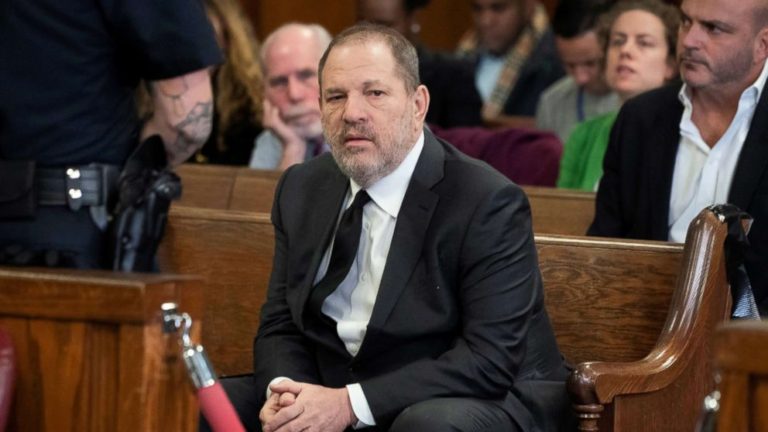
FORMERLY recognised as one of Hollywood top producers, Harvey Weinstein who has been accused of violating scores of women, was sentenced to 23 years imprisonment on Wednesday.

The Miami Herald reported that the entertainment mogul was convicted last month of raping a woman in a New York City hotel room in 2013 and forcibly performing oral sex on another woman at his apartment in 2006.

The disgraced film producer who arrived at court in a wheelchair, committed a “lifetime of abuse towards others” as well as the crimes for which he has been convicted, prosecutors said.

In their sentencing letter, prosecutors outlined 16 examples they said showed Weinstein “trapped women into his exclusive control” so he could sexually assault them, starting when he was working as a music producer in Buffalo in 1978.

During the hearing, Weinstein told the court men facing allegations in the #MeToo movement are accused of “things that none of us understood”

Weinstein contends that any sexual activity was consensual. After he was convicted he proclaimed, “I’m innocent. I’m innocent. I’m innocent. How could this happen in America?” according to his lawyer, Arthur Aidala.

While Weinstein did not testify during his trial, he spoke in court at the sentencing. “Thousands of men are losing due process. I’m worried about this country,” he said.

Once one of Hollywood’s most influential figures, Weinstein, 67, was convicted of sexually assaulting former production assistant, Mimi Haleyi and raping former aspiring actress, Jessica Mann following a trial earlier this year.

Looking back during the trial at emails they exchanged, he said, he thought they had a good friendship: “I’m not going to say these aren’t great people. I had wonderful times with these people. I’m just genuinely confused. Men are confused about this issue.”

On the criminal sex act count, he faced a minimum of five years in prison and a maximum of 25 years in prison, while the third-degree rape count carried a maximum penalty of four years in prison.

He was acquitted of the more serious charges against him of first-degree rape and two counts of predatory sexual assault.

Weinstein was sentenced days to his 68th birthday, his lawyers argued that a lengthy prison term would, in effect, be a life sentence.

From indications, the defendant is likely to appeal the court sentence.


Sex For IT Letter: Poly Ibadan to probe allegation, invites female student after ICIR’s report

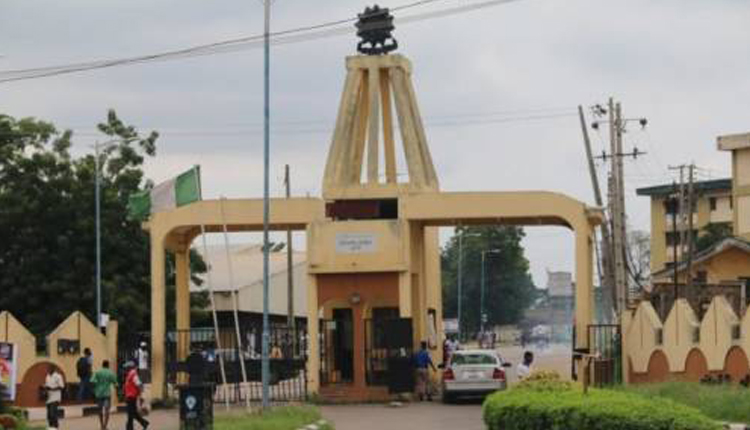
MANAGEMENT of The Polytechnic Ibadan, has indicated interest to investigate the allegation against one of its staff, Adebayo Akande, accused of demanding sex before  before a document   commonly known among students as Industrial Training (IT) letter can be issued to a female student.

This follows revelations contained in a report published by The ICIR  on Monday detailing how Akande asked for sex, in return for the issuance of the said letter.

According to Soladoye Adewole, Public Relations Officer of the polytechnic who contacted The ICIR to verify the report, the management of the institution would not allow the matter to go without being probed.

During a telephone conversation that lasted five minutes and 12 seconds, Adewole said the polytechnic authorities would like to meet with the student in question to further probe the matter and arrest the accused staff.

He asked if the student in question was still in Ibadan,  stressing that the school’s Registrar had indicated interest to meet with her as well.

“She also needs to come to us so that at the end of the day we can deal with the person. We are going to handle that (the case)  in utmost secrecy and confidentiality,” he said.

Adewole, who identified himself as a trained journalist and former State Chairman of the Nigerian Union of Journalists (NUJ) emphasised that it remains the responsibility of the school to protect the students.

“…. I don’t know that girl but my children are likely to be older than her. So if I cannot protect such a child then I should go to hell. If I cannot protect such a girl or any student for that matter, then, I have no business remaining here,” he said.

“The school Registrar “was deeply disturbed when she heard because I forwarded your message to her. She is very angry.”

“Yes, she wants to take up the matter. We want to see the girl and see how we can get more evidence from her. That guy will not remain in service.”

Sanusi’s removal portrays clearly, the recklessness of our country today—Peter Obi

0

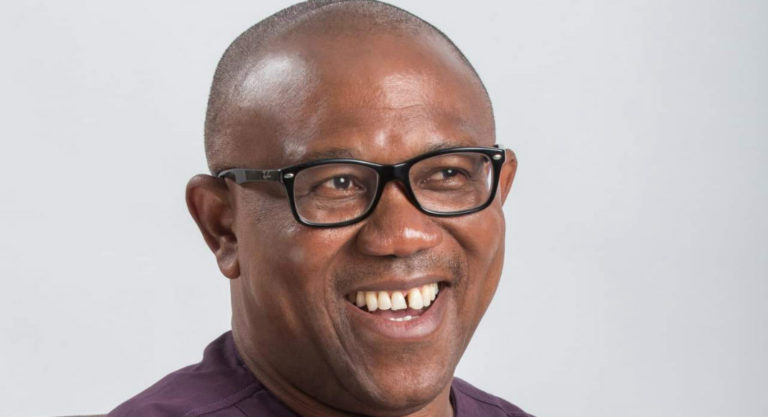
FORMER governor of Anambra State, Peter Obi says the removal of the former emir of Kano, Mohammed Sanusi II has impacted more negatively on Nigeria than on the dethroned emir himself.

Reacting to the development on his Twitter handle, Obi, said Sanusi’s removal by Kano State Government has portrayed clearly, the recklessness in the country today.

‘’His removal portrays clearly, the recklessness of our country today,’’ Obi tweeted.

The former vice presidential candidate of the Peoples Democratic Party (PDP) said the recent reckless executive action in Kano has further validated fears of many foreign investors about the growing lawlessness in the country.

He said while speaking to investors in London a few weeks ago, their primary concern about investing in Nigeria was the unceasing lawlessness and insecurity.

“We must be better and act better if we seriously plan to play on the global stage,” he said.

Meanwhile, Mujtaba Abubakar Abba, the Principal Private Secretary to deposed emir  has relinquished his position as the Falakin Kano.

Abba in a letter of resignation sent to the Kano State Government on Wednesday, thanked the government for allowing him the opportunity to serve.

Photo credit: PoliticsNigeria
Abba’s letter of resignation.

It would be recalled that Sanusi was dethroned on Monday  by the Kano State Government on the grounds of insubordination and lack of support and cooperation.

The former emir has however been appointed as the Chancellor of Kaduna State University  by the  Nasiru El-Rufia, Governor of Kaduna State less than 48 hours after his dethronement.

Whistleblower gets justice as court orders NBET to pay outstanding salaries withheld since 2017

0

THE National Industrial Court sitting in Abuja on Wednesday directed the Nigerian Bulk Electricity Trading (NBET) to pay the three years outstanding salaries and emoluments owed Sambo Abdullahi, a whistleblower, who exposed fraudulent practices at the electricity agency.

Presiding judge, Justice Oyejoju Oyewunmi during the ruling stated that the suspension of salaries and  entitlements Abdullahi was wrong and illegal.

By the ruling, NBET management is expected to pay Abdullahi all his entitlements  from December 22, 2017 when he was suspended, till date.

Oyewunmi added that the refusal of the NBET management to allow him to take his mandatory annual leave was also wrong.

Abdullahi was formerly head of Internal Audit at NBET before he was suspended alongside another wistleblower, Waziri Bintube, for exposing several alleged fraudulent acts by NBET’s Managing Director, Marilyn Amobi.

Amobi has been indicted by several agencies of the government for misappropriating funds belonging to NBET.

He filed a suit at the National Industrial Court challenging the decision of the electricity agency not to pay his salaries and other entitlements on December 7, 2018. He also asked the court to restrain NBET from doing anything that will further affect his employment.

Delivering judgment, Justice Oyewunmi ordered that all his salary and emoluments should be paid with immediate effect.

She also added that the failure of NBET to pay Abdullahi’s accrued salary and other emoluments within 30 days would attract 21 per cent of the accrued salary and other emoluments per annum.

Gender gap: Only 40 out of 269 bills were sponsored by female senators of 9th Assembly

This story has been updated

SINCE the inauguration of the ninth National Assembly on June 11, 2019, record shows that a total of 269 bills have been sponsored, 40 of which were attributed to eight female senators in the Senate.

The Policy and Legal Advocacy Centre (PLAC), a capacity-building organisation, strengthening democratic governance in Nigeria and ‘OrderPaper,’ show this record from June 2019 to February 2020.

According to the record obtained by The ICIR,  five of the 31 bills passed by the Senate between June 11, 2019, and February 2020, were those sponsored by female members of the Senate.

Stella Oduah who represents Anambra North Senatorial District tops the list of female lawmakers who sponsored bills, with a total of 14 sponsored bills, three of which were passed into law, while Betty Apiafi, representing Rivers West, with a total of eight sponsored bills, had none of her proposed bill, passed into law.


Uche Ekwunife representing Anambra Central, however, had to a total of six sponsored bill with one passed into law.

While Rose Oko of Cross Rivers North Senatorial District had none of her three bills scaled first reading, Oluremi Tinubu representing Lagos Central District, sponsored three bills with one passed into law.

A total of two sponsored bills each were attributed to Biodun Olujimi of Ekiti South Senatorial District; Akon Eyakenyi of Akwa-Ibom South Senatorial District and Aisha Dahiru of Adamawa Central District, respectively, with no trace of any, passed into law.

Unequal representation

Interestingly, the break down shows that the two leading female senators, Stella Oduah and Uche Ekwunife with the highest number of sponsored and passed bills, are of the Peoples Democratic Party (PDP). They are also both from Southeastern, Anambra State, Nigeria.

Also, the record shows that PDP has more representation of female senators with a total of six― three from the Southeast (Stella Oduah; Uche Ekwunife; Akon Eyakenyi), two from the Southsouth (Rose Oko; Betty Apiafi) and one from the Southwest (Abiodun Olujimi) respectively.

The All Progressives Party (APC), however, has two female representation in the senate from the Southwest (Oluremi Tinubu) and Northeast (Aishatu Ahmed) respectively.

The PDP has 75 per cent representation of female senators compared to the APC with 25 per cent in the ninth assembly.

The break down also shows that about 84 per cent of bills passed were sponsored by male senators, and 16 per cent of the same were sponsored by female senators.

Male senators also dominated 85 per cent of the total sponsored bills, as compared to about 15 per cent of bills sponsored by their female counterparts.

Such disparity in the total number of bills sponsored and passed into law by the upper chamber of the national assembly shows that there is a need for an upsurge in women representation in politics.

The ICIR had reported that Nigerian women are yet to occupy 10 per cent of the country’s upper legislative arm of the government, and the participation of women in politics since the return of democracy in 1999 has not exceeded seven per cent.

Beyond politics, the World Economic Forum (WEF) in its latest report, ‘Global Gender Gap’ noted that women participation has also regressed in economic participation, which pose a threat to attaining gender parity in one’s life down.

However, with this year’s commemoration of International Women’s Day (IWD) with a theme focused on equality, the Nigerian Senate has advocated for the amendment of the constitution to ensure women in Nigeria are given better opportunities to occupy desired positions in society.

Bill seeking to ban importation of generators passes first reading in Senate

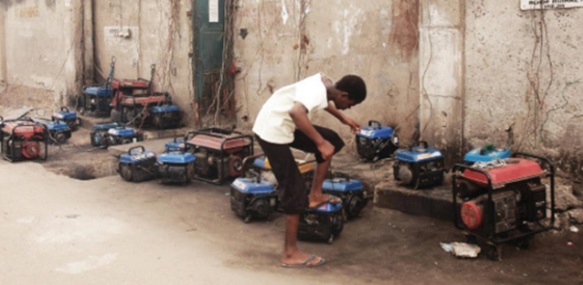
A BILL seeking to ban importation of generators into Nigeria on Wednesday passed the first reading on the floor of the Nigerian Senate.

The proposed legislation which is titled “Generating Set (Prohibition/Ban) Bill 2020” seeks to prohibit and ban importation of generating sets all across the country.

It is sponsored by Muhammad Bima, senator representing Niger South Senatorial District in the Senate.

The bill however, proposes to exclude ‘essential services’ such as medical purposes, railway stations/services, elevators (lifts), escalators, research institutions, and facilities that require 24 hours electric power supply from the ban.

Bima, through his proposed bill seeks that all persons using generating sets across the country be completely banned to avoid environmental pollution.

Nigeria has grappled with poor power generation and supply despite huge budgetary allocations by current and past administrations to fix the power sector.

According to USAID, Nigeria has the potential to generate 12,522 megawatts (MW) of electric power from existing plants, but is only able to generate around 4,000 MW, which is insufficient.

Despite privatisation of the distribution companies, power distribution remains a huge challenge and there is a wide range of tariffs.

In the 2020 annual budget, the State House, which is the office and official residence of the president budgeted N45.6 million to power generating plants.

Also throughout the 2019 budget, there are 1,358 generator-related expenses.

No fewer than 70 million generators have been imported into Nigeria, the Chief Executive Officer, Consistent Energy Limited,  Segun Adaju said in a report by The Nation in 2017.

Data on Genset Import/Export Trade from United Nations Statistics Division, shows Nigeria is the second largest market for generator driven economy in Africa.

Contained in the explanatory memorandum of the bill is that banning importation of generating sets will curb environmental pollution which leads to potential health hazards. It also advocates that the ban is ‘facilitate the development of the power sector

Read the content of the bill below

A BILL FOR AN ACT TO PROHIBIT/BAN THE IMPORTATION USE OF GENERATING SETS TO CURB THE MENACE OF ENVIRONMENTAL (AIR) POLLUTION AND TO FACILITATE THE DEVELOPMENT OF THE POWER SECTOR

Sponsor: Senator Bima, Muhammad Enagi (Niger South Senatorial District)

ENACTED By the National Assembly of the Federal Republic of Nigeria

  1. Prohibition/Ban on importation generating sets

Any person who

a) Imports generating sets; or

(b) Knowingly sells generating sets shall be guilty of an offence and be liable on conviction to be sentenced to imprisonment for a term not less than ten years.

Provided that this subsection shall not apply to the importation or sale of any generating set to be used for essential services.

  1. Ban Excludes Essential services

(3) The ban/prohibition of generating sets shall not include generating sets used for essential services which include:

(i) Medical purposes (hospitals and nursing homes and healthcare facilities), (ii) Airports,

(iii) Railway stations/services,

(iv) Elevators (lifts)

(v) Escalators,

(vi) Research Institutions, and

(-vii) such facilities that require 24 hours electric power supply:

(b) Approval for exclusion shall be obtained from the Minister in charge of Power whc shall brief the Federal Executive Council quarterly on approvals granted.

  1. Ban on Use

All persons are hereby directed to stop the use of electricity generating sets which run on diesel/petroI/kerosene of all capacities with immediate effect in the country.

  1. Meaning of Generating Sets In this “Bill” generating set (Generator) meansA machine that is used for producing electricity.
  2. Short Title

This Bill may be cited as the Generating Sets (Prohibition/Ban) Bill, 2020.

Explanatory Memorandum

This Bill seeks to ban the importation and use of generating sets (generators) in the country and to curb the menace of environmental pollution which leads to potential health hazards it poses to the whole nation.

COVID-19: South Africa repatriates citizens from China as Ghana and Gabon implement travel ban

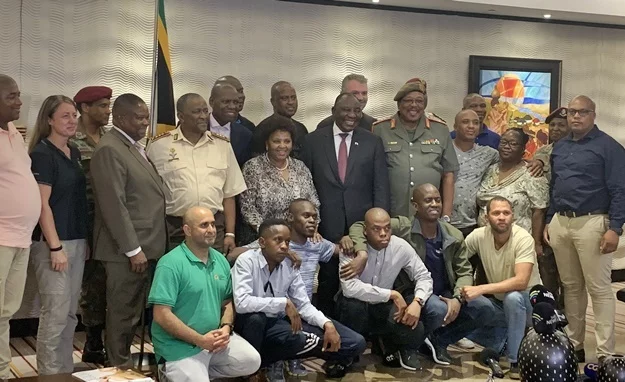
THE South African Government has sent a plane to Wuhan, China’s  epicentre of coronavirus to repatriate over 120 of it’s citizens still in the city since the outbreak of the virus in December 2019.

News24 reported that the SA plane which would make a stop in the Phillippines before heading to China is scheduled to arrive in the African country on Friday with passengers and cargoes.

Cyril Ramaphosa, President of South Africa in a letter addressed to the Parliament revealed that the mission would cost almost $1.6milion and include 151 members of the SA National Defence Force.

“I have full confidence that our soldiers will execute this mission successfully. This is a task to bring back our children from China,” Ramaphosa said.

“Go with speed, with God and bring our children back home. Thank you very much for having taken on this mission,” Ramaphosa told the military and health officials departing for China at OR Tambo International Airport.

Instead of the repatriation of 180 persons who had originally indicated interest to return to South Africa, authorities say 122 are to be repatriated as the others dropped out and choose to “stay on at their respective commitments.”

Although none of the returnees has shown any signs of coronavirus infection, the SA authorities say they would be subjected to a 21-day quarantine period.

Although ZHOU Pingjian, Chinese Ambassador to Nigeria in February  had said no Nigerian citizen residing in Wuhan city has contracted the novel coronavirus, the Nigerian government is yet to make any effort towards the repatriation of its citizens in the city  

Meanwhile, Gabon and Ghana within the week have suspended foreign trips by public officials as a measure of combating the spread of the virus. 

Kenya has also restricted its athletes from leaving the country to participate in international events for the next month as a measure to prevent coronavirus spreading.

“Following the global outbreak of the Covid-19 virus, the government has put in place measures to deal with the situation to safeguard the public and the country at large,” Kenya Sports Ministry said.

“The ministry wishes to inform you that there will be no more travel for international events until further notice and notably for the next one month.”


Human rights lawyer sentenced to prison for speaking to media in Egypt

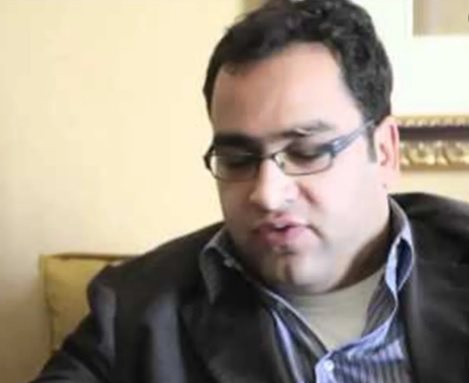
ZYAD El-Elaimy, a human rights lawyer, former Member of Parliament and one of the leaders of the Egyptian Social Democratic Party was on Tuesday, sentenced to one year imprisonment by the Mokattam Misdemeanour Court in Egypt, over ‘spreading false news.’

El-Elaimy who has been tagged a prisoner of conscience by Amnesty International, was also charged to pay a fine of 20,000 Egyptian pounds (around US$1,270) by the court.

According to reports, the politician and human rights lawyer was accused and charged for  “spreading false news with an intent to spread panic among the people and disturbing public peace” during a TV interview with the BBC in 2017.

For granting an interview where he spoke against the ills of the government, EL-Elaimy was arrested and has been detained in prison since June 2019.

“Zyad el-Elaimy has been unlawfully detained since June last year, when he was arrested in relation to his peaceful political activities. He has now been sentenced to a year in prison for daring to give a TV interview to BBC Arabic, in which he spoke about the practices of politically motivated imprisonment, enforced disappearance and torture in Egypt,” Philip Luther, Amnesty International’s Research and Advocacy Director for the Middle East and North Africa, said.

It was gathered that El-Elaimy has appealed against the sentence and April 7 has been set for the appeal hearing.

Amnesty International has called on the Egyptian authorities to drop all charges against the politician. According to the global advocacy, he remains in pre-trial detention pending investigations in another case, known as the “Hope case”, where he is accused, along with other politicians, of unfounded “terrorism”-related offences in retaliation for their attempt to found an electoral alliance for the 2020 parliamentary elections.