The narrative of this year’s Hajj has started to be written with the inauguration of the 4th Board of the National Hajj Commission of Nigeria (NAHCON), on the 13th February 2020. Paradoxically the event steeped in history as it marked the 44th anniversary of the assassination of Nigeria’s late Head of State, General Murtala Ramat Mohammed in a bloody coup detat in 1976.
The 16-member board inauguration has been repeatedly delayed due to the Senate ‘s December recess and administration of the letter of appointment from the office of the Secretary to the Government of the Federation (OSGF).
Alh Zikrullah Kunle Hassan led board has since its inauguration got off the mark. It has left no one in doubt about its policy direction in which he expects to leave an indelible positive mark like its two predecessors.
Giving a clue of his intention, the Chairman /CEO, Alhaji Hassan, during his confirmation hearing on the floor of the Senate ‘s Foreign Affairs Commmittee stated that his main focus if confirmed would be on how to bring down the cost of Hajj Fare to make it more affordable and accessible for the majority of Muslim ummah. He also sang the same hymn sheet in his speech during the Hand over ceremony from his predecessor, Barrister Abdullahi Mukhtar Muhammad, MON, FCIA that his management board will give greater energy to pursuit of a consistent reduction of the Hajj Fare beginning from this year.”We have always understood that when times change, so must we, that the new time requires new response to new challenges.” .. So we must harness new ideas to make and reduce the cost of Hajj, so that we can empower and enable the majority of the Muslim faithful to hearken to the divine obligation and call. It is indeed imperative and important for us to thread this path. It is a hard choice we have to make. ”
” I understand that the path towards achieving this feat will be long and may be difficult, but we cannot resist this transition. We must and I’m ready to lead it “, he added.
This was a good music to the ear of many Nigerian Muslims especially against the backdrop of revolving doors of spiral fare increment every year.It should be noted that for some years now, the issue of sky rocketing cost of Hajj has become a l toxic matter of controversy in which majority of contributors often pass a negative verdict on the Commission, even though most of the components of the fare are fixed by the Saudi Authorities.
But the new board is determined to plot a route past the wall. In the quest to achieve this objective, the Chairman /CEO, Alh Zikrullah Kunle Hassan and his Executive members is on the wheel with the representatives of the Presidency National Assembly and officials of the State pilgrims welfare boards, agencies and commissions to Saudi Arabia with a view to persuade the Saudi Service Providers to bring down the cost their services. This may seem a herculean task especially against the backdrop of the fact that the former board had signed a Memorandum of Understanding (MOU) with some of the providers as early as December 2019 and in some cases initial payments already made.
Notwithstanding, Alh Hassan believed that if an outright reduction couldn’t be achieve this time, at least a statement of intent and signal would have been made that it wouldn’t be business as usual. According to him, with a bit of consistency, they would be able to persuade the providers to slash some of the cost.
Giving v further ent to his inaugural speech, Alh Hassan while performing his first assignment at the helm restated his commitment to bring down the cost of Hajj which form part of his promise.
According to him, I don’t want to be seen as making campaign promises like the politicians. We are resolute that the current Hajj Fare has to come down. It is the expectation of the Muslim Ummah. While I won’t deceive myself that that it won’t be easy, I’m also optimistic and determined to achieve that without comprising the standard and quality of services ”
Our focus is to get good price. We aren’t going to take last year’s price.
Another goal being pursued by by the new l NAHCON board is the issue of the number of days spent by pilgrims in Saudi Arabia and hours spent at various departure centre’s in Nigeria and the Jeddah Airport. For sometimes the number of days spent by pilgrims range between 35 and 40 days. Indeed this has become an asterisks in the storied tenure of the Commission. The new board has said it would find a breakthrough and plot a route pass it. Perhaps, the moment might simply have arrived
The reduction in the number of days is expected to also slash the cost of feeding pilgrims during the duration of the Hajj exercise.
But these goals and other lofty dreams cannot be accomplished or brought into reality for the Muslim ummah without the team bonding of the management of the commission as well as the stakeholders in the Hajj industry in the country. This much was emphasized at the inauguration of the members of the. Accommodation and Catering services Inspection Team to Saudi Arabia where he appealled to the staff to be wary of being tempted to compromise the intention of the Board.
According to him, many temptations will come your way but I plead that you do not give him to this else we would have betrayed the trust placed in us by the pilgrims. Each and every one of us must be committed to achieve this. I know that with sincerity and commitment from all of us, we shall achieve that goal.
Ubandawaki is of the Information and Publication Division of NAHCON
THE Nigerian Stock Exchange (NSE) has recorded a continuous 5-day decline, plunging the All shares index (ASI) by negative 4.28 per cent, and causing investors to lose N610.64 billion.
The stock market has shown losses all week and a massive stock sell-off by investors in the Nigerian market.
The weekly report by the NSE showed that on Monday 33 stocks declined against five stocks that gained.
For Tuesday, 22 stocks declined against 8 stocks that gained.
For Wednesday, 16 stocks declined against 11 gained stocks, and on Thursday, 19 loses were recorded against 11 that gained and on Friday there was a massive 41 stocks decline against two stocks gained.
This has proven not to be an investor-friendly week since the year 2020 began.
The stock market recorded a total turnover of 1.54 billion units worth N24.26 billion in 21,646 deals traded this week by investors on the floor of the Exchange.
This is in contrast to a total of 1.49 billion units valued at N17.90 billion recorded as the exchange made in 18,515 deals, the previous week.
The Financial Services industry (measured by volume), led the activity chart with 1.26 billion units valued at N17.20 billion traded in 15,149 deals.
The report showed that the financial services industry contributed 81.91 per cent and 70.91 per cent to the total equity turnover volume and value respectively.
The Conglomerates followed with 84.99 million units worth N180.88 million in 654 deals.
A conglomerate is a large corporation that has controlling interests in several smaller companies.
The third place was the consumer goods industry, with a turnover of 65.96 million units worth N3.91 billion in 2,235 deals.
The report showed, measuring by volume, the top three equities namely; Guaranty Trust Bank Plc, United Bank for Africa Plc, and Zenith Bank Plc accounted for 800.05 million units worth N14.97 billion in 8,379 deals.
All three top stocks contributed 51.72 per cent and 61.70 per cent to the total equity turnover volume and value respectively for the week.
THE LEADERSHIP of the National Youth Service Corp has refused to answer questions over preventive measures in place to avoid an outbreak of Coronavirus during the compulsory three weeks orientation camp for Prospective corp members.
The ICIR called the NYSC spokesperson, Adenike Adeyemi three times at exactly 10: 50 on Friday morning but she refused to answer her calls.
A text message was also sent to her asking if there is any plan in place to prevent an outbreak of the disease during the three-week orientation camp across the nation.
She was also asked if there could be a postponement of the camping pending the time proper preventive measures would be in place but as at the moment of filing this report, she is yet to respond to the message from The ICIR.
Despite a confirmed case of the deadly virus in Nigeria, NYSC has not made an official statement concerning the orientation camp.
According to NYSC, the orientation camp will commence on Tuesday, March 10th and run till Monday, 30th March.
And the NYSC authorities has invited Nigerian students who schooled outside of the country for the orientation camping.
Some prospective corp members have expressed concerns about the three weeks camping due to the confirmed cases of coronavirus in Lagos state.
A social media user who identified himself as Phaiz Paints replied to a message by NYSC, saying that the camping is postponed until further notice.
” I sincerely hope NYSC would have to postpone camping of Corp members till further notice in other to curtail the spread of the coronavirus,” Phaiz wrote.
Speaking to a prospective corp member from Ekiti State University, Kofoworola Fadimuluyi, she told The ICIR reporter that there is an urgent need for postponement of the camping.
“Although I have been looking forward to the three weeks camping I feel it should be postponed because of the dangers that may come out of it,” she said.
The World Health Organisation (WHO) had advised that social gatherings be reduced as an effort to curtail massive infection of the disease.
NIGERIA was put on the spotlight on Thursday when the Federal Ministry of Health confirmed the country’s first case of COVID-19 aka coronavirus rekindling fears of a possible outbreak in the country.
World Health Organisation, WHO has descrived Coronavirus as having a “pandemic potential”.
Tedros Ghebreyesus, Head of the WHO in a statement, warned that the impact of the disease would hit Africa badly because of its “fragile health systems” considering the nature of the threat posed by the virus.
“We must focus on containment while doing everything we can to prepare for a potential pandemic. There is no one-size-fits-all approach. Every country must make its own risk assessment for its own context,” he said.
Coronavirus is estimated to have killed at least 2,800 people worldwide, while there are over 83,000 people infected in every continent except Antarctica.
Biotech company Moderna Therapeutics based in the US in partnership with the National Institute of Allergy and Infectious Diseases, NIAID, and National Institutes of Health, NIH, is set to deliver the first vials of its COVID-19 vaccine which will be ready for human testing in April.
It was created 42 days after the genetic sequence of the coronavirus codenamed COVID – 19 was released by Chinese researchers.
The vaccine named COVID-19 vaccine was developed within a short time frame because it’s based on a relatively new genetic method that does not require growing huge amounts of the virus, according to a report.
It is expected that the vaccine would be coded with coronavirus nodes which when injected into the body will boost the immune cells to recognise and mark every coronavirus strand in the body for destruction.
Stephen Hoge, president of Moderna Therapeutics, described the vaccine as software that stimulates the immune system to generate a response.
“Our vaccine is like the software program to the body, which then goes and makes the [viral] proteins that can generate an immune response,” he said.
Scientists working with NIH had also begun testing an antiviral drug named Remdesivir initially created for Ebola, on a patient infected with the coronavirus. The test trial for the drug will involve people diagnosed with the virus and other volunteers.
The drug had displayed favourable results among animals infected with two related coronaviruses, one responsible for the severe acute respiratory syndrome, SARS, and another for causing Middle East respiratory syndrome, MERS.
Volunteers will randomly receive either the drug or a placebo intravenously for 10 days, and their blood tests, nose and throat swabs taken every two days to track the amount of virus in their bodies. Though, the drug shows some efficacy in keeping blood levels of SARS-CoV-2 from growing, it could help to contain the spread of the infection.
However, the strategy employed by African countries in the face of the coronavirus outbreak is tailored towards limiting human-to-human transmission, building capacity to isolate and provide appropriate treatment to infected people according to a WHO report.
The global health body, WHO, prioritised support for 13 African countries on the basis of their close transport links with China namely Algeria, Angola, Côte d’Ivoire, the Democratic Republic of the Congo, Ethiopia, Ghana, Kenya, Mauritius, Nigeria, South Africa, Tanzania, Uganda, and Zambia.
South Africa’s National Institute of Communicable Diseases and Senegal’s Institut Pasteur were initially the only referral laboratories in Africa, that were responsible for testing samples from other African countries.
As of February 4, Ghana, Madagascar, Sierra Leone, and Nigeria were confirmed capable of carrying out tests for COVID – 19 alongside 11 0ther countries on the continent.
Michel Yao, WHO Africa programme manager for emergency operations said most African countries have isolation mechanisms in place due to the outbreak of Ebola.
“Thanks to Ebola, most African countries have isolation infrastructure. We are pushing for the continent to be very vigilant”, he said.
More details of the Italian patient who tested positive to Coronavirus on Thursday, and currently receiving treatment in Lagos, has emerged.
According to the Lagos State Commissioner for Health, Prof Akin Abayomi, the Italian citizen who came into the country from Milan, Italy, flew in through Turkish Airlines on Monday and at the time didn’t show any symptoms of the disease.
The victim of COVID-19, whose identity is yet-to-be disclosed, was said to have visited Ogun state on Tuesday after spending Monday night at a hotel in Lagos.
The Commissioner for Health in the state, Dr. Tomi Coker, said during a press briefing held in Oke-Mosan, Abeokuta on Friday, that the victim fell ill after he visited the state for a business meeting.
It was gathered that the victim developed a fever at about 4pm on Wednesday, and the hospital in Ogun responded efficiently.
“The hospital of Lafarge was very sensitive to the case, they responded immediately and contacted Lagos that they had a high suspicion,” Coker said.
After concerns were raised, the patient was then transported to Lagos, where he tested positive to the virus and was subsequently confined at the isolation facility at the Mainland Hospital, Yaba.
Meanwhile, presidential candidate of the People’s Democratic Party (PDP) and former vice president, Atiku Abubakar has called on President Muhammadu Buhari to act swiftly in response to Coronavirus, which has now entered Nigeria.
In a series of tweets, the former VP advised the president to stop all flights from countries facing coronavirus outbreak.
Abubakar hammered that since the president could shut down borders to protect the economy, he can equally ban flights to protect the country from a Coronavirus outbreak.
“Nigeria needs firm and decisive actions to prevent an escalation of the scourge. Recently, we closed our borders as an act against economic sabotage. Perhaps now is the time to temporarily halt flights to and from any nation with a prevalence of this scourge. It is more important to secure human lives than to secure an economy. We also need to invest in early detection facilities at our airports.
“But above all, Nigeria must not panic, whether at government or individual levels. We have defeated Ebola before, and we can defeat this present predicament,” his statement read.
THE Purchasing Manager’s Index (PMI) for the manufacturing sector released by the Central Bank of Nigeria (CBN) on Thursday showed that the index for February grew at a slower rate when compared to the index in January.
The February 2020 PMI survey was conducted by the Statistics Department of the CBN during the period February 10-14, 2020.
The surveyed firms were purchasing and supply executives of manufacturing and non-manufacturing organizations in all 36 states in Nigeria and the Federal Capital Territory (FCT).
The manufacturing and non-manufacturing PMI report on businesses are based on survey responses, indicating the changes in the level of business activities in the current month compared with the preceding month.
The apex bank highlighted in its report that of the 14 surveyed subsectors, 12 reported growth above 50 per cent threshold for February in the following order.
Transportation equipment; petroleum & coal products; Nonmetallic mineral products; Paper products; cement; textile, apparel, leather & footwear; Furniture & related products; food, beverage & tobacco products; plastics & rubber products; Fabricated metal products; chemical & pharmaceutical products; plastic and rubber products and Electrical equipment.
The Primary metal and Printing & related support activities subsectors recorded declines.
According to the released report, the production index indicated slower growth in production level for February, when compared to its level in January 2020.
Ten of the 14 manufacturing subsectors recorded an increased production level, 3 remained unchanged while 1 recorded a decline.
Also, the new orders index grew at a slower rate, when compared to its level in January 2020.
Eleven subsectors reported growth, while the remaining 3 recorded declines in February.
The report also showed that 10 of the 14 subsectors recorded improved suppliers’ delivery time, while 4 subsectors reported no change in delivery time in February 2020.
Out of the 14 subsectors, 9 reported increased employment level, 3 subsectors remain unchanged, while the electrical equipment and printing & related support services subsector recorded lower employment level in February.
The index for raw material inventories grew at a slower rate when compared to its level in January 2020.
Eight of the 14 subsectors recorded growth, 5 subsectors reported unchanged inventories, while the cement subsector reported lower raw material inventories in February.
OLUYEMI Fasipe, a random social media user on Monday morning, 24th February tweeted to Nigerians, “as you go about your hustle this week, the protection of God will be sufficient for you and you will not encounter unfortunate and cursed rogue policemen…”
Two hours later, the tweet has generated over 300 likes and 34 comments, with scores responding ‘Amen’.
It was an upshot of a series of extrajudicial killings by the Police, followed by the incident which occurred two days earlier – 22nd February. Tiamiyu Kazeem, a footballer with the Remo Stars Football Club was allegedly killed by the Police operative in Sagamu Local Government of Ogun State.
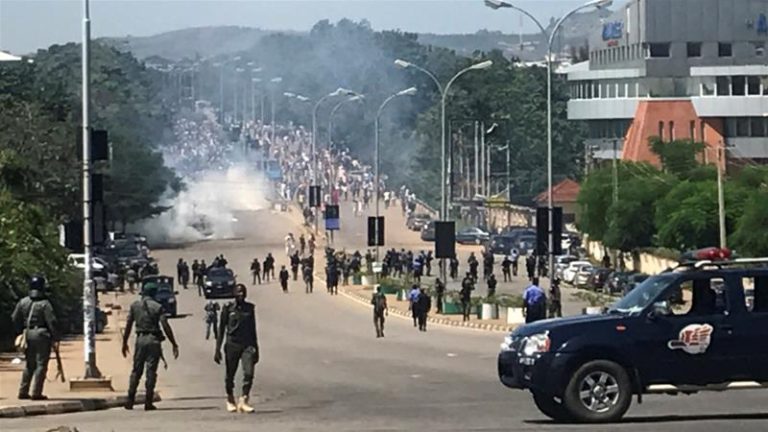
The following Monday, scores of women went out in multitudes to demonstrate against the killing. But again, one person was reportedly shot dead during the protest. Two other dead casualties were later reported – an action, which led Mohammed Adamu, the Inspector General of Police (IGP) to scrap the 12 Zonal Intervention Squads.
‘Your life will not be cut short,’ he said, as he ends his devotions, and then, wished the public a productive week.
This mass reponse exemplifies the fear that most Nigerians harbour about their safety in the hands of the civil authority responsible for their protection, even as they go about their daily activities.
Apparently, Fasipe’s unusual prayer was premised on seemingly unending police extrajudicial killings of innocent citizens across the country, including the Federal Capital Territory (FCT).
“Clearly police have become our greatest problem in going about our normal and legitimate businesses nowadays and it is just as unfortunate as it can be,” Ezenma Basil, a different user said, expressing his concern.
Police use of live bullets
The news of police harassments is not new. Often time, this leads to the death of innocent citizens, exacerbated by the use of live bullets during riots or protests. There are pieces of evidence of real-life shooting where the police fire at will and killed those they are paid to protect.
Only on a few occasions do the police conforn to the best policing practice by forming a wall around protesters as a way of protecting them.
But this particularly occurs in Abuja, the seat of power, especially during the BringBackOurGirls campaign.
There are also few cases where the police engage in dialogue with the protesters, but many other cases are worse.
In July 2009, a report by the Cable News Network (CNN) detailed how the anti-riot Police otherwise known as (MOPOL) allegedly killed at least 133 people during a two-day riot in Jos, Plateau state with support from the military. This figure was validated by a report by the Human Rights Watch (HRW).
It has, however, become almost a norm that the police kill Nigerians extra-judicially or abuse their human rights in other ways
For nearly five years, Nigerians have witnessed brutal killings due to the use of live arms on unarmed demonstrators. Some of these cases have been reported by major news organisations but the situation persists.
For instance, days after the Lagos State Government banned the operation of commercial motorcycles and tricycles in 15 selected parts of the state; there was a civil protest which drew the police attention. To contain the riot, the Police allegedly used live bullets leading to the death of three persons including a schoolgirl and another female whose stomach was ruptured by the police bullets.
Prior to the Federal Government’s decision to proscribe the Islamic Movement of Nigeria (IMN), protesters demanding for the release of Sheikh Ibrahim El-zakzaky, were reportedly killed by the police, also with live ammunition.
After the group’s proscription, over 20 others died in repeated demonstrations. These killings were largely attributed to alleged ineptitude of security agents who were accused of using live bullets on the protesters who were armed with stones.
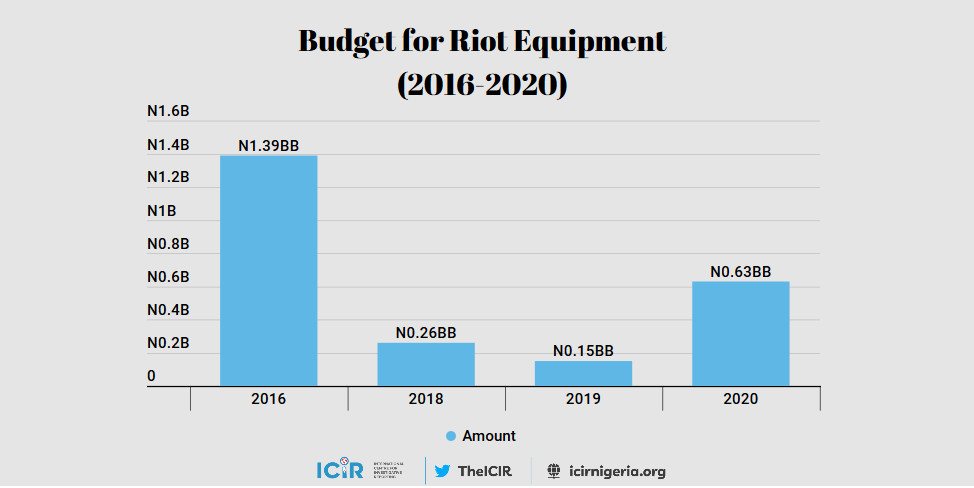
Budgets for riot equipment (2016-2020) The ICIR
Last year July, a journalist identified as Precious Owolabi was also killed allegedly by the Police while covering similar protest staged by the El-zakzaky members. Till date, no police officer has been identified as culpable for the offence or prosecuted by the authority.
Moreover, in early January, another journalist, late Alexandra Ogbu was allegedly killed by the same security operatives deployed to curtail the demonstration. He was shot dead through a stray bullet while waiting to board a public vehicle, though the Police denied being responsible for his death.
“Do you know Alexandra Ogbu? He is dead, come to the police station.” These were the exact words the police reportedly used to break the news of Alex passing to his wife over the phone.
But, should the Police make use of live bullets during protests or riots? Is it embedded in the operational framework of the security operatives while controlling protests? What is applicable in other climes etc.
These are some of the questions requiring immediate answers. Yet, the authority has been silent, hence the continuous reoccurrence, despite being a major public concern.
It is ironical that the Police that is always eager to dispense justice, rven extra- judicially have a long history of professional miscoducts, corrupt and criminal practices.
“Indeed, 80 years after its birth, members of the force are viewed more as predators than protectors, and the Nigeria Police Force has become a symbol in Nigeria of unfettered corruption, mismanagement, and abuse,” the Human Rights Watch labels the force in a 2010 report.
In 2016, the Amnesty International prior to the report, titled You Have Signed Your Death Warrant, also found the Police guilty of extra-judicial offences but nothing seems to have changed for better, except the partial unbundling of the Special Anti-Robbery and Response (SARS) unit.
“The scale of the reaction to this incident shows that the concerns of the Nigerian people are reaching boiling point. All incidents of violence meted out by this notorious police unit must be independently investigated, and those found to be responsible must be prosecuted in fair trials.”
“The #EndSARS hashtag is rightly gaining the attention of the police and Nigerian government and now officials must do more to end these horrendous abuses of power. Amnesty International highlighted such abuses more than a year ago, yet these shocking incidents still continue. Restructuring SARS is not enough, the government must take concrete steps to protect Nigerians.”
But are there better alternatives to managing protesters?
In other countries, peaceful demonstrators are controlled through the deployment of special police operatives with tactical skills. They often make use of batons and shields, water cannon, taser guns and at worst the use of tear-gas among other measures.
Last year in Hong Kong, for over three months, scores of civil protesters demonstrated against the government’s policy on a controversial bill that later evolved into a pro-democracy agitation. The recorded height of human rights abuse was torture and brutal beatings and arbitrary arrests. Yet, there was no account of where the police actually used live ammunition on the demonstrators.
According to a report by the UK Guardian, over 1,400 protesters were arrested during the protest.
However, there were no dead casualties. The aggrieved persons and international observers either accused the Hong Kong Police authorities of violent attacks or another form of maltreatment during or after the demonstrations.
Another study conducted by the AI, where 48 persons were interviewed including lawyers and 21 arrested protesters, the respondents all accused the Nigerian police authorities of violent attacks.
“Time and time again, officers meted out violence prior to and during arrests, even when the individual had been arrested or detained,” Nicholas Bequelin East Asia Director of AI stated in the report.
It is illegal – Police sources
In the course of this report, The ICIR reached out to a few Police officers who decided to speak off-record.
One of the officers admitted the use of arms during protests is illegal.
“No law says we should use arms during protests but we also need to protect ourselves,” he said justifying their actions.
Reminded of the budgetary allocations to the Police almost on an annual basis, to procure anti-riot equipment, the sources explained that the issue of mismanagement cannot be fully ruled out as the 36 states police commands should have been provided with adequate special equipment for such purpose.
“First and foremost, whether a protest is peaceful or not police/law enforcement officers were not expected to engage in the use of live ammunition. Therefore, the use of live ammunition is not allowed for whatever reason in an ideal situation,” another Police source revealed.
According to him, crowd control measures are often determined by the threat posed by the protesters, constitutional provisions; and the rules of engagement.
He explained further: “The police or law enforcement officers involved in crowd control during spontaneous demonstrations were expected to avoid the use of lethal weapons, long-range weapons which are capable of inflicting serious injuries on protesters and ultimately result to loss of lives.”
The security operative emphasised that in an attempt to control a rampaging demonstration, the first step should be to make a loud noise and issue instructions to the demonstrators to stop and disperse, through the use of public address system or megaphone.
He said police deployed to control protests should be equipped with personal protective devices, such as riot helmets, face visors, riot shields, gas masks and body armour (vests, neck protectors, knee pads, shoulder and elbow pads).
“In view of the need to avoid collateral damage, unnecessary loss of lives and conform with the rules of engagement, the following devices are recommended for riot control or crowd dispersal by the police during protests. They are: Tear gas, pepper spray, rubber bullets, electric teasers, long-range acoustic devices.”
Other listed devices include: “Water cannons; armored fighting vehicles, aerial surveillance, police dogs, mounted police on horses.”
However, he described the recommendations given above as non-exhaustive as they could be improved upon.
What the Police Service Act says
There is clearly no provision of the Police Act that instructs the force to use live ammunition on protesters either violent or otherwise.
As empowered by the Nigerian Police Act, findings revealed that the Nigerian Police is administratively structured in seven departments ‘A’-‘G’.
‘B’ Department of Operations is primarily responsible for, “formulating policies, planning and management of incidents such as riots, national disasters,” among others including union protests.
The old Police Act CAP P.19 enacted in 1943 also prevents the force from using live ammunition on demonstrations. It, in fact, forbids women officers from taking drills under arms or partakes in protests.
Also, no part of the proposed amended Police bill (Nigerian Police Act 2018) empowers the police to use arms on unarmed protesters. From the principal objective in Part 1 Section 2 to the primary functions of the force in Part 2 and a standing order reflected in Section 15, Part 4, none of the provisions gave the backing on use of arms on demonstrators.
Also, Part 5, Section 28 (Powers of Police Officers) which clearly stated powers of the police in ensuring public safety and public order only obligated the police to function within the confine of human rights protection including Administration of the Criminal Justice Administration (ACJA 2015).
Lastly, Part 9, Section 70 (Prevention of offences and security for good behaviour) also charged the police to perform its best within acceptable condition such that would, “prevent the commission of an offence.”
Police got N1.87 billion in four years for riot control equipment but still uses live arms
Checks by The ICIR in the course of this report revealed that the Police have significantly benefitted from budgetary allocations in recent years up to 2020 to provide anti-protest equipment for its personnel.
Such equipment listed in the budget line as ‘procurement of riot control equipment,’ is supposedly required to disperse demonstrators, mostly when protests become violence. But, despite these allocations, live arms are commonly used on protesters.
For instance, from 2016 to 2020, the Police got N1,876,458,864 to procure the anti-protest machinery.
In 2016 the sum of N728, 415, 480 was approved. In the same 2016 budget, N666,240,000 was approved to purchase 10 anti-riot specialised water cannon and 5 K-9 operational vehicles.
There are no verifiable data for 2017 but in 2018, the Police got N266, 933,966.
By 2019, budget approval for the equipment reduced to N150, 958,730 and this year, N63, 910,688 was approved for the ‘procurement of riot control equipment.”
We shoot at protesters who shot at us – Police
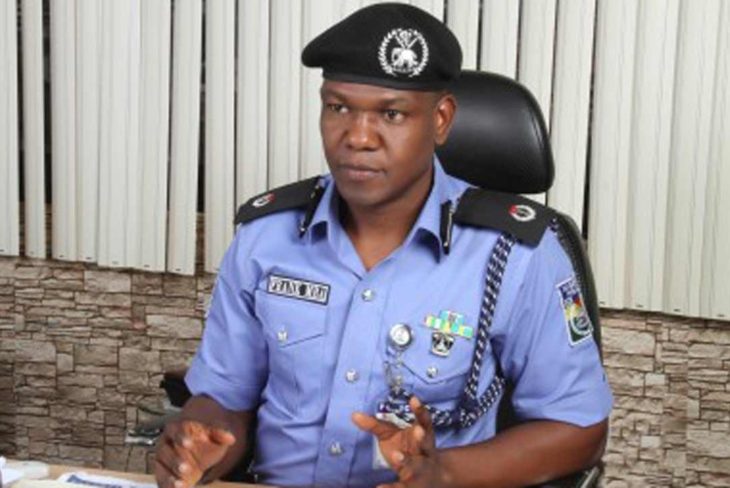
Deputy Commissioner of Police (DCP) Frank Mba, reacting to the allegation, told The ICIR about the operational guidelines of the force and the stage, at which the police would deploy force by using live bullets.
He explained that at first, the police would engage demonstrators in conversation, before it transits to the use of baton and shields, if they remain recalcitrant, then water cannon are deployed if the case continues, before eventual use of arms.
DCP Frank Mbah had served as FPRO between 2012 and 2014 when Mohammed Abubakar was the IGP File Copy
“The amount of force the police use is dependent on the risk posed by the demonstrators,” Mba said. “Normally, the police will start by having a conversation. If you want to be honest, you must have seen the police engaging demonstrators in conversation. They talk to them, tried to calm them down, not to cross a line or use a particular street.
“If that works, police will have no reason to deploy teargas or water cannon. Where that failed, the police will move to the use of batton, shields and one on one with the rioter. If that fails, then the teargas section comes in. If it degenerates and it’s becoming very rioter and properties are being destroyed, police will deploy teargas.”
The police spokesperson cited instances of where student cultists shot at the force during protests.
He said, at extreme points where rioters are armed and they begin to shoot at the police, throw bombs, stones and all kinds of offensive weapons, the force would resolve to the use arms, even though he was unable to affirm if such action was legal or not.
“Once rioters cross the redline and begin to threaten lives of innocent people, burn down properties and shoot at policemen or wound policemen – it happened recently in Abuja where some policemen were killed, the police will issue a proclamation in the name of the Head of State, and if the shooting continues and you see clearly that someone is aiming at the police, our engagement rule authorises you to take down that individual with arms, aim at his legs and take him down.”
The ICIR cited why it might be difficult to ascertain the exact shooter, particularly if the protesters are many, and instances of where a journalist was killed including the young female victim whose stomach was ruptured during Lagos Okada ban protest.
But the police spokesperson declined to comment on the particular cases but on a broader perspective stressing that it is often time cruel, when blames are placed on the force.
According to him, in situations where rioters also own arms, stray bullets could fly from any end.
“In the case of the riot in Abuja where a police officer was killed and two others injured, including a journalist who was killed. Will you, in all honesty, say that the policemen shot and kill themselves? ”
Mba further justified his argument on the case of arms proliferation in the country. There are lots of weapons in the hands-on non-state actors.
“The weapon in the arms of non-state actors is more than the weapon in the hands of the law enforcement agencies, military and government forces in Africa,” he added, quoting recent AU report.
The ICIR then pushed further on the legality of using the armed weapons on rioters but, he attempted to flip the argument.
He said: “If I am dispersing rioters, and you….what’s your name, Gbenga.
“Okay, if Gbenga is a journalist and your life is threatened by an armed bearing rioter, and the only way to stop the man from bringing you down is to shoot at his legs, I will be justified to use my weapon and protect you.
“My weapon is designed to protect the state, citizens of the state and protect the common wealth of the state, and I must do so within the bounds of the law.
DANGOTE Coalmine Limited, a subsidiary of Dangote Group located in Ankpa Local Government Area, Kogi State has finally paid the sum of N1 million to the family of late Benedict Etonu.
Patience Etonu, daughter of the deceased, told The ICIR on Friday, stressing that the cheque was presented to her mother identified as Mrs. Etonu.
The money, paid as compensation by the Dangote Group, was eventually cleared and deposited in the beneficiary’s family bank account.
“Yes, they have paid since last month,” patience, the deceased’s first child said.
“Mr Ahmadu gave us the cheque of N1 million,” she said.
Fredrick Ahmadu, the Awoakpali Community Representative to Dangote Coalmine, mediated between the coal-rich community and Dangote Coal Mining.
Ahamdu also shared some of the community concerns with the coalmine firm, while ensuring a mutual relationship between both parties.
The ICIR had earlier written a two-part investigation exposing the illegal operation of the Dangote’s company as it affects the rural communities, causing miscarriages and other environmental challenges.
The deceased who was categorised as a causal worker died in the coalmine during a landslide, and the accident was exclusively reported by The ICIR last year December.
Late Etonu was buried alive in the landslide with two heavy-duty coal mining machines and his body was recovered almost 24 hours after.
Following the report, Dangote, however, paid N200, 000 to the deceased family, and additional N29, 700 as late Etonu’s last month salary.
After The ICIR’s report on the mining operations mishap, N1million compensation was later given to the family of the deceased.
“As they gave us the cheque, my mother visited the bank and withdrew some money from it to take care of my sisters.”
Ahmadu and former community representative to Dangote Coalmine, Samuel Adejoh also confirmed the payment in an interview with The ICIR.
Regarding restoration of the polluted lands and water body in the community , Adejoh said the firm already commenced works, adding that the company also promised to start the implementation of the Community Development Agreement (CDA) soon.
BUSINESS Survey Outlook for February released by Central Bank of Nigeria (CBN) on Thursday showed that borrowing rate is expected to rise in the February, March and the next twelve months.
The February 2020 Business Expectations Survey was conducted from February 10-14, 2020 with a sample size of 1050 businesses nationwide.
The survey achieved 97.1 per cent response rate from the participating firms, and the sample covered the services, industrial, wholesale/retail trade, and construction sectors.
According to the survey, firms expect the Naira to appreciate in February, March and next twelve months.
The surveyed firms were made up of small, medium and large corporations covering both import- and export-oriented businesses.
Firms identified insufficient power supply, financial problems, high-interest rate, unfavourable economic climate, unclear economic laws, unfavourable political climate, access to credit and competition as major factors constraining business activity.
The released report showed that at 26.6 index points, the overall confidence index (CI) indicated optimism on the overall macroeconomy in the month of February 2020.
The business outlook for March 2020 showed greater confidence in the economy, with 58.1 index points.
The optimism on the macroeconomy in the current month was driven by the opinion of the surveyed firms from services 14.7 points, industrial 8.3 points, wholesale/retail trade 2.6 points and construction 1.0 points sectors.
Similarly, the major sectors that raised optimism for March were services 31.6 points, industrial 19.5 points, wholesale/retail trade 5.4 points and construction 1.6 points sectors.
Analysis by CBN showed that export-related businesses drove the positive business outlook in February 2020.
All sectors expressed optimism on own operations in February. Services sector expressed the greatest optimism on own operations.
Surveyed firms were positive on their ability to access credit from the banks in the coming months.
The employment outlook index by sector showed that the wholesale/retail trade sector had the highest prospect for employment in March.
The analysis of businesses with expansion plans in March showed that the construction sector indicates the highest disposition to expand.
According to the survey, it is expected that the Naira would appreciate in February, March and next twelve months.
And frms expect borrowing rates to rise for the rest of the year.
OLUGBENGA Bodunrin, an uber driver, on Friday morning took to his social media handle @boldjohnson07 to announce his contact with the first confirmed case of COVID-19 in Nigeria.
Bodunrin who claimed he had a conversation and eat with the affected Italian businessman had responded to a report tweeted by the Guardian Newspaper, about the Federal Government’s action to identify all persons who had been in contact with the announced case.
Within 1 hour and 30 minutes, his tweet has generated over 2,000 retweets and 1,600 likes on the social media platform.
As the time of filing this report, the retweets had risen to 3,000 while Likes increased to 2,300.
“I had contact with Italian citizen the day before yesterday. Am an Uber driver I picked him at the airport. We talk gist and laugh together. We even dine together… My name is Olugbenga Bodunrin. 08136464040,” he tweeted at about 10:05 am.
I had contact with Italian citizen the day before yesterday. Am an uber driver i picked him at airport. We talk,gist and laugh together. We even dine together… My name is olugbenga bodunrin. 08136464040 https://t.co/HORhB30Eqz
Earlier on Friday morning, the Federal Ministry of Health had announced the first case on its verified Twitter handle.
Prof. Akin Abayomi, Lagos State Commissioner for Health, while briefing the media on updates also explained how the victim was transferred from Ogun to Lagos State after he arrived from Milan.
He was said to have been picked at the airport and taken to a hotel where he spent the night, before heading to Ogun state where his business is situated.
“We have a traveller that started his journey from Milan on Monday the 24th of February. He transited through Istanbul on Turkish Airlines, arrived in Lagos on Monday night at 9 pm.
“He spent the night in a hotel when he left the airport and on Tuesday morning, he moved down to his business in Ogun State where he was engaged by a corporate entity. He carried out business in Ogun state within the confines of that company on Tuesday and, early part of Wednesday,” Abayomi stated.
He said, “In that company where he spent the night in an accommodation which was a confined environment – guest house. By the afternoon, he started developing symptoms of high-fever and body pains.
“He presented to the company’s medical facility where the investigation began. Because he gave a history of his origin from Italy, where we know there is beyond outbreak happening, it was very astute of the medical practitioners in that medical facility to keep him overnight in an isolated environment.
“They contacted us at the Biosecurity unit for assistance and we immediately asked them to transfer the case to Lagos. He was brought to our high containment facility in Yaba on Thursday morning. Immediately he arrived, he was put into strict isolation and the appropriate tests were ordered.”
Obafemi Hamzat, the Lagos State Deputy also shared similar narration on the foreigner’s movement when he appeared on Your View, a popular Television Programme on Television Continental.
However, The ICIR reached out several times to the Uber driver, who allegedly picked the reported foreigner, but his line was busy. The text message sent to his line was not replied.
The line was later switched off.
The reporter also attempted to contact Uber Office in Nigeria via the phone numbers 0808 169 7334, 0808 169 7335 found on their website, but they were both switched off.