Home Blog Page 2167

Lagos confirms first case of Coronavirus, less than 24 hours after Senator exposes Nigeria’s unpreparedness

LAGOS State has confirmed its first case of Coronavirus (COVID-19) in Nigeria, less than 24 hours after Senate Leader, Ajayi Boroffice, exposed Nigeria’s unpreparedness.

During the early hours of Friday, the Federal Ministry of Health announced on its official Twitter page that Nigeria has confirmed its first case of COVID-19. The announcement was supported by a press statement released on Thursday, when the case was confirmed.

In the statement sighted by The ICIR, it was confirmed that the first case in the country is an Italian citizen who works in Nigeria and came into the country on Tuesday after going to Milan, Italy, for a business meeting.

It was gathered that the patient fell ill on the same day he entered the country and was transferred to Lagos State Biosecurity Facilities for isolation and testing.

According to Lagos State commissioner of Health, Akin Abayomi, the patient tested positive to the virus after a test was carried out by the Virology Laboratory of the Lagos University Teaching Hospital, part of the Laboratory Network of the Nigeria Centre for Disease Control (NCDC).

The State’s health ministry also announced that the patient is clinically stable.

“The patient is clinically stable, with no serious symptoms, and is being managed at the Infectious Disease Hospital (Mainland Hospital) in Yaba, Lagos,” the State health ministry said on Twitter.

This is coming shortly after Matshidiso Moeti, World Health Organisation (WHO) Regional Director for Africa, warned that the window of opportunity for preparedness in Africa is closing.

In Italy, where Nigeria’s first case emanated, reports state that COVID-19 cases in the country has risen to 400, amid international efforts to contain the spread of the deadly outbreak.

BBC reports that the rise in Italy, represents a 25% surge in 24 hours. Several European countries have also announced new cases traced to Italy.

Globally, Covid-19 has infected over 81,000 people in 40 different countries and killed more than 2,700 people so far.

Meanwhile, there are fears over Nigeria’s preparedness for the virus.

In a recent investigation, The ICIR found that two major hospitals in the Federal Capital territory are ill-equipped to handle any Coronavirus case.

It was discovered that the National Hospital, Abuja has only a two-bed isolation ward while the University of Abuja Teaching Hospital (UATH) proposed isolation centre is still largely under construction.

Gatekeepers: Men who managed Nigeria’s presidents from 1999 till date

THE release of leaked memo published by Premium Times in which the National Security Adviser, NSA, Babagana Monguno, accused Abba Kyari, Chief of Staff to President Muhammadu Buhari of illegally exercising presidential powers on behalf of the President has generated a furore in the Presidency.

Monguno detailed how Kyari in a series of confidential circulars had “allegedly” meddled with issues of national security by addressing key security officials on national security without President Buhari’s approval.

The memo also disclosed that Kyari had issued controversial security orders to the NSA and service chiefs contravening the nation’s constitution while accusing the Chief of Staff of circumventing the president’s directive by imposing his own decision for implementation on sensitive security issues.

However, recent revelations from documents released to the media also showed that the Chief of Army Staff, Tukur Buratai, withdrew twenty-three army officers from the Office of the National Security Adviser without replacement, a move described as the “largest redeployment from a single outpost”.

The officers affected include two majors-general, one brigadier-general, seven colonels, seven lieutenant colonels, five captains and a lieutenant.

The office of the NSA, which co-ordinates the intelligence architecture of the government is usually staffed with personnel from every security agency in the country but the latest development is a deviation from the norm.

Is the Chief of Staff empowered by law to summon a security meeting without the NSA?

Former President Olusegun Obasanjo adopted the office of the Chief of Staff into the Nigerian political structure in 1999, though Nigeria’s constitutional democracy borrows the American model where the office has first operated, the role of the office of the chief of staff does not carry any constitutional status.

The 36 State Governors also named a chief of staff since 1999, including successive Presidents which has made the office an integral part of the government playing both bureaucratic and political functions.

The Office of the Chief of Staff to the President or a State Governor in Nigeria is not recognised by the constitution of the country either by an Act of the National Assembly or a law enacted by a State House of Assembly.

On the Nigerian State House website, the staff of the office of the President performs the following functions which include “administrative duties, protocol, security and media”, and the Chief of Staff to the President is responsible for “managing the President’s schedule and correspondence and any other duties that may be assigned by the President”.

However, the constitution of the country does not give a broad interpretation to place the office of the chief of staff either as personal staff of the President or an official position attached to the President or State governor.

Richard Akinola, a pro-democracy activist told The ICIR that the chief of staff to the President’s duties does not include calling a security meeting with the service chiefs without the involvement of the NSA.

“I cannot say the chief of staff is issuing directives on behalf of the President because it means that the President is aware that his chief of staff is taking security decisions on his behalf which is not proper.

“When it comes to issues of administration, perhaps that aspect lies in the jurisdiction of the chief of staff but to summon the security chiefs of the nation without the NSA. It doesn’t make any sense the NSA is the clearinghouse of security in the country because he reports directly to the President after getting briefs from the service chiefs but to hold a security meeting without him is a dysfunctional arrangement,” he said.

Nigeria’s democratically elected presidents have had only four substantive Chief of Staff who had held sway at the helm of an office described as the “Gatekeeper” to the office of the President since 1999.

Late, President Yar’Adua had scrapped the office shortly after Abdullahi Muhammed resigned in 2008 though Gbolade Osinowo had briefly held the position unofficially. Since Yar’Adua’s demise, every President of the country has appointed a Chief of Staff.

Profile of Chief of Staff to the President since 1999

Abdullahi Muhammed (May 1999- June 2008)

Muhammed, a retired Major General in the Army served as Chief of Staff to President Obasanjo and Umaru Yar’Adua from 1999 to 2008. Before he occupied that position he served as National Security Adviser to the former head of state, Abdulsalami Abubakar from 1998 to 1999.

He hails from Kwara State also was appointed director-general of the Nigeria Security Organisation, NSO, and later, director of military intelligence from 1976 to 1979 and was also military governor of the former Benue – Plateau within the same period.

He remains the longest-serving Chief of staff to any elected President of the country and served two Presidents before he voluntarily resigned in 2008.

Mike Aiyegbeni Oghiadomhe (May 2010 – February 2014)

Oghiadomhe, who hails from Edo State was appointed Deputy Chief of Staff to the then Vice President Goodluck Jonathan in June 2007 before the position was scrapped in August 2008. He was elevated to the position of  Chief of Staff to President Jonathan in May 2010.

Until he resigned to pursue other political interests in February 2014, he had also served as Deputy Governor of Edo from 1999 to 2007.

Jonah Arogbofa (February 2014 – May 2015)

Arogbofa, a retired Brigadier General, was formerly an Officer of the Signals Corps of the Nigerian Army before he was appointed Chief of staff to former President Jonathan, a position he held until President Buhari was elected into office in 2015.

He holds a Diploma in Communications Engineering from the Rochester Institute of Technology, USA, a Bachelor of Sciences Degree in Electrical Engineering and a Master of Science Degree in Electrical Engineering from the University of Alabama, USA, and a Masters Degree in Military Arts and Science from the United States Command and General Staff College, Fort Leavenworth, Kansas.

Abba Kyari ( May 2015 – Present)

The present Chief of Staff, Abba Kyari, was appointed by President Buhari on August 27, 2015. A graduate of the University of Cambridge, the International Institute for Management Development at Lausanne, Switzerland and participated in the Program for Management Development at the Harvard Business School in 1992 and 1994.

Kyari rose to be Executive Director, Management Services, United Bank for Africa Plc, UBA and was later appointed Managing Director and Chief Executive of the Bank. He was also appointed a Director of Unilever Nigeria Plc. in 2002. `

Kyari was appointed to the board of the Nigeria National Petroleum Corporation, NNPC, by President Buhari in July 2016 and is also a Director of Exxon Mobil Nigeria the roles he combines with the office of the chief of staff.

 

820 Bus Purchase: Ambode appeals case, seeks restraining order over probe

0

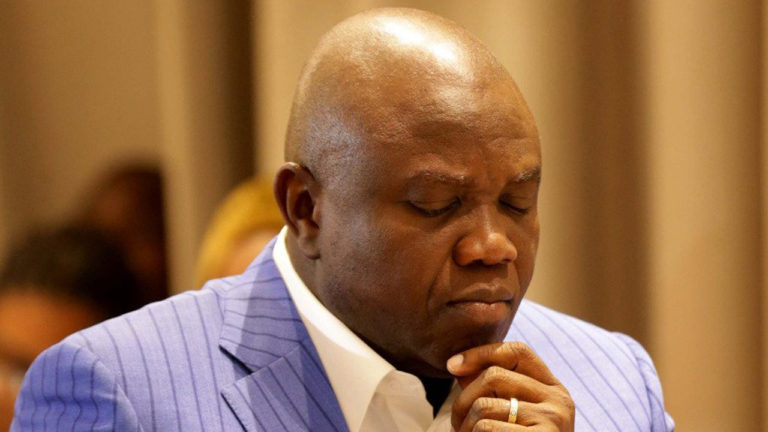
AKINWUMI Ambode, former Governor of Lagos stjoate has filed a notice of appeal restraining the lawmakers from taking further steps in probing him, pending the final determination of the lawsuit.

This application comes after the Federal High Court sitting in Lagos struck out a suit filed by Ambode against the Lagos State Assembly and others over probe on purchase of 820 buses during his administration.

The Assembly had set up an Ad-committee to investigate the purchase of 820 buses by the former governor with claims that it was bought outside budgetary approval.

Ambode in October 2019, approached the court to stop the Assembly from investigating the purchase claiming that the Assembly was ‘deliberately misrepresenting’ facts.

Upon his suit, the court ordered that status quo be maintained pending judgment on the case but earlier on Thursday, Justice Yetunde Adesanmi, the presiding judge struck out Ambode’s suit on basis that it breached the doctrine of separation of power.

The judge ruled that Ambode’s suit is an attempt to override the power conferred on the Assembly by Section 128 and 129 of the 1999 Constitution of the Federal Republic of Nigeria while noting that the Ad-Hoc Committee was set up to investigate the purchase of the buses which is not an indictment or breach of his fundamental human right.

On that basis, Ambode filed an order of appeal restraining the lawmakers from taking any steps depriving him of his personal right to liberty pending the determination of the suit.

The defence counsel, Olufeyijimi Tayo-Taiwo in a 17 paragraph affidavit noted that until lawmakers are restrained, they would continually act on the recommendations of its 9-man ad-hoc committee set up to investigate transactions in respect of the 820 buses.

A committee he claimed had ‘already vilified, disparaged and denigrated him at a previous sitting of the House of Assembly on 27th Aug. 2019′.

He also argued that the former governor would be subjected to public ridicule and stigma, which may become irreversible by the end of the appeal, thus rendering any judgment of the court ineffectual.

Among other things the former governor had contended in the notice of appeal was that the court blundered when it adjudged his suit as premature, does not disclose a reasonable cause of action and that the court lacked the jurisdiction to entertain it.

He also argued that the court was wrong in holding that the exercise of the lawmakers’ powers of investigation under Section 128(1) of the constitution is subject to his right to fair hearing as guaranteed by Section 36(1) of the constitution especially when his right was being violated, Channels television has reported.

Ambode asked that the appeal court set aside the decision of the Lagos High Court and  asked that the matter be referred to the Chief Judge of Lagos, Justice Kazeem Alogba so as to reassign the case to another judge for trial.

GDP growth falls short of expectation in 2019 budget –NBS

0

THE National Bureau of Statistics (NBS) has reported that the Gross Domestic Product (GDP) growth of 2.3 per cent at Q4 2019 is below the growth expectation of 3.5 per cent in the 2019 approved budget.

The growth also falls short of the 4.5 per cent prediction by the Economic Recovery & Growth Plan (ERGP) target of 4.5 per cent.

The economic growth for 2019 was focused on three key sectors, namely Crop production, Information, Communication Technology and Crude petroleum & Natural gas.

The remaining 43 activity sectors had very minimal impact on economic growth in the year.

According to the Nigerian Economic Summit Group (NESG), ” For Nigeria’s economic growth to have an impact on job creation and poverty reduction, efforts must be channelled towards reviving key activity sectors, particularly those with strong linkages with job creation”.

The NESG identified 6 sectors that must be focused on to reduce unemployment and poverty in Nigeria. They include Manufacturing, Construction, Professional Services, Education, Health and Trade.

The NBS report showed that activities peaked in the agricultural sector since the closure of the land borders in August 2019.

But the trade sector was not active enough as it remained in a contraction territory throughout the last three quarters of 2019.

Domestic food production which is way lesser than demand, leading to high food inflation since September 2019 at a 21-month high of 14.9 per cent in January 2020, the NBS report showed.

The manufacturing sector showed a slow growth rate which reflects the high cost of doing business, arising from poor power supply, infrastructural deficit and policy inconsistency.

The Managing Director of Coleman Wires & Cables George Onafowokan said: “The cost of bringing a container from the Nigerian border into Lagos is very high, which has a lot to do with government policies”.

According to the NESG, due to the overdependence on imported raw materials, the land border closure has reinforced a higher cost of operations of the industry players.

According to several industry sources, manufacturers that export to neighbouring countries was affected by the land border closure.

The NESG predicted that the early passage of the 2020 budget and a higher capital budget of N2.5 trillion coupled with the commitment shown by the Bankers’ Committee to partner with the federal government to finance infrastructural projects, there would be an improvement in the performance of the construction sector.

Senator puts lie to health minister’s claim on Coronavirus, says Nigeria is unprepared

0

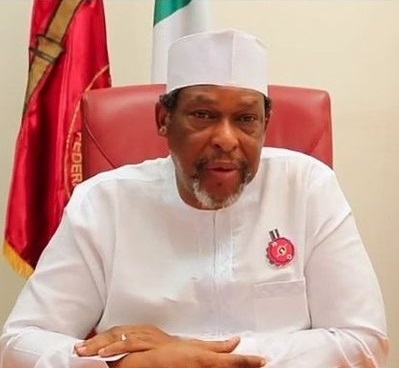
DEPUTY Senate Leader, Ajayi Boroffice, on Thursday, has confirmed that Nigeria is unprepared for Coronavirus.

Borooffice who spoke at the Red Chamber on his recent travel to South Africa(SA), said that the country took extra care in screening passengers before they were allowed into the country but he was moved to fear when he returned to Nigeria and saw the method in which passengers were screened.

According to the senator, back in SA, passengers were screened for more than 30 minutes before they were allowed to disembark the aircraft.

However, in Nigeria, travelers were only given a form to fill, quizzing them about their health status and travel history after which they were allowed into the country.

“When we arrived (at) the airport in South Africa, we were not allowed to exit the aircraft for good 30 minutes. Officers of the medical corps of the South African army came into the aircraft and screened everybody before we were allowed to go out.

“When I arrived yesterday at Nnamdi Azikiwe airport, there was no screening. All we were given is a sheet of paper to indicate whether we were sick, whether we have been to one country or the other, how we’ll be contacted in (an) emergency. How do you know whether I fall sick after I left the airport? This is very frightening,” the Senator lamented.

This startling revelation invalidates the claim of Nigeria’s health minister, Osagie Ehanire, who announced weeks ago that Nigeria is prepared for Coronavirus and highlighted that the best practices are activated in the screening of travelers into Nigeria.

More worrying, the minister in January, announced that the sum of N71 million was released to the Port Health Services division of the ministry to scale up screening and surveillance to prevent importation of the Coronavirus into the country.

Boroffice’s account of the screening process in Nigeria despite the monetary allocation thus raises questions and made the Senate President, Ahmad Lawan, declare that although the Federal  Ministry of Health and other associated agencies were doing their best, their best was not good enough.

In a recent investigation, The ICIR also found that two major hospitals in the Federal Capital territory are ill-equipped to handle any Coronavirus case.

It was discovered that the National Hospital, Abuja has only, a two-bed isolation ward and the University of Abuja Teaching Hospital (UATH) has its proposed isolation centre still largely under construction.

Meanwhile, the Nigeria Centre for Disease Control (NCDC) has said that 11 suspected Coronavirus (COVID-19) cases recorded in the country have been tested negative.

This is coming shortly after the Matshidiso Moeti,World Health Organisation (WHO) Regional Director for Africa, warned that the window of opportunity for preparedness in Africa is closing.

Interest rate on loan is unfriendly, senators fume; move to investigate CBN policy

0

THE NIGERIAN Senate on Thursday said the current interest on deposit and lending rates among commercial banks and other financial institutions in the country as stipulated by the Central Bank of Nigeria is unfriendly for business.

During the plenary, Senator representing Lagos West, Adeola Solomon Olamilekan moved a motion that there is an urgent need to reduce the gap between the lending interest rate and deposit interest rate among commercial banks and other financial institutions.
Commenting on the motion, Kano North Senator, Barau Jibrin said the CBN is ‘shortchanging Nigerians’ with its policy that interest rate should stand beyond over 14 percent.
“The content of this motion is a sad commentary on the way we run our affairs in this country. This is very bad, we have seen what is happening in developed countries where things are working well. Why should the CBN say the lending rate should be over 14 percent? We are shortchanging our businesses and citizens and this must stop. This Assembly must rise to the occasion and make sure we investigate because this is sabotage,” the Kano North senator said.


READ ALSO:

In agreement with other senators, Sabo Mohammed representing, Jigawa West said the current lending rate as stipulated by the apex bank is “killing business”.
“The only way to industrialize is to have access to infrastructure and capital. In a monopolized environment, the current lending rate is killing businesses. Unless we make the necessary corrections here, our industries would remain dead,” he noted.

Also, Senator representing Oyo North, Buhari Abdulfatai said the interest rate will hinder foreign investments in the country.
“Sometimes I wonder if our agencies are anti-people. We want investors to come into our country but we are putting interest rate at 30 percent,” Abdulfatai stated.
After contributions from other senators present at the plenary, the Senate President, Ahmad Lawan mandated the Senate Committees on Finance, Banking, Insurance, and Financial Institutions and Compliance to investigate the interest rate and report to the red chambers in two weeks.

EFCC arrests blogger behind fake ‘EFCC Cell’

0

THE Economic and Financial Crime Commission (EFCC) has arrested a blogger, Dikeocha Chukwuebuka, who published a picture of a crowded open cell on his Twitter handle claiming to be the Commission’s Port Harcourt office. 

The Port Harcourt Zonal Head of the Commission,  Usman Imam who announced the arrest during a media briefing in Port Harcourt on Thursday, said the suspect was picked up at about 4 pm on Wednesday, February 26.

Imam told journalists that Chukwuebuka was in the premises of a new generation bank on Ada George Road in Port Harcourt when the arrest took place.

He said the arrest was a fulfillment of the vow he made to track and apprehend the author of the malicious tweet.


READ ALSO:

Imam recalled that the tweet was the “most embarrassing moment for the Commission, given that the ‘fake news’, represented the very opposite of what the EFCC stands for, as far as care of detainees was concerned.”

“I want to assure the suspect and indeed the media, that the Commission will follow through this investigation and ensure that justice is served in accordance with the law,” he said.

Imam warned social media influencers to be careful in using information, which they have not checked to save the society from the ordeal of fake news.

The Commission in its post concerning the arrest further revealed the blogger’s Twitter handle as @TheRealDayne.

According to the EFCC, Chukwuebuka admitted his error in publishing the picture which he said belonged to another agency. He apologized to the EFCC and his followers for the false and misleading report.

A Twitter post by Chukwuebuka on February 12, show his apology to the EFCC and the general public, saying that after proper investigation, he found out that the cell in question does not belong to the EFCC but a police command.


However after Chukwuebuka apologized, he stated he would be visiting  the EFCC’s Port Harcourt  zonal office the next day, February 13, to properly apologise and address this matter, as well as provide any useful information needed to assist in the investigation of the pictures.


While tendering an apology to the EFCC, he urged the government to look into the picture so as to investigate the issue raised by his post.


Senate proposes incorporation of Nigerian companies for structured, viable economy

0

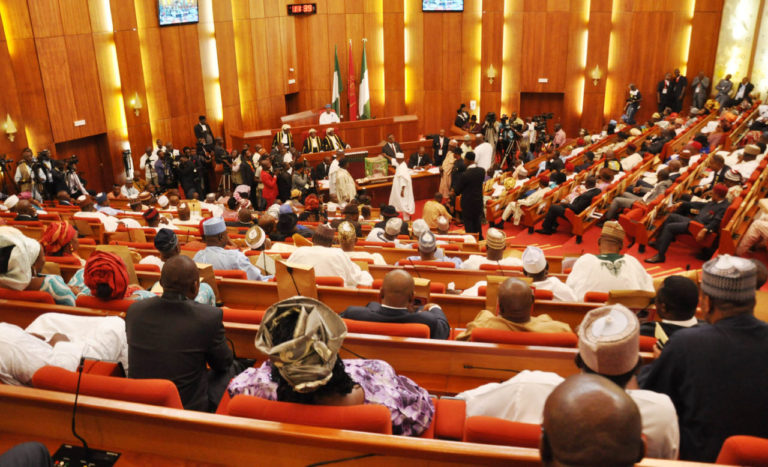
THE Senate on Thursday has proposed a bill for an Act to provide for the incorporation of companies, limited liability partnerships, and limited partnerships, registration of business names for a more structured and viable economy.

The bill, sponsored by Yahaya Abdullahi is titled:A Bill for an Act to repeal the Companies and Allied Matters Act, Cap. C20, Laws of the Federation of Nigeria, 2004 and enact the Companies and Allied Matters Act, 2020 to provide for the incorporation of companies, limited liability partnerships, limited partnerships, registration of business names together with incorporation of trustees of certain communities, bodies, associations and for related matters, 2020 (SB. 251)”

According to the Enyinnaya Abaribe, senator representing Abia South district, the proposed bill was a product of the eighth Assembly which failed to be assented due to errors. He said those errors have been corrected in the new Act and it will boost investors’ confidence.

Speaking, Hadejia Ibrahim representing Jigawa North senatorial district said the bill will ensure that due process is followed during business registration, noting that the bill was critical to the county’s business environment, which in turn boosts the economy.

While other supporters of the bill called for its immediate enactment, Senate President, Ahmed Lawal noted that its process into law will follow due procedures.

“So we will fast track it and for this bill, we do not have to go through public hearing again because this is a Bill that people have contributed their opinions on,” Lawal had said referring the bill to the Committee on Trade and Investment to report within a week.

Meanwhile, the Senate had also proposed a bill for an Act to facilitate the use of information in electronic form for conducting transactions in Nigeria and for connected purposes.

The bill, sponsored by Ibikunle Amosun representing Ogun central district was read the second time and according to some its supporters, enacting the bill into law would enable Nigeria to cover electronic transactions thereby catching up with other developing countries in technology.

Some legislatures had also argued that the bill was long overdue owing to the country’s state of development and Nigeria needed to level up with global standards where E-Commence and E-Transaction are the order of the day.

Lawal, having heard the submissions of the House referred the bill to the Committee on Banking, Insurance and Other Financial Institutions to report within four (4) weeks.

REPORT: Nigeria ranks lower in new Corruption Perception Index

0

TRANSPARENCY International in a new report ranked Nigeria 146th  with a score of 26 points in the 2019 Corruption Perception Index (CPI).

The 180 participating countries were ranked on the scale of 0 to 100 where 0 score means highly corrupt and a score of 100 indicates an absence of corruption.

The CPI report indicated that the ranking was predicated on the relationship between politics, money and corruption.

According to the report, Nigeria dropped from 144th position with a score of 27 points to 146th in 2019.

The Nigerian Economic Summit Group (NESG) said: “Nigeria has not fared well in terms of global corruption ranking”.

The current position represents the worst performance relative to the country’s ranking of 139th out of 176 countries in 2012, the report showed.

The 2019 corruption survey carried out by the United Nations Office on Drugs and Crimes revealed that 33,000 households across Nigeria who had contacts with at least one public official in 2019, 6,237 households paid bribes.

The survey showed that the bribery cases were in the form of cash payment, food and valuables.

The report also estimated the prevalence of vote-buying, observed to be highly prevalent in three geo-political zones including South-South, North West and North Central.

The NESG suggested how corruption can be reduced in Nigeria, saying operations of the anti-graft agencies should not be interrupted by political interference.

This, it said would enhance the autonomy and strength of those public institutions.

It also suggested that there is a need for continuous supervision and review of the activities of public officials to enhance transparency and accountability in public affairs.

The group further suggested that the fight against corruption strategies should not be a one-off measure.

According to NESG, the Nigerian government should also ensure that opinions of ordinary Nigerians are heard through granting unflinching freedom to the press as reflected in the Freedom of Information (FOI) Act 2011.

Such deliberate effort, it argued, would help subject high-level decisions to wide-ranging consultation.

Coronavirus: Saudi Arabia stops travel to Medina, Mecca

0

IN carrying out a public health safety measure, Saudi Arabia has halted travels to Mecca and Medina, banning pilgrimage to the holy land, in the wake of Coronavirus also known as Covid19.

It was gathered that the decision, announced by the foreign ministry of the state on Thursday, was in effect to slow the spread of the deadly virus which has killed over 2,700 people and infected over 81,000 people in the world.

The Saudi government is “suspending entry to the kingdom for the purpose of Umrah and visiting the Prophet’s Mosque temporarily,” the announcement revealed.

Umrah is an Islamic pilgrimage that can be performed at any time of year. With the recent ban, Muslim devotees would be prevented from accessing the Kaaba, the cube-shaped structure which the world’s 1.8 billion Muslims pray towards five times a day.

The ban also affects visits to Prophet Muhammad’s mosque in Medina.

It is unclear if the restrictions will affect the 10-day Hajj set for late July into early August in 2020.

Although Saudi Arabia hasn’t recorded any case of Covid19, about 220 confirmed cases have been recorded in the Middle East and thus provides an avenue for concern.

Saudi Arabia is not the only country carrying out a ban as a precautionary measure. Recently Iran, another country in the Middle East, banned Chinese citizens from entering the country.

As far as the outbreak of Covid19 is concerned, Iran has the highest number of infected persons outside China. It was gathered that the confirmed cases in the country have gone up to 245 and 15 deaths have been recorded.

Given the measure of the outbreak in Iran, the United Arab Emirates (UAE) also carried out safety measures by suspending all flights to and from the Islamic Republic.

Earlier, The ICIR also reported that in the past 48 hours, the deadly virus hit 11 new countries with four having confirmed cases.