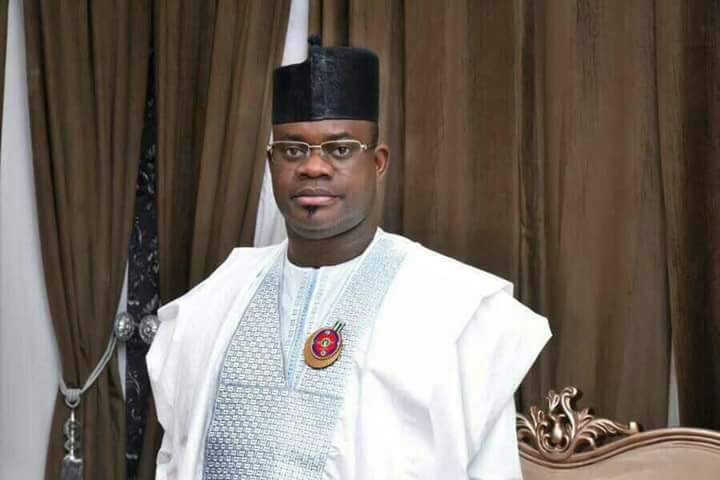
PRESIDENT Muhammadu Buhari on Monday affirmed the electoral victory of the incumbent Kogi State Governor, Yahaya Bello, stating he ran a good race in the November 16 governorship poll and won it well.
In his congratulatory message on his Twitter handle to Governor Bello, who was adjudged winner of the “controversial” elections by the Independent National Electoral Commission, INEC, he described the victory as “well-won”.
The President described the election and emergence of the All Progressives Congress, APC, candidate as “a race well run and a victory well won,” he said.
In a statement delivered through Femi Adesina, media aide to the President, he also commiserated with families who lost their loved ones during the election.
“Let me enjoin Governor Bello to imbibe the spirit of magnanimity in victory by extending a hand of partnership to opposition candidates while urging those dissatisfied with the outcome of the election to approach the courts,” the statement reads.
Congratulations to Governor Yahaya Bello on his re-election. It was a race well run and a victory well won. I urge him to see his renewed mandate as another opportunity to build on the foundations already laid towards improving the lives of the people of Kogi State.
“I commend all APC, supporters for remaining steadfast and resolute even in the face of isolated incidents of violence. All political actors and stakeholders must take deliberate steps to eschew electoral violence as a peaceful and orderly process are vital to our quest for enduring democracy”, President Buhari stated.
Buhari urged Governor Bello to see his renewed mandate as another chance to build on the foundations he had laid in his first term towards improving the lives of the people of Kogi State.
Bello of the APC had polled a total of 393,540 votes to defeat Musa Wada of the Peoples Democratic Party, PDP, who scored 189,704 votes.
Natasha Akpoti of the Social Democratic Party was third with a total of 9,482 votes.
International observers have expressed dissatisfaction with the Kogi elections over the conduct which was marred with widespread incidents of violence and intimidation of voters.
Amongst the observers are the European Union, EU, The Diplomatic Watch made up of observers from Austria, Germany, Ireland, the Netherlands, the United Kingdom, and the United States who also voiced their concerns.
THE Minister of Information and Culture, Lai Mohammed has emphasised that the Federal Government would carry on with its plan to regulate social media in Nigeria over hate speech and fake news.
He disclosed the government’s plan during a courtesy visit by the Nigerian Union of Journalist (NUJ) National Executive led by Chris Isiguzo along with other executive members in Abuja on Monday.
Mohammed said the NUJ had failed to contact the ministry to lodge any complaints concerning the regulation before they approached the media to condemn the regulations.
“If the NUJ or the Guild of Editors, or indeed any professional body has any fears, we expect them to reach out and engage us, rather than rushing to the media to condemn a plan to inject sanity into the social media space and protect the integrity of the media,” Mohammed said.
According to him, the NUJ had put the cart before the horse by publicly rejecting the planned social media regulation without even trying to understand what it entails.
Mohammed said, “As a professional body for journalists, the NUJ has its code of ethics for journalists, and this guides their operation”.
He noted that to the best of his knowledge, the trained, professional journalists cannot afford to engage in fake news because it will kill the public trust in the media.
Mohammed said that the media could not afford to engage in hate speech, because of the implication for national peace and unity, adding there has to be a country before the media can practise the profession.
He said the plan is to inject sanity into the social media space and it has nothing to do with gaggling journalists or stifling free speech.
“When we announced the plan to regulate social media, we said clearly that the regulation is not an attempt to gag the media or muzzle free speech. We said journalists have nothing to fear,” he noted.
Speaking on the activities that have been put in place on the regulation, Mohammed said letters have been dispatched to the stakeholders concerning the regulations.
“We will not unilaterally impose measures aimed at injecting sanity into the social media space. We will work with stakeholders, including the NUJ, Guild of Editors, Newspaper Proprietors Association of Nigeria, the Civil Society, Online Publishers, Bloggers, etc,” he added.
He said a government that has the intention of gagging the media won’t engage stakeholders in dialogue on the way forward.
He said the NUJ and other media professional bodies should take the lead in sanitising the social media space, because they would be the first victim when the people lose confidence in the media
FORMER Chairman of the National Human Rights Commission (NHRC), Chidi Odinkalu has said the federal government needs to account for Nigerians who are missing and also be accountable to their families.
“Under Nigeria’s constitution, government still has the primary obligation for the safety and security of every person within the country’s territory,” he said.
The former NHRC boss said this in a series of tweets during an interactive Tweetchat, alongside Humanitarian Girl-Child Advocate Bukky Shonibare on “Missing Persons in Nigeria” organised by the International Centre for Investigative Reporting (ICIR).
According to him, the families of the missing also deserve closure in dignity.
He said, “Where people have gone missing because of a crime or violation of the law, these are constitutional values and legal obligations, the duty of government is to bring violators of such things to justice.”
In the standard process of reporting a case of missing persons and who should make such reports, Odinkalu said The International Committee of the Red Cross (ICRC), is the safest place to report a case of suspected missing person in a humanitarian theatre – the person reporting has least likelihood of exposure to adversity from belligerents which they, in turn, liaise with belligerents.
“There’s a general aversion in official circles in Nigeria for honest statistics, adding that those who can and feel confident enough to approach security agencies, such as Nigerian Army, Nigerian Police should feel free to do so.”
Bukky Shonibare, on her part, said people go missing for different reasons such as conflicts, crises, abductions, disasters, and accidents.
She, however, said the cause with the highest number is conflict, and it is more in the northeast due to the continuous armed conflict.
On the mechanism to implement when searching for missing persons, the Girl-Child Advocate highlighted some approaches to take into consideration such as visits to IDP camps and host communities to capture details of missing and unidentified persons with a view to creating database, create a collage of their pictures and information for easy identification and reunification as well as pasting the above information in key locations e.g. IDP camps, community halls, airports, etc.
She also emphasised the importance of technology, saying people can go on a website or use a USSD to access details of missing and unidentified persons.
One of the contributors identified as Oluwakemi Olayinka observed that the families of a missing person should submit the names of their family members to the appropriate officials so as to identify those missing and begin a search. The use of local vigilante groups can also aid in searching for them, she said.
Dayo Emmanuel, another participant in the tweetchat said illiteracy is one major problem, even among the so-called educated ones, as well as the slow response from relevant agencies.
Odinkalu urged the relevant agencies to care about the living, the statistics, and record-keeping as well as setting up a standard system that could help the government account for missing persons in the country.
A NON-PROFIT research and advocacy group, the Centre for Democracy and Development, CDD, has said it recorded the killings of at least 10 people and over 129 cases of electoral malpractice during the governorship elections in Kogi and Bayelsa States last Saturday.
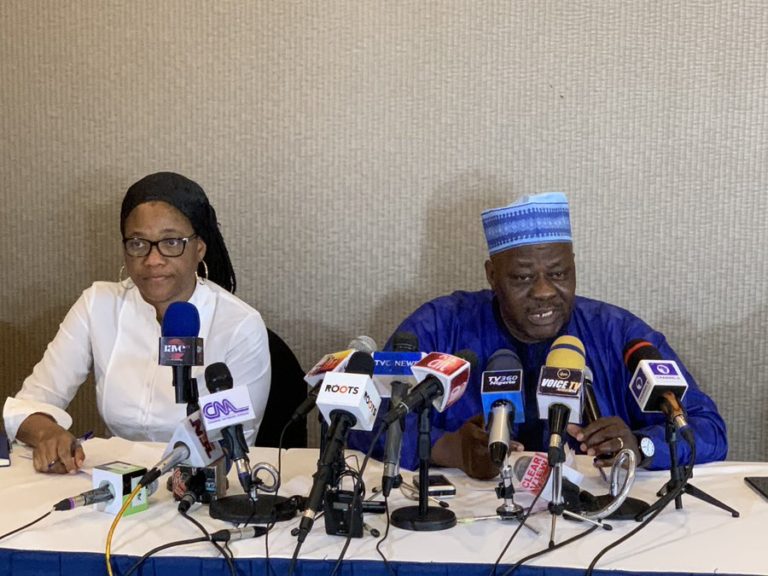
In a press conference held on Monday, the group urged President Muhammadu Buhari-led administration to “redeem the sanctity of the ballot”.
“On November 16 in Kogi and Bayelsa States, the very foundation of our 20-year-old democratic order came under a grievous assault. Enthusiastic citizens trooped out to vote for candidates of their choice, but they were absolutely disappointed,” Idayat Hassan, CDD’s director, told journalists.
“Many voters were disenfranchised as a result of a constant threat to life and limb throughout the process.”
Election Analysis Centre, the situation room operated by CDD for the purpose of monitoring elections in Kogi and Bayelsa, received field data from various observers.
In Kogi alone, it deployed over 300 observers to areas with a higher number of registered voters and where irregularities were expected, Idayat told The ICIR.
It also engaged 35 fake news monitors.
“The sheer magnitude of the violent assault on the sanctity of the ballot was shocking beyond description. The outcome of such a process that was so criminally subverted should not actually be allowed to stand. At the last count, our observers report from Kogi State have recorded the death of 10 people in various shooting incidents and attacks across the state,” she said.
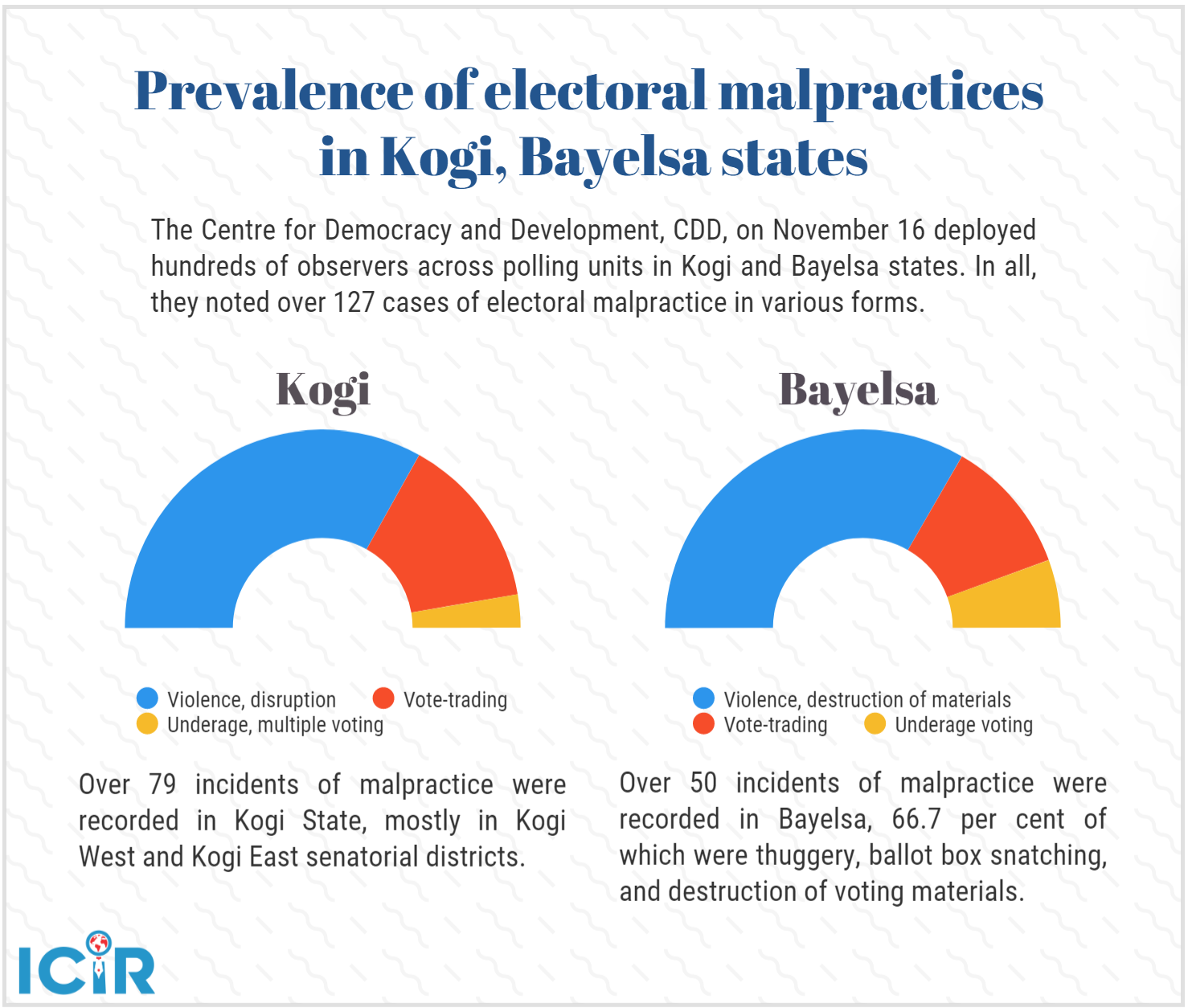
Over 79 incidents of malpractice were recorded in Kogi, ranging from hijack of electoral materials to kidnap of ad-hoc staff of the Independent National Electoral Commission (INEC), vote-buying, attack on observers and journalists, and so on.
Violence and disruption of voting constituted 66.21 per cent of the reported cases of electoral violations, vote trading constituted 28.38 per cent, while underage and multiple voting accounted for 5.4 per cent. It was also noted that 55 per cent of the incidents took place in Kogi West senatorial district, 27 per cent in Kogi East, and 18 per cent in Kogi Central.
On the other hand, violence (manifesting as thuggery, ballot box snatching and destruction of voting materials) constituted 66.7 per cent of the cases reported in Bayelsa, vote trading constituted 22.2 per cent, and underage voting constituted 11.1 per cent.
“On the whole, what we saw on the field defies reasonable logic, especially coming after the 2019 general elections, feeling that we as stakeholders would have learnt key lessons, experiences that would actually improve the quality of the electoral process,” Idayat said. “The conduct of the Kogi and Bayelsa polls is indicative of an electoral process that is fast deteriorating.”
She said figures of the voters’ turnout declared by the electoral commission for some local government areas are suspicious when compared with figures from previous elections from 1999. For example, in Okene, as many as 87 per cent (114,001) of the total registered voters were accredited, “an incredible increase of around 69.1 per cent” compared to 2015 figures.
CDD called for a robust, multi-stakeholder response in rescuing Nigeria’s electoral process.
“We dare not choose the convenient path of silence,” Idayat urged.
“As a generation of Nigerians, history will reserve very harsh judgement for us if we stand by and do nothing as citizens are being increasingly stripped of their fundamental right to decide who govern them. It has become so bad that parallels are being drawn between the elections being conducted now and the infamous elections of 2003 and 2007. We cannot afford to return to the lowest points in our electoral experience.
“CDD calls on President Muhammadu Buhari to urgently provide the leadership needed to rescue the electoral process and by extension the entire democratic system from imminent collapse. This call becomes imperative because Buhari was only able to ascend the presidency through the historic 2015 elections because the electoral process allowed the votes to count. That watershed was a culmination of the electoral reform initiated by late president Umar-Musa Yar’adua and former president Goodluck Jonathan.
“At the moment, Nigeria’s electoral process requires similarly bold and courageous leadership to chart a way forward and resolve the lingering challenges threatening to derail it. President Buhari owes this duty to all Nigerians. He cannot stand by and allow the continuous degeneration of our electoral system.”
Femi Falana (SAN) giving remarks during the press briefing
Over 20 fake news reports published about Kogi election
Hassan said CDD’s monitors observed over 20 pieces of misinformation in relation to elections in Kogi that were “capable of further inflaming the already volatile state”.
“I think it’s high time both INEC, the Nigerian state, and other stakeholders took very seriously the impact of disinformation in elections. This weaponisation of information was really pervasive in the elections,” she said.
She said the large deployment of security agents for the elections did not translate to the improvement of security in Kogi.
According to her: “In some places, they actually turned their faces while the onslaught was going on, while in some they were completely overpowered.”
Jibrin Ibrahim, a professor of political science and senior fellow at the CDD, agreed that security agencies, despite their responsibility to protect citizens and the rule of law, were complicit in disrupting the elections and allowing attacks at polling units.
“Specifically, we are concerned about the direct contradiction we saw of massive police deployment, over 30,000 for both Kogi and Bayelsa states, but on the ground that massive deployment was not visible to eyes,” he lamented, adding jokingly: “Maybe they took another form because we know we are in Africa.”
He added: “We went through a lot of the key roads leading out of Lokoja and there were no checkpoints. And precisely because the police was not there to check, those who were moving around were armed thugs in Hilux vans, carrying weapons, and moving systematically from polling unit to polling unit.
“This is a direct indication that there was state complicity in what happened.”
He urged President Buhari to set up a panel to probe into why state agencies failed to act appropriately during the elections, stressing that democracy is gravely endangered by current happenings in the country.
Also at the event were Femi Falana, Senior Advocate of Nigeria and human rights activist, as well as Adele Jinadu, a professor and the chairman of the CDD.
THE total votes recorded for the ruling party, All Progressives Congress, APC, in Kogi State shows that the incumbent governor, Yahaya Bello has won the Saturday guber election, but the number contradicts the summation of the vote counts from each local government area, The ICIR has found.
The final score announced by the Independent National Electoral Commission (INEC) for the APC is 12,682 higher than the actual votes counted. This represents 3.2 per cent surplus in favour of the ruling party.
The Returning Officer and Vice-Chancellor of Ahmadu Bello University, Zaria, Professor Ibrahim Umar, declared at the INEC office in Lokoja that the APC governorship candidate, Yahaya Bello, polled 406,222 votes in total against Musa Wada of the People’s Democratic Party (PDP) who garnered a total 189,704 votes.
Here are the figures as announced by INEC:
LGA
APC
PDP
Adavi
64,657
366
Ajaokuta
17,952
5,565
Ankpa
11,269
28,108
Bassa
8,386
9,724
Dekina
8,948
16,575
Ibaji
12, 682
10,504
Idah
4,602
13,962
Igalamela-Odolu
8,075
11,195
Ijumu
11,425
7,587
Kabba/Bunu
15,364
8,084
Koton Karfe
14,097
9,404
Lokoja
19,457
11,059
Mopa-Muro
4,953
3,581
Ofu
11,006
12,264
Ogori/Magongo
3,679
2,145
Okehi
36,954
478
Okene
112,764
139
Olamaboro
16,876
8,155
Omala
8,473
14,403
Yagba East
6,735
7,546
Yagba West
7,868
8,860
TOTAL
393,540
189,704
However, a summation of results from 21 local government areas monitored live by The ICIR shows that the APC candidate instead polled a total of 393,540 votes, a difference of 12,682 from the figure announced by the INEC, while the PDP polled 189,704 votes.
The ICIR discovered that 12,682 is also exactly the number of votes that went to the APC candidate at Ibaji Local Government Area, an indication that the result from the area may have been posted twice.
Results from Ibaji were part of the last set of results announced on Monday morning by the electoral commission after it postponed the collation process on Sunday evening.
Rotimi Oyekanmi, Chief Press Secretary to the INEC Chairman, did not deny this finding when The ICIR reached out to him.
“We are going to look at the figure again when the report is sent to the headquarters,” he said.
He also assured The ICIR that the Commission would check for votes recorded for other local governments to see if there are double posting of results.
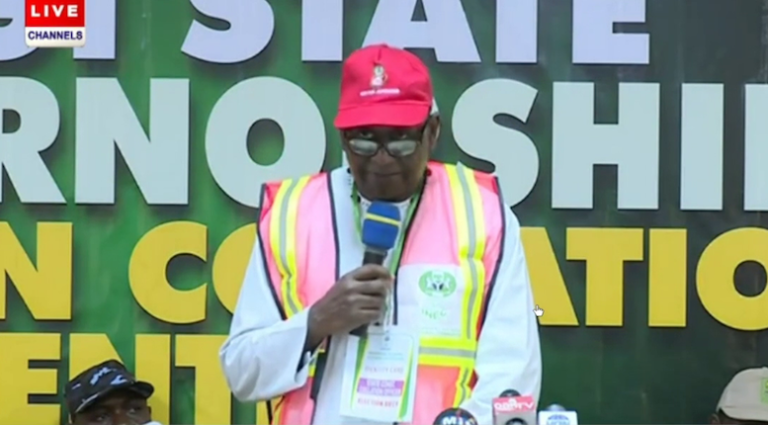
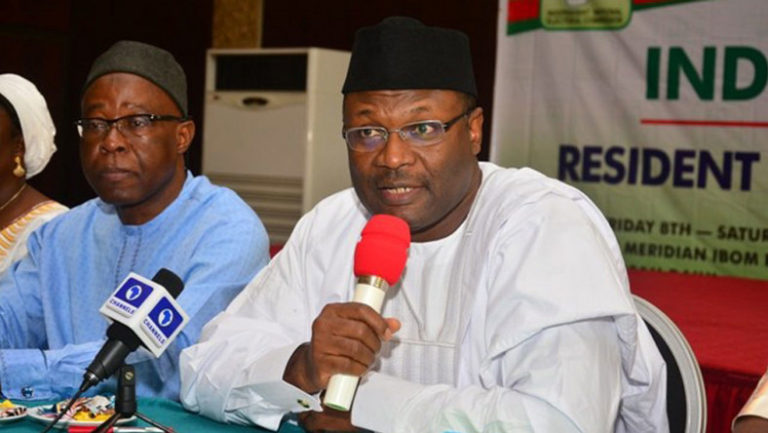
THE Independent National Electoral Commission, INEC has declared the candidate of the All Progressive Party, Yahaya Bello, winner of the November 16 Kogi gubernatorial election.
The Returning Officer for the state election and Vice-Chancellor of Ahmadu Bello University (ABU), Zaria, Ibrahim Umar, declared him the winner at the INEC office in Lokoja, the Kogi State capital.
The collation was postponed till Monday because results of two local government areas arrived Lokoja late.
Bello and Wada’s vote were close until the arrival of the results from Ibaji and Lokoja.
According to Umar, a total of 1,646,350 people registered for the election while 636,202 were accredited to vote.
Umar said the APC’s candidate, Bello defeated his closest opponent, Musa Wada of the People’s Democratic Party in 12 local governments out of the 21 local governments in the state.
Bello polled a total vote of 406,222 votes to defeat Wada, who trailed behind him with 189,704 votes.
However, the Returning Officer of the PDP has refused to sign the results of the election, alleging electoral fraud.
Natasha Akpoti, the candidate of the Social Democratic Party (SDP) was able to garner total of 9,482 votes.
Foreign observers and civil organisations who monitored the election said the process was marred by vote-buying, violence and voter’s intimidation.
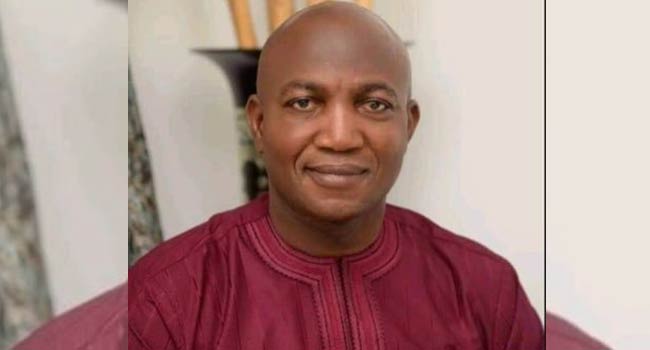
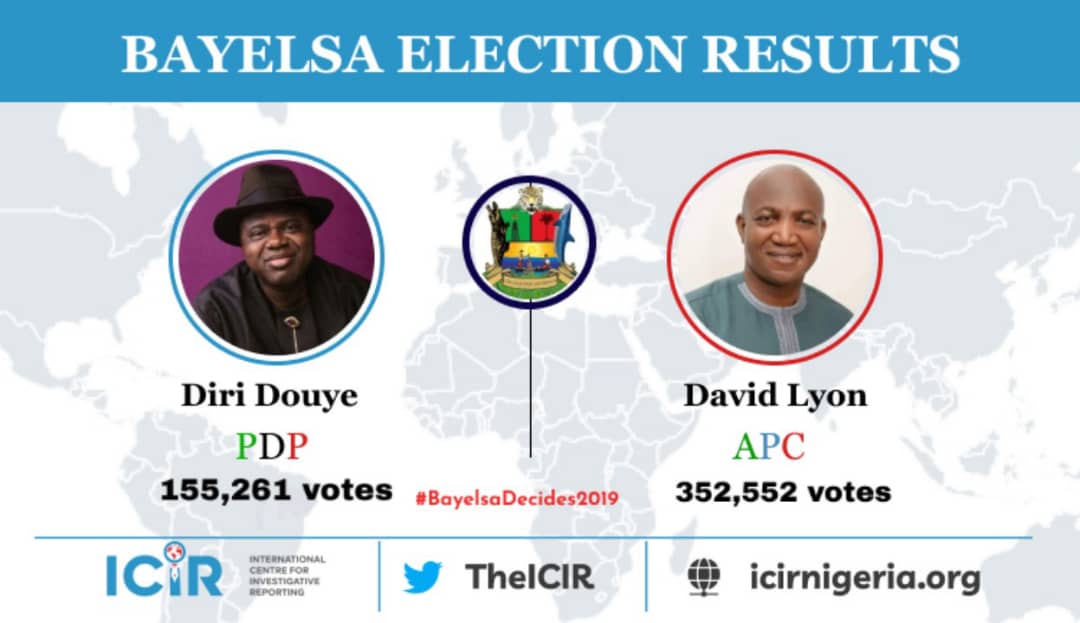
THE candidate of All Progressives Congress (APC), David Lyon has won the governorship election in Bayelsa, defeating his close rival Douye Diri, candidate of the Peoples Democratic Party (PDP) in six out of eight locals government areas of the state.
Since return of democracy to Nigeria in 1999, this is the first time Bayelsa State is falling out of the hands of PDP.
According to the results announced by the Independent National Electoral Commission (INEC), APC polled 352,552 while PDP secured 143,170 votes, leaving a margin of 209,382.
INEC Chief Returning Officer, Faraday Orumwense, on Monday announced that Lyon is the winner of the election after polling 352,552 votes to defeat Diri, who polled 143,172 votes.
APC’s Lyon won in Nembe; Ogbia, Southern Ijaw, Ekeremor and Yenagoa while the PDP won in the Sagbama and Kolokuma/Opokuma local government areas.
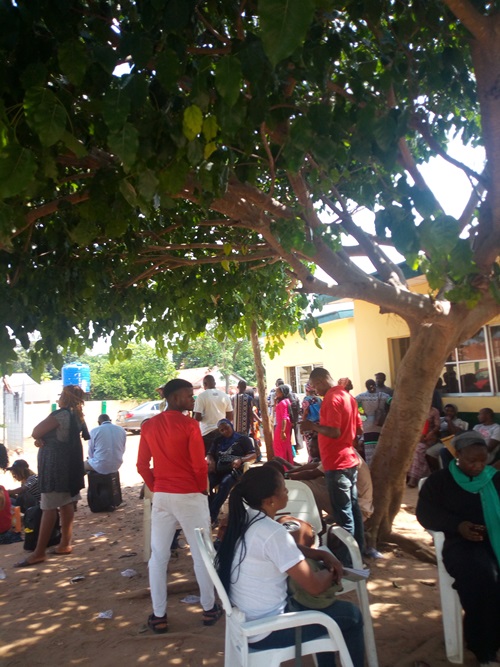
AFTER the conclusion of the Kogi governorship polls, residents of the state, and opposition parties have condemned the high level of violence, vote-buying and intimidation of voters which disrupted the conduct of the elections in several areas across the state.
Twenty four candidates took part in the election including Governor Yahaya Bello of the All Progressive Congress, APC, and Musa Wada of the People’s Democratic Party, PDP.
The ICIR observed major political parties offering bribes in money and food stuffs to voters before and after election.
Also, armed thugs disrupted voting exercise in various polling units in breach of electoral act.
In Lokoja, the state capital, voting was interrupted by armed thugs who tear gassed voters and staff of the Independent National Electoral Commission, INEC before carting away ballot boxes and electoral materials.
Voting at Crowther Memorial School, Lokoja came to a halt when gun-bearing hoodlums started shooting sporadically and later escaped with ballot boxes.
Also at LGEA school Lokongoma Phase 1 in Lokoja, gunmen invaded the polling units and disrupted the voting process while an unmarked helicopter hovered around the area.
Security operatives did not make any effort to prevent the heist at any of the polling unit, hence most voters ran into safety.
Eleojo Musa, an INEC staff said armed men wearing uniforms looking like military fatigue approached security personnel on duty before they carted away election materials and forcefully took away a corp members at the polling unit.
“They were wearing “terror” police uniforms and they talked to the police officers on duty before taking the election materials and some corpers into their vehicles as they shot sporadically in the air,” he said.
Eye witness told The ICIR that ballot boxes were also snatched from other polling units at SUBEB, Lokoja Club, St. Mary Primary School, Fehintolu, Muslim community, LGA secretariat/NEPA open space and Army barracks all in Ward A of Lokoja, the state capital.
Vote-buying spree
In Kabba/Bunu Local government, at St. Paul Primary school, in ASUTA ward, at polling units 001 and 004, some party agents were seen distributing rice and spaghetti packed in yellow nylon bag to people who are able to provide their voter’s card.
Zainab, a resident bluntly told The ICIR her vote would be cast for the highest bidder.
“I was told APC gives N3,000 to a voter, if PDP can offer something more…”
At Cinema hall/Angwa Munchi in Lokoja, polling unit 018 voters received “special numbers” from APC and PDP agents for purposes of identification to collect bribe
The situation is the same at Crowther Memorial School, Lokoja where voters queued up to receive money from APC party agent while voting was ongoing. And the security operatives attached to the polling unit were indifferent.
Section 124 of the Electoral Act stipulates that the offences of bribing or receiving any money or gift for voting (or to refrain from voting) at any election prescribes a 12 months jail term or more.
Opposition Rejects Election Results
The gubernatorial candidate of the Social Democratic Party, SDP, in Kogi State called for the cancellation of the election in several parts of the State citing irregularities.
“Ballot boxes were destroyed and burnt in Okene, Adavi, Ajaokuta and Ogori Magongo and Okehi Local government areas and other parts of the state.
“Our agents were chased away from the various polling units of the Kogi Central Senatorial District,” she said.
Alleging that Saturday’s election had been tainted by reports of violence, thuggery and voters harassment.
“I am therefore calling on INEC and in line with its powers as enshrined in the Electoral Act, 2010 as amended to cancel the election in Kogi Central Senatorial District and some part of Lokoja and order for a rerun,” she said.
In the same vein, Dino Melaye candidate of the PDP in the Kogi West Senatorial District re-run elections also described the elections as a ” helicopter” election.
“The innovation is that what we had is what I have christened ‘Helicopter election’. For the first time, rigging has been advanced to the level that now the use of a helicopter in perpetuating this electoral atrocity manifested yesterday.
“Helicopter hovering around Polling units in Lokoja, dropping bullets on innocent, harmless citizens and electorate; and as I speak, yesterday, teargas being fired from this helicopter,” he said.
THE Independent National Electoral Commission (INEC) on Sunday says it has accounted for all the 30 ad-hoc staff engaged for the 2019 governorship election in Kogi State.
They were declared missing around 1 a.m. on Sunday during the final collation of results in the local government.
The missing INEC staff include Presiding Officers (POs) and Assistant Presiding Officers (APOs) of polling units in Imane ward 1 and 2 of Olamaboro LGA of Kogi State.
Many of the ad-hoc staff used by INEC were youth corps members of the NYSC.
However, Rotimi Oyekanmi, Chief Press Secretary to the INEC Chairman stated in a statement that the Commission has established that none of them was either injured or killed.
“These election-day staff could not be accounted for initially following the violent attacks by some armed thugs at their respective duty posts after the close of polls,” Oyekanmi said in the statement.
According to him, the ad-hoc staff were able to conclude the collation process before the attacks.
“They are safe, sound and back in their respective homes,” he added.
“The Chairman of the Commission has personally spoken with some of them and they confirmed that they are hale and hearty.”
IN SPITE of pockets of violence and vote-buying observed by The ICIR during the Saturday, November 16 election held in Bayelsa State, the electorate has described the poll as relatively peaceful.
The voter’s turnout was high in places visited by The ICIR but election materials arrived late in most of the 1,804 polling units.
Voters, particularly in the mainland areas of the eight Local Government Areas (LGAs) in Sagbama, Ogbia, Kolokuma/Opokuma and some parts of Ekeremor LGA expressed surprise on the successful poll, contrary to the initial apprehension witnessed days to the election.
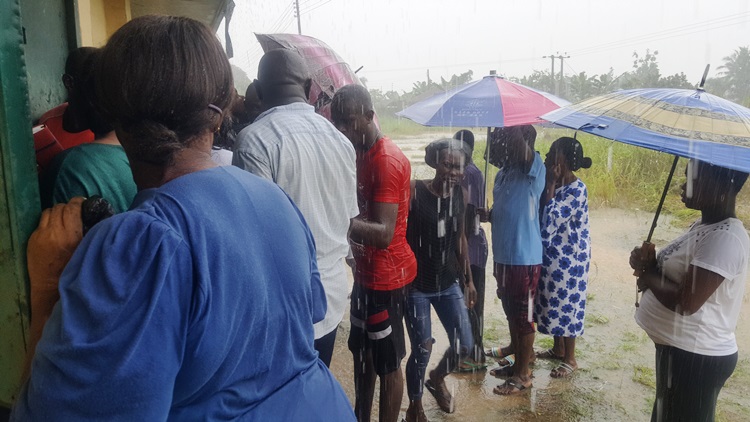
Despite the heavy downpour in Imiringi, Otuoke and other parts of Ogbia LGA, the voters remained resolute to exercise their voting rights. Pregnant women, physically challenged and aged persons defied the weather to stay through the voting process.
“When we first arrived here, there was an issue with the card reader. Fortunately for us, it was solved very quickly and voting started and went very well. There was no problem at all,” Winstone Abali (58) from Imiringi, Ogbia LGA told The ICIR.
“I’ll give the officials almost 90 percent success for the work done.”
Another voter, Esther Otobo, the 43-year old applicant described the poll as calm, even as she managed from being beaten by the rain at the balcony to the primary school used as a polling centre.
“Police presence really caused calmness, so the election has been peaceful,” says Otobo. “Though the rain interrupted the process for a while, the queue is still moving.”
However, she advised the electoral commission in subsequent elections to provide extra card readers in case a single Permanent Voters Card (PVC) reading machine fails in a highly-populated polling unit, the alternative could be adopted.
“It is very orderly and peaceful,” 59 years old Benjamin Okorodas, a resident who had lived in Ogbia for 11 years added. “The rain altered the process but it still went fine gradually.”
Flooded but not deterred
Despite flooded communities in Kolokuma/ Okpoluma local government area – Ward 6, Polling Unit 3 and 4, voters had to access the communities via canoes to access the polling units.
The same commitment was witnessed in other polling centres visited within the area such as Sampou.
“There is peace, we are happy people are voting,” says Canice M, a police officer assigned to PU 3.
The obviously excited police officer narrated how the security team had arrived night to the poll. This, he noted encouraged the voters with initial believes that the election was held Friday night until the electorate was rightly advised.
But, The ICIR observed a group of thugs loitered around the polling units with threats to disrupt the system but minutes after returning from the apartment of Diri Duoye, the gubernatorial candidate, there was sudden calm.
Meanwhile, at polling units under Opolo Townhall/community, Yenagoa there were reported cases of sporadic shooting by armed thugs to disrupt the election.
Violent attacks and ballot boxes snatching were also reported in Nembe and Southern Ijaw respectively.
“In Ward 12 and 13, Okpoama, Southern Ijaw LGA, some political thugs, led by the local government chairman hijacked INEC materials and disrupted the voting process,” a report Watching the Vote by YIAGA Africa noted.
Vote-buying
With an exceptional strategy, party agents across most of the polling units visited by The ICIR induced the electorate with cash ranging from N2000 to about N7000. The style adopted was via signs and body language through a fixer.
For instance, in Ward 10, PU 9, Oluozi Obuware Quarters, Sagbama LGA, the Peoples Democratic Party (PDP) allegedly offered N2, 000 to influence voters. An eye witness, who pleaded anonymous said four persons he knows were offered the said sum each, adding that they might pay more persons.
“APC cannot win in Bayelsa state…PDPs are paying N2000 but APCs are not paying N1, 000. I have not seen anybody paid. They are only causing confusion here.”
“I have seen up to four people paid by PDP. They are still more”
In Otuoke, Ward 13, PU 39, Ogbia local government, voters either got between N5000 and N7, 000. But in other polling units within same community, it was N2, 000.
The ICIR observed how a party agent positioned himself by a bar spot and directs voters to the rear side of PU 39 to claim their rewards.