Home Blog Page 2280

Queens College’s students are down with sickness, but authorities hide their condition

STUDENTS of the Queens College, Lagos, a federal government-owned school, are down with illness again, but the school authorities are doing everything to hide their condition from the public.

Parents said their wards are coming down with illnesses with same symptoms shortly after the resumption.

Queens College was also hit by an outbreak of bacterial infections in 2017 that led to the death of three students, while hundreds of other students were treated for diseases including typhoid and diarrhoea due to poor hygiene and lack of potable water.

The Chairman of the Parents and Teachers Association (PTA) of the school, John Oforbike, who spoke to The ICIR about the ongoing situation noted that many students were coming down with illnesses and hundreds of them have taken away by parents in three weeks of resumption.

“The environment is unkempt. Mosquitoes breed everywhere,” said Oforbike.

The school which resumed academic activities on September 15 was said to be admitting many students in the sickbay, while some parents were requested to pick up their wards.

Airborne diseases affect students — Principal, LASG

According to Oforbike, after complaints were taken to the school principal, Yakubu Olaloye, she said the situation was caused by the weather condition.

“She told me that one Dr Ojo has come to check on the children. And said there was nothing like epidemics,” the PTA chairman recalled his conversation with the school principal while speaking to The ICIR.

“It is an airborne disease affecting the children, not an epidemic. And the thing is, the children just came back from home, while some of them were beaten by rain on that day,” he quoted Olaloye as saying.

Oforbike said he visited the school, together with other executives of the PTA on Sunday to keep abreast of the situation. He recounted how he met a multitude of students at the sickbay with many trooping in, while some sat on the bench because the beds were filled up.

The students, he said, had complained to be suffering from catarrh, cough, headache, body pain, and sore throat.

“About 20 parents came to the sickbay to take their children while I was there,” Oforbike recalled. “I asked the nurse how many students have taken exeat due to their health condition. She said 700.”

But the nurse denied access to the record of students who have already taken exeats, he told The ICIR.

Describing the situation as “a problem” because of the large number of people affected, he said some parents who had been affected were treating their daughters of bacterial infections while others treated for malaria.

“Actually water has been a problem in that college,” he said.

“The issue that happened in 2017 was tied to water. It was their inefficiency and they could not provide social amenities. And so much money was released to build a new hostel, to have two or three industrial boreholes. But I still want to tell you that water is still a very big problem in school now.

“And the toilet is always messed up,” Oforbike added.

Similarly, a mother of two girls at the school (one in J.S.S three and another in S.S.S three) who requested that her name should not be disclosed in the report said her children regularly complained of the poor condition of the toilets, claiming they were “disgusting”.

“The toilet itself is horrible,” she said.

Her children, the mother said, had also confirmed that some of their mates were unusually going home in a short period.

She narrated how the students talked about the different kinds of water made available in the school, which they named “Fanta water, Coke water and Sprite water.” She explained that the orange-coloured water is used for bathing, cooking, and brushing of teeth.

“And that is why some are treating infections. The water is not good,” she said.

A screenshot of the Whatsapp message sent to the Principal of the Queens Collge that was left unreplied.

The ICIR placed calls to the principal of the school to know the school’s stand on the reported cases. Those calls were, however, not acknowledged.

An SMS sent to her was not replied. Similarly, WhatsApp messages sent on Monday did not get any response.

Professor Akin Abayomi,  Lagos State Commissioner for Health, on Tuesday, however, said a team comprising officials of the state epidemiology team, primary healthcare services and environmental health department of Lagos Mainland Local Government dispatched to unravel the cause of the pupils’ illnesses noted that 89 students were affected with airborne diseases within three weeks of resumption.

While reviewing preliminary reports of the investigations conducted by the team, he explained they identified “a sporadic increase in upper respiratory tract infection”.

“Findings, according to the review of health records in the school’s sickbay, revealed that 89 students presented to the clinic with influenza-like illnesses.”

According to the World Health Organisation, seasonal influenza is characterised by a sudden onset of fever, cough (usually dry), headache, muscle and joint pain, severe malaise (feeling unwell), sore throat and a runny nose. While some people recover from fever and other symptoms within a week without requiring medical attention, WHO said it could cause severe illness or death especially in people at high risk.

The commissioner added that an inspection of other facilities in the school revealed that environmental sanitation and water supply were optimal, but could be improved on.

He added that the “excess number of cases needed to be investigated.”

‘Contaminated water, unhygienic toilets could lead to diseases’ 

Laz Ude Eze, a public health physician and Executive Director of Pink Oak Cancer Trust, said that contaminated water could lead to water-borne diseases including typhoid fever, diarrhoea, cholera and worm infestation.

“If 60 persons should take some contaminated water, they are all bound to be infected due to bacteria and worm it contained,” Laz cited an instance on the impact of the use of contaminated water.

He also added that dirty toilets could cause urinary tract infections and genital tract infections. Laz noted that these infections are common in females than in males.

Samuel Oyejide,  a doctor of therapeutist in Ukraine agrees.

“They are prone to come down with bacterial infections through water,” he said. Samuel added it could also cause hepatitis A and E, while poor sanitation could breed mosquitoes, which in turns, resulting in malaria when an individual is bitten by female anopheles type of mosquitoes.

Checking through the federal ministry of education budget allocation between 2015 and 2019, a total of N328 million was the total capital fund allocated to the school. This does not include the 2017 budget allocation where the capital allocation was not specified. The school had received the highest capital allocation in 2018 where N126 million was budgeted. 

Meanwhile, no money was recorded to be disbursed to Queens College under the capital releases between 2015 and 2018.
PDP berates Buhari’s Independence Day speech

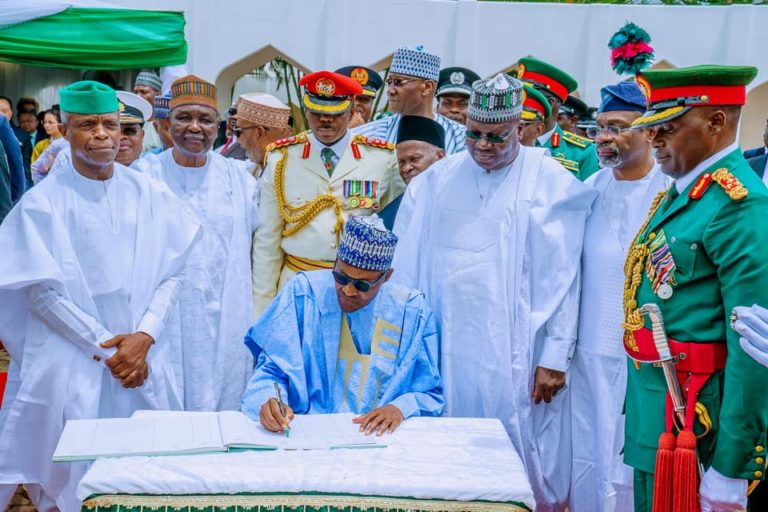
PEOPLE’S Democratic Party (PDP) has described President Muhammadu Buhari’s Independence Day speech as uninspiring and empty.

PDP in a statement signed by the PDP Spokesperson, Kola Ologboidiyan, said  Buhari’s speech was completely “unpresidential”, lacking in patriotic stance and replete with manifest inconsistencies, contradictions, paradoxes and false performance claims, which further confirm that Nigeria is in wrong hands.

The party said the president’s address failed to forcefully address the key issues of freedom, social justice, constitutional order, separation of powers, rule of law, human rights, credible elections, national cohesion, accountability and transparency in government, noting that Buhari’s administration had grossly violated all these principles.

“The party regretted that President  had no forceful reassurances on the challenge of escalated insecurity under his watch; he had no clear-cut and operable blueprint to revamp our economy, which his administration wrecked in a period of four years, resulting in so much hardship and despondency that Nigerians now resort to suicide and slavery abroad as options.”

The statement added that Buhari’s administration had only succeed in showing that his administration is not in position to deliver a credible, acceptable and satisfactory independence address because under his administration Nigeria has experienced the worst form of division, deprivation, human right abuse, constitutional violation and abuse of rule of law, disobedience to court orders, electoral malpractices, disrespect for separation of power and curtailing of press freedom.

“The dearth in foreign direct investment and the inhuman treatments being meted out on our citizens in countries where we were once held in very high esteem, are some of the injuries our nation is suffering under the Buhari administration.

“Due to the incompetence and legitimacy challenges confronting the Buhari Presidency, our nation is losing her voice and due regard in the international arena; as the administration has remained lacking in the required capacity and boldness to forcefully engage other world leaders on critical issues,” the statement read.


MacArthur gives over $6.3 million to ICIR, PTCIJ, others to tackle corruption

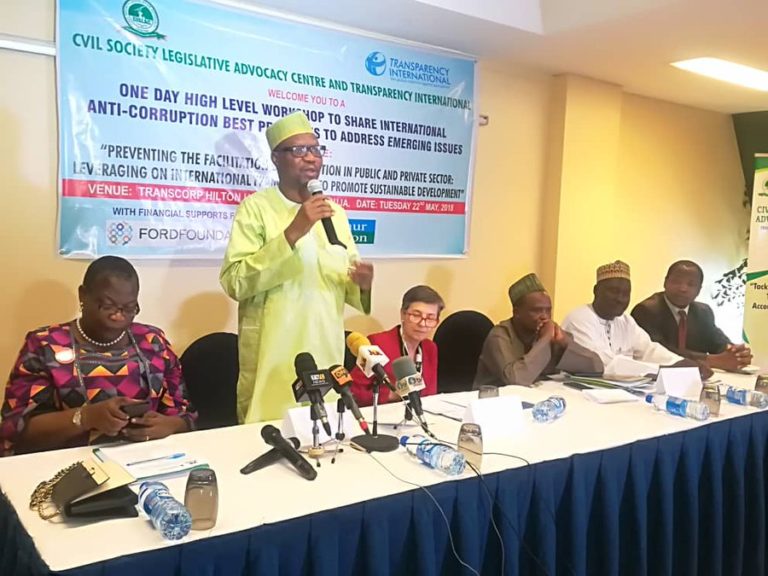
IN SUPPORT of projects that promote accountability and address corruption, the MacArthur Foundation has announced that it is giving a grant of over $6.3 million to nine media organisations including The ICIR.

In a statement made public on Wednesday, the private foundation, which funds non-profits in about 40 countries, said the grant is part of its project that supports work by media organisations “that strengthen accountability, transparency, and civic participation”.

Other beneficiaries are Bayero University Kano (BUK), Cable Newspaper Journalism Foundation, Daily Trust Foundation, OYA Media, Premium Times Centre for Investigative Journalism, Sahara Reporters, Tiger Eye Social Foundation, and Wole Soyinka Centre for Investigative Journalism.

These organisations, MacArthur Foundation Nigeria Office Director Kole Shettima noted, have shown that citizens, media and civil society groups have a crucial role to play in fighting corruption and holding government accountable.

Among other things, the grant will generally aid investigative and data-driven journalism, help establish a television station at BUK, and fund town hall meetings between government officials and citizens.

Below is the full press release:

$6.3 Million in Journalism and Media Grants to Advance Accountability and Anti-Corruption Efforts in Nigeria

MacArthur announced today more than $6.3 million in journalism and media funding to advance anti-corruption efforts in Nigeria. The grants are part of the Foundation’s On Nigeria grantmaking, which seeks to reduce corruption by supporting Nigerian-led efforts that strengthen accountability, transparency, and civic participation.

The nine grants announced today are a continuation of the Foundation’s efforts to strengthen investigative and data-driven journalism in Nigeria and to reinforce the role played by independent media and citizens in revealing and documenting corruption. The grants will support a range of projects, including trainings for journalists on investigative fieldwork and data-driven reporting, assistance for independent media organisations working to develop sustainable business models, and new broadcast platforms to increase the reach and effectiveness of investigative reports.

“These organisations have proven that media, citizens, and advocates can play an important watchdog role to guard against corruption in Nigeria,” said Kole Shettima, MacArthur Foundation Nigeria Office Director. “With this continued support of key journalism and media organisations we hope to strengthen transparency, empower independent voices, and hold authorities to account.”

Following is a list of grants announced today:

  • Bayero University, Kano (Kano): To enhance training, curriculum, teaching, and learning opportunities for the next generation of investigative journalists; and to establish a TV-station.
  • Cable Newspaper Journalism Foundation (Lagos): To support its Policy Radar Initiative and the investigative reports it produces; mobilise community action around its findings; and use social media and video to reach a broad audience.
  • Daily Trust Foundation (Abuja): To strengthen the capacity of journalists, media professionals, and students to conduct high quality investigative and data-driven journalism.
  • International Centre for Investigative Reporting (Abuja): To support in-depth field investigations and convene townhall meetings with government officials and anti-corruption agency representatives to answer questions from the public.
  • OYA Media (Lagos): To conduct high-quality investigative reports and present them in a talk show format that will bring policymakers and citizens together to discuss issues and possible solutions.
  • Premium Times Centre for Investigative Journalism (Abuja): To conduct investigations on budget, procurement, and government service delivery; to expand fact-checking operations for journalists, and continue building civic technology for citizens and journalists to collaboratively learn and produce multimedia reports related to corruption.
  • Sahara Reporters (Lagos): To train journalists on investigative and data-based journalism; support investigations into the education sector, and continue a civic media laboratory to engage citizens in public dialogue on corruption and other social issues.
  • Tiger Eye Social Foundation (Accra, Ghana): To strengthen investigative capacity of Nigerian media by training journalists in investigative techniques and supporting field investigations on corruption.
  • Wole Soyinka Centre for Investigative Journalism (Lagos): To continue its investigative reporting on corruption in the education and electricity sectors; design sustainable reporting models for that reporting; and develop a radio show to improve reach and impact of stories.

Strategic priorities of the Foundation’s On Nigeria grantmaking include reducing corruption in the electricity and education sectors; strengthening the criminal justice system through nationwide implementation and enforcement of the Administration of Criminal Justice Act and complementary laws and policies; and supporting media and journalism to expose corruption and share information about anticorruption efforts. The grants announced today are intended to support this work by building and strengthening a system of accountability journalism in the country.

The Foundation also supports key government effectiveness initiatives, including the implementation of the 2015 Administration of Criminal Justice Act. MacArthur has been making grants in Nigeria since 1989, opening an office in Abuja in 1994 staffed by Nigerians. 

Senate calls for regulation of mining operation in states  

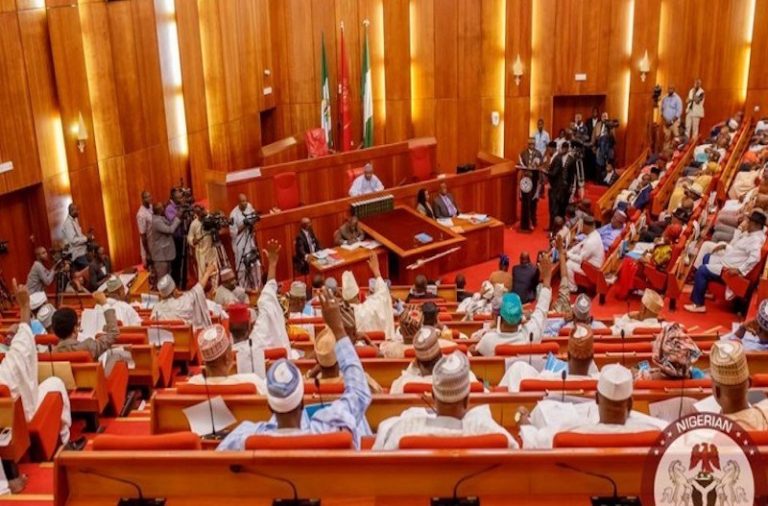
THE Nigerian Senate has called for legislative action against illegal mining activities spread across the country by developing a national legal framework.

The resolution was made during the Senate plenary session on Wednesday after Ya’u Sahabi, Senator representing Zamfara North, presented a report on the illegal mining activities across the country.

While speaking on the matter, Senate President Ahmed Lawan said the legislators need to “seriously” look into the solid mineral sector.  He added that the upper legislative should be at the vanguard of renewing the situation of the solid minerals and ensure the sector contributes to the national development.

“We will call a round table of stakeholder which I would chair so we can protect our resources rather than continuing to lament on how foreign nationals are illegally mining our resources,” said Lawan.

As illegal mining increases the rate of lead poisoning, Adamu Aliero, Senator representing Kebbi Central, noted that the issue of lead poisoning should be taken with much importance.  “It is happening virtually in all states where illegal mining takes place,” he said.

The Senate thus called on the Federal Government to clean up the affected areas of the lead poisoning in Zamfara State, Plateau state, Niger state and other states.

“Senate resolves to call on the Federal Government and other stakeholders to develop a national legal framework in response to illegal artisanal mining,” it added.

There have been several reported cases of illegal mining activities in Nigeria where both nationals and foreigners engage in the business.

Scores of Artisanal Miners at Odubale mining site, a distance away into the thick forest of Ifewara, Osun State. Photo credit: Gbenga Adanikin/ICIR in July 2019.

Studies show that illegal mining is capable of destroying the ecosystem and causes terminal diseases such as cancer, respiratory failure and untimely death of workers and residents around the mining communities.

Series of investigations conducted by The ICIR on illegal mining of the country’s solid minerals revealed that many health and environmental hazards are linked to artisanal mining.

Analysis: Nigeria’s GDP growth rates has faltered since independence

0

PRESIDENT Muhammadu Buhari introduced his speech at Nigeria’s 59th Independence Anniversary saying that October, 1 avails Nigerians the opportunity to reflect on how the country has fared.

The ICIR also went down memory lane to draw parallels from the economic progress Nigeria has made since independence on October 1, 1960, comparing it with the current realities in the country.

And the data obtained from the World Bank shows that the Nigerian economy’s growth rate from 1960 has been unstable.

The country recorded the highest economic growth rate at 25.10 per cent in 1970, but today the growth rate has crashed to 1.94 per cent.

The Gross Development Product growth rate measures the economic output of a nation by comparing one-quarter of the country’s GDP, to the previous quarter.

After a 30-month civil war, the 25.10 per cent growth rate of the Nigerian economy in 1970 has been unrivalled till date.

Analysis by The ICIR shows that Nigeria had experienced seven recessions from 1960 to date. It recorded its first recession in 1967 posting a GDP growth rate of -15.74 per cent, followed by a – 5.23 per cent in 1975, -5.76 per cent in 1978, and -13.13 per cent in 1981.

In 1982, the growth rate was -10.92 per cent, -10.92 per cent in 1983, -2.04 per cent in 1993 and -1.62 per cent in 2016.

When the GDP growth rate of a country is negative, then the economy of that country slides into recession.

The country’s worst GDP growth rate was posted during the Nigerian pre-civil war era when it recorded its lowest growth rate of -15.74 per cent in 1967 before climbing to an all-time peak of 25.10 per cent growth rate in 1970.

Nigeria’s economic growth had endured turbulence since 1960 but it has also had a fair share of boom recording a positive growth rate of 25.01 per cent in 1970, 24.20 per cent in 1969, 11.16 per cent in 1974, 11.78 per cent in 1990 and 15.33 per cent in 2002.

Key indicators that drive a nation’s GDP growth include its consumer spendings on goods and services, business investments in the country, government spendings and its net trade.

A PriceWaterhouseCoopers, PWC, report affirms that Nigeria’s economy grew by 2.7 per cent in 2015, but slide to its slowest growth in the past four years, much lower than its previous GDP average growth rate of 4.8 per cent.

Saudi Arabia with a GDP of $577.6 billion was the 20th largest economy in the world in 2011, though, a PWC projection stipulates that  Nigeria could attain that level of GDP growth by 2023 assuming other economies are stagnant if its GDP growth annually surpasses the 10 per cent mark.

With a paltry 1.94 per cent GDP growth rate Nigeria is not listed as the fastest growing economy in Africa as it lags behind Ethiopia at 10.3 per cent, Ghana at 8.1 per cent, Cote d’Ivoire at 7.7 per cent, Tanzania at 7.1 per cent, Senegal at 7.2 per cent and Djibouti at 7 per cent.

In 2018, Foreign Direct Investment, FDI flows to Africa increased by 6 per cent from $38 billion to $40 billion but Nigeria missed out of this slice as its FDI dropped by 36 per cent to $2.2 billion.

South Africa grew its FDI by 446 per cent, Egypt by 7 per cent and Ghana experienced a boost its FDI currently pegged at $3.3 billion.

This statistic makes Nigeria an unlikely destination for Foreign Direct Investment, FDI, as it offers limited opportunities for business growth, particularly when foreign corporate brands are considering an expansion into new regions.

Analysis by the International Monetary Fund, IMF, shows that  Nigeria’s GDP growth rate would experience an incremental decline to income per capita over the next 8 years, through 2022.

The decline was based on the slow GDP growth exceeded by a population growth rate that is not expected to slow in the near future.

World Bank predicts that Nigeria’s population is expected to rise to 410 million by 2050 while 94 million people live on less than $1.90 a day while the GDP is growing at a slower and less consistent rate, averaging 1.4 per cent since 2016.

This suggests that Nigeria is exposed to global economic shocks due to its significant debt accumulation, import-dependent economy and low diversification of exports.

Assessing Nigeria’s current growth rate necessitates the occurrence of another major census to gauge the actual growth rate and enable critical strategic decisions to be made regarding population-related issues such as housing, food supply, employment, amongst others.

Samsung closes shop in China

0

SAMSUNG’s last China phone factory has announced the shutting down of the facility a few months after its production decline in June due to stiff competition in the country.

The South Korean tech giant’s ceased phone production in China follows other manufacturers shifting production from China due to rising labour costs and the economic slowdown.

Unfortunately, Samsung’s share of the Chinese market shrank to 1% in the first quarter from around 15% in mid-2013, as it lost out to fast-growing homegrown brands such as Huawei Technologies and Xiaomi Corp (1810.HK), according to Counterpoint, a market research firm.

“In China, people buy low-priced smartphones from domestic brands and high-end phones from Apple or Huawei. Samsung has little hope there to revive its share,” said Park Sung-soon, an analyst at Cape Investment & Securities.

The company said it had taken the difficult decision in a bid to boost efficiency but will continue sales in China.

“The production equipment will be re-allocated to other global manufacturing sites, depending on our global production strategy based on market needs.”

According to the tech company annual report, Samsung produced 394 million units of handsets in the world, with 63 million of that number (63 per cent) produced in  China in 2017.

Sony another tech giant has also revealed that it was closing its Beijing smartphone plant and would only make smartphones in Thailand.

But it doesn’t seem like some tech companies have been registering losses with buys preference for low cost phones as  Apple (AAPL.O) still makes major products in China.

Don’t tag every young Nigerian internet fraudster, minister tells security agents

MINISTER of Communications, Isa Ali Pantami, has condemned the widespread harassment of Nigerians with personal computers, tablets and other ICT gadgets in public places by security operatives.

Uwa Suleiman, spokesperson to the minister on Tuesday said that one the negative effects of this action is that young persons are assumed to be fraudsters by the security officials without evidence or proof of committing such crimes.

“The Ministry notes with dismay, this unfortunate turn of events as we celebrate the growing and bubbling technology eco-system in Nigeria that enables young persons to learn various skills ranging from software engineering to varied forms of entrepreneurship by simply accessing online tools and content on these devices.

“We are aware that several other persons have engaged in nefarious activities utilising computers and similar devices, we must however be careful not to paint all young Nigerians with a similar brush,” read the statement in part.

However, the minister applauded efforts of the Economic and Financial Crime Commission (EFCC) in gathering intelligence that has halted the illegal activities and led to the arrest of individuals who through the use of computing systems to commits cyber crimes.

He also hailed the use of technology by many young Nigerians who have contributed to the growth of Nigeria digital economy through the use of Information and Communication Technology.

“It would therefore be counterproductive to stifle this sector of the economy by labelling every young Nigerian with a computing device as a fraudster.

“It is in this light that the Federal Ministry of Communications frowns at the current profiling and harassment of young Nigerians and therefore admonishes security agencies to be circumspect in these situations.

“We understand the need for pro activity to protect the society, however, this must be done credibly while recognising the fundamental human rights of every citizen of Nigeria. If this situation goes unchecked, it will dampen the vigorous attempt at diversifying the economy and rather push more young energies underground with catastrophic consequences,” Pantami said.

In addition, the minister said Ministry is committed to working closely with parastatals under her supervision, particularly the National Information Technology Development Agencies (NITDA) and Nigerian Communications Commission (NCC) “to foster the growth of a knowledge-based and facilitate ICT as a key tool in the transformation of Nigeria in the areas of job creation, economic growth and transparency in governance.”

Buhari quotes old budget figure in Independence Day speech


IN his speech delivered on Tuesday to mark Nigeria’s 59th Independence Anniversary celebration, President Muhammadu Buhari cited an outdated figure of the allocation federal government has released for capital projects in the 2018 budget year.

“We are significantly increasing investments in critical infrastructure. Last year, capital releases only commenced with the approval of the Budget in June 2018. However, as at 20th June this year, up to N1.74 trillion had been released for capital projects in the 2018 fiscal year,” he said, before promising to accelerate the implementation of the 2019 capital project.

The president’s claim has, however, been found to conflict with updated figures provided by the Office of the Accountant-General of the Federation (OAGF) in its 2018 Capital Performance for MDAs report.

OAGF’s figures were obtained by The ICIR in July through a Freedom of Information (FOI) request, and reflect capital releases as at June 30.

The document from the Accountant-General’s office states that the grand total of capital releases for the previous fiscal year was N2.06 trillion, including funding from Sukuk proceeds. This is 73.6 per cent of the total approved capital budget of N2.8 trillion.

Out of the N2.06 trillion, only N63.8 billion was not utilised by some of the MDAs.

The difference between Buhari’s and the Accountant-General’ figures is N320 billion.

Buhari also said in his speech that his administration “inherited a skewed economy, where the oil sector comprised only 8 per cent of Gross Domestic Product”.

However, reports from the National Bureau of Statistics (NBS) show a slightly different figure. The oil sector represented 10.45 per cent of Nigeria’s total real GDP at the end of the first quarter in 2015.

At the second quarter during which Buhari was first sworn-in as president, the NBS states that the “oil sector represented 9.80 per cent of total real GDP”.

The figure did not drop to 8.06 per cent until the fourth quarter.

Buhari’s Democracy Day speech delivered in June was similarly found by The ICIR to contain an unsubstantiated projected growth rate figure.

“We now have witnessed eight quarters of positive growth in the economy and our GDP is expected to grow by 2.7 per cent this year,” he had said.

But the figure contradicted similar projections from the Central Bank of Nigeria, Budget Office, African Development Bank, and the International Monetary Fund.

ANALYSIS: Nigeria’s manufacturing output is the same today as it was in 1982

STATISTICS show that, in nearly four decades, the output of Nigeria’s manufacturing sector has remained the same. The World Bank estimated that, as of 2018, the country’s Manufacturing Value Added (MVA) was worth $31 billion. But checks by The ICIR revealed that this was also the figure in 1982.

On Friday, Vice President Yemi Osinbajo, represented by Special Adviser to the President on Ease of Doing Business, Jumoke Oduwole, expressed confidence that Nigeria stands to benefit a lot from the African Continental Free Trade Area (AfCFTA).

“At $35.45 billion, Nigeria’s manufacturing value-added is about seven times more than the current average for the top 20 African countries,” he said.

“There is no doubt that Nigeria would enjoy significant benefits from the agreement. AfCFTA will promote a vibrant and competitive industrial sector that is central to job creation and income growth.”

But while it is true Nigeria has the third highest MVA in Africa owing to her huge economic size, the trend from 1981 till date shows that very little success has been recorded over the years. This, therefore, casts doubt on the country’s ability to achieve Sustainable Development Goal 8—involving “higher levels of productivity of economies through diversification, technological upgrading and innovation, including through a focus on high value-added and labour-intensive sectors”.

The MVA is the manufacturing sector’s net output arrived at after summing all the outputs and subtracting the intermediate inputs. It is a measure of economic activity that captures “the difference between the value of goods and the cost of materials or supplies that are used in producing them”.

It is also a marker of the level of a country’s industrial development.

Manufacturing, according to the International Standard Industrial Classification, comprises “units engaged in the physical, or chemical transformation of materials, substances, or components into new products”. This includes production using hand such as in bakeries, assembling of component parts, waste recycling, and substantial alterations to goods.

What the figures say 

According to the World Bank’s national accounts data, in 1981 Nigeria’s MVA was $33.3 billion. From there, it reduced rather sharply until it hit $5.1 billion in 1993. Gradually, it rose till it got to $27.5 billion in 2008. Then it dropped to $22.9 billion in 2009, from it skyrocketed to an all-time peak of $54.8 billion in 2014.

In 2015, it reduced to $46.6 billion and it’s continued on a downward curve since. The latest figure provided by the international organisation is for 2018: $30.9 billion—the same amount it was sometime in 1982.

The moments of a sharp decline in the manufacturing sector’s outputs appear to coincide with periods of sharp falls in global oil price, reflecting the country’s heavy dependence on crude oil since it became independent in 1960.

In June 2008, for instance, a barrel of oil sold for $140, but by January 2009 it had drastically dropped to $41.68. A similar pattern can be observed between July 2014 and January 2015, as well as in 1985. The Structural Adjustment Programme introduced in 1986 may also have played a part. It’s been argued to have led to “the collapse of manufacturing and agricultural industries, heightened unemployment and social insecurity”.

While a look at the MVA in terms of dollars shows that the country’s manufacturing sector is, in fact, slightly smaller in capacity than it was in 1981, interpreting it as a percentage of the Gross Domestic Product (GDP) tells a more unpleasant story.

In 1981, the MVA contributed up to 20.3 per cent of Nigeria’s GDP. But, thirty-seven years on, the sector’s contribution has now dropped to 7.8 per cent. In 2010, when it was at an all-time low of 6.55 per cent, it began to increase steadily until it got to 9.6 per cent in 2014. It has since returned to a downward spiral.

This figure is substantiated by the National Bureau of Statistics which confirmed a negative quarterly growth rate in the sector (minus 4.4 per cent) and stated that its contribution to the country’s real GDP in the second quarter of 2019 is 9.1 per cent

Worst manufacturing growth rate in Africa

The World Bank provides the manufacturing value-added figures for 218 countries across the world and 53 countries in Africa. The annual statistics date back to 1960 for some countries and later years for others.

There are 18 African countries for which the financial institution has figures from 1981, as in the case of Nigeria. Comparing the MVA in 1981 for all 18 countries shows that it is only Nigeria that has a negative growth rate in the manufacturing sector over the years.

Uganda has the highest rate of 8,980 per cent increase, having improved upon an MVA of $25 million in 1981 to $2.3 billion in 2018. Zimbabwe has the second least rate of 55.4 per cent while Nigeria has the lowest growth rate of minus 7.3 per cent.‘It isn’t surprising’

Olaolu Olayeni, an Assistant Professor of Economics at Obafemi Awolowo University, told The ICIR it is obvious Nigeria’s economy has a lot of challenges and has been nose-diving most of the time.

“We should not be surprised that we are having issues,” he said.

Those issues range from weak value chains, bad infrastructure, inadequate data collection and planning, unemployment and low per capita productivity, lack of training and skill acquisition opportunities for the young population, and an over-reliance on extractive products, to poor linkages among different sectorsincluding between rural agricultural communities and urban settlements.

“And above all, we don’t have political will to tackle these problems,” he added.

The Assistant Professor said another problem is that Nigeria hardly adds value to its products and that it is embarrassing the country produces cocoa but people cannot buy locally-made chocolates.

“While others are thinking ahead, we keep looking back. We are looking at what happened in the ’80s. People are thinking of what will become of them in the next 50 years. But in Nigeria, there is no plan for the future generation,” he lamented.

A 2019 study published by the Mediterranean Journal of Social Sciences has also noted that Nigeria lacks the needed infrastructure for industrialisation. It advised that efforts be focused on the manufacturing sector “that has the ability to bring expansionary and multiplier effects capable of harnessing the resources of the country and change the economic trend for better”.

“The required environments and infrastructure deficiency have not been favourable to the manufacturing sector over the years,” the study observed.

“Again, the bulk of manufacturing establishment in Nigeria is located in the urban areas with epileptic national power supply whereas,  the source of the raw materials which is the rural areas are devoid of essential facilities and poor road net-work for easy conveyance of raw materials to the urban centres.”

The president promises

President Muhammadu Buhari, in his Independence Day speech on Tuesday, lamented that the crude oil sector, though contributing only eight per cent of Nigeria’s GDP, comprises up to 70 per cent of government revenue and 90 per cent of foreign exchange earnings.

He accused administrations before his of abandoning “the residual Investment-driven non-oil sector, which constituted 40 per cent of Gross Domestic Product and comprised agriculture, livestock, agro-processing, arts, entertainment, mining and manufacturing activities that provide millions of jobs for able-bodied Nigerians and utilise locally available raw materials and labour for production”.

“To address this imbalance, our commitment to achieving economic diversification has been at the heart of our economic strategies under the Economic Recovery and Growth Plan, which I launched on the 5th of April, 2017,” Buhari said.

He then promised that the government will put income from oil sales to good use while also investing in the non-oil sectors, partnering with the private sector, and improving infrastructure.

ICIR reporter, five other Nigerian journalists emerge finalists for African journalism prize

SIX Nigerians from various media organisations including a reporter from The ICIR, Kunle Adebajo, have emerged finalist for the 2019 edition of the West Africa Media Excellence Awards (WAMECA).

The information disclosed on its official website stated  WAMECA 2019 edition received 724 entries from fifteen countries in West Africa, whereby entries were thoroughly reviewed by a five-member jury of the award and twenty-one finalists shortlisted from six countries.

Among the six Nigerians shortlisted for the award, is Adebajo, an investigative reporter and fact-checker for the International Centre for Investigative Reporter (ICIR), whose entry report centred on various government ministries with valid official electronic mail addresses that do not function.

The report specifically showed how enquiries sent to twenty-six official email addresses belonging to the federal ministries including the Office of the Secretary to Government of the Federation (OSGF) was not responded to.

In his report, only four of the federal ministries responded, after a reminder was sent following a week of no response from the email addresses made available on their official website.

Adebajo’s investigation shows that out of the twenty-six addresses mailed, eleven were not available and of the fifteen which were valid, only three responded.

The four ministeries that responded included; The ministry of Finance; The ministry of Power, Works and Housing; The Ministry of Industry, Trade and Investment and the Ministry of Agriculture and Rural Development.

Other Nigerians who also emerged finalist for the awards include; Odinaka Anudu─ Business Day; Aneta Chineye─ TV360; Cletus Ukpong─ Premium Times; Tobore Ovuorie─ Nations Newspaper and Tunde Ajaja─ Punch Newspaper.

The award recipients also feature; Eight awardees from Ghana,  four from Burkina Faso and one from Senegal, Cote D’ Ivoire and Liberia respectively.

The Executive Director of Media Foundation for West Africa (MFWA) Sulemana Braimah, said the award was aimed at showcasing and honouring journalism excellence, an objective according to him aimed at improving quality and independent journalism in West Africa.

The West Africa Media Excellence Conference and Awards is an annual initiative of the MFWA to promote media excellence in the sub-region.

ICIR reporter, Amos Abba

Similarly, another ICIR reporter, Amos Abba has made the finalist roll call for the 2019 Kurt Schrock award for the international journalist.

The award recognises journalists for their brave and courageous reporting on conflict, corruption and injustice.