Home Blog Page 2312

FBI arrests Forbes under 30 influential Nigerian, Obinwanne Okeke

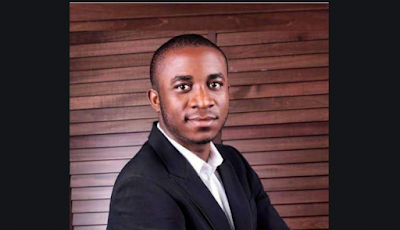
The United States Federal Bureau of Investigation FBI has apprehended a Nigerian entrepreneur Obinwanne Okeke popularly known as (Invictus Obi).

According to the FBI charge sheet deposed to by  Marshall Ward, a special agent employed by the United States Department of Justice, he was arrested for over $12M fraud.

The information disclosed the investigation was premised on a complaint lodged by representatives of Unatrac Holdings Limited for being victimized in the fraud.

Okeke was listed in 2018 by Forbes as among the 100 Most Influential Young Africans.

He was alongside three others, nominated for the most prestigious award for African businessmen/entrepreneurs, the All African Business Leaders Award for Young Business Leader (West Africa).

Okeke who holds a master’s degree in International Relations and counter-terrorism from Monash University Australia, is the founder of Invictus Group – a conglomerate in construction, oil, gas and agricultural development.

The said entrepreneur has investment in real estate development, energy and construction.

His company, Invictus Group, operates in three African countries, which include Nigeria, South Africa, and Zambia.


Why we brought El-zakzaky back to Nigeria – FG

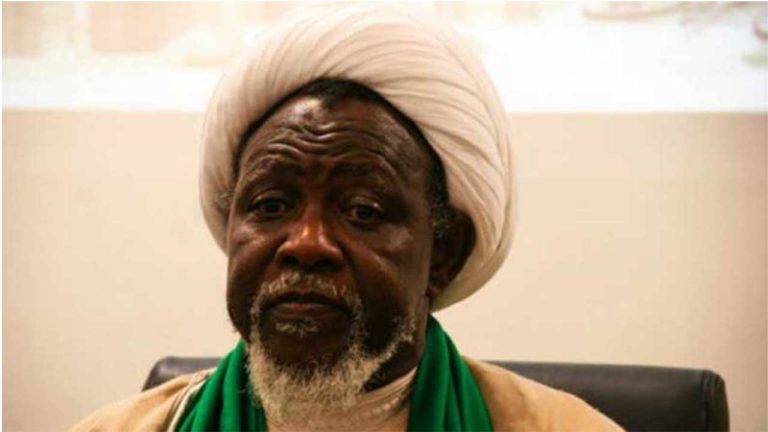
The Federal Government has disclosed the reason the leader of the Islamic Movement of Nigeria, Ibrahim El-Zakzaky was returned back to Nigeria.

The FG in a statement by the Permanent Secretary of the Federal Ministry of Information and Culture, Grace Gekpe, said the Shi’ite leader tried to seek asylum and eventually relocate to another country.

It also stated that El-Zakzaky action necessitated his repatriation.

The IMN leader and his wife, Zeenah, returned to Nigeria from India on Friday after spending just four days in India.

The Islamic Movement in Nigeria (IMN) had earlier released a statement accusing the FG of frustrating his medical treatment in India.

The Shiite leader and his wife have been in the detention of the Department of State Service since December 2015 after soldiers killed at least 347 IMN members for blocking a public road.

The statement read, “We wishes to inform the public about the latest development in the Ibraheem El-Zakzaky medical trip controversies to India. The Government notes with dismay the acts of misconduct exhibited by El-Zakzaky that necessitated his repatriation.

“The earlier statement of 14th August 2019 by the Government addressed the issues that would have raised some questions with the latest occurrences and particularly the uncelebrated return of El-Zakzaky from India. The public may note that.

“El-Zakzaky’s actions in India demonstrated malicious intents that were capable of embarrassing the Governments of Nigeria and India.

“With total disrespect and complete loss of decorum for international procedures while in India, he initiated contacts with a team of lawyers led by Ali Zia Kabir Chaudary and Gunjan Singh in that country. He also contacted some Non-Governmental Organizations (NGOs), such as the Islamic Human Rights Commission (IHRC) and other Shiite groups. His aim was to seek asylum and eventually relocate to another country.

“It is important to note that if an Indian court had granted El-Zakzaky asylum or leave to travel to another country, it would have violated the Nigerian court order that granted him permission to travel for medical treatment.

“However, he used the opportunity of being in India to attempt to internationalise his cause by mobilising the Rights groups. Even most unfortunate and rather embarrassing as earlier stated, was his quest to be relocated to a 5-Star hotel to receive visitors instead of being admitted in the hospital as a sick person he claimed to be.

“In spite of his misconduct, El-Zakzaky’s spouse went further to antagonize the Indian and Nigerian security agents and accused the latter of killing her children.

“These acts were aimed at winning international sympathy as well as disparaging the Nigerian Government. Having subordinated the quest for medical treatment to other ulterior motives, it became obvious that El-Zakzaky was focused on realising some sinister motives thus the decision to return him to Nigeria.”

Nigeria to lose $9 billion to firm over breach of contract

0

ON Friday, a United Kingdom, UK court granted Irish owned firm Process and Industrial Developments Ltd, P & ID, rights to claim $9 billion worth of assets from the Nigerian government for breaching the terms of their agreement after aborting a gas project.

The engineering and project management company was awarded damages worth $6.6 billion by the English Commercial Court sitting in London while the accrued interests included pegs the total payment to the firm at $9 billion.

The presiding judge, Justice Butcher in his ruling substantiated the arbitration award to a legal judgement, implying that P & ID had legal rights to seize international assets belonging to Nigeria.

Lawyers who represented the Nigerian government stated that the award could not be enforced in the UK because it was not the best place to decide the case, also arguing that the amount awarded was “manifestly excessive.”

The judge dismissed the arguments from the Nigerian lawyers, saying he was open to “receive submissions from the parties as to the precise form of order appropriate.”

Andrew Stafford, the counsel representing P & ID emphasised his client’s resolve to claim its damages from the Nigerian government with urgency.

“P&ID is committed to vigorously enforcing its rights, and we intend to begin the process of seizing Nigerian assets in order to satisfy this award as soon as possible,” he said.

Stafford said that with accrued interest, the award to the firm now tops $9.6 billion, but

Genesis to the tussle

P & ID had over 30 years of experience in engineering projects in Nigeria on its belt when it reached a 20 years Gas and Supply Agreement, GSPA, with the federal government in 2010 to build a gas processing plant in Calabar.

The gas processing plant was to refine associated natural gas into non-associated natural gas to supply gas which would increase the generating capacity of the national electric grid.

Associated gas refers to the natural gas found in association with oil within the reservoir, while the non – associated gas is simply gas without any condensates.

Nigeria was to receive 85 per cent of the non-associated gas at no cost for electrical generation and industrialisation, while P & ID would receive 15 per cent of the byproducts generated which includes methane, propane, and butane to sell on the commercial market.

However, the country was assured it would retain 10 per cent shareholding stake of the firm.

The Federal government was to supply 150 million Standard Cubic Feet, SCF, of the gas per day to the firm which would have seen 400 million SCF of gas supplied throughout the lifecycle of the project.

The GSPA also required the government to build a gas supply pipeline to the P&ID facility.

Breach in transmission

The firm in its suit stated that it spent years preparing for the project, but the Nigerian government did not meet its end of the bargain because it did not build a pipeline or supply the required quantity of gas as stipulated in the agreement.

With the fracas yet to be resolved, despite a proposed amendment to the agreement, P&ID commenced a full-scale arbitration against Nigeria in August 2012 in London.

In May 2015, while the arbitration was still ongoing, P&ID agreed to settle the dispute upon payment of $850 million by the government.

In July 2015, the dispute was resolved in favour of P&ID but Nigeria later unsuccessfully asked the English Commercial Court to set aside the award completely.

In January 2017, the court ordered Nigeria to pay P&ID $6.6 billion in damages and $2.3 billion in interest.

Nigeria had sought an extension to defend its case to stop the enforcement of the award, which would put the nation’s foreign assets including its external reserves at risk.

However, assets used for diplomatic purposes such as the Nigerian High Commission building in central London are not eligible for seizure, but commercial assets are set for confiscation.

After failing in its bid to sway the court’s ruling in its favour, Nigeria was fined by the court which also ordered the federal government to start paying part of P&ID’s legal costs as soon as possible.

Why FIFA ban Siasia, former Super Eagles Coach, for life

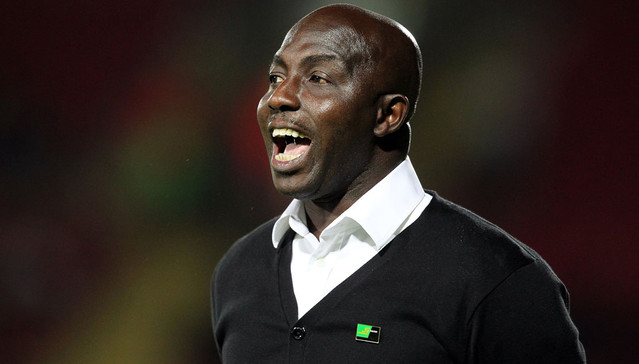
SAMSON Siasia, a former super eagles player and coach has been banned for life from all football-related activities by FIFA after being found guilty of taking bribes in connection with match-fixing.

The decision was made by the FIFA adjudicatory chamber of the independent ethics committee and was officially announced on Friday through a statement made available on its website.

The committee said Siasia was found guilty of receiving bribes in relation to the manipulation of matches in violation of the FIFA Code of Ethics, which he accepted.

In addition to the ban, a fine in the amount of CHF 50,000, totalling more than N18 million, was imposed on him.

“The decision was notified to Siasia today, the date on which the ban comes into force,” the statement read.

The ethics proceedings against Siasia had been instituted since February 11, 2019, through its component departments and in cooperation with the relevant stakeholders and authorities. 

The initiation of the investigation stemmed from an “extensive investigation into matches that Mr Wilson Raj Perumal attempted to manipulate for betting purposes”.

Perumal, from Singapore, had been convicted for several match-fixing scandals, including the Asiagate match-fixing scandal between 2007 and 2009 and the Finnish one.

Match-fixing is a dishonest practice of determining the outcome of a match before being played.

FIFA did not identify those matches Siasia had fixed. In other words, those matches he collected bribe for by changing their outcomes were not mentioned by FIFA.

Stating the judgment placed on him, FIFA said Siasia breached “art. 11 (Bribery) of the 2009 edition of the FIFA Code of Ethics and banned him for life from all football-related activities (administrative, sports or any other) at both national and international level”.

Samson Siasia was a former Nigerian football striker. He played 51 international matches for Nigeria, in which he scored 13 goals.

He was part of the team that participated in the 1994 FIFA World Cup and won the 1994 African Nations Cup.  Siasia participated in the National Team over a period of 11 years.

When he retired from active playing, he was appointed the national U-23 coach in January 2007. He became the head coach of the Nigerian men’s national football team, also known as Super Eagles, in 2010 lasting to October 2011.

In February 2016, the Nigeria Football Federation(NFF) declared him as the Chief Coach of the Super Eagles. 

He led the men’s under-23s team at the 2016 Olympics where they beat Honduras 3-2 in the bronze medal match.

Proscribed Shi’ite group to resume protests until El-Zakzakys get treatment, freedom

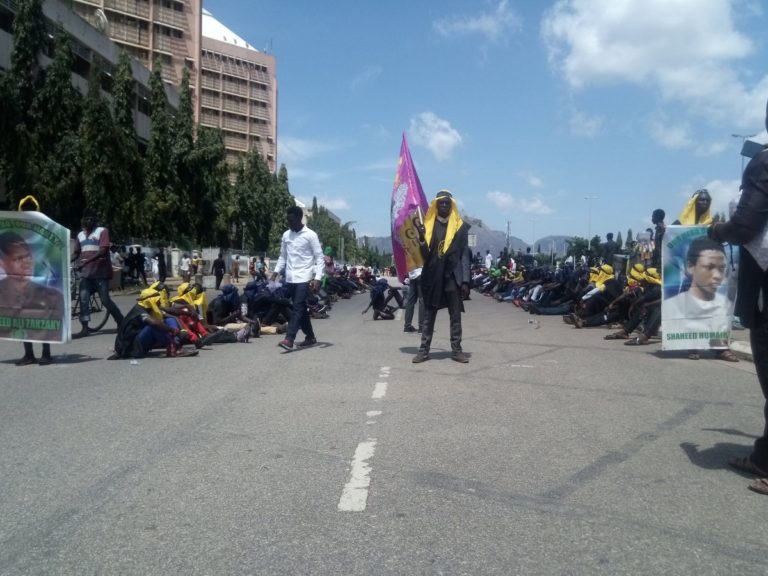
SHORTLY after Ibrahim El-Zakzaky and his wife returned to Nigeria and was whisked away by the security operatives, members of the Islamic Movement of Nigeria (IMN), on Friday vowed to resume protests despite the group proscription by the Federal Government.

Ibrahim Musa, spokesperson of the Islamic sect said strict adherence to the court orders which granted the cleric’s request to seek proper medical treatment and previous order for his release would only restore orderliness and peace to the lingering crisis.

The Kaduna High Court on 5th August granted El-Zakzaky and wife temporal release to seek treatment abroad.

“The Islamic Movement will, however, continue its struggle to ensure that our leader gets the appropriate medical treatment he deserves as ordered by the Kaduna High court. And as we continue with the struggle,” says Musa.

“We wish to reiterate our call for the federal government to comply with an earlier Abuja high court that has freed him since 2016. We believe obedience to this court order will finally solve the crisis that has been lingering since the Zaria genocide of December 2015.”

The sect further described as ‘glaring’, an alleged motive of the federal government to violate the court order, thus interfering with the medical treatment when the accused cleric was in India. Musa justified his claim arguing that El-Zakzaky was denied access to the media after his return to Abuja, but immediately driven away to an ‘unknown destination’ by the security agents.

According to him, the federal government did all it could to ensure the accused was denied medical treatment, debunking claims that the cleric rejected medical attention abroad.

His words: “However before we do that, we vehemently condemn the way the security agents whisked him away upon arrival without allowing the multitude of journalists that were waiting for him for hours to have a chat with him. We urge the security agency holding him hostage to declare to the public where they are keeping him in the country.

“It is a well-known fact that the Nigerian authorities had tried all their antics to see that the Sheikh wasn’t given medical leave. Distrustful of the Nigerian government’s offer of a jet to take him to the destination, having survived its attempts to poison and kill him while in detention, our leader Sheikh Zakzaky declined the offer and chose to pay for his trip through the Emirates Airline.”

Narrating ordeal of the cleric while at the Madena Hospital, the spokesperson in a statement explained that rather than get medical treatment, the workers were taking ‘selfie’ with El-zakzaky – an action he described as an invasion of the cleric’s privacy.

Aside from the health personnel denied from accompanying the IMN leader to India, another medical practitioner from the United Kingdom, he said, was barred from accessing the cleric and his wife Zeenat.

He noted that the couple never rested for the trip, despite their health conditions yet, whisked away by the security upon arrival to the country.

“Their ordeal started right here in Nigeria when they were scheduled to board the plane to Dubai. After a 2 hours’ drive from Kaduna to NAIA in Abuja, they were not given enough time to rest before boarding the plane. They endured an 8 hours flight to Dubai and another 3 hours flight to New Delhi. Under normal circumstances, as patients suffering life-threatening ailments, they shouldn’t have been subjected to such exhaustion. Nonetheless, our leader and his wife endured the journey hoping that they will get good treatment when they reached New Delhi.

“However, despite their need for rest, they were forcibly wheeled to a hospital on arrival without their personal physician that accompanied them from Nigeria. They were then subjected to physical examination in the absence of the doctors that initially examined them in Nigeria and when they requested for their presence, it was turned down. Another physician that came from London was also denied access to them despite his familiarity with the Sheikh’s case from Nigeria. It was at this point that Sheikh Zakzaky lost confidence in the whole process and refused any further attempt to have him forcibly treated.”

The statement reads in part, “Moreso, the Hospital compromised its independence and medical ethics, treating without obtaining consent of the patients. The health workers were furthermore interested in taking selfie with the Sheikh and posting on social media, thereby violating their privacies.

“When the Sheikh noticed some physical assault in addition to the background circumstances, he lost complete confidence in the hospital and demanded to see his own doctors for a substitute arrangement. It is well within every patient’s right to decide whether or not to be treated and to also decide who attends to his health.

“It is called giving of consent, which every sane autonomous person with capacity is entitled to. Contrary to the Nigerian government’s press statement that misinformed that it was against ‘medical ethics and standard practice’. It is in fact at the very essence of medical ethics, which every elementary medical person knows.”

“It is worth noting that the Kaduna high court allowed the Sheikh to go to India with the government only supervising, instead the federal government presented him to the Indian government as a dangerous suspect with an unknown ailment coming to India and demanded stringent security placed on him. There was even a report that the security agents in India subjected him to physical assault,” it stated.

Anglican priest first scapegoat as Ekiti begins ‘naming and shaming’ of rapists

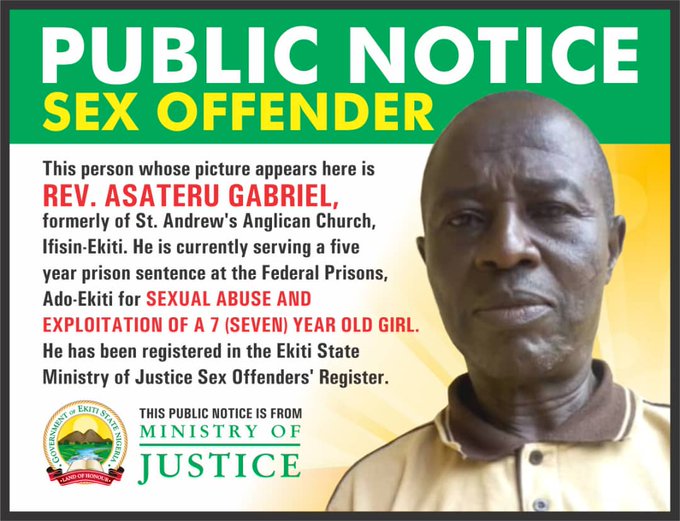
THE Ekiti State Ministry of Justice has initiated public naming and shaming of sex offenders in a bid to curb the frequency of rape and sexual harassment in the state, and an Anglican priest is the first casualty.

On Twitter, Kayode Fayemi, Governor of the state under the #SayNotoRape joined other Nigerians as he ‘named and shamed’ a sex offender, one Reverend Asateru Gabriel of the Anglican Church Ifisin-Ekiti, presently serving a five years prison term for sexual exploitation of a seven-year-old girl.

“In response to the frequency of reported cases of gender-based violence and sexual abuse, the Government of Ekiti State has begun the publication of the names and photographs of convicted sex offenders in the state,” published the state on its website.

https://twitter.com/kfayemi/status/1162345277640105987?s=20

The Ministry of Justice also revealed a five-step shaming and naming strategy which it would deploy as measures to curb child defilement and rape in the state.

  1. Pasting photographs of convicted sex offenders in prominent public places in their communities and local government headquarters.

  1. Public notification of the status of convicted sex offenders by showing their photographs on Ekiti State Broadcasting Ser5vice and announcing their name and status on radio stations in the state.

  2. issuing an advisory to the traditional ruler of the sex offender’s community on the status of the offender.

  3. Uploading the sex offenders photograph to the website of the Ministry of Justice

  4. Compulsory psychiatric test for all persons of who the Director of Public Persecution (DPP) has issued a case to answer legal opinion for the offence of child defilement.”

Since the announcement, Nigerians have hailed the move of the governor and the justice department on the new strategy as some believe that the public shaming will indeed discourage perpetrators.

Two cases of Ebola confirmed in new province of DRC

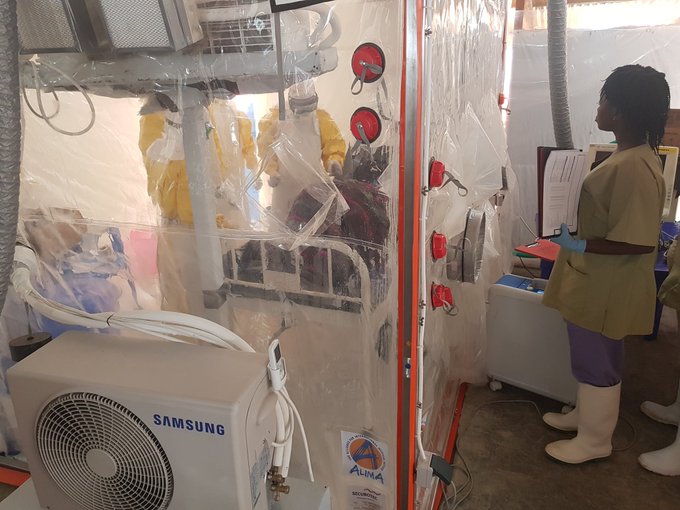
TWO new Ebola virus cases have been confirmed at a new province of the Democratic Republic of Congo (DRC), with one death on Friday.

The World Health Organisation that gave the update said the cases happened at South Kivu, in Lwindi district in the Mwenga region, an area close to the eastern border of Rwanda. A 24-year-old mother and her seven-year-old child were both infected.

It was reported that the woman travelled to an area – Beni- where the disease outbreak has been on high rate since it began last August.  Having travelled in July, she had been marked as a high-risk contact of the case. She had since been vaccinated.

She travelled by bus, boat and road with her two children to Mwenga, in South Kivu, where she died on Tuesday night, according to a slide from a presentation by health officials on Friday.

“These are the first cases in this province. As soon as the alert was raised last night, response teams were on the ground,” tweeted the WHO.

It stated that the team were ready to provide treatment for the boy, identify all contacts and start providing vaccination for community members.

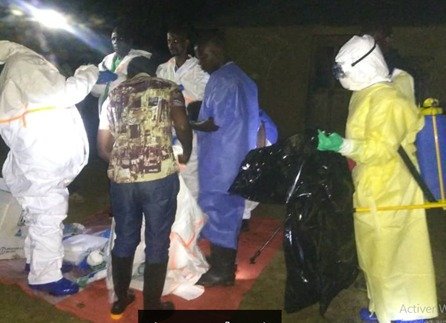
The rescue teams attending to the first cases of Ebola virus diseases at South-Kivu on Thursday night. Photo credit: Twitter/WHO.

The WHO chief, Tedros Adhanom, also expressed his sadness over the confirmation of the two infected people.

This has sparked a rapid response by the Congolese Ministry of Health and, WHO and other partners to provide treatment, identify all contacts, raise awareness and begin vaccinating,” he tweeted.

Ebola disease has kept spreading in Congo since the first case was detected in August 2018.

In July, the outbreak was declared a public health emergency of international concern after some cases were confirmed in Uganda, and also in Goma city of DRC.

As of August 14 with daily data provided until August 13,  2,748 cases of Ebola had been confirmed in Congo since last year August, with 94 probable cases.

It resulted in the deaths of 1,905 people.

Earlier this week, the WHO announced that two drugs have been found effective to be treating ebola virus disease. The two were out of the four medications that underwent randomised clinical trial developed in curing Ebola.

The two drugs, named REGN-EB3 and mAb114, work by attacking the Ebola virus with antibodies, neutralising its impact on human cells. The research showed that more than 90 per cent of infected people could survive if treated early with the drugs.

The latest cases show the difficulty of containing the Ebola outbreak, despite the deployment of “a highly effective vaccine”.

Court confiscates accounts linked to Yari, two firms

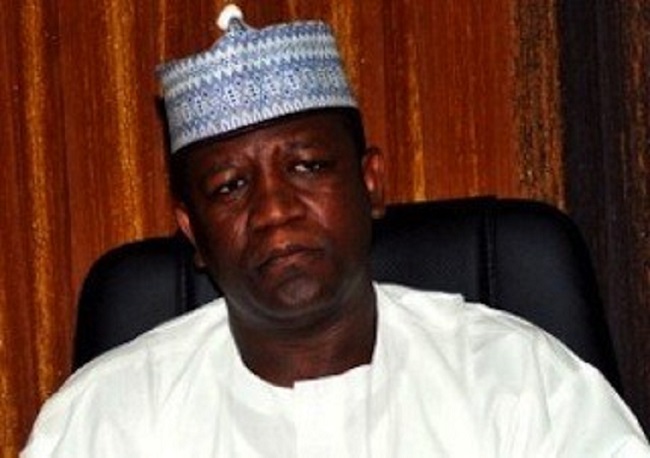
JUSTICE Taiwo Taiwo of the Federal High Court on Friday, ordered the temporary forfeiture of the immediate-past governor of Zamfara State, Abdulaziz Yari’s bank account and two other firms linked to him.

The order was a sequel to an ex-parte application filed by the Independent Corrupt Practices and other related offences Commission (ICPC).

The companies are; Kayatawa Nigeria Limited and B.T. Oil and Gas Nigeria Limited.

The application filed followed an intelligent report that Yari and two companies were involved in some unlawful activity against the interest of the Zamfara State government and the federal government.

The commission’s lawyer, Osuobeni Akponimisingha who filed the application, alleged Yari and the companies received a large sum of money through their account with two commercial banks.

Apparently, the application stated, the money belonged to the Zamfara government.

ICPC noted that as of the time of filing the application, the funds left in the various account remained N24,289,910 and  $669,248 respectively.

Consequently, Justice Taiwo fixed ‎September 11 for the respondents and other parties interested in the proceeds of the accounts to appear in court.

They were to come to give reasons why the funds shouldn’t be permanently forfeited to the federal government.

Earlier, Yari was faced with cases of alleged corruption by the Economic and Financial Crime Commission (EFCC) who reportedly discovered  21 exotic cars at his house.

The operatives had searched his house in his absence, as the former governor was out of the country.

NITDA, TETFUND sign MoU to promote IT in tertiary institutions

0

THE National Information Technology Development Agency (NITDA) and the Tertiary Education Trust Fund (TETFUND) have signed a Memorandum of Understanding (MoU) to deploy emerging technologies and ensure digital inclusion in tertiary institutions across the country.

The MoU, which process started four years ago between the two institutions, was signed on Friday in Abuja.

News Agency of Nigeria (NAN) reports that the MoU focuses on Information Technology (IT) Infrastructure Deployment; Human Capacity Development; Deployment of Emerging Technologies and Digitisation of Services in tertiary schools.


Read Also:

Other areas are Project Management; IT Academy Deployment; ICT Policy Development and Emerging Technologies and Deepening of Research and Development with ICT in tertiary institutions.

The Director-General of NITDA, Isa Pantami, said that the document was strategic as no institution of government could develop in isolation.

“Although most tertiary institutions are already using ICT in their activities, there is a need to upgrade to include emerging technologies to be at par with the global trend.

“So many schools in Nigeria do not have old records of their activities and when past students misplace results or certificates, they only engage in swearing court affidavits.

“However, with Blockchain technology, Artificial Intelligence and other forms of modern-day technology, schools can digitise their activities which will save cost, energy and ensure efficiency.

“Our universities are becoming highly populated, but with IT, we can make easier the learning process which will de-congest the classrooms,” Pantami said.

He said that if the two institutions remained committed to the provisions of the MoU, the intervention would go a long way to ensure the consolidation of IT in tertiary schools.

Pantami also encouraged TETFUND to set up a committee in collaboration with NITDA to facilitate the implementation process of the MoU.

Suleiman Bogoro, the Executive Secretary of TETFUND, on his part, said that quite a number of emerging technology solutions were very creative, innovative and enhanced learning.

According to Bogoro, such emerging technologies are needed for a knowledge-based economy and reduce issues of plagiarism in tertiary school programmes.

He added that the MoU would be for the benefit of the students and lecturers because ICT was required for every process of learning.

The secretary commended NITDA for providing ICT facilities in many tertiary schools across the country.

(NAN)

Teenager plans own kidnap to get money for school party in Jos

POLICEMEN have captured a teenager who staged his own abduction, along with four older friends, in order to obtain ransom from his dad for the celebration of his secondary school graduation ceremony.

The group demanded a sum of N500,000 from the father for the release of his son.

The Plateau State command police spokesperson, Terna Matthias said the staged kidnapping was “expertly done,” according to BBC. He said investigations were ongoing to reveal the circumstances of why a 15-year-old boy could do that.

The boy’s father had sold his car, three days before the staged kidnap. He sold it to raise money for his family’s upkeep. But the boy target was to secure the cash for the graduation ceremony.

Matthias said the money was kept in the father’s account. If it had been kept at home, he said the boy’s initial plan was to go away with the cash.

So the boy’s friends who aged between 18 and 22 acted as the kidnappers, contacted his father, and demanded N500,000.

“They warned him the son had been taken far away from Jos and he should not report to security agencies. The father reported only after the threat became very serious,” said the state Police spokesman.

After the father made the report, the police tracked down the phone number used to make the ransom calls to an apartment in Jos city. The security officers stormed the building and arrested the suspects.

“The father felt very terrible at the discovery. His son had not asked him for money for the party beforehand,” Matthias said.

The business of kidnapping has become more rampant in Nigeria. Kidnapping for ransom is now one of the security challenges the country is facing, together with bandits killing and Boko haram insurgencies.

Some abductees lose their lives as their families and relatives fail to pay ransoms.

Though the issue of insecurity spreads across the 36 states and the Federal Capital Territory, it is very dominant in the Northern region, especially Zamfara, Kaduna, Katsina and Borno states.

The major highway linking Abuja to the city of Kaduna is a major kidnapping spot in the country. The Nigerian Army had launched  Operation Puff Adder on April 5 to fight the incessant attack along the road.  And within two months of operation, the security agency said it had arrested 2,175 kidnapping suspects.

The Army said some of the kidnappers dressed in military camouflage and mounted an illegal roadblock on the road.

Kidnapping by Nigerians has extended abroad as four Nigeran youths were arrested in Ghana over alleged kidnap of two Canadian volunteers in June.

According to a journal published on the Researchgate in May, kidnapping is a situation driven by the deteriorating social condition in the country. It noted that transforming the governance system, restoring peaceful co-existence and building economic prosperity would guarantee national security, human security and sustainable livelihood in Nigeria.