Home Blog Page 2358

One million cases of sexually transmitted infections occur daily, says WHO

0

One million new cases of sexually transmitted infections (STIs) among people age between 15 to 49 occur every day, according to new research published by the World Health Organisation.

That means more than 376 million new cases annually on four infections including gonorrhoea, trichomoniasis, chlamydia and syphilis.

The research was published online by the Bulletin of the WHO on Thursday. It noted that STIs still remains a persistent and endemic threat worldwide.

“Since the last published data for 2012, there has been no substantive decline in either the rates of new or existing infections,” the report read partly.

According to the latest figure, one in 25 people globally have at least one of the STIs with some experiencing multiple infections at the same time.

There were 127 million new cases of chlamydia, 87 million of gonorrhoea, 6.3 million of syphilis and 156 million of trichomoniasis in 2016.

Trichomoniasis is caused by infection by a parasite during sexual intercourse while chlamydia, syphilis and gonorrhoea are bacterial infections.

STIs lead to serious issues

If untreated, the WHO said it could lead to serious and chronic health effects that include neurological and cardiovascular (heart) disease. It could also lead to infertility, ectopic pregnancy, stillbirths and increased risk of HIV. The infections are also associated with significant levels of stigma and domestic violence.

According to the research, syphilis caused an estimated 200,000 stillbirths and newborn deaths in 2016, making it one of the leading causes of baby loss globally.

STIs spread predominantly through unprotected sexual contact, including vaginal, anal and oral sex.

Peter Salama, executive director for Universal Health Coverage at the WHO said: “We’re seeing a concerning lack of progress in stopping the spread of sexually transmitted infections worldwide.

“This is a wake-up call for a concerted effort to ensure everyone, everywhere can access the services they need to prevent and treat these debilitating diseases.”

Safe sexual practices, especially through condom use and better access to testing and treatment are crucial for reducing the burden, says WHO.

Pain when urinating, vaginal discharge, bleeding between periods are some of the symptoms of STIs. However, some people may not be aware they have an infection prior to testing.

For treatment, bacterial STIs could be treated and cured with widely available medications.

But Syphilis treatment has been difficult because of shortages in the supply of specific penicillin needed. Gonorrhoea treatment is being threatened as a result of its resistance to antimicrobial medications.

In Nigeria, Gonorrhea is identified as the most common sexually transmitted diseases with a recent survey putting its prevalence at 28.1 per cent of the population.
NBC suspends AIT, Raypower FM ‘until further notice’, alleges violations of Broadcast Code

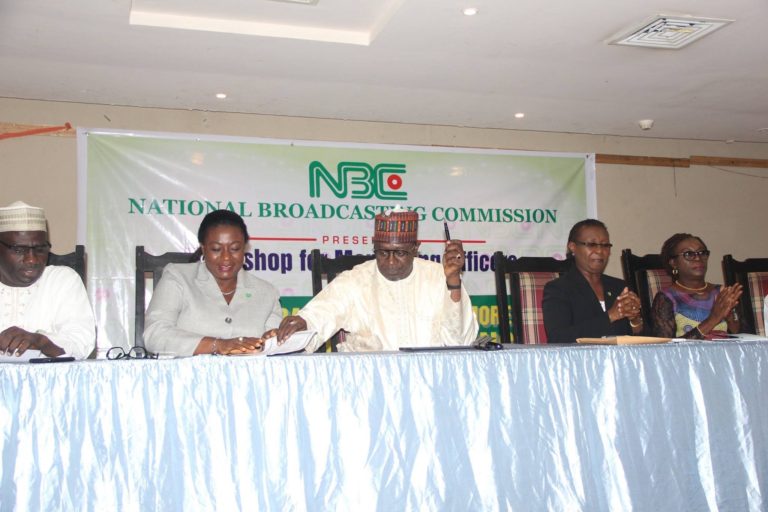
THE licence allowing Daar Communications, pioneer of the African Independent Television (AIT) and Raypower FM, to operate has been suspended indefinitely by the National Broadcasting Commission (NBC).

Modibbo Kawu, the commission’s Director-General, made this announcement on Thursday and said the “shut down order is until further notice”.

“Today the 6th of June, 2019, AIT/Rapower embarked on use of inflammatory, divisive, inciting broadcasts, and media propaganda against the government and, the NBC for performing its statutory functions of regulating the broadcast industry in Nigeria,” Kawu alleged.

“Consequently, after several meetings with management of Daar Communications Plc and many letters of warning, the NBC, today 6th June, 2019 took a decision to suspend the licence of Daar Communications Plc for failure to abide by the Commission’s directives, the provisions of the NBC Act Cap N11.”

Provisions of the NBC Act were cited to justify the suspension, as they empower the commission to revoke licences where the station has been used in a manner detrimental to national interest, where it operates not in accordance with the broadcasting code or public interest, and so on.

Kawu said the NBC, acting on monitoring reports and complaints from the public, has over the past two years invited the media company’s management to several meetings regarding its operations,
“particularly, Political Platform and Kakaaki aired on AIT”.

It was alleged in one of such meetings held in June 2017, he added, that in those programmes hate speech, divisive and inciting comments were used in discussing national issues, in violation of the NBC Act.

“Again, on 15th August, 2017, it became imperative to invite the company for yet another meeting on almost same issues,” he continued.

“Furthermore, while addressing another meeting on 7th February, 2018, we highlighted issues of concern to the Commission which indicated that the company had been breaching the provisions of Sections 3.1.2 and 3.1.3 of the Broadcast Code.  The company’s delegates in their response promised to abate the breaches and comply with the law.

“However, on October 18, 2018, the Commission was disturbed with the manner in which social media issues became part of the mainstream media unedited on AIT/Raypower, and was constrained to issue a generic letter to all broadcast stations on the need to exercise caution in the use of user generated content from the social media knowing how volatile and misleading the social media has become. The management of Daar Communications Plc thereafter took to the social media to display our official correspondences.

“Recently, the Commission’s monitoring reports on AIT/Raypower indicate the use of divisive comments accredited to the segment of ‘Kakaaki’, tagged, ‘Kakaaki Social’, where inciting comments like, ‘Nigeria  is cursed, we declare independent state of Niger Delta’, ‘Nigeria irritates me’, ‘this country is gradually Islamising’ and other similar slogans are used without editorial control in breach of the Broadcast Code.  We were therefore constrained to issue Daar Communications letters of warning dated May 27th, 2019.

“We also observed from monitoring reports that a documentary on the Presidential Election Tribunal, a pending election petition matter aired on AIT on Wednesday and Thursday, 22nd and 23rd May, 2019, without regard to the provisions of the Broadcast Code. The Commission, in line with its regulatory powers again cautioned AIT in another letter also dated 27th May, 2019.”

Instead of making amends however, the NBC boss added, Daar Communications “resorted to the use of media propaganda against the regulator.  Even the letters from the NBC were posted on social media platforms.”

The government agency further accused Daar Communications of being unprofessional, not paying its licence fees at the proper time, broadcasting partisan programmes, “heating the polity”, and using its channel to fight “personal battles contrary to the statutory requirements of the law”.

According to the Broadcast Code, an organisation whose licence is revoked may not re-apply for a new one, a suspension or revocation order is effective immediately, and the police may prosecute anyone “engaged in any form of broadcasting or in possession of any broadcast equipment or apparatus in the country without a licence or permit for the purpose”.

The NBC had earlier threatened to take disciplinary actions against Daar Communications due to its use of inciting and unfair social media comments in Kakaaki, and lack of professionalism.

Reacting during a press conference on Thursday morning, Raymond Dokpesi, founder of the media and entertainment company, described the agency’s actions as a form of persecution and urged the government to remove the NBC’s Director-General from office.

“Every broadcast which appears to them to offer a dissenting perspective to the position of government is reprehended as a threat to national interest,” Dokpesi said.

“Every reference and reportage from various sections of the country concerning injustice, inequality and iniquity is reprehended as a threat to national security.

“If we are critical of this government’s commitment to the tenets of democracy, it is because we have witnessed unabated interferences, harassment and intimidation by the agencies under the executive arm of government on the institutions of democracy and their principal officers.”

You have no moral right to talk about restructuring, Ango Abdullahi fires at IBB

0

ANGO Abdullahi, Secretary of the Northern Elders Forum’s (NEF) says the former military president; Ibrahim Babangida has no moral right to call for restructuring of Nigeria because he was one of those who tampered with the structure of Nigeria when he was in office.

In a report by the Herald, Ango Abdullahi particularly blamed the creation of several states on Babangida which according to him fractured Nigerian state through the political creation of divisions based on ethnic or regional basis.

Babangida during his Salah message to Nigerians released on Monday in Minna said that recent agitations in the country are enough for a restructuring.

But while reacting to Babangida’s statement Ango Abdullahi added that the former Military President should be humble enough to admit his mistakes and that of the military in dividing the country into several states.

“It is they, the Military, and General Babangida in particular that promoted the fracturing of the Nigerian State, through the political creation of divisions based on ethnic or regional basis. Therefore, the problem Nigeria has in terms of restructuring had been created by the Military, and he was right at the peak of it.

“So, if he wants restructuring, he should be humble enough to go back to the only structure we have in the independence which is regions because the Military created all this bit and pieces of States that are responsible for the problems we are having now,” he said.

Zamfara killings: Again, 16 persons killed, 14 injured in suspected bandits’ attack

Not fewer than 16 persons have been allegedly killed by bandits in Kanoma village in Maru Local Government of Zamfara State, as 14 others reportedly sustained injury during the attack.

Zamfara state recently has been in the news due to reported cases of killings by bandits.

District Head of Kanoma community, Alhaji Yahaya Mohammed,  said the bandits came in large numbers and shot indiscriminately at whoever crossed their way.

Governor Bello Matawalle, who paid a condolence visit to the people, condemned the incident, describing it as unfortunate and inhumane.

He has directed the immediate deployment of security operatives to arrest the perpetrators and pledged to end the security challenges confronting the state.

He has also directed the immediate transfer of all the victims who sustained injuries from Kanoma General Hospital, to the Federal Medical Centre, Gusau for better treatment.

The governor has suspended Emir of Maru, Alhaji Abubakar Ibrahim over his alleged involvement in the banditry activities as well as the district head, Mohammed.

In a statement issued by the Director-General Media and Publicity to the state governor, Alhaji Yusuf Idris, the government took the decision following petitions written against the leaders by the people

They were ordered to vacate their office pending the outcome of an investigation on the matter.


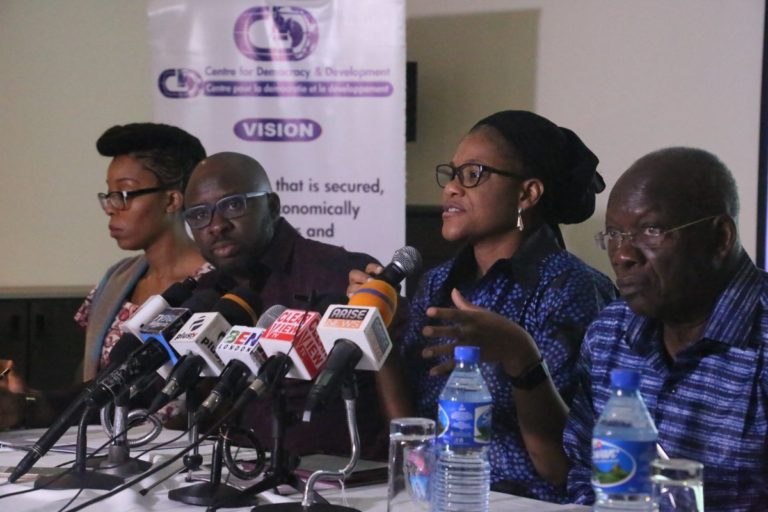
CDD to hold symposium as Nigeria celebrates 20 years of uninterrupted civil rule 

IN celebrating two decades of Nigeria’s return to civil rule, the Centre for Democracy and Development (CDD), a nonprofit organisation, is organising a symposium to reflect on how far the country has come.

The one-day event will be held in Abuja on Tuesday, June 11, the Centre stated in a press release signed by its director, Idayat Hassan.

It will be chaired by Adebayo Olukoshi, professor and director of Africa and West Asia office of the International Institute for Democracy and Electoral Assistance (IDEA).

A keynote address, titled “A Reflection on the 20 Years of Democracy in Nigeria”, is scheduled to be delivered by Mahmud Jega, deputy editor-in-chief of the Daily Trust Newspaper.

The panellists invited to discuss the topic How Best to Sustain Democratic Rule include Hafsat Abiola-Costello, president of the Women in Africa (WIA) Initiative; Ayisha Osori, executive director of the Open Society Initiative for West Africa (OSIWA); Onyinye Ough,  executive director of Step Up Nigeria; and Julius Ihonvbere, professor and former special adviser to former president Olusegun Obasanjo.

Other guests include the Aminu Tambuwal and Kayode Fayemi, governors of Sokoto and Ekiti states respectively.

According to the release, the event also presents an opportunity for CDD to celebrate the 10th and 2nd anniversaries of the death of Tajudeen Abdul-Raheem and Abubakar Momoh, two of its founding fathers.

“This year, 2019, marks the twentieth anniversary of Nigeria’s return to civilian rule and the country’s longest uninterrupted run on democracy since independence. This is a milestone for Nigeria, considering her 58 years of independence have only experienced democracy between 1960-1966, 1979-1983 and proudly now 1999-2019,” Hassan said.

“Between 1999-2019, the country has conducted six consecutive elections with some forms of improvement in election administration. The twenty years have witnessed an increase in the numbers of political parties, a rise of startups and civic techs, youth demography, opening civic space, some forms of infrastructure development, separation of powers and human rights.

“However, the twenty years have not been without challenges; they include the ethnicisation of politics, ethno-religious conflicts, corruption, poverty, insecurity, shrinking democratic space, booming population, amongst others.

“The questions on the mind of Nigerians at the moment is mostly how do we consolidate democracy such that the delivery of public goods and services shall be a right for all citizens and not a privilege. What practical steps do we take to sustain a longer run of democracy with all the variables suggesting otherwise and how do we collectively as a nation achieve a Nigeria we want?”

The CDD was registered in Nigeria in 1999 as a research, advocacy and capacity building organisation with focus on policy advocacy, democratic governance, human security, people-centred development, and human rights.

BPE denies fresh verification of ex-PHCN staff

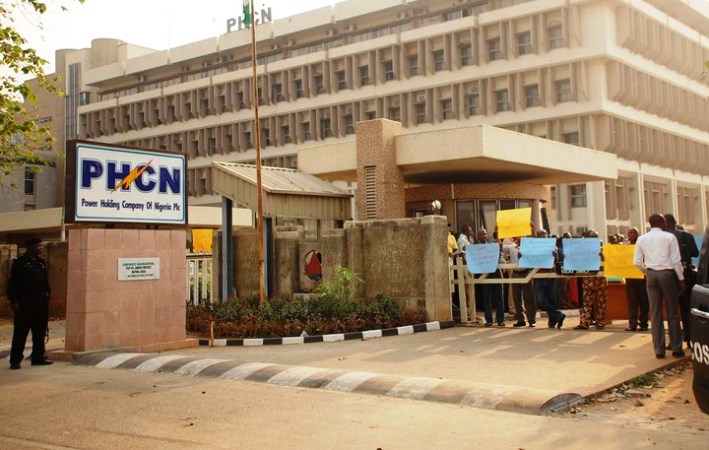
THE Bureau of Public Enterprises (BPE) on Thursday denied conducting a fresh verification exercise for former staff of the defunct Power Holding Company of Nigeria (PHCN).

Amina Tukur, BPE Head of Public Communications, revealed this on Thursday  in Abuja in a rejoinder titled “Re-BPE-Notice to all disengaged staff of ex-PHCN staff.”

The Federal Government had earlier disbanded the old PHCN through the BPE, functioning as the Power Generation Companies (GENCOs), Distribution Companies (DISCOS) and the Transmission Companies of Nigeria (TCN).

The United Labour Congress (ULC), as at 2018 still recognises 48,000 as the number of sacked PHCN employees with no reference to new verification.

She stated that the BPE has a reputation of publicising its verification exercise especially with the knowledge of the relevant labour union such as the National Union of Electricity Employees (NUEE) and the Senior Staff Association of Electricity and Allied Companies (SSAEC).

“For the avoidance of doubt, the BPE is not conducting another verification exercise for the defunct staff of the PHCN and is not in any way connected with the purported verification by the group,” says Tukur.

“It must be noted that each time the Bureau carries out verification of former staff of the defunct PHCN, adequate publicity is carried out with the involvement of the NUEE and the SSAEC. But in the purported verification by the group these are absent.

“BPE wishes to dissociate itself from the purported verification and warns all former staff of the PHCN and the general public to beware! To be warned is to be forearmed!”


African Union suspends Sudan over military crackdown

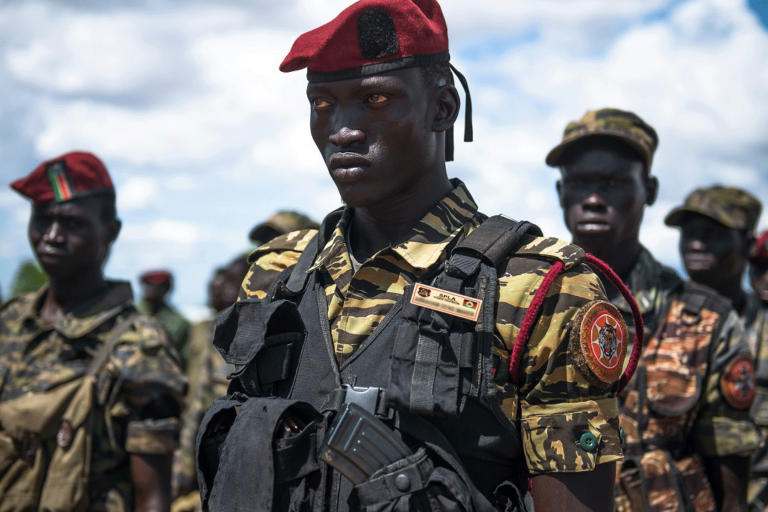
THE African Union (AU) has suspended Sudan‘s membership days after the military launched a brutal crackdown on protesters that killed dozens of people in the country.

The AU’s Peace and Security Department said in a post on Twitter on Thursday said that Sudan’s participation in all AU activities would be suspended with immediate effect – “until the effective establishment of a civilian-led transitional authority,” which it described as the only way to “exit from the current crisis”.

The announcement followed an emergency meeting by the AU in Addis Ababa, Ethiopia, after the violent dispersal of a protest camp in the Sudanese capital, Khartoum, began on Monday.

At least 108 people have been reportedly killed and more than 500 wounded.

While the Central Committee of Sudanese Doctors (CCSD) alleged that over 40 bodies were pulled from the river Nile on Tuesday and taken to an undisclosed location by the Paramilitary Rapid Response Force (RSF)

Sudan’s pro-democracy leaders have vowed to continue their campaign of civil disobedience until the Transitional Military Council (TMC) –which has ruled Sudan since long-time leader Omar al – Bashir was overthrown in a coup in April- is removed and killers of protesters brought to justice.

In addition, the Sudanese Professional Association on Thursday urged protesters to block main roads and bridges to “paralyse public life” across the country in retaliation for the military crackdown.

The United Nations on Thursday pulled all non-critical members of staff from Sudan amid concerns over violence amidst plans for Abiy Ahmed Ethiopian Prime Minister arrival in Khartoum on Friday to launch mediation efforts.

Health bills the 8th National Assembly failed to pass

AS today marks end of the term for the eighth National Assembly, The ICIR  highlights major health bills that could have improved health status of Nigerians which the lawmakers failed to pass.   

The 8th National Assembly comprising of the House of Representatives and the Senate was inaugurated on 9th June 2015 and will officially terminate on Saturday 8th June. The 9th Assembly would be inaugurated on Tuesday, June 11, as proclaimed by President Muhammadu Buhari.

The health bills which the Assembly failed to pass include the followings:

Mental Health Bill

One of the bills that could significantly improve the mental health of Nigerians is Mental Health bill, sponsored by Ahmadu Abubakar, a senator representing Adamawa South. The bill seeks to provide for the enhancement and regulation of Mental Health and Substance Abuse Services. It also aims to protect persons with Mental Health challenge and to establish the National Commission for Mental and Substance Abuse Services, for effective management of mental health in Nigeria.

But the bill has only passed the second reading. In fact, other bills addressing mental health issues during the eighth Assembly were not fully debated.

In 2015, a bill sponsored by Senator Kashamu Buruji, a  Peoples Democratic Party’s member representing Ogun East Senatorial District, was struck out at the first reading in October 2015. The bill titled, “Mental Health Bill 2015,” aimed at tackling the source, causes and effects of mental sicknesses. A similar bill named  HB 554: Nigeria Mental Health Bill and sponsored in 2016 by Samuel Okon Ikon was read only once in June 2016.

However,  the assembly also failed to repeal a 60-year-old lunacy act.

Campaign Director of Mentally Aware Nigeria Initiative (MANI), Jolaade Phillips told The ICIR on the 2018 World Mental Health Day that if the Mental Health Bill is enacted, the rate of stigmatization and discrimination against the illness will reduce.

“As a country, we should have a Mental Health Act if we want to improve the status quo,” he said.

Sickle Cell Bill

Currently, Nigeria has the highest sickle cell prevalence in the world, yet there is no legislation to control and manage the disease in the country.

A bill called Sickle Cell Anemia (Prevention, Control and Management) Bill was sponsored by Senator Sam Egwu, representing Ebonyi North, Ebonyi State was first read on December 3, 2015. The second reading was two years after – April 5, 2017.

The bill afforded intending couples an opportunity to attend a special clinic to carry out blood genotype tests and receive counselling based on the results.

The bill was referred to the Senate Committee on Health, but since then nothing has been heard of the bill and the Committee report is yet to be submitted.

Similarly, a bill titled “SB 414: The Compulsory Haemoglobin-Genotype Screening Test, 2017″ was sponsored by two senators, Ahmed Salau Ogembe and Ovie Omo-Agege. The bill seeks to provide for compulsory Haemoglobin-Genotype screening test before a marriage conducted under the Marriage Act and before registration of new births. The objectives of the bill include avoiding anxieties, pains and deaths associated with the disease, as well as to improve the lives of citizens who live with it.

After its first and second reading held in 2017, the bill was transferred to Senate Committee on Health. The Senate has been awaiting the committee report till date.

Nigerian Health Watch had written in 2017  that making genotype testing compulsory would improve the lives of the people living with the disease.

Lifestyle Bill

This bill was sponsored by Abubakar Yunusa Ahmed, a member of the House of Representatives in 2018 for the prevention of lifestyle diseases. The objective of the bill is to prevent lifestyle diseases through the regulation of the sale, consumption and advertisement of unhealthy processed foods, drinks and beverages which are high in calories, sugar, saturated salt and sodium.

Lifestyle is key to the quality of health.  According to a journal published on the National Center for Biotechnology Information (NCBI), health and quality of life are correlated to lifestyle,

“The relationship between lifestyle and health should be highly considered. Problems like metabolic diseases, joint and skeletal problems, cardiovascular diseases, hypertension, overweight, violence and so on, can be caused by an unhealthy lifestyle,” the journal stated.

But the bill that seeks to regulate the consumption of certain foods, drinks and beverages in order to reduce the prevalence of diseases associated with lifestyle has not made it to the third reading.

According to Policy and Legal Advocacy Centre Plac, an organisation that works to strengthen democratic governance and citizens’ participation in Nigeria, the bill was read the first and the second time in February and July 2018 respectively, it was then referred to the committee on healthcare services. Till date, the committee is yet to submit a report.

DPR withdraws licenses of six oil blocks over ‘legacy debts’

ON Thursday, Nigeria’s petroleum regulator Department of Petroleum Resources, DPR, announced the revoking of six oil bloc licences belonging to five oil firms in a bid to address the nation’s legacy debts.

The directive which was issued in a statement by the industry regulator is coming on the heels of the Federal Government’s resolve to take an aggressive stance to “recover legacy debts” that are owed the country by oil companies. It also includes rescinding licenses of oil blocs that are not being actively developed.

Legacy debts refer to debts that were incurred and inherited as part of an asset.

The Federal Government withdrawals of the five Oil Mining Licenses, OML, and one Oil Prospecting Lease, OPL, in the onshore, shallow water and deepwater Niger Delta basin was due to alleged non-payment of royalties.

The assets affected include OML 98 controlled by Pan Ocean Oil Corporation, OMLs 120 and 121, held by Allied Energy Plc, now Erin Energy which is currently bankrupt, OML 108, owned by Express Petroleum & Gas Company Limited, and OML 110 held by Cavendish Petroleum Nigeria Limited.

The notice also said oil prospecting license, OPL 206 was revoked. It was previously held by Summit Oil International, a company owned by the family of late Moshood Abiola. 

However, the Pan Ocean Joint Venture, JV, in OML 98 has control of only six fields.

In February, the Nigerian National Petroleum Corporation, NNPC, had sent a letter to companies through its debt-collection arm, citing what it called outstanding royalties and taxes for oil and gas production.

Royal Dutch Shell, Chevron, Exxon Mobil, Eni, Total and Equinor were each asked to pay the central government between $2.5 billion and $5 billion, according to reports.

A total of 42 oil block licences held by some international and indigenous operators is due to expire this year, according to data obtained from the DPR.

The renewal of the licences is expected to boost government revenue and encourage more investment in Nigeria’s oil and gas industry.

Eighth National Assembly to be terminated by Saturday, June 8, declares Buhari

LAWMAKERS of the eighth national assembly will cease to enjoy the powers and privileges that come with the elective offices by the midnight of Saturday, June 8, according to a presidential proclamation.

Mohammed Sani-Omolori, clerk to the national assembly, to whom the proclamation letter was addressed confirmed receiving the document to journalists on Thursday.

Another letter also transmitted to the clerk states that the ninth assembly will commence officially on Tuesday, June 11.

“I just want to confirm that I have received a proclamation from the President of the Federal Republic of Nigeria,” Sani-Omolori told reporters.

“One, on the dissolution of the eighth National Assembly, the other one on the convening of the first session of the ninth National Assembly. The proclamation of the dissolution of the eighth National Assembly takes effect from 12 midnight of 8th June.

“By implication, from eighth of June by 12 midnight, the eighth National Assembly stands dissolved. Similarly, the ninth National Assembly will be inaugurated and first sitting will be held on Tuesday 11th of June by 10 a.m. in the National Assembly complex.”

Sani-Omolori also clarified that the document is separate from a previously circulated correspondence, dated May 30, from the president also claiming to dissolve the assemblies but which was not addressed to any official.

Last Thursday, the Senate had concluded its business session and adjourned till today for its valedictory session.

According to the orders of the day for the House of Representatives, the session will feature valedictory speeches by selected lawmakers and caucus leaders, speeches by principal officers including the speaker and his deputy, a goodwill message, an appraisal of the assembly’s legislative agenda by Clement Dakas, professor and dean of law at the University of Jos, valedictory handshakes, as well as an adjournment ‘sine die’ (indefinitely) by Femi Gbajabiamila, the chamber’s House leader.

The eighth assembly was inaugurated on June 9, 2015.