Home Blog Page 236

World population day: Five signs that Nigeria is growing faster than its infrastructure

AS Nigeria’s population approaches 237.5 million in 2025, with an annual growth rate exceeding 2.1 per cent and a median age of 18.1, according to the World Population Review, the strain on public infrastructure has become a source of concern.

Population analysts believe that Nigeria’s gross domestic product (GDP)  is not growing at the same pace as Nigeria’s population expansion.

While this demographic momentum could unlock a demographic dividend, research experts believe public infrastructure, including electricity, roads, schools, and healthcare, is currently not receiving the expected attention from the government.

Nigeria is not certain to see a serious financial commitment from the government towards the expansion of its largely inadequate infrastructure in 2024, PwC said in its Nigeria Economic Outlook 2024 report issued recently.

“The government will also struggle with the maintenance of the few infrastructures that exist as it stakes much hope on other funding sources rather than financing projects from its purse.

“Infrastructure funding may remain insufficient in 2024,” PwC noted

A recent data report by Dataphyte shows that infrastructure investments currently make up only about 30–35 per cent of Nigeria’s gross domestic product (GDP), below the World Bank benchmark of 70 per cent for developing economies.  This development some analysts say put pressure on Nigeria’s public infrastructure and causes congested transport systems, overcrowded classrooms and  housing deficits.

Also, the National Bureau of Statistics (NBS) recent report showed 133 million Nigerians in different categories of poverty and lacking access to basic public services like education, healthcare, housing, and sanitation issues directly tied to underinvestment in infrastructure.

As World Population Day prompts global reflection, analysts believe that unless strategic, data-driven investments are made, the hopes tied to Nigeria’s burgeoning youth population risk slipping away.

The ICIR looks further into areas that the government could work on to address the strain on public infrastructure as a result of the growing population.

Traffic gridlocks

Major Nigerian cities such as Lagos, Abuja, and Port Harcourt are increasingly paralysed by severe traffic congestion. With population growth far outpacing infrastructure development, average commute times in Lagos have surged to 3–5 hours daily, according to the Lagos Metropolitan Area Transport Authority (LAMATA).

The absence of efficient mass transit systems has forced millions to rely on private vehicles and informal transport options, leading to high risks of robbery. According to a 2023 report by the National Bureau of Statistics (NBS), over 60 per cent of Lagos residents face daily transport challenges due to poor road networks and inadequate public transit. The World Bank also notes that urban infrastructure in Nigeria is not keeping up with the pace of urbanisation, which is growing at 4.2 per cent annually, one of the highest in the world.

Without urgent investment in modern transit systems, expanding roads alone will not solve the deep-rooted urban mobility crisis, experts say.

Overcrowded classrooms 

Nigeria is grappling with a severe infrastructure crisis in its education sector, currently facing a staggering shortage of 43,456 classrooms nationwide. Even among the existing facilities, only about 75 per cent are reported to be in good or usable condition. This structural inadequacy has led to extreme overcrowding in many public schools, particularly in the Federal Capital Territory (FCT) and other urban and rural areas.

While UNESCO recommends a maximum of 30 to 35 students per classroom to ensure quality learning, the reality in many Nigerian schools paints a much bleaker picture. Classrooms in several government-owned schools are often packed with between 80 to 100 pupils, a situation that significantly compromises the learning environment.

Educational experts have repeatedly raised concerns about the long-term implications of these conditions. They argue that overcrowded classrooms limit student engagement, increase teacher fatigue, and make it nearly impossible to cater to individual learning needs. Ultimately, the lack of adequate classroom infrastructure continues to deepen the crisis in Nigeria’s public education system, undermining efforts to deliver inclusive and quality education for all.

Failing power grid 

Despite having an installed electricity generation capacity of approximately 13,500 megawatts (MW), Nigeria struggles to deliver consistent power to its citizens, with only about one-third of that capacity being effectively generated and transmitted to end users.

The country’s national grid continues to be plagued by systemic inefficiencies, including dilapidated infrastructure, fuel supply issues, and poor coordination among power sector stakeholders.

The ICIR reports that in 2024 alone, the grid suffered frequent collapses, averaging at least one major outage per month, disrupting lives and businesses across the nation. These persistent outages have led to an estimated annual economic loss of nearly $29 billion, further straining Nigeria’s already fragile economy.

As a result, many households, institutions, and commercial operators have turned to alternative power sources. While these provide a temporary solution, they come with significant costs: high fuel prices, ongoing maintenance expenses, and environmental consequences due to carbon emissions and noise pollution.

Housing shortages 

Rapid urbanisation across Nigeria has outpaced infrastructure development, leading to a staggering housing deficit estimated at over 17 million units. With cities like Lagos, Abuja, and Port Harcourt experiencing continuous population surges, the demand for affordable and adequate housing far exceeds the supply.

Formal housing remains inaccessible to a large portion of the population due to high construction costs, bureaucratic hurdles, and limited access to mortgage financing. As a result, many Nigerians are left with few options but to reside in overcrowded informal settlements, often lacking basic amenities such as clean water, sanitation, and proper drainage.

The ICIR reports that many middle-income earners are still struggling to access affordable homes, citing financial difficulties, rising inflation, and the weakening of the naira as major concerns.

Others resort to renting poorly built or decaying apartments at exorbitant prices, stretching their incomes and exposing them to unsafe living conditions. Urban planning experts warn that this crisis not only increases the risk of homelessness but also contributes to rising public health concerns, as densely populated and unsanitary environments become breeding grounds for diseases.

Speaking to The ICIR, Stephen Jagun, a housing expert, argued that the government should not focus on building houses, as such efforts rarely meet public demand and often benefit only top officials. Instead, he advised that the government should prioritise making land accessible and investing in infrastructure development across the country.

Utilities and waste management under strain

Frequent blackouts, inconsistent water supply, and growing piles of uncollected waste have become a daily reality for many Nigerians, particularly in densely populated urban centres. Experts say these failures are not isolated but rather interconnected symptoms of deeper systemic problems.

The ICIR reports that communities in Nyanya and Karshi, within the Abuja Municipal Area Council (AMAC), remain burdened by heaps of decaying waste due to inadequate evacuation. Despite the health risks, the responsible agency, the Satellite Town Development Department (STDD), failed to intervene.
Waste management systems struggle to operate efficiently amid crumbling infrastructure.

Emmanuel Kilaso, an expert in environmental and sustainable development, emphasised that effective waste management depends on strategically placing waste collection bins to ensure proper disposal while limiting exposure to harmful emissions. He noted that poor waste handling poses serious risks to both public health and the environment.

According to him, one of the major concerns is air pollution resulting from the burning of mixed waste such as plastics and hazardous materials, which releases toxic chemicals into the air and contributes to respiratory illnesses and other health complications.

Bridging the gap

Unchecked population growth does not inherently hinder national development; however, without corresponding infrastructure and services, the strain on essential systems becomes evident. Experts have identified key areas requiring urgent attention to address this imbalance.

These include increased investment in infrastructure such as roads, housing, schools, and utilities; the adoption of data-driven urban planning methods to better anticipate and manage population expansion; and the decentralisation of utilities through approaches like mini solar grids and state-led power solutions to reduce the burden on the national grid.

They argued, there is a need to scale up funding for education and healthcare to meet growing demand and improve national planning.

“We cannot conceal the fact that with the current inadequate awareness on consequences of population at citizenry and policy levels as well as the unattended impact on national planning, Nigeria has not efficiently harnessed its population to achieve development goals,” the Executive Director of Civil Society Legislative Advocacy Centre(CISLAC), Auwal Ibrahim Musa, said.

Nurses threaten strike over alleged exclusion from federal allowance

0

THE National Association of Nigerian Nurses and Midwives, Federal Health Institutions sector (NANNM-FHI), has threatened industrial action over what it described as deliberate exclusion of its members from the Federal Government’s newly approved allowance structure for healthcare workers.

At an emergency National Executive Council meeting held on Thursday, July 11, in Abuja, the association rejected a circular issued by the National Salaries, Income and Wages Commission, according to the News Agency of Nigeria.

The association said the commission ignored the critical contributions of nurses in the country’s federal health institutions.

The controversial circular No. SWC/S/04/S.218/III/646, dated June 27, and titled “Review of Allowances for Medical/Dental Officers in the Federal Public Service,”  outlined revised benefits for doctors and dentists but made no mention of nurses, who the group said constituted between 60 and 70 per cent of Nigeria’s healthcare workforce.

Describing the development as provocative and discriminatory, NANNM-FHI President, Morakinyo-Olajide Rilwan, said the government’s continued neglect of nurses’ welfare would no longer be tolerated.

According to him, the document failed to address critical allowances due to nurses, including shift, uniform, specialist, call duty, and retention allowances.

Rilwan further noted that although a 2009 circular approved 30 per cent of basic salary as shift allowance for nurses, they still receive just 8.5 per cent. 

“Nurses run intensive shifts, spending extended hours with patients and their relatives. Yet, our current shift allowance is just 8.5 per cent of our salary, despite a 2009 circular approving 30 per cent of basic salary,” Rilwan said.

He said the association was not consulted before the circular was issued, despite the far-reaching impact of the policy. 

He stressed that among the key issues the circular failed to address were the shift allowance, uniform allowance, call duty, retention allowance, and specialist allowance for nurses.

Rilwan explained that nurses were required to change uniforms multiple times daily due to the nature of their duties.

“Uniforms are essential, not optional. At a minimum, we need three uniforms a week,” he said.

The association also condemned the selective application of specialist allowances, calling it a deliberate act of exclusion. 

It further called for the immediate reconstitution of the Governing Board of the Nursing and Midwifery Council of Nigeria, which he said had been inactive for years. 

The group demanded that nurses be granted representation on the boards of Federal Health Institutions, given their numerical and professional significance.

It expressed dismay over the removal of nurse educators, particularly those on Grade Levels 7 and 8, from clinical functions, despite their frontline role in student nurse training.

“The same circular states that trainers should be paid. Yet, those training others are being sidelined,” it said.

Among other demands, the association called for internship placements for university-trained nurses to facilitate their eligibility for the National Youth Service Corps (NYSC), as well as the establishment of a Department of Nursing within the Federal Ministry of Health.

“There should be directorates for training, statistics, and clinical practice within that framework,” it said.

While reiterating that nurses remained open to engagement, the group warned that continuous government silence would only push it closer to industrial action.

Why NNPC refineries may never work again — Dangote

0

THE chairman of the Dangote Group, Aliko Dangote, has expressed doubts that the refineries under the management of the Nigerian National Petroleum Company Limited (NNPCL) would ever work again.

The billionaire businessman reportedly expressed concern while hosting members of the Global CEO Africa from the Lagos Business School, after a tour of the Dangote Petroleum Refinery in Lekki, Lagos, on Thursday, July 10.

He pointed out that the NNPCL facilities,  Port Harcourt, Warri, and Kaduna refineries, despite gulping up to $18 billion, have failed to work amid recent turnaround maintenance.

He likened the turnaround maintenance of the refineries to trying to modernise a car built 40 years ago, when technology has advanced.

“(The turnaround maintenance) is like you trying to modernise a car built 40 years ago, when technology and everything have changed. Even if you change the engine, the body will not be able to take the shock of that new technology engine,” Dangote said.

He hinted that the 650,000-capacity Dangote Refinery, which he built after the government of late President Umar Yar’adua aborted his acquisition of the state-owned refineries, now has over 50 per cent of its output dedicated to Premium Motor Spirit (petrol).

He said the government refineries committed just 22 per cent of their production to petrol.

Dangote recalled how he and his team returned the refineries to Yar’adua, a few months after former President Olusegun Obasanjo left office in 2007.

According to him, the former managers of the NNPCL had told Yar’Adua that Obasanjo sold the facilities below their costs as a parting gift to him.

“The refineries that we bought before, which were owned by Nigeria, were doing about 22 per cent of PMS. We bought the refineries in January 2007. Then we had to return them to the government because there was a change of government.

“And the managing director at that time convinced Yar’adua that the refineries would work. They said they just gave them to us as a parting gift or so. And as of today, they have spent about $18 billion on those refineries, and they are still not working. And I don’t think, and I doubt very much if they will work,” he said.

The former NNPC Group Managing Director, Mele Kyari,  at the tail end of last year, declared that Port Harcourt has been operational.

However, the call to privatise the government-owned refineries, under the management of NNPCL, has been intensified following the recent shutdown of the 60,000 barrels-per-day old Port Harcourt refinery, six months after it was declared operational.

The Warri refinery was also shut down one month after Kyari declared it open in December.

The ICIR reported on May 24 that the NNPCL officially announced a temporary shutdown of the Port Harcourt Refining Company for scheduled maintenance.

The shut down was to ensure the maintenance and assessment activities of the refinery are carried out efficiently and transparently, the NNPCL said, noting that it was working closely with all relevant stakeholders, including the Nigerian Midstream and Downstream Petroleum Regulatory Authority (NMPDRA), however, no notice has been given as for the reopening of operational since then.

Ponzi Scheme: SEC warns of growing threat to Nigerian stock market

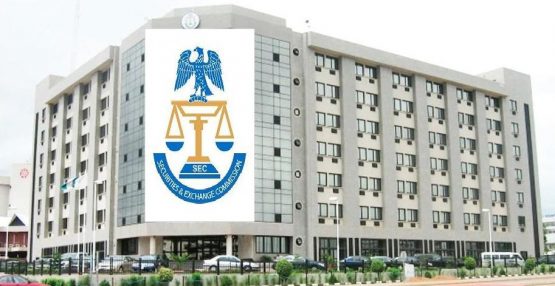
THE Securities and Exchange Commission (SEC) said the growing threat of digital assets fraud poses a significant challenge to market integrity and undermines investor confidence amid concern over Nigerians’ loss of fortunes to Ponzi schemes.

The SEC Director General, Emomotimi Agama, said this at an event in Abuja on Thursday, July 10, to mark the African Union Anti-Corruption Day.

“Today, as digital innovation transforms financial systems, we face new challenges, particularly the rise of virtual asset fraud and sophisticated investment scams exploiting unsuspecting investors.

“These threats undermine market integrity, erode trust, and divert resources meant for sustainable development,” Agama said.

He cited that the Investment and Securities Act (ISA) 2025 introduced key provisions to regulate virtual assets (cryptocurrencies, digital tokens, and other blockchain-based assets) in Nigeria.

He maintained that all Virtual Asset Service Providers (VASPs) (exchanges, custodians, brokers) must obtain SEC approval and meet capital, governance, and cybersecurity standards.

Urging all the platforms to warn investors about volatility, fraud, and regulatory risks, he warned that there would be stiff penalties for market manipulation, insider trading, and Ponzi schemes.

“The ISA 2025 provides a comprehensive legal framework for virtual asset regulation, balancing innovation, investor protection, and financial stability. The SEC will continue to issue guidelines to ensure compliance while fostering a secure digital asset ecosystem.

“We urge all stakeholders—governments, private sector players, civil society, and citizens—to join forces in promoting transparency, accountability, and ethical practices. Together, we can build resilient markets that drive Africa’s prosperity”, he added.

Following the recent scam on a digital investment platform, Crypto Bridge Exchange (CBEX), where Nigerians were said to have lost about N1.3 trillion, the SEC has been blamed for its inefficiency in making the necessary campaigns to enlighten and enforce regulations against Ponzi scheme operators.

At its plenary on Wednesday, July 9, the Nigerian Senate, upon launching a probe into the CBEX scam, declared a state of emergency on the matter.

The Red Chamber blamed the rise of Ponzi-style investment schemes on regulatory failures and weak financial oversight, warning that the ripple effects—including rising suicide rates and growing public mistrust—now threaten Nigeria’s social and economic stability.

It expressed worries that the N1.3 trillion lost to CBEX alone was not an isolated case but part of a disturbing pattern dating back to MMM in 2016 and MBA Forex in 2020.

The Senate stressed that Nigerians are being robbed repeatedly, urging the regulatory bodies to wake up, as the citizens trust them to act and not to sleep.

At the event on Thursday, the Chairman of the Economic and Financial Crimes Commission (EFCC), Ola Olukoyede, described virtual asset fraud as a fast-evolving threat to national economic security.

“Another rising criminal engagement that has the potential to outpace, even money laundering, on the continent is virtual assets and investment scams,” he said.

Akpabio sacks Natasha as Diaspora, NGO Committee chair

0

SENATE President Godswill Akpabio has removed the senator representing Kogi Central, Natasha Akpoti-Uduaghan, as chairperson of the Committee on Diaspora and Non-Governmental Organisations.

He replaced the Kogi lawmaker with her counterpart from Akwa Ibom North-East, Aniekan Bassey.

Akpabio announced the changes during the plenary on Thursday, July 10.

He also hinted at minor shake-ups involving vice chairmen of various committees in the coming days.

Natasha, who was suspended by the Senate, was originally the chairperson of the Senate Committee on Local Content.

The position was withdrawn, and she was reassigned to the Diaspora and NGO Committee. With the latest development, Akpoti-Uduaghan, a first-time senator, will resume without heading any committee.

Crisis began for her at the Red Chamber on Thursday, February 20, when she protested against the reassignment of her seat in the Senate without prior notice. 

She resisted the change, calling it an attempt to silence her, while the Senate Chief Whip, Tahir Monguno, justified the move, citing Senate rules and party affiliations.

Her protest led to a heated exchange with Akpabio, who ordered the sergeant-at-arms to remove her from the chamber.

Amid the dispute, in an interview on Arise Television, she accused Akpabio of making repeated sexual advances toward her, which she said she rejected. 

She alleged that her refusal was the reason behind their frequent clashes with Akpabio in the Senate.

According to her, some of Akpabio’s love proposals were made with her on the phone and face-to-face in her husband’s presence. She further alleged that she had all the evidence for her claims.

In March, the Nigerian Senate suspended Akpoti-Uduaghan for six months, despite an interim order from a Federal High Court in Abuja restraining the Senate from investigating her actions.

Her suspension was based on her rejection of the seat allocated to her in the chamber, not because of her sexual harassment allegation against Akpabio.

Amid her suspension, a petition to recall her from the Senate was submitted to the Independent National Electoral Commission (INEC) by a group of voters from her district. 

The petition dated 21 March 2025 was submitted on Monday, March 24, at the INEC headquarters in Abuja. 

However, in a statement on Thursday, April 3, INEC ruled that the petition failed to meet constitutional requirements.

The election umpire emphasised that the petition was reviewed in line with its 2024 Regulations and Guidelines for Recall, ensuring due process and fairness. 

While serving her suspension, the Federal Government sued her for alleging that former Kogi State Governor Yahaya Bello and Akpabio planned to assassinate her.

The ICIR reported that in the suit, a Federal Capital Territory (FCT) High Court on Thursday, June 19, granted her a ₦50 million bail.

The bail came after she pleaded not guilty to an alleged defamation charge preferred against her.

In the ruling, the judge, Chizoba Orji, granted the female lawmaker bail with one surety, who must be a “responsible resident” of the FCT and have landed property in the nation’s capital.

The judge adjourned the case to September 23, 2025, for continuation of the trial.

In a similar suit, a Federal High Court in Abuja on Monday, June 30, granted bail to her on self-recognition.

The senator finally got relief on Friday, July 4, when a Federal High Court (FHC) in Abuja ordered the Nigerian Senate to recall her.

The judge, Binta Nyako, described as extreme the six-month suspension imposed on the lawmaker by the Senate.

The judge faulted the provision in Chapter 8 of the Senate Standing Rules, as well as Section 14 of the Legislative Houses, Powers, and Privileges Act, declaring both to be overextending.

The court, however, fined her N5 million for contempt.

Despite the court’s ruling condemning her suspension, the Senate has outlined conditions for her reinstatement.

The Senate spokesperson, Yemi Adaramodu, said that the Red Chamber would not reinstate her immediately.

Adaramodu noted that the court judgment did not override the Senate’s constitutional powers to discipline its members.

Akpoti-Uduaghan vowed to resume at the Senate on Tuesday, July 8, but she failed to do so.

Supreme Court affirms Okpebholo as Edo governor

0

THE Supreme Court has affirmed the victory of Edo State Governor Monday Okpebholo in the governorship election conducted in the state on September 21, 2024.

A five-member panel of the apex court, led by Mohammed Garba, on Thursday, July 10, dismissed as lacking in merit an appeal by the candidate of the Peoples Democratic Party (PDP), Asue Ighodalo.  

Ighodalo has sought to nullify the outcome of the election, in which the Independent National Electoral Commission (INEC) declared Okpebholo the winner.

Garba, in his ruling, said the appellants failed to prove that Oklebholo did not secure lawful votes in the election and did not properly establish that the decision of the tribunal and the court of appeal was perverse.

The court ruled that it was absurd for the PDP and Ighodalo to seek nullification or be declared winners, given that they didn’t challenge the results in all polling units.

“The appeal is hereby dismissed for lacking in merit and the judgment affirms the decision of the Tribunal and Court of Appeal,the apex court ruled.

Recall that the Court of Appeal in Abuja had earlier affirmed Okpebholo as the state governor.

A three-member panel of the court, led by Mohamed Danjuma, on May 29 unanimously ruled in Okpebholo’s favour, affirming the decision of the Edo State Governorship Election Petition Tribunal, which earlier validated the governor’s victory.

The Court of Appeal dismissed the appeal by the PDP and its governorship candidate, Ighodalo, to affirm Okpebholo’s victory.

Allegations of overvoting, malpractices and non-compliance with the Electoral Act were tabled before the appellate court by Igbhodalo against the outcome of the disputed election.

Okpebholo was declared the election winner on September 22, 2024.

The INEC Returning Officer for the poll, Faruk Kuta, made the declaration at the State Collation Centre in Benin City.

Kuta, a professor and vice-chancellor of the Federal University of Technology,  Minna, Niger State, said Okpebholo polled 291,667 votes to defeat his closest rival, Ighodalo, who scored 247,274 votes.

The candidate of the Labour Party (LP), Olumude Akpata, came a distant third with 22,763 votes.

Court sentences 16-year-old girl to life imprisonment for killing university lecturer

0

A HIGH Court in Niger State has sentenced 16-year-old Joy Afekafe to life imprisonment for the murder of Funmilayo Adefolalu, a Biochemistry lecturer at the Federal University of Technology (FUT), Minna. 

The judgment came nearly two years after the death of the lecturer, who was found in her home lying in a pool of blood, with multiple stab wounds and visible blunt force injuries.

Delivering judgment on Wednesday, July 9, the presiding judge, Mohammed Mohammed of the State High Court 4 found Afekafe guilty of culpable homicide and armed robbery, both offences punishable under Sections 221 and 298 of the Penal Code. 

However, the justice noted that in accordance with Nigerian law, which prohibits the death penalty for persons under 18, the girl was sentenced to life imprisonment and an additional 10 years for robbery.

“From the evidence before me, I am satisfied that the prosecution has proved the offences of culpable homicide punishable with death and armed robbery against the convict.

“However, as the convict was below 18 years old at the time of committing the offence, a sentence of life imprisonment is imposed in line with the provisions of the Penal Code,” Mohammed said.

Backstory

The murder occurred on October 28, 2023, and came to public attention the following day when concerned church members and friends found Adefolalu lying in a pool of blood inside her Gbaiko residence in Minna. 

According to reports, two bloodstained knives were discovered beside her body, and she was pronounced dead at IBB Hospital, Minna. 

The state Police Public Relations Officer, Wasiu Abiodun, disclosed the arrest of the prime suspect, Afekafe, saying two other suspects connected to the crime were at large. 

Abiodun added that the then 14-year-old Afekafe was a domestic help to the late Adefolalu for almost three weeks, adding that the suspect confessed to how she conspired with her two classmates, Walex and Smart, in what she later described as a plan to “deal with” her former employer for accusing her of theft.

The assailants then beat, stabbed, and bludgeoned the woman with a wooden stool, while also stealing valuables, including her mobile phone, laptop, foreign currency, and the battery of her car before fleeing the scene.

Afekafe was later arrested in the Gbeganu area of Minna, while her accomplices remain at large. 

“Afekafe said they went to the lecturer’s residence on October 28, 2023, around 1600hrs, with a motorcycle and she surfaced at the gate, while the lecturer opened the gate for her.

“Walex and Smart later entered, beat and hit the lecturer’s head with a stool and stabbed her with a knife brought by Walex while Smart took another knife from the kitchen, and stabbed her severally,” said the police.

Strike: FCTA mulls third term extension for public primary schools

THE Federal Capital Territory Administration (FCTA) is planning to extend the academic calendar for public primary schools to enable pupils to recoup the time lost during the three-month-old strike embarked by their teachers.

According to Daily Trust, a senior official at the FCT Education Secretariat confirmed that plans were underway to extend the ongoing third-term academic session for public primary schools.

“We are already discussing it, and the secretariat will meet with the NUT to come up with something that will be helpful to the pupils who have been home for so long,” the official reportedly stated.

The ICIR reported that the FCT branch of the Nigeria Union of Teachers (NUT) suspended its three-month strike on Tuesday night and instructed members to resume academic activities immediately.

The Local Education Authority Schools in the FCT were shut down towards the end of the second term in March when teachers embarked on strike.

Their grievances included the government’s failure to implement the new minimum wage and pay salary arrears, which led to pupils abandoning their second-term examinations midway and remaining out of school until the strike was called off.

However, the resumption comes just two weeks before the original July 25 end date for the third term, according to the Education Secretariat’s academic calendar.

In the latest update, the FCT Education Secretariat also emphasised the urgent need to provide support for primary six pupils.

“Something must be done to help those in primary six so that they will be able to qualify for admission into Junior Secondary School (JSS) in September. Without these arrangements, they won’t be able to enter JSS 1 this year,” the official explained.

Similarly, Chairman of the FCT Universal Basic Education Board, Suleiman Hassan, reportedly indicated that an extension of the academic calendar was being considered for public primary schools due to the prolonged closure.

The ICIR reported that NUT said it suspended the strike following a State Wing Executive Council meeting held after the intervention of the FCT Minister, Nyesom Wike, who approved the release of N16 billion to settle part of the outstanding salaries.

The NUT noted that while the minister reaffirmed that paying FCT primary school teachers was the area councils’ responsibility, he acknowledged their limited funds and approved N16 billion, six months of 10 per cent FCT IGR to support June’s new minimum wage payment and cover 60 per cent of nine months’ arrears.

The union stated that after thorough deliberation on the offers and the minister’s willingness for the FCTA to take over teachers’ salary payments, it resolved to suspend the strike following the release and disbursement of the N16 billion to the teachers’ accounts.

The ICIR reports that in addition to the teachers, primary healthcare workers and their counterparts in the six area councils in the FCT embarked on strike in March this year.

FG secures $747 million loan for Lagos-Calabar project amid procurement controversies

DESPITE controversies that characterised its procurement procedure, the Federal Government has secured a $747 million syndicated loan to finance the construction of the Lagos-Calabar Coastal Road.

This was disclosed in a statement issued on Wednesday, July 9, by Mohammad Manga, the director of information and public relations at the Ministry of Finance.

It stated that the loan would finance Phase 1 Section 1 of the project, stretching 47 kilometres from Victoria Island to Eleko Village in Lagos.

“In a major milestone for Nigerian and West African infrastructure development, Deutsche Bank led a $747m syndicated loan to finance Phase 1 Section 1 (from Victoria Island to Eleko Village 47+47km) of the Lagos-Calabar Coastal Highway, a flagship project under Nigeria’s Renewed Hope Infrastructure Development Agenda,” it said.

According to the ministry, Deutsche Bank acted as Global Coordinator, Initial Mandated Lead Arranger, and Bookrunner for the deal.

Other lenders in the syndicate include First Abu Dhabi Bank, African Export-Import Bank, ECOWAS Bank for Investment and Development, Nexent Bank N.V. (formerly Credit Europe Bank N.V.), and Zenith Bank.

The Islamic Corporation for the Insurance of Investment and Export Credit also provided partial political and commercial risk insurance, it stated.

The financing is structured under an Engineering, Procurement, Construction, and Financing contract awarded to Hitech Construction Company.

The Minister of Finance, Wale Edun, said that the transaction reflects growing investor confidence in the country’s economic reforms and infrastructure plans.

“This deal reflects the success of our macroeconomic reforms and the return of international capital to support Nigeria’s development.

“We are focused on financing infrastructure in ways that are sustainable, transparent, and catalytic—and this transaction is a model of that vision in action,” he said.

Minister of Works, David Umahi, believes that the transaction is a vote of confidence in Nigeria’s economic reform agenda.

“The Lagos-Calabar Highway is a strategic national asset, and this financing sets a strong precedent for future public-private infrastructure partnerships,” he remarked.

The ICIR reported that the highway project has been enmeshed in controversy, as eminent Nigerians, including the former vice president Atiku Abubakar and Labour Party presidential candidate in the 2023 general elections, Peter Obi, questioned the failure to follow due process required by law.

They further questioned the government’s priorities at a time when there is insecurity across the states, coupled with economic hardship that the citizens are faced with.

Designed to connect Lagos to Cross River, passing through Ogun, Ondo, Delta, Bayelsa, Rivers, and Akwa Ibom, on Saturday, May 31, President Bola Tinubu commissioned 30(kilometres) km of the 750 km of the Lagos-Calabar Coastal project.

Coups in west Africa have four things in common: knowing what they are is key to defending democracy

0

By Salah Ben Hammou, Rice University

AUGUST 2025 makes it five years since Malian soldiers ousted President Ibrahim Boubacar Keïta in a coup d’état. While the event reshaped Mali’s domestic politics, it also marked the beginning of a broader wave of military takeovers that swept parts of Africa between 2020 and 2023.

Soldiers have toppled governments in Niger, Burkina Faso (twice), Sudan, Chad, Guinea and Gabon.

The return of military coups shocked many observers. Once thought to be relics of the cold war, an “extinct” form of regime change, coups appeared to be making a comeback.

No new coups have taken place since Gabon’s in 2023, but the ripple effects are far from over. Gabon’s coup leader, a general, Brice Oligui Nguema, formally assumed the presidency in May 2025. In doing so he broke promises that the military would step aside from politics. In Mali, the ruling junta dissolved all political parties to tighten its grip on power.

Across the affected countries, military rulers remain entrenched. Sudan, for its part, has descended into a devastating civil war following its coup in 2021.

Analysts often cite weak institutions, rising insecurity, and popular frustration with civilian governments to explain coups. While these factors play a role, they don’t capture the patterns we have observed.

I have studied and written on military coups for nearly a decade, especially this coup wave.

After a close analysis of the coup cascade, I conclude that the international community must move beyond the view of coups as isolated events.

Patterns suggest that the Sahelian coups are not isolated. Coup leaders are not only seizing power, they are learning from one another how to entrench authority, sidestep international pressure and craft narratives that legitimise their rule.

To help preserve democratic rule, the international community must confront five lessons revealed by the recent military takeovers.

Key lessons

Contagion: Just a month after Guinea’s military ousted President Alpha Condé, Sudan’s army disrupted its democratic transition. Three months later, Burkina Faso’s officers toppled President Roch Marc Christian Kaboré amid rising insecurity.

Each case had unique triggers, but the timing suggests more than coincidence.

Potential coup leaders watch closely, not just to see if a coup succeeds but what kinds of challenges arise as the event unfolds. When coups fail and plotters face harsh consequences, others are less likely to follow.

Whether coups spread depends on the perceived risks as much as on opportunity. But when coups succeed – especially if new leaders quickly take control and avoid immediate instability – they send a signal that can encourage others to act.

Civilian support matters: Civilian support for coups is real and observed.

Since the start of Africa’s recent coup wave, many commentators have highlighted the cheering crowds that often welcome soldiers, celebrating the fall of unpopular regimes. Civilian support is a common and often underestimated aspect of coup politics. It signals to potential coup plotters that military rule can win legitimacy and public backing.

This popular support also helps coup leaders strengthen their grip on power, shielding their regimes from both domestic opposition and international pressure. For example, following Niger’s 2023 coup, the putschists faced international condemnation and the threat of military intervention. In response, thousands of supporters gathered in the capital, Niamey, to rally around the coup leaders.

In Mali, protesters flooded the streets in 2020 to welcome the military’s ousting of President Ibrahim Boubacar Keïta. In Guinea, crowds rallied behind the junta after Alpha Condé was removed in 2021. And in Burkina Faso, both 2022 coups were met with widespread approval.

International responses: The international community’s response sends equally powerful signals. When those responses are weak, delayed, or inconsistent – such as the absence of meaningful sanctions, token aid suspensions, or symbolic suspensions from regional bodies – they can send the message that the illegal seizure of power carries few legitimate consequences.

International responses to recent coups have been mixed. Some, like Niger’s, triggered strong initial reactions, including sanctions and threats of military intervention.

But in Chad, Mahamat Déby’s 2021 takeover was effectively legitimised by key international actors, which portrayed it as a necessary step for stability following the battlefield death of his father, President Idriss Déby, at the hands of rebel forces.

In Guinea and Gabon, regional suspensions were largely symbolic, with little pressure to restore civilian rule. In Mali and Burkina Faso, transitional timelines have been extended repeatedly without much pushback.

The inconsistency signals to coup leaders that seizing power may provoke outrage, but rarely lasting consequences.

Coup leaders learn from one another: Contagion isn’t limited to the moment of takeover. Coup leaders also draw lessons from how others entrench themselves afterwards. They watch to see which tactics succeed in defusing opposition and extending their grip on power.

Entrenched military rule has become the norm across recent coup countries. On average, military rulers have remained in power for nearly 1,000 days since the start of the current wave. Before this wave, military leaders had retained power on average for 22 days since the year 2000.

In Chad, Mahamat Déby secured his grip through a contested 2024 election. Gabon’s Nguema followed in 2025, winning nearly 90 per cent of the vote after constitutional changes cleared the path. In both cases, elections were used to re-brand military regimes as democratic, even as the role of the armed forces remains unchanged.

Connecting the dots

Coup governments across Mali, Burkina Faso and Niger have shifted away from western alliances and towards Russia, deepening military and economic ties. All three exited the Economic Community of West African States and formed the Alliance of Sahel States, denouncing regional pressure.

Aligning with Russia offers these regimes external support and a veneer of sovereignty, while legitimising authoritarianism as independence.

The final lesson is clear: when coups are treated as isolated rather than interconnected, it’s likely that more will follow. Would-be plotters are watching how citizens react, how the world responds, and how other coup leaders consolidate power.

When the message they receive is that coups are tolerable, survivable and even rewarded, the deterrent effect weakens.

Poema Sumrow, a Baker Institute researcher, contributed to this articleThe Conversation

Salah Ben Hammou, Postdoctoral Research Associate, Rice University

This article is republished from The Conversation under a Creative Commons license. Read the original article.