Home Blog Page 237

Guild of Editors meet: questions SSS Director-General failed address

0

By Steve OSUJI

A SMALL MATTER OF ATTITUDE: It’s something to do with attitude. Indeed, their attitude is very poor. They are still consumed by a sense of overawing military mentality: we the super-humans and they, the bloody civilians.

Read The ICIR report on SSS or DSS: What does the law say?


In 2023, at the Guild of Editors gathering in Owerri, Imo State, the special guest was Nuhu Ribadu, the sitting National Security Adviser (NSA). Violent insecurity roiled Nigeria then just as today. Ribadu’s address to the cream of the crop of Nigeria’s journalists fell far short of expectations.

Nigeria was a spectre of bloodshed and senseless deaths as bandits threatened to over-run some states. But the NSA was cool about it all. He made us believe that he was in control and that the security estab was doing far more than we knew and far more than could be revealed … of course, for security reasons.

I remember my good friend, Sule Yau Sule, journalist and Mass Communication scholar at BUK, was almost yelling in exasperation that the bad guys were having a field day all around and even they, who were ‘bloody civilians’ could see and track them. But Sule was politely and calmly shut down by Ribadu. Do you suggest we don’t know all these things you know and even much more?! We are on top of it!

That was the ultimate putdown for all the agitated editors seated and brimming with a barrage of questions for the NSA. What can you tell a guy who knows everything?

Nigh the same scenario repeated itself in Enugu, last weekend. It was the turn of the Director-General of the DSS, Adesola Oluwatosin Ajayi. He was the keynote speaker as the Guild gathered for their biennial convention.

From 2023 when Ribadu assured us and today, 2025, insecurity has remained Nigeria’s biggest issue. And the Guild can’t help but continue to interrogate this evil phenom that won’t yield to reason.

Insecurity in the land continues to get worse just like the attitude of the people charged to manage it. This time, Ajayi, acted more dramatic and supercilious on the back of recent serial bloodletting and massacres especially in Benue.

First he cleared the hall of all cameras and reporters and all security ‘threats’: No cameras, no photos, no videos no recordings, it was decreed and executed promptly by operatives who had garrisoned the hall immediately the SUPER GUEST came into the hall!

Why did the DG of SSS think he had the right to muzzle a public function organised by editors?

His photographs are all over the place and his address could easily be recorded by anyone seated there.

You would think the DG was going to drop a security bombshell. But we got a shuddering anticlimax. He said nothing new or of any significance whatsoever. Indeed he said nothing by the reckoning of this column.

He even got more haughty during the question and answer time. After answering the first set of questions, many more editors were poised to pose another batch of questions only for the DG to close the session and step down from the podium as to say: I am done with you guys! Many of us were put off the more.

Ajayi therefore may have wasted his time and the time of the editors as hardly anything was gained both by him and us.

He even told us about a SSS logo chang! Who logo epp in a time of mass slaughteration? Let him show the logo to Benue people!

Well, if he has access to this column, here are some of the questions he missed. This column hereby advises the DG SSS, to climb down from his horse. He may want to answer these questions as honestly as he can muster – to himself.

He’s bound to gain ample insights by doing so. They might just present the joker he needs for his job and for confronting the intractable insecurity that has plagued Nigeria for over a decade and half.

QUESTIONS FOR DG, SSS: First, in your meetings at the highest security gathering (NSC?), is there any contemplation of closure for this protracted terror and criminality raging in Nigeria for so long?

Do you people discuss timelines for closure and strategies for ending the malady?
Abi na like this Nigeria go dey till Christ comes?!

This is one of the questions on the lips of Nigerians. It’s one of the questions we would have asked if you had allowed yourself to be moderated.

QUESTION TWO: What really is the duty of the secret police that you head?
Why has intelligence failed Nigeria in the battle against terror and insecurity? SSS operatives are supposedly present in every LGA and even wards. Yet bandits and terrorists operate with so much impunity and bravura, sometimes giving advance notice as reported in the YELEMATA killings in Benue?

Many LGAs are till this moment, under the control of bandits who collect levies and taxes from farmers and locals.

Again, what really does the SSS do?

Why are bandits and terror gangs out-thinking Nigeria’s MSI (military-security-intel) establishments by miles?

Earlier this year, a military command was sacked in Borno. Why can’t we seem to preempt and decimate this untutored gang with superior intel?! Is it that the scissor is blunt or the barber is dumb, as we say in Igboland?

DG Ajayi showed the editors a video clip of how his men trailed one of us all over Abuja. I guess that was supposed to impress us. We are not impressed in the least sir!

A certain Bello Turji, (my auto-correct keeps insisting on Tunji Bello!) a known terror kingpin, has been roaming the land and inflicting pain and sorrow. How come the SSS can’t track him? Some of us thought we were going to see a clip of how high profile bandits are trailed and neutered.

But our able DG showed us how he trails us. That’s a low!

THIRD QUESTION: How come bandits and terrorists have become headquartered and domiciled in Nigeria? All through the west coast of Africa – from Mauritania through Senegal, Ivory Coast, Ghana and even Togo and Benin, not one of these countries is being terrorised like Nigeria. Why is Nigeria’s case different?

Able DG, Nigerians have concluded that corruption is fueling Nigeria’s terror.
Nigerians think devilish corruption by the top brass of the MSI, is responsible for the endless insecurity in Nigeria.

We would have loved to hear your thoughts on all this.

FINAL WORD: This column thinks you need to moderate your public appearance. We understand the need to make light of even a morbid situation, but your making jokes at every turn is in bad taste for us. There’s no joy in Nigeria currently.

Insecurity. Hunger. All round poor leadership make Nigerians very sad today. That’s the mood of the nation. Standing before us and trying to make some dry jokes rubs off badly.
The other day you asked communities to defend themselves. Haba Oga DG, how?

You have the massive intelligence infrastructure, you have thousands of operatives, you have hundreds of billions of naira budget, yet you ask us to defend ourselves.
If we shall have to do the work ourselves then we shall have to disband the SSS first. That stands to reason!

Again and again, What’s the strategy for closure of this insecurity and terror madness? That’s what Nigerians want to hear from you guys in the NSC. Nothing short!

Osuji is former editor at The Guardian, Thisday and NewAge. He can be reached at steve.osuji@gmail.com
JAMB’s 150 cut-off mark for varsities sparks fresh debate on standards

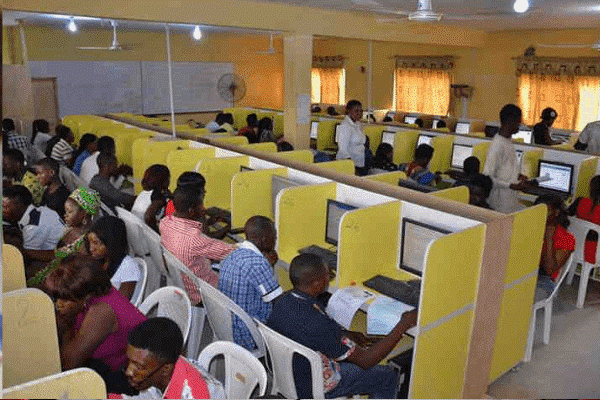
THE Joint Admissions and Matriculation Board (JAMB)’s decision to peg the 2025 minimum cut-off mark for university admission at 150 has drawn reactions from Nigerians across different sectors.

Announced after JAMB’s 2025 policy meeting in Abuja on Tuesday, July 7, the new benchmark brought an end to what had been at least a three-year run of a 140-point minimum.

The ICIR reports that the new 150 benchmark is the first revision since 2022, when JAMB set the cut-off at 140 and retained it through 2023 and 2024. 

The Board, in a statement on its official X handle, stated that education stakeholders reached the decision during the policy meeting held on Tuesday.

The body also announced that 100 was set as the minimum cut-off mark for admissions into polytechnics and colleges of education, while the minimum cut-off mark for colleges of nursing sciences was set at 140.

Although JAMB Registrar, Ishaq Oloyede, stated that no institution was permitted to admit candidates below the thresholds, the Board maintained that institutions and colleges retain the autonomy to set higher cut-off marks than the national minimum.

However, many Nigerians have described the 150 cut-off for university admissions as low, arguing that it sends the wrong message to students in secondary schools and reflects a troubling lowering of academic standards.

They stated that the benchmark was one of the key drivers of poor performance in the country’s tertiary institutions.

Some also pointed out that the problem lay much deeper in the foundational failure of Nigeria’s basic education system, which they said authorities failed to fix.

Alex Onyia, Chief Executive Officer of Educare, while reacting to the benchmark, via his X handle, stated that Nigeria could not build a prosperous nation on a foundation of mass failure and lowered standards.

“JAMB says 150/400 is now ‘good enough for university. That’s 37.5 per cent. In China, 37.5 per cent gets you expelled.

“Then we wonder why our engineers can’t build, our doctors misdiagnose, and our graduates speak gibberish on live TV. This is why Nigerian graduates roam jobless,” he said.

While many blamed JAMB, the examination body clarified that it did not single-handedly set the cut-off. Rather, it stated that the benchmark was jointly agreed upon by institutional stakeholders, including vice-chancellors, rectors, and provosts, during the policy meeting.

Also, a social media user, mrajiabdulwasiu, bemoaned the decision of the education stakeholders, noting that the cut-off mark was “ridiculously low.”

According to him, the vice-chancellors, rectors and provosts want to make money from students’ school fees, with crowded classrooms.

Another user, @Olayinka63045434, said “Nigeria’s challenges stemmed from decades of poor investment in education, outdated systems, and lack of innovation. Excellence isn’t built by score thresholds alone, but by meaningful reform, he stated. 

Recall that The ICIR reported that after the resit UTME results were released on May 25, JAMB noted that 1,365,479 (70.7 per cent) out of 1.9 million candidates scored below 200 after both the original exam and the resit.

In the initial results released by JAMB on May 9, 2025, JAMB said over 1.5 million candidates out of 1.9 million candidates who took the exam scored below 200 out of the total 400 marks.

This development led to outrage with many Nigerians calling for a probe into the mass failure.

Following sustained pressure, JAMB investigated the cause of the mass failure and discovered technical and human errors in its system.

The Board registrar, Ishaq Oloyede, consequently apologised for the trauma caused, admitting to errors in handling the examination.

FCTA launches fresh onslaught on one-chance, scavengers, beggars, others

0

THE Minister of Federal Capital Territory (FCT), Nyesom Wike, has directed that the nation’s capital be completely rid of street beggars, traders, ‘one chance’ syndicates, scavengers, and other social nuisances as part of efforts to improve security in the nation’s capital.

This was contained in a statement released on Wednesday, July 9, by the Senior Special Assistant on Public Communications and Social Media to the Minister, Lere Olayinka.

Wike was quoted as saying an initiative code-namedOperation sweep Abuja of miscreants, street beggars/traders, scavengers, and other criminal elementshad commenced in the FCT.

The statement said the operation was in line with the Abuja Environmental Protection Act and other relevant laws.

“Our nation’s capital should be a secure symbol of pride and beauty, not a site for street beggars and scavengers, most of whom are agents of criminal elements.

“To achieve this, a Joint Task Force, comprising security agencies and relevant FCT SDAs, has been deployed to apprehend any persons found begging, scavenging, loitering, or engaging in other acts inimical to the well-being of the residents. Arrangements have been made to profile them and hand them over to their home state governments,the FCTA stated.

According to the statement, the security of the lives and properties of residents of the FCT is of paramount importance to the government.

The ICIR reports that it is left to be seen if the new order will be effective, as this is not the first time Wike has issued orders on the menace caused by one-chance, beggars, scavengers and others in the city.

For instance, in October 2024, Wike declared war on beggars, accusing them of desecrating Abuja and posing a security risk.

The minister made the declaration during the official commencement of the access road construction from the Nnamdi Azikiwe Expressway to Judges Quarters in Katampe district.

He said the move was necessary following concerns that Abuja was turning into a beggars’ city. Rather than decline, the population of these people in the FCT have snowballed. They operate within the city without fear. 

The ICIR reported how citizens of neighbouring countries flood Abuja to beg for alms.

These beggars, comprising young, aged, and disabled, mount both sides of some bridges from dawn daily.

Several reports by this organisation show how once-chance criminal groups have unleashed terror on residents and robbed them of their valuables. These attacks have resulted in the death of many residents, including Greatness Olorunfemi and Freda Arnong.

Scavengers have remained a perennial nuisance to the city as they attack anyone who refuses to part with their valuables. Several reports also show that they masquerade as burglars and robbers.

Similarly, street urchins have severally threatened the peace in the FCT. In addition to looking unkempt, they often stir public fights.

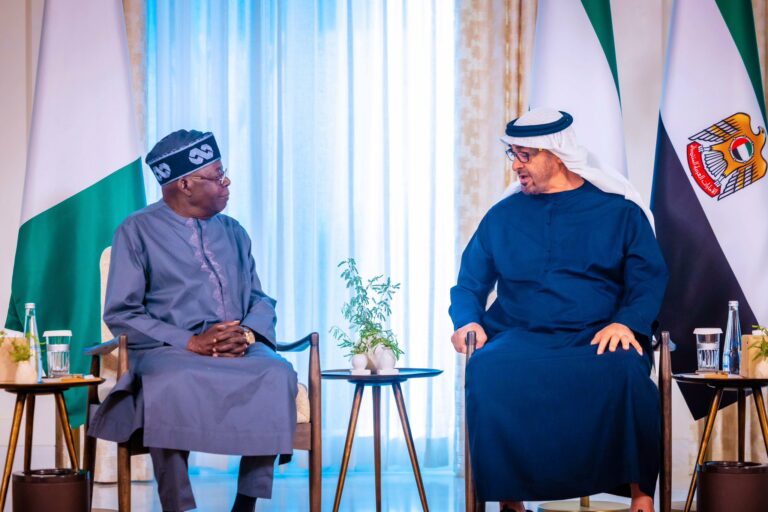
UAE imposes fresh travel conditions on Nigerians, bans transit visa

THE United Arab Emirates (UAE) has introduced tougher entry requirements for Nigerian travellers to Dubai, including a ban on transit visa applications.

This was revealed in a new notification issued to travel agents on Tuesday, July 8, nearly a year after the UAE and Nigeria settled a two-year visa ban previously imposed on Nigerians.

“For Nigerian nationals, please bear in mind that an applicant aged 18 to 45 years travelling alone is not eligible for TOURIST VISA CATEGORY,” it said.

“An applicant who is 45 years or above must provide a single Nigerian personal bank statement for a period of the last six months, with each month’s end balance reflecting a minimum ending balance of USD 10,000 or its naira equivalent. Kindly note that the above points must be taken into consideration before sending your applications with other existing documents such as hotel reservation, data page, etc,” it added.

Agents familiar with the new directive from Dubai Immigration said that transit visa applications would no longer be accepted, following a review of the visa process for Nigerians.

Travel agents familiar with the process said more restrictions would likely be introduced in the coming days.

The new measures are expected to drastically cut the number of Nigerian visitors and further complicate travel plans for Nigerians intending to travel to Dubai, one of the UAE’s top business and tourism hubs.

The ICIR reported that the UAE had banned Nigerians from entering the country due to several diplomatic issues.

In addition, Emirates Airlines of Dubai suspended service to Nigeria due to the Central Bank of Nigeria’s inability to transfer an estimated $85 million in earnings to the UAE.

The Emirates Airlines said it decided to reduce the number of its weekly flights from Dubai to Lagos from 11 to seven due to issues of repatriation of its funds.

The Nigerian government declared in the same month that it had paid 98 per cent of the $850 million held.

Dangote Refinery to end crude oil import, rely 100% on local supply

0

THE Dangote Petroleum Refinery has stated it expects to stop importing crude oil by the end of the year and to rely entirely on Nigerian crude.

Vice President at Dangote Industries Limited, Devakumar Edwin, told Bloomberg.

The move is expected to replace hundreds of thousands of barrels a day of imported crude oil in Nigeria.

“We expect some of the long-term contracts will expire. Personally, and as a company, we expect that before the end of the year, we can transition 100% to local crude,” Edwin was quoted as saying.

He said the refinery is currently processing 550,000 barrels of crude daily.

In June, the refinery received about half of its crude from local producers who will be able to sell more to the facility as their foreign supply obligations end.

Edwin said 53 per cent of its crude supply was sourced from domestic producers and 47 per cent from the United States last month.

The gradual ramp-up of the 650,000 barrel-a-day refinery sited in Lagos State has already made Nigeria a net exporter of petroleum products.

It has, however, been sourcing large quantities of overseas crude after domestic traders, including the Nigerian National Petroleum Company Limited (NNPCL), failed to meet demand.

Since the Dangote Refinery started production, the company has bought crude from Brazil, Angola, Ghana, and Equatorial Guinea, according to Edwin.

He believes that improved relations between the refinery, local oil traders, and the government will result in a steady supply of Nigerian crude as the company plans to end crude importation.

In July, the Dangote Refinery is scheduled to take five cargoes from Nigeria’s state oil company, NNPCL, the same amount it is due to take up in August, Bloomberg stated.

Each shipment is estimated to hold almost a million barrels of crude.

The ICIR reports that Nigeria, a member of the Organisation of Petroleum Exporting Countries (OPEC), has seen a withdrawal of oil majors from onshore and shallow water fields that have been taken over by local companies with fewer resources.

Amid the supply contracts with foreign companies, crude theft and attacks on pipelines in the Niger Delta have curbed production reducing the availability of oil at home.

OPEC monthly reports show that Nigeria has hardly been meeting its 1.5 million barrels per day (bpd) quota.

Its latest report shows that Nigeria’s average daily crude oil output fell to 1,453 million bpd in May, The ICIR reported.

Action Against Hunger offers grant for humanitarian project

ACTION Against Hunger is offering the third edition of its grant for humanitarian projects.

This scholarship is intended to be a place for the exploration of new narrative and iconographic processes, the organisers say.

Applicants proposing their projects should be creative and daring to feed a collective reflection around the development of the multimedia language in the humanitarian field.

Photographers, videographers and content creators can apply for this grant.

The winner will receive a grant of EUR5,000 to carry out their project, which will be exhibited from October 2026.

The deadline for the submission of the application is August 31, 2025. Interested applicants can apply here.

Lassa fever kills 148 as Nigeria confirms 790 cases in six months

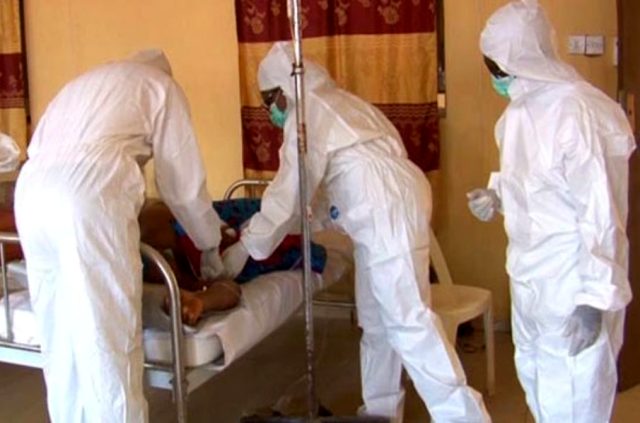
BETWEEN January and June 29, 2025, Nigeria recorded 790 confirmed cases of Lassa fever and 148 deaths, according to the latest situation report by the Nigeria Centre for Disease Control and Prevention (NCDC). 

The virus, which causes acute viral haemorrhagic fever, has spread to 103 local government areas across 20 states. 

The NCDC described Lassa fever as a virus caused mostly by the type of rodents known as the multimammate rat or the African rat.

The disease can be spread through direct contact with urine, faeces, saliva, or the blood of infected rats or contaminated objects, faeces, saliva, or the blood of infected rats.

Person-to-person transmission can also occur through direct contact with an infected person’s blood, urine, faeces, vomitus, and other body fluids.

The case fatality rate for the outbreak in the first half of 2025 stands at 18.7 per cent, higher than the 17.5 per cent recorded during the same period in 2024. While there has been a decrease in the number of suspected and confirmed cases compared to last year, the consistently high fatality rate remains a concern.

In epidemiological week 26, nine new confirmed cases were reported in Ondo and Edo states, down from ten cases recorded in the previous week. Three deaths were also recorded within the same period. 

The report added that no new healthcare worker was affected in week 26, although 23 have been infected so far in 2025.

The NCDC noted that 90 per cent of all confirmed cases since the beginning of the year were reported from five states-Ondo, Bauchi, Edo, Taraba, and Ebonyi states. 

Ondo alone accounts for 31 per cent of confirmed cases, having recorded 249 confirmed cases out of 1,969 suspected cases. The state is followed by Bauchi with 24 per cent (187 confirmed cases), Edo with 17 per cent (134 confirmed cases), Taraba with 15 per cent (117 confirmed cases), and Ebonyi with 3 per cent (22 confirmed cases). 

The other 15 states with confirmed cases make up the remaining 10 per cent. They include Kogi, Gombe, Plateau, Benue, Kaduna, Nasarawa, Delta and the FCT.

The most affected age group is 21 to 30 years, with the male-to-female ratio for confirmed cases standing at 1 to 0.8. 

The total number of suspected cases recorded so far in 2025 is 6,109, a decline from 7,020 suspected cases during the same period in 2024.

This development was on the heels of the earlier report by The ICIR on May 14, 2025, which showed that by epidemiological week 18, Nigeria recorded 717 confirmed cases and 138 deaths. 

At the time, Ondo, Bauchi, and Taraba states were the most affected, collectively accounting for 71 per cent of all confirmed cases. 

The CFR then stood at 19.3 per cent, which was already higher than the same period in 2024.

However, according to the agency, response efforts are ongoing at national and sub-national levels, adding that the Incident Management System has been de-escalated to alert mode, while surveillance, case management, risk communication, and contact tracing activities are ongoing. 

The report highlighted that challenges such as late presentation of cases, poor health-seeking behaviour, poor environmental sanitation, and low awareness in high-burden communities persisted.   

National Humanities Centre offers residential fellowships

THE National Humanities Centre is accepting applications for its 2026-2027 Residential Fellowship Programme.

The fellowship provides scholars with the resources necessary to generate new knowledge and deepen their understanding of all forms of cultural expression, social interaction and human thought.

To apply, applicants must submit a project proposal, a project outline, a resume and a short bibliography. Proposals should convey the importance of the project for advancing knowledge both within a scholar’s field and for the humanities generally.

Experienced journalists with a Ph.D are eligible for a fellowship that awards stipends.

The organiser says, “The fellowship is one of the most prestigious humanities fellowship programmes in the world. Fellows enjoy a beautiful and serene space to write, an unparalleled library and reference support, excellent dining services, and a stimulating and supportive intellectual community.

The National Humanities Centre, located in North Carolina, also provides fellows with exceptional library services, breakfasts and lunches in the dining area, and administrative support in organising seminars and study groups.

The application deadline is October 2, 2025. Interested applicants can apply here.

Obi clarifies link with Abacha, says it was for port efficiency

0

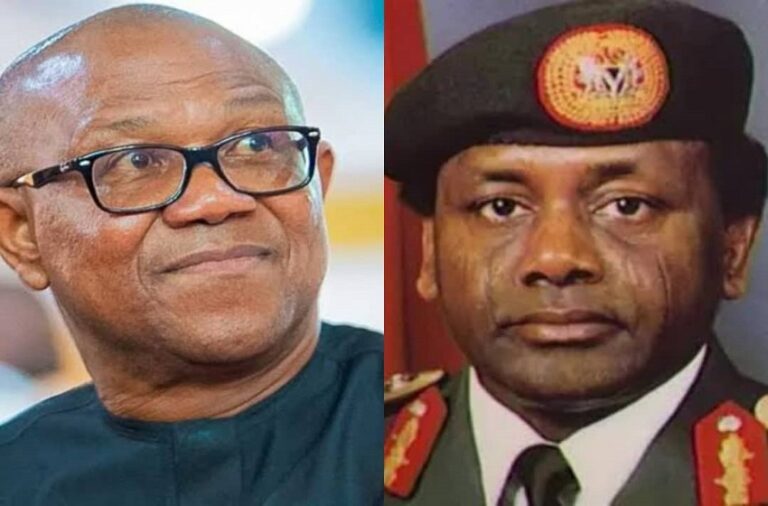
FORMER Labour Party (LP) presidential candidate Peter Obi has clarified his engagement with the late Head of State, Sani Abacha, stating it was strictly for port efficiency and not politics.

The former Anambra State governor disclosed this in a statement posted on his official LinkedIn page on Wednesday, July 9.

Obi addressed speculation about his past interactions with Abacha by releasing documentary evidence to back up his claims.

He stated that his clarifications originated from concerns raised by Nigerians on his association with the late general.

He released a letter confirming his appointment to a port decongestion task force, emphasising that his involvement was driven by civic duty rather than political ambition. He stated that the clarification was made in the interest of truth.

According to him, he worked with a group of Nigerian traders and importers to remove congestion due to operational challenges at the ports.

Obi said that in line with his principles of defending his actions and in the interest of people of goodwill and truth-seekers, he was attaching a letter that documented his inclusion in the Task Force on Port Decongestion.

“As I stated during my interview at the weekend and consistently maintained in the past, I had never met General Sani Abacha before that encounter,” Obi stated.

He explained that the group of traders and importers approached Abacha due to frustration over persistent delays in clearing goods at Nigerian ports, and the delays were hurting businesses and the economy.

“We approached him not as political actors, but as concerned citizens seeking pragmatic solutions to a matter affecting economic activity and livelihoods,” he added.

Obi acknowledged that some critics might still question his motives, labelling them as “mischief makers with ulterior motives” despite releasing evidence into the public domain for transparency and posterity, aligning with his pledge to be open with Nigerians about his activities.

Obi has faced many criticisms in recent weeks. Apart from clarifying his role in Abacha’s government, The ICIR reported that the Julius Abure faction of the Labour Party (LP) on Wednesday revealed its plan to expel him from the party over his involvement in an opposition coalition launched recently to remove President Bola Tinubu from office in the next election.

The faction’s National Publicity Secretary, Abayomi Arabambi, disclosed this when he appeared on Channels Television’s ‘The Morning Brief’ on Tuesday, July 8.

According to him, Obi’s continued engagement with the coalition while still identifying as a Labour Party member is unconstitutional.

Similarly, he recently faced backlash from some APC supporters after he raised the alarm over the demolition of his brother’s property in Lagos State.

Dangote Refinery drops petrol price to N820/litre, engages more marketers

0

THE Dangote Petroleum Refinery has reduced its ex-depot price of premium motor spirit (PMS), commonly known as petrol, from N840 per litre to N820 per litre.

The Dangote Group made this known in a statement issued late on Tuesday, July 8, by its spokesperson, Anthony Chiejina.

He said the new price takes effect immediately, announcing that the 650,000 capacity built refinery has engaged more marketers to distribute its petroleum products.

According to Chiejina, the ex-depot price “has been reduced from N840 to N820 per litre effective immediately.”

He noted that the earlier adjustment to N840 per litre also resulted from the global crude oil market volatility, after the 12-day geopolitical crisis between Israel and Iran that drove crude prices higher.

With the reduction in the ex-depot price, Dangote Refinery’s earlier partners, including MRS, Heyden, Ardova (AP), Hyde, Optima, and Techno Oil, are expected to reflect the new pricing on their pump prices at their retail outlets.

Chiejina stated further that more independent marketers have joined the growing list of distributors retailing Dangote refinery’s petroleum products nationwide, due to the assurance of a steady supply.

“Several new marketing companies have joined Dangote’s distribution network. These include TotalEnergies, Garima Petroleum, Sunbeth Energies, Sobaz Nigeria Ltd., Virgin Forest Energy, Sixxco Oil Ltd., N.U. Synergy Ltd. and Soroman Nigeria Ltd.

“Others on the growing list are Jezco Oil Nigeria Ltd., Jengre, Cocean, Kifayat, Triumph Golden, Sifem Global, Riquest, and Mamu Oil, among others,” he listed.

The ICIR reports that the reduction of the Dangote Refinery ex-depot price to N820 per litre comes a week after the refinery dropped the ex-depot price to N840 per litre.

The enlistment of new marketers comes as the Dangote Refinery announced on Sunday, June 15, plans to start the free distribution of petrol and diesel to marketers, dealers, and other large users across the country to reduce pump prices.

The initiative is expected to take off on August 15 this year, but has been greeted with mixed reactions from oil marketers.

Some believe it would take away jobs from operators within the value chain, while others see it as a welcome development to guarantee supply and prompt price reduction.