Home Blog Page 24

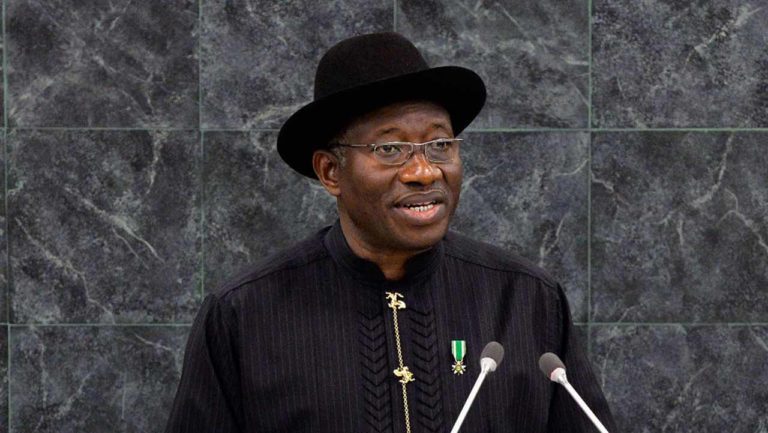
Jonathan eligible to contest 2027 poll, court rules

0

A FEDERAL High Court in Abuja has dismissed a case seeking to stop former President Goodluck Jonathan from contesting the 2027 presidential election, clearing the way for him to participate if he decides to join the race.

The judge, Peter Lifu, delivered the judgment on Tuesday, May 26, ruling that the suit filed by lawyer Johnmary Jideobi lacked merit and amounted to “an abuse of court process” according to Daily Trust.

The court also ordered the plaintiff to pay N20 million in damages to Jonathan and an additional N1 million to the Attorney-General of the Federation (AGF).

Jideobi had asked the court to determine whether Jonathan could seek the presidency again under Sections 1(1), 1(2), 1(3), and 137(3) of the 1999 Constitution. He argued that since Jonathan had already taken the oath of office twice as president, he should not be allowed to contest another presidential election.

The plaintiff also requested an order preventing the Independent National Electoral Commission (INEC) from accepting or publishing Jonathan’s name as a candidate for the 2027 poll.

However, Lifu ruled that the plaintiff failed to show any personal injury or legal interest that gave him the right to file the case.

According to the judge, previous decisions by both the Federal High Court in Yenagoa and the Court of Appeal had already affirmed Jonathan’s eligibility to contest, making those decisions binding on the Abuja court.

He further dismissed an application asking him to withdraw from the matter over alleged bias, describing the request as frivolous.

During earlier proceedings, lawyers representing Jonathan and the AGF strongly opposed the request for the judge to step aside.

Jonathan’s counsel, Uche, argued that the motion was baseless and urged the court to rely on its records. He said the allegations against the judge amounted to “gross misrepresentation.”

Counsel to the AGF, Maimuna Lami-Shiru, also opposed the application, insisting there was no evidence questioning the judge’s impartiality. She described the motion as “baseless, unmeritorious and an abuse of court process.”

After hearing arguments on the recusal request, Lifu proceeded to hear both the preliminary objection and the main suit, stating that judgement would be delivered immediately if the application failed.

Jonathan’s legal team later asked the court to dismiss the case and award N50 million in costs against the plaintiff. The defence relied on earlier court rulings, including Andy Solomon v Jonathan and Cyracus Njoku v Jonathan, which had favoured the former president.

The lawyers argued that Section 137(3) of the Constitution could not be applied retroactively against Jonathan because his last election contest was in 2015. They also maintained that the suit was politically motivated and that the plaintiff lacked locus standi to bring the action.

The AGF’s lawyer supported the argument and asked the court to throw out the suit entirely.

INEC did not appear during the hearing, prompting the judge to close its case.

Although the judgement removes a legal obstacle, Jonathan has not publicly declared interest in the 2027 presidential election.

Recently, a faction of the Peoples Democratic Party reportedly backed by Oyo State Governor Seyi Makinde announced Jonathan as its preferred presidential candidate for the next general election. The former president has neither accepted nor rejected the endorsement.

Similar speculation also surrounded Jonathan ahead of the 2023 elections, but he eventually stayed out of the race and did not obtain nomination forms from any political party.
NNPC to court: Dangote fuel prices high, unstable

THE Nigerian National Petroleum Company Limited (NNPC) has informed the Federal High Court in Lagos that petroleum products from Dangote Petroleum Refinery are sold at high and unstable prices.

It argued that granting the refinery’s request of allowing it to be the sole fuel supplier in Nigeria could create a monopoly.

In a counter-affidavit filed in opposition to Dangote Refinery’s suit (No. FHC/L/CS/857/2026), NNPC asked the court to dismiss the case, describing it as premature, incompetent, and an abuse of court process.

“The plaintiff’s petroleum products are already sold at significantly high and fluctuating market prices, dictated by its commercial interests,” NNPC said.

The ICIR reports that the dispute stemmed from Dangote Refinery’s challenge to the issuance of petrol import licences by the Nigerian Midstream and Downstream Petroleum Regulatory Authority (NMDPRA) to marketers and NNPC.

The refinery argued that the licences violated existing regulations and undermined its $20 billion investment, especially as it claimed to supply more than 90 per cent of Nigeria’s petrol demand. The company accused NNPC and regulators of frustrating its operations through inadequate crude oil supply and continued fuel importation despite its production capacity.

Responding, NNPC argued that there was no independently verified evidence proving the refinery could meet Nigeria’s fuel demand without support from imports.

According to the national oil company, the refinery’s production figures are selective and incomplete and do not account for critical aspects of fuel distribution such as logistics, storage, transportation, and strategic reserves.

The NNPC warned that relying on a single supplier could threaten national energy security and expose the country to shortages, supply disruptions, and price instability if refinery operations are interrupted.

The company also argued that the refinery’s requests would unfairly restrict other operators in the importation and supply chain, effectively creating monopoly control of the sector.

Defending the continued issuance of import licences, NNPC said the Petroleum Industry Act permitted regulators to approve imports when necessary to ensure energy security and market stability. It maintained that the law did not impose a mandatory ban on fuel importation.

It further denied allegations that it sabotaged Dangote Refinery’s operations or deliberately withheld crude oil supplies, stating that crude allocation depends on commercial agreements, logistics, production realities, and security considerations.

Petroleum Products Retail Outlets Owners Association of Nigeria (PETROAN) also backed NNPC’s position, insisting that competition in the petroleum sector was necessary to prevent price exploitation and encourage lower fuel prices through multiple supply sources.

PETROAN President, Billy Gillis-Harry, stressed that while Dangote Refinery’s investment was commendable, Nigeria’s downstream market must remain open and competitive to protect consumers from arbitrary pricing and supply shocks.

The latest legal battle marks another major confrontation between Dangote Refinery and government oil agencies over fuel importation, crude supply arrangements, and competition in Nigeria’s deregulated downstream petroleum sector.

The ICIR reports that the NNPC’s fight with Dangote Refinery continues as the national oil company persistently fails to revamp the government-owned Warri, Port-Harcourt and Kaduna refineries after wasting a huge chunk of state resources on them.

FG cancels $717.7m World Bank power loan amid worsening blackouts

THE Federal Government has cancelled $717.7 million in undisbursed World Bank funding earmarked for Nigeria’s struggling power sector.

According to PUNCH, the bank revealed that the cancellation followed a formal request by the Nigerian government and a mutual decision by both parties to discontinue the programme due the failure to meet key reform targets.

“The restructuring will result in the cancellation of the entire undisbursed balance in the amount of $717.7m equivalent, and no further disbursements will be made under the programme following approval of this restructuring,” the document read.

The ICIR reports that Nigeria remained the International Development Association’s third-largest borrower in the first quarter of 2026, despite a slight decline in exposure from $18.7 billion in December 2025 to $18.5 billion as of March 31, 2026.

The latest IDA financial statements showed only Bangladesh with $22.7 billion and Pakistan with $19.2 billion ranked above Nigeria, whose exposure represented about eight per cent of the institution’s $230.8 billion loan portfolio.

Nigeria’s exposure rose by $1.2 billion from $17.3 billion in March 2025, highlighting the country’s continued dependence on concessional World Bank financing.

The Bank in its latest report also announced that the programme’s closing date had been moved forward from June 30, 2027, to May 31, 2026, effectively ending the initiative more than a year earlier than planned.

The World Bank said Nigeria’s electricity sector continued to grapple with deep-rooted structural problems including weak distribution performance, transmission bottlenecks, underutilised generation capacity, and persistent financial imbalances despite years of reforms and significant financial support.

According to the Bank, high technical, commercial, and collection losses in the distribution segment, coupled with inadequate cost recovery, have created recurring financing gaps and severe liquidity pressures across the power value chain.

“These constraints have created recurrent financing gaps, most notably in the form of tariff shortfalls, which generate liquidity pressures across the value chain and weaken the operational and financial performance of sector institutions,” the document added.

The ICIR reports that this development has brought an end to the remaining portion of the $1.52 billion Power Sector Recovery Performance-Based Operation amid worsening tariff deficits, mounting financial strain, and persistent implementation setbacks.

Recall that the Federal Government launched the Power Sector Recovery Performance-Based Operation on June 23, 2020, with financing of about $752.5 million aimed at improving electricity supply reliability, strengthening the sector’s financial sustainability, and boosting accountability across the power value chain.

After seeing the progress of the recovery programme, the Bank approved an additional $763.5 million on June 9, 2023, to take effect on June 19, 2024, and address the staggering structural challenges. The programme was also extended to June 2027 bringing the total additional funding to about $1.52 billion.

However, while the original programme recorded substantial results and largely disbursed its funds, the additional financing struggled to meet major reform conditions, leading to minimal disbursements and the eventual cancellation of the remaining balance.

Tariff shortfalls reportedly declined by 71 per cent between 2019 and 2022, dropping from N581 billion to N166 billion. Regulatory cost recovery also improved significantly from 56 per cent to 94 per cent, while electricity supplied to the distribution grid rose by 13 per cent between 2018 and 2021.

Encouraged by these gains, the World Bank approved additional funding to strengthen operational performance, improve governance, and support performance improvement plans, particularly at the Transmission Company of Nigeria.

However, the reforms failed to progress as expected and the World Bank blamed much of the setback on major macroeconomic developments, especially the liberalisation of Nigeria’s foreign exchange market in June 2023, which triggered a sharp depreciation of the naira and significantly increased the cost of gas used for power generation.

More than 70 per cent of electricity supplied to Nigeria’s national grid is generated from natural gas priced in US dollars.

At the same time, electricity tariffs for most consumers remained largely unchanged despite rising generation costs. The bank noted that tariffs had effectively remained frozen since early 2023, except for Band A customers whose rates were adjusted to cost-reflective levels in April 2024.

As a result, tariff shortfalls surged sharply from N140 billion in 2022 to about N1.9 trillion annually in 2024 and 2025, placing heavy pressure on government finances.

Nigeria’s economic growth rate falls to 3.8% in Q1 2026, says NBS

THE National Bureau of Statistics (NBS) has said that Nigeria’s economy expanded by only 3.89 per cent at N51.26 year-on-year in real terms in the first quarter of 2026, reflecting a slight slowdown in growth.

The figures were released in the bureau’s latest GDP report published on Monday, May 25. It noted that the Q1 2026 growth rate was lower than the 4.07 per cent recorded in the fourth quarter of 2025, but higher than the 3.13 per cent posted in the same period last year.

“During the quarter under review, agriculture grew by 3.15 per cent, an improvement from the 0.07 per cent recorded in the corresponding quarter of 2025. The growth of the industry sector stood at 3.50 per cent from 3.42 per cent recorded in the first quarter of 2025, while the services sector recorded a growth of 4.31 per cent from 4.33 per cent in the same quarter of 2025,” the NBS said.

According to the bureau, the services sector accounted for a larger share of Nigeria’s GDP in the first quarter of 2026, contributing 57.73 per cent to the aggregate economy, compared with 57.5 per cent in the corresponding period of 2025. It added that aggregate GDP for the quarter stood at N110.78 trillion in nominal terms.

“The real growth of the oil sector was 2.57 (year-on-year) in Q1 2026, indicating an increase of 0.70 per cent points relative to the rate recorded in the corresponding quarter of 2025 (1.87 per cent). Growth decreased by 4.22 per cent points when compared to Q4 2025, which was 6.79 per cent. On a quarter-on-quarter basis, the oil sector recorded a growth rate of 9.31 per cent in Q1 2026,” the NBS said.

This performance, the organisation said, was higher when compared to the first quarter of 2025, which recorded an aggregate GDP of N94 trillion, indicating a year-on-year nominal growth of 17.79 per cent.

The report also showed a decline in oil production as Nigeria recorded an average daily crude oil output of 1.55 million barrels per day (mbpd) in Q1 2026, lower than the 1.62 mbpd produced in the same quarter of 2025, and below the 1.58 mbpd recorded in Q4 2025.

Despite the drop in production, the oil sector grew by 2.57 per cent year-on-year in real terms, an improvement from the 1.87 per cent growth recorded in Q1 2025. However, this was lower than the 6.79 per cent growth posted in the previous quarter, meaning that the sector recorded a growth rate of 9.31 per cent on a quarter-on-quarter basis.

The oil sector contributed 3.92 per cent to total real GDP in Q1 2026, slightly lower than the 3.97 per cent contribution recorded in the same period of 2025, but higher than the 2.87 per cent contribution in Q4 2025.

Meanwhile, the non-oil sector continued to dominate the economy, contributing 96.08 per cent to GDP during the quarter, slightly above the 96.03 per cent share recorded in Q1 2025, though below the 97.13 per cent recorded in Q4 2025.

The NBS said the non-oil sector grew by 3.94 per cent in real terms, compared with 3.19 per cent in the corresponding quarter of 2025 and 3.99 per cent in the preceding quarter.

“The non-oil sector grew by 3.94 per cent in real terms during the reference quarter (Q1 2026)”

The bureau added that growth in the non-oil economy was largely driven by telecommunications, crop production, trade, cement manufacturing, financial institutions, real estate, construction, and road transportation activities.

“This rate was higher by 0.75 per cent points compared to the rate recorded in the same quarter of 2025, which was 3.19 per cent, and lower than the 3.99 per cent recorded in the fourth quarter of 2025,” it added.

Kogi graduate found dead in Abuja canal

0

A 29-YEAR-OLD Kogi State University graduate, Blessing Moshood, was found dead in a canal in Jikwoyi, Abuja, on Thursday, May 21.

According to the deceased’s sister, Abigail Moshood, who spoke with Daily Trust, Blessing had stepped out of their home around 8pm after receiving a phone call. She explained that the deceased later reached out again about an hour later, mentioning she would briefly return home to collect her phone charger, which she had left behind.

However, concern grew when Blessing did not return as said and could not be reached the following day.

“We later heard people talking about the body of a woman discovered inside a canal, and someone described the type of hairstyle the deceased had on, which matched my sister’s,” she said.

She added, “My mother started crying, and we also learnt that policemen from the Jikwoyi Police Station had evacuated the corpse, which was found half-naked with only a top on, to a mortuary in Mararaba, Nasarawa State.”

Her sister further explained that when she visited the Jikwoyi Police Station to seek clarity, she was shown images of the recovered body, which confirmed her worst fears.

In the neighbourhood, residents described Blessing as warm and intelligent. One of them, Margaret, said she was well-educated and easy to talk to.

“I learnt she graduated with a Second Class Upper in Sociology, and whenever she spoke, you could hardly fault her English,” she said.

“She was also very friendly in this neighbourhood and will be greatly missed by all of us, especially the children who have been crying since they learnt of her death.”

Another resident, Abdullahi Musa, called on security agencies to step up patrols and intensify operations around the Jikwoyi Medical Centre axis, noting that cases of phone snatching and other crimes were common in the area.

Daily Trust reported that the spokesperson of the Federal Capital Territory Police Command, Adeh Josephine, a superintendent of police, confirmed the incident and said investigations are ongoing. However, when The ICIR reached out to her, she said she was not aware of the incident but would look into it.

Abuja has witnessed a disturbing rise in suspected “one chance” attacks involving unpainted commercial vehicles, with victims reportedly robbed, assaulted, and in some cases pushed out of moving vehicles.

Apart from the once chance menace, there are other major crimes in the city, including armed robbery and kidnapping.

Among such cases reported by THE ICIR was that of Chinemerem Chuwumeziem, a nurse at Federal Medical Centre, Jabi, who was said to have boarded a vehicle after work but was later found dead by the roadside.

Another victim, Nwamaka Chigbo, a senior lawyer and former Nigeria Bar Association (NBA) Abuja branch treasurer, was reportedly attacked after boarding a vehicle along the Kubwa Expressway and pushed out while the vehicle was in motion, leading to her death.

The incidents have raised growing concern over residents’ safety in the nation’s

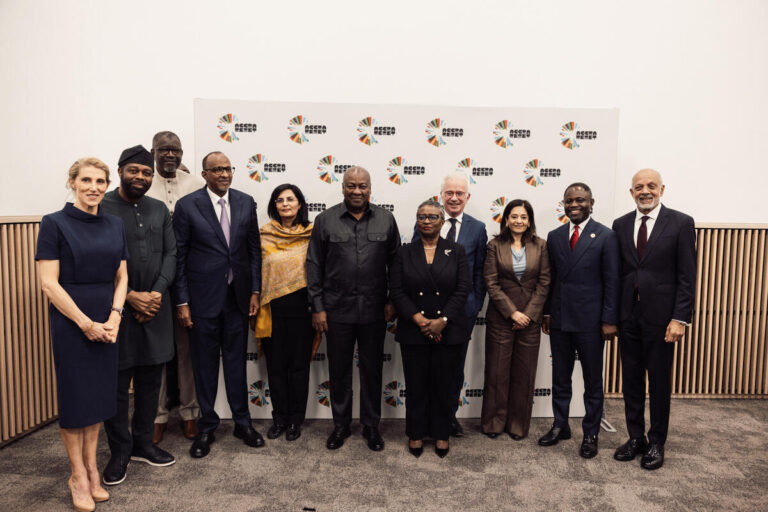
Global leaders demand shift from donor-driven health financing

0

GLOBAL health leaders meeting in Geneva have intensified calls for a shift from donor-driven health funding and programming towards country-led financing and delivery systems. 

The push dominated the Accra Reset High-Level Dialogue on Global Health Architecture, held on the margins of the 79th World Health Assembly (WHA79), where more than 250 heads of state, ministers, and global health leaders gathered to debate the future of global health governance.

A statement released after the event on Monday, May 25, said discussions focused strongly on the Accra Reset initiative, launched in 2025 by Ghana’s President John Dramani Mahama, which aims to reshape global health around country sovereignty, domestic resource mobilisation, and stronger national control of priorities and implementation. 

Mahama told participants at the event that global health reform must move beyond fragmented donor coordination towards systems where countries define and execute their own health agendas.

He described health as “the vanguard, the proof of concept, and the moral imperative” for broader development reform.

The initiative, according to the statement, proposes new mechanisms, including a Reform Observatory and a financing gateway platform, aimed at channeling investment into country-designed programmes rather than externally structured interventions.

“If the Accra Reset can move health commitments into working programmes, it can do so for any sector,” said President Mahama. “Health is the vanguard, the proof of concept, and the moral imperative.” 

The statement noted that several Ministers from Indonesia, Brazil, Kenya, and Ghana backed the proposal, arguing that sovereignty must translate into real control over health financing and delivery rather than symbolic policy shifts.

Indonesia’s Health Minister, Budi Sadikin, said financing pathways remained a key constraint, urging stronger alignment between health ministries, finance ministries, and international financial institutions.

“The money is there,” said Sadikin, adding that “As an Accra Reset Co-Chair, my proposal is to help all countries develop proper health care financing pathways, so health ministers can convince their finance ministers and the big banks to invest in health.” 

Also, the Brazil’s Health Minister, Alexandre Padilha, noted that sovereignty must be backed by stronger national systems and sustainable financing, warning against treating it as a rhetorical aspiration.

On his part, Kenya’s Health Minister, Aden Duale, said African countries were already increasing domestic funding for universal health coverage,

He also noted that it signalled what he described as a gradual reduction in dependency on external support.

“Kenya and Ghana are leading in terms of creating a practical health sovereignty. How do we do that? By making sure that we take charge of the health systems and health financing in our country,” said Duale. “In 18 months, we have mobilized domestically to fund our health care and universal health coverage.” 

According to the statement, major global health financing institutions, including the Global Fund, Gavi, and the Pandemic Fund, present at the meeting also expressed support for the reform agenda while acknowledging the difficulty of transitioning from long-standing donor-dependent systems.

Meanwhile, Nigeria’s National Health Insurance Authority highlighted ongoing efforts to consolidate fragmented health programmes into a single national framework, with the Director-General, Kelechi Ohiri, a doctor, saying the “one plan, one national dialogue” approach was improving coordination and reducing duplication.

“[In Nigeria], the Health Sector Blueprint became the foundation and the platform for coordinating activities across the entire country and our relationship with partners…the whole principle of having one plan, one national dialogue was put in place,” Ohiri said.

“With the Global Fund, we began to pilot the integration of [HIV, TB, and malaria] vertical programmes, not just in the health system broadly, but also in health insurance,” he added.

Despite broad consensus on the need for reform, participants warned that the global health space risks further fragmentation due to overlapping initiatives and the absence of a unified implementation roadmap.

World Health Organization Regional Director for Africa, Mohamed Yakub Janabi, urged that reforms be judged by their impact on populations rather than institutional redesigns.

He further said the sector must move “from promises to progress and from commitment to impact.”

ADC picks Tinubu’s challenger in 2027 race today

THE African Democratic Congress (ADC) has begun the process of selecting its presidential candidate for the 2027 election through a primary holding nationwide today.

The candidate will be among the major opponents of the All Progressives Congress’ candidate and incumbent President Bola Tinubu in the general election.

The ADC adopted direct primary, making party members across the 36 states and the Federal Capital Territory to choose who will fly the party’s flag at the poll.

Three leading aspirants namely former vice president Atiku Abubakar, former Minister of Transportation Rotimi Amaechi, and ex-banker Mohammed Hayatu-Deen are heading for the primary after efforts by party leaders to field a consensus candidate reportedly failed.

Although the ADC had initially considered an affirmation process similar to the one adopted by the Nigeria Democratic Congress, party leaders insist the direct primary aligns fully with the provisions of the Electoral Act 2026.

After his exit from the Peoples Democratic Party in November 2025, the former vice president has led efforts to build a broad opposition coalition aimed at unseating President Bola Tinubu in the 2027 election

Prominent political figures believed to be backing him include former Attorney General of the Federation and Minister of Justice, Abubakar Malami, former Kaduna State Governor Nasir El-Rufai, and former Secretary to the Government of the Federation Babachir Lawal.

However, despite his vast political experience and nationwide appeal, political analysts have said Abubakar may encounter stiff opposition from party members who believe the time has come for a younger generation of leaders to emerge. Critics contend that after remaining active in politics since 1992 and seeking the Presidency six times, the Waziri of Adamawa should transition into the role of an elder statesman.

Meanwhile, Amaechi, who served as Minister of Transportation under former President Muhammadu Buhari, rose to national prominence through the railway projects delivered during his tenure. As a founding member of the All Progressives Congress, he was regarded in the closing years of the Buhari administration as one of the party’s most influential figures.

Now contesting under the ADC platform, Amaechi is positioning himself as a credible alternative capable of restoring public confidence in governance. While Amaechi he considerable support in some regions of the country, political analysts argue that it remains uncertain whether he can garner sufficient nationwide momentum within the ADC to challenge Abubakar’s political structure.

The crisis within the party deepened on Sunday as the faction loyal to Dumebi Kachikwu dissolved the party’s National Working Committee led by former Senate President David Mark and former Osun State Governor Rauf Aregbesola, serving as chairman and secretary respectively.

It declared Kachukwu its sole presidential candidate during its national convention and presidential primary held in Abuja, where delegates adopted Kachikwu through a voice vote.

The faction consequently unveiled a new set of national officers which includes Kingsley Oggah as Chairman of the Board of Trustees, Abdulkadir Bashir as National Chairman, Johnny Derek as National Secretary, Kennedy Odion as National Treasurer, Amirigoye as National Financial Secretary, Chris Ugwu as National Legal Adviser, alongside a National Publicity Secretary.

The ICIR reported that Tinubu formally received the APC certificate of return and party flag as the party’s presidential candidate for the 2027 general election on Sunday, May 24, at the Bola Ahmed Tinubu International Conference Centre in Abuja, where the APC National Chairman, Nentawe Yilwatda,a professor, handed over the certificate to the president in the presence of party leaders and supporters.

Presenting the certificate, Yilwatda said Tinubu’s nomination reflected the mandate of millions of party members across the country.

2027: Tinubu receives APC certificate of return, clinches party’s presidential ticket

PRESIDENT Bola Tinubu has formally received the All Progressives Congress’ (APC) certificate of return and party flag as the party’s presidential candidate for the 2027 general election.

The presentation took place on Sunday, May 24, at the Bola Ahmed Tinubu International Conference Centre in Abuja, where the APC National Chairman, Nentawe Yilwatda,a professor, handed over the certificate to the president in the presence of party leaders and supporters.

Presenting the certificate, Yilwatda said Tinubu’s nomination reflected the mandate of millions of party members across the country.

“This certificate represents the voices of millions of APC supporters across the country. Over 10 million members are represented in this certificate of return. Your Excellency, congratulations,” he said.

He added that the president’s emergence as the party’s flagbearer demonstrated overwhelming support within the APC and expressed confidence in victory at the 2027 polls.

Tinubu received the certificate alongside his wife, Oluremi, and Vice President Kashim Shettima.

The event was attended by APC governors, members of the National Executive Committee, National Working Committee, National Assembly members and other party stakeholders.

In his acceptance speech, Tinubu thanked the party leadership and members for the confidence reposed in him, saying he accepted the nomination with humility and renewed commitment.

The president said continuity was necessary to consolidate reforms initiated by his government and deepen economic recovery.

He defended key policies of his administration, including the removal of fuel subsidy, exchange rate reforms and tax measures, arguing that they had laid the foundation for long-term economic stability.

Tinubu said his administration had also recorded progress in education, power, infrastructure and social investments.

According to him, the Nigerian Education Loan Fund has disbursed over N282 billion to more than 1.5 million beneficiaries, while efforts to improve electricity supply have led to the distribution of 2.5 million meters and increased power generation.

He also acknowledged the economic hardship facing many Nigerians, saying his government remained focused on addressing the factors responsible for it.

“Many Nigerians still struggle with rising costs and economic adjustment. We do not dismiss these concerns; we understand them and govern not in comfort, but in reality, with honesty and action,” he said.

On insecurity, Tinubu said his administration had intensified efforts to strengthen the country’s security architecture and renewed his call for constitutional amendments to allow the creation of state police.

He said his administration would continue to pursue economic expansion, industrialisation, food security and democratic consolidation if re-elected.

Tinubu emerged as the APC presidential candidate after polling 10.99 million votes in the party’s primary election conducted across 8,809 wards nationwide.

He defeated his sole challenger, Stanley Osifo, who secured 16,504 votes.

NCAA suspends services to 11 airlines over unpaid charges

THE Nigeria Civil Aviation Authority has directed its departments to suspend services to 11 domestic airlines over unpaid statutory charges owed to the regulator.

The directive was contained in an internal memo dated May 22, 2026, and released on Sunday.

The memo placed the affected operators on the authority’s updated “No-Pay-No-Service” list, ordering all departments to withhold regulatory and administrative services until the airlines settle their outstanding debts or agree on repayment terms.

At the centre of the dispute are the five per cent Ticket Sales Charge and Cargo Sales Charge, statutory levies collected by airlines on behalf of the NCAA to fund safety oversight, personnel training and economic regulation in the aviation sector.

The memo also directed that no service should be rendered to the affected airlines without financial clearance from the Directorate of Finance and Accounts.

Signed by the Director of Finance and Accounts, Olufemi Odukoya, the directive was circulated to the NCAA’s regional offices and copied to the Director-General of Civil Aviation and other top officials.

The affected airlines are Air Peace, Ibom Air, Arik Air, United Nigeria Airlines, Umza Air, NG Eagle, Max Air, Caverton Helicopters, Overland Airways, Rano Air and ValueJet.

“The DGCA has directed that no directorate should render any service to the above airline without financial clearance from the Director of Finance and Accounts,” the memo stated.

The directive is coming barely a month after President Bola Ahmed Tinubu approved a 30 per cent reduction in charges owed by domestic airlines to aviation agencies.

President Tinubu approved the reduction on April 23, 2026, in a move aimed at easing mounting financial pressure within the sector.

However, one month later, the government is yet to implement the incentive for the affected airlines.

The Director-General of the NCAA, Chris Najomo, a captain, while explaining the delay a few weeks ago, said: “No, the 30 per cent discount has not been implemented. It is a process. A process that must be followed by all the agencies and airlines. You must call all the airlines together and say take 30 per cent off and pay us our money.”

Nigerian man arrested in US, faces deportation over ‘bank fraud, identity theft’

A 49-year-old Nigerian man, Etinosa Osahon, has been taken into custody by the United States Immigration and Customs Enforcement (ICE) in Los Angeles over alleged involvement in fraud-related crimes.

ICE confirmed the arrest in a statement shared on X, noting that Osahon is currently being held while deportation procedures continue.

According to the agency, the Nigerian national is accused of several offences, including theft, possession of stolen mail, bank fraud and aggravated identity theft.

“ICE Los Angeles arrested Etinosa Osahon, 49, of Nigeria, May 21,” the agency wrote.

“Osahon’s criminal record includes stealing and being in possession of stolen mail, bank fraud, and aggravated identity theft. He is in ICE custody pending removal.”

The development is one of several recent cases involving Nigerians arrested by US immigration authorities over alleged criminal activities.

Earlier in April, another Nigerian identified as Olatunde Olusanjo was arrested by ICE over accusations linked to sexual-related offences.

The agency disclosed that Olusanjo was detained by its Enforcement and Removal Operations (ERO) division and remains in custody as deportation proceedings continue.

US immigration officials have recently stepped up actions against foreign nationals said to have criminal backgrounds.

The administration of President Donald Trump has also introduced stricter immigration measures affecting Nigeria and several other countries, as part of broader efforts aimed at tightening immigration enforcement.