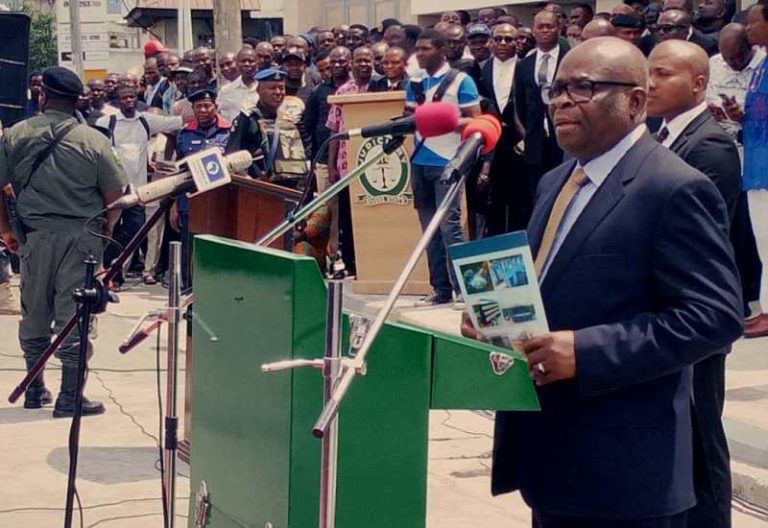
THE Chief Justice of Nigeria (CJN) Walter Onnoghen, has urged Nigerians to seek other ways of resolving civil disputes rather than taking them to the courts, adding that more lasting peace can be achieved through Alternative Dispute Resolution (ADR) than through the formal judicial system.
Onnoghen said this while addressing the members of the Nigerian chapter of the Chartered Institute of Arbitrators (CIArb) in Abuja, on Thursday, as part of the association’s 2018 annual conference.
“Having experienced both sides of a formal court system and the traditional arbitration, I can assure you and I want you to know that the judicial system is not designed to ensure peace. If you want peace, don’t go to courts,” Justice Onnoghen was quoted as saying.
He further explained that, in the formal courts, “You are either right or wrong. We determine the rights, liabilities and responsibilities of parties. It is not designed to ensure peace.”
The Nigeria Branch of the CIArb became functional in 1999 after it fulfilled the requirements to be granted Branch status by the parent body in the United Kingdom. It has over 1,137 members drawn from across all disciplines of human endeavour including practitioners in Law, Construction, Shipping, Engineering, Insurance, Banking, Accounting, Oil and Gas, among others.
The CIArb maintains close links with other professional arbitral bodies worldwide, and its major role is to apply Alternative Dispute Resolution methods in settling civil cases. The Institute is also recognized as the professional body for training and examination of those seeking to become qualified arbitrators, mediators and other ADR Practitioners.
The theme of the 2018 CIArb conference is: “Arbitration and ADR in Africa: Challenges Gains and Lessons for the Future.”
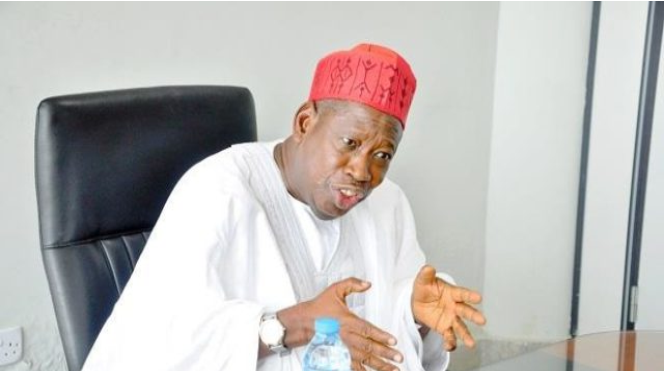
THE Kano State House of Assembly has commenced investigations into the allegations of bribery involving the State Governor, Umar Ganduje.
An online newspaper, Daily Nigerian, had published video clips showing Ganduje collecting several bundles of dollar bills from someone whom the newspaper claimed was a contractor working for the State.
Jafar Jafar, the publisher of the Daily Nigerian, who has reportedly been in hiding following alleged threats to his life since after publishing the videos, was at the Kano House of Assembly premises on Thursday to address the investigative panel.
According to the Daily Trust, Jafar arrived the Assembly premises in the company of his lawyers, with a copy of Qur’an hanged on his shoulders. Proceedings commenced immediately and is currently ongoing.
Jafar Jafar, Publisher of Daily Nigerian, the online newspaper that published videos of Ganduje collecting bribe in dollars, arriving the Kano Assembly chambers on Thursday.
Security was tight at the premises of the investigative hearing as men of the Nigeria Police, the Nigeria Security and Civil Defence Corps (NSCDC), and the Department of State Services (DSS) were positioned at strategic locations leading to and within the Assembly premises.
All roads leading to the Assembly complex were also barricaded by the security men and only accredited persons were allowed to enter the premises. Supporters of Governor Ganduje were prevented from making it to the hearing.
Children wielding placards in support of Governor Ganduje. They were not allowed into the Assembly premises.
The seven-man committee to investigate Ganduje’s bribery allegation was set up by the Speaker of the Kano State House of Assembly,Alhassan Rurum,on October 15, following a motion by Labaran Madari, member representing Warawa Constituency.
The seven-man investigative panel.
Members of the committee include: Baffa Dan’Agundi — Chairman; Labaran Madari, Garba Gafasa, Zubairu Masu, Ayuba Labaran, Abubakar Galadima, Garba Yau Gwarmai, and Mujtafa Amin — Secretary.
Watch the video of Ganduje’s alleged bribery below:
VIDEO: Journalist Releases Footage Of Kano State Governor Ganduje Allegedly Receiving Bribe.
DailyNigerian newspaper has released a video of the Kano State governor, Abdullahi Ganduje, allegedly receiving bribe, amounting to about $5million from contractors in the state. ???????? pic.twitter.com/mGpLu0K8jV
THE Anchor Borrowers Scheme, the federal government’s initiative to boost agriculture and stop the importation of rice is facing challenges in several states, including Cross River and Gombe, reports PUNARIMAM FEHINTOLA who visited the two states.
The scheme started in November 2015 shortly after President Muhammadu Buhari assumed office.
The initiative was conceived to help diversify the economy, create jobs, help farmers become more self-reliant through rice production, and generally to ensure food security.
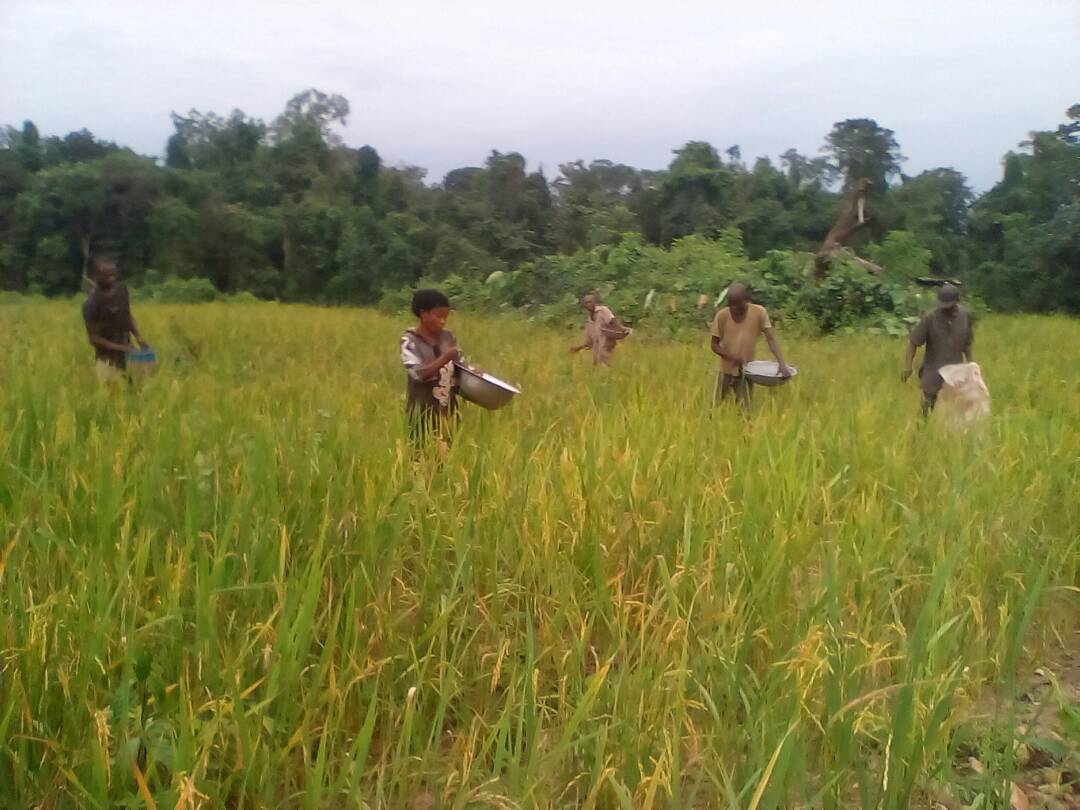
Several states across the country benefited from the scheme, including Cross River where farmers are now crying foul. The scheme provides support in terms of loan and seedlings to farmers, which are disbursed through the Bank of Agriculture, BOA.
In Cross River, only 6,000 out of the estimated15,000 farmers in the state were enlisted in the scheme. This, according to the Commissioner for Agriculture and Natural Resources, Professor Egrinya Eneji, was becauseBOAlacked the capacity to deliver effectively.
Despite the shortfall in the number of farmers in the scheme, the loan disbursement has been anything but satisfactory. Several of the farmers have complained of inability to access the funds at the right time. Where funds were received, farmers complained of not receiving the actual amount.
Farmers allege being shortchanged
Umoren Udo,a farmer in Oban Akamkpa Local Government Area, said the rice on his farm was long overdue for harvest when the reporter visited him some months ago, but lack of funds prevented him from harvesting. He expressed fears that rodents could attack the farm if money was not released to him soon to harvest the rice. He lamented that the loans were unnecessarily being delayed.
Another beneficiary, James Umana, chairman of the Calabar Amalgamated Cooperative Society Limited, stated that the scheme was facing several challenges in the state. He, however, said the biggest challenge was the delay in funds disbursement.
“Money was given very late from the beginning of the scheme and the last tranche of the money for harvest is yet to be paid as well,” he said.
But this allegation was disproved by Professor Eneji who said the loan amount was not reduced. According to him, the entire loan was not supposed to be given out only in cash, but also as seedlings. “But the farmers were expecting everything in cash,” he said.
The chairman of the Rice Farmers Association of Nigeria (RIFAN) Cross River State Chapter, Barrister Fidel Egoro, however, observed thatthe program has not met the expectation of farmers because the seedlings supplied to them had expired while fertilizer also came late. He said the government ought to be mindful of the farming cycle and ensure seedlings and fertilizer were delivered at the right time.
The blame for this, he said, must go to the BOA and the Federal Ministry of Agriculture which supplied the seedlings and fertiliser.
But BOA denied the allegations. Takim Tawor, branch manager in Cross River state, said the farmers who complained were given some other seedlings as replacements for the bad once.
Responding to the allegations, the CBN’s Director of Finance Development in Calabar, Aniefiok Umorensaid, part of the problem was that many of the farmers lived in the rural areas and had a problem about bank’s BVN, which slowed down the process of loan disbursement. Also, he said, slow network affected the smooth running of the process.
Notwithstanding, Takimblamed the CBN for the delay of disbursement of funds. “ CBN withdrew all the money deposited for the scheme without consultation with stakeholders”.
Takim said the withdrawal caused unnecessary delay in funds disbursement and hindered the smooth operation of the scheme.
The same sad story in Gombe State
The situation in Gombe State is not different. According to the state Commissioner of Agriculture, Dahiru Biri, farmers in the state were not aware of the procedure to access the loan.
“Many people thought it is free money from the government so when we explained to them and later realised that some of them are not actual farmers who couldn’t identify with any cooperative, they had to opt out”.
He also admitted that some farmers had suffered huge losses as a result of draught but stated that this has been reported to the Bank of Agriculture which had tried to find ways to compensate those affected through NIEC, the insurance company in charge of the scheme.
The commissioner also identified the repayment of the loans as one of the major challenges. “The farmers are refusing to pay back these loans which is a huge concern with a nine per cent interest rate considering the market price as at when the loans were disbursed”.
On the other hand, Ibrahim Shehu, a farmer and beneficiary from Billeri local government area, complained that all the seedlings that were given to him had expired, so he did “not gain anything from this scheme”. He also complained that the scheme was ridden with corruption.
“The most annoying thing of all is even the fertiliser. We were given at N8,500 but N5,500 was written on the bags and the market price was going for N5,500 so it got all of us confused.”
Saidu Aliyu a farmer from Gidan Gari in Gombe State insisted that the scheme didn’t make any impact in the state, accusing the government of not following the due process in giving out the loan.
“I dare the government of Gombe State to publish names of beneficiaries and figures spent on this scheme. No farmer got anything from this scheme, I can’t say if Kebbi and other states got but not Gombe State”.
File Photo: Minister of Agriculture, Audu Ogbe
Not all farmers have a bad story to tell anyway. A farmer from Bajoga, Garba Sani, appreciated government efforts to make available loans to farmers. “With the loan, I can now farm rice in large quantity,” he said but stressed the need for urgent intervention on the last disbursement.
“The CBN should, please, conclude the good deed by giving us the remaining balance so we can harvest the rice at the due time,” he pleaded.
The Branch Manager of BOA in Gombe State, Adamu Idris, was asked to react to allegations of fraud by farmers but refused to comment on the issue.
“I need authorization from the head office to talk on this issue. Besides, I am not the spokesperson for the bank, I am sorry”, he told the reporter.
In 2017, there was a huge allegation of corruption in the loan disbursement by the All Lower Farmers Association of Nigeria (ALFAN), which pointed accusing fingers at Idris and the Gombe State Commissioner for Agriculture, Alhaji Dahiru Buba Biri, alleging that they were manipulating the process for personal gain.
The farmers accused the Gombe State Ministry of Agriculture and the BOA, of shady deals and denying them the funds provided by the Anchor Borrowers Scheme. But both men denied the allegations.
Secretary and spokesperson of the association, Malam Sani Idris, alleged that both BOA and the ministry have been introducing stringent conditions that are not in tune with what the CBN told them about the facility.
According to him, some of the illegal stringent measures they were allegedly made to go through were that the farmers were asked to form cooperative groups and register with N10, 000.00 and N20, 000.00 for consultancy and another N20, 000.00 for a surveyor to survey their farms.
And many of them did.
The association further alleged that BOA also demanded N3, 000. for the opening of individual accounts with the bank and then another N3, 000.00 for loan disbursement.
But when contacted, Idris said only the Commissioner of Agriculture who is the chairman of the Anchor Borrower Scheme in the state, has the authority to comment on the matter.
On his part, Biri explained that the initial proposal of N300,000 came down to N250,000 because the amount earmarked for water pumps meant for dry season farming was subtracted from source, adding that the surveying of the farms was to facilitate tracking beneficiaries’ farm and farming activities through the Global Positioning System (GPS), while registration is a precondition for the recognition of the cooperative society under which they could benefit.
According to him, the loan is given in both cash and inputs. He, however, denied any knowledge of the N71, 500 charged by BOA for land clearing and other services.
Biri also confirmed that credit facility attracted nine per cent interest and that it would be paid in a single instalment through the exchange of farm produce after harvest.
He said that to meet the condition of the loan, the state had to agree to pay Irrevocable Standing Payment Order (ISPO) to the CBN which needs the approval of the State Executive Council and the state House of Assembly but which was still pending.
What is the CBN doing?
It was learnt that following many complaints about the operation of the Anchor Borrowers Scheme, the CBN has launched a new system to tackle the problem of logistics. The apex bank has handed the next phase of the program to RIFAN headed by its national chairman Alhaji Aminu Goloyowhich, according to the bank, has a record of all members and the capacity to run the program more effectively.
The Special Assistant to the CBN Governor on Development Finance, Tunde Akande who provided this information, disclosed that the issue of bad seedlings has been channelled to NIEC, an insurance company engaged to deal with such cases.
“We are collaborating with RIFAN. CBN has graduated from government to private sector partnership and also digitalization where every member will be captured online and identified for effective implementation, ” he explained.
When asked why there was a delay in payment and why was the funds for the scheme withdrawn from BOA, he said CBN prefers working directly with farmers because it is more effective to do so since the farmers have received training and mentoring, were assisted with the right technology.
Spokesperson of the Central bank of Nigeria, Isaac Okorafor, was unavailable for comment despite the effort to query him on the allegation of fraud by BOA. Several calls and text messages to him, and to a senior staff of the corporate communications department, Isa Abdulmumuni, were either not answered or returned.
This investigation was supported by the John D. and Catherine T. MacArthur Foundation and the International Centre for Investigative Reporting (ICIR).
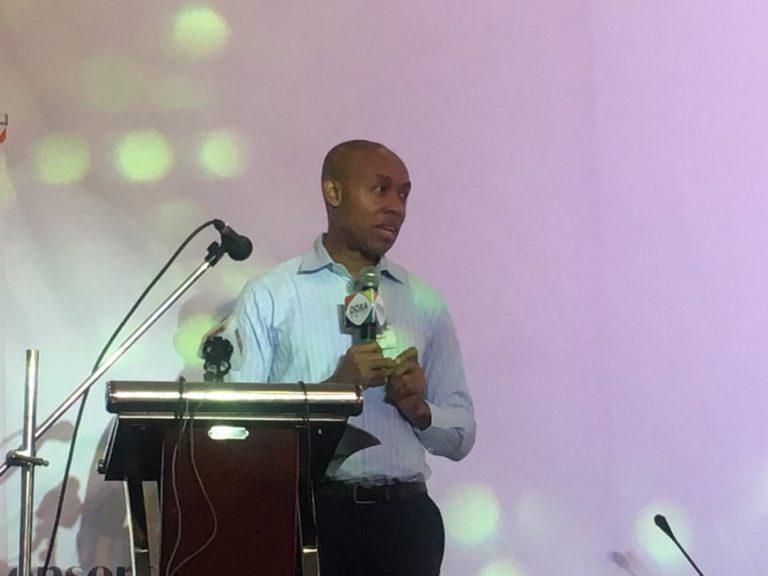
SOCIAL media is driving up violence and other vices in the country, and one of its major problem is “influence without responsibility,” says the former Chairman, National Human Rights Commission (NHRC), Chidi Odinkalu.
“I know some people who have almost been driven to suicide because of bullying that goes on online,” Odinkalu said on Wednesday in his keynote address at the opening of the New Media, Citizens and Governance (NMCG) conference in Abuja.
While admitting that social media can be a platform for transparency, he said it can also be a platform for falsification.
“People now open up to 100 handles to abuse you continuously,”Odinkalu said, adding that abuse and name-calling on social media mean that the one being abused is doing what is right.
“You must never give up on your convictions because people are abusing you. Abusing and calling you names is okay, it means you are doing something useful. Focus on what’s right.“
He advised his audience never to be afraid of disagreeing with the sycophants who do nothing but hail their principals.
He, however, remarked that the new media has played a tremendous role in entrenching democratic culture in Nigeria, particularly praising the role the new media has played in ensuring dissemination of information and demystifying the aura around power.
“The power of new media has made it easy to access the innermost corners of Nigeria’s capital city, Abuja. Places like the Presidential Villa where people are being barred from taking pictures already exist in Google Maps,” Odinkalu said.
Speaking during the session titled “Are Elections Won on the Timeline?”, Demola Olarewaju, a digital media expert and member of the People’s Democratic Party (PDP), considered digital tools as crucial to the success of Nigeria’s democracy, saying “by leveraging the tools of the internet, we can confront rigging and limit its impact on our elections.”
Sesugh Akume of the Abundant Nigeria Renewal Party (ANRP) said the Nigerian people can further use the social media to “counter the APC-PDP dichotomy that has dominated political discourse in Nigeria. If active Nigerians decide to expand the discussion beyond APC and PDP, they can easily do these with social media.”
Supported by Facebook, MacArthur Foundation, Luminate & Palladium, the NMCG is a biennial event that was last held in 2016.
The 2-day conference is hosted by Enough is Enough Nigeria (EiE), Paradigm Initiative and BudgIT to discuss the theme, “Government, New Media, and Civic Spaces.”
Tope Ogundipe, the Director of Programs at Paradigm Initiative, said the organisers were pleased with the turnout on the first day of the conference and hope “the conversations will help provide clarity to the issues raised here while also energising citizens to take their role in the democratic process more seriously.”
MAIMUNA Aliyu, one of the two persons whose nomination to the board of the Independent Corrupt Practices and other related Offences Commission (ICPC) was rejected, has again been invited to explain how she raised fund to buy property in Dubai.
Aliyu was picked up by ICPC operatives on Wednesday in Abuja, and is currently at the Commission’s headquarters, an insider told The ICIR.
On August 1 2017, then Acting President Yemi Osinbajo nominated Aliyu and Saadu Alanamu, former Chairman of the Governing Council of Kwara State Polytechnic, Ilorin, into the board of the ICPC, but following a report by The ICIR, their nominations were stepped down.
Aliyu, a former director with Aso Savings and Loans Plc, an Abuja-based microfinance bank, was later charged to courtby the ICPC, on a three-count charge of abuse of office, misappropriation of public funds and criminal breach of trust.
She was accused of defrauding Aso Savings and Loans to the tune of N57 million, but she pleaded not guilty to the charges and was granted bail in the sum of N10 million, with two sureties in like sum who must also be resident within the jurisdiction of the court.
The source told The ICIR that Aliyu was today re-arrested to explain how she raised fund to buy a Dubai house which was recently traced to her.
As at 18: 28 pm Aliyu was still in the custody of the ICPC.
INTERNATIONAL and local awards, as well as recognition, have trailed ICIR-trained journalists across newsrooms in Nigeria. The capacity training project supported by MacArthur Foundation has enabled journalists from newsrooms across Nigeria receive awards and nominations for their investigative work and contribution to investigative journalism.
Also, Kemi Busari and Oladeinde Olawoyin, both of Premium Times, got nominations in Anti-corruption and Business Reporting categories respectively as finalists among the 15 others.
Manasseh Azuri Awuni of Ghana (who emerged the overall best journalist), Akaeze, and the other winners at the event received plaques, certificates and cash prizes.
All the finalists including Akaeze, Kemi Busari and Oladeinde Olawoyin will be inducted as fellows of the MFWA’s Journalism for Change Network, which goes with regular training opportunities within and outside Nigeria.
The West Africa Media Excellence Awards is an initiative of the MFWA to promote media excellence in the sub-region. The awards ceremony honours West African journalists who have produced compelling stories which have had a significant impact on society. The 2018 edition of the West Africa Media Excellence Awards held in Accra, Ghana.
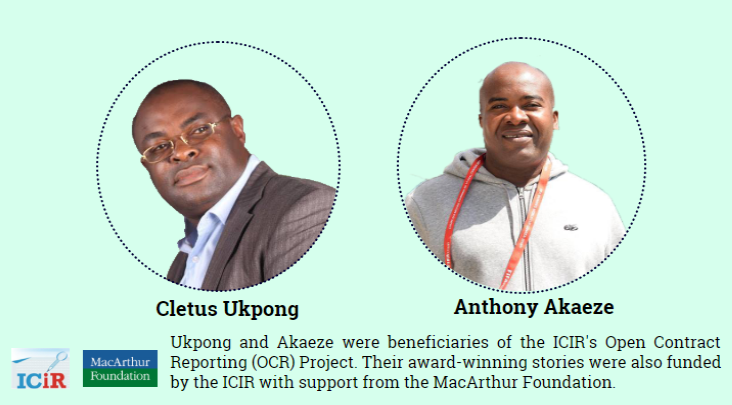
In addition, Cletus Ukpong of the Premium Times received a fellowship award for his six–part series investigation on how corruption, poor budget planning and implementation, and outright neglect led to the near collapse of public education in Akwa Ibom, one of Nigeria’s richest states.
The fellowship which will be funded by MacArthur Foundation is an all-expense paid trip to attend the annual African Investigative Journalism Conference-AIJC. The African Investigative Journalism Conference (#AIJC18) is a gathering of African investigative journalists for skills training, networking, promoting, collaboration and in-depth accounts of major investigative stories.
The 2018 Edition will be hosted by the University of the Witwatersrand, Johannesburg from 28-31 October.
Omeje was announced the winner of the award at a ceremony in Johannesburg, South Africa, in late October.
Also, Adekunle Adebajo of the ICIR won the Best opinion piece award at the Campus Journalism Award named in honour of the late Alfred Opubor organized by The Premium Times Centre for Investigative Journalism –PTCIJ.
The MacArthur Foundation funded project aims to strengthen the capacity of the media to investigate and report on budgetary and procurement processes in Nigeria. The project seeks to enhance the capacity of the media to understand public procurement processes and report budgetary and procurement related corruption, with a view to promoting accountability, transparency, good governance and strengthening anti-corruption efforts.
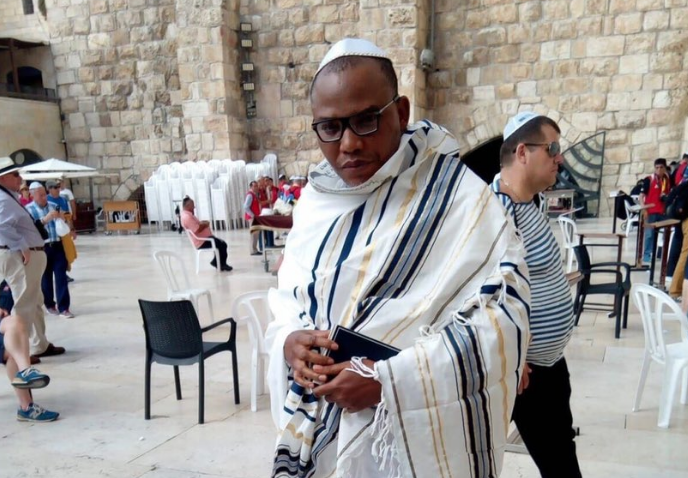
A video clip surfaced on the social media on Friday evening showing the hitherto “missing” leader of the now proscribed Indigenous People of Biafra (IPOB), Nnamdi Kanu, in Jerusalem, Israel.
The video which was shared by a Facebook user, Castro Nkume, showed Kanu observing some Jewish religious rites with the narrator behind the camera eulogising him and boasting that IPOB is back.
Kanu has been missing since September 2017 following an alleged raid on his home in Umuahia, Abia State, by men of the Nigerian Army. He had been arrested in October 2015 and was facing terrorism and treason charges at the Federal High Court, Abuja.
He was granted bail on health grounds in April 2017, on a number of stringent conditions, which included that he must “deposit his Nigerian and British passports with the court”. This effectively meant that Kanu could not travel out of the country.
How then did the IPOB leader manage to find his way out of Nigeria to the various locations where he was reported to have fled to, and eventually, Israel?
Sighted in Ghana
Earlier in February this year, TheCablehad reported that Kanu was sighted in neighbouring Ghana. The report quoted unnamed security sources as informing it that “Kanu was ferried to the Niger Delta creeks by militants at the height of Python Dance II, from where he found his way to Ghana by sea”.
“Kanu is said to live at an area called Cantonment, also in Accra, at an estate called ‘Arabella’. He is regularly seen at Kenzo Bar and IBG saloon in Accra, disguised in face cap and usually in company with his wife, Uchechi.” the report added.
Fled to London via Malaysia
In October 2017, former Governor of Abia State, Orji Uzor-Kalu, said that contrary to the rumours that Kanu had been whisked away by Nigerian soldiers and was being held in an undisclosed location, he had actually fled to Malaysia and from there to London.
“Kanu was not taken away by the military. Kanu went to Malaysia from where he travelled to the United Kingdom,” Uzor-Kalu said during an interview with The Punch.
“Nnamdi Kanu is in London right now as we speak. He was not arrested by anybody. He left the country on his own. One of his relations has spoken to me and explained everything because I wanted to see him and talk to him wherever he was and see how I could meet some Federal Government officials on his issue.”
DSS denies involvement
On Monday, October 23, the leader of the Movement for the Actualization of the Sovereign State of Biafra (MASSOB),Ralph Uwazuruike, said that Kanu’s disappearance is “a non-issue because it was carefully prearranged by the Department of State Security (DSS)”.
But the DSS, through its spokesman Peter Afunanya, described the allegation as “fake, mischievous, defamatory” and “nothing but a figment of the imagination of the originators”.
“The public should, by now, have noted the antics of Kanu, IPOB and their collaborators whose stock in trade is to peddle unfounded rumours, gossips and propaganda aimed at subverting the government, its key agencies and officials,” Afunanya stated. He further warned that the DSS “will not stand by idly and watch these undesirable elements achieve their aims”.
Immigration also
When the ICIR contacted Sunday James, the Public Relations Officer of the Nigeria Immigration Service (NIS), to find out whether it was possible for someone to get to Europe from Nigeria without a passport, he declined to comment, saying that “it is not within my purview”.
Earlier, a personnel working in the NIS contact centre who pleaded to remain anonymous told the ICIR that there are lots of ways Kanu or anybody could have gotten out of Nigeria, given the country’s very porous borders.
“Our border is so vast, extensive and very porous that the number of immigration officers we have in the country is just so small that we cannot man the entire (borders),” he said.
“We can only man the authorised entry points, and we patrol the unauthorised entry points. I’m sorry to say that it would not be a surprise if somebody sneaks out or into the country, because like I said, the border is so porous.”
FHC couldn’t be reached
The ICIR also tried to contact the Federal High Court, Abuja, but the contact phone number on the court’s websitedid not connect, saying that the number is not valid. An e-mail sent to the address provided on the website was only replied by an automatic message, “Welcome to the Federal High Court Nigeria. We shall soon reply your mail.” No other response has been gotten from the court.
Israel says Kanu not in the country
Meanwhile, the Israeli government has said that there is no evidence to prove that Kanu visited the country recently and that the video making the rounds on social media could be an old clip.
Vanguard Newspaper quoted the spokesman of the Israeli Foreign Ministry, Emmanuel Nashon, as saying this when he addressed some African journalists in Jerusalem, the country’s capital, on Monday.
“There are no details about his recent visit to this country yet,” Nashon was quoted as saying, adding that Israel’s relationship with Africa was very important.
“Israel is a peaceful nation that believes in the process of the world at this changing times. Jerusalem is one of the great cities in the world. We are considering a lot of networks with Africa and African journalists will get direct contact with Israel journalists so that you don’t need to take news from agencies,” he said.
FORMER Governor of Ekiti State, Ayodele Fayose, has been granted bail by Justice Morenikeji Olatoregun of the Federal High Court, Lagos, on Wednesday.
Fayose has been in the custody of the Economic and Financial Crimes Commission (EFCC) since October 16. He submitted himself to the anti-graft commission a day after his tenure as governor ended, wearing a t-shirt with a bold inscription, “EFCC I’m here”.
The EFCC accused Fayose of stealing, receiving money from Musiliu Obanikoro, a former minister, criminal breach of trust, illegal acquisition of property in Abuja and Lagos and illegally acquiring property in the name of his sister in Abuja, among others. In all, the EFCC said Fayose’s fraudulent activities amounted to about N6.5 billion naira.
He pleaded not guilty to the charges.
At the resumption of trial on Wednesday, Justice Olatoregun admitted the former governor to bail in the sum of N50 million and two sureties who must have landed property in Lagos and must provide a three-year evidence of tax compliance. Fayose was also ordered to deposit his passport and other travelling documents with the court registrar.
The case was adjourned to November 19 for continuation, while Fayose was ordered to remain in the EFCC custody pending the fulfilment of his bail conditions.
The EFCC has listed at least 22 witnesses, including former Minister of State for Defence, Musiliu Obanikoro, and former Group Managing Director of Diamond Bank, Alex Otti, to testify against Fayose.
Obanikoro, a former Lagos State governorship candidate of the Peoples Democratic Party (PDP), was the one who allegedly collected hundreds of millions of dollars from the former National Security Adviser, Sambo Dasuki, and delivered same to Fayose in cash, at the Ekiti State Government House, in 2014. The money, according to the EFCC, was meant to be used for vote buying during the 2015 general election.
However, Obanikoro has recently joined the ruling All Progressives Congress (APC), and though he was earlier arrested and detained and charged to court by the EFCC, recent reports said he has been given back his travel documents and has returned to the United States of America where he is partly based.
Officials of the EFCC, however, said that Obanikoro had not been cleared, but was only allowed to travel because he had met some conditions, including returning some of the money he collected from Dasuki.
“Obanikoro was able to return over N100m out of the money he received from Dasuki. He showed a genuine commitment to returning more money and assist the EFCC with investigations and his passports were returned to him. The fact that the Commission returned the passports to him does not mean that he has been cleared,” an unnamed EFCC official was quoted as saying.
FOLLOWING the withdrawal of the sum of $462 million from the country’s Excess Crude Account (ECA) by President Muhammadu Buhari without the approval of the National Assembly, the African Centre for Media and Information Literacy (AFRICMIL), a civil society organization, has filed a suit at the Federal High Court Abuja, challenging the legality of the act in view of the provisions of the 1999 constitution.
Recall that in April 2018, President Buhari had approved and taken the said amount from the nation’s coffers in order to purchase 12 Tucano jets from the United States (US) without appropriation by the National Assembly.
AFRICMIL, in light of subsections three and four of section 80 of the 1999 constitution, is challenging the authority of the President, as an individual, to withdraw money from public funds without approval by the National Assembly.
As provided in the constitution, “No money shall be withdrawn from any public fund of the Federation, other than the Consolidated Revenue Fund of the Federation, unless the issue of those monies has been authorized by the act of the National Assembly.
“No money shall be withdrawn from the Consolidated Revenue Fund or ANY OTHER PUBLIC FUND of the federation, except in the manner prescribed by the National Assembly.”
The suit number FHC/ABJ/CS/1179/2018 filed by the organization, represented by its programme officer, Godwin Onyeacholem, has as defendants the Speaker of the House of Representatives, the House of Representatives, the Senate President, the Senate of the Federal Republic of Nigeria, the President, Federal Republic of Nigeria and Attorney General of the Federation.
The plaintiffs are asking the court to determine:
“Whether the 5th defendant (which is the Nigerian President) has the power to or right to withdraw and spend the sum of $462,000,000.00 (Four hundred and sixty two million dollars only) or any other amount whatsoever from the public fund of the federation on the payment for or purchase of Super Tucano Aircraft or aircrafts by whatever name called without the prior approval of the withdrawal of the amount and its spending by the 2nd and 4th defendants (National Assembly) in the light of the provisions of section 81, 82 and 83 of the 1999 constitution of the Federal Republic of Nigeria.”
AFRICMIL also prayed the court to determine if the two presiding officers of the National Assembly, the Speaker of the House of Representatives and the Senate President have the right to ratify, approve and or include money already taken and spent in a new budget without provision for the act in the Nigerian constitution.
This is following the President’s letter to the National Assembly informing it of his actions while directing it to include the already withdrawn money in the 2018 budget.
The plaintiffs also want the court to issue a 30-day ultimatum directing President Buhari and the Attorney General of the Federation to return the money to the nation’s account in the absence of the provision of such acts in the 1999 constitution.
THE use of electronic mails for the swift exchange of information has been in vogue for about five decades. Accompanying the invention of the internet, emails have no doubt transformed how people communicate.
Across the world, people — and governments — are today taking the technology seriously, if not religiously, as a way of making enquiries, sending notifications, seeking job placements among other needs. The Nigerian federal government (FG) is, however, lagging behind the developed world in embracing this important tool, as The ICIR discovers in a reality check.
On Wednesday, October 3, an enquiry was sent to twenty six (26) official email addresses belonging to twenty four (24) federal ministries, including the Office of the Secretary to Government of the Federation (OSGF).
In the email, The ICIR asked to “confirm if the Ministry or any department under it has recently put out a call for job applicants”, and also requested for information on when next the ministry is likely to make such a call.
A week after, October 11, a reminder was sent to the addresses which had not responded to the previous mail. In spite of this, the vast majority of the ministries ignored the emails.
‘Delivery has failed to these recipients’
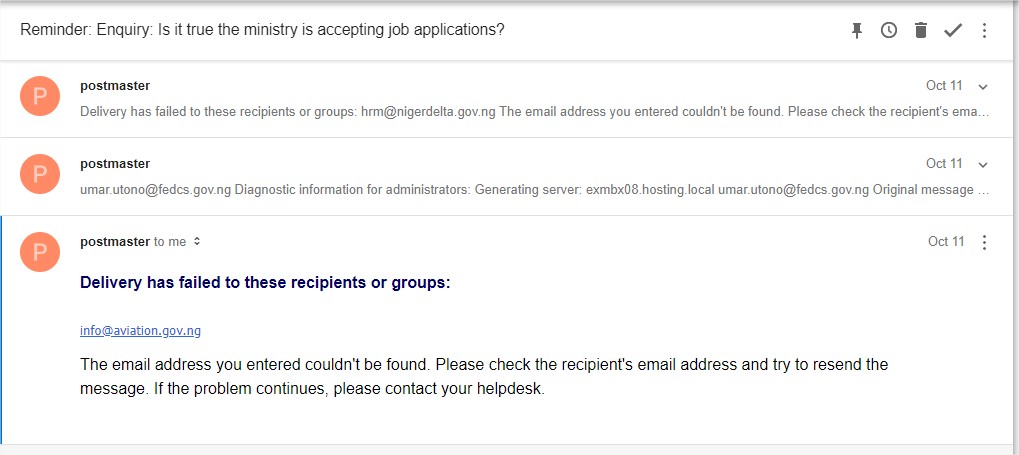
Not long after the email was dispatched to the various addresses, automatic responses began to pour in from the hosting companies’ postmaster informing the reporter that “delivery has failed to these recipients or groups”.
“The email address you entered couldn’t be found. Please check the recipient’s email address and try to resend the message. If the problem continues, please contact your helpdesk,” the notification added.
While some of the ministries have alternative contact emails, for others, the unavailable addresses are the only ones provided on their websites. “Info@nigeria.gov.ng”, provided on the country’s official website, was also found to be invalid.
Only 4 in 24 ministries replied
Eighty-three percent, that is up to 20, of all the 24 federal ministries emailed did not respond at all, despite the sending of a second mail after one week. Of the 26 addresses mailed, 11 are not available; and of the 15 which are valid, only 3 responded.
The first ministry to respond was the Ministry of Finance. After only two hours, a reply came from Magaji Musa Mohammed, whose address was not one of the original recipients.
“Good afternoon,” he wrote. “The Ministry of Finance is not responsible for recruitment. It is Federal Civil Service Commission that has the right to recruit. Thank you.”
Four hours after the mail was dispatched, a second reply came from the Ministry of Power, Works and Housing.
“The Ministry doesn’t recruit, only the Federal Civil Service Commission carries out recruitment. kindly disregard the rumours please,” wrote Ibrahim Almustapha Abdulkadir, the ICT Desk Officer.
An hour after a reminder was sent at 11:46 am on October 11, a response came from the Ministry of Industry, Trade and Investment. “Dear Adekunle Adebajo,” it said, “the Ministry, for now, has not placed any advertisement for any vacancy. So please ignore the rumour.”
At 10:48pm on the same day, a reply came from the Ministry of Agriculture and Rural Development: “Dear Adekunle, in line with the Public Service Rules, the staff of the ministry are recruited by the Civil Service Commission and NOT by the ministry. If you are keen on working at the ministry, you should apply to the Civil Service Commission through your state Commissioner. Thank you.”
Six ministries have no stated email addresses
Out of all the federal ministries studied, six (25 percent) have no email addresses stated on their website. These include the Ministry of Education, Information and Culture, Science and Technology, Defence, Interior, and Finance.
With the exception of the Finance, all of these ministries have contact forms on their sites through which members of the public or other interested parties may make enquiries. However, none of the enquiries sent through the forms, though acknowledged, was replied.
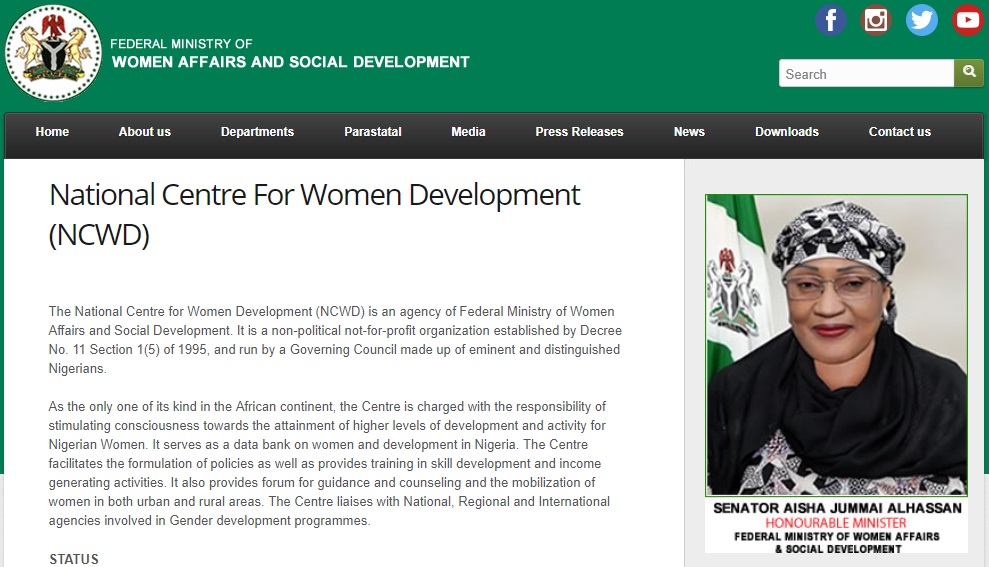
The ICIR has also observed that the website of the Ministry of Finance has been unavailable for several weeks, and that of Women Affairs has been restored only recently. Snapshots from Wayback Machine, an internet archival tool, show that they were accessible earlier in 2018.
When the Women Affairs Ministry’s website was visited on October 3, the error notice announced that the service has been blocked.
“This is a Federal Government of Nigeria service,” it said, “and access to the web page or streaming service you require has been blocked in accordance with Acceptable Use Policy (AUP) restrictions from 9am to 4pm on weekdays.
“If you require this restriction lifted, please call the Galaxy Backbone Service Desk on 09-4621544 or send an email to: servicedesk@galaxybackbone.com.ng.”
The website presently takes at least ten minutes before it is opened regardless of the internet browser in use. Then again, Aisha AlHassan is still stated as the Minister of Women Affairs — though she resigned nearly three months ago on August 1.
For the Ministry of Finance, while the homepage is not available, the Whistleblowing Portal which is a sub-domain is functioning. As a result, the email enquiry was sent to this portal and the Budget Office.
ICT expert speaks
Hilary Onyeka, an Abuja-based web developer, told The ICIR various factors could be responsible for mails sent to certain addresses returning mailer daemons. According to him, it may be that the email address was not created in the first place but was publicly displayed.
“Also, when creating an address on the mail server, it would create a directory for that address as well as a username. The username might have been created but there is no directory where sent mails will be delivered to,” he added.
Onyeka further explained that hosting websites on Virtual Private Servers may lead to difficulties in setting up the mail sever, and recommended that the task is outsourced to email services such as Migadu.
He also urged persons mandated to respond to electronic mails for ministries as well as other organisations to ensure they login using their mobile email applications. This, he said, will ensure they receive real-time notifications as soon as mails are sent to them.
Information Minister ignores call, text
The ICIR texted Lai Mohammed, Nigeria’s Minister of Information and Culture, on Tuesday to ask why his ministry does not have any visible email address and why an enquiry sent through the contact form was not replied. The minister, however, did not provide any response. Likewise, a call to his number on Wednesday for the same purpose was dropped.
Segun Adetola, Assistant Press Director at the Office of the Secretary to the Government who oversees electronic communications, told The ICIR his office is not aware of any enquiry and asked for the address used.
“This is not our e-mail,” he replied after the address was provided, though it is what is stated on the office’s contact page.
“Looks like one of those that the scammers are using,” he added. “However, I need to meet you before releasing our mail address.”