Home Blog Page 2637

I’ll meet hundreds of Abdulrasheed Mainas again, says Malami


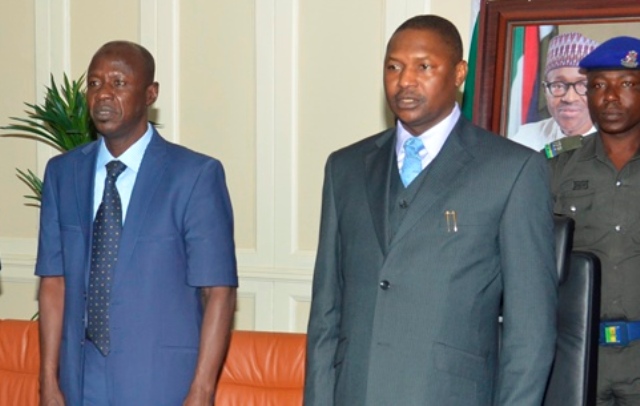
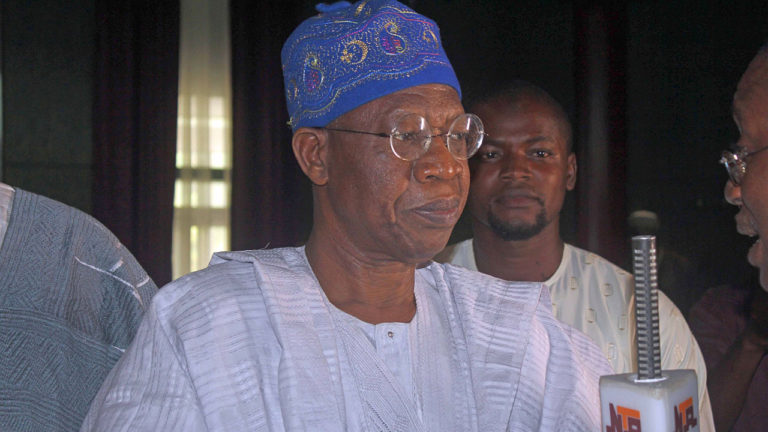
Abubakar Malami, Attorney General of the Federation and Minister of Justice, says Abdulrasheed Maina is a patriotic Nigerian whose main objective is to provide information that would benefit the nation.

Therefore, Malami said he would “meet hundreds of Mainas again”  if it would help protect the national interest.

He also said the information he got from Maina during their meeting in Dubai, “turned out to be substantially and factually correct”.

Maina is the former Chairman of the Pension Reforms Task Team (PRTT) who fled the country after he was sacked from the civil service and was later declared wanted by the Police and the EFCC for allegedly embezzling billions of pension funds.

Speaking during an interview with The Interview MagazineMalami insisted that he did the right thing by deciding to meet with Maina even though he was already officially a fugitive.

“If hundreds of Mainas that believe they had information to offer as far as the protection of the national interest is concerned, I will meet them and I will do so again,” Malami said.

Malami, however, explained that his meeting with Maina was witnessed by Babagana Monguno, National Security Adviser, as well as Maina’s wife. He also said that he got clearance from Lawal Daura, Director General of the Department of State Services (DSS), before agreeing to the meeting.

“The NSA and I met with him at the reception of the Emirate Palace Hotel in Abu Dhabi. He came along with his wife. We were not aware that he was in the company of his wife,” Malami narrated.

“So we discussed. The discussion happened to be very meaningful, particularly from the point of national interest. It was a time that Maina intimated us to the fact that there exists a cartel, a syndicate within the pension scheme.

“The truth of the matter is that what was being paid as pension on a monthly basis was around N5bn or so. But the actual figure required for pension settlement per month was within the range of N1.3bn. The implication of what he was saying was that around N3.7bn or so went into personal pockets. He confided in me that there was an attempt on his life, when he had fallen out of favor with the syndicate.

“Back home, I looked at the information. I shared it within the government circle. We took advantage of the information provided by him and it turned out to be substantially and factually correct as it relates to a pensions syndicate, and also as it relates to ghost pensioners within the pension scheme. And it turned out to be beneficial as it reduced the pension wage by a sizable degree, that is N5bn to N1.3bn accordingly.

“So that is what happened. But one thing I want to put across clearly is the fact that our discussions with Maina were without any strings attached. He simply came to me as a patriotic Nigerian desirous of providing information that could be beneficial to the government.”

Malami agreed that his meeting with Maina was without the knowledge and consent of President Muhammadu Buhari, but that “much later, after we returned back home, I took Mr. President into confidence about the information”.

He also said that the information provided by Maina had led to the arrest of 14 suspected pension fraudsters, two of whom have already been convicted, while 12 other cases are at various levels of prosecution.

Nevertheless, Malami reiterated that he was not responsible for Maina’s secret reinstatement into the civil service, adding that “as far as the office of the Attorney General was concerned … the reinstatement of Maina, as at today, was a work in progress and no conclusion has been arrived at”.

How will a breakthrough come?

0


By Edwin Madunagu

About five years ago, in late January and early February 2013, The Guardian carried my three-part column titled “Struggling for seats in a sinking boat.” When, recently, I examined the first part of that series (the one that appeared on January 31, 2013), I was struck by the freshness of what I wrote. For a moment I thought I was commenting on the current situation.

Let me reproduce just a paragraph from that article: “Nigeria is currently like a sinking boat: Boko Haram; corruption and political economy of class and state robbery; state delinquency (that is rapidly acquiring features of failed state); mass poverty and dispossession; armed robbery and kidnapping; gross social inequality; unpatriotic ruling classes; marginalization and anomie; violence, mass insecurity and kindred social maladies – are, in their combined effect, literally sinking the country. In the midst of all this, the rulers are fighting for the next presidency. That is what I have likened to ‘fighting for seats in a sinking boat’”.

At the time I wrote the January 2013 article, the fight for Nigeria’s presidency was raging at two levels: At one level was the struggle within the former ruling party, the People’s Democratic Party (PDP), the party of President Goodluck Jonathan. The primary struggle in the party was between those who wanted the president to be presented by the party in the 2015 presidential election and those who did not want him as their candidate. The secondary questions included where the PDP’s presidential candidate, other than President Jonathan, should come from: the North or the South?

At another level is the struggle between PDP on the one hand and the other ruling-class parties – which were then in the opposition – on the other hand. In the vanguard of this opposition were two parties: the Action Congress of Nigeria (ACN) led by Asiwaju Bola Tinubu and the Congress of Progressive Change (CPC) led by General Muhammadu Buhari. These two opposition parties, together with fractions of two other smaller parties – the All Nigerian Peoples Parties (ANPP) and All Progressives Grand Alliance (APGA) – were soon to merge and become a “mega” party, the All Progressives Congress (APC).

The struggle between the PDP and the APC in the period between the emergence of the latter in 2013 and the 2015 presidential election was – to put the matter mildly – a struggle of hate. I can say that in my own conscious political experience the bitterness was comparable only to that which, towards the end of the First Republic (1960-1966), characterized the struggle between the Nigerian National Alliance (NNA) and the United Progressive Grand Alliance (UPGA). The debate between the ruling PDP and its ruling class opponents was as violent as debates in words could become.

Beyond that would be what Mao Zedung called “politics by other means.” To both the PDP presidency and its APC opponents the 2015 presidential election could only be deemed free and fair if their candidates won! In other words, if either party won, then the election would be considered unfree and unfair by its opponent. And violence would erupt! That was what the two sides literally threatened. No nation, no people could be more threatened and blackmailed by its rulers!

The People’s Democratic Party (PDP), like the National Party of Nigeria (NPN) of the Second Republic (1979-1983), was deliberately created to be the largest, the most powerful and the most national of the parties of Nigeria’s ruling classes. The party came into being after the deaths of General Abacha and Chief Abiola in mid-1998. Its status as the largest party of the ruling class was formally confirmed in the February 1999 presidential election. From 1999 to 2013, that is, until the emergence of the All Progressives Congress (APC), PDP maintained and renewed that position. Then, through a thunderous political wave which started in Nigeria’s ruling class almost immediately after Jonathan’s victory in the 2011 presidential election, PDP’s hegemony in the ruling class, and hence in the country, began to be seriously challenged.

For the first time since independence, political hegemony passed from one ruling class party to another – without a military coup d’etat or war! But that was not all. The displacement of the PDP by APC happened before the March 2015 presidential election! The election – whether it was free and fair, or not – only confirmed this displacement. I still wonder how a serious student of society and politics, let alone a Marxist, could have given the PDP the slightest chance of defeating the APC in the 2015 presidential election. How could the PDP win when, before the contest, this ruling party had lost dominance and hegemony in the political class as well as among the masses? And beyond this, how could a ruling party in 2015 Nigeria retain power through an election taking place at a time it had lost actual control of the strategic institutions of state including those that would conduct the elections?

The general elections took place and APC won overwhelmingly at all levels. It assumed formal office on May 29, 2015 having assumed real power immediately it was declared the winner of the contest two months earlier. At the time the 2015 elections took place APC appeared – in membership, leadership, antecedents and rhetorics – to be more progressive than the PDP.

Now, just before the elections I was gripped by two real fears. The first fear arose from the possibility of emergence of armed support (state and non-state) – for either the PDP or the APC or both – before, during or after the elections. The other fear arose from the real possibility, not just of ruling class-induced crisis in the Left, but of massive co-optation of segments of the country’s poplar-democratic movement by these two parties or forces within them. The first fear did not materialize – at least not overtly. But my second fear partially materialized: large segments of the Left and popular-democratic forces were actually coopted into the APC where they became political militants.

Putting aside the Civil War tragedies in both wings of the Nigerian Left, it may be proposed that this type of massive ideological – political cooptation in the Left had, before the 2015 general elections, taken place only on three occasions. The first time was in (1963-1965) when fractions of the Left, including those that were described as “extreme tendencies”, teamed up with the opposition United Progressive Grand Alliance (UPGA) to confront the ruling Nigerian National Alliance (NNA). The second occasion was in 1983 when fractions of the Left teamed up with either the Unity Party of Nigeria (UPN) or the radical wing of the Peoples Redemption Party (PRP) in opposition to the ruling National Party of Nigeria (NPN). And the third time was in 1993 when large segments of the Left went into the campaign of Chief Moshood Abiola, the presidential candidate of the Social Democratic Party (SDP).

The difference between these earlier political alliances/cooptations (1964, 1983 and 1993) and the last one (2015) was that in the former the ruling class formations so enlarged and enriched by the Left did not gain power; but in the latter the “lucky” ruling class formation – in this case, the APC – came to power. Taking a long view of history, three connected questions then stand before the Nigerian Left. One: Did the country make a progressive breakthrough in 2015? Two: Is the Nigerian Left, together with its popular-democratic affiliates, now weaker or stronger as the real opposition to the exploiting and oppressive social order we are committed to abolishing? Three: Is the time not appropriate for the Nigerian Left to start reviewing (not abandoning!) its inherited and resilient theory and strategy of “electoral collaboration?”

Madunagu, mathematician and journalist, writes from Calabar, Cross River State.

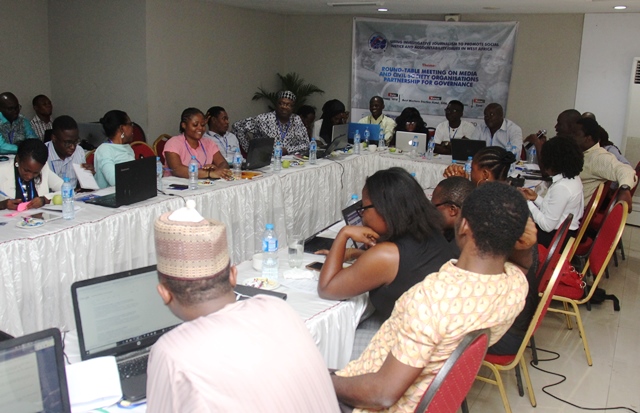
Journalists parley with CSOs on good governance — courtesy of the ICIR

Members of Civil Society Organisations (CSOs) and media practitioners have agreed to improve collaborations with one another in their efforts to promote social justice and good governance.

This agreement, among others, was contained in a communique issued at the end of a one-day round-table meeting on media and civil society organisations partnership for governance and accountability campaigns.

The round table, organised by the International Centre for Investigative Reporting (ICIR) and supported by the Ford Foundation, brought together 34 participants from the media and civil society groups across West Africa to deliberate on how to create effective partnership and collaboration to promote governance and accountability.

The meeting identified some of the factors impeding effective collaboration between the media and the CSOs, such as the failure of CSOs to incorporate media into their project plans.

At the end of the deliberation, participants agreed that the CSOs needed to learn a lot about storytelling, so that they can engage the media and other stakeholders.

The campaign for partnership between media and CSOs, they emphasized, must be taken to editors, to also improve their understanding of the CSO sector and its operations.

At the end of the meeting, the following communiqué was issued:

The round table meeting on media and civil society organisations partnership for governance and accountability campaigns was organized by the International Centre for Investigative Reporting ICIR on Wednesday the 24th of January 2018 at the Best Western Starfire hotel, GRA Ikeja, Lagos.

The meeting brought together 34 participants from the media and civil society groups across Nigeria and West Africa to deliberate on how to create effective partnership and collaboration to promote governance and accountability issues in West Africa.

The objectives of the round table meeting were captured as follows:

• To promote effective collaboration and partnership between the media and civil society groups for governance and accountability campaigns.

• To understand the role of the media and CSOs in bringing about social justice and accountability.

• To see how the media and CSOs can work together

• To understand the challenges of effective partnership between media and CSOs.

• To chart a way forward on effective partnership and collaboration.

To achieve these objectives, the meeting had presentations that spoke on the essential roles of media and civil society in fostering social and accountability campaigns; and toolkit for effective media and CSO bonding. The presentation on essential roles of the media and CSO spoke elaborately on the constitutional role of the media as the watch dog and their responsibility to the people in bringing about transparency and good governance.

The roles of civil society in this regard were also highlighted. In summary it was stressed that both groups are working towards the same goal and that the civil society and the media can achieve much more to promote social justice and accountability when they work together than the sum total of their individual efforts.


READ ALSO:


Thereafter the meeting identified the challenges impeding media and CSO collaboration:

1. Media component is not incorporated into project plans of the CSOs to the extent that will foster mutual cooperation between the groups.
2. Some media often expect gratification or payments for publication of CSOs work, creating a difficulty for CSOs on how to engage some of the media without monetary influence.
3. Some of the media often use copy and paste method that is, word for word in their reporting, making media coverage across different media organisations monotonous.
4. Difficulty in convincing some of the CSOs that some of the media are genuinely interested in their work.
5. Media owners are suspicious and perceive CSOs as wanting to use their media outlets for advertorials or personal aggrandizement.
6. That some of those handling communications for CSOs do not have the necessary expertise in media relations.
7. Some CSOs often fail to explain to the media how they operate in terms of the grants they get from donors with the result that there is a wrong perception that the funds are available for them to use as they please.
8. Section 22 of the 1999 Nigerian constitution (as amended) gives the media sole responsibility of holding the government accountable and ensuring compliance with the Fundamental Objectives and Directive Principles of State Policy contained in chapter two of the constitution. Experience has demonstrated that the media cannot play this role alone without the help of the CSOs, using the judiciary to enforce such compliance.

WAY FORWARD
1. That CSOs need to learn a lot about story telling as a way to engage media specifically and other stakeholders in a general sense. CSOs and possibly the media also need to be trained on story telling.
2. It is important to include media practitioners in the activities of CSOs from the planning and execution of such programmes and make them partners as a way of creating a sense of ownership for them while also drawing from their expertise and experience in the development and implementation of such projects.
3. The campaign for partnership between Media and CSOs must be taken to editors to also improve their understanding of the CSO sector and how they operate as some editors also expect such stories to be paid for.
4. CSOs should recruit persons with communication and media backgrounds to handle their external communication.
5. CSOs in writing their news/ press releases should endeavour to use the essential techniques of news writing, thereby making it easy for the media to publish such stories and materials.
6. That the media and the CSOs should jointly fight for the amendment or total removal of section 6(6)(c) of the 1999 Nigerian constitution to enable the CSOs undertake litigation in appropriate cases to enforce compliance with the provisions of section 22 of the constitution.
7. CSOs should look at the media that work in areas of their interest and build partnerships with them to advance their common interests.
8. Partnerships should be built at institutional levels for specific campaigns and where that is not possible, more informal partnerships may be arranged.
9. That the CSOs should provide the media with contents that have news and information value for the media and are suitable for publication.
10. There is need for further and constant engagement between the two groups to enhance cordial relationship to promote governance and accountability issues.

Defence Minister: Herdsmen are Nigerians… we must learn to live with them


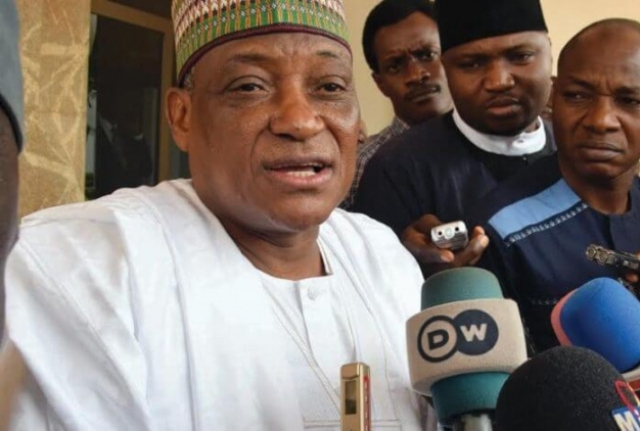
Mansur Dan-Ali, Minister of Defence, says the immediate cause of the New Year’s Day massacre by suspected Fulani Herdsmen was the introduction of the anti-open grazing law, adding that Nigerians must learn how to live with one another and accommodate strangers.

Speaking after a security meeting with Service Chiefs at the Presidential Villa, Abuja, on Thursday, Dan-Ali said there were also militias who called themselves “forest guards” but were caught with AK 47 guns.

“In the killings you are talking about, there are militias involved. Some people were caught with arms and they call themselves Forest Guards or whatever, with AK 47,” Dan-Ali said.

“There is nowhere in this country where arms are allowed to be carried apart of legitimate security forces. So anybody carrying any arm is doing so illegally.

“Militias were caught in the same land doing the same killings, so the killings are not done by any particular group; it is a communal issue.

“Since the nation’s Independence, we know there used to be a route followed by the cattle-rearers because they are all over the nation. You go to Bayelsa, Ogun, you will see them. If those routes are blocked, what do you expect will happen?

“These people are Nigerians. It is just like one going to block shoreline, does that make sense to you? These are the remote causes of the crisis.

“But the immediate cause is the (anti-open) grazing law. These people are Nigerians and we must learn to live together with each other. Communities and other people must learn how to accept foreigners within their enclave.”

Speaking further on the outcome of the security meeting, Dan-Ali said that the discussion between the Nigerian and American government for the sale of fighter jets, has stalled.

According to the minister, Nigeria is not ready to meet the conditions given by the US, without which the sales cannot be concluded.

He explained that the US was unwilling to train Nigerian technicians to be part of the maintenance crew of the fighter jets. The country is also not willing to allow any Nigerian technician to be part of the production inspection of the planes.

“These conditions, we will not accept,” Dan-Ali said.

“This is what we normally do in all the defence contracts; we send our personnel to go and understudy, especially when it comes to specialized aircraft like in Russia, our personnel are permanently based where the production is being done for this MI35 helicopters. Payments will be made when the conditions are reduced.”

No evidence of corruption charge against Adoke, Malami says in letter to EFCC


Abubakar Malami, Attorney General of the Federation (AGF) and Minister of Justice, wrote the EFCC saying it lacked ample evidence to prove the money laundering charges it brought against Mohammed Adoke, former AGF, and Dan Etete, former Minister of Petroleum Resources, over the $1.1 billion Malabu Oil deal, it has been revealed.

The EFCC had charged Adoke and Etete with fraud for their involvement in the Malabu deal but both men have denied any wrongdoing.

Adoke, through his counsel, Kanu Agabi — himself a former AGF — had asked the court to declare the charges against him illegal, as all of his actions with regards to the deal were carried out on the directives of Goodluck Jonathan, who was President and Commander-in-Chief at the time.

At the resumption of hearing on Thursday, Agabi again asked the court to declare that Adoke’s actions with regards to the Malabu oil deal were directed by Jonathan, hence he could not be made to take responsibility if anything went wrong.

Agabi argued that since the head of government takes credit for anything good in a presidential system of government, he should also take the blame for decisions that yielded unfavourable results.

To further prove his point, Agabi produced a letter purportedly written by Malami, the current AGF, to the EFCC, advising the commission to reconsider the charges against Adoke.

According to the letter, Malami directed the EFCC “to consider the charge in relation to the composition of the parties, the offences, the proof of evidence and the case summary in view of the fact that nothing in the proof of evidence appears to have directly linked parties to the offences as charged”.

“A curious observation of the entire file clearly indicates that the proof of evidence is unlikely to support the counts which border on fraud, conspiracy and money laundering,” Malami’s letter further read.

“There is nothing in the proof of evidence to support the charge of money laundering, therefore it is unrealistic for the prosecution to prove the elements which include illicit funds, attempt to conceal/concealment of illicit funds, transfer of such funds through various channels to introduce same as legitimate funds, in financial institutions without the express proof of these elements, this count may not be sustainable.

“The EFCC investigation and attached proof of evidence does not appear to have clearly revealed the case of fraud against the parties in view of their claimed acting in their official capacities with purported approval of the president of the FGN at the time and with claimed intentions that the matter be resolved in the national interest to save the nation from acrimonious litigations resulting into high legal fees and the non production of the oil field while litigation lasted.”

Malami then listed other reasons for which he felt that the case be “thoroughly investigated especially regarding the allegations of wrongdoing in connection with the $ 1.1 Billion USD in order to satisfy the constituent elements of offences.”

The presiding Judge, Binta Nyako, adjourned the hearing till February 28 for ruling on the motion filed by the defence counsel.

13 months and 10 days — how long it took FG to arrest Babachir Lawal

The news of the arrest and detention of Babachir Lawal, former Secretary to the Government of the Federation, by the Economic and Financial Crimes Commission (EFCC) filtered in on Wednesday night.

But it was a move that had been anticipated for more than a year — precisely 13 months and 10 days after Lawal was first indicted by the Senate.

The ‘grass cutting’ saga, for which Lawal is now being interrogated, was first unearthed by the Senate ad hoc committee on the North East, headed by Shehu Sani, the senator representing Kaduna Central.

On December 14, 2016, Sani had reported on the floor of the Senate how Lawal had awarded a contract to his own company for the purpose of cutting grass along the Yobe Water Channels. Sani informed the house that Lawal refused to present himself before the Senate committee to state his own side of the story.

“This is disgraceful, this is abominable, this is condemnable, this is unheard of and this is an embarrassment to we members of the All Progressives Congress, APC. Babachir Lawal has exhibited anti-Buhari tendencies. This is gross abuse of office,” Dino Melaye, controversial Kogi State senator, lamented after Sani presented the report.


At the end of the deliberations, the Senate adopted a resolution calling on President Muhammadu Buhari to suspend Lawal and order his prosecution.

However, the presidency set up its own committee to examine the allegations against Lawal and suggest the best course of action. The committee, after its investigation, ‘cleared’ the former SGF, saying that his right to fair hearing was violated.

This much was communicated to the Senate in a letter written by Buhari in January 2017, explaining why he did not act on the Senate resolution that demanded Lawal’s sack.

Buhari also pointed out that the Senate committee report that indicted Lawal was signed by only three out of the nine members that made up the committee, making it a “minority report”.

Consequently, the Senate committee fixed another hearing and again extended an invitation to Lawal to attend the hearing.Still, Lawal shunned the invitation, saying he had challenged the matter in court.

The committee went ahead with its investigations, after which it came up with a more vivid narrative of how Lawal was ‘guilty’ of the allegations against him, and how non-existent companies were awarded hefty contracts by the Lawal-headed Presidential Initiative on the North East (PINE).

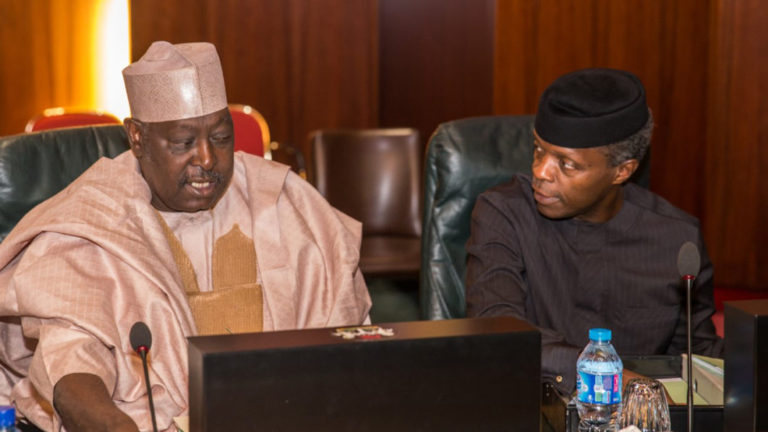
In a move widely believed to be motivated by relentless public outcry, Buhari suspended Lawal on April 19, 2017, and ordered a committee, headed by Vice President Yemi Osinbajo to further probe the case — the second probe to be ordered by the President. The most senior civil servant in the office of the SGF was directed to assume the duties of the SGF on an acting capacity.

Though the committee was initially given two weeks to conclude its work, the report was officially submitted to President Buhari on August 23, 2017, shortly after he returned from his medical trip to London.

Following the recommendations of the committee, Buhari officially sacked Babachir Lawal as the SGF on October 30, 2017, more than two months after receiving Osinbajo’s committee’s report. Boss Mustapha was appointed as replacement.

However, it took another three months — and some people say, a damning statement by former President Olusegun Obasanjo — for the EFCC to invite Lawal for questioning over his role in the ‘grass-cutting’ controversy.

“It is true. The former SGF honoured an invitation and arrived at our office around 11am on Wednesday. He was thereafter detained,” Samin Amaddin, Acting EFCC spokesman, told reporters in Abuja.

It was gathered that Lawal was still at the Abuja office of the EFCC as of the time of filing this report.

Attempts by the EFCC to arrest Ayodele Oke, former Director General of the National Intelligence Agency (NIA), who was suspended and sacked alongside Lawal, albeit for a different offence altogether, have not yielded fruits.

The commission said Oke had consistently refused to honour its invitations, and an attempt to arrest him by force was met with stiff resistance by NIA and DSS officials stationed at his residence.

INVESTIGATION: Small businesses, big trouble: CBN’s N220bn small enterprise fund shrouded in secrecy

0

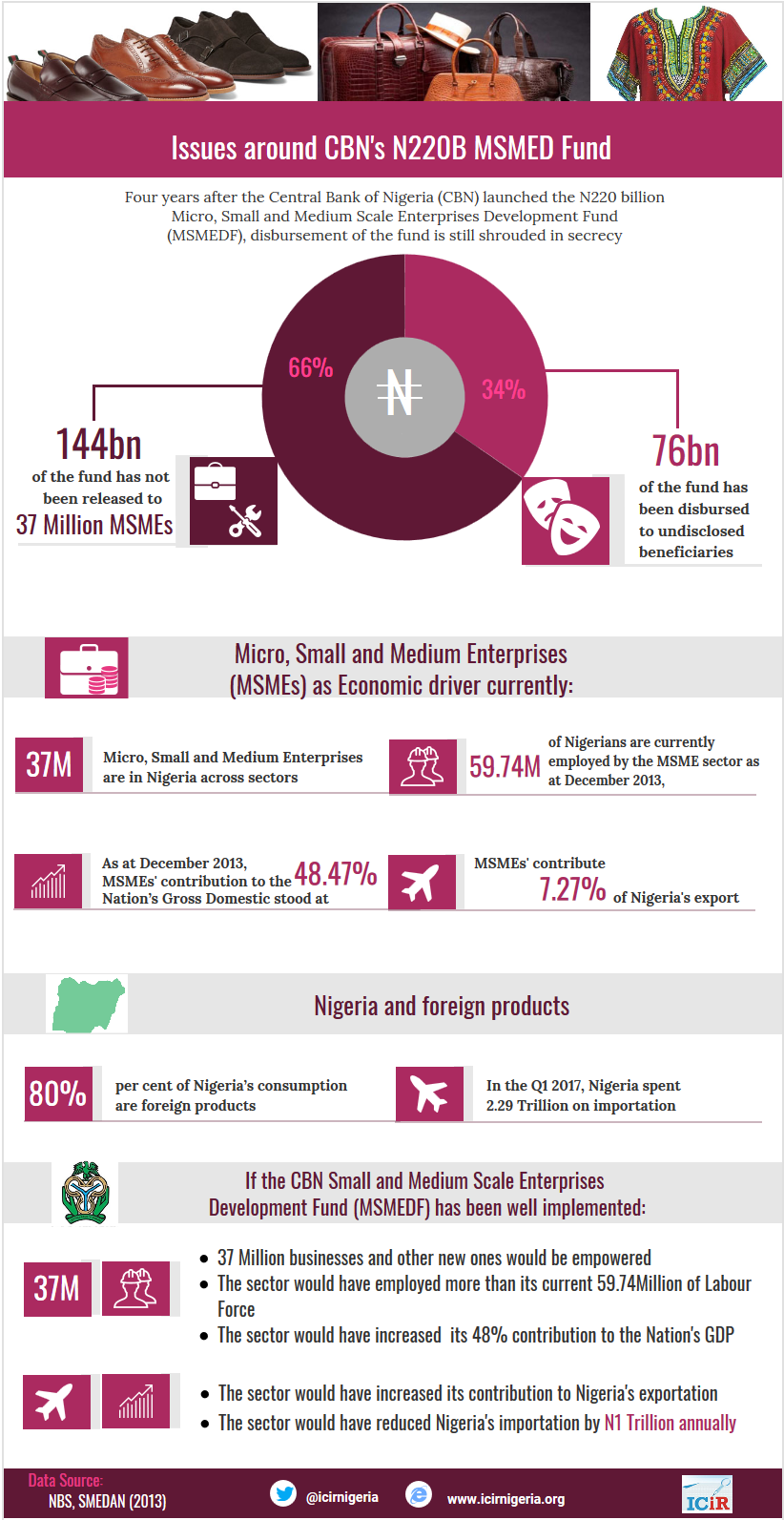
Four years after the Central Bank of Nigeria launched the N220 billion Micro, Small and Medium Scale Enterprises Development Fund (MSMEDF), disbursement of the fund is still shrouded in secrecy, MICHAEL EBOH of the Vanguard newspaper reports.


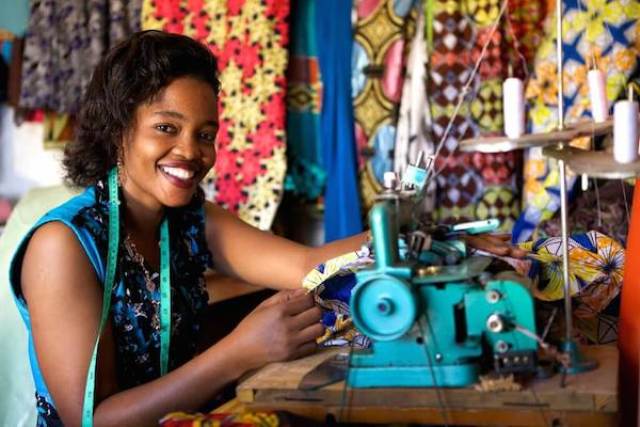
Favour Okoro runs a small tailoring and fashion designing shop along Okumagba Avenue, a busy neighbourhood in Warri. She has five sewing machines. It is a small business that employs six tailors and two designers. Her clientele includes the affluent, the average and low-income earners.

Two years ago, when her business came into a boom and there was a rush of clients, she started thinking of expanding by buying more machines, employing more hands and moving into a bigger shop. Then, she heard of the Central Bank of Nigeria’s N220 billion intervention fund for Micro, Small and Medium Scale Enterprises (MSMSEF).

Okoro was hopeful when she heard about the Fund, but her hopes faded after she tried several times, without success, to access it. She had planned to use the fund to buy modern sewing machines, sewing materials and large quantities of fabric, to drive her plans to venture into clothes export. When Vanguard met her last month in Warri, she complained that her business was struggling because of difficulties in accessing funds for the much-needed expansion.

Also, in Warri, a small business owner, who did not want his name mentioned, said he applied to access the funds in the early stages of the programme, filed all the documentation, met all the contents of the checklist, yet could not secure the funds. He said that he gave up after noticing some political undertones in the process and after pushing several times without success.

He said he was into fabrication and needed the fund to upgrade its facilities and also acquire raw materials to meet up with the demands of his customers.

He disclosed that his business was facing tough times, as he was having difficulties paying his staff salaries.

In Aba, the South East’s entrepreneurial capital, many businesses had gone through similar challenges and eventually gave up on the CBN funds.

Chairman, East-End Branch, Association of Tailors and Fashion Designers (ATFAD), Aba Chapter, Innocent Onwukwe, disclosed to Vanguard that thousands of his members had also tried in vain to access the CBN intervention fund in the last three years. He said it was a demoralising experience, frustrating the growth of their businesses and threatening their survival.

He explained that with the failures recorded in the programme, many of its members were finding it difficult to access funds to deploy the latest technology to their business and to the acquisition of raw materials.

The importance of MSMEs in an economy remains very pivotal, especially as evidence abounds that economic growth and development of prosperous and progressing countries all over the world has been driven by MSMES.

According to the National Bureau of Statistics (NBS), Nigeria has about 37 million MSMEs, and if properly financed, it is expected that they would make far-reaching contributions to the country’s quest to rank among the top 20 economies of the world by 2020.

Although the CBN claimed it established the N220 billion MSMEDF in recognition of the significant contributions of the MSME sub-sector to the economy and the existing huge financing gap, investigations have revealed that the fund has remained largely inaccessible, and majority of the MSMEs seem unaware of its existence.
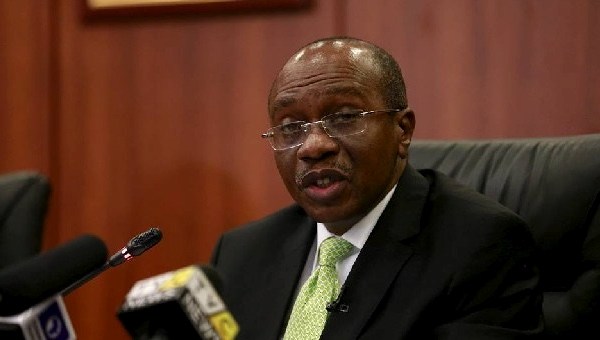
To access the Fund, the CBN had asked MSMEs to apply through Participating Financial Institutions (PFIs), as its statutes do not allow it to deal directly with businesses on such issues.

The criteria, according to the CBN, are that PFIs submit requests from MSMES to the Fund in a format that shall be prescribed by the CBN from time to time.

It also stated that applications would be processed on receipt of complete documentation, while it would communicate the terms and conditions for the approved grant within one month of submission.

While the CBN claimed that about N76 billion has been disbursed to MSMEs, investigations reveal the opposite. Engagement with major MSME associations faulted this claim and revealed that most MSMEs have been unable to access a dime from the Fund.

The complaint of inaccessibility was corroborated by the Bank of Industry (BoI), a major stakeholder in the disbursement of the MSMEDF, which disclosed that it was yet to access the Fund for onward disbursement to MSMEs.

The non-disbursement of the fund, it was discovered, is costing the country a minimum of N1 trillion annually, as the funds would have been utilised by the MSMEs to grow the economy and end the importation of certain commodities, as most of the imported items, mainly by-products of the agricultural sector, leather and clothing, would have been produced in the country.

To buttress the country’s losses due to the poor administration of the Fund, the National Bureau of Statistics (NBS) revealed that Nigeria spent N2.29 trillion on importation in the first quarter of 2017 alone. According to the NBS, Nigeria imported cane sugar worth N38 billion from Brazil; mixtures of odoriferous substances worth N13.2 billion were imported from Ireland; chemical fertilizers with nitrogen worth N7.3 billion were imported from United Arab Emirates; and milk preparations worth N4.6 billion were imported from Ireland.

Today, 80 per cent of Nigeria’s consumption comprises foreign products; and if this money had been properly disbursed to local entrepreneurs, the country’s import rate would have dropped by now — because the local manufacturers would be encouraged to produce.

Also, the inability to access funding is stunting economic growth, while many companies, mostly manufacturers, are dying daily due to lack of access to finance.

Furthermore, the CBN was discovered to be flouting some of the guidelines it put forward in setting up the fund. One critical guideline flouted by the apex bank is its engagement with the steering committee.

SMEDAN SIDE-LINED
Specifically, the Small and Medium Scale Enterprises Development Agency of Nigeria (SMEDAN), a key institution focused on the growth and development of MSMEs in Nigeria, is not being carried along in the scheme and also in the disbursement of the Fund, despite the fact that the guidelines setting up the Fund named SMEDAN as a member of the steering committee for the management of the MSMEDF.

Expressing his disdain for the secrecy surrounding the fund, Director General and Chief Executive Officer of SMEDAN, Mr. Dikko Umar Radda, disclosed that the agency was aware that the CBN had set up the Fund, but it was not involved, neither was it consulted on ensuring the success of the Fund.

He said on his appointment, he asked a lot of questions as regards to the funds; because he believed that it was necessary that if there is such money meant for MSMEs in the country, there should be a kind of collaboration with SMEDAN, being an agency of government that is in charge of MSMEs development in the country.

Radda argued that SMEDAN should have played the role of being a referral body, because it has more knowledge on the MSMEs in all the states of the federation than any other body.

He added that SMEDAN should have played a monitoring role and also provides business development support to the beneficiaries because that is its mandate.

He faulted the CBN for not involving SMEDAN in the programme, while he bemoaned the use of consultants for the programme, a role, which according to him, could have been given to SMEDAN.

Radda also added that it had held several meetings with the CBN, through the Office of the Secretary to the Government of the Federation, which led to the setting up of a committee to work out modalities on how SMEDAN could be included in the programme.

However, he lamented that for over one year since the committee was inaugurated, nothing had been heard from the CBN on the issue, noting that SMEDAN had written several letters to the CBN to that effect, without success.

Moreover, the refusal of the CBN to publish the names of those it claimed were beneficiaries of the Fund had raised further doubts about the integrity of the apex bank and the Fund.

The CBN claimed that information about the beneficiaries would be obtained by sending a mail to its dedicated help desk, ‘contactcbn.gov.ng’, where it said relevant staff would be available to provide responses.

However, for over two months, the desk did not respond to email enquiry on the issue and also refused to provide the list of beneficiaries. This is despite the fact that publishing the names of beneficiaries would help verify the authenticity of the CBN’s claims that some MSMEs are actually accessing the Fund. The secrecy surrounding the Fund and refusal of the CBN to publish details of beneficiaries, among others, had pitched SMEDAN against the bank.

When contacted, SMEDAN confirmed it had made several calls to the CBN to publish names of beneficiaries, to enable it track the MSMEs and ensure that the loan was being properly utilized. Till date, and despite the fact that SMEDAN is a member of the steering committee of the Fund, the CBN has refused to publish the list.

Also, Vanguard learnt that proper feasibility studies appeared not to have been conducted by the CBN before the rollout of the MSMEDF, as shown by the conditions which MSMEs operators claimed were too stringent.

This also threw up the question whether the Federal Government, as well as the CBN, is well acquainted with the needs of the MSMEs such that they would be able to structure a loan that can really be of assistance to the MSMEs.

Though the CBN insisted that the criteria for accessing the loan were MSME-friendly, it was observed that the conditions given by the PFIs were similar to those given to big enterprises such as Dangote and other big shots.

In particular, the BoI, one of the PFIs, put forward certain conditions, including that for any MSME to access the Fund, it would be required to open an account with 20 per cent of the loan amount, while two staff of the BoI would be the sole signatories to the account after the loan is obtained.

Another condition is that if an MSME is seeking to borrow more than N500,000, for instance, it must have a guarantor and must own a property with a Certificate of Occupancy (COO).  The BoI would not accept title of a property owned by siblings of the person seeking to borrow the fund.

It was also observed that the checklist for the programme was initially 32, but was later reduced to 18 — still too long — while the approval period seems to be unending.

WHO ARE THE REAL BENEFICIARIES?

If the MSMEs, which the fund was designed for, say they have not accessed it, the question is: “Who are the people that have accessed the N76 billion the CBN claimed it had disbursed, and where is the remainder of the Fund, put at about N144 billion?”

As it is, investigations revealed that CBN is the ultimate beneficiary of the secrecy and non-disbursement of the Fund, while the biggest losers are the MSMEs in particular and the country in general.

Investigations show that since the advent of the CBN Fund, not more than three business owners out of millions had been able to access it in Aba, Abia State, which is a critically important town to Nigeria’s quest for economic growth.

Director-General of the Aba Chamber of Commerce, Industries, Mines and Agriculture, ABACCIMA, Mr. Henry Nduka, confirmed that with millions of MSMEs in Aba, only three persons have been able to access the Fund.

He noted that funding is a critical component in MSMEs growth and survival, adding that lack of access to funding was making it difficult for them to develop their businesses and acquire better technologies for production, thereby stifling competitiveness.

“Specifically, we have well over 300,000 registered tailors and fashion designers in Aba, and more than 100,000 finished leather products producers in Aba. There are not more than three persons that have been able to access the MSME fund,” he said.

Noting that most of its members were not aware of the N220 billion MSMEDF, he lamented that with its huge membership base, the CBN had not deemed it necessary to approach it on how its members can benefit.

He said in most cases, officials of the CBN, BoI and other PFIs prefer to deal with the businesses directly — a situation that had further made the funds inaccessible to the small business owners.

According to Nduka, most of the owners of the businesses are not properly educated and normally rely on the assistance, advice and services of the Chamber in order to provide the necessary documentation to access such funds.

Also speaking, Mr. Innocent Onwukwe, Chairman, East-End Branch, Association of Tailors and Fashion Designers (ATFAD), Aba Chapter, stated that among its over 100,000 members, he was the only one who had accessed the facility.

Onwukwe said he was able to access a loan of N4.6 million in July from the Fund two years after his loan application, noting that the facility, which would run for three years, had already been deployed in acquiring a number of machines for the running of his business, and had helped in its expansion as he now supplies clothes across Nigeria, Ghana, London and the United States.

Despite successfully accessing the loan, he lamented that the criteria were stringent and difficult for most small business owners to meet. He said he had in his employ, two graduates, his elder and younger brothers, both graduates who were instrumental to his ability to access the loan.

He appealed to the Federal Government, the CBN, SMEDAN, BoI and other agencies to reduce the number of guarantors to one, and step up sensitisation, as most of the MSMEs are unaware of the availability of such funds.

He said from his experience with the programme, most tailors were not properly educated and would therefore not be able to meet the conditions for accessing the loan.  He said the criterion asking for wealthy guarantors had also disqualified many prospects, as most of them hail from poor backgrounds and are unable to secure such guarantors.

He added that Vice President Yemi Osinbajo visited Aba on one occasion and promised to make a certain fund available for MSMEs in the city, with each getting about N100,000. Three months after, he said nothing had been heard of that promise and that most business owners had opened an account with the partnering bank, Fidelity Bank, and paid the N5,000 processing fee as required, but had not yet heard from the government.

GOVERNORS GIVE FUNDS TO ASSOCIATES, PARTY MEN AND RELATIVES

Investigations revealed cases of irregularities as it was observed that state governors and some politicians are subverting the programme, disbursing their own portion of the Fund, which is N2 billion for each of the 36 states and the Federal capital Territory (FCT), to their political associates, relatives and party members.

Many of these beneficiaries, it was observed, were not qualified to access the fund, mainly by the fact that they are not MSMEs or business owners.

Specifically, sources told Vanguard that politicians are setting up proxy companies to access the funds, while some of the politicians are seeking to know what is in it for them before they make any genuine effort to push for the success of the policy.

In some cases, it was discovered that some individuals who are not into any business were able to access some of these intervention funds, just because their political benefactors used their powers to access the funds for them.

Innocent Onwukwe confirmed that there were cases of people without businesses getting the fund. He said, “In one case I know of, some individuals who are not into any business were able to access some of these intervention funds, just because their political benefactors used their powers to access the funds for them. In particular, I know of the Personal Assistant to one politician who got the loan from Umuahia.”

The criteria asking for wealthy guarantors was found to have disqualified many prospective applicants as most of them happen to be from poor background and were not able to secure such guarantors.

Some of the documents put forward by PFIs for MSMEs to access the fund include tax clearance certificate, statement of bank account, certificate of incorporation, certificate of occupancy or governor’s consent, among others.

Other issues that were identified to be hindering MSMEs from accessing the fund include inefficiencies on the part of the businesses in terms of documentation, low sensitisation, and to a large extent, bureaucratic bottlenecks in terms of the approval process.

The programme appeared to have been designed to fail, as seen by the massive complaints and inaccessibility of the fund by the MSMEs.

The CBN was expected to have learnt from the failure of similar funds like the Small and Medium Enterprises Equity Investment scheme, SMEEIS, SMEDAN fund and numerous other intervention funds which had failed to achieve their objectives over the years.

CBN AS ULTIMATE BENEFICIARY

Again, it was discovered that the CBN may be the ultimate beneficiary and may not be interested in disbursing the fund, because at an interest rate of three per cent, at which it lends to the PFIs, the apex bank is incurring a significant loss because the Monetary Policy Rate (MPR) had remained at 14 per cent.

The MPR is the official rate at which the CBN lends to financial institutions and other clients. Therefore, fixing the interest rate of the MSMEDF at three per cent means a shortfall of 11 per cent to the CBN.

Not disbursing the fund to MSMEs means the CBN would return the money to its coffers and lend it at 14 per cent to financial institutions, making significant arbitrage on the fund.

Specifically, disbursing N220 billion at an interest rate of three per cent would fetch the CBN N6.6 billion per annum, while disbursing the same fund at 14 per cent would fetch the apex bank N30.8 per annum.

SHARP PRACTICES BY BANKS

Also, investigations revealed that financial institutions, mainly commercial banks, mortgage banks and microfinance banks are frustrating the disbursement of the fund, as many of them are not well disposed to the programme.

The banks were expected to lend to MSMEs at nine per cent, after obtaining funds from the CBN at three per cent, leaving a spread of six per cent for the banks.

Instead of enrolling the MSMEs to the MSMEDF, it was discovered that the banks lend their own funds to the small business owners at between 25 per cent and 30 per cent.

CURRENT METHODS NOT EFFECTIVE

A financial analyst and Chief Executive Officer, Highcap Securities Limited, Mr. David Adonri, stated that there is an urgent need to identify where the problem is coming from.

According to Adonri, who is also a stockbroker, considering the important role played by MSMEs in the economy, it would be surprising if the CBN is withholding the Fund, especially as access to funds at low cost and inadequate volume are major challenges faced by MSMEs.

“Concerning the huge portion of the MSMEDF yet to be disbursed; is it that the CBN failed to disburse the funds to the banks for onward lending or that the banks have diverted the funds to the foreign exchange market or money market?” he queried.

He stated that if the banks have cornered the money and diverted it to unauthorized uses it would amount to betrayal of confidence warranting imposition of appropriate sanctions.

He said availability of the fund to MSMEs would increase their capacity to create wealth for the economy and generation of productive employment.

“So many schemes designed by government to assist MSMEs have been failures. Notable among them are SMEEIS and SMEDAN funds. The time has come for new strategies to be formulated on the best ways to assist MSMEs financially. Current methods are not effective,” he noted.

CBN RESPONDS

However, the CBN spokesperson, Isaac Okoroafor, denied that there was any friction between the apex bank and SMEDAN, stating that over the years, it had had series of engagements with SMEDAN.

He said, “It is important to state clearly that there was no controversy between the CBN and SMEDAN. SMEDAN has a different mandate from the CBN. SMEDAN focuses on providing business development services, while the CBN as part of its engagement with stakeholders, have had series of engagements with SMEDAN, which are ongoing.”

Also, confirming the lack of proper feasibility studies by the CBN, Mr. Femi Egbesola, National President of the Association of Small Business Owners of Nigeria (ASBON) said the Fund is very difficult to access because the conditions attached to it are so stringent that most MSMEs cannot meet up with them.

He lamented that more than half of the fund had not been accessed, adding that “If you have a fund of N200 billion for MSMEs and less than N100 billion has been accessed for a period of more than four years, that means it is not a success.”

However, in its response to the inaccessibility of the fund, the CBN spokesman said this claim cannot be sustained given the fact that N76.334 billion had already been disbursed.

Okoroafor stated that while the CBN recognises the need to make funds readily available, a number of challenges remain. These include issues of financial literacy and inability of prospective borrowers to develop bankable business plans, amongst others, which he said the bank had gone ahead to address.

He said, “The CBN has gone ahead to address these issues through the establishment of Entrepreneurship Development Centres (EDCs) in the six geo-political zones to address these capacity gaps.

“Series of stakeholder consultations were held prior to the introduction of the programme in 2013. The CBN has since 2015 embarked on sensitization programme to cover all the states of the Federation, and in 2017 alone, 15 states have been visited for the sensitization campaign, bringing the total number of states visited to about 32.”

However, he declared that the guideline is clear as to the process of accessing the loan, noting that any additional requirements being demanded as alleged, is not from the CBN.

SHOW US THE BENEFICIARIES — AMEN

Despite claims by the CBN, Prince Saviour Iche, President, Association of Micro Entrepreneurs of Nigeria (AMEN) challenged the CBN and the BoI to publish the names of the beneficiaries of the Fund, while he called on the Economic and Financial Crimes Commission (EFCC) to probe the BoI.

He said, “Let them come out and tell us the beneficiaries, because some companies that are not registered are collecting money because somebody is there who knows how to exploit the system. That is the problem we have.

“If the entire MSMEs groups are saying that they are not benefitting from the Fund, it means something is wrong. We the MSMEs groups meet at our level and we discuss; none of us have collected the money. Then who is collecting the money. That is the big question that we don’t know.”

SHARP PRACTICES BY BOI

In the case of accessing funds from the BOI, Iche claimed that if any MSME tried to access the Fund, it would not collect a dime.

“But if you go through the ‘other channel’ which they have, you can get the money quickly. They have other channels. Bank of Industry staffs have a link, whereby if you need this money, they would direct you to where you can get it at 25 per cent, compared to the single digit interest rate proposed for the Fund. It is the same CBN money but they diverted it,” he alleged.

He alleged that the numerous conditions put forward by the CBN and the participating financial institutions (PFI) are indirect ways in which the authorities are telling the MSMEs that the money is not meant for them.

CBN AWARE FUND COULD BE ABUSED

However, in his reaction to claims that politicians are subverting the programme, Okoroafor said the CBN is not unmindful that the programme could be open to abuses, but noted that the bank had put in place measures to ring-fence the facility from undue political interference.

He said, “These structures are constantly evaluated to plug loopholes that may emerge as we operate the scheme.  For example: there are CBN Development Finance Officers in every state of the federation that provides updates on MSMEDF disbursement activities in the state.

“The guideline provides conditions to be met by states government before they can access fund, and the state signs a memorandum of understanding on the use of the Fund.”

However, despite the widespread complaints of inaccessibility, Okoroafor stated that the guidelines are very clear as to the process of accessing the loan, stating that any additional requirements being demanded as alleged, is not from the CBN.

Furthermore, he noted that the CBN normally conducts periodic and continuous evaluation on the extent and performance of the Fund, which has helped in evolving strategies to strengthen the Fund.

For example, he said the spread for the PFIs was increased from initial interest rate of six per cent to seven per cent, as well as reducing the collateral requirements for their participation.

“Also, based on the feedback from evaluations, he said the CBN had reviewed the guideline to enable ease of accessibility. The CBN will continue to engage with stakeholders on how to improve on the Fund” he added.

BOI HASN’T ACCESSED THE FUND

Reacting on claims that it is frustrating MSMEs from accessing the loans, an official in the Corporate Communications department of the Bank of Industry, BoI, who asked not to be named, said the Fund is not domiciled with the BoI and that the inability of MSMEs to access the Fund through it was because it had also not been able to access the Fund.

She said, “Nobody can tell us to give them money, because we also have tried, we have not gotten the fund so they cannot tell us to go and bring money that is managed by CBN; it does not work that way.”

She explained that the N220 billion MSMEDF was like a window that the CBN opened for the BoI and other commercial banks in the country to access on behalf of MSMEs.

“There is a guideline and criteria that CBN has brought out. If any MSME approach the BoI now and say it wants to have access to the MSME fund; if it does not meet the requirements that CBN had stated, we would not present the request to the CBN, because there is no way we can go to them and say we need this money, without the guidelines being met; it is not possible,” she noted.

GUIDELINES FOR MSMEDF

In the guidelines for setting up the MSMEDF, the CBN said 10 per cent of the Fund is devoted to developmental objectives such as grants, capacity building and administrative costs while ninety (90) percent commercial component would be released to Participating Financial Institutions (PFIs) at two per cent for on-lending to MSMEs at a maximum interest rate of nine per cent per annum.

To achieve the provision which stipulated that women’s access to financial services should increase by at least 15 per cent annually to eliminate gender disparity, the CBN earmarked 60 per cent of the Fund for providing financial services to women.

In addition, it stated that two per cent of the wholesale component of the Fund shall go to economically active persons with disabilities, excluding mental disabilities.

The CBN said eligible activities to be financed include agricultural value chain, services, cottage industries, artisans, trade and commerce and any income generating business as may be prescribed by the CBN from time to time.

The broad objective of the Fund, the CBN said, was to channel low interest funds to the MSME sub-sector of the Nigerian economy through PFIs to: enhance access by MSMEs to financial services; increase productivity and output of microenterprises; increase employment and create wealth; and engender inclusive growth.

Listing the benefits of the MSMEDF, the CBN said the Developmental Components would be utilized for capacity building of staff of PFIs, research and provision of other financial services infrastructure.

It also stated that the long term single digit loans at nine per cent per annum had resulted in reduced cost of borrowing which will impact positively on the earnings of the MSMEs, adding that the Fund will provide liquidity for the sub-sector and result in general improvement of the financial system stability, while it would ensure job creation.

However, with the myriads of complaints from the expected beneficiaries of the Fund, it is becoming very obvious that many of these objectives are yet to be achieved, why the expected benefits are still far from seen.

With its disbursement of N76.3 billion of the total Fund, a large chunk of the money it appears, is either still sitting in its safes or had been diverted to other purposes, which would require an investigation by the anti-corruption agencies to unravel.

SALVAGING THE FUND

To ensure the Fund achieves its objective, the Director General of the Warri Chamber of Commerce, Industry, Mines and Agriculture, WACCIMA, Mrs. Ese Emevor, noted that taking steps to address perceived lopsidedness in accessing the funds would help address issues of restiveness among others.

She also called on governors in the southern part of the country to make efforts in ensuring that MSMEs in the region, especially through the use of approved consultants, are well coordinated to access such funds.

Again, she said the Central Bank of Nigeria and other authorities involved should conduct an evaluation of the entire process so as to identify the factors hindering the disbursement of the funds and the inability of MSMEs to access the funds.

Emevor asked that the CBN look at other ways to ensure that genuine small businesses meet up with the requirements for the fund.

This investigation was supported by the John D. and Catherine T. MacArthur Foundation and the International Centre for Investigative Reporting.

The figures that show Boko Haram was stronger in 2017 than in 2016


A research by the BBC has invalidated repeated claims by the Nigerian government that Boko Haram has largely been overpowered.

In fact, the terrorist group carried out a total of 150 attacks in 2017, higher than the 127 attacks it mounted in 2016.

“In both years the group launched its highest number of attacks in January, with both these spikes followed by President Buhari’s claims that Boko Haram had met its demise,” the report read.

Of the four countries where Boko Haram is present, Nigeria witnessed 109 attacks in 2017 as against 80 in 2016; Cameroon was attacked 26 times in 2016 but it rose to 32 in 2017; Chad witnessed two attacks in 2017, an improvement from the three attacks the previous year; while Niger enjoyed a much more peaceful 2017, recording only seven Boko Haram attacks as opposed to 18 in 2016.

With regard to the methods of attack, the terrorists mounted 90 armed assaults and 59 suicide attacks in 2017, an increase from the 52 and 19 armed assaults and suicide attacks, respectively, in 2016.

In Nigeria alone, the insurgents increased their suicide attacks from 19 in 2016 to 38 in 2017.

“Suicide attacks were the most common method of attack in the Nigerian city of Maiduguri, which continues to be the epicentre of the insurgency, whereas armed assaults were more common elsewhere,” the report noted.

“At least 967 people were reportedly killed by Boko Haram attacks in 2017, an increase on the previous year when 910 deaths were reported.

“The highest concentration of fatalities in 2017 was in Maiduguri, which has seen its population double to 2 million in recent years, as people flee Boko Haram violence in rural areas.

“Elsewhere in Nigeria, there were also high concentrations of fatalities in the localities of Magumeri, Konduga, Damaturu and Mubi.”

However, the purported alliance between Boko Haram and ISIS remains doubtful, as only 13 of the attacks by Boko Haram were claimed by ISIS, “suggesting [that] operational links between the two groups are weak”.

Offering some insight as to what could be responsible for the seeming inability of the Nigerian military to really contain the insurgents, Tomi Oladipo, BBC’s Nigerian correspondent, said the problem is traceable to the poor equipping of the Nigerian troops, adding, however, that “this may change in 2018, with the US agreeing to sell weapons to Nigeria”.

“Until then, the group looks set to remain a significant threat,” Oladipo said.

“Despite repeated claims by the Nigerian government about Boko Haram’s demise, the group’s different factions continue to threaten the stability of Nigeria’s North East and the wider Lake Chad Basin area.

“Over the years, the ability of the jihadists to blend into local communities, or to conceal themselves in the vast terrains of the region, has aided their campaign of violence.”

How the Nigerian system failed a doctor who treated suspected Lassa Fever patient

0

By Chibuike Joseph Chukwudum

Whatever hope I had for, and whatever faith I had in, this country, especially its healthcare system, died a few days ago. The height of negligence and incompetence I came face-to-face with these few days left me shattered and lost for words.

Not just was I unduly exposed to a deadly virus, I was left with the headache of trying to contain its spread, a task that should have been the exclusive reserve of the ministry of health through its public health department.

And when I developed suggestive symptoms, I was refused treatment by a TEACHING HOSPITAL, and was left to fend for myself, even as I ran cross country, across the length and breadth of Nigeria, sick, exhausted, traumatized; and what more, possibly spreading the virus, as I travelled UNSUPERVISED!

Below is my story. I would be leaving out names, as the individuals involved may also be victims of a failed system just as much as I was. Also, for want of space, I would be leaving out core medical details, like examination and investigation findings.

THE EXPOSURE

Patient zero presented to the hospital where I work, at about 4pm, on Friday, the 12th of January 2018. She had been on admission in a clinic some 10km away.

She presented as a known RVD on HAART with complaints of Fever [even though on presentation, temperature was normal: 36.7°C], cough with occasional blood-stained sputum [hemoptysis], pleuritic chest pain, oral sores, joint pains, all of 4 days duration; irrational talk, that progressed rapidly to an altered level of consciousness, of 3 days duration; and jaundice [yellowness of the eyes], passage of coke-colored urine, and slight abdominal swelling, of a day duration. No leg swelling, nor swelling around the eyes.

After reviewing the systems, and carrying out a full examination, which included a VE [!]; I noticed a nose bleed, which the relatives claimed was the first incident of such. Based on the findings, I made an assessment of “Multi Organ Failure, query cause.” This means that her organs were already failing — that much I knew; but I was not yet sure what was the cause. Hence the “query cause.” My list of possibilities, however, included:

  1. Pneumonic Sepsis [for obvious reasons]
  2. Acute Fulminant Hepatitis [because of the quartet of jaundice, encephalopathy, coagulopathy, and abdominal distention]
  3. SLE [making a case for this here is beyond the scope of this write up]
  4. And finally, Viral Hemorrhagic Fever, in this instance Lassa Fever (this was only included for the sake of completion, because at this point, I honestly wasn’t thinking of Lassa Fever).

The plan was to resuscitate, and refer — a decision I would later regret.

IF IT LOOKS LIKE LASSA, IT’S SAFER TO ASSUME IT’S LASSA

After initial resuscitation, she started making adequate urine, the level of consciousness improved, and the acidotic breathing resolved. I wrote them a referral, but they said they had run out of cash as a result of the four days they spent in the CHEW-manned clinic they were referred from. And since it was already weekend, they couldn’t withdraw.

This meant that they couldn’t afford to transport her to a new hospital, and start paying for a new card, admission deposits, and all what not. Neither could they settle the bills they had incurred in our hospital.

So, we were stuck with her for the weekend, and had no option but to continue life-sustaining treatment.

Unfortunately, by Monday, she deteriorated again, and started bleeding from multiple sites, including the nostrils, mouth, vagina, and into the skin.

A liver function test we did over the weekend had ruled out Acute Fulminant Hepatitis. Also, an on-the-phone review of the case with a Senior Registrar in Rheumatology ruled out SLE, despite the striking similarities. So, we were left with Sepsis [+DIC], and Viral Hemorrhagic Fever!

By the time news filtered in that someone had died from a suspected case of VHF in her locality, Lassa Fever was looking more and more probable, even though I still made “Sepsis with DIC” my first choice diagnosis.

ATTEMPTS AT CONTROLLING AN OUTBREAK FROM THE SUSPECTED CASE

At this point, everyone was yelling “discharge and refer,” but I couldn’t, for the following reasons:

  1. This people didn’t have money. So, if I referred them at that point, they were definitely going home. And that would mean exposing everyone around them: the family, relatives, and friends, who’d come visiting!
  2. If they found money, by whatever stroke of luck [oh, I forgot to mention that they had lied about having money in the bank] , and went to a new hospital, that would mean exposing another set of doctors, and nurses!

The best way to prevent these two scenarios, I reckoned, was to keep her [since we were already exposed anyway], and then inform the authorities. They would know exactly what to do, and how to do it, without risking other lives. STUPID ME!

While we were waiting for that, I put the following measures in place:

  1. I had the woman transferred to an isolation ward. Thankfully, throughout her admission, she’d been alone in the particular ward section she was admitted in before we started suspecting VHF.
  2. We stopped admitting new patients into the ward she was admitted before.
  3. The two relatives taking care of her were advised to be using hand gloves, and face masks; and also not to leave the hospital premises.
  4. No visitors were allowed into her isolation room.
  5. I saw to it that provision for hand washing, under running water, was made at the entrance to her room. The water was always fortified with Jik.
  6. We minimized care to the essentials: changing her drip, and administering her IV drugs. No more taking of vital signs, changing of beddings, doing reviews, and all what not.
  7. Any staff who MUST GO IN, must do so with elbow length gloves, and face mask, and try as much as possible to minimize contact.
  8. All the vital signs equipment used on the patient were marked as potentially hazardous, not to be used on other patients, at least until we become sure of what we are dealing with.

The plan was to do this for few hours, at most a day, as we were expecting the authorities to sweep in, and take the huge burden of KEEPING HER ALIVE off our shoulders.

INFORMING THE AUTHORITIES, AND THEIR LACKADAISICAL RESPONSE

The authorities were promptly notified IMMEDIATELY we started suspecting Viral Hemorrhagic Fever [VHF]. The Department of Public Health, of the state’s Ministry of Health, was duly notified, and they promised to send a “team.”

The first day passed; no show. On the second day, they sent a DSNO (Disease Surveillance Notification Officer). So much for sending a “team!”

The woman who came was less equipped than we were. She came with NOTHING, but her hand bag, pen, and a form to fill. We lent her the gloves and face mask she wore when she went to the isolation ward to see the patient. And oh, by “seeing” I meant sightseeing on aproko levels!

When we came out, she said she was asked to get a blood sample to be sent to Lassa Fever Centre, Irrua, for screening. Yet she didn’t come with any PPE! Heck she didn’t even come with a sample container, vacutainer, or tourniquet. What am I even saying; weren’t we the ones who gave her the gloves she wore for “sightseeing?”

Because it was my life, and that of the staff I work with, on the line, I gritted my teeth, gloved up, and went to collect a sample from the patient, risking further exposure. But we had to know if it was Lassa fever, didn’t we? And that was the only way.

When I was done collecting the sample, we realized she hadn’t made arrangements on how to preserve it while transporting it. So, we got a Giostyle coolbox, and ice packs, from our immunization department, and gave it to her.

The Ribavirin we were expecting from them? Lol! It was obvious we were better off sweeping the Sahara!

The Department of Public Health called again, and said I should put the patient in an Ambulance, and transport him to the Teaching Hospital , some 118 Kilometers away! I cringed at the shamelessness, and audacity of that request.

They promised me a “team,” but instead sent someone that spelt jaundice as “joindis.” I was expecting PPE, instead I lent their staff gloves. And where I was expecting Ribavirin, they brought nothing, never mind I was doing their job for them, cracking my head on how to contain an epidemic! And they still had the audacity to make another request of me? And with absolutely no shame? I was livid with rage.

Pettiness aside, how do they expect us to transport the patient, without exposing more people, the driver of the ambulance inclusive? What about the logistics of the travel; who’s going to cater to that?

They later called back, and said they’d send a “team” to come and take her that evening.

We waited, and waited, but saw no one.

DEATH OF ‘PATIENT ZERO’ AND CONTINUED NONCHALANCE OF THE PUBLIC HEALTH DEPARTMENT

The following morning, the patient was still in a bad shape. We had transfused (yes, STUPID ME; I was still trying to save her life) with fresh whole blood, to correct the Thrombocytopenia shown in the FBC, and she was no longer bleeding. But she was still in a terrible condition.

We waited for the team that was promised to come and take her, but saw no one. A little after midday, about 72 hours after the Public Health department had been notified; she gave up the ghost.

I called the PH department again, to inform them of the development, and to remind them that the corpse needed to be disposed professionally, to avoid putting others at risk. They said I should get a body bag, put the patient in it, make sure the patient is buried ASAP, and what more, that I should supervise the burial. Yes; they actually said all that!

Question is, since when did it become the duty of a doctor to supervise the burial of a corpse suspected to be contaminated with a highly virulent virus such as Lassa Fever? Even if it was my duty, is it not meant to be done with the “undertakers” wearing PPEs, and someone following them, decontaminating the environment as they go? So, where was I meant to get PPEs, the whatever they use in decontamination, and the damned body bag?

Clearly, not just were this people running from their responsibilities, they also don’t know what their responsibility is!

When I asked about the sample I risked my life to collect the previous day, they said they were yet to send it to Irrua; that they planned on doing so the following day!

BETRAYAL FROM THE RELATIVES

The relatives refused to pay hospital bills. This was particularly painful, because this was a woman we all risked our lives for, and continued attending to until her death, even when we thought it might be a case of Lassa Fever! Not just that, I had paid for the investigations, blood transfusion, IV fluids, and IV antibiotics (all totalling about 15k) with my own money. So what they were asked to pay was just for bed space, and the other services. And yet, they refused to pay a dime.

Because of the circumstances surrounding the case, we had to let them go. So the hospital ended up with the lives of its staff on the line, and still had nothing to show for it. That’s what you get for trying to do good IN NIGERIA!

A WEIRD COINCIDENCE: THE SCARE

While all these were happening, I was never really scared, because, even though it was a strong differential, I wasn’t really convinced it was Lassa Fever. I can’t go into details about why I didn’t think it was Lassa; it would be beyond the scope of this write up.

However, 2 days after patient zero’s death, I suddenly developed fever, vomiting, diarrhea, malaise, headache, and sore throat. And for the first time, I was really scared to the marrow (details of this can be seen in an earlier post I made on this issue, titled ‘From Scare To Nightmare’).

I placed myself on ORS, Zinc, and antiemetics; and then called my friends, and colleagues to inform them. My plan had been to continue with the conservative management, and source for oral Ribavirin myself, while waiting for patient zero’s results; but after consulting my friends, the unanimous decision was for me to start going to Lassa Fever centre, Irrua, for admission, and outright commencement of treatment. They wouldn’t have me take chances.

And that was how the wild goose chase started. I hurriedly packed my things, had someone withdraw a huge sum of money for me, informed and took permission from the Hospital’s administrator; and in 2 hours, I was on the road in the Hospital’s ambulance, sick, tired, confused, as a thousand and one thoughts were racing through my head.

REJECTED BY THE TEACHING HOSPITAL

Before I left, I had contacted the Public Health department again, to let them in on the new development, and the fact that we should seriously start making plans of tracing other people that patient zero may have contacted, and exposed unknowingly. Stupid me! But that’s how I am wired; I am never really the type who looks out for himself alone.

The Department of Public Health gave me a contact to call in the Teaching Hospital, and convinced me not to embark on a nine-hour journey to Irrua, since I was sick and unstable, and they have an infection control unit in the Teaching Hospital that is well equipped to handle the case. I called the contact, and he said that they had been informed, and that they were READY and waiting for me. By being “ready,” they meant Ribavirin, PPEs, and all that. So, I took a detour, and embarked on a two-hour journey to the Teaching Hospital instead.

When I got there, I got a cold reception. I was kept in the ambulance for two hours, from 6.30pm to around 8.45pm, on the pretext that they were “looking for the keys to the isolation ward.” I was left out there unattended to, sick, tired from a long journey, and apprehensive. My friends were calling, yelling that I should leave and start going to Irrua. But I reasoned it was already late, and I didn’t want to take that risk.

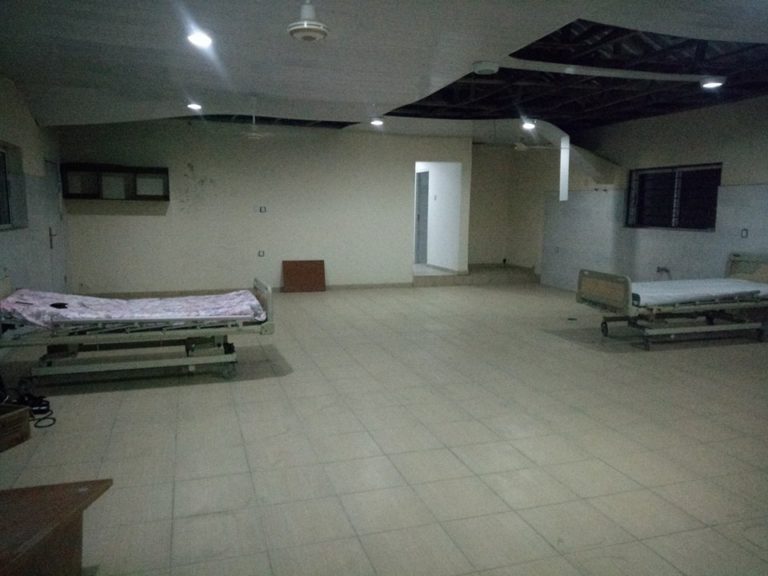
At around 9pm, they finally “found the keys,” and I was taken to an isolation ward, in a huge deserted complex.

After one hour of waiting, and of having the clinical staff peer at me through the window, like I was some alien, someone fully kitted with a PPE came in to see me.

After asking a few questions, he told me outrightly that I was on my own. That the PPE he was wearing was the last in the hospital, and that no one would agree to touch me without it. He went further to say that as it stood then, neither him, nor the hospital, was “officially aware” that I was in there. Talk about “plausible deniability!”

I was shocked to the marrow. The irony of it — the fact that I risked my own life to take care of someone I didn’t know, who wasn’t even from the same state as me, without PPEs, and in a Community Hospital, in a remote village! And right there were people, who were meant to be my professional colleagues, my “Hippocratic” and “Nightingalean” brethren, working in a tertiary institution — supposedly the most equipped hospital in the state, and yet they couldn’t do same for me.

I wasn’t mad at them though, as I realized that they were as much victims of a shitty system, as I was; for in their eyes, I saw pity, empathy, and shame. Perhaps if they had PPEs they would have done something. Perhaps not. Truth is, we’ll never know.

“Okay,” I said; “now that you’re still wearing PPE, can you at least help me site an IV line, and put me on IV fluids?”

No, can’t do; you’re not on admission, and like I said, the hospital is not “aware” you’re here.

“What of Ribvirin; can I get it and start treating myself?”

No, we can’t give you that; we can’t give you drugs without a definitive diagnosis.

“Excuse me? You’re saying that in the setting of a potentially life-threatening ailment, you’d rather wait for a confirmatory diagnosis that may take days, possibly risking the patient’s life, instead of starting life-saving treatment?”

And he said something I considered condescending about the drugs having numerous side effects.

I scoffed. Drug side effects my foot! As if we were not taught about what to do when benefits outweighs risk in medical school.

At this point, there was no need engaging further; it was obvious this people were playing “political correctness” with my life.

Before they left, they said I should continue self-medicating with the ORS and Zinc, that I CAME WITH, to stay hydrated; and that I should be monitoring MY OWN vital signs, and let them know if “something” happens. Right; like if I enter into shock, my ghost would pick up my phone and start making calls, abi?

That was how I was left ALONE in a vast one-storeyed complex, sick, with a thousand thoughts running through my head.

At around 11pm, I decided it was best to check myself out, and go to find a hotel, spend the night, and then continue my journey to Irrua the following day. And no, I didn’t care if I was going to be putting the hotel staff at risk; whatever selflessness, and misguided sense of patriotism, I had died in that hospital where I was left to my fate.

If their government didn’t care enough to protect them, even when I had tried to make it easier for them, why should I care? Besides, if I was dying, I would rather spend the remaining of my days in luxury, and comfort, and not in a deserted building where my only companions would be my thoughts, and the elements.

Old habits die hard. As I went to that hotel room, I still went with Dettol, and Jik, and made sure I was washing my hands regularly, to minimize the risk of putting anyone at risk. Lol. Stupid me.

FENDING FOR MYSELF: TRIP TO IRRUA

The following morning, we set out for Irrua as early as 6.30 am. It was a long journey that took about nine hours.

Throughout the journey, I was receiving calls, and prayers, from friends, family, and well-wishers. They made me feel loved; they made me feel there was good in humanity after all; and that whatever I had done was well worth it.

We arrived at Irrua Specialist Teaching Hospital at exactly 3.30pm. The first thing I did was to report myself to the Lassa Fever Centre, and have them look for patient Zero’s result. It happened that they hadn’t even started running the sample, as they were overwhelmed with samples from all over the country.

However, they were humane enough to understand my predicament, and the urgency it required. So, they made it a priority, and included it in the next batch of samples to be run.

THE LONG WAIT

I waited for long for that result. At a point, it was obvious that it was going to be a long wait, so I went and booked myself a hotel room. A consultant in the centre had earlier advised that it may be imprudent to admit me at that time, risking further exposure. Since I was no longer having diarrhea, vomiting, and fever,AT THAT TIME, he said we should wait for the results of patient zero first.

By 10pm, I was still seated outside the lab, waiting. Finally, the door opened, and they told me that they had made a mistake while running the sample, and would have to redo the test. Exhausted and drained, both emotionally and physically, I decided I couldn’t wait any longer. So, I went to my hotel room, switched off my phones, and dozed off.

A HAPPY ENDING

The following morning, at around 7.30 am, the lab called me: patient zero’s result was negative. And I heaved a sigh of relief. The first thing I did was to call my friends, and family — beautiful set of people — who had been more worried than I was, and tell them that the battle was over.

On my way back home, I got sick again. So, when I got home, I ran some tests, and it happened what I had was sepsis, and malaria with a very high parasite density.

I’m on drugs now, and recuperating fine. And yes, I’m also on sick leave, even though I’ve been reviewing cases brought to me by my junior colleague on my sick bed. Yea, they can’t take that away from me: love for what I do!

It feels like I have been given a second chance. A chance, not just to live, but also to see more clearly, and realize that this country isn’t worth it. Oh well, let’s just get well first.

DISCLAIMER

I deliberately left out the name of any state on this write up, so “Ministry of Health,” “Department of Public Health,” and “Teaching Hospital,” as used here, could be that of any of the 36 states. This was deliberate, and was done so for legal reasons, in case anyone wants to get funny, as I don’t have any evidence to prove all I’ve written here.

But we know every bit of information written here is the TRUTH, our truth; and we know where all these happened. Don’t we?

Shhh, don’t tell.

There you have it, people; your NIGERIA!

And you, the medics; just know this: YOU ARE ON YOUR OWN!

This article was first published on Chibuike Joseph Chukwudum’s Facebook wall.

After harsh criticism of Buhari, FG says ‘thank you’ to ‘patriot’ Obasanjo


The Federal Government has expressed its “appreciation” and “thank you” to former President Olusegun Obasanjo despite his harsh criticism of President Muhammadu Buhari, as contained in his “special press statement” released on Tuesday.

Reacting, in a statement issued by Lai Mohammed, Minister of Information and Culture, after the Federal Executive Council (FEC) meeting at the State House on Wednesday, Mohammed described the ex-general with kind words.

“For the record, Chief Obasanjo is a patriot, and he has proven this time and time again,” he said.

“We appreciate what he said concerning the Administration’s performance in two out of the three key issues that formed the plank of its campaign: Fighting corruption and tackling insurgency. Specifically, the former President said President Buhari must be given credit for his achievement so far in these two areas. We thank him for this.

“Apparently, the former President believes that the Administration does not deserve a pass mark in the area of the economy, which is the third of our three-pronged campaign promises.

“We have no doubt that in the face of massive challenges in this area, this Administration has availed itself creditably. We believe that Chief Obasanjo, because of his very busy schedule, may not have been fully availed of developments in the government’s efforts to revamp the economy, which was battered by the consequences of over-dependence on a commodity as well as unprecedented pillaging of the treasury.

Mohammed insisted that the Buhari administration has recorded many verifiable progress, even though there are a lot of grounds more to cover.

“This Administration is not unaware of the enormity of the challenges facing the nation, but we are up to the task. We have taken the bull by the horns, and long-suffering Nigerians will begin to experience a new lease of life as our efforts yield fruits. We will not go into a state of funk for whatever reason,” he said.

“Today, most of the indices by which an economy is measured are looking up. Permit me to say, however, that Nigeria would not have exited recession through a mere order or if the Administration had not made use of ‘good Nigerians’ who could help.

“This Administration is making steady progress in its determined effort to revamp the economy, and the results are showing.

“These positive indices may not have immediately impacted positively on Nigerians, but Nigerians will definitely get a new lease of life a short while from now.”

On whether Buhari should seek re-election come 2019, Mohammed said there are many Nigerians calling on the President to contest again while many others are opposed to it.

“It is true that many Nigerians have been calling on the President to run again, while others are opposed to his return,” Mohammed explained.

“However, we believe this issue is a distraction for the President at this time. This is because Mr. President spends every waking hour tackling the enormous challenges facing the nation, most of which were bequeathed to his Administration by successive past Administrations.

“He is committed to fulfilling the mandate given to him by Nigerians in 2015. And that’s where we are right now!”