Home Blog Page 2640

NNPC subsidiary explains how bad roads worsen fuel scarcity


Umar Ajiya, Managing Director of the Petroleum Products Marketing Company (PPMC), a subsidiary of the Nigerian National Petroleum Corporation (NNPC), says bad roads are partly to blame for the persistent fuel scarcity in the country.

Ajiya also said some unscrupulous independent petrol marketers have been sabotaging the system, insisting that there is no reason for the current petrol scarcity being experienced in some cities across the country, especially given all the measures so far put in place by management of the NNPC.

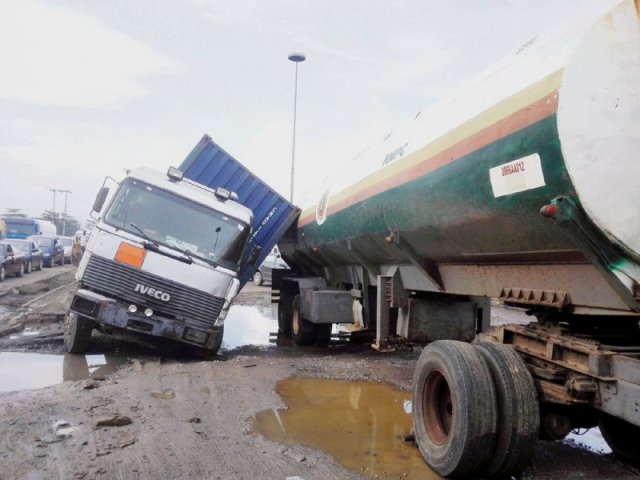
“For the last one week, there is no blessed day that trucks do not fall off the road between Jebba and Mokwa and this is the linkway where these products are brought from the depot, especially from the south to the north, particularly Abuja,” Ajiya said during an interview on Channels Television on Friday.

“We had to mobilise to do palliative repairs and pull off the trucks to ensure that trucks move.

“On top of that, the channel from which we transport these products from the ships offshore Lagos to Warri was blocked by another vessel.

“We equally have to mobilise together with the owner of the vessel to try to remove that ship. That channel has not been dredged for a long time.

“These are consequences of inherited state of infrastructure we are living with. The administration also inherited an empty treasury. So, we couldn’t overnight repair all these roads.”

On some sharp practices by some petrol marketers, Ajiya said the amount of fuel that the NNPC imports on a daily basis is more than enough to serve the entire country.

“There is no blessed day that we don’t bring one cargo of PMS into this country and one cargo on average is fifty million litres,” he said.

“And if we say we are consuming less than 35 million litres per day, then it is a natural question, where is the excess going?

“We have the belief and reports indicate that most of these excess are either hoarded or smuggled out of the country by the marketers.”

Ajiya, however, denied that the NNPC has been subsidizing petrol even after Nigerians were told that fuel subsidy had been ended.

Ibe Kachikwu, Minister of State for Petroleum Resources, had said that the NNPC loses billions of naira every month by selling fuel at N145 per litre.

According to Kachikwu, the landing cost of petrol at present is about N171 naira per liter, as a result of the slight increase in crude oil price in the international market.

Although Ajiya agreed that NNPC pays the N26 difference in the land landing cost and the approved selling price, he insisted it was not subsidy.

“There is a difference between the landing cost and the price we are selling, but what we are saying is that it is part of our core structure,” Ajiya explained.

“For us, it’s not a question of subsidy; we don’t know about subsidy. It was not budgeted for but the act establishing us, the National Assembly knows clearly that in that same act, there is a provision that we can run our operation and recover our cost fully.

“The NNPC act is a law on itself and the National Assembly is the one responsible for enacting laws; so, if there is any remedy or solution; as one of the senators, the issue is to look into the Act establishing these entities: NNPC,CBN etc.”

The Nigerian killing fields

0


By Ahmad Salkida

There is an ugly, depressing reality of Nigeria that beggars understanding. The leaders and the institutions they run have generally been skewed to revere and pamper themselves as the demi-gods, while utterly placing no value on the lives and aspirations of ordinary citizens outside the circle of the ruling elites.

The public systems and institutions are not designed for problem solving mechanisms, which is why the culture of public blame is a pastime of both the political class and the military jackboots. The buck starts with the rulers and must be forced to stop with the hoi poloi and the retched dregs. There’s frequently a problem here, a crisis, there always. But not once do you see the engagement of clear-headed thinking to dissect the problem with a view to bring an elaborate solution.

Instead, it is of the criminal Nigerians, the looting Nigerians, the wailing Nigerians and of the impatient Nigerians. You hear their blame game, but never a moment to look into the reasons for the agitations or indeed to seek a way to address them other that utilize their time tested jackboots and hot leads to crush, silence and wipe out the agitators. Those you denied justice yesterday have turned to haunt today with vicious violence and with enormous anger to take our tomorrow. That is the nature of the vicious cycle created by the supremacy of might.

Today, we are not only saddled with agitations, but escalating and dangerous, violent crimes across the country. Criminals now take a position behind ethnic justifications to avoid a date with the law. Even the law of the land has grown cold feet in drawing a line on the sand for violent crime.  From the south to the north, criminal gangs have operated at will. States like Kaduna and Kogi are leading other Northern states in the crime of kidnapping for ransom, learning faster from renown kidnapping gangs in the Niger Delta states.

Curiously, Benue state is host to self-help militias in North Central Nigeria, where a self-confessed member of the Boko Haram sect, one Aliyu Tashaku, is now recognised by the state as a leader of a vigilante group. His militia is saddled with the responsibility of protecting the people of the state against what is widely known as armed Fulani herdsmen who have been on the loose killing and maiming. The blood chilling criminal activities of the Fulani herdsmen are clearly an albatross on the shoulders of all other law abiding Fulani men and women.

By the way, Tashaku was detained for several months at the Police headquarters in Abuja for unstated reasons. The leadership of the Boko Haram, sometimes in 2011, had accused him of eloping with their arms budget in 2009. Many criminals apparently are working hand in hand with those in power across the country.

There is a growing incidence of senior members of Boko Haram deserting the group after falling out with their leaders. Such deserting members are not likely turning their backs on violent crimes even after fleeing. Presently, Boko Haram’s major sources of upkeep, from this reporter’s investigations, remain criminal activities such as: (i) kidnapping for ransom (ii) seizure of arms and ammunition from security forces (iii) cattle rustling. If you may ask, where have the hundreds of Boko Haram deserters gone to? And if the terror group has made a fortune in rustling, how entrenched are they in the ongoing violent herdsmen conundrum? Will the renegade members that were used to power and money from extortion and rustling give up this crime and join the army of unemployed youths across the country?

Also, in the North East, there is even a globally praised government backed militia called, Civilian Joint Task Force that helped the Nigerian military push back Boko Haram members from cities and major towns in the region. Some of the members of this vigilante group have also been accused of heinous crimes, but the accusations seem overshadowed by their laudable contributions in the fight against terrorism.

Even, the Federal Capital Territory has its own ‘militia,’ hiding under a task force created by the Abuja Environmental Protection Agency. The FCT employed hundreds of youths who specialize in aggression to rid the nation’s capital of street hawkers and other illegal structures. The task force has chased several street hawkers to their deaths on Abuja highways.

The government either advertently or inadvertently has weaponized poverty on one group against another and many people view the state as the source of threat to their livelihoods. This trend makes it increasingly difficult for the state to guarantee security and when individual groups begin to ascribe state powers to state cruelty, there will be anarchy in the land.

Fearing the likely descent of society to anarchy, the Commission on Human Security, recently advised that for citizens to be protected, conflict prevented, human rights respected and poverty eradicated, there must necessarily be urgent and new consensus on security. You may call it any name, but the idea speaks to restructuring of today’s operating system. This is a shared responsibility.

Human security provides an impetus for all countries, whether developed or developing, to review existing security, economic, development and social policies. Creating genuine opportunities for people’s safety, livelihood and dignity should be the overall objective of these policies.

The Buhari administration must as a matter of urgency change its interpretation of security. Security is never all about jackboot. It must learn to listen, respect and work with everyone for the interest of the nation. The previous administration has made the same mistakes, but there was never a time the country was as divided as it is today, nor was there ever a time we saw this level of impunity as we witness today. These ought to have changed and truly should change now.

Salkida, a freelance investigative journalist who specializes in reporting the Lake Chad crisis, tweets @ContactSalkida

Court declares UI staff guilty of forging Julius Okojie’s signature


An FCT High Court has declared Adedeji Taiwo, a senior staff of the University of Ibadan (UI), guilty of a four-count charge of forgery brought against him by the Independent Corrupt Practices and Other Related Offences Commission (ICPC) in 2016.

ICIR had reported how Taiwo, a senior protocol officer at UI, approached the Consular and Immigration Department of the Ministry of Foreign Affairs with a note verbale, special request for visa, in favour of one Jegede Lukmon Adeyemi to travel to Seoul National University South Korea, purportedly signed by Julius Okojie, then Executive Secretary of the National Universities Commission (NUC).

But unknown to Taiwo, Okojie usually signed such documents using red ink, not purple. This anomaly was detected by an official of the Foreign Affairs Ministry who promptly contacted ICPC operatives and had the suspect arrested.

According to the ICPC, Taiwo later confessed, during interrogation, that he forged the note verbale at a business centre and that he lifted and scanned Okojie’s signature from a previous request made to the ministry.

Taiwo was arraigned before Justice Olukayode Adeniyi of the FCT High Court, Apo division, on a four-count charge of using his position to confer unfair advantage on a person, forgery and making false statement to a constituted authority.

Ekoi Akponimisingha, counsel to ICPC, told the court that the offence violated Sections 19 and 25 (1) of the Corrupt Practices and Other Related Offences Act, 2000 and was punishable under the same sections.

One of the charges read: “That you Adedeji Taiwo, while being in the employment of the University of Ibadan used your position as Principal Executive Officer, Passage and Protocol to confer unfair advantage on one Mr. Jegede Lukmon Adedeyemi by introducing him to the Director, Consular and Immigration Department, Ministry of Foreign Affairs, as a staff in the Department of Psychology, Faculty of Social Sciences, University of Ibadan, via a letter captioned ‘Request for Note Verbale, when you knew he is not a staff of the said University and thereby committed an offence contrary to and punishable under Section 19 of the Corrupt Practices and Other Related Offences Act, 2000.”

During the trial, the ICPC called six witnesses to testify against the accused person, including Okojie and the staff of the foreign affairs ministry who detected the fraud.

The trial judge found Taiwo guilty on all the charges brought against him.

However, he adjourned the proceedings till January 30, for sentencing, in line with the new FCT High Court sentencing guidelines issued by Ishaq Bello, Chief Judge of the Federal Capital Territory.

ANALYSIS: FG has cut funding for nutrition — and the consequences will be ‘long-lasting’

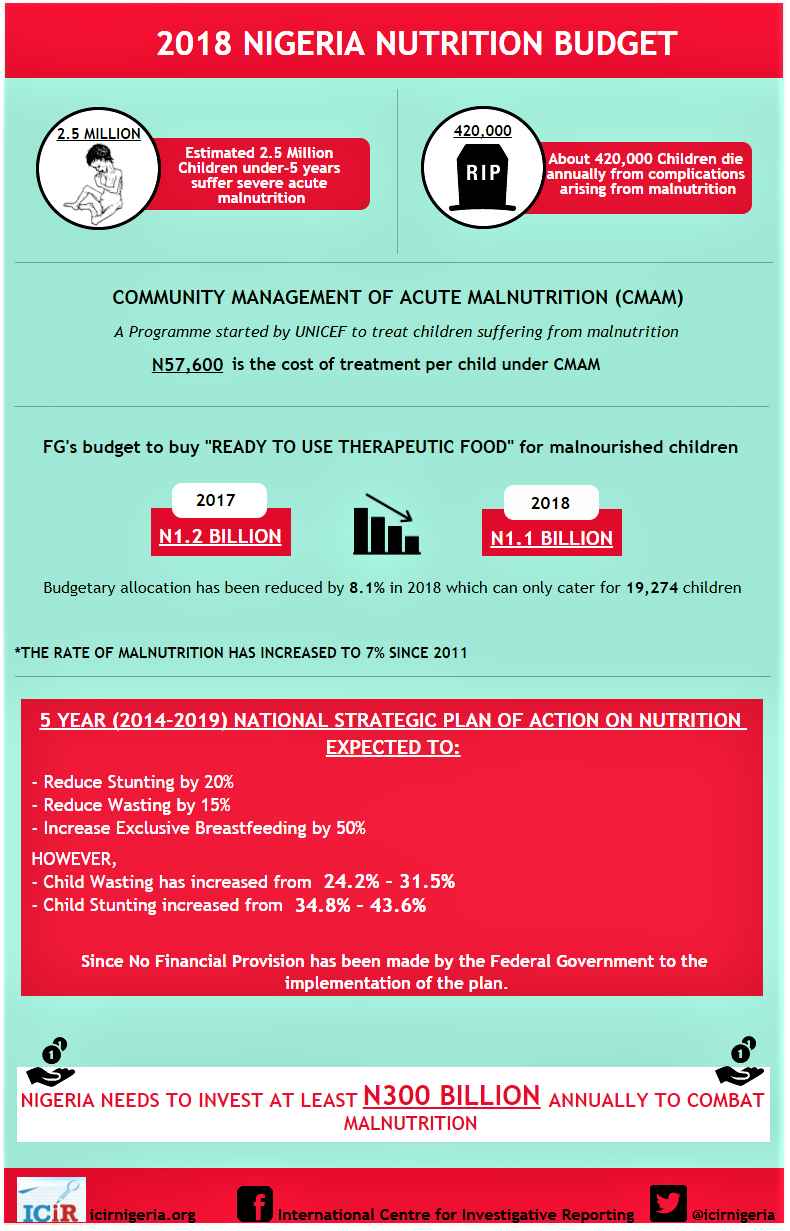
The Federal Government has cut funding for a nutritional programme designed to save thousands of lives among an estimated 2.5 million children suffering from severe acute malnutrition.

Last year, the Federal Government earmarked N1.2 billion as a contribution to Unicef, the UN children’s agency, to buy ready-to-use therapeutic food to treat malnourished children. Although it was the first ever financial contribution by the Federal Government for the treatment of children with severe acute malnutrition since Unicef began the programme in 2009, the government trimmed the allocation for this year to N1.1 billion.

Even before the cut, Nigeria was spending far less than needed to address its nutrition crisis. The World Bank estimates that Nigeria would have to spend N301 billion ($837 million) annually to combat malnutrition effectively. Compared to that need, the Community Management of Acute Malnutrition (CMAM) programme, which is being cut, represents a veritable drop in the bucket.

The cost of treating a malnourished child under CMAM is N57, 600 ($160), according to Unicef. This means that the provision in the budget can only cater for 19,274 children, out of the estimated 2.5 million children under the age of five who suffer from severe acute malnutrition. About 420,000 children die annually from the complications arising from malnutrition.

According to the Federal Government, the allocation will be for “co-funding to Unicef for the procurement of ready-to-use therapeutic food to be distributed to six geopolitical zones, including the establishment of CMAM sites”.

The ready-to-use therapeutic food is a peanut-based paste that also contains milk powder, sugar, and multiple micro-nutrients. It gives malnourished children the nutrients they need to recover from malnutrition. Treatment of malnourished children with therapeutic food usually lasts about eight weeks.

More than two-thirds of children under five who need treatment for severe acute malnutrition are not being reached. Even in states where Unicef is supporting CMAM, many affected children are being left out. For example, Kano State has just 30 CMAM centres in six out of the 44 local government areas.

Officials in the Ministry of Health did not give any reason for the budget cut, but the ICIR gathered that the N1.2 billion earmarked for the purchase of nutritional supplements in 2017 was never released by the Federal Government.

The ministry officials say there is little they can do about the low level of spending to address malnutrition. “Ministries are given envelopes within which they work,” Chris Isokpunwu, Head of Nutrition at the ministry, told the ICIR last year.  “So, the Ministry of Finance says, ‘health, this is your envelope; you can’t exceed this envelope.’ You have to allocate resources within that envelope that you’ve been given.”

Isokpunwu adds: “We also must realise that in health, nutrition is not the only priority. There are lots of competing priorities. I will not say because I am the head of nutrition, all the money must go to nutrition.”

Unicef started CMAM in 2009 as a pilot programme in Gombe State and later expanded it to 12 other states in the northern part of the country where childhood malnutrition is very high. Over 2 million children have been treated under this programme and hundreds of thousands of deaths have been prevented through this intervention.

Since 2013, the Children’s Investment Fund Foundation (CIFF) has provided about N21 billion to cover the cost of CMAM, but the programme may be scrapped because the states are unable to make their counterpart funding.

For example, when the  ICIR visited Kano State in October, CMAM centres were facing acute shortage of the ready-to-use therapeutic food, as the state had not made its monetary contribution to the programme. As indicated in Kano State’s 2017 budget, the state was expected to contribute N320 million of the N826 million for the implementation of CMAM in 2017.

CIFF, a British charity, had challenged governors of the 12 states where CMAM is being implemented that it would match their monetary contribution dollar-to-dollar to ensure the sustainability of the programme. If the states would commit N5.7 billion to the fund for 2017 and 2018, CIFF pledged to provide a matching sum of N5.7 billion.

NOT GOVERNMENT’S PRIORITY

The Federal Government’s spending on nutrition seriously undermines its own policy. The government joined international movements to fight malnutrition in 2011 and 2013. In 2015, it adopted a five-year plan, the National Strategic Plan of Action on Nutrition, NSPAN 2014 – 2019, which would have cost N328 billion to implement.

The plan was projected to reduce stunting (children who are too short for their age) by 20% and wasting (children who are too thin for their age) by 15%, and increase exclusive breastfeeding by 50%.  But four years after, the Federal Government has yet to make any financial provision for it.

Consequently, malnutrition among children under age five has worsened nationwide with high concentration in northern states, according to the Multiple Indicator Clusters Survey (MICS) released in November. Child wasting has increased from 24.2% to 31.5%, while child stunting has increased from 34.8% to 43.6% since 2011.

Nigeria’s investment in nutrition is a far cry from meeting the overwhelming threat of malnutrition. More than 11 million children are stunted. But solving the problem would pay big dividends. The World Bank estimates that N301billion ($837 million) in annual spending would save 183, 000 lives and avert more than 3 million cases of stunting among children under five.

“For those malnourished children who survive, there are long-lasting health and schooling consequences, including cognitive deficits and poorer schooling outcomes,” the bank warned. “Children with impaired cognitive skills have lower school enrolment, attendance and graduation, which in turn results in lower productivity, earnings and economic well-being.”

A report  by Save the Children shows that malnourished children score 7% lower in mathematics tests, are 19% less likely to be able to read at age 8 and are 13% less likely to be in the appropriate grade for their age than those who are well nourished.

Clearly, failure to invest in nutrition will translate into high costs in the future.

Court upholds FG’s designation of IPOB as a terrorist organisation


The Federal High Court in Abuja has dismissed an application by the Indigenous People of Biafra (IPOB) seeking to reverse the order designating the group as a terrorist organisation.

Justice Abdu Kafarati, Acting Chief Judge of the court, gave the ruling on Thursday, striking out the application filed by Ifeanyi Ejiofor, counsel to Nnamdi Kanu and IPOB.

Ejiofor had argued that since IPOB as an organization was not registered in Nigeria, it could not be sued in Nigeria.

However, Justice Kafarati held that an organisation registered abroad could be likened to a foreigner who could be arrested in another country if he or she is found to have committed a crime.

Therefore, he ruled that the proscription order against IPOB, made on September 20, 2017, was validly issued as it was consistent with the provisions of the Terrorism Prevention Act.

The IPOB was first designated a terrorist group by the Nigerian Military — in contravention of the Terrorism Prevention Act, 2011 — after a number of violent clashes between the group and soldiers in the South East region.

But, following public outcry, Abubakar Malami, Attorney General of the Federation, filed a motion at the Federal High Court, seeking an official declaration to that effect.

Consequently, the court ordered “that the activities of the Respondent (Indigenous People of Biafra) in any part of Nigeria especially in the South–East and South–South Regions of Nigeria amount to acts of terrorism and illegality”, adding that anybody found guilty of participating in the group’s activities would be liable, on conviction, to a prison sentence of up to 20 years.

But several European countries and the United States of America said they did not see IPOB as a terrorist group.

The whereabouts of Nnamdi Kanu, leader of the group, has remained unknown since September, when soldiers were alleged to have raided his country home in Umuahia, the Abia State capital.

Kanu, together with three other defendants, is currently facing treason charges at the Federal High Court.

2019 election, the electorate and the illusion of choice

0


By Timothy Ola Bamgboye

Nigeria’s 2015 general election was exceptional for one thing: an incumbent president was unseated for the very first time since the country’s return to democratic rule. The intriguing variables that culminated in that feat have been well documented by those in the know. Segun Adeniyi’s Against the Run of Play for instance captures a slice of these variables especially from the lenses of the political players themselves.

In spite of these chilling insights, it is surprising that many Nigerian electorate still possess an exaggerated impression of the powers that they wield in determining who assumes office.

Since Nigeria’s return to civil democratic rule about two decades ago, not much progress has been made in stabilizing our wobbly democratic processes, structures and systems. The Electoral Act may have been reviewed to accommodate regulations in tune with the modern times; but in reality, we have merely been scratching the surface with our political and electoral reforms.

Come to think of it, how much effect have these reforms really had on actualizing free, fair and credible elections? Can we confidently boast that the majority’s choice will emerge at the end of any electoral process? Even if we can, can we assuredly vaunt that the majority’s choice will be a product of informed, enlightened, and objective minds?

How can we, when a large chunk of the electorates are either literally uneducated, politically unenlightened or grossly ignorant of basic civic education? How can we, when the ruling class have perpetuated this state of affairs to keep up with their oppressive tendencies? How can we, when money-politics and stomach infrastructure still occupy a vantage position in Nigerian politics? How can we, when internal democracy is largely not entrenched in most political parties, and the two “major” political parties are not ideological based but opportunistic and self-serving? How can we, when the other less prominent parties are largely not better off, and readily sacrifice building a strong, viable and value-oriented party on the altar of political expediency?

It is laughable to hear supposedly educated Nigerians boastfully claim to have voted out a clueless, incompetent and hopelessly corrupt president out with the snap of a finger in 2015, and vow to readily do the same to the current president who is fast gaining a reputation for ethnic jingoism, crass incompetence, and nonchalance for the dignity of human person and the sanctity of human life. For a moment, one may be led to believe that this set of persons have practically lost their minds or are at best suffering from selective amnesia.

In a highly complex country like Nigeria, how could we underestimate the role played by the same crop of self-serving politicians in birthing APC and packaging it as a formidable alternative to PDP? How can we gloss over the role played by the media in ensuring its visibility and entrenching an angelic image in the subconscious of many unsuspecting Nigerians? How could we have forgotten the role obscene cash played in positioning APC at a central spot in the hearts of the electorate?

About a year to the next elections, is there any political party in Nigeria that currently has the clout to be referred to as a third force that can wrestle power from the ruling party? Is there any individual with character and competence that can identify with a party today and birth a third formidable force?

Tope Fasua may be doing a good job transforming ANRP into a strong, reliable, and value-driven party, yet the party does not presently have the stature or structure to reasonably and competitively contest for political power. The likes of Fela Durotoye, Adamu Garba II & Mathias Tsado may be doing a great job inspiring a breath of fresh air; while Tunde Bakare and Donald Duke may be a few of the old block with an articulate vision of rescuing Nigeria from the doldrums. Nevertheless, one does not need a soothsayer to tell that these great individuals on their own strength are mere “pretenders” on Nigeria’s present political turf. Is it not time these individuals and such persons with immense influence and credibility united and began inspiring mass mobilization in order to birth a third force?

Make no mistake about it, regardless of your confidence in any intelligent, motivated, and patriotic Nigerian, if he does not sacrifice personal ambition for the higher public good, and synergize with people of like minds, he will be going into the coming polls as a joke — a mere pretender, and not a real contender. If we do not want competent and credible persons who could have been viable alternatives to these present predators to gather crumbs of split votes in the coming elections, it is time to come down our high horse of self-conceit and deception and be deliberate about seeking a third formidable force.

Bamgboye is a legal practitioner

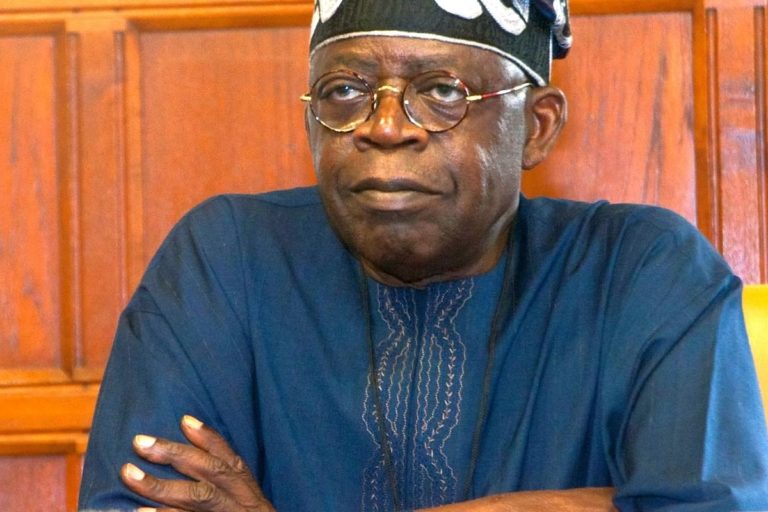
Tinubu tells Nigerians what to look out for in 2019

Bola Tinubu, national leader of the All Progressives Congress (APC), has urged Nigerians not to allow politics as usual to decide the 2019 election season.

Speaking in Abuja on Thursday at the annual Daily Trust Dialogue, he implored the people to “resist all appeals to unthinking passions and old prejudices” and instead follow their conscience in picking their next crop of leaders.

“We must insist on the principle that elections do not return to being games played by a well-heeled elite while the rest of the nation is left to struggle and starve,” he said while addressing the topic, ‘Nigeria and the Challenges of 2019, this is Not a Game’.

“The people must resist all appeals to unthinking passions and old prejudices. We must adhere to what our conscience reveals as the best path to good governance for all.”

Tinubu said while democratic politics inherently bear aspects of competition and contest, it must never be reduced to a mere game. According to him, the objective of a game is served by the mere playing of it.

“Playing the game is an end in and of itself. However, this cannot be the case with politics and elections,” he said.

“Winning the political contest can never be an end in itself. The proper outcome of electoral victory is not for the victor to revel at his good fortune or his skill in electioneering.

“The inevitable sequel to an election is for the winner to assume the sobering burden of governance. Elections are not the climax of an epic book. They are merely the close of the book’s opening chapter.


READ ALSO:


“What comes afterwards – governance – is much more vital than politics, for governance determines how we shall live.”

He lamented that although the country is approaching 60 years of nationhood, it has remained a complex yet incomplete work of art and a project as much on the drawing board.

“Approaching nearly 60 years of independence, Nigeria remains a complex yet incomplete work of art, a project as much on the drawing board as it is our daily reality,” Tinubu said.

“They see the nation not as object of loyalty but as the most available platform to realize their personal aims. In their minds, Nigeria is lesser than their ever expanding ambitions; because they view Nigeria as a game, their politics is but a game within a game.

“Rather than becoming a joyous nation, Nigeria has become a cruel playground where the fears and concerns of the average person get exploited but their interests never get promoted.”

He said it would require many years of outstanding governance to heal the ills that have bedeviled Nigeria as a nation. He also urged the Federal Government to solve the problem of fuel subsidy, which he said, has caused more pains than solutions.

“As a progressive, I believe we must transform the nation by embarking on deep and impactful reforms, by creating more jobs, providing social policy initiatives and building an infrastructure befitting a leading nation. Social services must become a reality close at hand and not a vague dream lying in the distance.

“For example, we must reform the current fuel subsidy regime. At this stage it causes more problems than it cures. Bottlenecks of long fuel queues, erratic supply, resultant economic dislocations for consumers from lack of fuel and the corrupt practices of trade insiders undermine the good intentions upon which the subsidy is based.

“Currently, the subsidy does not benefit the average person. It sweetly profits the elites who manipulate the programme to their own advantage. We need to allow market forces to more directly determine price. We need to open the now closed market to more suppliers. In this way, we may better harmonise supply and demand, where they do the most sustainable economic good.”


Double hammer… UK joins Nigeria in sending Walter Wagbatsoma to prison


Walter Wagbatsoma, a Nigerian oil magnate and Chairman of Ontario oil and gas, has been handed a three-and-a-half-year prison sentence in the United Kingdom after he was found guilty of money laundering.

Wagbatsoma had been sentenced to 10 years imprisonment, albeit in his absence, in Nigeria, alongside one Adaoha Ugo-Nnadi, by Justice Latefat Okunnu of the Lagos High Court, Ikeja, Lagos State, in January 2017.

They were first arraigned in 2012 by the Economic and Financial Crimes Commission (EFCC) on an eight-count charge of fuel subsidy fraud.

Babafemi Fakuade, a staff of the Petroleum Products Pricing Regulatory Agency (PPRA), who was also joined in the suit, was discharged and acquitted.

At the time the judgement was delivered in 2017, Wagbatsoma was under house arrest in the UK, as his money laundering trial was still going on.

He had been arrested and detained on a European Arrest Warrant in June 2016 whilst travelling through Germany, and was later extradited to the UK where he was charged with conspiring with others to launder the proceeds of fraud through his business interests in the country.

Following his trial at the Leicester Crown Court, Wagbatsoma was sentenced to three years and 6 months imprisonment for his part in the crime.

The judgement delivered on Wednesday also disqualified the convict from being a company director for six years.

Prosecutors said Wagbatsoma laundered the fraudulently obtained funds in the UK through an account in Dubai under the control of a co-conspirator Oluwatoyin Allison, a UK national who had been convicted in his absence at an earlier trial in April 2017 and sentenced to seven years imprisonment.

According to lincs.police.uk, the official website of the Lincolnshire Police Department, 12 other persons had been successfully tried and convicted since the commencement of the investigation, following a complaint of fraud from Lincolnshire Partnership Foundation Trust in September 2011.

The four-year-long investigation has led to convicted persons receiving a combination of more than 50 years prison sentences, with efforts still on to recover the proceeds of what the trial Judge described as a “sophisticated and widespread fraud in its conception and execution”.

“For a small force, this investigation shows that officers in our Economic Crime department have shown real endeavour and determination in investigating what is a huge money laundering and fraud offence,” said Craig Naylor, a Deputy Chief Constable.

“Operation Tarlac has now seen thirteen individuals given lengthy prison sentences for their part in an international offence, which has had a national impact on public bodies in the UK.

“As a force, we have achieved a significant impact against organised crime in this investigation and this shows the hard work by our officers.”

EFCC docks Justice Yunusa, Rickey Tarfa’s employee for ‘bribery’

0

THE Economic and Financial Crimes Commission (EFCC) has arraigned Mohammed Yunusa, a suspended Justice of the Federal High Court, Lagos, on a five-count charge of unlawful gratification and attempt to pervert justice.

Yunusa was arraigned before Justice S. O Solebo of the Lagos State High Court alongside one Esther Agbor, an employee of Rickey Tarfa, a Senior Advocate of Nigeria.

Both persons are being accused of engaging in constant private and confidential telephone communications with Tarfa, while Yunusa was presiding over a case being handled by Tarfa.

Yunusa also allegedly agreed to receive the sum of N1.5million in order to give a decision in Tarfa’s favour.

They pleaded not guilty to the charges against them, after which Yunusa’s counsel urged the court to grant his client bail on self-recognizance, as he “is still a serving judge and has not been dismissed by the Federal government”.

Similarly, John Odubela, counsel to the second defendant, asked the court to grant her bail on self-recognizance or on liberal terms, arguing that she “is a nursing mother, who is having some health challenges”.

However, counsel to the EFCC opposed the bail application, asking the court to pick bail conditions that will compel the defendants to always attend trial.

In his ruling, the presiding Judge granted Justice Yunusa bail on self-recognizance without any financial undertaking, while ordering him not to travel outside the court’s jurisdiction without duly notifying it.

He ordered the EFCC to hand over Yunusa’s international passport to the court’s registrar.

The second defendant was also granted bail in the sum of N1 million with two sureties in like sum. The sureties must have verifiable addresses within the jurisdiction of the court and must have tax clearance evidence of three years.

The matter was adjourned to February 20, 2018, for commencement of trial.

Ebonyi schools closed for ‘seven schooldays’ over Lassa Fever outbreak


Public primary and secondary schools in Ebonyi State have been closed down for “seven school days” as part of efforts to curb the spread of Lassa fever in the state.

John Eke, Ebonyi State Commissioner for Education, said this during an interview with NAN in Abakaliki, the state capital, on Thursday.

He said although Lassa fever was not yet an epidemic in the state, proactive measures needed to be taken to ensure things did not get out of hand.

“First of all, I want to inform you that the issue of the outbreak of the Lassa disease is not in alarming rate, and what we have done is to ensure that we effectively put the spread under control,” Eke said.

“Again, yesterday, a woman was diagnosed positive of the virus and this patient has her children in schools.

“We believe that one of the best ways to handle the situation is to shut down our schools until we are sure that our pupils and students are safe.

“The schools will remain shut for seven school days to enable us monitor the situation and we appeal to parents, guardians and school authorities to comply with the directive.”

Reports also have it that the National Obstetric Fistula Centre (NOFIC) in Abakaliki has evacuated its patients following a Lassa fever outbreak at the nearby Virology Centre of the Federal Teaching Hospital Abakaliki (FETHA).

Both institutions are located inside the premises of the Federal Teaching Hospital, Abakaliki, with a wall separating them.

Two doctors and a nurse who worked at FETHA had died in the Lassa fever outbreak, and another is reportedly in critical condition at Lassa Fever Specialist Hospital, in Irua, Edo State.

“You know this hospital is located beside this virology centre and some of the patients, including the deceased, were taken to the virology centre before being evacuated to Irua Specialist Hospital where some of them died early this week,” Premium Times quoted an unnamed FETHA staff as saying.

“So, our management feels it is very imperative to evacuate all our patients out of our hospital even though the virology centre has been fumigated.”

Rita Nwojiji, spokesman of NOFIC, confirmed the evacuation of patients, saying that the facility would be fumigated, beginning from Thursday “and after that it will take about four days before we can make use of the place”.