The Socio-Economic Rights and Accountability Project (SERAP) has urged President Muhammadu Buhari to “take partisan politics out of the appointments to boards of agencies and parastatals” to show that his government is truly one of change.’
The organisation said this in reaction to the list of appointments to the boards of agencies and parastatals, which includes at least eight dead persons.
A statement by Timothy Adewale, SERAP deputy director, said the appointment poses a clear and recognizable danger to the integrity of these bodies.
SERAP urged Buhari to allow the civil service systems to carry out the appointments, in strict conformity with established rules and Nigeria’s international anti-corruption obligations and commitments.
On Friday, Buhari approved the constitution of the governing boards of agencies and parastatals, appointing 209 chairmen and 1258 members to fill the board positions. However, it has been discovered that at least eight members on the list have since passed away.
Buhari appointed Rev. Christopher Utov as a Member of Nigerian Institute of Social and Economic Research; Utov, the proprietor of Fidei Polytechnic, Gboko passed away on March 17, 2017.
He also appointed Chief Donald Ugbaja as a Member of the Consumer Protection Council (CPC). Chief Ugbaja, a former DIG of the Nigerian Police, died on November 29, 2017.
Francis Okpozo, was appointed as Chairman of the Nigerian Press Council. Okpozo, a senator in the Second Republic, died on December 16, 2016.
“Appointing at least eight dead people as board members would seem to suggest that the 1,467 appointments approved by Buhari were unscreened for competence, merit, equity, aptitude and conflicts of interest.
“Taking partisan politics out of the appointments to boards of agencies and parastatals is one surest way for Buhari to show that his government is truly one of change, that would do things differently from successive governments that apparently handed out board appointments to reward party members, supporters and cronies.
“Going ahead with these appointments would neither advance due process nor Buhari’s oft-expressed commitment to prevent and combat corruption. It would create a lack of trust and confidence among the general public.
“Withdrawing the appointments and directing and allowing the civil service systems to follow due process to reappoint chairpersons and members to the boards of these agencies and parastatals would bring the government’s practices and operations into conformity with Nigeria’s international anti-corruption obligations, particularly the UN Convention against Corruption. Nigeria has ratified the convention.”
“It’s absolutely important for Buhari to ensure that the process through which board appointments are made is transparent and merit-based.
“A merit-appointment system would produce a better qualified board, and ultimately improve the governance architecture and access of Nigerians to essential public services.
“It should be the practice of this government to make board appointments on the basis of ability, and not because of political influence or connection.”
“Letting the civil service systems get on with board appointments would also assure basic bureaucratic ‘hygiene,’ and help to facilitate the establishment of strong boards that would be better placed to ‘deliver the goods’ to Nigerians in the democratic context. It would ultimately bring about higher effectiveness and improved government legitimacy.”
The number of dead people on the list of President Muhammadu Buhari’s appointments to the boards of several government agencies and institutions is now eight — not two as reported on the first day of the announcement.
They are Francis Okpozo, a senator in the Second Republic, who died in December 2016 but was announced as Chairman of the board of the Nigerian Press Council; Christopher Utov, a Catholic Priest and founder of Fidei Polytechnic in Benue State, who died in March but was listed as a board member of the Nigeria Institute of Social and Economic Research (NISER).
Donald Ugbaja, a retired Deputy Inspector General of Police, died in November this year, but he was appointed board member in the Consumer Protection Council (CPC).
Kabir Umar, the late Emir of Katagum in Bauchi State, died on December 9, but his name came up as a board member of the Federal Medical Centre, Azare, Bauchi.
Ahmed Bunza, former Sole Administrator of Jega Local Government Area of Kebbi State, died at Usman Danfodio University Teaching Hospital, Sokoto, and was buried May 22; Magdalene Kumu from Taraba State was appointed into the National Film and Video Censors Board; Nabbs Imegwu, a former Commissioner for Culture and Tourism in Rivers State, was appointed to the board of the National Orthopedic Hospitals; Garba Attahiru, from Kaduna State, was appointed to chair the board of the Federal Medical Centre, Yenagoa.
The list, released on Friday, has attracted public opprobrium. Not only were the names of deceased individuals announced as appointees, the list also included names of persons of questionable integrity, such as Herman Hembe, the same Hembe that was sacked from the Federal House of Representatives.
Hembe represented Vandeikya/Konshisha federal constituency but the Supreme Court ruled that he was not the authentic candidate of the All Progressives Congress, as he had been defeated by Dorathy Mato, whom the court ruled should be take over Hembe’s former seat.
Appointed the Board Chairman of the Michael Imoudo National Institute for Labour Studies (MINLS), Hembe’s chequered personality dates back to his days as a university student.
Meanwhile, Garba Shehu, Buhari’s Senior Special Assistant on Media and Publicity, explained that the list was compiled in 2015, hence the errors. He promised that the names of the deceased individuals ould be removed.
Also, the list of appointees featured duplication of functions as there were individuals who were appointed into more than one positions.
According to Premium Times, Sabo Nanono was appointed a member of the board of the National Agency for Science and Engineering, but his name was also mentioned as Chairman of the board of Nigerian Tourism Development Corporation.
Again, Kabiru Matazu was appointed Chairman of FCT Universal Education Board and also appointed Chairman of the board of Federal Medical Centre, Abeokuta; Umaymah Abdullahi was named on the board of Lake Chad Research Institute, Maiduguri, as well as the Federal Medical Centre, Sokoto; Habiba Umar was appointed on the board of the Federal Medical Centre, Yola, and also the Federal Medical Centre, Birnin-Kebbi.
In the accustomed tradition, I wish the nation less misery in the coming year. A genuine Happy New Year Greeting is probably too extravagant a wish.
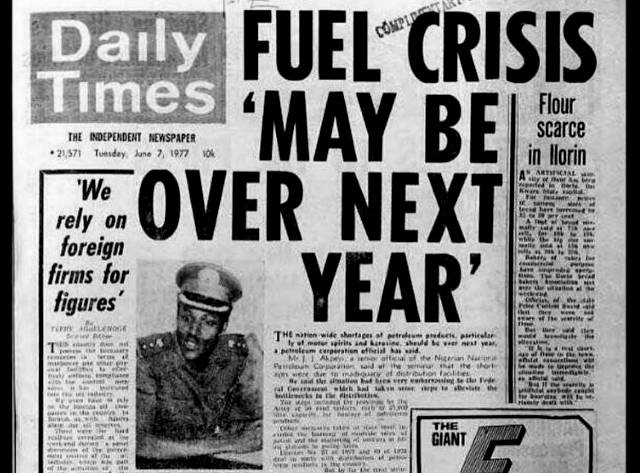
The accompanying news clipping from June, 1977 came into my hands quite fortuitously. It is forty years old. It captures the unenviable enigma that is the Nigerian nation. It is however a masterful end-of-year image to take into the coming year, not only for the individual now at the helm of government, General Buhari, but for a people surely credited with the most astounding degree of patience and forbearance on the African continent – except of course among themselves, when they turn into predatory fiends.
When many of us are blissfully departed, an updated rendition of this same clipping – with a change of cast here and there – will undoubtedly be reproduced in the media, with the same alibis, the same in-built panacea of blame passing.
Let this be called to our collective memory. Even before the current edition of the fuel crisis, other challenges, requiring immediate fix, had begun to monopolize national attention, relegating to the sidelines the outcry for a fundamental and holistic approach to the wearisome cycle of citizen trauma. This has been expressed most recently, and near universally in the word “Restructuring”, defined straightforwardly as a drastic overhaul of Nigerian articles of co-existence in a more rational, equitable and decentralized manner.
Such an overhaul, the re-positioning of the relationship between the parts and the whole offers, it has been strongly argued, prospects of a closer governance awareness of, and responsiveness to citizen entitlement. An overhaul that will near totally eliminate the frequent spasms of systemic malfunctioning that are in-built into the present protocols of national association.
I recently ran the gauntlet of petroleum queues through three conveniently situated cities – Lagos, Abeokuta and Ibadan – deliberately, this Friday. Even with ‘unorthodox’ aids of passage, this was no task for the faint-hearted. Just getting past fueling stations was traumatizing, an obstacle race through seething, frustrated masses of humanity, only to find ourselves on vast stretches of emptied roads pleading for occupation. As for obtaining the petroleum in the first place – the less said the better.
I suspect that this government has permitted itself to be fooled by the peace of those empty streets, but also by the orderly, patient, long-suffering queues that are admittedly prevalent in the city centres. It is time the reporting monitors of government move to city peripheries and sometimes even some other inner urban sectors, such as Ikeja and Maryland from time to time to see, and listen ! Pronouncements – such as the 1977 above – again re-echoing by rote in 2017 – are a delusion at best, a formula that derides public intelligence. Buying time. Passing blame. Yes of course, the current affliction must be remedied, and fast, but is there a dimension to it that must be brought to the fore, simultaneously and forcefully? This had better be the framework for solving even a shortage that virtually paralyzed the nation.
Just to think laterally for a moment – what became of the initiatives by some states nearly two decades ago – Lagos most prominently – to decentralize power, and thus empower states to generate and distribute their own energy requirements? Frustrated and eventually sabotaged in the most cynical manner from the Federal centre! The similarity today is frightening – for nearly four days on that earlier occasion, the nation was blacked out near entirely.
We know that one survival tactic of governments is to keep their citizens in the dark over decisions that affect their lives but, this was literal! And yet each such crisis, plus lesser ones, merely reiterate again and again that this national contraption, as it now stands, is simply – dysfunctional!.
What this demands is that, in the process of alleviating the immediate pressing misery, we do not permit ourselves to be manipulated yet again into forgetting the MAIN issue whose ramifications exact penalties such as petroleum seizures and national power outage. These are only two handy, being recent symptoms – there are several others, but this is not intended to be a catalogue of woes.
Sufficient to draw attention to the Yoruba saying that goes: Won ni, Amukun, eru e wo. Oun ni, at’isale ni. Translation: Some voices alerted the K-Legged porter to the dangerous tilt of the load on his head. His response was – Thank you, but the problem actually resides in the legs.
The providential image above sums up a defining moment for both individual and collective self-assessment, places in question the ability of a nation to profit from past experience. Vast resources, yes, but proved unmanageable under its present structural arrangements. As the tussle for the next round of power gets hotter in the coming year, the electorate will again be manipulated into losing sight of the BASE ISSUE.
Its noisome claque in the meantime, the automated mumus of social media, practiced in sterile deflection and trivialization of critical issues, unwittingly join hands with government to indulge in blame passing and name calling – both sides with different targets. From the anguished cry of Charley Boy’s Our Mummu Done Do! to expositions from academics such as Professor Makinde’s recent intervention, the public is subjected daily to a relentless barrage of awareness, underlined in urgency. Nobody listens.
One wonders if many people read. And certainly, very few retain or relate – until of course the next crisis. The Labour movement declares that it awaits a guarantee of the ‘people’s backing’ before it embarks on any critical intervention. Understandably. There is more than enough of the opium of blame passing on tap to lull mummus into that deep coma from which – give it a little more time – there can only be a rude awakening.
Sooner than later, but not as soon as pledged, the fuel crisis will pass. And then of course we shall await the next round of shortages, then a recommencement of blame passing. What will be the commodity this time – food perhaps? Maybe even potable water? In a nation of plenty, nothing is beyond eventual shortage – except of course, the commonplace endowment of pre-emptive planning and methodical execution. Forty years after, the same language of re-assurance? “There is something rotten in the state of Naija!”
Normal things do not happen normally in Nigeria. There must always be a “spiritual” side to everything. This is why a dissipated man would wake up from a frightening dream, and then start to “cast and bind” the devil with psychotic inanities.
I have read a volume of reactions to the unfortunate motorbike accident of Yusuf Buhari, son of President Muhammadu Buhari. I must say, most of the reactions lack compassion; some had a sense of schad en freude to them, while a few were utterly ridiculous.
The reactions I considered looniest were those giving a spiritual bent to the incident. To religious shareholders, Aso Rock is a pub for blood-thirsty demons; hence any resident of the place must be spiritually fortified. According to this group, the incident is a spiritual attack on the first family.
Reuben Abati’s “the Spiritual Side of Aso Rock” is not helping matters because his article is often cited as the Magna Carta of spiritual warfare at the presidential villa.
Abati, who was a tenant in Aso Rock under former President Goodluck Jonathan, claimed that the seat of power was in the grip of malevolent supernatural forces. I did not believe this then; I still do not believe it now.
To inveterate cynics, the president is getting his comeuppance for his “crime” against a section of the country. According to this group, karma has come for the president. This is really disturbing. It says a lot about our humanity.
In all of these, I hope the presidency does not succumb to suggestions and shadow whispers of targeted spiritual attacks on the president’s family. Life happens. Aso Rock should not return to the days of lordship by 500 marabouts and 1000 prayer warriors, please.
Let me end this article by putting a post on “religion” on my Facebook page here.
“The deadly intercourse of religion and ignorance will keep Nigeria where it is at the moment – in the mud. There cannot be any progress as long as these two potent evils remain in bed.
China pulled more than 500 million of its citizens out of poverty between 1981 and 2012. The poverty rate fell from 88 percent to 6.5 percent! Note, more than half of China’s population is irreligious.
In Nigeria, more than 90 percent of the population is religious. As of 2016, 112 million Nigerians were living in stage-four poverty! The cause of this depressing figure is the matrimony of religion and ignorance. And more Nigerians will plunge further into poverty.”
Fredrick is a journalist.
You can reach him on: Twitter: @FredrickNwabufo, Facebook: Fredrick Nwabufo
Nigeria National Petroleum Corporation (NNPC) failed to remit $16.8 billion from the Nigeria Liquefied Natural Gas (NLNG) to either the Federal Government or federation account, in 15 years, the 2015 Nigeria Extractive Industries Transparency Initiative (NEITI) Oil and Gas Industry Audit Report has revealed.
The report, released on Friday, shows that the unremitted money was NLNG’s payments to NNPC for the period 2000 to 2015, indicating that the payments are for the loan grant to NLNG and for the 49% stake that the government holds in the company.
The report disclosed that in 2015 alone, NLNG paid $1.07 billion as dividend, interest and loan repayment to NNPC, broken down as $1.04 billion as dividends, $3.1 million as interests, and $29.1 million as loan repayment.
NEITI pointed out that while NNPC had always confirmed receipt of the payments, it had never shown evidence of remittance to either the Federal Government or to the Federation Account. Instead, the corporation maintained that it had authorization from the presidency to hold the dividends in trust and utilize as directed by the government.
NEITI recommended that NNPC should provide documentary evidence of the authorization to hold the money in trust and to give account of the expenditure from and the status of the $16.8 billion collected in 16 years.
The report disclosed that the volume of crude oil declared lost to theft by 13 operators in 2015 was 27.1 million barrels, amounting to 3.5% of total oil production and valued at $1.4 billion.
While reiterating its call for effective and adequate metering infrastructure and enhanced security of the country’s oil and gas assets, NEITI stated that established loss to theft from 2011 to 2015 is 113.1 million barrels valued at $11 billion.
The report also revealed that Nigeria’s oil and gas revenues plunged from $54.5 billion in 2014 to $24.8 billion in 2015, while the country’s oil production fell from 798 million barrels in 2014 to 776 million barrels in 2015.
The report noted that the total outstanding revenue from the sector as at 2015 was $3.7 billion and N80 billion, while losses incurred stood at $2.2 billion and N60 billion, and unreconciled N317 billion.
The report showed that Nigeria suffered a 54.6% decline in oil revenues but only a slight 2.7% fall in oil production due to drastic reduction in the unit price of crude oil in the global market. It will be recalled that the yearly average price of crude oil per barrel tumbled from $101.91 in 2014 to $52.16 in 2015.
Oil and gas revenues have been declining since 2011 when total revenues peaked at $68.4bn. A five-year analysis in the report revealed that revenues declined by 8%, 7.7% and 6% in 2012, 2013 and 2014 respectively. However, the decline leapt to double digits in 2015 when total revenue dwindled by more than half.
Total oil production also dropped slightly from 798 million barrels in 2014 to 776 million barrels in 2015.
The report attributed the decline to oil theft and militancy. However, total gas production went up by 20.23% from 2, 593,090 mmscf in 2014 to 3, 250, 667 mmscf in 2015. The jump by a fifth was on account of the combined effect of increase in gas utilisation and decline in gas flaring.
According to the report, the total oil lifted in 2015 was 780 million barrels, about four million barrels higher than the amount produced with the balance drawn from previous years. Of the 780 million barrels, the companies lifted 467 million barrels while NNPC lifted 313 million barrels.
NNPC’s lifting were split almost evenly between Federation Export and Domestic Crude Allocation, which accounted for 159.4 million barrels and 153.9 million barrels respectively.
However, only 8.7 million barrels or 5.6% of crude oil allocated for domestic consumption went to the refineries in 2015 on account of the state of the refineries.
“Beyond providing a snapshot of what transpired in 2015, this report reveals money to be recovered, leakages to be blocked, and urgent reforms to be undertaken,” Waziri Adio, the Executive Secretary of NEITI, said.
“The most critical takeaway is the need to expedite, expand and sustain reforms in this still-critical sector of national life.”
The NEITI 2015 Oil and Gas Audit Report is the eighth to be produced since the extractive sector transparency regulator came into being in 2004.
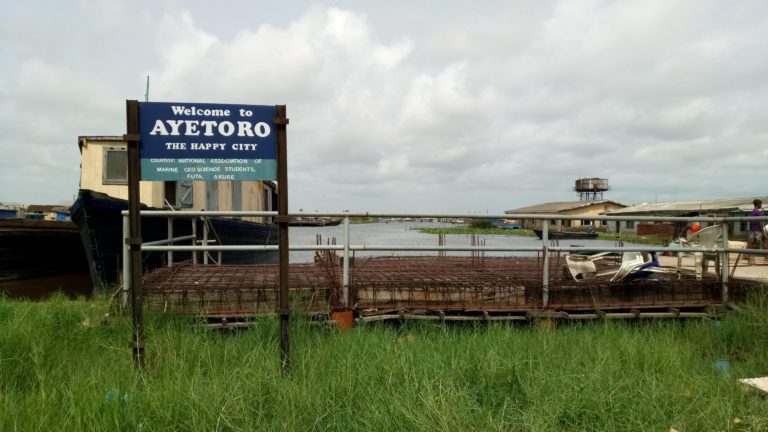
On December 15, 2004, four years after the establishment of the Niger Delta Development Commission (NDDC), the shore protection works for Ayetoro, a coastal community in Ilaje local government area of Ondo state, designed with a geotube technology which is the first of its kind in Africa, was awarded by the commission but later re-awarded in 2009 after the project was abandoned by the first contractor. Thirteen years after, the project lies fallow at the feet of the invading sea as the community struggles for survival against the storm, TAIWO ADEBULU writes.
The speedboat coughed to rest at the brink of the concrete wharf adjacent the community guest house. The rusty naked iron rods crisscrossing the weather-beaten wharf were drenched in the dripping rain. In the sight of unwelcoming rods staring at one’s scrotum ominously, disembarking becomes torturous and eternal like a camel passing through the eye of a needle. The wharf, according to Jaye Ikuyelorimi, the reporter’s guide, is just a fragment of projects which the Niger Delta Development Commission (NDDC) abandoned in the community.
AYETORO, THE HAPPY CITY
Tucked between the turbulent sea and a cobweb of soothing rivers, Ayetoro, a predominantly Christian community in the coastal belt of Ilaje local government area of Ondo was founded in 1947 by a group of Apostolic missionaries led by late Zaccheus Okenla “following a prophetic calling from God to move into a land near the sea to worship Him”. Hence, the Holy Apostles Church was established while its leaders function as the head of the church and the community. Aside practising theocracy, communism was also infused into their daily living. Virtually everything in community is collectively owned and controlled by the church. With about 10,000 residents, the streets of Ayetoro are well-laid out and houses strategically built opposite one another in horizontal lines – exuding a picturesque landscape.
According to Victor Akinluwa, the community public relations officer, Ayetoro became an autonomous kingdom after dragging the old Ilaje native authority to the supreme court in the 50s. The community won the case to stop the killing of twins, which became a tussle between the Christian community and its traditional neighbours. There and then, Ayetoro was issued a letter of incorporation by the then governor-general, Sir James Robertson who paid the community a visit. This brought a lot of development to Ayetoro as industries were built and advanced technologies were created such that it became a tourism hub that attracted eminent figures like the late Obafemi Awolowo, who came to study its appealing communal system.
Interestingly, Ayetoro has a powerhouse that had been supplying electricity to every home as far back as early 1950s. Its neatly paved streets and the industries: including a technical school, bakery, textile firm, shoemaking, ice making and soap factories, sawmill, six fishing trawlers and speedboat ferrying passengers from the community to Sapele, Delta state and Ebute-Meta in Lagos state – all owned and controlled by the community until the technical school was taken over by the state government and abandoned. Everyone contributes to one purse to fuel the plant. Interestingly, Ayetoro has never tasted the public supply of electricity from the national grid.
THE OIL CURSE
The first site of Happy City College, Ayetoro, completely washed away into the sea
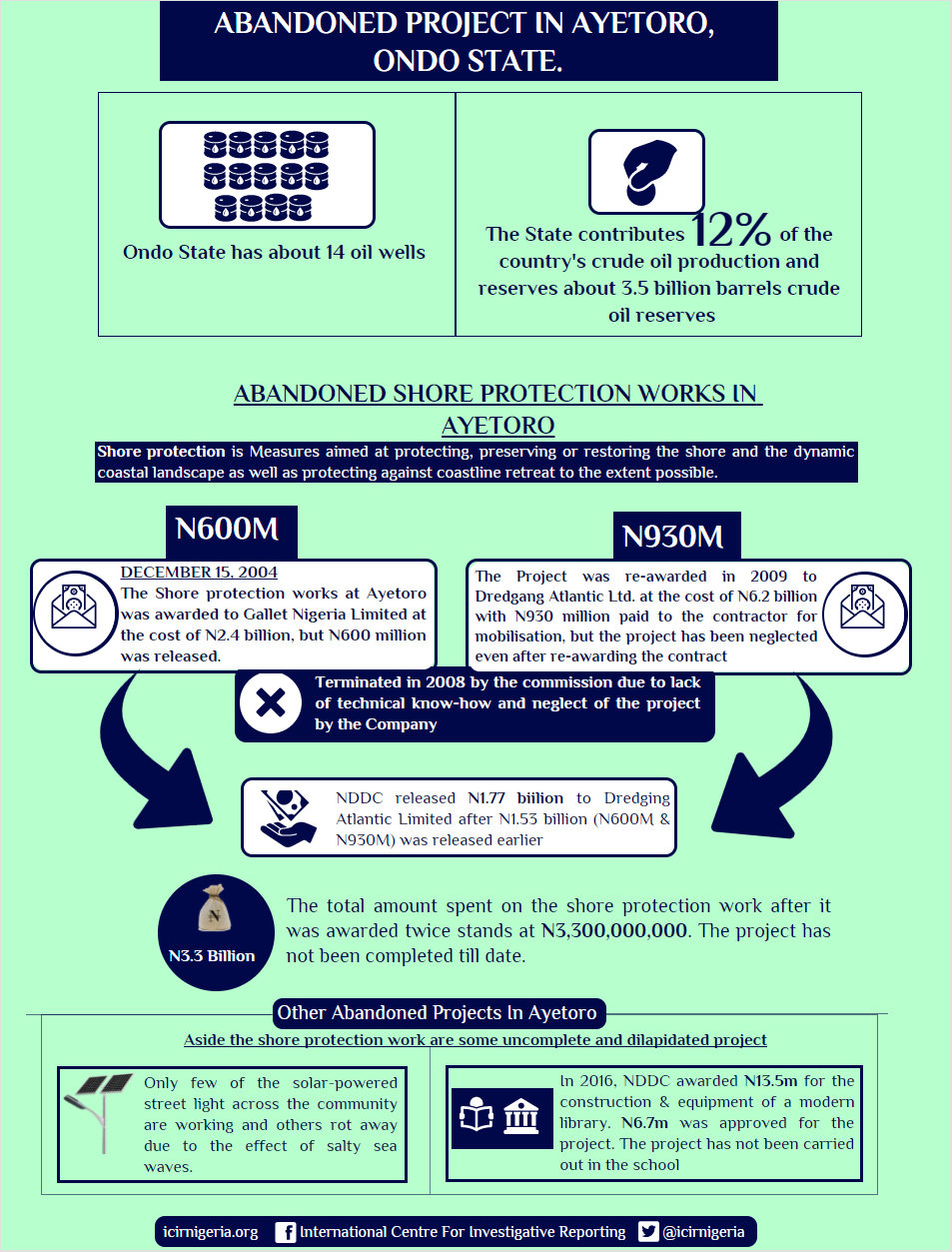
As a delegate during the 2014 national confab, Olusola Ebiseni, a former chairman of Ilaje/ Ese-Odo local government and commissioner for environment in Ondo state, affirmed that oil was first discovered in Nigeria at Araromi seaside in 1908 and later at Ogogoro in Ilaje local government area in 1952, before it was discovered in commercial quantity at Oloibiri, Bayelsa state in 1956. With oil giants like Chevron Nigeria Limited, Shell and Texaco operating in the coastal area, the local government has placed Ondo state among the oil producing areas in Nigeria, which derives a large chunk of its revenue from oil. Credited with about fourteen oil wells, it contributes 12% of the country’s crude oil production and reserves, with about 3.5 billion barrels crude oil reserves.
However, the discovery of crude oil offshore has constituted a curse to the people than a blessing, while its age-long civilisation and communal efforts are fast eroding due to the exploration of the resources. From incessant oil spills endangering the aquatic life where the people earn their major source of livelihood from fishing to the perennial sea surge invading their homes, life has never been the same in Ayetoro.
NDDC TO THE RESCUE?
NDDC area office at Igbokoda
Following the ceaseless agitation and unrest in the Niger Delta areas over the environmental degradation and pollution of the region since 1950s, the Olusegun Obasanjo administration established the Niger Delta Development Commission (NDDC) in 2000. The agency was given the mandate to tackle the developmental needs of oil-rich states. Hence, the commission kicked off with a mission to facilitate the rapid, even and sustainable development of the Niger Delta into a region that is economically prosperous, socially stable, ecologically regenerative and politically peaceful. Funded with the oil derivation fund, NDDC was also asked to tackle ecological and environmental problems that arise from the exploration of oil mineral in the region through the execution of projects that would abate the challenges and touch the lives of the people in the nine member states.
According to the project data analysis on the commission’s Project Monitoring Information System (PMIS) portal, it has delivered 9,440 projects since 2002. However, during the 2014 budget defence of the commission in the senate, a former chairman of NDDC, Ewa Henshaw, said the Niger Delta Development Commission (NDDC) has a total number of 4,000 abandoned projects scattered across states of the oil-rich Niger Delta region. One of such projects is the shore protection works in Ayetoro.
SHORE PROTECTION WORK NEGLECTED
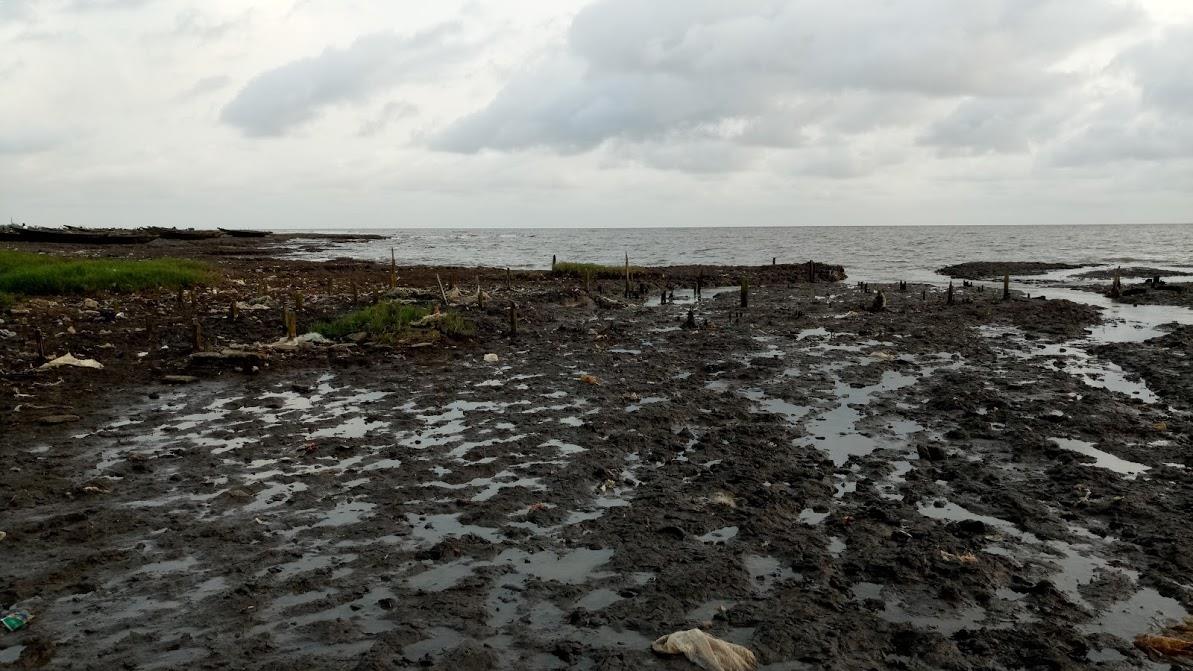
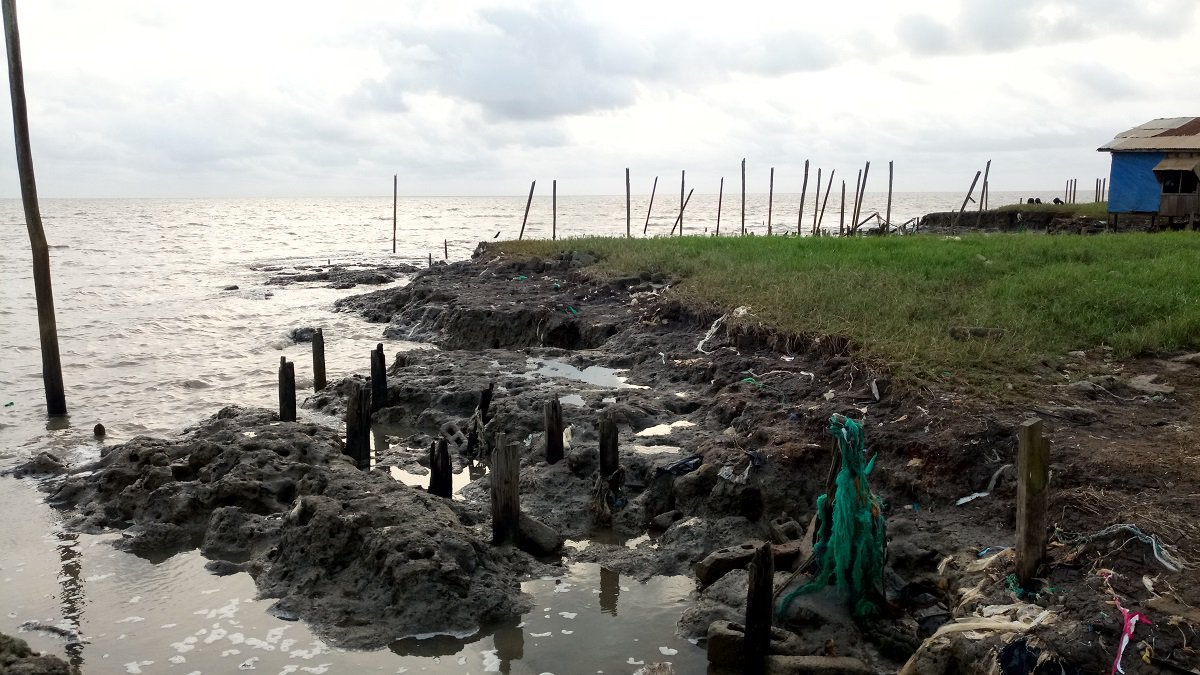
A sea shore in Ayetoro with broken pieces of houses that have been washed into the sea
“The sea surge started a long time ago when oil exploration and exploitation began on our coast. It happens every year and we have learnt to cope with it. Anytime the sea invades the community, it leaves our homes flooded and properties destroyed. We try to rebuild our homes and the city and continue with our lives. This is our ancestral land. We have nowhere to go,” Akinluwa said.
The shore protection works at Ayetoro with contract ID (NDDC/EDP/2/ONDO/PR/001) was awarded to Gallet Nigeria Limited on December 15, 2004, at the cost of 2.4 billion naira with twenty-five percent paid as mobilisation fee. The contract was, however, terminated by the commission four years after due to the lack of technical know-how and neglect of the project by the company. The project was, nevertheless, re-awarded to Dredging Atlantic Limited in 2009 to the tune of 6.2 billion naira, with 15% paid to the new contractor for mobilisation.
Investigations by this reporter at the oceanfront revealed a neglect of the project even after it was re-awarded. Except the abandoned heavy-duty equipment a few metres from the meteorological station, there was no staff of the company at the site or any work that signifies the beginning of a shore protection project.
Abandoned equipment of Dredging Atlantics Nigeria Limited for the shore protection works
However, a sack upon which fish traders placed baskets of fresh crayfish was lying fallow at the base of the sea. According to Benson Atimise, who represented the community at a stakeholders meeting on the project in 2006, the perennial storm surge the community is battling with is as a result of global warming.
“As you can see, we have practically lost our shores. How do we get to the sea? We are predominantly fishermen and the sea is our farm. Our fishermen are relocating to Awoye community where there is a shore,” Benson said.
Aside the shore protection work, NDDC executed an extensive solar-powered streetlight project across the length and breadth of the community but only a few are currently working as others rot away due to the effect of the salty sea waves. Hence, residents still contribute money to operate the power house in order to lighten up the broad street. The water project executed by the commission didn’t extend beyond the location it was cited until the community contributed money to lay pipes across the streets for every home to benefit from it. Nevertheless, the water is not safe for drinking except for domestic use.
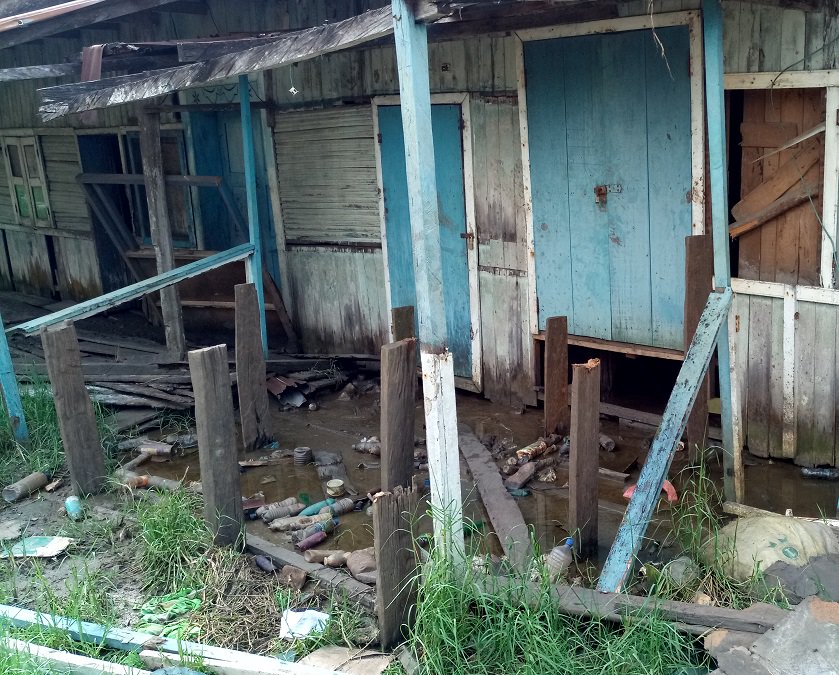
The remnants of a house affected by the sea storm
A document on NDDC website listed Dredging Atlantic Limited among the 391 prequalified contractors for NDDC projects from year 2010 – 2011. In an interview with the company’s public relations officer, Sola Oyinloye, he insisted that the project has not been abandoned.
“After we were awarded the project in 2009, we inherited the asset and liability of the first company that was awarded the project and could not even mobilise on site after being paid twenty-five percent mobilisation fee,” he said.
“So far, we have only been paid 1.1 billion naira out of the 6.2 billion project value. However, we couldn’t start work until 2013 because we had backlog of compensations coupled with the enormous challenge of sand search. It has been a serious problem. The project was designed such that we were meant to get sand offshore but there was none. Now, we have to get sand from Aboto which is 21 Kilometre from Ayetoro. We employed some members of Ayetoro as community liaison officers and we were paying them even while they were not working.
“Sometime ago, some members of the community tore the geotube with knives because they were not paid certain money. As we speak, the youths demanding for Christmas package have stopped us from working.”
When asked to put in percentage the status of the project towards completion and when it is expected to be complete, he said, “I can say we have done 40 percent of the job but I cannot say when the project will be completed due to the difficult terrain and logistics. Moreover, it’s a seasonal project.”
At the second national council on Niger Delta organised by the ministry of Niger Delta in Igbokoda, a community in the local government, with the theme Fast-Tracking the Development and Peace in Niger Delta Region, the Ondo state governor, Rotimi Akeredolu was reported to have lamented the gross infrastructural deficit in the area.
“This region presents a cruel paradox; the entire country depends on it almost entirely for sustenance. It, however, lacks evidence of development depicting its status as the proverbial goose that lays the golden egg,” the governor reportedly said.
‘CONTRACTORS BIGGER THAN NDDC’
On a sunny afternoon, this reporter visited the area office of the Niger Delta Development Commission (NDDC) in Igbokoda but was barred from entering the office by the fierce-looking security guard at the gate. While the reporter asked to see the officials of the commission, he said none of them was available and that the reporter should come back the following week. When a top official of the commission was called on phone, he said he wasn’t authorised to speak on the matter. After much persistence, he spoke on condition of anonymity.
He began: “I’m an indigene of Ilaje local government. If I tell you that I’m happy with what is happening, I’m deceiving you. That project is more or less an abandoned project. If the contractor is the one delaying it, we have every reason to call the contractor and see whether this project is even viable or not.
“I don’t even think the contractor that was given the job has the capacity to do it. The Ayetoro shore protection project was meant to be a test case and if it works, it will extend to other communities along the coast. But some of these contractors are bigger than NDDC.”
In an interview, Benson Enikuemehin, a former NDDC commissioner in the state, said the reason the project has been stagnant is due to the challenge in getting sand and lack of cooperation from the community members.
“The contractor had to go miles to get sand which wasn’t part of the deal but our people were not cooperating,” he said.
“The people must appreciate that citing government projects in their community is not an opportunity to make money. The community brought bogus claims to get undue compensations. At a time, they petitioned the Economic and Financial Crimes Commission (EFCC) around 2011 or so. The contractor was summoned. At the end, EFCC realised that the amount the work was awarded could not sustain it and concluded that the job shouldn’t be done lesser than 13 billion naira and they recommended an upward review of the project, but NDDC said they couldn’t afford it.
Ayetoro- Abandoned shore protection works
“The community should be ready to cooperate and make life less miserable for the contractor.”
While speaking with Emmanuel Audu-Ohwavborua, director, project monitoring and supervision directorate at the NDDC headquarters in Port-Harcourt, Rivers state, he said the project is ongoing although it has spanned about eight years.
“The project looks seemingly abandoned because there was no sand available to do the project and that gives the impression that it has been abandoned,” he said.
“But we’ve been working to find a way out by getting sand 25 kilometres away from the project site. When the canoes travelling with the sand pass through some communities that do not support the project, the youths sink the canoes.
“We are in constant touch with the contractor and we’ve been having meetings with him. What we are planning to do is to review the project and do it in bits. We’ll reduce the shoreline to be protected and that is because we’ve been working on protecting the whole shoreline of about 2 kilometres or thereabouts and we are not succeeding. The first phase will be to protect 700 metres of the shoreline and the remaining 900 metres will be redesigned as phase two. The process of the review is ongoing.”
BURIED IN THE DEEP SEA
Year-in, year out, the Atlantic Ocean overruns Ayetoro like bloodthirsty insurgents battering homes and lives. On sighting the invading threat, victims jump out of the window into the raging waves towering above their homes and swim with the tide to a safe spot. Displaced, they find safe refuge in the homes of community members who are ever willing to accommodate their very own. When the storm subsides, it leaves a trail of devastation, trajectory of misery and floods of sorrow. Hence, life in the community is brought to a standstill.
On February 2017, the incursion lasted for four days but resumed in mid-July occupying the whole community for a month. Residents were confined to their homes, schools closed and economic activities came to a dead end as more houses were buried in the deep sea. Moreover, it claimed the life of a little girl. Her bereaved mother, Olawunmi Iwametan, an apprentice, was inconsolable. Yet, she resigned herself to her fate.
Fragments of broken houses that have been destroyed and pulled into the sea
Oluwanbe Aladetan, a 30-year-old fisherman, recounted how his family lost their home to the Tsunami that wreaked havoc on the city early in the year.
“We were sleeping at home in the night when we heard the sound of the sea charging at our home. We quickly woke everyone up and we all started jumping into the water from the window when the house was giving in to the sea,” he sad.
“Within a twinkle of an eye, our house collapsed before our very eyes. All our properties were destroyed. We couldn’t save anything. We became stranded and squatted with community members who were less affected by the siege. My wife, my three children and I are currently squatting with a friend. It hasn’t been easy staying in other people’s home. When my father couldn’t bear the losses, he left the community for Calabar because he had no house to live in again.”
The community youth leader, Ajinde Iretolu, expressed his displeasure over the frequent displacement of community members every time the storm strikes.
“We live at the mercy of the sea. It has claimed more than 500 metres of our land. It’s reducing the community landmass and we keep moving upland. The population is growing, while the land is shrinking,” he said.
The community youth president, Ajinde Iretolu
When the project was abandoned by the first contractor, we complained and it was re-awarded to Dredging Atlantic Nigeria. Yet, nothing has been done. Let the government come to our rescue. The community-owned textile industry, shoemaking and sawmill factories have wound up due to this calamity befalling us. We just revived our bakery because we have to survive. Let the government come to our rescue.”
WE WON’T PERISH IN THE SEA
On a visit to the only public secondary school, Happy City College, Ayetoro, the original building have been washed away and submerged in the ocean. Consequently, a new structure was constructed, which has also been subjected to terrible battering by the sea. The school has, however, started constructing the third structure – a block of classrooms – behind the second structure. The school playing ground has also been immersed in water.
In an interview with Oladele Adeyemi, principal of Happy City College, the sea encroachment is seriously affecting pupils’ learning.
“When it happens during school hours, learning stops. The children will run helter-skelter to save their books. The sea will deposit mud into all those classrooms, including my office,” he said.
“It takes about three or four days before it recedes and we wash our classrooms to continue learning. If it happens when we are on holiday, it spoils our books and other school properties. Moreover, the NDDC two-classroom science laboratory building project in my school has been abandoned without completion for the past five years.”
The current building of Happy City College, Ayetoro, being battered by the sea
Remarkably, the NDDC 2016 appropriation act approved a sum of 13.5 million naira for the construction and equipment of a modern library at Happy City College in 2015, while 6.7 million naira was approved in 2016, yet there was no such project in the school environment.
“Sometimes, it comes like a thief in the night,” Victor quipped. “Everyone has to stay awake to save their children and a few valuables they can hold. We are just lucky to be natural swimmers. Some years ago, when you are sent on an errand to the shore, it will take a long walk to get there.
“Now, it’s kissing our houses. We used to have an improvised mini-stadium but it has been washed away into the sea. At a time, they said they wanted to build another city for us far away from the sea but we insisted that if they must do that, they have to relocate the sea along with us because that is our source of livelihood.”
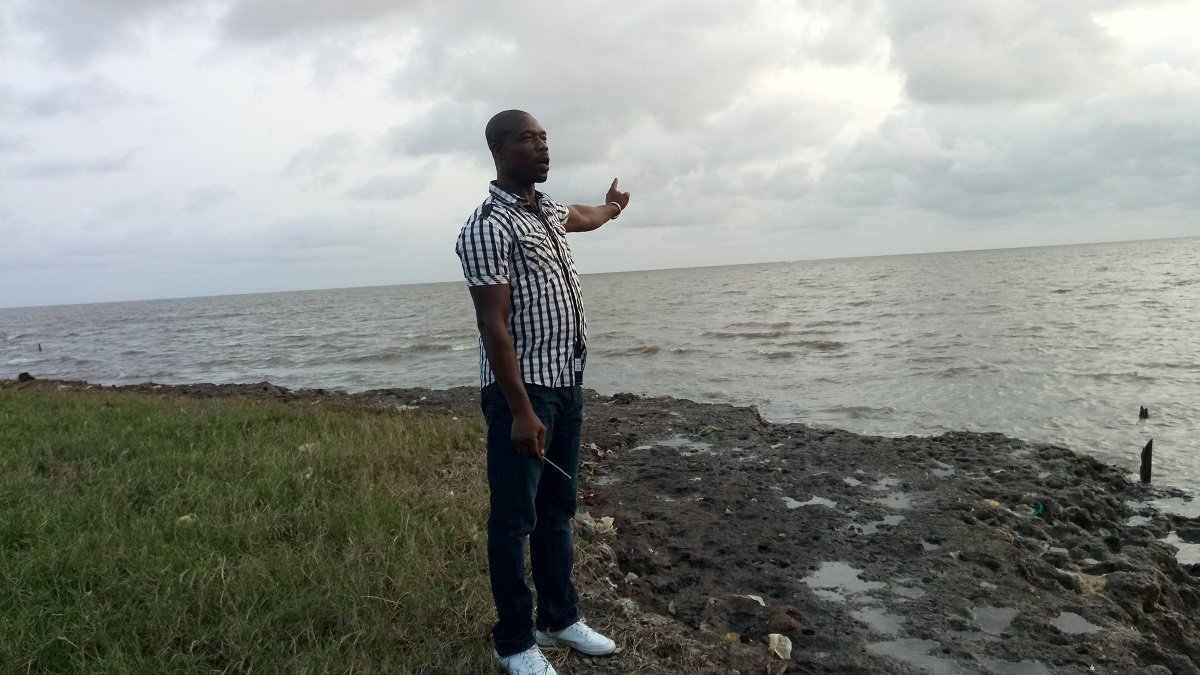
Ojo Olisa, a fisherman, pointing to the location in the sea where his father’s house was buried
For 42-year-old fisherman, Ojo Olisa, the sea storm is just like the biblical red sea which Moses led the people of Israel through against the invading Egyptians. With this conviction, he believed that the people of Ayetoro will overcome their challenges. Ojo, while pointing to a location in the ocean where his birthplace was built before it was consumed by the sea storm in 2008, gave a vivid account of what happened that fateful night.
“Our house had fifteen rooms. My wife woke up in the dead of the night after she noticed the sign that the storm was coming. She quickly moved our children out that night and came back for me, but I didn’t listen to her because it didn’t look as though it was going to be serious,” he said.
“My father also left immediately. Around 3am, the surge came suddenly and hit the house. It threw me out and I released myself to the wave until it pushed me upfront. I swam out. In the morning, our house was nowhere to be found. My father and I with my children had to stay with a friend. Shortly after, my father died.
Aftermath of a sea surge with Ayetoto flooded
“The only reason why we cannot leave here despite the life-threatening challenges from the sea is because of the divine commission that brought our fathers here. We have a strong faith in the calling of our fathers. They never received a prophesy that we’ll perish in the sea. So, we cannot leave. It’s our ancestral land. God has called us here to worship him. For every decision we make, we consult him and follow his voice. Without the divine voice, we cannot move.”
THE NETHERLANDS MODEL
While representing Ilaje/Ese-Odo constituency at the house of representatives in the 6th national assembly, Agboola Ajayi, incumbent deputy governor of Ondo state who was then the chairman, house committee on Niger Delta, was said to be displeased with the way the shore protection works in Ayetoro was being handled.
Hence, he embarked on a trip to The Netherlands in north-western Europe with two representatives of Ayetoro — Eniola Akingboye and Frederick Alebiosu, now deceased, for a comparative study of how the country was able to reclaim its land from the ocean through advanced technologies like the geotube.
The Netherland, like Ayetoro and most coastal communities in Ilaje local government area, is low-lying, flat and dominated by water features with about 50% of its land exceeding just one metre above sea level. Its total area of 41,850 square kilometres consists mostly of reclaimed land from the sea. Thus, people tout that God created the world, but the Dutch created the Netherlands.
“Yes, we visited the Netherlands in 2009 with Hon. Agboola Ajayi,” Akingboye confirmed to this reporter in a telephone conversation.
“We followed him to study how the Dutch were able to reclaim most of their lands from the sea and how the Geotube works for them. We were conducted round facilities, shores and shown video clips. When we got back to the country, we wrote our report. Hon. Agboola said he was going to forward it to the house. In fact, he recommended a geosynthetics company from the Netherlands to take up the project. Because of the politics associated with the contracting process, the project was not given to the company.
“Three months ago, the local government chairman said we should write another letter which he said he was going to submit to the governor. We haven’t got a reply. ”
Afolabi Aboyewa, a former chairman of Ondo State Civil Service Commission and the head of Zion Ikorigho community whose land reclamation and sand filling project had been abandoned since 2012 when it was awarded by NDDC, wrote a proposal on the need to adopt the Netherland development pattern in the local government because they share environmental similarities.
A copy of the proposal, which was obtained by this reporter, was distributed to political and traditional leaders and governmental agencies operating in the local government, but nothing has been said of it till date.
BEFORE NIGER DELTANS BECOME ENVIRONMENTAL REFUGEES
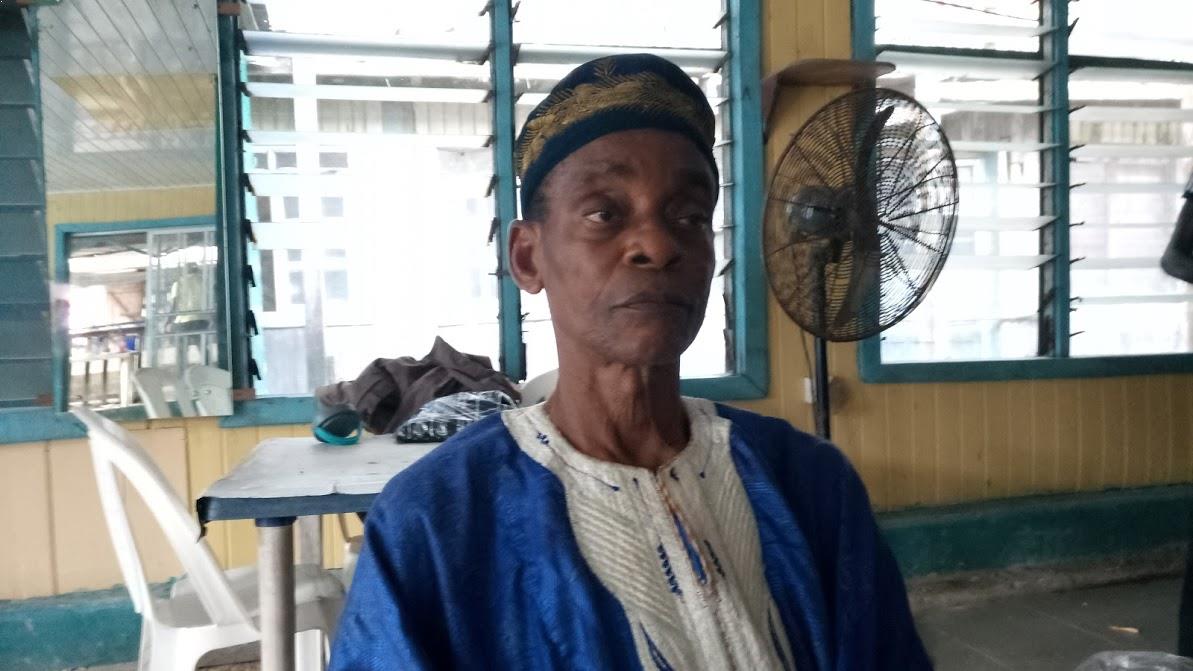
Johnson Atimise, secretary-general, Supreme Council of Elders in Ayetoro, said the community had written a series of letters to the State Emergency Management Agency, yet their plight has not been addressed.
“The sea level keeps rising and we fear the unknown,” he lamented. The septuagenarian’s fear is shared by all members of the community, in that they might sleep one day and wake up the following day with the community entombed under water,” he said.
Apostle Johnson: “The sea level keeps rising and we fear the unknown.”
However, during the 2014 World Environment Day in Abuja, Laurentia Mallam, former minister of environment, warned that about 32 million Nigerians living on the coastlines in the Niger Delta might be displaced due to rise in the sea level.
She reportedly stated that with an accelerated sea level rise of 0.5 metres, 35 percent of the Niger Delta land mass would be lost, adding that with accelerated sea level rise of 1.0 metres, 75 percent of the Niger Delta would be gone under water.
In a 2007 assessment report by the Intergovernmental Panel on Climate Change (IPCC), global sea levels rose to an average rate of 1.8 millimetres a year from 1961 to 2003, with the fastest growth occurring between 1993 and 2003, an average rate of 3.1 millimetres a year. In one of the regional studies conducted by the organisation, the most vulnerable areas are concentrated along the west coast of Africa, Southern coast of Mediterranean and South Asia while 70 percent of the Nigerian coast would be inundated by a 1-metre rise, affecting more than 2.7 million hectares and pushing some beaches 3 kilometres inland.
ENDLESS PROMISES
Ayowole Aworetan, chairman of Ilaje local government area, said he was aware of the environmental challenges that have caused untold hardship on the people of Ayetoro.
“I have visited the place more than five times. I took pictures of the sea shore and the letter written by Mr. Eniola Akingboye to the governor to show him what the people are passing through. The governor has started taking steps. The Ecological Fund Office in Abuja has promised to come to their rescue,” he said.
Until the government swings into action, Ayetoro residents would keep fighting nature, a battle they obviously can’t win.
This investigation is supported by the John D. and Catherine T. MacArthur Foundation and the International Center for Investigative Reporting, ICIR.
John Odigie-Oyegun, National Chairman of the All Progressives Congress (APC), says President Muhammadu Buhari was not brought to power by the elite but by ordinary Nigerians.
Odigie-Oyegun made the comment when he received the 9th Benin National Award from the Bini National Congress in Benin, the Edo State Capital.
Though Odigie-Oyegun acknowledged that “there is hunger in the land” and “that the economy is in relatively bad shape”, he insisted that things would have been worse were it not for the effectiveness of the Buhari-led administration, stressing that “there was no kobo” left in Nigeria’s treasury when APC took over power in 2015.
“Yes, I accept there is hunger in the land, yes, I accept that the economy is in relatively bad shape,” he said.
“If I tell you now that what we inherited were far worse and you hear some of the details, I won’t be surprised if people go out and ask for stricter measures on those who have brought this country to its knees.
“As at the time we took over, there wasn’t a single kobo anywhere. As if that was not enough, the price of crude collapsed.
“But the good news is that for the first time in its history, this country is finally building an economic base that is based on the sweat of Nigerians, which means we will never again suffer from the kind of humiliation we have had resulting from the collapse of the one item that sustained this nation, which is crude oil.
“Today, agriculture is blossoming; young people are taking up farming as a business. Today we are almost independent in the production of rice.
“Today, we are almost self-sufficient in a lot of the grains that we depend on in this nation. Today we are opening up solid mineral mines all over the country.
“Things have started to solidify. The economy has started to grow. It is not a switch, it is something that will take time. But once we are there, this nation will never experience the type of recession that we had in the past.”
According to Odigie-Oyegun, “change is not bridges. Change is not electricity. Change is not roads. Change is my perception as to what is right or what is wrong or what needs to be done and being faithful in getting it done”.
“For as long as we Nigerians have the wrong type of morality, ethics, not all the roads in this world will get us out of the economic morass we find ourselves,” he continued.
“So change also means a change of attitude, morality, ethics, knowledge of what is right and what is wrong.
“A system that rewards competence, productivity rather than a system that adulates wealth for the sake of the fact that somebody has money.
“When I joined the service as an economic planner, the World Bank put Nigeria ahead of Brazil, Korea, Singapore, Taiwan. Today, we are importing second-hand Brazilian planes. So what went wrong with us?
“Finally we have a President who is insisting painfully on bringing Nigeria back to the path of rectitude, progress and enable Nigeria attain its destiny.
“Until President Buhari, we were a laughing stock. Today, we are gaining respectability. So it is important that we don’t lose momentum.”
Odigie-Oyegun said he had no worries about Buhari winning another election, as the ordinary Nigerians are solidly behind him.
“Let me make one thing clear, President Buhari was not elected by the elite, I hope you know that. If he depended on the elite, Buhari may not be president today. And if he depended on the elite … Buhari will not be President tomorrow,” he said.
“But the ordinary people of this country look up to him as the symbol of the kind of persons, leadership and the kind of country that they want Nigeria to become.
“He is a symbol, a lighthouse, a guide. He doesn’t have to be good at everything, but he has that attribute which the ordinary Nigerian is telling us is what they need.”
In our previous articles, we thoroughly discussed the dire issues of unhealthy abattoirs in the country, using the Bodija Abattoir in Ibadan as a case study. Here, we elucidate on their poor environmental state and the unscrupulous meat processing activities carried out by the butchers.
We also discussed the shady acts of selling infected meat, a common practice in Nigerian abattoirs where meat and offal infected with diseases such as tuberculosis, worms, brucellosis etc. are smuggled in to be sold to the public for consumption.
Through our investigations, we now understand more clearly the high public health risk that this presents for the cuntry’s large meat-consuming population.
To further buttress our findings on Nigerian abattoirs, we carried out some field and laboratory tests over a period of one month. Samples were collected from animals that are being slaughtered at the abattoir and whose meat were being transported for sale at the meat markets.
As part of our findings, every day, we identified at least seven meat and offal with lesions that showed classical TB infections (Of course, there may have been several others that were not brought to our attention.).
These meat samples were further inspected at the laboratory and were confirmed by gross pathology and H&E examination, respectively, for tuberculosis.
Also, we randomly collected fecal samples from cattle at the abattoir and tested them for worm infestation. Helminth tests revealed that about 25% of the total fecal samples examined tested positive for various worm eggs as indicative of worm infestations.
It is important to note that these diseases are zoonotic (that is, they can be transmitted from animals to humans and vice versa) and cooking does not always kill all the micro-organisms.
Indeed, Cadmus et alconfirms in his report that there is the spread of Mycobaterium bovis in humans in Nigeria with Mycobaterium bovis being the strain of tuberculosis that is specific for cattle and usually found in meat.
Other zoonotic diseases that can be transmitted to humans include leptospirosis, anthrax, salmonellosis and.
RECOMMENDATIONS FOR STANDARD ABATTOIRS AND HEALTHIER ABATTOIR PRACTICES
Whether for health reasons or for aesthetic reasons, it is highly expedient that this issue of unhealthy abattoirs be resolved finally.
Based on the public reactions and outcry garnered from previous reports in this series, we can all collectively agree that it is indeed a national disgrace to have our abattoir where some of our staple food is produced in such unhealthy and filthy states.
Therefore, it is the collective jobs of all and sundry to ensure that practical solutions are carried out for a systematic positive change in our abattoirs. We hereby propose the following recommendations;
The entire Abattoir System should be overhauled and rehabilitated in line with global standards.
The government at all levels should employ more veterinarians and other relevant officials to serve the purpose of inspecting meat at all times, so as to make available wholesome meat fit for human consumption. In the same tone, existing meat hygiene laws and policies must be enforced at all abattoirs around the country.
Compensatory systems should be available to butchers, as this will encourage butchers and cattle farmers with diseased animals that are meant for slaughter to surrender the animals to the appropriate authorities for condemnation.
Ante-mortem inspection and quarantine measures should be strictly adopted to prevent diseased animals from being slaughtered in abattoirs in the first place
Butchers should be trained on the importance of maintaining a standard and healthy abattoir system, on WASH principles and the use of personal protective equipment for their work. Socio-cultural myths and practices that are not beneficial in their line of work should also be addressed.
All meat consumers should endeavour to look out for the type of meat products they buy and consume. They should be concerned about the production phase at the abattoir and call out any unscrupulous activity by any butcher that has the risk of jeopardizing consumer health.
Individuals, professional groups, societies, and NGOs should continue to advocate for abattoir restructuring even as they get the attention of the government and appropriate authorities.
Together, we can answer the urgent call to protect the ourselves from various infectious and zoonotic diseases that are gotten from unhealthy consumption of meat and offal in abattoirs. Remember, eat healthy to stay healthy.
The #AbattoirNigeria story series is supported by the ImpactAFRICA Fund and Bill and Melinda Gates Foundation
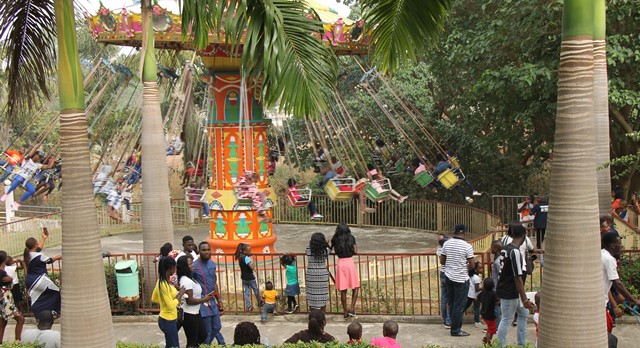
Over the weekend and Christmas holiday, thousands of Abuja residents — both adults and children — thronged the amusement parks in the city to have adrenaline-pumping rides that appear to be safe but can be dangerous.
Last year, two girls of the same parents were killed and five other children were severely injured in an accident at a popular Oakland Amusement Park in Enugu State. The victims were riding on the teacup, one of the facilities in the park, when the accident occurred.
The Enugu incident has been the only reported fatality at amusement parks in recent years, but it does not mean that accidents are not occurring at amusement parks in the country — Nigeria just doesn’t have a record of those accidents.
Globally, thousands of injuries, as well as fatalities, occur at amusement parks. In 2016 alone, 30,900 injuries associated with amusement parks happened in the US, according to the country’s Consumer Product Safety Commission.
In July, a roller coaster collision in Spain left 33 people injured. In May, an 11-year-old girl died after falling from a water ride in the U.K.’s Drayton Manor park while another girl in central China was killed in February after being flung from a spinning ride, according to Time.
These amusement-park mishaps happen across the world. How safe are the amusement parks in Abuja?
Boat ride at Maitama Amusement Park
There is no available record of injuries or fatalities at amusement parks in Abuja. Perhaps the injuries in these parks have gone unnoticed due to lack of accident records.
On Tuesday, the Boxing Day, the ICIR visited Magic Land Amusement Park, formally known as Wonderland — the biggest and the most visited amusement park in the nation’s capital. From the cars in long queues to enter the park to the long queues to buy the N400 entrance ticket per person, there was a crowd waiting to get a few minutes of pleasure from the thrill rides.
The giant structures of roller coasters, bumper car, ocean cars, frog jump, pirate ship, cowboy mini wheel, flying tower, carousel, happy worm capsule, bouncy castles, among others, were sending thrills and chills down the spines of fun-seekers who were queuing to pay from N500 to N1000 to have a ride of less than five minutes.
Despite pushing the riders to exhilarating extremes, there was no case of injury during the over two hours of observation by the ICIR but the rides can break and cause horrible accidents. By watching the riders, the roller coaster cars can fly off the tracks or cables in the flying tower can come loose. These are machines that can be prone to malfunctioning or human error.
One of the operators told the ICIR that the park is safe and rides across the machinery are safe as well, as there had never been a fatal accident at the park.
The operator explained that accidents could occur due to the rider’s error, arising from fear or through the operator who failed to enforce the safety procedures. The equipment malfunction can be very deadly for the riders.
He said the facilities are inspected regularly because the rides have a lot of moveable and breakable parts, which have to be well-maintained to avoid pulling off during rides.
One of the facilities, pirate ship, was cranky but the operators said the cranky sound posed no danger.
All across the rides in Magic Land, there were no posted age, height, weight and health restrictions, which are standard safety practices in amusement park operations around the world.
Adults get into the rides with children without safety devices for the children at Magic Land Amusement Park
Adults were seen carrying children to enter the rides. While the adults had their seat belts and safety bars, the children on their laps could be thrown off the rides in situations of accident.In carrying these children to enter the rides, they were not following any special loading instructions and seating order, as there were no posted instructions that could warn riders of the dangers of not following rules.
The park has a first-aid office to treat minor injuries at the entrance of the park, but there was no standby ambulance despite the crowd at the place.
The park manager declined to speak with the ICIR on the lack of posted safety instructions and other safety measures in the park.
Children play at Maitama Amusement Park
Similarly, the Maitama Amusement Park, is another theme park in Abuja, did not also have posted instructions in any of the rides at the park despite having fun activities, such as a teacup, formula one, frog Jump, space gun ride, mini jet, bumper boat convoy, slides, and go-cart.
Ikenna Omeluko, the safety officer at the Maitama Amusement Park, said there had not been any fatal accident in the park.
He said there had only been minor injuries, which he treated, as a first aid officer and member of the Red Cross, adding that the park had an arrangement for an ambulance.
It seems unusual that the two major theme parks in Abuja do not have posted instructions for parents to weigh the risks of getting their children on the rides. Without posted safety guidelines, some of the visitors could get on the rides with a pre-existing medical condition or fail to use the safety devices appropriately without knowing the risk, as the operators were always busy getting more people on the rides to reduce the queues.
Linda Chibuzor, a parent, told the ICIR that the rides scared her but she usually brought her children to the park during a major holiday to give them a treat. But she said she depends on God for their security when they get into the rides.
“My brother, it is God that saves,” Chibuzor said. “Anything can happen in these rides but God is the ultimate saviour.”
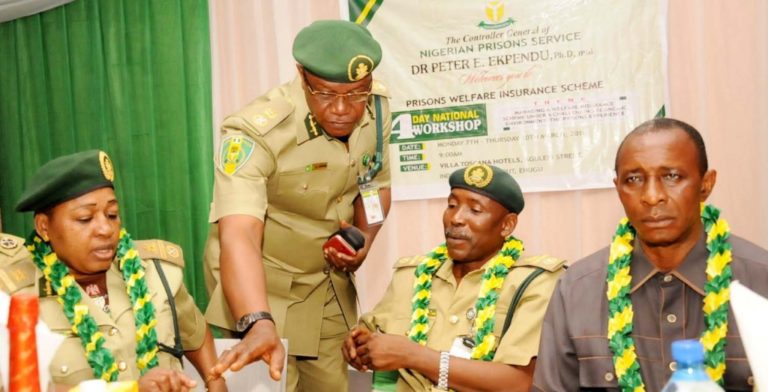
The Nigeria Immigration Service (NIS) and Nigeria Prison Service (NPS) cannot account for the sum of N12.662 billion they spent in 2015, a report form the office of the Auditor-General has revealed.
The audit report obtained by the ICIR showed that the Nigeria Immigration Service has the largest share of unaccounted money at N9.076 billion, and the prisons N3.586 billion.
The report indicated that out of the N9.075 billion unaccounted for by the Immigration, N4.985 billion was for salary variations, both surplus, and deficit, while N4.087 billion was for other expenses, all of which were incurred at the service headquarters in Abuja.
The sum of N3.747 million was incurred by the NIS Training School, Imo State command, the report said.
It said there were variances of between -0.15 percent and 0.78 percent in the NIS salary records from February to December 2015, using January payment as the base.
“The monthly variances were February N3.230m, March N3.543m, April N2.192bn, May N407.523m, June N478.812m, July N1.058bn, August N77,621, September N437.772m, October N285.325m, November N103.374m and December N15.887m.
“It is worrisome that there were no authority, variation and variation control records raised and maintained to support each month’s variation, as stipulated by the Financial Regulations,” the report said.
The Auditor-General requested the Comptroller-General of NIS to produce all the above mentioned for audit examination.
The report said that the Federal Ministry of Interior had entered an agreement with a company for Combined Expatriate Residence Permit and Aliens Card (CERPAC), but that as of December 2015, physical audit inspection revealed that nothing had been done at the new issuing centres in 28 states commands as envisaged even after the payment of N3.937 billion.
Besides, the actual cost of the establishment of the 28 new issuing centres was not stated in the contract agreement, the report said. Thus, the CG was asked to address the irregularities and account for the total sum already deducted and forward the evidence for audit verification.
N3.9 BILLION FOR 28 CENTRES
The Auditor-General said N97.37 million was sent to 36 state commands, zonal offices, and training schools for the year under review, but the corresponding expenditure returns from the states were not made available for audit examination despite repeated requests.
The CG was requested to inform the states to forward the expenditure returns, otherwise he would account for the amount.
The report said the sum of N20.17 million was paid to the personal account of three Immigration officers for the conduct of promotion examination, contrary to E-payment directive as stated in Financial Regulation 631.
The CG was requested to explain and provide evidence that the money was paid to the beneficiaries, otherwise he should recover the amount and forward evidence of recovery for audit verification.
The report observed irregularities in the contract sum of N98.20 million for the construction of passport office in Gwagwalada, Abuja. The CG was asked to explain some defects in the contract, Bill of Quantity items not executed and the lack of transparency in the contract, as well as recover the sum of N21.3 million and forward evidence of same for audit verification.
The sum of N6.60 million was used to sponsor some Immigration officers to workshops in their different professional bodies, contrary to a circular dated January 23, 2009. The CG was to recover the said amount from the affected officers.
Seven officers of the service were granted non-personal advances of N2.82 million without retiring same after the execution of the service. The CG was asked to deduct the amount from the salaries of the affected officers.
The report said on May 12, 2015, the Nigeria Immigration paid the sum of N1.85 million to fund trips of selected staff of the ministry of interior to attend the United Nations Security Ministerial Open Briefing on Foreign Terrorists Fighters.
However, the Auditor-General said the payment was contrary to the government rules forbidding agencies and parastatals from providing naira cover for estacode allowances for ministers, directors-general and/or ministry staff.
“The circular describes these acts as fraudulent, while the chief executive will be held personally and pecuniarily responsible for compliance with such order or request,” the Auditor-General said and ordered the CG to recover the money.
At the Immigration training school, Imo, the report said there was no supporting documents for the sum of N1.36 million paid to the commandant for the “energization” of a transformer to the Power Holding Company of Nigeria (PHCN).
“In the absence of these supporting documents, I could not satisfy myself that the payments were proper charges against public funds. This action is a violation of Financial Regulation 603,” the Auditor-General said and asked the commandant to recover the said amount and forward evidence of recovery.
The sum of N2.38 million was also paid to an officer for the renovation works carried out on hostel blocks in violation of a circular dated March 24, 2009. The CG was asked to explain the violation of the circular and forward relevant supporting documents. Otherwise, he should recover the said amount and submit recovery particulars.
TWO MISSING RIFLES
The audit examination of Arms Movement Register at the command showed that two unidentified pistols were booked by an officer of Niger State Command in December 2012 and another officer at the Immigration headquarters in June 2011. But arms were said not to have been returned, according to the report.
The CG was asked to cause the affected officers to return the arms and forward evidence of same for verification. If the said officers fail to respond, they should be held responsible for any form of misconduct or abuse of the arms, the auditor general said.
MONUMENTAL FRAUD IN PRISONS
For the Nigeria prisons, the audit report indicated that out of the agency’s N3.58 billion unaccounted fund, the sum of N1.47 billion was for salary variations, while N2.10 billion was for other expenses.
The auditor general said: “There were variances in the monthly payment of salary between January and December 2015. The variances were both in surplus and deficit and ranged from -0.87% and 25.65% between February and December 2015, using January 2015 payment as the base.
“The monthly variances are February, N23.41m; March, N38.43m; April, N73.15m; May, N79.89m; June, N157.18m; July, N194.11m; August, N139.28m; September, N136.44m; October, N45.70m; November, N48.32m and December, N543.79m.”
“It is worrisome that there was no authority for these variations in terms of variation advice and variation control raised and maintained to support each month’s variation as stipulated in Financial Regulation 1522 and 1523. The Comptroller-General has been requested to produce the authorities for the variations, variance advice and variation control records for audit examination.” the auditor general said.
The report said there was a balance of N5m after the payment of December 2015 salary “but no evidence was produced to show that the unspent balance was paid back to chest in line with the extant rule.”
N2BILLION PAY AS YOU EARN
In the other category, the report said a total of N2.08 billion was deducted as Pay As You Earn (PAYE) between January and December 2015. “However, the evidence of acknowledgment of the receipt of the amount by the FIRS was not produced for audit examination.
“The CG has been requested to produce the evidence of the receipt of N2.089 billion by the FIRS for audit verification,” the report said.
The report revealed that the sum of N1.8 million was added to a contract consultancy fee of N19.8 million to cover sundry expenses, describing it as “unacceptable and contravenes the provision of Financial Regulation 415.”
Although the CG was requested to explain the irregular payment and recover the N1.8m, he responded to the query on July 26, 2016, but he “did not give satisfactory answers to the audit queries after verification of the said response,” the auditor general said.
N20MILLION CONSULTANCY
In another contract of N19.8m, a ten percent withholding tax for consultancy service was deducted but that the five percent Value Added Tax (VAT), amounting to N990,000 was not deducted. Again, the CG’s response to a query on the matter dated July 26, 2016, was not satisfactory, the report said.
N58.860m was charged by an insurance broker as premium on Group Personal Accident Insurance policy for the period of January to December 2016, and the amount was approved by the CG, the report said.
A part payment of N10.62 million was made but that there was no receipt issued by the broker to acknowledge the receipt of the amount. The auditor general said that it was difficult to accept the payment as a legitimate expenditure against the public fund and requested the CG to recover the N10.62 million and forward the evidence accordingly for verification.