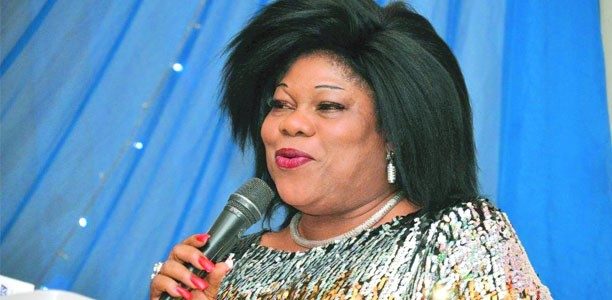
Obiageli Ezekwesili, former Minister of Education, says she will be devoting 2018 to mentoring and encouraging more young and competent Nigerians to get more involved in politics with a view to bringing about true and positive change in the country.
Ezekwesili, a vibrant rights activist, made this known on Wednesday through her verified Twitter handle, stressing that citizen indifference in the face of substandard “political operators” continues to cost the nation dear.
Using the hashtag #TheYearOfTheOfficeOfTheCitizen, Ezekwesili said the time has come to “reset our political space with the entry of a new generation of people that can commit to building a new Nigeria at every level of our society”.
“2018 has to be the Year that all Citizens of Nigeria step up on shaping the Quality of our Participatory Politics. Houses of Assembly in all States. Governorship in 34(?) States House of Representatives in Abuja Senate in Abuja Office of President. #EnoughIsEnough. #RESULTS!” Ezekwesili tweeted.
“The price good men (and women) pay for indifference to public affairs is to be ruled by evil men. – Plato.
“Citizens’ indifference to the Quality of our Political Operators, their Governance Process and what they ought to Deliver has COST us DIRELY. 2018 is time to shape a New Deal. No more Indifference.
“One of the penalties of refusing to participate in politics is that you end up being governed by your inferiors. – Plato.
“We must RESET our Political Space with the entry of a New Generation of people that can commit to Building a New Nigeria at every level of our society. Let our Quality young ones with sturdy character, high competence & capacity ARISE & RUN for Legislative & Executive offices.”
“We do not need a Replacement Generation that will prove the sad point that ‘there are young Mugabes’. I mean who wishes to replace “old & corrupted incompetents” with “Young & corrupted incompetents”.
“We need a deep RESET of our Political Landscape for Quality Governance Results.
“Counting on the abundance of His Grace, I shall commit a considerable amount of my time in 2018 to mobilizing support for CREDIBLE CANDIDATES that can DISRUPT our DECADENT Political Space. Our Political Landscape nationwide- local, state and federal is overdue for NEW MINDS.”
Ezekwesili, co-founder of the Bring Back Our Girls campaign, was recently honoured with the ‘Anti-Corruption Defender Award’ by the Wole Soyinka Centre for Investigative Journalism.
Governors of the 36 states have approximately 7,956 policemen attached to them, a report by Daily Trust has revealed.
According to the report, this is more than two-thirds the total number of personnel recruited into the Nigeria Police Force in 2016.
Thousands of policemen are assigned as personal security details to politicians and so-called Very Important Personalities (VIP) across the country, despite the severe shortage of police personnel to effectively secure the millions of ordinary Nigerians.
For instance, Jimoh Moshood, the Police Public Relations Officer, once said during an interview that a Nigerian governor has about 221 policemen in his security detail.
Moshood said this in April while reacting to claims by Nyesom Wike, Governor of Rivers State, that Ibrahim Idris, the Inspector-General of Police, wanted him dead.
“It is incumbent on the Nigeria Police Force to educate the general public and draw the attention of the Governor of Rivers State to the facts and figures available for press and members of the public to verify, that there are 221 police personnel attached currently to His Excellency, Mr. Nyesom Wike, the Executive Governor of Rivers State for his Personal and office protection,” Moshood said in April this year.
“The breakdown is as follows: one ADC (SPO), one CSO (SPO), one Unit Commander (Special Protection Unit) SPO, one Unit Commander (Counter Terrorism Unit) SPO, one Escort Commander (SPO), one Camp Commander (SPO), one Admin officer (SPO) to administer the Police Personnel, 54 Inspectors of Police, 136 Police Sergeants and 24 Police Corporals.”
Investigation by Daily Trust revealed that the total number of policemen attached to the 36 ministers in the country is about 180 — an average of five policemen per minister — while Special Advisers and Senior Special Assistants have at least one police detail each. Some have more. Heads of federal government departments and agencies are not left out, including the leadership of the Police itself.
Similarly, Bukola Saraki, Senate President, has 67 police personnel attached to him; Ike Ekweremadu, Deputy Senate President is said to have about 80. Yakubu Dogara, Speaker of the House of Representatives, has about 30, while his deputy and the other principal officers of the lower legislative chamber have more than two policemen attached to each of them.
Each member of the Senate (109 in all) and the House of Representatives (360 in all) has at least one police detail each.
The same goes for lawmakers in the 36 state assemblies across the federation, commissioners, council chairmen and heads of state agencies.
In the Judiciary, “the Chief Justice of the Federation (CJN), the President of the Court of Appeal, chief justices of the Federal High Court, the FCT High Court, Sharia Court of Appeal, Customary Court of Appeal, National Industrial Court, all have police personnel attached to them for protection”, the report stated.
“Also, the 22 Supreme Court justices, the 66 Court of Appeal justices, the 69 FHC judges, 38 FCT High Court judges, and the 20 judges of the National Industrial Court, all have at least a cop each attached to them.
“Apart from these judicial officers, the 36 states and the Federal Capital Territory (FCT), equally have hundreds of judges with police protection.”
Traditional rulers, religious leaders and leaders of top private organizations also have several hundreds of policemen attached to them, even though most of them are not legally entitled to such benefits.
Isah Misau, a member of the Senate, had accused Ibrahim Idris, the IGP, of pocketing about N10 billion every month (N120 billion annually) in illegal payments from top companies in the country which he provides with police security.
The allegation came up for investigation by a senate ad-hoc committee, but Idris rushed to the FCT High Court asking that the Senate be barred from investigating the case pending the determination of a libel suit that he had filed against Misau.
All these happen despite the fact that there are about 300,000 policemen watching over 182 Nigerians — a ratio of 1:1,648 police-population ratio and a far cry from the United Nations’ recommendation of 1:400 police-population ratio.
Also, Mike Okiro, Chairman of the Police Service Commission and former IGP, had revealed in an interview, that the NPF loses an average of 9,000 personnel annually due to deaths and retirement.
According to Daily Trust, the following are legally entitled to police security: “the President, Vice President, Chief Justice of Nigeria, governors, deputy governors, Secretary to the Government of the Federation, Head of Service of the Federation and Ministers.
Others are: President of the Court of Appeal, justices of the Supreme Court, judges of the Court of Appeal, Chief Judge and Grand Khadi of a state, president of the Customary Court of Appeal, chairman of a local government/area council, vice chairman of a local government/area council and chairman of the Independent Corrupt Practices Commission (ICPC).
In the legislature, the President of the Senate, Deputy President of the Senate, Speaker of the House of Representatives, Deputy Speaker of the House of Representatives, Speakers of State Houses of Assembly and Deputy Speakers of State Houses of Assembly, are entitled to police security.
Jimoh Moshood, the Force PRO, refused to comment on the issue, ignoring calls and text messages to his phone.
Osun State civil servants have blocked the entrance to the state secretariat complex after declaring an indefinite industrial action, saying they will no longer accept half salary from the state government.
The leadership of the Nigerian Labour Congress (NLC) in the state had directed members not to resume from their Christmas break until the government accedes to their demands, but Festus Olowogboyega, the Osun State Head of Service, gave a counter-directive ordering workers from grade levels 1 to 7 to resume work.
The directive prompted Jacob Adekomi, Osun State NLC Chairman, to mobilise members of the union to the state secretariat in order to enforce the strike action.
Among other things, the workers are demanding the confirmation of appointments and promotion for some of their colleagues since 2012, as well as the stoppage of modulated salary for workers and pensioners since July 2015.
Osun State is among the worst-indebted states in terms of unpaid salaries, alongside Bayelsa, which is surprising, given it is an oil-producing state.
Through the eyes of out-of-school children, this piece investigates the menace of northern children of school age who are not in school, looking at the looming socioeconomic and security consequences of the challenge in Africa’s most populous nation.
By Adam Alqali
Walking shoulder-to-shoulder along the well-paved street as the dry harmattan wind blows over Bauchi’s highbrow GRA are two siblings – Sadiq and Nabil – who are on their way to the neigbourhood’s football pitch.
Like millions of other boys of their age in Africa and other parts of the developing world, Sadiq,13, and his younger sibling Nabil, 11, are lovers of the game of football, hence every evening, at around 5pm, they walk to their neighborhood’s football pitch to partake in a game popularly described as world’s most popular sport.
What is discernible about the two children at first sight is that their outlook and dress style are untypical of children who may call the houses that adorn the well-tarred streets in Bauchi’s high-value government reserved area, home. In reality, the brothers do not ‘belong’ in the posh neighborhood – they are born of a security guard father and domestic help mother.
Although the two siblings share a passion for soccer, they are worlds apart when it comes to education. Nabil, the younger sibling, attends one of the best public schools in the state of Bauchi in Nigeria’s northeastern region, recenntly infamous for the dreaded Boko Haram insurgency, whereas the older sibling; Sadiq, had never seen the four walls of a classroom.
Nabil is not only going to school but also seems to be doing very well, thanks to a scholarship from the owner of the house where his dad, Ibrahim, works as a security guard. On the other hand, Sadiq who is equally passionate about having an education and have even managed to learn how to pen his name is (at the age of 13) still not going to school.
“Whenever I ask my parents to enroll me in school they keep saying I will be enrolled when my father gets his monthly salary or when the next session starts,” says Sadiq in a pitiful voice, staring down as he tries not give in to his emotions.
Therefore, while Nabil learns subjects as varied as Arithmetic, English, Verbal Reasoning, and Quantitative Reasoning amongst others at the Jibrin Aminu Model Primary School, one of only four such special primary schools in Bauchi, Sadiq will be working as an apprentice vulcaniser, patching tubes at a vulcaniser’s workshop behind Nabil’s school.
Education has already made a big difference in the young siblings’ thinking: whereas Nabil’s ambition is to become a Nigerian Air Force officer flying airplanes, his older brother’s is to become a tailor, working with thread and needle, tailoring being a trade plied by their grand and great-grandparents.
OTHERS DROPPING OUT OF SCHOOL
Whereas the likes of Sadiq have never been to any formal school in their entire lives, his age mate, Usman only recently dropped out of primary school in class 5 because his uniform has worn-out, and could not afford basic learning materials including exercise books. Usman was too young when his mother died to have any memory of her. Besides, he does not know his exact age. His father, Aliyu, who sells eggs for a living has 9 other children to cater for.
“I was attending primary school but my uniform got worn out, I didn’t have books and I was struggling to feed myself so I had to drop out of school,” says Usman, the fourth of his father’s ten 10 children whose family live in Rimin Gata, a community on the outskirts of Kano, Nigeria’s second city.
The fact that Usman’s father cannot afford to send all his 10 children to school and cater for their basic needs like feeding means only 5 of the 10 are currently going to school while Usman and 4 others either dropped out of school or were never enrolled.
Usman Ibrahim recently dropped out of school because his father could not provide for his educational needs
Usman and many other drop-out children in his community – which is host to Bayero University’s new campus – like 17-year old Mustapha survive and were before now paying for their educational needs by running errands for university students. Unlike Usman who lives with his father, Mustapha had only seen his biological father once, in his entire life.
Having divorced Mustapha’s mother while he was still very young, his father had left Kano for Kaduna where he remarried and never bothered to look after or cater for Mustapha and his other sibling’s needs. Mustapha, who was in class 2 at the community’s junior secondary school had to recently quit schooling as he could not cater for his educational needs with the little he gets from running errands for Bayero’s students, any longer.
IRRESPONSIBLE PARENTING AS A CAUSE
Central to the reasons why millions of Nigerian children like Sadiq, Usman and Mustapha are out of school are poverty, ignorance and sheer irresponsibility on the part of parents hence Nigeria’s being the country with highest number of out of school children in the world. According to UNICEF; there are 10.5 million out of school children in Nigeria, 60% of which reside in northern Nigeria.
Poverty means millions of parents in northern Nigeria cannot afford to send their wards to school. Moreover, ignorance on the part of some of them also means they still abhor Western education thus will go to any length to keep their children out of the classroom, even in instances where free education is available.
Moreover, sheer irresponsibility on the part of parents in the region means men would marry, give birth to children they cannot cater for and thus send them to faraway places in the name of a system of Islamic education called Almajirci.
“Men will send their boys to Almajirci; they are literally abandoning them because there is no [effective] supervision by parents. The Mallam (Islamic teacher) can’t cater for them; instead the boys will have to beg to feed themselves and feed the Mallam, as well,” says Amina Hanga, Executive Secretary of the Kano-based Isa Wali Empowerment Initiative (IWEI), a nonprofit working with out of school children in northern Nigeria.
“It is in this process that the boys therefore become vulnerable to social vices: drug abuse, thievery, thuggery. They become vulnerable to being preyed upon by criminals to do as they like with them. So, they grow up hating and resenting society including their parents. This is because their parents and society didn’t give them anything.”
BARRIERS TO GIRLS’ GOING TO SCHOOL
According to UNICEF, girls account for over 60% of out-of-school children in Nigeria, majority of who are also from the northern region. Socioeconomic barriers such as early marriages, poverty, lack of toilet facilities in schools, insecurity and sexual harassment by male teachers in schools are the major barriers for girls’ enrolment and retention in schools across northern Nigeria.
“Men won’t allow their wives to venture out of their homes; instead girls are sent out to hawk on behalf of their mothers to sustain the family. Hawking exposes girls to sexual harassment, risks of getting pregnant as well as contracting STDs like HIV/AIDS. Some parents believe going to school make girls become wayward, therefore the girl-child is send to hawk, after all part of the proceeds will go to funding her wedding,” says Hanga.
Hanga decried the fact these parents don’t understand that an educated girl is less likely to give birth to malnourished children but more likely to have healthy children hence less medical expenses on the family.
LOW FUNDING, POOR REGULATION FOR BASIC EDCUCATION
The Nigerian government and individual states are still not adhering to UNESCO’s recommended budgetary benchmark of 26% allocation to the education sector, which is responsible for low funding for the critically-important sector. Low levels of funding for basic education means poor quality of education for in-school children and nothing for out of school ones.
“It means greater challenges for the education governance systems at all levels. It also calls for a rethink of our funding for the sector and the strategy for delivery to cater for those out of school,” says Prof. Muhammad Bello Shitu of the Civil Society Action Coalition on Education for All (CSCEFA).
Furthermore, lack of effective monitoring and supervision means low quality teaching and learning output hence the paradox of public schools having better qualified teachers, compared to private schools, yet private schools having better quality teaching. The irony is that whereas private schools ensure effective supervision, there is poor supervision in public schools.
“Lack of effective supervision means disproportionate posting of teachers at the detriment of rural areas,” says Jinjiri Garba, of the Bauchi State Network of Civil Society Organisations (BASNEC). “Urban schools might have up to 100 teachers while those in rural areas as low as one teacher.”
The fact that supervisors rarely visit schools for monitoring means urban-based teachers posted to rural areas abscond or lobby and bribe their way back to urban areas, leaving the rural schools with no teachers.
“Government should employ teachers from within the communities they will post them to work in; instead of employing teachers from the state capital and posting them to rural areas making the teachers abscond from their duty posts,” advises Garba.
IN SCHOOL; NOT LEARNING
It is one thing for children to be in school and entirely another to be learning, as such millions of the so-called in-school children in Nigeria are only a little better or not even better than children like Sadiq who had never seen the four walls of a classroom. Teacher quality is at the heart of effective teaching at basic levels of education.
For example, unlike Nabil Ibrahim, 10-year old Umar Adamu, a primary 2 pupil at a school where children learn on the floor and there are over 100 pupils in a class doesn’t know the name of his school and can’t even write his own name. Umar attends Wuntin Dada Primary School, located on the outskirts of Bauchi town.
“A Quality teacher is to education, what software is, to a computer. You will have an empty, useless box if there are no softwares installed in a computer,” says Chinedu Anarado of the DFID-funded Teacher Development Programme (TDP) being implemented across 5 states of northern Nigeria.
The dearth in the quality of teachers at basic schools in Nigeria is not unconnected with the ‘lowly’ nature of the teaching profession which keeps bright minds away from teaching or rather make them see it as a ‘transition’ after graduation from tertiary institutions as they search for greener pastures in other sectors of the economy.
“It is a low-paying profession,” argues Michael Watts of the Education, Data, Research and Evaluation in Nigeria (EDOREN), another education sector DFID-funded programme focused on generating evidences and understanding how best to support equitable access and improved learning outcomes for all Nigerian children.
“There is a direct link between income and social status. Teachers need to have decent salary relative to the population, and then you’ll have better quality teachers and better education results. When teachers have low salaries quality of teaching declines and hence learning.”
BASIC EDUCATION AS A RIGHT
Despite the passage of both the Child Rights Act since 2003 and Universal Basic Education (UBE) Act since 2004, which stipulates that the first 9 years of a child’s education – primary and junior secondary school education – is a basic right, free and compulsory for all children, access to basic education has remained elusive to millions of Nigerian children.
“The laws are OK and have potentials for changing the equation creating greater opportunity for effective education governance and delivery. It requires transparency and accountability to really make the difference,” says Prof. Shitu.
But the major challenge with these laws especially the Child Rights Act is not just lack of implementation instead many states, particularly those in the northern region are yet to domesticate and ratify the law, citing religious reasons.
“Education is very important in Islam; it is about access to opportunities, better life, therefore denying a child education which is a right has [negative] implications. The Child Right Act is not domesticated in many northern states because of the controversy around puberty and age of marriage for girls,” says Hanga.
A TICKING TIME-BOMB
As Nigeria struggles to rid itself of the Boko Haram insurrection, the 10.5 million out-of-school children represent a grim future for the country, one characterized by grave socioeconomic and security consequences for Africa’s most populous nation.
“Poor or lack of education has been identified and recognized as one of the causative factors for recruitment into insurgency and engagement in violent behaviours. It is apparent that if nothing concrete is done to close the gap in access to schooling and education generally, insurgent elements will a have a pool of young persons that can easily be recruited, brain-washed and dumped hence greater danger of deepening the crisis,” says Prof Shitu.
Maryam Garba, Executive Director of Fahimta Women and Youth Development Initiative (FAWOYDI), a Bauchi-based civic organization working to address the problem of out-of-school children in Nigeria’s northeast, agrees.
“There is great implication indeed; Children’s schooling contributes importantly to the social and economic development of nations. Increasing rates of school enrollment and retention, along with the elimination of gender disparities in education are important components of the Millennium [Sustainable] Development Goals (SDGs),” she says
Thus, unless all stakeholders come together to urgently salvage the situation, the 10.5 million-out-of school children in Nigeria, which represents a ticking time-bomb waiting to explode with serious social, economic and security consequences, will continue to grow.
EDUCATION FOR ALL, RESPONSIBILITY FOR ALL
The strategic importance of access to basic education for children and the increasing reality that governments have overtime failed to fund basic education in Nigeria means the business of funding and managing children’s education should not be left in the government’s hand, alone. In reality, the federal and state governments in Nigeria may not have the capacity to fund and manage basic education.
“Kano state government has over 6,500 primary schools, over 1700 junior and secondary schools; the monthly salary of primary school teachers alone is ₦3 billion, not to talk of secondary and tertiary teachers. Compare this with what the government is generating internally and the statutory allocation from the government, all these put together cannot pay for education in the state,” says Danlami Garba, Permanent Secretary, Ministry of Education, Kano state.
Considering the obvious failings of the federal and state governments in Nigeria in effectively funding basic education, the citizens including private sector, parents and community must come in to support the government towards achieving equitable and inclusive access to quality education for all, in accordance with Education 2030 Agenda of the Sustainable Development Goals (SDGs).
“A new reorientation is required by all for the system to function effectively. Parents and communities must first recognize that education of children is an inalienable right and a human right which goes for both girls and boys. Second, parents and communities must realize that they have a duty and responsibility to ensure that their children get education so should put it as their priority,” suggests Prof. Shitu.
“Again, communities must not fold their arms to allow the state machinery to dehumanize them by downplaying the issue of education, hence the dire need for communities to demand for their rights. A logical follow up is for governments and the private sector through CSR to do the needful.”
This is to say for Nigeria to be able to significantly reduce the numbers of children roaming the street instead of going to school and achieve SDG4 which is seeking to ensure inclusive and equitable quality education and promote lifelong learning opportunities for all, education must be the responsibility for all.
Pope Francis wants all the peoples of the world to treat migrants with a little more kindness, saying most of them are merely looking for survival and not luxury.
Delivering his Christmas message at the Vatican, Pope Francis likened the migrant crisis currently being experienced in many countries of the world, to the situation of Joseph and Mary, the parents of Jesus, shortly before Jesus was born.
“Just like the migrants, Mary and Joseph found themselves forced to set out. They had to leave their people, their home and their land, and to undertake a journey in order to be registered in the census”, the Pope said.
“This was no comfortable or easy journey for a young couple about to have a child: they had to leave their land.
“They arrived in Bethlehem and experienced that it was a land that was not expecting them. A land where there was no place for them.
“And there, amid the gloom of a city that had no room or place for the stranger from afar, amid the darkness of a bustling city which in this case seemed to want to build itself up by turning its back on others… it was precisely there that the revolutionary spark of God’s love was kindled.
“We see the tracks of entire families forced to set out in our own day. We see the tracks of millions of persons who do not choose to go away but, driven from their land, leave behind their dear ones.
“In many cases this departure is filled with hope, hope for the future; yet for many others this departure can only have one name: survival. Surviving the Herods of today, who, to impose their power and increase their wealth, see no problem in shedding innocent blood.”
Pope Francis urged Christians to always try to “see God present in all those situations where we think he is absent”.
“He is present in the unwelcomed visitor, often unrecognizable, who walks through our cities and our neighbourhoods, who travels on our buses and knocks on our doors,” he said.
“Christmas is a time for turning the power of fear into the power of charity, into power for a new imagination of charity.
“This is the joy that we are called to share, to celebrate and to proclaim. The joy with which God, in his infinite mercy, has embraced us, pagans, sinners and foreigners, and demands that we do the same.”
As millions of Nigerian Christians celebrate the birth of Jesus Christ, the globally-acclaimed spiritual saviour of mankind, there are many more who do not have the economic resources to dine and wine with members of their families and friends. While this sad situation is understandable in some other countries ravaged by natural environmental disasters of drought, seasonal floods, hurricanes, earthquakes, typhoons and tsunamis, or the self-inflicted wasteful wanton wars, it is far from this in Nigeria.
Here, indeed, the victims such as the homeless, the elderly poor, the beggars, orphans and widows, agonise over preventable poverty in the midst of plenty! Not left out, of course, are the hapless civil servants owed for months by their cruel and conscienceless state governors who collect different funds from the all-conquering federal centre but simply refuse to pay them. There lies the irony and the pain!
As previously highlighted in my opinion essay titled: ‘UN’s battle against poverty’, the statistics of our country’s scenario are simply scary and scandalous. One is talking about the inexcusable social inequality and injustice which exists between the very rich and those caught in the pitiable pit of preventable poverty. In a report published by OXFAM in 2016, it stated that the combined wealth of Nigeria’s five richest men- from Dangote through Adenuga, Otedola to Ovia- then put at about $29.9bn could effectively end extreme poverty in the country. Yes, you heard me right.
In fact, Celestine Okwudili Odo, Good Governance Programme Coordinator for OXFAM in Nigeria, said: “It is obscene that the richest Nigerian has amassed more money than he can ever hope to spend in a country where five million people will struggle to feed themselves this year. Extreme inequality is exacerbating poverty, undermining the economy, and fermenting social unrest. Nigerian leaders must be more determined in tackling this terrible problem.”
In specific terms, Nigeria’s richest man earns 8,000 times more in one day than a poor Nigerian will spend on basic needs in a year. More than 112 million people are living in poverty in Nigeria, yet the country’s richest man would have to spend $1m a day for 42 years to exhaust his fortune! Yet, the number of people living in poverty increased from 69 million in 2004 to 112 million in 2010 – a rise of 69 percent. The number of millionaires increased by 44 per cent during the same period.
Looked at from the Human Development Index, which is a summary measure for assessing long-term progress in the three basic dimensions of human development, there is nothing to write home about. The three key areas of long-term healthy life, access to knowledge and decent standard of living paint a parlous picture of pure deprivation of the long-suffering masses. Especially by their so-called leaders, and painfully too, under a democratic dispensation.
Nigeria was ranked 152nd out of 188 countries in the 2016 Report of the African Human Development Index, released by the United Nations Development Programme, in Nairobi, Kenya. Consequently, the country retained its 2014 status, as there was no forward or backward shift from the computation. Nigeria’s HDI value for 2014, according to the UNDP’s 2015 report, was 0.514 which puts the country in the low human development category.
Even Botswana ranked better than Nigeria according to the report published on August 29, 2016. Furthermore, it stated in unequivocal terms that Nigeria’s Human Development Index rose by 13.1 per cent. Such is the high level of poverty in the country that the UNDP, precisely on April 19, 2017, warned that Nigeria must stop being a “seriously hungry nation”.
Sadly, Nigeria was the only oil-producing country languishing in that shameful socio-economic stratum. Also, according to the 2015 HD Report Work for Human Development for 188 countries assessed by the United Nations, life expectancy index was 0.44, education index was 0.59 while the GDP index and HDI value were placed at 0.36 and0.466 respectively.
Under this administration inflation rate galloped from 13.7 per cent to 15.6 per cent, between May and July, 2016. Compared to that of South Africa of 6.3 per cent, Republic of Niger of 2.3 per cent, Zimbabwe of -1 per cent and Mali of -0.4 per cent there is nothing to cheer about. All these take place because the dynamics of consumables and essential needs such as food, kerosene, transport, housing and utilities are closely tied to fuel hike and inflation.
Nigerians may have endured it all in their characteristic, legendary resilience but the sudden hike in fuel price from about N97 to N145 per litre has had deleterious effects on the quality of life of the average Nigerian. This has been compounded by the current stifling fuel crisis. As it happened in Venezuela, so it has in Nigeria.
One had expected, as I admonished Mr. President back in 2015, to assemble a team of top technocrats and seasoned economists, who know their onions; irrespective of their political or religious persuasions and be ready to listen to them. But that was never done.
As usual, the tightening of monetary policies has led to devaluation of the naira. Since we do not produce or export much of homegrown products, importers would spend more naira to the dollar. With insurgency in the North-East, which has led to food shortages in addition to hike in the price of farm produce, a recycling of economic policies will not get us out of the wood.
What is the way out of the economic quagmire? Firstly, our policymakers should be more creative and innovative. We need foreign exchange for industrialisation. We should stop transferring our economic fortunes to foreign hands. We need to revisit the policy of liberalisation and the social benefits of privatisation.
And of greater significance is the need to critically address the obscenely high cost of accessing political power as well as running the machinery of government. The twin evils fuel corruption and undermine good governance that could benefit the poor. The governors and the legislators should come to terms with the harsh economic realities and tread the path of frugality to become true servant- leaders as the late President Umaru Yar’Ardua advocated. We need to drastically reduce the emoluments of political office holders and deploy the huge sums so recovered to improve the quality of life of the average citizen, especially children, the elderly and women who are the greatest victims.
We require more partnerships between the public and private sectors, Non- Governmental Organisations and civil society groups to successfully bring the monster of poverty to its begging knees. We also need stable infrastructure, (adequate electric power and water supply as well as good roads), access to credit facility at single digit interest rate and boosting of small and medium scale enterprises. The other is to inculcate entrepreneurship training in our youth right from the secondary school level.
Nigerians are therefore, eagerly waiting for the proposed National Poverty Eradication Commission as promised by the Speaker of House of Representatives, Yakubu Dogara. It must not go the way of the past poverty alleviation programmes. And because the incubus of poverty haunts us all, it must never be politicised.
Baje, a media consultant and author, wrote in from Lagos
Kuraye is a rural community that is a few kilometers off Katsina city. It is located in Charanchi Local Government, near the state capital. It is home to a large population of rural dwellers, mostly farmers and artisans. After spending over 45 minutes on hired motorcycle, scouting the village to locate the Primary Healthcare Centre (PHC), lo and behold, the only PHC in the community was an eyesore. The project is a constituency intervention built in 2010, but it had never been put to use.
The PHC, investigations reveal, has always been under lock, and local groundnut farmers had taken over the compound and turned it into an assembling point for their farm harvest as they tiredly separate the groundnuts from the plant roots.
“This is a hospital built for lizards because there are no activities here. We address it like that because lizards, rodents have made it their abode,” Umar Bello, an adult in his early 30s, said of the operations of the facility, adding in Hausa:“hosipitu kadangaru”.
From all indications, the hospital appeared inactive, as it was under lock during the visit. There were no signs of power, neither was the water facility operational. It was already covered by weed, and it lacked perimeter fencing.
In front of the facility was a traditional, hand-powered borehole surrounded by children.
“The three staff don’t come. There are few casual staff, so they don’t come as well because it is not mandatory for them to visit the PHC,” said Mallam Bashiru Al-sa’adu, another resident. “The state government supplies them with drugs but it always get missing somehow.”
It is a worse scenario in Turaji and Tsageru, two neighbouring communities in Rimi Local Government of the state.
In 2013, under President Goodluck Jonathan, a lawmaker representing both communities in the constituency, through the National Primary Health Care Development Agency (NPHCDA), awarded a contract for the construction of a PHC in Turaji at the sum of N21 987 893,95. Incidentally, the construction firm, Greensols Energy Revolution Nigeria Limited, with Corporate Affairs Commission (CAC) registration number 805958, commenced work but never completed the project. Residents attributed the non-completion to change of government but investigation revealed otherwise.
A visit to the contractor’s corporate address at House 13, Road 15, Efab Estate, Jabi, Abuja, revealed that the corporate address was merely a warehouse for a different organization involved in entertainments and corporate services. A lady simply identified as Miss Chidinma said she had been managing the business for over five years on the same property. Asked if she knew the major shareholder, Mr. Anuwe Charles Olaosebikan, she said, “That name you called, I really don’t know anyone or company bearing that.”
From further investigations at the CAC, it was gathered that the firm was registered to execute jobs on renewable energy and had no relationship with construction of PHC projects.
“To carry on the trade of business as a renewable electrical company, consultants, erection and installation, sales of solar products, wind- turbine and electrical appliances and services of any kind connected for the practice of renewable energy projects,” the company objective read.
Even though the uncompleted project was not sited at the right location, both communities, Turaji and Tsagero, were left seeking medical help at the Rimi General hospital about three kilometers away from the Tsagero districts. The general hospital is situated along Lambo rimi through Kano road. It was gathered that in extreme conditions, patients are taken to Katsina General hospital, which is about 21 kilometres away from Tsagero and Turanji. A source, who doesn’t want his name in print explained that the rimi general hospital has few doctors unlike the Katsina hospital, where there are many experts. “Before you enter rimi, you see the hospital. It’s about three kilometres from here.”
“We don’t know anything about it. The contractor just came and started building. We were not carried along but later we heard it is a PHC,” a group of youths who were obviously disgruntled told our reporter. They lamented over the abandoned project saying it should have been sited at Turaji but taken to the border point between the two communities to avoid conflicts. Though, Tsageru community residents wanted the project constructed in their settlement but Abdullahi Umar, a resident, said Tsageru had an existing facility that was built by successive governments and later completed after years of neglect. However, it has never been equipped.
Uncompleted Primary health care Project in Tsageru
Located adjacent to the unequipped PHC in Tsageru lies a completed and fenced health centre but of no value to the people due to its emptiness. It had neither furniture nor medical equipment. It was already covered with weeds like other similar projects while pests and other insects had taken refuge in the doors, gradually eating deep into it such that it could hardly serve its main purpose. A school teacher living close to the facility who pleaded anonymity, told this reporter that an Ex-lawmaker in the House of Representatives, Mohammed Dalhatu completed the project but did not equip it.
The local guard securing the abandoned PHC, Mr. Ayuba Majidi, who expressed concern over the gradual degeneration of the facility said the 2013 project was facilitated by former Senator Ibrahim Idah but remained uncompleted until interventions by successive governments. Majidi has been guarding the facility for over six years with irregular stipends of N5, 000. .
Efforts to reach the lawmaker to enquire on reason for the delay were unsuccessful.
To Abdul-bashir Sa’adu, a farmer who grows groundnut, millet, sorghum and guinea-corn in one of the rural communities in Cheranchi, Katsina the NPHCDA could do more to ensure the PHCs are built to standard and functional as expected. He appealed to the government to consider their needs and rescue them from the pathetic situation. To him, the future is not certain as most of their wives lack access to ante-natal care while the children suffer from tuberculosis.
“We want government to engage health practitioners that will be committed to delivering health service to our people. I mean those that won’t exploit the people and sell off the drugs supplied.”
Obviously, these are the realities in major PHCs in the remote part of the country, especially in the north. The PHC projects are either not executed or built below standard, thus contributing adversely to healthcare delivery in the country. For instance, in Kadasaka community, Gada local government of Sokoto state, the PHC project was no different from others. Already covered by bushes and suffered neglect, it was a complete rot and proof of government ineffectiveness in ensuring successful project standardization and delivery.
Abandoned PHC in Kadasaka village, Gada, Sokoto state.
The project has been abandoned since 2009. The roof is almost completely blown away while the ceilings are falling off by the day. It showed that it was perhaps earlier roofed but got damaged due to either poor execution or harsh weather. It was really a complete waste of asset and resources. While inspecting the abandoned project, one could see the large cracked walls, damaged hospital beds, cabinets as well as frames dented due to severe weather impacts. Aside, there were also new delivery beds, still wrapped-up but wasting away, completely covered with dusts among other donated hospital equipment, all yearning for usage.
The experience of residents in Kadasaka community was pathetic. Hope of these underprivilege rural settlements seemed dashed as there are no signs of contractors return to the project. Donated items by the United States Agency for International Development (USAID) including refrigerators, super industrial fans among others are wasting away in a leaking store already damaged by rainfall.
Health official, Nuru Abdullahi said they had to manage other facility and still take delivery of pregnant women in the small room directly at the frontage of the abandoned project. The dispensary is so small that it could hardly take a handful of people at a time. Pregnant women from the 14 villages just like in Kalenjeni town, often make use of an extremely small room in the dispensary, sizeable enough to be a kitchen store for child delivery.
Delievery room in Kadasaka community, Gada Sokoto state
The dispensary was constructed by the Sokoto state government and serves about 14 other rural communities.
Incidentally, the uncompleted PHC would have smoothly served over 600 people conveniently. In a chat with a health attendant in the dispensary, he narrated how they had to scout for water for delivery and medical use, saying in most cases they had to use donkeys to convey water from the nearest borehole which according to him, is miles away to the clinic.
“We need equipment and more staffs. We don’t have water at all. The borehole is no longer functioning. We used donkey to transport water from a far place to the centre,” he said.
Actually, this was a constituency project sponsored by former Senator Abubakar Umar Gada, who represented the constituency in 2009. These are the challenges aside from other common problems such as inadequate staffs, insecurity, poor access to potable water and unstable medical doctors. During the investigation, a visit to all the PHCs in selected states revealed inadequate health officers in the facilities. The least in the number of workforce is between two and five.
Unfortunately, the summation of these circumstances has threatened the nation’s health sector. The few functional ones have been overstretched to compliment the neglected projects which each PHC, according to Prof. Eyitayo Lambo ought to serve 70 per cent of rural communities it is situated. For instance, in Garko local government of Kano State, Dal ward, a single PHC in Dal town serves about 42 villages because of its proximity to other neighbouring councils. These include areas such as Garko town, Sumaila and Tudunwada. This PHC centre attends to approximately 40 patients daily and within nine months (January – August) took delivery of 92 pregnant women as at 25th August this year. According to statistics made available by Gambo Edidal, the health official in-charge, 27 births were recorded in January, 13 in February, eight in March, Seven in April, Four in May, 10 in June, 10 in July and 13 in August. Also, in Kalenjeni town, there are 14 villages only subjected to use four health dispensaries and not PHC centre. The only PHC that could have met health needs of the people remained under construction, thus abandoned. Unfortunately the officials were reluctant to disclose number of casualties.
Statistics of maternal deaths and infant mortality in the country is saddening.According to UNICEF, the North West is second highest in maternal mortality, recording 1,026 women from 100, 000 live births followed by the North East, having 1,549 deaths from 100, 000 live births.
“Every 10 minutes, one woman dies on account of pregnancy or childbirth in Nigeria, giving a total of 53,000 per year. This means about 800 women die in every 100,000 live births,” it stated.
Budgetary allocation to Primary Health Centres in North West Nigeria (2004-2015)
In the latest report jointly released by the World Health Organisation, WHO, United Nation Population Fund, UNFPA, United Nations Children Fund (UNICEF) and World Bank this year, the nation recorded 58,000 deaths arising from complications during delivery in 2015.
In Sokoto state, health care delivery is considered to be on priority list of the government. The government successfully partnered with relevant local and international organisations to deliver effective health care to its people. There were innovations specially tailored to reduce maternal mortality and other measures to encourage pregnant women attend Anti Natal Care (ANC). First timers in the state would certainly presume a high standard of health care delivery because you are welcomed with bill boards of health programmes and partnerships with health bodies such as World Health Organization (WHO), Department for international Development (DFID), and National Primary Healthcare Development Agency (NPHCDA) to mention but few.
However, it appears the services are one sided mainly in the urban areas. A visit to remote parts of the state gave a contrary impression as constituency projects were largely abandoned or never executed.
In locations such as Kalenjeni Town, in Tangaza Local Government, among others were constituency projects that were uncompleted. In Dange Shuni town, Dange local government of the state, a constituency project worth N19 million awarded in 2009 could not be located, as it never existed..
Moreover, the only PHC according to health officials and volunteers, was built in 2005 by the Sokoto State Primary Health Care Development Agency (SSPHCDA) as MDGs project. This position was also supported by Abubakar Mohammed, a volunteer PHC worker, who graduated from Sultan Abdulraheem College of Health Technology, Gwarabawa, Sokoto state.
Mohammed described how patients had to struggle to access health care in the community even at the General Hospital due to the distance. The community had reportedly lost high number of residents to untimely deaths. “From 2015 till date, about 20-30 people have lost their lives due to lack of ambulance. It is a very serious problem.” He said, adding that, “we will be very happy if they can provide it for us.” According to the workers, each time there is an emergency, they strived to rush victims to the hospital but often lose them due to the closing period of the general hospital. It allegedly closes at about 2pm daily and any emergency are not attended to.
“There is no other PHC aside from this one built in 2005 but rehabilitations have taken place since 2009, 2014. Others are dispensaries. From Danbo to Damaki, there are no federal PHC,” He said, adding that “the closest general hospital is in Amanawa. They close 2 o’ clock, even if we refer patients there, they will not attend to them once its 2pm.”
The health workers asked for procurement of Ambulance to convey patients, to the Sokoto State Specialist Hospital, in the town, especially during emergencies. This is about 30-minute drive from Dange town.
In Kalenjeni Town, Tangaza, Shehu Umar a commercial motorcyclist serves as the health attendant in the oldest drug dispensary in the community among other three dispensaries serving over 10 communities in the area. “Our pregnant women deliver here or we move them to Tangaza town in extreme situations. Since the project has not been completed, we want the government to expand and equip the dispensaries,” Umar pleaded.
Abandoned PHC in Kalenjeni town, Tangaza, Sokoto
The deplorable state of the PHCs has resulted into a number of deaths that are largely unreported.. But investigations revealed that intervention projects by development partners, especially USAID saved not less than 6,313 women and new borns between 2010 to 2015. But the traditional ruler, Majagi Yahaya claimed there have never been casualties. But in order to salvage the situation, lawmaker representing the constituency, Hon. Isah Bashir Kalenjeni facilitated, in 2012, the construction of Type II PHC project. It was awarded at the sum of N33 million and expected to serve all the communities far away from the General Hospital.
However, five years down the lane, the project is still uncompleted. The project contractor, Umairatu Nigeria Consults Limited only built the hospital up to the lintel level and left.
During a visit to the contractor’s registered office in 106B, Old Airport Quarters, Minna, Niger State, the major shareholder Muhammed Abdullahi Muye, was inaccessible to explain reasons the project became moribund.
The registered corporate address was now occupied by the Niger State Supply Company Limited. Residents in the quarter claimed ignorant of the Umairatu Consults stressing that the only organization recognized with the above address belongs to the State government. The firm has no company secretary registered in the CAC document and there was no indication of a change of company address.
The security personnel, who directed this reporter to other senior staff in the organization, to ascertain authenticity of the company claimed ignorant of the firm. Other residents could also not locate the firm.
After much efforts, this reporter could not locate the contractor’s address.
“I am not sure there is any company bearing that name. In fact this is my first time Walahi,” a worker in the state supply company added.
Even though core area of this firm’s activities include the business of pouldiversiotry, animal husbandry, fish farming and agricultural farming in its entire ramification including food production and distribution, it also embark on haulage and transportation business and by extension, “business of general contractor on any building and construction including buying and selling of building and construction material.”
It appears to lack the right experience in project construction relating to health care delivery.
The project management consultant at B&B Partnership, Flat 8, NSITF estate, Abuja, could not also be reached. The project was also supervised by Nasraj Integrated Services Limited, Abuja.
Tired of poor performance and limited capacity of the dispensaries, Kalenjeni traditional ruler, Majagi Yahaya appealed to relevant individuals while tasking the federal government to rescue the community from the situation. Even though, he denied there were cases of child or maternal mortality since inception of the community, it was gathered that three drug dispensaries in the community were not fully functional while the general hospital is far away from the people.
“In Kalenjeni there are four dispensaries and the most functional is the newly rehabilitated one built in the town. But they are all small. Our women have their antenatal in these dispensaries and give birth in the recently repaired facility but we want bigger PHCs that will cater for our people.”
When this reporter visited the NASS official website to get the lawmaker’s contact(he was a legislator from 2007-2015), it was discovered that Bashir Kalenjeni had omitted his mobile contact as well as his email. So he could not be reached.
The situation was not different in PHC, Gada town, Gada Local Government. Gada is a stone’s throw to Niger Republic. The PHC project was a N19.6 million scheme but left uncompleted. According to Ashimu Musa, Kydawa-Kalaba community leader, accessing good health care had been a serious challenge. But the residents were fortunate that a small dispensary built in 1991 by Taminu Galadima, a former chairman of the local government and a serving member of the state House of Assembly is still functional. It is a distance of 20 meters opposite the abandoned project.
Bashir Umar, one of the residents, who is a pastoralist described the project completion as vital to the locals. Beside the forgotten facility was another abandoned water project. Umar said pregnant women do more of home delivery.
When Hon. Musa Serikin Adar, the House of Representative member from the constituency was contacted, he said he was not in office. All efforts to contact him outside the NASS building were unsuccessful. He was not also responding to messages sent thereafter.
In Sumaila local government, Kano state, the situation is not different. The project was built but unused due to poor execution. When the reporter visited the facility, a health official, who sought anonymity, was busy attending to a pregnant women, and other women who brought their children for healthcare sat under a tree within the compound the facility was built on. Upon request, the official opened the facility which appeared large enough to address the health needs of the people. However the PVC ceiling had fallen off. The entire facility was covered with dust and remains from termite infestation on the woods. The toilet facility was no exception as well as hospital beds.
PHC Sumiala Town, Sumaila LGA, Kano State
However, the N18.9 million (2007) PHC project in Dal town, Garko local government of the state relatively met needs of the rural dwellers. It only opens for 12 hours due to security reason and within this period, it is expected to serve villagers from over 42 settlements. Though, it is short of staff, especially medical doctors but the dental optician often come to the rescue when need be. “We do get drugs through the Drugs Revolving Fund (DRF), from the state central medical store but we need nurses and midwives.
“Because our PHC is close to the boundary of Garko, Sumaila, Tudunwada, all the people around use the clinic,” says Mallam Gambo Edidal, Director of the PHC. Other challenges identified by him is the leaking roof, damaged door, need for ambulance and general renovation.
Abandoned ambulance in PHC, Garko LGA, Dal Town.
Kaduna State has about 5,854 villages and 390 districts. In Zaria local government, two PHC projects in Zaria Dutsen (N18.98 million) and Zaria Damari (N18.90 million) could not be located. All efforts to locate them were fruitless. Available information also showed that there was no place called Zamari under the local government. Representative of the traditional ruler, Zaria Dutsen Abba, who is addressed as the Chief of Staff, Abdulmumin Abubakar was glad to join this reporter in the search for the projects awarded in 2007 to Mantleview Interbiz.limited at the sum of N18.98 million and Toddlers Nigeria Limited respectively.
Abubakar denied knowledge of such PHC constituency project built in 2007 in his community except for another built by a different contractor in 2009. He further said he had never heard of Zaria Damari. He went as far as consulting other elders in the community to inquire but no one had knowledge of such constituency projects.
But just opposite the Chief’s house is a PHC built by the state government and was under reconstruction as at the time of visit. It was said to be serving about 15 villages and used to provide immunization to the wards.
Having searched in vain for the location of the project, the Deputy Director, Zaria Local Government Health Authority, Aliyu Ibrahim Abdul was contacted to assist with both projects locations. According to him, there is only one PHC constituency project in the area, which is the one in Kugu aside from the Leprosy Specialist Hospital. However, he was quick to say there was no place called Damari in the local government.
Though he noted that some of the facilities are often rehabilitated and may not necessarily have the same structure as at the period it was built.
“Different NGOs do come to repair the PHCs. Even the chair you are sitting upon is not provided by the state or federal government but different NGOs. So that facility you mentioned is the one built by the federal government. The second one is located in Kugu, Kaura ward and Dutsen Zamari is not in Zaria local government.”
However, with CAC registered number 484405, Mantleview Interbiz.limited, which only has two directors, has no company secretary. It was not also licensed for project construction, especially relating to health facility but to “carry on the business of trading, sales, marketing, distribution of general goods be they manufactured or not, commission agents, manufacturer’s representatives, importers, exporters, general suppliers, general contractors, general merchants, to buy, sell, manufacture and deal in all articles, substances, products, systems and appliances.”
Effort to locate the registered corporate address at 16A Uyo Street, Area 2, Garki II was unsuccessful. The address did not exist. The search was also extended to Oyo Street, perhaps the Uyo was a typographic error for Oyo, but only 17 and 19 exist and not 16A. Ex-Senator, Dalhatu Seriki Tafida was not also reachable for reaction.
Implications of absence of PHCs in rural communities
At the moment, Nigeria bears witness to some of the worst healthcare data in the world and often found close to the bottom of virtually every development index. In February 2017, the World Health Organization ranked the Nigerian health system in 187th place out of 190 countries evaluated. Although, recent report from the United Nations Development Programme (UNDP) says life expectancy has increased to 53 years but remain lower than many poorer African countries.
Malaria kills more Nigerians than any other disease, and yet barely one-twentieth of its population has access to insecticide treated nets proven to be effective in preventing malaria. Added to this is the appalling statistics where one in every 30 Nigerian women die from child birth every year compared with one in every 30,000 in Sweden. Nigeria currently accounts for a quarter of the total number of deaths of children under five. This implies that from 5.3 million children born in the country annually, one million of these children die before the 5th year birthday. For Nigeria to witness better Health System Ranking there is need for government to spend more than the present five percent of its public expenditure on health.
However, the meager amount made available to the sector does not make appreciable impact as most of the funds are either diverted or mismanaged by corrupt politicians and highly connected top government officials. In worse scenarios, the approved budget is not totally released to the ministry for implementation. For instance, in 2014, about 6 per cent representing N262 billion was allocated for health but 82 per cent of the money went for recurrent expenditure. In 2015, the sector got N237 billion. As for 2016, stakeholders in the sector had expected about N900 billion for the sector but it got only N221.7 billion from N6.08 trillion total budget. This was far below the World Health Organisation (WHO) recommendation that government should spend N6, 908 per head on health care for their citizens. The global body recommended at least 13 per cent of annual budget to the health sector.
In 2017, stakeholders appealed for 6 per cent allocation to the sector but eventually, the sector got budgetary allocation of N304,190, 961, 403 representing only 4.17 per cent. In other words, a meagre sum of N1, 688 is being spent on each of the about 180 million Nigerians for the year. A number of African countries such as Rwanda, Botswana, Malawi, Zambia even Burkina Faso reportedly set aside double digit allocations to their health sectors. Incidentally, Nigeria in 2001 signed an Abuja Declaration where it was agreed by African Union (AU) member countries that 15 per cent of their annual budgets should be dedicated to the health sector but 16 years after, it’s still a mirage.
The NPHCDA is saddled with the vision of providing PHCs services to all Nigerians. It mobilizes resources locally and internationally to develop primary health care nationwide. So, since healthcare is a necessity and basic health care service is a right, government and elected public officials channel resources here to provide health care service to their electorates especially at the grassroots. To a large extent the nation’s primary health care system has so far become one of the most attractive government agencies where corrupt public officials ply their trade. Even though it has the mandate to monitor and provide annual reports on PHC implementation across the country, it is obvious that that this has not been the case as majority of the PHCs projects remained uncompleted.
In the north western part of the nation, contracts for the construction of primary health centers have not translated to any direct impact on the health care index of the region and the country. It is believed that healthcare corruption is the reason why the nation’s health system is in the present gloomy state.
“The implication is so enormous because primary healthcare is the closest to the people in the community. The farther they are to the PHCs, the more distant they are to the health care services,” an experienced mid-wife in Kagarko local government, Mrs. Pricilla Avong, with a 21-year experience said.
Women Apathy to Delivering in PHCs
Religious and cultural practices in the region, which make families choose to do home delivery instead of going to a primary health centre, has also worsen the problem in the North, especially in rural areas where an increasing number of pregnant women continue to die or lose their child during or after Home delivery is a common practice except in extreme conditions, where they had to visit nearest PHC.“They don’t like going out to seek help regardless of anything. That is why; maternal mortality in the north is higher than the south even if there is PHCs they will not visit.,” said a female medical attendant.
“In a comprehensive health care centre, you may find about 50 women coming to ANCs, on daily basis but in three weeks, you may have only one delivery,” a health official in Kalenjeni said.
Narrating her experience, she said, “When I was pregnant with my first son, Hammed, (not real name), I was there for Anti-Natal Care (ANC). During one of the visits, someone was asking of her pregnant friend and the next person responded that she had given birth and that she was lucky to have given birth at home without subjecting herself to public ridicule.”
“It is better to come to the hospital because you can’t predict anything. Regardless of the number of previous successful deliveries, you can’t predict if the delivery will be of high risk or otherwise.”
A senior health professional, who doesn’t want her name revealed, during an interaction with our correspondent said stakeholders in the health sector had to introduce community midwifery when the trend persisted and maternal mortality kept soaring.
“The community midwifery is only in the north where community midwives are rooted in the communities. They don’t have to come out to town or must not necessarily work in the PHCs.
“Each local government will send women volunteers for training. They will purchase delivery kits for them, so the community midwifery are always in their midst. Whenever there are complications in deliveries, she will be invited to attend to the situation. They were taught to recognize emergencies and respond,” She said.
Incidentally, the women and traditional rulers in the communities deny prevalence of maternal mortality in the PHCs. Even though they keep demanding for more PHCs and provision of medical equipment, the perceived attitude to delivering in the PHCs remained low.
Outcomes of refusal to deliver at PHCs
“Prolonged obstructed labour often causes problems. If you are at the PHCs during labour and the cervix is already dilated and they noticed the fault is from the passage and the baby cannot be delivered, you should know the solution is caesarian session but they will still be praying hoping on God.”
Narrating her experiences in a hospital in Sokoto state, she said, “There was a time I went to a specialist hospital. One of the patients had cord prowlers. The umbilical cord was out before the baby but the baby was already dead because of spasm. So we were using air fresheners to reduce the smell. I never knew a worst case will emerge.
“When they brought this patient, she was 14 years old; the ward was almost empty because we had to go out because of the smell. The lady had been in labour one week and they have strived to do home delivery but unsuccessful. Head of the baby was out with the hand but the remaining part of the body was still in her womb so it was a challenge delivering because the baby was not well positioned.
“She had labored for long and the baby was subjected to so much distress as much as her mother. The baby was already dead and oozing unpleasant smells. When doctor came, he attempted to pull out the baby with force, all to save the mother’s live, and at that point the hand broke.”
According to her, if a Mallam tells you his wife has been laboring for three days, from experience, then she must have spent a week at home trying to deliver.
“The smell was undiluted. Dettol, Gik, Air freshener and several items were used to suppress the odious smell. I didn’t know if the mother survived or not. But hardly will she survive because she would have been infected.”
She said a destructive surgery should have been carried out on the baby without necessarily cutting her mother but she was taken to the theater for surgery. Based on position, the body system will have been infected.
She said early marriage had nothing to do with maternal mortality but access to PHCs and usage of PHCs.
Government to sanction erring contractors
Director of Media and Public Relations, Ministry of Health, Mrs. Boade Akinola could not be reached for comments as to efforts of the Federal Ministry of Health towards ensuring successful project implementations of PHCs. Text message sent to her mobile phone was not replied as at the time of filing this report.
Dr. Faisal Shuaib is the newly appointed Executive Secretary of the National Primary Health Care Development Agency (NPHCDA). He was one of the notable Nigerians who played remarkable roles to assist the nation during the Ebola outbreak. Incidentally, he became the new ED of the agency after he was appointed by President Muhammadu Buhari January this year.
When this reporter met the DG for an interview, he admitted the flaws in the sector and disclosed that the situation led to recent decision by President Muhammadu Buhari to commence rehabilitation of all the abandoned PHCs in the country. “Have you met anyone who is satisfied with the state of PHC in Nigeria? Obviously not, right? Clearly there has been some progress in the last few decades in terms of where we are coming from but we are far short from where we need to be in terms of delivering quality primary health care services.” He said adding that, “If you go to a lot of PHC centers, its either they don’t have right infrastructure, human resources, drugs, commodities, power, water and ambulances that will ensure there is prompt referral of cases. This is the realities in a lot of health facilities in a lot of PHCs in the country.”
On the years of multiple abandoned PHC project scattered round the north and by extension, other nations, he said, “You are absolutely right.”
He emphasized ongoing plans to list names of contractors who have failed their contractual terms on PHC project implementations in various locations across the country. According to him, names of the contractors would be submitted to the national assembly for proper sanctioning and where necessary, additional finances could be raised for the contractors to ensure completion of the various projects. “Why can’t we start up by saying in each of the 9556 wards that we have in Nigeria, almost 10, 000 wards, why don’t we have functional PHC centre so that no matter where you live within a ward, it is possible for you to trek short distance and you will have access to a functional PHC.
“The Minister is clear on that and as an implementing agency, NPHCDA has taken it upon itself to ensure its realization. But what the minister did first was to start with one health facility per senatorial district to be renovated. That comes to about 109 plus 1 where we have a case of lassa fever few years ago. So that makes it 110. We are focusing on renovating, equipping, putting the right human resources, drugs and equipment in these 110 health facilities,” Said the ES.
Dr. Shuaib told this correspondent of plans to launch a new initiative called Community Health Influencers, Promoters and Services (CHIPS) programme. He described it as a community health programme to identify influential women who will be trained and thereafter help preach antenatal to the women and render little medical supports.
He unfolded plans to monitor in partnership with State PHCs performance and efforts of the PHCs to encouraging women to attend antennal.
“We are working with the State PHC agencies to develop indicators to track how states are doing on awareness creation about the need to attend antenatal and child care.
“We are also launching what we called Community Health Influencers, Promoters and Services (CHIPS) programme. It is a community health programme to identify influential women in communities that have basic elementary and sometime secondary education. We will be training them for six months on how they can provide quality information, influence women in their communities to go for antenatal care, to take their children for immunization and to do first aid if someone is injured in their community.”
This investigation is supported by the John D. and Catherine T. MacArthur Foundation and the International Centre for Investigative Reporting
The Economic and Financial Crimes Commission (EFCC) says it has identified 38 houses allegedly belonging to Ngozi Olojeme, a former Chairman of the Nigerian Social Insurance Trust Fund (NSITF).
The Nation reported that the houses are scattered across the Federal Capital Territory (FCT), Abuja.
EFCC is investigating Olojeme, who was NSITF Chairman between 2009 and 2015, for alleged diversion of $48 million out of the N62.3 billion reportedly missing from the account of the fund.
Of N62.3billion fraud discovered in NSITF, $48,485,127 is allegedly credited to her.
She was also Deputy Chairman of the Finance Committee of the Goodluck Campaign Organisation in 2015.
While the Commission said it had obtained an interim forfeiture order from the court to seize the properties until the conclusion of the case against her, it also has a warrant authorising her detention for two weeks for further interrogation.
This, the Commission explained, will allow it to complete the first round of the investigation and her arraignment.
But Olojeme has reportedly taken ill and is in a private hospital in Abuja, where she’s being watched by EFCC operatives.
“EFCC recovered over 40 properties, out of which 38 belong to the ex-NSITF chairman, including the property at No. 51, Kainji Crescent, off Lake Chad Crescent in Maitama District,” the paper quoted a source as saying.
“The Kainji Crescent property is said to have housed some foreign leaders when they came visiting. It is a multi-billion-naira mansion.
“We have invoked Sections 28 and 34 of the EFCC (Establishment Act) 2004 and Section 13(1) of the Federal High Court Act, 2004, which empower the agency to apply the Interim Assets Forfeiture Clause.”
Section 28 of the EFCC Act reads: “Where a person is arrested for an offence under this Act, the Commission shall immediately trace and attach all the assets and properties of the person acquired as a result of such economic or financial crime and shall thereafter cause to be obtained an interim attachment order from the Court.”
According to the anti-graft agency, the mansion at No. 51, Kainji Crescent in Maitama was rated as a “multi-billion-naira piece with some foreign leaders occasionally staying there when they come visiting”.
The golden mansion was at the weekend sealed off by the EFCC.
The EFCC already arraigned Umar Munir Abubakar,a former Managing Director of NSITF, and four others for alleged diversion of N18billion.
The others are Henry Ekhasomi Sambo, Adebayo Adebowale Aderibigbe, Richard U. Uche and Aderemi Adegboyega.
The money was said to be the Federal Government’s contribution to the take-off grants and Employees Compensation Scheme (ECS) for Ministries Departments and Agencies (MDAs).
EFCC’s report on preliminary investigation said in part: “That through this process, Dr. Ngozi Olojeme, the then NSITF board chairman, has collected a total sum of $48,485,127 from Mr. Chuka Eze (her account officer at FBN), which cash he collected on her behalf being the dollar equivalent of monies paid to BDCs by NSITF contractors.
“She and others also diverted huge cash allocated for allowances of its staff and compensation to contributors. Detectives actually traced some of the NSITF funds in the personal accounts of Olojeme and the former MD, Umar Abubakar.
“For instance, Abubakar and others dishonestly converted to N18billion, being contribution from the Federal Government of Nigeria as take-off grants and Employees Compensation Scheme (ECS) for MDAs.
“The said sum was diverted into personal accounts by an e-payment mandate jointly signed by Umar Munir Abubakar and Henry Ekhasomi Sambo.”
The report added: “It was discovered that the NSITF accounts in First Bank of Nigeria and other banks have witnessed a total turnover of over N62, 358,401,927 between 2012 and 2015 from the Employee Compensation Scheme contributions.
“That out of the N62bn, the Federal Government contributed N13,600,000,000 while the sum of N48,758,401,927.80 was contributed by the private sector. That there were several payments to individuals and companies from the NSITF bank accounts for purported contracts or consultancy services.
“That some individuals and companies that received these payments, in turn, transferred part of the monies directly to the NSITF officials while others transferred huge sums to bureau de change operators who changed them to dollars.”
At home we face enormous challenges. Insecurity, pervasive corruption, the hitherto unending and seemingly impossible fuel and power shortages are the immediate concerns. We are going to tackle them head on. Nigerians will not regret that they have entrusted national responsibility to us. — Muhammadu Buhari May 29, 2015.
Nigerians are already regretting entrusting leadership to President Muhammadu Buhari. Although on assumption of office in 2015, he promised to tackle the problem “head on”, Buhari the President will only take secondary seat in the apportioning of blames for the raging fuel scarcity. But, as you will find out if you read the next few paragraphs, this does not in any way excuse the man from culpability in the mess.
In what we were made to believe was his determination to clean up the notoriously opaque and corrupt oil industry, Buhari refused to appoint a Petroleum Minister, consequently ensuring that while he can escape immediate blame for the farcical goings-on in other ministries, he will be primarily held responsible for the oil ministry’s shortcomings. This is why this piece is about Muhammadu Buhari the Minister — not Muhammadu Buhari the President.
With the benefit of hindsight, Buhari didn’t quite understand the intricacies of the ministry he appointed himself to oversee. As has already been seen of his party, the All Progressives Congress (APC), Buhari was desperate for power but wasn’t desperate to govern. That is why, for example, it took him six months to appoint ministers. How does a man run the full length of an electioneering cycle without already identifying the core of the people he would work with?
At the risk of committing reductionism, Buhari needed to answer two questions that were critical to the continuous availability of petrol: does the government rehabilitate the refineries or privatise them? And how do we strengthen the purchasing power of marketers, given the weak value of the naira?
On the first, Kachikwu, then Group Managing Director (GMD) of the Nigerian National Petroleum corporation (NNPC), never hid his belief that the refineries should be sold, as they were working at 30percent capacity. But Buhari overruled him. Two-and-half years after, what do we have? None of the refineries operates at 60 percent capacity; and all, combined together, only produce 5percent of the country’s daily petrol need of 30million litres/day. So, on the score of raising in-country refining capacity, there has been no progress.
On the second, fuel marketers are in a worse situation now than they were in May 2015: The naira isn’t stronger against the dollar. When Buhari assumed office in 2015, the naira traded at 199 to a dollar at the inter-bank market. Today, it is 359, courtesy of a string of questionable moves, including stubbornly refusing to devalue the currency when self-devaluation was already evident at the parallel market and arresting BDC operators in a failed military-style effort to control the currency (which boomeranged, anyway). The naira is far more unstable now than it was in 2015, no thanks to the operation of at least five exchange rates: the official CBN rate, BTA rate stipulated by CBN for banks, parallel market rate, investors and exporters window, and the inter-bank rate. Confusing!
At the black market — arguably the most important given the difficulty of accessing the dollar at official rates — the dollar currently sells for N367. With all these figures, compared with the N197 exchange rate of the naira back in May 2016 when the pump price of petrol was raised to N145/litre, and coupled with the greed of fuel marketers, it was only a matter of time before the fuel scarcity of March 216 returned.
Now, having teleguided the Central Bank of Nigeria (CBN) all tenure, and having arrogated the leadership of the petroleum ministry to himself, Buhari, as Petroleum Minister, should be taking responsibility for the crisis; and his sycophantic Federal Executive Council (FEC) should be giving him, not Kachikwu, the marching orders to resolve the crisis. Worryingly but unsurprisingly, Buhari has remained aloof, watching in the background — maybe not even giving a damn — as Kachikwu and Maikanti Baru deal with the mess of discussing the scarcity with the media and the larger public.
From the beginning of the crisis till at least December 23, when he finally held a meeting with Baru, it can be argued that Buhari was unaware of the severity of the fuel crisis. The interpretation is that he abdicated his self-set responsibility as Petroleum Minister. Unless Buhari really thinks Kachikwu is Fuel Scarcity Minister, it is improper for him to name himself Minister yet disappear and push kachikwu forward in periods of PMS scarcity. That’s not leadership. At this point, Buhari the Minister should not be waiting for briefings from Kachikwu or Baru. What would it cost him to get on a helicopter and fly round three sample states, for example, to see the sufferings of the people and feel their fury with his government — to see the failings of a ministry he oversees?
To further heighten the grief of the people, Buhari released a Christmas Message to Nigerians without mentioning the fuel hardship. The 12-paragraph statement talked about the joy of Christmas but evaded the pain of the scarcity. Terrible if Buhari didn’t know about the scarcity at the time, unforgiveable if he deliberately ignored us.
When he finally spoke, it was under suspicious circumstances. At 7:58am on December 24, Atiku Abubakar — and this should not be misconstrued as an endorsement of the candidature of Nigeria’s most partisanly unstable politician — tweeted to assuage the fuel scarcity-induced pains of the people. More than five hours later, Buhari made his first public utterance on the scarcity. So, what changed between Saturday, when the President released his Christmas Message, and Sunday? If Atiku, likely his number-one challenger in 2019, didn’t talk, would the President have spoken?
And what did he say? Buhari the Minister said he was “being regularly briefed” by the NNPC; briefed about his own ministry! He “sympathised with all Nigerians”, as though we are all beggars whom his administration is distributing petrol to without charge. And, finally, he told us not to expect any more comments on the matter from him; this is how he disguised it: “Let me also assure that the relevant agencies will continue to provide updates on the situation.”
Buhari cannot be approving multi-million-dollar Crude term and Direct Sale Direct Purchase (DSDP) contracts in his capacity as Petroleum Minister and then vanish into thin air in moments of fuel scarcity. It’s nothing other than cowardice, and is least expected of one with the reputation of military might. He must ask himself, too, what he really wants to do with the first-class brains and innovative governance approach of Kachikwu. Is fuel supply management all Buhari needs Kachikwu to do? It’s time Buhari manned up to the numerous and enormous responsibilities of the Petroleum Minister or appointed someone else — whether Kachikwu or someone else from the North as usual — to do the job!
The perfection of a man is based on his ability to distinguish between facts and fiction through deductive reasoning — Socrates
There have been many counter narratives on the reason why EFCC arrested Innoson and equally we have seen GTB response on its running battle with Innoson and his company Innoson Nigeria Ltd.
According to C.P Scott “Comments are free but facts are sacred”. Now that this fight has become an open issue and the public is yearning to know the truth concerning the issue Innoson has with GTB, I will in a three (3) part series of articles reveal to Nigerians and the world what really happened.
In a saner society, the company secretary of GTB should have resigned by now and apologize to the Board of Trustees and Shareholders of the bank, because every legal advice and decision it gave to GTB backfired, thereby putting the bank in harms-way.
The battle between Innoson and GTB started from a dispute between Innoson and customs when GTB decided to cry more than the bereaved by appealing a valid court ruling ordering GTB to pay Innoson judgment debt of N2.4B being the cost of his goods unlawfully seized and auctioned by The Nigerian Customs.
THE GENESIS OF INNOSON VS CUSTOMS COURT CASE
Innoson established the first indigenous motorcycle assembly plant in Nigeria and based on this effort, the Federal Government, through the Federal Ministry of Finance gave a concession to him to pay 5% on his imported motorcycle CKDs (Completely Knocked Down parts). The approval is in form of a certificate. The certificate runs for 12 months after which it is renewed.
Between October and December 2004, Innoson imported about 25 containers of motorcycle CKDs, his certificate was yet to expire. The certificate expiration was on 12th July 2005.
When the goods arrived in Nigeria, Innoson made efforts to clear the goods. He paid the required duty as calculated by COTECNA- the inspection agent and he was issued a Clean Report of Inspection (CRI) which showed the duty he was expected to pay.
After receiving the CRI from COTECNA, he paid the duty by issuing cheque to be drawn in favour of the Federal Government of Nigeria. His bank, GTB paid the money to the Federal government. And then he was issued with a Customs Revenue Receipt. The Receipt was issued by GTB that made the payment. The original copies were handed over to the customs.
After the payment of the duty, Innoson submitted all relevant documents to the Nigerian customs but the customs failed to release the goods. The goods were not released because they alleged that Innoson under paid the duty. The Customs said he was to pay 30% duty rate. When Innoson learnt of this, he referred them to the concession certificate which allowed him to clear his goods based on 5% duty rate.
In spite of showing the certificate to them, Customsrefused to release the goods and showed his clearing agent a circular which didn’t mention the name of Innoson among the list of companies enjoying such concession.
Upon receiving the letter, Innoson protested by sending a written protest to the Minister of Finance. The Minister of Finance gave a directive through a letter to The Nigerian Customs to allow Innoson clear its goods. The Nigerian Customs then instructed their officers to allow Innoson clear its goods at the concessioned rate of 5%. The directive was also done in writing via a letter dated 13/12/2005.
With the letter from the Minister of Finance as well as The Nigerian Customs, Innoson re-submitted its documents to the Nigerian Customs officials to enable him take delivery of the goods.
After the submission of the documents, they still delayed in processing the documents. After the delay, Innoson was given approval to take its goods as overtime cargo through a written approval dated 1st Feb 2006, 2nd Feb 2006 and 9th Feb 2006 for the three bill of laden respectively.
After receiving the written approvals, Innoson made attempts to clear the goods. After customs had passed the entry, Innoson could not locate the goods at the wharf. His clearing agent continued searching for the goods at the wharf until the 1st of March, 2006 when they learnt that 18 of the 25 containers had been sold by the customs.
Upon hearing that the goods had been sold by the customs, Innoson contacted its solicitors to write to the Ministry of Transport, Finance and the Comptroller-General of Customs which they did.
After sending the letter, the Minister of Finance invited Innoson to a meeting. At the meeting, Innoson was referred to the Chairman of the Presidential Special Committee on Port Decongestion and the Comptroller-General of Customs, the meeting between the three parties was held on 12th May, 2006 at Customs office in PZ Complex, Ikorodu Town, Lagos.
At the meeting of 12th May 2006 with the Hon. Minister of Finance, Transport and the Assistant Comptroller General of Customs and other stakeholders, the Chairman of the Presidential Special Committee on Port Decongestion referred Innoson to the Assistant Comptroller-General of Customs. The Assistant Comptroller-General directed Innoson to forward all relevant documents to his office so that he can be compensated.
On 18th May, 2006, Innoson forwarded the documents requested for by the Assistant Comptroller General of Customs through his solicitors.
The Customs ignored the documents that was forwarded and sold the remaining containers. Innoson is yet to come to terms why customs sold his containers. First of all, he was not notified that his container was seized. He was not informed that his containers were to be sold.
His containers never contained any contraband goods but contained motorcycle CKDs. He did not at any time abandon the containers containing the motorcycle CKDs at the port. He was never taken to court. Innoson was not aware that there was a court order to sell his goods. The Federal Government gave him a concession to pay less duty because he owns an automated assembly line and as a result of the promise to increase the local output. The assembly line had a workforce of about 750 workers.
The questions that remained unanswered include:
• Whether the Customs has the right to refuse the release of the goods as stated in the CRI? The CRI reflected the 5% concession.
• How long do goods stay before it is declared as an overtime cargo? Do goods stay in the port for 3 months and thereafter become overtime
• Were the Customs Officials actually carrying out their official duties or was there a conspiracy to destroy Innoson by some people?
• There was a time lapse between the period the goods were to be cleared. Innoson never appliedfor an overtime clearance at any time. His goods were never gazetted before they were sold.
Innoson tried without success to pay the duty stated on the CRI but was rejected by the customs. The customs insisted that Innoson must pay 30% but Innoson still referred the Customs to his concession certificate.
Innoson was not given any notice to the effect that its containers were to be sold as overtime cargo after the approval granted to him to clear the containers as overtime cargo.
Even as an overtime cargo, there are procedures to be followed in selling it. These procedures were not followed. The usual procedure when there is conflict of figures for payment, a protest is lodged.
Innoson is not aware that any committee was set up to sell his containers. The customs equally did not advertise the sale of his container in any newspaper.
The procedure the presidential Special Committee on Ports and the Customs for selling good by auction is as follows;
(a) To notify the owner of their intentions to sell the goods by auction.
(b) To give notice of the intended auction sale to the public through newspaper publication.
(c) Set up a joint disposal committee to sell the goods by auction.
None of these provisions of the law was adhered to in auctioning his goods for sale. Therefore the Presidential Special Committee and Ports decongestion had no basis for auctioning Innoson’s goods after all genuine efforts by him to clear its goods.
Based on the damages that were incurred by the seizure and subsequent auction of his goods by the customs, Innoson through his solicitors sued the Nigerian Customs to the Federal High Court, Ibadan division with the following pleas;
1. Judgment for the sum of N1 billion
2. 22.5% interest for the sum of N1 billion
3. 22.5% on Judgment debt from the date of judgment until the liquidation of the debt
4. Judgment for any other claim as per the amended statement of the claim.
THE COURT VICTORY
The legal tussle between Innoson vs Customs lasted for some years. After Innoson had presented his case to the trial judge by providing all available facts and evidences to the trial judge and having the Defendants presented its own arguments and defenses.
The trial court therefore ordered the Custom to pay Innoson the sum of N2.4B being the cost of his goods and damages incurred.
Furthermore, Innoson got a garnishee order from theCourt ordering GTB to pay the judgment debt of N2.4B to him. GTB refused to pay this money.
Innoson had a loan he was servicing with GTB at the time he got the judgment. Innoson had expected that GTB would deduct their money and pay him the balance. The reason why GTB refused to pay Innoson his money to ease him off from the damages and loss he suffered was unclear to Innoson.
GTB decided to cry more that the bereaved by appealing the court ruling on the garnishee to the Court of Appeal, Ibadan Division.
However in a unanimous judgment, delivered on 6thFebruary 2014, the Court of Appeal dismissed the appeal and affirmed the judgment of the trial Court and ordered the Defendant (GT Bank) to pay the said sum of N2.4B to Innoson.
Still aggrieved, GTB appealed to the Supreme Court. The Supreme Court is yet to deliver its judgment. Today that judgment debt is above N5B.
THE QUESTIONS NIGERIANS SHOULD ASK GTB
1. Why did it not pay Innoson the Judgment debt as ordered by the court?
2. Does The Customs money ordered by the court belong to GTB?
3. With N10B of Customs money in GTB, why did it-GTB not pay this money, why did they decided to appeal the judgment since The Customs never pretested the judgment?
To be continued…….
Cornel Osigwe is the Head, Corporate Communications of Innoson Group.