Home Blog Page 2650

Buhari sympathises with Nigerians over fuel scarcity

President Muhammadu Buhari has “sympathised with Nigerians” for theirs pains over the ongoing fuel scarcity,

In a statement released on Sunday, almost three weeks since the latest fuel crisis surfaced, Buhari assured the public that everything was being done to bring the situation under control.

Buhari also doubles as the substantive Minister of Petroleum Resources, and personally oversees the activities of the Nigerian National Petroleum Corporation (NNPC).

“The fuel scarcity being experienced nationwide is regrettable. I sympathize with all Nigerians,on having to endure needless fuel queues,” the statement read.

“I’m being regularly briefed, especially on the NNPC’s interventions to ensure that there is enough petrol available during this period and beyond.

“I have the NNPC’s assurance that the situation will improve significantly over the next few days, as new shipments and supplies are distributed across the country.

“I have also directed the regulators to step up their surveillance and bring an end to hoarding and price inflation by marketers.

“Let me also assure that the relevant agencies will continue to provide updates on the situation. I thank you all for your patience and understanding.”

Okorocha: I’m bigger than Nigeria… don’t put me in a small hole like a rat


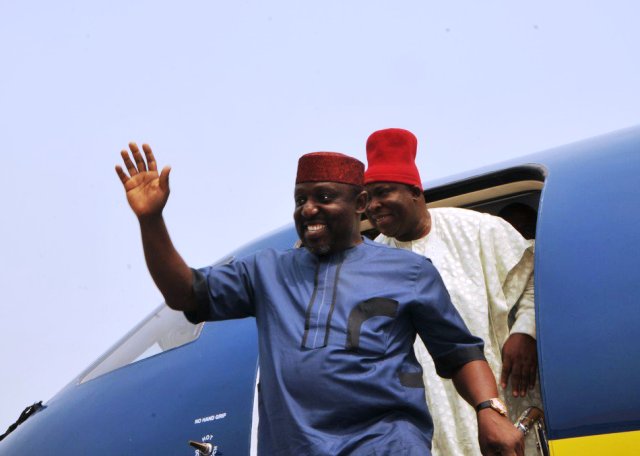
Rochas Okorocha, Governor of Imo State, says he is bigger than the state and Nigeria.

The controversial governor said he is not bothered when people accuse him of running a family government, because the image he has built of himself is so huge and popular that every one associated with his administration is said to be his family member.

Okorocha said this while trying to explain the reason he appointed his biological sister as Commissioner of Happiness and Purpose Fulfillment.

“Everyone from Imo State is a member of my family. I see the whole of Imo State as my family. Rochas is bigger than Imo State. I am bigger than Nigeria,” Okorocha said in the interview with Vanguard Newspaper.

“When I say ‘bigger’, I mean that this is not the only place I belong to. I mean I have gone beyond being an Imo man, beyond being a Nigerian. I am now an African. So, don’t put me like a small rat in a small hole.

“I have a bigger image than what people see. If you say I run a family government, that means I run a very big government. I have 30 commissioners. All of them are members of the same family with me. What a fantastic family!

“I have 27 Special Advisers and 30 Special Assistants. They are all members of my family. I have Perm Secs, all are members of my family. Without running a family government, you cannot make progress.

“The young lady (the happiness commissioner) is my sister. She has committed no offence. My predecessor appointed his brother as Chief of Staff; same mother, same father. There was nothing wrong with that.

“This young lady has been with me for the past seven years as my Deputy Chief of Staff. She does not take salary as Commissioner; she takes salary as Deputy Chief of Staff.

“She will supervise the new ministry until a substantive commissioner is appointed. She is a Deputy Chief of Staff (Domestic), which is even higher than a Commissioner.

“The young lady is qualified. Because she is the governor’s sister, she should not play a role? So, if my son wants to run for governor he cannot run because he has committed the offence of being the governor’s son?

“What is important is delivering the goods. She is just a supervisory Commissioner for a new ideology, new vision I bring to bear when I make pronouncements on the cardinal points of happiness, for people to fulfill their purpose in life.

“This is the ministry that deals directly with the ordinary people on the streets. It is the pivot upon which the missions of other ministries must revolve. The yardstick of every government is to provide happiness to the people.”

The Imo State House of Assembly has also endorsed Uche Nwosu, Okorocha’s son-in–law, as the preferred candidate to succeed the Governor in 2019.

‘The human side of President Buhari’

0

By Fredrick Nwabufo

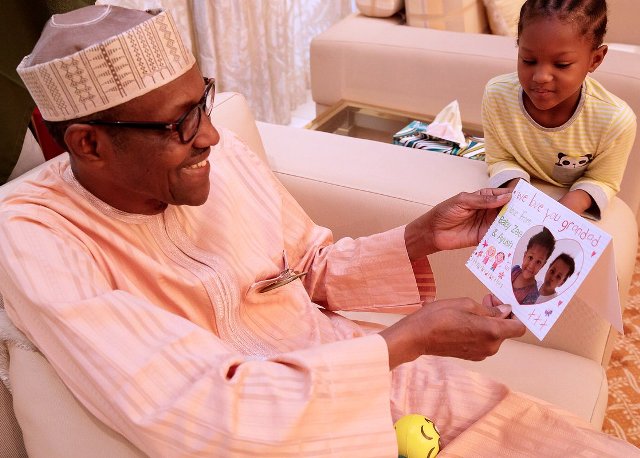
The header of this article is the title of a 55-minute documentary on President Muhammadu Buhari. The documentary has been scheduled to air on NTA this evening.

The presidency says “the documentary portrays the president in a light that majority of Nigerians have not seen him”.

I find this – ‘human side of Buhari’ – farcical and puerile. Does it mean the president has an animal side? What other human side could he have than his much vaunted “sense of humour”?

Buhari’s “sense of humour” has been elevated by his media handlers to a national diadem. His media handlers are always quick to play on this harp – “Buhari’s sense of humour” – whenever there is citizen angst.

A presidential spokesman once said: “… President Buhari’s sense of humour is one of his most distinguishing characteristics….”

More importantly, I find the timing of the scheduled comedy broadcast a bit disturbing. Nigerians across the country are currently walking on molten magma to get fuel, where it is not available. Where it is available, they pay twice as much the price for the product.

Really, it smacks of default insensitivity that the presidency has scheduled a broadcast on “Buhari’s human side”, in essence, “his sense of humour” while Nigerians sleep at petrol stations, and without electricity at home.

Perhaps, the presidency is not reading the mood of Nigerians right. Nigerians at this point will not be swayed by theatrics. There must be some sensitivity to governance.

By the way, about 7.9 million Nigerians became unemployed between 2016 and 2017. What is the government doing to address this problem?

Nigeria’s current unemployment figures from the National Bureau of Statistics are jarring. More frightening is the figure of the unemployed in the north-east.

In Borno state, more than 800,000 of the labour force population are unemployed. In Yobe state, out of a labour force population of 1,037,277; 602,535 are unemployed. And in Adamawa state, 515,732 are unemployed out of a labour force population of 1,489,492.

The government will take $1 billion from the Excess Crude Account to fight Boko Haram in 2018. This is like using a placebo for cancer, instead of surgically removing the tumor.

Joblessness and criminality share an umbilical cord. The fact is, Boko Haram cannot be asphyxiated as long as an army of youth in the north-east is unemployed.

In conclusion, there must be gravitas and urgency to governance. Nigerians do not need presidential comedy now; they need fuel, electricity and jobs!

Fredrick is a journalist. He can be reached via Twitter: @FredrickNwabufo, Facebook: Fredrick Nwabufo


READ ALSO:

Okorocha: Those criticising Zuma’s statue can’t even be his tea maker

Rochas Okorocha, Governor of Imo State, has taken a swipe at those criticising his decision to erect a statue in honour of Jacob Zuma, stressing that many of the critics are not even fit to make tea for the South African President.

Okorocha said this in an interview with Vanguard newspaper on Sunday, saying that Zuma visited the state out of compassion for the thousands of children benefiting from the free education being offered by the Rochas Foundation.

“Zuma came here because he appreciates something good. He heard about Rochas Foundation Schools,” Okorocha said.

“Since I established the Rochas Foundation Schools, there is no local government in Nigeria that I don’t have children [from], over 15,000 children.

“No Governor, no President has heard about this school and visited it, except Vice President Yemi Osinbajo who visited recently. It’s been there for more than 15 years. Nobody, no big man, has thought it wise to come and see what we are doing.

“This man heard we had a school where we were providing free education, he wept and said in his life he never saw a classroom; he never went to school in his life.

“He spent most of his time in prison. He wept here in Owerri. He said ‘I wish I had met you earlier, my brother; I would like to partner you’. That was why we brought him.

“What is wrong with all of you? None of you has visited this school. These are children of poor people, children who have nobody.

“Then the man came all the way from South Africa to appreciate something good and they could not see that. They could not see the industrial park; they could not see the cargo airport. All they could see was the statue, that he is facing corrupt charges. Some of those making noise cannot even be teamakers for Zuma.”

Okorocha added that Zuma assured him that no Nigerian would be killed again in South Africa, stressing that since Zuma’s visit, no report of any Nigerian being killed in South Africa has been heard.

“Tell me one instance,” Okorocha quizzed the reporter. “If it happened it would be all over the Internet. When he came he said he would ensure no South African would kill a Nigerian and no Nigerian would kill a South African.”

Okorocha further explained that Zuma did not visit Imo State just because of the Rochas Foundation, clarifying that the visit was also in connection with certain projects being pursued by the state.

“Before you take any action, ask yourself, to what extent will this action make people happy? If not, it will be a waste of people’s resources,” he said.

“What is wrong with Zuma coming to Imo State? When you leave here, take a picture of our cargo airport. President Zuma came here to discuss the procedure of the South African Airways coming here to take over the Sam Mbakwe Cargo Airport alongside the Federal Government of Nigeria. He came with the Chairman of the South African Airways.

“Zuma came here for three things: One, the Imo Industrial Park, which we signed an MOU on, do a gas industrial park in Ohaji-Egbema, because all I have is gas.

“Two, Zuma came here for the issue of the International Cargo Airport.” And the third was because of the Rochas Foundation.”


Fuel marketers: It costs us 167/litre to import fuel… we can’t sell at N145

The Independent Petroleum Marketers Association of Nigeria (IPMAN) says it is impossible to sell Premium Motor Spirit (PMS) at the government-approved price because the costs and margins of importing the commodity stands between N160 and N167/litre.

The group said only a special intervention from the government to enable them access foreign exchange at a special rate will make the N145 pump price of fuel viable.

Mike Osatuyi, National Operations Controller of IPMAN, said the problem became more pronounced following the increase in the international price of crude oil to $59 per barrel.

Osatuyi made these comments while explaining the fuel scarcity currently being experienced across the country.

“The problem is that the importation (of petrol) is being handled almost 100 per cent by the Nigerian National Petroleum Corporation as private importers have backed out because the increase in crude price has made the landing cost enter subsidy,” Osatuyi said.

“When the crude price hit $59 per barrel, we could not sell petrol again at N145 per litre if we were importing on our own. It is only the government (NNPC) that is importing and can warehouse the subsidy.

“Right now, the landing cost of the PMS is N154. If you are importing at N305 to the dollar, by the time you add bank charges, it comes to N307 to the dollar.

“If you apply that to the current crude price, the landing cost is N154-N155. By the time you add all the margins, the pump price is about N160-N167.

“Before private importers can resume importation, the exchange rate to a dollar must be N250 and we can sell at the price of N145 per litre.”

Similarly, Obafemi Olawore, Executive Secretary, Major Oil Marketers Association of Nigeria, agrees that only a special exchange rate will enable them resume importation.

“I am told that some people have special rates. If they do, fine; let them give to us also. We will prefer a situation where we have access to forex exchange and we can import.”

Also speaking on the issue, Muda Yusuf, Director General of the Lagos Chamber of Commerce and Industry (LCCI), said the problem of recurrent fuel scarcity is due to a fundamental problem with Nigeria’s downstream sector.

“It’s unfortunate that fuel queues have returned. But there is a very fundamental problem with our petroleum downstream sector, and the problem is that it is over-regulated,” Yusuf said during an interview with The Punch.

“You cannot have a sector as big as that serving our size of population and we expect only the government provider to be supplying fuel. It is not a sustainable model.

“So, there is an urgent need to push back the role of government in the issue of retailing fuel, importing fuel and all of that.

“Right now, it is only the NNPC that is importing the PMS. Such a thing cannot be efficient; it creates room for all manner of abuses; some of which the marketers cannot disclose because of their own businesses.”

The ongoing fuel scarcity has led to a more than 100% increase in the transportation prices.

Before now, the bus fare from Abuja to Onitsha, Anambra State, was between N4,500 and N5,500, but as of Sunday it was hovering between N12,000 and N15,000.

Reports say petrol sell for between N250 and N350 per litre in almost the cities of Nigeria except Lagos and Abuja, where queues stretch for several kilometres.

President Muhammadu Buhari, who is also the substantive Minister of Petroleum Resources, is yet to make any comments on the issue.

FIGURES: Buhari’s State House is more expensive than Jonathan’s

Additional reports by Damilola Ojetunde and Victoria Nwaziri
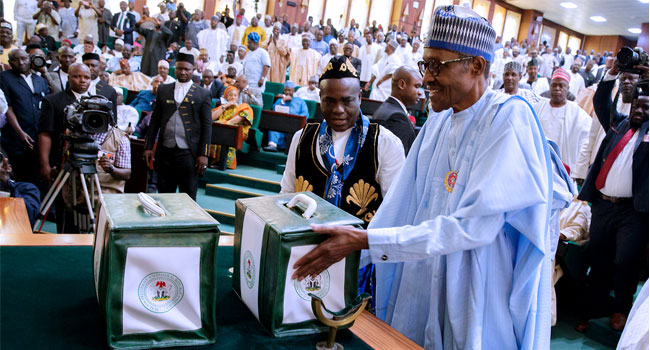

For three consecutive years, President Muhammadu Buhari has presented budgets that are more reckless and ridiculous than his predecessor’s.

Buhari did not only adopt the budget template of Goodluck Jonathan, whom his administration has consistently accused of financial profligacy, he has presented more outrageous budgets than the defeated PDP leader did while at the helm.

The most inexplicable item in the 2018 budget is the reappearance of N5.4 billion for repair and rehabilitation of office buildings at the State House headquarters, Presidential Villa, Abuja.

In 2016, Buhari earmarked N4.5 billion for the repair and rehabilitation of residential and office buildings, while in 2017, N5.6 billion was budgeted for repair of residential houses in the Presidential Villa.

In three years of budgeting, Buhari has earmarked over N15 billion to repair and rehabilitate buildings in the State House.

This outrageous expenditure on repairs of buildings is unbelievably coming from Buhari, who had just five houses and two mud houses in Kaduna, Kano, Daura, and Abuja before he became President in 2015.

In contrast, Jonathan earmarked N2.1 billion in 2014 for repair of both residential and office buildings, and N1.1  billion in 2015 for all repairs and rehabilitation at the State House.

Buhari’s first budget for 2016 attracted public outcry but he blamed the inflated figures on “budget padding” by unnamed civil servants. However, the 2017 and 2018 budgets are not better than the “padded” 2016 budget.

Buhari’s State House is more expensive than the Jonathan’s. The 2017 budget for State House headquarters was N11 billion, lower than N11.5 billion in 2016 but N11.5 billion again for 2018. The same budget under Jonathan in 2015 was only N5 billion and N8.7 billion in 2014.

Comparing Buhari and Jonathan’s budgets in figures may not be realistic because of naira devaluation. However, Buhari has nearly doubled the figures on all the budgetary items in the State House and made provision for suspicious items.

Buhari has earmarked N66 million to the ever-changing residential rent in the Presidential Villa. In 2017, the rent was N77 million and only N27 million in 2016. The same residential rent in the last two years of Jonathan’s presidency was N22 million in 2015 and N41 million in 2014. It seems there is nothing as fluctuating and elusive as this annual rent paid to the Presidential Villa landlord or probably a landlady.

The 2018 budget is as disappointing as the two previous budgets under the leadership of Buhari who came to power riding on a reputation of integrity based on years of living an austere and “Spartan” lifestyle. His lifestyle contrasted sharply with many of his contemporaries who occupied public offices and relished ostentatious living.

Buhari was known for his simplicity of taste, clothing and living standard, spawning the notion of Buhari as a more financially prudent and disciplined political leader who would bring positive change into public finance.

But it appears that times may have changed, as the President’s austere lifestyle has given way to opulence and ostentatious living.

Buhari, who obviously enjoys travelling, has earmarked over N1 billion for local and international travels in 2018. That is a presidential privilege because he did not even have N27 million to buy his party’s nomination form for the presidential contest in 2014, which he said he borrowed from his bank.

In 2016, nearly N1 billion was budgeted for vehicles at the State House but Buhari is again earmarking almost N1 billion for the purchase of motor vehicles in 2018.

Since Buhari moved to the Presidential Villa, the cost of services have been rising at an alarming level. Although electricity charges have reduced from N319 million in 2017 to N274 million in 2018, it was only N45 million in 2016. Jonathan budgeted N36 million for electricity in 2016 and N68 million in 2014.

Water rates have also risen from N18 million in 2016 to N76 in 2017, but have slightly come down to N65 million for 2018. The same water rates were N15 million in 2015 and N28 million in 2016.

Following wide criticism, sewerage charges have reduced from N52 million in 2017 to N45 million for 2018. The same service was N6 million in 2016, N4 million in 2015 and N9 million in 2014.

Upon assumption of power, Buhari made a grand gesture by announcing N50 percent cut in his salary. But this gesture is insignificant when he has earmarked N164 million for his honorarium and sitting allowance in 2018.

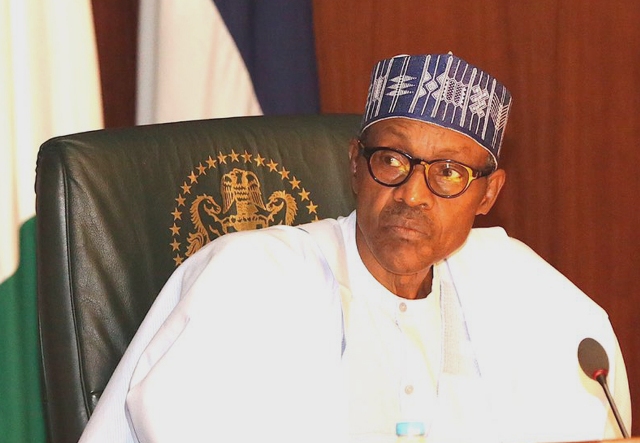
Come rain, come shine, Kano belongs to Buhari, says Kwankwaso’s brother

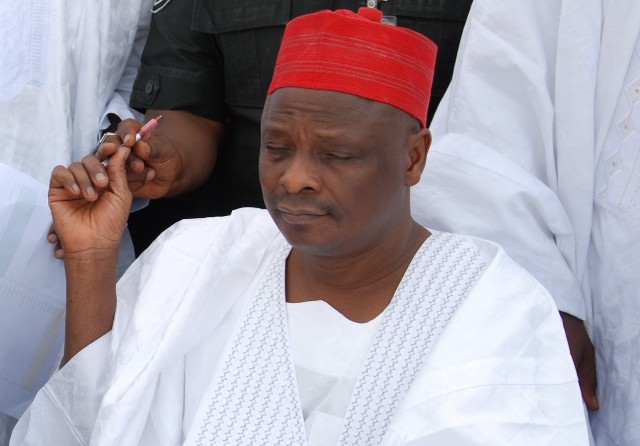
Iliyasu Musa Kwankwaso, younger brother of Rabiu Musa Kwankwaso, immediate past Governor of Kano State, says his brother should forget his presidential ambition in 2019, as he is no match for President Muhammadu Buhari.

The younger Kwankwaso, who is also the Kano State Commissioner for Rural and Community Development, said his elder brother, now a serving senator, has nothing to show for the two years he has spent so far in the National Assembly.

He lambasted Kwankwaso for shunning Buhari during his recent visit to the state, instead fixing his own visit for Saturday, December 30.

“Out of the three Kano senators, only Kwankwaso deliberately shunned Buhari’s visit,” Ilyasu said.

“Senator Barau Jibrin of Kano North and his colleague of Kano South, Kabiru Gaya did not only attend the gathering, they played their roles in ensuring the successful hosting of the President.

“We want to remind him (Kwankwaso) of how Buhari defeated him in APC primary in Lagos; even Kano delegates who were his, then, voted for Buhari. Nothing has changed since then.

“Kwankwaso’s outing can never match that of Buhari because come sun, come rain, Kano remains that of Buhari.”

Ilyasu advised Kwankwaso to not only shelve his 2019 ambition, but to rather beg Umar Ganduje, the Kano State Governor, if he wants to retain his senatorial seat come.

“Vibrant people are eyeing Kano central senatorial seat because of Kwankwaso’s abysmal performance at the Upper Chamber,” Ilyasu said.

“How many times has he spoken on the floor of the Senate? How many bills has he sponsored since 2015 when the Senate was inaugurated? And how many projects has he attracted to Kano from federal level? The answer is zero.”

7.9m Nigerians lost their jobs from 2015 till date, says NBS


Between January 2016 and September 30, 2017, a total of 7.956 million Nigerians lost their jobs, the National Bureau of Statistics (NBS) has said.

“The unemployment rate increased from 14.2 per cent in Q4 2016 to 16.2 per cent in Q2 2017 and 18.8 per cent in Q3 2017,” NBS said in an unemployment report survey for the third quarter of 2017 released on Friday.

“Total unemployment and underemployment combined increased from 37.2 per cent in the previous quarter to 40 per cent in Q3 2017.

The figure is more than the 8,036 million in stood in 2015 Q4.

The NBS report stated that the number of Nigerians that became unemployed rose from 8,036 million in 2015 fourth quarter to 15.998 million in third quarter of 2017.

It also revealed that between the second quarter and third quarter of 2017, the number of economically active or working age population (15 – 64 years of age) increased from 110.3 million to 111.1 million.

The number of people within the labour force who are unemployed or underemployed increased from 13.6 million and 17.7 million respectively in Q2 2017, to 15.9 million and 18.0 million in Q3 2017.

“The labour force population increased from 83.9 million in Q2 2017 to 85.1 million in Q3 2017. The total number of people in full-time employment (at least 40 hours a week) declined from 52.7 million in Q2 2017 to 51.1 million in Q3 2017.”

NBS blamed the increasing unemployment and underemployment rates on Nigeria’s fragile economy despite the exit from recession.

The report explained that domestic labour market is still fragile and economic growths in the past two quarters in 2017 have not been strong enough to provide employment in Nigeria’s domestic labour market.

“An economic recession is consistent with an increase in unemployment as jobs are lost and new jobs creation is stalled,” the report said.

“A return to economic growth provides an impetus to employment. However, employment growth may lag, and unemployment rates worsen especially at the end of a recession and for many months after.”

During the third quarter of 2017, 21.2 percent of women within the labour force (aged 15-64 and willing, able, and actively seeking work) were unemployed, compared to 16.5 percent of men within the same period.

The report also noted that underemployment was predominant in the rural areas as 26.9 percent of rural residents within the labour force were underemployed, compared to 9 percent of urban residents within the same period.

Minister in the spotlight for sending out church invite with official letterhead

Martin Obono, a Nigerian Facebook user, has blasted Usani Uguru, Minister of Niger Delta Affairs, for using his official letterhead to invite Nigerians to a service in his church.

Obono noted that Uguru’s action is quite insensitive, especially given the ongoing hardship of citizens as a result of the crippling fuel scarcity.

Uguru, who, according to Wikipedia, is also a pastor, wrote the letter of invitation using the letterhead of the Ministry of Niger Delta Affairs, not his personal letter head or that of his church.

The letter, which has already gone viral on the social media, has elicited strong-worded criticisms by Nigerians, many describing the situation as unfortunate.

“I just saw a post from you, the Minister of Niger Delta Affairs, representing Cross River State at the Federal Executive Council, inviting people to a religious programme on the letterhead of the Federal Republic of Nigeria,” Obono wrote on Saturday.

“This madness has got to STOP! Nigeria is not a religious State. It does appear that we use religion to cover incompetence in this country.

“To the best of my knowledge, Mr. Minister, you have not engaged young people in one single job creation empowerment programme for the teeming population of unemployed youth in your immediate constituency, Yakurr local government, talk less of the rest of the state.

“You have never done a letter like this inviting people to a town hall meeting or skill acquisition training. Despite being aware of the level of hunger and poverty in the state, you are telling people to come and worship God.

“Is that what the Bible teaches you? Haven’t you read what the Bible says in James 2: 15-16? Or you pick and choose to obey the scriptures that suits your clandestine and impious agenda?

“My advise to you Mr. Minister, is that, you design a letterhead in your name for purposes like this. The letterhead of the Federal Republic of Nigeria was printed with tax payers money.

“There are Muslims, Traditional worshippers, atheists among those tax payers and even Buddhists. How do you think they will feel when they see these?

On a final note, Mr. Minister, please be reminded that you are a Minister of the Federal Republic of Nigeria and not Minister of Christian worshippers alone.”

We’ve ushered in an era of responsibility and accountability, says Buhari

President Muhammadu Buhari says his administration is correcting the many wrongs of the past that crippled the economy, and has ushered in an era of responsibility and accountability.

The President also said it is a wonder how Nigeria survived the monumental corruption that he met when he took over office in 2015.

Buhari said it was only by “an act of God” that the country did not go under.

According to a statement by Femi Adesina, Special Assistant to the President on Media and Publicity, Buhari made the comments when a group of supporters, under the aegis of Governance Support Group, paid him a solidarity visit at the Presidential Villa on Friday.

“Some of the things I saw here were unbelievable. I still shudder and wonder how a country can survive under such abuses. It is only by an act of God that we survived,” Adesina quoted Buhari as saying.

However, Buhari noted that his administration “had ushered in a new era of accountability and responsibility by auditing and correcting the many wrongs of the past that crippled the economy”.

He thanked the delegation and all who believed in him and vigorously supported him during the 2015 presidential campaign.

“I can never forget your sacrifices and I am grateful for all. You never gave up when things were bleak, and we needed to survive. I can’t express my gratitude enough,” he said.

“In spite of the environment you found yourselves [in], you kept believing and pushing. Some of you were really exposed to risks. My consolation is that you voluntarily threw in your lot with me.

“Some of you exposed yourself so much, and I knew it. I urge you to still stick to your principled ways of doing things and our country will be the better for it.

“I want you to maintain your steadfastness. We have gone through the worst of the times. We lost elections three times and I learnt a lot along the way.”

In his response, Chukwuemeka Nwajiuba, leader of the delegation, praised Buhari for his “bold initiatives in restoring security, tackling corruption, and setting the economy on a more predictable path”.