Home Blog Page 2664

Stop blaming Grace Mugabe

0

By Panashe Chigumadzi

As former President Robert Mugabe and his second wife, Grace Mugabe, prepare to make their exit from Zimbabwe’s State House, Zimbabweans have hankered for “Amai” (Mother) Sally, his late first wife, who is fondly remembered as a “very sensitive and intelligent woman” who may have been a “restraining influence” on her husband.

On the day of the military intervention earlier this month, the veteran South Africa-based Zimbabwean journalist Peter Ndoro tweeted the following:

“As developments continue to unfold in #Zimbabwe #RobertMugabe might be looking back and wondering if … his rule wasn’t a tale of two wives. One that died too soon and the other that ended up being his Achilles heel. #ThisFlag #SaveZim”

With almost 2,000 retweets, it is the kind of misogynist narrative that has found an easy resonance in many quarters of a country that has been ruled by the heavy hand of a patriarchal nationalist tradition for nearly four decades.

Across the many rallies and marches in Zimbabwe, many people sang “Hatidi kutongwa nehure” [We do not want to be ruled by a whore]. Zimbabwe National Liberation War Veterans Association Chairman Chris Mutsvangwa described Grace Mugabe as “clinically mad,” and Temba Mliswa, a member of parliament from the ruling Zanu-PF party, has claimed that “Robert Mugabe’s legacy has been destroyed by his wife. He’s old, he’s aging, and they’ve taken advantage of him.”

As Mugabe’s party rebrands itself, it is using a simplistic narrative that absolves both Mugabe and Zanu-PF of their political blunders, sweeping all that went wrong into a Grace Mugabe-sized hole.

Is it really “a tale of two wives”? Let’s start with “Amai” Sally Mugabe and whether she was a “restraining force” on her husband.

Having met Mugabe at a teacher training college in her native Ghana, Sally Mugabe, nee Hayfron, married Mugabe in 1961. She became increasingly involved in nationalist political trenches in the ’60s, leading campaigns for the release of Zimbabwean political prisoners, including her husband, while in exile in London. Once her husband was released, she campaigned for the safety and well-being of refugees of the Second Chimurenga (liberation war) while in Mozambique.

In 1980, she joined her husband, Zimbabwe’s first black prime minister, at the helm of the country and officially became first lady seven years later, when he assumed the presidency. By 1989, she was elected secretary general of the Zanu-PF Women’s League. Outside of politics, Sally continued to be popular for her involvement in welfare programs through organizations such as the Zimbabwe Child Survival Movement and Zimbabwe Women’s Co-operative.

A popular leader at home and abroad at the time, Mugabe was meanwhile consolidating and centralizing his post-independence power through constitutional and forceful means. In 1984, Zanu-PF’s congress gave Mugabe extensive powers to appoint the executive members of the party and passed constitutional amendments that created the executive presidency.

Most importantly the early ’80s, Sally was by his side during the “Gukurahundi” (Shona for “the first rains, which wash away the chaff before the spring rains”), the genocide of more than 20,000 Ndebele people. The violent campaign was aimed at quelling the threat of political dissidents; incoming President Emmerson Mnangagwa was a key figure in the massacres.

As Sally Mugabe became increasingly ill with kidney failure in the late ’80s, Robert Mugabe began his affair with Grace Ntombizodwa Marufu, a young married mother and a typist in the president’s office at the time. In 1992, Sally Mugabe died in Harare at the age of 60. As Zimbabwean academic Alex Magaisa points out, for Mugabe, the loss of Sally represented a loss of a close companion and, importantly, a peer. Mugabe married Grace in a spectacular ceremony four years later.

Compared with Sally, who was loved for her apparent sense of modesty and public work, Grace Mugabe became increasingly unpopular for her lavish lifestyle in the midst the economic fallout of the 2000s. She largely stayed out of politics.

This changed by 2014, when she began her foray into politics through her election as president of Zanu-PF’s Women’s League. Though unpopular, Grace Mugabe continued to consolidate power through the support of the “G40 faction,” made up mostly of a younger generation of Zanu-PF members who did not participate in the Second Chimurenga.

Invoking the fist often associated with her husband, Grace Mugabe included in her acceptance speech for the Zanu-PF post threats to those who opposed her: “I might have a small fist, but when it comes to fighting I will put stones inside to enlarge it, or even put on gloves to make it bigger. Do not doubt my capabilities.”

Grace Mugabe’s unpopularity has only kept pace with the kind of hostile language she has increasingly used in her fiery speeches, rhetoric she clearly learned from the man who mentored her over the years.

If we were to hazard that it was “a tale of two Mugabes” instead of “two wives,” that still would be misleading. As Percy Zvomuya points out, Mugabe has been fairly consistent, famously stating in 1976 that “Our votes must go together with our guns. After all, any vote we shall have shall have been the product of the gun. The gun which produces the vote should remain its security officer, its guarantor. The people’s votes and the people’s guns are always inseparable twins.”

However popular or unpopular Mugabe may have been with general populace, the real guarantor of his power has always been the gun, as represented by the military and the war veterans. Over the past 37 years, the relationship between Mugabe and his “guns” has not been entirely smooth, but the relationship has largely remained intact as he gave in to their various demands and safeguarded their interests.

In turn, he has relied on their force to guard him against dissent from organized labor and civic groups. What has been Mugabe’s undoing over the past few years is that at the height of popular dissent with his rule, he increasingly undermined the interests of his “guns” in favor of Grace Mugabe’s G40 faction. The final straw was to remove his longtime ally (and now successor) Mnangagwa.

Grace Mugabe is no saint. But she has also done nothing without Robert Mugabe’s endorsement (and indeed that of many others in the party). The political fallout cannot be put down to an aging leader’s being led astray by an overbearing or too ambitious wife. Given the evidence of Mugabe’s career trajectory, the extent to which first ladies Grace or “Amai” Sally could have restrained their husband is unclear, but even more importantly, it is neither here nor there.

The common denominator in both marriages has been Robert Mugabe, a man who has more than proved himself a skilled and shrewd politician. It was his political mistake to undermine the “guns” that guaranteed his power for so long. It is at best simplistic and at worst misogynistic to hold Sally or Grace Mugabe accountable for their husband’s political missteps.

This article is culled from The Washington Post. The author, Panashe Chigumadzi is an essayist and novelist who was born in Zimbabwe and is based in South Africa. 
SPOTTED: Self-acclaimed ‘wife’ of stabbed-to-death Bilyamin Bello is Shehu Shagari’s granddaughter


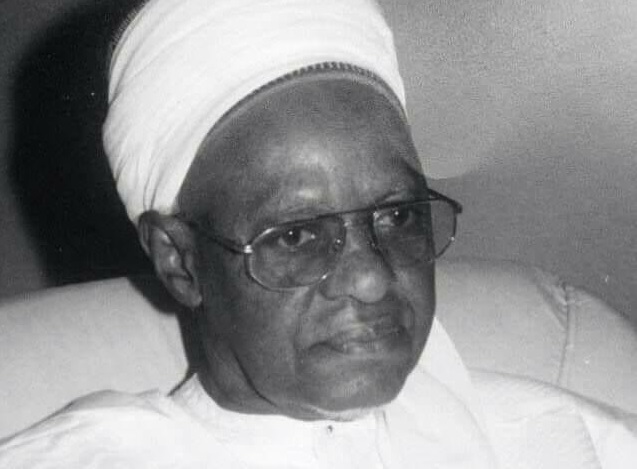
Amina Bala Shagari, “first wife” of Bilyamin Bello, who was stabbed to death by his second wife Maryam Sanda, is a granddaughter of Shehu Shagari, Nigeria’s first democratically-elected President.

On June 25, Amina, who earlier said she was “married” to Bilyamin, used her grandfather’s picture as her profile photo on Facebook, and when her friends showered the nonagenarian with prayers, she was quite appreciative.

A friend even commented: “Amiable grandpa of snazzy Amina Bala Shagari”, to which she replied “Yess. chichi love xx“.

Shehu Usman Aliyu Shagari GCFR was born on February 25, 1925. He was as the first and only President of the second Republic, assuming power in 1979 after the handover of power by General Olusegun Obasanjo’s military government. He won reelection in 1983 but he was in office only a few months before he was overthrown in December in a military coup by General Muhammadu Buhari.

Shagari also served seven times in a ministerial or cabinet post as a federal minister and federal commissioner from 1958 to 1975.

Amina

Meanwhile, Mohammed Bello Shagari, another grandchild of his, has lambasted those saying that Bilyamin got what he deserves for allegedly cheating on his wife.

He wrote: Only a stupid person can stand to defend Maryam who have stabbed her husband thrice to death. And only a foolish person would think that the world would believe it was a fight. And only a heartless person would say he deserved death for whatever reason.

In case you do not even know, she reportedly stabbed him near a prayer mat which he often used to perform sallah. So she either killed him while he was praying or when he finished or about to start. Because she can’t overpower him.

For those who are also trying to say that it was a drug influence. Even the worse enemy of Bilya knows it is a bad argument to be brought forth. Because Bilya does not smoke even cigarette which some of our fathers and mothers smoke decently.

Yes, he smokes shisha like most of your children, brothers and sisters. And shisha is not toxic. Perhaps,  it is something else. The husband killer too is not known for drugs. She’s simply a spoiled brat who thought she can get away with anything including murder. She reportedly was saying that he deserved what he got.

And finally, beware, anybody defending the actions of that dark soul woman is capable of doing the same.

‘Goodbye my love’ — first wife of Maryam Sanda’s husband pens emotive tribute


Amina Shagari, first wife of Bilyamin Bello

Amina Bala Shagari, first wife of Bilyamin Bello, who was stabbed to death last Saturday by Maryam Sanda, his second wife, has revealed that he once asked her what she would do if he died.

The obviously-distraught lady made this known in an emotional farewell message to her former husband on her Facebook wall.

Shagari said she immediately started crying when Bello asked her the question, and she reprimanded him for even contemplating death.

“You once asked: ‘What would u do if I die?’ I promptly started crying and abused you for suggesting you would die and I’d be around,” Shagari wrote. “Those tears shocked you. Well, if you could see me now…”

THE FULL TRIBUTE

“(I) Will love you always. You would have been 36 today. May Allah rest your beautiful soul as people continue to say your name every day.

“You were the kind of person to leave that kind of impact in your wake and slumber. I’m sorry we drifted apart. I wanted you to have peace.

“I was so proud of myself for letting her have you to herself. ashe ashe. It wouldn’t even come close to being enough my darling friend.

“In different points of my life you were everything, a brother who pulled my scarf when I did wrong, a friend who knew me best.

“We decided to get married out of pure friendship. How strong was that bond, and when we couldn’t we still found our way back to being friends.

“My darling, I don’t have enough words. You once asked “what would you do if i die?” I promptly started crying and abused you for suggesting you would die and I’d be around.

“Those tears shocked you. Well if you could see me now.

“The thing that was most endearing to me that probably meant nothing to you was the way you never ever allowed me to cross the road without holding my wrist to do it for me. It used to infuriate me before I came to expect it.

“I’d be like “see this guy, before him didn’t I cross the road?” (smiles).

“Even when we fought, you held on. Even if we didn’t talk, you held on. It was funny, it was special, because it was not the hand but the wrist, as if to assure yourself you wouldn’t let go. That was who were.

“Till I suggested I wanted your jealous wife to have peace. I wouldn’t call, I said you would and you did whenever you could, and you saw me whenever you could.

“Bye my love. May Allah link us up in jannah. We will love aleesha xx.

El-Rufai: If things change and Atiku thinks he can get APC’s 2019 ticket, he’ll come back


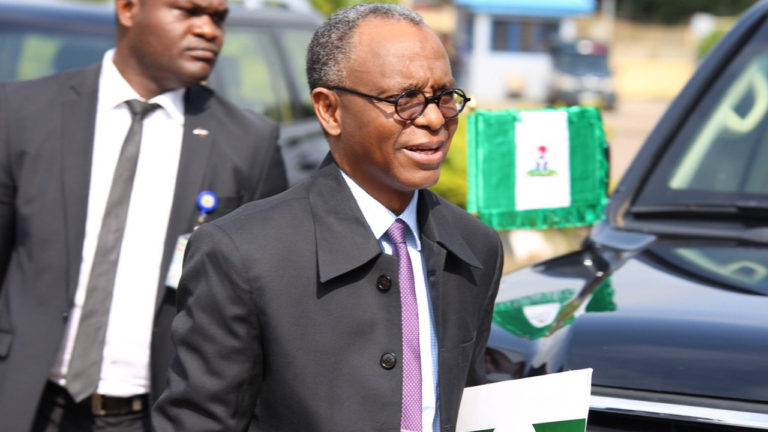
Nasir El-Rufai, Governor of Kaduna State, says there is nothing surprising about the resignation of Abubakar Atiku from the All Progressives Congress (APC).

While fielding questions from journalists after the Friday Jumaat prayers at the Aso Presidential Villa, el-Rufai said Atiku would return to the party today if he feels he can get the 2019 presidential ticket.

He said Atiku was never actually an APC member but rather a serial presidential contestant looking for any available platform on which to contest.

“Well, I won’t even say we were in the APC together. Some of us formed the APC, some of them joined because they thought that the APC was a platform for which they would contest election but when they didn’t get the opportunity they started looking around,” el-Rufai said.

“I have heard about what the former Vice President said about leaving the APC. We knew he was going to leave in December but he has left in November, which is good because the earlier he leaves for where he belongs, the better.

“He has changed political parties a few times, there is nothing surprising. Before the 2019 elections if situation changes and he thinks he can get the ticket in 2019, he will come back. That is what he has done a few times.”

El-Rufai further expressed certainty that no APC governor would follow Atiku out of the party, including that of Adamawa, Atiku’s state.

“I don’t know about the loyalists in the APC that will go with him but I want to assure you that there is no one governor in the APC that is going to go with former Vice President Atiku Abubakar,” he said.

“The only governor that he would think would go with him, the Governor of Adamawa State, has already endorsed President Buhari for the 2019 elections.

“And there are many governors… I will not mention the number, but a majority of the APC governors have already taken the position that the President should run for a second term in office.”

He added that even if Atiku joins the PDP and is offered the party’s presidential ticket for 2019, he does not pose any significant threat to Buhari’s chances of winning a second term in office.

“I do not see any Nigerian from the northern part of the country that will be able to match him [Buhari] in popularity,” he said.

“The people of the 19 northern states and Nigeria have decided because of the President’s past history of integrity and good governance; they are committed to him. Anyone standing up to challenge him is wasting his time.”

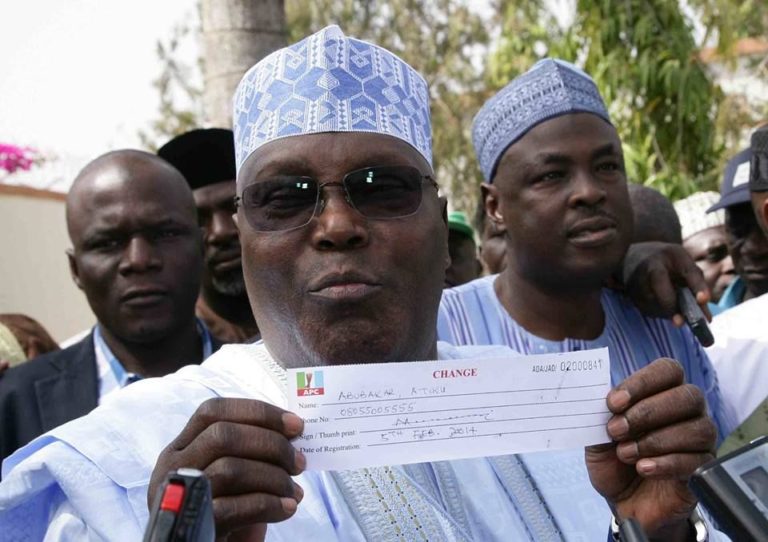
FLASHBACK: In 2014, Atiku said APC was his ‘final bus stop’

It is possible that Abubakar Atiku, former Vice President, may be shocked by his own resignation from the ruling All Progressives Congress (APC), although the rest of the public cannot say the same.

This is because the ex-VP once said APC was his ‘final bus stop”.

In 2014, during the Peoples Democratic Party’s national convention, where Goodluck Jonathan was unanimously adopted the party’s presidential candidate, Atiku and his loyalists famously staged a walkout and went to a separate venue where they held a parallel convention under the name the ‘New PDP’.

Few weeks later, Atiku and some other PDP stalwarts, led by six PDP governors, joined the APC.

Reacting to Atiku’s defection at the time, Rufai Alkali, then special adviser to Jonathan on political affairs, said Atiku would return to the PDP before the 2015 general election.

“Atiku is a PDP man to the core and has gone on vacation. I hope he will come back to the party before the elections and support the president,” Alkali had said.

However, Atiku described Alkali’s statement as “funny”, insisting that APC was his final bus stop.

“You know, it’s funny how some people put politics and vacation in the same sentence. Let me assure you: politics is a serious business, it is hard work, and for me at least, it is more than a fulltime job,” he said.

“I really don’t know how you can seriously think of taking a vacation, in a country like ours, with the politics we have.

“I did that when we built the great assemblage of the finest men and women under the umbrella of the PDP to get rid of the generals; I did that when I left and returned to the PDP, and I did that when I helped to turn the APC into a serious opposition party.

“When I toured our country, and listened to the hopes, fears, and expectations of Nigerians from all walks of life, I said the APC is the final bus stop, and that it is the end of the line. Because it is, for me.

“So some say I’m a PDP man to the core. I’m asking you, what does this even mean? What is the PDP?

“You know where I stand: I want a competitive democracy, true federalism, a government that creates conditions for people and business to thrive, and keeps out of business and people’s lives, and I want a country that is united and proud of its diversity.”

During the run-up to the APC presidential primaries, when Atiku was asked if he would dump the party should he lose the presidential ticket, his response was: “I am not aware of anyone contesting that wants to give up on APC. I know Rabi’u (Kwankwaso) will not do so, General Muhammadu Buhari is not going to do that. As for me as far as I am concerned, APC is my final bus stop.

“Nigerians should see me as new Atiku. I was in government the first time from 1999 to 2007 and I always thank my God that it did not continue.

“I have had a break. That break has enabled me to interact with ordinary Nigerians and know what they want and listen to them.

“Probably if I had continued and became the president I wouldn’t have been the new Atiku.”

However, on Friday, Atiku moved on from his final bus stop. It is not not clear if or how soon he will announce a new final bus stop.

VIDEO: Killer wife Maryam Sanda studies the Quran in court

You already know something about Maryam Sanda, daughter of Maimuna Aliyu: she is alleged to have stabbed her husband to death.

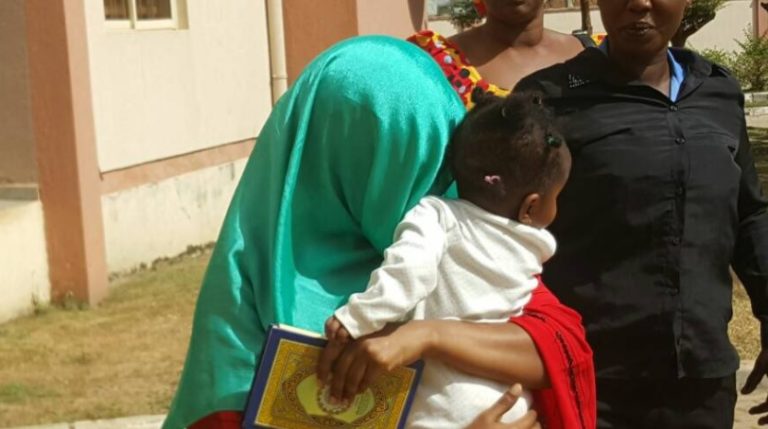
Something that wasn’t yet known about her, at least until Friday, is that she is a diligent student of the Holy Quran.

When she was arraigned at an Abuja High Court on Friday, Sanda was seen studiously reading the Holy book of Muslims, her six-month-old daughter strapped to her chest.

Another side, though, could be that she needed to avoid all the attention around her, and the Holy Quran was the only cover she could think of.

See for yourself in the video below, courtesy of SaharaReporters:

Ribadu, Agbaje… five politicians who switched political parties but still lost elections

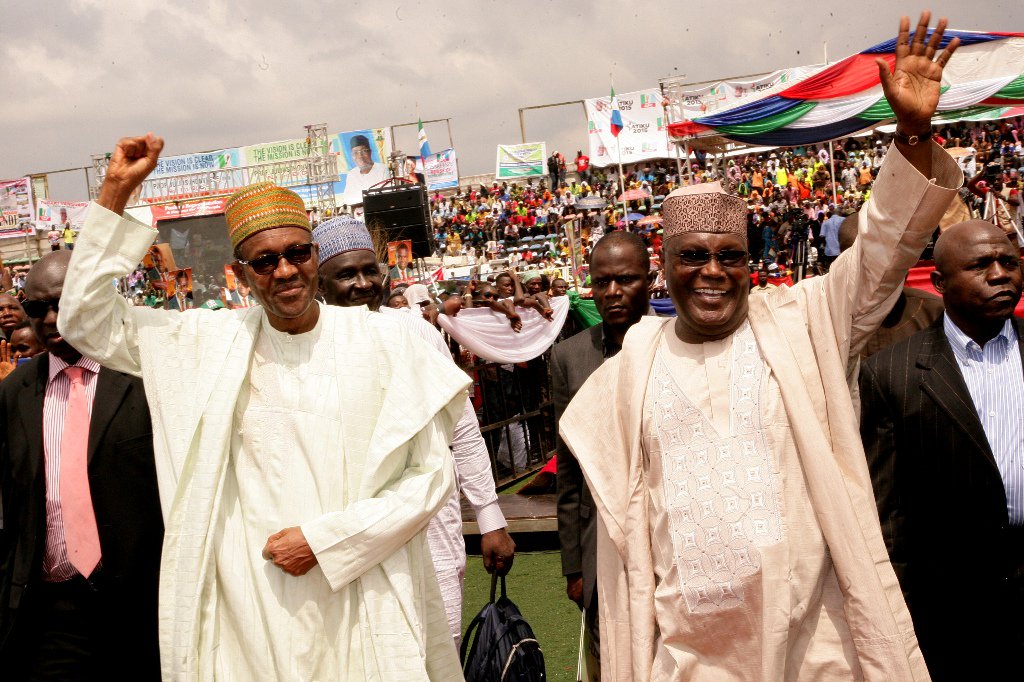
The resignation of Abubakar Atiku, former Vice President of Nigeria, from the ruling All Progressives Congress (APC) on Friday came as little surprise to many Nigerians who were already in tune with his recent body language.

Also, Atiku’s statement that he was taking some time off to ponder on his future, is barely believable given that he has never hidden his ambition to one day be Nigeria’s President.

This is not his first time of dumping a ruling party and joining an opposition party in a bid to actualise his presidential ambition. He is also not the first politician to decamp from a ruling party in pursuit of “greener pastures”.

But how many of them have won the elections for which they dumped their original parties?

ATIKU, 2006 AND 2014

In 2006, just before the expiration of his tenure with President Olusegun Obasanjo, Atiku, sensing that he did not have Obasanjo’s support to run for the presidency, decamped from the then ruling Peoples Democratic Party (PDP) to the then Action Congress of Nigeria (ACN).

He contested the 2007 general election but lost to late President Umaru Musa Yar’Adua and Goodluck Jonathan.

Atiku returned to the PDP in 2009 but could not clinch the party’s presidential ticket for 2011. Therefore, he again announced his defection from the PDP to the then newly formed APC, citing, among other things, the “impunity that had become part of PDP’s DNA”.

“I have decided to cast my lot with the APC, a party of change, committed to the improvement of the lives of our people and to the continued existence and development of Nigeria as one indivisible country,” Atiku stated at the time.

“This is the right decision.  As in 2006, it is the struggle for democracy and constitutionalism and service to my country and my people that are driving my choice and decision.  Let me emphasise that this is not about me.”

Familiar line! Whatever party Atiku joins next, expect him to say it’s about the people!

JIMI AGBAJE, LAGOS 2007

Jimi Agbaje was a member of the ACN in Lagos State until 2007 when it became obvious that then Governor Bola Tinubu had “anointed” Babatunde Fashola to succeed him.

In protest, Agbaje defected to the Democratic Peoples Alliance (DPA), perhaps having seen that Musiliu Obanikoro, who was contesting the same election on the platform of the PDP, was too strong a candidate to dislodge.

However, both Agbaje and Obanikoro lost the election to Fashola, who went on to serve two tenures and is now Minister of Works, Power and Housing.

Agbaje tried his luck again in 2015, this time under the PDP, having defeated Obanikoro in the primaries, but again, he lost to Akinwumi Ambode of the APC.

IFEANYI UBA, ANAMBRA 2013

In 2013, Ifeanyi Ubah, an oil magnate-turned-politician who had never hidden his ambition to be Governor of Anambra State, left the PDP, the the ruling party at the centre at the time, to the Labour Party.

Ubah had announced his intention to run for the governorship seat under the PDP, but he lost out the primary to Chukwuma Soludo, former Governor of the Central Bank of Nigeria (CBN).

Dissatisfied over the “irregularities that characterised the primary election”, Ubah left for the Labour Party.

“I have made consultations before deciding to join Labour Party. After the consultations, I came to the conclusion that the only party that has human beings as their symbols is only LP while others are represented by inanimate objects,” Ubah said while announcing his defection.

But hardly had Ubah lost the election to Willie Obiano of the All Progressives Grand Alliance (APGA) than he returned to the PDP where he campaigned vigorously for the party in the 2015 general election which, incidentally, the party lost.

NUHU RIBADU, ADAMAWA 2014

Like Atiku, Nuhu Ribadu, former Chairman of the Economic and Financial Crimes Commission (EFCC), also ditched the APC for the PDP in 2014 to run for the governorship position in Adamawa State.

Ribadu was the presidential candidate of the ACN in 2011 and he was considered one of the candidates to contest for the presidency under the APC in 2015.

However, following the impeachment of Murtala Nyako as Governor by the Adamawa State Assembly, Adamu Muazu, former PDP National Chairman, persuaded Ribadu to join the party and contest for the vacant governorship post.

Ribadu accepted the offer and decamped, but he lost the election to Umar Fintiri who was Nyako’s deputy at the time.

Ribadu would again decamp from the PDP to APC in July 2016.

OSITA CHIDOKA, ANAMBRA 2017

It is no secret that Chidoka, former Minister of Aviation and former Corps Marshall of the Federal Road Safety Corps (FRSC), is a loyalist of former President Goodluck Jonathan.

But when it became obvious that his loyalty to Jonathan may not count for much in securing the PDP governorship ticket, Chidoka decamped to the lesser known United Peoples Party (UPP) on which he contested and lost the just concluded Anambra governorship election.

To put the story in better prospective, Chidoka’s younger brother, Ikenna, is currently a member of the House of Representatives on the platform of the PDP!

The act of political jumpology  is not a new phenomena in Nigeria, that is why many Nigerians are convinced that Atiku’s next port of call, whenever he finishes pondering on his future, will be the PDP.

If you don’t believe I’m strong, come and see me at night, says ‘diabetic’ Obasanjo

Former President Olusegun Obasanjo says he was diagnosed with diabetes more than 30 years ago but he is growing stronger, as the disease kills only those who are careless.

Obasanjo said this in Abeokuta on Friday during a road walk organized by the South West Zone of the Diabetes Association of Nigeria to draw attention to diabetes and how to manage it.

He said that diabetes is not a killer disease if one takes care of himself by exercising regularly and eating healthy.

“Diabetes is not a disease that should kill. I was diagnosed to be diabetic more than 30 years ago but rather I am growing stronger,” Obasanjo said.

“If you don’t believe I am growing strong and you didn’t witness this walk, come and see me at night, you will know I am growing strong.

“Come and see me in the morning, you will know I am growing strong, even in the afternoon; you will know I am growing strong.

“What is necessary is management of diabetes. Some people said some diseases are incurable but diabetes is manageable and compliant.

“My headmaster in primary school was diagnosed at the age of 50 and died at age 85; you will agree with me that he tried.”

Obasanjo advised diabetic persons not to be nonchalant about it but that they should exercise regularly and adhere strictly to prescribed medication.

“Three things are important: the food you eat, regular exercise and prescribed medication; those are the three most important things,” he said.

“You can be diabetic and still live till 100. I don’t know when I will die but I am above 80 and many youth could not catch up with my pace during the exercise this morning. Many of them were running after me.

“This is my message. Whether you’re diabetic or you have a family or friend who is diabetic, diabetes is not a killer disease or it should not be a killer disease unless you are careless.”

Abdulrasheed Akanbi, traditional ruler of Iwoland, also took part in the two-kilometre walk, alongside Babatunde Ipaye, Ogun State Commissioner of Health.


READ ALSO:

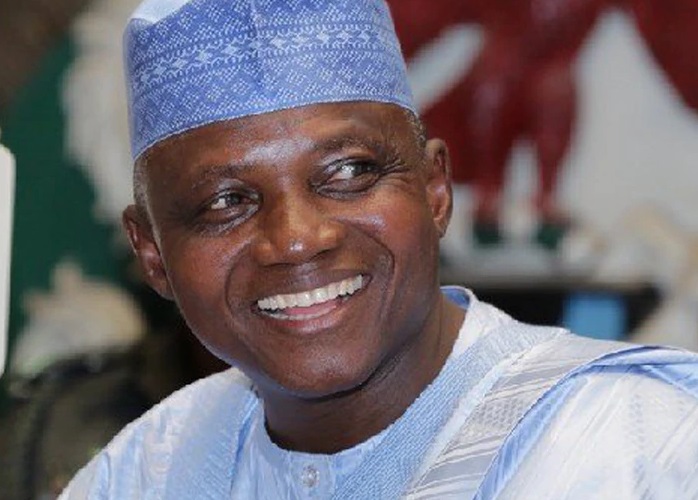
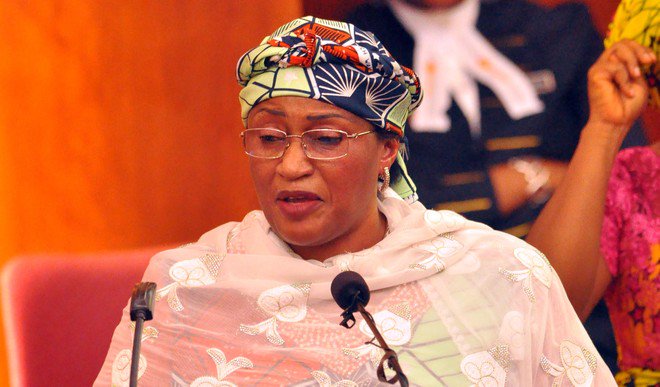
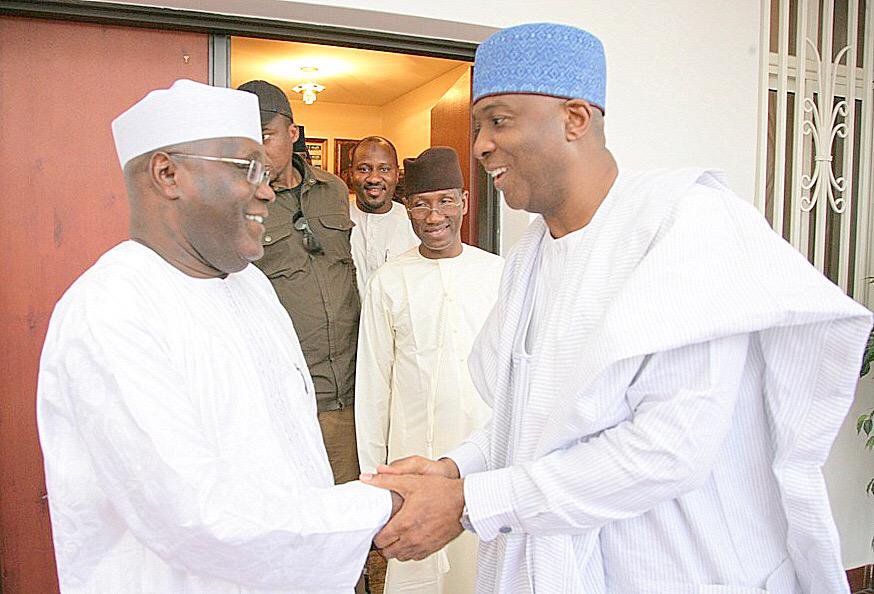
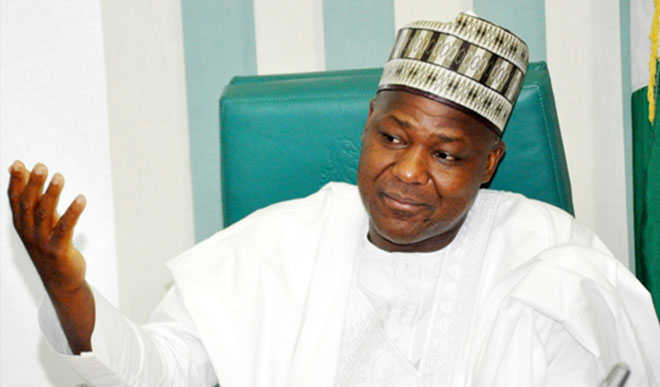
Alhassan, Garba Shehu… four people who could follow Atiku out of APC


To many political observers and analysts, the resignation of Atiku Abubakar, former Vice President, from the ruling All Progressives Congress (APC) was long overdue. He never hid his unhappiness with being sidelined by the party.

Despite his role in APC’s success in the 2015 presidential election, which produced President Muhammadu Buhari after he lost the party’s primary, Atiku has no significant representation in the government — except for Aisha Al-Hassan, Minister of Women Affairs, who has openly declared her loyalty to him even as a Minister in Buhari’s government, and Garba Shehu, Senior Special Assistant, Media and Publicity to the President.

No one needs to be told: If needed, these two will follow Atiku out of APC. But who else could follow suit? 

GARBA SHEHU

Before his appointment in 2015, Shehu had been Atiku’s media adviser since 2003.

“When I left my job at the Triumph Newspapers in Kano, I went to the Aluminium Smelter Company of Nigeria, ALSCON, Ikot-Abasi as the Pioneer DGM (Public Relations). It was from there that I joined the Vice President as Special Assistant Media. That was in 2003,” he once said in an interview.

Shehu is said to be the brain behind Atiku’s vibrant media office, which is arguably the most organized and structured by a Nigerian politician.

Of how he runs the media team, Shehu once said: “The media office is hierarchically structured but is operationally run like your regular newsroom. Decisions are made horizontally.

“The media operations staff sit around a conference table for daily editorial meetings. We review the print and electronic press and the new media that is now making huge inroads. Anything touching on Atiku is of interest to us. We discuss all the stories and determine our lines of action. We do proactive plans and we carry them out as well.”

As a man who says he derives fulfillment in Atiku’s trust in him and respect for his professional judgement, Shehu won’t find it too difficult relocating with his “boss for life”, especially as it was clear from scratch that Buhari always wanted only one spokesman: Femi Adesina.

AISHA AL-HASSAN

‘Mama Taraba’, as Alhassan is fondly called, has her body with the APC and the Buhari government, but her soul is indeed outside the party and with Atiku Abubakar.

She stirred controversy back in September when she swore to Allah that she would support Atiku, her “godfather”, even if Buhari indicates interest in contesting in 2019.

“Atiku is my godfather even before I joined politics…,” she had said. “Let me tell you today that if Baba said he is going to contest in 2019, I swear to Allah, I will go before him and kneel and tell him that ‘Baba I am grateful for the opportunity you gave me to serve your government as a minister, but Baba just like you know, I will support only Atiku because he is my godfather.'”

Buhari was widely expected to fire her; and although he didn’t, Alhassan had already said: “If because of what I said, I am sacked, it will not bother me because I believe in Allah that my time has elapsed.”

Alhassan to Atiku is like the Biblical Ruth to her husband: where he goes she will go!

BUKOLA SARAKI

Saraki is seen by many Nigerians and observers as not working along with Buhari. Many are quick to cite the circumstances of his emergence as Senate President and also his visit to Atiku just after he won the seat.

After the Saraki ‘coup’, the visit prompted suspicions that connived with him to circumvent the party’s arrangement, especially as both were both in PDP before the formation of APC. Their alliance since PDP days may still be alive.

Plus Saraki’s presidential ambition is no secret to followers of Nigerian politics. If Buhari remains a stumbling block in 2019, therefore, Saraki could follow Atiku out of APC. He did it with PDP before, why can’t he do it with APC?

YAKUBU DOGARA

Like Saraki, Yakubu Dogara, Speaker of House of Representatives, is seen by many political observers as not being completely loyal to the ruling party. He was a member of the defunct New Peoples’ Democratic Party (nPDP), which later fused with the APC .

Also, based on the events that led to Dogara’s victory at the lower chamber, he is still largely seen as a PDP member and by extension, one of Atiku’s few loyalists. However, it is only a matter of time for the coast to become clearer on Dogara’s romance with the APC.

Bail rejected — ‘killer wife’ Maryam Sanda goes to jail


An Abuja High Court has ordered the remand of Maryam Sanda, the woman alleged to have killed her husband Bilyamin Bello, son of former PDP National Chairman, Mohammed Bello, at Suleja Prison.

Sanda is the daughter of Maimuna Aliyu, the former Executive Director of Aso Savings and Loans Limited, whose nomination to the board of ICPC was withdrawn by Vice President Yemi Osinbajo following corruption allegations exposed by the ICIR.

The Federal Capital Territory (FCT) Police Command had filed criminal charges against Sanda for allegedly stabbing her husband to death last Saturday, to which she pleaded not guilty.

The police said the alleged killing was premeditated, and as such, they would be seeking a death penalty should the accused be found guilty.

Attempts by her lawyer to ask for bail orally or alternatively from police custody was turned down by the Yusuf Halilu, the presiding judge.

Bilyamin was allegedly killed in his Maitama home in Abuja on Saturday night by his wife who stabbed him in the neck, chest and genitals following allegations of infidelity.

He was later rushed to the hospital where he eventually gave up the ghost.

The couple had a daughter together.