Home Blog Page 2723

‘This is exactly how the Rwanda genocide started’, says Atiku on anti-Igbo song

atiku-abubakar

Atiku Abubakar, former Vice President, wants the country’s security authorities to be proactive in order to avert what could well be a repeat of the Rwandan Genocide, in Nigeria.

Atiku made the call in a statement on Monday, with which he condemned a song circulating in the north wishing the Igbo dead.

According to Atiku, developments like this are capable of triggering a bloody inter-ethnic conflict like the one that occurred in Rwanda in 1984 between the Hutus and the Tutsis, two majority ethnic groups in Rwanda.

The crisis led to the massacre of almost one million people.

“It has come to my attention that a song disparaging people of Igbo origin, and which wishes them dead, is circulating in some parts of the nation. I totally and unequivocally condemn this development, and I call on all men of goodwill to rise up against this evil,”. Atiku stated.

“This song is reminiscent of the beginnings of the Rwanda Genocide. Nigerians need to be aware that the Rwanda Genocide was believed to have been ignited by a song titled Nanga Abahutu (I hate Hutus), sung by Rwanda’s then most popular musician, Simon Bikindi. God forbid that we should have such a déjà vu in Nigeria.

“I call on the security agencies to thoroughly and decisively swing into action and apprehend, try, convict and severely punish those behind this ungodly song which incites racial hatred.”

Atiku recalled that Bikindi, whose song had triggered the inter-ethnic crisis in Rwanda, was eventually convicted by the International Criminal Tribunal. He therefore wants Nigeria’s security authorities to bring the producers of the said song to justice.

“Let those who think they can treat their fellow citizens so unjustly know that within and outside Nigeria exist mechanisms that will ensure they answer to their crimes,” he said.

“I call on all men of goodwill to remember those immortal lines from our former National Anthem ‘though tribe and tongue may differ, in brotherhood we stand’.

“The difference between us as Nigerians is not a difference in our tribe or our religion. It was and remains a difference based on whether we are good Nigerians or bad Nigerians, and I am very certain that the good Nigerians far outnumber the very few bad ones.”

Atiku also commiserated with families of victims of Sunday’s church attack at a Catholic Church in Ozubulu community, Anambra State.

Alison-Madueke permanently forfeits $37.5m Banana Island mansion

Allison-Madueke loses $37

Chuka Obiozor, a Justice of the Federal High Court, Lagos, has ordered the permanent forfeiture of a mansion in Banana Island, in Lagos State, belonging to Diezani Alison-Madueke, former Minister of Petroleum Resources.

This followed an interim forfeiture order issued by the same court a fortnight ago after the Economic Financial Crimes Commission (EFCC) told the court that the property was the proceeds of corrupt activities.

Justice Obiozor also ordered permanent forfeiture of $2,740,197.96 and N84,537,840.70, being rents so far collected on the property.

The property, located at No 3, Block B, Bella Vista Plot 1, Zone N, Federal Government Layout, Banana Island Foreshore Estate, is said to have 24 apartments, 18 flats and six penthouses.

At the resumption of hearing on Monday, Anselem Ozioko, counsel to the EFCC, told the court that nobody had come forward to contest the interim forfeiture order placed on the property two weeks ago despite the fact that court papers were served on the respondents.

Delivering his ruling, the presiding judge said he had no option but to grant the orders as prayed by the EFCC.

“In the face of the publication, which I find in Exhibit B of the affidavit of compliance before me, and there being no responses from any interested party, I have no other option but to grant the orders as prayed,” he said.

According to the EFCC, $37.5 million cash was moved straight from Diezani’s house in Abuja and paid into the seller’s First Bank account in Abuja.

Respondents in the case include Afamefuna Nwokedi, a legal practitioner, and a company named Rusimpex.

The court first ordered the temporary forfeiture of the $37.5m estate on June 19, following an application by the EFCC alleging that the property was secured with siphoned public funds.

The wisdom in Osinbajo’s decision to fight corruption with corruption


Yemi Osinbajo 4

When Acting President Yemi Osinbajo announced the appointment of a new chairman and board of the Independent Corrupt Practices and other related offences Commission (ICPC), all eyes were supposed to be on two men: Ekpo Nta and Bolaji Owasanoye.

Nta, substantive ICPC Chairman since 2012, was apparently not the favourite of some powerful people in the presidency, and there seemed to be some hurry to show him the way out. His “removal” was rumoured many times; in one barefaced attempt by Nta’s detractors to cause confusion, a Vanguard journalist was led into believing that his sack had been approved by the presidency and he had in fact picked a date to deliver his valedictory address to staff of the commission. It was all a ruse. The journalist received a query from his bosses but managed to retain his job. That was in October 2016.

With the benefit of hindsight, that journalist must now be telling himself he didn’t get it wholly wrong. Nta’s appointment was scheduled to lapse in November; this is early August and he has been reassigned — although ‘demoted’ is the tempting word to use — to another agency: the National Salaries, Incomes and Wages Commission. Ever heard of that before?

Nta himself would not be surprised that a few power brokers were eager to see his back; it’s pretty much the story of anti-corruption warfare in Nigeria: corruption doesn’t stare at you when you fight it; it fights back, it bites. Those who know Nta well say it is hard, if not impossible, to find a splotch in his reputation. In addition, he will bow out quietly, with the same furtiveness with which he ran the office. Ordinarily, his redeployment ought to have thrust him into limelight one final time, but the public didn’t seem to notice him.

Neither do they seem to have taken adequate notice of Bolaji Owasanoye, the man poised to assume the office — unless the senate says no. The initial reaction to Owasanoye’s appointment was whether his undisputable academic brilliance would be enough to make him succeed on the job. He graduated from university at 21, became a Master’s degree holder at 24, became a professor at 38, but can we rate his moral presence and leadership competence that highly? That conversation was still gathering traction when the bad news spilled: two people appointed alongside Owasanoye to the ICPC board were of questionable character; the ICPC was in fact on the cusp of charging one of them to court!

The first, Maimuna Aliyu, is the subject of a longstanding case of abuse of office, misappropriation and diversion of public funds. A series of heavy petitions by Aso Savings and Loans Plc, where she was Executive Director, Marketing, accuse her, among many others, of converting to personal use a total of N58 million being proceeds of the sale of three plots of land belonging to Aso Savings; selling three plots of company land for N40 million each (instead of N19 million) and holding on to the N120million; refusal to pay a mortgaged facility of N40 million to purchase five houses — four-bedroom detached mansionettes — yet refusing to give them up; and illegally allocating a company house worth N210m to her son.  Asides the ICPC, the Police and the EFCC had both indicted her.

The second, Sa’ad Alanamu, is believed to have been planted in ICPC by Senate President Bukola Saraki. He is being investigated for allegedly collecting bribes from contractors handling TETFUND contracts, which he approved as Chairman of the board of Kwara State College of Education, Ilorin.

These allegations, alongside the revelation that security check was not run on the appointees, have sparked public outrage against Osinbajo, some commentators already willing to withdraw all the plaudits they had accorded him in President Muhammadu Buhari’s absence. Osinbajo is a man of immense and uncommon wisdom, which is why it is easy to see why many are missing the basis of his latest appointments. He has recognised the failure of past efforts to fight corruption with anti-corruption. Examples abound.

Very soon, it will be a year since the senate first turned down a request from Buhari for the confirmation of Ibrahim Magu as substantive EFCC Chairman. There has been a second rejection also. Citing a DSS report containing contestable allegations, the senate claimed Magu was unfit for the job. The allegations against Magu are in order, because there’s not one EFCC Chairman who hasn’t been faced with allegations of corruption. While not all of the past chairmen are clean, the DSS allegations against Magu were further investigated and found to be petty and unsubstantiated.

Behind the scenes, even the senators know that Magu as EFCC Chairman is bad news for them. Magu’s reputation is that of a ruthless, soulless investigator; during Nuhu Ribadu’s tenure, during which Magu was famed for being EFCC’s “engine room”, past governors fretted if they found out they were to be grilled by him. Anyone but Magu was what they wanted. This is exactly why, as Dino Melaye admitted recently, anyone but Magu should be EFCC chairman.

Hameed Ali, Comptroller-General of the Nigeria Customs Service (NCS), is someone else in this government with a well-known aversion to corruption. Contrary to public knowledge, Ali’s uniform-or-no-uniform clash with the senate was not sparked by the seizure of an undervalued and improperly-cleared bulletproof Range Rover Sports Utility Vehicle (SUV) that was later found out to be owned by Saraki. The real spark was that Ali’s appointment as Customs CG marked the end of a number of business-as-usual importation practices; the beneficiaries — many of them highly-placed in this government — soon began plotting his ouster from the office. Ali may have not been removed, but he was thoroughly embarrassed by the uniform saga.

Embarrassments like Ali’s or legislature-executive face-offs like Magu’s are what Osinbajo was trying to avoid when he named Aliyu and Alanamu on the ICIPC board. Aliyu may still be innocent in the eyes of the law, but unlike Magu who was falsely accused of living in a house paid for by a corrupt associate of his, the allegations against her are truly weighty. It must count for something that three anti-corruption/security agencies all indicted her at separate times. Osinbajo must be wondering how someone like Aliyu, with her record of taking over company property, can sit on the board of ICPC without spotting similar abuse of office by other public officials. The more corrupt officials we have in agencies like ICPC and EFCC, the harder it is for corruption to escape notice. As popularly said in Yorubaland, the fish is sometimes safest when policed by a cat — there just can be no justification for disappearance!

In any case, Osinbajo is not the originator of the corruption-for-corruption theory. Look no further than the legislature, specifically the house of representatives, which entertained an ‘amnesty for treasury looters’ only last month.

Officially ‘A Bill For An Act To Establish A Scheme To Harness Untaxed Money for Investment Purposes And To Assure Any Declarant Regarding Inquiries And Proceedings Under Nigerian Laws And For Other Matters Connected Therewith’, it was first read in June and it scaled second reading in July.

Linus Okorie, sponsor of the bill, wants the law to “allow all Nigerians and residents who have any money or assets outside the system or have acquired such money or assets illegally (looted or any variant of the cliché) to come forward, within a set time-frame, to declare same, pay tax/surcharge and compulsorily invest the funds in any sector of the Nigerian economy; and be granted full amnesty from inquiry/prosecution”. To cut the long story short, the bill will shield looters of public funds from prosecution — on the one condition that they reinvest the loot in the economy. In Okorie’s mind, the bill seeks to use corruption to dissuade corruption. Intelligent thinking, isn’t it?

This is pretty much the summary of our anti-corruption campaign: corruption has become so entrenched in our system that the few incorruptible public servants will be drowned by the sheer might of the forces of corruption. It is clear that incorruptibility is in the minority and will never defeat the corruption in the majority. Therefore, the ingenious thing to do is to seek solutions for corruption by looking within corruption. Osinbajo has done just that with the ICPC board appointments. Rather than pillory and harangue him, we should applaud him. The more cats we can lure into exalted positions, the safer the fish!


READ ALSO:

UN imposes ‘single largest economic sanction’ on North Korea over nuclear weapons

0

Kim

The United Nations Security Council has approved tough new sanctions to punish North Korea for its escalating nuclear and missile programmes.

The ban is described by Nikki Haley, US Ambassador, as the single largest economic sanctions package ever levelled against the North Korean regime” and “the most stringent set of sanctions on any country in a generation”.

According to ABC news, the sanction includes a ban on coal and other exports worth over $1 billion — a huge bite in its total exports, valued at $3 billion last year. Neither oil nor new air restrictions are however included in the resolution.

But she warned that it is not enough and “we should not fool ourselves into thinking we have solved the problem — not even close”.

“The threat of an outlaw nuclearized North Korean dictatorship remains … (and) is rapidly growing more dangerous,” Haley told council members after the vote.

The US-drafted resolution, negotiated with North Korea’s neighbour and ally China, is aimed at increasing economic pressure on Pyongyang to return to negotiations on its nuclear and missile programs — a point stressed by all 15 council members in speeches after the vote.

President Donald Trump tweeted: “The United Nations Security Council just voted 15-0 to sanction North Korea. China and Russia voted with us. Very big financial impact!”

Rex Tillerson, US Secretary of State who was in Manila for talks with regional counterparts, called it “a good outcome.”

Wang Yi, China’s Foreign Minister, called for all sides in the nuclear dispute to return to negotiations and repeated Beijing’s proposal for a “double suspension,” or a halt to North Korean nuclear development and joint US-South Korean military exercises.

Haley told the Security Council that US-South Korean military exercises have been carried out regularly and openly for nearly 40 years and “they will continue”.

The Security Council has already imposed six rounds of sanctions that have failed to halt North Korea’s drive to improve its ballistic missile and nuclear weapons capabilities.

The resolution’s adoption follows North Korea’s first successful tests of intercontinental ballistic missiles capable of reaching the United States on July 3 and July 27.

It condemns the launches “in the strongest terms” and reiterates previous calls for North Korea to suspend all ballistic missile launches and abandon its nuclear weapons and nuclear program “in a complete, verifiable and irreversible manner”.

The centerpiece is a ban on North Korea exports of coal, iron, lead and seafood products — and a ban on all countries importing these products, estimated to be worth over $1 billion in hard currency.

According to a Security Council diplomat, coal has been North Korea’s largest export, earning $1.2 billion last year which was then restricted by the Security Council in November to a maximum $400 million. This year, Pyongyang was estimated to earn $251 million from iron and iron ore exports, $113 million from lead and lead ore exports, and $295 million from fish and seafood exports, the diplomat said.

The resolution also bans countries from giving any additional permits to North Korean laborers — another source of money for Kim Jong Un’s regime. And it prohibits all new joint ventures with North Korean companies and bans new foreign investment in existing ones.

It adds nine North Koreans, mainly officials or representatives of companies and banks, to the U.N. sanctions blacklist, banning their travel and freezing their assets. It also imposes an asset freeze on two companies and two banks.

The council diplomat, who was not authorized to speak publicly and insisted on anonymity, called the newly sanctioned Foreign Trade Bank “a very critical clearing house for foreign exchange.”

The Mansudae Overseas Project Group of Companies, which was also added to the blacklist, is described in the resolution as engaged in exporting workers for construction, including of monuments, in Africa and Southeast Asia.

The resolution asks the Security Council committee monitoring sanctions against North Korea to ban the import of many more so-called dual-use items, which have commercial purposes but can also be used in conventional, biological, chemical or nuclear weapons.

It also gives the committee a green light to designate specific vessels that are breaking sanctions from entering ports all over the world and to work with Interpol to enforce travel bans on North Koreans on the sanctions blacklist.

The resolution expresses regret at North Korea’s “massive diversion of its scarce resources toward its development of nuclear weapons and a number of expensive ballistic missile programs” — a point stressed by Haley.

It notes U.N findings that well over half the population lacks sufficient food and medical care, while a quarter suffers from chronic malnutrition.

“These sanctions will cut deep, and in doing so will give the North Korean leadership a taste of the deprivations they have chosen to inflict on the North Korean people,” Haley said. “Revenues aren’t going toward feeding its people. Instead, the North Korean regime is literally starving its people and enslaving them in mines and factories in order to fund these illegal missile programs.”

Though the economic sanctions have teeth, Washington didn’t get everything it wanted.

In early July, Haley told the Security Council that if it was united, the international community could cut off major sources of hard currency to North Korea, restrict oil to its military and weapons programs, increase air and maritime restrictions and hold senior officials accountable.

Its adoption follows Tillerson’s comments Wednesday reassuring North Korea that Washington is not seeking regime change or an accelerated reunification of the Korean Peninsula — comments welcomed by China’s foreign minister.

Vassily Nebenzia, Russia’s U.N. Ambassador said Moscow hopes Tillerson’s assurances “would be clear that the United States is not seeking to dismantle the existing … situation (in North Korea) or to force to reunite the country or militarily intervene in the country.”

Tillerson also said the United States wants to talk eventually with North Korea but thinks discussions would not be productive if Pyongyang comes with the intention of maintaining its nuclear weapons.

North Korea has repeatedly said it will never give up its nuclear arsenal, which it sees as a guarantee of its security.

The resolution reiterates language from previous ones supporting a return to six-party talks with the goal of denuclearizing the Korean Peninsula; expressing the Security Council’s commitment “to a peaceful, diplomatic and political solution to the situation”; and stressing the importance of maintaining peace and stability in northeast Asia.

CONFIRMED: Osinbajo ‘steps down’ two ICPC board nominees being investigated for corruption

Maimuna Aliyu 3

Yemi Osinbajo, Acting President, has “stepped down” the nomination of  Maimuna Aliyu and Sa’ad Alanamu to the board of the Independent Corrupt Practices and other offences Commission (ICPC).

The action follows an exclusive report by the ICIR that two of the 14 members announced to the ICPC board were being investigated by the anti-corruption agency for alleged corruption in the region of N1billion.

Announcing the withdrawal of the two nominees on Sunday, Laolu Akande, the VP’s spokesman, said the “ongoing investigation issues” of Aliyu and Alanamu with the commission “present a conflict”.

“We are stepping down 2 of the new ICPC board nominees who have ongoing investigation issues with the commission as this presents a conflict,” read the statement.

“While existence of allegations or petitions against someone should not necessarily disqualify them from considerations for appointments, this case presents a peculiarity as we have confirmed that the agency in which they are to serve is indeed investigating the two of them.

“A basic check showed no court convictions against them. But when weighty petitions come up, this administration will always do the right thing.”

Charges were already being prepared against Aliyu, a former Executive Director of the Aso Savings and Loans, by the ICPC in preparation to taking her to court when her name was announced as a member of the new board of the commission.

Apart from the ICPC investigation, the ICIR’s investigations showed that the Economic and Financial Crimes Commission (EFCC) and the Nigerian Police had investigated several corruption cases against her.

In May, a police investigative report indicted her and recommended her for prosecution, for “illegally converting to personal use”, a total of N58 million being proceeds of three plots of land belonging to her employers, Aso Savings and Loans.

Police investigations showed that as Executive Director, Marketing, Aliyu got approval to sell three of the bank’s landed properties in Abuja. The plots were offered for N19 million each. Aliyu is said to have sold the lands for N58 million but refused to hand over the money to the bank.

It was also alleged that Aliyu actually sold the three plots of land entrusted to her by the bank at N40 million each (instead of N19 million) totaling N120 million and held on to every penny.

Apart from the N120 million allegedly misappropriated by her, the bank also lodged several complaints of abuse of office and conversion or diversion of its funds, totaling nearly N1 billion.

The bank alleged that in 2012, Aliyu sought and got a mortgage facility of N40 million to purchase five houses – four-bedroom detached mansionettes. However, after she resigned her appointment in September 2013, the former Executive Director said she could no longer bear the burden of the payments and requested the bank to cancel the mortgage on four units and take them over. She said she would continue to maintain the mortgage contract on just one unit.

However, since 2013 when she left the bank, Aliyu has refused to hand over the four houses and has not serviced the mortgage on them. In fact, investigators believe that she has since sold the units and pocketed the money.

The bank also alleged that Aliyu abused her office by illegally allocating a house at Aso Groove Estate to her son, Sand Aliyu. According to the bank, Aliyu had showed interest in buying the house for her son in the name of a company in which he is a director. However, because she had all the keys of the houses put up for sale by the bank since she was in charge of marketing and sales, Aliyu handed over the key to the house to her son without paying a dime for the house worth N210 million. She still has not paid for the house till date and her son continues to live there.

In the case of Alanamu, a protégé Olusola Saraki,late politician and father of Senate President Bukola Saraki, it is feared in some circles that his new godfather, the younger Saraki, is planting him in ICPC.

Alanamu is being investigated by the ICPC for corruption and bribery. He allegedly collected bribes from contractors handling TETFUND contracts, which he approved as Chairman of the Board of Kwara State College of Education, Ilorin.

As exclusively reported by the ICIR, both candidates made the board in the first place because the federal government announced their nomination without running security checks on them.

Anambra Catholic church shooting caused ‘by two feuding brothers based abroad’

1

Anambra Killing.jpg 2

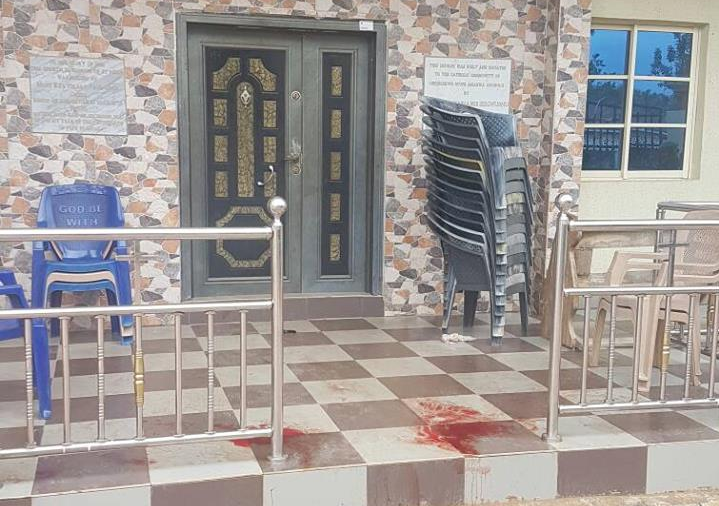
Willie Obiano, Governor of Anambra State, says “a feud between two brothers from the community living outside Nigeria” is responsible for the killing of some congregants during an early-morning mass on Sunday at the St. Philips Catholic Church, Ozubulu, Ekwusigo Local Government Area of Anambra State.

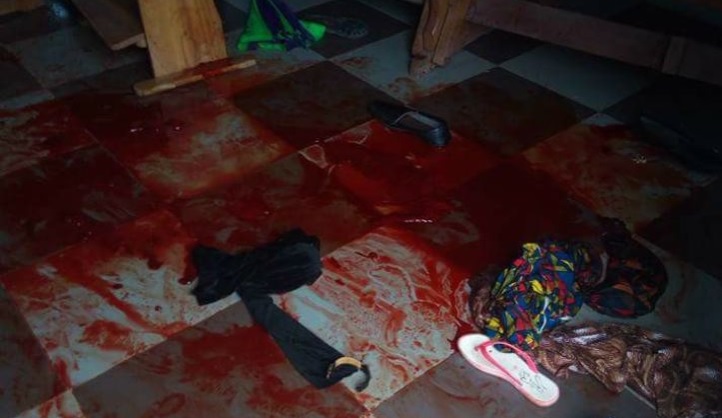
An unknown gunman stormed the church and opened fire on congregants, splattering blood on the walls, chairs and floor of the church, and killing a still-indefinite number of people.

Although the state government put the death toll at 11, Garba Umar, Commissioner of Police, said eight persons died while 18 sustained various degrees of injuries.

“The Ozubulu community in Ekwusigo local government area of Anambra state was this morning thrown into mourning as a gun man walked into St Philip’s Catholic Church and started shooting sporadically, killing 11 and injuring 18 persons,” Obiano said, according to a statement released by Ifeanyi Aniagoh, his media aide.

“On hearing the sad development, Governor Obiano stormed the scene to ascertain the level of damage and sympathise with the people.

“Speaking at the church premises, the governor revealed that preliminary security investigations show that the shooting was caused by a feud between two brothers from the community living outside Nigeria.

“This is sacrilegious, totally unacceptable in Anambra State. We can’t allow this happen in Anambra, we must get everyone involved to face the music.

“The deeply saddened governor asked the people to go about their businesses without fear or panic noting that this isolated case must be followed to the root and all perpetrators must be brought to book.

“Gov Obiano also visited Nnamdi Azikiwe University Teaching Hospital, Nnewi where the injured are being treated.”

Obiano thanked the “over 50 doctors who were on ground looking after the injured” and assured families of the victims that all medical bills would be borne by the state government.

Many killed as gunman attacks Catholic church in Anambra during early-morning mass


Anambra Killing

Dozens of worshippers were killed by an unidentified gunman during an early-morning Mass on Sunday at the St. Philips Catholic Church, Ozubulu, Ekwusigo Local Government Area of Anambra State.

According to NAN, many of the victims were killed in the church while other critically injured worshippers died on the way to the Nnamdi Azikiwe Teaching Hospital, Nnewi.

Witnesses said the gunman went into the church during the 5:45 am Mass and shot a particular man he was looking for. Thereafter, the attacker started shooting all other worshippers.

The exact number of those who died in the attack has not been ascertained but a source said the priest of the church was not wounded in the incident.

Garba Umar, Commissioner of Police in the state, confirmed the incident, adding that the details would be given after investigations.

Photo credit: newsquest.com.ng

I do not regret my actions, says man charged to court for ‘insulting’ Saraki

Bukola-Saraki

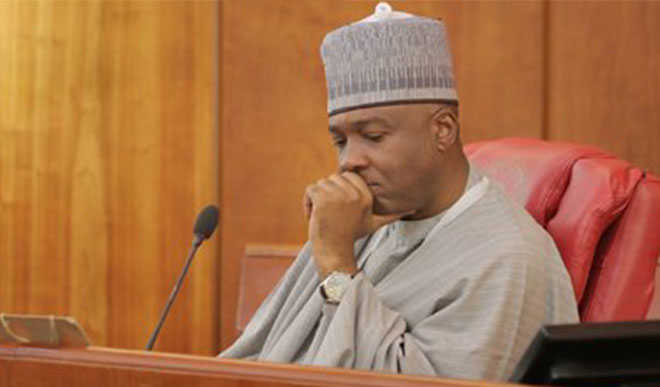
Biodun Baba, the 37-year-old primary school teacher who was taken to court for allegedly abusing Bukola Saraki, the Senate President, says he has no regret over his actions.

In an interview with Punch, Baba denied abusing Saraki, saying he only commented on a Facebook post by Akogun Oyedepo, the factional Chairman of the Peoples Democratic Party (PDP), in the State.

According to Baba, Oyedepo had made a Facebook status update about Saraki being discharged and acquitted by the Code of Conduct Tribunal, and he commented saying “that if somebody believes that he is above everybody, he is not above the judgment of God. If Saraki has been discharged by the CCT, has he been discharged by God?”

The comments particularly infuriated Abdulazeez Azeez, a chieftain of the All Progressives Congress (APC_, who went to the elders of the party to report Baba, saying he abused the Senate President.

On another occasion, Baba said he shared a Facebook post titled ‘Presidency, Osinbajo replies Saraki on Magu issue’.

Asked if he regretted the action, he said: “No, I do not regret my action.”

“Some people lied against me, saying I wrote a letter of apology, in an attempt to swing the case in their direction.

“A letter was hurriedly written a night before the day I was to appear in court alleging that I had apologised. The letter went viral and people shared it on social media.

“Unfortunately, when I appeared in court the next day, they did not come with that letter, I was expecting them to say in the court that I had apologised but that did not happen.

“Even the online medium that published the fake apology letter refused to present the actual letter that I allegedly wrote and signed. At no time did I write any apology letter. I posted the message on my Facebook page based on my conviction.

“I expect my children to follow my example as I believe that I did the right thing. I was guided by the provisions of the law and I did not go outside the law to do anything. We should put government on their toes.”

Baba also said three days after he was arrested by the Department of State Services (DSS), he was called to the state education secretariat and informed that he had been fired from his job.

“I got a call from my headmaster that the Secretary of the Local Government Area Education Primary School had said he should fire me.

“I immediately went to the secretary to confirm whether it was true or not. When I got there, he confirmed that the secretary was asked to fire me. My parents and family members were worried that they would fire me from my job. They took me to Oniwa to beg him.

“Initially, I refused to follow them, but they prevailed on me. At the end of the day, he agreed to look into the case.”

Baba said he was grateful to the over 30 lawyers that came to represent him in court free of charge.

“We had about 30 lawyers who represented me on the first day that I appeared in court. The lead lawyer is Mr Sambo Muritala,” he said.

“The legal team appeared pro bono. We did not pay them anything. We got in touch with one of them and he mobilised the rest.

“Even those who were not in court rushed from wherever they were to appear in court. Some of them were not dressed in their regalia; they were in the court to support their colleagues who handled my case.

“There was no way I could have afforded their money if they had charged me (and) if they did not come to help me, I would have either been remanded in the Oke-Kura Prison or Mandala Prison.”

Poor electricity supply cost us N130bn in the first half of 2016, say manufacturers

$_1

The Manufacturers Association of Nigeria (MAN) says the cost of independent power generation in the manufacturing sector increased by more than 100 percent from N58.8 billion in 2015 to N129.9 billion in 2016.

This represents a total increase of N71.13 billion.

The development is no thanks to the instability in electricity supply from the national grid, which has continued to adversely affect the country’s manufacturing industry.

A breakdown of the annual report by MAN showed that N66.99 billion was spent in the second half of 2016 on independent power generation, as against N29.48 billion in the same period in 2015.

It also increased by N4.03bn when compared with N62.96bn recorded in the first half of the year.

The report indicated that the average supply of energy to the sector was about 36 percent or eight hours daily.

MAN explained that the rising cost of independent power generation, added to the arbitrary increase in electricity tariffs, were responsible for the high cost of production in the sector, thereby making it difficult for made-in-Nigeria goods to compete favourably with imported goods in terms of pricing.

The association also noted that another major difficulty experienced by its members in the year under review was “acute shortage of foreign exchange, high lending rate and exclusion of some vital manufacturing raw materials from the official foreign exchange market”.

This was however addressed by the preferential forex allocation to manufacturers by the Central Bank of Nigeria (CBN) in the second half of 2016, a development that MAN said was “responsible for the production momentum gained in the economy in the second half of the year”.

The association urged the federal government to “revisit the power sector reform and fully implement the power sector road map to improve the efficiency of the generation, transmission and distribution companies”.

It also advised the government “to re-classify manufacturing sector into strategic gas users from the current commercial classification”.

MAN also said there was need to ensure proper settlement of acquired properties, such as land for electricity equipment installation, to forestall any incident that could lead to destruction of the infrastructure.

Heartless parents are donating their children to Boko Haram, says army


Suicide Bombers

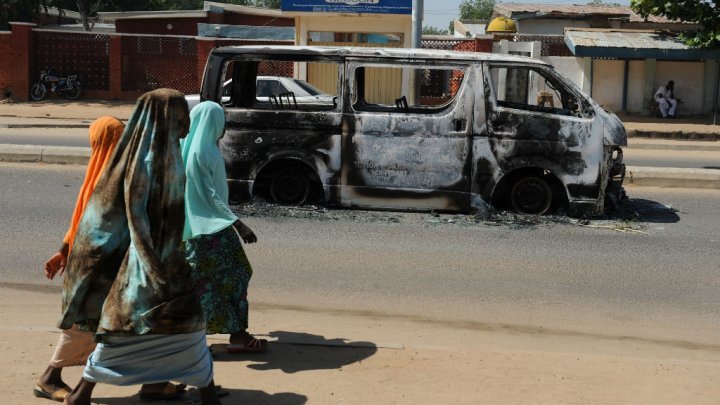
The Nigerian army says some “misguided and heartless” parents and guardians in the north-east are donating their children and wards to Boko Haram to be indoctrinated and subsequently used as suicide bombers.

This was contained in a statement issued by Sani Usman, spokesman of the army, on Saturday.

Usman said the appeal was due to shocking revelations by some arrested would-be suicide bombers.

“The Nigerian Army wishes to appeal to religious, traditional and community leaders, as well as all well-meaning Nigerians, especially in the North-East of our country, to help dissuade people from donating their daughters or wards to Boko Haram terrorists for indoctrination and suicide  bombing missions,” the statement read.

“This appeal became expedient in view of recent revelations by some intercepted female suicide bombers during interrogations.

“It was discovered that most of these hapless minors were ‘donated’ to the terrorist sect by their heartless and misguided parents and guardians, as part of their contribution to the perpetuation of the Boko Haram terrorists’ dastardly acts against the Nigerian society and humanity.

“The acts of these parents and guardians are not only barbaric, but condemnable and unacceptable. Nigerians have a responsibility and obligation to collectively mould our children and wards.”

Usman also urged members of the public “to be more vigilant, security conscious and report any suspicious persons or those whose daughters or female wards are missing or have not been seen recently”.

“The public is also kindly reminded that the Nigerian Army’s offer and reward of N500,000 to anybody that brings information about suicide bombing is still available.”

More than 145 girls have been used as suicide bombers between January and July, according to an investigation by Punch newspaper.

At least 15 female suicide bombers died in January, 10 in February and 15 in the months of March, April and May.

“June and July, however, witnessed an upsurge and claimed about 30 girls each,” the report read.

The figures were gotten from the military counter-insurgency operation, ‘Operation Lafiya Dole’, the National Emergency Management Agency (NEMA), and the Borno State Police Command.

Authorities say the number could be higher as some suicide missions might not have been reported to the agencies.

Though Boko Haram also made use of male bombers to carry out attacks, it was discovered that there were far more females than males.