Home Blog Page 2732

Shh! Don’t tell the judge… huge IPOB crowd receives Nnamdi Kanu in Port Harcourt


A large crowd of members of the Indigenous People of Biafra (IPOB) gathered in Port Harcourt, the Rivers State capital, on Friday to receive their leader, Nnamdi Kanu.

Amaka Ekwo, a Twitter user, shared the video on her handle on Saturday.

Kanu, who was granted bail on medical grounds following his trial on treason charges, has consistently breached his bail conditions, which include staying away from rallies and not granting interviews.

He has also consistently called for a boycott of elections in the South East, beginning with the Anambra State governorship election slated for November.

Watch the video below:

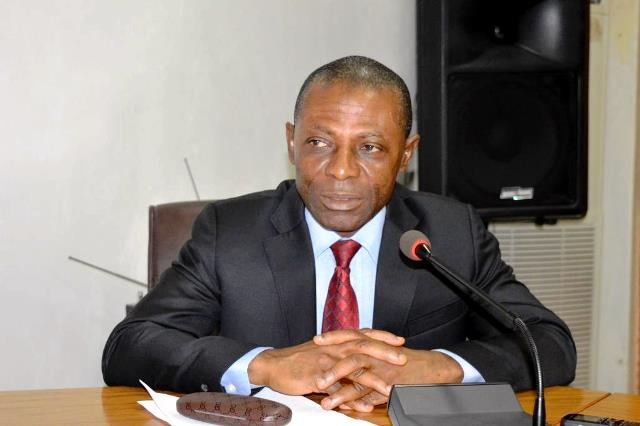
I don’t see anything wrong with Nigeria borrowing, says auditor-general of the federation


Anthony Ayine, Auditor-General of the Federation, says there’s nothing wrong with Nigeria’s current rate of borrowing, since it is still within the minimum international benchmark.

He said this in an interview with Punch on Saturday, adding that what Nigerians should be interested in is why the government is borrowing and how the borrowed funds are being utilised.

According to Ayine, since the borrowings are meant for capital projects and provision of critical infrastructure, then it is fine.

“Borrowing as a concept is not wrong; it is utilisation of the borrowed funds that is the critical aspect that people should be concerned with,” Ayine said.

“If you are borrowing to address infrastructural problems like the present government is doing, if you are not borrowing for consumption, I don’t see anything wrong with the borrowing.

“I think people are only looking at the figures being borrowed as huge, but if you look at the international yardstick for borrowing, what is the relation of borrowing with our Gross Domestic Product?

“Recently, during the budget analysis by the Minister of Budget and National Planning (Udoma Udo Udoma), it was shown very clearly that we were at around 2.4 per cent as compared to the minimum international benchmark of three per cent, meaning that we are still fine.

“So the questions we should be asking before getting worried is: Is the Federal Government borrowing to consume or to address critical infrastructure like power and roads?”

Ayine added that the role of the office of the Auditor-General with regards to government borrowing is to “look at the purpose of the borrowing and the terms of borrowing, whether they are favourable to the country or not”.

“So at the point of auditing, we are going to see whether the funds were used to execute the projects they were meant for.

“If there is any red flag at the stage of auditing, we can then raise the alarm, draw the attention of the government if there is any diversion and make recommendations,” he said.

On June 6 this year, Yemi Osinbajo, Acting President, wrote to the Senate seeking approval for a $1.5 billion loan, which he said was part of the 2016-2018 external borrowing plan of the federal government and would be used for projects in 10 states.

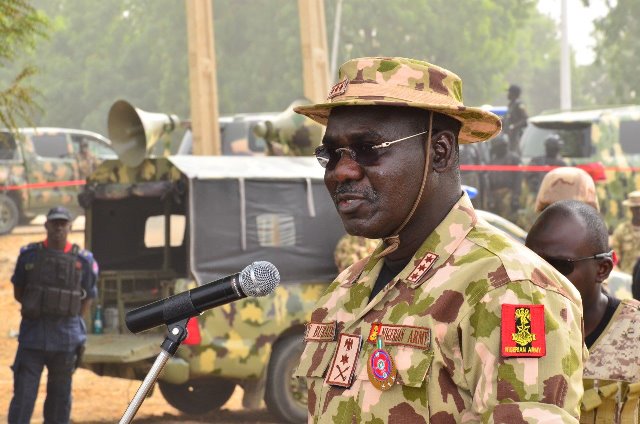
Buratai orders army to produce Shekau ‘dead or alive’ within 40 days


Tukur Buratai, Chief of Army Staff, has ordered Ibrahim Attahiru, Theatre Commander of Operation Lafiya Dole, to produce Abubaka Shekau, leader of the Boko Haram, within 40 days.

This was contained in a late-night statement issued on Friday by Sani Usman, Director of Army Public Relations.

According to the statement, Buratai ordered that every effort must be deployed to “to smoke out Shekau wherever he is hiding in Nigeria”.

Buratai also urged “the general public to also assist and volunteer information that would lead to the accomplishment of this task.”

This fresh order adds another twist to the never-ending tale with regards to the whereabouts of Shekau.

On more than one occasion, the Nigerian military authorities have declared Shekau dead only to recant their claims later.

In September 2016, Lucky Irabor, the former Theatre Commander of Operation Lafiya Dole, said Shekau was a title and not a single face, adding that about three ‘Shekau’s have been killed.

“I can confirm to you that the original Shekau was killed, the second Shekau was killed, and the man presenting himself as Shekau, I can also confirm to you that few days ago, he was wounded,

“We are yet to confirm whether he is dead or not,” he said, adding that the Army does not make statements that are not based on facts.”

But later in March this year, Dan Mansur-Ali, the Minister of Defence admitted that Shekau was neither dead nor injured but rather was on the run.

He said: “The spiritual headquarters (of Boko Haram) has been ransacked and vandalised, and Shekau is on the run. He may be hiding in one of the enclaves of Sambisa forest, which we are dominating.

“We have opened up the place we are using the place as a training area (and) we shall be patrolling and be ransacking that forest for the whereabouts of Shekau.”

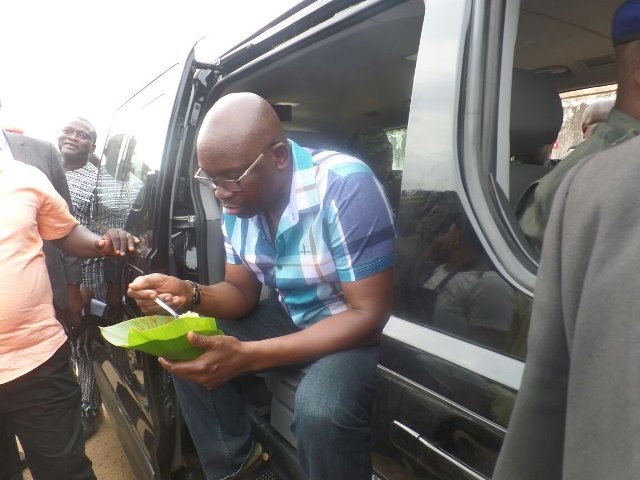
Fayose: They said Buhari is modest but his children attended foreign universities


Ayodele Fayose, Governor of Ekiti State, says that despite the seeming modesty of President Muhammadu Buhari, his children attended university abroad.

According to Lere Olayinka, Fayose’s spokesman, the Governor made the remarks at the graduation ceremony of Covenant University, Ota, Ogun State, where one of his sons, Ayorogbayimika Fayose, was among the graduands.

Fayose decribed himself as a leader by example, saying none of his children studied abroad, and he had never travelled overseas to seek medical treatment.

He insisted that public office holders have no reason to send their children to universities outside the country, except in cases where courses their courses of interest are not offered by Nigerian universities.

“We talk and do. Whatever we say is what we practice. Apart from the fact that none of my children attended schools abroad, I have never travelled out of the country for medicare,” fayose said.

“Even though the views of people like us might not be popular among the powers that be, because we say the truth and act the truth, we won’t stop telling them what they do not like to hear and one of such is that the only way to improve the standard of education in the country is for children of holders of public office to experience what children of ordinary Nigerians are experiencing in schools in the country.

“During my first tenure as governor, I took my son from a private school and enrolled him in SUBEB Model Primary School in Ado Ekiti. Today again, I am here to witness the graduation of my son and I make bold to say here that none of my children attended tertiary institution outside Nigeria.

“That should be the spirit, not a situation where someone is the minister of education in Nigeria and his children are schooling abroad. And by enforcing this too, we will be saving Nigeria a lot of foreign exchange being wasted on medical and academic tourism.

“Even children of President Muhammadu Buhari that they told us lived a modest life attended universities abroad. Shouldn’t President Buhari have lived by example by enrolling his children in universities in Nigeria?”

Fayose said his administration had invested heavily in the provision of quality education in Ekiti State, “one of the most education-advantaged states” in the country.

“We are first in NECO examinations and we are among the best in WAEC and the only industry in Ekiti State is education and we can’t afford to let it depreciate,” he said.

A total of 1,426 students graduated from Covenant University this academic session, 188 of whom made first class.

The campaign to discredit Buhari’s govt is a multi-million-naira project, says Lai


Lai Mohammed, Minister of Information and Culture, says there is an ongoing campaign to discredit the government of Muhammadu Buhari, and it is a multi-million naira project.

According to Mohammed, the growing cases of hate speech, disinformation and fake news in the country are being orchestrated by naysayers working against the government.

He said the people and their sponsors are bent on discrediting the government, destabilsing the polity and making the country ungovernable.

Mohammed made the statement on Thursday at the extra-ordinary meeting of the National Council on Information (NCI), which has the theme ”Hate Speeches, Disinformation, Fake News and National Unity’, in Jos, Plateau State.

“The campaign [to discredit the government] is a multi-million naira project and the people behind this string of hate speech, disinformation and fake news are not about to stop,” he said. “In fact, they will become more vicious in the days, weeks and months ahead.”

He also blamed the resurgent push for separatism and the rising cases of ethnic and religious disharmony on the ”growing phenomenon of hate speech, as well as the disinformation and fake news campaign”.

He warned that hate speeches and incitement to violence set the stage for the genocide that left at least 800,000 people dead in Rwanda in 1994.

He recalled the period leading to the last general election, when the then presidential candidate of the All Progressives Congress (APC), Muhammadu Buhari, “was the target of a vicious campaign”.

”Never in the history of electioneering campaign in Nigeria has such a quantum of hate speech been directed at any candidate. This did not stop even when he won the election and became President,” he said.

“For instance, the President had hardly left Nigeria for his vacation in London on 19 January 2017, during which he said he would have routine medical check-up, when these hate and fake news campaigners circulated the news that he has died. Between then and now, they have repeated similar fake news times without number.”

He cited three instances of disinformation and fake news targeted at him, including when he was quoted as saying the government did not know who would sign the 2017 budget, when what he said was that when the budget is transmitted to the presidency, a decision would be taken.

Citing other instances, Mohammed said: ”On Wednesday, 26 April 2017, after the weekly Federal Executive Council (FEC) meeting, I briefed State House Correspondents on what transpired at the meeting. I said, among others, that President Muhammadu Buhari did not preside over the day’s meeting because he decided to work from home that day. In reporting my briefing, one of the correspondents quoted me as saying the President would work from home henceforth, rather than on that day only.

”Also in May 2017, I travelled to China on official assignment. I had just arrived in that country, after a long flight, when I started receiving calls from Nigeria, seeking my reaction to a story making the rounds in the Social Media, quoting me as saying that though President Muhammadu Buhari was in a London hospital, he was using Made-in-Nigeria drugs. I purportedly made the comment in an interview with Channels Television, after the Federal Government’s launch of the Made-in-Nigeria campaign in Abuja a few days earlier.

”At first, I chose to ignore the story, saying Nigerians would easily see the folly of it. But the phone calls from Nigeria became more frequent and more intense, to such an extent that they could no longer be ignored. I had to put a call through to Mr. John Momoh, and Channels Television promptly issued a rebuttal, saying it neither interviewed me nor carried any such story.”

On the way forward, he said Nigerians must say no to hate speech and boycott any medium that is used to spew hate or that engages in disinformation and fake news, adding that if left unchecked, the canker-worm of hate speech, disinformation and fake news is capable of undermining national unity and pushing the nation to the precipice.

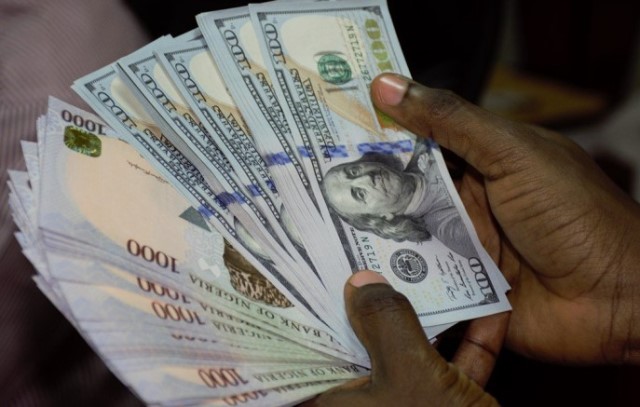
‘Federal Republic of Jesters’… Twitter reactions to proposed forex subsidy for pilgrims


Many Nigerians have expressed disappointment at the Senate for passing a resolution urging the Federal Government to approve a concession of N200 to 1$ for intending Christian and Muslim pilgrims.

The Senate made the resolution on Thursday, following a report presented by its committee on foreign affairs.

Monsurat Sunmonu, who read the report, said: “The government should as matter of urgency extend concession on the Naira-Dollar exchange to NAHCON (National Hajj Commission of Nigeria) and NCPC (Nigeria Christian Pilgrim Commission), once in every year, for the pilgrimages to the two Holy Lands.

“Therefore, the committee strongly recommends the concession of N200 to $1 for 2017 Hajj to bring down cost to the bearable level.”

However, no sooner had the news broken than Nigerians began expressing resentment for such a policy, which many say will further weaken the Naira.

The exchange rate current stands at N315 to a dollar at the official market and about N365 at the parallel market.

Here are a few reactions on Twitter:

Seven things you probably didn’t know about the whistle-blower protection bill


The passing of the whistle blower protection bill by the Senate on Wednesday has been described by many Nigerians as a good development, as it represents perhaps the most concrete demonstration yet of the legislature’s commitment to the anti-corruption of the Muhammadu Buhari administration.

Below are a few things you may not know about the bil:

TRUE NOMENCLATURE

Though the bill is simply referred to as ‘Whistle-blower bill’, its actual nomenclature is ‘An Act to protect persons making disclosure for the public interest and other related reprisals, to provide for the matters disclosed to be properly investigated and dealt with and for other purposes related therewith’.

SPONSOR

It was sponsored by Biodun Olujimi, the Deputy Majority Leader of the Senate.

JAIL TERM FOR FAKE INFORMANTS

The bill provides a minimum of five years or a fine of N10 million for anyone who provides false information on supposed corrupt activity. The lawmakers say this would curb the many incidents of false whistle-blowing that have been witnessed in the country recently.

REWARD FOR WHISTLE-BLOWERS

The bill also stipulates that anyone who provides authentic information that leads to the retrieval of loot could be entitled to five percent of the total amount recovered. This will serve as incentive and encouragement to others to come up with credible information.

PROTECTION FROM VICTIMIZATION

Whistle blower
Courtesy: Senate

The bill provides that a whistle-blower shall not be subject to victimisation by his employer or colleagues on account of the information he has provided.

The whistle-blower also has the right to take legal action if he or she is victimised, dismissed, suspended, transferred or declared redundant in any manner as a result of his providing information to the authorities.

TWO RELATED BILLS

Before Wednesday, the Senate had passed two whistle-blower-related bills since May 2017. They are: the Mutual Assistance in Criminal Matters Bill and the Witness Protection Bill.

NOT YET READY FOR SIGNING

The bill can only become law after it has been signed by the President. But that will not happen yet until it has been sent to the House of Representatives for concurrence. After that, a joint committee of the House and the Senate will harmonise it before the harmonised copy will be sent for presidential assent.

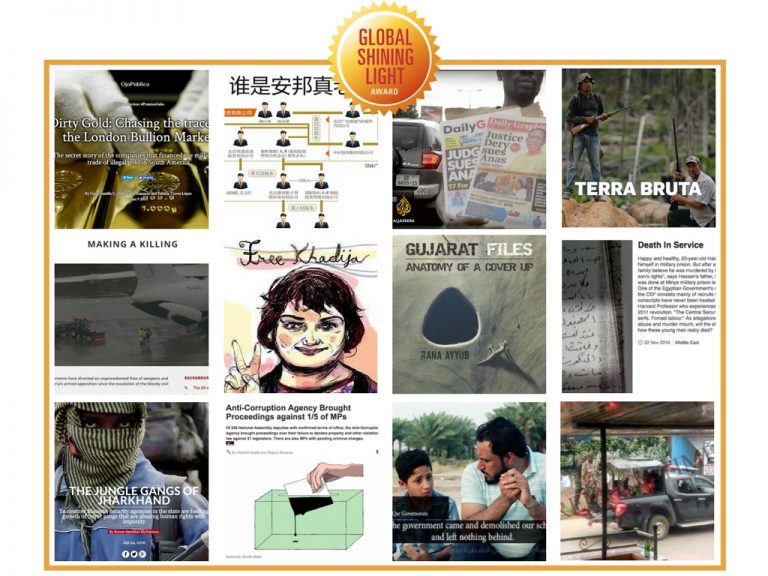
PREMIUM TIMES, 11 others shortlisted for Global Shinning Light Award

0


An investigation into extra-judicial killings by the police and military in the South East Nigeria and massacre of pro-Biafra members carried out by the Premium Times has qualified the newspaper to be shortlisted alongside 11 others as finalists in the Global Shining Light Award.

Premium Times is the only Nigerian media outfit that is shortlisted in the prestigious award.

The award, put together by Global Investigative Journalism Network (GIJN) honours investigative journalism in developing or transitioning countries, done under threat, duress or under dire conditions.

The GIJN is an association of 155 nonprofit organizations in 68 countries.

An international panel of judges selected the finalists from 211 projects, submitted by journalists in 67 countries. The award is sponsored by the Global Investigative Journalism Network

All the stories were published or broadcast between January 1, 2015 and December 31, 2016, and are outstanding examples of journalists digging into wrongdoings and exposing systemic problems that impact their communities and countries and, often, the world.

The winners will be announced at the 2017 Global Investigative Journalism Conference in Johannesburg, which runs from November 16-19, and will be presented with an honorary plaque and $2,000.

Finalists

“Inside the Massive Extrajudicial Killings in Nigeria’s South-East” and “How the Onitsha Massacre of Pro-Biafra Supporters was Coordinated,” Premium Times, Nigeria (2016). Reporter: Emmanuel Mayah; Editor: Musikilu Mojeed

A two-month long investigation by Mayah uncovered multiple mass graves, lending support to allegations that police and military forces have been targeting a minority ethnic group for abuse and extra-judicial killings. Following reports that included photo evidence, human rights groups called for an independent probe and the army announced another investigation.


“Justice,” Tiger Eye PI, Ghana (2015), Al Jazeera English (2017), Insight TWI. The team: Anas Aremeyaw Anas, Philip Clothier, Paul Sapin and Raphael Rowe

A two-year undercover investigation produced evidence of 34 judges and over 100 clerks accepting bribes to rule a certain way in court cases. Following the release of a three-hour documentary and the publication of newspaper reports, 25 judges were removed from office and a number of judicial staff were relieved of their duties.

“Project No. 1,” Beladi TV channel, Iraq (2016), Investigation: Asaad Al-Zalzali; Photography: Thaer Khalid

When $200 million allocated for public schools in Iraq went missing, reporter Al-Zalzali followed the money, which led him to a bank and to another country. The story exposed the magnitude of corruption in the country’s Ministry of Education and led to a conviction and a settlement that returned half the stolen money.

“Death in Service,” BBC World and BBC Arabic, Egypt (2016). Reporter and producer: Mostafa ElMarsafawy; Camera: Alaa Elkamhawi, Mohamed Emad and Moahmed Fathi; Executive producer: Elizabeth C. Jones

An investigation into 13 military conscripts’ deaths uncovered abuse and, in some cases, allegations of murder. Authorities, meanwhile, worked to cover up the evidence. After the story aired, one of the officers featured in the investigation was sentenced to three years in jail. Reporter ElMarsafawy was accused of undermining security and stability in Egypt and forced to resign his job.

“Making a Killing,” Balkan Investigative Reporting Network and the Organized Crime and Corruption Reporting Project (2016) Reporters: Lawrence Marzouk, Ivan Angelovski and Miranda Patrucic; Additional reporting: Atanas Tchobanov, Dusica Tomovic, Jelena Cosic, Jelena Svircic, Lindita Cela, RISE Moldova, Pavla Holcova, Stevan Dojcinovic and Pavle Petrovic; Editors: Drew Sullivan, Jody McPhillips, Rosemary Armao, Gordana Igric and Anita Rice

The joint investigation uncovered an arms pipeline between Central and Eastern Europe and the Middle East worth €1.2 billion. The weapons flow, reporters found, were being financed by Saudi Arabia, Jordan, the UAE and Turkey, and systematically diverted to extremist groups, including the Islamic State. After the story was published, the European Union announced it would monitor the flow of weapons and several countries reviewed their policies.

“Corruption and Organized Crime,” Center for Investigative Journalism of Serbia, Serbia (2016). Team: Dino Jahic, Ivana Jeremic, Milica Saric, Andjela Milivojevic, Milica Stojanovic, Vladimir Kostic, Bojana Bosanac and Filip Rudic

The team built two databases and produced a series of stories exposing Serbia’s official fight against corruption as a nominal exercise. Records obtained through hundreds of Freedom of Information requests revealed that corruption prosecutions mainly targeted low-level public officials, dragged on for years and often resulted in suspended sentences.


“Dirty Gold: Chasing the Trace of the London Bullion Market,” Ojo Público, Peru (2015). Team: Óscar Castilla, Nelly Luna, Fabiola Torres and Audrey Córdova


The investigation identified American and Swiss companies that were buying gold illegally mined in Peru, Colombia, Bolivia, Ecuador and Chile. After publication, US, Swiss, Chilean and Peruvian authorities launched their own probes into the companies and their associates, resulting in arrests of several individuals implicated in the schemes.

“Wild Land: Violence, Devastation and Death in the Heart of Brazil,” O Estado de S. Paulo, Brazil (2016). Reporters: Andre Borges and Leonencio Nossa; Photo and video: Dida Sampaio and Helvio Romero; Editor: Luciana Garbin

Journalists traveled 15,000 kilometers of government roads to investigate the theft of public lands and timber in the Amazon region of Brazil. The series exposed human rights abuses, corruption and elaborate profiteering schemes. It also included detailed information, including X-rays, on 1,309 individuals killed in land conflicts in rural Brazil over two decades.

“Anbang Series,” Southern Weekly, China (2015) Reporters: Li Weiao and Lv Minghe; Editors: Shu Mei and Su Yongtong

The investigation into China’s Anbang Insurance Group scrutinized the opaque company’s expansion into overseas investments, its complex strategies of mergers and acquisitions, and the frequently changing shareholding structure that includes former Communist Party leaders. Under pressure from Anbang and government authorities, the publisher was forced to remove the story from its website five days after publication. Nonetheless, industry insiders called the investigation a powerful exposé of the connection between money and political power in China.


“The Jungle Gangs of Jharkhand,” Hindustan Times, India (2016). The team: Kumar Sambhav Shrivastava and Athar Rather

The investigation looked into a collaboration between security agencies in the Indian state of Jharkhand and rogue armed groups fighting Maoist insurgents. Data and narrative collected during the investigation showed that local communities were victimized more often by the state-supported gangs than by the insurgency. After publication, India’s National Human Rights Commission called for an independent inquiry.

“Gujarat Files: Anatomy of a Coverup,” self-published, India (2016). Rana Ayyub


Reporter Rana Ayyub went undercover for nine months to record top officials speaking candidly about the 2002 riots in Gujarat, which left at least 1000 Muslims dead. When one of the targets of Ayyub’s investigation was poised to become the country’s new prime minister, Indian media houses got cold feet. Despite threats and surveillance, Ayyub self-published the transcripts that revealed complicity by India’s top officials in the attacks.


“The Khadija Project,” Organized Crime and Corruption Reporting Project in collaboration with numerous international outlets (2015) Reporters: Miranda Patrucic (OCCRP), Joachim Dyfvermark and Sven Bergman (SVT), Ola Westerberg (TT), Paul Radu (OCCRP), Iggy Ostanin (Bellingcat), Eleanor Rose (OCCRP), Karim Secker, Olesya Shmagun (OCCRP), Lorenzo Di Pietro (IRPI), Lejla Camdzic (OCCRP), Boris Kartheuser (freelance), Sylke Gruhnwald (SRF) Julian Schmidli (SRF), Lovisa Moller (Factwise), Sofia Hultqvist (Factwise), Tolga Tanis (Hurriyet), Habib Abdullayev (Meydan TV), Lejla Sarcevic (OCCRP), Don Ray, Khadija Ismayilova and RFE/RL Azerbaijan Service. Azerbaijani reporters, fearing arrest, used pseudonyms. Editors: Drew Sullivan, Jody McPhillips, Rosemary Armao, Deborah Nelson and Dave Bloss

Reporters from a dozen media outlets spent a year continuing the work of OCCRP/Radio Free Europe investigative journalist Khadija Ismayilova, who was arrested on trumped-up charges in Azerbaijan.

The investigations broke new ground in exposing kleptocracy and corruption in the country, much of it benefiting the ruling Aliyev family. After a series of stories implicated individuals and companies both in Azerbaijan and abroad, Ismayilova was released from prison.

Hembe, sacked rep, pleads for mercy… says ‘I have no savings from my salaries’


Herman Hembe, ousted member of the House of Representatives, says he cannot muster the means to refund the salaries he received in office because he has no savings, having spent it all on family upkeep.

Hember, who said this in an affidavit he deposed to on Wednesday, begged the Supreme Court to set aside the order that he should return all salaries and allowances he enjoyed while illegally occupying the Vandeikya/Konshisha Federal Constituency of Benue State seat at the lower chamber.

He said that he had paid the N700,000 awarded against him in favour of Dorathy Mato, who was pronounced authentic winner of the election, but added that it has become extremely difficult to make the other repayments as ordered by the court.

“I have tried very hard to raise a loan to enable me comply with the above order of the honourable court, but have not yet succeeded,” read the affidavit.

“This honourable court in its judgement declared the primaries conducted by the 2nd respondent from 7th to 10th December, 2014 null and void and this granted the appellants relief four in her originating summons as reproduced in the judgement’s of this honourable court

“The court in its judgement struck out the appellants grounds of appeal numbered 1, 2, 6, 9, 10, as well as the appellants issues 2 and 3 in her brief of argument and issue 2 of my brief of argument, the issues having been distilled from grounds of appeal that had been struck out…

“I have in compliant with the judgement of this Honourable Court paid the total sum of N700,000 awarded against me and in favour of the appellant/respondent as costs.

“… I vacated the National Assembly the day after the judgement was delivered, stopped attending parliamentary sessions and removed all my personal belongings from the legislative chamber/office.

“I have, however, been unable to refund the salaries I received from the House of Representatives. The salaries were received monthly and were used for the upkeep of my family and the high cost of living made it impossible for me to have any savings.

“I have tried very hard to raise a loan to enable me comply with the above order of this Honourable Court, but have not yet succeeded. I will comply with the order of this Honourable Court as soon as I am able to raise the money. I need to add that aside my monthly salaries, I did not receive any allowance or other emoluments as a member of the House of Representatives.

“I am applying to this Honourable Court to set aside the consequential orders made against me.”

The Supreme Court sacked Hembe on June 23, and ordered that Mato, the appellant, should be issued a certificate of return by INEC and be sworn in immediately.

Calculations by ICIR showed that Hembe is expected to return a total sum of N47,670,086 to the Federal Government within 90 days.

However, more than a month after the judgement, Yakubu Dogara, Speaker of the House of Representatives, is yet to swear in Mato to replace Hembe.

‘We can’t mix oil with water’… Adamu asks NERDC to separate IRK from CRK


Adamu Adamu, Minister of Education, has directed the Nigerian Educational Research and Development Council (NERDC) to make the Christian Religious Knowledge (CRK) and Islamic Religious Knowledge (IRK) distinctive subjects in the basic education curriculum. 

Adamu said the directive to separate the subjects became imperative in view of the various complaints by Nigerians, especially the Christian Association of Nigeria (CAN).

“There is this controversy over the merger of CRK and IRK in the school curriculum. There were complaints by parents that children were overloaded with so many subjects and the recommendation then was to merge one or two subjects,” he said.

“Unfortunately, water and oil were merged together and it is not working. So, to save ourselves the agony, the two subjects should be separated. We push that to the NERDC.”

He spoke in Abuja on Thursday through Anthony Anwukah, Minister of State for Education, at the meeting of ministers of education with education stakeholders from six geo-political zones and the Federal Capital Territory (FCT).

Adamu noted that the collapsed of the subjects was not done by the current administration, as it was an effort by the last administration of President Goodluck Jonathan to reduce the number of subjects offered by pupils and students in schools.

The two subjects, which were subsumed under the Civil Education in the current curriculum by the council, had been a subject controversy.

The meeting attended by the Commissioners for Education from various States of the Federation was part of the ongoing efforts to strengthen the partnership within the three tiers of government in the implementation of the Sustainable Development Goals 4 (SDG4).

The minister noted Nigeria had selected the Goal 4 of the SDGs, which emphasises inclusive and quality education for all and promotion of lifelong learning, for implementation in view of the importance of education as a fulcrum to national development.

Reiterating the commitment of the Federal Government to revamping the education sector, he appealed to the state governments and relevant stakeholders to support government’s efforts.

“We recognise that the task of revamping the education sector is challenging, the ministry of education cannot do it alone. Our task is to coordinate national efforts to meet our national goals and objectives,” he said.

“It is our belief that with good planning, appropriate investment of resources, transparency, due process, effective collaboration and coordination of inputs and activities of government and that of all stakeholders, we will realise our vision of providing quality education to build and sustain adequate human capital for national development.”