Home Blog Page 2929

Displaced Persons Narrate How Officials Steal Donated Food Items

0

displaced-persons-narrate-how-officials-steal-donated-food-items


Internally Displaced Persons, IDPs, in Borno State, have narrated how officials in various IDP camps continuously steal and sell food meant for them.

PREMIUM TIMES reports that in Dalori camp, in Borno State, the occupants alleged that officials keep them in hunger and deprivation while food items donated to them were being stolen from the stores at night and sold in the open marke.

They narrated their ordeal during a visit by the wife of the Borno State Governor, Nana Shettima, who visited some IDP camps on Tuesday to monitor the special feeding system for minors which was introduced last week after a Senate committee led by Oluremi Tinubu visited the camps.

The visiting senators donated N2 million to boost the feeding of the inmates especially children under the age of seven.

The IDPs, however, used the opportunity of the Governor’s wife’s visit to speak on the hardship they were going through.

One of the occupants of the Dalori camp, Woroma Tijjani, said the food being dished out to them was grossly insufficient.

“The measure of grains or rice they give a family, for two or three days aren’t enough for just a day,” he said.

“But everyday at night we see them sneaking out our food and taking them outside.”

Another IDP, Fatima Uba, acknowledged that the amount of food items that are donated to the camp should be enough “but they won’t bring out enough food for us to cook and eat.”

“The women in the kitchen won’t give us the raw food items to cook by ourselves. Instead, they would rather cook in the kitchen and then dish out portions that won’t be enough for us to feed.

“At night they usually connive with the store officials who would sneak out the food at night and the women would go to sell them for N800 a measure in the market,” she said.

Uba added that efforts to report the situation to higher authorities had yielded no result “because they make so much money from the sales.”

Ibrahim Ali, a retired local government worker who also stays in the IDP Camp noted that, “it might be very difficult to stop them because the system is corrupted.”

“They always know how to cover their dirty tracks here in the camp because government officials lack the routine inspection system.”

Ali said the corrupt officials always know when an investigation or inspection team is visiting, and they would quickly make things up, adding that “We don’t always get access to the top officials each time they come here.”

Recall that In August, the IDPs staged a protest in Maiduguri, over the poor feeding in the camps. The protest led the Borno State Government to introduce the household feeding system which allows beneficiaries to cook their own food after receiving uncooked portions from camp officials.

Officials managing IDP camps in the Northeast have always denied allegations of diverting food.

Last week, an international Non-Governmental Organisation, Medicines Sans Frontier, also known as Doctors without borders, issued a statement, warning that unless urgent steps were taken to address the alarming food shortages faced by IDPs in Borno State, Nigeria may soon be faced with a humanitarian crisis that is worse than the Boko Haram violence.

A day later, UNICEF released a similar statement, saying that “an estimated 400,000 children under five of age are at risk of acute malnutrition in Northeastern Nigeria” if urgent steps were not taken.
False Asset Declaration: Tribunal Chairman Insists On Trying Saraki

0

false-asset-declaration-tribunal-chairman-insists-on-trying-saraki


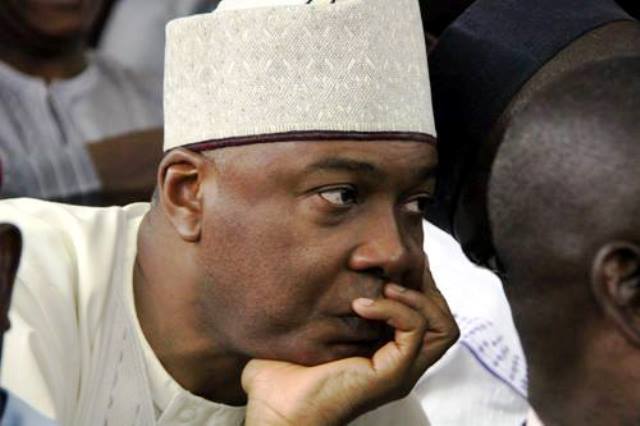
Chairman of the Code of Conduct Tribunal, CCT, Danladi Umar, has refused to withdraw from the trial of Senate President, Bukola Saraki, on charges of false asset declaration.

The senate president, through his counsel, Kanu Agabi, SAN, had filed an application asking the CCT chairman to step down from the case, saying that he had no confidence that the tribunal would be fair to him.

Saraki referred to a statement wherein Umar had suggested that the senate president was stalling the progress of the trial because he was afraid of the “final consequences.”

‎Ruling on the application on Wednesday, the CCT chairman held that there would be no one to try the case if he withdrew.

He said: “The application to excuse myself has not been contemplated in the constitution. In the absence of a chairman, this trial cannot go on, therefore I cannot excuse myself.

“The chairman is the tribunal, without the chairman there is no tribunal.

“The application of the applicant is founded on mere conjecture. The application of the applicant is not well-founded, it is hereby dismissed,” Umar ruled.

Recall that Saraki had in April filed a similar application, accusing Umar of corruption and alleging that the Economic and Financial Crimes Commission, EFCC, was influencing the chairman against him.

The application was however dismissed for lack of merit.

FIRS Offers 3-Year Tax Amnesty

0
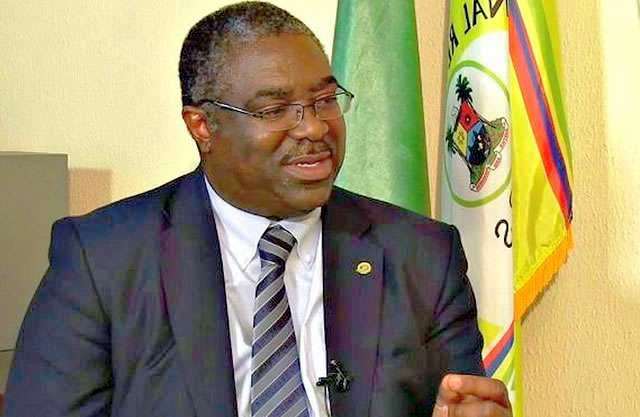
Babatunde Fowler, Executive Chairman of the FIRS

The Federal Inland Revenue Service has offered a tax waiver for defaulting institutions and establishments for taxes accruable between 2013 and 2015.

According to a public notice released by the revenue generating agency, the initiative was part of efforts to promote voluntary tax compliance and to shield tax payers from the burden of carrying forward old tax liabilities arising from penalties and interests.

The FIRS, however, added that there are some conditions that must be met by defaulting institutions before they could benefit from the tax-waiver exercise which will last for 45 days.

Such defaulting taxpayers must “come forward to declare their indebtedness within the 45-day window”, and must “present a payment plan on the outstanding principal tax liability acceptable to the federal board of inland revenue.”

The revenue agency pointed out that “this waiver relates ONLY to accumulated penalty and interest and not principal tax due.”

It added that based on the waiver, “part payment/full payment of undisputed tax liabilities should be paid, while the balance can be paid in installments, with “a reasonable amount of not less than 25%” to be paid on account.

The FIRS warned tax defaulters to take advantage of the special tax amnesty “failing which all legal means at the disposal of the FIRS will be deployed, including criminal prosecution of Board and management of defaulting organizations.

The special tax-waiver window will commence on October 5 and end November 24, 2016.

Former Minister, Husband Kidnapped

0

former-minister-husband-kidnapped


Former Environment Minister Laurentia Laraba-Mallam and her 73 year-old husband, Pius Mallam were kidnapped by gunmen late on Monday.

Aide to the former minister, Jonathan Asake said  she and her husband were kidnapped at gun point in Jere area of Kagarko local government in Kaduna State.

He said, the kidnapping took place at about 8 pm as the former minister and her husband were returning to Kaduna from the Federal Capital Territory.

Asake also said that the kidnappers had contacted the family and were insisting on 10 million naira ransom before they could be freed.

Also, the Kaduna State Police Command confirmed the incident.

Aliyu Usman, spokesman of the police in Kaduna state, told Journalists that the two were abducted along Bwari/Jere axis on Kaduna-Abuja highway on Monday evening.

He however added that the Police was on top of the matter and efforts are on to rescue the former Minister and her husband unhurt.


Read also:

Nig. Air Force Partners Portugal On Drones Production

0

nig-air-force-partners-portugal-on-drones-production


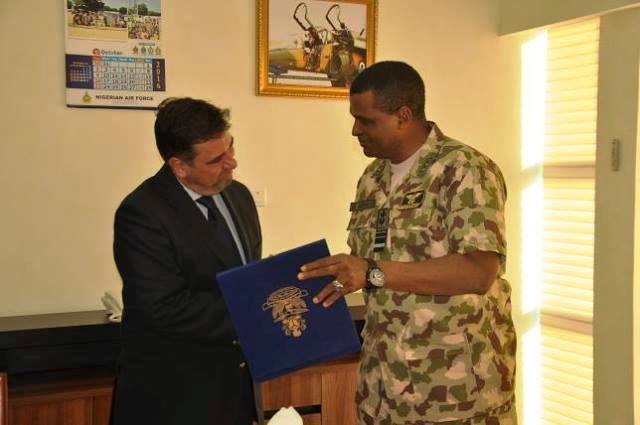
The Nigerian Air Force, NAF, has signed a Memorandum of Understanding, MOU, with the UAVision of Portugal aimed at enhancing existing collaboration between the two parties for the local production of Unmanned Aerial Vehicles, UAVs, also known as drones in Nigeria.

A message posted on NAF’s social media platform stated that the discussion that led to the signing of agreement began few months ago.

“Already, the collaboration had led to production of 4 UAVs prototypes with 2 each produced in Nigeria and Portugal,” the statement read.

Chief of Air Staff, Sadique Abubakar, expressed optimism that the locally produced UAVs would be commissioned before the end of October 2016.

He also identified other areas of possible collaboration with Portugal, including tactical flying training for NAF pilots and aircraft maintenance, adding that the essence of the collaboration is to exploit every areas of Portuguese technological development with a view to taking the NAF to the next level.

Among the Portuguese delegation were the country’s Ambassador to Nigeria, Antonio  Rodrigues da Silva and the representative of UAVision, Nuno Simeon.

Buhari Puts Two Presidential Jets On Sale

0

buhari-puts-two-presidential-jets-on-sale


Two of the eleven aircraft on the presidential fleet have been advertised for sale.

Presidential spokesman, Garba Shehu said that the adverts for the two aircraft – “a Falcon 7x executive jet and Hawker4000 were duly authorized by the Presidency.”

Shehu posted on his social media handle that the advert directed by President Muhammadu Buhari is in fulfillment of his campaign promises to cut down on economic wastages.

“When he campaigned to be President, the then APC candidate, Buhari if you recall, promised to look at the presidential air fleet with a view to cutting down on waste.

“His (President Buhari’s) directive to a government committee on this assignment is that he liked to see a compact and reliable aircraft for the safe airlift of the President, the Vice President and other government officials that go on special missions,” Shehu added.

When asked whether the 9 aircraft remaining on the presidential fleet were necessary, he said that “This exercise is by no means complete.

Shehu added that “I am sure the Commander of the Presidential air fleet will, any time from now, call you to a ceremony at which he will hand over some other aircraft to the Airforce for their operations.

There have been repeated calls on the president to lead by example and cut down the number of aircrafts in his fleet as part of measures to cut down on government spending.

Adesina Wants Nigeria To Lower Interest Rate

0

Credit: Juliana Thomas / Clinton Global Initiative CGI Annual Meeting 2012: Plenary Session- Future of Food


The African Development Bank, AfDB, has promised to help Nigeria out of its economic recession, but wants the country to adopt more people-friendly monetary policies, and lower interest rate.

President of the bank and former minister of agriculture, Akinwumi Adesina, said this in an interview in London, adding that “Nigeria is too big to fail”, but noting that the country’s current interest rate was “way too high”.

“The African Development Bank will rally strongly around Nigeria to overcome its recession,” Adesina said.

“They (Nigeria) have a liquidity problem. We (AfDB) want to make sure Nigeria gets resilient.”

He added that the government of Nigeria should lift hard currency curbs imposed by the central bank, adding that such a move would end the pressure on the naira.

The AfDB president said, “In our view it would be better to have gradual (customs) tariffs as opposed to (Forex) restrictions.

“Attracting investment was the only way for the central bank to lower its interest rates. The interest rate is way too high.

“You cannot drag the economy out of recession with those interest rates.”

Adesina noted that Nigeria had agreed on several reforms such as increasing its value-added and corporation taxes to make up for the shortfall in oil revenues, pointing out that Nigeria’s present tax-to-GDP ratio was four to five per cent, less than other countries in the region at around 15 per cent.

Nigeria revenue generation has dipped in recent times, no thanks to the decline in the global price of crude oil, as well as renewed attacks on oil and gas infrastructure in the Niger Delta region.

Last month, the Monetary Policy Committee of the Central Bank of Nigeria, CBN, voted unanimously to retain its benchmark of 14 per cent interest rate, despite calls from different sectors of the economy for a downward review.


Buhari Sends 2017-2019 Expenditure Plans To National Assembly

0

buhari-sends-2017-2019-mtef-to-national-assembly


President Muhammadu Buhari has sent the 2017-2019 Medium Term Expenditure Framework, MTEF, and Fiscal Strategy Paper, FSP, to the National Assembly, ahead of the 2017 budget.

A letter to this effect was read by the Speaker of the House of Representatives, Yakubu Dogara, at plenary on Tuesday.

The letter pointed out that the documents were designed against the backdrop of an adverse global economic environment, and would provide the framework for the development of 2017 budget.

“In this regard, the 2017-2019 MTEF and FSP articulates the Federal Government’s economic, social and developmental objectives as well as the strategies for achieving these defined objectives and priorities,” the president’s letter read.

“I hereby forward the 2017-2019 MTEF and FSP to the House of Representatives and trust that it would be kindly considered and expeditiously approved so as to move the 2017 federal budget preparation process forward.”

After A Failed N16 Billion Transport Scheme, FG Rolls Out N25 Billion Scheme

0

PIC 15. SOME OF THE BUSES FOR THE FEDERAL GOVERNMENT-ASSISTED PUBLIC MASS TRANSPORT SCHEME LAUNCHED BY PRESIDENT GOODLUCK JONATHAN IN ABUJA ON SUNDAY (8/1/12).


By Obiejesi Kingsley

Minister of Industry, Trade and Investment, Okechukwu Enelamah, on Tuesday announced that the federal government has set up a N25 billion revolving loan scheme to enable transport companies in the country purchase mass transit vehicles.

Enalamah said that the scheme would be administered through the Infrastructure Bank at zero percent interest rate.

He said this in Abuja on Tuesday at the opening of a two-day national workshop for chief executives of mass transit companies, organised by the National Automotive Design and Development Council in conjunction with the Nigerian Institute for Transport Technology, Zaria.

This is not the first time the federal government would roll out a transport scheme designed to support the local industry. A similar initiative in 2012 by the Goodluck Jonathan-led administration failed to yield any positive result, and instead led to a waste of public resources.

Over N16 billion of Subsidy Reinvestment and Empowerment Programme, SURE-P, funds was released for the Public Mass Transit Revolving Fund, PMTF,  in 2012 to cushion the effect of the increase in pump price of fuel  and support local automotive industry.

The fund, just like this present initiative, was administered as a revolving loan by The Infrastructure Bank, TIB, and was given out in form of mass transit vehicles to 31 beneficiaries, mostly commercial transport operators.

A total of 1,179 vehicles were released to the beneficiaries under the scheme, with a repayment plan covering four years.

But as at May 2016, only two of the beneficiaries namely: ABC Transport PLC and Young Shall Grow Transport Limited have fully liquidated their loans. The others complained that the vehicles given to them were not durable, and that most of them packed up less than a year into the scheme. The vehicles they complained about were Hyundai and Innoson buses.

They blamed the Infrastructure Bank for not consulting them before taking the decision to supply them the vehicles.

Beneficiaries who could not pay back fully include: the Nigerian Union of Road Transport Workers, NURTW; National Association of Road Transport Owners, NARTO; Road Transport Employees Association of Nigeria, RTEAN; Greenline Bus; Global Ginikana, and Classic Link Express.

Enalamah said that the aim of the initiative was to boost the mass transit system in Nigeria as well as encourage patronage of local vehicle assembly plants.

“Government is determined to develop the automotive industry because of its extensive linkages, impact on job creation, technology transfer as well as foreign exchange savings and earnings.

“Many of the new assembly plants produce buses and mini-buses. I hereby call on all Nigerians to patronise the products of these assembly plants,” Enalamah said.

Also speaking at the workshop, Minister of Transportation, Rotimi Amaechi, said that the mass transit sector has been faced with lots of challenges in recent times, despite being one of the major drivers of the country’s socio-economic development.

“This workshop is, therefore, organized to appraise the mass transit perspective of the Nigeria Automotive Policy,” he said

“It is a platform for stakeholders to meet and exchange ideas on the effective implementation of the policy and make recommendations for realising a sustainable mass transport agenda for Nigeria.

Amaechi added that the leadership of President Muhammadu Buhari is poised to address the challenges facing the transport sector and is willing to invest heavily in this sector.

Stakeholders in the transport sector are of the view that unless government learns from the mistakes of the past, the new scheme may suffer the same fate

ECOWAS Court Orders Release Of Dasuki, Fines FG N15 Million

0
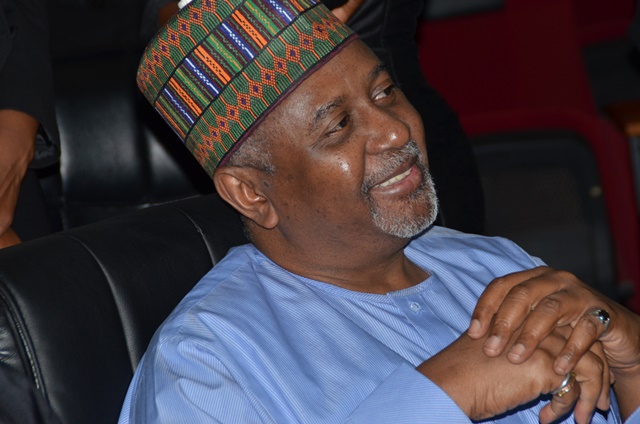
Former NSA Sambo Dasuki

Embattled former National Security Adviser, NSA, Sambo Dasuki, got a reprieve on Tuesday from the ECOWAS Community Court of Justice when it ruled that his arrest and detention was unlawful and arbitrary.

The court also ruled that the Federal Government should pay a sum of N15 million as damages to the former NSA, and that the cost of litigation will be summed up and charged against the Nigerian government.

The court added that the federal government’s re-arrest of Dasuki on November 4, after he was granted bail by a court of law amounts to a mockery of democracy and the rule of law.

Dasuki, who is facing multiple trials over an alleged diversion of $2.1 billion meant for the purchase of arms during the administration of former President Goodluck Jonathan, had approached the ECOWAS court after he was rearrested by members of the Department of State Services, DSS, shortly after meeting his bail conditions in November last year.

The court had in April ruled that it had jurisdiction to hear the suit brought before it by Dasuki, who is seeking the enforcement of his fundamental rights to liberty and to own property as enshrined in the provisions of the Nigerian 1999 Constitution and African Charter on fundamental rights of persons.

The former NSA, who is also accused of illegal possession of fire arms, has remained in the custody of the DSS since his arrest.

A three-member panel of the ECOWAS court led by Justice Friday Nwoke on Tuesday, said the Nigerian government erred by arresting Dasuki without a search warrant, adding that the pattern of arrest negates the provisions of Section 28 of the Nigerian Police Act.

The section stipulates that a superior police officer may authorise the search of a residence belonging to a suspect assumed to be in illegal possession of an item, if the officer so authorised has a search warrant.

The court also noted that Section 143 of the Administration of Criminal Justice Act, ACJA, allows that where such a search is proposed by the police or other authorities, an application must first be made to a court of law and and granted after due consideration of the said application, in compliance with section 144 of the ACJA.

The court further said the submission of Nigerian government that it came with the search warrant to Dasuki’s house but could not give it to him, because officers at his residence resisted the security operatives, was ineffective in proving its points.

The judge, who pointed out that the search warrant presented before the ECOWAS court was not certified and therefore lacks verifiable authenticity, stated that government failed to prove its reasons for arresting and detaining Dasuki, as documents presented before it only emphasised the allegations of fraud and illegal possession of arms.

He added that the ECOWAS court was not set to determine whether or not the possession of arms by Dasuki amounted to an offence or not, even as the panel decided that the arrest was unlawful, arbitrary and a violation of local and international rights to liberty.