back to top
Home Blog Page 329

Dangote enters U.S. market, ships 1.7m barrels of jet fuel amid naira-for-crude delays

0

DANGOTE Refinery is extending its market dominance beyond Nigeria, having reportedly shipped approximately 1.7 million barrels of jet fuel across six vessels to ports in the United States this month.

Owned by Aliko Dangote, Africa’s wealthiest individual, the refinery is already establishing a market presence beyond Nigeria’s borders. This development comes as a delay in finalising a naira-for-crude oil agreement with the Nigerian National Petroleum Company Limited (NNPCL) is impacting the refinery’s local pricing in naira.

According to data from the ship-tracking service Kpler, as reported by Reuters, another vessel, the Hafnia Andromeda, is scheduled to arrive at the Everglades terminal on 29 March, carrying a cargo of around 348,000 barrels of jet fuel.

U.S jet fuel imports are on track to reach a two-year high in March, driven by shipments from the Dangote Refinery to North America.

The data indicates that U.S jet fuel imports so far in March have reached approximately 226,000 barrels per day (bpd), the highest figure since February 2023.

The ICIR, the U.S. appetite for products from the Dangote Refinery has emerged amidst uncertainty surrounding the renewal of the naira-for-crude oil sales agreement with the state-owned oil company, NNPCL.

On 1st October 2024, Dangote Refinery and NNPCL concluded a deal for the former to supply crude oil to the latter, with payment to be made in naira instead of U.S dollars.

This initiative was designed to bolster domestic refining capacity, reduce reliance on imported petroleum products, and stabilise the local currency by easing pressure on foreign exchange reserves, among other benefits.

The current agreement is due to expire this month, March, with the possibility of renewal. However, a renewal deal has not yet been finalised.

A meeting scheduled for Monday, March 24, to further discuss the agreement did not take place.

Following the uncertainty surrounding the renewal process, Dangote Refinery temporarilysuspended the sale of petroleum products in naira to oil marketers on March 19. This suspension is pending the resumption of naira-denominated crude oil cargo allocations from the NNPC.

Since the suspension, pump prices for petrol products have increased, as motorists and other consumers now face higher costs due to the halt in naira-based sales to marketers.

In the heat of the recent developments, the Dangote Refinery has lately been sourcing crude oil from multiple international suppliers, including Angola, Algeria, and America, to ramp up production at its 650,000 barrels per day (bpd) refinery.

The ICIR reported that the Dangote Refinery has taken delivery of more than three million barrels of American crude since the start of the month.

The cost of loading petrol at private depots in Lagos has risen to approximately ₦900 per litre, up from less than ₦850 per litre.

Similarly, retail outlets have increased the pump price of petrol from around ₦860 to over ₦900 per litre.

“Dangote is unlikely to be a regular jet fuel supplier to the U.S., but a maintenance-related shutdown of the Phillips 66 Bayway refinery in New Jersey helped open a rare arbitrage opportunity for flows from Nigeria to the U.S., Sparta Commodities analyst James Noel-Beswick said.

“The window is likely to close soon or shrink significantly due to elevated U.S. inventories of aviation fuel, Noel-Beswick added.

The Chief Operating Officer of TankTiger, Steven Barsamian, was also quoted as having stressed that demand to lease storage tanks for jet fuel in Houston and New York Harbor in April is averaging around 700,000 barrels on storage broker TankTiger’s platform, five to six times the average monthly demand.

The surge in demand, partly due to the influx of supply from Nigeria, is likely to lower jet fuel prices in the U.S. ahead of peak summer travel season, Barsamian maintained.

U.S. jet fuel stocks ended February at 45.2 million barrels, the highest for the month since 1999, data from the U.S. Energy Information Administration (EIA) also reportedly showed.

The agency adds that U.S. refiners’ yield of jet fuel hit a record last year, reflecting stronger demand relative to other transportation fuels, and expecting the country’s jet fuel consumption to touch a record in 2026.

Nigerians overstaying visa risk permanent ban, criminal prosecution, says US

THE United States Mission in Nigeria has cautioned travellers that overstaying their visas in America could lead to a permanent ban and potential criminal prosecution.

In a statement released on Monday, US Ambassador to Nigeria, Richard Mills, emphasised that the US would not accept any excuse from those found guity.

“If you overstay your US visa, you could face a permanent ban on travel to the United States as well as criminal prosecution.

“Consular officers have full access to your immigration history and will know about past violations.

The ICIR reported that mass raids had been taking place in homes, schools, workplaces, and shopping centres in the US, targeting undocumented immigrants for deportation.

This followed President Donald Trump administration’s clampdown on illegal immigrants in the US.

Since he took over power on January 20, Trump has vowed to carry out mass deportations of “criminal aliens” among other sweeping reforms by his government.

On January 28, United States Immigration and Customs Enforcement, Enforcement and Removal Operations reported that about 3,690 Nigerians in the US could be deported.

Data shows that as of 2015, approximately 376,000 Nigerian immigrants lived in the US, making Nigeria the largest source of African immigration to the country.

The Minister of State for Foreign Affairs, Bianca Odumegwu-Ojukwu, in February revealed that 201 Nigerians were held in US immigration camps, with 85 already cleared for deportation.

On Friday, March 21, the United States announced the termination of legal status for hundreds of thousands of immigrants, giving them only weeks to leave the country.


Judge steps down from Natasha’s case over bias claims

0

FOLLOWING allegations of bias, a judge of the Federal High Court Abuja, Obiora Egwuatu, has recused himself from the case filed by the senator representing Kogi Central, Natasha Akpoti-Uduaghan.

Egwuatu withdrew from the case during proceedings on Tuesday, March 25, due to allegations of bias raised by Senate President Godswill Akpabio.

The judge said the case file would be returned to the Chief Judge of the Federal High Court for reassignment to another judge.

Akpabio had reportedly questioned the court’s ability to handle the matter fairly, prompting the judge to step aside.

The ICIR reported that on March 4, Egwuatu gave an order restraining the Senate from commencing disciplinary proceedings against Akpoti-Uduaghan following an ex parte application filed by the senator’s counsels.

Despite the court order, the Senate went ahead with its investigation and, based on its committee’s findings, voted to suspend the female lawmaker for violating Senate rules. 

The suspension, which took effect from March 6, means that the lawmaker will be barred from accessing the National Assembly premises, and her office will be locked. 

The punishment also extends to her salaries and those of her legislative aides being withheld for the duration of the suspension.

The Senate further ruled that Akpoti-Uduaghan would not be allowed to represent Nigeria in any official capacity while serving the suspension. 

The committee noted that she might submit a written apology, which could lead to a review of her punishment.

Background

The crisis began on February 20 when Akpoti-Uduaghan protested a reassignment of her seat in the Senate without prior notice. 

She resisted the change, calling it an attempt to silence her, while Senate Chief Whip, Tahir Monguno, justified the move, citing Senate rules and party affiliations.

Her protest led to a heated exchange with Akpabio, who ordered the sergeant-at-arms to remove her from the chamber.

This led to the Senate’s unanimously referring her to the Ethics Committee for disciplinary review, which later recommended her suspension.

Amid the dispute, in an interview on Arise Television, she accused Akpabio of making repeated sexual advances toward her, which she said she rejected. 

She alleged that her refusal was the reason behind their frequent clashes at plenary sessions.

According to her, some of Akpabio’s love proposals were made with her on the phone and face-to-face in her husband’s presence. She further alleged that she had all the evidence for her claims.

Although the Kogi senator, on Wednesday, March 5, submitted an official petition regarding the sexual harassment and abuse of office by Akpabio, the Ethics Committee threw out the petition, citing key procedural oversights that allegedly undermined the petition’s legitimacy.

Akpoti-Uduaghan, however, resubmitted the petition shortly before her suspension.

The ICIR reported that, amid the crisis, the lawmaker filed a N100 billion defamation lawsuit against Akpabio and his aide, Mfon Patrick.

Akpoti-Uduaghan claimed that a Facebook post by Patrick allegedly contained defamatory remarks about her legislative competence and personal appearance.

The lawsuit sought damages and a public apology, claiming the publication harmed her reputation and subjected her to public ridicule.

On Friday, March 24, The ICIR reported that Akpoti-Uduaghan’s constituents submitted a recall petition to the Independent National Electoral Commission (INEC)


Trump administration accidentally leaked war plans to journalist before Yemen strike

IN a clear breach of United States (US) security, President Donald Trump’s National Security Adviser, Mike Waltz, shared war plans in a messaging group that included a journalist days before the US attacked Houthis in Yemen.

This was revealed on Monday in a first-person account by the Atlantic’s editor-in-chief, Jeffrey Goldberg, who was erroneously added to an encrypted Signal chat group on March 13.

The group, named “Houthi PC small group,” included national security adviser Mike Waltz, who instructed his deputy, Alex Wong, to assemble a “tiger team” to coordinate US actions against the Houthis.

Goldberg wrote that the group chat included accounts seemingly representing Vice President JD Vance; US Secretary of State Marco Rubio; CIA Director John Ratcliffe; Director of National Intelligence Tulsi Gabbard; Treasury Secretary Scott Bessent; White House Chief of Staff Susie Wiles; and senior National Security Council officials.

The ICIR reports that on March 15, Trump launched a military onslaught against Yemen’s Houthis in response to its attacks on Red Sea shipping, and he issued a warning to Iran, the Houthis’ primary supporter, demanding an immediate end to its backing of the group.

Goldberg revealed that just hours before the attacks, the US Defense Secretary, Pete Hegseth, shared operational details in the messaging group “including information about targets, weapons the US would be deploying, and attack sequencing.”

While noting that messages were set by Waltz to disappear from the Signal app after a while, Goldberg described the use of a Signal chat for such sensitive information as “shockingly reckless.”

The screenshots of the chat, as reported by The Atlantic, revealed that officials in the group debated whether the US should proceed with the strikes. At one point, Vance appeared to question whether US allies in Europe, who are more vulnerable to shipping disruptions in the region, truly deserved US assistance.

“@PeteHegseth if you think we should do it, let’s go. I just hate bailing Europe out again,” a person identified in the group as Vance wrote, adding: “Let’s just make sure our messaging is tight here.”

A person identified as Hegseth replied: “VP: I fully share your loathing of European free-loading. It’s PATHETIC.”

The Atlantic reported that the individual identified as Vance also expressed concerns about the timing of the strikes, suggesting there was a strong case for delaying them by a month.

“I am not sure the president is aware how inconsistent this is with his message on Europe right now. There’s a further risk that we see a moderate to severe spike in oil prices,” the account wrote, before saying he was willing to support the group’s consensus.

While the discussions were ongoing for days, Goldberg (the journalist) had doubted the platform was genuine because he could not believe that classified information such as national security, including war plans, could be discussed by officials on Signal.

He had thought the discussions were AI-generated and had presumed they were misinformation by some criminals attempting to masquerade as security experts.

But he eventually realised that they were genuine after discovering that the attacks on Yemen were applauded on the platform and the time of the bombardments tallied with discussions on the platform.  He thereafter exited the group.

He then emailed most of the officials and demanded to know why he was added to the group and why sensitive information such as war plans could be discussed on the app.

Some of the officials responded and confirmed he was added in error.

All lawyers interviewed by The Atlantic over the issue condemned the officials’ actions.

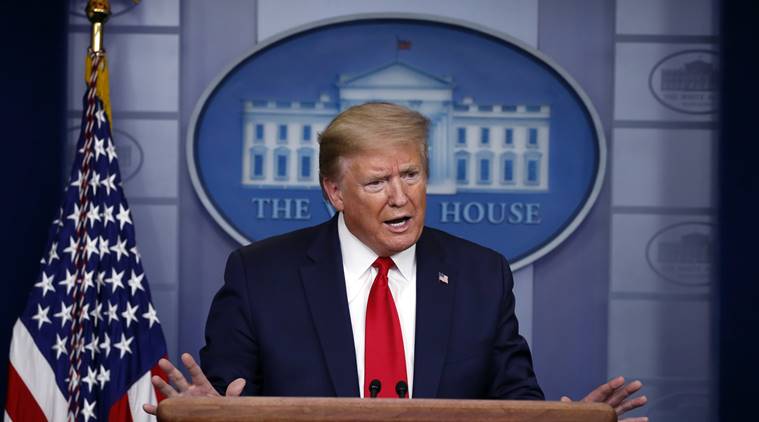
Responding, Trump told reporters on Monday that he was unaware of the incident, stating, “I don’t know anything about it. I’m not a big fan of The Atlantic.” However, a White House official later confirmed that an investigation was underway and that Trump had been briefed on the matter.

The United States National Security Council spokesperson, Brian Hughes, said in a statement: “At this time, the message thread that was reported appears to be authentic, and we are reviewing how an inadvertent number was added to the chain.”

“The thread is a demonstration of the deep and thoughtful policy coordination between senior officials. The ongoing success of the Houthi operation demonstrates that there were no threats to our service members or our national security.”

However, Hegseth denied sharing war plans in the group chat.

“Nobody was texting war plans, and that’s all I have to say about that,” he told reporters on Monday.

Goldberg responded to Hegseth’s denial in an interview on CNN late on Monday by saying, “No, that’s a lie. He was texting war plans.”


Rivers Head of Service resigns, sole administrator appoints new SSG

0

THE Rivers State Head of Service (HoS), George Nwaeke, has resigned.

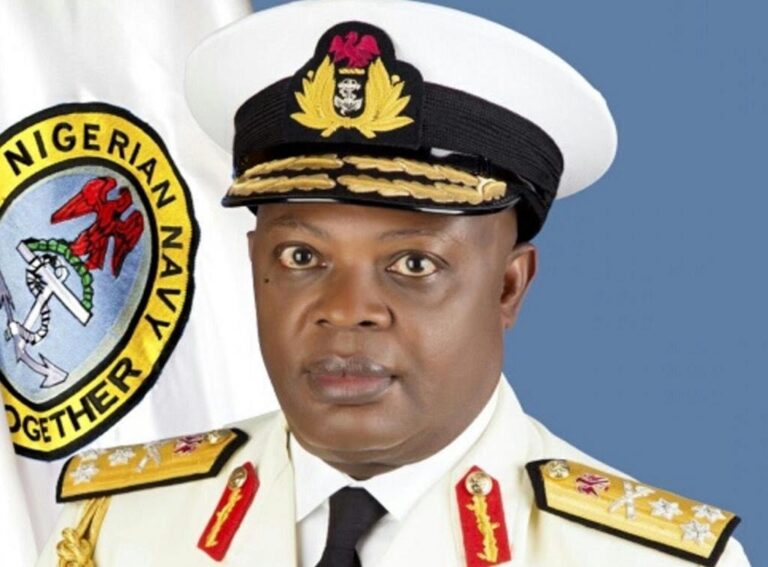
Nwaeke’s resignation was announced in a statement Tuesday morning by the Chief of Staff to the state’s Sole Administrator, Ibok-Ete Ibas, a retired general. 

The sole administrator appreciated Nwaeke, who served under suspended Governor Siminalayi Fubara, for his service.

Meanwhile, Ibas has appointed Ibibi Worika, a professor, as the new secretary to the state government.

His appointment takes immediate effect.

“Professor Worika’s appointment reflects the administrator’s commitment to harnessing the great human capital of the Rivers ’people to work with him to achieve the much-needed peace, stability, and security,” part of the statement read.

The ICIR reported that President Bola Tinubu declared a state of emergency in Rivers State on Tuesday, March 18.

The declaration followed political turbulence in the state.

In a nationwide broadcast, the president suspended Fubara; his deputy, Ngozi Odu; and all the state House of Assembly members for six months.

However, he retained the state judiciary.

Tinubu blamed the governor and his predecessor – the Minister of the Federal Capital Territory (FCT) – Nyesom Wike, for allowing the political crisis in the state to escalate.

He particularly criticised Fubara for failing to take action after an oil facility was blown up in the state hours before the declaration.

He nominated Ibas as the sole administrator to take charge of the affairs of the state.

He added that the declaration did not affect the state judiciary, which he said must continue to function in accordance with their constitutional mandate.

The ICIR reported that the political crisis in the state climaxed on Monday, March 17, when the House of Assembly served Fubara and his deputy a notice of gross misconduct, which could lead to their impeachment.

The House members, who have been at loggerheads with the governor, claimed the accusation was in tandem with the Nigerian constitution.

The lawmakers accused Fubara of misusing public funds, obstructing the Assembly, and making unauthorised appointments without proper screening and confirmation.

Others include the withholding of lawmakers’ salaries and allowances and the seizure of the salaries of the Assembly’s clerk, Emeka Amadi.

Recall that the power struggle between the governor and the Amaewhule-led Assembly reached its peak after the Supreme Court’s judgment, which ordered the Central Bank of Nigeria and the Attorney General of the Federation to withhold Rivers State’s statutory allocation.

It also annulled the recent local government election conducted in the state by Fubara.

Fubara and Wike have been at loggerheads over who controls the Peoples Democratic Party (PDP) structure in the state.

Judicial optics: Odinkalu questions Supreme Court’s defence of Justice Agim at UniCal event

0

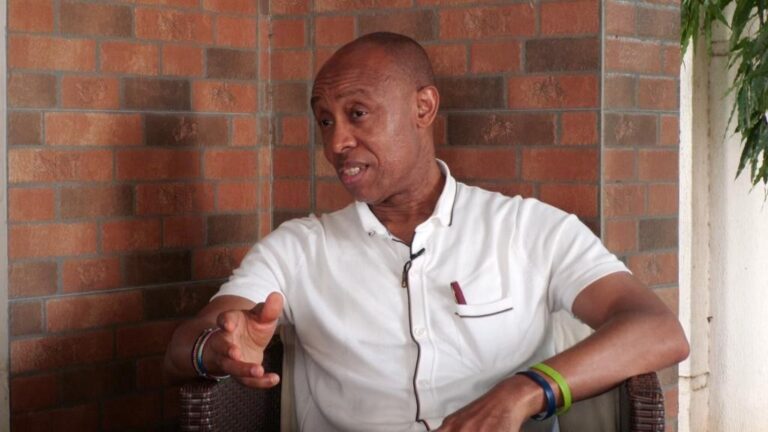
By Chidi Anselm ODINKALU

Aminu Ado Bayero, Emmanuel Akomaye Agim, Nyesom Wike, and that convocation event at the University of Calabar: A response to Festus Akande, director of information and public relations at the Supreme Court of Nigeria


As part of its golden jubilee, the University of Calabar (UniCal) is said to have held a special convocation ceremony on Saturday, March 22, 2025 where it handed out honours to all manner of persons. The Chancellor of the University is Aminu Ado Bayero, the deposed Emir of Kano. Present at that event also were Nyesom Wike, Minister of the Federal Capital Territory and Nigeria’s most prolific political litigant; as well as a justice, Emmanuel Akomaye Agim, a senior Justice of the Supreme Court who delivered the leading decision in the recent judgment of that court concerning the withholding of the federal allocations of the Rivers State Government.

Images of the events in Calabar putting these major actors in contemporary politics of the Nigerian judiciary in close propinquity with one another have gone viral. In response, Festus Akande, Director of Information and Public Relations at the Supreme Court issued a public statement on Monday, March 24, 2025, in which he felt compelled to claim that Emmanuel Agim attended the convocation “as an esteemed honouree and an alumnus of the institution, whom the Governing Council had found worthy to be conferred with an Honorary Doctorate Degree in Law (Doctor Honoris Causa). He was recognised for his significant contributions to the legal profession; which is a reflection of his commitment to justice, integrity, and the rule of law, serving as a model for aspiring legal professionals and students alike.”

Akande’s statement further claimed that “Emmanuel Agim’s participation at the ceremony was independent and not as an official representative of any government ministry or department, let alone accompanying any serving or retired government official”, before asserting that “any insinuation to the contrary is not only inaccurate but undermines the judicial independence that is crucial to our democracy.”

These claims are made in the name of the Supreme Court and in pursuit of high sounding goals of judicial independence and democracy.

The Supreme Court is a public institution embodying the highest judicial authority in the Federal Republic of Nigeria.

Judicial independence is a high constitutional principle ordained for the protection of judicial authority as a public trust. It is not a self-serving shibboleth.

In terms of Nigeria’s constitution, the source of democratic legitimacy resides in the people alone.

To leave Festus Akande’s claims uncontested or without a response, therefore, is to diminish the high authority of the Supreme Court, the service of the distinguished men and women who have laboured to give it its historically high standing in the public imagination until recently, and the high principles of judicial independence and democracy instituted for the protection of the peoples of Nigeria.

This statement is issued out of concern to stem the heedless haemorrhaging of the rarefied authority of the Supreme Court of Nigeria. In this spirit, it is essential to set the records straight, even if ever so briefly.

The applicable standards

The fact that Festus Akande considered it essential to issue the statement itself shows what something was wrong with that event in Calabar. In case he needs reminding, Lord Chief Justice Hewart laid down the applicable standard for judging judicial impartiality and independence in 1923 in R. v Sussex Justices, Ex Parte McCarthy, (1923) All ER 233, to the effect that: “Nothing is to be done which creates even a suspicion that there has been an improper interference with the course of justice.”

That event in Calabar was rich with pictures to support suspicions of improper interference with the cause of justice.

Rule 2.8 of the Revised Code of Conduct for Judicial Officers in Nigeria (2016) is very clear: “A Judge shall avoid developing excessively close relationship with frequent litigants – such as government ministers or their officials, municipal officials, police prosecutors in any Court where the Judge often sits, if such relationship could reasonably create an appearance of partiality.”

In Buhari vs. Independent National Electoral Commission & Ors (2008) LPELR-814(SC) at PP.145-146, Justice Niki Tobi of the Supreme Court admonished judges to “maintain a very big distance from politics and politicians” warning that:

“….the two professions do not meet and will never meet at all in our democracy in the discharge of their functions…. Their waters never meet in the same way Rivers Niger and Benue meet at the confluence near Lokoja. If they meet, the victim will be democracy most of the time, and that will be bad for sovereign Nigeria.”

In his memoirs, Faces, Cases and Places, published in 1983,(p.78), former Chief Justice of Nigeria, Atanda Fatayi Williams, said:

“In Nigeria, familiarity does not breed contempt. It breeds obligation. As a result, people with whom you are friendly expect you to bend the rules to suit their requirements. It pays in the end for a judge, even at the risk of being accused of being a snob or of haughtiness, to be somewhat aloof, not only from members of the Executive, but also from political powerbrokers.”

Neither Festus Akande not, indeed, Justice Emmanuel Agim as a Justice of the Supreme Court can pretend to be unaware that Nyesom Wike is the most prolific current political litigator in Nigeria. To justify public fraternising with him by a Supreme Court Justice is to licensing the accessorising of judicial officers for political purposes.

The Context: Nyesom Wike & Emmanuel Akomaye Agim

On the last day of February 2025, the Supreme Court delivered judgment in the consolidated appeals in SC/CV/1174A/2024 et al, Rivers State House of Assembly & Anor vs. The Government of Rivers State & 9 Ors. The case sought orders of the court to, among other things, require the Central Bank of Nigeria to withhold the federal allocations of the Government of Rivers State until the passage of a budget by a faction of the State House of Assembly. At the time, the question of the right of that faction of the State House of Assembly to function as such was the subject of litigation before lowers courts in FHC/PHC/CS/2024 Oko-Jumbo & 2 Ors vs. Martin Amaewhule & Ors (pending in the Federal High Court in Port Harcourt since April 2024).

The case seeking to withhold the federal allocations of Rivers State was un-related to this appeal. Delivering the judgment of the Supreme Court on 28 February, Emmanuel Akomaye Agim framed two issues for determination neither of which had anything to do with then issues pending before the Federal High Court. Yet, without an appeal from that case before it, the court purported to determine the issues then pending before the Federal High Court on the question of the defection of the 27 members of the Rivers State House of Assembly from the platform on which they were elected (the Peoples Democratic Party, PDP, to the All Progressives Congress, APC). Even though the issue of the defection of the 27 members of the Rivers State House of Assembly did not arise in the appeal, the Supreme Court raised it by itself and shockingly decided a case that was still pending at the High Court.

This course of action has no precedent in Nigeria’s judicial history. It is the  first in the history of Nigeria that the Supreme Court will take over a case that is pending in the Federal High Court. Unsurprisingly, counsel to the 27 legislators promptly applied to the Federal High Court in Port Harcourt asking it to dismiss the case on the ground that it has become academic on the basis that the Supreme Court has decided the matter while it was still at the Federal High Court. The Port Harcourt judicial division of the Federal High Court will render its judgment on this application on 20 April, 2025.

The Context: Nyesom Wike and Aminu Ado Bayero

On March 14, 2025, a three-judge panel of the Court of Appeal sitting in Abuja in Appeal No., CA/KN/27/M/2025, Alhaji Aliyu Babba Dan Sarki Dawaki Babba vs. Kano State House of Assembly & 7 Ors, granted a “Mandatory Injunction” (not a stay of execution) arresting the enforcement of the judgment of the same Court of Appeal on 10 January 2025 in Appeal No. CA/KN/126/2024, Kano State House of Assembly & Anor vs. Alhaji Aminu Babba Dan Agundi & Ors. The earlier judgment of the Court was delivered by a panel led by Justice Gabriel Kolawole, a Justice of Appeal since 22 June, 2018. The latter decision arresting that judgment was given by a panel led by Justice Okon Abang, a Justice of the Court of Appeal since 20 September 2023. Other members of the latter panel were Justice Eberechi Suzette Nyesom-Wike (Justice of the Court of Appeal since 10 July 2024) and Justice Oyejoju Oyewumi (Justice of the Court of Appeal since 10 July 2024). This panel of the Court of Appeal included the wife of the Minister of the FCT, Nyesom Wike.

In terms of seniority in the Abuja division of the Court of Appeal, Justice Okon Abang is no. 6 out of 10; Justice Nyesom-Wike is No. 9; and Justice Oyewumi is the last. It is unprecedented for a panel this junior to be constituted to sit upon a decision of a much more senior panel of the Court of Appeal. It is equally notable that the President of the Court of Appeal has unilaterally moved this case to Abuja from Kano.

The subject matter of this appeal is a fundamental rights claim by a disaffected king-maker in respect of the stool of the Kano Emirate from which  Aminu Ado Bayero was deposed. The Court of Appeal in Kano had denied that claim, holding that the Federal High Court had no jurisdiction over essentially chieftaincy matters.

Following this decision, Aminu Ado Bayero, who is not a named party in the case, notified the security services in Kano of his intention to hold an Eid-El-Fitr Durbar at the end of the holy month of Ramadan. I am reliably informed by sources within the Court of Appeal of plans by some people to procure an order of the same Court of Appeal on Tuesday, 25 March 2025 to enjoin the security authorities in Kano to ensure co-operation with and protection for the Durbar proposed by Aminu Ado Bayero.

Meanwhile, on Monday, March 24, 2025, the Supreme Court entered an appeal against the ruling of the Okon Abang-led Court of Appeal panel as Appeal No SC/CV/279/2025. This should ordinarily preclude the Court of Appeal from further engagement with the subject matter but these are no ordinary times and no one can say what could happen.

The Optics

Aminu Ado Bayero, the Chancellor who conferred the honorary degree on the Minister of the FCT, is seeking to claim benefit of a curious, incongruous and improbable order of the Court of Appeal panel which included the wife of the Minister. As I write, the panel has yet to release the text of the reasoning on which it issued its orders.

Agim is the author of a curious, incongruous, and inexplicably unprecedented decision of the Supreme Court in favour of satraps of the same Minister in the political contest in Rivers State.

This context makes the optics of that particular occasion in Calabar an awful advertisement for high subversion of the values of judicial independence and democracy, around whose flags Festus Akande sought to wrap his defense of the indefensible. Even worse, these facts create a credible perception of network transaction in judicial orders.

The 50th anniversary convocation of a university is not an emergency event. The parties who met in Calabar had to have had notice of that event long before the dates of the judgments or rulings in the cases in which their interests interlocked. There was ample time, if they desired, to make alternative arrangements. Their decision to proceed in the manner they did without any regard to the optics or possible damage to the standing of the judicial institutions serves neither judicial independence nor democracy. Instead, it showcases a peculiar brand of hubris and impunity at the desecration of those high constitutional values.

Odinkalu is a lawyer and a teacher. He can be reached at odinkalu@tufts.edu

UPDATED: UBA fined over N149 million by CBN for breaking rules

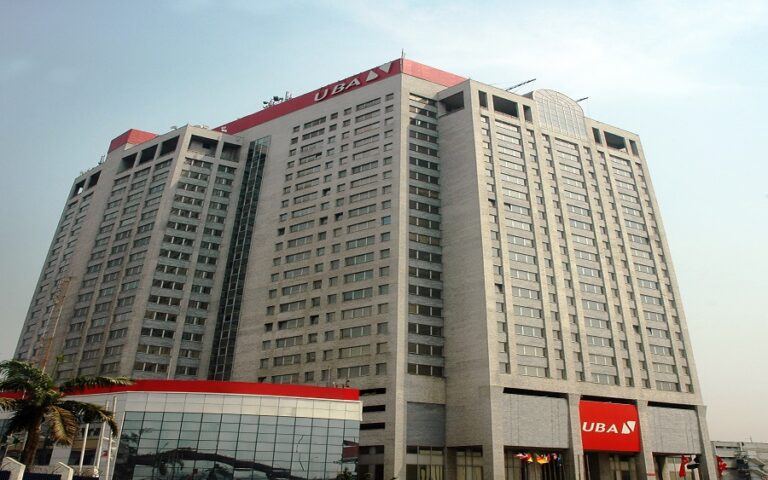
UNITED Bank for Africa (UBA) has been fined a total of N149.65 million for failing to comply with banking regulations set by the Central Bank of Nigeria (CBN), according to findings by The ICIR.

Details of these penalties were included in the bank’s audited financial statements for 2024, which were made public on Monday, March 24.

Analysis of the report reveals that UBA was penalised for several different breaches.

The largest fine, N122 million was for not having proper documentation and up-to-date information for customer accounts and transactions. The bank also received a N16 million fine related to customer complaints that were resolved by the Consumer Protection Department.

Analysis of the report shows that UBA was penalised for various contraventions.

The bank received a fine of N122 million for inadequate documentation and update of customer account and transaction, and N16 million for consumer complaint resolved by consumer protection department.

Further penalties included N9.65 million for submitting its cyber security self-assessment report late, and N2 million for wrongly selling personal travel allowance to two customer accounts.

Separately, The ICIR previously reported that UBA, along with eight other banks, was fined for not making enough naira notes available through ATMs during the last Christmas period.

In that instance, the CBN fined UBA N150 million, as part of a total of N1.35 billion levied against the nine banks, for hoarding cash from customers.

The CBN stated that this fine followed repeated warnings to ensure that cash was readily available, especially during times of high demand.

…N1.14 billion lost to fraudsters

UBA’s financial statements released on Monday also showed that the bank lost N1.14 billion to fraudsters. This involved fraudulent activities totalling N4.904 billion, carried out around 29,359 times.

Electronic fraud cases were the most common, occurring approximately 29,322 times, followed by fraudulent transfers and withdrawals.

Other types of fraudulent activity included cash theft/suppression, cash theft, and dry posting.

This indicates that UBA’s losses to fraudsters increased by 23 per cent in 2024 compared to the previous year.

Additionally, the bank received a total of 3,210,708 complaints, up from 2,946,318 in 2023. The total amount claimed in these complaints was N262.87 billion, higher than the N178.09 billion claimed against it in 2023.

As of the end of the 2024 financial year, 643,719 complaints remained unresolved, compared to 15,375 carried over from 2023.

The pan-African bank stated, “We understand that to effectively serve our customers, we must have the capacity to resolve customer complaints and generate insightful feedback to improve customer experience and support product, channel and process development and innovation.”

Update: The headline and lead of the report was updated to reflect that the numbers are in millions and not billions. 

Nigeria stock market takes four-week straight hit, loses N1.8trn

NIGERIA’s stock market lost approximately N1.794 trillion in value over the past four weeks. This drop was mainly due to worries about the global economy, decisions made by Nigeria’s central bank (CBN), and how investors felt about Nigeria’s economic future.

This is the first time the Nigerian stock market has seen a losing streak this long since the beginning of the year.

Throughout these weeks, bank shares were particularly affected, causing the share prices of companies like FCMB Group, First HoldCo, and Access Holdings to fall.

The drop in the value of bank shares was largely because investors were adjusting their portfolios. They were trying to understand how the falling prices of everyday goods (Consumer Price Index or CPI) and the continuing good performance of the money market and fixed-income investments would affect things.

In the oil and gas sector, the decline was mainly due to investors selling off shares in major oil-producing companies. This caution came as a result of ongoing political and economic issues in Nigeria’s oil-rich areas.

Analysis by The ICIR shows that the total value of shares listed on the Nigerian Exchange Limited (NGX) was N65.82 trillion when trading closed on Friday, March 21.

Compared to the N67.61 trillion it was at the end of February, when the market started its downward trend, the total value of the stock market has fallen by 2.65 per cent.

On the positive side, the consumer goods index slightly appreciated. This was driven by upward price movements in stocks such as Neimeth International Pharmaceuticals, Northern Nigeria Flour Mills, NASCON Allied Industries, and Dangote Sugar, which benefited from renewed investor interest in the company’s stocks.

Analysts believe that the prevailing negative sentiments have exerted pressure on stock prices, stressing that the persistent downturn was primarily driven by investors reacting to evolving global economic conditions.

Despite the CPI report for February putting inflation at ease for a second consecutive month, bearish sentiment persisted in the stock market, leading to an extended sell-off across various sectors of the market.

With negative sentiment dominating market activity during the four weeks under review, the All-Share Index (ASI) equally declined.

The movement saw the ASI dropping from 108,497.40 basis points in the last week of February to 104,962.96 basis points as of March 21.

This points to an overall decline in investors’ confidence, reinforcing a cautious approach among market participants, analysts maintained.

According to analysts at Cowry Asset Management, the prevailing market conditions indicate that the market is currently in an oversold state, presenting a potential buying opportunity for discerning investors.

They stressed that the ongoing pullback has created an environment where dividend-paying stocks are becoming increasingly attractive, as their yields are likely to improve in response to the recent price corrections.

“As the market enters the final trading week of March and concludes the first quarter of 2025, many investors may begin repositioning their portfolios to take advantage of dividend season, which typically offers prospects for capital appreciation and income generation.

“Looking ahead, the equities market is expected to experience continued corrections and portfolio adjustments, as investors digest corporate earnings reports and assess the broader impact of macroeconomic data releases.”

They believe that the direction of the market in the near term will likely be influenced by the performance of global financial markets, monetary policy decisions by the Central Bank of Nigeria (CBN), and investor sentiment surrounding Nigeria’s economic outlook.

“Given these dynamics, we continue to advise investors to focus on stocks with strong fundamentals,” the Cowry analysts advised.

Constituents submit petition seeking Natasha’s recall to INEC

A PETITION to recall the suspended senator representing Kogi Central, Natasha Akpoti-Uduaghan, has been submitted to the Independent National Electoral Commission (INEC) by a group of registered voters from her region. 

The move marks a significant attempt to remove her from office.

The petition dated 21 March 2025 was submitted on Monday, March 24 at the INEC headquarters in Abuja. 

The petition was submitted by a group known as Concerned Kogi Youth and Women.

Speaking on behalf of the group, Charity Ijoshe Omole said they had lost confidence in Natasha because of “gross misconduct” that led to her suspension from the Senate.

Omole said the district could not afford not to be represented in the Senate for six months.

“We, the people of Kogi Central, voted her in, and we are here to recall her. We have 488,000 registered voters, and as I speak to you now, we have more than 250,000 voters who have signed for her recall,he stated.

The group in the petition addressed to the INEC Chairman, Mahmood Yakubu, demanded the recall of Akpoti-Uduaghan.

According to the petitioners, the petition for Akpoti-Uduaghan’s recall is filed under Section 68 of the 1999 Constitution of the Federal Republic of Nigeria and INEC’s guidelines for recall petitions.

The ICIR reported that the Nigerian Senate suspended Akpoti-Uduaghan for six months over alleged rule violations.

Despite a restraining court order, the Senate went ahead with the suspension, citing a breach of its standing orders.

The move has been criticised by the Nigerian Bar Association (NBA), opposition parties, and various lawyers, who argued that the suspension was hasty and unfair.

Human rights lawyer and activist, Femi Falana, condemned the suspension, describing it as legislative recklessness, and demanded its immediate reversal.

The ICIR reported on February 20 that during a plenary, Akpoti-Uduaghan caused an uproar at the Senate when she discovered that her seat had been reassigned without prior notice.

She resisted the reassignment, arguing that it was an attempt to silence her.

Her refusal led to a tense confrontation with Senate President Godswill Akpabio, who ordered the sergeant at arms to order her out of the chamber.

Following the seating arrangement dispute, the Senate unanimously voted to refer Akpoti-Uduaghan to the Committee on Ethics, Privileges, and Public Petitions for a disciplinary review.

The committee, led by Neda Imaseun, was tasked with submitting its findings within two weeks.

The ICIR reported that despite the court restraining the Senate, Akpoti-Uduaghan was suspended for six months on Thursday, May 6.  

The committee ignored the court order and recommended a six-month suspension, adding that the punishment could be reduced if the lawmaker publicly apologised.   

The Senate approved the committee’s report and suspended Akpoti-Uduaghan forgross misconductduring plenary.

Akpoti-Uduaghan’s suspension came days after he accused the Senate President of sexually harassing her.

125km Benin-Asaba road project ready in 30 months – Official

Barring any unforeseen circumstances, the newly flagged-off 125-kilometre ultra-modern Benin-Asaba expressway will be completed within 30 months.

The Managing Director of Africa Plus Partners, Adeniran Ajakaiye, announced this at the weekend.

Speaking at the official handover of the project site to his company in Benin, Ajakaiye described the road as a central economic corridor designed to connect multiple regions.

He assured that the road would meet world-class standards, and ensure safety, durability, and efficiency for all users.

According to Ajakaiye, the road will feature a 10-lane carriageway with five lanes on each side, including three main carriageways and two service lanes in city areas.

It will also have a tolling system to ensure proper maintenance for the next 25 years under a concession agreement.

He said some of the features would include adequate corridor control to prevent unauthorised access and preserve road integrity.

The road will have solar-powered street lighting for sustainability, illumination, and a reduced carbon footprint.

Besides, there will be enhanced security measures, including CCTV surveillance, patrol teams, and emergency response units, to ensure user safety.

Ajakaiye noted that the project would create jobs, open new economic opportunities, and significantly reduce travel time upon completion.

He highlighted the importance of public-private partnership (PPP) models in driving infrastructure development in Nigeria.

“With a 30-month construction, Nigeria-based asset and fund management firm, we are committed to delivering this project on schedule and maintaining it efficiently over the next 25 years.

“Unlike conventional government-built roads, where maintenance is often delayed due to budget constraints, this model ensures continuous upkeep and service delivery,” he added.

He urged government agencies, investors, host communities, and road users to support the project for its successful execution.

Edo State Governor Monday Okpebholo, who flagged off the project on behalf of President Bola Tinubu, emphasised the economic importance of Edo as a gateway to several states in Nigeria.

He lauded the president for initiating the project and described the road as a crucial decision for the nation’s economy.

The ICIR reports that the Benin-Asaba highway is a major economic route that links up the economy of the South-South and the South-Eastern part of the country.

The highway is also notorious for gridlock as the travellers en route to Lagos and the Southeastern part of the country always travel through it.

Economic watchers believe the road would lead to further economic alignment between the South-East and South-South parts of the country.

“It is a good development and there are lots of economic pathways in that corridor. We believe that the road will help in the transportation of farm products from the rural area to rrban market clusters linked to the road,” a development economist, Celestine Okeke, told The ICIR.