A COALITION of civil society organisations (CSOs) has condemned the declaration of a state of emergency in Rivers State by President Bola Tinubu.
The group called on the president to reverse the decision.
The coalition shared its views on the declaration while addressing journalists in Abuja on Friday, March 21.
The briefing was organised by Fix Politics on behalf of over 200 CSOs, including Accountability Lab Nigeria, BudgIT Foundation, BO Foundation for Inclusive Media (BOFIM), Campaign for a New Nigeria and the Centre for Journalism Innovation and Development (CJID).
Speaking on behalf of the group, the Executive Director of Fix Politics, Tony Ubani, described the president’s action as an executive coup against the people of Rivers State, a flagrant abuse of executive power, and a violation of Nigeria’s constitution.
According to the group, it is the president’s prerogative to declare a state of emergency and he can make such a declaration under specific conditions as outlined in the constitution. However, this power is not absolute; it is subject to legislative oversight and judicial review to prevent abuse.
The CSOs added they witnessed abuse of power, disregard of due process, and the violation of democratic principles with the president’s imposition of a state of emergency and appointment of an ‘unconstitutional’ administrator in Rivers State and the National Assembly’s “complicity in ratifying unconstitutionality.”
“This is clearly a travesty on the rule of law and contrary to the Constitution of the Federal Republic of Nigeria,” the group said.
The group listed several constitutional violations it observed in the president’s action which include abuse of presidential prerogative, unconstitutional and opaque actions of the National Assembly and illegitimate removal of elected officials.
Thereafter, the group demanded immediate reversal of what it described as “unconstitutional removal of Fubara, his deputy, and House of Assembly members in Rivers State.”
Additionally, the CSOs urged the judiciary to review each case on its merit and not rely on technicalities to dismiss the cases against the declaration when brought before it.
They also demanded the restoration of constitutional order and urged Nigerians to leverage available channels to demand a reversal of the decision and push for a functional democracy.
The declaration of emergency rule in Rivers State on Tuesday, March 18, by Tinubu followed political turbulence in the oil-rich state.
The ICIR reported that the president, in a nationwide broadcast, suspended the state Governor Siminalayi Fubara, his Deputy, Ngozi Odu, and members of the State House of Assembly. However, he retained the state judiciary.
Many Nigerians, especially leading opposition figures, condemned the decision.
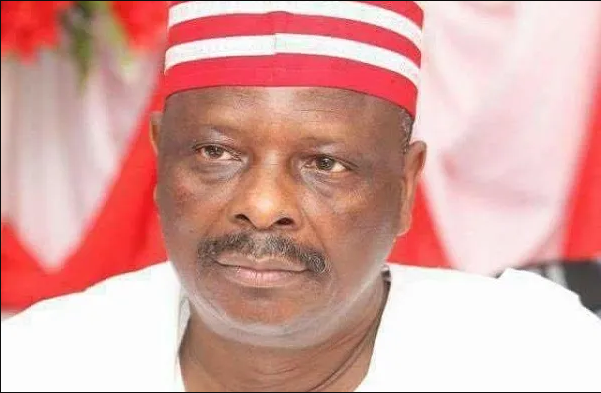
They include former Vice President Atiku Abubakar, and former governors Peter Obi and Rabiu Musa Kwankwaso.
NAMIBIA has sworn in its first female president, Netumbo Nandi-Ndaitwah.
The swearing-in took place in the country’s capital, Windhoek, as the nation celebrated its 35th Independence Day on Friday, March 31. This made it a double occasion for nationwide festivities.
The Namibian government announced a two-day holiday, with schools closing to enable citizens to partake in the festivities fully.
Nandi-Ndaitwah, born on October 29, 1952, was elected president of Namibia on December 3, 2024, winning 58 per cent of votes, which makes her the country’s fifth president and the first woman to hold the exalted office.
She is popularly known as NNN and a long-time loyalist of the South West Africa People’s Organisation (SWAPO) that has governed Namibia since its independence from South Africa in 1990.
Nandi-Ndaitwah won a seat in the National Assembly in 1990 and was first appointed as a cabinet minister in 2000 to head the Women’s and Children’s Ministry.
She has also served as minister of information, environment and tourism, and foreign affairs.
In February 2024 she was appointed vice president – the first woman to hold the post in the country.
President of Zimbabwe, Emmerson Mnangagwa, who also chairs the Southern African Development Community (SADC), attended the swearing-in among other leaders.
The ICIR reports that Namibia has added to the growing list of African nations that have elected women to the highest political office.
Liberia’s Ellen Johnson Sirleaf remains the only female president who served for over a decade – 2006-2018.
Sahle-Work Zewde served as president of Ethiopia from 2018 to 2024, the first woman to hold the office in the country.
Ameenah Gurib-Fakim was Mauritius’s first female president from June 2015 to 2018 after she was unanimously elected by the National Assembly following the resignation of President Kailash Purryag.
Joyce Hilda Banda served as Malawi’s fourth president from 2012 to May 2014 and was recognised by Forbes as the 40th most powerful woman globally and Africa’s most powerful woman in 2014.
Also, the 2015 report on ‘Female world leaders currently in power’, noted that among the 10 most populous nations in the world, China; the United States; Nigeria; Russia and Japan have no record of female leader status.
THE Supreme Court has asked the Peoples Democratic Party (PDP) to determine if its embattled secretary, Samuel Anyanwu, would remain its National Secretary of not.
The court, in a unanimous judgment on Friday, March 21, said matters touching on the leadership or membership of a political party were issues belonging to its internal affairs and should not be the business of a court.
However, the court set aside the decision of the Appeal Court, Enugu Division, which on 20 December 2024 affirmed Anyanwu’s removal by a Federal High Court in Enugu.
The apex court held the Federal High Court lacked jurisdiction to have heard the matter initiated by Aniagwu Emmanuel.
The ICIR reported that there was chaos at the PDP headquarters in Abuja on Wednesday, January 29, as the party’s Board of Trustees (BoT) met to address some issues within the party.
The meeting, presided over by acting national chairman, Umar Damagum, was attended by prominent party members, including national secretary, Anyanwu, Ben Obi, a former senator, former youth leader Sunday Ude-Okoye, and BoT chairman Adolphus Wabara.
However, tension soon enveloped the gathering as a crisis broke out between Anyanwu and Ude-Okoye, both contending for the party’s national secretary.
Trouble began when Ude-Okoye, who had arrived earlier, was asked to leave following the arrival of Anyanwu and Damagum. Ude-Okoye declined, resulting in chaos.
Background to crisis
In 2023, the party’s South-East zone nominated Sunday Ude-Okoye to replace Anyanwu, who was selected as the party’s candidate for the Imo State governorship election.
The zone argued that Anyanwu’s candidacy necessitated his resignation as national secretary. The matter has been the subject of litigation, with a High Court and an Appeal Court in Enugu ruling in favour of Ude-Okoye as the legitimate national secretary.
However, a subsequent ruling by the Court of Appeal in Abuja introduced a new twist, issuing a restraining order that directed Anyanwu to remain in office pending the outcome of litigation over the matter at the Supreme Court.
The ICIR reports that the crisis highlights the ongoing power struggles within the party.
Trouble within the PDP began months before the 2023 general election. Former Vice President Atiku Abubakar and the incumbent minister of the Federal Capital Territory (FCT), Nyesom Wike, were the leading party members seeking to pick the party’s ticket for the presidential election held in February 2023.
Abubakar eventually picked the ticket while Wike and his block refused to support the former vice president’s candidacy.
Wike eventually became a prominent member of President Bola Tinubu’s cabinet and has since insisted that he is a member of the PDP.
Many party stalwarts, including Bauchi State Governor Bala Mohammed, have been angered by the minister’s stance.
Multiple reports have also linked Wike’s presence in Tinubu’s government to some of the crises in the PDP.
NOTE: This report has been reviewed to include that the Supreme Court did not re-instate Anyanwu as PDP’s national secretary.
THIS report examines the antics of disinformation actors on X deliberately using disinformation and information manipulation to inflame the ember of tribal hostilities and sow discord between Igbo and Yoruba in Nigeria.
Some networks of disinformation actors on X (formerly Twitter) are systematically recycling old news, twisting media reports and fabricating claims about crimes like ritual killings, theft and drug trafficking to paint rival ethnic groups as inherently criminal, an investigation by The FactCheckHub has shown.
Broadly, these disinformation actors fall into two categories: some posing as members of the Igbo ethnic group in Nigeria’s Southeast deliberately spreading falsehoods about the Yorubas in the nation’s Southwest, while others, claiming Yoruba identity, do the same against the Igbo. Thus, it has been a circle of hate spread and ethnic slurs.
Nigeria is a multi-ethnic nation with over 300 ethnic groups and more than 500 languages, making it one of the most diverse countries in Africa. Historically, ethnic identity has played a significant role in politics, economic opportunities, and social interactions, sometimes leading to divisions and rivalries.
The three largest ethnic groups, the Hausa-Fulani in the North, Yoruba predominantly in the Southwest, and the Igbo majorly in the Southeast, have distinct cultural identities but have also experienced periods of unity and conflict. Political events such as the Nigerian Civil War (1967–1970) and various inter-ethnic clashes have deepened historical grievances, which are often reignited by misinformation and disinformation both online and offline.
In July 2024, an X account with the username: @Lagospedia, which claims to promote the “virtues of Lagos” (a predominantly Yoruba state), ignited controversy for publishing inflammatory posts against the Igbos. Following public outrage, the account was deactivated. Currently, the username has been taken over by another X user. However, several other accounts continue to push similar divisive narratives, using disinformation as their primary tool, The FactCheckHub has found.
Accounts targeting the Igbo ethnic group often circulate outdated or misleading visuals, pairing them with incendiary captions that falsely implicate Igbos in criminal activities. Meanwhile, some X accounts focused on discrediting the Yoruba community deploy the same tactics to reinforce negative stereotypes.
One of the most prominent figures in this influence operation is Harry a.k.a. Harrison A who currently post on the X handle: @harreceipts. Before his previous account, @Chiditweets042, was suspended, he frequently shared misleading crime-related news in Nigeria.
His posts often featured exaggerated headlines and distorted news, specifically portraying Yorubas from the Southwest in a negative light to engage his audience.
Using condescending terms like “Yorubastards” and “Yorubanivorous”, the account consistently shares inflammatory content that portrays Yorubas as drug traffickers and ritualists, among others. Harry, along with many other ethnic disinformation merchants, repeatedly raises false alarms, exploiting Nigeria’s ethnic diversity to escalate tensions.
For crime-related news story in Nigeria, Harry posts provocative comments, stirring emotions and attempting to paint the Southwest as the epicentre of criminal activities in the country. The FactCheckHub has fact-checked many of these claims in the past before his account was eventually taken down by X.
Chains of Propaganda
In February 2022, operatives of the Ogun State Police Command arrested 43-year-old Kehinde Oladimeji and his wife, Adejumoke Raji (35 years old) for possessing fresh human parts, including breasts and hands.
The couple, who are residents of Abeokuta, were arrested by Police operatives from Kemta Divisional Headquarters after Chief Moshood Ogunwolu, the Baale of Leme community, reported them to the police.
Similarly, in March 2024, the Ondo State Police Command said it arrested an Islamic cleric, Oluwafemi Idris, over alleged possession of harvested human body parts.
In August 2024, Harry collaged two different pictures from these two unconnected events together and presented them as a single new story in an attempt to tag Southwest as the hub of ritual killings in Nigeria.
He framed the caption thus:
“Yorubanivorous Skuller Alfa Oluwafemi Idris has been arrested by the police in Ondo State. A search was conducted in his house at Akoko and human hands, three kidneys, three hearts, spine and tongue were found in his possession. The suspect claimed he is an Islamic cleric and some of the human parts were supplied by his friend, an Alhaji who is also a cleric and one Samuel Kutelu, while he supplied one Babatunde Kayode ( an Oluawo) 3 human heads. The said Oluawo and Babatunde Kayode have been arrested.”
Screenshot of one of Harry’s posts on X.
There are two issues with this information. First, the story is not recent as of the time he posted it on X. Second, Harry presented it as an ethnic problem rather than the broader societal challenge that it is. Despite this, the post gained significant traction, amassing over 600,000 views, more than 4,000 likes, and over 2,400 reposts as of September 9, 2024, when our fact-checkerarchived it.
This scenario illustrates how Harry manipulates original stories to push a specific agenda, framing them as an issue peculiar to the Yoruba ethnic group rather than a broader societal issues that require government’s urgent attention. Through toxic media framing and rhetoric, he portrays the Southwest as a hub for ritual killings and labels its indigenes as “skull miners.”
He has posted hundreds of viral divisive narratives on X and built a large fanbase before his account was taken down. In one instance, he posted an image showing people gathering around a Hilux pick-up van with a claim that it shows a Nigerian man, Amos Olalere, who conspired with his mother to murder his younger sister for money rituals in Lagos.
He posted, “29-year old Yoruba man, Amos Olalere has narrated how he conspired with his mother to m¥rd£r his younger sister & had sexual intercourse with her corps£ for money rituals in Lagos….”
Even though Harry framed Yorubas as the orchestrator, a Google reverse image search shows that the image he used has been online for over one year as at then, and it depicts an incident that occurred in Ghana.
Screenshot of a false claim made by Harry on X.
An earlier version of the photo shows that it depicts a murder incident which occurred at Wa, a town in Ghana. Media reports indicated that the image shows the body of a male adult buried in a shallow grave at Bamahu, a suburb of the town and recovered by the Ghanaian police.
Meanwhile, Harry has continued his information manipulation mission using the X handle: @harreceipts as can be seen here.
Harry, also called Harrison, is not alone in the coordinated effort to spread disinformation aimed at discrediting the Yoruba ethnic group and deepening the divide between them and the Igbo group.
The FactCheckHub’s investigation uncovered several other accounts engaging in ethno-religious-driven disinformation on the microblogging platform.
Another X account with a similar history is the @VoiceofIgbos. In January 2025, the account claimed that a state of emergency had been declared in Oyo State following the killing of over 50 people. He described the entire southwest region as a crime scene characterised by “skull mining and kidnapping.” The account once also shared the screenshot of a 2023 post by one Kehinde Adekusibe, calling for the massacre of Igbos and tagging it as breaking news.
But checks by The FactCheckHub show no credible media reports or official statements confirming the alleged kidnappings or the declaration of a state of emergency in the Southwestern State. Adewale Osifeso, the Public Relations Officer of the Nigeria Police Force (NPF), Oyo state Command, also debunked the claim when contacted on phone by our fact-checker.
Another similar X account is @Afonjaslayer. On October 26, 2024, the account shareda video of unhealthy persons in an unkept place and claimed that a slave house had been discovered in Nigeria’s Southwest, where they’re selling thousands of Yorubas, both boys and girls. However, when it was subjected to a Google image reverse search, it was discovered that it was a video of apolice raid on November 5, 2019.
The list of X accounts promoting these kinds of divisive narratives is numerous. The FactCheckHub identified some of them listed here.
Just as many X accounts propagate falsehoods about the Yorubas, The FactCheckHub found several other X accounts that specialise in twisting narratives to portray the Igbo ethnic group in a negative light too. In one instance, these X accounts launched “Igbo Must Go,” an online campaign characterised by various stereotypes and false news about the Igbo ethnic group.
They began with the old videofrom Ghana one year ago to push such a dangerous and divisive agenda.
One of the leading accounts in this disinformation operation is @nononsensezone. The account reposted a video showing young men being set ablaze on the street after being beaten by mobs with a claim that it shows Igbos from Nigeria being killed for using people for money rituals in Mozambique.
“D*m*. I just watched this video. It has to be one of the most inhumane videos have ever seen. Igbos is not every country you lot need to visit,” the X post read.
Even though the X account posted the video in May 2023, The FactCheckHub’s investigation shows that the video has been online since April 2023, and the incident in the footage occurred in Haiti and not Mozambique. Also, it has nothing to do with Igbos or money rituals.
It is not the first time. The X account has a history of posting misleading visuals and manipulated information about the Igbos. In August 2024, it posteda video claiming that the Igbos are attacking the Nigerian embassy in Dakar, Senegal. When The FactCheckHub subjected the video to a Google reverse image search, it was discovered that the video has been online since 2013.
Screenshot of the viral @nononsensezone post on X. INSERT: MISLEADING verdict.
According to media reports, the attack was done amid the protest by Nigerians over the disappearance of a Nigerian citizen’s body from a hospital morgue. There is no evidence to support the claim that the attack was carried out solely by Nigerians of Igbo extraction. Using old misleading stories, the X account also blamedIgbos for the manufacturing of fake drugs in Nigeria.
This X account is not alone; several other X accounts are also involved in this disinformation peddling. They post misleading stories and visuals about Igbos and help one another to amplify them so that the posts can go viral.
One of them is the X handle: @Onsogbu which has over 46,000 followers and operated by one Pastor Okezie James Atani. He is reportedly a supporter of the All Progressives Congress (APC) party in the country and attacks anyone who criticised President Bola Ahmed Tinubu-led government. He was once allegedly arrested by the Police for online defamation, TheCable reported in April 2024.
Another popular X account disseminating divisive narratives on social media is a verified user, Dipo Aina (@dipoaina1) who has over 40,000 followers. Checks show that Dipo Aina is the Managing Director of Onsien Limited, a private limited liability company registered by the nation’s Corporate Affairs Commission (CAC) in 2018.
In September 2024, Aina posted a video showing mass human movement on the streets, claiming that it showed residents in parts of Southeastern Nigeria fleeing from recent attacks led by the Indigenous People of Biafra (IPOB).
When our fact-checker subjected keyframes of the video to a Google reverse image search, the results showed an earlier version of the video posted on Facebook on November 24, 2022. It cited Eha Amufu in Enugu State as the affected community. He has also made several divisive remarks against Igbos, as can be seen here and here.
Another X account involved in this information manipulation is @jominabuna2. The account shared photos of human skulls and claimed there’s a festival to celebrate skull mining in Nigeria’s Southeast. This is an attempt to paint the region as a hub of ritual killings.
“Yorubas don’t have a festival where skulls are out on display like they do in Igbo Land. I ask again; Who are the real SKULL MINERS?” the X post read.
However, checks show that the photo represents the war dancing tradition, the integral identity of the people of Ohafia, a Local Government Area and community located in Abia State and the human skulls used were not real as they were crafted from wood.
Deadly consequences
“In a country like Nigeria where ethnicity is already a sensitive issue, this kind of disinformation is like adding petrol to fire,” said Sunday Awosoro, a researcher with Dubawa.
Awosoro warned that ethnic tensions in Nigeria are always simmering beneath the surface, and narratives that portray certain groups as criminals, greedy, or dangerous have real-world consequences.
“It doesn’t just stay online. People carry these mindsets into real life, in markets, schools, workplaces, and even during political campaigns. It creates unnecessary suspicion. Someone hears you’re Igbo, Yoruba, or Hausa, and before they even know you, they’ve attached a stereotype to you,” he explained.
“That kind of mindset can easily escalate into fights, ethnic profiling, and even mob attacks, especially in places where there’s already some tension. So, yes, disinformation like this can spark real-world violence, no doubt,” he added.
Awosoro warned that Nigeria’s existing political divisions along ethnic and religious lines are being worsened by disinformation. He noted that when false narratives take root, voters may no longer focus on competence or ideas but instead make decisions based on fear and prejudice.
According to him, politicians often take advantage of these tensions, as it is easier to mobilise support by portraying an ethnic group as being under threat. This, he explained, results in leaders who prioritise ethnic interests over national unity, ultimately harming democracy. He emphasized that such a situation makes it difficult for Nigerians to see themselves as one nation.
Awosoro further cautioned that the long-term impact of disinformation is the fragmentation of the country, weakening its national identity and deepening existing societal divisions.
On his part, Raji Olatunji, a disinformation analyst with the Centre for Democracy and Development (CDD) West Africa, warned that disinformation poses serious risks to inter-ethnic relations in Nigeria, as it reinforces negative stereotypes and false narratives that can escalate tension.
He noted that the actions of bad actors spreading such falsehoods could have dangerous consequences, including inciting hate crimes against targeted communities, deepening existing biases, and fostering hostility among ethnic groups.
According to Olatunji, Nigeria’s complex ethno-religious landscape makes it particularly vulnerable to the destabilising effects of disinformation, emphasising that once these narratives take hold, they can quickly spiral out of control, leading to real-world violence and instability across the country.
“The dangers can be far-reaching for Nigeria’s political stability and social cohesion. As it fuels sectarian tensions, it creates more divisions within societies, and the public perception of the country’s ability to conduct free and fair democratic processes becomes negative. By implication, it undermines trust in both public and political institutions,” said Olatunji.
Existing divisions and 2023 general election
Experts said these inflammatory narratives thrive due to long-standing ethnic divisions in Nigeria, fuelled by many past inter-ethnic conflicts dating back to the Nigerian 1967 Civil War. By the time the war ended in 1970 with Biafra’s surrender, over two million people had died, and millions more were displaced.
However, they noted that the 2023 general elections reignited these tensions across Nigeria like never before. Even though the elections are over, millions of Nigerians are still grappling with the fallout from the deeply divisive election campaigns.
During the 2023 elections, politically motivated tribal disinformation spread like wildfire across social media. Peter Obi, the Labour Party candidate, was accused of being sympathetic to the Indigenous People of Biafra (IPOB), the southeastern secessionist group. Meanwhile, Bola Ahmed Tinubu, now Nigerian president, faced opposition in the South for not selecting an Igbo or Christian running mate.
Politicians weaponized ethnic divisions for political gain, fueling pre-existing tensions. The elections witnessed a peak in tribal hostility, particularly between the Igbo and Yoruba communities.
While most citizens initially saw the competition between candidates from both ethnic groups as normal, political actors deliberately instilled discord by making inflammatory comments and spreading divisive narratives. In response, many citizens, feeling the need to defend their ethnic identity, likely fell for their agenda.
Throughout the election period, there was a constant tribal battle online and offline. People engaged in heated debates to defend their candidates and ethnic backgrounds. Hate speech, misinformation, and false accusations were widely circulated to discredit opposing groups.
In Lagos, for instance, political actors fueled conspiracy theories that Igbos were attempting to “take over” the state after Peter Obi won Lagos in Nigeria’s 2023 presidential election. In the weeks leading up to the gubernatorial election, social media platforms were flooded with messages warning that the Labour Party’s gubernatorial candidate in Lagos State, Gbadebo Rhodes-Vivour, intended to empower IPOB if elected.
The messages falsely claimed that if he won, he would lay off Yoruba civil servants and replace them with Igbos. Although Rhodes-Vivour hailed from Lagos, his Igbo ancestry became a major talking point during the disinformation campaigns against him.
The phrase “Yoruba Ronu” (which translates to “Yoruba, think”) became a rallying cry against him, spreading rapidly on social media and eventually leading to real-life consequences.
As tensions escalated, hate speech and threats circulated widely. A viral video showing Musiliu Akinsanya (MC Oluomo), a well-known Lagos-based member of the APC and National Union of Road Transport Workers (NURTW) warned voters to stay home if they weren’t planning to support the ruling APC party. Following widespread outrage, he later dismissed his remarks as a joke.
These narratives fuel ethnically charged voter intimidation, violence, apathy and election rigging. Reports indicated that the elections were marred by attacks, suppression, and disenfranchisement.
BusinessDay described Nigeria’s 2023 elections as possibly the most divisive in the nation’s history since the return to democracy in 1999. The report detailed how the election has led to enmity between the Yoruba and Igbo people in markets, churches, workplaces, and other social spaces.
Speaking with The FactCheckHub, a Nigerian lawyer, Abdulwasiu Mujeeb, noted that such divisive narratives peddled by these disinformation actors could fall under hate speech because they are capable of inciting various ethnic groups against one another in the country.
He said: “First, we need to understand the foundation. In Nigeria currently, there is no holistic act or enactment directly prohibiting hate speech, but that doesn’t mean there’s no law or there is no section in any particular enactment or whatsoever that prohibits it.
“For instance, the National Broadcasting Code 2016 talked about the transmission of hate speech. There are also some particular sections in the Nigerian constitution prohibiting incitement of violence or breaching of public peace. These are things that can regulate hate speech in Nigeria whether there’s direct enactment or not,” he said.
Mujeeb noted that the first attempt to criminalize hate speech in Nigeria was in 2019 with the introduction of the Hate Speech Bill, although it failed to pass at the National Assembly.
He explained that, according to the bill and some sections of the NBC Code, hate speech is defined as attempts to create obnoxious content, incite violence or hatred against specific tribes, or breach public peace through statements, tweets, and other actions.
“So, it’s sufficient to say the definition of hate speech in these laws that we mentioned earlier has captured what these actors post. The fact that some Yoruba or Igbo people did something bad or committed a crime doesn’t mean all the members of that ethnic group do that. So, it suffices to say it’s hate speech.
“When you look at the comments under these posts, you will realise that they have been caught in the web of the definition. They have successfully incited violence against a tribe judging by how the people in the comment section are reacting to these posts,” he said.
Experts call for media literacy, accountability
Awosoro emphasized the urgent need for social media platforms to take stronger action against ethnic disinformation, noting that while these platforms have community standards in place, enforcement remains weak, particularly against accounts that consistently spread ethnic hate.
He urged them to collaborate with local fact-checkers who understand the cultural context and can identify harmful content more efficiently. Additionally, he criticized the algorithms that amplify hate-driven content for engagement, questioning why posts designed to incite tribal hate continue to go viral on social platforms.
Awosoro highlighted the importance of encouraging people to think critically before sharing information. He stressed that simple questions like “Who posted this? What’s their agenda? Can I verify this?” could significantly curb the spread of disinformation.
Olatunji pointed out the need for strategic and strengthened partnerships among key stakeholders to combat ethnic-targeted disinformation in Nigeria and highlighted the role of social media platforms in addressing the issue. He stressed that algorithmic changes are necessary to curb the spread of harmful narratives while ensuring the effective implementation of robust content moderation policies.
According to Olatunji, these efforts should involve credible civil society actors and fact-checkers who can provide cultural context and help identify problematic content. He also called on government agencies to take a more proactive approach in tracking and holding disinformation actors accountable.
“Massive media literacy and community-based educational programmes need to be deployed as part of the public awareness campaigns against such disinformation narratives,” he concluded.
FORMER presidential candidate of the New Nigeria Peoples Party (NNPP), Rabiu Musa Kwankwaso, has warned that opposition-led states, including Kano and Osun, are increasingly wary of President Bola Tinubu’s ‘unconstitutional’ overreach following the suspension of Rivers State Governor Siminalayi Fubara and other elected officials in the state.
Kwankwaso, in a statement on Friday, March 21, raised the alarm, while also expressing concerns over the approval of the president’s decision by the National Assembly.
The former Kano State governor’s stance followed Tinubu’s suspension of Rivers State Governor Siminalayi Fubara, his deputy, Ngozi Odu, and all the state’s House of Assembly members, following an emergency rule he foisted on the state on Tuesday, March 18.
The ICIR reports that the Senate, on Thursday, March 20, joined the House of Representatives which earlier endorsed the president’s decision to declare a state of emergency in the oil-rich state, through a voice vote.
The Senate invoked its constitutional powers under the amended 1999 Constitution, consequently granting Tinubu the power to fully implement the emergency rule.
The National Assembly established a joint committee comprising members from both chambers. This committee, it noted, would provide oversight on the state administration.
But Kwankwaso argued that the move reflected a broader strategy to tighten federal control over states that do not align politically with the ruling All Progressives Congress (APC) to which the president belongs.
Kwankwaso also criticised Tinubu’s decision to deploy the military in Rivers State, warning that such action rolled back democratic gains made since Nigeria’s return to civilian rule in 1999.
“This proclamation and the subsequent pronouncements by the Attorney General of the Federation have now sent numerous people in states led by the opposition into disarray, as they set a dangerous precedence for how the Head of State can grip on states that do not share the same political standing with the centre,” he said.
The former senator and minister drew parallels between the current political climate and the events leading to the 1993 political crisis, blaming the National Assembly for failing to check executive excesses.
He also condemned the federal legislature’s ratification of the state of emergency declaration, calling their voice vote process “illegitimate and lacking transparency.”
“More disturbing is the unilateral decision by both chambers of the National Assembly to ratify the president’s proclamation. I had hoped that the legislators would not add salt to injury by passing this illegality. The Constitution is clear on the method of voting on issues of such importance, and the decision to use the voice vote in deciding this is not consistent with the proper procedures and transparency.
“The decision by the legislators to speedily discuss and decide on a state of emergency that alters the democratic leadership structure in Rivers State undermines our democracy,” he added.
Kwankwaso, however, urged the judiciary to uphold constitutional principles and resist external influence, warning that unchecked executive overreach could foster a culture of impunity.
“Our judiciary also has the very important task of balancing the balance of power by being fair to all parties in any conflict. I believe that the custodians of the Law in Nigeria need to wake up to their responsibility of calming nerves by being as just as possible, with judgments devoid of any hint of external influence.
“At this age of our democracy, this action by President Tinubu to suspend all elected officials in Rivers State is not only unconstitutional, but also a recipe for anarchy and disregard for the highest public office in the state. The National Assembly that should check this excess should not encourage it,” he added.
THE Economic and Financial Crimes Commission (EFCC) has secured only 10,935 convictions from the 58,165 cases investigated between 2019 and 2023 despite its aggressive tactics which violate the fundamental rights of citizens.
This represents approximately 19 per cent of all cases probed by the agency within the period, meaning that the remaining 81 per cent investigated did not lead to convictions.
However, when compared with 16,115 cases filed in court, the agency secured a 68 per cent conviction rate within five years.
This is based on the EFCC Operational Statistics exclusively obtained by The ICIR which revealed the number of petitions received by the anti-graft agency, the total number of cases investigated, cases filed in court and convictions secured between 2019 to 2023.
According to the data, the commission received 78,539 petitions from members of the public within the period, while only 16,115 made it to the court.
While the total number of convictions secured has been steadily increasing since 2019, comparing the figures per the number of cases investigated mostly through raids, harsh interrogation and arbitrary arrests raises a concern.
For instance, in 2019, only 14 per cent of the cases investigated resulted in convictions. Similarly, in 2023, the conviction rate increased to 23 per cent, but the vast majority of cases still fell short of successful prosecution.
The year 2022 stood out as a high point, with 3,785 convictions—the highest recorded during the period—accounting for nearly 35 per cent of all convictions secured within the five years.
The data also showed that Lagos emerged as the zone with the highest number of convictions secured by the commission recording 2,180 convictions.
This places Lagos far ahead of other zones, reinforcing its status as the epicentre of EFCC operations. The zone also led in other operational metrics, including 15,873 petitions received, 10,239 cases investigated, and 3,278 cases filed in court.
Conversely, Sokoto recorded the lowest number of convictions within the same period, securing only 164. The state also recorded one of the lowest figures for petitions received, with 3,484, and only 194 cases filed in court.
The EFCC has remained one of the two major anti-graft agencies established by law to combat corruption-related cases in the country. It is often complemented by the Independent Corrupt Practices and Other Related Offences Commission (ICPC). Both were established under the administration of former President Olusegun Obasanjo.
“I identified corruption as the greatest bane of our society which was why I set up the ICPC and EFCC to tackle it headlong. Corruption drains billions of dollars from our economy. Corruption has returned to Nigeria and we are just beginning to fight it afresh,” Obasanjo said in February 2016, years after leaving office.
President Bola Ahmed Tinubu has consistently emphasised the importance of empowering the Economic and Financial Crimes Commission (EFCC) and other anti-corruption agencies to effectively combat corruption in Nigeria.
He has also advocated for strengthening these institutions by ensuring their independence, providing adequate funding, and promoting adherence to legal frameworks.
In August 2024, during the 6th Annual General Assembly of the Network of Anti-Corruption Institutions in West Africa (NACIWA), Tinubu stated: “I have worked hard over the past year to strengthen all the anti-corruption agencies in Nigeria by not interfering in their activities and ensuring that they are adequately funded. I have also encouraged them to operate within the ambit of the law.”
However, an investigation by The ICIR showed that the commission’s operatives often violate the fundamental rights of citizens in the course of their operations. This has led to arbitrary arrest, invasion of people’s privacy, harassment, intimidation and illegal detention among others.
Speaking with The ICIR, Senior Research and Policy Analyst at BudgIT, Vahyala Kwaga, emphasised the need for the EFCC to refine its procedures to increase the success of prosecutions.
According to him, while policing cybercrimes involves specialised methods and tactics, the EFCC must acknowledge that the quality of arrests, detention, and the filing of charges plays a critical role in the outcomes of its cases.
He also called for greater transparency, urging the agency to publicly disclose its methods for interviewing suspects and accused persons.
“EFCC officials, as suggested by the Office of the United Nations High Commissioner for Human Rights, should before conducting ‘raids’ ask themselves: ‘Is it legal? Will it hold up in court? Is it necessary? Is it unduly intrusive?”
“A record of every arrest must be made and shall include: the reason for the arrest; the time of the arrest; the time the arrested person is transferred to a place of custody; the time of appearance before a judicial authority; the identity of involved officers; precise information on the place of custody; and details of interrogation. The arrest record shall be communicated to the detainee, or to his or her legal counsel. The family of the arrested person shall be notified promptly of his or her arrest and place of detention.”
Kwaga further recommended continuous training for EFCC officers on arrest procedures, detainee rights, conflict resolution, and humane methods of effecting arrests, underscoring the need for proper planning, briefing, and post-arrest debriefing to ensure accountability.
He also pointed out that the EFCC is only one part of the justice system, with prosecuting attorneys and judges equally responsible for upholding the rule of law. He urged prosecutors to ensure that charges and cases are handled fairly, with bail conditions set appropriately and accused persons granted access to their solicitors.
He urged the commission to take after leading security agencies in the world, especially the British police, which prioritises building strong cases before making arrests, and, likewise, that of the United States, which focuses on intelligence and surveillance to avoid unnecessary arrests.
“This is because there are clear consequences for breaches and violations of human rights in those countries. In the case of the United States, the emphasis is on efficiency and saving taxpayers money because it is the latter that funds public services. This has led to a regime that, to some extent, prioritises intelligence gathering and surveillance, over and above showy arrests,” he said.
Kwaga added that improving the EFCC’s practices and strengthening collaboration among all stakeholders in the justice system would not only bolster the fight against cybercrime but also safeguard the rights of accused persons and enhance public trust in the process.
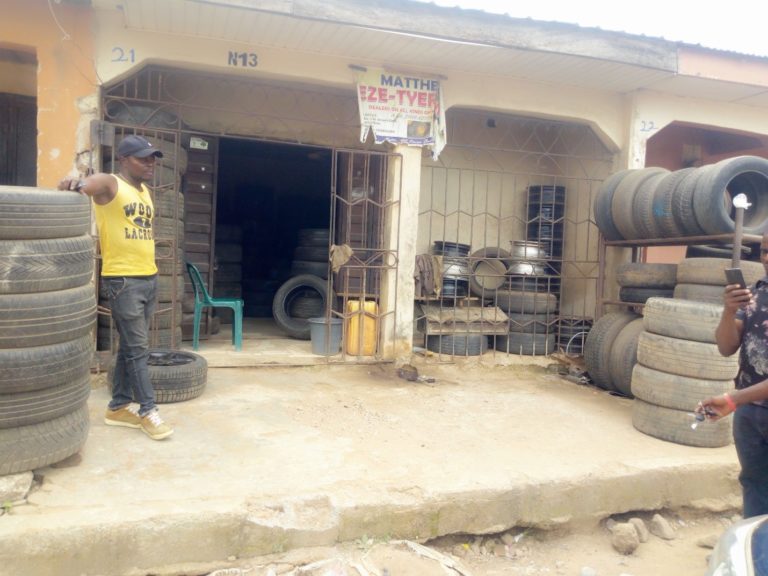
THE Standards Organisation of Nigeria (SON) has warned tyre dealers and stakeholders about the risks associated with the circulation of substandard tyres in the country.
Speaking at the ‘Tyre Stakeholders’ Forum’ held at Apo Mechanic Village on Thursday, March 20, SON’s Director-General, Ifeanyi Okeke, stressed the need for dealers to ensure that only high-quality tyres reach consumers.
At the event, themed ‘Tyre Awareness – A National Imperative,’ Okeke urged retailers to uphold quality standards.
“As a retailer, you must carefully select the tyres you sell to consumers. Enough of substandard tyres,” Okeke stated.
Represented by Marilyn Waziri, Director of SON’s North Regional Zone, Okeke highlighted the dangers of substandard tyres and the implications of the African Continental Free Trade Area (AfCFTA).
“With the AfCFTA, your tyres can be exported to any country on the continent, and theirs can also enter Nigeria. If we continue dealing in substandard tyres, foreign products will dominate our market, pushing ours out,” he explained.
He assured traders that the campaign against substandard tyres is not intended to put them out of business but to enhance road safety and market competitiveness.
“We have been discussing, even at the national level, ways to reduce the influx of substandard tyres into the country. Our goal is not to force you out of business,” he added.
He further stated that the sensitisation campaign would be extended nationwide, with SON working closely with tyre dealers to ensure only certified products are sold in Nigeria.
SON’s FCT Coordinator, Gamagira Isiaka, reaffirmed the organisation’s commitment to addressing the issue of substandard tyres, emphasising their impact on transportation safety.
“The Director-General is deeply concerned about fake and substandard products, particularly tyres, and has instructed us to educate tyre dealers,” he noted.
Chairman of the Abuja Automobile Dealers Association, Samuel Akah, commended SON for the initiative and assured that dealers would comply with all stipulated quality measures.
He also praised SON’s leadership under Okeke for fostering a cooperative relationship with traders.
The event featured goodwill messages from the Federal Road Safety Corps (FRSC), the Nigeria Police Force, and other stakeholders. One of the facilitators, Adetoyi Adeyinka delivered a presentation on proper tyre preservation and related issues.
THE Senate has approved President Bola Tinubu’s proclamation of a state of emergency in Rivers State.
The Upper Chamber of Nigeria’s National Assembly joined the House of Representatives which earlier endorsed the decision through a voice vote today, Thursday, March 20.
The Senate invoked its constitutional powers under the amended 1999 Constitution, consequently granting Tinubu the power to fully implement the emergency rule.
In line with the constitution, the National Assembly established a joint committee comprising members from both chambers. This committee will provide oversight on Rivers State’s administration.
The Senate also resolved to establish a mediation committee consisting of prominent Nigerians to help resolve the state’s political crisis.
The Senate took the decision after a closed session to deliberate on Tinubu’s declaration of emergency rule in the state and the suspension of Governor Siminalayi Fubara and other elected officials in the state.
The closed session was announced after Senate President Godswill Akpabio read a letter from Tinubu at plenary on Thursday.
Senate leader, Opeyemi Bamidele, subsequently moved a motion for a closed session, pursuant to Order 135 of the Senate rules.
The motion was seconded by the Senate minority leader, Abba Moro.
The ICIR reported earlier that the House of Representatives endorsed Tinubu’s declaration of a state of emergency in the state.
At a plenary on Thursday, March 20, the House passed a resolution backing the March 18 proclamation, which saw the suspension of the governor, his deputy, Ngozi Odu, and all members of the Rivers State House of Assembly for six months.
The approval was sealed by Speaker Tajudeen Abbas after he put the request to a voice vote, with the majority of the House shouting in approval.
The approval came after Tinubu, in his nationwide broadcast on Tuesday, announced that he had forwarded the decision to the National Assembly in accordance with constitutional provisions.
He invoked Section 305 of the 1999 Constitution (as amended) to justify the move and appointed Ibok-Ete Ekwe Ibas, a retired vice admiral, as the state’s sole administrator.
Tinubu cited prolonged political instability in the state as the reason for his decision, vowing to restore governance, peace, and security to the oil-rich state.
“It has become inevitably compelling for me to evoke the provision of Section 305 of the Constitution of the Federal Republic of Nigeria (1999) as amended to declare a state of emergency in River State with effect from today 18th March, year 2025, and I so do.
“By this declaration, the governor of River State, Mr. Siminalayi Fubara, his deputy, Mrs. Ngozi Odu, and all elected members of the House of Assembly are hereby suspended for an initial period of six months.
“In the meantime, I hereby nominate Vice-Admiral Ibok-Ete Ekwe Ibas (retired) as administrator to take charge of the affairs of the state and the interests of the good people of River State,” the president said.
The dual legislative approvals mean the constitutional process for implementing the emergency declaration in Rivers State is now complete.
ECONOMIC analysts have expressed concern that the suspension of naira-denominated petroleum product sales by Dangote Petroleum Refinery will negatively impact the Nigerian economy and consumers. They cite the potential for renewed fuel queues and a weakened naira as key risks.
Dangote Petroleum Refinery announced the suspension of its naira-based crude sales, citing the non-renewal of its naira-denominated crude allocation by the Nigerian National Petroleum Company Limited (NNPCL). The refinery stated that this exposes it to currency mismatch and hinders cost recovery.
Consequently, Nigerians are expected to face increased prices for premium energy products, including diesel and petrol, as Dangote Petroleum Refinery shifts to dollar-denominated sales. This change will directly influence final pricing at retail fuel stations.
“This decision is necessary to avoid a mismatch between our sales proceeds and our crude oil purchase obligations, which are currently denominated in United States dollars,” the company stated in a press release on Wednesday, March 19.
The $20 billion Lagos-based refinery reported that its naira-denominated product sales have exceeded the value of naira-denominated crude received from NNPCL.
Nigeria’s economy has shown signs of recovery, with headline inflation declining for the second consecutive month to 23.18 percent in February, according to the National Bureau of Statistics (NBS). Analysts attribute this rebound to stable energy costs and reduced foreign exchange demand, partly influenced by the operations of Dangote Petrochemical Refinery.
However, analysts warn that the shift to dollar-based transactions by Dangote and other petroleum marketers could reverse these gains.
“The oil market is not a ‘Jankara’ market. The country runs a risk of fuel scarcity. The Nigerian government shouldn’t wait for the six-month expiration before commencing renegotiation talks with Dangote. The mentality of running a country like we’re running a supermarket is exposing us to further risks,” said Bismarck Rewane, CEO of Financial Derivatives, in response to the development.
Rewane emphasised that the shift to dollar-based transactions will increase demand for dollars, leading to currency volatility. Dangote will price its products in dollars to ensure cost recovery, resulting in higher naira prices for consumers.
He further noted that this situation exposes the Nigerian economy to currency and fuel supply risks, potentially leading to the return of fuel queues.
“It’s going to disrupt the market supply chains, which, over time, have sorted out fuel queues across the country. It’s a lose-lose situation. The Naira will weaken and inflation will rise,” he added.
Economist Kalu Aja, in a social media post, questioned the implications for foreign investment, stating, “If a Nigerian who invested $20 billion in his country can’t get full federation support, why are we going around the world seeking foreign investors?”
As previously reported by The ICIR, the Federal Executive Council (FEC) directed NNPCL in July 2024 to sell crude oil to Dangote Refinery and other local refineries in naira to reduce strain on the US dollar and stabilise petroleum product prices.
NNPCL announced in early March 2025 that the naira-denominated crude sales agreement with Dangote Refinery was structured for six months, expiring in March 2025. The company stated that discussions were underway to renew the contract and that over 48 million barrels of crude oil had been supplied to Dangote Refinery since October 2024 under the existing agreement.
NNPCL also reported supplying over 84 million barrels of crude oil to the private refinery since its commencement of operations in 2023.
Nigeria, Africa’s most populous nation, has faced significant energy challenges, with its state-owned refineries largely non-operational for decades until 2024. The country has relied heavily on imported refined petroleum products, with NNPCL as the primary importer.
Fuel queues have been a recurring issue. Petrol prices have quadrupled since the removal of the subsidy in May 2023, rising from approximately ₦200/litre to around ₦1,000/litre, exacerbating the challenges faced by citizens who rely on petrol for vehicles and generators due to unreliable electricity supply.
Dangote Refinery, owned by Africa’s richest man, Aliko Dangote, commenced operations in Lagos in December 2024 with a capacity of 350,000 barrels per day. The refinery, which faced initial regulatory hurdles, aims to reach its full capacity of 650,000 barrels per day by the end of March 2025.
THE House of Representatives has endorsed President Bola Ahmed Tinubu’s declaration of a state of emergency in Rivers State.
At a plenary on Thursday, March 20, the House passed a resolution backing the March 18 proclamation, which saw the suspension of Governor Siminalayi Fubara, his deputy, Ngozi Odu, and all members of the Rivers State House of Assembly for six months.
The approval was sealed by Speaker Tajudeen Abbas after he put the request to a voice vote, with the majority of the House shouting in approval.
The approval came after Tinubu, in his nationwide broadcast on Tuesday, announced that he had forwarded the decision to the National Assembly in accordance with constitutional provisions.
He invoked Section 305 of the 1999 Constitution (as amended) to justify the move and appointed Ibok-Ete Ekwe Ibas, a retired vice admiral, as the state’s sole administrator.
Tinubu cited prolonged political instability in the state as the reason for his decision, vowing to restore governance, peace, and security to the oil-rich state.
“It has become inevitably compelling for me to evoke the provision of section 305 of the constitution of the Federal Republic of Nigeria (1999 as amended to declare a state of emergency in River State with effect from today 18th March, year 2025, and I so do.
“By this declaration, the governor of River State, Mr. Siminalayi Fubara, his deputy, Mrs. Ngozi Odu, and all elected members of the House of Assembly are hereby suspended for an initial period of six months.
“In the meantime, I hereby nominate Vice-Admiral Ibok-Ete Ekwe Ibas (retired) as administrator to take charge of the affairs of the state and the interests of the good people of River State,” the president said.