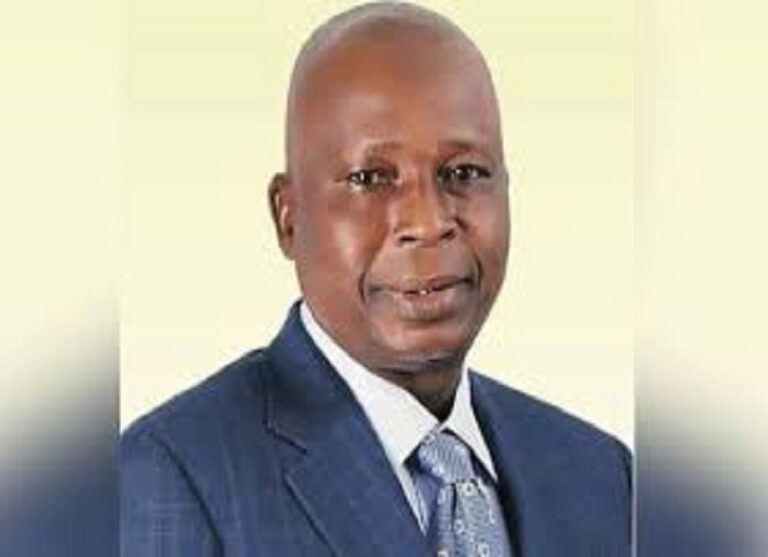
THE Attorney-General of the Federation, Lateef Fagbemi, has justified President Bola Tinubu’s declaration of a state of emergency in River State.
He said the decision was a move to stop the state from implosion.
Fagbemi, a senior advocate, stated this on Wednesday, March 19, while addressing newsmen in Abuja.
The minister said the president acted in time to save the oil-rich state from collapse, adding that Tinubu made the declaration because the state governor, Siminalayi Fubara, and other stakeholders failed to stop the crisis that provoked the declaration.
He said if the same situation presented itself again anywhere in the country, he would encourage the president to take the same action.
“You have to behave responsibly and you must have the guts. If it happens again, I would encourage Mr. President to do the same.
“Now, when do you think he (President Tinubu) should have come in? Is it when everything has been destroyed? I don’t think so,” he argued.
The AGF said Tinubu acted timeously after giving opportunity to all the parties involved in the crisis to resolve it.
Addressing the argument that the president did not attribute any blame to the Federal Capital Territory (FCT) Minister, Nyesom Wike, in the crisis, Fagbemi said the minister was not directly involved.
“You see, there are occasions when, especially when it comes to national issues, we have to come out plainly and sincerely.
“Where do you put the Minister of FCT in this case? Was he the one who asked for the demolition of the House of Assembly? Was he the one who said the governor should not present his budget to the House of Assembly? Was he the one who advised the governor not to go through the House of Assembly for purposes of ratifying the commissioner nominees?” he asked.
The ICIR reported that Tinubu declared a state of emergency in Rivers State on Tuesday.
In a nationwide broadcast, the president suspended the state governor, Fubara, his deputy, Ngozi Odu, and all members of the State House of Assembly for six months.
However, he retained the state judiciary.
Tinubu blamed the governor and Wike for allowing the political crisis in the state to escalate.
He particularly criticised Fubara for failing to take action after an oil facility was blown up in the state on Monday night.
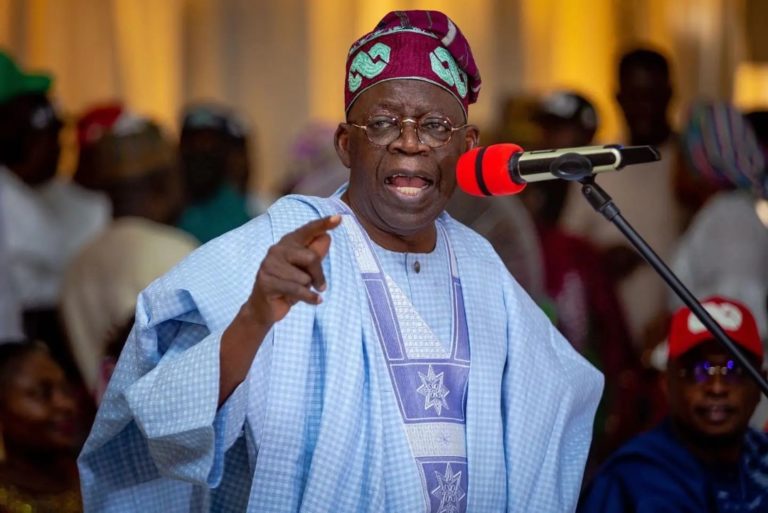
PRESIDENT Bola Tinubu’s recent declaration of a state of emergency in Rivers State has sparked a fresh debate over his past stance on similar actions.
In 2004 and 2013, as a key opposition figure, Tinubu criticised both the then President, Olusegun Obasanjo, and Goodluck Jonathan for imposing a state of emergency in Plateau, Borno, Yobe, and Adamawa states.
In 2004, Tinubu stated that the removal of the Plateau State Governor, Joshua Dariye, by ex-president Obasanjo was illegal. In 2013, he described it as a “dangerous trend in the art of governance” and an attempt to subvert democracy.
However, years later, Tinubu has deployed the same action in Rivers State by suspending Governor Siminalayi Fubara, while appointing a Sole Administrator, a vice admiral, Ibok-Ete Ibas (Rtd), to oversee the state’s affairs.
On Tuesday, March 18, President Tinubu declared a State of Emergency in Rivers State, following unending political turbulence in the oil rich state.
In a nationwide broadcast, the president suspended the Governor, Siminalayi Fubara, his deputy, Ngozi Odu, and all members of the State House of Assembly for six months.
Tinubu blamed the governor and the Minister of the Federal Capital Territory (FCT), Nyesom Wike, for allowing the political crisis in the state to fester.
He particularly criticised Fubara for failing to take action after an oil facility was blown up in the state on Tuesday night.
State-of-Emergency-Declaration
While this move has triggered debate over its legality, it has similarly led to accusations of double standard by Tinubu who, not once, criticised the declaration of state of emergency and declared it illegal.
‘Removal of Dariye is illegal’ – Tinubu
In May 2004, Obasanjo declared a state of emergency in Plateau State, due to rising ethnic and religious violence, particularly in Yelwa.
Responding to this, Obasanjo suspended the then Plateau State governor Joshua Dariye, citing his inability to curb the ongoing violence between Muslim and Christian communities.
Like Tinubu, Obasanjo also replaced them with a retired military officer, Chris Alli, a major general, as the sole administrator. He justified the action by saying the state government had lost control of the crisis, making federal intervention necessary.
However, Tinubu, who was then Lagos State Governor publicly condemned Dariye’s removal, calling it illegal.
Tinubu’s position as reported by Comet Newspaper. Credit: Archivi.ng
Although the detail of his comment is still unclear, a news headline by Comet shared by Archivi.ng on X, indicated that Tinubu insisted that the federal government had no right to remove a duly elected governor under the guise of emergency rule.
What Tinubu said in 2013
Similarly, in a statement in May 2013, Tinubu condemned former president Jonathan over his decision to declare a state of emergency in three northern states, arguing that it undermined democracy and was a ploy to weaken political opponents.
“By declaring a state of emergency in Borno, Yobe and Adamawa, he has intimidated and emasculated the governors of these States. We are witnessing a dangerous trend in the art of governance and a deliberate ploy to subvert constitutional democracy,” Tinubu reportedly said at the time.
Jonathan had declared a state of emergency in Borno, Yobe, Adamawa, after a series of deadly attacks by Boko Haram militants.
He ordered the military to take all necessary action to put an end to the impunity of insurgents and terrorists in the three states. He also ordered more troops to be sent to the north-eastern states.
However, Tinubu warned that using military force instead of addressing underlying governance issues would only fuel extremism and alienate citizens.
He also added that state governors were being unfairly blamed for security failures controlled by the federal government.
“The President’s pronouncement, which seeks to abridge or has the potential of totally scuttling the constitutional functions of Governors and other elected representatives of the people, will be counterproductive in the long run. A State of Emergency already exists in the states where JTF operates. Residents of these communities live in constant fear. Their rights are violated with impunity under the guise of searching for terrorists in their respective domains.
“Hiding under some nebulous claims which border on the intractability of the security challenges posed by Boko Haram or some acclaimed traditionalists who have killed some policemen to render ineffective the constitutional powers vested in elected governors and other representatives of the people, perceived as not amenable to manipulation for the 2015 project amounts to reducing serious issues bordering on the survival of the country to partisan politics,” Tinubu was quoted to have said.
The Fund for Investigative Journalism (FIJ) is offering grants to support journalists in producing impactful investigative stories.
Freelance journalists, staff reporters, and media organizations can apply for funding to support investigations across various formats, including print, online, broadcast, books, documentaries, and podcasts.
One of the key opportunities is the Regular Grant, which provides up to $10,000 per project to support in-depth investigations across all media platforms. The next application deadline is April 28, 2025.
Additionally, Seed Funding is available, offering small grants of up to $2,500 to cover essential early-stage costs, such as open-records requests and initial reporting expenses.
The application deadline is May 9, 2025.
Note: Regular, Follow-up proposals, Seed funding, and Regular for previous Seed grantees are submitted through separate application forms.
President Bola Tinubu’s declaration of a state of emergency in Rivers State, leading to the suspension of Governor Siminalayi Fubara and state lawmakers, has sparked a constitutional debate.
While Section 305 of the 1999 Constitution empowers the President to impose emergency rule, legal experts question whether it grants him the authority to remove elected officials.
Section 305 of the 1999 Nigerian Constitution allows the President to declare a state of emergency under specific circumstances, such as threats to public order, public safety. However, the Constitution does not explicitly grant the President the authority to suspend elected state officials, including governors and state lawmakers, during such declarations.
Historically, the application of Section 305 has varied. In 2006, President Olusegun Obasanjo declared a state of emergency in Ekiti State, removing the governor and appointing an administrator. Conversely, in 2013, President Goodluck Jonathan declared a state of emergency in Borno, Yobe, and Adamawa States due to Boko Haram insurgency but allowed the governors and state assemblies to continue functioning.
On March 18, 2025, The ICIRreported that President Bola Tinubu declared a state of emergency in Rivers State, citing political instability and pipeline vandalism. He suspended Governor Siminalayi Fubara, his deputy, and all state lawmakers for six months, appointing a retired Vice Admiral as caretaker. This action has raised serious constitutional concerns and sparked legal debates.
Reactions…
Some legal experts argue that the President’s powers under Section 305 do not extend to suspending elected officials, as the Constitution does not explicitly provide for such measures during a state of emergency. They contend that removing a governor should follow constitutional processes, such as impeachment by the state assembly. Others believe that in extreme situations threatening national security or public order, the President may take decisive actions, including suspending state officials, to restore stability.
Festus Ogun, a constitutional lawyer in his comment on Facebook, strongly condemned President Tinubu’s suspension of Governor Siminalayi Fubara, his deputy, and the Rivers State House of Assembly members, calling it unconstitutional, illegal, and undemocratic. He argued that while the President has the power to declare a state of emergency under Section 305, he lacks the authority to unilaterally remove elected officials.
Ogun described Tinubu’s appointment of Vice Admiral Ibokette Ibas (Rtd) as an Administrator as an abuse of power, questioning the legal basis for such an action. He warned that this sets a dangerous precedent that threatens Nigeria’s democracy, likening it to executive lawlessness.
Calling for immediate rejection of the move, he criticises Tinubu—a former pro-democracy activist—for undermining the very principles he once defended.
Inibehe Effiong, a human rights lawyer posted on his X account in reaction to the declaration that, “President Tinubu has no constitutional authority or power to suspend the governor of Rivers State and the members of the State Assembly.
The emergency powers under the 1999 Constitution does not give such powers to the President.”
The legality of Tinubu’s actions in Rivers State may ultimately be determined by judicial interpretation or potential constitutional amendments to clarify the extent of presidential powers during emergencies.
PRESIDENT Bola Tinubu declared a State of Emergency in Rivers following the lingering political turbulence in the state.
In a nationwide broadcast on Tuesday, March 18, the president suspended the state governor, Siminalayi Fubara, his deputy, Ngozi Odu, and all members of the State House of Assembly for six months.
However, he retained the state judiciary.
Tinubu blamed the governor and the Minister of the Federal Capital Territory (FCT), Nyesom Wike, for allowing the political crisis in the state to escalate.
He particularly criticised Fubara for failing to take action after an oil facility was blown up in the state on Tuesday night.
Since Nigeria’s return to civilian rule in 1999, the country has faced various challenges necessitating the declaration of states of emergency to restore order and ensure governance.
State-of-Emergency-Declaration
1. 2004 – Plateau State
On May 18, 2004, former President Olusegun Obasanjo declared a state of emergency in Plateau State and Obasanjo sacked the then Governor Joshua Dariye, accusing him of failing to act to end a cycle of violence between Muslim and Christian communities. He appointed retired General, Chris Alli as the Sole Administrator to restore peace and order.
This was after the state experienced intense ethno-religious violence between the Christian and Muslim communities.
The conflict led to significant loss of lives and destruction of property, creating a humanitarian crisis and threatening national stability. The immediate trigger was the Yelwa massacre, where hundreds were killed, prompting federal intervention.
2. 2006 – Ekiti State
On October 18, 2006, former President Olusegun Obasanjo declared a state of emergency in Ekiti State, removing both the governor, Ayodele Fayose, and his deputy. He appointed Brigadier General, Adetunji Olurin as the administrator to manage the state’s affairs until stability was restored.
This came after the state faced a political crisis following the impeachment of Governor Fayose and his deputy over allegations of corruption.
The impeachment process was marred by legal irregularities, leading to a leadership vacuum and a breakdown of governance.
3. 2011 – Parts of Yobe, Borno, Plateau, and Niger States
On December 31, 2011, former President Goodluck Jonathan declared a state of emergency in parts of Yobe, Borno, Plateau, and Niger States. The federal government also ordered the temporary closure of international borders in the affected regions to curb the movements of insurgents.
This action followed an escalation of attacks by the militant group, Boko Haram, which targeted civilians, government institutions, and security forces.
The insurgency led to widespread insecurity, particularly in the northeastern regions of the country.
4. 2013 – Borno, Yobe, and Adamawa States
On May 14, 2013, Jonathan declared a state of emergency in Borno, Yobe, and Adamawa States, deploying additional military forces to reclaim occupied territories and restore constitutional order.
This declaration came after Boko Haram insurgency intensified, with the group seizing territories and declaring a caliphate.
The violence resulted in massive displacement of residents and a deepening humanitarian crisis. Unlike previous emergencies, the governors and state assemblies remained functional to allow collaboration between federal and state authorities.
5. 2023 – National Food Security
In August 2023, President Bola Tinubu declared a state of emergency on food security to address the escalating food crisis and implement measures to alleviate shortages.
This move was in response to a severe food security crisis, with an estimated 25 million people projected to experience food insecurity between June and August 2023.
Factors contributing to this crisis included violent conflicts disrupting farming activities, rising inflation, escalating poverty, unemployment, and climate change-induced events like severe floods.
6. 2025 – Rivers State
On March 18, 2025, President Bola Tinubu declared a state of emergency in Rivers State, suspending the governor, deputy governor, and all lawmakers. He appointed a retired vice admiral as caretaker for six months to restore order.
This declaration followed a political crisis within the opposition People’s Democratic Party (PDP), where lawmakers threatened to impeach the governor and deputy governor.
This development led to a breakdown of governance, necessitating federal intervention. However, the judiciary continued its functions during this period to ensure legal processes remained intact.
MORE condemnations have trailed President Bola Tinubu’s declaration of a state of emergency in Rivers State.
The decision has drawn criticisms from key figures, including the Nigeria Bar Association (NBA); the 2023 Labour Party presidential candidate, Peter Obi; the Peoples Democratic Party (PDP), and former Vice President Atiku Abubakar.
Obi, in a post on X on Wednesday, criticised and described the declaration as “unconstitutional and reckless.”
Obi accused Tinubu of violating the rule of law and establishing a dangerous precedent for undermining democracy.
According to Obi, the president’s action has plunged Nigeria back into a state of lawlessness, stagnating the progress the country has made in nearly three decades of its return to democracy.
“It is a degrading back door imposition of martial rule on a strategic part of the federation with all the implied negatives,” Obi said.
The former Anambra State governor further claimed that the political situation in Rivers did not require emergency rule and the suspension of Governor Siminalayi Fubara, his deputy, Ngozi Odu, and all the state lawmakers.
He opined that the president’s action was a biased interpretation of Section 305(1) of the 1999 Constitution.
In its reaction, the PDP described the imposition of emergency rule on the state as an “unconstitutional power grab” aimed at derailing democracy in the Niger Delta region.
The party, in a statement signed by its spokesperson, Debo Ologunagba, Tuesday night, rejected what it called an “outright violation” of the 1999 Constitution and an attempt to foist an unelected government on the people of Rivers State.
The PDP condemned Tinubu’s decision to suspend Fubara, and replace him with Ibok-Ette Ibas, a retired vice admiral, arguing that such an action “borders on an attempt at state capture.”
The statement also blamed the All Progressives Congress (APC) for deliberately fueling the crisis in the state as part of a wider strategy to “forcefully take over Rivers State” and silence political opposition across the country.
“It is the climax of a well-oiled plot to forcefully take over Rivers State, for which the APC has been bent on stoking crisis to ensure that democracy is ultimately truncated in the state,” the PDP stated.
The party also challenged the legal basis for the state of emergency, insisting that Tinubu’s move did not meet the constitutional criteria for such an action.
Also knocking the president on the emergency rule, the NBA described the suspension of Fubara and his deputy as illegal.
The body of lawyers, in a statement signed by its president, Mazi Afam Osigwe, stated that while Section 305 of the Constitution confers the president with the power to declare a state of emergency, severe conditions must be met, as enshrined in the section, to ensure that the measure does not violate democratic governance and fundamental human rights.
The NBA said it was gravely concerned about the president’s action, adding that the 1999 Constitution did not give Tinubu the power to remove an elected governor, deputy governor, or members of a state’s legislature under the impression of a state of emergency.
The NBA said a declaration of emergency did not automatically dissolve or suspend elected state governments.
The NBA called the suspension unconstitutional and a threat to democracy.
The ICIR reported that Tinubu declared a state of emergency in Rivers State on Tuesday.
In a nationwide broadcast on Tuesday, March 18, the president suspended the state governor, Fubara, his deputy, and all members of the State House of Assembly for six months.
However, he retained the state judiciary.
Tinubu blamed the governor and the Minister of the Federal Capital Territory (FCT), Nyesom Wike, for allowing the political crisis in the state to escalate.
He particularly criticised Fubara for failing to take action after an oil facility was blown up in the state on Tuesday night.
In a nationwide broadcast, the president suspended the state Governor, Siminalayi Fubara, his Deputy, Ngozi Odu, and members of the State House of Assembly. However, he retained the state judiciary.
Tinubu blamed the governor for allowing the political crisis in the state to escalate.
He particularly criticised Fubara for failing to take action after an oil facility was blown up in the state on Tuesday night.
Nearly 24 hours after the explosion, the president stated that the governor had yet to condemn the incident or reach out to him.
President Bola Ahmed Tinubu
The president appointed Ibok Ekwe Ibas, a rear admiral, as the state administrator.
History of emergency declarations in Nigeria
In Nigeria, a state of emergency is usually declaredin times of crisis, significant civil unrest, heightened insecurity, or political turmoil.
In recent years, it has been implemented in reaction to riots, terrorist attacks, orduring political crises.
Former presidents Olusegun Obasanjo, and Goodluck Jonathan, have previously declared states of emergency at different times.
Obasanjo in 2004 declared a state of emergency in Plateau State following a religious crisis.
Former President Olusegun Obasanjo
Obasanjo sacked the state governor, Joshua Dariye, dissolved the legislature and appointed a retired army general, Chris Ali, as interim administrator for six months.
Obasanjo also declared another emergency in Ekiti State in October 2006.
This followed a leadership crisis, which threw the southwest state into chaos. The crisis started after the impeachment of the then-governor, Ayodele Fayose.
Obasanjo appointed Adetunji Olurin, a retired Brigadier General, as Administrator of the state.
In May 2013, Goodluck Jonathan declaredemergency in three northern states: Adamawa, Borno, and Yobe in a nationwide television broadcast following an upsurge of insecurity in the affected states.
However, Jonathan departed from previous presidents by not removing the state governors in the affected states.
What is a State of Emergency
Although the 1999 Constitution does not categorically state the meaning of a state of emergency, Section 305 provides for the procedure for the declaration of one.
According to Section 305, specifically Section 305 (3) (a) to (g), the President shall have the power to proclaim a state of emergency only when: the federation is at war; the federation is in imminent danger of invasion or involvement in a state of war, or there is actual breakdown of public order and public safety in the federation or any part thereof to such extent as to require extraordinary measures to restore peace and security.
Other conditions are: If there is a clear and present danger of an actual breakdown of public order and public safety in the federation or any part thereof requiring extraordinary measures to avert such danger; (e) there is an occurrence or imminent danger, or the occurrence of any disaster or natural calamity, affecting the community or a section of the community in the federation; (f) there is any other public danger which clearly constitutes a threat to the existence of the federation; and if the president receives a request to do so in accordance with the provisions of subsection (4) of this section.
In line with the requirement of Section 305 of the constitution,which has been used to declare a state of emergency several times in Nigeria, the procedure to be followed states:
1. Subject to the provisions of this Constitution,thepresident may, by instrument published in the official Gazette of the Government of the Federation, issue a proclamation of a state of emergency in the Federation or any part thereof.
2. The president shall immediately after the publication, transmit copies of the official Gazette of the Government of the federation containing the proclamation, including the details of the emergency to the president of the Senate and the Speaker of the House of Representatives, each of whom shall forthwith convene or arrange for a meeting of the House of which he is President or Speaker, as the case may be, to consider the situation and decide whether or not to pass a resolution approving the proclamation.
According to a published journal by Bright Erazie Oniha, a lawyer, titled “Legality of the Presidential Declaration of a State of Emergency in Some States in Nigeria and Its Implication on State Government Functionaries”, there are primarily two hurdles which the president must cross in order for there to be in place a legally valid declaration of a state of emergency.
The first is the issuance of a proclamation of a state of emergency by an instrument published in the official gazette of the government of the federation.
The second hurdle is the immediate transmission of copies of the official gazette containing the proclamation, including details of the emergency, to the National Assembly for approval, which shall then consider the situation and decide whether or not to pass a resolution approving the same.
According to Oniha, until these two hurdles are effectively crossed, there cannot be a valid declaration of a state of emergency.
FOLLOWING President Bola Tinubu’s declaration of a state of emergency in Rivers State, the suspended governor, Siminalayi Fubara, has urged citizens to remain peaceful while he engages relevant institutions to sustain democratic governance in the state.
In a statement on Wednesday, March 19, Fubara, whose tenure has been marred by a prolonged political crisis, defended his administration’s actions, emphasising his commitment to the rule of law.
He noted that his government had worked to maintain peace and security in the state, even in the face of opposition from members of the State House of Assembly.
He blamed the state lawmakers for frustrating his efforts to broker peace and progress, adding that since Tinubu’s first intervention and the recent Supreme Court ruling, his government ensured the right thing was done.
“Furthermore, we moved swiftly to comply with the Supreme Court’s judgement immediately we received the certified true copy of the judgement to return the state to normalcy.
“These steps were taken not for personal gains but to foster peace, unity and stability in our dear state. Unfortunately, at every turn, members of the Rivers State House of Assembly frustrated our efforts, thus making genuine peace and progress difficult.
“Our priorities remained the security of lives and property and advancing the well-being and prosperity of Rivers people,” he said.
While Fubara did not directly acknowledge his suspension or the appointment of Vice Admiral Ibok-Ete Ibas (Rtd) as the new sole administrator of the state, he reaffirmed his commitment to constitutional order and the rule of law, vowing to navigate the crisis with “wisdom, patience, and unwavering faith in the democratic process.”
“At this critical time, I urge all Rivers people to remain peaceful and law-abiding. We will engage with all relevant institutions to ensure that our democracy remains strong and that Rivers State continues to thrive.
“We have always been a resilient people, and we will face this situation with wisdom, patience, and unwavering faith in the democratic process,” he added.
Fubara’s statement came after Tinubu dramatically suspended him, his deputy, Ngozi Odu, and the state lawmakers.
On Tuesday, March 18, Tinubu declared a state of emergency in the oil-rich state, citing threats to governance and public order. As part of the directive, he suspended Fubara’s government and the State House of Assembly for an initial period of six months.
Tinubu blamed the governor and the Minister of the Federal Capital Territory (FCT), Nyesom Wike, for allowing the political crisis in the state to escalate.
He particularly criticised Fubara for failing to take action after an oil facility was blown up in the state on Tuesday night.
He said nearly 24 hours after the explosion, the suspended governor failed to contact him.
In their place, the president appointed retired Navy chief Ibok-Ete Ibas as the sole administrator to take charge of the state’s affairs. The declaration, however, did not affect the judiciary, which the president said remained functional under constitutional provisions.
The declaration of emergency in Rivers State followed a huge explosion that rocked a section of the Trans Niger Pipeline in Bodo Community, Gonna Local Government Area of Rivers State on Monday, March 17.
Many Nigerians see the explosion as a new twist to the political quagmire in the state.
The ICIR reports that the crisis in Rivers had been brewing since 2023, with an intense power struggle between Fubara and his predecessor, Wike.
The rift led to a bitter fight for control of the State House of Assembly, with lawmakers splitting into factions. The crisis climaxed on Monday, March 17, when the House of Assembly served Fubara, and his deputy, Odu, a notice of gross misconduct, which could lead to their impeachment.
The House members claimed the accusation was in tandem with the Nigerian constitution.
The lawmakers accused Fubara of misusing public funds, obstructing the Assembly, and making unauthorised appointments without proper screening and confirmation.
Others include the withholding of lawmakers’ salaries, allowances, and seizure of salaries of the Assembly’s clerk, Emeka Amadi.
RUSSIAN President Vladimir Putin has agreed to halt attacks on Ukrainian energy facilities temporarily but refused to support a complete 30-day ceasefire, which President Donald Trump had proposed as a first step to achieving a lasting peace.
In a statement released late Tuesday, the Kremlin said Putin voiced concerns that a temporary ceasefire could allow Ukraine to re-arm and mobilise more troops.
He also reaffirmed his demand that any resolution must include an end to all military and intelligence support for Ukraine.
The ICIRreported that Trump announced plans to discuss ending the war in Ukraine with Russian President Vladimir Putin on Tuesday, March 18.
After a lengthy call between Trump and Putin, the White House announced that discussions on a maritime ceasefire in the Black Sea, a broader ceasefire, and a permanent peace agreement would begin immediately.
However, Trump told Fox News that aid to Ukraine did not come up in the conversation.
Trump’s envoy, Steve Witkoff, later announced that the U.S. was set to hold talks with Putin in Jeddah, Saudi Arabia, next Sunday but did not specify whether Ukraine would be invited.
“Up until recently, we really didn’t have consensus around these two aspects – the energy and infrastructure ceasefire and the Black Sea moratorium on firing – and today we got to that place, and I think it’s a relatively short distance to a full ceasefire from there,” Witkoff said on Fox News.
The Kremlin said Putin ordered the Russian military to stop attacks against energy sites after speaking with Trump.
However, Ukrainian President Volodymyr Zelensky responding to the latest development, said that the Russian leader had effectively rejected the U.S. proposal, urging the international community to prevent Moscow from prolonging its war against Ukraine.
Zelensky, who had agreed to the 30-day ceasefire, said that he would support Putin’s limited ceasefire proposal after Tuesday’s call between Putin and Trump.
“Today, Putin de facto rejected the proposal for a complete ceasefire. It would be right for the world to reject in response any attempts by Putin to drag out the war,” Zelenskiy said in a post on the Telegram messaging app.
The ICIRreported that Putin had said that fighting could not be stopped until several key conditions were addressed, despite his support for the US proposal for a ceasefire in Ukraine.
Putin said that any agreement must tackle what Moscow considered the root causes of the conflict, a key condition that indicates a ceasefire could take longer than Trump desires.
The Russian leader had said he wanted Ukraine to abandon its North Atlantic Treaty Organization (NATO) ambitions. He also demanded that Russia have full control over the four Ukrainian regions it controlled in Ukraine, and for Ukraine’s military size to be restricted.
LEGAL practitioners have criticised President Bola Tinubu’s six-month suspension of Rivers State Governor Siminalayi Fubara, his deputy, Ngozi Odu, all the state lawmakers, and the declaration of a state of emergency in the oil-rich state.
The ICIR reported that Tinubu, in a nationwide broadcast on Tuesday, March 18, blamed the governor and the Minister of the Federal Capital Territory (FCT), Nyesom Wike, for allowing the political crisis in the state to escalate.
The president appointed Ibok Ekwe Ibas, a retired rear admiral, as the state administrator.
“I have watched with concern the development with the hope that the parties involved will allow good sense to prevail at the soonest, but all that hope burns out without any solution to the crisis,” he said.
The ICIR reported that the political crisis in the state climaxed on Monday, March 17, when the House of Assembly served Fubara, and his deputy, Odu, a notice of gross misconduct, which could lead to their impeachment.
Although Tinubu cited Section 305 of the 1999 Constitution, arguing that the emergency measure was necessary to restore peace, some lawyers have challenged his position on the matter.
Kunle Edun, a senior advocate, said Tinubu lacked the constitutional power to suspend Fubara and members of the state’s House of Assembly under the provisions of Section 305 of the Nigerian Constitution.
Edun clarified in a statement released on Tuesday that while Section 305 defines the conditions for declaring a state of emergency, it does not authorise the president to remove or suspend elected state officials.
“The provisions of Section 305 relied upon by President Tinubu do not empower the president of the Federal Republic of Nigeria to remove or suspend elected state officials. Section 305(3) of the constitution prescribed the grounds upon which a state of emergency can be declared, and none of the reasons alluded to by the president justifies the declaration of a state of emergency in Rivers State,” he said.
He emphasised that under Section 305(4), only a state governor, with the backing of a two-thirds majority in the House of Assembly, can request the president to declare a state of emergency in any part of the state.
Arguing that the crisis in Rivers State had already been settled by the Supreme Court, he said, “The Supreme Court has already settled the issues causing the crisis in the state and the House of Assembly had started sitting.
“As a matter of fact, Governor Fubara was at the House of Assembly complex to present the 2025 budget in response to the demand of the Rivers’ State House of Assembly. So, Mr. President was very wrong to say that there was no longer a functional government in Rivers State simply because the House of Assembly complex was demolished.”
Edun pointed out that the constitution provides clear guidelines for situations where a state Assembly is unable to perform its legislative functions. He cited Section 11(4), which empowers the National Assembly to assume legislative duties in such cases, but does not grant the president the authority to remove or suspend state officials.
“A State House of Assembly can not be suspended by the president. Rather, it is the National Assembly that has the constitutional power to take over the legislative functions of the state. Therefore, the constitution did not envisage a situation where a state will be without a legislature at any time,” he added.
Similarly, another legal practitioner, Ekemini Simon, questioned where the official gazette for the proclamation was published in accordance with the constitution. He also criticised the president for failing to transmit copies of the gazette to the National Assembly for consideration before the declaration, allowing lawmakers to decide whether to approve the proclamation.
Quoting the constitution, he said “(1) Subject to the provisions of this constitution, the president may by instrument published in the official Gazette of the Government of the Federation issue a proclamation of a state of emergency in the Federation or any part thereof.
“(2) The president shall immediately after the publication, transmit copies of the official Gazette of the Government of the Federation. From the foregoing, Section 305 of the 1999 Constitution provides that the intention to declare a state of emergency should first be published in a Federal Government Gazette”
Simon emphasised that the rule of law is supreme over personal interests but noted that there was an opportunity to rectify the situation.
He cited Section 305(6), which states that a presidential proclamation ceases to be effective if revoked through an official gazette or if the National Assembly fails to approve it by a two-thirds majority within two days if in session or ten days if not.
Tinubu’s U-turn on state of emergency
The ICIR reports that when former President Goodluck Jonathan’s administration declared a state of emergency in Borno, Yobe, and Adamawa states in 2013, Tinubu criticised the move, describing it as a dangerous trend in governance and a deliberate attempt to undermine constitutional democracy.
“The body language of the Jonathan administration leads any keen watcher of events with the unmistakable conclusion of the existence of a surreptitious but barely disguised intention to muzzle the elected governments of these states for what is clearly a display of unpardonable mediocrity and diabolic partisanship geared towards 2015 (election),” he said.
He further claimed that the government was using security challenges as a pretext to remove governors from states perceived as hostile to the 2015 Jonathan re-election agenda.






![[EXPLAINER] What does a State of Emergency entail in Nigeria?](https://www.icirnigeria.org/wp-content/uploads/2025/03/President-Bola-Tinubu-and-Siminalayi-Fubara-768x479.jpg "[EXPLAINER] What does a State of Emergency entail in Nigeria?")