Home Blog Page 3430

ICIR Investigations of the Year: A Failed Romance

0

Why the private sector shuns public infrastructure financing in Nigeria


The International Centre for Investigation, ICIR, this weeks, starts the republishing of some of our biggest investigative reports of 2012. Every week, this month, we would be going back to one great investigative done in the last twelve months, talking about the process of reporting, providing updates and examining any possible impact our work has had.


We start the series with the story of the failure by the federal government to get the private sector interested in financing public infrastructure, a situation that threatens the much vaunted goal of being one of the best 20 economies in the world by 2020.


Our investigations showed that, at that time, the projects so threatened included “a light rail system and the Kuje water works both in Abuja; Sagamu – Benin – Asaba highway; Abuja – Kaduna – Kano road; Lagos – Kaduna – Kaura Namoda – Nguru rail line; the Port Harcourt – Kafancha – Maiduguri rail line and the Kiri Kiri Lighter Terminals 1 and 2.”


They also include projects in the health and housing sectors slated for private sector financing.


This failure arose  from the experience of previous partnerships between government and the private sector which crumbled woefully. The federal government had courted the private sector for years to help fund some key infrastructure in the country.


The efforts yielded fruits with the concessioning to private sector players of of the nation’s 26 seaports, the airports, the MurtalaMuhammed Airport Terminal 2, MMA2 and the Lagos – Ibadan expressway.


However, the romance quickly soured as virtually all these concession agreements either ran into serious trouble, ended up in court or just simply failed.


The idea to do the story actually started with concerns over the diplorable condition of the Lagos – Ibadan expressway and a close look at the concessioning agreement granted Bi Courtney Highway Services to reconstruct the road. But eventually, we decided to use the particular project and the embarrassing story of its failure to examine the bigger phenomenon of public private partnership debacle in the country.


In 1999 then minister of works, Lawan Hassan, who is now facing corruption charges in court and Wale Babalakin, chairman of Bi – Courtney, who is also  on trial on money laundering charges, announced with pomp and pageantry that the very important road was to be given a new lease of life in four years.


The N89.5 billion concession agreement granted Bi – Courtney which covers 105 kilometres of the 126 kilometre road, gave the company rights over the expressway and its access points and a 60 metre right of way throughout the length of the expressway. By the agreement, the company had rights over every commercial activity on the road including granting of land rights to commercial petrol stations and outdoor advertising and billboards for a period of 25 years.


The design, build, operate and transfer agreement meant that the company would source funds to reconstruct the road, turning it into an 12 – lane expressway with world class infrastructure, manage and collect toll on it and after 25 years return the project to government.


However, it soon became obvious that Bi – Courtney could not muster the resources to finance the project. Until last year when the federal government revoked the agreement, Bi – Courtney which had four years to complete the project was still deceiving Nigerians that it had gotten finance to execute the project


The federal government finally revoked the concession agreement with Bi – Courtney on November 2012 three and a half years after it was signed.


However, beyond revoking the contract, the government has not strictly followed the letters of the agreement.


Several sections of the agreement spell out penalties for default. For example, Article 3.1 (d) of the agreement says that “Upon termination of this Agreement under Article 3.1 (c) and (d), the Grantor (the federal government) shall be entitled to encash the Performance Bond to the extent of the damage caused to the Grantor.” The government cannot execute this clause because Bi – Courtney never provided a performance bond on the contract. But rather than the government suing the company, it is Bi – Courtney that has threatened to take the matter to court.


IMPACT

The ICIR report was published on February 1, 2012 and it helped focus media attention on the continuing deplorable condition of the road and generated follow up stories in other media. Several newspapers subsequently picked up and followed the story of the failed concessioning of the Lagos – Ibadan expressway.


The media kept up the reportage of the failed concession until the te government revoked the agreement only a few days after President Goodluck Jonathan threatened to do so after a Presidential Media chat where he was asked why his government had not thought of dealing with the problem of the road.Finally, the findings of our investigation – that  Bi – Courtney lacks the capacity to execute the project – has found support in thhe government’s action..


Read ICIR’s original investigative report here

The Manitoba Imbroglio By Eze Onyekpere

0

Recent media reports that the Presidency has cancelled the contract for the management of the Transmission Company of Nigeria, a contract it entered with the Canadian firm, Manitoba Hydro International, reveals a major hiccup in the power sector reform programme.

Presidential spokesman, Reuben Abati, stated that the cancellation of the contract signed in July 2012 was based on the lack of due process on the part of the Bureau of Public Enterprises. The government had earlier declared Manitoba as the preferred bidder.

The management contract worth $24m was geared to turn around the fortunes of the TCN while the Federal Government retained its ownership and funding. Manitoba was scheduled to take over TCN on September 1, 2012 but the take-over did not happen.

However, a few days after the reported cancellation, the media further reported that the Presidency was merely considering the process that led to the management contract and that no decision had been taken.

First, it was the employees of the Power Holding Company of Nigeria who resisted the take-over by Manitoba in accordance with the terms of the contract. Manitoba’s tasks under the contract include, inter alia, the functions of a market operator, systems operator and transmission service provider.

It is a matter of public knowledge that entrenched interests in the system, especially the workers, have been resisting the power sector reforms, especially the privatisation and management contract processes.

Second, bureaucrats who have been feeding fat on the system have also been in opposition to the management contract. Don Priestman, the chief executive officer of Manitoba, had recently disclosed to the media that two months into the commencement of the management contract, Manitoba had yet to receive the full authority to begin work at the company. Officials of the TCN and the Ministry of Power were busy singing a different tune as they could not justify the delay in handing over the management of the company to Manitoba.

Indeed, the ministry wanted Manitoba to focus on the technical aspects of the job, leaving revenue issues and personnel to them. This would have meant the continuation of business as usual. Apparently, the exit of the reform-minded Bath Nnaji as Minister of Power had allowed the retrogressive bureaucrats and workers to regain momentum and mainstream their opposition to the contract.

The delay in handing over the TCN to Manitoba by the Ministry of Power since September had now been shown to be a ploy to buy time to plan for the repudiation of the contract.

Further, the Bureau of Public Procurement had charged the BPE with mis-procuring the Manitoba contract. Section 55 of the Public Procurement Act of 2007, dealing with disposal of public properties, makes it clear that the Section shall apply subject to the provisions of the Public Enterprises (Privatisation and Commercialisation) Act of 1998.

Upon all known canons of legal construction, the task of finding a management contractor for the TCN lies squarely with the BPE. So, where is the due process failure? If there is any failure, the facts have not been laid bare to the public.

It appears that there is a turf war between the Federal Government agencies and this protection of turf cannot be in the public interest. This raises the poser: What exactly informed the purported cancellation of the management contract?

Further, it is a matter of fact that the Electric Power Sector Reform Act of 2005 makes it clear that private sector efficiencies must be introduced into virtually all the segments of the power sector. This has been reinforced by the Power Sector Roadmap of the Goodluck Jonathan administration.

The Roadmap sought to set timelines and deepen the provisions of the Act by providing a clear and structured approach to resolving the challenges besetting the power sector. Virtually all the timelines for the achievement of key targets have been missed.

Earlier, the National Economic Empowerment and Development Strategy, NEEDS, of the President Olusegun Obasanjo administration had set milestones and timelines for the improvement of electricity services.

Also, all the timelines and milestones were missed after several billions of dollars had been spent. It is on record that it took Nigeria about five years to conclude the process of choosing a management contractor for the TCN.

There are a number of implications if this cancellation holds. The first is that it will be a big setback for the electricity reform process. It will be illogical to have privatised generating and distribution systems while the TCN drags back the system with its inefficiencies and bottlenecks. A process that took five years to conclude will definitely not produce a new management contractor in six months.

The second issue is that Nigeria will definitely be made to pay some compensation to Manitoba which can effectively claim to have suffered loss. And the compensation will be made from the public purse.

The third issue is that it will affect the readiness and willingness of investors to start and continue investments in the emergent private sector entities. The cancellation is a bad precedent and as such investors who do not pull out of the reform process will require double assurance to ensure that their contracts will not be repudiated after incurring heavy costs.

The fourth is that the government is portraying itself as irresponsible. For a contract concluded and signed-off between the Bureau of Public Enterprises and the National Council on Privatisation to be seen to have serious pitfalls and lacking in due process is a big dent on the image of the administration. It is imperative to recall that the Vice-President of the Federal Republic of Nigeria presides over the National Council on Privatisation!

For President Goodluck Jonathan, it is important that he is made to know that one of the cardinal parametres that will be used to determine the success or failure of his administration is the power sector reforms. It is therefore not in his interest to continue to allow unnecessary policy reversals. The public officers advising in favour of this cancellation would not necessarily be blamed when the reforms fail but it is the President who will definitely take the blame because the buck stops at his desk.

There is little or no time left and Nigerians cannot continue to be guinea pigs of an endless experiment and turf war by bureaucrats who have not considered the suffering of the masses.

Finally, the failure to find a suitable replacement for Nnaji some months after his resignation shows that the President’s acceptance of his resignation (or asking him to resign) was not well-thought out. Such highly skilled and knowledgeable men are in short supply in Nigeria and you cannot definitely find a replacement over the counter.

Even the commitment and passion he brought to the electricity reforms table is no longer available to the nation. There was nothing stopping the President from asking Nnaji to stop any further participation in the privatisation process and disqualify companies that had any link with him while allowing him to continue serving the nation.

If Nnaji had still been the Minister for Power, this unfortunate challenge leading to the cancellation of Manitoba’s contract would not have arisen. The President must act fast to stabilise the power sector reforms.

How Oil Minister Subverts NNPC Operations

0

Tongues wag at the NNPC over Oil minister’s disruptive management style

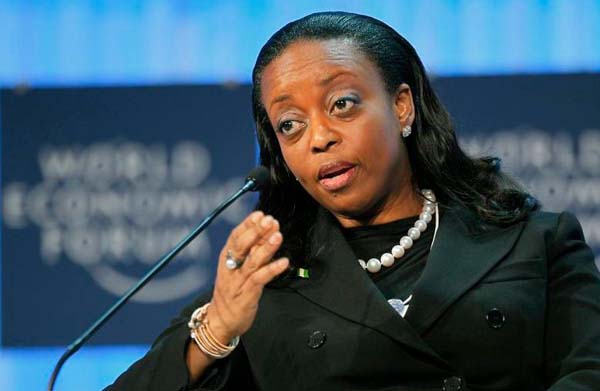
Nigeria’s controversial oil minister Diezani Alison – Madueke’s management style which is disrupting the governance structure of the Nigerian National Petroleum Corporation, NNPC, is causing concern in the state oil giant and the industry.


The powerful oil minister has rendered some administrative structures and personnel, including the position of permanent secretary, redundant with her penchant for using personal assistants in her office to conduct high level official duties.


Alison – Madueke rules the rich oil ministry like a personal estate, with lax work ethics, ignoring laid down rules and procedures and bypassing hierarchical order to achieve her goals.


In the process, staff of the corporation allege, the minister has compromised professionalism and undermined discipline.


One of the most worrisome of the minister’s disruptions in the oil ministry is her style of working from home. Alison – Madueke has developed a knack for working mainly from her official residence in Asokoro District in Abuja, visiting the office only very infrequently.


Even a perfunctory observation of activities at her residence shows that she runs things from there as the ceaseless activity and security presence show.


It was gathered that the minister goes to her office at the NNPC headquarters in the Central Business District in Abuja mainly on Wednesdays, after the Federal Executive Council, FEC, or when she has to meet foreign dignitaries or important Nigerian oil industry executives.


Concerned sources confided that because of her ‘operate from home policy’, she forces a lot of ministry – related meetings to be held in her house, thus disrupting official schedules of key personnel.


She holds such meetings up to three or four times a week in her residence, usually making key personnel, including the group managing director of the NNPC, and even whole departments of the corporation, to relocate to her house.


Many of the senior staff of the oil corporation who are forced to attend such meetings are fed up with the situation but dare not complain about it.


Apart from the administrative toll and man hour lost to having to move the corporations operations to her house, even more burdensome is the financial cost of the minister’s decision to operate from home.


Each time she holds her usually big meetings in the house, the minister gets the catering department of the Transcorp Hilton Hotel, Abuja to serve a buffet.


Our enquiries indicate that the hotel does not engage in such outdoor catering services for a client with less than 50 guests at a time.


With a total of three or four meetings a week, by our calculations, the minister spends between N2.5 million to N4million on food and drinks sweetly at official meetings held at her residence.


In a month, that costs between N10 million to N 16 million. And in a year, Alison – Madueke blows between N120 million and N192 million on such indelicate culinary  extravagance.


The bills are entirely picked up by the NNPC, meaning that the burden for such mindless spending is borne by Nigerian tax payers.


Another worrisome aspect of the minister’s style is her utter disregard of rules, guidelines and official protocols and procedures, bothering on highhandedness. Nothing more aptly explains this than her employment of Eric Ufo as a senior special adviser/consultant.


Ufo is the oil minister major domo, a veritable man Friday who does all kinds of odd jobs for his principal. With no experience in the oil and gas industry, his employment has all the ingredients of Diezani – Madueke’s disdain for administrative rules and protocols.


The minister initially signed on Ufo on as a special adviser however, out of the blues she changed his engagement and rather engaged the services of the young man’s company to offer consultancy services for a fee of N37 million annually. This bill was hung on the NNPC, though Ufo in practice, works for and ought to be paid by the petroleum ministry.


As if the controversies surrounding his employment were not enough, Ufo has become a tin god in the oil corporation, calling the shots and undermining the positions of senior management staff, including the group managing director to whom he routinely issues directives.


Information by sources inside NNPC show that Ufo, bandying the minister’s name around,  tried his executive high handedness with former group managing director of the corporation, Austen Oniwon, who rebuffed him.


The former GMD is said to have seriously warned the special adviser to the minister never to write him directly but through proper channels, which is to go through the minister’s office.


Using his closeness with the minister, Ufo subsequently caused some tension between the oil giant’s chief executive and the oil minister which persisted until the former was replaced in June.


However, the new GMD of the NNPC is said to be less assertive, thus allowing Ufo to have more than an elbow room to interfere in the daily running of the corporation.


A classic example of the enormity of the power Ufo now wields on account of being “madam’s errand boy”, is his overriding of the routine directive to transfer an employee of the NNPC from one department to the other.


The employee, Uzoh Ejidoh, had been sanctioned for some misdemeanor and transferred from the public affairs department to the human resources department but Ufo overrode the transfer directive and instructed that she should instead be transferred to his office, a directive that was immediately carried out.


Ejidoh was employed in 2005 into the public affairs department on NNPC on grade SS 3 having claimed to have had some experience. It was gathered that NNPC employs two categories of staff at this level – fresh from school, for new graduates who are placed on grade SS6 and experienced higher for persons with at least five to 10 years’ experience who come in on level SS3. It is said that it takes about 10 to 15 years to move from SS6 to SS3.


A few years into her employment, Ejidoh wrote a petition to the corporation’s human resources department complaining that she was not properly graded. This, she did, after some other persons with longer years of experience had been employed and placed on SS 2, higher than hers’


Investigations into her work history however revealed to the management that having graduated only a couple of years before her employment she did not possess the experience she claimed to have.


Rather than elevate her above those she complained had been wrongfully promoted above her, she was demoted to SS 5 and redeployed from public affairs to human resources department. However, former head of the public affairs department, Livy Ajuonuma, who died in the Dana air crash in June, refused to release her.


However, after Ajuonuma died, Ejidoh ingratiated herself with Ufo, the minister’s trusted and powerful aide who  got her transferred to the minister’s office to work under him.


To effect Ejidoh’s transfer, Ufo actually brazenly and against all rules of hierarchy and protocol, wrote a memo to the GDM of NNPC requesting him to redeploy her to the minister’s office where she now works with and reports to the special adviser.


Many senior management staff of the corporation are angry at the manner Ufo goes about dropping the minister’s name to get favours but they are scared to complaining because of the young man’s closeness to his boss.


Another evidence Alison – Madueke’s high handedness and absolute disregard for rules is her employment of domestic staff on the bill of the NNPC. The minister has a retinue of domestic staff who work in her residence.


Ordinarily, with her position as minister, she is allowed about two domestic workers in her residence. But Alison – Madueke has several domestic staff but rather than pay them from her pocket, she found a way to include them on the payroll of the NNPC.


Apart from this, the flamboyant minister also has a penchant for travelling abroad with her retinue of personal aides, including several domestic staff. When she goes on her frequent foreign trips, the NNPC is made to pay for the flight tickets and accommodation of these domestic staff.


What is more, she also make the corporation pay estacode to the domestic servants each time she travels abroad.


Attempts by www.icirnigeria.org to get the minister to react to our story were unsuccessful. The public affairs manager of the NNPC, Fidel Pepple, who also doubles as the minister’s spokesman refused to speak to us.


Our reporter spoke to Pepple last week and it was agreed that questions relating to the story be mailed to him. However, since last week, the minister’s spokesman has refused to respond to the e mail or answer the questions. Also, reminder text messages sent to him have been ignored.

Real Estate Is Latest Money Laundering Avenue – Angela Nworgu, SCUML Boss

0

Recently, she caused a stir when she accused Non – Governmental Organizations, NGOs, of being conduits for laundered funds. Now, Angela Nworgu, national coordinator of the Special Control Unit against Money Laundering, SCUML, in a chat with www.icirnigeria.org,fingers property business as the new popular means of laundering dirty money.

What is SCMUL all about, why haven’t we heard about it before now and under what law does it operate?

Well, recently, you would have heard more about us as we have been doing some enforcement. And this is because we had not recorded significant success in compliance in spite of all efforts that we made in sensitizing the entities that we cover. These entities are the designated non-financial institutions, DNFIs,  as opposed to financial institutions…They are designated by the Money Laundering Prohibition Act 2011. Section 25 of the Act has a list of the entities that SCML should supervise and regulate.

Can you mention them?

It is a whole lot of entities. You have hotels, professionals (accountants, lawyers, etc.), estate agents and operators, car dealers, supermarkets, casinos, non-government organizations, NGOs, dealers in jewelries, precious stones and metals, etc.

It is an open-ended list in the sense that whenever SCUML thinks that a particular sector is becoming vulnerable to money laundering or even terrorist financing, we are empowered by the Act to make recommendations to the minister of trade and industry to include those entities in the Act or in our regulatory document, before the Act is reviewed and its then added.

Once this is done, they become designated and then we can supervise and regulate them according to provisions of two Acts.

SCUML has been there since 2005 and it has been working. The problem is that the work that SCUML has to do is very, very much. We are supposed to traverse the entire length and breadth of Nigeria. If you consider that in Abuja alone, you would find thousands of DNFIs, you can imagine what the work load would be much. That’s probably why some people do not know about us.

Does your organization operate under the EFCC?

Yes, we operationally operate under the EFCC and this is because the EFCC has overall supervisory powers given to it by the Act for offences that are described as financial and economic crimes.

Money laundering is one of them. This is why we occasionally depend on them to help us in carrying out our work. Also, you know that the EFCC has enforcing powers. But legally speaking, we are domiciled under the ministry of trade and investments.”


When you talked about compliance with the money laundering law, exactly what are the reporting requirements and expectations for a DNFI?

Under section 5 of the Act, the law requires that you would declare your activities to SCULM. The law also requires that you register with SCUML and help to observe a certain reporting regimes such as currency transaction reports, CTR, to the NFIU.

You are also required to set up in your organization, an internal anti-money laundering audit regime or mechanism and appoint money laundering compliance officers who would interact with the staff of SCUML who have the mandate to supervise, monitor and regulate your currency transactions with respect to money laundering.

You are also expected to submit your staff for training in other to keep abreast with the current trend in the anti-money laundering regime. You are also supposed to display the anti-money laundering notice in a conspicuous place in your office, notifying the public that you are anti-money laundering compliant.

In terms of specifics, what would a supermarket, for example, be dealing with that would require it to make reports?

Money laundering is not all about threshold issue. If you remember the history of money laundering, it started with small cash transactions and supermarkets are involved in small transactions.

Also, money laundering is a predicate offence. Supermarkets too have this tendency of evasion of taxes. And don’t forget too that that under the current Act, every organization is required to declare its annual tax at the end of the year and prepared audited reports, no matter the type of business, whether it is a limited liability or not.

It is also possible for a super market which is also involved in drug ring or prostitution ring to plunge monies from external sources into a super market and declare such amount of monies as part of business gains.

In addition to that, there are supermarkets that are involved in the sale of very expensive items or luxury goods. They sell very expensive electronics, furniture. And so when you look at the thresholds, it is easy for them to meet and exceed it.

There are super markets that have jewelry shops within them and you know how expensive jewelry is. A small amount of gold could be worth millions of naira and these are possible avenues of money laundering.

You must understand that what we are interested in is the money trail. We want to see whether money laundering is going on and the way to see that is to look at records, know what monies come in and go out, do they go through the banks? Are they cash transactions? And then, somewhere along the line, if some untoward is happening, we are able to put our finger on it.

When we do these things, it is not because a crime has already been committed but we are following through looking at the money trail. It is very important for us; so that if something suspicious is identified, it can be picked up.

So when we go to a shop that is not complying like the Exclusive Store that you mentioned, we want to look at their records, we want to see if they have been involved in anything. It is not that we have a case against them already.

The NGO is another very vulnerable sector because of the trust built and the fact that they put themselves out as people helping the society and so when money launderers use them, nobody asks any question

The demand you make on operators and owners of these businesses would involve them spending some money. Does that not add more burden and cost to their operations which they can now pass on to customers?

No. we are doing our work in such a way that we don’t make them incur extra cost. The forms that we require them to fill are very simple. In fact, we have had to look at the forms and reduce the fields so that as you are transacting, if you have internet facilities, by the click of a button, you can send your report to us. That way, it doesn’t take your time or money and this is what we are encouraging many of the entities to do if they have internet facilities, to make their work much easier. Those that don’t have, the forms are easy to fill. Our registration is free. Even when we conduct trainings, it is free. So they cannot accuse us of increasing the cost of running their businesses.

The challenge we have with some of the DNFIs is the fact that some of them are illiterate, especially the car dealers.


Real Estate is an obvious way of laundering money especially in Abuja and so what exactly are real estate operators meant to report in terms of compliance?

One of the requirements of the law is that he has to register with SCUML, which is free of charge. Then he has to comply with the regulations which include reporting all their transactions above the threshold, he has to appoint a compliant money laundering officer and place a notice. These are the main components. But in the registration process they have to give us their CAC registration details.

It is obvious that real estate is being used to launder stolen funds in Abuja. If you have been in operation and have been doing your work, why are plazas and real estate springing up so fast.

Well, they are actually under check and if there are areas where money is been laundered, I think SCUML is handling it.

Do you have examples?

Yes I have examples but we cannot call names because some of them are subjudice and as you know we cannot discuss such cases.

Of course it has been noticed, even internationally, that real estate is a sector vulnerable to money laundering. The Financial Action Task Force, FATF, for instance, has noted in one of its researches that the estate sector has become vulnerable to money laundering.

Here in Nigeria, we have noticed it too. The Central Bank of Nigeria, CBN, for instance, knows it. It is the easiest way of laundering money, especially here in Abuja. We must face the fact that the people who steal money, easily hide it in property. So they buy lands and they build mansions, whether you call them plazas or hotels, etc., and in some cases, they leave them fallow to buy time.

What we are doing is that, we have started looking beyond the property to see who owns it. When we know who owns it, it would give us an incline to whether money is being laundered. For instance, if the owner is a Politically Exposed Person, PEP, that heightens the risk and is like a red flag and then we go deeper and deeper.

But even in doing this we have challenges because some of these people do not register these properties in their own names. That is referred to as layering in one of the three stages of money laundering.

Despite this, we are doing our work in exposing and unveiling the owners of these properties. When you have one person owning multiple expensive properties, it rings a bell and then we take the necessary action.

So rest assured that we are doing our work. We need to be more empowered, both in terms of personnel and funding, in order to expand and meet the scope of our work which is nationwide.

Another method that has become popular for laundering is car sales. What has been your experience and challenges in dealing with this vulnerable business?

In terms of car dealers, in the past, before politically exposed persons became the big money launders, it used to be drug traffickers. When drug pushers take drug outside the country, the easiest way of returning these funds is the purchase of expensive vehicles and when they successfully ship them in, they convert these ill-gotten funds to legitimate funds.

The challenge that we face in regulating this sector is that majority of the dealers in cars are illiterate. The organized car dealers in Abuja, for instance, cannot form one-quarter of the unorganized segment. So it is difficult to regulate the unorganized ones that are found on the streets. They change stands regularly.

You may go out today and find a car stand that is filled with expensive cars, you issue a letter of sensitization, go back the next day, all the cars there have been removed for one reason or the other.

Again, if you follow the trend of car business, a lot of car dealers operate mostly for unidentified persons. The people you often see at the stands are not the real owners of the business.


What are the greatest challenges facing SCUML?

Basically, you know in any fight against corruption or money laundering, the perpetrators do not take things lightly and are bound to fight back.

Corruption is so endemic in Nigeria, it becomes very difficult each time we try to push because they have all it takes to fight back.

So, one of our greatest challenges is the attitude of Nigerians.

Another major challenge facing SCUML is the issue of funding. We are only funded by the EFCC, though we are domiciled in the federal ministry of trade and investment. We don’t receive any budgetary allocation, although we are making efforts see whether some of our projects can be funded by outside help

Many of the DNFIs do not know what is required of them by law. What methods does SCUML employ in sensitization?

From time to time, we often organize workshops, seminars and trainings for compliant officers of DNFIs. Recently we had trainings for DNFIs in Abuja, on September 1, this year and there is a plan to go to other zones to replicate what we did in Abuja.

We have also been doing door-to-door sensitization of all the sectors which include the car dealers, the professionals, etc.

We are also in collaboration with some self – regulatory bodies and associations, such as ICAN, NBA, etc. We realised that if we have to do everything by ourselves, it would take a long time since we don’t have the required number of personnel and funding.

These bodies organization regulate themselves, they have their rules which they can enforce against erring members and so we use that to get through to the members. And the good thing is that these organizations also have state branches, so once we are able to deal with the one here in Abuja, we are already dealing with all the state branches.

In case of non-compliance by a DNFI, can SCUMUL enforce compliance?

By virtue of the EFCC Act, section 21, the EFCC has powers to demand and obtain reports from financial institutions and designated non-financial institution. But SCUMUL has the mandate to regulate the sectors. So we are using both laws now to demand for financial reports and other records and  in case of failure to comply, the EFCC being the overriding agency for anti-money laundering policy in Nigeria, will ensure compliance.

The EFCC has all the enforcement powers right from investigation to prosecution. So all the cases that need to be prosecuted, and there are many of them right now, are done under the auspices of the EFCC and this is covered by the Act.

A major problem with fighting money laundering in Nigeria is the absence of a non – conviction asset forfeiture law. The last National Assembly threw out a bill to that effect. Is that the end of the matter?

I think that it isn’t a closed issue yet, because there is a realization that it is a keen component of the fight against money laundering and corruption generally. If you depend solely on conviction, you may not achieve much. So it is still being looked at and I’m sure that at the right time, it would be reintroduced.

Are there laws under the SCUMUL ACT that protect an informant?

The Act under section 14 guarantees the confidentiality of whatever you give to us and anyone who exposes that has committed an offence against and can be prosecuted and imprisoned.

I also know that the Whistleblower Protection Act is being worked on as we speak and when that is passed into law, it would further back the provision of the Act.”

Finally, is the money laundering ACT in conformity with the 40 recommendations of the Financial Action Task Force?Or are there lacunas that we need to bridge in the law?

First, let me say that the laws that we make to counter some of the crimes are supposed to be our own domestication of what the FATF recommends.

Now what happens is that from one country to the other, they domesticate it but sometimes, they also leave some things out. But when the mutual evaluation is done, they find out these gaps and they advise you to fill them, and if you don’t fill them, they blacklist you and when you are blacklisted, you fail to get help from other members of the international community and you are embarrassed and so on and many countries don’t want this.

If you look back before the 2004 Act was enacted, we were in bad shape. Nigeria was blacklisted and there was uproar and quickly that Act was put together. But because it was put together hurriedly, there were a lot of gaps.

In 2011, the government tried to fill those gaps. When that happened, there were still some gaps and as we speak, that Act is undergoing another review in order to properly capture all the recommendations so that when the next mutual evaluation is done, Nigeria may be rated as compliant.”

Thomson Reuters TV Course Opens to African Journalists

0

Broadcast journalists working in Africa can apply for a five – day TV reporting course in Nairobi, Kenya, to be hosted by TrustMedia, a Thomson Reuters Foundation service.

Tagged Making Television News, the course which holds from December 3 to December 7 will teaches creative approaches to producing news stories for television and the topics include research, writing for TV, camera work and editing.

The course will be taught by senior Reuters television reporters.

Applicants must be African broadcast journalists who currently working in or are regular contributor to broadcast media organisations. They will be required to demonstrate a commitment to a career in journalism in their country and must have at least two years’ professional experience and have a good level in spoken and written English.

If you have been on a Thomson Reuters Foundation training programme within the last two years, you will not be eligible to apply.

Bursary for the course for journalists from outside Kenya will include travel expenses and accommodation.

Deadline for the application is November 12, 2012.

For more information click here

N1.3Billion Spent, Yet No Road

0

There is not much to show for all the money spent on the Abuja – Makurdi road


Sani Musa, Adamu Yahaya are men who confront death virtually every day. But they are not martyrs or militants fighting a cause. The duo are ordinary Nigerians who eke out a living as commercial motor drivers.

That profession, in Nigeria, where roads are death traps, must rank as one of the most dangerous in the country. However, this is more so for the Makurdi-Lafia-Akwanga stretch of the Makurdi – Abuja road where motorists and commuters literally daily stare death in the face.


This is due mainly to its deplorable state and its meandering nature, particularly at the Akwanga hills.  But as  commercial drivers who convey passenger from Lafia to Abuja in their taxis daily, Musa and Yahaya do not have a choice but to brace up for the fatal possibilities that the road offers.


Thomas Anajav is not a driver but a public servant who lives and works in Abuja. However, he faces the same risk as he travels to Makurdi almost every weekend to spend time with his family

The three men as well as many other Nigerians constantly stand the risk of losing their lives on this road particularly the Akwanga axis, which has been tagged the “many have gone” stretch, due to its hilly and dangerous curves and the number of lives lost in accidents.

In a bid to reduce the danger to human lives, the federal government, in 2009, awarded a 13.3 kilometer stretch of the road to ENL Consortium at a sum of N3.3 billion for the re-alignment and straightening of the hilly and dangerous curves between Akwanga and Lafia with a completion time lime of 18 months.


As it happens with such projects in Nigeria, three years on, the job is yet to be completed and the people continue to bear the brunt of government inefficiency.

It has become increasingly more dangerous to ply this road now with the many diversions and roadblocks everywhere mounted by the contractor working on it. Indeed, in the last three years, it has become the drivers’ nightmare as it poses great danger to both human and vehicular traffic, Sani laments.

 
But, in spite of this obvious danger to both his life and that of his vehicle, Sani, who is an indigene of Gako, a small village close to the Akwanga hills, has no choice but to continue to do the only job he has in order to feed his family of six and an aged mother.

He expressed worry why the work on the road is taking so long to complete.

Like Sani, many Nigerians including members of the House of Representatives are raising eyebrows as to why the road contract is taking so long to be completed.

Some even allege that the contractor has abandoned the original job and concentrated efforts at crushing and selling the rocks found at the Akwanga hills to the detriment of some sections of the road that have been cleared but are now been threatened by erosion.

A visit to the site by our reporter revealed that while some sections of the road have actually been completed, others, particularly along the hills and Gako village, are begging for attention as erosion is seriously threatening them.

In an interview with our reporter, the project manager of the contract, Femi Ojo, an engineer, actually admitted the delay in the completion of the job but attributed this to problems the contractor, ENL Consortium, has encountered in the course of executing the contract.

According to him, the first of these was the difficulty of setting out with the drawings they got from the consultant who deviated from government’s brief by about five kilometres. This, of necessity, had to be corrected but they had to get approval from the federal ministry of works in Abuja which took time.

Having overcome the problem of drawings, the company also encountered delay in arrival of the needed equipment which, according to Ojo, was ordered from China.

“This delay was so prolonged that we had to reorder some of these machinery from Ghana but that too had to be delayed at the border between Ghana and Nigeria for almost three months waiting for clearance,” Engineer Ojo stated.

He further noted that at the time these initial problems were overcome, the rainy season had set in so it was not possible to do any serious construction.

“Then there is the problem of the rocky nature of the area and we know that you cannot make as much progress when working on rocks as when working on flat ground.”

But as with similar projects, perhaps, the biggest problem the road construction has faced is the non-release of funds to the contractor by the federal government. Engineer Ojo confirmed the issue of late payments which he said has been a serious drawback to their work.


Giving an example of how non release of fund affects the job, Ojo said that the valuation certificate raised for payments since 2011 was paid only in June 2012.

“So, it is not possible to move as fast as people expect us to yet we are making steady progress,” he lamented.

Asked to state how much of the contract sum has been released so far, the project manager said N1.3 billion out of the total contract sum of N3.3 billion had so far been paid to his company. He, however, observed that by the time the money came it was in the middle of the wet season, so not much could be done.

He, however, gave the assurance that with the weather now becoming more clement, concerted efforts will be made to complete the job even if it means working in the night.

On the allegation that the company is busy crushing and selling the rocks at the site, Ojo denied this saying that it was not true as the rocks along the road cannot be used as they are soft and muddy. He pointed out that the heap of chippings seen at the site was brought from their quarry at Mpape.


This was confirmed by sources from the ministry of works zonal office in Lafia.

Engineer Ojo, however, acknowledged the concern of the House of Representatives committee on works on the road contract adding that both the committee and the ministerial task force on contracts have visited the site to assess the progress and quality of the job.

Sources at the Zonal office of the federal ministry of works in Lafia who would not want to be named confided that only 48.17% of the work paid for had been done by the contractor, which they said is not encouraging.
With regards to the quality of the work done, the source maintained that it met all the required standard and specifications and attributed this to what is called “preventive supervision.”

Meanwhile commuters and youths of Gako including Huseni Muhamed and Moses Daniel Maga who spoke to our reporters are not impressed with what they termed “excuses”  and they  expressed displeasure at the slow pace of work while calling on the government to find a more competent contractor to handle the road.

They based their argument on the paucity of equipment owned by the contractor. “There is no time you will find more than a few earth moving machines on site,” Maga stated.

A visit to the site camp of the construction firm seemed to confirm Maga’s misgivings as only a few earth moving equipment were seen parked there while two excavators and three tippers were seen working at the most critical section of the road at Akwanga hill.

At the company’s Abuja office, ENL House at AMAC PLAZA in Wuse Zone 3, only a few staff members were seen milling around at the time our reporter called. The senior general manager who received our reporter but declined giving his name said the managing director had travelled out of the country and directed all enquiries to the project manager, Engineer Ojo.

Investigations by www.icirnigeria.org, however, revealed that part of the reason why work on the road has been slow is because the contractor had moved most of its equipment to Lafia, the Nasarawa State capital, where it has a contract to construct many of the major streets in the town.

Several visits to the federal ministry of works to find out why the contractor is taking so long to execute the contract, what government is doing about that and how much the contractor had collected so far failed as the deputy director of highways, North Central, who was said to be the right person to talk said he did not have time to talk.

The last time our reporter tried to speak with him, he was on his way to Lokoja to help create a way around the flooded Lokoja-Abaji-Abuja road.

Information on how much has been spent on the road over the years was difficult to come by but checks showed that  N530 million was appropriated in 2012 to the project out of which N170millon has been accessed by the contractor.

While commuters and drivers that ply this road are desperate and cannot wait to see this road project completed, Engineer Ojo told our reporter that the contract completion date has been extended to October, 2013. Independent checks at the supervising ministry, however show that the deadline was only extended to September 2013.
This means those drivers and commuters who ply the road have to endure until 2013, if not beyond, to see an end to their agony.

Nigeria @ 52: Time to discuss a new nation By Eze Onyekpere

0

Today makes it 52 years since Nigeria got her flag independence from Britain. Even though nations do not exactly grow, mature and wither away within the time frame of a human life a period of 52 years is a good time frame to review the progress made, challenges on the road and the projections for growth in the years ahead.

As always, today’s Independence celebration offers us another opportunity for a sober reflection to identify what we have done right for the purpose of replication; what we have done wrong so that we can avoid repeating such wrongs and our unique opportunities which can be harnessed to fast-track the development and growth of the nation in the years to come.

Instructively, it will amount to denying the obvious if we are to insist that no progress has been recorded over the past 52 years.

While complaining about Nigeria’s underachievement, a senior colleague once pointed out that in the 1950’s and 60’s, there were very few schools, hospitals, airports, highways, cars and that most of the buildings in the countryside were made of mud and thatch.

For him, a lot of progress has been made and all these things have changed for the better. Indeed, things have got better and are heading for more drastic improvement.

The white man had left and in his place, we have our brothers and sisters in charge of our governance and we have hoisted our flag in the comity of nations as a people exercising their right to self-determination.

Are the foregoing really the indicators of the progress of nations? It will amount to celebrating underachievement if we are to roll out the drums, as we are wont to do, in the excitement of counting the number of years we have existed as a nation.

A number of issues come to the fore. Are we developing at the pace of our peers – Singapore, Brazil, and South Korea? The answer is obvious. No. Are there concrete plans by the elite and leadership to lift Nigeria out of the pit?

Apparently, there is none. We are a people content with offering apologies for things that do not require apology but developmental actions based on strategic thinking.

As a young man, I grew up to hear apologies that our underdevelopment could be traced to slave trade and colonialism. Admittedly, these historical facts left indelible marks on our developmental strides.

But, we were not the only ones who were enslaved or colonised. The military were in power then and as such, they were not officially added to the list of the apologies.

Military rule was later added to the list after the soldiers had left. Thirteen years of civil rule have changed nothing. What is the apology this time? Yes, I know that a culture that was institutionalised in about 28 years of military rule cannot be changed overnight.

But 13 years is enough time to begin the steps to correct the anomalies of military rule.  Is it about those who have led us since 1999 – Olusegun Obasanjo, Musa Yar’Adua or Goodluck Jonathan?

It is the position of this discourse that a review of the challenges facing our nation will reveal that the fundamental challenge of development and nationhood is that the country is in denial of its basic nature and challenges.

Forty two years after fighting a bitter civil war that led to the loss of over a million lives, the fundamental questions of who we are and how we need to govern ourselves are still unresolved.

The questions that arose from the contradictions of elite contestation for power before independence and continuing up to the civil war are still unanswered. The leadership has not come up with a concept of development that is sold to the populace as a national vision for resolving our myriad of problems.

We are still faced with the challenge of integration and defining the identity and benefits of citizenship.  Our leadership question is not about how to bring out the best to lead or a contest of ideas, it is about the ethnic and religious origin of a proposed leader. Is he from the North, East, West or any of the new six geopolitical zones?  This is not the path to nationhood, neither is it the path to development.

The other day, the Petroleum Industry Bill was presented to the National Assembly. The next thing in the media was that the Northern Governors’ Forum had set up a committee to review how it will affect the North.

Maybe there are other groups who have not come out publicly to state their own views.  The International Oil Companies have a common position on the bill based on the profit motive.  Present beneficiaries of the decadent system in the oil industry will be taking steps to frustrate the reforms proposed in the bill.

But who is speaking or who is researching on behalf of Nigeria? Is there really a Nigeria where a majority of its citizens devoid of where they come from are committed to the vision of its progress, honour and glory?

That vision of Nigeria does not currently exist in the minds of the leadership and indeed in the minds of majority of Nigerians. The voting pattern at major federal elections bears this out.

Sadly, we are in denial of our differences in religion, ethnicity, culture, and history. We believe we can suppress these differences and move on with our lives without having thorough discussions on how to manage them.

Continuing this denial accounts for national policies that are not in the overall interest of the nation but skewed to favour one group or the other, poor quality leadership at the federal level, the indigene/settler dichotomy and the attendant loss of lives and properties it engenders, religious extremism of all forms, among others.

It may be fashionable to paper over these cracks and pretend they do not exist. But that is the tradition of the ostrich.

Even the young who may have no cause for hard-core ethnic attachments, having been brought up in cosmopolitan environments, are confronted with the reality of the danger of being killed by religious fanatics based on their religious or ethnic identity as well as having to fill their state of origin on every form while applying for employment, among others.

These young men and women are being indoctrinated with perverse values on a daily basis by the existential realities of living in Nigeria where merit is continuously thrown overboard.

Therefore, a national dialogue has become overwhelmingly imperative. It should be the dialogue of the people through their freely chosen representatives, convened specifically for the purpose of agreeing on a suitable framework of government that takes cognisance of the diversities, pluralism, rights and obligations of all.

Continuing to pretend that all is well at 52 and that the National Assembly as presently constituted can give us that framework will lead us to nowhere. Such a framework will be based on the need to suppress the mischief in the existing system while advancing remedies to enhance the creative abilities of all groups to harness their resources for their development.

This is a task that must be done before we head for the explosive elections of 2015.

•Onyekpere, a lawyer, is the Lead Director, Centre for Social Justice, Abuja.

The Big Housing Drainpipe

0

The National Housing Fund, NHF, has failed to help solve Nigeria’s housing problems


Emmanuel Akinola Omoyeni, is an angry man. A retired civil servant, he served his fatherland for 35 year. In 18 of his years of active service, he made monthly contributions to the National Housing Fund, NHF, through the Federal Mortgage Bank of Nigeria, FMBN.


By the time he retired from the ministry of internal affairs – now renamed ministry of interior – Omoyeni probably thought he would have saved enough money to qualify to obtain a loan to build a house.


But to his chagrin, the retiree who is also the national chairman, Association of Retired Federal Public servants, has not been able to get a loan from the mortgage bank to build a house.


But what has got the man really riling is the fact that, having denied him access to a loan, the NHF and FMBN have also refused to refund the money he contributed over the years.


He, along with thousands of others Nigerians, has been told that he cannot collect back his money until he is 60 years old. That is what the law says, they have been told.


“What is more terrible about the scheme is the fact that the government and the people managing it are not ready to pay the retired workers even their contributions,” he moaned.


“We have written several letters to the institution concerned to no avail. The last time we went to FMBN, they told us that until one clocks 60 years in age, one is not qualified for even one’s contributions,” Omoyeni lamented further.


“My candid opinion therefore is that, this scheme should be scrapped as it has no benefit for the workers. Rather it is a way of siphoning money from serving officers,” he concluded in anger and frustration.


Like Omoyeni, Pius Ukeji, a retired school principal, is also a perceptibly bitter man. He is bitter against a Nigeria he served for years which now appears to have left him in the lurch after sucking him dry of the energy of his productive years.


The embittered educationist, who contributed N600 to the NHF every month for close to 10 years, is lamenting that he is unable to raise a N4 million loan to build a house because no viable primary mortgage institution, PMI, exists in his area to grant him a loan.


Cornelius Moedi, also a retiree, cannot understand why all of a sudden, he is being told that he cannot access his contributions to the NHF until he is 60. He retired from the federal civil service in 2007 after working and contributing to the scheme for five years.


However, having left service he has asked for a refund of his total contributions only to be told he has to wait until he is sixty years old.


“This is unfair because we were contributing to the scheme in the hope of getting houses, but since that failed they should refund our money now that we are retired and still alive,” Moedi pleaded.


But he asks an important question when he queries: “What happens to those who do not reach 60 and die? Will their families be able to collect their contribution when they are dead when the retired civil servants themselves could not do so when they were alive?


The story of Caroline Abang is not any different. As a serving level 9 officer in the federal civil service, she too is not impressed by the Federal Government’s Housing Scheme for its workers.


Having been a contributor to the NHF for over a decade, she told our reporter that when she applied for a loan to build a house, she was told that she must have a certificate of occupancy, C of O. After struggling for months to get one, she went back for her loan but has been unable to get it even after a year.


Abang is mystified and at a loss explaining what really is going on.


“As a grade 09 officer, my money is supposed to be N3.5 million. The question I keep asking myself is ‘when are they going to give me the money?’” she wondered, adding listlessly, “I need the money”.


Although housing is not one of the millennium development goals, MDGs, it is accepted all over the world, along with clothing and food, as one of man’s basic needs without which he cannot survive.


But in Nigeria, providing housing for citizens has always been a problem that has defied solution. The country currently suffers from a deficit of 16 million houses, which requires no less than N56 trillion to finance at an average cost of N3.5 million per house.


Nigerian governments since independence in 1960 have vowed to make the best out of this very ugly housing issue without success. Each government, either military or civilian, has set panels, commissions, or agencies to recommend ways of improving and highlighting it as a major priority, yet in over 52 years, Nigeria has not developed a vibrant housing policy.


Houses have continued to be provided through the rigorous traditional method of buying land and building over some years, which could be in an individual’s entire life time. In most cases, the buildings are left uncompleted, becoming a burden for children and family of the deceased.


It was in an attempt to deal with the housing problem that the FMBN was set up in 1956. The bank has the overall mandate of promoting the delivery of affordable and modern houses to Nigerians.


The bank started the management and administration of the contributory savings scheme, the NHF, established in 1992 as a pool that mobilises long – term funds from Nigerian workers, banks, insurance companies and the federal government to advance loans at low interest rates to its contributors.


However, an overwhelming number of contributors to the scheme, serving and retired, who spoken to our reporters have tales of woe to tell. Many claim that they have neither benefited nor seen any one that has taken a loan directly from FMBN to build or buy a house since its inception.


Many of them also complained that they are made to go through PMIs to access at high interest rate – usually 21 per cent – the funds which they contribute at low interest rates. Thus, they see the scheme as a conduit pipe designed to drain the meagre resources of the civil servants.


Very few people, however, still believe that the NHS has helped to solve some of the housing problem faced by Nigerians. One of them is director of personnel services in a federal ministry who does not want to be named.  He does not agree that the FMBN should be scrapped either.


According to him, the mortgage bank has been able to mobilise funds into a common pool from which individuals, organisations, and state governments can draw through the PMIs to provide affordable houses for the citizens.


He cited the example of Gombe State which he said accessed funds from NHF and has used it to build a housing estate for its civil servants. He therefore advised other state governments to buy into the scheme to provide decent accommodation for their citizens.


Another believer in the NHF initiative, understandably thought, is Balami Yerima, the group head of public sector, home finance division of Aso Savings and Loans Limited. He believes that it is a good way of getting long term funds to provide affordable houses for Nigerians.


“It is a laudable scheme geared towards mobilising long time funds from Nigerian workers and other agencies to advance loans at soft interest rates to its contributors. Given the challenges and huddles that confront the scheme, I would say it has done fairly well,”Yerima stated.


But even in his enthusiasm, he concedes that “The scheme too has its challenging huddles and barriers, adding that “we cannot deceive ourselves that it has been a complete success.”


But none of the supporters of the government housing programme could explain why many civil servants who individually contribute to the scheme cannot access loans to build houses.


Beside this, Nigerians in the informal sector also stand little chance of benefiting from the NHF scheme. This was attested to by Shola Ade, a motor mechanic in Area 1, Garki, Abuja, who lamented that they are neither allowed to contribute to the housing scheme nor draw from it, in spite of their willingness to be part of the scheme if given the chance.


He wants FMBN to design a more inclusive scheme that will take care of artisans and those in the informal sector as they too deserve decent shelters over their heads.


Several attempts by our reporter to speak with Gimba Ya’u Kumo, the managing director of FMBN failed as he, according to Agada Simeon, head, corporate affairs of the bank, prefers doing his work to talking about it.


Simeon, who initially directed our reporter to the housing minister to seek answers to the list of questions earlier sent, later sent three documents which were meant to address the issues raised.


The documents include a paper by Kumo titled: ‘Funding Options for Housing Delivery in Nigeria’ presented at Potomac Workshop on ‘Recharging Government Contract Administration and Project Management Processes,’ held at the International Conference Centre, Abuja in June 2012.


Also included were two press releases, one titled “FMBN Introduces E-Collection Platform for National Housing Fund” and the other titled ‘FMBN Offers N2bn Mass Housing Loan to Enugu State.’


In the paper, Kumo observed that “essentially, the FMBN is statutorily mandated to pool resources for delivery of mass housing in Nigeria.” This responsibility, he acknowledged, is by no means an easy task.


He noted that NHF is a government – backed funding scheme which pools small contributions from workers (2.5 per cent of their basic salaries) both in public and private sectors of the economy for the purpose of delivering decent and affordable houses for the masses. Since inception in 1992, he said, the scheme had registered 3.7 million contributors as at May, 2012.


The MD further stated that under the scheme, a total of N88.43 billion has been collected as at May 2012 out of which N86.93 billion housing loans have been disbursed while 68,712 housing units have been financed.


Listing the challenges faced by the scheme, Kumo said, “One is that some employers of labour do not comply with the law establishing the NHF which mandates them to deduct 2.5 per cent of their workers’ basic salary and remit same to the NHF Account.”


Also, he disclosed, some employers make the requisite deductions but fail to remit the full amount with a schedule of their contributing employees to FMBN, while other employers deduct but fail to make any remittance to the NHF Account.


This, he noted, partly explains why the number of contributors to the scheme has remained significantly low at about 3.7 million persons as against the over 50 million targeted at inception meaning that only 2.46 per cent of the nation’s projected 150 million people are contributing to the scheme.


Another formidable challenge faced by the scheme as identified by the Kumo is that all the banks and insurance companies which are required by the NHF Act to invest a percentage of their funds in the scheme have, over the years, failed to comply with this requirement just as the Central Bank of Nigeria, CBN, which is the regulator of the financial institutions, has also failed to compel the banks to comply with the provisions of the law.


What all these means is that more than N100 billion of the estimated NHF contributions are trapped in government ministries, departments, agencies and other organisations.


Checks by our reporters show that to tackle some of the challenges, the FMBN recently introduced an e-collection platform for the housing scheme. The platform makes it possible for NHF deductions, collections and remittance to be done electronically by all the designated commercial banks in Nigeria through their existing information technology structures.


With this e-collection platform, NHF components of employee’s salaries are not only automatically deducted and instantly channelled into a dedicated NHF account but also a payment schedule indicating the identity of each employee and the amount contributed is automatically generated and FMBN immediately credits each contributor’s NHF account with the corresponding amount remitted for that month.


The e-collection platform is not only designed to curb the sharp practices that enable some unscrupulous employers to misappropriate NHF monies or even embezzle such funds but to also help promote transparency and accountability in the collections as well as make it possible for more eligible Nigerians to access NHF loans for building, renovation or purchase of residential houses.


The platform also makes it possible and easy for contributors to check their NHF accounts using the NHF e-cards on any ATM nationwide, not only to ascertain the amount they have contributed but also to be in a position to know if their employers are making the appropriate remittances as and when due.


Indeed, the system instantaneously sends an SMS alert to the contributor’s mobile phone once the deduction hits the NHF collection account. The e-collection platform is thus embedded with features that seek to secure contributors’ contributions in order to restore their confidence and bring more credibility to the scheme.


The snag, however, still is that no withdrawals can be made from the NHF account until the contributor retires from service and reaches the age of 60 years. This has generated a lot of bad blood between the FMBN and NHF contributors, particularly retired public and civil servants.


While the contributors are keen on collecting back their contributions since they did not benefit from the scheme, the FMBN insists that the contributors must satisfy the requirements for refund as specified by the NHF Act 1992.


While the new management of FMBN has begun the process of cleaning the Aegean Stables through the repayment of contributions with interest and the publication of same in national dailies, many civil and public servants who spoke to this website insist that the mortgage bank should waive the 60 year age requirement for retired contributors to enable them look for their housing requirements elsewhere.


Our investigations however show that one of the greatest problem that work against ordinary Nigerians owning affordable houses is the Land Use Act which vests all land in the country in the government.


This invariably makes state governors the only approving authority to issue certificates of occupancy. This singular fact impacts negatively on citizens’ access to housing in so many ways.


This much Yerima agrees to when he said that “the problem however is with the Land Use Act,” adding, “the land use act as presently constituted makes it very difficult, even near impossible, to transfer title from one party to another and this one party could be a private mortgage bank offering the mortgage or just an individual from whom one wants to buy a property.”


For many experts, Yerima actually hit the nail on the head because many of them identify the difficulty in securing or transferring land title deeds as a major problem facing those who want to build houses. And it does not exclude even civil servants and other NHF contributors who want to obtain loans to build houses.


As Abang observed, one of the conditions of granting housing loans under the NHF is that an applicant must have a C of O, as proof that he or she has a land to build on. However, this condition constitutes a roadblock for many as such permanent land title deeds are not easy to come by.


“The barriers to transferring titles are too formidable and invariably impinge on the cost of housing. It usually takes a long time for even executive governors to sign Certificates of Occupancy (C of O). Even after the signing, there are the problems of stamp duties and payments, which are enormous for any would-be mortgage,” Yerima observed.


He explained further that because of the barriers created by the Land Use Act, many of the titles available for mass housing are development leases which are ad hoc arrangements between developers and state authorities. The snag is that they fall short of the real thing and banks are wary of such temporary titles, preferring the root title, the C of O.


“Any bank, and this includes FMBN and Aso Savings, would want the root title of any land to be certificate of occupancy (C of O) because that is the only perfectible document that one can hold up in court in the event of a default and when the need to carry out a foreclosure between a mortgage bank and a mortgagee arises,” Yerima noted.


He said further: “a lot of banks will not touch these weak titles including the development lease. Moreover, we cannot float a bond to raise long term funds for mortgages on these weak titles.”


More worrisome, he noted is the fact that these imperfect title documents also discourages foreign investors interested in the  housing sector from bringing in needed funds to develop it.


The Aso Savings and Loans manager’s damning verdict is that “affordable housing will be very difficult to achieve if the present Land Use Act is maintained.”


READ ALSO:

Boko Haram Deserves a GCFR By Isaiah Torh

0

It will interest you to know that this MAN, yes MAN in capital letters, has held the nation of Nigeria by her jugular and will not let go until it is appeased with the highest honor of the land. 

Many might not agree with me – certainly they are entitled to their opinion – but these incontrovertible facts speak for themselves. 

First, the MAN is making all Nigerians to be more security conscious – much more than all the armed robbers and kidnappers put together have been able to do. Today, the fear of this MAN is the beginning of wisdom.
Second, the MAN has dealt the most telling blow to the bonds and tethers that have held Nigerians together, particularly since the 30 –month civil war which ended in 1970 – much more than all other ethnic and religious strives, OIC palaver, MASSOB insurgency, OPC takeover and the Niger Delta Militancy.

This MAN has also succeeded in giving a once peaceful loving people and religion the unmerited image of blood thirsty vermins.

This MAN has also succeeded in making Nigerians both at home and in the Diaspora to become suspicion of every bearded young man as a potential killer.

The Man has also, commendably it must be admitted, brought a much needed awareness to our lazy fat – cat priests and mullahs that from the place of worship they can be dispatched to heaven, paradise or hell as the case may be – much more than centuries of sermons have done in the past. 

This MAN has also sent many to the other side of existence right from the entrance of their churches and mosques – much more than any other previous troubles in Nigeria.

You can’t deny the reality that this MAN has provided the much needed wake up call to the men in Khaki to once again firmly grip their albeit ancient weapons of destruction and at least put on a mien of pretended seriousness. A drive around Abuja and major cities in the North is a great testament to this new military zeal.

 This MAN has shown to all discerning Nigerians that the struggle for power in Nigeria is the story of Ali Baba and the Forty thieves.

This MAN has also enabled Nigerians to see through the weakness of their religious leaders and that they, like us, mere mortals that they are, are also afraid of death despite the pious sermons of faith and power that they preach. 

This MAN has also shown us that our senior security goons are smiling to banks while the junior ones are heading to beer parlors and brothels to enjoy their loot.
This MAN has also taught Nigerians, to their dismay and utter inconvenience, that roads can be condone off or closed just because some egoistic top shot lives or works close by. The rest of us can stay at home or find other road to use. 

This MAN has exposed the fact that in Nigerian Intelligence Gathering was never a course offered in any of our security training institutions. 

This MAN has also proved that more than in any other time in the history of Nigeria, deceit in leadership, both privately and publicly, is what our leaders have offered the people of this great country. 

Above all, this MAN has had the most telling impact on Nigeria’s economy – much more that all the Dangotes, Otedolas and Adenugas put together. So what cheek that government, in the list of national honours just released, has ignored Nigeria’s man of the moment. 

For who else deserves that highest honour in the land if not this MAN, Boko Haram? 

 I can go on and on but for time and space let the above citation suffice for now so that after the conferment the rest can be told in a more cordial atmosphere of wine for the elders and water for the boys. 

Until then can Boko Haram kindly step forward to receive the people’s award with a pot of blood in his hands.

Imo State University, Private Firm Scam Students

0

Imo State University, Abuja Satellite Campus, is declared illegal by the NUC to the chagrin of thousands of students


The Imo State University, Owerri, and an Abuja – based educational services company are embroiled in a satellite campus and university admission racket which has tricked thousands of students into paying over N150 million in illegal fees.


The company, Diamond Lecture Centre, has for years operated an illegal satellite campus purportedly belonging to the Imo State University, in the process admitting and running classes for thousands of students in business and management – related courses.


The Diamond Lecture Centre charges each student N80,000 tuition fees and currently has in admission some 2,000 students in 100, 200, 300 and 400 levels, with the final year set currently taking their final examination.


However, the National Universities Commission, NUC, has declared that the campus which is run out of the Festival Primary School, Area 10, Garki in Abuja is illegal.


The commission said that neither does the Imo State University have approval to run a satellite or any other kind of campus in Abuja nor does Diamond Centre seek or obtain approval to admit or offer lectures for students at any such campus.


Not only that, the tertiary education regulatory body also says that any degree awarded to any students through such a bogus and illegal scheme would not only be illegal but would also not be useable to seek employment in Nigeria or anywhere else in the world.


That leaves the fate of nearly 2,000 students who are currently on admission at the fake and illegal campus hanging.


Interestingly and curiously too, authorities of the Imo State University have also disowned Diamond Centre and distanced itself from the satellite campus it claims it runs for it in Abuja. This is in spite of the fact that Diamond Centre uses the university’s course outline, handbooks, letterhead and stationeries in the admission and teaching of students.


Investigations by www.icirnigeria.org revealed that Diamond Centre has operated the illegal satellite campus in Abuja for many years and would have admitted up to 10,000 students by now.


Our investigations show that most of the students of the campus are professional men and women such as bankers, civil servants or business people who do not have the time to undertake the rigours of normal university education.


With lectures conducted only on Saturdays and Sundays, such cadre of professionals finds it convenient to run weekend programmes.


But there is nothing about the classes conducted by Diamond Centre that resembles anything close to a university education and even some of the students agree that granting any degree through such a process would be an aberration.


First, the lectures are held in the most unsavory environment. When our reporter visited Festival Primary School, Area 10, Abuja, what he saw was shocking. Lectures were being held in decrepit, moldy, smelly classrooms with broken furniture and dilapidating walls.


Apart from this, posing as a student, monitoring the lectures and speaking to some of the students, it was revealed that the quality of teaching being given was abysmal. The lecturers operated mainly a “handbook education” policy whereby they sold handbooks to students which they are supposed to read to pass examinations.


But the lecturers do not even bother to prepare their own notes but just download handouts from the websites of other educational establishments on the Internet. For example, the whole handbook on Analysis for Business, a course for 400 Management students, was entirely downloaded from the Internet with no input from the lecturer.


Apart from this, many students also complained about the lecturers with many of them wondering if they had university degrees because of what they called ”their intellectual shallowness”.


For this kind of substandard education, the students actually pay through the nose. Apart from the N80,000 tuition fees, final year students are forced to pay N30,000 for their final year project to be approved.


Besides, every student who is unlucky to fail a course and has to carry it over till the next session is forced to pay N5,000 before he or she can sit and write the examination for the ‘carryover subject”.


The students who spoke to our reporter also complained that they are forced to pay N5,000 to attend workshops conducted by Diamond Centre for other institutions in Abuja.


Our investigations revealed many curious things about Diamond Centre educational services provider. First, on its website, its office address is given as Block D, Suite D62, EFAB Mall extension. However, for several days, when our reporter went there the place was permanently under lock and key. Nobody ever came there.


It was eventually gathered that the company has two other operational offices in the same complex but we were never able to locate them.


Also curiously, although the company has a vibrant website which details the services it provides and with whom it had done business, there is no single mention of its running any programme for Imo State University.


Among the projects it claims to have executed is working with “the agency for Mass Literacy and Non-formal education, Abuja, for education of secondary school students.”


The Diamond Centre also claims that it is “currently a consultant with UK, DFID Nigeria in the area of research and development“while also providing consultancy services “for relevant government agencies, tertiary institutions, international organizations, (such as UNESCO, DFID, UNICEF, WHO, etc.)”


It also claims it operates “primary, secondary and tertiary education wholly or in conjunction with other educational institutions.”


The closest thing it says about the Imo State University satellite campus, Abuja which it runs however is that it acts” as representative of both local and foreign educational institutions including universities in the running of their distance learning courses/programmes.”


Also curiously, all payments made by the students are made into the Diamond Centre’s accounts with GTB. These include the school fees and any other monies made for examinations and other things.


And Diamond Centre is said to be strict and unsparing with the students when it comes to paying tuition and sundry fees. It was learnt that any student who does not pay school fees is not allowed to take examinations. Even a default in paying the imposed N5,000 to resit carryover courses earns students exclusion from the examination.


The NUC claims that it was not aware of the existence of the satellite campus. The commission’s head of public relations, Yakassai Ibrahim, who spoke to our reporter in Abuja last week, said that the campus was illegal because neither the Imo State University nor Diamond Centre has an approval to run courses there.


“We are not aware of that campus. I can tell you that nobody has any approval to run any such satellite campus” Ibrahim said, adding that “we will close down any such campus if we discover it.”


The NUC spokesman also warned students who patronize such institutions that “any degree awarded by such an institution is illegal and of no use. It cannot be used to seek employment in Nigeria or anywhere else in the world.”


Asked if there is no way for the commission to know about the activities of illegal universities and satellite campuses, Ibrahim said that the NUC, indeed, had a standing committee on illegal tertiary institutions, including satellite campuses.


In an interview with the secretary of the standing committee who gave his name simply as Awe, he disclosed that the committee regularly discovers and closes down fake and illegal universities and satellite campuses “on a regular basis”, observing that criminally minded Nigerians have made it a “business goldmine.”


According to him, some 147 such illegal institutions have so far been discovered and shut by the committee with several persons charged to court for running them.


Contrary to Ibrahim’s assertion, however, Awe disclosed that the NUC was aware of the Imo State University satellite campus run by Diamond Centre. He said that when his committee got wind of the operation of the centre, it visited the school where the campus is run but did not find it there.


“We investigated and actually went to the primary school but we did not find anybody. If you are telling me that they were there last weekend, then it means that they must have been on break when we went. We will go and close the place down now,” Awe stated.


Speaking more about the committee’s work, Awe said that it had been illegal since 2001 for any tertiary institution to run a satellite campus. According to him, that year, a directive was given by the Federal Executive Council, FEC, banning the operation of satellite campuses after it examined the reports presented to it on tertiary education in Nigeria.


Some of the reasons that informed the ban, Awe said, were inadequate manpower and the use of unqualified lecturers, inadequate educational infrastructure and the poor quality of education given in such campuses.


The authorities of the Imo State University denied knowledge of the existence of its purported satellite campus in Abuja. Although the e mails sent to the office of the vice chancellor of the university were not replied, the Public Relations Officer, PRO, of the institution who spoke to our reporter on the phone said he was not aware of any satellite campus of the Imo

State University in Abuja.

“Imo State University does not have any satellite campus in Abuja. I am not aware. What I know is that we have wound down all our long distance learning programmes,” the PRO who did not give his name stated.


Attempts to speak with N.A. Odunze, the managing director of Diamond Centre failed as he declined commenting on the activities of his company concerning the satellite campus. Odunze repeatedly ignored calls and text messages to his phone.


After days of trying to reach him, he eventually sent a text explaining that he was attending a course, adding that his centre “no longer admits students”. He subsequently refused further communication with us.


There are allegations that some officials of the Imo State University might have colluded with Diamond Centre to run the Abuja satellite campus illegally. In fact, some students also believe that the NUC might be part of the conspiracy to keep the illegal satellite campus going secretly.


Many students who spoke to us argued that there is no way the satellite campus would have existed for years illegally without being closed down without collaboration of staff of the NUC and the university.


“I believe that some people in NUC and the Imo State University are in league with the director (Odunze) to scam students. Certainly they are in this together. They cannot claim ignorance. While driving some students away from THE exam hall recently, Odunze told us that he just paid over N7 million to the Imo State University as examination fees,” an angry student said to our reporter.

Another student disclosed that Diamond Centre’s plan is to wind down the operation of the campus with the last intake of students who are now in 100 level. If this is true, even if it does not take in new students, as Odunze said, the centre would still have to run the illegal campus for another three years.


The greatest worry of the students and their sponsors is not the time they have spent pursuing what they thought was university education or even the money they have had to pay but the fact that they might come out empty handed.


With the declaration by the NUC that any degree awarded the students would be illegal and useless, it means that they cannot seek employment or promotion in their work places with their certificates.


There is even a controversy over whether Diamond has ever issued any certificate to any student who graduated from the satellite campus. All the students who spoke to us said that they had also been troubled that they had never come across any graduate of the school who got any degree or certificate.


One student said that when a group of them confronted Odunze with the fact, he only assured them that they would get their degrees after completing their course of studies.


From all these Odunze appears to have been the only beneficiary of this bogus scheme. With a current student population of nearly 2,000 this session, Diamond Centre this year alone must have raked in some N160 million from unsuspecting students.