THE host of Brekete Family, a show on Human Rights Radio and Television, Ahmed Isah, popularly known as “Ordinary President,” has been invited to appear before the Nigeria Senate.
Isah disclosed the Senate invitation during his programme on Monday, February 24.
He is expected to appear before the lawmakers, latest by February 27.
According to reports, the summons is reportedly linked to a recent broadcast of the Brekete Family radio show, in which a senator, Natasha Akpoti-Uduaghan, spoke about her grievances with Senate President Godwills Akpabio.
Isa had called the female senator and the Senate President on his live show on Friday, February 21.
While Akpoti-Uduaghan responded to the call and alleged that she was victimised by the Senate leadership, the number Isah called for Akpabio did not pick three times. It was however, later found out that the number Isah called on the live programme did not belong to Akpabio.
Isa’s work has garnered widespread recognition in the Federal Capital Territory (FCT), Kaduna and adjoining states. He has also built a strong following by intervening in public grievances, injustices and human rights abuses.
Many Nigerians regard the Brekete Family show as a voice for the common man, providing a platform for the underprivileged to seek redress on issues that could take them years to address elsewhere.
However, despite his benevolence, Isa is often accused of arrogance, which he occasionally acknowledges.
The ICIR reported that Akpabio, on Thursday, February 20, barred Akpoti-Uduaghan, who represents Kogi Central in the Senate from participating in plenary over her seat that was changed without her consent.
The tension began during plenary when Akpoti-Uduaghan’s seat was relocated upon resumption of the session, leading to heated arguments between her and the Senate leadership.
Akpabio said the changes were necessary to adjust for shifts caused by some opposition members moving to the majority wing of the Senate chamber.
Refusing to back down, Akpoti-Uduaghan, a member of the Peoples Democratic Party (PDP), raised her voice in protest, directly confronting the Senate President.
Consequently, Akpabio ordered the sergeant-at-arms to walk her out, but after the intervention from fellow lawmakers, calm was restored.
Reacting to Akpabio’s action, a human rights lawyer, Inibehe Effiong, said Akpabio hated opposition and would never survive his action if he had displayed such a character in the South African Parliament.
The incident was not the first time that Akpabio would clash with Akpti-Uduaghan. During plenary In July 2024, Akpoti-Uduaghan commented on a motion without Akpabio’s consent.
In his attempt to correct her, he said the Senate was not a nightclub where anybody could talk anyhow.
Akpabio bowed to pressure as he apologised to Akpoti-Uduaghan two days later for comparing her conduct in the Senate to that of a nightclub.
The ICIR reported that the Senate President’s comment caused social media outrage as women groups criticised him for the action and described his attitudes towards female senators as not only insulting but a denigration of the female gender and an attempt to stifle female voices.
Updated: The report was updated to include that the number Isah called on the live show were not Akpabio’s.
THE All Progressives Congress (APC) has advised President Tinubu-led Federal Government to suspend local government allocations to Osun State until further notice.
The party urged the government to allocate funds to only “democratically elected” and “judicially certified” local government officials in the state.
The APC said in a statement by its spokesperson, Felix Morka, that the local government election conducted by Governor Ademola Adeleke’s government on Saturday, February 22 was a “disgraceful sham, illegal and unconstitutional.”
The APC spokesperson described the poll as a “wanton disregard” for the rule of law and a subsisting appeal court judgment.
Morka said the APC respected the Federal High Court’s ruling, which favour Adeleke’s party – the Peoples Democratic Party (PDP). Consequently, the APC said it “exercised control, and diligently pursued an appeal against the court’s ruling.
The party questioned the governor’s alleged failure to comply with a valid court order reinstating the local government officials he removed.
The APC noted that Adeleke, having sworn to uphold the constitution, should adhere to the court’s decision.
The ICIR reported that the PDP won all 30 LGAs and 332 wards in the controversial election held on Saturday.
Adeleke inaugurated the newly elected local government chairpersons and councillors in the state on Sunday, February 23.
Swearing in the officials in Osogbo, the state capital, on Sunday, Adeleke reflected on the path to the election, affirming that the Osun State Independent Electoral Commission had adhered to all legal processes for the poll.
While acknowledging the legal controversies surrounding the election, Adeleke claimed that his administration acted within the ambit of the law.
The ICIRreported that the Attorney General of the Federation (AGF) and Minister of Justice, Lateef Fagbemi, had warned the state governor against proceeding with the election.
The AGF told Adeleke to ask the Osun State Independent Electoral Commission (OSIEC) to suspend the election.
In a statement he signed on Thursday, February 20, he warned that conducting the poll would be invalid and unconstitutional.
This, according to him, is because the Court of Appeal, Akure Division, recently ruled that the tenure of the sacked council chairpersons and counsellors elected in 2022 (before Adeleke assumed power) was still running.
The AGF stated that his attention was drawn to Adeleke’s public outcry regarding the Court of Appeal’s judgment in Akure.
He said the judgment, delivered on February 10, 2025, in Appeal No. CA/AK/272/2022, nullified the Federal High Court’s judgment in Osogbo, which was delivered on November 25, 2022, against those elected in 2022.
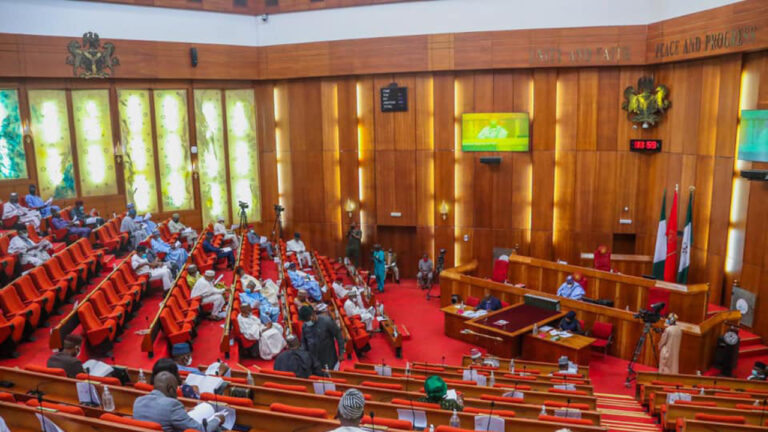
The Nigerian Senate on Monday, February 24, commenced a two-day public hearing on tax reform bills that aim to overhaul the country’s tax system and improve revenue generation.
The hearing, organised by the Senate Committee on Finance, engages key government officials and stakeholders to deliberate on the proposed legislation.
The chairman of the Senate Committee on Finance, Sani Musa, said the hearing followed extensive consultations with relevant stakeholders on Wednesday, February 19, after a closed-door meeting.
He assured that the process would be transparent and thorough to ensure that all concerns are addressed for Nigeria’s economic growth.
The legislative discussions are expected to focus on four key bills: the Joint Revenue Board Establishment Bill, the Nigerian Revenue Services Bill, the Nigerian Tax Administration Bill, and the Nigerian Tax Bill.
According to Musa, high-profile officials, including the Minister of Finance and Coordinating Minister of the Economy, Wale Edun; the Attorney-General of the Federation, Lateef Fagbemi; Chairman of the Federal Inland Revenue Service (FIRS), Zacch Adedeji; the Statistician-General of the National Bureau of Statistics, Adeyemi Adeniran; the Minister of Petroleum, and the Minister of Trade and Investment, among others are expected at the hearing.
Background
The public hearing came amid growing debates over President Bola Tinubu’s proposed tax reforms, which have sparked concerns among stakeholders, particularly in Northern Nigeria.
Despite opposition, the Senate passed the four tax reform bills for a second reading in November 2024, following a heated debate led by Senate Majority Leader Opeyemi Bamidele.
While proponents argue that the bills will simplify taxation, reduce burdens on small businesses, and streamline revenue collection, critics, including some Northern governors and senators, have raised concerns about the timing and potential impact of the reforms.
Ali Ndume, senator representing Borno South, had suggested that necessary amendments be made before the bills are finalised.
The Tinubu administration positioned these reforms as crucial for strengthening Nigeria’s fiscal institutions, boosting government revenue, and aligning tax policies with economic development goals.
Further insight into the bills are; the Nigeria Tax Bill 2024, which is expected to provide the fiscal framework for taxation in the country, and the Tax Administration Bill, which will provide a clear and concise legal framework for all taxes in the country and reduce disputes.
Others are; the Nigeria Revenue Service Establishment Bill, which will repeal the Federal Inland Revenue Service (FIRS) Act and establish the Nigeria Revenue Service, and the Joint Revenue Board Establishment Bill, which will create a tax tribunal and a tax ombudsman.
The president stated that the bills would strengthen Nigeria’s fiscal institutions and align with his administration’s broader development goals.
In 2023, the federal government stated about 26.5 million people would be grappling with high levels of food insecurity with approximately 9 million children at risk of suffering from acute malnutrition. Findings reveal that several factors are driving this trend, including conflicts and climate change impacts. In Bauchi State, the 2024 flooding incidents have compounded the issue as many farmers say flooding hindered food availability and access.
With the flooding incident that submerged Katagum Local Government Area (LGA) in September 2024, farmers like Azumi Ali, a woman in Maluri, Buskuri Ward, could only look into the sky, hoping for a miracle to restore her already lost farm products.
It was the period of seasonal farming and Ali’s farm, along with those of her husband, and children, was affected by the devastating flood that washed away countless hectares of farmland. On separate plots, the family had cultivated sesame, beans, rice, and sorghum that would have been sold for income and also stored as foodstuff for their families.
Azuma Ali, one of the affected farmers in Maluri, of Katagum LGA. Photo: The ICIR
Their hopes had been strained by delayed rainfall and an unusually hot season. But their predicament worsened with the flood, which not only submerged Ali’s farmland but also destroyed the produce that would had sustained her family until the next rainy season.
“All are now gone to the flood. Where we used to get 20 bags, we now barely manage two. We’re just managing what we will eat from now until the rainy season. We are in a very difficult situation, praying for God’s intervention,” he said.
Year after year, Ali took loan from a microfinance bank to invest in the farming, which in turn turned profitable for the family. But now not only does she battle with her family’s sustenance, but she also has to think of means to sort out her loan before next season.
For Babangida Shuaibu, another farmer in Maluri, the story is no different. Shuaibu, a father of 11, had cultivated rice, and millet on his three-hectare farmland. However, the August flood turned his fields into an expanse of muddy water. The flood left nothing salvageable.
Babangida Shuaibu, another farmer in Maluri, who lost a large part of his farm produce to floodwaters
Standing in his waterlogged farm, he described the flood’s impact as a pathetic situation, adding that he lost all his farm produce in a blink of an eye. Shuaibu had worked tirelessly alongside his wife and eldest son during the cultivating season. The family invested their savings and took a loan to purchase fertilisers and improved seeds, hoping to maximise their yield. But the floodwaters swept away the crops and weakened the family’s financial stability.
“Honestly, we are in a pathetic situation due to the flood. Our farmlands have been destroyed, and our farm produce has been lost. This difficulty is what makes us devise a means to survive by planting potatoes, and cassava. Without government intervention, we will not be able to compensate for the losses. In my farm, I expected 15 bags but ended up having 2 bags which cannot sustain me and my extended family,” he said.
The 50-year-old Shuaibu and Ali are just a few out of an estimated 1.15 million people, many of them small subsistence farmers, across the country who have seen their crops decimated by what has now become annual flooding.
This season’s harvest across the country has been ruined by floods, with thousands of hectares of farmland submerged and vital soil nutrients washed away, paving the way for an even more challenging planting season ahead.
Bauchi accounts for a significant part of the agricultural produce in the country. The state’s vast fertile soil is an added advantage for agricultural produce, which include maize, rice, millet, groundnut, and guinea corn.
The state also spans two distinct vegetation zones: the Sudan savannah and the Sahel savannah. The southern part of the state is covered by the Sudan savannah, where the vegetation becomes denser and greener, especially near rivers and other water sources. However, the plants and grasses in this area are generally less dense and shorter compared to the lush vegetation found farther south in the forest zones of the Middle Belt.
The Sahel Savannah, also called semi-desert vegetation, becomes noticeable from the middle of the state as you move northward. This vegetation consists of scattered thorny shrubs. In contrast, the southwestern part of the state is hilly due to the extension of the Jos Plateau, while the northern region is predominantly sandy.
Backstory
In August 2024, a heavy flood swept through many farmlands in Katagum LGA after a torrential rainfall. The flooding inundated roads destroyed homes and beyond that was the farm produce, livestock, and farmland destroyed.
The Office for the Coordination of Humanitarian Affairs (OCHA) and the Federal Government report in September, 2024, estimated that about 31 states, including Bauchi and 180 local government areas (LGAs), were severely affected, with over a million individuals affected, leading to widespread displacement, loss of lives, and destruction of homes and livelihoods.
In these states, the floods left at least 641,598 persons displaced, 285 people dead, and 2,504 injured. Houses, farmlands, and critical infrastructure were devastated, with 98,242 homes affected.
Bauchi has 94,022 affected persons, following Borno, which has 414,000 affected persons while Sokoto follows Bauchi closely with 83,000 persons affected.
In terms of displacement, Borno, Sokoto and Bauchi are also among the hardest hit, with 389,267, 48,000 and 36,000 displaced persons respectively.
According to the United Nations, Nigeria and other West Africa countries have experienced some of its worst flooding in decades, with more than 2.3 million people affected so far in 2024, a threefold increase from 2023.
Africa nations are losing up to 5 per cent of their gross domestic product (GDP) every year as they bear a heavier burden than the rest of the world from climate change, a report said on Monday, September 2, 2024, after one of the continent’s hottest years on record.
Nigerians at risk as food crisis worsen
During a visit to Bauchi State, many farmers who spoke to The ICIR, bemoaned the unavailability of food and humanitarian crisis in the state.
The rice and other produce harvest this year, which is mostly expected around November-December, would no longer be feasible for most farmers and thus, increase rice importation.
Like Babangida Shuaibu, local farmers revealed extensive crop losses, with many fearing they will be unable to recover in time for the next planting season. The destruction of infrastructure, including irrigation systems and storage facilities, further compounds the challenges for the smallholder farmers.
The floods in Bauchi are part of a larger pattern of climate-induced shocks that have placed millions of Nigerians at risk of hunger. About 26.5 million people were already projected for high levels of food insecurity with approximately 9 million children at risk of suffering from acute malnutrition or wasting in 2023, by the Nigerian government, according to a joint statement from the Office for the Coordination of Humanitarian Affairs (OCHA) and the Federal Government.
The projection was due to conflicts, inflation, and declining agricultural productivity. Flooding, combined with these factors, worsens food availability and accessibility, particularly in northern states like Bauchi, which are already grappling with poverty and child malnutrition.
Amid the worsening food crisis, the government in July 2023, declaredstate of emergency on food insecurity to tackle rising food prices and shortages. But its impact has barely been noticed by many Nigerians with soaring inflation and food prices.
The ICIR reports that Nigeria’s headline inflation increased to 34.19 per cent in June 2024 from 22.8 per cent in June 2023 and 33.95 percent in May 2024. Food inflation remains the primary driver of headline inflation, rising to 40.87 per cent on a year-on-year basis, compared to the 25.25 per cent rate recorded in June 2023.
On a month-on-month basis, the food inflation rate in June 2024 also rose to 2.55 per cent compared to the 2.28 per cent recorded in May 2024.
The situation began to stabilise in July this year as the effects of the naira devaluation waned. However, the devastating floods that destroyed crops, along with petrol price hike, reignited price pressures, with Nigeria’s inflation rising for the second straight month in October, advancing to 33.88 per cent.
A National Bureau of Statistics (NBS) report said that food inflation climbed to 39.16 percent year-on-year in October. This shows an increase from 37.77 percent in the previous month, driven by rising prices of staples such as rice, maize, bread, potatoes, and cooking oil.
The World Bank, in its food security report for September 2024, ranked Nigeria as the fifth country most hard hit by food inflation globally and the third in Africa only trailing Malawi and Liberia. The report identified Nigeria as one of the nations facing worsening food security conditions due to conflicts in food-producing areas, environmental challenges from climate change, and other contributing factors.
This assessment is evident in the 2024 Global Hunger Index (GHI), where Nigeria ranks 110th out of 127 countries. Scoring 28.8 points on the index, Nigeria falls within the category of countries experiencing “serious” hunger levels.
‘Our lives are drowning too’
A 22-years-old farmer, Muhammad Bappa, stood in front of his flood-ravaged land, still reeling from the devastation caused by this year’s flood. While four months have passed, the view of his farmland is still a source of sadness to him.
The farmland, which he had tilled and cultivated on, is now hard and cracked, its structure permanently altered by the inundation. The floodwaters, which had submerged the farm during the flooding, wiped out his entire harvest.
What seems to be left of the crops has long been withered. Left were only the remnants of uprooted plants scattered across the land. He was still sad, devastated and confused. But he is not alone. Across Zindi, Misau LGA, and other flood-affected areas in the state, countless farmers shared similar stories of severe loss.
Twenty-two-years-old Aminu Muhammad, lamenting the impact of flooding on his farmland.
For Aminu Muhammad, who relocated from Kano to Zindi to work on an irrigation farm, the situation is even more dire.
“We hoped for a bumper harvest this year,” he lamented, “but we ended up with little or nothing. We are now facing food scarcity due to low harvest. We expected to be free from last year’s suffering, but this was what happened to us; another endless suffering to look for food.
“Some of us cannot even face our creditors due to inability to pay the debt. We are in a pathetic condition. We didn’t even make enough to feed ourselves let alone having enough to pay back the loans. We have borrowed money and now have no means to repay.
“There are farms that we used to harvest ten bags but not a single bag was harvested. Some farms have nothing left and we don’t have other farms aside from the ones flooded. With a single farm which has been flooded and family to cater for, we are in a difficult situation and need urgent support. Just put yourself in the position,” he said.
Over N50 billion Kano-Maiduguri highway torn apart by floods
Beyond the washing away of farmlands, the 2024 flooding was particularly damaging, as it split a portion of the newly built Kano-Maiduguri highway in two.
The affected Kano-Maiduguri highway.
The highway, built at a cost of N51.99 billion, was designed to improve transport across the region. However, its collapse in August has only worsened the already dire food insecurity in the area.
The project was intended to involve the construction of a 177.78 km two-lane road and the rehabilitation of the existing road between Shuwarin and Azare towns. The scope of work also included a 200mm laterite sub-base, a 200mm stone base, 60mm asphalt binder, and 40mm wearing courses, with an additional 24.4 km stretch of dualisation from Dutse to Kwanar-Huguma in Jigawa State.
Also, the road was designed to be paved to a width of 7.30 meters on both sides, with 2.75 meters of surface-dressed outer shoulders and 1.5 meters of inner shoulders.
Originally awarded to Messrs Setraco Nigeria Limited in October 2006 for N35.84 billion with a completion date set for February 2010, the project saw its cost revised to N65.31 billion, with the completion timeline pushed to December 2020 due to the added 24.4 km dualization in Jigawa State.
By 2019, N1.77 billion had been allocated to the project, with N300 million released and utilized. While only 78.63 per cent of the project was completed at the time of the the report, The ICIR gathered that road has been put to use since 2021.
Another section of the affected highway road.
For Bauchi’s farmers and consumers across the nation, the destruction of the road further driven up food prices and limited access to markets, deepening the region’s food crisis.
Residents who spoke to The ICIR, noted that the lack of proper drainage system on the road side leading to the community might not be unconnected to the the flood that ravaged the road and the surrounding farmland.
More woes
Down in his farm, clearing the remnant of the ravaged crops, Abubakar Sama’ila, 55, a farmer with nine children and two wives, said he’s left with nothing after the torrent flooding.
Abubakar Samaila’s affected farmland.
The flood has left nothing but destruction,” Sama’ila said, referring to his devastated crops of sorghum, millet, and rice. “As you can see the places are just deserted after the flood. You can’t find a farmer here that harvested five bags. Had it been there was no flood, ten or more bags can be harvested in any farm here, but this is what Allah has destined us with. We are just praying and hoping that next year it will not occur.”
Last year’s flood was devastating blow to Muazu Zindi, a 45-year-old farmer from Misau Local Government Area. A father of eight, with two wives and three grandchildren, Adamu’s life revolved around his crops, which he grew to feed his family.
“But the flood came at the time when we were about to harvest our millet,” Muazu recalled.
“But instead of collecting it from the fields, we had to pluck the millet heads while standing in the flooded water. It was that bad. The sorghum, rice, and beans – all was washed away from here to here,” he said.
Muazu Zindi, another affected farmer in Bauchi state.
Muazu’s harvest was cut drastically short. He managed to salvage just 13 bags of millet, but the sorghum, a major part of his income, was gone. “I’ve lost about two-thirds of my sorghum. If the flood hadn’t come, I would have gotten as much as I did with the millet. But now, there’s nothing.”
Like Muazu, Abdulkadir, Alhassan’s hopes were also dashed by the relentless flooding that swept across his farms.
“Had the farm not been flooded, I would have harvested 15 or more bags of sorghum,” he lamented. Instead, he was left with only seven bags. “I planted 49 measures of rice seeds, but after harvest, I only had two measures left. I had to eat them right there in the field. I didn’t even take them home,” he added.
Nearly 31.8m Nigerians at risk of hunger – FAO
In its December 9th report, the Food and Agriculture Organisation (FAO) warned that nearly 31.8 million Nigerians were at risk of acute food insecurity, with the ongoing floods affecting nearly every region.
It noted that in September 2024, the floodwaters submerged more than 1.3 million hectares of land, including over 558,000 hectares of cropland, compounding the crisis and displacing thousands of people.
According to FAO, as of early September, over 2.5 million people had been impacted by the floods, with approximately 200,000 displaced. The FAO expressed deep concern over the long-term impact on food security, with vulnerable communities being pushed deeper into poverty as their livelihoods were washed away.
“The floods continue to push vulnerable communities deeper into poverty, and the widespread loss of farmland will severely affect food security. Urgent coordinated action is needed to avert a worsening humanitarian disaster,” said FAO’s representative ad interim, Koffy Dominique Kouacou.
“Enhanced infrastructure improved early warning systems and rapid response mechanisms are crucial to addressing the crisis and building long-term resilience,” he adds.
Victims seek urgent action, lament negligence by government
Some of the farmers who spoke to The ICIR noted that, while the government showed an interest in empowering them, the promises have not yet been actualised.
The Maluri community leader in Katagum LGA, Jauro Abdulkadir, explained that the damages caused by the flooding in the are too extensive for residents to handle on their own.
Maluri community leader in Katagum LGA, Jauro Abdulkadir.
According to him, some farmers secured fertilisers through loan while some cultivated their farmlands with loan but all were washed away by the flood.
“There are some farmers here who secured fertiliser loans from some individuals, to repay after harvest. There are some who had nothing and went to ‘well to do’ individuals to collect money and food items such as three or four bags loans with the hope of repaying. But all their farmlands have been ravaged by the flood, and they are now in a difficult situation.
“The flood is not peculiar to one place, and this brings about food shortage and the increase in price. Some of the farmers have not transported their farm produce to the markets due to the flood,” Abdulkadir said.
He further stated that the government had promised to provide care for the farmers during their visitation to the community but noted that they have gotten nothing from that.
Similarly, Alhassan Abdulkadir, head of a family of 14, said while there was relief package given to those whose houses were destroyed, the farmers were left to grapple with the aftermath of the crisis themselves.
Abdulkadir who had taken loan to cultivate his corn farm said: “We have not been supported but there was a relief package given to those whose houses have been destroyed by flood in Buskuri Ward but not farmers whose farmlands were affected.
The farmers also expressed concerns over the lack of proper flood warning systems, which they believe could have helped them prepare better and reduce losses.
Assessing the future implications and solutions
The influence of global warming on weather patterns, marked by heatwaves, heavy rainfall, and drought, contributes to this crisis. In regions already contending with water constraints, climate change exacerbates adverse effects on agricultural production.
An Environmentalist and Disaster Risk expert, Mayokun Iyaomolere, said: “The consequences of flooding in the region, as already mentioned, leading to food insecurity, affecting plants and animal conservation, and also already affecting the quality of soil. So, persistent flooding can continue to wash away soil, topsoil that has all the nutrients for cultivation. When erosion occurs, it changes the configuration of the soil, and the process nutrients is lost and debris from floodwaters is deposited on soil. All of this generally impacts agricultural activities, whether it’s for cultivating plants or even for cultivating food for animals to eat.
“And if animals are resident or positioned in such flooded lands, they can also get washed away, or less land become available for them to even be reared on.”
The expert also highlighted how recurring flooding contributes to water pollution. He noted that the ecological consequences extend further, with significant impacts on wildlife and biodiversity
“Floods contribute to global warming, that leads to climate change, and then the whole cycle continues, climate change leading to affecting rainfall patterns, could lead to flooding, and it could be a vicious cycle of flooding contributing to gas emissions that lead to climate change, and all of that process just continue.”
While linking the environmental and agricultural impact to food insecurity, he emphasised on the strong connection between food insecurity and flooding.
“Flooding affects crop and animal production, and when that’s affected, it impacts the quantity of food that becomes available to purchase.
To mitigate the impacts of flooding and its ripple effects on food security and the environment, the expert recommended investing in climate-resilient agricultural practices, such as improved irrigation systems and flood-resistant crop varieties, to safeguard food production.
Bauchi government ignores ICIR’s request for comment
The ICIR reached out to the Bauchi State Governor, Bala Mohammed, through his spokesperson, Muktar Gidado, on Tuesday, January 2, via phone calls and messages, but his phone line was not reachable. He also failed to respond to the messages.
Reminders were sent to his line, but as of press time, he has not responded.
OSUN State Governor Ademola Adeleke has inaugurated the newly elected local government chairpersons and councillors in the state.
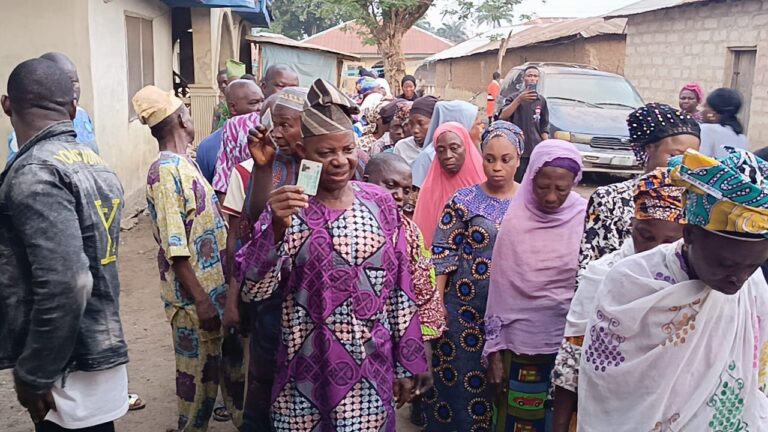
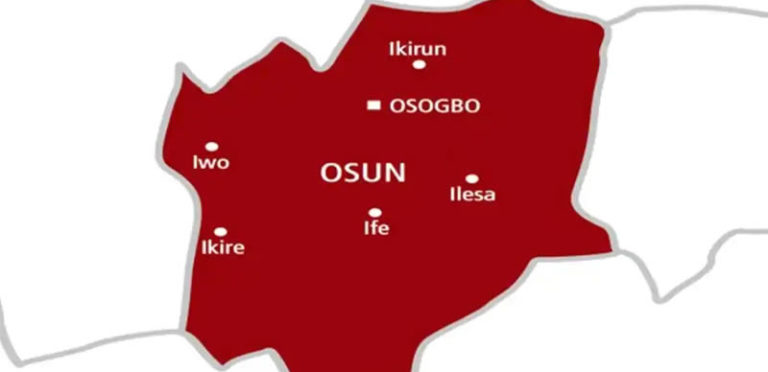
Swearing in the officials in Osogbo, the state capital, on Sunday, February 23, the governor described the occasion as a major milestone in the state’s democratic process. He said the event proved that the election conducted on Saturday, February 22, followed due process.
Adeleke charged the officials to prioritise good governance while cautioning against seizing council secretariats in the state by force.
He also appreciated President Bola Tinubu “for resisting efforts by certain groups to destabilise” the state.
The governor reflected on the path to the local government election, affirming that the Osun State Independent Electoral Commission had adhered to all legal processes for the poll.
“The state electoral body had issued due notice of election a year ago. I know the commission had complied with all extant rules and procedures which led to the emergence of new local government chairmen and councillors,” he stated.
While acknowledging the legal controversies surrounding the election, Adeleke affirmed that his administration acted within the ambit of the law.
“It is, however, a thing of joy that the facts are out in the public domain, and we are satisfied that we are on the side of the law within the context of the rule of law and the constitution,” he added.
The governor also appreciated the people of the state for their support. He assured them that his administration would remain committed to their welfare.
Adeleke commended OSIEC, security agencies, and state officials for ensuring the success of the election.
The governor strongly advised the newly elected chairmen and councillors to avoid confrontation at local government secretariats, citing an ongoing legal process to resolve the leadership crisis.
“I urge you and your councillors to please stay away from the council secretariats to avoid any clash with those whom the police had aided to forcefully occupy the local government secretariats,” Adeleke cautioned.
He referenced an Osun State High Court ruling that had affirmed vacancies in both chairmanship and councillorship positions before the election on February 22. He assured that his administration would rely on the judiciary to remove “those illegally occupying the secretariats.”
Meanwhile, the chairman of the Osun State Independent Electoral Commission, Hashim Abioye, declared 30 chairmanship candidates of the Peoples Democratic Party (PDP) the election winners. The PDP also cleared all 332 councillor seats in the state.
Reacting to the declaration, the director of media of the All Progressives Congress (APC) in the state, Kola Olabisi, alleged that Abioye manufactured the results, as according to him, no election was held in the state.
Olabisi, during an interview with the PUNCH, said OSSIEC had made the state an object of ridicule.
He said, “Where did he get the results from? The whole world knew the election did not take place in Osun today. Yet OSSIEC, hell-bent on making Osun an object of derision among the comity of states in the country, concocted results.
“It is an illegality that will not stand. No vacancies in council areas in the state. The whole world knew the election did not hold, yet some people wrote results inside Osun Government House and announced them to the world. Nigeria is not a Banana Republic. The constitution will take care of the charade and it won’t stand.”
Background to the story
The ICIRreported that the Attorney General of the Federation (AGF) and Minister of Justice, Lateef Fagbemi, had warned the state governor against proceeding with the election.
The AGF told Adeleke to ask the Osun State Independent Electoral Commission (OSIEC) to suspend the election.
In a statement he signed on Thursday, February 20, he warned that conducting the poll would be invalid and unconstitutional.
This,according to him, is because the Court of Appeal, Akure Division, recently ruled that the tenure of the sacked council chairpersons and counsellors elected in 2022 (before Adeleke assumed power) was still running.
The AGF stated that his attention was drawn to Adeleke’s public outcry regarding the Court of Appeal’s judgment in Akure.
He said the judgment, delivered on February 10, 2025, in Appeal No. CA/AK/272/2022, nullified the Federal High Court’s judgment in Osogbo, which was delivered on November 25, 2022, against those elected in 2022.
Fagbemi explained that the controversy surrounding the local government elections in the state began during the tenure of former Governor Adegboyega Oyetola. He said elections were held in all local governments in the state, and the winners were sworn in.
Fagbemi recalled that just before Adeleke’s swearing-in, the Federal High Court in Osogbo nullified the poll that brought the chairpersons into office.
He added that in response, Adeleke issued an executive order to remove the elected officials and replaced them with caretaker appointees shortly after assuming office.
Rsponding, Adeleke vowed that his administration would proceed with the latest election, despite the Federal Government’s warning.
THE National Drug Law Enforcement Agency (NDLEA) has arrested a 24-year-old Thai lady, Pattaphi Wimonnat, at the Murtala Muhammed International Airport, Lagos State, with illicit drugs.
The NDLEA in a statement by its spokesman, Femi Babafemi, on Sunday, February 23, said Wimonnat was nabbed on Thursday, February 20, by its operatives who thwarted her attempts to smuggle 43 parcels of Canadian Loud, a synthetic strain of cannabis, weighing 46.60 kilograms into Nigeria.
He said the suspect was apprehended at the airport’s arrival hall during the inward clearance of passengers from Thailand through Doha and the illicit consignment was discovered in her boxes.
“The suspect who confessed to being a hired drug trafficker said the drug cartel, which recruited her, promised to pay her $3,000 upon successful delivery of the illicit drug consignment in Nigeria,” the statement read.
The anti-narcotics agency also said it successfully intercepted a shipment intended for London, through the export shed of Lagos Airport by another drug trafficking syndicate attempting to smuggle 68 parcels of Ghanaian Loud, weighing 42.2kg, concealed within the walls of crated cartons, on Friday, February 21.
“Three suspects: a freight agent and two dispatch riders were initially arrested in connection with the seizure before the mastermind of the shipment, Samuel Bitris, was swiftly traced to his Exodus Estate, Ajah, Lagos home where he was arrested.”
In operations across Port Harcourt, Nasarawa, and Niger States, the NDLEA intercepted 49 cartons containing 49,000 pills of Tamol, a brand of Tramadol 225mg, in a 40ft container and arrested four suspects.
The ICIRreports that the NDLEA arrested 14,480 drug traffickers and seized 2.4 million kilogrammes of illicit drugs between January and October 2024 at seaports, airports, land borders and communities across the country.
THE Nigeria Immigration Service (NIS) has arrested 155 foreigners for cybercrimes and unauthorised entry into the country.
According to the Punch, the Service said the arrests were made between January and February 2025 through a series of coordinated operations across Rivers, Ogun, and Oyo states.
Following directives from the Comptroller General of Immigration, Kemi Nandap, the apprehended individuals have been deported.
A breakdown of the number showed that 90 illegal immigrants involved in cybercrimes designed to defraud unsuspecting Nigerians were arrested in Rivers State in January.
The operation, conducted in collaboration with other security agencies, resulted in the arrest of 94 people, including 85 Cameroonians, five Chadians, and four Nigerians. The group comprised 74 males and 20 females.
Rivers State Comptroller of the NIS, Y.I. Abdulmajeed, revealed that none of the 90 foreigners had valid residence permits or travel documents.
Also, 25 illegal migrants were arrested at a commercial farm in Odogbolu Local Government Area of Ogun State in February.
According to the Ogun State Comptroller of the NIS, Mr A.M. Akadri, the suspects were all Beninese nationals working as farm labourers without valid travel documents or permits. They also entered Nigeria through unauthorised routes.
In the same vein, the Oyo State Command also arrested 40 illegal immigrants at various locations within Akinyele Local Government Area in February.
The suspects included 27 Cameroonians, two Ghanaians, 10 Beninese, and one Togolese. Among them, 32 were males, while eight were females, all aged between 18 and 35.
According to Oyo State Comptroller, Tayo Dada, 10 of the arrested individuals were farmers, while 30 claimed to be online marketers.
He added that none of them possessed valid travel documents, and they all entered Nigeria through illegal routes.
The Minister of Interior, Olubunmi Tunji-Ojo, recently disclosed that the Federal Government deported 828 illegal immigrants in 2024 as part of its efforts to combat irregular migration and improve national security.
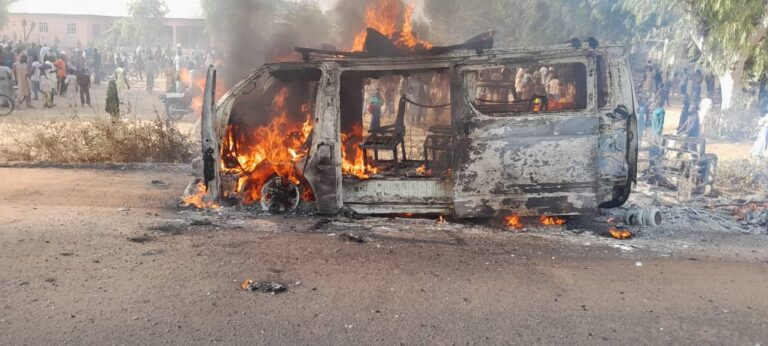
FOUR people were burnt to death and 10 others were injured in a fire that consumed a Hummer bus in Jigawa State on Saturday, February 22.
The state Police Command spokesperson, Lawan Adam, a superintendent of police, said in a statement on Sunday, February 23, that the incident occurred around 4:00 pm near Government Girls Unity Secondary School in the Gwaram area of the state.
The bus was travelling from Zaki Local Government Area in Bauchi State to Rabadi village in Gwaram LGA.
The police said the bus was carrying 44 passengers, comprising 25 adults and 19 children.
Initial investigations suggest the fire began when the vehicle’s exhaust touched a mattress strapped to the back of the bus, sparking flames that rapidly spread.
“The victims were identified as Zuwairah Hassan, 40; Fatima Hassan, 5; Iyatale Hassan, 3; and Halima Muhammad, 10 — all from Saldiga village in Zaki LGA, Bauchi State,” the statement said.
Ten injured passengers were rushed to Gwaram Cottage Hospital for treatment, while others were safely evacuated. The bodies of the deceased were released to their families following medical examinations, said the statement.
The Jigawa State Police Command advised commercial drivers to focus on safety by avoiding overloading and performing regular vehicle inspections.
“We urge all drivers to be mindful of the safety of their passengers and other road users. Overloading and reckless driving can have devastating consequences, as we have seen in this tragic incident,” the statement added.
The ICIR reports that the accident followed a similar tragedy in the state in October 2024 in which nearly 200 people died from an explosion when residents were scooping fuel from a fallen tanker.
ANAMBRA State Governor Charles Soludo has expressed shock over how illicit drugs get into Nigerian markets through the nation’s borders under the watch of security officials.
Soludo stated this when he visited the Ọgbọ Ogwụ Market in the Onitsha area of the state on Saturday, February 21.
His visit followed the recent impoundment of fake drugs and closure of some markets suspected to harbour fake and banned drugs by the National Agency for Food and Drug Administration and Control (NAFDAC)
The NAFDAC had shut down over 11,000 drug shops in Aba (Abia State), Onitsha (Anambra State), and Idumota (Lagos State, seized 77 truckloads of counterfeit drugs, and arrested 40 suspects.
Soludo said tackling counterfeit drugs should start at the country’s entry points, where the harmful products are smuggled into the nation, in addition to local regulatory efforts.
Among the markets reportedly shut in Onitsha by NAFDAC are Ogo Ogwu, Plumbing Materials, Rod, Allied and Tools markets.
The government said, “I visited the Ọgbọ Ogwụ and adjoining markets today in Onitsha. As the biggest open drug market in Africa, it is not surprising that federal agencies and regulatory bodies would, from time to time, visit the market to enforce standards and check the sale of fake, counterfeit, and controlled drugs.
“With drugs and related matters strictly under the Exclusive List, my visit today was interventionist. First, I sought to ascertain why other markets close to the drug market in Onitsha were closed.
“Away from the media sensation created by a few political actors, the leadership of the Plumbing Materials Market, which was shut down alongside the drug market, confirmed to me that the discoveries made by regulators in some shops were shocking and disturbing.”
The governor added that several shops were found storing cartons of counterfeit drugs, many of which were banned both locally and internationally. He questioned how these drugs, produced in India, manage to pass through the country’s sea and air ports and end up in local markets.
He appealed to the Federal Government to intensify efforts to crack down on the supply chain of these harmful drugs, stressing the need to tighten controls at the source. He also suggested that the market inspections be done on time to allow traders at the Plumbing Materials Market to reopen and resume legitimate business within 10 days.
Highlighting his efforts to address the issue, he listed the construction of a wholesale drug centre in Oba, Idemili South Local Government Area of the state, which will be the major drug hub in the state.
“This is our contribution to ending the current chaotic market environment where fake and counterfeit drugs thrive,” he stated.
Meanwhile, Soludo’s position contrasts with his predecessor and the Labour Party presidential candidate in the 2023 election, Peter Obi.
Obi had, in a statement on X on Monday, February 17, voiced his dissatisfaction with the closure of other markets neighbouring the Ọgbọ Ogwụ Market.
Obi had called on regulatory and security agencies to reconsider the closure of markets surrounding the Head Bridge Market in Onitsha, after the crackdown on illegal drug activities within the area.
While the former governor condemned the sale of counterfeit drugs and supported the prosecution of those responsible, he raised concerns about the collateral damage caused by the blanket closure of nearby markets, which he said were not involved in the illegal sale of drugs.
“Shutting down neighbouring markets like Rod, Allied and Tools, Plumbing Materials, Timber, Surgical, and Provision Markets, which have no connection to the illicit drug trade, is excessive and unjustified.
The continued closure is severely affecting the livelihoods of millions, especially during this difficult period in our country,” he said.
Obi recalled how his administration addressed similar public health threats when he led the state.
He questioning the rationale behind the extended market closures, asking, “If the goal is to conduct a legitimate search, why extend the closure to other markets? What are their offences?”
MILLITARIES that have taken power in Africa’s Sahel region – notably Mali, Burkina Faso and Niger – have put pressure on western mining firms for a fairer distribution of revenue from the lucrative mining sector.
Gold is one of the resources at the heart of these tensions. West Africa has been a renowned gold mining hub for centuries, dating back to the ancient Ghana empire, which earned its reputation as the “Land of Gold” because of its abundant reserves and thriving trade networks. The region remains a global leader in gold production. As of 2024, west Africa contributed approximately 10.8 per cent of the world’s total gold output.
But why is there so much gold in this region? The Conversation Africa asked geologist Raymond Kazapoe to explain.
How is gold formed?
The simple answer here is that we are not certain. However, scientists have some ideas.
Gold, like all elements, formed through high energy reactions that occurred in various cosmic and space environments some 13 billion years ago, when the universe started to form.
However, gold deposits – or the concentration of gold in large volumes within rock formations – are believed to occur through various processes, explained by two theories.
The first theory – described by geologist Richard J. Goldfarb – argues that large amounts of gold were deposited in certain areas when continents were expanding and changing shape, around three billion years ago. This happened when smaller landmasses, or islands, collided and stuck to larger continents, a process called accretionary tectonics. During these collisions, mineral-rich fluids moved through the Earth’s crust, depositing gold in certain areas.
A newer, complementary theory by planetary scientist Andrew Tomkins explains the formation of some much younger gold deposits during the Phanerozoic period (approximately 650 million years ago). It suggests that as the Earth’s oceans became richer in oxygen during the Phanerozoic period, gold got trapped within another mineral known as pyrite (often called fool’s gold) as microscopic particles. Later, geological processes – like continental growth (accretion) and heat or pressure changes (metamorphism) released this gold – forming deposits that could be mined.
Where in west Africa is gold found and what are its sources?
Most gold production and reserves in west Africa are found within the west African craton. This is one of the world’s oldest geological formations, consisting of ancient, continental crust that has remained largely unchanged for billions of years.
The craton underlies much of west Africa, spanning parts of Mali, Ghana, Burkina Faso, Côte d’Ivoire, Guinea, Senegal and Mauritania. In fact, most west African countries that have significant gold deposits have close to 50 per cent of their landmass on the craton. Notably, between 35% and 45% of Ghana, Mali and Côte d’Ivoire’s territory sits on it – which is why these areas receive so much attention from gold prospectors.
Gold deposits were formed within west Africa’s craton rocks during a major tectonic event, known as the Eburnean Orogeny, 2.2 billion to 2.08 billion years ago. This event was accompanied by the temperature, pressure and tectonic conditions which promote gold mineralisation events. Most of the gold resources in the west African craton are found within ancient geological formations formed by volcanic and tectonic processes about 2.3 billion to 2.05 billion years ago. These are known as the Rhyacian Birimian granitoid-greenstone belts.
These gold-bearing belts in Ghana and Mali are by far the most endowed when compared with other countries in the region. Ghana and Mali currently, cumulatively account for over 57 per cent of the combined past production and resources of the entire west Africa sub-region.
Ghana is thought to be home to 1,000 metric tonnes of gold. The country produces 90 metric tonnes each year – or 7 per cent of global production. Gold production in Mali reached around 67.7 tonnes in 2023. Mali has an estimated 800 tons of gold deposits.
By comparison, the world’s two largest gold producers are China (which mined approximately 370 metric tonnes of gold in 2023) and Australia (which had an output of around 310 metric tonnes in 2023).
What are some of the modern exploration tools used to find gold?
Gold was traditionally found by panning in riverbeds, where miners swirled sediment in water to separate the heavy gold particles, or by digging shallow pits to extract gold-rich ores. Over time, methods have evolved to include geochemical exploration techniques, advanced geophysical surveys, and chemical extraction techniques, like cyanide leaching.
Geological mapping techniques are always evolving, and at the moment, there is a lot of interest in combining remote sensing data with cutting-edge data analytics methods, like machine learning. By combining these two methods, geologists can get around some of the problems caused by traditional methods, like the reliance on subjective judgement to create reliable maps and the need to spend money prospecting in areas with low chances of success.
In recent years, deep learning computer techniques have made significant progress. They examine various geological data-sets to reduce uncertainty and increase the chances of finding gold mineralisation through advanced artificial intelligence techniques. These methods have proved highly beneficial in identifying specific features and discovering new mineral deposits when applied to remote sensing data.
Another method, which I’ve researched and which could serve as a complementary gold exploration tool, is the use of stable isotopes. Stable isotopes are elements – like carbon, hydrogen and oxygen – that do not decay over time. Some are responsible for helping to carry gold, in fluids, through rocks to form the deposits. As the gold-bearing fluids interact with the rocks, they transfer the stable isotopes to the rocks, thereby imbuing them with their unique signature. The thinking here is to identify the signature and then use it as a proxy for finding gold, since gold itself is hard to identify directly.
Advancements in analytical techniques have reduced the cost, volume, and time involved. This makes it a viable alternative to geochemical approaches – the most widely used and relatively efficient method.

![[UPDATED] Natasha: Senate invites Brekete Family show host, Ahmed Isah](https://www.icirnigeria.org/wp-content/uploads/2025/02/SSenate-President-Godswill-Akpabio-and-Brekete-Family-host-Ahmed-Isah-768x506.jpg "[UPDATED] Natasha: Senate invites Brekete Family show host, Ahmed Isah")