THE Nigerian government has approved a one-year moratorium for new applications for polytechnics and monotechnics with immediate effect.
This was disclosed in a statement on Thursday, February 13, by the executive secretary of the National Board for Technical Education (NBTE), Idris Bugaje, in Kaduna.
Bugaje said the move was to ensure that tertiary technical and vocational education and training institutions “are properly populated within their approved carrying capacities.”
The decision got the approval of the minister of education, Tunji Alausa, a doctorate holder.
The development comes a day after the Ministry of Education declared a one-year suspension on the establishment of new private universities in Nigeria.
Babuje said that the government exempted health institutions from the moratorium due to low enrollment the faced.
“Polytechnics awaiting ministerial approval will be required to pay an application fee of N4 million and a processing fee of N2 million per programme of study” he said.
It also noted that monotechnics would pay an application fee of N2 million and a processing fee of N1 million per programme of study.
He warned that applicants had 30 days to make the payments, or their registration process would be terminated.
“New health institutions, which are exempted from the moratorium, will pay the same fees as monotechnics for registration.” he stressed.
OANDO Plc, an Indigenous oil firm, has increasingly sunk deeper into debt, the company’s five-year financial reports indicate, raising concerns over growing liabilities.
An analysis of the reports reveals that Oando steeped into debt in 2020 and, since then, has been unable to crawl out of the obligation but rather widening its indebtedness.
A cursory look at Oando’s financial statements shows that in 2020, the company reported a negative equity balance of N67,68 billion after its total liabilities of N1.46 trillion exceeded its total assets of N1.39 trillion.
A negative equity on a financial statement indicates that a company’s liabilities are greater than its assets. It is a situation where a company has more debt than it can cover with its assets, thereby wiping out its shareholders’ funds.
In 2021, Oando’s total liabilities of N1.13 trillion exceeded its total assets with N129.02 trillion and the debt obligation further widened in 2022 to N197.21 trillion after its liabilities of N1.45 trillion exceeded its assets.
Despite returning to a positive bottom-line profit in the last two years, its financial position remains negative.
In 2023, Oando posted a N60.28 billion end-of-the-year profit. However, its debt obligation worsened to N267.18 trillion as total liabilities of N2.94 trillion were higher than its total assets.
Its unaudited 2024 financial statements released on January 30 also show that the indigenous oil firm’s indebtedness rose to N273.03 trillion as total liabilities of N7.78 trillion exceeded its total assets, despite reporting N65.49 billion profit.
The figures in this table were collected from Oando’s financial statements in the review years.
Put simply, assets are resources that a company owns, while liabilities are obligations it has, and the difference is its equity.
A further check on the company’s financial position shows that current liabilities also exceeded current assets in the years under consideration.
Current assets are short-term assets that a company can liquidate within a year, while current liabilities are short-term debts that a company expects to pay within a year.
Financial analysts say when current liabilities exceed current assets, the current ratio will be less than one. In that situation, the company might have problems meeting its short-term obligations.
Investors worry
The national president of New Dimension Shareholders, Patrick Ajudua, expressed worries that Oando has been posting negative equity since 2020 as a result of humongous debt exposure, which arose in the course of doing business.
He asserted that high interest rates on loans, foreign exchange losses as a result of the devaluation of the naira, oil theft, and pipeline vandalism contributed to accumulated losses the company recorded over time.
He noted that in the past two financial years, Oando has reported improved financial performance brought about by renewed vigour in getting more oil mining licenses, as seen in its acquisition of Agip Oil.
“This is leading to improvement in production capacity, the prospect of refinery business in Trinidad and Tobago, oil licence and mining in Angola. Also, current efforts by a strong management team led by Wale Tinubu in debt restructuring with the consortium of the bank have provided the financial breathing needed by the company.
“Don’t also forget the recent phase distribution of shares to shareholders by the board of Oando. All this is aimed at addressing the negative equity,” Ajudua said.
According to him, shareholders are unwavering in their confidence in Oando’s board and management in addressing the negative equity in the shortest possible time.
He pointed out that the rapid movement in the company’s share price on the floor of the Nigerian exchange market indicates a 52-week high of N89.
“This is a demonstration of investors’ confidence in the company, and we are hopeful if the above measures are well implemented, the company will be in a position to pay dividends to its ever-enduring shareholders,” Ajudua maintained.
In September 2023, The ICIRreported how the independent auditor of Oando, BDO Professional Services Chartered Accountants, expressed worries over the company’s ability to continue as a going concern.
“As stated in the notes, these conditions, together with other matters, indicate the existence of a material uncertainty that may cast significant doubt on the company’s and the group’s ability to continue as a going concern and, therefore, may be unable to realise its assets and settle its liabilities in the ordinary course of business,” the independent auditor, specifically stated.
2024 financial performance
Commenting on the company’s 2024 results, the group chief executive, Wale Tinubu, highlighted that Oando achieved a 45 per cent increase in revenue to N4.1 trillion, a nine per cent rise in profit after tax to N65.5 billion, despite a challenging operating environment.
He said the company’s acquisition and subsequent integration of Nigerian Agip Oil Company Ltd (NAOC Ltd), significantly enhanced its production capacity, attaining peak operated production of 103,206 barrels of oil equivalent per day (boepd) and net entitlements of 45,000 boepd.
He hinted that in 2025, the company will prioritise driving cost optimisation, and operational efficiency, streamline processes, enhance procurement, and leverage technology to improve productivity across our operations.
It will also intensify efforts to boost production through the dual approach of rig-less and workover initiatives while executing an aggressive drilling program across three rig lines.
“Simultaneously, in collaboration with other stakeholders, we are proactively tackling above-ground security challenges by implementing a revamped security framework that integrates advanced surveillance technology and intelligence-driven initiatives to curb the perennial, unnecessary, and unjustifiable theft of oil to ensure the long-term integrity of our vast network.
“As we look ahead to an exciting and successful 2025, we recognize that achieving our goals requires the unwavering support of our host communities and partners. Through extensive engagement, we will foster a collaborative ecosystem that not only secures our operations but also drives shared prosperity and sustainable development for all,” Tinubu said.
NATIONAL Security Adviser (NSA), Nuhu Ribadu, has slammed the Canadian Embassy in Nigeria for denying visas to Nigeria’s chief of Defence Staff, Christopher Musa, a general, and other top military officers.
The officers were due to attend an event in Canada to honour war veterans but only a portion of the delegation was granted visas. This drew the officers’ ire.
Ribadu expressed frustration at the Canadian embassy’s action on Thursday, February 13, while speaking at the inaugural annual lecture of the Alumni Association of the National Institute for Security Studies (AANISS) in Abuja.
The event, attended by security experts and government officials, focused on national security challenges and international cooperation.
Speaking on the visa denial, the CDS said his team had been invited to the veterans’ event but faced an unexpected setback when some members of the delegation were denied visas.
He described the situation as disappointing but saw it as a reminder for Nigeria to strengthen its independence and resilience.
“We were invited with our team. Half of us have gone, and half have been denied. It’s very disappointing.,” the CDS stated.
According to him, it is a clear reminder that Nigeria must stand on its own as a nation and should no longer be taken for granted, as he described the visa denial as disrespectful.
Responding, Ribadu said the incident was a challenge to work for Nigeria’s progress.
“Thank you for having the courage to say Canada denied you visas. They can go to hell. Even though it’s painful and disrespectful, we are peaceful and strong, and I agree with you that it is time to fix our country,” the NSA stated.
The ICIR reports that this is not the first time foreign embassies have denied Nigerian delegations to international event visas.
In 2024, Nigerians on social media expressed displeasure at the Spanish embassy’s refusal to grant the Nigeria Under-15 team visas to participate in the UEFA U16 Development Tournament, scheduled to begin on Friday, April 12.
On Monday, April 8, 2024, the Nigeria Football Federation (NFF), via its X handle, announced that players and officials would not participate in the tournament following the development.
However, the Federation did not specify the reason for the visa denial in the statement.
Reacting to the development, some Nigerians stated that refusing to grant the Nigerian team visa is ‘embarrassing and unacceptable.’
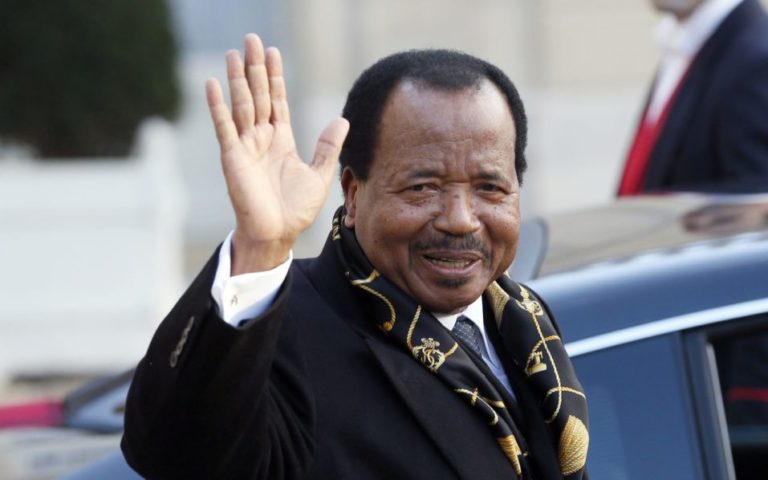
AS President Paul Biya celebrates his 92nd birthday today, Thursday, February 13, many Cameroonians have intensified their calls for leadership change in the country.
While a section of citizens demand his exit when his tenure expires later this year, others see him as a good leader who should continue in office.
Born on February 13, 1933, in Mvomeka’a, South Region, Biya has been Cameroon’s president since 1982, making him one of the world’s longest-serving leaders.
He clocks his 43rd year in office as president today. In addition to being a president for over four decades, he has been a public office holder since the nation got its independence in January 1960.
For instance, he was Chargé de Mission in the post-independence. He became the director of the cabinet of the Minister of National Education in January 1964 before rising to the post of secretary-general of the Ministry of National Education in July 1965.
In August 1968, Biya was nominated as a minister before becoming the country’s prime minister in June 1975.
He succeeded Ahmadou Ahidjo, who resigned from office in November 1982 and has since ruled the nation.
At 92, Biya is Africa’s second-longest-serving leader, trailing 82-year-old Teodoro Obiang Nguema Mbasogo of Equatorial Guinea, who has held power for 45 years.
Currently the world’s oldest president, Biya’s tenure has been riddled with political instability, with critics arguing that it has also led to democratic stagnation and an insecurity quagmire.
In recent months, concerns about Biya’s health have intensified due to his prolonged absences from public events. A BBC report shows that he was not seen in public for six weeks – between September to October 2024 – leading to rumours that he was ill.
However, his officials dismissed the rumours and argued that he was on a private visit to Europe.
During this time, the president skipped several high-profile events where his presence was anticipated.
He was absent from the United Nations General Assembly in September and did not attend the International Organisation of La Francophonie summit, held on October 4 in Paris.
For many Cameroonians, Biya’s decades-long rule has brought more stagnation than progress. They noted that the economy remained fragile, youth unemployment was rampant, and corruption festered.
His government has been accused of human rights abuses and suppressing dissent. During Biya’s absence in office in 2024, the country’s interior minister, Paul Atanga Nji, banned Cameroonian media from ‘debating’ and reporting on Biya’s health.
The ICIR reports that Biya has been re-elected seven times, with some of the election processes marred by allegations of fraud and manipulation.
The 2018 presidential election, which secured him another seven-year term, was heavily disputed by the opposition parties who complained about electoral irregularities.
Under Biya’s rule, constitutional amendments eliminated presidential term limits. A controversial constitutional amendment passed in April 2008 empowers the president to seek election as many times as he wishes.
Although the president has not officially declared his intention to run in another presidential poll slated for October 5 this year, critics argue that his recent political manoeuvres indicate his attempt to cling to power.
Reacting to his 92nd birthday on Facebook, some Cameroonians asked Biya to forgo any idea of contesting for another term.
Some of the users also lauded Biya’s terms, applauding his ‘good work.’
A Facebook user, Claudio Chuo wrote “Cameroon is rotten to the extent that maggots will soon start coming out of the country if Pa (Biya) is still in there as the Head of State. Let’s wait and see.”
Another user, Mou-Mukhali also wrote “This country is either cursed or I don’t get it. Only greedy people see this as normal.”
Diego Bob Jackson took to his Facebook account to wish Biya a happy birthday and commend his “good work.”
“Happy birthday presi (president) We love you in Cameroon. We Cameroonians are impressed with the good work you have been doing all these years. Long live our president,” he wrote.
Another Facebook user, Titan Mbah wrote, “Happy birthday great grandpa and at the same time pa president. More years we pray. May you see this new year as a means to rewrite the history of your country as a legacy before leaving thank you,” Titans Mbah wrote.
THE Nigeria Police Force (NPF) has responded to allegations that it could not account for 3,907 firearms.
The Senate Committee on Public Accounts had on Tuesday, February 11, raised concerns over the disappearance of 3,907 weapons from various police formations in the country in 2020 as contained in the Auditor-General’s Report for the year.
The committee also revisited the case of another 178,459 firearms which were reportedly missing, including 88,078 AK-47 rifles from police inventory.
Feilding questions from the committee on the audit queries, the inspector-general of police (IGP), Kayode Egbetokun, represented by an assistant inspector-general of police (AIG), Sulaiman Abdul, attempted to convince the committee to move the meeting to a closed-door session, but the committee declined.
The lawmakers insisted that the police explain how such a high number of firearms could go missing without accountability. They also warned that the ammunition might have fallen into the wrong hands, a situation, they claimed, had increased criminal activities across the country.
During the session, the senator representing Edo North, Adams Oshiomhole, asked about the whereabouts of the arms.
The senator recommended that the police take full responsibility for tracking them and bringing those responsible to justice.
Another senator representing Anambra Central, VictorUmeh, alleged that some police officers entrusted with securing armouries were instead selling arms to criminals.
Meanwhile, in a statement on Thursday, February 13, signed by the police spokesperson, Muyiwa Adejobi, the Force said some of the weapons might have been lost during attacks on police posts and personnel during civil unrest.
The Force said substantial efforts had been made to recover and account for arms, adding that they were not as high as reported.
“These allegations are misleading and inaccurate. The Force wishes to clarify that this report appears to stem from an assessment of the report by the Office of the Auditor-General of the Federation, AuGF, dating back to 2019, likely reflecting records compiled prior to the current inspector-general of police’s tenure,” the police said.
The Forcesaid it also noted that when auditors conducted visits to police armouries, they might not find all arms present due to the issuance of weapons to personnel for operational purposes, many spanning months depending on the nature of such operations.
It added that this had led to misconceptions regarding the accuracy of audit reports.
The ICIR reports that missing firearms and ammunition has been a recurring issue in Nigeria.
In 2022, The ICIRreported that theft and illegal sales of firearms and ammunition by police officers to criminals were the primary reasons responsible for the missing 178,459 firearms and ammunition across police commands, zonal formations, and other departments of the Force.
The missing weapons were contained in a report released from the Office of the Auditor-General on non-compliance/internal control weakness issues across ministries, departments, and agencies (MDAs) of federal and state governments.
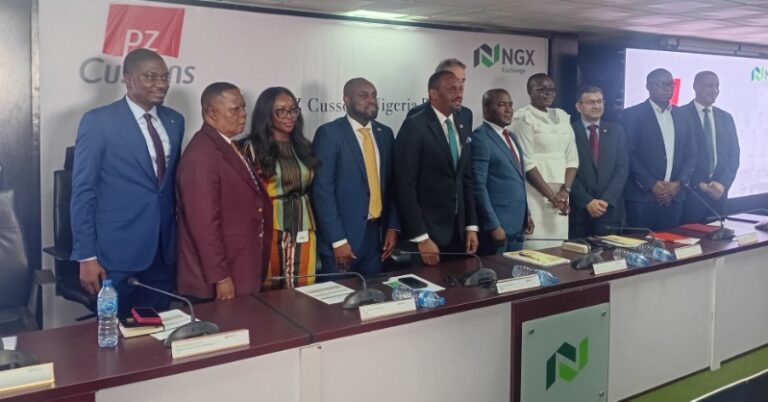
SHAREHOLDERS of PZ Cussons Nigeria Plc have called on the company’s management to be more accountable and return to profitability as it considers plans to remain listed on the Nigerian stock exchange.
They made the call during the company’s Facts Behind the Figures Presentation on Wednesday, February 12 at the Nigerian Exchange Limited (NGX) house in Lagos.
The ICIR can recall that in September 2023, PZ Cussons (Holdings) Limited, the parent company of PZ Cussons Nigeria and majority shareholder of the company, revealed plans to delist from the Nigerian stock market and proposed an initial N21 per share offer to the minority shareholders to be implemented under an arrangement.
The offer was, however, rejected by the minority shareholders, who insisted on an N40 per share payout after the Securities and Exchange Commission (SEC) threw away the PZ board’s delisting application following shareholders’ refusal to accept their offer.
At the time, the minority shareholders criticised the parent company for not being sincere in the offer, accusing it of trying to short-change them.
In November 2024, the shareholders further accused the company of not being transparent and accountable in its operations after its board proposed an increase for its director’s remuneration to N326.59 million for the financial year ending May 31, 2025, besides sitting allowance.
They raised concerns over the sale of its assets at the company’s 76th Annual General Meeting (AGM) held on Thursday, November 28. 2024.
In February 2024, The ICIR reported that PZ Cussons showed signs of insolvency having reported an unhealthy financial position as total liabilities exceeded total assets and posted over N46 billion loss after tax in its 2023/2024 second quarter (Q2) financial results.
PZ Cussons blamed the negative financial performance and position of the company in the past financial reporting periods on the federal government reforms on fuel subsidy removal and naira devaluation.
At the Facts Behind the Figures Presentation on Wednesday, PZ Cussons chief financial officer, Oludare Ebenezer Elusakin, noted that the policies impacted the company’s operating costs, especially in the areas of energy and materials costs.
Elusakin, while presenting the company’s half-year financial performance for the period ended November 2024 to the shareholders, said the energy costs went up by 43 per cent.
He noted that the company operated with a foreign exchange rate of N1,601/$1 to a dollar of N1,695/$1 during the half-year period to November 2024.
He revealed that the company’s net assets remain negative, and loss after tax settled at N5.5 billion.
The company’s revenue appreciated by 42 per cent to N96.5 billion in the half year from N68.1 billion.
While gross profit improved by 23 per cent to N27 billion from N21.9 billion, operating profit before tax rose by eight per cent to N10.9 billion from N10.1 billion.
To deal with the company’s liabilities, the CFO said the management has set certain plans in motion without specifics.
However, shareholders expressed their displeasure over the initial plan by the company to delist from the Nigerian stock market.
They berated the company for not paying dividends to the investors in the last few years and not revealing such in their strategic plans.
They urged the board to improve productivity, leverage market opportunities, and exude good financial habits to drive sustainable expansion and return to profitability.
The national president of New Dimension Shareholders, Patrick Ajudua, urged the company to aggressively restructure their foreign-denominated loans, converting them into naira to shield the company from dollar volatility.
He also urged the company on the need to negotiate for extended payment plans from outstanding facilities to create a financial headway to help it swiftly return to a positive cash flow and profitability.
“I will urge them on the need to have a long-term strategic vision aimed at returning to profitability within the immediate to near future.
“You need to pursue this ambition with vigour, building strong partnerships and leveraging market opportunities to drive sustainable expansion,” Ajudua suggested.
He said since the management of PZ Cussons was assuring investors that the company, which celebrated its 125 years of operation in Nigeria in 2024, has come to stay, that it should follow through with its vision strategy and enhance its balance sheet.
He further urged the management to improve the company’s brand, product innovation, market expansion, and digital transformation.
“This is very key to us, and I can assure you that we shareholders are going to give you the support to return to profitability and commence payment of dividends within a short while,” Ajudua added.
The national chairman of the Progressive Shareholders Association of Nigeria (PSAN), Boniface Okezie, queried the company for not paying dividends to shareholders for many years.
He noted that rather the company was busy indulging in the sale of its assets.
“Rebrand your products for better performance,” Okezie urged PZ Cussons.
“I think you need to refinance and consider backward integration to reduce FX challenges,” the executive vice chairman of Highcap Securities Limited, David Adonri, also suggested to the company.
While responding to some of the worries of the shareholders, the chief executive officer of PZ Cussons Nigeria, Dimitris Kostianis, craved the indulgence of the investors to support and challenge the company’s management under his leadership.
He said the company welcomed their suggestions and would try to do them, assuring that the company would make its business better where possible.
He hinted that a lot of strategic thoughts and consideration have gone into how the company could improve its brands and return to profitability.
“We will be looking for your support as well because that will help us to overcome the problem,” Kostianis said.
ON Tuesday, February 11, President Bola Tinubu ordered the Federal Government to take over NOK University, located in Kachia, Kaduna State.
He directed that the university be renamed the Federal University of Applied Sciences, Kachia.
He also tasked the minister of education to ensure the university is captured in the 2025 budget to enable the institution to commence operations in September this year.
The directives were contained in a statement issued by Vice President Kashim Shettima’s media office on Tuesday.
Shetima, who received the university’s documents from the Economic and Financial Crimes Commission (EFCC) on behalf of Tinubu, said the president’s action was in fulfilment of his promise to the people of southern Kaduna.
What to know about the university
A Federal High Court in Abuja had in June 2022 ordered the interim forfeiture of all the university’s assets. It agreed that the assets were acquired with public funds as claimed by the prosecutor – the EFCC.
On June 7, 2024, the court ordered a final forfeiture of the university.
A former director of finance and Accounts (DFA) in the Federal Ministry of Health, Anthony Hassan, stole public funds to build the institution, according to the EFCC, and as upheld by the court.
Hassan was a director of finance at the Federal Ministry of Health between 2016 and 2019.
Affected physical assets of the university include the Senate building, ICT building, Faculty of Medicine building, Science Deanery building, two Academic buildings, a Faculty Hall and other buildings.
Other properties traced to Hassan which were also forfeited are Gwasmyen Water Factory, Gwasmyen Event Center and Gwasmyen International Hotel in Kaduna.
The university parades itself as the first indigenous private university in Kaduna State.
The school was registered in Nigeria under the Company and Allied Matters Acts of 1990, with registration No: RC.1617510.
It has its permanent site at Kachia town in Kachia Local Government Area of Kaduna State, occupying 109 hectares.
It has four faculties, namely the Faculty of Basic Sciences, Faculty of Environmental Sciences, Faculty of Sciences and Computing, and Research.
Ishaya Nock, a professor, was the school’s vice-chancellor and Obadiah Joshua was its registrar until it was forfeited.
THE Nigeria Labour Congress (NLC) has condemned the recent 50 per cent tariff hike by telecommunication companies in the country and called for an immediate reversal to avoid the nation’s shutdown.
The labour union in a communique signed by its president, Joe Ajaero, and general secretary, Emma Ugboaja, accused the firms of betraying trust and disregarding due process by enforcing the hike before the completion of the review process.
The congress also lambasted the Federal Government for failing to protect citizens from corporate exploitation.
The NLC said it received with grave concern the news that telecommunications companies had commenced the implementation of a 50 per cent tariff hike, despite an earlier agreement reached with the Federal Government and the Nigerian Communications Commission (NCC).
“The CWC strongly condemns this action by the telecommunications companies, describing it as a betrayal of trust, an affront to the principles of negotiation, a direct slap on the government and its institutions, and a disdain for Nigerian people,” the communique partly reads.
The workers consequently issued a March 1 deadline for a total shutdown of the country if the tariffs are not suspended.
To resist the hike, the NLC directed its members and other Nigerians to do the following: boycott MTN, AIRTEL, and GLO services daily from 11:00 am to 2:00 pm, starting Thursday, February 13, until the end of the month.
It also called for the suspension of data purchases from the companies.
The group warned that if the tariff hike is not reversed by February 28, it would commence a nationwide telecom shutdown from March 1.
The congress urged civil society groups and all Nigerians to join the protest against what it termed exploitative economic policies.
The NLC also reviewed the tax reform bills and warned against policies that could further burden Nigerian workers.
While acknowledging the need for fiscal reforms, it called for fair and worker-friendly tax policies that would not hurt Nigerian workers.
The ICIR reported that MTN Nigeria refused to respond to inquiries after it reflected a data price increase, which appeared to be above the 50 per cent recommended by the Nigerian Communications Commission (NCC).
Following the demand for tariff hikes by the telecommunications companies, the NCC had agreed that internet data and other related charges be increased by 50 per cent.
The companies had demanded a 100 per centincrement, citing prevailing economic and market conditions.
Many Nigerian cities have been thrown into darkness as the national grid experienced a collapse again on Wednesday, marking the second time in the year.
According to data from the Nigerian System Operator’s portal (niggrid.org), the collapse occurred around 11:30 am on Wednesday.
The cause of this grid disturbance is yet to be disclosed by the Transmission Company of Nigeria (TCN).
The ICIR reports that each grid collapse affects households, businesses, and critical sectors like healthcare, where a consistent power supply is essential.
The Abuja Electricity Distribution Company, AEDC, already confirmed that the grid disturbance happened around 11:30 am on Wednesday.
The ICIR reports that they had already alerted customers about the blackout.
“We regret to inform you that a system disturbance occurred on the national grid at 11:34 am today (Wednesday), causing a power outage across our franchise areas.
“While the gradual restoration of power supply has commenced, please be assured that we are working closely with relevant stakeholders to fully restore electricity as soon as the grid is stabilised,” AEDC said in a statement on X on Wednesday. Similarly, a popular Nigeria National Grid account on X wrote on Wednesday, “There was a “GRID DISTURBANCE” before noon today (Wednesday). Parts of the country experienced an outage, “AEDC statement said.
The official spokesperson of TCN, Ndidi Mbah, did not respond to official calls and messages sent to her for comment on the development.
The grid disturbance comes after the one that occurred on January 11, 2025.
The ICIR reported that the national power grid has experienced several collapses in recent times. This comes at a huge cost to power infrastructure and businesses relying essentially on grid power.
Last year, the national grid collapsed about 11, raising concerns over grid stability and reliance on a centralised grid system.
Energy analysts say the decentralisation of the grid is feasible with states now keying into the new electricity and establishing their regulatory commissions to attract investments.
Further findings revealed that one of the major causes of grid collapse is instability and overload.
When the electricity demand exceeds the capacity of the transmission lines, they can become overloaded. It may lead to overheating, equipment failure, or cascading outages.
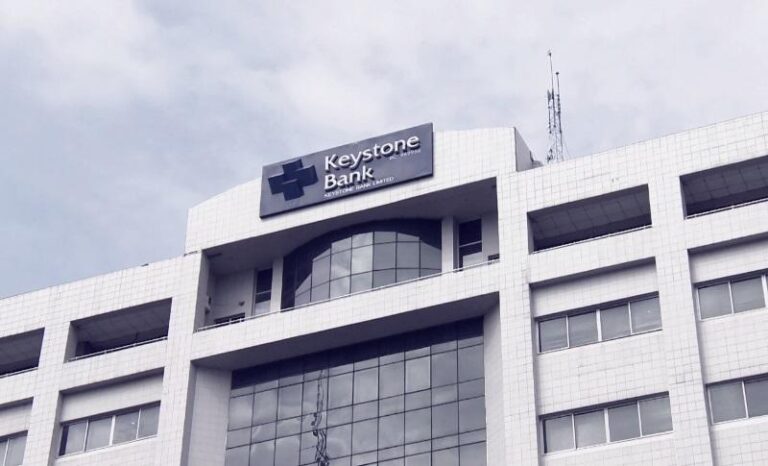
THE Federal Government of Nigeria has now taken over the ownership of Keystone Bank following a court’s dissolution of the stake of its former shareholder, Sigma Golf Nigeria Limited.
The bank announced this in a statement on Tuesday, February 11.
It said the dissolution and forfeiture of Sigma’s stake to the federal government followed a series of actions initiated by the Central Bank of Nigeria (CBN) in its bid to further strengthen the institution and the banking sector.
It also represents a major turning point for the bank to strengthen its stability and set the stage for a smooth recapitalisation process.
“Recall that on January 10, 2024, the Central Bank of Nigeria (CBN) announced the dissolution of the previous Board and Management of the Bank for corporate governance breaches. The CBN followed this action with the appointment of a new Board and Management for the Bank.
“Subsequently, the Federal Government, through the Economic and Financial Crimes Commission (EFCC), filed a court action at the Lagos State High Court, Ikeja, against the former owners challenging the acquisition of the bank,” the bank said.
It maintained that at the sitting of the court on Tuesday, February 11, the court ordered the forfeiture of the shares of the Keystone Bank previously held by the shareholders in favour of the federal government.
“The implication of this judgment is that Keystone Bank Limited is now fully owned by the Federal Government of Nigeria.
“This development marks a significant milestone in our journey, reinforcing our stability and paving the way for a seamless recapitalisation process. With this clarity, we are well-positioned for sustained growth, stronger partnerships, and enhanced profitability,” the bank said
Keystone Bank added that it would strengthen its balance sheet, maintain a strong financial position, and adhere to all regulatory requirements, assuring its customers that the bank remains safe, healthy, strong, and resilient.
The CBN, on Wednesday, January 10, 2024, dissolved the management of Keystone Bank over the bank and its board’s non-compliance to the provisions of Section 12(c), (f), (g), (h) of Banks and Other Financial Institutions Act, 2020.
It stated specifically that the bank’s infractions varied from regulatory non-compliance, corporate governance failure, disregarding the conditions under which their licenses were granted, and involvement in activities threatening financial stability.
It subsequently appointed a new management team for the bank.
Since then, the fear that the apex bank would revoke the licence of Keystone Bank has continued to be a matter of concern.
In a report, The ICIRanalysed why the apex bank might consider revoking the licence of Keystone Bank along with two other struggling banks.
The report pointed to the Keystone Bank’s adherence to corporate governance rules as well as its negative financial performance and debt liabilities in the most recent report disclosed by the bank.