Home Blog Page 369

Lagos gov’t, Summa Group sign pact on Lekki-Epe International Airport

0

THE Lagos State government said it has entered into a Memorandum of Understanding (MoU) with the Summa Group for the construction of the Lekki-Epe International Airport.

The state governor, Babajide Sanwo-Olu, who signed the agreement, made this known in a statement on Saturday, February 8.

He said the much awaited airport is an essential part of his administration’s vision to improve connectivity in the state and stimulate economic growth, as well as draw in global investments.

“We signed a Memorandum of Understanding (MoU) with the internationally acclaimed construction company, Summa Group, to develop and construct the much-awaited Lekki-Epe International Airport.

“This groundbreaking initiative is an essential part of our vision to improve connectivity in Lagos, stimulate economic growth, and draw in global investments,” Sanwo-Olu stated.

He believes that the Lekki-Epe International Airport will facilitate travel and create new opportunities for businesses and residents throughout the state.

The ICIR reported in October 2022 that the Federal Government had given its nod to the construction of the Lekki-Epe International Airport following the presentation of the approval document by the former Minister of Aviation, Hadi Sirika, to Governor Sanwo-Olu at the 2022 Lagos Economic Summit, held at Eko Hotel and Suites.

The Lekki-Epe International Airport is expected to complement the Murtala Muhammed International Airport, Lagos, The ICI


R can report.

It is to be located on a 3500-hectare site in Lekki-Epe and is estimated to cost $900 million during the first phase of the project, according to a report by CAPA – Centre for Aviation.

Initiated through a public-private partnership, the project had faced delay due to opposition by local land-holders to the land acquisition process.

It had also faced similar delays in investors’ commitments to financing the airport.

A former commissioner for Commerce and Industry, Sola Oworu, said at a time that the state government was “shopping for investors” and would recommence work on the project once new financing is in place, CAPA – Centre for Aviation, noted.

In 2014, a former Lagos state governor, Babatunde Fashola, reportedly said land acquisition and preparatory work for a new international airport in the state’s Lekki region was complete, and the government was seeking investment for the project.

Nigeria to sanction Kenya Airways over passenger maltreatment

0

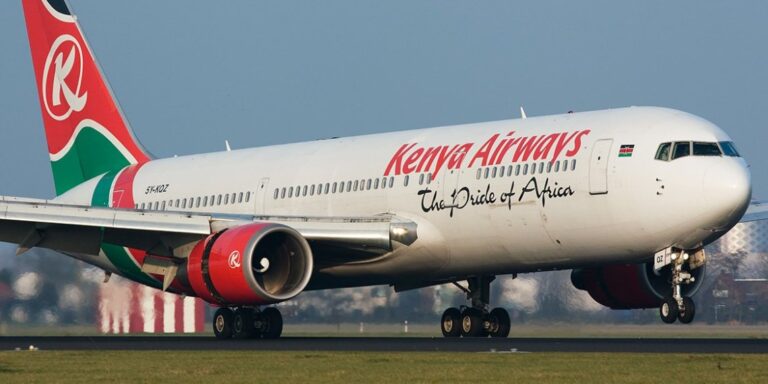
THE Nigeria Civil Aviation Authority says it is initiating maximum enforcement action against Kenya Airways for a  number of consumer protection infractions.

The NCAA spokesperson, Michael Achimugu, made this known in a statement on Saturday, February 8.

He said, “The NCAA is, therefore, initiating stiff enforcement action against Kenya Airways. This action will go through due process. I have put our legal department on notice.”

According to him, Kenya Airway’s country manager, James Nganga, had apologised for the maltreatment of a passenger, Gloria Omisore.

He explained that Kenya Airways had failed to discover the lack of a France transit visa and flew the passenger to Nairobi, where she had a 17-hour layover, only to be told that she would have to endure a further 10-hour wait if she must be flown to the United Kingdom.

“The passenger then asked to be provided care for those 10 hours as she was bleeding and needed to bathe. But the actions of the airline staff following her request were down to poor passenger handling. Omisore was not an unruly passenger on the first leg of the flight, nor was she rude on the Lagos-Nairobi flight.

“Following the incident, however, the airline’s management has not shown any remorse to apologise to Omisore, who was reportedly maltreated by the airline staff in Nairobi, Kenya,” Achimugu said, adding that it only admitted that boarding Omisore, who lacked a France transit visa, was a mistake.

“The passenger was flown from Lagos to Nairobi, where she endured a 17-hour layover. Omisore was later informed that she would face a 10-hour wait before being allowed to board a flight to the UK.

“She requested care during this period, citing her medical condition, but was met with poor treatment by airline staff. Kenya Airways acknowledged that Omisore was neither unruly nor rude during the Lagos-Nairobi flight,” Achimugu said.

He explained that following the incident, the NCAA disputed Kenya Airway’s initial statement regarding the matter, calling it misleading.

Despite efforts to get the airline to update its statement, the NCAA reports that the original statement has continued to circulate, including in a blog post that falsely claimed that Omisore refused an offer to fly to London.

“This misinformation persists despite Kenya Airway’s admission that Omisore’s frustration stemmed from the airline’s failure to provide accommodation during her extended layover.

“Video footage showed airline staff verbally confronting Omisore, raising their voices and insulting her. Kenya Airways’ Country Manager, James Nganga, later acknowledged that this behaviour violated airline policies. Despite the airline’s failure to rectify the situation, the NCAA remains committed to holding Kenya Airways accountable for the poor handling of this incident,” Achimugu maintained.

In addition to this incident, he said the NCAA has highlighted other ongoing issues with Kenya Airways, including delayed flights and the failure to compensate passengers for lost baggage.

“The airline also refused to submit a compliance report for a flight delayed by seven hours. The airline’s team claimed ignorance of NCAA regulations, prompting the NCAA to send them a copy of the relevant guidelines,” Achimugu said.

He hinted that the NCAA has set out plans to organise a retreat for all airlines operating in Nigeria to review and refresh their understanding of the NCAA Regulations 2023, specifically Part 19, which covers passenger rights.

He stressed that the authority expressed concern over the airline’s disregard for regulatory obligations and its poor track record in addressing customer complaints.

“The authority’s commitment to safeguarding consumer protection rights in Nigeria remains unwavering, and it will take all necessary steps to address the violations brought to light,” he added.

The ICIR can report Omisore was stranded at Nairobi Airport on Monday, February 3, putting the NCAA and management of Kenya Airways at loggerheads over the perceived inhuman treatment meted out to a Nigerian passenger identified as “Gloria Ibukun Omisore” at the Nairobi airport by Kenya Airways officials.

In a viral video on social media, a representative of Kenya Airways was seen in a verbal exchange with the passenger.

In the video, a Kenya Airways agent told Omisore she would not be allowed to fly with the airline again but she responded that she was on the phone with Nigeria’s finance minister.

However, the agent, visibly angry, said she could call even the Nigerian president if she wanted.

The incident has since triggered an altercation between NCAA officials and Kenya Airways, including reactions from several users of the social media platforms.

Police confirm abduction of Imam, others during prayer in Sokoto

0

THE Sokoto State Police command has confirmed the abduction of persons during a Muslim early morning prayer in Bushe community, Sabon Birni Local Government Area of the state.

The spokesman of the state police command, Ahmed Rufai, in a telephone chat with The ICIR on Saturday, February 8, confirmed the incident.

According to him, the incident took place during the Subhi (early morning) prayer, leaving the community in a state of shock and panic.

He, however, claimed he doesn’t know the actual number of people that were abducted by the gunmen.

“The incident happened truly but I don’t know the actual number of people involved. We have some network issues in that place. I have been trying to reach the DPO, but I could not get him.”

He said that the command was working in synergy with other security agents to ensure the safe return of the victims.

Rufai said an investigation into the incident was ongoing, and urged the public  to remain calm and cooperate with the security agencies.

He blamed the poor communication network in the area for the delay in getting full information on the incident.

When asked if the perpetrators were members of the deadly Lakurawa terrorists, Rufai said he could not confirm that.

Reports say the gunmen, who have been terrorising the community for some time, struck despite the presence of security agents, operating under Operation FASAN YAMMA.

The incident has raised concerns about the security situation in the area, and the community is calling for increased protection and support from the authorities.

According to Sa’idu Ibrahim, a member of the Sokoto State Assembly, at least 10 people were taken, but it could have been much worse if not for the intervention of the troops from Operation Fasan Yamma.

He said the community is still trying to come to terms with what happened and is working to ensure the safe release of those who were abducted.

The ICIR reported that the Chief of Defence Staff (CDS), Christopher Musa, in December 2024, accused two communities hit by the military during an air raid on the Lakurawa terrorist group in Sokoto State of harbouring the gang. 

He also warned civilians harbouring criminals to desist or face the consequences.

Musa said this while visiting troops of Operation FASAN YANMA at 8 Division Headquarters in Sokoto, where he addressed the Christmas Day bombing of civilians in two communities in Silame Local Government Area by the Nigerian Air Force.

Musa said the airstrike, intended to neutralise Lakurawa terrorists mistakenly hit Gidan Sama and Rumtuwa communities, resulting in the deaths of villagers and wounding several others.

He suggested that the villagers were to blame for allegedly harbouring terrorists, stating that the military would not take responsibility for attacks on communities supporting terrorists.

The military chief called on all Nigerians not to harbour suspected criminals in their midst but to expose and distance themselves from them.

He also warned that the military would not tolerate any criminals disturbing the nation’s peace.

The CDS urged the media to minimise publicity for bandits and other criminal elements. He also stated that Nigeria would not permit any foreign military base on its soil.

He also called on neighbouring countries, including Niger, Chad, and Benin, to collaborate with Nigeria in combating forces that threaten peace.

Lawyer, CSOs slam Court ruling against ICIR challenging FOI denial

0

CIVIL Society Organisations (CSO) and a lawyer have condemned the court ruling against the International Centre for Investigative Reporting (ICIR), challenging the denial of information requested through the Freedom of Information (FoI) from the Police Mortgage Bank.

A judge of the Federal High Court, Abuja, E. U. Akpan, had ruled that The ICIR lacked locus standi to challenge public institutions refusal to grant a request the media organisation made through the FOI Act in court.

Akpan premised his ruling on the argument that Part C (now Part F) of the Companies and Allied Matters Act (CAMA) under which The ICIR was registered, made no provision for any organisation registered under that part to challenge such a case in the court.

Backstory

In the early months of 2023, The ICIR was investigating former inspectors-general of police and other top officers accused of bribery in a shady land sale of designated police barracks.

The Police Mortgage Bank played a significant role in the deal. Documents obtained and reviewed by The ICIR, which include court affidavits, allege that top police officers assisted the contractor in forging the signature of a late deputy inspector general of police to secure the contract for the project.

The contractor used the allegedly forged document to obtain a loan of N573 million from the Nigeria Police Mortgage Bank and also used the houses on the land as collateral, thus short-changing the Police.

To provide adequate insight into the allegations, The ICIR wrote the Nigeria Police Mortgage Bank through the FoI Act to provide relevant information on the matter. 

The ICIR wrote to the bank on September 7, 2023. The bank via a letter dated September 15, 2023, replied to this organisation, stating that it would not accede to the request.

It said releasing the information would breach its customers’ privacy, adding that doing so constituted an invasion of personal privacy under section 14(1 )(a) of the FoI Act.

The case

The ICIR went to court to challenge the bank’s failure to provide information on the N573 million it released to Corpan International Limited for estate development between 2015 and 2017.  Information sought included the loan description, procedures followed, the collateral and the status used.

In the suit no: FHC/ABJ/CS/ f 630/2023, The ICIR, through its counsels, Saidu Muhammad Lawal, Kabiru Ahmad, Muhammad Mujahid Muhammad, Paul Adedapo Adewuyi, Progress Ailakhuaye Imoudu, from Spectrum Legal Services, sought an order of mandamus compelling the respondent to supply the information requested by the applicant in its request dated September 7, 2023.

However, the judge declared that the litigant lacked the locus standi to approach the court over the case, and consequently struck out The ICIR’s case.

The defendant’s counsel contended that the bank was not a public institution but a limited liability company with shares that could be quoted and purchased by the general public beyond just police officers and that disclosing its customers’ information to the applicant would violate the customers’ right to privacy as enshrined ni Section 37 of the Constitution of the Federal Republic of Nigeria 1999 (as amended)

He posited that the applicant was fighting a personal fight against the respondent for personal benefit, and not for public interest.

Upon the receipt of the originating process, the respondent on April 15 filed its counter affidavit signed by Oladimeji Ekengba, its lawyer. The bank sought to know: “whether the applicant’s case ought not to be dismissed by the court.”

Ekengba contended that the bank was not a public entity but a private organisation, adding that the court lacked jurisdiction to grant an order of mandamus against a private body or entity.  

He further argued that the court lacked the jurisdiction to compel by order of mandamus the defendant who is not a public institution to perform a duty ti did not owe the applicant. He said the suit constituted an abuse of the court process.

Disagreeing with the bank’s counsel, The ICIR’s lawyer argued that the respondent is a public liability company with shares that could be quoted and purchased by the public beyond just police officers.

Therefore, he cannot shield the bank from obligations under the FOI Act; adding that despite being a public limited liability company, the bank is a “public institution” within the context of the Act by virtue of Section 2(7) and Section 31 of the FOI Act.

He submitted further that the Nigeria Police Force, an agency of the Federal Government, “is the most significant contributor to the bank”, with over N8 billion as of the time of the trial.

While urging the court the grant the applicant’s reliefs, he argued further that the NPF had a controlling interest in the bank, stressing that the bank never denied this.

Lawyer, CSOs condemn ruling

Activist and lawyer, Deji Adeyanju expressed shock over the ruling and described it as ‘pervasive’.

“I believe the judgment is perverse for a number of reasons. The only grounds upon which an FOI request may be refused are as captured in the FOI Act, not CAMA. By virtue of being a registered entity, the applicant enjoys the same privilege as a natural person. The FOI Act says any person can seek information under the Act.

“The issue of locus standi was wrongly addressed by the trial court in the instant case. Locus simply means the right to sue. FOI only talks about use of the requested information and the privacy of the holder but doesn’t determine who has the right to sue for such information.”

Adeyanju said the judgment must be appealed. He noted that locus had been determined by some Supreme Court judgments, “and it is unfortunate for any court to deny access to information that affects millions of Nigeria simply on the basis of locus. If an international centre for journalism has no right to access such information, then who has the right?”

Reacting, the deputy executive director at Media Rights Agenda (MRA), Ayode Longe, said the judge made his ruling out of mischief or ignorance, adding that it was a miscarriage of justice.

He said claiming that The ICIR lacked locus standi to challenge the FOI denial case in court because of CAMA was mischievous.

According to him, the Act establishes in very clear terms the right to information for every person and it does not discriminate against natural and legal persons.

“It states in Section 1(1) that: ‘Notwithstanding anything contained in any other Act, law or regulation, the right of any person to access or request information, whether or not contained in any written form, which is in the custody or possession of any public official, agency or institution howsoever described, is established.’ By implication, The ICIR is entitled to ask for any information that falls within the purview of the FOI Act.

“Again, Section 1(3) of the FOI Act states that: ‘Any person entitled to the right to information under this Act, shall have the right to institute proceedings in the Court to compel any public institution to comply with the provisions of this Act.’ This provision is complemented by that of Section 2 (6). So, going by these provisions, I do not understand how the judge came about the reasoning that it is the provisions of CAMA that can determine who has the right to sue for denial of access to information and records when the FOI Act itself has clearly states that anybody who is denied access to information can sue.

He wondered why CAMA was used to determine if The ICIR could sue when the request for information was made, and the case was filed under the provisions of the FOI Act.

“Moreover, the denial of access to information has to be based on one or more of the exemptions listed in the FOI Act and not any other law. Therefore, relying on the provisions of CAMA is a miscarriage of justice.”

In its reaction, Budgit expressed sadness over the ruling. It argued that the FOI Act was clear in that people seeking information do not have to have an interest in the information being sought. It added that on the principles of justice, people requesting information should not need to have “locus standi” to seek the information.

The organisation, through its head, Open Government Institutional Partnership (OGIP), Vahyala kwaga, suggested that the judge could have ruled against The ICIR based on a technicality.

“How the learned Justice construed that the ICIR (a known investigative organisation with a mandate to supply critical public information) is improperly constituted, seems to derogate from the principles of democracy, open government and accountability.

“It is unfortunate that in this modern era when governments have the opportunity to be more open and transparent, we have technicalities thrown in the face of progress,” it stated.

The Nigeria Police Mortgage Bank PIc

Formerly known as Fokas Saving and Loans Ltd, the bank was incorporated in November 1992 and licensed to operate as a mortgage bank in January 1993.

The Nigeria Police Force via its important organ, the Nigeria Police Cooperative Multi-Purpose Society Limited, acquired majority shares in Fokas Savings and Loans Limited in April 2012.

A new board of directors of Fokas Savings and Loans Limited (Mortgage Bankers) was inaugurated by the then inspector-general of Police, M.D. Abubakar on May 16, 2012, with the charge to transmute Fokas Savings and Loans Limited to Nigeria Police Mortgage Bank PIc, compliant with all Nigerian legislation and regulatory obligations.

The completion board meeting of the bank was held on July 26, 2012, for the sale of shares by private placement.

The sensitisation programme started on August 4, 2012, while the police management team further approved the sale of shares to police officers and men to invest in the shares of the bank to avail each officer the benefits derivable from the bank’s funds.

The Central Bank of Nigeria approved the change of the bank’s name and confirmed the appointment of new directors on December 4, 2013. Consequently, the Corporate Affairs Commission approved the conversion of Fokas Savings and Loans Ltd to Fikas Savings and Loans PIc and finally to Nigeria Police Mortgage Bank PIc.  

The Nigeria Police Force, established under section 214 of the Nigerian Constitution (1999 as amended), is the most significant contributor to the bank’s funds. The NPF has contributed at least N8 billion to the bank.

How locus standi came into play

The bank raised the issue of locus standi, challenging The ICIR’s competence to bring the case before the court. In the certified true copy of the judgment obtained by The ICIR, the judge described locus standi as “the legal right of a party to an action to be heard in litigation before a court of law or tribunal. The term entails the legal capacity of instituting or commencing an action in a competent court of law or tribunal without any inhibition, obstruction or hindrance from a person or body whatsoever.”

Describing The ICIR as an artificial rather than a natural person before the court, the judge said, “The locus standi of an artificial (corporate) person and a natural person applies under the Freedom of Information Act. The characteristics requirements of the locus standi of a corporate person and natural person are (not) the same and are far apart.”

He noted that the applicant referred to itself as “an association registered as a corporate body pursuant to part C of the Companies and Allied Matters Act Decree No. I, 1990 (now Part of the Companies and Allied Matters Act, 2020)’ This makes it compelling for the applicant to strictly adhere to the objects of an association statutorily provided under Section 825(1)(b) of Companies and Allied Matters Act C(AM which states:'(Application under section 823 shall be in the form prescribed by Commission and shall state aims and objects of the association which shall be for the advancement of any religious, educational, literary, scientific, social, development, cultural, sporting or charitable purpose and shall be lawful)….

The judged went on, “I find in the first place that none of the objects stated in S. 823(1) of the Companies and Allied Matters Act (CAMA) gives the applicant the authority to engage in or request for the information which it seeks herein to the extent that it has the authority to initiate this type of suit to compel the supply of the information to it. There is no provision under Part C (now Part F) of the Companies and Allied Matters Act (CAMA) that makes provision for the registration of anybody or groups of persons or associations whose true intent and objective is to deviate from what that law provides as the objectives of associations under that law.Ä

Akpan added that “Under the Freedom of Information Act, the person must be entitled to the right to information under the Act.

“On the whole, I find that the applicant, an artificial personality, has no local standi to initiate and maintain this suit contrary to the very specific objects fo registration said objects being statutorily prescribed, and I so hold.”

He consequently struck out the case.

Amid NBA backlash Ekiti judiciary vacates Magistrate Court order

0

THE Ekiti State Judiciary has distanced itself from a ‘controversial’ court order issued by the Ikole Ekiti Magistrate Court.

The order, which sparked public outcry and condemnation from the Nigerian Bar Association (NBA), has been vacated.

The judiciary has set up a panel of inquiry to investigate the matter and ensure accountability. It reaffirms its commitment to justice, fairness, and transparency and vows to maintain the highest standards of integrity.

This was disclosed in a press release signed by the Chief Registrar of the Ekiti State High Court, Olanike Adegoke.

 Ekiti State Judiciary disown magistrate court order
A copy of the Ekiti judiciary press release. Courtesy of @NigBarAssoc

The state judiciary apologised for the recent order and assured the public of its commitment to fairness and transparency.

It urged the public to continue trusting its processes.

This move comes after the NBA called for the magistrate’s removal and disciplinary actions.

The order, which has generated a lot of outrage, was issued by Oluwadare’s court and was granted on January 23. It is a case between the Inspector General of Police (IGP), Kayode Egbetokun, Keystone Bank, and the Nineteenth Kid Estate Residents Association.

The issue went viral on social media on Wednesday, February 5.

The magistrate had ordered that Keystone Bank provide certified true copies of the account opening package, statement of account from November 1, 2024, to date, and certificate of identification for the Nineteenth Kid Estate Residents Association to the Assistant Inspector General of Police, Zone 2 headquarters, Onikan, Lagos State.

He also ordered the bank to place a post-no-debit (PND) on the account and deactivate all internet/electronic transactions on it, and that the PND should not be lifted if the suspect had not reported to the police and arrested any persons who come with a lift order without police permission.

In response, the Ekiti State Judiciary  established a panel of inquiry to investigate the matter and make recommendations.

Key stakeholders, including the Attorney General and NBA, were copied in the press release.

The ICIR reported that the NBA ordered all lawyers to boycott the court of Oluwadare T.O., a Chief Magistrate at the Ikole Magistrate Court in Ekiti State for issuing an order to freeze a bank account and arrest any lawyer who approaches the bank with alift order without police permission.”

A lift order is a court decision that removes a previous restriction on someone’s assets, such as bank accounts or property.

The NBA issued the boycott order at the end of its National Executive Committee (NEC) on February 6.

The body of lawyers led by its president, Afam Osigwe, described Oluwadare’s order as a grave violation of legal ethics and due process that would not be condoned.

In a series of tweets on X, the NBA president also said a formal petition would be filed against the magistrate before the chief judge of Ekiti State to relieve him of all judicial duties.

Osigwe added that the Judicial Service Commission of Ekiti State would also be petitioned to investigate and take disciplinary action against the magistrate.

The NBA warned that any attempt to intimidate lawyers or subvert due process would not be tolerated.

Recall that another judge, Inyang Ekwo, of the Federal High Court in Abuja on October 8, 2020, in a suit marked FHC/ABJ/CS/1635/2019ruled that magistrates lacked the power to freeze bank accounts.

Ekwo also declared that banks should not act onbankers’ ordersserved on them by the police to freeze or place a post-no-debit on personal accounts.


Again, Buhari makes false claims about Nigeria’s economy, security during his presidency

FORMER Nigerian president, Muhammadu Buhari, has once again claimed that security and economy improved significantly in Nigeria during his eight-year democratic presidency.

He said this on February 5, 2025, when he received members of the Katsina State Correspondents’ Chapel of the Nigerian Union of Journalists at his country home, Daura, Katsina State who were on a courtesy visit.

Buhari claimed that before his administration, challenges of security and economy were rocking the West African country, insisting that his administration significantly curbed the menace of terrorism and economic meltdown in the nation.

This is not the first time that the former president would be making such claims. He had earlier made similar claims in his farewell speech and in his response to Bloomberg’s questions published on June 21, 2022, where he said his administration would be leaving Nigeria “in a far better place” than he met it.

CLAIM 1 

Buhari says Nigeria’s security improved under his administration.

THE FINDINGS 

Findings by The FactCheckHub show that the claim is MOSTLY FALSE.

Nigeria has experienced a rise in insecurity since 2015, according to data from the Nigeria Security Tracker (NST), a project of the Council on Foreign Relations (CFR) that tracks violent incidents in the country from 2015 to 2022. The data reveals that at least 11,449 violent attacks occurred during this period.  

Number of violent attacks under Buhari’s administration.

An analysis by The FactCheckHub shows a consistent increase in violent incidents, including banditry, attacks on unarmed civilians, and mass abductions, particularly during Buhari administration.

The recorded cases of violent attacks were 882 in 2015, 825 in 2016, 947 in 2017, 1,172 in 2018, 1,549 in 2019, 1,867 in 2020, 2,285 in 2021, and 1,922 in 2022.  

Despite some progress in Nigeria’s ranking on the Global Terrorism Index—moving from the 4th most terrorism-impacted country in 2017 to the 6th in 2021 and the 8th in 2022—data suggest that while terrorist activities declined in the Northeast, insecurity spread to other parts of the country during Buhari’s tenure.

Data showing Nigeria’s progress in 2023 GTI.

Between May 29, 2015, and May 29, 2022, at least 55,430 people were killed by terrorist groups and criminal gangs nationwide. Kidnapping also remained a major issue, with no fewer than 2,021 Nigerians abducted during the same period.  

Kidnapped victims between 2015 – 2022.

Additionally, Buhari’s tenure witnessed Nigeria’s worst displacement crisis in history. Data from the Internal Displacement Monitoring Centre indicate that millions of Nigerians were forced to flee their homes due to insecurity. In 2022 alone, at least 3.6 million people were displaced.

THE VERDICT 

The claim by Buhari that Nigeria’s security improved under his administration is MOSTLY FALSE; security situation in the West African country worsened between 2015 and 2023.


CLAIM 2 

Buhari says Nigeria’s economy improved under his administration. 

THE FINDINGS 

Findings by The FactCheckHub show that the claim is FALSE. 

In terms of the economy, an analysis of Nigeria’s consumer price index by The ICIR shows that the inflation rate rose 59 times under Buhari’s eight-year administration. 

When he assumed office in May 2015, the inflation rate was 9 per cent. However, by the time he handed over power on May 29, 2023, it had risen to a significant 22.22 per cent — more than double what he met when he assumed office in 2015.

In 2022, The ICIR also reported that Nigerians have been struggling to feed due to an over 100 per cent hike in key staple food prices since 2015 when Buhari assumed office as Nigeria’s president. 

In addition, when he took over power in the second quarter of 2015, the unemployment rate rose to 9.9 per cent in the third quarter of that year from 8.2 per cent in the second quarter, according to the National Bureau of Statistics (NBS).

Since then, unemployment, poverty, and economic disempowerment have remained a disturbing feature of Nigerian life. 

The data on the NBS dashboard show that Nigeria’s unemployment rate was 33.3 per cent, translating to some 23.2 million people, the highest in at least 13 years and the second-highest rate in the world, as of March 2021.

The exchange rate had also experienced a significant increase in the eight years of Buhari’s presidency. At the start of Buhari’s tenure in 2015, the Naira-to-Dollar value was fixed at N192.64. However, it rose to N461, marking a 139 per cent increase under Buhari administration.

Dollar to Naira exchange/ Credit: BudgiT.

Buhari moved Nigeria’s debt profile from N42 trillion to N77 trillion. This has had attendant effects on debt servicing, which rose from N1.06 trillion in 2015 to N5.24 trillion as of 2022. In fact, under Buhari administration, the debt-service-to-revenue ratio grew from 29 per cent to 96 per cent.

Regarding poverty, there was an alarming rise during the Buhari administration. The percentage of Nigerians living in poverty increased from 40.1 per cent to 63 per cent of the entire population.

In June 2023, the World Poverty Clock also put the number of people living in extreme poverty in Nigeria at 83 million, or 39 per cent of the population, while the country’s total population stood at 214 million.

Also, between 2014 and 2019, Nigeria dropped nine places on the Global Human Development Index, HDI, published by the United Nations Development Programme (UNDP). The country was ranked 152 out of 187 countries in 2014. But, in 2019, the index placed Nigeria 161 out of 189 countries worldwide. The country scored low on all three basic dimensions of human development: a long and healthy life, knowledge, and a decent standard of living.

Also, between May 2015 and 2023, the Nigerian economy had fallen into recession twice. Under Buhari’s stewardship, the economy fell into recession, first, in 2016 when the economy contracted 2.06 per cent between April and June, and in 2020 when COVID-19 decimated economies all over the world.

THE VERDICT

The claim that Nigeria’s economy improved under the Buhari administration is FALSE; data show that most of the nation’s economic indices worsened under his administration.

Liberalist seeks applications for Liberty Fellowship

LIBERALIST Centre is seeking applications for its 2025 Journalism for Liberty Fellowship Programme.

The application is open to mid-career journalists from Nigeria, Kenya and Zambia.

Career Journalists or media professionals passionate about investigative reporting and advocating for pro-freedom ideas can apply for the fellowship.

The fellowship seeks to enhance journalists’ storytelling skills, promote liberty, and contribute to meaningful discussions on free markets and limited government.

As part of this fellowship, 20 selected fellows will receive a $100 grant to support the production of high-impact stories that align with its mission of enhancing life quality by promoting liberty and prosperity through research, media, and advocacy.

The deadline for the application is March 31, 2025.

Interested applicants can apply here.

Reps to investigate telcos over alleged illegal NIN-SIM linkage

THE House of Representatives has directed its Joint Committee on Communications and Interior to investigate telecommunication service providers ((telcos) over the alleged unauthorised and illegal linkage of national identification numbers (NIN) to subscribers’ SIM cards.

The decision followed a motion co-sponsored by the House members, Patrick Umoh and Julius Ihonvbere.

Umoh raised concerns over reports that telecom service providers linked NINs to subscribers’ lines without their consent, potentially exposing them to criminal activities and endangering legitimate NIN holders.

“The House recognises that this action is a clear violation of the Nigeria Data Protection Act 2023 and the Nigeria Data Protection Regulation (NDPR) 2019, which guarantee the right to privacy and the protection of personal data for every Nigerian,” he said.

While the probe committee was given four weeks to complete its investigation, the House also directed the Nigerian Communications Commission (NCC) to investigate the allegations and sanction any telecom service provider found guilty of the violation.

The House further directed the National Identity Management Commission (NIMC) to verify whether telecom service providers were authorised to link NINs and if the process complied with relevant laws and regulations.

The ICIR reports that an activist, Olukoya Ogungbeje, slammed a suit against telecommunications companies for barring citizens’ phone lines from NIN linkage.

Ogungbeje said that despite obtaining a court order preventing the defendants from blocking or deactivating Nigerians’ phone lines, the telecom companies disregarded the ruling and went ahead with the disconnections, violating the court order.


WSCIJ seeks entries for Report Women’s Female Reporters Leadership Fellowship

WOLE Soyinka Centre for Investigative Journalism (WSCIJ) seeks entries for its 2025 Report Women Female Reporters Leadership Programme (FRLP) fellowship.

 The sixth cohort of the fellowship is tagged “Champion Building”.

Entries are open to mid-career female investigative journalists with a passion for leadership.     

Potential applicants should have not less than four years of post-NYSC work experience, currently in leadership roles or demonstrating strong leadership potential.

Selected fellows will undergo intensive residential training on leadership, investigative reporting and mainstreaming of issues of access and abuse that affect girls and women in the news.

They will also receive six months of mentorship to produce investigative stories and leadership projects that address equity gaps in the news and newsrooms.

The deadline for applications is February 18, 2025.

Interested applicants can apply here.

Alleged rights abuses: Adeyanju petitions US, seeks visa ban on Police PRO Adejobi

0

A NIGERIAN legal and human rights firm, Deji Adeyanju & Partners, has petitioned the United States Embassy in Abuja to impose a visa ban on the Nigeria Police Force (NPF) spokesperson, Olumuyiwa Adejobi, over alleged human rights violations and suppression of free speech. 

In a letter dated February 4, addressed to the US Ambassador, the law firm accused Adejobi of using his position to silence critics, unlawfully detain citizens, and justify police brutality. 

The petition also condemned Adejobi’s public statements, including a tweet from March 29, 2023, where he claimed that “hurling insults at police officers carrying out their legal duty is criminal and punishable by Nigerian law.” 

The law firm argued that such remarks encouraged authoritarian policing and violated fundamental rights.

The petition cited multiple cases where Nigerians were arrested and detained on Adejobi’s directive for merely expressing their views online.

In one of the highlighted cases, the firm noted that a TikToker, Destiny Ekhorutomwem, was arrested for cyberbullying and cyberstalking following Adejobi’s orders. 

The petition said Ekhorutomwem was given stringent bail conditions requiring four sureties with assets worth N2 billion, adding that while in custody, he reportedly collapsed and was rushed to the National Hospital in Abuja. 

Despite his poor medical condition, the petition noted that Adejobi allegedly denied him necessary care.

According to a report by FIJ, the NPF arrested the Ekhorutomwem in Benin City, Edo state, on December 8, 2024, for cyberbullying and cyberstalking. 

He was consequently transferred to Abuja on January 10 and was later told to provide four sureties with assets worth N2 billion as part of his administrative bail conditions on the same day.

However, he couldn’t meet the bail conditions, leading to his prolonged detention.

FIJ reported that Ekhurutomwem collapsed in custody on Saturday, February 1, and was first treated at the police clinic before being transferred to the National Hospital. He was later granted bail due to health concerns, with only one surety required instead of four.

Similarly, the petition mentioned the case of one activist and nurse Olamide Thomas, who was arrested in December 2024 after posting a video on social media criticising President Bola Tinubu and the police. 

The ICIR reports that she was subsequently granted bail of N10 million by the Federal High Court, Abuja on Monday, January 6.

Thomas’ arrest and detention were described as a direct attack on freedom of expression by the firm. 

Another case involved a Nigerian citizen, Charles Uche Ihedioha, who was allegedly detained for a Twitter comment. 

According to the petition, Adejobi ordered the ‘unlawful’ detention of Ihedioha, and when his father, Nathaniel Ihedioha, visited the police station to see him, officers who granted him entry were also detained.

“In addition to his crackdown on free speech,  Adejobi has continued to defend and enable police brutality in Nigeria. In a recent report, he justified excessive force used by officers and dismissed calls for accountability, further proving his complicity in the continued abuse of Nigerian citizens.

His persistent refusal to hold officers accountable has fostered a culture of impunity within the Nigeria Police Force, where human rights violations are met with silence or outright endorsement.

“These public statements demonstrate ACP Adejobi’s opposition to free speech, a core democratic value upheld by the United States. His position encourages authoritarian policing and suppresses dissent, contributing to an environment of fear and intimidation in Nigeria,” the petition added.

Deji Adeyanju & Partners urged the US government to extend the visa ban to Adejobi’s immediate family, arguing that such action would serve as a deterrent against further human rights violations. 

While both the Nigerian Police Force and Adejobi have yet to officially respond to these allegations, the petition has sparked reactions about the police’s continued alleged suppression of dissents in Nigeria and the need for urgent action against the practice.

Other cases of unprofessionalism linked to Adejobi

Beyond allegations of misconduct, concerns have also been raised about unprofessionalism by the Force’s spokesperson

The ICIR had in 2024, reported several instances where Adejobi made controversial remarks that sparked public outrage. 

In January 2024, as the country grappled with a surge in kidnappings, Adejobi dismissed many reported cases as ‘staged’ or ‘fake.’

“Most of the kidnapping cases we read online are not real. They are either staged and (sic) faked. We analyse security situations based on empirical facts and figures,” he said.