Home Blog Page 382

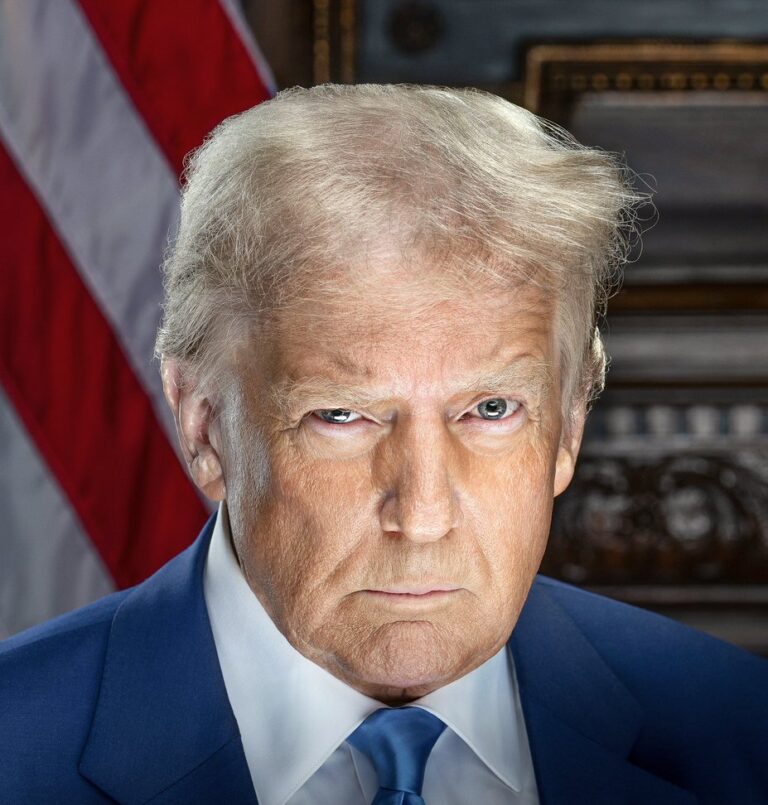
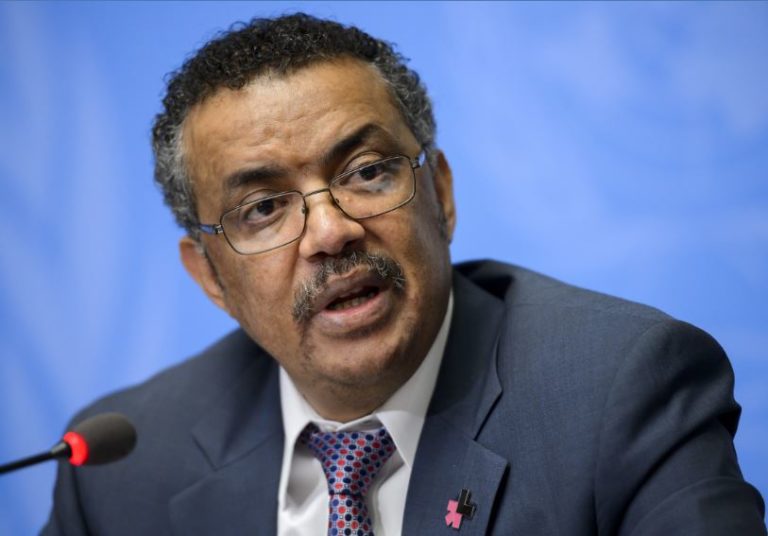
Reconsider US withdrawal, WHO urges Trump

0

THE World Health Organization (WHO) has expressed regret over the United States (US) decision to exit the global health body. 

At his inauguration on Monday, January 20, President Donald Trump signed an executive order reversing the US reunion with the WHO by his predecessor – Joe Biden – in 2021.

The ICIR reports that this is the second time the US is pulling out from WHO under Trump.

In a statement on Tuesday, January 21, WHO urged the US government to reconsider its decision, stating its willingness to work together for the benefit of global health.

The global health body noted its critical role in addressing global health challenges, highlighting decades of collaboration with the US. 

The organisation linked this partnership to significant achievements, such as eradicating smallpox and nearly eliminating polio, describing the U.S. as a founding member that played a vital role in shaping global health policies since it was founded in 1948.

The executive order cited dissatisfaction with the WHO’s handling of the COVID-19 pandemic and accused the organisation of being influenced by political agendas from member states, particularly China. 

Trump criticised the financial contributions required from the U.S., claiming they were disproportionately high compared to other nations. 

He also highlighted that China, with three times the population of the U.S., contributed much less to the organisation’s budget.

The order directed federal agencies to immediately halt funding to the WHO, recall U.S. personnel working with the organisation, and identify alternative partners to take on activities previously overseen by the WHO. 

Additionally, it noted that the US. would cease participation in negotiations on the WHO Pandemic Agreement and amendments to International Health Regulations, stressing that any agreements resulting from these discussions would not be binding on the U.S.

Meanwhile, the WHO emphasised the reforms it has implemented over the past seven years to improve accountability, cost-effectiveness, and global impact. 

These changes, the organisation said, were developed with input from the U.S and other member states. 

“The United States was a founding member of WHO in 1948 and has participated in shaping and governing WHO’s work ever since, alongside 193 other member states, including through its active participation in the World Health Assembly and Executive Board. For over seven decades, WHO and the USA have saved countless lives and protected Americans and all people from health threats. Together, we ended smallpox, and together we have brought polio to the brink of eradication. American institutions have contributed to and benefited from membership in WHO.

“With the participation of the United States and other member states, WHO has over the past seven years implemented the largest set of reforms in its history, to transform our accountability, cost-effectiveness, and impact in countries. This work continues. 

“We hope the United States will reconsider and we look forward to engaging in constructive dialogue to maintain the partnership between the USA and WHO, for the benefit of the health and well-being of millions of people around the globe,” the statement added.
What Trump’s order on US citizenship means for Nigerians

0

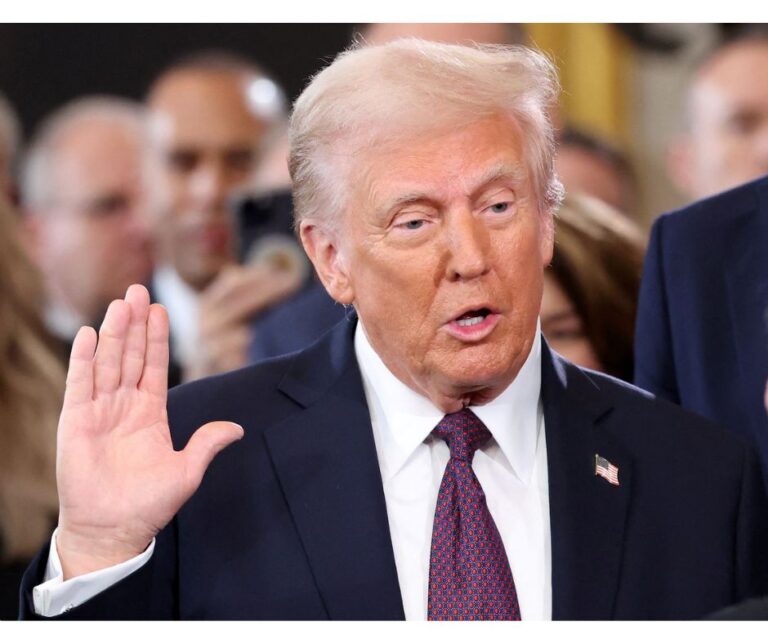
UNITED States President Donald Trump has signed an executive order seeking to redefine birthright citizenship in the United States. 

The order, signed just hours after his inauguration on January 20, 2025, seeks to limit automatic citizenship to children born to parents who are U.S. citizens or permanent residents. 

This policy shift has far-reaching implications for immigrant communities, particularly unlawful immigrants, with Trump’s order stopping the State Department from issuing passports and directing the Social Security Administration to no longer recognise the babies born by immigrants as U.S. citizens. 

The order will take effect in the next 30 days.

The ICIR gathered that Birthright citizenship is rooted in the 14th Amendment of the U.S. Constitution, which declares that “all persons born” in the United States “are citizens of the United States”.

The opening sentence of the 14th Amendment establishes the concept of birthright citizenship as “All persons born or naturalized in the United States, and subject to the jurisdiction thereof, are citizens of the United States and of the state wherein they reside.”

Children born to undocumented Nigerian immigrants, as well as those on temporary visas, may no longer qualify for U.S. citizenship by birth.  

This also means that the children denied citizenship may face deportation alongside their parents under Trump’s broader immigration policies.  

The ICIR reports that many Nigerians have sought opportunities in the U.S. through education, work, or asylum to escape the country’s persistent hardships.

However, this latest development will particularly impact non-permanent residents (families) who hoped their U.S.-born children would have access to opportunities afforded by citizenship, including public education, federal benefits, and long-term residency rights. 

The U.S. has relatively been a favoured destination for “birth tourism” among Nigerians, with many pregnant women travelling to the U.S. to give birth and secure citizenship for their children, according to reports. 

Nigerian families involved in such arrangements may now face uncertainty about their children’s future.  

However, according to reports, the executive order has sparked an immediate backlash from civil rights organisations, including the American Civil Liberties Union (ACLU), which argues that the move violates the 14th Amendment of the U.S. 

Although legal experts have reportedly emphasised that Trump’s order is unlikely to withstand judicial scrutiny, the uncertainty surrounding the order could deter Nigerian immigrants from pursuing opportunities in the U.S. and create fear among those already residing in the country.  

This was in addition to another immigration order signed by the U.S. president declaring illegal immigration at the US-Mexico border a national emergency.

Trump also designated criminal cartels as terrorist organisations, as part of his efforts to reverse several immigration policies of the Biden administration. 

This includes overturning an order that limited deportation priorities to individuals involved in serious crimes, those considered national security threats, or those apprehended at the border.

Trump withdraws U.S. from WHO, Paris Climate Agreement

Similarly, Trump has signed an executive order withdrawing the United States from the World Health Organization (WHO) 

The order, signed on January 20, 2025, reverses the Biden administration’s 2021 decision to rejoin the global health body.

Trump cited the WHO’s handling of the COVID-19 pandemic and alleged political influence from member states, including China, as key reasons for the withdrawal. 

He criticised the organisation for failing to adopt reforms and highlighted funding disparities, noting that the U.S. contributed significantly more than other nations, including China, despite having a smaller population.

Under the order, all U.S. funding and resources to the WHO will be paused, and American personnel working with the organisation will be recalled. The White House will direct federal agencies to identify alternative partners to take on activities previously managed by the WHO.

The executive order mandates a review and replacement of the 2024 U.S. Global Health Security Strategy. Additionally, it halts U.S. participation in negotiations on the WHO Pandemic Agreement and amendments to the International Health Regulations, declaring that such agreements will have no binding force on the country.

The president also pulled out the US from the Paris Climate Agreement.

He said before his large crowd of supporters, “I’m immediately withdrawing from the unfair, one-sided Paris climate accord rip-off”, adding, “The United States will not sabotage our own industries while China pollutes with impunity.

The Paris Agreement is a legally binding international treaty on climate change. It was adopted by 196 Parties at the UN Climate Change Conference (COP21) in Paris, France, on 12 December 2015, and entered into force on 4 November 2016.

With Trump’s pulling the US out of the treaty, the country joins Libya, Iran and Yemen, which are the only non-member states to the treaty.

Like several other Trump orders, the move has sparked reactions, as critics warned it could weaken international cooperation on public health crises.

Delays of TikTok ban

Besides, Trump signed an executive order delaying the enforcement of a law banning TikTok and other apps associated with non-allies. 

The law, which was set to take effect on January 19, 2025, prohibits the distribution, maintenance, and updates of apps controlled by TikTok’s parent company, ByteDance Ltd., on national security grounds.

In the executive order, Trump instructed the attorney general to halt enforcement of the act for 75 days, allowing his administration to assess TikTok’s national security risks and evaluate mitigation measures implemented by the platform. 

The order also prevents penalties for entities distributing or maintaining TikTok during the review period. 

NCC approves 50% tariff hike for telcos

0

THE Nigerian Communications Commission (NCC) has approved a 50 per cent tariff increase for telecommunications companies (Telcos) as telephone subscribers in Nigeria will have to pay more for data and airtime.

In a statement on Monday, January, 20, the NCC spokesman, Reuben Muoka, said the price adjustment was considered taking into account ongoing industry reforms that will positively influence sustainability.

The NCC said it approved the increase, pursuant to Section 108 of the Nigerian Communications Act, 2003 (NCA) to regulate and approve tariff rates and charges by telecommunications operators.

“These adjustments will remain within the tariff bands stipulated in the 2013 NCC Cost Study, and requests will be reviewed on a case-by-case basis as is the Commission’s standard practice for tariff reviews. It will be implemented in strict adherence to the recently issued NCC Guidance on Tariff Simplification, 2024.

“Tariff rates have remained static since 2013, despite the increasing costs of operation faced by telecom operators,” it said.

It hinted the approved adjustment is aimed at addressing the significant gap between operational costs and current tariffs while ensuring that the delivery of services to consumers is not compromised.

“These adjustments will support the ability of operators to continue investing in infrastructure and innovation, ultimately benefiting consumers through improved services and connectivity, including better network quality, enhanced customer service, and greater coverage,” NCC stated.

The ICIR reported that Telcos have sought a 100 per cent increase in tariffs to address rising operational costs, including inflation and increased service delivery expenses.

Earlier, the Telcos had warned to disrupt services unless the regulator adjusted tariffs to account for escalating operational costs.

The Chairman of the Association of Licensed Telecommunications Operators of Nigeria (ALTON), Gbenga Adebayo, described the telecom sector as “under siege,” citing soaring operational costs driven by inflation, volatile exchange rates, and rising energy prices.

He noted that despite these challenges, tariffs have remained unchanged, leaving operators struggling to maintain quality service and expand their networks.

In the statement of Monday, the NCC said it recognised the financial pressures faced by Nigerian households and businesses and remained empathetic to the impact of tariff adjustments.

“To this end, the Commission has mandated that operators implement these adjustments transparently and in a manner that is fair to consumers. Operators are also required to educate and inform the public about the new rates while demonstrating measurable improvements in service delivery,” it stated.

As of December 2023, Nigeria has over 224 million subscribers, according to official data by the regulator.

It showed that MTN boasts over 87 million subscribers, representing 38.79 per cent of the total market share, Globacom and Airtel have 61 million subscribers, and 9mobile has 13.9 million users.

LGBTQ+: US will henceforth recognise only 2 genders: male, female, says Trump

0

THE newly-inaugurated US President Donald Trump has announced that the United States government will henceforth recognise only two genders: male and female.  

The declaration, made during his inaugural address on Monday, January 20, attracted wide reactions, particularly among people on social media and lesbian, gay, bisexual, transgender and queer or questioning (LGBTQ+) rights groups who argued that it threatened the recognition and rights of transgender and non-binary individuals.  

Trump’s declaration came amidst a broader series of ‘controversial’ policies aimed at curbing immigration and challenging progressive reforms. 

His return to office has already brought a wave of anxiety, particularly among immigrants and LGBTQ+ communities, who fear further restrictions under his administration.  

“It will henceforth be the official policy of the United States government that there are only two genders: male and female,” Trump said.

The ICIR reports that the pronouncement aligns with Trump’s campaign stance, where he criticised gender inclusivity measures and promoted a more traditional view of gender roles. 

During his electioneering, his policy agenda was getting “transgender insanity out of our schools.”

Trump’s inauguration ceremony, held in the Capitol Rotunda due to freezing weather conditions, was attended by political leaders, including Joe Biden, Kamala Harris and Barack Obama, allies, and thousands of supporters.

The ICIR reports that Trump’s path to re-election was fraught with legal and political challenges. In 2024, he was convicted of concealing a “hush money” payment aimed at suppressing a scandal during his 2016 campaign. 

Trump also faced more than 30 counts related to business fraud, incitement of the January 6 attack on Congress, his attempts to overturn the 2020 presidential election result in Georgia and his retention of classified records.

This was aside from the two assassination attempts on his life, the first of which occurred in July 2024 when he was shot in the right ear during a political rally. He was rushed off stage by the Secret Service immediately after the shooting.

“I was saved by God to make America great again,” Trump said while speaking about the assassination attempt during his inaugural speech, adding “Those who wish to stop our cause have tried to take my freedom and my life”

Airtime, data costs rise as NCC approves 50% tariff hike

0

TELECOM subscribers in Nigeria will pay higher costs for data and airtime as the  Nigerian Communications Commission (NCC) has approved a 50 per cent tariff adjustment for telecom operators.

The regulatory body cited rising operational costs and the need to sustain the industry as key reasons for the hike.

The tariff hike was the first in 12 years.

In a statement, a spokesman for the regulator, Reuben Muoka, said the price adjustment though lower than the “over 100 per cent requested by some network operators, was arrived at taking into account ongoing industry reforms that will positively influence sustainability”.

The regulator said the increase was pursuant to its power under Section 108 of the Nigerian Communications Act, 2003 (NCA) to regulate and approve tariff rates and charges by telecommunications operators.

“These adjustments will remain within the tariff bands stipulated in the 2013 NCC Cost Study, and requests will be reviewed on a case-by-case basis as is the Commission’s standard practice for tariff reviews. It will be implemented in strict adherence to the recently issued NCC Guidance on Tariff Simplification, 2024,” the statement read.

Tariff rates have remained static since 2013, despite the increasing costs of operation faced by telecom operators.

The regulator said the approved adjustment aimed at addressing the significant gap between operational costs and current tariffs while ensuring that the delivery of services to consumers is not compromised.

“These adjustments will support the ability of operators to continue investing in infrastructure and innovation, ultimately benefiting consumers through improved services and connectivity, including better network quality, enhanced customer service, and greater coverage.”

The NCC said it recognised the financial pressures faced by Nigerian households and businesses and remained empathetic to the impact of tariff adjustments.

As of December 2023, Nigeria had over 224 million subscribers, according to data by the regulator.

MTN boasted of over 87 million subscribers, representing 38.79 per cent of the total market share, the highest in the country by any licensed Mobile Network Operator (MNO). Globacom and Airtel had 61 million subscribers each while 9mobile had 13.9 million users.

Despite the increase, the NCC stressed that protecting consumers remained a priority.

The ICIR reported that the  Nigerian telecommunications companies (TELCOS) had earlier proposed a 100 per cent increase in their tariffs, which they said was subject to approval from the Nigerian Communications Commission(NCC).

The proposal, which has been submitted to the NCC, aimed to address rising operational costs, including inflation and increased service delivery expenses.

Panic grips immigrants as Trump returns to office as US President

0

DONALD Trump was sworn in as the 47th President of the United States on January 20, 2025, marking his return to the White House after losing the presidency to Joe Biden in 2020. 

The inauguration ceremony, held in the Capitol Rotunda due to freezing weather conditions, is attended by political leaders, including Joe Biden, Kamala Harris and Barack Obama, allies, and thousands of supporters.

His second term comes amid an atmosphere of panic, particularly among the immigrant community who now face the brunt of his ‘harsh’ immigration policy.

Trump’s return caps off one of the most contentious and unprecedented political comebacks in US history.

The ICIR reports that Trump’s path to re-election was fraught with legal and political challenges. In 2024, he was convicted of concealing a “hush money” payment aimed at suppressing a scandal during his 2016 campaign. 

Trump also faced more than 30 counts related to business fraud, incitement of the January 6 attack on Congress, his attempts to overturn the 2020 presidential election result in Georgia and his retention of classified records.

The trial began on April 15 and was consequently found guilty of falsifying business records to pay back his attorney, Michael Cohen, for a $130,000 payment made to porn star Stormy Daniels the night before the 2016 election, after her claim to have had sex with him, which could have been disastrous for his campaign at the time.

Daniels claimed she had an affair with Trump in 2006. Although Trump denied the affair, he admitted directing his one-time lawyer and fixer, Michael Cohen, to pay the actress $130,000 for her silence.

But despite the felony conviction, he was elected as the US president for the second term, which made him the first U.S. president-elect with such a record.

This was aside from the two assassination attempts on his life, the first of which occurred in July 2024 when he was shot in the right ear during a political rally. He was rushed off stage by the Secret Service immediately after the shooting.

The second attempt on his life was reportedly carried out on Sunday, September 15 while he was golfing on his course in West Palm Beach, Florida.

According to the Federal Bureau of Investigation (FBI), the investigation is underway while the suspect was caught by the Secret Service agent after he was spotted and fired in bushes near the property line of the golf course.

During his electioneering, Trump pledged to end the rivalry between Russia and Ukraine if re-elected, noting that he had a “very good call” with the Ukrainian President, Volodymyr Zelensky, where they had negotiations on how to end the conflict between Kyiv and Moscow.

Trump also promised to launch “the largest domestic deportation operation in American history,” and a 2024 Republican platform called for targeting millions of undocumented immigrants. 

He noted that he would overhaul the federal government, and introduce significant tariffs that could potentially increase prices.

One of the most controversial points of his policy agenda is getting “transgender insanity out of our schools,” rhetoric that he more often used as a political tool than a policy platform

The new leader had held a rally at the Capital One Arena in Washington the previous night and delivered a broad-ranging speech to his supporters. He pledged to address illegal immigration, grant pardons to Capitol rioters, and temporarily lift restrictions on TikTok.

He acknowledged the video-sharing platform’s role in helping him connect with younger voters, stating, “Frankly, we have no choice. We have to save it.”

Trump’s inauguration took place against the backdrop of wildfires raging across Los Angeles and other parts of California. 

The fires have caused widespread destruction, leaving many residents displaced and sparking debates over state and federal disaster management. 

Bauchi approves recruitment of 3,000 teachers after ICIR report

0

BAUCHI State Governor Bala Mohammed has approved the recruitment of 3,000 new teachers to boost education in the state.   

The approval came a few weeks after The ICIR reported the toll which inadequate teachers took on the state.

The report uncovered the dire state of primary and secondary schools in the state because of the qualified and adequate number of teachers. 

The report found that many schools in the state were understaffed, with some having only one or two teachers to manage entire schools, while others had teachers who were not qualified to teach certain subjects.

In one school, a teacher who was employed to teach social studies was also teaching Mathematics and the English Language, despite having no formal qualifications in these subjects.

The teacher admitted that he was struggling to teach these subjects and that the students were not learning effectively.

The investigation also found that the state government had not recruited new teachers in over a decade, despite the growing demand for education in the state.

According to the investigation, the last recruitment of teachers in the state was in 2014, and since then, many teachers have retired or passed away without being replaced.

The report discovered that the shortage of teachers has led to a decline in the quality of education in the state, with students performing poorly in national exams.

For instance, in 2019, only 23 per cent of students in Bauchi State public schools got credit in five subjects, including Mathematics and English, while in 2020, the percentage increased to 24 per cent.

The investigation also found that the state government had shown a lack of commitment to addressing the teacher shortage, despite acknowledging the problem.

In addition, the government failed to implement effective recruitment strategies, and the few teachers were often overworked and underpaid.

The report highlighted the need for the state government to take immediate action to address the teacher shortage and improve the quality of education in the state. This includes recruiting new teachers, providing training and support for existing teachers, and improving the working conditions and pay for teachers.

In response to the investigation, the state government announced plans to recruit new teachers who will be deployed to junior and senior secondary schools across the state.

This was disclosed in a statement released on the state government’s website on Friday, January 17.

According to the project coordinator for the Adolescent Girls Initiative for Learning and Empowerment (AGILE) project in the state, Ali Gar, 2,000 of these new teachers will be assigned to junior secondary schools, while 1,000 will be posted to senior secondary schools.

The goal of this recruitment exercise, according to the state, is to strengthen the educational system and empower young girls through education.

The state government said the approval of the recruitment was part of Governor Bala Mohammed’s administration’s efforts to improve education and create a more inclusive learning environment. 

Reuters Institute offers journalism fellowships at Oxford

THE Reuters Institute for the Study of Journalism seeks applicants for its Journalist Fellowship Program.

The programme gives visiting journalists worldwide an opportunity to critically reflect upon their profession, research a subject of their choice under the supervision of an academic specialising in that area, and enjoy the breadth of academic, cultural and social life at the University of Oxford.

Applicants must have at least five years of journalism experience and strong English skills.

Mid-career journalists can apply for a fellowship at Oxford University, United Kingdom.

Most journalist fellowships are fully funded and cover living costs and accommodation.

The deadline for the application is February 13, 2025. Interested applicants can apply here.

Mpox: Nigeria records 1,484 suspected cases amid regional spread

IN 2024, Nigeria battled a resurgence of monkeypox as the country recorded 1,484 suspected cases and 124 confirmed cases across 28 states and the Federal Capital Territory (FCT) by epidemiological week 44, 2024. 

This is according to the latest data released by the Nigeria Centre for Disease Control (NCDC).

Mpox is a viral illness caused by the monkeypox virus, with two distinct clades: Clade I and Clade II. The disease can be transmitted through close contact, such as sex, skin-to-skin contact, and talking or breathing close to another person. 

While the exact reservoir of monkeypox is still unknown, the virus can spread both from animal to human and from human to human with transmission occurring when a person comes into contact with the virus from an infected animal, human, or materials contaminated with the virus.

The virus enters the body through broken skin (even if not visible), the respiratory tract, or the mucous membranes of the eyes, nose, or mouth.

Symptoms of the disease usually include an acute illness with fever >38.3°C, intense headache, lymphadenopathy, back pain, myalgia, and intense asthenia, followed by a progressively developing rash often beginning on the face and then spreading elsewhere on the body and soles of feet and palms of the hand.

According to the NCDC, children between ages zero to five are mostly affected by the mpox disease outbreak in the country.

The 2024 data contrasts with that of 2023 when 1,182 suspected cases and 98 confirmed cases were recorded over 52 weeks.

But despite the spike in infections, no fatalities have been reported this year, offering a glimmer of hope compared to previous outbreaks that were accompanied by deaths in 2022 and 2023. 

The virus, however, remains a significant health concern, with experts warning about its potential to disrupt public health and economic activities.

Nigeria’s mpox outbreak is the largest in West Africa this year, with confirmed cases concentrated in urban centres like Lagos, Ogun, and Rivers states. On Gender distribution, males account for 63 per cent of confirmed cases, while females make up 37 per cent

The most affected demography is individuals aged 21–35 years, the backbone of the country’s workforce.

This demographic breakdown suggests a significant impact on the working-age population, with potential socio-economic implications. While the virus has been endemic in Nigeria since 2017, the scale of the 2024 outbreak was higher.

Lagos tops cases

Lagos, Ogun, Rivers, and Delta states reported confirmed cases during the most recent week, with Lagos accounting for three of the six cases reported. 

NCDC data shows that mpox cases have steadily risen in the past three years. In 2022, the country recorded 762 confirmed cases and seven deaths. The following year, the numbers dropped to 98 confirmed cases and two deaths, but 2024 saw an alarming rise in suspected cases despite no reported deaths.

Regional epidemic

Nigeria’s outbreak is part of a larger epidemic sweeping across Africa, where the disease has been declared a public health emergency.  The Africa Centres for Disease Control and Prevention (Africa CDC) reports over 37,000 cases across 15 African Union Member States (AUMS), with nearly 1,500 deaths since the beginning of 2022 and as of 28 July 2024.

In 2023 alone, 14,957 cases and 739 deaths (CFR: 4.9 per cent) were reported from seven AUMS. This is a 78.5 per cent increase in the number of new cases compared to 2022.

However, in its 2025 report, the WHO’s external situation report noted that across Africa, 14,700 confirmed cases and 66 deaths of mpox cases were reported between January 2024 and January 2025. 

Central Africa, particularly the Democratic Republic of Congo (DRC), remains the epicentre, contributing over 4,900 confirmed cases and nearly 629 fatalities. Uganda and Burundi also face significant challenges, with 1,552 and 3,035 confirmed cases reported, respectively.

The disease has further spread beyond endemic zones, with Rwanda and Kenya recording smaller clusters of infections. Travel-related cases from affected African countries have been detected globally, highlighting the transnational nature of the epidemic.

In response to this crisis, the World Health Organization (WHO) declared the outbreak a Public Health Emergency of International Concern (PHEIC) in August 2024. 

The WHO in the IHR (2005) defines, a PHEIC as “an extraordinary event which is determined to constitute a public health risk to other States through the international spread of disease and to potentially require a coordinated international response”.

The WHO’s criteria emphasise the seriousness, suddenness, and cross-border implications of the situation, prompting the director-general, alongside an emergency committee, to issue temporary recommendations to guide the global response.

Vaccine access challenges

In response to the outbreak, Nigeria launched its vaccination campaign in November 2024 after receiving 10,000 doses of the Jynneos vaccine from the United States. 

The campaign targeted three priority groups: frontline healthcare workers, close contacts of mpox cases, and people living with HIV. However, the limited vaccine supply has drawn criticism, with many saying the vaccines were grossly inadequate for a population of over 200 million.

According to ACDC, vaccinations were administered at three sites in each of the selected states, including FCT, Bayelsa, Enugu, Akwa Ibom, Rivers, and Cross River.

The logistical complexities of the cold chain requirements, coupled with Nigeria’s large population, demanded meticulous planning in terms of time, scope, and budget, according the agency’s National Coordinator in Nigeria, Oluyinka Olayemi.

The Africa CDC has pledged to deliver 10 million Mpox vaccine doses by 2025, which marks a significant commitment to strengthening health security across the continent. 

Vaccination is an essential component of a comprehensive mpox response strategy, alongside timely testing and diagnosis, effective clinical management, infection prevention measures, and active community engagement. Vaccines are particularly crucial for curbing transmission and controlling outbreaks, according to WHO.

Anthony Lewis Prize for Exceptional Rule of Law Journalism seeks entries

THE World Justice Project (WJP) is accepting entries for the Anthony Lewis Prize for Exceptional Rule of Law Journalism.

The Lewis Prize recognises journalistic courage and craft that strengthens accountability, advances adherence to the rule of law principles, and builds awareness of the foundational importance of the rule of law.

The Lewis Prize celebrates outstanding reporting on the rule of law issues such as government accountability, human and civil rights, access to justice, open government, corruption, criminal justice and judicial independence.

Journalists worldwide who have outstanding reports on rule of law issues can compete for a cash prize.

A US$10,000 prize will be awarded to the winner who will be honoured at the World Justice Forum in Warsaw, Poland, June 23 to 26, 2025.

The deadline for the application is March 2, 2025. Interested applicants can apply here.