Home Blog Page 381

Full list: 42 executive orders signed by Trump on inauguration day

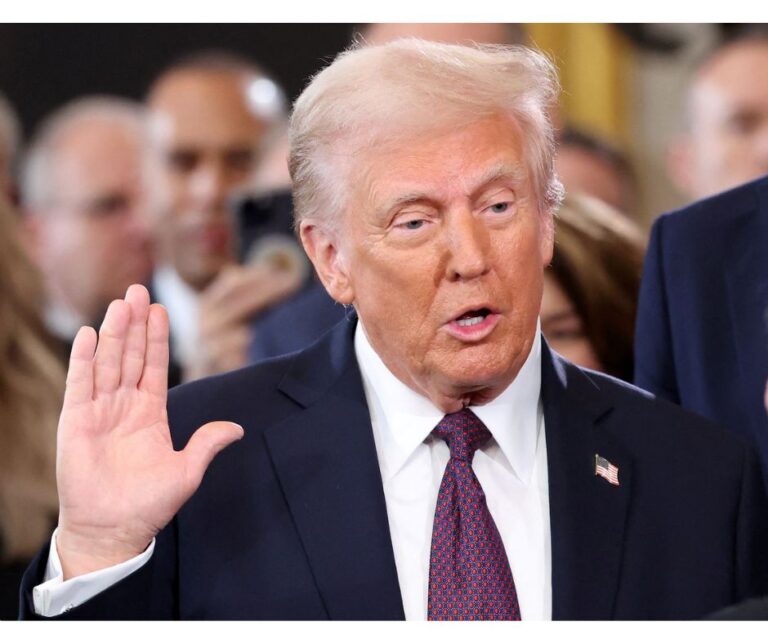
UNITED States (US) President Donald Trump signed executive orders on his inauguration day on Monday, January 20, reversing several policies of his predecessor, Joe Biden.

Some of the orders include pulling out the US from the World Health Organisation (WHO), the  Paris Climate Agreement, ending birthright citizenship for children of illegal immigrants, and recognising only two genders – male and female.

The list includes defending women from gender ideology extremism, reinstating the ban on transgender military service, renaming the Gulf of Mexico to the Gulf of America, among others.

Trump_Executive_Order_Pg_1
Trump_Executive_Order_Pg_2

Here is the list of the 42 executive orders, memoranda, and proclamations signed by the president:

  1. Declaring a national emergency at the Southern Border

2. Designating Mexican drug cartels as foreign terrorist organisations

3. Reinstating the ‘remain in Mexico’ policy

4. Ending birthright citizenship for children of illegal immigrants

5. Defending women from gender ideology extremism

6. Eliminating diversity, equity, and inclusion (DEI) programmes in federal agencies

7. Withdrawing from the Paris Climate Agreement

8. Declaring a national energy emergency

9. Reversing electric vehicle mandates

10. Implementing ‘Schedule F’ for federal employees

11. Relocating U.S. Space Command headquarters to Alabama

12. Pardoning individuals convicted in relation to January 6 events

13. Halting federal funding for abortion services

14. Suspending security clearances for officials linked to Hunter Biden scandal

15. Establishing a federal bitcoin reserve

16. Releasing classified documents on JFK, RFK, and MLK assassinations

17. Reversing AI regulation policies

18. Imposing tariffs on imports from China, Mexico, and Canada

19. Reinstating the ban on transgender military service

20. Prohibiting transgender women from participating in women’s sports

21. Halting government offshore wind leases

22. Renaming the Gulf of Mexico to the Gulf of America

23. Reverting Mount Denali to Mount McKinley

24. Freezing federal workforce hiring

25. Easing regulations on oil and gas production

26. Pausing Congress TikTok ban to seek a U.S. buyer

27. Reversing Biden-era immigration policies

28. Pulling out of the World Health organization

29. Eliminating federal funding for DEI Programmes

30. Establishing the Department of Government Efficiency (DOGE)

31. Reinstating the ‘Muslim ban’

32. Ending birthright citizenship

33. Reforming the criminal justice system

34. Banning critical race theory in federal agencies

35. Demanding increased NATO contributions

36. Confronting China on trade practices

37. Ending the war in Ukraine

38. Supporting law enforcement

39. Promoting school choice

40. Restricting refugee admissions

41. Increasing federal focus on fentanyl trafficking

42. Launching a national infrastructure plan
NNPCL retail outlets raise petrol pump price to N990

0

What to know about the rebasing of Nigeria’s economy

THE National Bureau of Statistics (NBS), said Nigeria’s quest to rebase its gross domestic product (GDP) is to reflect the actual size of economic growth recorded more than 10 years ago.

Rebasing of the economy, the statistics office said on Monday, January 20, is to be unveiled by this month’s end.

According to NBS, rebasing is a process of updating an old base year with a recent one to reflect changes in the prices of goods and services produced within the economy. The agency explained that constant price estimates are recalculated using the new base year’s prices.

The statistics office cited the need to capture changes in certain sectors of the economy and to reflect current consumption patterns, while also reflecting, the economic dynamics witnessed in the past few years.

Commenting further on the reason for the rebasing, the statistics office said some sectors of economy have experienced significant growth since the last GDP rebasing in 2014 and now require proper representation of their contribution to the economy in the latest reabasing exercise.

On the key sectors that have reflected growth which were not captured in the last rebasing exercise, the NBS listed marine economy, arts, culture and tourism, information and communication technology and e-commerce activities.

“Rebasing is a very vital exercise that ensures our economic indicators are accurate, reflecting the updated structure of our economy,” the statistician general and CEO of the NBS, Adeyemi Adeniran, said.

“It’s done to absorb the new ministries that the new government just created, upgrade the Consumer Price Index (CPI) basket and change the methodology of CPI and gross domestic product (GDP),” he added.

He stressed that another reason for CPI Rebasing is to bring the price reference period (Base Year) closer to the current period in other to have a relative price that shows current prices movement. In this regard, the Bureau is using 2024 as the base year for the CPI Rebasing.

Economic watchers said the rebasing is a strategy to woo upbeat investors into the Nigerian economy and furnish them with the right economic indicators.

Chairman of the Presidential Committee on Fiscal Policy and Tax Reforms, Taiwo Oyedele emphasised the significant benefits of the rebasing, including improved investor perception, adjustments to the tax-to-GDP ratio, and a more accurate measurement of per capita income.

“Rebasing the economy signals to investors that Nigeria is serious about reforms and provides a clearer picture of the country’s economic trajectory,” Oyedele said.

He highlighted the Consumer Price Index (CPI) rebasing as another critical component, which would offer a more precise understanding of inflation and its drivers.

A senior Investment Research Analyst, Felicia Awolope, who commented further on the rebasing said, “the rebasing will push up investors appetite in Nigeria’s equities market which recorded huge returns for investors in 2024. It will give investors clear indicators of the Nigerian economy.

“The actual size of the Nigerian economy will give investors the economic picture of where to invest and opportunities in the overall economy. It’s important investors are furnished with accurate data on the economy,” she said.

The ICIR reports that the rebasing in 2014 positioned Nigeria as Africa’s largest economy, however, findings have revealed drop to the fourth position by Nigeria, raising further worries about the actual size of Nigeria’s current economy.

It would be noted that following President Bola Tinubu reforms after he took office in 2023 by implementing the scrapping of the decades-old petrol subsidy and devaluing the naira currency in an effort to jump-start growth.

Tinubu’s reforms have worsened already high inflation and escalated a cost of living crisis in Africa’s most populous nation with most Nigerian households spending larger percentage of their earnings on feeding.

The statistics office further said consumption pattern in Nigeria have changed significantly since the last inflation rebasing in 2009. It plans to use 2024 as the new base year for inflation.

Tinubu meets Fubara, Wike, Ogoni leaders behind closed doors in Abuja

0

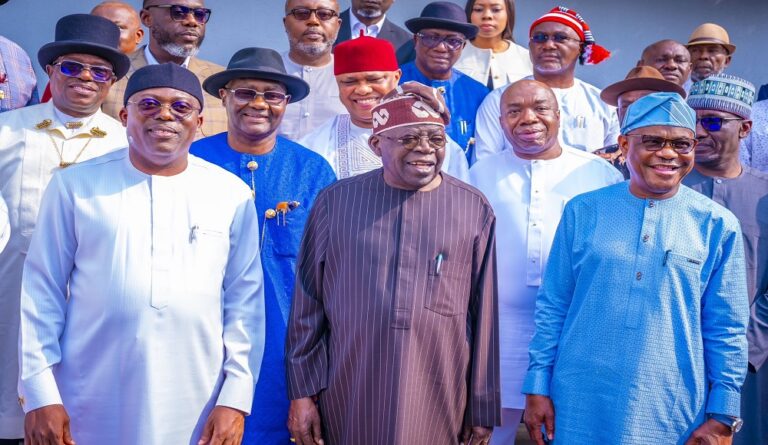
PRESIDENT Bola Tinubu on Tuesday, January 21, met with Rivers State Governor Siminalayi Fubara and the leadership of Ogoniland at the Presidential Villa in Abuja.  

Also present at the meeting, held behind closed doors, was the minister of the Federal Capital Territory, Nyesome Wike, King Festus Babari Bagia Gberesaako XIII, the Gberemene Gokana Kingdom, national security adviser (NSA), Mallam Nuhu Ribadu, the chief of staff to the President, Femi Gbajabiamila, and group chief executive officer, Nigeria National Petroleum Company Limited, Mele Kyari, among others top government functionaries.

Briefing journalists after the meeting, minister of regional development, Abubakar Momoh, said the meeting focussed on how to achieve peace in the oil-rich region.

“It is essentially about how there can be peace in Ogoniland, working with all the stakeholders,” Momoh said.

Media reports earlier suggested the meeting was part of the ongoing efforts geared towards preparing the ground for the resumption of oil exploration in Ogoniland.

The Federal Government had expressed concern over the stoppage of oil exploration by the International Oil Companies (IOCs) in Ogoniland for many years.

This is coming on the heels of a recent call by a group, the Concerned Civil Society Organisations for restraint on the planned resumption of the exploration.

The group cited environmental degradation, social injustices, and a lack of meaningful community engagement as the reasons for the call for caution.

The group, representing various stakeholders across the Niger Delta, issued its statement after a meeting in Port Harcourt. 

The statement was endorsed by several organisations, including Environmental Rights Action, Health of Mother Earth Foundation (HOMEF), Corporate Accountability and Public Participation Africa (CAPPA), Ogoni Solidarity Forum-Nigeria, and others.

According to the group, the call for a restraint follows an invitation by the National Security Adviser, Nuhu Ribadu, for select Ogoni leaders to attend a private meeting in Abuja to discuss the resumption of oil extraction..

The group listed a series of demands aimed at ensuring justice, environmental restoration, and sustainable development in Ogoniland and the broader Niger Delta.

They asked for the allocation of $1 trillion for the cleanup of the land and compensation for lost livelihood.

They also urged the Federal Government to recognise Ken Saro-Wiwa, an Ogoni environmental activist executed in 1995, as a hero of the environment, similar to the national honour conferred on MKO Abiola for his role in democracy.

The meeting came amid the Ogoniland clean-up launched by former President Muhammadu Buhari. The initiative has since been stalled. 

The Abuja meeting also coincided with the prolonged rivalry between Fubara and Wike, who were once political allies.

Fubara and his predecessor, Wike, have been at loggerheads over who controls the PDP structure in the state since 2023, with President Tinubu’s efforts to resolve the stalemate yielding no result.

Fubara has vehemently resisted Wike’s insistence on controlling the PDP’s structure in Rivers State. In addition to declaring the seats of 27 House of Assembly members loyal to the minister vacant, Fubara sacked all 23 local government chairmen elected under Wike and declared that their tenure had expired.

He followed his action with the conduct of a local government election on October 5, affirming his authority on the state’s politics.

The ICIR reported how Fubara won the election for the African Peoples Party (APP) even though he has yet to dump the PDP.

The political camps of Fubara and Wike will, on February 10, battle in five separate cases instituted against each other at the Supreme Court.

Tinubu names proposed federal polytechnic after self

0

PRESIDENT Bola Tinubu has approved the establishment of a Federal Polytechnic in Abuja.

The institution will be cited at Gwarimpa Estate, one of the largest estates in the Federal Capital Territory (FCT).

Daily Trust reported that the institution would be named after the president.

The polytechnic adds to the list of public higher institutions of learning in the city, including the University of Abuja (UniAbuja), College of Education, Zuba, and the University of Science and Technology.

The school aims to enhance technological and vocational training in conformity with Nigeria’s education policy.

In a letter dated January 16, 2025, addressed to the FCT minister, Nyesom Wike, the minister of education, Tunji Alausa, conveyed the federal government’s approval, requesting the FCT minister to propose temporary and permanent locations within Gwarinpa for the institution. 

According to the report, a technical team from the Federal Ministry of Education and the National Board for Technical Education (NBTE) would inspect the sites before giving final approval.

Reacting to the development in a statement, the chairman of the Abuja Municipal Area Council (AMAC), Christopher Zakka Maikalangu, lauded the president for the development. 

The statement, released by his media aide, Kingsley Madaki, described the polytechnic’s establishment as a “dream come true” for the FCT. 

He also commended Wike for his efforts in making the institution a reality.

This latest development is coming a few weeks after the Federal government approved the renaming of the University of Abuja after former Head of State, Yakubu Gowon, a retired general.

The announcement was made on Monday, December 16, by the minister of information and national orientation, Mohammed Idris, while State House correspondents after the council’s meeting at the Aso Rock Villa, Abuja.

Established in January 1988 under Decree No. 110 of 1992 (as amended), the University of Abuja, widely known as UniAbuja, functions as a dual-mode institution, providing both conventional and distance learning programmes.

Gowon, who served as Nigeria’s Head of State from 1966 to 1975, is widely remembered for introducing the National Youth Service Corps (NYSC) in 1973, a programme aimed at fostering national integration after the nearly three-year civil war he led.

However, there was much opposition to the renaming from different groups, including the students and Alumni of the university.

The group asked the government to reverse the decision,  noting that the ‘name change was seen as an affront to our collective identity and history.’

Oyo integrates SWOFON into agricultural interventions – Chairperson

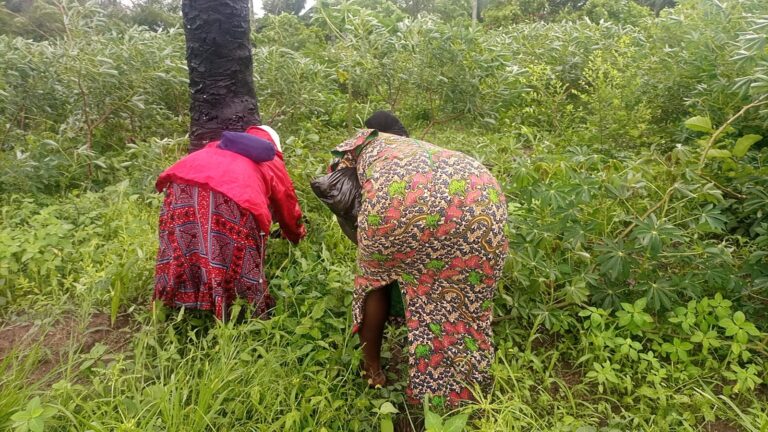
THE Oyo State chapter of Small-holder Women Farmers in Nigeria (SWOFON), has revealed that over 200 of its members benefitted from the state government’s agricultural interventions in 2024.       Addressing journalists recently through its chairman, Atinuke Akinbade, the group said it was the first time the state government had supported SWOFON members.

According to her, the aid came through the government’s initiative tagged, “Sustainable Action for Economic Recovery (SAfER) Project,”

The ICIR reports that SWOFON is a coalition of over 500,000 women farmers associations and groups across 36 states in Nigeria.

Launched by ActionAid Nigeria in August 2012, it seeks to advocate and support women farmers, especially those in rural areas, to demand their rights and privileges from the duty bearers while serving as a vocal and visible pressure group on behalf of women farmers in Nigeria.

Akinbade said, “We have not seen anything like this before and the government has promised to always include women significantly in its intervention going forward.”

She explained that access to essential farm implements and inputs had been a challenge for women smallholders in the state.

She said SWOFON did not take the Governor Seyi Makinde-led administration seriously when it invited its members for support.

“It never happened that the government would give many smallholder women farmers huge opportunity to benefit from its programmes. These farmers went to their various local government areas and were able to access these things.

“Majority of those who went benefited from the inputs while some said they didn’t benefit.

Some of the support the farmers received included fertilisers and seedlings.

In September 2024, The ICIR reported how SWOFON members in the state battled the high cost of inputs and herders’ activities.


FG boosts electricity access for SMEs with new 110MVA transformer in Isolo

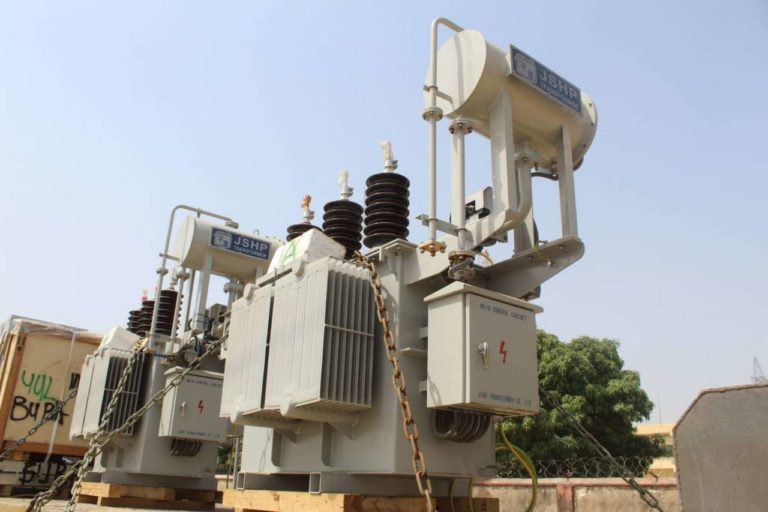
THE Federal Government said the newly inaugurated 110MVA transformer at the Isolo Transmission Substation in Lagos is to  improve electricity access to small and medium enterprises (SMEs) and residents within the vicinity.

The minister of Power, Adebayo Adelabu, at  the inauguration, emphasised the project’s significance in enhancing Nigeria’s electricity infrastructure and supporting economic growth, particularly for SMEs and industries.

Adelabu in a statement on Tuesday, January 21, acknowledged the Central Bank of Nigeria’s (CBN) support and highlighted ongoing challenges such as vandalism and aging infrastructure.

He assured of collaboration with the Transmission Company of Nigeria (TCN) to improve energy security and sustainability, urging all stakeholders to work together for optimal use of the new infrastructure.

“This occasion is a testament to our unwavering commitment to strengthening Nigeria’s electricity infrastructure and enhancing power delivery to our citizens.

“I want to express my profound gratitude to the Central Bank of Nigeria (CBN) for sponsoring this project under the Service Level Agreement (SLA) framework with the Transmission Company of Nigeria (TCN).

“This partnership has been instrumental in achieving this milestone,” he stated.

Beyond enhancing electricity supply, Adelabu said the  project has broader implications for the  economy through direct impact on small and medium-sized enterprises (SMEs) and large industries.

He listed other benefits of the transformer to include, reduction in operational challenges caused by power shortages, fostering economic growth and creating job opportunities, and driving local and regional development, particularly in Lagos.

Adelabu further said  the federal government is committed  to strategic partnership with players in the electricity supply industry through long-term sustainability programmes.

He pointed out that frequent grid collapse disturbances and dip in supply level as a result of ageing infrastructure, resource limitations, and vandalism in transmission would be addressed with collaboration of all stakeholders.

“The Federal Ministry of Power under my leadership is always ready to work actively with TCN to resolve these issues to ensure energy security and sustainability across the country and as part of short-term measures. We encourage TCN to have in place a reinforced standard operating procedure for the system, detailed and enforced maintenance plans at the key transmission substations, consistent line tracing especially on lines that are tripping incessantly, critical lines, and assessment of key nodes integrity to prevent future disturbances.

”For our long-term strategies, we plan to work with TCN to complete all ongoing projects and to invest in regional and super grid projects that will enable a more robust and resilient grid system. We remain optimistic about the promise and the potential the sector holds to drive socio-economic development in the country, and we believe we shall overcome these challenges through active participation of all stakeholders,”Adelabu added.

The ICIR reported that TCN has imported 15 power transformers to sustain its transmission expansion plan (TEP).

As the TEP seeks to increase the current bulk power transmission capacity of over 7,000 megawatts, the procured transformers are expected to raise the national transmission wheeling capacity by 1,487mw.

Telecoms subscribers vow to challenge 50% tariff hike in court

0

THE National Association of Telecommunications Subscribers (NATCOMS) have vowed to challenge the 50 per cent tariff hike approved for telecoms service providers by the Federal Government in court. 

While challenging the Nigerian Communications Commission (NCC) for acceding to the hike, NATCOMS president, Deolu Ogunbanjo, on Monday, January 19, said his group was not consulted before the approval.

He admitted that the providers were facing challenges but argued that a more reasonable increase of between five and ten per cent would have been acceptable.

Ogunbanjo said a 50 per cent hike was excessive and would burden subscribers, especially small businesses and the vulnerable.

He suggested that telecom operators could explore alternative funding options, such as initial public offerings (IPOs), instead of passing the cost to customers.

He added, “However, a situation where a whole 50 per cent is granted for a tariff hike is not cheap and it is a no, no from us subscribers. I mean, for what we are already going through, no for us, we will challenge this in court.”

He said the hike in tariff would affect all customers. 

According to him, people depend on telecoms for meetings, banking activities, and other activities.

“It will increase operational costs. So, that is why we painfully agreed that a moderate or marginal five per cent to 10 per cent increase would be fine.

”You know, we do not mind an increase if it is to salvage the industry that is helping us. That means so much to us and that is also contributing double digits to Nigeria’s Gross Domestic Product,he said.

The ICIR reported on Monday that the NCC approved a 50 per cent tariff increase for telecommunications companies as telephone subscribers in Nigeria would have to pay more for data and airtime.

In a statement by the NCC spokesman, Reuben Muoka, the commission the price adjustment was considered taking into account ongoing industry reforms that would positively influence sustainability.

The NCC said it approved the increase, under Section 108 of the Nigerian Communications Act, 2003 (NCA), to regulate and approve tariff rates and charges by telecommunications operators.

“Tariff rates have remained static since 2013, despite the increasing costs of operation faced by telecom operators,the commission said.

It hinted the approved adjustment was aimed at addressing the significant gap between operational costs and current tariffs while ensuring that the delivery of services to consumers is not compromised.

The ICIR reported that telcos had sought a 100 per cent increase in tariffs to address rising operational costs, including inflation and increased service delivery expenses.

Earlier, the telcos had warned to disrupt services unless the regulator adjusted tariffs to account for escalating operational costs.

In the statement of Monday, the NCC said it recognised the financial pressures faced by Nigerian households and businesses and remained empathetic to the impact of tariff adjustments.

As of December 2023, Nigeria has over 224 million subscribers, according to official data by the regulator.

It showed that MTN boasts over 87 million subscribers, representing 38.79 per cent of the total market share; Globacom and Airtel have 61 million subscribers, and 9mobile has 13.9 million users.


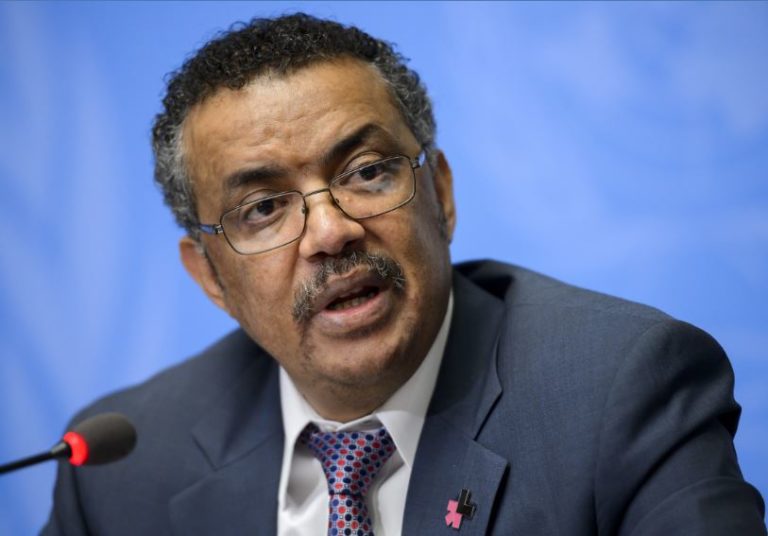
Reconsider US withdrawal, WHO urges Trump

0

THE World Health Organization (WHO) has expressed regret over the United States (US) decision to exit the global health body. 

At his inauguration on Monday, January 20, President Donald Trump signed an executive order reversing the US reunion with the WHO by his predecessor – Joe Biden – in 2021.

The ICIR reports that this is the second time the US is pulling out from WHO under Trump.

In a statement on Tuesday, January 21, WHO urged the US government to reconsider its decision, stating its willingness to work together for the benefit of global health.

The global health body noted its critical role in addressing global health challenges, highlighting decades of collaboration with the US. 

The organisation linked this partnership to significant achievements, such as eradicating smallpox and nearly eliminating polio, describing the U.S. as a founding member that played a vital role in shaping global health policies since it was founded in 1948.

The executive order cited dissatisfaction with the WHO’s handling of the COVID-19 pandemic and accused the organisation of being influenced by political agendas from member states, particularly China. 

Trump criticised the financial contributions required from the U.S., claiming they were disproportionately high compared to other nations. 

He also highlighted that China, with three times the population of the U.S., contributed much less to the organisation’s budget.

The order directed federal agencies to immediately halt funding to the WHO, recall U.S. personnel working with the organisation, and identify alternative partners to take on activities previously overseen by the WHO. 

Additionally, it noted that the US. would cease participation in negotiations on the WHO Pandemic Agreement and amendments to International Health Regulations, stressing that any agreements resulting from these discussions would not be binding on the U.S.

Meanwhile, the WHO emphasised the reforms it has implemented over the past seven years to improve accountability, cost-effectiveness, and global impact. 

These changes, the organisation said, were developed with input from the U.S and other member states. 

“The United States was a founding member of WHO in 1948 and has participated in shaping and governing WHO’s work ever since, alongside 193 other member states, including through its active participation in the World Health Assembly and Executive Board. For over seven decades, WHO and the USA have saved countless lives and protected Americans and all people from health threats. Together, we ended smallpox, and together we have brought polio to the brink of eradication. American institutions have contributed to and benefited from membership in WHO.

“With the participation of the United States and other member states, WHO has over the past seven years implemented the largest set of reforms in its history, to transform our accountability, cost-effectiveness, and impact in countries. This work continues. 

“We hope the United States will reconsider and we look forward to engaging in constructive dialogue to maintain the partnership between the USA and WHO, for the benefit of the health and well-being of millions of people around the globe,” the statement added.