Home Blog Page 382

Oyo integrates SWOFON into agricultural interventions – Chairperson

THE Oyo State chapter of Small-holder Women Farmers in Nigeria (SWOFON), has revealed that over 200 of its members benefitted from the state government’s agricultural interventions in 2024.       Addressing journalists recently through its chairman, Atinuke Akinbade, the group said it was the first time the state government had supported SWOFON members.

According to her, the aid came through the government’s initiative tagged, “Sustainable Action for Economic Recovery (SAfER) Project,”

The ICIR reports that SWOFON is a coalition of over 500,000 women farmers associations and groups across 36 states in Nigeria.

Launched by ActionAid Nigeria in August 2012, it seeks to advocate and support women farmers, especially those in rural areas, to demand their rights and privileges from the duty bearers while serving as a vocal and visible pressure group on behalf of women farmers in Nigeria.

Akinbade said, “We have not seen anything like this before and the government has promised to always include women significantly in its intervention going forward.”

She explained that access to essential farm implements and inputs had been a challenge for women smallholders in the state.

She said SWOFON did not take the Governor Seyi Makinde-led administration seriously when it invited its members for support.

“It never happened that the government would give many smallholder women farmers huge opportunity to benefit from its programmes. These farmers went to their various local government areas and were able to access these things.

“Majority of those who went benefited from the inputs while some said they didn’t benefit.

Some of the support the farmers received included fertilisers and seedlings.

In September 2024, The ICIR reported how SWOFON members in the state battled the high cost of inputs and herders’ activities.


FG boosts electricity access for SMEs with new 110MVA transformer in Isolo

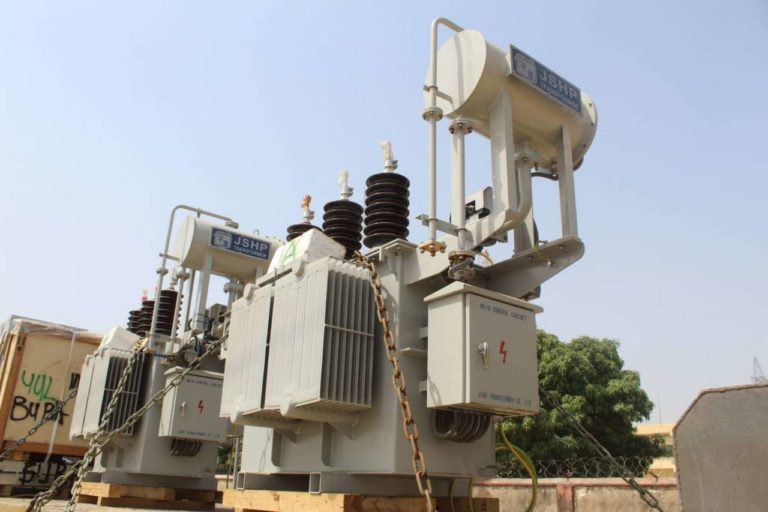
THE Federal Government said the newly inaugurated 110MVA transformer at the Isolo Transmission Substation in Lagos is to  improve electricity access to small and medium enterprises (SMEs) and residents within the vicinity.

The minister of Power, Adebayo Adelabu, at  the inauguration, emphasised the project’s significance in enhancing Nigeria’s electricity infrastructure and supporting economic growth, particularly for SMEs and industries.

Adelabu in a statement on Tuesday, January 21, acknowledged the Central Bank of Nigeria’s (CBN) support and highlighted ongoing challenges such as vandalism and aging infrastructure.

He assured of collaboration with the Transmission Company of Nigeria (TCN) to improve energy security and sustainability, urging all stakeholders to work together for optimal use of the new infrastructure.

“This occasion is a testament to our unwavering commitment to strengthening Nigeria’s electricity infrastructure and enhancing power delivery to our citizens.

“I want to express my profound gratitude to the Central Bank of Nigeria (CBN) for sponsoring this project under the Service Level Agreement (SLA) framework with the Transmission Company of Nigeria (TCN).

“This partnership has been instrumental in achieving this milestone,” he stated.

Beyond enhancing electricity supply, Adelabu said the  project has broader implications for the  economy through direct impact on small and medium-sized enterprises (SMEs) and large industries.

He listed other benefits of the transformer to include, reduction in operational challenges caused by power shortages, fostering economic growth and creating job opportunities, and driving local and regional development, particularly in Lagos.

Adelabu further said  the federal government is committed  to strategic partnership with players in the electricity supply industry through long-term sustainability programmes.

He pointed out that frequent grid collapse disturbances and dip in supply level as a result of ageing infrastructure, resource limitations, and vandalism in transmission would be addressed with collaboration of all stakeholders.

“The Federal Ministry of Power under my leadership is always ready to work actively with TCN to resolve these issues to ensure energy security and sustainability across the country and as part of short-term measures. We encourage TCN to have in place a reinforced standard operating procedure for the system, detailed and enforced maintenance plans at the key transmission substations, consistent line tracing especially on lines that are tripping incessantly, critical lines, and assessment of key nodes integrity to prevent future disturbances.

”For our long-term strategies, we plan to work with TCN to complete all ongoing projects and to invest in regional and super grid projects that will enable a more robust and resilient grid system. We remain optimistic about the promise and the potential the sector holds to drive socio-economic development in the country, and we believe we shall overcome these challenges through active participation of all stakeholders,”Adelabu added.

The ICIR reported that TCN has imported 15 power transformers to sustain its transmission expansion plan (TEP).

As the TEP seeks to increase the current bulk power transmission capacity of over 7,000 megawatts, the procured transformers are expected to raise the national transmission wheeling capacity by 1,487mw.

Telecoms subscribers vow to challenge 50% tariff hike in court

0

THE National Association of Telecommunications Subscribers (NATCOMS) have vowed to challenge the 50 per cent tariff hike approved for telecoms service providers by the Federal Government in court. 

While challenging the Nigerian Communications Commission (NCC) for acceding to the hike, NATCOMS president, Deolu Ogunbanjo, on Monday, January 19, said his group was not consulted before the approval.

He admitted that the providers were facing challenges but argued that a more reasonable increase of between five and ten per cent would have been acceptable.

Ogunbanjo said a 50 per cent hike was excessive and would burden subscribers, especially small businesses and the vulnerable.

He suggested that telecom operators could explore alternative funding options, such as initial public offerings (IPOs), instead of passing the cost to customers.

He added, “However, a situation where a whole 50 per cent is granted for a tariff hike is not cheap and it is a no, no from us subscribers. I mean, for what we are already going through, no for us, we will challenge this in court.”

He said the hike in tariff would affect all customers. 

According to him, people depend on telecoms for meetings, banking activities, and other activities.

“It will increase operational costs. So, that is why we painfully agreed that a moderate or marginal five per cent to 10 per cent increase would be fine.

”You know, we do not mind an increase if it is to salvage the industry that is helping us. That means so much to us and that is also contributing double digits to Nigeria’s Gross Domestic Product,he said.

The ICIR reported on Monday that the NCC approved a 50 per cent tariff increase for telecommunications companies as telephone subscribers in Nigeria would have to pay more for data and airtime.

In a statement by the NCC spokesman, Reuben Muoka, the commission the price adjustment was considered taking into account ongoing industry reforms that would positively influence sustainability.

The NCC said it approved the increase, under Section 108 of the Nigerian Communications Act, 2003 (NCA), to regulate and approve tariff rates and charges by telecommunications operators.

“Tariff rates have remained static since 2013, despite the increasing costs of operation faced by telecom operators,the commission said.

It hinted the approved adjustment was aimed at addressing the significant gap between operational costs and current tariffs while ensuring that the delivery of services to consumers is not compromised.

The ICIR reported that telcos had sought a 100 per cent increase in tariffs to address rising operational costs, including inflation and increased service delivery expenses.

Earlier, the telcos had warned to disrupt services unless the regulator adjusted tariffs to account for escalating operational costs.

In the statement of Monday, the NCC said it recognised the financial pressures faced by Nigerian households and businesses and remained empathetic to the impact of tariff adjustments.

As of December 2023, Nigeria has over 224 million subscribers, according to official data by the regulator.

It showed that MTN boasts over 87 million subscribers, representing 38.79 per cent of the total market share; Globacom and Airtel have 61 million subscribers, and 9mobile has 13.9 million users.


Reconsider US withdrawal, WHO urges Trump

0

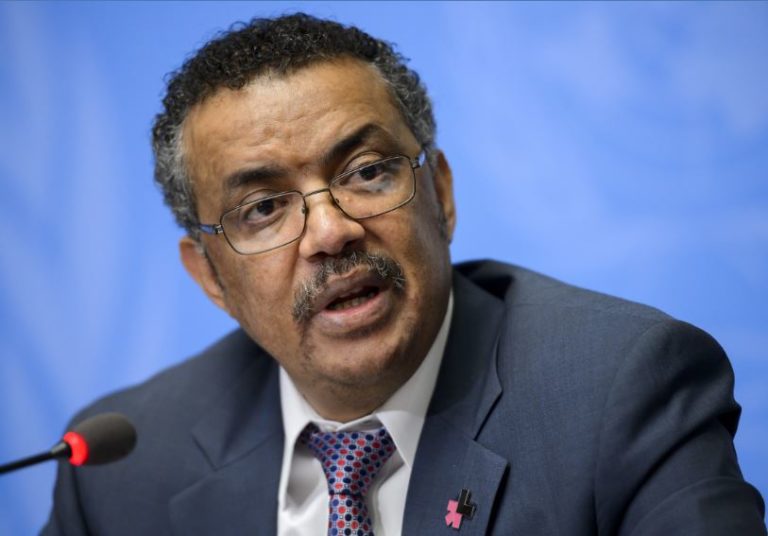
THE World Health Organization (WHO) has expressed regret over the United States (US) decision to exit the global health body. 

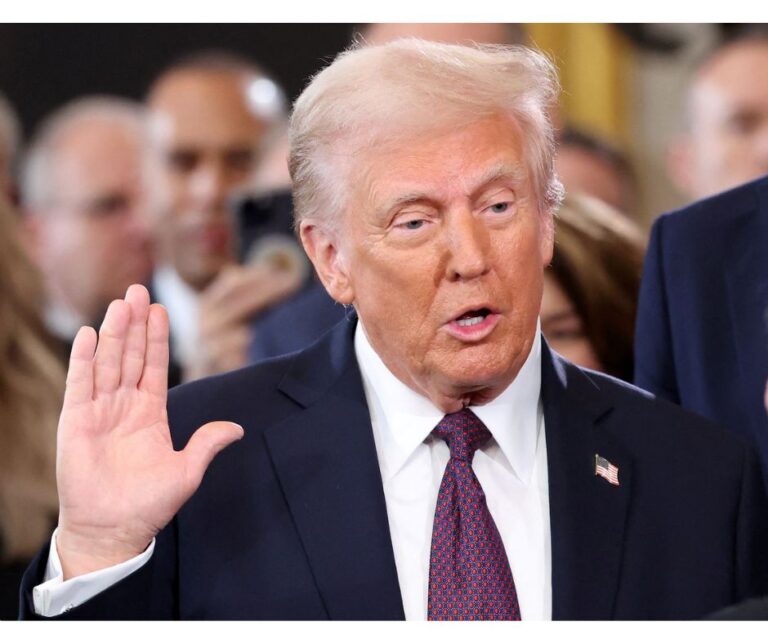
At his inauguration on Monday, January 20, President Donald Trump signed an executive order reversing the US reunion with the WHO by his predecessor – Joe Biden – in 2021.

The ICIR reports that this is the second time the US is pulling out from WHO under Trump.

In a statement on Tuesday, January 21, WHO urged the US government to reconsider its decision, stating its willingness to work together for the benefit of global health.

The global health body noted its critical role in addressing global health challenges, highlighting decades of collaboration with the US. 

The organisation linked this partnership to significant achievements, such as eradicating smallpox and nearly eliminating polio, describing the U.S. as a founding member that played a vital role in shaping global health policies since it was founded in 1948.

The executive order cited dissatisfaction with the WHO’s handling of the COVID-19 pandemic and accused the organisation of being influenced by political agendas from member states, particularly China. 

Trump criticised the financial contributions required from the U.S., claiming they were disproportionately high compared to other nations. 

He also highlighted that China, with three times the population of the U.S., contributed much less to the organisation’s budget.

The order directed federal agencies to immediately halt funding to the WHO, recall U.S. personnel working with the organisation, and identify alternative partners to take on activities previously overseen by the WHO. 

Additionally, it noted that the US. would cease participation in negotiations on the WHO Pandemic Agreement and amendments to International Health Regulations, stressing that any agreements resulting from these discussions would not be binding on the U.S.

Meanwhile, the WHO emphasised the reforms it has implemented over the past seven years to improve accountability, cost-effectiveness, and global impact. 

These changes, the organisation said, were developed with input from the U.S and other member states. 

“The United States was a founding member of WHO in 1948 and has participated in shaping and governing WHO’s work ever since, alongside 193 other member states, including through its active participation in the World Health Assembly and Executive Board. For over seven decades, WHO and the USA have saved countless lives and protected Americans and all people from health threats. Together, we ended smallpox, and together we have brought polio to the brink of eradication. American institutions have contributed to and benefited from membership in WHO.

“With the participation of the United States and other member states, WHO has over the past seven years implemented the largest set of reforms in its history, to transform our accountability, cost-effectiveness, and impact in countries. This work continues. 

“We hope the United States will reconsider and we look forward to engaging in constructive dialogue to maintain the partnership between the USA and WHO, for the benefit of the health and well-being of millions of people around the globe,” the statement added.

What Trump’s order on US citizenship means for Nigerians

0

UNITED States President Donald Trump has signed an executive order seeking to redefine birthright citizenship in the United States. 

The order, signed just hours after his inauguration on January 20, 2025, seeks to limit automatic citizenship to children born to parents who are U.S. citizens or permanent residents. 

This policy shift has far-reaching implications for immigrant communities, particularly unlawful immigrants, with Trump’s order stopping the State Department from issuing passports and directing the Social Security Administration to no longer recognise the babies born by immigrants as U.S. citizens. 

The order will take effect in the next 30 days.

The ICIR gathered that Birthright citizenship is rooted in the 14th Amendment of the U.S. Constitution, which declares that “all persons born” in the United States “are citizens of the United States”.

The opening sentence of the 14th Amendment establishes the concept of birthright citizenship as “All persons born or naturalized in the United States, and subject to the jurisdiction thereof, are citizens of the United States and of the state wherein they reside.”

Children born to undocumented Nigerian immigrants, as well as those on temporary visas, may no longer qualify for U.S. citizenship by birth.  

This also means that the children denied citizenship may face deportation alongside their parents under Trump’s broader immigration policies.  

The ICIR reports that many Nigerians have sought opportunities in the U.S. through education, work, or asylum to escape the country’s persistent hardships.

However, this latest development will particularly impact non-permanent residents (families) who hoped their U.S.-born children would have access to opportunities afforded by citizenship, including public education, federal benefits, and long-term residency rights. 

The U.S. has relatively been a favoured destination for “birth tourism” among Nigerians, with many pregnant women travelling to the U.S. to give birth and secure citizenship for their children, according to reports. 

Nigerian families involved in such arrangements may now face uncertainty about their children’s future.  

However, according to reports, the executive order has sparked an immediate backlash from civil rights organisations, including the American Civil Liberties Union (ACLU), which argues that the move violates the 14th Amendment of the U.S. 

Although legal experts have reportedly emphasised that Trump’s order is unlikely to withstand judicial scrutiny, the uncertainty surrounding the order could deter Nigerian immigrants from pursuing opportunities in the U.S. and create fear among those already residing in the country.  

This was in addition to another immigration order signed by the U.S. president declaring illegal immigration at the US-Mexico border a national emergency.

Trump also designated criminal cartels as terrorist organisations, as part of his efforts to reverse several immigration policies of the Biden administration. 

This includes overturning an order that limited deportation priorities to individuals involved in serious crimes, those considered national security threats, or those apprehended at the border.

Trump withdraws U.S. from WHO, Paris Climate Agreement

Similarly, Trump has signed an executive order withdrawing the United States from the World Health Organization (WHO) 

The order, signed on January 20, 2025, reverses the Biden administration’s 2021 decision to rejoin the global health body.

Trump cited the WHO’s handling of the COVID-19 pandemic and alleged political influence from member states, including China, as key reasons for the withdrawal. 

He criticised the organisation for failing to adopt reforms and highlighted funding disparities, noting that the U.S. contributed significantly more than other nations, including China, despite having a smaller population.

Under the order, all U.S. funding and resources to the WHO will be paused, and American personnel working with the organisation will be recalled. The White House will direct federal agencies to identify alternative partners to take on activities previously managed by the WHO.

The executive order mandates a review and replacement of the 2024 U.S. Global Health Security Strategy. Additionally, it halts U.S. participation in negotiations on the WHO Pandemic Agreement and amendments to the International Health Regulations, declaring that such agreements will have no binding force on the country.

The president also pulled out the US from the Paris Climate Agreement.

He said before his large crowd of supporters, “I’m immediately withdrawing from the unfair, one-sided Paris climate accord rip-off”, adding, “The United States will not sabotage our own industries while China pollutes with impunity.

The Paris Agreement is a legally binding international treaty on climate change. It was adopted by 196 Parties at the UN Climate Change Conference (COP21) in Paris, France, on 12 December 2015, and entered into force on 4 November 2016.

With Trump’s pulling the US out of the treaty, the country joins Libya, Iran and Yemen, which are the only non-member states to the treaty.

Like several other Trump orders, the move has sparked reactions, as critics warned it could weaken international cooperation on public health crises.

Delays of TikTok ban

Besides, Trump signed an executive order delaying the enforcement of a law banning TikTok and other apps associated with non-allies. 

The law, which was set to take effect on January 19, 2025, prohibits the distribution, maintenance, and updates of apps controlled by TikTok’s parent company, ByteDance Ltd., on national security grounds.

In the executive order, Trump instructed the attorney general to halt enforcement of the act for 75 days, allowing his administration to assess TikTok’s national security risks and evaluate mitigation measures implemented by the platform. 

The order also prevents penalties for entities distributing or maintaining TikTok during the review period. 

NCC approves 50% tariff hike for telcos

0

THE Nigerian Communications Commission (NCC) has approved a 50 per cent tariff increase for telecommunications companies (Telcos) as telephone subscribers in Nigeria will have to pay more for data and airtime.

In a statement on Monday, January, 20, the NCC spokesman, Reuben Muoka, said the price adjustment was considered taking into account ongoing industry reforms that will positively influence sustainability.

The NCC said it approved the increase, pursuant to Section 108 of the Nigerian Communications Act, 2003 (NCA) to regulate and approve tariff rates and charges by telecommunications operators.

“These adjustments will remain within the tariff bands stipulated in the 2013 NCC Cost Study, and requests will be reviewed on a case-by-case basis as is the Commission’s standard practice for tariff reviews. It will be implemented in strict adherence to the recently issued NCC Guidance on Tariff Simplification, 2024.

“Tariff rates have remained static since 2013, despite the increasing costs of operation faced by telecom operators,” it said.

It hinted the approved adjustment is aimed at addressing the significant gap between operational costs and current tariffs while ensuring that the delivery of services to consumers is not compromised.

“These adjustments will support the ability of operators to continue investing in infrastructure and innovation, ultimately benefiting consumers through improved services and connectivity, including better network quality, enhanced customer service, and greater coverage,” NCC stated.

The ICIR reported that Telcos have sought a 100 per cent increase in tariffs to address rising operational costs, including inflation and increased service delivery expenses.

Earlier, the Telcos had warned to disrupt services unless the regulator adjusted tariffs to account for escalating operational costs.

The Chairman of the Association of Licensed Telecommunications Operators of Nigeria (ALTON), Gbenga Adebayo, described the telecom sector as “under siege,” citing soaring operational costs driven by inflation, volatile exchange rates, and rising energy prices.

He noted that despite these challenges, tariffs have remained unchanged, leaving operators struggling to maintain quality service and expand their networks.

In the statement of Monday, the NCC said it recognised the financial pressures faced by Nigerian households and businesses and remained empathetic to the impact of tariff adjustments.

“To this end, the Commission has mandated that operators implement these adjustments transparently and in a manner that is fair to consumers. Operators are also required to educate and inform the public about the new rates while demonstrating measurable improvements in service delivery,” it stated.

As of December 2023, Nigeria has over 224 million subscribers, according to official data by the regulator.

It showed that MTN boasts over 87 million subscribers, representing 38.79 per cent of the total market share, Globacom and Airtel have 61 million subscribers, and 9mobile has 13.9 million users.

LGBTQ+: US will henceforth recognise only 2 genders: male, female, says Trump

0

THE newly-inaugurated US President Donald Trump has announced that the United States government will henceforth recognise only two genders: male and female.  

The declaration, made during his inaugural address on Monday, January 20, attracted wide reactions, particularly among people on social media and lesbian, gay, bisexual, transgender and queer or questioning (LGBTQ+) rights groups who argued that it threatened the recognition and rights of transgender and non-binary individuals.  

Trump’s declaration came amidst a broader series of ‘controversial’ policies aimed at curbing immigration and challenging progressive reforms. 

His return to office has already brought a wave of anxiety, particularly among immigrants and LGBTQ+ communities, who fear further restrictions under his administration.  

“It will henceforth be the official policy of the United States government that there are only two genders: male and female,” Trump said.

The ICIR reports that the pronouncement aligns with Trump’s campaign stance, where he criticised gender inclusivity measures and promoted a more traditional view of gender roles. 

During his electioneering, his policy agenda was getting “transgender insanity out of our schools.”

Trump’s inauguration ceremony, held in the Capitol Rotunda due to freezing weather conditions, was attended by political leaders, including Joe Biden, Kamala Harris and Barack Obama, allies, and thousands of supporters.

The ICIR reports that Trump’s path to re-election was fraught with legal and political challenges. In 2024, he was convicted of concealing a “hush money” payment aimed at suppressing a scandal during his 2016 campaign. 

Trump also faced more than 30 counts related to business fraud, incitement of the January 6 attack on Congress, his attempts to overturn the 2020 presidential election result in Georgia and his retention of classified records.

This was aside from the two assassination attempts on his life, the first of which occurred in July 2024 when he was shot in the right ear during a political rally. He was rushed off stage by the Secret Service immediately after the shooting.

“I was saved by God to make America great again,” Trump said while speaking about the assassination attempt during his inaugural speech, adding “Those who wish to stop our cause have tried to take my freedom and my life”

Airtime, data costs rise as NCC approves 50% tariff hike

0

TELECOM subscribers in Nigeria will pay higher costs for data and airtime as the  Nigerian Communications Commission (NCC) has approved a 50 per cent tariff adjustment for telecom operators.

The regulatory body cited rising operational costs and the need to sustain the industry as key reasons for the hike.

The tariff hike was the first in 12 years.

In a statement, a spokesman for the regulator, Reuben Muoka, said the price adjustment though lower than the “over 100 per cent requested by some network operators, was arrived at taking into account ongoing industry reforms that will positively influence sustainability”.

The regulator said the increase was pursuant to its power under Section 108 of the Nigerian Communications Act, 2003 (NCA) to regulate and approve tariff rates and charges by telecommunications operators.

“These adjustments will remain within the tariff bands stipulated in the 2013 NCC Cost Study, and requests will be reviewed on a case-by-case basis as is the Commission’s standard practice for tariff reviews. It will be implemented in strict adherence to the recently issued NCC Guidance on Tariff Simplification, 2024,” the statement read.

Tariff rates have remained static since 2013, despite the increasing costs of operation faced by telecom operators.

The regulator said the approved adjustment aimed at addressing the significant gap between operational costs and current tariffs while ensuring that the delivery of services to consumers is not compromised.

“These adjustments will support the ability of operators to continue investing in infrastructure and innovation, ultimately benefiting consumers through improved services and connectivity, including better network quality, enhanced customer service, and greater coverage.”

The NCC said it recognised the financial pressures faced by Nigerian households and businesses and remained empathetic to the impact of tariff adjustments.

As of December 2023, Nigeria had over 224 million subscribers, according to data by the regulator.

MTN boasted of over 87 million subscribers, representing 38.79 per cent of the total market share, the highest in the country by any licensed Mobile Network Operator (MNO). Globacom and Airtel had 61 million subscribers each while 9mobile had 13.9 million users.

Despite the increase, the NCC stressed that protecting consumers remained a priority.

The ICIR reported that the  Nigerian telecommunications companies (TELCOS) had earlier proposed a 100 per cent increase in their tariffs, which they said was subject to approval from the Nigerian Communications Commission(NCC).

The proposal, which has been submitted to the NCC, aimed to address rising operational costs, including inflation and increased service delivery expenses.

Panic grips immigrants as Trump returns to office as US President

0

DONALD Trump was sworn in as the 47th President of the United States on January 20, 2025, marking his return to the White House after losing the presidency to Joe Biden in 2020. 

The inauguration ceremony, held in the Capitol Rotunda due to freezing weather conditions, is attended by political leaders, including Joe Biden, Kamala Harris and Barack Obama, allies, and thousands of supporters.

His second term comes amid an atmosphere of panic, particularly among the immigrant community who now face the brunt of his ‘harsh’ immigration policy.

Trump’s return caps off one of the most contentious and unprecedented political comebacks in US history.

The ICIR reports that Trump’s path to re-election was fraught with legal and political challenges. In 2024, he was convicted of concealing a “hush money” payment aimed at suppressing a scandal during his 2016 campaign. 

Trump also faced more than 30 counts related to business fraud, incitement of the January 6 attack on Congress, his attempts to overturn the 2020 presidential election result in Georgia and his retention of classified records.

The trial began on April 15 and was consequently found guilty of falsifying business records to pay back his attorney, Michael Cohen, for a $130,000 payment made to porn star Stormy Daniels the night before the 2016 election, after her claim to have had sex with him, which could have been disastrous for his campaign at the time.

Daniels claimed she had an affair with Trump in 2006. Although Trump denied the affair, he admitted directing his one-time lawyer and fixer, Michael Cohen, to pay the actress $130,000 for her silence.

But despite the felony conviction, he was elected as the US president for the second term, which made him the first U.S. president-elect with such a record.

This was aside from the two assassination attempts on his life, the first of which occurred in July 2024 when he was shot in the right ear during a political rally. He was rushed off stage by the Secret Service immediately after the shooting.

The second attempt on his life was reportedly carried out on Sunday, September 15 while he was golfing on his course in West Palm Beach, Florida.

According to the Federal Bureau of Investigation (FBI), the investigation is underway while the suspect was caught by the Secret Service agent after he was spotted and fired in bushes near the property line of the golf course.

During his electioneering, Trump pledged to end the rivalry between Russia and Ukraine if re-elected, noting that he had a “very good call” with the Ukrainian President, Volodymyr Zelensky, where they had negotiations on how to end the conflict between Kyiv and Moscow.

Trump also promised to launch “the largest domestic deportation operation in American history,” and a 2024 Republican platform called for targeting millions of undocumented immigrants. 

He noted that he would overhaul the federal government, and introduce significant tariffs that could potentially increase prices.

One of the most controversial points of his policy agenda is getting “transgender insanity out of our schools,” rhetoric that he more often used as a political tool than a policy platform

The new leader had held a rally at the Capital One Arena in Washington the previous night and delivered a broad-ranging speech to his supporters. He pledged to address illegal immigration, grant pardons to Capitol rioters, and temporarily lift restrictions on TikTok.

He acknowledged the video-sharing platform’s role in helping him connect with younger voters, stating, “Frankly, we have no choice. We have to save it.”

Trump’s inauguration took place against the backdrop of wildfires raging across Los Angeles and other parts of California. 

The fires have caused widespread destruction, leaving many residents displaced and sparking debates over state and federal disaster management.