THE Arepo community in Ogun State, southwest Nigeria, has urged residents to remain vigilant and prioritise security.
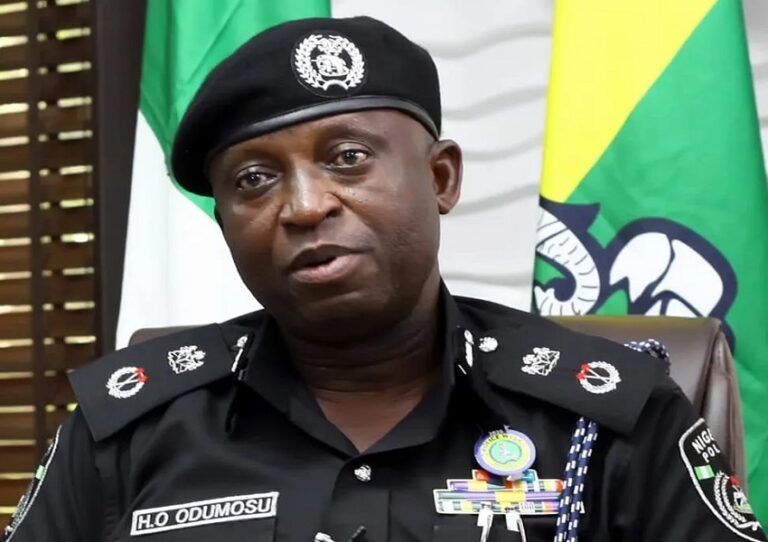
The Community Development Committee (CDC) of the area stated this in reaction to the abduction of the wife of a retired Assistant Inspector General (AIG) of Police, Hakeem Odumosu, from her residence in the Arepo community.
Odumosu was abducted on Friday, January 17, by heavily armed men who stormed her home, firing guns randomly.
According to a media report, the community in a circular released on Saturday, January 18, warned residents to be on high alert and report any suspicious activity to help prevent more security incidents.
The committee said authorities, including police from nearby areas and soldiers, are working together to rescue the kidnapped woman.
As a result, the CDC advised members of the community to be extra cautious and strengthen their security measures.
They also encouraged them to position their security personnel in strategic locations to prevent any potential security breaches.
It was widely reported on Friday that gunmen suspected to be kidnappers abducted the wife of Odumosu from her residence in the Arepo area of Ogun State.
Confirming the incident, the spokesperson of the Ogun State Police Command, Omolola Odutola, said the police command reacted swiftly to the abduction by deploying operatives to secure her release.
She said reports indicate that she was about to enter her home when four masked men attacked her, dragged her from her Lexus Jeep, and took her through swampy areas to an unknown location.
She added that the Divisional Police Officer (DPO) has led a team of police officers to the scene, where they were searching the swampy bush area.
The Ogun police spokesperson said the DPO had also contacted the heads of the Warewa and Maaba communities to deploy local security forces to the riverine area.
The ICIR reports that the victim’s husband, Odumosu, is a retired assistant inspector general who served in the force for 32 years.
THE Minister of Works, Dave Umahi, has stated that the N800bn allocated to his ministry in the 2025 budget proposal is insufficient to address Nigeria’s road infrastructure challenges.
According to him, borrowing funds to address the nation’s infrastructure needs would be a positive move for the country’s future.
Speaking on Friday January 17, 2025, during a budget defence session by the House committee on works, the former Ebonyi governor urged the committee to consider increasing the ministry’s allocation for the 2025 fiscal year.
“We plead with you to help us. N800bn cannot do anything for us. It cannot address our road needs and so we plead with you to help us,” Umahi said.
Umahi urged the committee to allocate sufficient funds to the ministry to allow for the completion of ongoing projects and the initiation of new ones across the country.
“When the nation is in recession, you have to borrow money and do infrastructure. That is how you come out of a recession. It is the infrastructure that is going to be a catalyst for economic activities and then this hunger we are talking about will be a thing of the past.
The food sellers will be there, those doing sharp sand, those doing gravel and so on. Support Mr. President and let’s borrow money and do this infrastructure so that Nigeria will be great again,” Umahi said.
Akin Alabi, the committee chairman, assured that he would invite the Minister of Finance and the head of the Budget Office to clarify the reason behind the ministry’s insufficient budget.
INEC had also requested for N126 billion instead of the N40 billion the government budgeted for it in the proposed budget, which was made known by the commission’s chairman, Mahmood Yakubu, while defending the 2024 budget implementation before the National Assembly on Friday, January 10, 2025.
The United States Customs and Border Protection (CBP) officials commenced conducting border drill exercises on Friday, January 17, 2025, at the US-Mexico border using barbed wires and concrete blocks ahead of President-elect Donald Trump’s inauguration.
According to CBP, vehicle crossings on the international bridge between Ciudad Juarez and El Paso, Texas, were temporarily halted for about 40 minutes during the training session.
Reports states that the CBP office in El Paso stated that the exercise, which started in 2019, were designed to equip agents for possible border incidents. Meanwhile, residents of Ciudad Juarez noted an increase in such drills as Trump’s Monday inauguration approaches, following his pledge to carry out the largest deportation of undocumented migrants in U.S. history.
Ciudad Juarez serves as a key entry point to the United States for migrants escaping poverty, violence, or political instability in their home countries. It is also an official location where migrants with appointments can submit asylum applications via the US government’s CBP One mobile app.
Earlier this week, reports stated that Tijuana, another Mexican border city, declared a state of emergency to allocate resources for managing the possible influx of deportees. Trump, who has often referred to the influx of migrants as an “invasion,” has pledged to declare a national emergency at the Mexico border after assuming office and to deport millions of undocumented individuals.
Presidential inauguration to hold indoors
Donald Trump announced that his presidential inauguration on Monday January 20, will be held indoors due to anticipated freezing temperatures, dampening plans for a grand ceremony to mark the start of his second term.
He made the announcement on his Truth Social account that due to an Arctic blast affecting the country, he had directed that his inauguration address, along with prayers and other speeches, be held in the US Capitol Rotunda.
“There is an Arctic blast sweeping the country, therefore, I have ordered the inauguration address, in addition to prayers and other speeches, to be delivered in the United States Capitol Rotunda,” part of the statement reads.
The change in plans means Trump will forgo the traditional inauguration on the Capitol steps overlooking the National Mall, which usually draws a large crowd. Instead, the event will take place in the Rotunda, a decorative hall beneath the congressional dome that accommodates only a few hundred attendees.
With Washington expecting freezing temperatures and strong winds on Monday, this marks the first time since Ronald Reagan’s 1985 inauguration that an emergency weather measure has been implemented.
THE Nigeria Immigration Service (NIS) has raised the alarm over the emergence a new sect called ‘ACHAD Life Mission International’, reportedly linked to human trafficking and child separation.
According to Punch, the NIS alerted its officers of the new sect in a circular released on Wednesday, January 15, signed by the Principal Staff Officer to the Comptroller General, A.A. Aridegbe, which was circulated on Friday, January 18, and distributed to all commands, directorates, zones, and training institutions.
In the circular titled, “Emergence of a new sect known as ACHAD Life Mission International,” the NIS said there is credible intelligence that the new sect was linked to human trafficking and child separation activities.
While claiming that the sect’s headquarters is in Kaduna, and its operations are led by Yokana, based in Jos, the Service added that the ACHAD sect does not believe in both Islam and Christianity, but rather promoting a return to African traditions and helping humanity.
It added that the new group is suspected of recruiting members in and out of Nigeria and may be involved in human trafficking and separating children from their families.
The ICIRreports that Nigeria has consistently fought insecurity for over a decade and the coming of a new group might pose a new security threat. The crisis began with Boko Haram in the first decade of this century.
While the nation shuddered from the devastation, especially the human toll that accompanied the conflict, another deadly group widely known as bandits and Lakurawa surfaced.
Citizens from the country’s North have been more victims of the groups’ onslaughts.
Nigeria is also confronted by a faceless group called “unknown gunmen.” These weapon-wielding marauders unleash mayhem and kill at will. The country’s Southeast has faced the worst attacks by this group.
Thousands of lives have been lost to insecurity in the country, with corresponding destruction of communities, loss of revenues and resources, infrastructure, and displacements of millions across the country.
META’s announcement on Tuesday that it will end its third-party fact-checking programme and transition to a user-driven Community Notes system has drawn mixed reactions from experts in the misinformation and disinformation fields globally.
The announcement made by Meta’s Chief Global Affairs Officer, Joel Kaplan, in a statement on January 7, 2025, said the social media company will end its fact-checking programme with independent third parties starting with those in the United States of America (USA).
It also accused fact-checkers of having their own biases, noting that too much content ended up being fact-checked as a result – thus, its reason for deciding to end the programme.
Instead, it will pivot to a Community Notes model that uses crowdsourced fact-checking contributions from users, part of the statement reads.
While the company argued that the new approach will empower users to contribute context and fight misinformation, critics express concern over the reliability and accuracy of crowdsourced fact-checking.
The International Fact-Checking Network (IFCN) director, Angie Holan, in a statement on X expressed concerns that this decision would negatively impact social media users seeking accurate and reliable information to make informed decisions in their daily lives and interactions with others.
She emphasized that fact-checking has never involved censoring or removing posts but has instead provided additional information and context to controversial claims, while also debunking hoaxes and conspiracy theories.
“The fact-checkers used by Meta follow a Code of Principles requiring nonpartisanship and transparency. It’s unfortunate that this decision comes in the wake of extreme political pressure from a new administration and its supporters.
“Fact-checkers have not been biased in their work — that attack line comes from those who feel they should be able to exaggerate and lie without rebuttal or contradiction,” Holan said.
Similarly, Tijana Cvjetićanin, a member of the IFCN advisory board, emphasized that this is the first time the fact-checking community has heard from Meta regarding any alleged issues with the objectivity and success of the programme.
“This decision was clearly not a result of actual issues with the programme, but of political pressures from the incoming Trump administration. Many of the key figures from Donald Trump’s orbit have actively supported the false narrative about fact-checking as political censorship,” she said.
Lois Ugbede, Assistant Editor at Dubawa, a West African independent fact-checking platform, acknowledged the potential impact of the change but stressed the importance of media literacy.
“Seeing this transition is shifting the power of gatekeepers or safeguards to app users, the best we can do is to ensure that the populace is media literate to make informed decisions and contributions to community notes.
“This way, we will have more objective and not subjective notes. We (fact-checkers) need to keep doing our work better and faster and also make it a point of duty to contribute to the community notes,” Ugbede stated.
“While efforts to protect free expression are vital, removing fact-checking without a credible alternative risks opening the floodgates to more harmful narratives. Fighting disinformation does not need to come at the cost of free speech.
“Platforms can and should strike a balance between free speech and public safety – this move, however, seems more about political appeasement than smart policy,” Burley opined.
In addition, Rodriguez Katsuva, Co-founder of Congo Check, criticized the timing of the decision, particularly as deepfakes become more realistic. He expressed concern over increased disinformation and hate speech, especially in Africa.
The European Fact-Checking Standards Network (EFCSN) in a statement also responded to Meta CEO, Mark Zuckerberg’s claim that fact-checkers were politically biased, asserting that fact-checkers uphold the highest journalistic standards of impartiality, transparency, integrity, and accountability.
“Linking fact-checking with censorship is especially harmful as such false claims are already one of the driving forces behind harassment and attacks on fact-checkers. Furthering these claims can only exacerbate an already dire issue affecting fact-checkers across the world,” the EFCSN stated.
The Editorial Director of Fasocheck, Ange Levi Jordan Méda, noted that the shift to a community-driven fact-checking system on Meta platforms could harm credibility, as it is difficult to determine the quality of those evaluating content on Meta platforms including Facebook and Instagram.
“The necessary safeguards depend closely on Meta‘s willingness to take action. The most sensible approach would be for Meta to continue collaborating with fact-checking organisations.
“If this is not the case, the platform should rely on journalists or profiles that commit to maintaining objectivity in content rating, with the risk of banning or suspension for non-compliance. Journalists should engage with these communities to provide balance,” Méda pointed out.
While Meta’s Oversight Board, led by Nick Clegg, plans to review the implications of these changes, the board remains committed to balancing free speech with public safety.
Kaplan had earlier in the announcement, explained the shift, noting that the third-party fact-checking programme had become too complex with over-enforced rules. He explained further that the goal is now to allow for greater freedom of expression, with a focus on addressing high-severity violations like terrorism, child exploitation, and drug-related issues.
But Zuckerberg, in a video accompanying the statement, admitted that the changes were influenced by political events, including Donald Trump’s presidential election win. “Recent elections seem to mark a cultural turning point toward once again emphasizing free speech,” Zuckerberg said.
A NASARAWA State High Court has remanded 32-year-old Timilehin Ajayi at the Lafia Correctional Facility after his arraignment on charges of culpable homicide punishable by death.
This remand order, made on Friday, January 17, followed his arrest and confession to the gruesome murder of 24-year-old Salome Adaidu, a corps member serving in Abuja.
The Nasarawa State Police Command, in a statement released via its official X handle disclosed that Ajayi was charged with culpable homicide punishable by death, as stipulated in Section 221 of the Penal Code Law of Northern Nigeria.
The court directed that he remains in custody pending a formal arraignment on a date yet to be assigned.
The ICIR reports that this latest development was at the heel of his arrest on January 12, 2025, when he was caught transporting Adaidu’s severed head on a commercial motorcycle in New Karshi, Karu Local Government Area of the state.
Subsequent investigations by the police revealed that he had killed and dismembered the victim at his residence.
During his parade at the Nasarawa State Police Command headquarters, Ajayi confessed to the crime, claiming jealousy and suspicions of infidelity drove him to kill Adaidu during her visit.
He admitted to using a knife and machete to dismember her body, placing the remains in polythene bags.
“I killed her because we don’t have each other all the time. It’s not something I planned. It happened on that day and it happened. Not that I had the plan in mind, she was cheating.
“She hides most of the things from me most times. I got to know from her phone. I saw her chats with other guys on the phone, that was why I decided (to kill her),” Ajayi said in a video posted by Channels Television.
Ajayi’s claims sparked public outrage, with many Nigerians calling for a thorough investigation into his motives, with the police emphasising their commitment to ensuring justice for the victim.
The family of the deceased, however, dismissed claims by the suspect that he was in a relationship with their daughter.
The family described Ajayi’s actions as inhumane and demanded justice for the lady whose life was cut short in a gruesome manner.
Also, Adaibu’s uncle, Samson Adaji Adaidu, while giving the harrowing account of the crime, revealed that Ajayi butchered the victim into over 50 pieces.
“He has succeeded in destroying our daughter, not ordinary killing, he butchered her into pieces. He cut that body into more than 50 pieces and when you look at the whole thing, he is preparing that body for consumption because he cut them and left them in about six polythene bags.”
THE Court of Appeal, Abuja Division, has affirmed Julius Abure as the national chairman of the Labour Party (LP).
The court, in a unanimous decision by a three-member panel, upheld the October 8 judgement of the Federal High Court in Abuja, which ordered the Independent National Electoral Commission (INEC) to give the LP under Abure’sleadership all the rights and privileges accorded a political party duly registered in Nigeria.
In the judgment delivered on Friday, January 17, the lead judge, Hamma Barka, upheld the earlier judgment of November 13, 2024, which recognises Abure as the party’s national chairman.
The court affirmed that this decision had not been reversed by any other court.
Barka made this declaration in the ruling on two separate appeals filed by Esther Nenadi Usman, a former senator, who heads the caretaker committee of the LP and INEC.
The appellate court made it clear that it’s not its job to decide who leads the party, stressing that’ such a crisis could not be settled in court.
The court maintained that a previous judgment made by the Federal High Court on October 8, 2024 by Emeka Nwite was no longer valid because it was made without the court having the proper jurisdiction.
As a result, the Court of Appeal struck out that judgment and stated that its decision was consistent with other recent rulings, including one from the Supreme Court that affirmed the candidacy of an LP candidate in the Imo state governorship election.
The court reaffirmed its previous ruling, declaring Abure as the national chairman of the Labour Party, and struck out the suit challenging his leadership.
The ICIR reported that the Federal High Court in Abuja had declared Abure as the substantive national chairman of the LP.
Delivering judgment in the suit on Tuesday, October 8, the judge, Nwite, affirmed the Abure-led leadership.
The court also recognised the March 2024 Nnewi convention that produced Abure and other executives of the party.
The judge ordered INEC to recognise Abure as the legitimate chairman of the LP, overturning the commission’s rejection of the Abure-led leadership.
The court upheld the plaintiff’s stand, citing convincing and verifiable documents.
The INEC had earlier claimed that the LP’s national convention held in Nnewi violated the Nigerian Constitution and Electoral Act and failed to meet legal requirements.
The INEC claimed Abure’s tenure as LP chairman expired in June 2024 and refused to recognise him as the party’s national chairman.
The commission stated this in response to a lawsuit filed by the LP challenging its exclusion from INEC’s refresher training for uploading party agents ahead of the Edo and Ondo governorship elections.
The INEC’s legal team, led by Tanko Inuwa, a senior advocate, boasted that the LP’s lawsuit seeking declaratory reliefs would not be granted.
The ICIR reported in September 2024 that the crisis in the LP got to its peak when the Abure-led faction withdrew the automatic ticket it previously earmarked for the party’s presidential candidate in the 2023 election, Peter Obi, and Abia State governor, Alex Otti, for the 2027 presidential and governorship elections, respectively.
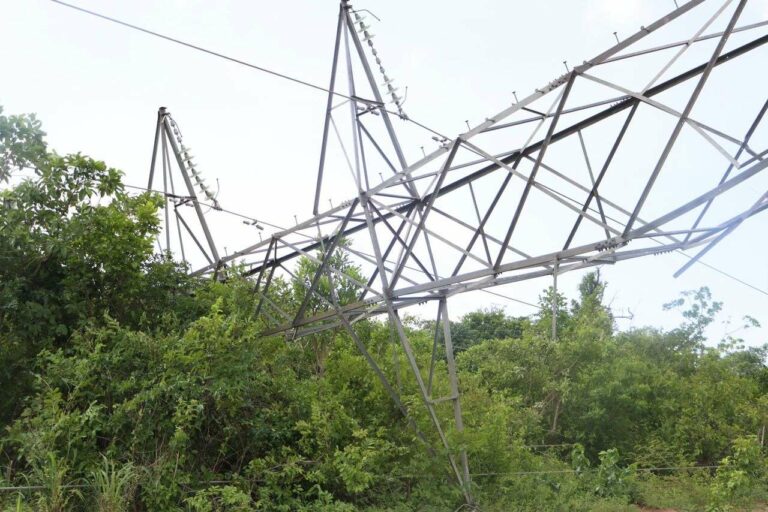
THE Transmission Company of Nigeria (TCN) has reported an attack on transmission lines conveying bulk power to Abuja, the Federal Capital Territory (FCT).
A statement by the general manager of public affairs at the TCN, Ndidi Mbah, on Friday, January 17, said unknown persons carried out the attack around Millennium Park.
The vandals did not only destroy cables, they carted away 40 meters of 1x500mm XLPE conductor on the 132KV transmission lines.
The ICIR reports that Millennium Park is a stone’s throw from the Aso Villa, otherwise known as the Presidential Villa, housing President Bola Tinubu, the National Assembly, the Supreme Court and other prominent government institutions.
Mbah said the incident occurred in the early hours of Friday at its 132KV transmission line and underground cable transmitting bulk power to the 132KV Central Area transmission substation, Katampe, Abuja.
According to her, the attack on the power infrastructure affected the supply of electricity to Maitama, Wuse, Garki, Jabi, Lifecamp, Asokoro, Utako, Mabushi and part of the Presidential Villa.
Mbah said the attack affected distribution feeders feeding the Central Area and over 60 per cent of the power supply to Abuja.
Speaking further on the recurrent vandalism of power cables across the country, Mbah said the company had dispatched a team of engineers to the site to ensure quick restoration of power.
She appealed to Nigerians to be vigilant and protect TCN’s transmission equipment.
The ICIRreported that the TCN confirmed that 128 transmission towers were destroyed by vandals in 2024, raising concerns over the recurrent epileptic power supply in the country.
In 2024, the northern part of the country was plunged into darkness following the activities of vandals.
The transmission company said it spent about N8.8 billion to repair and put into use the vandalised transmission towers within the year.
Meanwhile, thousands of Abuja residents have been facing disruption in power supply following the relocation of the 33KV DC Airport Feeder and 132KV Kukwaba-Apo Transmission Line Towers along the Outer Southern Expressway by the Federal Capital Development Authority (FCDA)
The Abuja Electricity Distribution Company (AEDC) disclosed this in a statement on its official X handle on Friday, January 3.
The two-week power outage which began on Monday, January 6, is expected to end on Tuesday, January 21.
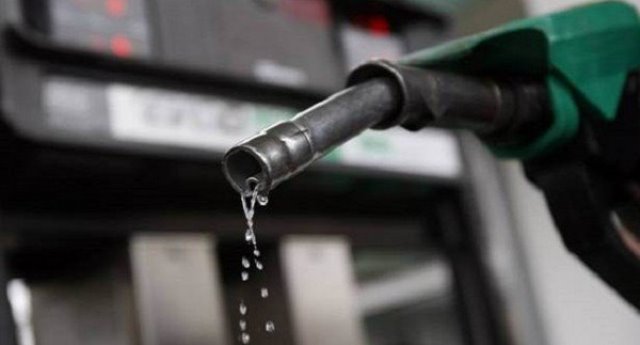
PETROLEUM Retail Outlet Owners Association of Nigeria (PETROAN) has confirmed price adjustments in its retail outlets nationwide.
The National President of PETROAN, Billy-Gillis-Harry, told The ICIR that there were marginal price adjustments in most of its retail outlets across the country, following the current global spike in the price of Brent crude.
According to oilprice.com, Brent crude oil sells at $81.03 today, Friday, January 17, the highest in 2025, and a major reason for the increase.
Sequel to the global hike in price, the Dangote Petroleum Refinery communicated an upward adjustment in the price of petrol to its customers to N955 from N899/litre earlier today.
In a statement seen by The ICIR, the refinery announced that its refined products would be sold at N955 per litre at the loading gantry.
It noted that marketers buying between two million – 4.99 million litres would begin to buy at N955 per litre while those buying five million litres and above would buy at N950 per litre.
The amount marks an increase of N55.5 or 6.17 per cent from N899.50 per litre announced as a holiday discount for Nigerians last year December.
According to the refinery, the adjustment applies to all stock balances yet to be lifted when it announced the rise in price while pending stock as of the time would also be repriced at the updated rates.
The statement added that the new price regime would take effect from 5:30 pm, today.
Part of the notice titled, “Communication on PMS Price Review” reads, “Kindly be advised that effective from 5:30 pm today, an upward adjustment has been implemented on the gantry price of premium motor spirit (petrol). Please note that all stock balances yet to be lifted at the above-stated time are to be repriced at the newly reviewed prices.
“We shall communicate with customers on their revised volumes based on the reviewed prices, in due course.”
It added that the price increase was expected to have widespread effects on the downstream petroleum sector, particularly private depots and retail markets.
An oil sector governance expert, Adeola Adenikinju, told the ICIR that there is a need for the regulatory bodies to monitor the price adjustments to forestall possible incidences of quasi-market dominance.
“The regulatory authorities must find a way to ensure price control powers are not usurped by an individual but determined by market forces,” he added.
On Thursday, January 16, the minister of state petroleum resources (Oil), Heineken Lokpobiri, said that the price of crude oil in the international market remained a major force in driving the fluctuations in the pump prices of petrol.
He said the downstream sector was fully deregulated with the government no longer involved in setting prices.
Meanwhile, The ICIRreported that the Organisation of the Petroleum Exporting Countries (OPEC) confirmed that the 650,000 barrels per day/bpd Dangote Refinery capacity to ramp up production was pushing some European refineries which hitherto serviced the Nigerian market out of business.
The Dangote Refinery, which began operations in January last year, started producing petrol in September, years after the country had relied solely on importation for its fuel needs with the Nigerian National Petroleum Company Limited (NNPCL) superintending the import over the years.
IN 2024 alone, Nigeria witnessed the tragic loss of at least 96 lives due to stampedes, with seven deadly incidents marking the year. Over the past 13 years, these devastating events have claimed nearly 300 lives, a grim reminder of the recurring human cost of overcrowding in search of necessities.
Recently, Oyo, Ibadan, and Abuja have seen the latest outbreaks of these tragedies, sparking alarm and reflection on the underlying causes.
Stampedes in Nigeria are often tied to the desperate scramble for free goods, particularly food, palliative supplies, and relief materials. The underlying causes are painfully clearly poverty. Widespread hunger has pushed many Nigerians to overwhelming locations where such distributions take place. For instance, at the funfair in Ibadan, Oyo State, organisers promised to distribute 5,000 naira and food to 5,000 children. However, reports indicated that over 15,000 people showed up for the event, triggering a chaotic crush. This overwhelming turnout, coupled with the scarcity of resources, has led to repeated tragedies.
In recent incidents across Oyo, Anambra, and the Federal Capital Territory (FCT), a staggering 72 people lost their lives, and many others were left injured. These tragic events are stark reminders of the dire economic situation in Nigeria, worsened by inflation, the devaluation of the naira, and the removal of fuel subsidies, which have all raised the cost of living.
Despite government attempts to mitigate the effects, such as increasing the minimum wage, the reality of everyday life remains harsh for many Nigerians, who continue to flock to relief distribution points in search of food and other necessities.
Fourteen years of stampedes in Nigeria (2010-2024)
The history of stampedes in Nigeria reveals a disturbing pattern. In 2013, during the Sallah festivities in Kwara State, a stampede occurred at the residence of former Senate President, Bukola Saraki. The tragic event, which claimed 20 lives, was sparked by a food distribution initiative. This wasn’t the first time such an incident had occurred in Kwara. There were similar tragedies that had claimed the lives of 36 people between 2010 and 2011. A few years earlier, on November 17, 2010, during Saraki’s campaign for the National Assembly, 11 campaigners died in a stampede. Then, on May 27, 2011, during his inauguration, 25 people perished during a palliative distribution.
Stampede in Nigeria
The roots of these events can be traced to a culture of philanthropy established by the late Alhaji Abubakar Olusola Saraki, Bukola’s father, who was known for his generous charity, especially during Eid al-Fitr celebrations. While his charitable legacy was meant to uplift the needy, it also inadvertently contributed to a series of fatal stampedes that resulted from overcrowding at these charity events.
Also, one of the most tragic incidents took place in Lagos in 2010, when a stampede at the National Stadium during the free distribution of rice and other goods resulted in the deaths of over 15 people. The event, organised by the National Emergency Management Agency (NEMA) and other organisations, was meant to assist the vulnerable but ended in tragedy.
In Port Harcourt, the Rivers State capital, another stampede happened on February 13, 2011, along Aba Road, where 10 people were reportedly trampled at Liberation Stadium, the venue of a presidential rally. The incident occurred when policemen on horseback rode into a crowd scrambling for Naira notes tossed into the air by a prominent politician.
Similarly, in Anambra State, another tragic stampede occurred in November 2013 during the “Feast of All Saints” crusade at the Holy Ghost Adoration Ministry in Uke. The gathering of over 100,000 people spiralled out of control, claiming 28 lives. The stampede reportedly started after a former governor, Peter Obi, was handed the microphone to speak. Tensions arose when some opposition supporters started protesting, leading to chaos, and ultimately, the deaths of 28 people.
Another heart-wrenching incident occurred in March 2014, when 16 Nigerians died in stampedes at recruitment events organised by the Nigeria Immigration Service (NIS). The tragedy took place on Saturday, March 15, 2014, when 6.5 million people across all 37 states of Nigeria, including the Federal Capital Territory (FCT), flocked to various recruitment centres in search of one of the 4,000 vacant positions in the Nigeria Immigration Service. The desperate pursuit of work, combined with the disorganised nature of the event, led to a deadly crush.
The ICIR findings from 2015 to 2016 show that there were no records of stampede-reported cases in Nigeria. The only reported case that affected 54 Nigerians occurred in Minna (Saudi Arabia) during the 2015 pilgrimages, the incident occurred while the pilgrims were stoning the devil as part of the pilgrimage rite.
Another tragic stampede occurred in June 2017 in Katsina State, where five people died when hundreds of beggars rushed to collect alms from a wealthy business mogul, Kamal Ma’a Gafi. Tragically, four of the victims were children, underscoring the vulnerability of the poor and the disastrous consequences of a lack of crowd control.
The Covid-19 pandemic in 2020 further exacerbated the crisis, with 23 refugees in Niger Republic dying in a stampede during a food distribution event. The refugees, who had fled the conflict in Borno State, were promised food assistance, but after the governor left, the distribution faltered, leading to a deadly stampede. This marked yet another chapter in Nigeria’s ongoing struggle with managing large crowds at aid distribution events.
In 2022, stampedes claimed 33 lives in two separate incidents. The first occurred on May 28, in Port Harcourt, Rivers State, at a Church event organised by the King’s Assembly. The “Shop for Free” programme, which promised free food, drew in thousands of people, and the resulting chaos, led to 31 deaths.
Similarly, on August 18, a stampede at Comfort Life Mission International Church in Lagos left two people dead and many others injured.
2024 stampedes
The start of 2024 saw several stampedes, with seven people killed during the distribution of seized rice by the Nigerian Customs Service in Lagos. As part of efforts to alleviate the economic strain on Nigerians, the Customs distributed seized food items, requiring participants to pay a #10,000 fee and present their National Identification Number. Sadly, this initiative, intended to help, turned into another deadly event.
On March 22, three students lost their lives during a rice distribution at Nasarawa State University in Keffi, while the following day, seven people died during an almsgiving event organised by Shafa Holdings in Bauchi. The desperation for food led to overcrowding, which led to disaster once again.
Perhaps, one of the saddest of these recent incidents occurred on April 5, 2024, in Sokoto, where nine people lost their lives during a food distribution event hosted by Senator Aliyu Wamakko.
In Oyo State, a stampede at a carnival in Ibadan claimed over 35 lives, most of whom were children. The event, which promised free food for the first 5,000 attendees, drew an overwhelming crowd, leading to disaster.
In Abuja, a similar tragedy occurred at the Holy Trinity Catholic Church, where 10 people died. Another 20 perished in Anambra on the same day, as at least 20 people were reportedly killed in the Ojika community during a rice and gift distribution event.
These events highlight a troubling trend in Nigeria, where the desperation for food and resources in times of economic hardship leads to tragic loss of lives.
What’s common across these incidents is the unrelenting hope of those who, in search of sustenance, find themselves caught in a deadly struggle for survival.
Nation reacts
Dignitaries, including President Bola Ahmed Tinubu, extended their condolences to the families of the deceased and all Nigerians. The president in his media chat faulted the organisers of the events, pointing out that he had been on a palliative sharing mission in his home in Lagos for the past 25 years but had never experienced any kind of stampede or crowd crumble before.
Also, towards the Christmas and New Year’s Eve, the Nigerian police launched an investigation into states where three incidents occurred. The organisers have been arrested by the police force. ICIR reported how the ex-wife of the Ooni of Ife queen Noami alongside two others was arrested over the Ibadan stampede.
But concerns remain as there were no investigations on past stampede incidents even where notable people were involved. For instance, Saraki had three stampede events that claimed no fewer than 56 people. Also, the influence of Peter Obi at the crusade in a church at Uke Anambra where the former Governor was in attendance. He reportedly acknowledged that he noticed unusual reaction from the crowd after he was handed the microphone and suddenly there were political posters from members of the crusade. Obi claimed they left the location of the crusade before he heard the news.
Also, Aliyu Wamakko the current senator representing Sokoto Central and former governor of the state had nine people died in his residence in an organised palliative distribution. Even though Kamal Ma’a Gafi was arrested in 2017 after the incident that killed five in his home during a N500 alms, there were no reports to claim he was prosecuted.
Nigeria immigration service NIS was also caught in the incident that killed 16 people in three states and FCT in a 2014 recruitment exercise. Also the Nigeria Custom Service NCS contributed to the toll in the rice auction sale in Lagos that also claimed not less ten 7 people.
This corroborates that philanthropic individuals, government agencies, politicians, and worship centres have contributed to the rising incidents of stampedes in countries.
The challenge has been the lack of crowd-control measures in place and clearly some of the incidents that involved Nigeria’s paramilitary signaled that control is just beyond mobilizing security agencies to the places of distribution.