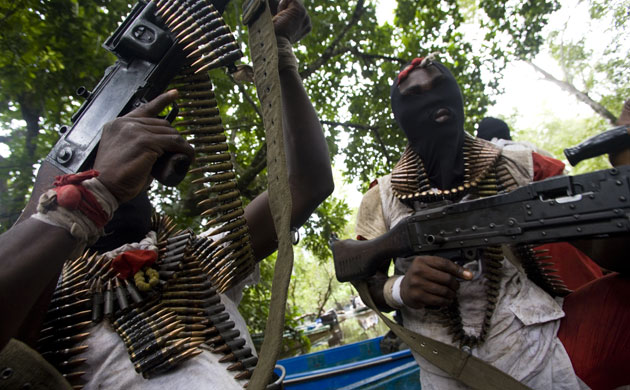
Terrorists suspected to be linked to a Boko Haram faction that kidnapped 176 women and children from Woro community in Kaiama Local Government Area of the Kwara State have issued a one-week ultimatum to the Nigerian government, threatening to execute the captives if their demands are not met.
The community’s traditional ruler, Salihu Bio, whose wife is among those abducted confirmed the threat on Monday, explaining that Boko Haram delivered the warning through the victims after Jumu’ah prayer on Friday.
“The abductees told us that after the Jumu’ah prayer on Friday, the terrorists said the government was not taking the matter seriously and that if nothing is done within one week, they will begin to take drastic actions,” he said.
The ICIRreported that the terrorists who whisked away the abductees on February 3 have been demanding over N3 billion for the release of the victims.
Abductees including traditional and religious leaders in the affected communities were seen in two separate videos released on April 2 and 9, two months after they begged the state and federal government to rescue them from their captors’ hands.
In the latest footage, the victims, mostly women and children, appeared visibly exhausted and distressed. Many were seen wearing soiled clothes as they stood closely together under tense conditions while being addressed by armed men.
Bio in the latest development, said the terrorists voiced frustration over what they described as the government’s lack of commitment to negotiations, despite the resources they claim to be spending to keep the captives alive.
“The terrorists allowed one of the abductees to call her family on Saturday, and she confirmed that they were all fine. She also said the captors had been teaching them Arabic and Islamic knowledge,” he stated.
According to Punch, a community source also said that the captors threatened to marry off some of the girls and kill those they considered liabilities if no agreement is reached within the deadline.
“The Boko Haram fighters complained that they are spending money and resources to feed the abductees and that nothing is coming out of it. They said if nothing is agreed upon within one week, they will start marrying off some of the girls and kill those they consider liabilities. We are helpless. These are our wives and children. Now they are threatening to kill them or force them into marriage,” the source said.
In a video released by the group, an armed terrorist claimed responsibility for the abduction and alleged that the victims had been indoctrinated.
“We are the ones who kidnapped the people of Woro and Kososo. We have indoctrinated them and changed their way of life. However, the victims have been begging us, and we have given them the opportunity so that their government can hear from them. We are giving them a final opportunity to appeal to the government,” the terrorist said.
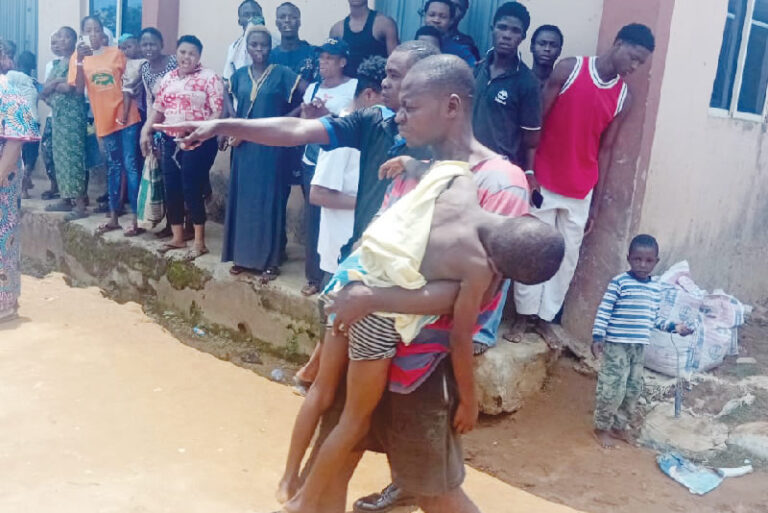
A DISTURBING case of child abuse has emerged from Lagos, where a couple has been arrested over the death of their 10-year-old adopted daughter, identified as Faith.
The incident occurred in the Igando area of Lagos state, on April 26, where the couple identified as Paul Onyeama and Adline Ogbonna have been accused of subjecting the child to repeated physical abuse.
According to local accounts, the child was reportedly subjected to frequent assaults and made to carry out strenuous errands despite being ill for two weeks.
By Monday, reports indicated that the situation had worsened the previous day, when the couple allegedly inflicted a severe beating on the already ill child, ultimately resulting in her death, according to a resident who spoke with PUNCH.
The resident said, “The couple had adopted a 10-year-old girl. They had been consistently maltreating and assaulting the child, while also sending her on unnecessary errands.
“I was informed that the girl had been sick for about two weeks, yet the abuse continued. Yesterday, both the husband and wife allegedly beat the child severely despite her condition, and sadly, she died.”
According to reports, the suspects reportedly took the child to a hospital where she was declared dead on arrival. Local youths, angered by the incident, apprehended both the woman and later the husband, who was said to have gone out to arrange disposal of the body.
Residents raised the alarm after noticing the child was missing, which led to the discovery of her death and the case being reported to the police.
Police Officers responded and have arrested the couple.
Although the suspects claimed the child died while receiving treatment, preliminary findings showed she was already dead before being taken to the hospital.
Police officials confirmed that investigation is underway to determine the full circumstances surrounding the incident. The body of the deceased has reportedly been taken for examination as part of the inquiry.
The ICIR reports that child abuse remains a pervasive crisis in Nigeria, with roughly six out of ten children experiencing some form of physical, emotional, or sexual violence before clocking 18. While legal frameworks like the Child Rights Act (2003) exist to protect minors, their effectiveness is often hampered by poor enforcement, poverty, and deep-seated cultural norms that allow certain abuses to go unreported.
Recently, a two-year-old pupil, Wynne Akekue, died under suspicious circumstances at a school in Port Harcourt. The incident led to the suspension of the school’s operations.
The National Human Rights Commission (NHRC) recently documented disturbing cases where parents subjected their children to extreme torture and starvation, under the guise of “corporal punishment,” which often escalated to the point of causing life-threatening injuries or even death.
ANTHONY Joshua’s has officially announced his return to the ring as talks of a blockbuster showdown with Tyson Fury continue to gather momentum.
Joshua confirmed this in Matchroom statement, that the fight with Prenga is the first in a multi-fight deal that could ultimately lead to a long-awaited clash with British rival Tyson Fury.
“It’s no secret I’ve taken some time to consolidate and rebuild to be ready for stepping back into the ring,” Joshua said in a statement from his promoter, Matchroom. AP also quoted him as saying, “Today is the next step on that journey.”
The former two-time heavyweight champion has not fought since his sixth-round knockout victory over Jake Paul in Miami last December, after which he was involved in a serious car accident in Nigeria.
The crash left him with minor injuries and tragically claimed the lives of two close friends, casting doubt over his boxing future.
The ICIRreported that the crash occurred around 11 a.m. on December 29, in the Makun area, near Sagamu, when a Lexus SUV conveying Joshua reportedly collided with a stationary truck that left two people dead.
The crash occurred just days after Joshua returned to the spotlight with a sixth-round knockout victory over YouTuber-turned-boxer Jake Paul in a high-profile bout held in Miami, United States.
However, in recent months, the 36-year-old has been steadily working his way back, including training sessions with former rival Oleksandr Usyk as he prepares for his comeback.
During his time away, Joshua has remained active around the sport as he attended Deontay Wilder’s recent fight against Derek Chisora in London and was also ringside at Tottenham Hotspur Stadium earlier this month to watch Fury come out of a 15-month retirement and defeat Arslanbek Makhmudov.
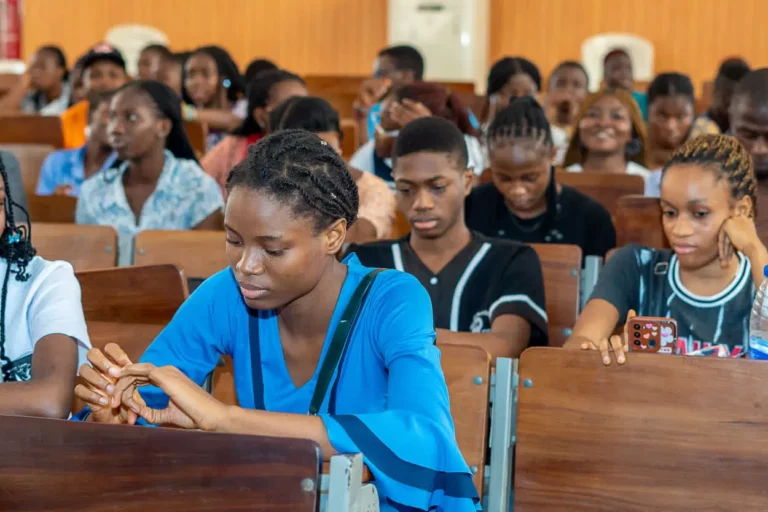
YOUNG Nigerians under 35 years old comprise 39.65 percent of the 93.47 million registered voters, making youth the largest age group on the electoral register. In 2018, the National Assembly reviewed the Constitution of the Federal Republic of Nigeria, 1999, to encourage youth to run for political positions.
Despite the review, youth candidacy fell from 34 percent in 2019 to 28.6 percent in 2023. The decline in political participation among Nigerian youth is due to the prevailing political structure, which systematically excludes them. To ensure young Nigerian’s inclusion in politics, political parties should reduce nomination costs and set youth-specific quotas. The government must be intentional about placing young people in leadership roles. Schools, civil society, and the media should help youth understand their political rights and responsibilities.
Nigeria’s constitution empowers the youth to run for political office, but only a few of them engage in politics. Youth make up over 60 percent of Nigeria’s population, but elite domination in political parties causes political apathy among the youth. The rich elite control party primaries, set high nomination fees, and systematically exclude the youth. They favour money and connections over vision, competence, or public support. The systemic exclusion of youth from political participation weakens Nigeria’s democracy and endangers its future.
The entrenched elite act as gatekeepers in Nigerian politics, marginalizing young and competent candidates. Young people eventually give up engaging in politics. Following the All Progressive Congress’s 2026 national convention, the Party set new fees for nomination and expression of interest forms. The lowest fee is ₦20 million for the State House of Assembly, while the presidential form now costs ₦200 million. These exorbitant fees reinforce political parties’ systemic exclusion of young aspirants, creating a path for the rich alone to contest for office.
The Independent National Electoral Commission (INEC) should enforce legal limits on nomination fees. Political parties should support candidates with competence, public backing, vision, and not money. Political parties must adopt internal youth quotas, not only on paper. For young Nigerians, participation is beyond politics; it is about hope. Giving young Nigerians a real chance in politics will encourage them to invest in their communities and the country. Civic engagement will increase, emigration will reduce, and a new political culture will emerge where talent and not money will drive success. In addition, youth will have a stake in Nigeria’s future. Reforming political parties is the first step toward a system that includes all Nigerians, and not the entrenched few.
Elections alone are not enough to translate constitutional rights into real political power for young Nigerians. The youth need opportunities to shape policy, rather than remain observers. Government programs, like youth advisory councils, paid fellowships in key ministries, and political quotas that guarantee real decision-making roles, will equip young people for leadership. Fellowships should focus on federal and state ministries that will train young people for leadership.
For example, placement in the Ministry of Youth Development would teach young people to strengthen civic programmes and shape youth-focused initiatives. In the Ministry of Education, they will learn how to influence education reform. Placement in the Ministry of Finance would expose young people to budgeting and public resource allocation. Placement in the Ministry of Health would involve them in planning and improving public health services.
South Africa exemplifies how structured youth councils help young people build skills, networks, confidence, and create a pathway into leadership. This initiative provides mentorship, policy exposure, structured training, and direct engagement with public institutions. Implementing this in Nigeria would transform youth into active participants, prepare them to become capable leaders, and strengthen governance.
Knowledge without protection is powerless. Civic education equips young people with practical skills in policymaking, voting, governance, advocacy, and community engagement. Notwithstanding, this education matters only if young people can act freely.
Schools, universities, youth groups, and community centers should teach civic skills, while the government, civil society, and the media should collaborate on nationwide programs. Equipping youth with information and protecting them would boost participation, improve public engagement, and contribute to shaping national decisions.
In Ghana, civic education and stable democratic transitions have enabled young people to engage actively in elections, public debates, and grassroots advocacy. In Canada, strong legal protections for civil liberties and institutionalized civic learning empower youth to organize, petition, and influence policy beyond the ballot box.
These countries serve as examples of how youth hold leaders accountable and strengthen democracy. In Nigeria, civic education combined with legal, institutional, and physical safeguards can mobilize youth beyond voting. Nigerian youth can organize, advocate, and contribute to building stronger institutions.
Political party reforms, creating leadership pathways for youth, and civic education will make Nigerian politics more inclusive. Inclusion would reflect Nigeria’s youth majority and reduce political apathy and electoral violence. Nigeria must decide whether to continue marginalizing its youth or to embrace, empower, and transform them from “leaders of tomorrow” into leaders of today, confident and ready to reshape Nigeria’s future.
THE Kogi State Government has blamed the operators of “an unregistered” orphanage and school in Lokoja for exposing children to danger after gunmen abducted 23 pupils and the wife of the proprietor from the facility late Saturday.
In a statement on Monday, April 27, the Commissioner for Information and Communications, Kingsley Fanwo, said the facility, identified as Dahallukitab Group of School, operated illegally in an isolated and bushy area of Zariagi, along the Kabba Junction axis of Lokoja, without registration or the knowledge of relevant authorities.
According to the commissioner, the facility was neither registered with the state government nor known to security agencies before the incident occurred.
He said gunmen invaded the premises on the night of April 26 and abducted 23 pupils alongside the wife of the proprietor.
He, however, said security agencies, led by the Nigeria Police Force, responded swiftly and rescued 15 of the abducted children.
Fanwo added that efforts were ongoing to secure the release of the remaining eight victims and arrest those behind the attack.
“Upon receiving the report, security agencies, led by the Nigeria Police Force in Kogi State, in collaboration with other security operatives, swiftly mobilised to the scene.
“Their prompt and coordinated response led to the successful rescue of 15 of the abducted pupils, while intensive operations are ongoing to secure the safe return of the remaining eight victims and apprehend the perpetrators,” he stated.
While commending the police and other security agencies for what he described as their gallantry and professionalism, the commissioner stressed that facilities such as orphanages and schools should not operate in isolated and vulnerable locations without proper approval.
He said running such institutions without registration and official notification would create serious security risks, especially under the current security situation in the country.
He advised operators of orphanages, schools and similar institutions to comply strictly with regulatory and safety protocols by engaging relevant government agencies for oversight and security assessment.
“The Kogi State Government reassures citizens of its uncompromising commitment to the protection of lives and property across the state. Security operations remain active, and every effort is being made to bring this situation under control.” he added.
The latest development comes amid growing concerns over recurring attacks on schools, religious centres and vulnerable institutions in parts of northern Nigeria, where kidnappings for ransom have continued despite repeated government assurances on improved security.
THE family of Abdulsamad Jamiu, a 24-year-old National Youth Service Corps (NYSC) member killed in Dei-Dei, Abuja, has rejected the Nigerian Army’s account of his death, describing it as false and misleading.
The family in a statement reported on Monday, April 27, demanded an independent investigation into the incident.
Jamiu was killed in the early hours of April 25, 2026, at his family residence in Shagari Quarters, Dei-Dei, Abuja.
The ICIRreported that the Guards Brigade of the Nigerian Army on April 26, said its troops were responding to a distress call over an armed robbery attack in the area when they came under gunfire from fleeing robbers, leading to a “brief but intense exchange.”
According to the Army, Jamiu was caught in the crossfire during the operation.
However, the deceased’s family rebutted the military’s version of the incident, saying it was inconsistent with what transpired.
The family alleged that at about 2:00 a.m., military personnel entered its residence by scaling the fence rather than using the gate and proceeded into the house without prior notice.
It said Jamiu was inside his room while his sister was elsewhere in the house, and their parents were away in Okene attending a burial ceremony.
According to the statement, soldiers fired a shot through the closed door of Jamiu’s room, hitting him in the head and killing him instantly.
“The bullet trajectory — from the door of Abdulsamad’s room to the interior wall — establishes, without ambiguity, that the fatal shot was fired by military personnel who were standing on the exterior side of a closed door, directly into the room where Abdulsamad Jamiu was located. This is not consistent with a firefight,” the family said.
It argued that this contradicted the Army’s claim of an exchange of gunfire with armed robbers.
“This is not consistent with a pursuit scenario. This is consistent with military personnel discharging a lethal weapon through a closed door at a person they could not see and who posed no identified, verified, or established threat,” the statement added.
The family further claimed that no armed robbery was reported in the community that night and that members of the local vigilante group confirmed there was no such incident.
It also said residents heard only one gunshot, the shot that killed Jamiu, and no evidence of a gun battle, such as multiple gunshots, spent cartridges, or other signs of an exchange of fire, was found.
The family alleged that after the shooting, soldiers instructed Jamiu’s sister to go outside and “calm down,” while community vigilante members who arrived at the scene were allegedly told by soldiers to mop up and flush the blood.
It said the deceased’s body was later taken to Kubwa General Hospital by the police, who arrived after the incident.
The family also claimed that when confronted, the soldiers admitted that the killing was a mistake and acknowledged they had shot an innocent person.
It posited that the admission was made in the presence of the Divisional Police Officer and captured in a written statement.
“The military cannot simultaneously admit in a police-supervised setting that they killed an innocent person by mistake and then publish a public account implying that the deceased was caught in a legitimate security operation gone wrong,” the statement said.
Family demands independent probe
The family further called for an immediate, independent and transparent investigation outside the military’s chain of command.
It demanded the suspension and prosecution of the officers involved, retraction of the Army’s public statement, and a formal public apology.
The family therefore formally demands “the identification, suspension pending investigation, and subsequent prosecution, where warranted, of the military personnel directly responsible for discharging the weapon that killed Abdulsamad Jamiu.
“The retraction of the Nigerian Military’s public statement, which the family has demonstrated to be materially false, and the issuance of a corrected account consistent with the physical evidence and the military’s own prior admissions.”
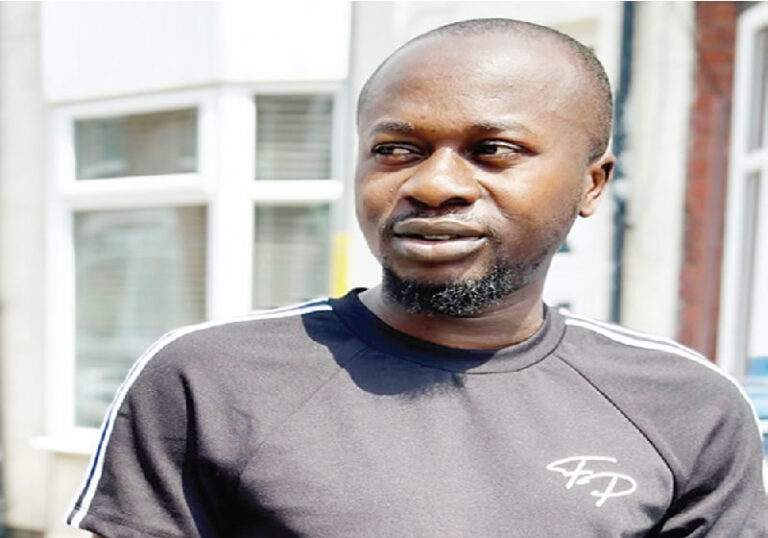
A NIGERIAN, Ademola Oke, has died after being found unresponsive at his workplace in the United Kingdom, making the third Nigerian to died mysteriously in the UK in April.
A close family friend, Adejonwo Odutola, brought the incident to public attention on Sunday through a GoFundMe appeal seeking £8,000, noting that the 37-year-old died on April 18.
“On 18th April, 2026, Ademola, 37 years old, left home in the morning hale and hearty, with no signs of illness. He was in contact with his wife during the day, and they even shared a WhatsApp message at 2:08 pm – everything seemed normal.
“Tragically and without warning, Ademola passed away suddenly while at work. Later in the day, a colleague arriving for their shift at night in the service user’s house found him seated on a sofa, unresponsive,” he explained.
Odutola added that emergency services were immediately contacted, but he was confirmed dead at the scene. He added that the sudden loss left Ademola’s 31-year-old wife in shock and grief and would be solely responsible for caring for their two young children, aged six and two.
He noted that the fundraising effort was initiated to support funeral arrangements and provide financial assistance for the children as the family adjusts to life without him.
“This cause is deeply important to me because I have seen firsthand the love within this family and the profound impact this loss has had on them. No family should have to endure such heartbreak while also facing financial uncertainty.
“The funds raised will go towards funeral expenses and ongoing support for the children as the family begins to navigate life without their husband and father,” he added.
The ICIR reports that Oke’s demise adds to two other incidents of Nigerians based in the UK who died in April alone. Although there may be more cases, only these three incidents are publicly known. A Nigerian mother of three died of cancer in the UK on April 20.
Similarly, a Nigerian father of three, identified as Herbert, who lived in Thornaby died suddenly in his sleep, in what relatives described as a shocking and heartbreaking incident.
Recall that a 37-year-old Nigerian student in UK, Douglas Izevbigie, died from leukaemiai in February, days after another Nigerian, Saburi Adeniji, died following complications from a severe brain stem injury.
THE August 2024 nationwide protest over economic hardship and policies introduced by President Bola Tinubu was met with a security crackdown, leading to arrests across the country. This report digs into how the National Intelligence Agency (NIA) worked with the police to track, monitor, and arrest some activists linked to the protests, actions that led to their arraignment on treason charges.
In the early hours of August 5, 2024, armed operatives stormed the Abuja home of Michael Adaramoye, one of the activists later charged with treason following nationwide demonstrations against economic hardship.
The operatives, who would later be identified as members of the National Intelligence Agency, NIA, arrived in several vehicles with their faces masked.
Within seconds of seizing Adaramoye’s phone, one officer handed it to a colleague who briefly inspected it before returning with a confirmation: “This is the target.”
According to Adaramoye, the officers already had detailed knowledge of his phone calls, contacts, and movements. During interrogation, they recounted conversations he had held days earlier and referenced people who had contacted him, suggesting his phone communications had been tracked or intercepted before the arrest.
Adaramoye would later spend 28 days in police detention and 34 days in Kuje Correctional Centre under harsh and degrading conditions. He is among 10 activists accused of treason and terrorism in connection with the 2024 #EndBadGovernance protests – charges rights groups say reflect a broader pattern of criminalising dissent.
Michael Adaramoye Lenin
His experience also points to a wider, largely opaque system of digital surveillance allegedly deployed by security agencies to monitor, track, and detain activists.
He is one of many Nigerians arrested across the Federal Capital Territory (FCT), Kano, Sokoto, and other parts of the country during the crackdown that followed the protests. Civil society organisations estimate that over 1,000 people, many of them young Nigerians, including minors, were detained, with reports of arbitrary arrests, enforced disappearances, and prolonged detention without trial.
The #EndBadGovernance movement, which gained momentum in early August 2024, emerged as a nationwide expression of frustration over worsening economic hardship, inflation, fuel subsidy removal, and rising insecurity. What began as largely peaceful demonstrations demanding accountability and relief measures quickly escalated into a heavy-handed state response. For many families, the protests have since translated into prolonged trauma, with loved ones held in custody for days.
Nigeria’s investment in ‘dangerous’ surveillance technology
Over the past decade, Nigeria has quietly built a vast digital surveillance infrastructure. Research shows the government spent at least $2.7 billion on surveillance technologies between 2013 and 2022, including tools capable of intercepting calls, social media messages, and other communications, which legal experts and activists say might have been used in a crackdown on civic space.
Data obtained from UN Comtrade shows that Nigeria imported surveillance equipment worth $6.61 billion between 2015 and 2024, with annual imports peaking at $826.8 million in 2019 before falling to $469.6 million in 2024.
Value of surveillance equipment imported into Nigeria
In 2021, the National Assembly approved a total of N4.86 billion for the NIA to purchase equipment to spy on and monitor Nigerians’ WhatsApp messages, phone calls, and text messages.
A breakdown of the amount shows that N1.93 billion was earmarked for a ‘WhatsApp Intercept Solution,’ while N2.93 billion was for a ‘Thuraya Interception Solution,’ a communications system used for monitoring voice calls, call-related information, short message service (SMS), and data traffic, among others.
According to a report by the University of Toronto’s Citizen Lab, which researches digital surveillance, security, privacy, and accountability, Nigeria’s Defence Intelligence Agency (DIA) also acquired multimillion-dollar equipment it could use to spy on calls and text messages.
The report, Running in Circles: Uncovering the Clients of Cyber-espionage Firm Circles, reveals that a telecom surveillance company known as Circles has assisted state security agencies in over 25 countries, including Nigeria, to monitor the communications of opposition figures, journalists, and protesters.
According to Citizen Lab, Circles is linked to the Tel Aviv-based NSO Group, widely known for its Pegasus spyware. Governments arhave reportedly deployed Pegasus to spy on dissidents by infiltrating smartphones, accessing cameras and microphones, and extracting sensitive personal data.
Unlike Pegasus, Circles’ technology exploits vulnerabilities in the global telecom system known as Signalling System 7 (SS7) – a protocol that enables communication between mobile networks. This method allows surveillance without leaving obvious traces on a target’s device, making it significantly harder to detect.
Findings from the report further indicate that Nigeria is among the countries where Circles’ tools have been deployed. Specifically, the Defence Intelligence Agency is identified as one of at least two Nigerian entities using the system, whose network infrastructure was linked to Circles-related activity.
Tracked, detained, and slapped with frivolous suits
Days before his arrest, Adaramoye had noticed a subtle signal that was almost easy to dismiss.
He recalled receiving a phone call from a man who introduced himself in the language of activism. The caller sounded like a fellow organiser, curious about the planned protests, eager to connect, and willing to meet. At first, nothing seemed out of place. As a known activist, Adaramoye’s number was widely accessible, often shared within civic circles.
But something about the conversation felt off.
“The way he was speaking, I knew he was from a security agency,” Adaramoye said. “It was an attempt to lure me.”
The caller had asked to meet in person, a request Adaramoye declined. He would later come to believe that the call was not just a casual probe, but part of a calculated effort to locate and apprehend him ahead of the protests. That encounter, as brief as it was, marked what he now considers his first direct brush with covert surveillance tied to his eventual arrest.
That suspicion only deepened during his detention.
For hours, interrogators spoke with striking familiarity about his private life. They listed recent calls he had made, identified people he had been in contact with, and referenced conversations he barely remembered.
“They were telling me who called me, what we discussed,” he said. “They even tracked my location.”
To Adaramoye, it suggested that his phone had been compromised, either through direct interception or more sophisticated surveillance tools capable of accessing call logs, messages, and possibly real-time location data.
Yet, despite this apparent depth of access, he insists nothing incriminating was found.
“They had everything for about a week,” he said. “But there was nothing criminal they could point to.”
When the case transitioned from intelligence custody to a police-led investigation, the alleged digital evidence disappeared from the narrative. In court, prosecutors relied instead on broad allegations of treason, terrorism, and mutiny without presenting any of the detailed communications that had formed the basis of his interrogation.
Michael Adaramoye on the protest ground
Adaramoye was not the only one who believed surveillance played a role in the arrests. Another activist picked up in the same operation, Babatunde Sankara, told The ICIR that, from the pattern of events, he suspected they were being tracked by the NIA before the raid.
“They were able to track him through his phone. That’s how they were able to locate us, even though I wasn’t their primary target,” Sankara said.
According to him, there were warning signs in the days leading up to the arrest. Unknown individuals had reportedly been making inquiries about them within the estate, while there had also been earlier attempts to lure Adaramoye.
“We were informed by the estate security that some people had been going around asking about us. Secondly, there had been previous efforts to lure Lenin (Adaramoye). Given my experience in activism, that’s one of their tactics. Third, we knew they had the facility to track phones and that’s how we knew we were under surveillance,” he said.
Those suspicions would soon give way to a dramatic raid which occurred when Sankara and two others were fast asleep around 2 a.m. and were jolted awake by heavy banging on the door and the sound of boots moving through the two-storey building in Abuja. The operatives first stormed the upper floor, searching for their target, before descending and pounding on Sankara’s door.
Half-awake and disoriented, he initially thought they were kidnappers.
It was only when they began asking for Michael Adaramoye that he realised they were security operatives. Once Adaramoye identified himself, the officers ordered him aside, searched the room, and quickly moved to take him away. But Sankara’s insistence on knowing where he was being taken drew him into the operation.
Even though he was not directly involved in the protest, he was was also arrested.
“They came in through the back gate, and that’s also where they took us out. We had already left when they got a call to go back and pick the others,” Sankara said.
Blindfolded and disoriented, they were driven around for nearly an hour, far longer than the 15-minute journey Sankara said it should have taken, before arriving at the facility of the National Intelligence Agency.
At the facility, Sankara said they were subjected to harsh conditions. He spent over several hours blindfolded in what he described as a freezing “cold room,” with his leg cuffed, while his requests for medication for his diabetes were ignored. At one point, when he asked that his handcuffs be placed in front due to his condition, an officer responded with violence.
The interrogation, he added, continued without access to legal representation before they were eventually transferred to the police for further investigation.
“Even in the days of the military, security operatives don’t come at odd hours, blindfold people and whisk them away. It is a major disaster that this is happening under the democracy we fought for,” he said.
“It is a shame that they have this technology and cannot use it to trace kidnappers, bandits, or terrorists, but are instead using it to hound innocent citizens. Digital rights are being abused, and even the laws meant to protect those rights are being violated.”
Sankara was released three days after his arrest, on Thursday, August 8. However, Adaramoye and Mosiu Sadiq, another activist also nabbed by the NIA, spent 28 days at the IRT before eventually arraigned in court.
Alongside eight others linked to the #EndBadGovernance protests, they were arraigned on September 2 by the Nigerian government on six-count charges bordering on alleged attempts to topple President Bola Tinubu, felony, and cybercrime. The 10 individuals were accused of being sponsored by Briton Wynne who has since been declared wanted by the police for allegedly funding a plot to overthrow President Tinubu and for waving Russian flags in some parts of the country.
Wynne, whose bookshop was raided by police at the Nigeria Labour Congress (NLC) headquarters in Abuja during the protests, has denied all allegations.
For 28 days, Adaramoye and Sadiq were held in an underground cell reportedly housing no fewer than 40 inmates. During the first three days of their detention at the IRT, both men were starved and denied medication.
For the first three days of their detention, Adaramoye and Sadiq were denied food and survived only on water. The harsh conditions took a toll on Sadiq’s health, as he fell ill, likely due to prolonged exposure to cold and the unsanitary environment of the detention facility. Despite informing officers of his condition through Adaramoye, he received no immediate medical attention and endured the illness for weeks until a fellow detainee, a police officer, eventually helped him with medication.
From Left: Mosiu Sadiq, Michael Adaramoye and Eleojo Simon after release from Kuje Prison. Source: Omoyele Sowore
Throughout their detention, Sadiq said he faced repeated pressure from investigators to confess to alleged crimes, including designing protest materials. He maintained his innocence, insisting that no incriminating evidence was found on his seized devices and that he had not participated in the protests. Nevertheless, he was still charged with serious offences, including treason.
After 28 days in detention, Sadiq, Adaramoye, and others were transferred to the Kuje Correctional Centre. While conditions there were somewhat better, they remained difficult, with overcrowding and poor sanitation leading to rashes and infections. The experience, Sadiq said, left him mentally distressed and deeply shaken.
On September 11, 2024, they were granted bail “in the sum of N10m each and one surety in like sum”. The trial judge added that the sureties must be residents of Abuja and must own properties in the nation’s capital. Their documents were to be deposited with the court registrar, in addition to swearing to an affidavit of means. Even though they were subsequently acquitted after 16 months of legal battle, the experience continues to live with them.
Digital surveillance and rights violations
There have been growing concerns over the use of digital surveillance in Nigeria and how such tools, if left unchecked, could be used to violate citizens’ right to privacy, monitor private communications, and suppress dissent. For many activists and legal observers, the issue is not just the existence of surveillance technology, but the opacity surrounding how, when, and against whom it is deployed.
Marvellous Ini-Obong Monday, a legal associate with Citizens’ Gavel Foundation for Social Justice, said the deployment of surveillance tools to track activists and suppress dissent directly threatens constitutionally guaranteed freedoms.
“The Nigerian Constitution explicitly guarantees and protects the privacy of citizens, their homes, correspondence, telephone conversations and telegraphic communications. Surveillance of activists’ phone calls, messages and location data without proper legal authority directly contravenes this provision,” he said.
Marvellous Monday
Monday explained that beyond the right to privacy, such actions could have a broader chilling effect on civic participation.
“When activists know their communications are being monitored, they may self-censor, avoid organising protests or refrain from associating with certain groups and these effectively curtail these constitutional rights,” he said.
He noted that although Nigeria has multiple legal frameworks regulating surveillance, including the 1999 Constitution, the Cybercrimes (Prohibition, Prevention, etc.) Act 2015, the Nigeria Data Protection Act 2023, and the Nigerian Communications Act 2003, there are still significant gaps in how these laws are applied, particularly with newer surveillance technologies.
Monday pointed to the Lawful Interception of Communications Regulations (LICR) 2019 as a major source of concern, noting that some of its provisions appear to grant sweeping powers to security agencies.
“Regulations 4 and 8 of the LICR give agencies a near-blanket authority to intercept communications, seemingly without any requirement to first demonstrate a link to a specific crime or threat to national security,” he said.
According to him, these provisions conflict with Section 37 of the Constitution and should be struck down, stressing that while Section 45 allows certain restrictions on fundamental rights, such limitations must be reasonably justifiable in a democratic society.
On the legal thresholds required for surveillance, Monday said agencies such as the National Intelligence Agency are bound by both constitutional and statutory requirements, including the need for lawful justification and, in many cases, judicial authorisation.
“The fundamental principle is that no agency has the right to monitor private communications without lawful justification,” he said, adding that while Section 38 of the Cybercrimes Act allows access to subscriber data, Section 39 requires a court order before interception or recording of communications.
He stressed that mere participation in protests or expression of dissenting views does not constitute grounds for surveillance, warning that targeting activists, journalists, or critics simply for exercising their rights would amount to a violation of fundamental human rights.
Also speaking, Muhammed Bello Buhari, a digital rights activist and Programme Officer for Anglophone West Africa at Paradigm Initiative (PIN), said the impact of surveillance extends beyond legal violations to a broader erosion of civic space.
“If we’re talking about the long-term impact of spying on activists and journalists in Nigeria, the biggest casualty is trust, which immediately creates a massive chilling effect,” he said.
“Imagine knowing, or even just suspecting, that security agencies are reading your WhatsApp messages or tapping your calls. People naturally start to self-censor. They stop organising peaceful protests, they stop speaking out on social media, and the civic space just paralyses.”
Mohammed Buhari
He added that the implications for journalism are particularly severe, as surveillance undermines the confidentiality that investigative reporting depends on.
“Investigative reporting relies entirely on whistleblowers and confidential sources. But if a source knows that the DSS or the police can easily use telecommunications data to unmask them, they simply won’t leak that story about corruption or human rights abuses,” he said.
On the adequacy of Nigeria’s legal safeguards, Buhari said existing frameworks fall short in practice, largely due to broad national security justifications.
“People in government will point to the Data Protection Act or the Cybercrimes Act, but there’s a giant loophole: the ‘national security’ clause. Security agencies use that vague phrase to bypass standard privacy protections, often without any real, independent judicial scrutiny,” he said.
He called for stricter safeguards, including mandatory judicial oversight for all surveillance activities and greater transparency in the procurement of surveillance technologies.
“Surveillance should never be an administrative decision made behind closed doors. Agencies must obtain a specific, time-bound warrant from a court based on probable cause,” he said.
Buhari also stressed the need for public accountability in how surveillance tools are acquired and deployed.
“Right now, the procurement of surveillance technology is largely opaque. There should be legislative and civil society oversight to ensure these tools are not weaponised against citizens,” he added.
He noted that efforts such as the proposed Digital Rights and Freedom Bill are aimed at addressing these gaps by establishing clearer legal boundaries for surveillance and strengthening protections for citizens’ data and freedoms.
THE Nigerian Army has confirmed the death of a serving National Youth Service Corps (NYSC) member, Abdulsamad Jamiu, during a security operation in Dei-Dei, Abuja.
But its account of the incident differs from claims circulating on social media over how the corps member died.
In a statement issued on Sunday, April 26, by Acting Assistant Director of Army Public Relations, Headquarters Guards Brigade, Olawuyi Odunola, the Army said Jamiu died in the early hours of April 25, during an armed robbery incident at Shagari Estate, Dei-Dei.
According to the statement, troops of the Guards Brigade Quick Response Group were on routine night patrol when they responded to a distress call following an armed robbery attack in the area.
The Army said the troops came under gunfire from fleeing armed robbers upon arrival, leading to what it described as a “brief but intense exchange.”
It stated that the corps member was caught in the crossfire during the gun battle.
“The unfortunate incident occurred when troops of the Guards Brigade Quick Response Group, on routine night patrol, responded to a distress call following an armed robbery attack in the area. Upon arrival, the troops came under gunfire from the fleeing armed robbers, resulting in a brief but intense exchange.
“In the course of the engagement, Mr. Jamiu was caught in the crossfire. Despite efforts by troops to secure the area and preserve lives, he sadly succumbed to his injuries. This heartbreaking loss has cast a deep shadow over all personnel of the Guards Brigade,” the statement said.
The Army added that preliminary information indicated the situation was “fluid and highly volatile” as troops worked to repel the attackers and protect residents of the community.
However, social media accounts of the incident presented a different version, alleging that the deceased, identified online as Samad, was mistakenly shot by soldiers inside his room at Shagari Quarters, Dei-Dei.
Several posts claimed Army officers shot the corps member in his apartment and later described it as a mistake.
One viral post read, “Until his untimely death, he was a serving NYSC corps member. In his own room at Shagari Quarters, Deidei, Abuja, officers from the Nigerian Army shot and blew his head claiming it was a mistake.”
Military orders probe
Meanwhile, the Guards Brigade said it had commenced a thorough investigation to determine the exact circumstances surrounding the incident.
The Army said the remains of the deceased had been handed over to the appropriate civil authorities and deposited at Kubwa General Hospital.
“The Brigade has since initiated a thorough investigation to fully ascertain the circumstances surrounding the incident. We remain committed to transparency and accountability and findings will be made available in due course.
“The remains of the deceased have been respectfully handed over to the appropriate civil authorities and deposited at Kubwa General Hospital,” the statement added.
MEDIA Rights Agenda (MRA) has called for a comprehensive reform of Nigeria’s intellectual property (IP) laws, describing the current framework as fragmented, outdated, and restrictive to creativity, innovation, and freedom of expression.
The organisation made the call in a statement on Sunday, April 26, to commemorate the 2026 World Intellectual Property Day, observed annually on April 26 under the auspices of the World Intellectual Property Organization.
The statement, signed by MRA’s Programme Officer, Ayomide Eweje, said Nigeria urgently needed a “modern, efficient, rights-respecting, and development-oriented” intellectual property protection system.
It said existing framework discouraged creativity and investment while limiting access to knowledge, innovation, and free expression.
MRA noted that this year’s World Intellectual Property Day offered an opportunity for stakeholders to reflect on how intellectual property laws could foster creativity and innovation without undermining the public’s right to access knowledge and information.
It said the country’s IP laws should be modernised and consolidated to address emerging realities, including digital assets, online use, artificial intelligence-generated works, and ownership rights.
The organisation suggested that outdated laws would create uncertainty for innovators, investors, and content creators.
It stressed the need for stronger public interest safeguards, including expanded exceptions for education, research, libraries, archives, journalism, and public interest reporting.
Besides, it said without such protections, intellectual property laws could become barriers to education, investigative journalism, and civic participation.
MRA further called for clarity on the relationship between IP laws and Nigeria’s Freedom of Information Act, 2011, warning that public institutions sometimes misuse copyright and confidentiality claims to deny legitimate access to public-interest information.
On digital content regulation, MRA urged policymakers to clearly define the responsibilities of online platforms in handling copyrighted materials and to establish balanced notice-and-takedown systems that protect against arbitrary or abusive content removal.
“in the absence of such clarity, poorly designed systems can lead to censorship or unchecked infringement.”
It also advocated open licensing for government-funded research, stronger open data policies, and public repositories for research and educational materials.
According to the organisation, journalists and media professionals often face legal and practical uncertainties when using copyrighted materials for investigative and accountability reporting. It urged policymakers to protect the rights of media practitioners acting in the public interest.
“As digital technologies continue to transform the creation, distribution, and consumption of content, there is an urgent need for inclusive and forward-looking policies that recognise the realities of the digital age. Intellectual property protection must not become a tool for restricting legitimate access to information or suppressing public discourse.”