SEVERAL people have been reportedly killed in an airstrike on Kakindawa village in Maradun Local Government Area of Zamfara State.
According to the Punch, a resident of the community, Garba Umar, said the incident occurred on Saturday evening as local vigilantes mobilised to assist residents in Tungar Kara village, which had come under attack by bandits.
Umar explained that the vigilante group acted after receiving reports of bandits rustling livestock and attempting to abduct villagers.
“As we were heading to Tungar Kara around 3:30 pm, an aircraft suddenly appeared and dropped a bomb on the vigilantes. The bandits had already escaped into the forest,” he recounted.
According to Umar, 16 people, including his son, lost their lives in the airstrike.
“We mobilised to protect our neighbours, but tragically, the aircraft targeted us instead of the fleeing bandits. It’s heartbreaking,” Umar lamented.
When contacted, the spokesperson for Operation Hadarin Daji, Abubakar Abdullahi, a lieutenant colonel, said he was aware of the incident and would investigate further.
In November 2024, the Nigerian Air Force carried out airstrikes in Zamfara State, killing numerous bandits, including loyalists of notorious leaders, Dan-Isuhu and Dogo Sule.
More recently, on January 8, 2025, troops of Operation Hadarin Daji reportedly killed a notorious terrorist leader, Sani Rusu, and his foot soldiers during a clash in Bamamu village, Tsafe Local Government Area of the state.
Authorities have launched multiple offensives into the enclaves of armed gangs also known as bandits and introduced measures such as designating them as terrorists to enforce stiffer sanctions and eliminate them.
The terrorists, who operate from different camps, wield considerable influence in some rural areas and had run parallel governments at various times, forcing helpless locals to live at their mercy.
However, in an attempt to eliminate them, the Nigerian Armed Forces have killed countless innocent citizens in the process.
WATER has no enemy is an old cliche that Ezeanya Ibeabuch has yet to come to terms with. All his life, he has seen water as a natural friend until a raw deal of the anger of nature changed his perception.
Sometime in July, Ibeabuchi was away from home when floods ravaged his residence at Umuabu village in Adazi Enu in Anaocha Local Government Area (LGA) of Anambra State. He could not salvage his properties, including his credentials.
He lamented, “I was in Onitsha when I was called that because of the open gutters, floods have pushed all my fences down. The floods pushed my soak pit open and filled the soak pit and pushed some blocks of my fences into the pit.”
“Everything in my house has been completely damaged. My certificates and every other document I have in this house have been damaged. Where do I start now?
“What flood damage in my home is worth millions of Naira. I can’t bear this.”
At the mercy of abandoned erosion and flood control projects
But how did Ibeabuchi and many other residents of Umuabu become victims of flooding when the federal government had anticipated the incident and taken measures to prevent it?
Anambra is one of the South-east states with perennial erosion and flooding challenges. There are over 100 gully sites in the state, but only about 30 have received measures of control, according to a research, ‘Review of Gully Erosion in Anambra State: Geology, Causes, Effects, Control Measures and Challenges Associated with Its Mitigation’.
Abandoned erosion project in Ahaba Oka/Photo by Sunday Elom
The research work, done in 2023 by O. Oshim Francisca, C. Ayajuru Nelson, C. Anumaka Collins and S. Olayemi Opeyemi, and published in Journal of Geography, Environment and Earth Science International, stated that the erosion activity in the state has resulted in the loss of productive lands, water pollution, sedimentation of waterways, and the loss of lives and properties almost every year, which explains why residents like Ibeabuchi have become victims of flooding.
Many homes in Umuabu village would have been spared of the pangs of flooding had Khalidtech Global Concept Ltd, a company that secured the erosion and flood control job from the federal government, not abandoned the project.
“Where do I start now? The worth of things that floods damaged is in millions of naira. I can’t bear this,” Ibeabuchi lamented the impact of the incident.
In 2022, Felix Odimegwu, the state’s commissioner for environment, said erosion had eaten over 70 per cent of the landmass in Anambra.
Year-in–year-out, residents of communities in Idemili North, Anaocha, Dunukofia, Orumba North, among others live in perpetual fear of unpredictable death and unquantifiable destruction of properties by erosion.
In December 2023, the commissioner said about 160 out of 179 communities in the state are grappling with the imminent threat of deaths and destruction posed by gully erosion.
But Khalidtech Global Concept Ltd and five other companies engaged by the federal government to execute flood and erosion control works in four local government areas in the state have defaulted and left the residents to their fate.
This is despite the payment of N244,105,807.15 between March 8, 2021, and December 15, 2023, to the companies, according to data available on GovSpend platform, which tracks government’s expenditures on capital projects.
Abandoned erosion project in Umuabu/Photos by Sunday Elom
The firms are Del-trazi Nigeria Limited (Erosion and Flood Control works at Agbadani/Obeagu/Adama Nri General Hospital, Enugwu Ukwu Road, Anaocha LGA); Khalidtech Global Concept Limited (Erosion and Flood Control works at Section 2 Umuabu, Adazi Enu, Anaocha LGA); Aloy Standard Nigeria Limited (Flood and Erosion Control in Nkwelle Umunachi, Idemili North LGA); Cathnel Services Limited (Erosion Control works at Iguala Road, Ifitedunu, Dunukofia LGA); Saicom Integrated Services Limited (Erosion Control Project in Ahaba Oka, Enugwu Nanka, Orumba North LGA, and Eldov Transnational Services Limited (Flood and Erosion control in Obeagu, Anaocha LGA).
The Umuabu erosion control contract was awarded by the Federal Ministry of Environment and supervised by the Anambra-Imo River Basin Development Authority.
The Umuabu erosion control project and the five other erosion and flood control projects were captured in 2021, 2022 and 2023 approved budgets.
On December 21, 2023, the Federal Ministry of Environment paid the sum of N12,334,526.10 to Khalidtech Global Concept Ltd for erosion and flood control works at Section 2 Umuabu, Adazi-Enu, Anambra State, according to GovSpend.
Similarly, on March 25, 2022, the ministry paid the sum of N28,738,414.30 to Del-trazi Nig. ltd for Agbadani/Obeagu/Adama Nri General Hospital, Enugwu Ukwu Road in Anaocha Local Government Area.
Also, on December 31, 2022, and December 15, 2023, the Anambra-Imo River Basin Development Authority (AIRBDA) paid a total sum of N59,584,756.56 to Eldov Transnational Services ltd for flood and erosion control at the same Obeagu community.
On March 31, 2023, and April 21, 2023, the Authority again paid a total sum of N16,017,774.23 to Saicom Integrated Services Limited for erosion control project in Ahaba Oka in Enugwu Nanka, Orumba North Local Government Area of the state.
However, despite the huge amount of money released to contractors, the heartbreaking story of these communities cannot be said to have changed.
Some of the awarded erosion and flood control projects have remained completely abandoned, some were never started while some were poorly executed and have almost returned to their previous states, hence, providing little or no intended solution to beneficiaries.
Erosion in Enugwu Nanka/Photos by Sunday Elom.Abandoned erosion mitigating project in Enugwu Nanka/Photos by Sunday Elom
Abandoned erosion projects cause life of daily panic, uncertainty
Abandonment and poor execution of projects by contractors and implementing agencies have become somewhat a norm in Nigeria, and each abandoned project deals a heavy blow on the supposed beneficiaries, yet funds allocated or released for it are never accounted for.
With the ravaging floods and erosion in the Anambra communities that SaharaReporters visited, residents live a daily life of uncertainty. Many lamented that they are losing their assets and scarce resources on a regular basis, and that they might soon be completely displaced if erosion finally takes over their spaces of residence.
They also lamented that they have made several attempts to draw the urgent attention of the Nigerian government that awarded the contracts to take urgent necessary actions and solve their problems, but nothing has been done.
Chairman of Umuabu community, Eziuzor Ikechukwu said, “What we are seeing is that the Nigerian government that awarded the contract, and even the state government, are not monitoring the project, because if they are monitoring it, we would not still be exposed to danger of erosion floods like this.
“It is either the government has not paid the contractor or the contractor is being inhumane by exposing us to floods. We have held a press conference for the world to hear our voice.
“We cannot remain silent while our people’s properties are being washed away. There is hunger in town. the government cannot feed us. we are not being given fertilizers. Our farming is not being subsidized.
“How can somebody under this condition go to the market, invest his money in farming and the government’s actions that should be aiding us, is rather washing away our farmlands? How can we survive all these?
“I don’t know what to do. This is not humane. This is wickedness by the government and the contractor, because you cannot just give somebody a contract and go to bed. when you give a contract, you monitor.
“I know that before a contract is awarded, there would be an environmental impact assessment, and I’m sure that if you go to the ministry (Ministry of Environment), they did it on paper, otherwise, they should have known the volume of water that is flowing into this community and they should have known how to do it.
“We are paying our taxes, but how wicked is it for the government to expose us to this kind of danger. I don’t understand whether we still have a government in this state.”
Umuabu, Obeagu, Ahaba Oka communities residents lament
Umuabu Chairman and some affected residents lamenting over the effects of the abandoned erosion project/Photos by Sunday ElomUmuabu Chairman and some affected residents lamenting over the effects of the abandoned erosion project/Photos by Sunday Elom
Speaking with SaharaReporters, Ibeabuchi said their situation has been made worse by another contractor they identified as Benijas Construction Company engaged by the state governor, Chukwuma Soludo, to construct the road in the same area where Khalidtech Global Concept Ltd abandoned the erosion control contract.
Ibeabuchi said, “What we experienced here last year (2023) in terms of flooding was very bad. We couldn’t contain it.
“For over two years, we have been experiencing this horrible situation. Most times I no longer return home because of the erosion and flooding. Each time I come home and fix what had been damaged, floods will still damage them again whenever it rains.
“As I’m speaking now, I no longer drive my car into my compound. Since the contractor is not ready to do the work, we as a community have been doing some communal work, including building some guilters just to make sure we rescue ourselves but at the end of the day, the water flowing into this community is more than what we can contain.”
Another resident of Umuabu community in Anaocha Local Government Area, Iyke Ezeene, lamented that water enters his house every time it rains, noting that part of his compound’s perimeter fence has been pushed down by the floods from the abandoned erosion site.
He said, “Since over sixty years of my life here, water enters my house every time it rains. Part of my fence has been pushed down by the floods.
“We have molded another block to rebuild the fence, but we might not do it now because the flood might push it down again.
In Obeagu community, Anaocha Local Government Area, where Del-trazi Nig. ltd was paid N28,738,414.30 for erosion and flood control work, the community leader, Bartholomew Okafor, told SaharaReporters that though he had just assumed office, there has never been any erosion control contract executed in the community.
“From what I know and what the previous leader said, there has never been any contract on erosion that has been worked on here. There are erosion sites in this community, but nobody has ever come to work on them.”
In Ahaba Oka, Enugwu Nanka in Orumba North Local Government Area, data from GovSpend platform showed that Saicom Integrated Services Limited was paid the sum of N16,017,774.23 for an erosion control project in the community but SaharaReporters visited the community and found out that the project was never executed, while residents of the community lamented the destruction the erosion has caused them.
House of Ahaba Oka Vice Chairman at the verge of being washed away by flood from abandoned erosion project site
The Vice Chairman of the community, John Okorie, whose house is currently at the verge of sinking into the gully erosion that has taken over a major part of the community, lamented that he and many other members of the community will soon be rendered completely homeless if nothing is done urgently.
With the threat of homelessness by the erosion that has started digging some part of his fences, Okorie, who is currently down with sickness, said that many residents of the community have been displaced by the erosion and that no contractor has ever visited the community to do any work.
Okorie said, “It is a very big one just behind my house here. It is really disturbing. Problem is that as rain falls, it digs deeper and expands and that is how it has been taking more space in the community.
“It has gone beyond our control and at this point, there is nothing we can do about it. We did not know that the government awarded it to be controlled but even now, it is so big that I don’t know if there is anything the government can still do about it.
“As I am now, I have come to a conclusion to stay here just like other people because we don’t have anywhere else to go. Any day it wipes off my home, I will know it is like that.”
Some contractors evade enquiries, others claim work done according to specification
Why were the projects abandoned despite evidence of payments made to the contractor? SaharaReporters made several efforts to contact the contractors and get an answer to this question.
However, the efforts made to the reactions of most of the contractors failed as they were evasive, some claimed that they executed the project according to the scope specified in the contract.
SaharaReporters contacted Khalidtech Global Concept Ltd which the Federal Ministry of Environment paid the sum of N12,334,526.10 in December 2023 for erosion and flood control works at Section 2 Umuabu, Adazi-Enu, through its registered email on CAC for an explanation on why the project was abandoned, but till the time of filing this report, the company has not responded to the email.
Brief information from the CAC website showed that Khalidtech Global Concept Ltd was registered on October 8, 2019, with its address at No.3, Zenith Hills Close, Angwan-Fulani, Dakwa, Niger State.
Result gotten from CAC after payment was made for company details
SaharaReporters on December 8, 2024 made the required payment to the CAC for the details of Khalidtech Global Concept Ltd, but a copy of certified extracts status report of the company signed and provided by the Registrar General of CAC, Hussaini Ishaq Magaji (SAN) showed no details of the company except, “Date of registration: Nil; Postal Code: Nil; Email: Nil; Status: Inactive.”
In further searches for the details of Khalidtech Global Concept Ltd, details found on B2BHint, a platform that provides, “comprehensive, accurate, and up-to-date information” of companies and business organisations, also confirmed that Khalidtech Global Concept Ltd was registered on October 8, 2019 with registration No: RC-1622570 and its address at No. 3, Zenith Hills Close, Angwan-Fulani, Dakwa, Niger State.
According to the data obtained from B2BHint, Khalidtech Global Concept Ltd status is inactive and identified persons with significant control of the company to include Siyaka Rasheed Ovoro, Siyaka Tijani, and Okpe Ibrahim Shaibu, a legal practitioner.
However, no contact details of Ovoro, Tijani and Shaibu were provided, and searches for their contacts on X (formerly Twitter), Facebook and LinkedIn returned negative as similar names found on the social media platforms showed no connection with Khalidtech Global Concept Ltd.
Also, searches by SaharaReporters revealed that the Group Executive Chairman of Del-trazi Nig. ltd, the company that received N28,738,414.30 for Erosion and Flood Control works at Agbadani/Obeagu/Adama Nri General Hospital, Enugwu Ukwu Road, Anaocha LGA, is Charles Ezeani.
An email was sent to Ezeani on October 28, 2024, requesting information and explanation regarding the contract but there was no response till the time of filing this report.
Also, a message was sent to him on his LinkedIn account but he did respond to the message too.
Similarly, Eldov Transnational Services Limited, which was paid a total sum of N59,584,756.56 for Flood and Erosion control in Obeagu, Anaocha LGA, was registered on CAC on March 5, 2014, with registration No. 1175590, and with listed address at Suite 302, Anbeez Plaza, Wuse Zone 5, Abuja.
Evidence of funds released to contractors
But while its website was not responsive, SaharaReporters sent a mail to Eldov Transnational Services Limited’s email address it supplied to the Ebonyi State Ministry of Infrastructural Development for Concession when the ministry awarded it a contract in 2023. But till the time of filing this report, Eldov Transnational Services ltd had not responded to the mail.
However, SaharaReporters found out that the official address Eldov Transnational Services Limited supplied to the Ebonyi State Ministry of Infrastructural Development for Concession which is No. 7 Bwari close, Area 8 Garki Abuja is different from its registered address on CAC which is Suite 302, Anbeez Plaza, Wuse Zone 5, Abuja.
Also, SaharaReporters found found out that Elochukwu Nicholas Agha, is Eldov Transnational Services Limited Chief Executive Officer (CEO).
Agha has two different LinkedIn accounts, one with name: Elochukwu Agha, where he wrote eight months ago, “It’s been a while since I started my role at Eldov Transnational Services Limited as a Chief Executive Officer, but I wanted to share this update with everyone.” His experience page on LinkediN showed that he had been CEO of Eldov SINCE december 2020.
On his second LinkedIn account with name: Agha Elochukwu Nicholas, he identified his position as Operations Manager at Eldov Transnational Service Limited, indication that he probably was promoted from this position to CEO.
However, efforts to reach him failed as his message boxes on LinkedIn are not accessible for communication, and there was no contact details of him or of Eldov Transnational Service Limited could be found.
More Evidence of funds released to contractors
Meanwhile, SaharaReporters contacted Saicom Integrated Services Ltd on WhatsApp via its official phone number with a name, Samuel Ibegbulem (Saicom), gotten from its website, the company which was paid a total sum of N16,017,774.23 for an erosion control project in Ahaba Oka in Enugwu Nanka, Orumba North Local Government Area claimed that it executed it according to the scope of the contract.
When confronted with the fact that SaharaReporters visited Ahaba Oka village and that the villagers who took our reporter round erosion sites in the village said that no contractor came to the village let alone doing any erosion work, the company’s official who responded to SaharaReporters’ inquiries, said the villagers do not know the scope of the contract.
In a response sent to SaharaReporters on WhatsApp, the company said, “Why are they saying it is abandoned and at the same time saying they have not seen the presence of Saicom. Just tell them you did what was on the scope.”
Another Evidence of funds released to contractors
The Saicom Integrated Services Ltd’s official further said, “They can as well write AIRBDA for details. The villagers don’t know the scope of work, go to AIRBDA, enquire about the scope, talk to the supervisor before listening to the villagers.”
Budget allocations for Umuabu, Obeagu, Ahaba Oka erosion projects
SaharaReporters’ examination of 2021, 2022 and 2023 approved budgets shows that in the 2023 Federal Ministry of Environment budget, the sum of N30 million was appropriated for flood and erosion control works at Section 2 Umuabu in Ada Enu, Anaocha Local Government Area. Another N15 million was also allocated to the Federal Ministry of Environment in the same budget year for the same project.
Budget documents where the erosion projects were captured
Also, in the 2021 budget, N35 million was allocated for erosion and flood control works at Obeagu with connection to two other neighbouring villages, and in the 2022 budget, N88,195,286 was budgeted for flood and erosion control at Obeagu.
In the 2022 approved budget, the Nigerian government budgeted the sum of N18,796,857 for an erosion control project in Ahaba Oka, Enugwu Nanka in Orumba North Local Government Area of the state.
‘Poorly’ executed Nkwelle Umunachi erosion site now threat to neighbouring village
A flood and erosion control project in Nkwelle Umunachi in Idemili North Local Government Area of Anambra State was awarded to Aloy Standard Nigeria Limited in 2021 with over N69 million paid to the contractor for the project.
SaharaReporters’ analysis of 2021 and 2022 Fiscal Appropriation Act revealed that in 2021, former President Muhammadu Buhari’s administration appropriated the sum of N22,500,000 to the Federal Ministry of Water Resources for flood and erosion control in Nkwelle Umunachi in Idemili North Local Government Area of Anambra State.
In the 2022 Fiscal Appropriation Act, the sum of N14,095,643 was again budgeted for flood and erosion control in Nkwelle Umunachi.
Meanwhile, data obtained from GovSpend, a civic tech platform tracking the Nigerian government expenditures, showed that in a five-tranche payment between March 8, 2021, and June 20, 2022, the Nigerian government paid a total sum of N69,133,058.56 to Aloy Standard Nigeria Limited, for flood and erosion control in Nkwelle Umunachi.
When our reporter visited the site, it was observed that though the project had been executed, the job was poorly done.
It was observed that the gutter channel constructed for the erosion flood is too narrow, and some residents of the community complained that it overflows during a heavy rainfall.
Also, some parts of the road leading to the main erosion site, which was constructed by the contractor, is filled with potholes and already failing.
A resident of Nkwelle Umunachi, who simply identified himself as Chima, who directed SaharaReporters to the erosion said, “the truth is that they did the work and finished it, I think last year or early this year but to me, they did not do a good work.
“It is true that the work they did has really reduced the erosion because it was seriously disturbing us but many of our people have been complaining because sometimes when it rains heavily, the water, including the ones from our neighbouring Umueze village, will overflow the gutter and still disturb people.
“I think at a point our people had to block some of the channels where the water from the other village comes into our village. Also, you can see some parts of the road they constructed here when they did the erosion work is already spoiling.
“I am not an engineer but for the fact that this road has not been long when they did it and it is already breaking down, I believe they did not use quality materials.”
Poorly executed Nkwelle Umunanka erosion project/Photos by Sunday Elom
Another resident of Nkwelle Umunachi, Ugbo Johnson, an Engineer who is building a house in the area had this to say: “I am a civil engineer, and I can tell you that while I agree that the contractor has done his work … and I am not trying to downplay him … but the work will not last as expected.
“You can see some parts of the road already failing and I can tell you that with the kind of gutter they constructed, it is somehow deep, but I believe with time, people living around this area, including this house I am handling here might not be really safe from erosion flood.”
Unfortunately, SaharaReporters was unable to contact the contractor as the company has no registration details on the Corporate Affairs Commission website.
However, details of the company published by NG-Check.com, an online platform that publishes information about Nigerian companies, business addresses, owners, activity etc., showed that Aloy Standard Nigeria Limited was incorporated on August 31, 1984 with address at 55 New Market Road, Onitsha, and has Aloysius M. Okonkwo and Anaestatia U. Okonkwo as directors.
However, when SaharaReporters visited the supposed registered address to confirm the existence of the company and speak with the owners, there were no traces of Aloy Standard Nigeria Limited at the two-storey building at the place.
Poorly executed Nkwelle Umunanka erosion project/Photos by Sunday Elom
While some firms like a law firm, a Web Dynamix digital outlet, a non-governmental organisation – Living to make Impact Foundation (LIMP), amongst others were found at the address, no signpost, banner or inscription about or related to Aloy Standard Nigeria Limited were found.
When SaharaReporters asked people in the area about Aloy Standard Nigeria Limited, they denied knowledge of the company or its existence at the supposed address.
“I don’t know about such an office or company at No: 55 New Market Road here. You can see for yourself. I have never seen them or heard about them. I have been here for years and I don’t know about such a company here,” a middle-aged woman in the area told SaharaReporters.
Another resident of the area who also owns a provision store opposite the address said, “I think the person you are looking for lied to you or something. There is no office or company with that name at No: 55. You can see this building is not a new one, that I can say maybe they were there. It is an old building and I have been here for more than 10 years now.”
Construction work on Iguala Road, Ifitedunu
In the 2022 former President Muhammadu Buhari-led Nigerian government allocated the sum of N68,796,857 for erosion control works at Iguala Road in Ifitedunu, Dunukofia Local Government Area of Anambra state.
Data obtained from GovSpend shows that on December 31, 2022, Anambra-Imo River Basin Development Authority paid the sum of N58,297,277.40 to Cathnel Services Limited for erosion control works at Iguala road, Ifitedunu, Dunukofia Local Government Area.
When our reporter visited the project site, it was observed that construction work was going on, but residents of the community said the contractor told them he would construct the entire erosion affected areas on the road.
While the entire length of the road affected by erosion is about 1.5 kilometres, the length of the road the contractor said he would construct, according to the residents, is less than one kilometre.
When SaharaReporters visited the location, our reporter could not meet with the community leader as he was said to had gone for a burial ceremony.
Erosion site under construction at Iguala Road, Ifitedunu, Dunukofia LGA/Photos by Sunday ElomErosion site under construction at Iguala Road, Ifitedunu, Dunukofia LGA/Photos by Sunday Elom
However, one of the residents of the community who gave his name as Joseph said, “They (the contractor) are currently working on the road. The erosion disturbs a lot here, but we thank God they are now working on it. But what we don’t understand is that they said they are not doing it to the end.
“They said they have a particular place they will stop but where they said they will stop is not the end of where erosion is disturbing and if they stop without doing it to the end, it doesn’t really make sense because the part they are doing now will soon spoil.”
Joseph, who took our reporter to the end of the road and showed him the point where the
Erosion site under construction at Iguala Road, Ifitedunu, Dunukofia LGA/Photos by Sunday Elom
contractor said he will stop, pointed out that the fact that the area is slopy, if the construction is not taken to the end of the road, “it will just be a matter of a few years and the erosion floods will wash of the road from the side they did not do now.”
SaharaReporters’ several efforts to speak with the contractor, Cathnel Services Limited, failed as our reporter could not see any of its workers at site during the visit, though the contractor’s working equipment was at the site.
This newspaper could not also get the company’s mobile or email contact details, and many residents of the community asked for the contractor’s mobile number but none of them agreed to have any.
Also, searches on the Corporate Affairs Commission (CAC) showed no phone number or email contact details of the company.
Details of the company on CAC only showed that the company was registered on June 19, 2016, offices at Plot 61, Cadastral Zone B07, Katampe, Abuja.
However, further searches revealed that one of the directors of Cathnel Services Limited is Peace Ebelechukwu Chine from Nibo in Anambra State, a candidate of the Accord Party who contested for Awka North/Awka South Federal Constituency in Anambra state in the 2023 general elections.
The General Manager/Director of the company is Chukwunonso Chine Michael, while other directors include Nelson Nwafor Chine, Catherine Ukamaka Chine, Gloria Onyeka Chine, Joy Anulika Uyanwune, and Esq Iloka, the secretary.
Following the Anambra-Imo River Basin Development Authority’s refusal to acknowledge the Freedom of Information Act (FOIA) letter sent to it or provide details of the contract as requested in the letter, SaharaReporters sent an email to Peace Ebelechukwu Chine, requesting details of the contract including the scope and specification of the contract.
However, the email returned a negative response stating, “Your message wasn’t delivered to pec.mandate@gmail.com because the address couldn’t be found, or is unable to receive mail.”
In a further attempt to get the details of the contract from Peace Ebelechukwu Chine, calls were made to her mobile phone number but while some of the calls could not go through as the network provider said the number was not reachable, the ones that went through were not answered.
A WhatsApp message was sent to her but there was no response till the time of filing this report.
Ministry Of environment, Anambra-Imo River Basin, contractors refuse to speak
The Federal Ministry of Environment and the Anambra-Imo River Basin Development Authority refused to provide information on the erosion and flood control projects they paid for between January 22, 2021, and December 15, 2023.
On August 27, 2024, and September 11, 2024, respectively, SaharaReporters in a Freedom of Information Act (FOIA) request written through the International Centre for Investigative Reporting (ICIR), asked the Federal Ministry of Environment and AIRBDA for details of the erosion control project.
The letter specifically requested for names and addresses of the contractors approved and paid for the erosion and flood control works; the contract sums; duration and completion dates; releases so far made to the contractors, including time and amounts of each release and the contract documents signed with the contractors.
The letter also requested for full disclosure of the locations of the erosion control projects awarded in Etitinabo and Obosi, and details of releases so far made to the contractors, including details of the time and amount of each release, the contract documents signed with the contractors, bidding and procurement documents for the contractor awards.
Freedom of Information letters acknowledged by the Federal Ministry of Environment and a copy rejected to be acknowledged by the Anambra-Imo River Basin Development Authority
Contrary to the provisions of the 2011 law that information requested should be made available promptly but not later than seven days from the receipt of the application, the ministry is yet to respond to the request or give any reason for the denial months after acknowledging its receipt.
When contacted after several months of no response from the ministry, the Director of Press at the ministry, Ibrahim Haruna, requested for the acknowledged copy of the FOIA letter to enable him to do a follow up on the requested information.
The acknowledged copy of the letter was sent to him on WhatsApp as he requested, which he acknowledged and promised to get back to our reporter but never did till the time of filing this report, despite a reminder sent to him.
On the other hand, the AIRBDA vehemently refused to accept or acknowledge the FOIA request when our reporter visited the Authority’s office in Owerri, Imo state capital to submit it.
Our reporter met the Managing Director of AIRBDA, Engr. Gerald O. Osuagwu, in person but he refused to collect or acknowledge the FOIA letter. He also refused to speak with our reporter who requested to speak with him on the spot as an option.
Also, on October 22, 2024, an email was sent to the AIRBDA Managing Director again requesting for information on the erosion projects the Authority awarded and paid for, but he is yet to respond to the mail till the time of filing this report.
*This investigation is supported by the John D. and Catherine T. MacArthur Foundation and the International Centre for Investigative Reporting.
THE mother of a three-year-old boy assaulted by his teacher, Stella Nwadigbo, at Christ Mitots School in Ikorodu, Lagos State, has revealed that the boy lost his father shortly after clocking one year.
In a trending video, the mother, Adenike Okunaya, sought justice for the boy following the abuse that went viral on social media.
In a video interview posted by a Facebook user, Shabi Pounds, the mother described the shock and heartbreak she felt upon learning of the abuse.
“On Monday, when we resumed school, my child was in his class while I was in mine. Later, I heard ‘write six,’ and I didn’t know that what was happening was to my child,” she recounted.
She continued: “It was only later when someone from the school came to show me the video of how the teacher was smacking my child that I realised the extent of what had happened.”
Okunaya revealed that she had previously been informed by her son, Michael, about the alleged mistreatment by the teacher. “Michael did complain that Nwadigbo beat me,” she said, adding that she informed the school authority of the complaints repeatedly made by her child.
“I told the school authority about it, and they promised to address the issue, but nothing was done.”
When asked how she felt about the teacher’s actions, Okunaya clarified that she never instructed her to discipline her child physically.
“I don’t send the teacher to beat or smack my child. I only asked them to take care of his studies for me, not to beat him in any way.”
Okunaya, who works at the school, expressed her deep concern for her son’s well-being and his education, particularly after the tragic loss of her husband when Michael was just one year old.
“The father of the child is dead. He was one year old when his father died.”
In light of the difficult circumstances she faces, Okunaya appealed to Nigerians for support in her child’s education.
She said life was difficult for her, stressing that in addition to teaching, she did all sorts of menial jobs, such as washing clothes for people to survive.
The ICIR reported that the boy’s abuse sparked public outrage, leading to the teacher’s arrest and subsequent remand at the Kirikiri Correctional Facility.
The court’s decision came after Nwadigbo was arraigned on Thursday, January 9, following her arrest by the Lagos State Police Command, according to a statement by the Command’s spokesperson, Benjamin Hundeyin.
The ICIR reported that the arrest was prompted by a viral video showing the suspect subjecting the child to degrading treatment. The footage, which went viral on social media, showed the teacher aggressively smacking the child in the face repeatedly for struggling with a lesson.
The incident was initially handled by the Family Support Unit (FSU) of the Ikorodu Police Division before being transferred to the Gender Unit at the Command Headquarters for further investigation.
The police noted that the victim has since been taken to a medical facility for treatment.
THE Independent National Electoral Commission (INEC) is seeking a 212.5 per cent increase in its proposed 2025 budget from the Federal Government.
The commission is requesting N126 billion instead of the N40 billion the government budgeted for it in the proposed budget.
The INEC chairman, Mahmood Yakubu, stated this while defending the 2024 budget implementation before the National Assembly on Friday, January 10.
He said elections in the country were a huge burden requiring adequate funding.
“Our proposal for the 2025 budget, the provision requires the sum of over N126 billion. We have the document that has provided details line by line on how we intended to spend the N126 billion.
“We would like the support of the National to enable us to achieve our responsibilities in the first line charge and most of these responsibilities are constitutional,” he said.
He said the N40 billion allocated for the commission in the 2025 budget would cover only one-third of projected expenses which he said amounted to over N126 billion.
“Aside the off-cycle elections for 21 constituencies to be filled through bye-elections and the Anambra governorship election this year, personnel cost alone on account of the new minimum wage will eat up the N40 billion budgetary envelope,” Yakubu said.
He hinted that the inadequacy of the budget made the electoral body to get intervention funds of N10.5 billion for the Edo and Ondo elections in 2024 and another N500 million for bye-elections in affected constituencies in 2024.
Members of the committee were said to have assured the electoral body that the proposed sum would be appropriated in the 2025 fiscal year.
President Bola Tinubu had submitted a budget size of N47.90 trillion to the National Assembly for review and approval in December 2024, The ICIRreported.
In the budget, he proposed revenue of N34.82 trillion, crude oil production assumption at 2.06 million barrels per day (mbpd), inflation at 15 per cent and naira-dollar exchange rate at N1,500.
The government also budgeted a N13.08 trillion deficit or 3.89 per cent of Nigerian gross domestic product (GDP), and N15.81 trillion in debt servicing.
THE African Development Bank Group (AfDB) has announced plans to host Mission 300 Africa Energy Summit focused on accelerating energy access essential for driving economic growth, creating jobs, and improving education and health services for Sub-Saharan Africa.
The summit will be held in collaboration with the World Bank Group, African Union, and Tanzanian government in Dar es Salaam from January 27 to 28, 2025.
The landmark summit will bring together African heads of state and government, private sector leaders, development partners and donors, sector experts, civil society organisations, members of academia, and other stakeholders.
It will mobilise and help African leaders secure the financial resources, partnerships, and political commitment required to achieve the Mission 300 plan and consolidate progress already made by African countries towards universal electrification.
The Mission 300, launched in April 2024 by the AfDB Group and the World Bank Group will provide access to electricity to 300 million people in Sub-Saharan Africa by 2030.
It will combine increased infrastructure investment and comprehensive policy reforms across the entire electricity supply chain to transform lives and improve livelihoods and communities across the continent.
“Nearly 600 million Africans have no access to electricity, representing about 83 per cent of the global energy deficit.
“Accelerating the pace of electrification in Africa is urgent and within reach,” it added.
Nigeria and other Sub-Saharan African countries face erratic power supply mainly due to obsolete infrastructure and poor governance that have led to breakdowns in electricity supply for many years.
For instance, in 2024, The ICIR reported many grid collapses that threw many parts of Nigeria into darkness, impacting household activities and business operations, and worsening the country’s economy.
THE International Centre for Investigative Reporting (ICIR) has rewarded exceptional staff members for their diligence and commitment to the organisation’s growth in 2024.
Five staff members were awarded cash prizes and plaques in what has become a tradition at the organisation during the Centre’s annual staff retreat, held in Abuja between January 10 and 11.
Chukwudi Iwuoha and Eunice Musa, who work at the Centre’s programmes department, won the award for male and female employees of the year.
The awards were presented to them by the Centre’s executive director, Dayo Aiyetan, who commended their ingeniousness and resilience.
Aiyetan recounted how the awardees put in their best to propel the Centre’s growth in 2024.
He said their sacrifices deserved commendations, even as he urged them to do more in the new year.
Reacting, Chukwudi expressed delight with the award.
“All I can say is a big thank you to the International Centre for Investigative Reporting for this special recognition. It is one thing to pay staff for work done, it is another thing to appreciate and reward their efforts,” he said.
Eunice Musa who won the female category shared the same thoughts as her counterpart. She said the award was an inspiration to do more.
“I am humbled and honoured to receive this recognition. I’m grateful to work with such a talented and supportive team, and I’m proud to contribute to The ICIR’s mission.”
The ICIR’s ICT officer, Abdulaziz Gobir, was the runner-up for the male employee of the year category.
He shared his feelings on the recognition, “I want to thank The ICIR so much for this recognition. I am truly honoured and grateful for the opportunity to contribute to the success of our organisation. I dedicate this to everyone who has inspired and supported me.”
Meanwhile, an investigative journalist, Mustapha Usman, won the Reporter of the Year award.
In 2024, Mustapha authored over 500 reports, including investigative and special reports.
Presenting the award, The ICIR Editor, Victoria Bamas, described the award as the recognition of excellence and dedication demonstrated by Mustapha with his timely and important stories.
Mustapha said of the award, “This is such an amazing moment for me. Winning Reporter of the Year is a great feat.”
Mustapha recounted joining The ICIR as a young journalist who was keen to learn and hold power to account.
“ I had big dreams but little experience, and every step of the way, this organisation pushed me to be better. The ICIR gave me the platform, mentorship, and courage to pursue stories that matter; stories that amplify the voices of the unheard.
“Journalism, for me, has always been about telling the stories that matter, stories about people, their struggles, triumphs, and sometimes, their pains. And I can say that I have documented several of them.”
Mustapha dedicated the award to the people whose voices were amplified through his work, and to his colleagues who inspire him daily.
He extended his gratitude to the editors and mentors who helped to shape his career.
Another investigative reporter with the Centre, Nurudeen Akewushola, was the runner-up for the Reporter of the Year award.
Nurudeen, who also works as a fact-checker at the FactCheckHub – the fact-checking arm of The ICIR – was overwhelmed with joy for clinching the award.
“I’m excited about this commendation. Our work is sensitive, demanding and requires a lot of risks. Yet, moments like this make all the challenges worthwhile. I am deeply thankful to my editors, colleagues, and The ICIR for creating an environment that encourages young journalists like me to do great stories.”
Nurudeen was one of the journalists who made headlines in 2024. He was detained by the Nigerian police alongside The ICIR’s executive director for his investigation that exposed sleaze within the highest echelon of the Nigeria Police Force.
COMMERCIAL Point-of -Sale (PoS) operators mushrooming around filling stations retail outlets are conniving with some pump attendants to add arbitrary charges to consumers purchasing fuel, The ICIR findings have shown.
While some filling station outlets negotiate with banks to have their own PoS machines which customers can use without incurring charges, others connive with commercial PoS merchants to extort Nigerians through arbitrary charges.
Findings by The ICIR revealed that some filling station retail outlets flagrantly refuse to have their own POS machines for transactions from the bank, while pointing to commercial merchants loitering around the stations.
“I had an experience at AY Shafa filling station in Abuja whereby the pump attendant pointed me to a commercial PoS merchant, who charged me extra from the fuel I bought under the pretext that I didn’t have PoS,”our reporter who made purchase at the filing station in early December said.
Aside the filling stations, the ICIR visited the Kubwa village market-at the Bwari Area Council of the FCT and interacted with food sellers who readily had PoS merchants whom they refer food stuffs buyers to.
Picture shows traders aligning with PoS operators to charge buyers claiming not to accept transfers except from the PoS operators
“I have experienced this several times when I went to buy from the market here in Kubwa. Some of the food sellers, especially the meat and ‘ogbono’ sellers will tell you to pay with charges to a PoS merchant nearby. The worse is the vegetable sellers who tell you they don’t have account and readily point to PoS merchants loitering around for you to pay,” a food seller and restaurant owner, Margaret Osai told The ICIR.
Industry analysts say this pattern pushes up inflation, especially with the current cash rationing currently being witnessed by the apex bank, to deposit money banks and automated-teller-machines (ATM).
“When so much money is chasing few goods it spikes inflation, remember, we’re import dependent and are highly exposed to monetary risks, with this kind of charges, it exposes all of us to higher inflationary risks because of higher cost of money in transactions,” a development economist, Celestine Okeke, told The ICIR.
Our reporter had a firsthand experience at the market while he went to make a Christmas purchase. He witnessed the usual antics of the meat sellers at the market.
A PoS merchant at his business outlet in Kubwa-FCT
“I don’t have an account but there are PoS merchants around who can help you transfer, and they pay me. That comes with a cost sir,” a clothes seller told our reporter who went to make purchase at the just ended festive season.
The ICIR reports that the PoS merchants hanging around the markets charge as high as N300 for N5,000 withdrawal and N600 for N10,000. It would be noted that these prices are not fixed, rather arbitrarily charged to customers who might not have options apart from the ‘proxy’ PoS merchants.
This development has kept surging the cost of funds for businesses, with Nigerians suffocating from the current 34.6 per cent inflationary pressure.
Most Nigerians are double-charged as cash scarcity persists with the CBN rationing of the cash further forcing Nigerians to buy naira with naira.
Lamenting about the development, Oluchi Okafor, a restaurant manager in Kubwa told The ICIR that food buyers battle constant change in price and additional charges from PoS merchants.
“I had a terrible experience, and my meat seller will tell you he doesn’t have account for transfer and will go ahead to point at a POS where you can withdraw money and pay him.
Traders referring to buyers to use nearby PoS, claiming not to have an account.
“POS will charge you up to N1,000 for N50,000 cash. You will give it to the POS man and right in your front, the meat seller will hand it back to the POS girl and give you your meat! I noticed this and stopped buying from him,” she added.
The ICIR reported that CBN had directed Nigerian banks to set N100,000 per day as a withdrawal limit for customers on point-of-sale terminals nationwide amid cash scarcity.
The apex bank disclosed this in a recent circular to all Nigerian banks, titled, ‘cash-out limits for agent banking transactions,’ which outlines other measures.
CBN said the restriction was in line with the apex bank’s ongoing efforts to advance a cashless economy.
This directive is currently being exploited through arbitrary charges by traders under the guise of ‘no cash’ without being sanctioned by the relevant authorities.
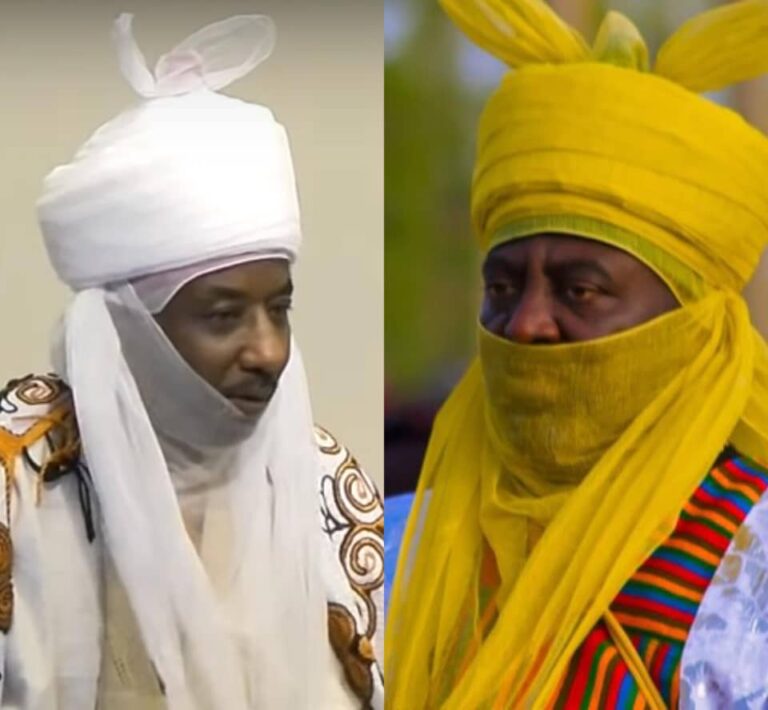
THE Court of Appeal has set aside the ruling of the Federal High Court, Kano, that nullified the appointment of Sanusi Lamido Sanusi as the 16th Emir of Kano.
The Federal High Court had on Thursday, June 20, 2024, reinstated deposed Ado it Bayero as the emir, consequently annulling the state government’s reinstatement of Sanusi Lamido Sanusi as the emir.
The court abrogated the Kano State Emirate Law 2024, which dissolved the five Emirates in the state.
It also dismissed the state government’s repeal of the Kano Emirates Council Law, which the state had used to sack Sanusi and install Bayero as emir.
The judge, Abdullahi Muhammad Liman, in his ruling, ordered all parties involved in the case to maintain the status quo.
A kingmaker in the defunct Kano Emirate, Aminu Babba Danagundi, also known as the Sarkin Dawaki Babba, through his attorney, Chikaosolu Ojukwu (SAN), had sued the Governor Abba Yusuf-led government to contest the new law’s validity and requested that the court void it.
Sanusi’s reinstatement threw the state into confusion as the dethroned Emir Bayero refused to relinquish his office.
But in a judgment read by Gabriel Omoniyi Kolawole on Friday, January 10, a three-member panel of the Court of Appeal, Kano, held that the order nullifying the steps taken by the Kano State Government pursuant to the 2024 Emirates Council Law was made by Liman without jurisdiction.
The appellate court ruled that the fundamental rights enforcement suit filed by an aggrieved kingmaker—Aminu Babba Dan Agundi—on which basis Liman issued the June 20 order, was not only invalid but the court lacked the jurisdiction to hear the matter.
Meanwhile, in another ruling, the Court of Appeal, Abuja Division, on Friday, January 10, ordered a fresh hearing into the Kano Emirate impasse.
The court, headed by Mohammed Mustapha, ruled that Bayero was not given a fair chance to present his case.
The courtcriticised the Kano High Court for not following proper procedures, including failing to notify Bayero of the hearing, and emphasised the importance of ensuring all parties have an equal opportunity to be heard.
The three-member panel of the court upheld the appeal on the issue of fair hearing, citing that the lower court should have notified the appellant and allowed them to get new legal representation after their lawyer withdrew.
The Court of Appeal ordered the case to be sent back to the Kano State High Court’s chief judge to be reassigned to a different judge for a speedy decision.
The ICIR reported in July that the Kano State High Court ordered Bayero to stop parading himself as the Emir.
The court, in a judgement by Amina Aliyu, on Monday, July 15, also barred four other deposed emirs from posing as the emirs of Bichi, Rano, Karaye, and Gaya.
According to the court’s ruling, they should return the government’s moveable and immovable items in their custody.
The Kano State government filed the lawsuit on May 27, 2024, through its lawyer, Ibrahim Isah-Wangida.
The suit sought to prevent Bayero and other deposed emirs from posing as traditional leaders.
Ibrahim-Gaya (Emir of Gaya), Ibrahim Abubakar II (Emir of Karaye), Kabiru Muhammad-Inuwa (Emir of Rano), Aminu Ado Bayero (15th Emir of Kano), and Nasiru Ado Bayero (2nd Emir of Bichi) were listed as respondents.
The emirship tussle in Kano has persisted for months since the government abolished the five emirates in the state.
While Bayero refused to relinquish his office and has occupied the mini palace in the Nasarawa area of Kano City, Sanusi has been in charge of the main palace.
On June 3, The ICIR reportedthat the tussle over the throne left Kano residents and other Nigerians confused over who would lead the Kano Durbar, a significant and historic festival in the state usually led by the emir.
However, a few days before the festivities, the police banned all durbar activities as part of efforts to sustain peace in the state.
OYO State Governor Seyi Makinde has approved the appointment of Abimbola Owoade as the new Alaafin of Oyo, ending a two-year succession crisis in the ancient town.
The announcement was made in a statement on Friday, January 10, by the commissioner for information and orientation, Dotun Oyelade, who explained that the selection process involved extensive consultations and traditional divinations conducted by the Oyomesi, the Oyo kingmakers.
The commissioner expressed optimism that Owoade’s reign would usher in peace, prosperity, and unity for the historic Oyo Kingdom.
“Prince Abimbola Akeem Owoade, after thorough consultations and divinations, has been recommended by the Oyomesi and approved by Governor Seyi Makinde as the new Alaafin of Oyo,” the statement read.
According to him, the appointment ends the legal and social disputes that followed the passing of the former Alaafin, Oba Lamidi Adeyemi III, who died on April 22, 2022.
“This decision has put to rest all the socio-legal controversies that have arisen since the transition of the late Oba Adeyemi. We urge the people of Oyo State to support the new Alaafin and join the government in celebrating this historic moment,” he said.
The ICIR reports that the appointment contrasts with the initial recommendation of some Oyomesi members, who had recommended Lukuman Gbadegesin for the throne.
Shortly after the recommendation in 2023, two of the council members claimed irregularities in the selection process.
However, the Bashorun of Oyo, Yusuf Akinade, shortly after the recommendation insisted that the selection process adhered to due process and was unanimously approved by all seven kingmakers.
Akinade defended the process, citing adherence to the 1961 Alaafin Chieftaincy Declaration and the 2000 Chiefs Law of Oyo State.
He noted that the inclusion of two warrant chiefs in the voting process, which had sparked debates among kingmakers, was upheld by a court ruling in December 2022.
THE demand by some shareholders for FBN Holdings Plc to call for an Extra-ordinary General Meeting (EGM) to remove the board chairman, Femi Otedola, has again questioned the Central Bank of Nigeria (CBN) corporate governance rules.
The company has been enmeshed in some internal crisis in recent times since Otedola took over as the chairman of the board.
Shareholders have since then been wary about the intricacies going on at FBN Holdings and its subsidiary, First Bank of Nigeria Limited.
A recent development is a call by some shareholders on FBN Holding to hold an EGM, invoking section 215 (1) of the CAMA (Companies and Allied Matters Act) that grants 21 days for the meeting to be held.
The section states “The board of directors may convene an extraordinary general meeting whenever they deem fit, and if at any time there are not within Nigeria sufficient directors capable of acting to form a quorum, any director may convene an extraordinary general meeting.”
The EGM aims to remove Otedola and a non-executive director, Julius Omodayo-Owotuga, from the board.
According to a report by ThisDay on Thursday, January 9, a group of shareholders claimed Otedola had mismanaged the bank since becoming the chairman of FBN Holdings.
They asserted that FBN Holdings has not known peace since the former CBN governor, Godwin Emefiele, influenced Otedola’s acquisition of significant shares in the bank that led to his emergence as chairman.
Emefiele requested the former chief executive officer of First Bank of Nigeria Limited, Adesola Adeduntan, to work with Otedola to help the chairman take over the bank.
The rapport created paved the way for Otedola to become a non-executive and, subsequently, the chairman of the board, the shareholders alleged.
The ICIRreported that Adeduntan’s resignation eight months before the expiration of his tenure violated the CBN corporate governance guidelines.
Otedola was further alleged to had a hand in the abrupt resignation of Adeduntan, the exit of a former chairman of First Bank of Nigeria Limited, Tunde Hassan-Odukale, and the removal of an executive director, Tosin Adewuyi, whom Otedola was said to have side-stepped for the position of the CEO.
He was also accused of favouring the appointment of the new CEO of First Bank, Olusegun Alebiosu, who pledged allegiance to him to run the Holdco and bank at will.
Other allegations against Otedola were that he had secured a loan of about $50 million (N90 billion) from the African Export-Import Bank (Afreximbank) to enable him to take full control during FBN Holdings’ proposed N360 billion private placement which some shareholders have kicked against and preferred instead a rights issue or public offer
FBN Holdings reacts
In a statement on Thursday, January 9, signed by its company secretary, Adewale Arogundade, FBN Holdings reacted to the report.
It asserted that the concern by shareholders to have Otedola removed as chairman does not in any way impact its operations, claiming that all the businesses within the group continue to provide uninterrupted services to its customers.
“We assure our valued customers, shareholders, investors, other stakeholders and the general public that we are taking all necessary steps to protect the interests of the Company and its subsidiaries.
“The group’s performance continues to improve, resulting in a higher market capitalisation even as we work towards surpassing the regulatory minimum capital well ahead of the deadline.”
It admitted that two of the company’s shareholders called for the EGM, FBN Holding claimed that the group and the subsidiary remain committed to the highest level of corporate governance.
“The Registrar and Lead Issuing House are collating the returns from all receiving agents in respect of its rights issue which closed on December 30, 2024,” it added.
A check by The ICIR, however, showed that the company’s share price dipped by -1.27 per cent to close at N31.50 at the close of trading on the floor of the Nigerian Exchange Limited (NGX) on Thursday.
Meanwhile, the Nigeria stock market was uptick on Thursdays as investors gained N792.73 billion, raising the market capitalisation to N64.35 trillion.
Shareholder’s association reacts
Commenting on the call for an EGM to remove Otedola, the national president of New Dimension Shareholders, Patrick Ajudua, told The ICIR that CBN must ensure that rules and regulations are strictly followed in resolving the various contending issues as failure may lead to the collapse of the bank and eventually result into the regulatory takeover of the bank and loss of shareholders investment.
“Just as we have continuously advocated for all stakeholders to ensure amicable settlement of the dispute in the overall interest of the bank and to place the survival of the bank above their interest,” he added.
The ICIRreported lately that the bank has yet to officially make its position known over the alleged layoff of 100 of its senior staff in its bid to restructure and reposition the bank ahead of 2025.
The organisation can recall that FBN Holdings has been a subject of battle over who holds the single largest share of the institution.
In its 2023 audited financial statements, FBN Holdings put Otedola as the single largest shareholder with a 9.41 per cent stake ahead of Oba Otudeko’s Barbican Capital which stake was omitted at the time, raising questions about CBN corporate governance.
Since then, Otedola has increased his stake in the bank’s shares.