NIGERIA’S national grid has collapsed 11 times since February 2024, worsening the country’s electricity crises.
The ICIR reports that each failure affects households, businesses, and critical sectors like healthcare, where a consistent power supply is essential.
The last of such collapse was recorded on Wednesday, December 11, throwing many parts of the country into darkness.
This year’s first grid collapse occurred on February 4, 2024, when the grid’s capacity fell from 2,407 megawatts to just 31 megawatts by midday, eventually reaching zero.
Since then, the grid has continued to break down, including collapses on August 5 and three times in October.
Notably, the October 14 collapse was followed by a partial failure the next day, and another incident on October 19.
The breakdowns highlight the challenges with the country’s outdated power infrastructure, which has repeatedly failed to deliver stable electricity.
On December 6, The ICIRreported how the Senate threatened to reverse the power privatisation.
While criticising the power privatisation and describing it as “fraudulent and exploitative” the Senate said the privatisation plunged Nigeria deeper into darkness, leaving citizens without solutions.
It also condemned operators in the sector, comprising Generation Companies (GenCos), Transmission Company of Nigeria (TCN), and Distribution Companies (DisCos), over their inability to deliver reliable electricity, asserting that they had added no significant value to the sector.
Senators’ reactions followed the presentation of a report by the Senate Committee on Power during Thursday’s plenary, which investigated frequent national grid collapses and related issues.
Senator Enyinnaya Abaribe (APGA, Abia South), who presented the findings, attributed the persistent grid failures to factors such as ageing infrastructure, abandoned projects worth trillions of naira, regulatory inefficiencies, security lapses, lack of modern monitoring systems like supervisory control and data acquisition (SCADA), and inadequate financial oversight.
According to him, despite substantial investments in electricity infrastructure, the grid has suffered 105 collapses over the past decade. He revealed the significant costs incurred during grid failures, particularly in restarting power plants.
He said, “Restarting a plant after a grid collapse (known as a “black start”) is considerably more expensive than normal operations.”
Citing an instance, he disclosed that while running costs for a plant like Azura, Delta, or Shiroro are approximately $105,000, restarting costs can reach $7 million per incident.
The ICIRreports that grid collapses cost Nigeria an estimated ₦42.5 billion for these three plants alone, with broader implications for the entire power sector.
Speaking further at the Senate, Abaribe noted other pressing issues, including operational inefficiencies, abandoned projects, regulatory gaps, security challenges, and the absence of SCADA systems essential for real-time monitoring and management.
“Whenever a plant is shut down, they restart the plant and to restart it, which they call a black start, it costs far more than running the plant.
“While it costs $105,000 to run the plant, to restart it will cost $7m. So anytime we have a shutdown occasioned by grid collapse, three plants in Nigeria that supply most of our electricity, Azura, Delta and Shiroro, to restart the plant cost Nigeria $25m or ₦42.5 billion and if we expand it to the rest of the operating plants in Nigeria, it is actually not quantifiable.
“Aging infrastructure has been identified as a critical factor contributing to frequent grid failures. Many components of the grid are outdated and have not undergone necessary maintenance or upgrades, leading to increased vulnerability to failures”, he added.
In his contribution to the debate, Adams Oshiomhole (APC, Edo North), faulted the privatisation policy as flawed and exploitative, stating it imposed undue financial burdens on Nigerians.
He said, “The Discos are out for profit while they make our people suffer. I never imagined that a private person would collect money for services he did not render and Nigerians are helpless.”
He recalled a personal experience of having to purchase a transformer and pay for its installation, only for it to become the property of the Abuja Electricity Distribution Company (AEDC). Oshiomhole called for a comprehensive review of the privatisation policy in line with the administration’s “Renewed Hope Agenda.”
“After the procurement, it becomes the property of AEDC (Abuja Electricity Distribution Company). I even had to pay money from my pocket to connect the transformer to the grid.
“We have to revisit this ill-advised privatisation and we are going to advise Mr President in line with his Renewed Hope Agenda, to review the power sector privatisation,” Oshiomhole suggested.
ACCESS Holdings Plc said it had opened a subsidiary in Malta, a country where Nigerian bigwigs have allegedly opened blending plants to facilitate the importation of petroleum products adversely affecting the Nigerian economy.
The chairman of Dangote Industries Limited, Aliko Dangote, had recently accused some officials of the Nigerian National Petroleum Company Limited (NNPCL), oil traders, and terminals of opening a blending plant in Malta to frustrate his 650,000 nameplate refinery which can serve Nigeria and also for exports.
“Some of the terminals, some of the NNPC people, and some traders have opened a blending plant somewhere off Malta. We all know these areas. We know what they are doing, Dangote had said.
Although the group chief executive officer of NNPCL, Mele Kyari, tried to dismiss the allegations, saying he did not own a blending plant in Malta, it is arguable whether his reaction was not convincing enough to fend off the allegation.
In a statement on Tuesday, December 10, sent to the Nigerian Exchange Group, Access Bank Group announced that The Access Bank UK Limited has established its first fully owned subsidiary in Malta, christened The Access Bank Malta Limited.
It hinted that the banking licence application has been approved by both the European Central Bank (ECB) and the Malta Financial Services Authority (MFSA), signalling a significant step in enhancing trade connectivity between Europe and Africa.”
As a credit institution, the Malta subsidiary will bolster Europe-Africa trade flows.
Malta, a renowned international financial centre, and a gateway between the two continents, is strategically positioned to play a pivotal role in advancing commerce and fostering economic partnerships, it stated.
“By establishing operations in Malta, we will gain a foothold in a market that bridges Europe and North African economies, moving us one step closer to our goal of becoming Africa’s Gateway to the World. It further enhances our Bank’s capacity to support clients with innovative solutions tailored to cross-border trade and investment opportunities,” the banking group’s managing director and chief executive officer, Roosevelt Ogbonna, said.
The managing director and CEO of The Access Bank Malta Limited, Renald Theuma, added, “Malta is uniquely positioned as a bridge between Europe and Africa, making it an ideal location for our subsidiary. This move allows The Access Bank Malta Limited to engage more closely with customers in Europe and deliver tailored financial solutions that drive growth and connectivity across both continents.”
THE Nigerian Electricity Regulatory Commission (NERC) said it would consider the application submitted by the Aba Power Limited Electric (APLE) for extraordinary tariff review.
The NERC’s vice chairman, Musiliu, gave the information on Tuesday, December 10, in Abuja, during a Public Hearing organised by the Commission to review the application submitted by APLE for tariff adjustment.
Electricity tariff hike is often reviewed to factor in exchange rate variables, rising inflation and the cost of gas since the depreciation of the naira has a direct bearing on these costs.
“This hearing is part of our efforts to ensure that any tariff review is fair and reflects the realities on the ground. We will carefully review the submissions made here today before making a final decision,” he said.
APLE is the electricity distribution company of Aba Integrated Power Project licensed by the NERC in 2007 to generate and distribute power from its 141MW power plant.
The company is asking NERC to allow it increase its electricity tariff from N122 per kilowatt hour (kWh) to N240 per kilowatt hour (kWh).
The company periodically procures electricity from the Niger Delta Power Holding Company’s (NDPHC) Alaoji Generation Company under a Power Purchase Agreement (PPA) approved by NERC and sells to all customer classes in the Aba Ring Fence Area (ARFA) comprising nine out of the 17 Local Government Areas of Abia State.
Aba Power has been operating with a tariff approved by NERC in October 2022, hence the request for approval of a tariff to reflect the current macro-economic conditions that affect its operations.
Justifying the need for tariff adjustment in a presentation during the hearing, the Managing Director of Aba Power, Ugo Opiegbe said the NDPHC has increased invoices for its wholesale energy cost to the APLE from the NERC approved PPA contract price of N21/kWh to N136.26/kWh.
This is even as he disclosed that the cost of generation from Geometric Power Aba Limited (GPAL) is now N133.2/kWh, therefore, the need to incorporate the changes in the macroeconomic parameters and indices which affect the quality of service, operation and sustainability of the business.
According to Opiegbe, the utility company was acquired with about N26billion, but about N82billion in investment has been injected since taken over.
He said the company has “integrated its Multi-billion Naira distribution infrastructure in ARFA for improved service, and has successfully bifurcated and rehabilitated over 400km of 11kv lines.”
Others, according to him, include, “construction of 17.5km 33kv line to Nvosi Isiala Ngwa, construction of 41km Ukwa 33kv lines, metering of 560 Nos DSs transformers, construction of 59.74km new 33kv overhead lines, completion of 660 OHL 33kv steel tubular towers including the foundation civil works, and construction of 58.93km 33kv overhead sub-transmission lines.”
Speaking on metering, he said the company has about 158,000 customers, out of which about 58,000 customers have been metered, leaving the unmetered customers at a staggering number of 100,000.
He revealed that plan has however, been concluded by the company to deploy about 15,000 meters monthly in the coming year to close the metering gap.
The company proposed the following: inflation 25 per cent, US Inflation 3.3per cent, exchange rate N1654.4/$, average energy offtake 135mwh, aggregate technical commercial and collection losses 21.26%, annual opex N189.68912 billion, annual meter capex N4.17 billion, annual other capex N1.1486billion, annual revenue requirement N227.0592 billion, cost reflective tariff N240.9, and allowed tariff N240.9.
The ICIRreported that the distribution companies, in July announced tariff increment from N206.80/kilowatts(kWh) to N209.5/kWh for band A customers(those enjoying power up to 20hrs daily).
Earlier in April, the ICIRreported the directive by the Nigerian Electricity Regulatory Commission (NERC) on the immediate upward review of electricity tariff for customers under Band A, a directive affirmed by the Minister of Power, Adebayo Adelabu who had earlier raised concern over the Nigerian government’s unsustainable power sector subsidy
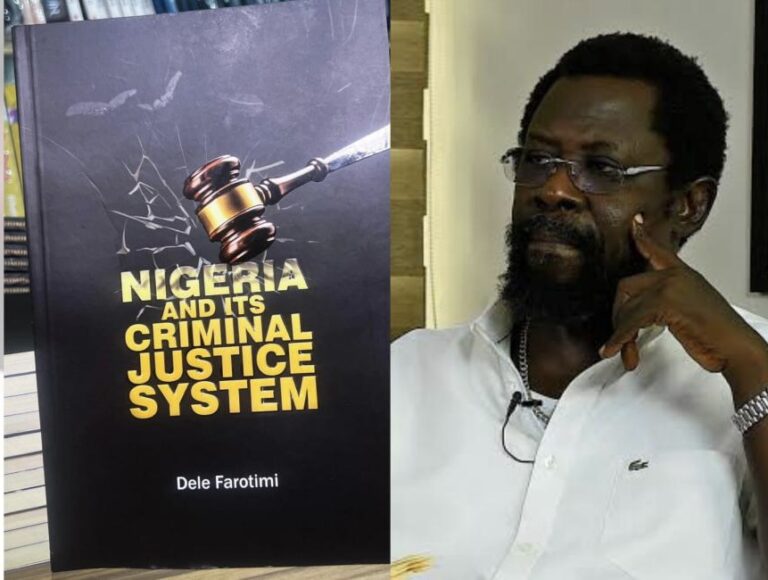
THE Federal Capital Territory (FCT) High Court has issued an interim injunction barring Lagos-based lawyer Dele Farotimi from publishing, selling, or distributing his book, “Nigeria and Its Criminal Justice System.”
The injunction, granted by Peter Kekemeke, the court’s judge, followed allegations of defamation against Afe Babalola, a senior advocate and founder of Afe Babalola University.
The order, also restrained Farotimi’s representatives, publishers, and distributors, including Rovingheights Bookstore, and Amazon Online Bookstore, from circulating copies of the book in any format.
The court’s order was granted pending the hearing of a motion for interlocutory injunction, dated and filed on the 6th day of December 2024.
The claimant, Kehinde Ogunwumiju, a senior advocate, from Afe Babalola’s law firm,argued that excerpts from the book contained defamatory statements intended to harm Babalola’s reputation.
The ruling prevented Farotimi, his representatives, and associated entities from promoting or circulating physical or digital copies of the book through any means, including online platforms and social media.
It also applied to several bookstores and distributors, such as Rovingheights Bookstore, Jazzhole Lagos Bookstore, Glendora Bookshop, and Amazon Online Bookstore.
The injunction, according to Sahara Reporters read, “An order of interlocutory injunction restraining the defendant/respondent, whether acting by himself, his staff, employees, servants, privies, representatives, agents, publishers, distributors, sellers, re-publishers, re-sellers, or any other person however described including Amazon Online Bookstore, Rovingheights Bookstore, Booksellers Bookstore, Jazzhole Lagos Bookstore, Glendora Bookshop, Quintessence Lagos Bookstore and Patabah Books Limited from further publishing, selling, circulating, advertising, or distributing the physical/hard/digital/soft copies of the book authored by the defendant/respondent titled: ‘Nigeria and Its Criminal Justice System’, online.
“An order of interlocutory injunction directing the seizure of all physical copies of the book authored by the defendant/respondent titled, ‘Nigeria and Its Criminal Justice System’n wherever they may be.”
In addition, the court directed security agencies, including the Nigerian Police Force, State Security Service, and Nigeria Security and Civil Defence Corps, to seize all copies of the book wherever they are found.
This development came amid ongoing legal battles, including a 16-count cybercrime charge against Farotimi under the Cybercrimes Act, 2015, for remarks allegedly made in the book.
The ICIR reported that Farotimi was taken to court for allegedly defaming Afe Babalola on Tuesday, December 3.
While Farotimi was granted a ₦50 million bail by the Federal High Court in Ado-Ekiti on Monday , December 9, the Ekiti Magistrate Court again denied him bail.
The judge of the Ekiti Magistrate Court, Abayomi Adeosun, on Tuesday, December 10, reserved a ruling on the bail application filed by Farotimi till December 20, 2024.
The magistrate court on Wednesday, December 4, remanded Farotimi in custody after denying him bail following his arraignment on a 16-count charge of cybercrime.
Farotimi, renowned for his criticism of human rights abuses and advocacy for justice, was arrested following a petition filed by Babalola.
THE Federal Government (FG) has withdrawn its support for the foundation-laying ceremony for the proposed Osun State International Airport in Ede, Osun State.
According to Punch, the boycott of the ceremony, initially scheduled for December 13, followed a request from the minister of aviation and aerospace development, Festus Keyamo, citing unresolved disputes surrounding the project.
At the centre of the controversy is the planned relocation of the airport from Ido-Osun to Ede, the governor’s hometown.
A state government committee had previously reported that the original site didn’t meet basic aviation requirements, prompting the relocation.
The decision sparked protests from the Ido community and reignited longstanding rivalry with its neighbour – Ede.
The airport project has been plagued by financial constraints and controversies, after the state’s former governor, Rauf Aregbesola, had allegedly spent N64 billion on it.
In 2017, the state government revived the project but later opted for concession due to financial difficulties.
The ministry’s request to delay the event came in a letter dated December 6, signed by the permanent secretary, Emmanuel Merinole.
In the letter, the ministry referenced a letter from the Osun State Government regarding the airport.
The ministry requested that the governor suspend the foundation-laying ceremony until issues regarding petitions over the existing airstrip/airport are resolved.
The ministry noted that the airstrip is a federal project included in the 2024 budget and that the state’s plan to expand it must align with federal objectives.
The ministry also mentioned a petition indicating an existing airstrip on which funds had been expended and suggested using the old site instead of a new one in Ede.
The ministry reportedly urged the governor to postpone the ceremony pending the resolution of petitions and selection of a mutually agreed date.
The ICIR contacted the chief press secretary (CPS) to the state government, Olawale Rasheed, on Wednesday, December 11, he promised to give more clarification on the matter through a press statement that is being prepared.
“I will get back to you on this. We are working on a comprehensive press statement that will be released any moment from now,” Rasheed stated.
Meanwhile, the Osun chapter of the All Progressives Congress (APC) has lauded the federal government for halting the airport project.
Osun APC, in a statement on Wednesday, December 10, by its director of media and Information, Kola Olabisi, said the “ineffective relocation” of the airport by the state governor to his hometown was causing a string of crises in Ido-Osun, the original host community.
The party condemned the relocation attempt as a blatant abuse of power and a manifestation of executive impunity.
.
THE National Agency for Food and Drug Administration and Control (NAFDAC) has issued a public alert announcing the recall of one batch of Deekins Amoxycillin 500mg capsules following ‘reports’ of serious adverse drug reactions.
The affected batch, identified as 4C639001, was manufactured by Ecomed Pharma Ltd and marketed by DevineKings Pharmaceutical Ltd.
A statement by the organisation on Wednesday, December 11, via its X handle, noted that the recall was based on three cases of adverse drug reactions reported from a hospital where patients had been administered the affected medication.
According to NAFDAC, Amoxicillin, a penicillin-based antibiotic, is widely prescribed to treat bacterial infections, including tonsillitis, sinusitis, pneumonia, bronchitis, and ear, nose, throat, skin, and urinary tract infections.
The agency emphasised that adverse reactions to medications could be severe, potentially leading to hospitalisation, significant disability, or even fatal outcomes in extreme cases.
“An adverse reaction to drugs may be life-threatening, may require hospitalisation or prolongation of existing hospitalisation, result in persistent or significant disability or incapacity, or a birth defect or death in fatal cases,” the statement noted.
It further urged consumers who had used the product and experienced adverse symptoms to seek immediate medical attention.
It also advised healthcare providers, distributors, and patients to halt the distribution and use of the recalled batch, while encouraging persons with the product to return it to the nearest NAFDAC office.
“Healthcare professionals and consumers are advised to report any suspicion of substandard and falsified medicines to the nearest NAFDAC office, NAFDAC on 0800-162-3322 or via email: sf.alert@nafdac.gov.ng
“Similarly, healthcare professionals and patients are also encouraged to report adverse events or side effects related to the use of the medicinal product to the nearest NAFDAC office, or through the use of the E-reporting platforms available on the NAFDAC website www.nafdac.gov.ng or via the Med-safety application available for download on android and IOS stores or via e-mail on pharmacovigilance@nafdac.gov.ng,” the statement added.
The agency confirmed that the recall information would be shared with the World Health Organization’s Global Surveillance and Monitoring System (GSMS) to ensure broader awareness and monitoring.
Recurring concerns in product safety
The ICIR reports that this latest development adds to a growing list of safety alerts and recalls issued by the regulatory agency in recent months.
On Thursday, October 31, NAFDAC alerted Nigerians about the recall of Nivea Black & White Invisible Roll-On deodorant due to the presence of a prohibited chemical, Butylphenyl Methylpropional (BMHCA).
The chemical, flagged by the European Union’s Rapid Alert System (RAPEX), was said to pose serious health risks, including reproductive harm and skin irritation.
This was coming barely two months after the regulatory body also alerted the immediate recall of Dove Beauty Cream Bar Soap (100g) by European Union regulatory bodies following the discovery of a harmful chemical content in the product.
The soap, produced in Germany and sold under batch number 81832M 08 and bar code 8000700000005, contained Butylphenyl Methylpropional (BMHCA), a substance banned in cosmetics due to its potential health risks.
NAFDAC in a statement released September 9, said it had issued a public alert on August 30, 2024, warning that BMHCA, prohibited under the Cosmetic Products Regulation, posed serious risks, including reproductive harm and skin sensitisation.
It noted that the authorities in the European Union had already taken action to ban the product.
NIGERIA’S democratic system heavily relies on the judiciary, which plays a crucial role in upholding the rule of law, justice, and human rights.
As an independent branch of government, the judiciary ensures that the legislative and executive branches operate within their constitutional limits.
Given Nigeria’s complex history of corruption, military rule, and human rights violations, the judiciary’s significance cannot be overstated.
The country’s court system has a vital role to play in shaping its democratic future and ensuring that the principles of justice and human rights are upheld.
As 2024 comes to a close, The ICIR takes a look at some of the key issues that shapped the judiciary.
Supreme Court gets full complement of justices
In February, the Supreme Court got a full complement of 21 justices as the then Chief Justice of Nigeria (CJN), Olukayode Ariwoola, swore in 11 new justices who added to the existing 10.
With the swearing-in of the justices, the apex court got its 21 justices as stipulated in the Constitution.
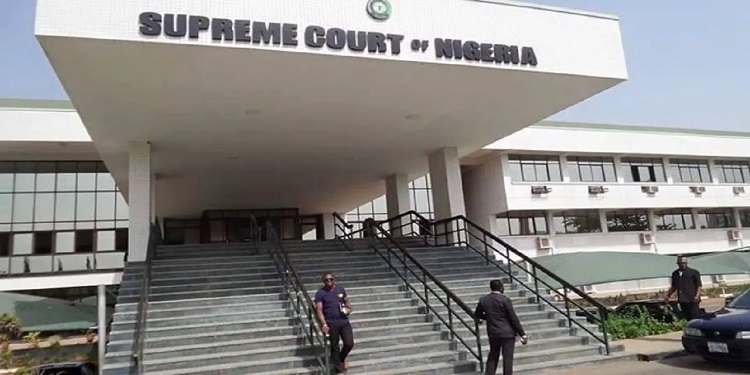
The Supreme Court of Nigeria
The new justices are Stephen Jonah Adah, Habeeb Adewale Abiru, Jamilu Yammama Tukur, Mohammed Baba Idris, Obande Festus Ogbuinya, and Abubakar Sadiq Umar.
Others are Jummai Hannatu Sankey, Moore Aseimo Adumein, Haruna Simon Tsammani, Chidiebere Nwaoma Uwa, and Chioma Egondu Nwosu-Iheme.
Nigeria gets second female Chief Justice
In September, Kudirat Kekere-Ekun was sworn in as the 23rd Chief Justice of Nigeria (CJN). Kekere-Ekun was sworn in by PresidentBola Tinubu after confirmation by the Senate as the substantive CJN making her the second female to hold the position in Nigeria.
CJN, Kudirat Kekere-Ekun
The ICIR reported that the former CJN, Kayode Ariwoola retired on Thursday, August 22, after clocking 70 years of age.
Kekere-Ekun, 66, is the second female CJN after Mukhtar. She was elevated to the Supreme Court of Nigeria as the 5th female justice of the court and was sworn in July 2013.
New NBA president emerges
In July, Afam Osigwe, a Senior Advocate emerged as the president of the Nigerian Bar Association (NBA) succeeding Yakubu Maikyau.
With 20,395 votes, Osigwe received more votes than his nearest competitor, Tobenna Erojikwe, who got 10,970, and Chukwuka Ikwuazom who garnered 9,007 votes.
Afam Osigwe, president of the Nigerian Bar Association (NBA)
Osigwe officially assumed office as the 32nd president of the NBA in a ceremony held in Lagos. He succeeded Maikyau, and took the oath of office on Thursday, marking the start of his tenure as the leader of the prestigious legal body.
Landmark cases in 2024
The year started with the Supreme Court upholding governorship elections in many states, including Sokoto, Taraba, Rivers
Also in January, the Supreme Court of Nigeria upheld a ruling that sentenced a former House of Representatives member, Farouk Lawan, to five years imprisonment for bribery. The court gave the ruling following an appeal by the former lawmaker against previous judgments by lower courts convicting him of bribery.
He was to serve two prison terms of seven and five years concurrently and was ordered to return $500,000 to the government. However, an Appeal Court overturned the previous ruling on two of the three counts he was tried for, reducing his jail term from seven to five years.
In October, Lawan was released from prison after serving his five-year sentence for soliciting and accepting a $500,000 bribe from a Nigerian businessman, Femi Otedola.
Lawan, who once chaired the House of Representatives ad-hoc committee investigating fuel subsidy fraud, was initially convicted in 2021 for collecting bribes aimed at removing Femi Otedola’s company from the list of firms implicated in the fuel subsidy scandal of 2012.
Supreme Court grants financial autonomy to LGAs
The Supreme Court of Nigeria granted the nation’s 774 Local Governments Areas (LGAs) financial autonomy in a judgmentpassed on Thursday, July 11.
The judgement, read by Justice of the Supreme Court, Emmanuel Agim, held that funds meant for LGAs be paid directly into their accounts.
The court also ruled that it was unconstitutional for the state governments to hold on to or manage such allocations and directed the 774 LGAs to commence managing their funds.
The judgment was passed in a suit filed by the federal government through the Attorney General of the Federation (AGF), Lateef Fagbemi against the 36 state governors in the country, seeking full autonomy for local governments.
Court stops federal allocation to Rivers
In a judgement, in October the Federal High Court in Abuja ordered the Central Bank of Nigeria (CBN) to withhold the federal government’s monthly allocation to the Rivers State Government.
The presiding judge, Joyce Abdulmalik, in a ruling on Wednesday, October 30, maintained that the presentation of the 2024 budget by the Rivers State Governor Siminalayi Fubara to four members of the state assembly was an aberration and an affront to Nigeria’s 1999 Constitution (as amended).
According to the judge, Fubara’s receipt and distribution of monthly allocations since January 2024 was illegal.
Rivers State Governor Siminalayi Fubara
She directed Zenith Bank, Access Bank, the CBN, as well as the Accountant General of the Federation to stop Fubara from getting access to funds from the Consolidated Revenue and Federation Account.
The judge delivered the ruling in response to a lawsuit brought before the court by the Rivers State House of Assembly, headed by Martins Amaewhule.
However, Fubara formally appealedthe ruling that halted the monthly Federal Allocation Account Committee (FAAC) disbursement to the state.
Court bars VIO from confiscating vehicles, imposing fines on motorists
A Federal High Court in Abuja barred the Directorate of Road Traffic Services (DTRS), otherwise known as the Vehicle Inspection Office (VIO), from stopping vehicles, confiscating them, and imposing fines on motorists.
Delivering the judgement in case number FHC/ABJ/CS/1695/2023 on Wednesday, October 2, Justice Nkeonye Evelyn Maha, held that no law empowered the respondents to carry out such activities.
The order also binds the Minister of the Federal Capital Territory, the Director of Road Transport, and the Area Commander, Jabi.
Furthermore, a restraining order was issued by the court against the respondents, to stop them and their agents from impounding or confiscating vehicles or imposing fines, declaring such actions as improper, illegal, and oppressive.
Court summons Yahaya Bello over alleged N110.4bn fraud
A High Court of the Federal Capital Territory (FCT) in Maitama, Abuja, summoned the former governor of Kogi State, Yahaya Bello, over a fresh 16-count preferred against him by the Economic and Financial Crimes Commission (EFCC).
Yahaya Bello at the FCT High Court Abuja on Wednesday. Picture courtesy of Channels TV
The fresh count charge against him was linked to an alleged N110.4 billion fraud.
The judge, Maryanne Anenih, asked Bello to appear before it on October 24 along with two other defendants, Umar Oricha and Abdulsalami Hudu.
Lagos court frees police sergeant after 11 years in detention
A Lagos State High Court released a police sergeant, Emmanuel Uyanweke, after 11 years of incarceration. Uyanweke, who was once attached to the Ojo police division in Lagos, was freed on October 24, 2024.
He was released after the Foundation for Public Interest Law and Development (FPIL&D) intervened and took his case to court. The presiding judge, Ibironke Harrison, threw out the case against the accused for lack of diligent prosecution.
Supreme Court nullified the National Lottery Act 2005 enacted by the National Assembly
In a unanimous judgment delivered by a seven-member panel of justices in November, the apex court, led by Mohammed Idris, ruled that the national assembly lacked the authority to create laws related to lottery and games of chance.
According to the court, this power exclusively resides with state houses of assembly, which have jurisdiction over lotteries and games of chance.
Idris ordered that the National Lottery Act 2005 should no longer be enforced in all states, except for the Federal Capital Territory (FCT), where the national assembly has the power to make laws.
Supreme Court dismisses suit challenging EFCC Act
In November, the Supreme Court dismissed a suit filed by some state attorneys-general challenging the constitutionality of the EFCC Act.
In a unanimous decision, a seven-member panel of justices, led by Uwani Abba-Aji, criticised the plaintiffs, particularly the attorney-general of Kogi State, for their claims.
In her lead judgment, Justice Abba-Aji highlighted that the suit revealed the EFCC had invited and investigated officials of the Kogi State government, which she deemed to be the driving force behind the legal tussle.
The ICIR reports that the case, initially brought by the attorneys-general of 16 states, sought to disband the EFCC, questioning the legal foundation of its establishment.
Appeal court clears ex-CJN Onnoghen, orders FG to unfreeze accounts
The Court of Appeal, Abuja, cleared a former CJN Walter Onnoghen, of the charge that led to his removal from office in 2019.
About six years after he was convicted, a three-man panel of the appellate court, led by Mohammed Bello, exonerated the ex-CJN following a settlement agreement the federal government entered with him.
Court throws out case against #EndBadGovernance protesters
In November, a Federal High Court (FHC) inAbuja threw out the suit against 76 persons charged for participating in the nationwide #EndBadGovernance protests in August.
The judge, Obiora Egwuatu, struck out the suit on Tuesday, November 5, following an application by the counsel to the Attorney General of the Federation (AGF), Mohammed Abubakar, to take over and terminate the suit.
The AGF, Lateef Fagbemi, represented by the Director of Public Prosecution of the Federation (DPPF), said at the proceedings that he was exercising his power under Section 174 of the 1999 Constitution to take over the case from the Inspector General of Police (IGP), Kayode Egbetokun.
The minors in court.
The judge ordered the accused, the majority of whom are allegedly minors, to be released from prison immediately, even though they were not present in court.
The ICIR reported that President Bola Tinubu on Monday, November 4, ordered the release of minors arrested, detained, and charged to court for alleged involvement in the EndBadGovernance protests, following widespread outrage over their recent arraignment.
The arrest, detention and subsequent arraignment of the boy protesters sparked national backlash, with many Nigerians and human rights groups condemning what they described as inhumane and unjust treatment of children.
The ICIR reports that during the #EndBadGovernance protests, which drew thousands of Nigerians to the streets in a movement advocating for transparency, accountability and an end to police brutality, several young protesters were arrested and detained. Among those detained were minors, reportedly held in various facilities under challenging conditions.
The minors who appeared in court on Friday, November 1, were charged with 10-count bordering on alleged treason and conspiracy to commit a felony with intent to destabilise Nigeria, an offence contrary to Section 96 and punishable under Section 97 of the Penal Code Act.
However, the incident was heightened when some minors, who were among 76 persons set to be arraigned by the Nigerian Police Force (NPF), collapsed in the court on Friday, November 1. One of the defendants slumped while the judge was reading the charges.
Yahaya Bello appears in court, pleads not guilty to 16-count charge
The immediate past governor of Kogi State, Bello appeared in court after so many months of hide and seek and pleaded not guilty to the 16-count charge preferred against him by the EFCC.
Bello is being charged along with two others before Maryann Anenih of the Federal Capital Territory (FCT) High Court in Abuja.
This development came after Umar Shuaib Oricha and Abdulsalami Hudu, Bello’s co-defendants, were granted administrative bail by the EFCC, while Bello himself made his first court appearance.
Bello, Oricha, and Hudu are being prosecuted as the 1st to 3rd defendants, respectively, in a fresh N110bn 16-count charge instituted against them by the EFCC.
The court remanded Bello and the two other defendants in the EFCC custody until December 10, 2024.
EFCC chairman faults frequent adjournments of high-profile corruption cases
The chairman of EFCC Ola Olukoyede, frowned at the frequent adjournments of high-profile corruption cases by Nigerian courts.
Olukoyede listed other challenges facing the commission, including conflicting court orders from courts with coordinated jurisdiction, contempt orders targeting its leadership, and an over-reliance on technicalities in corruption cases.
The Chairman of the Economic and Financial Crimes Commission (EFCC), Ola Olukoyede
Olukoyede stated that unwarranted injunctions hindered the commission’s investigations into corruption cases.
He added that the issues were compounded by challenges plaguing Nigeria’s law enforcement, such as corruption and lack of professionalism.
Olukoyede stated this while speaking at the 6th EFCC/National Judicial Institute (NJI) capacity-building workshop for justices and judges in Abuja on Monday, October 7.
The courts are becoming too involved with our electoral processes – Ibrahim
Jibrin Ibrahim, a professor of Political Science, who is a Senior Fellow with the Centre for Development accused the courts in Nigeria of becoming too involved with the electoral processes
Jibrin Ibrahim
Ibrahim who was the director of the Centre for Democracy and Development (CDD) claimedmany judges are on the payroll of politicians and are paid bribes to produce injustice rather than justice. You can read his full exclusive interview with The ICIRhere.
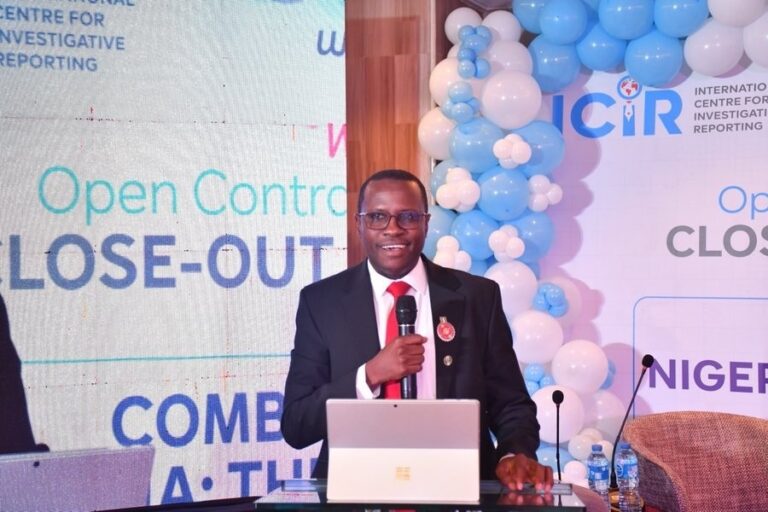
THE chairman of the Independent Corrupt Practices and Other Related Offences Commission (ICPC), Musa Adamu, has said the Open Contract Reporting Project (OCRP) of The International Centre For Investigative Reporting (ICIR) made significant contributions to Nigeria’s fight against corruption.
He stated this while delivering a keynote address titled “Combatting Corruption in Nigeria: The Imperative Of Starting With Procurement Fraud” at the OCRP close-out and award ceremony held in Abuja on Tuesday, December 10.
He said many corruption cases are linked to procurement fraud, ranging from inflated contract sums and kickbacks to ghost projects and deliberate manipulations of tender processes.
He noted that the OCRP helped to leverage investigative journalism and citizen engagement by exposing procurement irregularities in critical sectors, promoting transparency and empowering citizens and civil society to dismantle corruption‘s grip on public procurement.
Adamu added that the MacArthur Foundation-funded OCRP, which is rounding off after seven years, helped Nigeria fight corruption.
Speaking on the level of corruption in Nigeria, the anti-graft boss said sleazes were so rife in the country that he saw where a public servant diverted public funds to his account and challenged the commission to say “Let’s have a plea bargain”
He said many people in the public sector were looking for public funds to loot.
“We have had a case where somebody spent N7 million on a project that couldn’t have cost more than N100,000. He went on to say “I have taken it, and what can you do about it? Let’s go to court,” Adamu stated.
According to him, constituency project monitoring is one major way the commission is tracking procurement fraud.
In his welcome address, the executive director of The ICIR, Dayo Aiyetan, said if the nation refused to deal with procurement fraud, its attempts to fight corruption would be futile.
According to Aiyetan, when the OCRP started seven years ago, investigative journalism was not popular.
He criticised the harassment of journalists by security agencies and posited that any society that obstructed a free press could not be serious about democracy.
Aiyetan also stated that many journalists in Nigeria were hounded by the use of the Cyber Crime Act.
He lauded the MacArthur Foundation for supporting the OCRP.
Executive director of The ICIR, Dayo Aiyetan
In her remarks, the deputy director of the MacArthur Foundation, Amina Salihu, said the nation owed the upcoming and present generation and must ensure all hands are on deck to eradicate corruption.
She said the present generation “has a better opportunity to use the resources of this country but has not been able to guarantee that for the upcoming generation.”
She charged Nigerians to be determined to end corruption.
“I don’t want to throw numbers at you, because you’ve had the keynote address. But you always must be worried and be angry enough that this country can be better, and be way ahead of itself.”
While commending the OCRP, she said, “Thank you very much for this moment, ICIR. 300 journalists trained, and 500 quality reports; that is stellar. We look forward to what the future holds and how those potentials become possible.”
The executive director of The Investigator Journalism Development and Innovation Centre and publisher of The Investigator, Archibong Jeremiah Ojanga, emerged as the overall best fellow.
POOR access to procurement data, entrenched fraud in the private sector, and a misaligned budgeting system are some of the barriers to the fight against corruption in Nigeria.
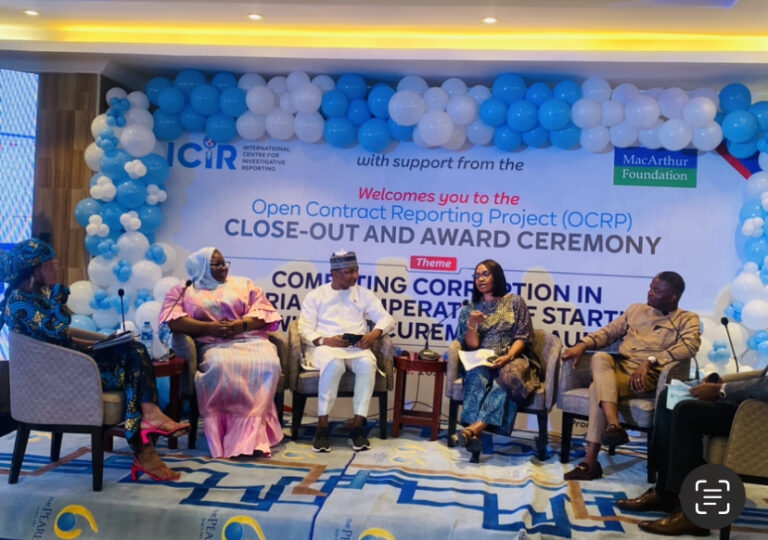
Stakeholders raised this concern on Tuesday, December 10, during a panel discussion at the closing ceremony of the International Centre for Investigative Journalism’s (ICIR) Open Contracting Reporting Project (OCRP) in Abuja.
The event brought together governance and anti-corruption advocates to assess the challenges of combating corruption, particularly in public procurement.
The ICIRreported that the OCRP, a seven-year project supported by the MacArthur Foundation, trained over 300 journalists from newsrooms across Nigeria, leading to the publication of over 500 investigative reports, many of which made impacts and earned prestigious awards.
At the event on Tuesday, panellists, including Hamza Lawal, chief executive officer (CEO) of Connected Development (CODE); Gabriel Okeowo, country director of BudgIT; Ife Olatunji David of the Public and Private Development Centre (PPDC); Victoria Bamas, editor at The ICIR; and development journalist Khadija Bawas, pointed out that limited access to accurate procurement data continued to obstruct efforts to track government spending and expose sleazes.
Speaking at the event with the theme, “Combating Corruption in Nigeria: The Imperative of Starting with Procurement Fraud,” The ICIR editor, Bamas, decried the lack of transparency in public procurement processes, noting that many government agencies failed to provide complete or accurate information.
She explained that investigative journalists and civil society organisations frequently encountered barriers when attempting to obtain critical details on public contracts.
According to her, this lack of openness frustrates accountability efforts.
“Access to data is a major challenge. Many state Bureau of Public Procurement offices lack functional emails, and when you send requests, they often bounce back, forcing you to physically visit their offices for information…
“At the state level, many procurement portals are not accessible. Some agencies simply allow their platforms to go down, making it even harder to track or verify procurement processes,” she said.
While addressing corruption within Nigeria’s private sector, Ife David of the PPDC said corruption in private enterprises often enabled unethical practices in government.
She argued that while attention is usually focused on the public sector, fraudulent activities in the private sector play a significant role in sustaining systemic corruption.
On his part, Country Director of BudgIT, Gabriel Okeowo, criticised Nigeria’s budgeting process, describing it as disconnected from national development goals.
He noted that some ministries, departments, and agencies lobbied the National Assembly to allocate funds for projects routed through their offices for personal gains.
Okeowo warned that this practice not only misappropriated resources but also undermined public trust in government budgeting.
Similarly, the chief executive officer of Connected Development (CODE), Hamza Lawal, highlighted the role of grassroots advocacy in demanding accountability, sharing how citizens’ awareness led to the timely implementation of abandoned projects.
“Sadly, corruption is now part of our culture. There’s an expectation and perception about you as you walk into any place. We’ve embraced it; we’re in bed with corruption…
”At the sub-national level, where governors and local government chairmen are untouchable, it’s deeper than at the national level. There, they kill you, or you go missing, or something happens to your family house,” he said.
He noted that when the country gets to a point where it has a national strategy and amends the Procurement Act to designate one agency for procurement, it would reduce inefficiencies and improve accountability.
A journalist and one of the OCRP fellows, Khadija Bawas, while describing the significant risks faced by journalists, shared her experiences exposing corruption.
She recounted an incident where she had to escape a dangerous situation by hiding in a car transporting cows after uncovering corruption.
Bawas emphasised that the culture of fear and intimidation remained a major obstacle, but stressed the importance of investigative journalism in driving accountability.
The panelists agreed that corruption in Nigeria requires a multi-faceted approach, involving government, civil society, and citizens.
They called for systemic reforms to improve access to procurement data, enhance private sector accountability, and align budgeting processes with national development priorities.
While acknowledging the immense challenges, the panellists maintained that a corruption-free Nigeria is possible with sustained effort and collective action.
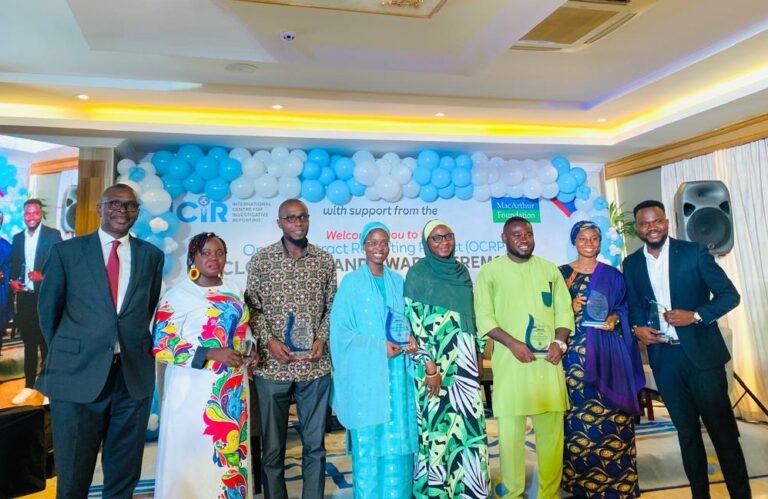
THE International Centre for Investigative Reporting (ICIR) has recognised six exceptional fellows at the closing ceremony of its Open Contracting Reporting Project (OCRP).
At the event, held on Tuesday, December 10 in Abuja, the executive director of The Investigator Journalism Development and Innovation Centre and publisher of The Investigator, Archibong Jeremiah Ojanga, emerged as the overall best fellow.
Hafsat Bello, a freelance journalist, and Ekemini Simon of TheMail Newspaper were awarded first and second runner-up positions.
Other awardees are Justina Asishana of The Nation, Arinze Gideon, a freelance journalist whose work has appeared on platforms like Al Jazeera, and Hadiza Musa Yusuf of Prime Times News.
A seven-year project supported by the MacArthur Foundation, the OCRP trained more than 300 journalists from newsrooms across the country, leading to over 500 investigative reports.
These stories exposed irregularities in contract awards, procurement fraud, and mismanagement of public funds. They also prompted reforms, improved adherence to procurement laws, and heightened public scrutiny of government expenditures.
The ceremony featured a keynote address by the chairman of the Independent Corrupt Practices and Other Related Offences Commission (ICPC), Musa Adamu Aliyu, titled “Combating Corruption in Nigeria: The Imperative of Starting with Procurement Fraud.”
A panel discussion moderated by governance expert, Joe Abah, followed, featuring Hamza Lawal, chief executive director (CEO) of Connected Development (CODE); Lucy Abagi, CEO of the Public and Private Development Centre (PPDC); Gabriel Okeowo, country director of BudgIT; Victoria Bamas, editor at ICIR; and development journalist Khadija Bawas.
Ojanga described the award as transformative recognition and expressed gratitude for ICIR’s support, which he credited for his rise from a volunteer editor to a publisher.
He said, “I can’t express how happy I am. I’m not someone who puts my work out for awards, but this is a testament that people appreciate what we do.”
On her part, Hafsat Bello noted that the award meant a lot to her as a young female journalist from Northern Nigeria.
She shared how the fellowship had enhanced her capacity to produce impactful investigative stories and reaffirmed her commitment to accountability journalism.
About the Awardees
Archibong Jeremiah Ojanga is the executive director of The Investigator Journalism Development and Innovation Centre and publisher of The Investigator. The centre provides coworking spaces, IT services, training, and mentorship. A pioneer reporter of CrossRiverWatch, he served as managing editor for seven years and freelanced for national publications like The Nation, Punch, and The Sun. With over a decade of investigative journalism experience, Ojanga has written numerous impactful stories and mentored three newsrooms.
Hafsat Bello is a trailblazing journalist whose fearless reporting has driven societal change. Holding a BSc and MSc in Mass Communication, she has uncovered corruption and amplified marginalised voices through impactful stories. Her investigations into an abandoned school project and a community left in darkness led to tangible reforms. She focuses on issues like illegal mining and inadequate infrastructure in Kano State, blending advocacy with accountability to inspire solutions.
Ekemini Simon, a reporter with TheMail Newspaper, is known for incisive investigations into corruption and human rights abuses. He holds a BA in Communication Arts from the University of Uyo and has won numerous awards, including the Ray Ekpu Investigative Journalism Prize. His investigative work under OCRP has exposed systemic corruption in Nigeria, earning him multiple recognitions for impactful journalism.
Justina Jumai Asishana, a senior correspondent at The Nation, specializes in conflict, health, and social justice reporting. She is an award-winning journalist with a focus on amplifying the voices of marginalized communities, especially women and children. Beyond her work as a journalist, she mentors young reporters through the Media Mentors Network.
Hadiza Musa Yusuf, an investigative journalist with Prime Times News, focuses on uncovering systemic inefficiencies in the education and health sectors, particularly in Kano State. Her stories have exposed the decay of critical projects and inspired actionable solutions while holding stakeholders accountable.
Arinze Gideon Chijioke specialises in investigative journalism covering climate change, global health, and social justice. His impactful work has been published by prominent platforms like Al Jazeera and the Global Investigative Journalism Network. Chijioke’s investigation into illegal coal mining in Enugu State led to the arrest of perpetrators and a government ban on the practice, showcasing the transformative power of his reporting.