Home Blog Page 46

US-Iran war: what Tinubu government can do to support Nigerians – Experts

DEBATES over the Nigerian government’s poor support for vulnerable Nigerians are getting heated, with the US-Iran conflict also creating more economic problems for many citizens.

Transport and energy logistics have continued to eat into Nigeria’s household spending, as many workers pay more for goods and transport.

Despite the recent surge in global oil prices, driven by escalating tensions in the Middle East and resulting in a windfall for Nigeria, the Federal Government has ruled out a possible return of petrol subsidy

Minister of Finance and Coordinating Minister of the Economy, Wale Edun, disclosed the government’s position during a media briefing at the G-24 on the sidelines of the launch of the April 2026 Global Financial Stability Report by the International Monetary Fund (IMF), in United States.

The government’s decision has further fueled the debate on what model of economic support Nigerians should expect from their leaders, with some countries, such as Australia, India, Pakistan, and Egypt, already taking some supportive steps for citizens as the US-Iran conflicts compound economic problems and inflation among nation.

More so, the National Bureau of Statistics (NBS) latest data on inflation at N15.38 per cent in March 2025 is a further confirmation of the worrying resurgence of inflationary pressures in the economy.

The ICIR reports that the implications are far-reaching. Rising energy costs have quickly translated into higher transportation costs, increased food prices, and escalating production and distribution expenses.

The dominance of food and transport in the inflation basket has also adjusted household consumption patterns in response to rising prices.

According to the statistics office, food and transportation -related costs remain the most significant contributors to March inflation

“Food inflation stood at 14.31 per cent year-on-year, while core inflation -which captures broader price pressures-rose to 16.21 per cent. These figures are particularly troubling, given their direct impact on household welfare,” former director general of Lagos Chamber of Commerce and Industry, Muda Yusuf, told The ICIR.

He added, “Transportation costs, which are heavily influenced by fuel prices and logistics inefficiencies, continue to exert strong upward pressure on prices across sectors. The transmission mechanism is simple: higher transport costs raise the cost of moving food, goods and services nationwide, thereby amplifying inflation.

Yusuf also suggested the need for improved security in farming communities, strengthening rural infrastructure and logistics, enhancing access to inputs and financing, and promoting mechanisation and modern farming techniques.

“Invest significantly in mass transit systems, reduce reliance on fragmented private transport systems, introduce a regulatory framework to curb exploitative pricing and improve urban mobility infrastructure,” he added.

The Chief Executive Officer of Financial Derivatives, Bismarck Rewane, who commented on the development, said,” The government may enjoy oil windfalls, but ordinary people are seeing income shortfalls, especially when fuel costs continue to rise.”

He warned the government not to return to PMS subsidy, but to “ring-fence the extra crude revenue for targeted relief — cash transfers, food, transport — because subsidy benefits the rich more and wrecks the budget.”

“We cannot intervene in the war but must intervene in Nigeria’s economy to absorb the shock. “You win by not losing” — don’t let the war bankrupt the budget or crush households,” he added.

Gunmen abduct 14 JAMB candidates in Benue

0

AT LEAST 14 passengers, most of them candidates of the Joint Admissions and Matriculation Board (JAMB), have been abducted by suspected gunmen in Benue State.

The incident happened on Wednesday, April 16, 2026, evening along the Makurdi–Otukpo road as the victims were travelling in a commercial bus from Makurdi to Otukpo. Majority of the victims were on their way to sit for the Unified Tertiary Matriculation Examination (UTME) scheduled for Thursday (today)

Reports indicate that the attack occurred between about 7:00 p.m. and 8:00 p.m. when armed men intercepted the vehicle and forcefully took most of the passengers into the bush. The bus was said to be carrying between 16 and 18 passengers at the time.

Only the driver and one passenger reportedly escaped from the scene.

The Chairman of Otukpo Local Government Area, Maxwell Ogiri, confirmed the development, stating that the victims were students heading to write their JAMB examinations.

“The victims are young people coming to Otukpo to write JAMB. Security agents have been deployed, and efforts are ongoing to rescue them,” he said.

The Benue State Commissioner of Police, CP Ifeanyi Enemari, confirmed the abduction and disclosed that he was leading rescue efforts in the area.

“I’m in Otukpo now. My team and all DPOs are in the bush, and I am heading the operation,” he said.

He explained that the attackers stopped the bus and took away most of the passengers.

“What happened was that a Benue Links bus carrying passengers to Otukpo was stopped and attacked by hoodlums. Fourteen passengers were kidnapped, but one managed to escape,” he added.

He also noted that the vehicle might have been operating outside approved hours, as the transport company does not usually run night trips.

EFCC secures arrest warrant for Buhari’s minister, perm. sec., over alleged $1.3m, N746.6m fraud

0

THE Economic and Financial Crimes Commission has secured a warrant of arrest against the former Minister of Humanitarian Affairs, Disaster Management and Social Development, Sadiya Farouq, and a Permanent Secretary in the ministry, Bashir Nura Alkali, over an alleged fraud involving $1.3 million and N746.6 million.

Farouq, who served under the late President Muhammadu Buhari from 2019 to 2023, supervised key social intervention programmes, including the National Social Investment Programme.

The warrant was issued on Thursday, April 16, by the trial judge Jude Onwuegbuzie, after the two defendants failed to appear in court for their arraignment.

The EFCC is prosecuting them alongside Sani Mohammed, who was present in court.

EFCC files 21-count charge

The anti-graft agency said it filed a 21-count charge against the accused, bordering on criminal breach of trust, abuse of office, fraudulent award of contracts, and diversion of public funds.

The commission alleged that the defendants were involved in the mismanagement and diversion of $1,300,000 and N746,574,303.

It specifically accused Farouq and Alkali of converting $1.3 million meant to be refunded to the ministry by Visual ICT Limited. The funds were said to be excess payments under the National Social Safety Net Coordinating Office programme for validating Rapid Response Register beneficiaries.

According to the prosecution counsel, Rotimi Jacobs, the charges were filed on December 15, 2025, but the commission could not proceed with arraignment because the first and second defendants were not produced.

He said their lawyers had assured the court they would present them but failed to do so.

Jacobs also disclosed that Farouq travelled to Saudi Arabia in 2024 for medical treatment after her passport was released by the commission, but she has yet to return it or provide any medical report.

He added that medical documents later submitted by her legal team were issued after the charges had already been filed.

Defence cites ill health

The statement further noted that the counsel to the former minister, Abdul Ibrahim, attributed her absence to ill health and sought to tender an affidavit of facts.

It noted that the court rejected the application.

The EFCC said the court subsequently granted its request and issued a bench warrant to compel the defendants’ appearance, before adjourning the case for further proceedings.

The development came amid a widening anti-corruption probe targeting former cabinet members under the Buhari administration.

The EFCC had investigated former Attorney-General of the Federation and Minister of Justice, Abubakar Malami, over allegations linked to the handling of recovered assets and controversial financial transactions during his tenure.

Similarly, former Minister of Labour and Employment, Chris Ngige, has also faced scrutiny over alleged procurement and contract-related issues, although no conviction has been secured in either case.

The ICIR reports that Tinubu’s government hardening posture against Malami mirrors the sustained legal fireworks on former Governor of the Central Bank, Godwin Emefiele, another powerful figure from the Buhari administration who has remained entangled in multiple criminal cases since his sack as CBN governor in June 2023 by Tinubu.

Several courts also ordered the final forfeiture of millions of dollars, shares, and several prime properties linked to Emefiele, including a 753-unit housing estate in Abuja, high-value properties in Ikoyi and Lekki, Lagos, and cash sums exceeding $2 million.

The former CBN is currently facing various charges ranging from abuse of office to procurement fraud and money laundering.

IMF advises Nigeria as debt rises to N159. 28 trillion under Tinubu

THE International Monetary Fund (IMF) has advised Nigeria on wholistic review of the country’s debt situation to avoid economic crisis.

The Director of the African Department at the IMF, Abebe Aemro Selassie, disclosed on Thursday at the Press briefing-African Department session at the ongoing IMF spring meeting in Washington DC United States.

“These kinds of issues, whether to borrow externally or domestically, have to be seen in totality for possible optimisation.

“What is really important is to see the level of debt as manageable as possible, whether in terms of servicing or capacity. Second is to do liability management operations that would help you to extend maturities,” Selassie added.

Nigeria’s total public debt increased to N159.28 trillion as of December 31, 2025. The total public debt rose from N153.29 trillion recorded at the end of September 2025 to N159.28 trillion in December 2025, according to the latest data released by the Debt Management Office (DMO) on Tuesday.

The increase indicates a quarter-on-quarter increase of N5.98 trillion or 3.9 per cent.

The DMO noted that the December 2025 figures were provisional and were converted using the Central Bank of Nigeria’s official exchange rate of N1,435.2571/$, while the September 2025 figures used N1,474.85/$.

Marking an increase of N14.61 trillion or 10.1 per cent, on a year-on-year basis, Nigeria’s public debt rose from N144.67 trillion in December 2024 to N159.28 trillion in December 2025.

This represents a rise from $94.23 billion to $110.97 billion, an increase of $16.75 billion.

Domestic debt remained the largest, rising from N81.82 trillion in September 2025 to N84.85 trillion in December 2025.

This represents a quarter-on-quarter increase of N3.03 trillion or 3.7 per cent compared to December 2024, when domestic debt stood at N74.38 trillion – the figure increased by N10.47 trillion or 14.1 per cent year-on-year.

That is, domestic debt rose from $55.47 billion in September 2025 to $59.12 billion in December 2025, and from $48.44 billion in December 2024. This highlights a sustained reliance on the domestic market for financing.

The Federal Government accounted for the bulk of domestic debt at N80.49 trillion, representing 50.53 per cent of total public debt, while states and the Federal Capital Territory accounted for N4.36 trillion.

Nigeria’s external debt stood at N74.43 trillion as of December 2025, representing 46.73 per cent of total public debt.

This reflects a quarter-on-quarter increase of N2.95 trillion from N71.48 trillion in September 2025, and a year-on-year increase of N4.14 trillion from N70.29 trillion recorded in December 2024.

Converted to the United States dollars, external debt rose from $48.46 billion in September 2025 to $51.86 billion in December 2025, and from $45.78 billion in December 2024.

This represents a rise from $94.23 billion to $110.97 billion, an increase of $16.75 billion.

Domestic debt remained the largest, rising from N81.82 trillion in September 2025 to N84.85 trillion in December 2025.

This represents a quarter-on-quarter increase of N3.03 trillion or 3.7 per cent compared to December 2024, when domestic debt stood at N74.38 trillion – the figure increased by N10.47 trillion or 14.1 per cent year-on-year. That is, domestic debt rose from $55.47 billion in September 2025 to $59.12 billion in December 2025, and from $48.44 billion in December 2024. This highlights a sustained reliance on the domestic market for financing.

Notably, the Federal Government accounted for the bulk of domestic debt at N80.49 trillion, representing 50.53 per cent of total public debt, while states and the Federal Capital Territory accounted for N4.36 trillion.

Nigeria’s external debt stood at N74.43 trillion as of December 2025, representing 46.73 per cent of total public debt.

This reflects a quarter-on-quarter increase of N2.95 trillion from N71.48 trillion in September 2025, and a year-on-year increase of N4.14 trillion from N70.29 trillion recorded in December 2024.

The Federal Government continued to dominate external borrowing, accounting for N66.27 trillion of the total external debt, while states and the FCT accounted for N8.16 trillion.

However, the structure of Nigeria’s debt portfolio remained broadly stable despite the increase in overall debt, DMO claimed.

While domestic debt accounted for 53.27 per cent of total debt in December 2025, compared to 53.37 per cent in September 2025 and 51.41 per cent in December 2024, external debt stood at 46.73 per cent in December 2025, compared to 46.63 per cent in September 2025 and 48.59 per cent a year earlier.

An earlier report by The ICIR noted the exclusion of Nigeria by the IMF from the list of Africa’s fastest-growing economies in 2025, which economic watchers say questioned the policies of the President Bola Tinubu-led administration.

The IMF, in its Regional Economic Outlook report for sub-Saharan Africa, launched on Thursday, October 16, 2025, in Washington, DC. excluded Nigeria from the list of Africa’s fastest-growing economies, and listed Benin, Côte d’Ivoire, Ethiopia, Rwanda, and Uganda as the fastest-growing economies on the continent.


Police arrest 6 suspected bombers in Ondo days after denying terrorist activities in state

0

OPERATIVES of the Nigeria Police Force (NPF) in Ondo State have foiled a suspected bomb plot in Akure and arrested 16 persons linked to various criminal activities in the state.

The Commissioner of Police in the state, Adebowale Lawal, disclosed this on Thursday while addressing journalists, noting that six of the suspects were involved in plans to attack government facilities in the state capital.

“The command recorded a major operational breakthrough with the successful foiling of a planned bomb attack in Akure. The operation led to the arrest of six suspects and the recovery of materials suspected to be components for the fabrication of improvised explosive devices, alongside several other incriminating items on April 15, 2026,” the commissioner said.

Lawal who identified some of the suspects as Adekunle Prosper, 56; Ojo Olumide, 39; Tope Kolawole, 40; Ahmed Salihu, 40; Bolaji Adebowale, 46; and Gbadebo Abidemi, 43, said the arrests followed credible intelligence about a criminal syndicate operating across state lines.

“Acting on the intelligence, operatives were deployed to the identified location, where the suspects were apprehended before they could execute their plan. A search of the scene and subsequent operation at their apartment led to the recovery of several items,” he added.

The Police Commissioner said that during the operation on April 15, officers recovered materials believed to be components for improvised explosive devices, along with other incriminating items which included 217 bottles, a bag of sugar, suspected charms, 17 mobile phones, ₦187,000 in cash, two HP laptops, eight slings, a knife, an external hard drive, identity cards including a National Identity Number card, and two motorcycles.

He added that the suspects had recently rented an apartment in the Oke-Odu area of Akure, which they used as their operational base.

According to him, further findings revealed the recovery of a document outlining potential targets, suggesting the plan was both coordinated and premeditated. The police chief said their timely intervention prevented what could have led to significant loss of lives and widespread destruction.

He said that the remaining 10 suspects were arrested separately for alleged involvement in cult-related activities across the state.

The arrest came the same day The ICIR reported that terrorists were staging increasingly audacious incursions into the South-West, turning Ondo State into another testbed for their pernicious operations.

Documenting the rate of killings and abductions in the state, The ICIR shared a timeline of the rise of terrorist activities in Akure and Owo LGAs in recent years.

Surprisingly, the spokesperson of the Ondo State Police Command, Ayanlade Olushola, had denied the existence of terrorists in the state, while several stakeholders and leaders, including the Commander, Ondo State Security Network Agency, Adetunji Adeleye, and the former secretary to the Government of the Federation and monarch of Ilu-Abo community in Akure North LGA, Olu Falae, accused herders and their local collaborators of perpetrating the crimes.

Abuja on edge as report of planned attacks on airport, Kuje prison emerges days after U.S. security warning

SECURITY forces have tightened surveillance across the Federal Capital Territory (FCT) and Niger State following intelligence of a planned attack on major public facilities, including the Nnamdi Azikiwe International Airport and the correctional centre in the nation’s capital, according to a report by Associated Press (AP).

The report, published on Wednesday, April 15, said the targets also include a military detention facility in Niger State. According to the AP said the information was contained in a memo dated April 13, which it obtained from the Nigeria Customs Service.

The plot, the report noted mirrors a recent assault in Niger Republic, where militants attacked an Air Force base in Niamey earlier this year.

This development comes barely a week after the United States government ordered non-emergency staff and their families at its U.S. Embassy Abuja to leave Nigeria due to the deteriorating security concerns. The travel advisory also designated more than 20 Nigerian states as no-go areas.

The development also coincided with on the ground, observations by The ICIR which show heavy deployment and heightened military presence around the correctional facility in Kuje Area Council, where security operatives have mounted checkpoints, restricted movement, and conducted searches of uncompleted buildings in recent weeks.

Residents told The ICIR that they began retreating into their homes before 6 p.m. following rumours of a curfew in areas such as Wowo Garage, Chibiri, Shadadi, Shetuko and Kango along the Gwagwalada axis. But the alarm on curfew turned out to be false.

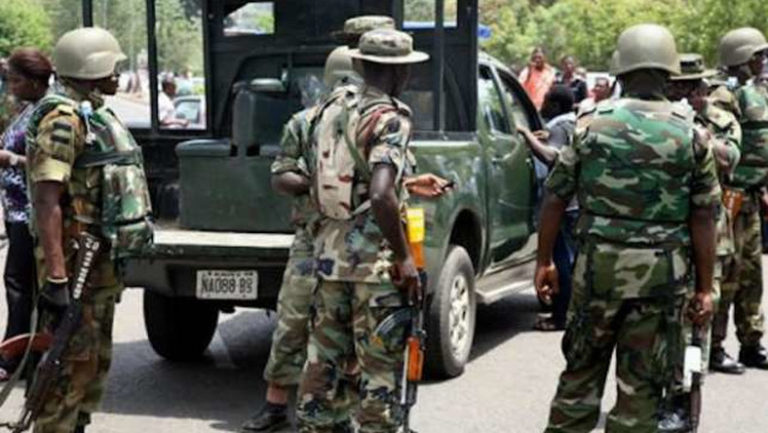
Military trucks and armed personnel have also been stationed around key junctions, particularly along routes leading to the prison, forcing commuters to take longer alternative paths.

Although authorities at the time described the deployment as routine protection of critical infrastructure, residents said the presence of armed troops heightened tension across the area.

The renewed alert came against the backdrop of the 2022 attack on the Kuje correctional facility, which led to the escape of 879 inmates, including dozens of suspected extremists.

The attackers, suspected to be members of Boko Haram, reportedly freed 64 of their members held at the facility.

Since the 2022 attack on the facility in Kuje, alongside several others across the nation under the late President Muhammadu Buhari administration, military has been deployed to protect correctional centres in the country.

Sources confirmed to The ICIR that the correctional centre is the first target of terrorists in the nation’s capital, as the country is currently overwhelmed by insecurity, largely orchestrated by terrorists.

Rising attacks heighten fears

The latest alert comes amid a broader surge in attacks by Boko Haram factions and other extremist groups across northern Nigeria in 2026

In recent months, insurgents have stepped up assaults on military bases, particularly in the North-East, killing soldiers and carting away weapons.

Armed groups have also intensified raids on rural communities in Borno and Yobe states, with residents reporting killings, abductions and arsons.

The repeated attacks have displaced several communities and deepened humanitarian concerns in the region.

CAPPA hails suspended UI students’ victory in court

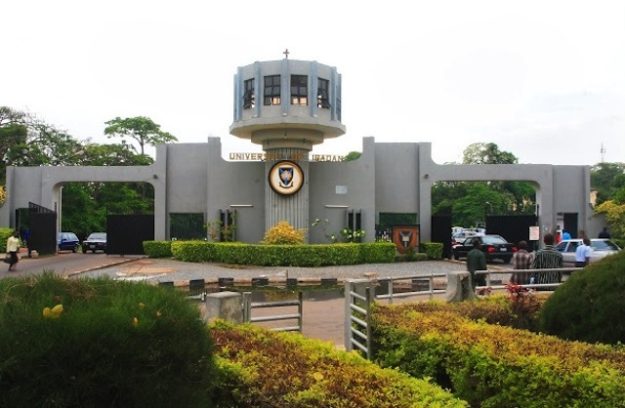
THE Corporate Accountability and Public Participation Africa (CAPPA) has hailed the Federal High Court ruling ordering the reinstatement of three University of Ibadan (UI) students.

The organisation in a statement by its Media and Communications Officer, Robert Egbe, described the judgment as a landmark victory for students’ rights and civic freedom in Nigeria.

The organisation expressed satisfaction with its role in supporting the affected students—Aduwo Ayodele, Mide Gbadegesin, and Nice Linus, throughout their legal battle.

“We are proud, not only of Ayodele, Gbadegesin and Linus, but also of our role in helping them assert and defend their rights. We are proud to have stood by them since their ordeal began, amplifying their voices through our advocacy and media networks, and facilitating legal services for them.” CAPPA said. 

Backstory

The ICIR reports that the court ruling, delivered by the presiding judge Nkeonye Maha, in Ibadan on Wednesday, April 15, ordered the immediate reinstatement of the students, who were suspended by the university on July 14, 2025, for protesting a hike in tuition fees.

The protest was triggered by a circular issued by the university’s governing council announcing an increase in fees for both new and returning undergraduate students for the 2023/2024 academic session. 

The demonstration followed mounting frustration among students over the rising cost of education.

Dissatisfied with their suspension, the students approached the court, arguing that the disciplinary process violated their fundamental rights, particularly their right to fair hearing.

They told the court that they were denied the opportunity to call witnesses or present video evidence during proceedings before the university’s disciplinary committees.

“AN ORDER OF THE HONOURABLE COURT forthwith reinstating the Applicants’ full studentship rights and privileges within the 1st Respondent with immediate effect to wit, attend lectures, write examinations and participate in student union activities for the advancement of their lawful interest.” the applicants sought.

It also sought “the sum of N20 million damages jointly and severally against the Respondents for the infringement of the Applicants’ constitutionally guaranteed rights to dignity of their human person, personal liberty, fair hearing, freedom of thought, freedom of expression, peaceful assembly and association, freedom of movement, and freedom from discrimination guaranteed under the 1999 Constitution of the Federal Republic of Nigeria as amended.”

In her ruling, Maha held that the university’s actions breached the students’ right to fair hearing, setting aside the disciplinary committee’s decision and ordering their full reinstatement with all rights and privileges restored.

The judgment also reinforced constitutional protections for freedom of expression, peaceful assembly, and association.

CAPPA reacts

CAPPA said the ruling sent a strong warning to universities across the country against suppressing dissent.

CAPPA’s Assistant Executive Director, Zikora Ibeh, described the students’ ordeal as part of a broader pattern of shrinking civic space within Nigerian tertiary institutions.

“When students are punished for peaceful protest, the message is that lawful dissent will not be tolerated. What kind of society punishes its young people for caring enough to speak?” she added.

The organisation criticised what it termed the growing use of intimidation, suspensions, and rustications by university authorities to silence opposing voices.

“Universities should be spaces where ideas are contested, where authority is questioned, and where future leaders are trained not just to comply, but to think critically and act courageously. When administrations resort to suspensions, rustications, and intimidation, they turn campuses into zones of fear rather than forums of debate. This is dangerous and unacceptable,” CAPPA stated.

It demanded that policies such as fee hikes be subjected to transparent and participatory processes that reflect the socio-economic realities of students and their families.

CAPPA further linked the recurring protests in Nigerian universities to chronic underfunding of the education sector, warning that the burden of financing education is increasingly being shifted to students.

“Access to education is gradually being determined by wealth rather than merit. Until this structural issue is resolved, protests will persist, and rightly so,” the organisation added.

Reaffirming its commitment, CAPPA said it would continue to support students nationwide in defending their constitutional rights against what it described as institutional overreach.

S’Africa opposition leader Malema sentenced to five years in prison

SOUTH African opposition leader Julius Malema has been sentenced to five years in prison after being convicted of illegally possessing a firearm and discharging it in public.

The conviction stemmed from a 2018 incident during the Economic Freedom Fighters’ (EFF) fifth anniversary rally in the Eastern Cape, where a widely circulated video showed Malema firing multiple shots from a semi-automatic rifle into the air.

The AfriForum, an Afrikaner lobby group that has long been at odds with Malema, filed a case against him after the footage of the incident went viral.

In his defence, Malema argued that the weapon did not belong to him and said the shots were intended to energise the crowd. However, the court rejected this explanation as he was later found guilty in 2025 on several counts, including unlawful possession of a firearm, discharging a weapon in a public space, and reckless endangerment.

According to the BBC, Magistrate Twanet Olivier who delivered the ruling at a court in East London on Thursday said the offence was deliberate rather than impulsive, describing the gunfire as a central feature of the event in question.

The 45-year-old head of the EFF and sitting member of parliament remained composed as the sentence was read but immediately filed an appeal through his legal team, a move aimed at preventing his incarceration while the case is reviewed.

Malema has built a reputation as a fiery and unapologetically radical voice in South African politics, commanding a devoted support base. Outside the courthouse, hundreds of supporters gathered, singing and chanting in solidarity.

Once the leader of the youth wing of the ruling African National Congress, Malema was expelled following a fallout with former president Jacob Zuma. He later founded the EFF, which has since grown into a significant political force, finishing fourth in the country’s 2024 general elections.

After his conviction last year,  Malema told his supporters that jail or even death would be “a badge of honour” in pursuit of his political cause. He has pledged to challenge the ruling all the way to Constitutional Court of South Africa.

33 states at risk of flooding in 2026, FG warns

0

THE Federal Government on Wednesday warned that 33 states and the Federal Capital Territory (FCT) would be at risk of flooding in 2026.

The Minister of Water Resources and Sanitation, Joseph Utsev, an engineer, made the disclosure during the public presentation of the 2026 Annual Flood Outlook (AFO) at the Presidential Banquet Hall in Abuja.

The event was organised by the Nigeria Hydrological Services Agency (NiHSA) and themed, “Smart Water Resources Management: Moving from Oil to Water-Based Economy.”

The warning came as the rainy season begins, with the government listing states such as Lagos, Bayelsa, Delta, Adamawa and Kebbi among those expected to be affected, alongside 28 others.

Utsev stressed the importance of early warnings, noting that timely information could help save lives, protect infrastructure, and reduce economic losses.

He explained that the Federal Government was working to improve flood forecasting and preparedness by upgrading the country’s hydrological monitoring systems.

He also said the ministry was strengthening its partnership with the Nigerian Meteorological Agency (NiMet) to better combine weather and water data, which is essential for providing accurate forecasts that can support farmers, disaster managers, urban planners and other sectors.

Describing the AFO as more than just a scientific document, the minister said it served as a call for action.

He, however, cautioned that predictions alone would not be effective unless communities act on the information, adding that the ministry was collaborating with other agencies to reduce the impact of flooding.

Providing figures from the outlook, Utsev said 14,118 communities in 226 local government areas across the 33 states and the FCT fell within high flood risk zones.

“The states are: Abia, Adamawa, Anambra, Bauchi, Bayelsa, Benue, Borno, Cross River, Delta, Ebonyi, Edo, Enugu, Gombe, Imo, Jigawa, Kaduna, Kano, Kebbi, Kogi, Kwara, Lagos, Nasarawa, Niger, Ogun, Ondo, Osun, Oyo, Plateau, Rivers, Sokoto, Taraba, Yobe, Zamfara, and the FCT,” he said.

In addition, 15,597 communities in 405 local government areas across 35 states – excluding Ekiti – are expected to experience moderate flooding.

“15,597 communities in 405 LGAs, 35 states except Ekiti State, will experience moderate flood risk,” the minister stated.

He added that 923 communities in 77 local government areas across 24 states might face low-level flooding.

“Low Flood Risk: incidences of minimal flood is expected in 923 communities in 77 LGAs in 24 States. The states are Adamawa, Anambra, Bauchi, Bayelsa, Benue, Borno, Cross River, Delta, Ebonyi, Edo, Jigawa, Kaduna, Kano, Kebbi, Kogi, Nasarawa, Niger, Ogun, Ondo, Osun, Oyo, Sokoto, Taraba and Zamfara.”

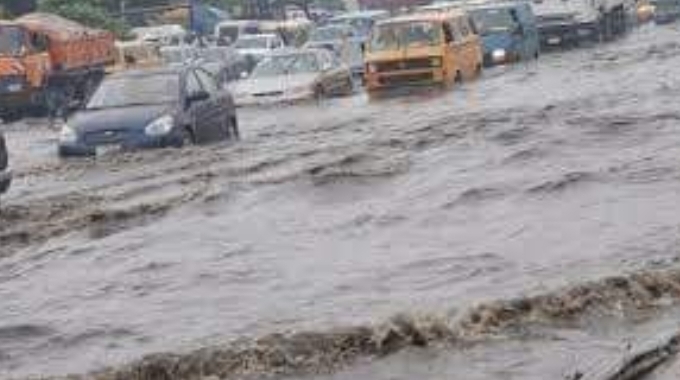
The report also highlighted the likelihood of flash and urban flooding in major cities due to heavy rainfall, poor drainage systems and weak water management practices. Cities expected to be affected include Abakaliki, Abeokuta, Abuja, Asaba, Benin City, Birnin-Kebbi, Calabar, Ibadan, Kaduna, Kano, Lagos, Makurdi, Nguru, Onitsha, Oshogbo, Port Harcourt, Sokoto, Warri and Yola.

Coastal and riverine flooding is also anticipated in Bayelsa, Cross River, Delta, Lagos, Ogun, Rivers and Ondo states due to rising sea levels and tidal surges, which could disrupt fishing, wildlife and river transportation.

Utsev emphasised the broader importance of water management, stating: “As we transition toward a water-based economy, we must recognise that water security is national security. Effective water governance will play a critical role in ensuring food security, supporting economic diversification, and improving the overall well-being of our citizens.”

He urged state governments, local authorities, farmers and community leaders to take the warnings seriously and begin preparations immediately.

“I therefore call on state governments, local authorities, disaster management agencies, farmers, and community leaders to carefully study the findings and advisories contained in this document and take the necessary steps to prepare for the coming flood season.

“Furthermore, we are encouraging state governments to integrate flood risk considerations into land-use planning, urban development, and infrastructure design. Floodplains must be properly managed, drainage systems must be improved, and communities must be empowered to adapt to changing climate conditions.

“Preparedness remains the most effective strategy for reducing flood risks. When we plan ahead, we protect lives, safeguard infrastructure, and preserve economic gains. Let us commit to building a safer, more resilient and more water-secure nation.”

Earlier, the Director General of NiHSA, Umar Ibrahim Mohammed, said the 2026 AFO aligned with the Federal Government’s Renewed Hope Agenda, particularly in areas such as economic diversification, infrastructure development, climate resilience, food security and sustainable water management.

He described the AFO as a vital planning tool that provides early warnings, supports decision-making and helps coordinate emergency responses nationwide.

According to him, the agency has improved its forecasting process by adopting advanced systems.

“The AFO has evolved into an important national planning instrument that provides early scientific prediction of flood risks in the country, evidence-based guide for decision-makers and platform for emergency coordination among stakeholders.

“In producing this year’s forecast, the agency undertook a comprehensive and data-driven process to provide tailored information for high-risk flood zones and flash floods in urban cities and towns. Building on the success achieved through AFO publications, we have upgraded from reporting flood forecast to flood risk intelligence architecture and from the traditional modelling to Hybrid AI-Integrated Modelling system to improve forecast reliability, reduce false alarms and improve the lead time accuracy.

“Not these alone, the modelling for the 2026 forecast have been conducted in-house. This marks a strategic shift toward enhancing capacity building, manpower development and institutional resilience.”

He also disclosed that NiHSA’s Flood Dashboard had been upgraded into a full decision-support geo-intelligence system that allowed real-time monitoring and analysis of flood situations. The system is supported by a mobile application to make flood alerts more accessible, with trained personnel available to respond to inquiries.

In his remarks, the Director General of NiMet, Charles Anosike, a professor, acknowledged the persistent challenges flooding poses in Nigeria and across Africa, but noted that improved technology was helping to predict and manage such disasters.

He commended NiHSA for its efforts and reaffirmed NiMet’s commitment to working closely with the agency to strengthen flood prediction and response systems. He also called for a shift in development priorities to place greater emphasis on water resource management.

President Bola Tinubu, who was represented at the event by the Minister of Environment, Balarabe Lawal, reiterated the administration’s commitment to improving emergency response and promoting sustainable development.

He said the government recognised the importance of rescue teams in managing disasters and was taking steps to strengthen relevant institutions for quicker and more effective responses.

The president also highlighted the role of communication in addressing emergencies, noting that better coordination and public awareness would improve outcomes.

According to him, ongoing efforts in planning and service delivery would help the country overcome its current challenges and ensure the safety and well-being of citizens.

The event was attended by key stakeholders, including officials from the ministries of Water Resources and Sanitation, Livestock Development, Environment and Women Affairs, as well as the Speaker of the House of Representatives, state governments, service chiefs, development partners and members of the media.

Nigeria’s inflation rises to 15.38% in March

NIGERIA’S headline inflation rate rose to 15.38 per cent in March 2026, reflecting a modest increase from the 15.06 per cent recorded in February.

This is according to the latest data released from the National Bureau of Statistics (NBS) on Wednesday, April 15.

The Consumer Price Index (CPI) increased to 135.4 in March 2026, reflecting a 5.4-point increase from the preceding month (130.0).

In March 2026, the headline inflation rate rose to 15.38 per cent, up from 15.06 per cent in February 2026 and stood at 27.35 per cent in the same month of the preceding year (March 2025).

Accordingly,, the March 2026 headline inflation rate showed an increase of 0.32 per cent compared to that recorded in February 2026.

However, on a month-on-month basis, the rate in March 2026 was 4.18 per cent, which was 2.17 per cent higher than the rate recorded in February 2026 (2.01%).

The percentage change in the average CPI for the twelve months ending March 2026 over the average for the previous twelve-month period was 20.05 per cent, showing a 1.48 per cent increase compared to 18.58 per cent recorded in March 2025.

On a year-on-year basis, in March 2026, the Urban inflation rate was 14.64 per cent. On a month-on-month basis, the Urban inflation rate was 3.16 per cent in March 2026, up by 0.61 per cent compared to February 2026 (2.55%).

The corresponding twelve-month average for the Urban inflation rate was 20.04 per cent in March 2026. This was 0.06 per cent points lower compared to the 20.10 per cent reported in March 2025.

Rural inflation rate in March 2026 was 17.22 per cent on a year-on-year basis.

On a month-on-month basis, the rural inflation rate in March 2026 was 6.73 per cent, up by 6.02 per cent compared to February 2026 (0,71%).

The corresponding twelve-month average for the Rural inflation rate in March 2026 was 19.74 per cent. This was 2.93 per cent points higher compared to the 16.81 per cent recorded in March 2025.

The food inflation rate in the month under review was 14.31 per cent on a year-on-year basis and stood at 25.22 per cent in the same month of the preceding year (March 2025).

However, on a month-on-month basis, the food inflation rate in March 2026 was 4.17 per cent, down 0.52 per cent points from February 2026 (4.69%).

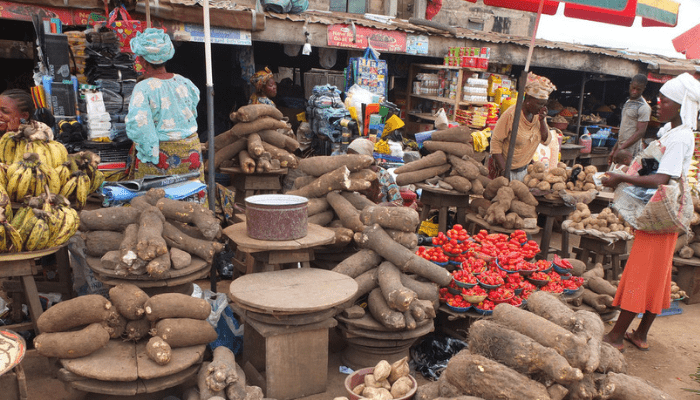
The drop was attributed to the rate of change in the average prices of the following products: yam, ginger (fresh), cassava tuber, groundnuts (shelled), Irish potatoes, avenger (ogbono/apon) – dried ungrinded, tomatoes (fresh), cassava flour sold loose, among others.

The statistics office further said that the average annual rate of food inflation for the twelve months ending March 2026 over the previous twelve-month average was 18.21 per cent, which was 17.81 per cent points lower compared with the average annual rate of change recorded in March 2025 (36.02%).

According to NBS, “All items less farm products and energy” or core inflation, which excludes the prices of volatile agricultural produce and energy, stood at 16.21 per cent in March 2026 on a year-on-year basis; a decline of 10.91 per cent points when compared to the 27.12 per cent recorded in March 2025.

.The NBS explained that the CPI report was based on a rebased methodology, using 2024 as the base year and 2023 as the weight reference period, aimed at better capturing current consumption patterns in the economy.

Overall, the report highlights how the combination of rising fuel prices, particularly the petrol price increase in March and broader structural cost pressures continues to drive inflation, leaving Nigerian households under sustained financial strain.