THE African Democratic Congress (ADC) has alleged that its planned national convention venue in Abuja is under threat, claiming that the Federal Capital Development Authority, FCDA, is mounting pressure on the facility’s owner to withdraw hosting rights less than 24 hours to the event.
The party’s National Publicity Secretary, Bolaji Abdullahi, raised the alarm in a statement Monday night.
He stated that the owner of the Rainbow Event Center in Garki Area 8 had been warned against allowing the party to use the facility.
According to him, the venue owner was allegedly told that his licence could be revoked by the Federal Capital Development Authority (FCDA) and the Minister of the Federal Capital Territory, Nyesom Wike, if he proceeds with hosting the convention.
Abdullahi said the party had already fulfilled all financial obligations and signed a contract with the venue before the development.
“After paying all the fees required, setting up for our convention tomorrow, the owner of Rainbow Event centre has just informed us that he has come under pressure from the FCDA and Minister of FCT, Nyesom Wike that if he allows the ADC the use of his facilities, his licence will be revoked,” he said.
Despite the alleged threat, the ADC insisted that its convention would go ahead as scheduled at the venue.
“We have already signed the contract with him. We will hold our convention tomorrow as planned at the Rainbow event centre. We will not bow to this creeping tyranny. And definitely not to this petty tyrant,” Abdullahi added.
The latest development comes amid mounting challenges facing the party ahead of its convention.
The ADC had earlier fixed the Rainbow Event Center, located at Plot 1193A, off Southern Parkway in Garki Area 8, as the venue for the convention scheduled for Tuesday, April 14, 2026.
The location, behind the FCDA/AGIS building and near the NTA headquarters in Area 11, was announced after the party raised concerns over its inability to secure a venue in Abuja.
Chairman of the party’s media sub-committee for the convention, Kola Ologbondiyan, had disclosed that the ADC initially applied to use Eagle Square but received no response, despite submitting a request to the FCT Minister’s office.
He added that efforts to secure an alternative venue at the Moshood Abiola National Stadium were unsuccessful, while some private event centres allegedly declined the party’s requests over fear of repercussions.
However, Wike dismissed the claims, stating that no political party would be denied access to public facilities if due process was followed, and maintained that he was unaware of any formal application by the ADC.
Atiku described development as “shameful” “cowardly abuse of public office”
Reacting to the development, former Vice President, and one of the leaders of the ADC, Atiku Abubakar, described the development as a “shameful and cowardly abuse of public office.”
Atiku said attempts to coerce a private business owner into denying an opposition party access to a venue amounted to an attack on democratic principles and the right to free assembly.
“The ADC has paid every fee. The ADC has signed every contract. The ADC has broken no law. Our only offence is that we are organising, we are growing, and we are preparing to retire this failed government at the ballot box in 2027,” he said.
He warned that such actions could undermine Nigeria’s democracy, alleging that they reflect a broader pattern of suppressing opposition voices.
“This is how democracies are strangled, not in a single dramatic blow, but in a thousand petty, vindictive acts against opposition parties, against free assembly, and against the sacred right of citizens to choose their own leaders. To the international community, and every democratic partner of Nigeria: take note of what is being done here tonight, and in whose name,” Abubakar added.
RETIRED officers of the Nigeria Police Force on Monday April 13, trooped to the Force Headquarters in Abuja to protest the handling of their pension.
They called for an immediate exit from the Contributory Pension Scheme (CPS) and a comprehensive review of their retirement benefits.
The protesters expressed dissatisfaction with the CPS, which they said had failed to meet their financial needs since they left active service.
According to them, pension payments under the scheme are often delayed and too small to cope with the country’s rising cost of living. The retirees insisted that after years of service to the nation, they deserve a more reliable and adequate pension system.
This demonstration is not an isolated incident. For several years, retired officers, particularly under the Association of Retired Police Officers under CPS, have repeatedly called for reforms. Their demands have largely centered on the need to either restructure the current scheme or remove police personnel from it entirely.
Tension rose during the protest when a senior police officer, Alonyenu F. I., addressed the group. His remarks were met with visible frustration from the retirees, who felt their concerns were not being taken seriously. In a heated response, one of the protesters said: “We are fighting for our rights, and you say you will deal with people? You cannot intimidate us.”
Despite the confrontation, the protesters remained at the headquarters, maintaining their demand for immediate government action.
Efforts to address the issue have been made at the legislative level. On October 22, 2025, the House of Representatives passed a bill seeking to remove the police from the CPS. The Nigerian Senate subsequently adopted the bill, raising hopes among retirees. However, the proposed law is yet to be signed by President Bola Tinubu, leaving the matter unresolved.
Although the federal government has announced the clearance of ₦97 billion in pension arrears, there are concerns among retired officers that this has not significantly improved their wellbeing. They continue to press for a system that ensures timely and adequate payments.
THE African Democratic Congress (ADC) has fixed the Rainbow Event Center in Garki Area 8, Abuja, as the venue for its national convention scheduled for Tuesday, April 14, despite ongoing controversies surrounding its leadership.
A statement on Monday, April 13, by the party on its social media noted that the proposed venue, located at Plot 1193A, off Southern Parkway, is behind the FCDA/AGIS building and close to the NTA headquarters in Area 11.
The announcement was made by the David Mark’s faction of the ADC, and came hours after some members of the party raised alarm over its inability to secure a venue in the Federal Capital Territory.
Chairman of the party’s media and publicity sub-committee for the convention, Kola Ologbondiyan, had said earlier on Monday that the ADC was yet to receive approval for a venue despite applying to use Eagle Square.
He noted that a letter was submitted to the office of the FCT Minister, Nyesom Wike, but no response was received.
He added that efforts to use the Moshood Abiola National Stadium also failed, with the party allegedly denied access to the Velodrome, while some private event centres reportedly declined requests over fear of repercussions.
“As the bromide has shown, a letter was presented to the Office of Federal Capital Territory (FCT) Minister, Chief Nyesom Wike, for a permit to use the Eagles Square. The letter was acknowledged but no response.
“The ADC team paid several visits to the Ministry of Sports officials at the MKO Stadium. At the end, ADC was refused the use of the Valedrom. To make matters worse, privately owned event centres in Abuja are turning down the @ADCNig requests for fears of harassments in various forms from the government,” he wrote.
However, they FCT minister Nyesom Wike has dismissed the allegations, stating that no political party would be denied access to public facilities if due process was followed.
He said he was unaware of any formal application by the ADC to use Eagle Square and described the claims as unfounded.
Backstory
The ICIR reports that the development came amid a deepening leadership crisis within the party, following a decision by the Independent National Electoral Commission (INEC) to stop recognising its leadership led by David Mark.
INEC had cited an Appeal Court ruling to justify removing the party’s leadership from its portal, pending the determination of a suit before a Federal High Court in Abuja.
Reacting, the ADC accused the electoral body of interference and bias, insisting it had complied with all legal requirements, including notifying INEC ahead of its congresses and convention.
The party’s National Publicity Secretary, Bolaji Abdullahi, maintained that the ADC would proceed with its planned activities regardless of INEC’s stance, describing the commission’s interpretation of the court ruling as flawed and politically motivated.
According to him, the party’s internal processes, including its leadership transition, were conducted in line with due process and should not be subjected to external influence.
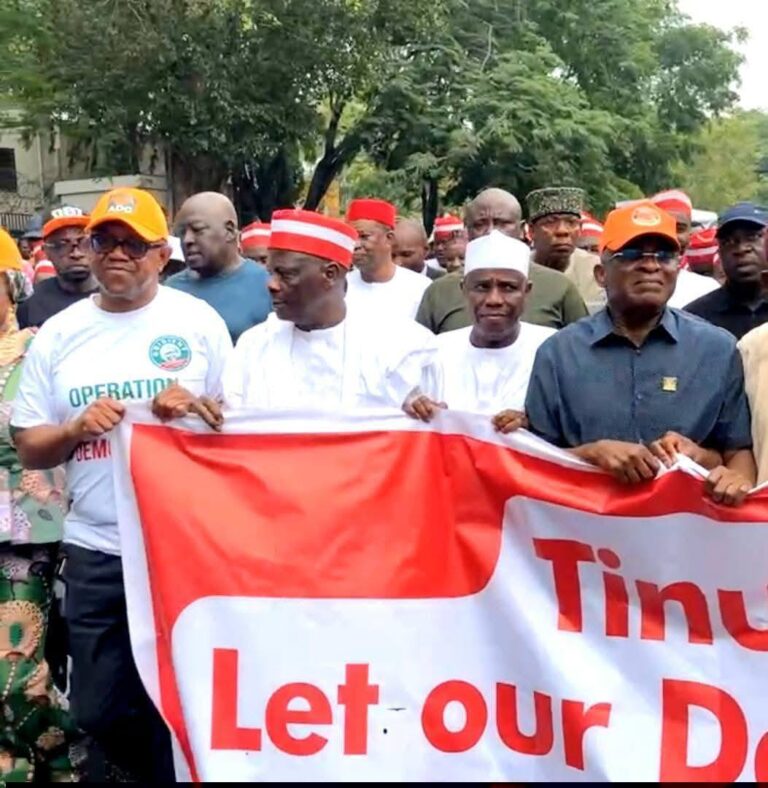
The leadership of Mark’s ADC faction on April 8, protested against the electoral body and its chairman asking him to vacate office.
The rally featured Mark, former vice president Atiku Abubakar, former governors Rauf Aregbesola, Peter Obi, Aminu Tambuwal among other dignitaries.
The ADC has continued to position itself as a major opposition platform ahead of the 2027 general elections.
GUNMEN attack in Angwan Rukuba, Jos North, on March 29 triggered a chain of reprisals that has left several people dead and many others injured. In this report, The ICIR examines how the attack unfolded and its impact on already tense communities.
Nusaiba Iliyasu sat curled into herself, her hijab pulled over her face as if to shield the world from her grief. Her shoulders shook as she cried relentlessly, her voice faint and broken. She could barely bring herself to look at the dozen people gathered in her parlour to console her, let alone speak to them.
Nusaiba Iliyasu, mourning the death of her husband. PC: Mustapha Usman/ICIR
Nusaiba had just lost her husband, Abubakar Yusuf, in a reprisal attack that followed the Sunday, May 29 attack in Plateau state. The father of her children had left home on Sunday evening, telling her he was going to see a man identified as Ali to deliver money related to their tomato business in Flamingo.
Hours later, Nusaiba said his husband called to inform he was on his way back. But he did not make it home that night. The mother of three was confused and could only pray that his husband make it home the next day. By the next day, she received a call from an unknown person that her husband had been killed around Angwa Rukuba, in Jos North LGA.
Although Yusuf did not survive, his friend Abdullahi Abubakar, who had ridden the motorcycle alongside him, made it out alive. Abubakar said it was around 7 p.m. that evening and they were heading back from Flamingo after settling the tomato deal with Ali.
Hours earlier, they had passed through the same route without any sign of unrest. By the time they were heading back, Angwan Rukuba was already reeling from killings of their people. They pushed forward, oblivious of the danger lurking ahead.
Abubakar said they sighted a crowd gathered around a vehicle. “We didn’t know what was happening,” Abubakar said, explaining that as they pushed forward, they were suddenly intercepted.
Yusuf, who was sitting behind him, was immediately hit on the head, dragged off the motorcycle, and beaten. He was not spared either. He was dragged alongside “more than ten people,” whom he said were already lying on the ground.
Abubakar showing one of the several injuries he suffered during the attack
Before he could make sense of the situation, a blow landed on his head and he collapsed. From that moment, everything became blurred. He could not tell what was being done to Yusuf. For over 20 minutes, he said, the beating continued relentlessly, without pause.
He was then labelled a “Hausa.” Although he tried to deny this and insisted he was an indigene of Anaguta, one of the attackers poured petrol on him and declared that he must die after they concluded he could not communicate properly in Anaguta’s local language, Iguta. In Plateau State, such attacks are often quickly framed along communal or religious lines, with Christian or Muslim dominated communities often interpreting such incidents as part of wider clashes when they are attacked by masked or unidentified group.
For decades, Jos North had sat on fragile fault lines shaped by questions of identity, land, and political control. Once celebrated as part of Plateau’s “Home of Peace and Tourism” identity, the area has gradually become a flashpoint. Many trace this shift to 1991, when the creation of Jos North Local Government under the military government of Ibrahim Babangida was seen by indigenous groups, particularly the Berom, Anaguta and Afizere, as tilting power toward Hausa-Fulani settlers. The decision deepened divisions that would soon turn violent, with early clashes in the 1990s laying the groundwork for recurring cycles of unrest, often tied to religion and ethnicity.
Meanwhile, in a desperate attempt to escape, Abubakar was able to slip into a nearby bush. He was chased, and eventually dragged out. He said he was beaten until he fell repeatedly and eventually lay still that would make his attacker believe he was dead.
That moment saved his life. When he later regained some strength, he removed his kaftan and remained hidden in the bush until he was fully conscious to finally step out of the forest.
Nusaiba’s husband was one of the several people killed by the irate youths in Angwan Rukuba in a reprisal attack that followed the Sunday attack in the town. It led to the killing of 26 persons from the town, which later rose to 33.
Videos of the reprisal attack and independent findings by The ICIR indicate that no fewer than three people were killed that night.
Angwan Rukuba bleeds on Palm Sunday night
It was supposed to be a great and trouble-free Sunday that evening on March 29, in Angwan Rukuba Jos North, Plateau State, but yet-to-be identified gunmen quickly spiralled the town into one of the deadliest nights the town has ever experienced.
Here is the exact location residents said the shooting started
Around 7:45 p.m., the attackers, who operated in groups of about six to seven, stepped out of a white vehicle at the Angwan Rukuba–New Jerusalem junction and opened fire on residents who had come out to trade and purchase provisions. Angwan Rukuba, a predominantly Christian community, is a diverse and vibrant settlement, with different ethnic backgrounds coexisting and engaging in trade.
Witnesses said confusion quickly set in, as residents initially mistook the gunfire for routine operations by the National Drug Law Enforcement Agency. But before they knew what was going on, the violence spread rapidly across multiple points.
Best Patent Medicine shop, where about three people were shot dead
At Nico Best Patent Medicine shop, three people were immediately shot dead. At George’s Provision shop, another four were killed, while one person was killed at Abdulsalam POS shop. Both George and Abdulsalam POS shop was one of the several shops close to the Angwan Rukuba-New Jerusalem junction where the assailants had come down from the car.
In another account, about five more people were shot in front of George shop, as the attackers continued firing at anyone caught in their path. The attackers moved through Angwan Rukuba Gari Awaye after the initial shootings. They retreated and repositioned along that side, killing people along their way before disappearing into the mountain.
Four people were killed in this shop manned by George
A community youth leader, Christopher Sani Kachura, told The ICIR that he and his team were on a routine community sanitation and anti-drug patrol when they first heard gunshots. Like many residents, who spoke with The ICIR, Kachura said they initially mistook the armed men for operatives of the NDLEA, who sometimes operate in the area and fire warning shots during operations.
According to him, the situation escalated when civilians realised the men were not security personnel but unidentified attackers dressed in camouflage.
Angwan-Rukuba youth leader, Christopher Kachura
“They began to shoot randomly… people started running everywhere,” he said, adding that several persons were hit before they could take cover.
By the time the attackers moved out through adjoining routes into the mountain, at least 26 people had been killed, according to Kachura, with additional victims later dying in hospital, pushing the death toll higher in subsequent reports.
Recent reports from sources indicate that at least 33 people have now been confirmed dead from the Sunday attack while several others are still being attended to in different hospitals.
Deaths, near deaths and more deaths
Mary Sunday did not immediately realise the gunshots they were hearing from the main road was coming from the ravaging gunmen who had killed dozens of people at the junction. That evening, she stood outside with two others, including Longwa Buba Lawrence, a 45-year-old father of three, when a man in camouflage approached and stopped just a few steps from them.
The gunmen were passing through Gari Awaye street, retreating into the forest. Gari Awaye was the street that houses Sunday’s family house.
Mary Sunday, one of the survivors of the Angwan Rukuba attack
Sunday said after seeing the man in security operative dress, they assumed it was routine. But Lawrence would soon ask whether the man was part of the NDLEA operatives that often patrolled the area but the man did not respond. Instead, he pulled out a gun and shot him twice at close range.
For a brief moment, Sunday said she was confused and did not know what to do. She then ran through a narrow corner that led to another house in the area. The third man, sitting alongside Sunday and Lawrence was chased down and shot at, but was fortunate to survive.
Lawrence was left on the ground as he struggled to breathe. He died before reaching the hospital.
Just a few steps away was Rhoda Ayuba who was still reeling from the pain of losing his only son during Sunday’s attack. She freaked out at the mention of the incident and was still trying to make sense of the loss.
Rhoda Ayuba. PC: Mustapha Usman/ICIR
She was inside her shop with her other children when she heard shouting and the sound of people running. She hurried her children indoors, but one of her daughters was left outside and had to take cover inside the shop.
“Then two of the attackers came. One stood downstairs while the other climbed the stairs toward the shop after seeing her go inside.
“At that point, one of my neighbours came out and asked them, thinking they were security operatives. He said, “Officer, is it drugs? I am talking to you, is it drugs?” The gunmen she said responded in Fulfude, before killing the neighbour.
“After they went down, they shot my neighbour and killed him. Immediately after that, they left the scene,” he narrated.
Mary’s son Promise Ayuba, killed by gunmen
It was only after they left that she was told her son had also been shot. Her son had gone out earlier to buy a recharge card when he was caught up in the attack. He was 23 years old and her only male child among four children.
Sunday and Ayuba were not alone. Elsewhere, Suleiman Abdulsalam was in his POS shop when the gunshots began. From his position, he saw one victim collapse but before he could close the shop, he said people began rushing towards his shop to seek refuge.
Abdulsalam’s shop has an exit door, which he quickly opened to allow them escape but not everyone made it.
Suleiman said the last man trying to get through was shot. However, he could hide behind the exit door before the assailant retreatd.
Shot in the ribs
Chinedu David, a 37-year-old pharmacy owner was shot in the abdomen when he was trying to close his shop that evening.
David was standing in front of his shop near the Angwan Rukuba police station when he first heard gunshots. After peeping outside and seeing people running for safety, he realised he needed to quickly close his shop.
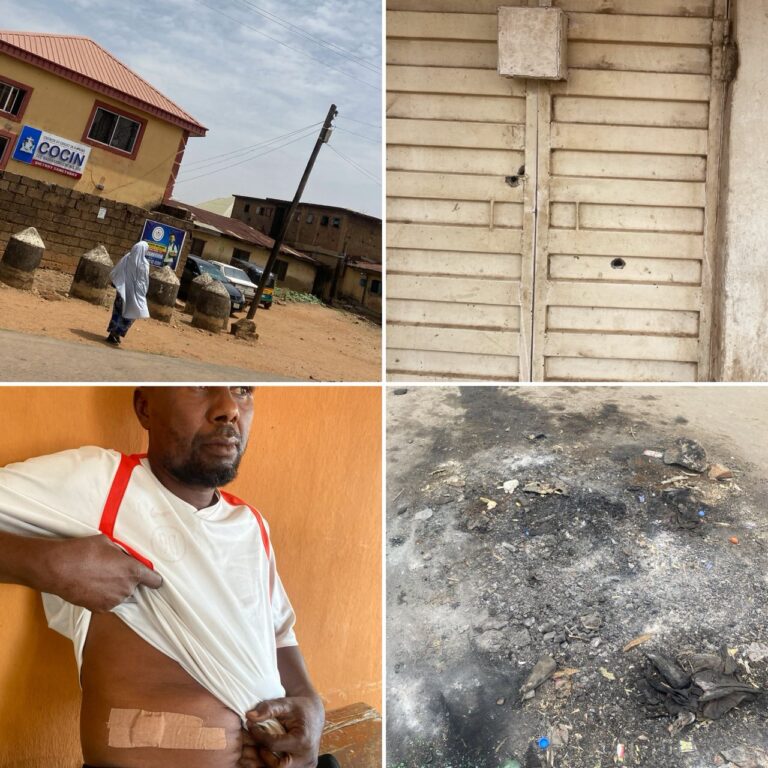
Another survivor Chinedu David showing gunshot injury sustained during the attack
In a split-second decision, he tried to pull down his shop door to secure himself and the people inside, including his mother who was with him at the time. But before the door could be fully shut, bullet struck him close to the ribs.
Despite being injured from the gunshot, Chinedu said he managed to escape as the attackers continued shooting nearby. He applied pressure to his wound to control the bleeding and made his way down the road while the shooting continued behind him.
He was later helped by a commercial motorcyclist who took him first to Ola Hospital. But when they found no doctor on duty, he was rushed again to Bingham Teaching Hospital, where he eventually received treatment.
The reprisal and the uproar in Jos north
The ICIR reports that following the attack and the Sunday night reprisal that led to the killing of at least three people, the state government swiftly imposed a 48-hour curfew in the state. The curfew was later relaxed on Tuesday March 31, from between 8am to 3pm. This allowed irate youths on both sides to attack each other on Wednesday, April 1.
While several attacks were reported in different part of Jos North on Wednesday, there are different accounts of how the unrest started in Angwan Rukuba, and its bordering communities Nasarawwa Gwom and Duala, which are basically Muslim communities.
Accounts from residents of the Angwan Rukuba showed that the unrest started after a commercial bike man, with passengers, was forced out of the community in their attempt to gain access. Other residents also said they saw a bike man around their ECWA church with local guns on that morning, which made them stand up against them.
But residents of Duala and Nasarawwa Gwom communities claimed otherwise. Several residents who spoke with The ICIR said they moved to the Duala junction, which borders the two communities after seeing one of their vigilantes (local security) being chased by Angwan Rukuba youths, with blood all over his body. In another account of residents living at the Nasarawa Gwom, some water vendors who had also pushed water into the community were also harassed.
The ICIR could not independently verify which of the competing accounts from both parties is accurate. However, at least one person, identified as Alkasim Umar Hussaini, was killed at Duala Junction, while 15 residents, including bystanders in the area, were said to have suffered severe injuries, including gunshot.
COCIN church damaged by irate youths of Duala and Nasarawa Gwom.
Sources from Angwan Rukubu said no death was recorded on their side, except for the Church of Christ in Nations (COCIN) at Duala Junction, which was attacked, and several members living in the church quarters who were beaten by Duala youths.
The ICIR made several attempts to speak with the affected staff, including visits to the host community, but those efforts were unsuccessful. Church members who promised to link the reporter with the victims said the affected persons had not yet returned to the quarters and could not be reached at the time of filing this report.
Beyond Angwa Rukuba, The ICIR identified two Christians – Stephen Joshua Dako and Adeyemo Temitope – who were attacked and killed along Bauchi road and opposite the University of Jos permanent site gate respectfully.
Father, son shot multiple times defending their home
For Abas Aliyu, the memory of a previous attack on his home was still fresh when gunfire erupted again in Angwa Rukuba junction on Wednesday, April. This time, he and his son would both leave with bullet wounds. He said they were lucky the bullets were shot from a local gun.
Abas Aliyu, with a hospital scan showing a bullet lodged in his ribs
Aliyu said he was inside his house at the junction, very close to Angwan Rukuba but falls within Duala, when he began to hear shouting from outside. The noise immediately reminded him of an earlier crisis during which part of his home was burned. Fearing a repeat, Aliyu stepped out to see what was happening.
Outside, he met his first son, Huwaiz, and a few others. Together, they moved across the road and stood in front of the house, trying to understand the situation and, as they would later explain, protect their property from being attacked again.
They were still standing guard when the shooting started.
“We were just standing there when the shooting started,” Aliyu said. “They shot me in my stomach and they shot my son in three places.”
Huwaiz Abas, said he was asleep when he heard the commotion. “I stepped out and stood in front of the house to defend it from being burned like last time,” he said, explaining that their home sits at a central point linking Angwa Rukuba and Duala junction.
While standing alongside his father, Abas said he heard a sharp pain in his hand, then leg. “I heard a gunshot and felt a sharp pain on my hand, then my leg, and then my thigh. I was shot three times,” he said.
Abas with three gunshots injury
Aliyu said the scene quickly turned chaotic as blood poured from his son’s wounds. “Blood was coming out from his mouth… everywhere,” he said. With no time to process what had happened, they fled the area in search of help.
They were eventually taken to Ola Hospital for initial treatment before being referred to Bingham hospital for further care. Days after the attack, Abas said he is still living with the pain.
While Aliyu and Abas might just have been unfortunate to have lived close to the area, some other victims participated in the unrest on that day.
Umar Yahaya said he was sitting at the junction when he saw a vigilante member being chased by Angwa Rukuba youths, who were beating, and stoning him. He said residents rushed in to rescue the victim and others caught in the violence.
Yahaya said the confrontation quickly turned chaotic, with multiple people sustaining injuries during the unrest. He added that he did not immediately realise he had been hit by a bullet until soldiers arrived and he was taken to the hospital, where he saw blood from his wound.
Youth corper killed by mob as violence spread
The Wednesday violence flared up as hoodlums attacked motorists and passers-by in other parts of the state capital. During the attacks, The ICIR confirmed that dozens of people were injured while a few were killed from both sides. Independent findings showed that the violence spilled into Bauchi Road, Gada Biu, and the University of Jos permanent site axis.
Youths were seen throwing stones at security personnel, who responded by firing into the air to disperse the crowd and restore calm. Reinforcement teams were later deployed to douse the tension. The most affected areas included the University of Jos axis, Bauchi Road, Farin Gada, Tina Junction, Chobe, and Farin Gada Junction.
As the unrest spread across these flashpoints, many residents found themselves trapped in sudden waves of violence that disrupted movement and forced people to flee for safety. It was within this wider chaos that a National Youth Service Corps (NYSC) member, Stephen Joshua Dakup, was caught while travelling through Jos on his way to Bauchi State.
Dakup’s obituary image
A family representative Julius Joshua told The ICIR that Stephen Joshua Dako, 29, was serving in Toro Local Government Area of Bauchi State and had been trying to return to his place of assignment, when he was caught up in the violence along Bauchi Road in Jos North.
According to him, Dakop was inside a commercial vehicle when it was intercepted by irate youths during the violence. The family source said another corps member in the same vehicle was also attacked as passengers were targeted indiscriminately. “He was crying, saying he is a corps member, but they did not listen,” the source said.
The family would later learn about his demise later that evening after an NYSC staff member contacted them. Subsequent checks at the Jos General Hospital and its mortuary indicated that bodies had been brought in from the unrest, including Stephen’s, though the total number of casualties from the specific attack remained unclear.
Father mourns 25-year-old son killed in Gada-Biu
Ahmed Mohammed, a 60-year-old father of seven, sat with his kinsmen against a sun-baked wall on Friday, April 3, when The ICIR met him at his home in Kwanan Shagari. His eyes were swollen from hours of crying after losing his son, AbdulBasi on Wednesday, April 1.
At several points, he paused, wiping his tears with the edge of his garment, but the tears did not stop. The pain was too much for Mohammed to bear, and he could only ask what his boy’s fault was to be killed in such a cold-blooded manner.
Ahmed Mohammed mourning his late son among in front of his house
Abdul Basi had set out on Wednesday like any other day to carry on with his transport business. He rode his tricycle and conveyed passengers along the route toward Duala. But he never made it past Gada Biyu.
According to his father, the attack happened in Gada Biyu where they attacked and hit him with an axe. “The ladies jumped from the motorcycle when they saw what was happening.” He said police officers later arrived at the scene and rushed his son to a hospital.
Ahmed said before his people got to the hospital, his son was already dead. AbdulBasi’s tricycle was also burnt after his killing.
He added that despite reporting the incident and submitting details to the police, no authority has reached out to the family.
Authorities say investigation ongoing
The Nigeria authorities have said that investigations into the killings are ongoing, with the Federal Government directing security agencies to identify and apprehend those responsible for the Angwan Rukuba attack.
On Tuesday, April 1, the Minister of Information and National Orientation Mohammed Idris, described the attack as “tragic” and said there would be no safe haven for those behind it.
According to him, ongoing security operations in Plateau State are already generating actionable intelligence, with assurances that perpetrators would be brought to justice.
The government said troops had been deployed under Operation Enduring Peace, with security forces conducting search-and-clearance operations, securing key routes, and intensifying surveillance across affected areas.
MTN Group, in partnership with the University of Johannesburg (UJ) and the African Editors Forum (TAEF), seek entries to the Pan-African Media Innovation Programme (MIP), a continental initiative to equip journalists with the skills, tools, and networks required to navigate a rapidly changing information environment.
Launched by MTN Group in partnership with the University of Johannesburg (UJ) and the African Editors Forum (TAEF), the programme builds on the success of the MTN Nigeria MIP and expands it across MTN’s footprint.
MIP will offer a certified 12‑week curriculum that blends online academic learning with immersive, in‑person engagement in Johannesburg. Fellows explore digital transformation, media sustainability, ethics and law, entrepreneurship, and the influence of emerging technologies on Africa’s information ecosystems.
Applications are open to mid- to senior-level journalists, editors and media practitioners from MTN markets.
The deadline for applications is April 30, 2026. Interested applicants can apply here.
UNITED STATES President Donald Trump has intensified his criticism of Pope Leo XIV, accusing the pontiff of being “weak on crime” and “terrible for foreign policy” in a growing public feud tied to the US war with Iran.
In a remark to reporters and subsequent lengthy social media post on Sunday, April 12, Trump said he was “not a fan” of the Pope and took issue with his calls for de-escalation in the Middle East.
The president argued that he did not want “a Pope who thinks it’s OK for Iran to have a nuclear weapon,” while also criticising the pontiff’s views on US actions abroad, including Venezuela.
“We don’t like a Pope that’s going to say that it’s OK to have a nuclear weapon. … He’s a man that doesn’t think that we should be toying with a country that wants a nuclear weapon so they can blow up the world,” Trump reportedly told reporters, adding, “I’m not a fan of Pope Leo.”
In the subsequent X post, Trump insisted he was carrying out the mandate for which he was elected and accused the Pope of aligning with political opponents.
“I don’t want a Pope who thinks it’s OK for Iran to have a Nuclear Weapon. I don’t want a Pope who thinks it’s terrible that America attacked Venezuela, a country that was sending massive amounts of drugs into the United States and even worse, emptying their prisons, including murderers, drug dealers, and killers, into our country. And I don’t want a Pope who criticises the President of the United States because I’m doing exactly what I was elected, IN A LANDSLIDE, to do, setting Record Low Numbers in Crime, and creating the Greatest Stock Market in History,” he wrote.
Trump further questioned the Pope’s emergence, saying that “Leo should be thankful because, as everyone knows, he was a shocking surprise. He wasn’t on any list to be Pope and was only put there by the Church because he was an American, and they thought that would be the best way to deal with President Donald J. Trump.”
Trump’s comments followed recent remarks by Pope Leo XIV, who has repeatedly urged restraint and peace amid escalating tensions between the US and Iran.
I don’t fear Trump’s administration – Pope
Addressing journalists aboard a papal flight to Algeria at the start of an 11-day trip to Africa, the Pope, on Monday April 13, said he would not be drawn into a political confrontation.
“I have no fear of the Trump administration,” he said, adding that his message was rooted in the gospel and focused on peace and reconciliation rather than politics.
The Pope emphasised that his comments on global conflicts were not directed as personal attacks but as moral appeals. “We are not politicians… the message of the gospel is very clear: blessed are the peacemakers,” he said.
Pope Leo XIV has been a consistent critic of war rhetoric, previously condemning Trump’s warning that “an entire civilisation would die tonight” as “truly unacceptable.” He warned against what he described as a “delusion of omnipotence” driving conflicts, including the ongoing war involving Iran.
The Pope also criticised hardline US immigration measures, questioning whether policies he described as ‘inhuman’ align with pro-life values.
NIGERIA’s Minister of Finance and Coordinating Minister of the Economy, Wale Edun, has said that Nigeria’s economy is surviving the economic shocks triggered by the US-Israel-Iran conflict.
A statement on Monday, April 13, by Special Adviser on Media and Communications to the Minister, Ogho Okiti, said the global economic shock had impacted the “government’s economic reform plans for wealth creation and lifting millions out of poverty.”
Edun emphasised that Nigeria was not insulated, but more resilient, citing some reforms such as the crude-for-naira policy and increased oil production as supportive and economically impacting policies.
“The reforms have better positioned Nigeria to navigate the challenges posed by the current geopolitical crisis”, he added, noting that the next phase of Nigeria’s economic strategy would focus on scaling private investment, unlocking domestic capital markets, driving job-rich growth, and leveraging regional integration (AfCFTA).
According to the minister, the government remains resolute and is working harder to maintain macroeconomic stability, attract investment to drive inclusive growth, and invest in human capital and social protection.
Commenting further on global economic uncertainty, Edun, who heads Nigeria’s delegation to the International Monetary Fund (IMF) Spring Meetings, which commenced today, noted that at a critical time of economic transition, “the shock compounds high fuel prices, increasing food costs, and broader inflationary pressures, and places further strain on households and businesses.”
Edun also said that the government was accelerating economic growth and reforms in a difficult environment shaped by external shocks, domestic price and inflation pressures.
“As an oil producer, the government recognises that a longer duration of the conflict means improvements in foreign earnings and fiscal revenues. However, the shock comes as Nigeria seeks to strengthen its macroeconomic stability and resilience”, he said.
He added that volatility in global energy markets was impacting domestic energy-related commodities such as diesel, fuel and gas prices with direct implications for Nigerians’ standard of living.
He explained, however, that the government was maximising Nigeria’s crude oil revenues, foreign exchange earnings, fiscal revenues and deploying them for the benefits of Nigerians.
“The government continues to maintain a liberalised foreign exchange market to ensure continuous smooth capital flows. The policy has been validated by Nigeria’s reclassification as a Frontier Market by FTSE Russell, effective from September 2026.
“Improved and continuous close coordination across fiscal, monetary, and trade policies resulted in the recent tariff changes that reduce tariffs on critical industrial inputs to support production and expand international trade.
“These actions reflect a government focused on stabilisation, resilience, and growth continuity”, he said.
It would be noted that the International Monetary Fund (IMF), in a statement ahead of the 2026 Spring Meetings had said it anticipated up to $50 billion in emergency financing might be needed for countries hit by balance-of-payments shocks.
More than 1,000 delegates from 190 countries will be arriving in Washington for the World Bank and IMF Spring Meetings.
This year’s spring meeting is themed “Anchoring Stability and Promoting Balanced Growth”, coming amidst new headwind: the economic fallout from the Middle East war.
POPE Leo XIV has begun his first African tour, a 10 to 11-day visit aimed at promoting peace, interfaith dialogue and development across the continent.
The visit, which began on Monday, April 13, embarked on a mission focused on promoting peace and interfaith dialogue in four countries, namely Algeria, Cameroon, Angola and Equatorial Guinea. The itinerary covers about 18,000 kilometres and includes visits to 11 cities.
The Vatican says the broader purpose of the tour is to encourage dialogue in conflict-prone regions, highlight the rapid growth of Catholicism in Africa, and address challenges such as corruption, inequality and the misuse of natural resources in countries, including Angola and Equatorial Guinea.
The trip is taking place amid comments from the United States President Donald Trump, who criticised the Pope’s stance on the Iran conflict. Despite this, the Vatican has maintained that the visit is humanitarian and spiritual.
Italy’s Prime Minister Giorgia Meloni expressed support for the mission, saying it could promote peace and support Christian communities.
The ICIR reports that although Nigeria is not included in the itinerary, the Pope has continued to engage with the country’s situation. In Vatican remarks, he listed Nigeria among places where Christians face “severe threats and extreme cruelty,” referring to violence in Benue, Plateau states and other parts of the Middle Belt.
The Pope also has a personal link to Nigeria, having worked at the Apostolic Nunciature in Lagos in the 1980s. Nigeria has not hosted a papal visit since Pope John Paul II visited in 1998.
The Vatican maintains that the tour is focused on peacebuilding and strengthening faith communities across Africa.
THE Nigerian Meteorological Agency (NiMet) developed early warning systems and agro-meteorological advisories, but Sokoto rice farmers say they never received forecast warnings, losing billions in investments to extreme climate shocks. This highlights the disconnect between climate services and at-risk communities, as the communication gap persists.
It was December 2025. Ibrahim Jingilma, 70, rested his old, rusted hoe on his shoulder as he walked home from his rice field after an early morning of weeding. He had been clearing dried rice straw, preparing the land for another planting season. Grief lingered, following him back from the farm. Months earlier, floods had swept through their fields in Shinaka, Goronyo Local Government Area of Sokoto State in northwest Nigeria. During the chaos, his son was killed after drinking from a contaminated stream while participating in a dredging effort.
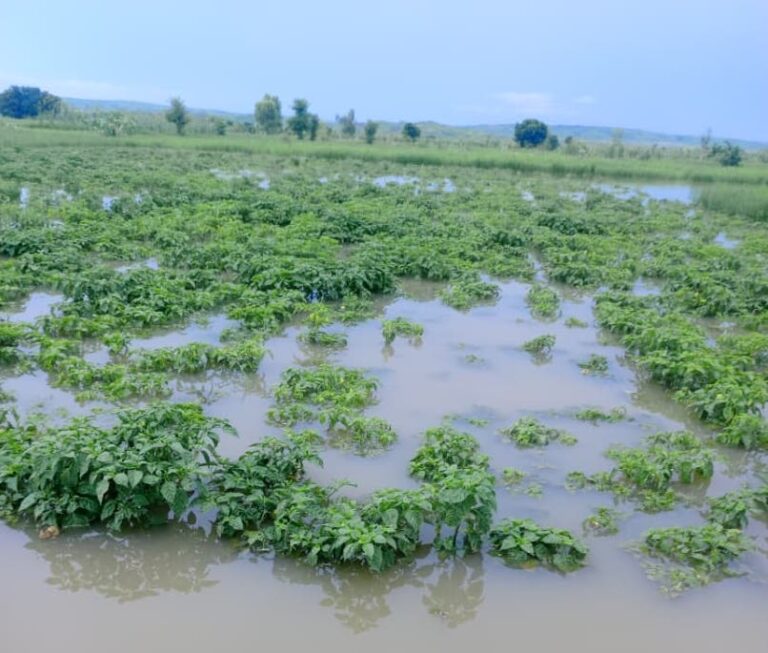
Jingilma’s loss is not unique. His story reflects the fate of at least 249 other farmers in Shinaka whose investments were washed away by flooding. The year was marked by delayed rains and prolonged dry spells that weakened crops, making them vulnerable to the floods.
Many large- and small-scale rice producers have been plunged into poverty. Their planting calendars have repeatedly failed, creating a pattern of loss that has eroded their resources over time, from gradual depletion to complete ruin.
Rice farmers describe an ideal seasonal calendar: in the 1990s, rice planted in March matured within four months and was harvested by July — before heavy rains intensified. “If you planted rice in March, you’d harvest by July. You’d avoid the floods,” he explained. “But planting in June or July means harvesting in September or October — when the floods come.”
These traditional planting cycles, long relied upon by farmers, are becoming unreliable due to delayed rainfall and prolonged dry spells, causing significant yield losses.
Jingilma and other farmers in his community hadn’t heard of NiMet or received climate advisories, despite being members of rice farmers’ associations.
They recognise the National Emergency Management Agency (NEMA), which visited after the floods to document victims and promise support. However, the promised assistance has been slow to materialize, leaving many waiting for relief.
Jingilma, a rice farmer from Shinaka, leaned against a tree as he recounted the devastating losses he suffered in his community. Photo Credit: Abdullahi Muritala
In 2025, Jingilma invested ₦5 million (~$3,600) in six hectares of rice fields — three owned by him, three by his children. He financed much of this with loans. In September 2025, floods destroyed the crops, repeating the previous year’s disaster. The loss was life-threatening, transforming Jingilma from farm owner and employer to labourer on others’ farms, struggling to survive and repay debts.
Labour in vain
Data shows that Nigeria’s rice output declined to 5.23 million metric tons in the 2024/2025 season — the lowest level recorded in four years. Even in previous years, domestic production has consistently fallen short of national consumption demands, despite the vast scale of farming activities across the country.
A recent PeacePro report estimates farmers lost ₦5 trillion ($4 billion) over two farming seasons due to missed or inaccurate meteorological forecasts from NiMet. In 2025, NiMet received ₦9.82 billion for operations, including climate info dissemination. However, in 2026, it struggled to defend its budget before the National Assembly, with committee members recommending capital budget cuts.
Despite billions allocated for climate services, and farmers unaware of the agency’s existence, the disconnect raises deeper questions about accountability within Nigeria’s early warning architecture.
Forecasts exist, but don’t reach farmers
Ibrahim Abubakar, Chair of the Rice Innovation Centre established by AfricaRice and Chairman of the Gada/Goronyo Farmers Management and Delivery Centre, describes the challenges facing farmers in Sokoto as multi-layered. While acknowledging broader systemic problems, he noted that NiMet has never directly engaged with farmers in his network.
Abubakar highlighted structural challenges with the Goronyo Dam, managed by the Rima Basin Development Authority. The dam (947 million cubic metres capacity) supplies irrigation channels across Sokoto, Kebbi, and Zamfara states. While it serves as a critical irrigation source (with farmers paying fees), it has a history of emergency discharges that flood farmlands. In 2025, over 600 hectares of rice fields were flooded in Goronyo due to water releases. Officials discharge water when inflow exceeds safe capacity to prevent structural damage.
“Whenever management learns that the water reaches a certain level, they don’t have any other option than to release it,” Abubakar said.
Compounding structural issues are concerns about NiMet’s inconsistent weather forecasting. Abubakar suggests NiMet should engage directly with farmers’ leaders to prevent losses. “NiMet should establish synergy with farmers’ leaders for direct contact,” he said. Farmers cooperate when properly engaged, but insecurity has weakened local coordination. Farmer associations now struggle to convene, with some members not meeting for months
Shared fate in Gada
In Gada communities neighbouring Goronyo, farmers face similar hardship. In villages such as Ballagu and Tsitse, residents have been devastated by a combination of climate extremes and insecurity.
In 2025, Shuaibu Muhammad, 52, was not only a victim of flooding; he was also a survivor of bandit captivity. In 2024 alone, he had fallen into the hands of armed groups twice. Muhammad was weeding his farm along the Tsitse community, where he had planted rice, garlic, onions, and pepper, when armed men attacked the area. He did not receive early warning of the invasion. He was abducted directly from his farm.
Dried rice straw lies scattered across an abandoned field after floodwaters swept through the area. Photo Credit: Abdullahi Muritala
Muhammad spent two months in captivity before his release was secured after his family paid a ₦5 million ransom. The money was raised through the sale of family inheritance and community contributions. During his captivity, everything he had planted was lost. By the time he returned, the crops had withered due to lack of irrigation.
Within a week of his release, his elder sister was also abducted, forcing him to raise yet another ransom. Despite the trauma and financial devastation, Muhammad cannot abandon farming. It remains the primary source of livelihood for most families in Sokoto.
In 2025, disaster struck again. Floodwaters swept through his fields, destroying crops cultivated at an estimated cost of ₦500,000. He echoed the concerns raised by other farmers, stating that they had not received any advisories from NiMet. Although a lawmaker who visited the community mentioned the likelihood of delayed rains that year, the forecast did not accurately capture the severity or duration of the delay.
While Muhammad many farmers from his community struggle to rebuild and prepare for another planting season, they remain trapped in uncertainty — unsure how climate change will unfold and whether their next harvest will yield anything at all.
We do not take information directly to farmers-NiMet
Responding to concerns about the climate information gap, the Nigerian Meteorological Agency (NiMet) acknowledged that it does not communicate directly with farmers. James Adamu, Assistant General Manager of Agricultural Meteorology and Technical Assistant to the CEO of NiMet, said the agency operates through established government channels.
“NiMet works with the extension agents in the state. Every year we give our information to the state ministry of agriculture and the state Agricultural development project in Sokoto. They are saddled with the responsibility of taking this information to the farmers.”
According to him, dissemination through extension services remains “the best way” to reach rural communities, as Nigeria is too vast for the agency to cover every farming settlement. “NiMet is not designed to go to every nook and cranny; we rely on the extension system.”
In Sokoto specifically, NiMet says it has gone beyond routine advisory releases. James pointed to a series of radio programmes conducted in the state to raise awareness about climate prediction and early warning systems. He also highlighted a partnership project with the United Nations Development Programme (UNDP), which established automatic weather stations and climate peace hubs in selected local government areas, including Ilela and Wamakko.
Cracked earth surrounds struggling rice stalks in Shinaka after a heavy flood. Photo credit: Abdullahi Muritala
“We have a climate peace hub where we share information,” he explained, adding, “Last year we were there like three times. This year we’ll be there again to share information on early warning.” A third location initially selected in Kebbe LGA had to be reconsidered due to insecurity,” he added.
On the question of monitoring whether farmers actually receive and use the advisories, James maintained that feedback is expected from extension services. “You don’t expect NiMet to start going to every community. It is the role of extension. That is what they are paid to do.”
Acknowledging the limitations of the current structure, NiMet says it is designing a more direct communication system using mobile technology. The agency is in consultation with partners to launch an SMS-based dissemination platform that would deliver climate advisories straight to farmers’ phones.
“We are trying to design a project whereby farmers will be getting SMS in their location,” James said, adding, “For us to do that, we need the database of farmers in the states. NiMet will not go around looking for farmers. The state has to provide the database.”
While critics argue that the absence of direct outreach has contributed to farmers’ vulnerability, NiMet insists it has fulfilled its mandate within the framework of Nigeria’s early warning system. “We make sure we release forecasts on time and make them public. The media also has a role. Extension has a role. It is not just NiMet, James said.”
The agency’s position underscores a broader institutional tension. While climate information is being generated and formally released, the pathway between forecast and farm remains uneven — leaving many farmers exposed to the very risks the advisories are meant to reduce.
All efforts to reach the “extension” Sokoto Ministry of Agriculture proved abortive, a WhatsApp text sent to the commissioner was not responded to as of the time of this publication.
Expert calls for urgent climate-smart reforms
Deputy Director at the Centre for Biotechnology and Plant Tissue Culture, S.B. Haliru, describes the situation as a serious structural gap.
“The issue of information gap is very, very critical. It has to be addressed,” he said.
According to him, while climate change itself may be beyond human control, the scale of farmers’ losses is not inevitable. Sokoto, located in Nigeria’s semi-arid belt, now experiences increasingly unpredictable rainfall, delayed onset of rains, and flash flooding. Without timely and localized climate advisories, farmers rely on traditional planting calendars, only to watch their crops fail.
S.B. Haliru, Deputy Director at the Centre for Biotechnology and Plant Tissue Culture.
The consequences have been devastating. Farmers recounted losing hundreds of millions in a single season due to flooding. Haliru notes that such cases reflect how climate extremes, combined with limited access to actionable information, are steadily eroding farmers’ investments.
“Whatever the farmer is doing, the last target — all the resources spent — is for him to get yield, and most importantly, high yield,” he explained. If there is total loss, then everything is gone.”
Drawing from international examples, Haliru points to climate-smart agricultural practices as part of the solution. In parts of Asia where flash floods are frequent, plant breeders have developed submergence-tolerant rice varieties capable of surviving days underwater.
“They develop submergence-tolerant rice varieties for farmers,” he said, adding, “After the flood, these varieties will sprout again and still give farmers yield.”
He argues that Nigeria’s research institutions have the mandate to improve crop varieties but must intensify efforts to make climate-resilient seeds accessible to farmers.
In regions like Sokoto where rainfall is unpredictable, Haliru recommends early maturing crop varieties to reduce risk. “The rainfall is very much unpredictable, so the only option is to cultivate early-maturing varieties. At least you can get something out of it,” he said. While acknowledging that some climate events are unavoidable, he emphasized mitigation: “Some of these issues are natural — something we do not have control over. The only way is to try as much as possible to mitigate the problem.”
Beyond climate shocks, farmers are also battling mounting economic pressures. The removal of petroleum subsidies has increased the cost of fertilizer and transportation, pushing up production costs. At the same time, the influx of imported rice from neighbouring countries has driven down the price of locally produced rice.
“The farmers buy inputs at a very high price, and when they harvest, what they get in return is less simply because of importation,” Dr. Haliru said. He warned that if the imbalance persists, farmers may withdraw from production altogether. If they produce and they are at a loss, some may decide to stop production. And we are going to be in trouble in the next couple of years.”
To bridge the information gap, Haliru advocates stronger collaboration between NiMet and state-level agricultural development projects. Climate advisories, he says, must be translated into local languages and delivered directly to farming communities. “There is no way NiMet can do this alone in isolation. They have to collaborate,” he stressed.
However, insecurity remains another obstacle to effective outreach. Some climate awareness programs have reportedly been disrupted due to security concerns in parts of the state.
Haliru insists that resolving insecurity requires political will at all levels of government. “There must be political will to end the insecurity issue. Otherwise, we will continue to face this problem,” he said.
Sabon Birni caught between insecurity and climate shocks
In Sabon Birni LGA of Sokoto State, the crisis presents a double burden. While much of Sokoto East continues to grapple with insecurity — with some communities reportedly paying levies to bandits before accessing their farmlands or risk being abducted — the region remains one of the hardest hit in recent years.
Farmers here must contend not only with the growing threats of climate change but also with the constant fear of kidnapping while working on their fields. In 2022 alone, no fewer than 42 communities were reported to have paid ₦70 million to the Bello Turji gang as protection money after many villages were attacked and sacked.
“There was a time we were on our way to the farm. When we reached the bridge, we were told that bandits were coming,” he recalled. “I insisted I had to go to the farm. As I crossed the bridge, I just heard gunshots and turned back. I had never run like that day — just to escape with my life.”
Sabon Birni farmers gathered on their farmland after floodwaters submerged their crops. Photo Credit: Farmers.
The attack forced Tafida to stay away from his farm for a period while he assessed the security situation before returning. He explained that a group of farmers later had to travel back to their fields accompanied by local vigilantes for protection. By the time they were able to resume access, an unexpected flood had already washed away the rice farm.
Tafida said he invested ₦300,000 in cultivating the rice, all of which was lost to the flooding. Although the temporary pause in visiting the farm may have contributed to the extent of the damage, he noted that the rainfall occurred earlier than expected based on the forecast he had heard on the radio.
In previous seasons, he harvested up to 30 bags of rice alongside guinea corn. This year, he harvested nothing.
“Like many other farmers, he said he had never received a forecast directly from NiMet. The only weather information he accessed came through a radio programme, and the last time he relied on it, the prediction proved inaccurate.”
For farmers like Tafida, survival now depends on navigating two unpredictable forces: the rising waters that wash away their crops and the armed groups that threaten their lives. In Sabon Birni, climate risk and insecurity do not operate separately — they collide, compounding losses and narrowing the choices available to those who depend on the land.
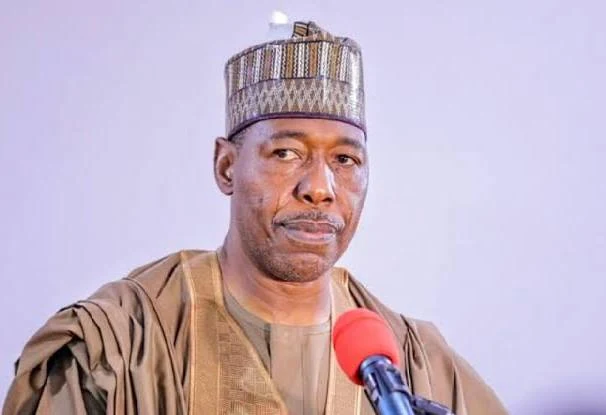
GOVERNOR Babagana Umar Zulum of Borno State has revealed that the state government shut down Jilli market five years ago for allegedly being a hub for insurgents and their logistics suppliers.
This statement comes after an airstrike at the market claimed over 50 lives on Saturday, April 11.
In a statement issued Sunday, April 12, by his Special Adviser on Media, Dauda Iliya, Zulum warned residents against aiding or harbouring Boko Haram insurgents.
“I have been properly briefed on the airstrike carried out by the Air Component of Operation Hadin Kai on Jilli market, a border town between Borno and Yobe states. Let me state categorically that the Borno State Government closed Jilli and Gazabure markets five years ago.”
“I am in close consultation with the Government of Yobe State and the military hierarchy on the matter,” he said.
Zulum explained that Borno State maintains close coordination with the military and security agencies before resettling communities or reopening markets, especially in insurgency-affected areas
He reiterated his administration’s commitment to safeguarding citizens and collaborating with security agencies to restore peace and stability.
The governor urged residents to remain vigilant and provide credible information to aid military operations.
An earlier report by The ICIR revealed that a military airstrike on Saturday night left dozens of people dead in Jilli axis, Borno State.
The strike, which targeted a village market, occurred as Nigerian military jets were reportedly pursuing Islamist militants in the northeast.
The incident took place in a border community between Yobe and Borno states, a region that remains the epicentre of a long-running insurgency.
Eyewitnesses revealed that there were several civilian casualties affected by the military airstrike, which has attracted criticism, with former Vice President Atiku Abubakar condemning the collateral effects of the airstrike on innocent civilians.