Home Blog Page 505

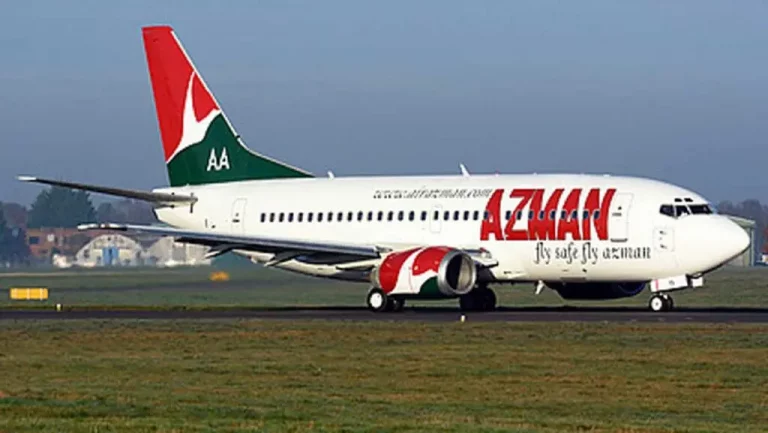
Azman Air refutes reports of indefinite suspension of operations

0

AZMAN Air Services Limited has debunked media reports of an indefinite suspension of its operations. 

The airline said this in a statement posted on its X handle on Sunday, August 25, signed by its accountable manager, Hadi Abdulmunafi.

According to Abdulmunafi, the airline anticipates resuming full flight operations very soon.

“We are currently finalising the maintenance of two of our aircraft, and we anticipate resuming our full flight operations very soon.

“The temporary pause in our services was a necessary measure to ensure the highest standards of safety and reliability for our valued passengers. We understand the inconvenience this may have caused and deeply appreciate the continued support and understanding of our customers,” he stated.

The ICIR reports that Azman Air’s clarification came following reports from various media outlets claiming the indefinite suspension of the airline’s operations.

The airline suspended operations in March 2023, stating that all four of its aeroplanes were undergoing maintenance abroad.

In August 2023, the airline placed its staff on “leave without pay.”

Azman Air reportedly resumed operations this year, but earlier this August, several media reported that the airline had again suspended operations.

Abdulmunafi emphasised that the airline team had been working tirelessly to expedite the maintenance process and was in the final stage.

“Azman Air is committed to providing safe, reliable, and efficient air travel services, and we are eager to welcome passengers back on board shortly.


READ ALSO:


“We will keep our customers and the public informed of any further developments through our official channels. Thank you for your patience and loyalty as we work towards resuming our operations at the earliest possible time,” he added.

Azman Air commenced scheduled operations in 2014 with two Boeing 737 aircraft, which grew to seven at its peak but later decreased to just four.

In September 2022, The ICIR reported that the Nigerian Civil Aviation Authority suspended Azman Air over its failure to renew its Air Operator Certificate.

Bauchi first-class emir dies after 46 years on the throne

0

A FIRST-CLASS emir in Bauchi State, Yunusa Muhammadu DanYaya has died after 46 years on the royal throne.

The palace authorities announced the news of his demise on Sunday, August 25. DanYaya, the Emir of Ningi, died in Kano aged 88 years.

According to a statement issued by the Secretary of the Palace, Usman Sule, the traditional ruler’s death occurred in a hospital, just two days after his return from a medical trip to Saudi Arabia.

Consequently, the Bauchi State Government has expressed profound grief over his demise, recognising his immense contributions to peace, unity, and development in the Ningi Emirate and the state.

Mukhtar Gidado who is the Special Adviser on Media and Publicity to the Bauchi state governor, Bala Mohammed, was quoted as saying that during the traditional ruler’s leadership, the emirate experienced notable advancements, and his commitment to preserving tradition, culture, and Islamic principles remained steadfast.

The statement partly reads, “Governor Bala Mohammed extends his deepest condolences to the immediate family of the late Emir, the Ningi Emirate Council, and the entire people of Bauchi State. We mourn with you in this great loss and pray that Almighty Allah grants the departed soul eternal peace in Jannatul Firdaus. May Allah also grant his family, the people of Ningi, and all those affected by this loss the strength and fortitude to bear it.”

The late traditional ruler’s funeral will be held today at 4:00 pm at the Ningi Emirate Palace, following Islamic customs.

He had a distinguished career, starting as a dispenser and progressing to hold prominent positions in various organizations, including the Ningi Emirate Council, Nigerian Tobacco Company, and Northern Nigeria Marketing Board.

He also served on notable committees, such as the National Constitutional Conference and Vision 2010 Traditional Rulers Sub-committee, and led organizations like the Environmental Health Officers Registration Council of Nigeria and Bauchi State Inter-Religious Council.

His achievements earned him the Officer of the Order of the Niger (OON) award.

Born in 1936, DanYaya was enthroned as Emir of Ningi in 1978, leading the emirate for over four decades.

SSS operatives arrest journalist, Soyinka at Lagos airport

0

OPERATIVES of the State State Service (SSS) have arrested an investigative journalist, Adejuwon Soyinka.

A concerned friend of Soyinka said he sent a distress message, stating that he was taken into custody shortly after he arrived from the United Kingdom, without being informed of the reason for his arrest, and has since been held in isolation without access to communication.

Adejuwon Soyinka, the regional editor of The Conversation Africa, was taken into custody at the Murtala Muhammed International Airport in Lagos on Sunday.

The message sent readsAdejuwon Soyinka has been detained by officers of the Department of State Security at the Muritala Muhammed International Airport in Lagos.

“The incident happened around 5.40 am on Sunday, the 25th of August, 2024, shortly after he arrived in Nigeria via a Virgin Atlantic flight from the United Kingdom.”

At the time of filing this report, no explanation had been provided by the security agency for Soyinka’s detention.

Additionally, it was said that Soyinka had not been contactable, as attempts to reach him via phone calls and messages had gone unanswered.

The spokesperson of the SSS, Peter Afunanya in a WhatsApp chat denied knowledge of the arrest.

However, an attempt to get more clarification from Afunanya yielded no result as he did not pick up his call nor respond to messages sent to his phone.

Attacks and harassment of journalists and other citizens by security operatives especially the police using the NPF-NCCC have remained a great concern in Nigeria.

Recall that on Saturday, August 24 the Nigeria Police Force (NPF) confirmed the arrest of a whistleblower Bristol Tamunobiefiri, also known as PIDOM.

This was disclosed in a statement by the Force public relations officer, Olumuyiwa Adejobi.

According to the statement, PIDOM was arrested on August 5, 2024, in his hotel room in Rivers State by operatives of the National Cybercrime Centre (NPF-NCCC).

Adejobi stated that the PIDOM was taken into custody due to accusations of “committing serious offences that undermine the integrity of government operations”.

He further alleged that multiple allegations had been made against the suspect, including unlawful possession, unauthorised disclosure of classified documents, cyber-related offences, and other charges

The ICIR reported in December 2023 how security agents abused their power and flouted the Nigerian Constitution by harassing 39 journalists in the line of duty, nationwide.

Four reporters with The ICIR were harassed by state actors in the line of duty that year.

Meanwhile, in 2024, the NPF-NCCC in Abuja invited and detained The ICIR’s executive director, Dayo Aiyetan, and reporter, Nurudeen Akewushola, over an investigation of sleazes in which its former Inspector-Generals were complicit.

The ICIR reported that a reporter Daniel Ojukwu was abducted by officials of the Intelligence Response Team (IRT) of the Inspector-General of Police (IGP) Kayode Egbetokun on Wednesday, May 1, two days before World Press Freedom Day.

His abduction only became known on Friday, May 3, after spending four days with the police in Lagos State.

On the orders of the IGP, Ojukwu was transferred by the IRT to the Nigeria Police Force National Cybercrime Centre (NPF-NCCC) in Abuja in the early hours of Sunday, May 5.

He was later released ten days later.

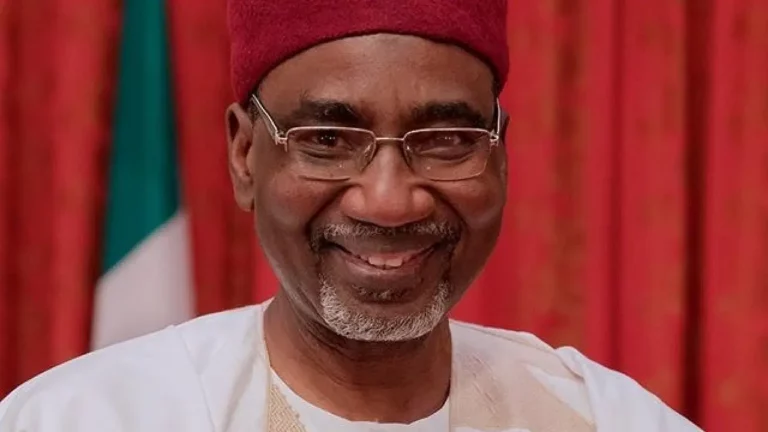
DG Nigeria Intelligence Agency, Ahmed Abubakar resigns after meeting Tinubu

0

THE Director General of the Nigeria Intelligence Agency (NIA), Ahmed Abubakar, is said to have submitted his resignation letter to President Tinubu.

The Nigerian Television Authority reported that Abubakar submitted his resignation letter to the President on Saturday, August 24.

At the time of reporting, the reason behind his resignation was unclear.

It was also stated that the Presidency had not released an official statement regarding the development.

After emerging from the meeting at Aso Presidential Villa where he tendered his resignation letter, Abubakar thanked President Bola Tinubu for allowing him to serve under two presidents.

‘It’s a routine thing from time to time to brief Mr President on situations and issues. Today is no exception.

“After the briefing, actually I tendered my resignation and graciously approved and accepted the resignation.

“I thanked him for giving me the opportunity to serve Nigeria under his transformational leadership for an extended period of 15 months which is very rare. To have the opportunity to serve two presidents at a stretch,”he said.

Commenting on how the president reacted to his resignation, he remarked, “I think it’s not for me to say this, I will be breaking protocols. Maybe the NSA or Mr president himself will say it but what I can tell you is that I am very very grateful for the opportunity the president gave me to serve the country under his leadership.

“The encouragement I got, the confidence he had in me and my service. The opportunity to listen to me, to read briefing notes and advice and so on. I think this is for me is everything. I have had the opportunity to mentor officers and staff, “he added.

He thanked Tinubu and promised to remain professional, as they were both dedicated to the country and noble causes.

He said there are many young officers in the NIA he has mentored who can lead the agency very well.

Former President Muhammadu Buhari approved the appointment of Abubakar as the substantive Director General for the NIA in 2018.

Abubakar was reappointed by Buhari in December 2021.

Before his appointment by Buhari, Abubakar, a seasoned Foreign Service officer, had served in multiple capacities, including as Buhari’s Senior Special Assistant on Foreign Affairs and International Relations, and had a brief stint as Senior Adviser at the Multinational Joint Task Force headquartered in Chad.

Abubakar’s resignation comes at a period when the security situation in the country is still at a dire stage with the kidnapping of innocent Nigerians for ransom still prevalent.

Can Tinubu’s government guarantee free press?

PRESIDENT Bola Tinubu’s government recently pledged its commitment to a free press in Nigeria as part of its response to a Daily Trust newspaper’s publication on the signing of the Samoa Agreement.

The report impelled an immediate response by the government, where it promised a free press in the country.

Though the newspaper later admitted publishing a ‘sloppy’ report, the debates on press freedom under Tinubu’s government have lingered.

Minister of Information, Mohammed Idris, addressed journalists in Abuja, alongside his Budget and National Planning counterpart, Atiku Bagudu over the report.

An excerpt from Idris’ address reads, “This administration has remained very tolerant of media criticism (and will continue to do so. And, of course, the administration will also continue to) guarantee citizens’ rights to freedom of expression (and the need for them to know the workings of government)…

“I have said it several times here and elsewhere that the administration of President Bola Ahmed Tinubu will continue to ensure that there is freedom of expression and that the press will have a free environment to practice what we believe is necessary for the continuous enthronement of democracy in our land.

“But let me say once again for reasons of emphasis that the administration of President Bola Ahmed Tinubu will not in any way, form or shape, do anything that would scuttle the freedom of expression in Nigeria.”

Reign of clampdown

While the minister’s words are reassuring, and coming on behalf of a president who owns some of the leading media outfits in Nigeria, journalists in the country have been hounded, harassed, incarcerated, and prosecuted under the Tinubu administration by state agents with reckless abandon.

Such experiences are reminiscent of the days of military putsches and dictatorship when state agents descended on media houses and subjected journalists and their employers to the most degrading mistreatment.

Using state security apparatuses such as the police and the military, no less than eight journalists were harassed or incarcerated on trumped-up accusations within the president’s one year in office.

The ICIR reports that Section 22 of the 1999 Constitution of the Federal Republic of Nigeria (as amended) guarantees unfettered press freedom. “The press, radio, television and other agencies of the mass media shall at all times be free to uphold the fundamental objectives contained in this chapter and uphold the responsibility and accountability of the government to the people,” the section reads.

Regrettably, the police have consistently weaponised the National Cybercrime Act (2015) to clamp down on the media. This is regardless of the ruling by the ECOWAS Court of Justice which ordered the country to amend Section 24 of the Act to make it conform to the country’s obligations under the African Charter on Human and Peoples’ Rights (ACHPR) and the International Covenant on Civil and Political Rights (ICCPR).

Section 24 of the Cybercrimes Act (before its amendment), especially subsection 1b, provides that “any person who knowingly or intentionally sends a message or other matter by means he knows to be false, for the purpose of causing annoyance, inconvenience, danger, obstruction, insult, injury, criminal intimidation, enmity, hatred, ill will or needless anxiety to another or causes such a message to be sent, commits an offence under this Act,”

Four years after the ECOWAS Court order, Tinubu, who took over from former President Muhammadu Buhari under whose administration the directive was issued, signed the amended Act in February 2024, including revisions to the part criminalising free speech.

Section 24 (1b), which the security agents often use to attack the media has since only stipulated punishment for any person who sends a message that “he knows to be false, for the purpose of causing a breakdown of law and order, posing a threat to life, or causing such message to be sent.”

The Nigerian Police Force, under its Inspector-General, Kayode Egbetokun, appears to have ignored the reviewed Act and continued to deploy the old law against the media and other Nigerians.

The Force does this through its National Cybercrime Centre, which it recently announced it would expand across the country.

On May 3, The ICIR reported that despite constitutional mandate, Nigerian laws failed to protect journalists.

Renowned constitutional lawyer, Femi Falana, described using cyberstalking to arrest journalists as illegal.

He cited the ECOWAS ruling on the old Act and its amendment, stressing the imperativeness of all state agents to abide by the law.

Similarly, the Committee for the Protection of Journalists (CPI) said since its enactment in 2015, the law had been used to prosecute at least 25 journalists.

The report, which was released in February, did not capture six other journalists who were arrested and detained, according to Daily Trust.

Nigeria ranked 120 on the World Press Freedom Index in 2021 and has been described as one of the most dangerous and difficult countries for journalists in West Africa.

In 2023, The ICIR traced 39 journalists who were harassed during the year in the line of duty through media reports, though the list was not exhaustive.

Journalists continue to face threats to their lives in Nigeria despite large-scale corruption, insecurity and injustice pervading the nation. Crimes are alarmingly high and many citizens have lived in unprecedented hardship since the post-civil-war era. These are some of the enormous tasks the Nigerian media are constitutionally bound to report on.

The ICIR reported how journalists’ efforts to cover the recent #EndBadGovernance protests in the country were greeted with the shooting of tear gas canisters by the police and similar attacks by the State Security Service (SSS).

Some of the journalists harassed under Tinubu’s government

Dele Fasan, Galaxy Television

The Bureau Chief of Galaxy Television in Delta State, Dele Fasan, was arrested by the Nigerian Army, 3 Battalion, on February 23 for recording a video of a labour protest.

He was compelled to delete images he captured on his phone from the protest while being assaulted with rifles. He was also handcuffed by the soldiers despite identifying himself as a journalist and showing his identity card.

Kasarachi Aniagolu, Whistle Newspaper

Similarly, a journalist at The Whistler Newspaper, Kasarachi Aniagolu, was arrested by the police while covering a raid on bureau de change operators in the Wuse Zone 4 area in Abuja in February.

She was detained at the Anti-Violence Crime Unit of the Nigerian Police Force in Guzape, Abuja, according to her employer.

Segun Olatunji, FirstNews editor

Olatunji was reportedly whisked away by armed men in two unmarked vans who arrived at his home in Lagos on March 15.

The men, two of who dressed in military camouflage, introduced themselves as officers of the Nigerian Army and forced Olatunji to go with them. They declined to tell his wife, who witnessed the abduction, where he was being taken.

The abductors did not leave any information behind as to where they were taking him or what his offence was. He was kept incommunicado until he was released.

The management of FirstNews suspected that the journalist’s disappearance was connected to a series of reports his organisation had published.

He was released by the military 14 days later, following media and public outcries against his incarceration.

FIJ’s reporter, Daniel Ojukwu

The ICIR reported how Ojukwu was arrested and detained in Lagos over allegations of cybercrime.

Ojukwu was abducted by the Intelligence Response Team (IRT) of the Inspector-General of Police on Wednesday, May 1, but his abduction became known on Friday, coinciding with World Press Freedom Day.

The FIJ stated that upon discovering his unknown destination and finding his phone switched off, it initially filed a missing person report at police stations in the area where Ojukwu was believed to have been headed on Thursday, May 2.

Days after searches were made on his whereabouts, Ojukwu regained freedom 10 days after his abduction.

The ICIR’s executive director and reporter

In May 2024, the Police National Cybercrime Centre invited The ICIR journalist Nurudeen Akewushola and the organisation’s management over an investigation that exposed two former Inspectors-General of Police, Ibrahim Idris and Solomon Arase, the immediate past chairman of the Police Service Commission (PSC), for receiving N200 million each and a house allocation as incentives for awarding an estate development contract to Copran International Limited for land originally meant to be used as police barracks.

A former staff member of Copran International Limited Kalu O. Kalu and a lawyer Francis Mgboh accused both former IGPs of unlawfully approving the contract for the development of the land, which belongs to the police, without adequate scrutiny, after receiving the bribe.

The allegations currently form a part of ongoing litigation at the Federal High Court in Abuja, and documents obtained by The ICIR, including court affidavits, showed that many other top police officials were also bribed to facilitate the approval of the contract.

The approval is contrary to Nigeria’s guidelines on the sale of residential facilities owned by the federal government.

On May 28, The ICIR executive director, Dayo Aiyetan, and the reporter honoured the police invitation at the National Cybercrime Centre’s headquarters in Abuja.

Rather than being interrogated and released promptly, they were held for nine hours.

Madu Onuorah, Globalupfront 

Also in May, the publisher and editor-in-chief of Globalupfront, Madu Onuorah, was arrested in his house in Abuja by the police.

Onuorah was arrested in the presence of his wife and children, and they kept him incomunicado with family and lawyer after they seized his phone.

Emmanuel Agbo, Premium Times

In June, the Police summoned a journalist with the Premium Times, Emmanuel Agbo, over a land dispute story he was working on.

According to a report published by his organisation on Tuesday, June 4, Agbo received an invitation letter dated May 31, 2024, from the office of the Deputy Inspector-General of Police, Intelligence Response Team (NPF-IRT), Abuja via WhatsApp, an unconventional medium for passing such communication, on Monday, June 3.

NUPRC partners Indian corporations to achieve PIA’s mandate

0

THE Nigerian Upstream Petroleum Regulatory Commission (NUPRC) has announced a partnership with Infosys Limited, an Indian multinational corporation, to digitalise and automate its regulatory processes.

The NUPRC disclosed this in a statement posted on its official website on Friday, August 23.

It said the partnership would lead to the overall digital transformation of Nigeria’s upstream petroleum industry.

The chief executive officer, Gbenga Komolafe, led officials of the NUPRC recently on a formal visit to the headquarters of Infosys in Bengaluru, India.

Komolafe said the focus was to explore Infosys’ cutting-edge technological solutions to “support the commission in achieving its regulatory mandate under the Petroleum Industry Act (PIA).”

Other concerns are digitalising and automating key regulatory processes, streamlining hydrocarbon accounting, and plugging revenue leakages to enhance Nigerian government revenues.

The ICIR reports that the PIA signed into law by former President Muhammadu Buhari, is one of the most audacious attempts the country has made to overhaul its petroleum sector.

The Act seeks to provide a legal, governance, regulatory, and fiscal framework for the Nigerian petroleum industry that provides significant revenues for the government.

The NUPRC stated further that it is concerned about how digital solutions could revolutionise hydrocarbon management, ensuring accurate accounting and regulatory oversight.

“The visit marked the beginning of a potential partnership aimed at modernising the Nigerian upstream petroleum sector, with Infosys positioned to provide cutting-edge solutions tailored to the unique challenges faced by the NUPRC,” it added.

On his part, the chairman of Infosys, Nandan Nilekani, said his company was pleased to offer its expertise in automation and data-driven solutions to support NUPRC’s goals.

Infosys provides support and services to major oil companies and service companies in the petroleum sector, aviation, finance, and other sectors.

At a recent conversation, stakeholders within the civil society organisation advocated for strengthening Nigeria’s position in the global digital economy by promoting digital skills and products on the global stage, The ICIR reported.

Police confirm arrest of whistleblower PIDOM

0

THE Nigeria Police Force (NPF) has confirmed the arrest of a whistleblower Bristol Tamunobiefiri, also known as PIDOM.

This was disclosed in a statement by the Force Public Relations Officer, Olumuyiwa Adejobi.

According to the statement, PIDOM was arrested on August 5, 2024, in his hotel room in Rivers State by operatives of the National Cybercrime Centre (NPF-NCCC).

Adejobi stated that the PIDOM was taken into custody due to accusations ofcommitting serious offences that undermine the integrity of government operations”.

He further alleged that multiple allegations had been made against the suspect, including unlawful possession, unauthorised disclosure of classified documents, cyber-related offences, and other charges

We will do due diligence in carrying out a thorough investigation into the cases,Adejobi stated.

The statement also reported that the force is committed to thoroughly enforcing the law and ensuring a safer Nigeria for its citizens.

This confirmation follows revelation that the anonymous whistleblower, known as PIDOMNIGERIA on X.com, is indeed alive and in police custody, and is expected to be arraigned in court the following week.

This has generated concern among the Nigerian online community, leading to a viral campaign on X.com with users using hashtags such as#FreePidom, #PIDOM, and #WhereisPidom, among others.

Attacks and harassment of journalists and other citizens by security operatives especially the police using the NPF-NCCC have remained a great concern in Nigeria.

The ICIR reported in December 2023 how security agents abused their power and flouted the Nigerian Constitution by harassing 39 journalists in the line of duty, nationwide.

Four reporters with The ICIR were harassed by state actors in the line of duty that year.

Meanwhile, in 2024, the NPF-NCCC in Abuja invited and detained The ICIR’s executive director, Dayo Aiyetan, and reporter, Nurudeen Akewushola, over an investigation of sleazes in which its former Inspector-Generals were complicit.

The ICIR reported that a reporter Daniel Ojukwu was abducted by officials of the Intelligence Response Team (IRT) of the Inspector-General of Police (IGP) Kayode Egbetokun on Wednesday, May 1, two days before World Press Freedom Day.

His abduction only became known on Friday, May 3, after spending four days with the police in Lagos State.

The Nigeria Police Force (NPF)  moved Ojukwu to the Force Criminal Investigation Department (FCID) in Abuja, after spending four days in police custody in Lagos State.

On the orders of the IGP, Ojukwu was transferred by the IRT to the Nigeria Police Force National Cybercrime Centre (NPF-NCCC) in Abuja in the early hours of Sunday, May 5.

He was later released ten days later.

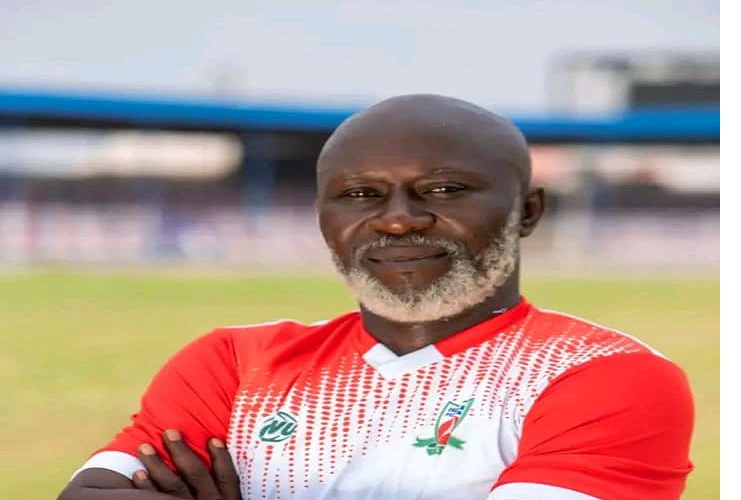
Heartland FC confirms coach Christian Obi’s death in road accident

0

THE Heartland Football Club has confirmed the death of team coach Christian Obi in a road accident.

The club in a statement on X posted on Saturday, August 24 said Obi died on Friday, August 23 from a collision en route to Abakaliki, Ebonyi State on his way to participate in the TICO/SELECT Ifeanyi Ekwueme Preseason Tournament.

The statement partly read, “The heartbreaking day saw the Heartland FC team departing the Dan Anyiam Stadium, Owerri for the preseason Tournament with enthusiasm at around 3:30 pm in three vehicles but at about some minutes after p.m., one of the vehicles rammed into a carelessly parked truck in its attempt to evade an oncoming vehicle.

“The driver tried as he could but the impact of the collision caused a sudden shock to our coach, Christian Obi who was unconscious with a slight injury to his right leg upon evacuation from the badly affected part of the bus.”

The club said Obi and other injured players were rushed to the nearby hospital at Okwelle in Onuimo LGA of Imo State but despite the best efforts of the medical personnel, he gave up the ghost.

The club added that the news of Obi’s death had thrown everyone into deep mourning, as he was extremely precious to the club.

They said that his name would always be remembered in the club’s history, particularly for the unbeaten run in the Nigeria National League throughout the 2022-23 season, which led to the club winning the NNL Super 8 in Asaba.

The club also expressed appreciation for the concerns shown by many Nigerians but requested that its privacy, as well as that of Coach Obi’s family, be respected during this difficult period.

Furthermore, they announced that they would not be making any further statements on the issue for the time being.

As at the moment, Coach Obi’s remains had been taken to the morgue at the Federal University Teaching Hospital (FUTH) in Owerri, while the injured individuals had been transferred to the same hospital to receive further treatment and proper care.

Meanwhile, a rival club Enyimba FC has condoled Heartland FC over the death of Obi.

In a message on X, the Aba, Abia state club said it is deeply saddened to hear about the accident involving Heartland FC of Owerri.

“Our thoughts and prayers are with the entire Heartland FC family, particularly those affected by this incident,” the club tweeted.

Oando secures $650m Afreximbank’s loan for acquisition of Italian firm

0

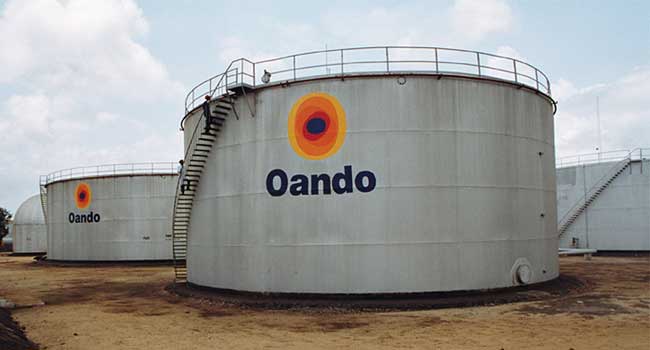
OANDO Plc, an indigenous energy solutions provider, has secured a $650 million lending facility from the African Export-Import Bank (Afreximbank).

The loan is part of the $783 million acquisition of Nigerian Agip Oil Company (NAOC) from Italian oil major, Eni.

In a statement on Friday, August 23, Afreximbank said the loan includes both senior and junior reserved-based lending facilities.

The indigenous oil firm had on Thursday, August 22 announced the successful acquisition of NAOC.

The deal was partly facilitated by Afreximbank with a senior credit facility of $500 million and a junior reserve-based lending facility of $150 million.

“African Export-Import Bank (Afreximbank) has successfully arranged a senior US$500-million and a junior US$150-million reserve-based lending facility for Oando Petroleum and Natural Gas Company Limited.

“The facility was used to finance Oando’s acquisition of the 20 per cent participating interest held by Nigerian Agip Oil Company Limited (NAOC) in the NEPL/NAOC/Oando Joint Venture in Nigeria,” the bank stated.

Executive vice president of Global Trade at Afreximbank, Haytham Elmaayergi, remarked that the facility represents a significant milestone in the Bank’s efforts to enhance local content within Africa’s oil and gas sector.

“By supporting the acquisition of key energy assets by an indigenous company like Oando, the Bank is fostering economic empowerment, enhancing regional trade, and contributing to the sustainable development of Africa’s natural resources,” he said.

The group chief executive of Oando, Wale Tinubu, said, “We thank Afreximbank for its unwavering leadership in bridging the trade finance gap in Africa and ensuring that Oando can consolidate its stake in the Joint Venture via the acquisition of NAOC’s 20% stake.”

The ICIR reported in September 2023 that the Italian firm agreed to divest its onshore Nigerian assets to Oando.

The transaction is to increase Oando’s participating interests in Oil Mining Lease (OMLs) 60, 61, 62, and 63 from 20 per cent to 40 per cent.

After the sale, Eni will retain the unit’s five per cent stake in the Shell Production Development Company (SPDC) joint venture operated by Shell and the Italian group will keep its offshore activities in Nigeria.

FG uncovers 22,500 fake certificates from Benin, Togo

0

THE Federal Government, through the Ministry of Education, said it has discovered that 22, 500 Nigerians are parading fake certificates obtained from Benin Republic and Togo between 2019 and 2023.

The Minister of Education, Tahir Mamman, disclosed this on Friday, August 23, at a press conference in Abuja, to mark his first anniversary in office as minister.

The minister revealed that between 2019 and 2023, 21,600 Nigerians obtained fake certificates from unaccredited universities in the Benin Republic, while another 1,105 got theirs from unaccredited universities in Togo.

He disclosed that his ministry sourced this information from records of the National Youth Service Corps (NYSC) and other agencies.

He further stated that the figure was likely higher than what they had already discovered, as some individuals chose not to participate in the mandatory NYSC scheme and other engagements, which would have enabled them to collect more data.

He remarked that individuals with fake certificates had used them to secure jobs in government and private organizations, falsely claiming to have studied abroad, while hardworking graduates were still searching for employment opportunities.

“Even within the countries, Benin and Togo, these universities are not accredited to offer degree programmes. I don’t know how Nigerians chose to go to unaccredited institutions abroad tostudy’.

“Our investigations also indicated that many of the people never even attended the school physically,he stated.

Tahir revealed that a circular is being drafted by the Office of the Head of Service of the Federation to facilitate the identification and prosecution of individuals holding fake certificates.

Tahir encouraged private sector operators to conduct thorough investigations into their employees who claimed to hold foreign certificates and to identify and hand over to the Federal Ministry of Education for prosecution any staff members found to be holding certificates obtained from these countries between 2019 and 2023.

The minister specified that graduates from only eight accredited universities – five in Benin and three in Togo – would be spared from the consequences, while also revealing that the government’s initiatives, primarily driven by the National Commission for Almajiri and Out-of-school Children, have successfully returned around four million previously out-of-school children to the classroom.

“Our target is the see about 3 to 4 million children leave the streets and return the school annually, and if that is successfully achieved, then by the end of the administration, significant achievements would have been made as regards the out-of-school children,he stated.

The ICIR reports that in January 2024, the federal government suspended the accreditation and evaluation of degree certificates from the Benin Republic and Togo.

The suspension followed a report by an online newspaper, Daily Nigerian, which exposed how a Cotonou-based university issued a degree certificate to an undercover journalist within six weeks.   

The online newspaper revealed how beneficiaries of these substandard certificates compete for jobs and other opportunities with hard-working graduates who undergo academic rigours for at least four years to obtain their degrees.   

It also reported that the requirements for the fake degree are O-level certificates – fake or genuine – and money, which vary depending on the course, urgency, and class of degree.