Home Blog Page 57

Abuja hosts thousands for APC national convention

THE All Progressives Congress (APC) national convention is set to begin in Abuja, bringing together governors, party leaders, and thousands of delegates from across Nigeria.

The convention, taking place at the Eagle Square from Friday, March 27 to Saturday, March 28, has 32 governors attending, alongside over 8,000 delegates from the 36 states and the Federal Capital Territory (FCT)

The APC national convention is one of the party’s most important statutory gatherings, allowing members to review leadership structures and make decisions that will guide the party’s direction as it prepares for the 2027 polls.

The ICIR reports that security was beefed up at the Eagle Square and its sorroundings since Thursday as all roads leading to the venue was cordoned off Friday morning for only accredited persons to access.

The Federal Government had on Thursday directed workers within the Federal Secretariat to work from home on Friday.

Several hotels in the nation’s capital have since become a beehive of activities as delegates and other party stalwarts converge on the city.

The APC, which has recently enjoyed a huge swell in its membership, will be strategising to confront opposition parties, including the African Democratic Congress (ADC) and Peoples’ Democratic Party (PDP) in the 2027 elections.

The ICIR reported that as of March 2026, nine sitting governors had defected from the PDP to the APC since the 2023 general elections. This wave of defections has increased number of APC-controlled states to 32 out of 36.

The governors officially switched allegiances, citing internal PDP crises and the need to align with the federal government. They are Zamfara State Governor Dauda Lawal, who defected in March 2026, and Adamawa State Governor Ahmadu Fintiri, who followed early this year.

In October 2025, Bayelsa State Governor Douye Diri and Enugu State Governor Peter Mbah joined the ruling party, while Akwa Ibom State Governor Umo Eno defected June 2025.

Similarly, Delta State Governor Sheriff Oborevwori dumped the PDP in April 2025. Later in 2025, Rivers State Governor Siminalayi Fubara jumped ship following a leadership rift, alongside Taraba State Governor Agbu Kefas, and Plateau State Governor Caleb Mutfwang.

2026 Kwame Karikari Factchecking, OSINT Fellowship opens for applications

 DUBAWA and Digital Technology, Artificial Intelligence and Information Disorder Analysis Centre (DAIDAC) are seeking applications for the Kwame Karikari Fact-checking and Open-Source Intelligence (OSINT) Fellowship 2026.

This is not just another fellowship; it is a chance to be at the forefront of the fight against information disorder in West Africa. The three-month intensive programme will equip fellows with cutting-edge fact-checking skills, hands-on practice with open-source intelligence tools, and mentorship, empowering fellows to become a beacon of truth in their communities.

Organisers say fellows will gain practical OSINT training, receive intensive, hands-on coaching in factchecking using open-source intelligence, with guidance and mentorship from the DUBAWA and DAIDAC teams. They will master current tools and verification techniques and get their reports published on their media platform and on DUBAWA channels.

Others include access support to establish a fact-checking desk in their newsroom and strengthen internal verification systems, joining a growing community of journalists committed to accuracy, and collaborate with peers across West Africa.

Fellows are also expected to lead fact-checking conversations across social media, radio and television, while promoting media literacy with their audience.

The fellowship is open to full-time journalists from Nigeria, Ghana, Sierra Leone, Liberia and The Gambia, fact-checkers or investigative journalists.

Female journalists and journalists with disabilities (PWDs) are strongly encouraged to apply for the 2026 Kwame Karikari Factchecking and OSINT fellowship.

Apply before April 4, 2026, and interested applicants can apply here.

Dangote Refinery reduces petrol price by N85/litre

0

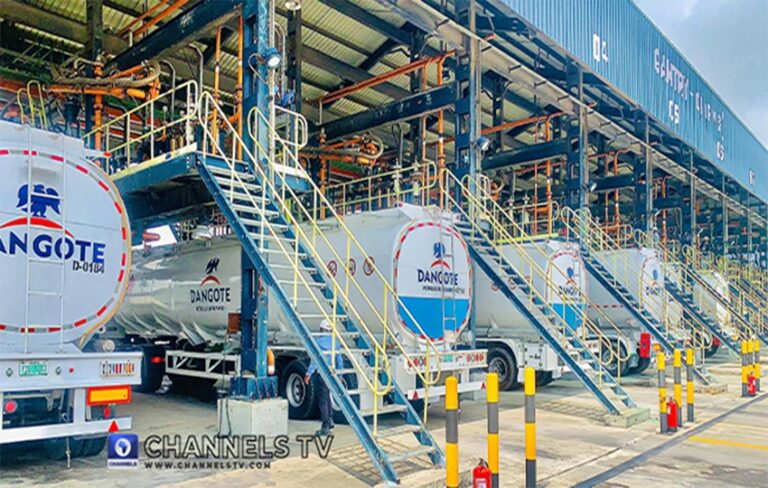
DANGOTE Petroleum Refinery and Petrochemicals has reduced its gantry price for petrol to N1,200 per litre and its coastal price to N1,153 per litre.

The company disclosed this in a statement by its spokesperson, Anthony Chijiena, on Thursday, March 26.

The 650,000 per day refinery dropped its petrol by N85 to N1,200 per litre from N1,285 per litre.

The latest fuel price drop comes after at least five petrol price hikes carried out by the refinery since the beginning of March amid ongoing tensions in the Middle East.

The ICIR reports that the adjustment marks a downward review in the refinery’s pricing structure and is expected to influence fuel supply costs across distribution channels, including depots and retail outlets.

The ICIR further reports that most filling station retail outlets across the Federal Capital Territory (FCT) are yet to adjust their prices and are still selling around N1,370 per litre as of Friday morning.

Analysts say petrol price volatility would continue, with the current US-Iran conflict disrupting global oil and gas supply chains, in addition to the petrol subsidy removal by the Federal Government.

“Nigeria is strongly connected to the global oil and gas market, and we shall continue to see these price adjustments till the end of the US-Iran war,” an economist, Kingsley Obiakor, said.

Poor electricity: Why local gas companies choose EU over Nigerians

0

DRIVEN by higher market gains, Nigeria’s gas generation companies are currently prioritising European markets over domestic markets amid the United States-Iran conflict, which is disrupting global supply.

Moreover, pricing disparity between domestic and exported gas pushes gas companies to target European markets.

The ICIR reports that the closure of the Strait of Hormuz, occasioned by the Middle East crisis, is significantly disrupting global gas supply markets, with gas-producing nations gaining massively from the crisis.

For instance, the strait’s closure has cut off roughly 30 per cent of India’s natural gas supplies and 54 per cent of its Liquefied Petroleum Gas (LPG) imports, forcing the government to prioritise household supplies over commercial and industrial consumers.

Nigeria ranks among the world’s top 8–11 countries with the highest gas reserves, boasting over 210 trillion cubic feet (TCF) of proven gas, making it Africa’s largest reserve holder.

Informed sources said part of the reasons for the export market priority was poor fulfilment of gas off-take obligations by the Nigerian government in the power sector, with growing debt which has surged to over N6 trillion.

Nigeria’s Minister of Power, Adebayo Adelabu, had also confirmed that the gas generation companies (GENCOs) were no longer willing to sell gas to the power sector as a result of the growing debts.

He confirmed in his last press conference on the state of the power sector, noting that they had shifted their market focus to Europe as a result of the Middle-East crisis.

A power sector governance expert, Kunle Kola Olubiyo, told The ICIR that domestic gas supply is sold far less than what is sold at the International market, despite growing debt obligations on the part of the government.

“You know that these gas companies are purely commercialised and don’t sell at concessionary or charitable rates. They sell at $3.65 cents to gas thermal plants and gas trubined fired generation companies. This is still far less than the price the $8 they sell to small and medium-scale enterprises,” he said.

He stressed that the growing demands from the EU market, willing to pay to pay $12 per litre, is affecting local supply.

On gas price volatility, the European and Asian gas benchmarks have risen sharply, outpacing crude oil price increases, signalling a longer recovery for gas.

This has given more opportunities for the Nigerian market despite not having gas infrastructure compared to gas nations like Qatar and Kuwait.

Already, supply chain industries like automobiles, chemicals, and personal care products face gas supply shortages and manufacturing challenges as a result of this.

A former Chairman of the Major Oil Marketers Association of Nigeria (MOMAN), Adetunji Oyebanji, told The ICIR that the government needed to intensify efforts on improving gas infrastructure to maximise more gains on global gas demands.

“If we said we are doing a decade of gas, we ought to have done more investments in the gas and removed possible business bottlenecks to attract more investors.

“We ought to have increased our LNG trains, which are production lines like Qatar, having up to 22 trains, which supplies almost 20 per cent of the market share of gas to Europe,” Adetunji added.

Trump sets April 6 deadline, delays Iran energy strike

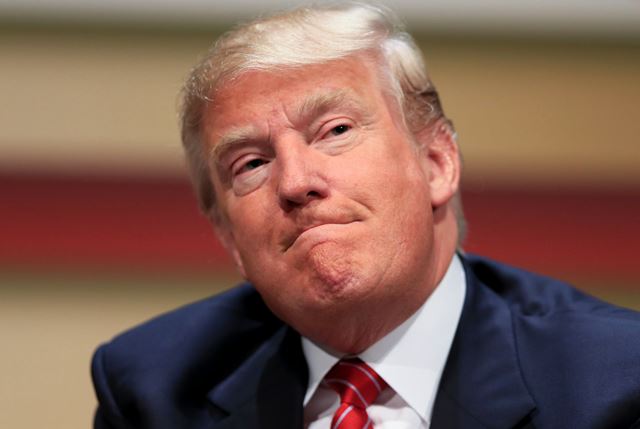
UNITED States (US) President Donald Trump has set Monday April 6 deadline to strike Iran’s Energy Plant.

In a statement Thursday night, he said: “As per Iranian Government request, please let this statement serve to represent that I am pausing the period of Energy Plant destruction by 10 days to Monday, April 6, 2026, at 8 P.M., Eastern Time. Talks are ongoing and, despite erroneous statements to the contrary by the fake news media, and others, they are going very well.”

The ICIR reported earlier on Thursday that Trump insisted there were talks between the US and Iran, though Tehran had repeatedly denied his claim.

He said Iranian leaders were already negotiating behind the scenes and suggested they were eager for a deal but too fearful to admit it publicly. He warned they faced threats both internally and from the US.

An Iranian embassy official in Islamabad said talks in Islamabad were still on the table and Pakistan was the preferred destination for Tehran, although nothing had been finalised.

According to Reuters, the US proposed a 15-point for negotiation, reportedly delivered via Pakistan. The plan calls for Iran to reopen the Strait of Hormuz, dismantle its highly enriched uranium stockpiles, curb its missile programme, and cut support for regional allies.

Amid the conflict, in which Israel backs the US, Trump had declared a five-day ceasefire, alleging dialogue was ongoing. However, Iran launched multiple waves of missile strikes on Israel hours after the US leader took the decision.

The decision followed his earlier ultimatum to Iran. In a strongly worded social media post on Saturday, September 21, Trump said the US would ‘obliterate’ Iran’s energy infrastructure if the vital waterway critical to global oil and gas shipments is not reopened without threat. 

“If Iran doesn’t FULLY OPEN, WITHOUT THREAT, the Strait of Hormuz, within 48 HOURS from ‌this exact point in time, the United States of America will hit and obliterate their various POWER PLANTS, STARTING WITH THE BIGGEST ONE FIRST!” Trump said.

The ICIR reports that the Strait of Hormuz remains largely disrupted amid fears of Iranian attacks, choking a passage that handles roughly 20 per cent of global oil and liquefied natural gas flows. The near shutdown has already shaken global markets, with European gas prices surging significantly in recent days, raising concerns of a broader energy crisis.

The war has seen several Iran officials, including the country’s Supreme leader, Ali Khamenei, killed. Khamenei’s son, Mojtaba, who took over from his father, has reportedly been in a coma, and has yet to be seen in public.

Meanwhile, the US has lost some of its military officers and armaments. It has also seen a couple of its bases targeted and attacked in the Middle East.

In Israel, many locations have been hit by Iranian drones, with the conflict taking a huge toll on the entire Middle East economy and peace.

While Trump has repeatedly claimed the US military had decimated Iranian military, including dozens of the country’s ships, Iran has continued to fight both Israel and the US without any hope it would capitulate. 

The conflict which began on February 28, has claimed over 2,000 lives according to media reports. 

Trump’s decision to step back had earlier lifted equities and pushed oil prices sharply below $100 a barrel, reversing a market slump triggered by his weekend threats and Iran’s warnings of retaliation, but those gains came under pressure on Tuesday after Iran’s parliament speaker denied that any negotiations had taken place, casting doubt on the market’s earlier optimism.

On Tuesday, US Treasury yields climbed and the dollar recovered as markets continued to absorb the shock of energy supply risks tied to Iran’s threat to shipping in the strait.

Brent crude futures rose 4.2 per cent to $104.21 a barrel, rebounding from a roughly 10 per cent drop the previous day, while US crude gained 4.3 per cent to $91.93 per barrel.

MacArthur Foundation launches Nigeria Next grants to boost youth digital inclusion, civic engagement

0

THE MacArthur Foundation has unveiled a new grantmaking initiative, Nigeria Next, aimed at expanding digital inclusion, innovation, and civic participation among young people in Nigeria.

The initiative, announced as part of the foundation’s broader programmes in the country, will fund projects that promote access to technology, strengthen media and civic spaces, and support policies designed to empower youth and improve economic opportunities.

The foundation noted that while Nigeria’s large youth population presents both an opportunity and a challenge, only a small proportion possess the digital skills required to participate fully in the modern economy.

It added that young Nigerians remained underrepresented in global conversations around emerging technologies such as AI, highlighting the need for targeted investment in skills, access, and policy engagement.

According to the foundation, the initiative will provide support for research, advocacy, training, convenings, and pilot projects focused on equipping young Nigerians with digital tools and skills while fostering creativity and innovation.

“Nigeria Next aims to foster digital inclusion, creativity and innovation, civic participation, and evidence-backed policies to empower Nigeria’s young people and expand their economic opportunity. By empowering the nation’s young people, we can drive social and economic change in Nigeria while helping build a free and prosperous future,” the foundation stated.

Four priority areas

The Nigeria Next initiative will focus on four key areas bordering on digital inclusion, creativity and innovation, civic participation, and research and policy analysis.

Under digital inclusion, the grants is expected to target efforts that address barriers to technology access, including affordability, safety, and gaps in artificial intelligence (AI) knowledge.

In the area of creativity and innovation, the foundation said it would support hubs, incubators, and collaborative workspaces aimed at driving economic transformation and workforce development.

The civic participation component will prioritise strengthening journalism and media ecosystems, amplifying youth voices, and promoting digital citizenship to counter authoritarian tendencies online.

Additionally, the programme will fund research and policy analysis to support evidence-based government policies that prioritise youth empowerment, particularly in the technology sector.

Shettima highlights vision for youth empowerment

Speaking on the initiative in a separate statement, director of the foundation in Nigeria, Kole Shettima, said the programme was designed to invest in young Nigerians as drivers of social and economic change.

He noted that many young people, despite limited resources, were already using digital tools to amplify their voices and participate in civic life, citing examples of youth engagement during recent social movements.

“I met Balkisu, a TikToker from the quiet town of Bauchi in Northeast Nigeria, during the #EndBadGovernanceInNigeria movement in 2024. After high school, Balkisu could not attend college due to financial constraints.

“Coming from a large family with competing priorities, her parents could not afford the expense of higher education. Still, Balkisu considered herself fortunate: she had access to a smartphone and one meal a day—luxuries that many of her peers lacked. Balkisu’s story embodies the hopes and aspirations of our new grantmaking initiative: Nigeria Next,” Shettima said.

He explained that the initiative was shaped through consultations across multiple Nigerian cities, including Abuja, Lagos, Kano, Enugu, Port Harcourt, Bauchi, Maiduguri, and Kafanchan, where the foundation engaged young people, civil society actors, and experts to better understand their needs.

He emphasised that Nigeria Next would focus on removing barriers to digital access, supporting creative ecosystems, and strengthening civic spaces where young people can actively contribute to governance and national development.

He added that the programme reflected a deliberate shift from viewing young people as challenges to recognising them as assets capable of reimagining Nigeria’s future.

“As Africa’s most populous country, Nigeria is a dynamic centre for innovation in finance, technology, agriculture, civic tech, and creative industries. The so-called ‘youthquake’—a term used by scholars and commentators—captures the profound impact of young Nigerians. From breakthroughs in Lagos’ tech scene to the global reach of Nollywood and Afrobeats, their ingenuity is unquestionable.

“Young people are also reimagining civic engagement, pioneering new forms of organisations and activism on issues such as clean energy, climate change, democracy, transparency, accountability, and sexual and gender-based violence,” he explained further.

 

Court orders arrest of PDP factional chair Turaki

0

A HIGH Court of the Federal Capital Territory (FCT) sitting in Maitama, Abuja, has issued a bench warrant for the arrest of the factional national chairman of the Peoples Democratic Party (PDP) Kabiru Turaki, after he failed to appear in court for his arraignment in a criminal case filed by the Inspector-General of Police (IGP).

The presiding judge, Peter Kekemeke, gave the order on Thursday, March 26.

He held that Turaki, a former minister, had no justification for his absence despite being duly notified of the proceedings.

The police had instituted a one-count charge against Turaki, accusing him of providing false information in a petition dated October 5, 2022.

According to the charge, Turaki allegedly gave misleading information to the IGP against one Saidi Mohammed Mainasara with the intent of using the police’s lawful authority to cause harm or annoyance.

The police linked the development to an offence punishable under Section 140 of the Penal Code.

When the matter came up, prosecution counsel, Usman Rabiu, informed the court that the case was scheduled for the defendant to take his plea.

He noted that Turaki had been served both the charge and a hearing notice but failed to attend court.

Rabiu subsequently urged the court to invoke Section 396(2) of the Administration of Criminal Justice Act (ACJA), 2015, and issue a bench warrant to compel the defendant’s appearance.

The prosecution also opposed the defence’s reliance on a pending motion seeking to quash the charge, arguing that such an application could only be entertained after the defendant has been arraigned and his plea taken.

Responding, defence counsel, Abdulaziz Ibrahim, a senior advocate, argued that his client had already filed a motion challenging the validity of the charge and maintained that Turaki’s presence in court was not necessary until that application was determined.

He further requested additional time to file written addresses to support the motion.

However, the judge rejected the defence’s position, ruling that the application to quash the charge was premature and could not be heard before arraignment.

Kekemeke observed that the defence did not deny that Turaki had been served with the relevant court processes but failed to provide any reasonable explanation for his absence.

Citing the provisions of Section 396(2) of the ACJA, the court held that where a defendant who is aware of a pending charge deliberately fails to appear, the appropriate step is to issue a bench warrant to secure his attendance.

The judge consequently ordered Turaki’s arrest to ensure he appears before the court to answer to the charge and adjourned the matter till April 22 for his arraignment.

Earlier proceedings

The ICIR reports that the defendant was initially scheduled for arraignment on January 28, but the hearing could also not go on because he did not appear in court.

During the session, the prosecution informed the court that Turaki was expected to be present, in line with a prior summons issued by the court and urged the judge to issue a bench warrant for his arrest.

In response, defence counsel explained that his client was absent due to a letter sent to the Chief Judge of the FCT High Court, requesting that the case be reassigned to another judge.

The lawyer also noted that a petition had been filed questioning the court’s impartiality.

However, the court held that such a petition did not automatically halt criminal proceedings unless the Chief Judge issues a directive to that effect.

Kano mother of quintuplets dies from bleeding

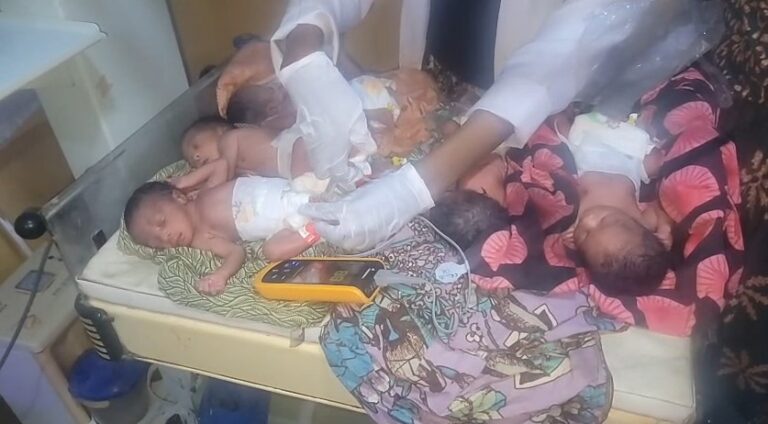
A WOMAN in Kano, Hafsatu Yusuf, who recently gave birth to quintuplets at Murtala Muhammad Specialist Hospital, has died.

The Public Relations Officer of the Kano State Ministry of Health, Nabilusi Abubakar K/Na’isa, confirmed the development in a telephone interview with Punch on Thursday.

He said the woman breathed her last at about 2 a.m. at the hospital.

“She had been bleeding since after delivery, and all efforts by doctors to control the situation were unsuccessful,” he said.

According to K/Na’isa, Yusuf suffered prolonged bleeding following the delivery of her five babies, and despite efforts by medical staff to stabilise her, she could not be saved.

He said the newborns were in stable condition and were receiving medical care at the facility.

The ICIR reports that the late mother had her babies, three boys and two girls, at the Murtala Muhammad Specialist Hospital, Kano on Wednesday. The state government had assumed responsibility for their medical care.

The State Ministry of Health had announced in a statement on Wednesday that both the mother and the newborns were receiving specialised medical attention at the facility.

The woman’s husband, Salisu Nufi’u, a tricycle rider, expressed gratitude to the state government for its intervention, describing it as timely support.

Quintuplets, five babies born from a single pregnancy are extremely rare and typically require intensive medical attention due to the high risks associated with multiple births.

In 2024, Onyebuchi Christian Elendu in Port Harcourt, Rivers State delivered quintuplets after a difficult pregnancy. The births gained attention locally because of the emotional and medical challenges involved.

In a similar development, in 2022, Ewanle Omage’s welcomed quintuplets in 2021.

Medical experts have emphasised that multiple-birth babies often require close monitoring, as they are more likely to be born prematurely and might face early health challenges, as the emotional strength of the parents, combined with professional medical support, continues to play a crucial role in the survival and well-being of the children.

Middle East crisis: Trump insists Tehran seeks deal, Iran refutes claim

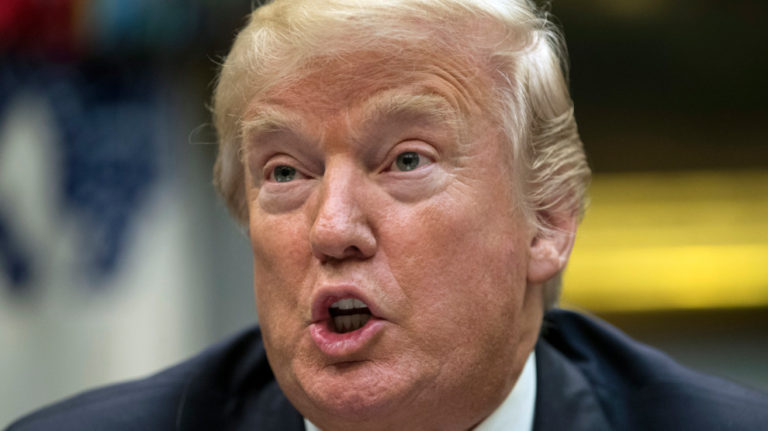
UNITED States President Donald Trump has insisted Tehran is seeking a deal to end nearly a month of intense fighting.

Trump stated this just hours after Iran Foreign Minister Abbas Araqchi claimed his country was only reviewing a US ceasefire proposal. Araqchi said his nation was not negotiating and had no plans to enter talks to end the war.

However, the US president maintained his earlier stance, noting that Iranian leaders were already negotiating behind the scenes. He suggested they were eager for a deal but too fearful to admit it publicly, warning they faced threats both internally and from the United States.

An Iranian embassy official in Islamabad said talks in Islamabad were still on the table and Pakistan was the preferred destination for Tehran, although nothing had been finalised.

According to Reuters, the US proposed a 15-point for negotiation, reportedly delivered via Pakistan. The plan calls for Iran to reopen Hormuz, dismantle its highly enriched uranium stockpiles, curb its missile programme, and cut support for regional allies.

However, Israeli officials doubt Iran will accept such terms and fear US negotiators may soften their stance. Israel is also pushing to retain the right to launch pre-emptive strikes under any agreement.

The ICIR reported that Iran launched multiple waves of missile strikes on Israel on Tuesday, hours after Trump declared a five-day ceasefire.

Trump had said the US was in talks with Iran but Iran’s Parliament Speaker, Mohammad Baqer Qalibaf, whom an Israeli official and two other sources identified as the Iranian-side interlocutor in the talks, wrote on X that no negotiations had taken place.

Iran’s elite Revolutionary Guards (IRGC) said they were launching new attacks on US targets, dismissing Trump’s remarks as “psychological operations” that were “worn out” and had no effect on Tehran’s campaign.

This latest development underscores the worsening trends in a conflict that erupted on February 28, where thousands have been killed across the Middle East following coordinated US-Israeli strikes on Iran. Tehran has repeatedly retaliated with attacks on Israel, US bases, and Gulf nations.

Leadership in Iran has also been thrown into turmoil as Supreme Leader Ayatollah Ali Khamenei was killed in an early Israeli strike, with his son Mojtaba stepping in, though he has since been wounded and largely unseen.

Meanwhile, the closure of the Strait of Hormuz, through which roughly 20 per cent of the world’s oil passes has triggered what analysts are calling the worst energy shock in modern history. Fuel shortages are spreading globally, supply chains are buckling, and governments are considering emergency measures reminiscent of the COVID-19 era.

The ICIR reported that Trump’s decision to step back had earlier lifted equities and pushed oil prices sharply below $100 a barrel, reversing a market slump triggered by his weekend threats and Iran’s warnings of retaliation, but those gains came under pressure on Tuesday after Iran’s parliament speaker denied that any negotiations had taken place, casting doubt on the market’s earlier optimism.

On Tuesday, US Treasury yields climbed and the dollar recovered as markets continued to absorb the shock of energy supply risks tied to Iran’s threat to shipping in the strait.

Brent crude futures rose 4.2 per cent to $104.21 a barrel, rebounding from a roughly 10 per cent drop the previous day, while US crude gained 4.3 per cent to $91.93 per barrel.

ENDSARS: Pelumi Onifade’s case stalls as LASUTH fails to produce key report

The long-running inquest into the death of Nigerian journalist Pelumi Onifade suffered another setback on Tuesday after the Lagos State University Teaching Hospital (LASUTH) failed to comply with a court order to produce a crucial report on an unidentified body linked to the case.

Consequently, Magistrate Temitope Oladele of the Lagos State District Coroner’s Court adjourned the proceedings to April 7, 2026.

She granted LASUTH what she described as a “final opportunity” to submit findings on a body tagged ‘1385.’

These were contained in a statement by Media Rights Agenda on Wednesday, March 25, signed by its Communications Officer, Idowu Adewale.

Part of the statement reads, “The Coroner Court investigating the death of Mr Pelumi Onifade, a young journalist with Gboah TV, who was reportedly shot while covering the #EndSARS protests on October 24, 2020, has adjourned the matter to April 7, 2026, following the failure of the Chief Medical Director (CMD) of the Lagos State University Teaching Hospital (LASUTH) to comply with the Court’s order to produce a report on the whereabout of an unidentified body tagged 1385 which LASUTH was said to have been received from the Ikorodu General Hospital on November 3, 2020 and conducted post-mortem examination on later that month.”

The ICIR reported in 2025 that the court ordered the hospital to release necessary documents relating to the deposit, release or current status of the journalist remains within seven days of receipt of the order to representatives of the MRA, following an application by MRA’s lawyer.

According to MRA, the order, first made on November 18, 2025, directed LASUTH to produce “a comprehensive and specific report” relating to the body.

After repeated failure by LASUTH to produce the report, on March 3, 2026, the MRA’s counsel, Alimi Adamu observed that the order was directed generally at LASUTH and not to any specific official of the hospital, which would make enforcement difficult, and applied for a fresh order directed specifically to the CMD. 

The judge granted the application and issued a fresh order directing the chief medical director “to give a report of the body with the tag number 1385 said to have been received on behalf of LASUTH on 3rd November 2020 from Ikorodu General Hospital, within fourteen (14) days of receipt of this order.”

When the matter came up on March 24, the hospital did not produce the report and was not represented in court by any official or lawyer, the MRA said.

The organisation urged the court to invoke enforcement by issuing a “Form 48”, a legal notice requiring the CMD to show the reason a contempt proceeding should not be initiated against him, due to the frustration by the repeated non-compliance.

“Although Mr. Alimi Adamu, lawyer to Media Rights Agenda (MRA) and the Onifade family, applied to the court to issue a “Form 48” (notice to show cause why order of court should not be enforced by committal proceedings) against the CMD for the continued disobedience of the court’s order in the light of the hospital’s repeated failure to produce the report, the investigating magistrate, Mrs Temitope Oladele, said she wanted to give the medical director a final opportunity to comply with the order.”

Adewale explained that Oladele declined the second application and directed the legal team to follow up with LASUTH to ensure compliance before the next hearing.

The ICIR reported that Onifade, a young reporter with Gboah TV, was allegedly shot while covering protests against police brutality in October 2020. His death became one of the most troubling cases linked to the nationwide demonstrations that called for an end to abuses by security forces.

The coroner’s inquest stemmed from a landmark ruling delivered on July 19, 2024, by Ayokunle Faji, a judge of the Federal High Court in Lagos. In that judgment, the court ordered the Lagos State Government to investigate Onifade’s death, identify those responsible, and ensure they are prosecuted.

The suit, filed by MRA, had challenged both the police and the Lagos State Government over what it described as a failure to properly investigate the killing.

For Onifade’s family and press freedom advocates, the continued delays now compounded by LASUTH’s failure to comply with court orders highlight the persistent obstacles to justice in cases involving state institutions.

As the court reconvenes in April, attention will once again turn to whether LASUTH will finally produce the report that could shed light on the fate of body “1385”—and possibly bring the country closer to answers in a case that has lingered unresolved for over five years.