back to top
Home Blog Page 575

How underfunding, lack of preparedness impact surge in Lassa fever

Nigeria recorded a surge in the spread of Lassa fever in 2023, with the National Centre for Disease Control and Prevention (NCDC), raising alarm about its persistence. However, despite the severity of the disease and its dangerous trait, The ICIR findings revealed, that with the lack of state ownership, underfunding, poor release of funds, and lack of preparedness, Nigeria may continue to be plagued with the disease.


Living in a modest home with his family, in Guyaba, Kirfi LGA, of Bauchi state, Dauda Abdulkadir never imagined that a seemingly ‘innocuous’ rat could be deadly.

Although he, alongside his family members, often cut out the portion of food that rats had bitten and sometimes put their pots of soup away from reach, they were unaware of the true danger of consuming rat-contaminated food.

Dauda Abdulkadir lost his wife to Lassa fever disease in 2023.

He says he occasionally would buy sniper to kill the rats when their numbers multiplied and their presence became a nuisance.

It was not until 2023 that his wife ran a fever, was vomiting, and had severe diarrhoea, that he thought a ‘drug’ from a makeshift shop in their locality would solve the problem, but that was their first mistake. 

For weeks, they tried to manage the illness, but eventually, took her to the Abubakar Tafawa Balewa University Teaching Hospital (ATBUTH) when her body had deteriorated and had lost weight due to the illness.

“I noticed a fever that wouldn’t go away for weeks,” he recalls. “By the time we reached the state hospital, the doctors, after several tests, diagnosed the disease to be Lassa fever. I had never even heard of it before,” he narrates.

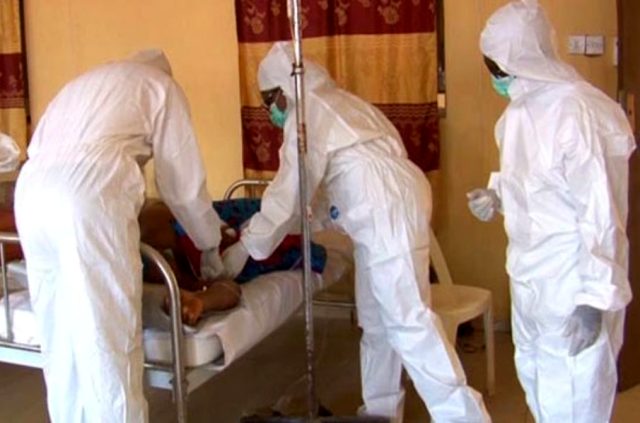
Lassa fever is a deadly viral hemorrhagic illness that lowers the platelet count in the blood and its ability to clot, causing internal bleeding.

“She was instantly admitted and they made me and my children undergo a test but luckily we were negative. The doctor said we were so lucky(sic),”he notes.

Abdulkadir added that he witnessed how his wife went through a very severe pain that he would not wished on his enemies.

“So, some days later. My wife was proclaimed dead. She only spent 14 days at the hospital,” he narrates. 

Meanwhile, Abdulkadir’s wife case becomes a source of fear for people in the community, with some residents who spoke to The ICIR saying they have now become more careful.

Lassa fever is primarily transmitted to humans via contact with food or household items contaminated with urine or faeces from Mastomys rats. Though to a lesser extent, secondary human-to-human transmission can also occur through direct contact with infected persons’ blood, secretions, organs, or other body fluids, especially in health-care settings, according to the World Health Organization (WHO).

The WHO notes that despite increased capacity for preventing and controlling Lassa fever, including enhanced surveillance, diagnostic, and treatment capabilities, several factors continue to elevate the risk.

These factors include a rise in confirmed cases, surveillance gaps, inconsistent subnational response capacities, delays in sample shipments for laboratory testing, and chronic underfunding.

Also, The ICIR findings reveal a link between the surge in Lassa fever cases, the insufficient budgetary allocations from state governments, and the lack of effective advocacy. 

Outbreak in 2023


The endemic disease has continued to endanger lives not only in Bauchi but in at least 27 other states. The disease is known to be endemic in other African countries, including Benin, Ghana, Guinea, Liberia, Mali, and Sierra Leone, among others according to WHO.

Although about 80 per cent of those infected have no symptoms and do not get very ill, the death rate among those who end up in hospitals is 15 per cent.

In 2023, Nigeria recorded over 1,000 confirmed cases of the disease, with the National Centre for Disease Control and Prevention (NCDC), raising alarm over the surge in the reported cases.

Data from NCDC shows that 9,155 suspected cases were reported, of which 1,270 cases were confirmed to be Lassa fever cases in 2023.

The cases were reported largely among youths of the 21-30 age group across 28 states and 124 local government areas. 

Seventy-six per cent of all confirmed Lassa fever cases were reported from three states, which are Ondo, Edo, and Bauchi. 

Specifically, Ondo accounted for 34 per cent of the confirmed cases, having reported 433 confirmed cases out of the 2,665 suspected cases and Edo, which comes second on the list with 27 per cent, 349 confirmed of the 3,482 cases.

Bauchi accounted for 15 per cent of the confirmed cases, having reported 194 confirmed cases out of 1,048.

The remaining 24 per cent of cases were reported from 25 other states, including Taraba and Ebonyi, with confirmed Lassa fever cases.

Comparing the cases recorded to 2022 data, the country, between January, to December, reported a cumulative number of 8,207 suspected cases of Lassa fever with 1,067 confirmed cases, and 189 (17.7 per cent) deaths across 27 states. 

This shows an increase in the disease in 2023, which according to NCDC, is unprecedented.

Outbreak so far in 2024

Meanwhile, despite the alarm raised by the Centre, Nigeria between January to May 5, has reported 6,106 suspected cases, of which 869 were confirmed to be Lassa fever.

By this period in 2023, the suspected cases reported stood at 5,218 and confirmed cases at 929, meaning that there was an increase in the number of reported cases compared to the 2024 data.

This shows that Nigeria may as well report another unprecedented figure by the end of the year if the trend continues.

Sixty-three per cent of all confirmed cases were reported from Ondo, Edo, and Bauchi states, with Ondo accounting for 24 per cent, Edo for 22 per cent, and Bauchi for 17 per cent of the cases. The remaining 37 per cent of confirmed cases were reported from 25 other states.

Budget gaps, lack of state ownership

Besides all states failing to meet the Abuja declaration of 15 per cent budgetary allocation for health, most of the states including the most plagued states failed to make ‘significant’ budget provisions for tackling Lassa fever and epidemic preparedness in their 2024 budgets.

This, experts, bemoaned and described as a lack of proactiveness from states’ governments.

The ICIR reports that following the COVID-19 pandemic that ravaged the entire country, states have been charged, by the Global Health Advocacy Incubator (GHAI), to provide budget lines for epidemic preparedness and response. 

However, only Kano and Lagos states have created a line item to tackle and prepare for epidemics, as of 2023.

In 2020, Kano created a budget line for epidemic preparedness and response in the 2021 fiscal year, totaling N300 million and allocating two million naira each toward strengthening preparedness in the 44 local government areas in the state.

The funding increased by 33 percent for 2022 to N400 million as Lagos allocated N26.9 billion for the Public Health Services and Emergencies for 2022.

Given the spread of the disease, across the country, particularly Ondo, Edo and Bauchi, The ICIR check shows that the three states, which had reported 76 per cent of the total confirmed cases in 2023 earmark less than N50 million each for the disease, thereby relying completely on foreign donor and federal government intervention.

Infographic showing the 2024 budgetary allocations for Lassa fever and related projects in some selected states

In Ondo, the state government in the 2024 fiscal year budgeted a total of N35 million for Lassa fever and related epidemic diseases, translating to 0.096 per cent of the total state budget for health (N36.5 billion).

Similarly, the Edo state government allocated N33.6 billion (9.8 per cent) out of the total state budget of N342.8 billion. However, the state only earmarked about 0.203 for Lassa fever surveillance and control.

This was as both Bauchi and Taraba also allocated 0.4 per cent and 0.28 per cent for the related projects.

Other challenges with the country’s budget allocation

Although Nigeria has experienced improved funding for health allocations in the past few years, the budget still falls short of the Abuja declaration’s target of allocating at least 15 per cent of the total allocation to the health sector.

In 2024, of the N28.7 trillion’s country budget, only N1.3 trillion, translating to 4.64 per cent was budgeted to the health sector.

The inadequate amount of money earmarked for Nigeria’s health sector has been compounded by the failure to fully utilise the allocated funds and constraints, such as low budget revenue, and restricted fiscal space for additional expenditure.

Infographic showing the budget releases from 2018-2022. Credit: The Nigeria Health Watch
An infographic showing the budget releases from 2018-2022. Credit: The Nigeria Health Watch

According to data from the Office of the Accountant General of the Federation and the Budget Office of the Federation quoted by Nigeria Health Watch, capital allocation for the Federal Ministry of Health and Social Welfare (FMoHSW) increased by 139.78 per cent, rising from N86.49 billion in 2018 to N207.40 billion in 2022.

However, the percentage of utilised released capital has decreased over the same period, dropping from 96.76 per cent in 2018 to 60.84 per cent in 2021, and further down to 47.74 per cent by the third quarter of 2022.

This means that despite a significant increase in the money earmarked for the sector, the capital release has continued to reduce, with the money being returned to the federation account at the end of each fiscal year.

This, the health experts, said could be attributed to late budget release and complexity in the procurement process.

Poor awareness 

For some of the rural communities in Nigeria, access to health care, sanitation, and economic hardship are some of the major public health challenges.

Due to limited resources communities affected by infectious diseases tend to care for the sick at home, with limited knowledge of the diseases. 

Like Abdulkadir, Amadi Guyaba’s household knew nothing about the disease until in 2023, when he contracted the disease himself.

Guyuba is one of the residents who survived the disease, having contracted it in 2023
Amadi Guyaba is one of the residents of Guyaba town, who survived the disease, having contracted it in 2023

According to him, members of the town were unbothered about eating food contaminated by animals as long as they cut out the affected portion. But since the outbreak of the disease in the area, they have become more aware of the risks.

He, however, said there was little he and the community leaders could do,  noting that before the outbreak, they received no government officials in the state to sensitise the populace about the disease.

Expert weighs in

Kano state Legislative Advocacy Initiative for Sustainable Development Goals (LISDEL) coordinator, Suleiman Muhammad, last year raised concerns over the issue of the state government not releasing the actual money budgeted for healthcare, noting that there would have been more improved healthcare delivery if the money were being released appropriately.

He also decried the lack of prioritisation of epidemic preparedness and disease control in the states’ budget, adding that despite the civil society organisations and concerned stakeholders’ clamour, many states are still not earmarking for the epidemic.

According to him “A budget is always a proposal of what’s expected from the revenue generation, at times it takes the whole year advocating for a single release. The Government mostly has some priorities from the physical structures and all that.”

Also, speaking with The ICIR, a public health physician and the founder of Quinta Health, Adewumi Enoch, posited that inadequate health infrastructure, poor sanitation or lack of proper WASH facilities, low awareness, and inadequate vaccination coverage are among the major reasons Nigeria grappled with recurrent diseases.

“Gaps in immunisation programmes leave individuals susceptible to vaccine-preventable diseases. They also contribute to disease outbreaks. A lack of public awareness about disease prevention and health practices can also hinder efforts to control diseases,” he added.

This report is supported by The Nigeria Health Watch.
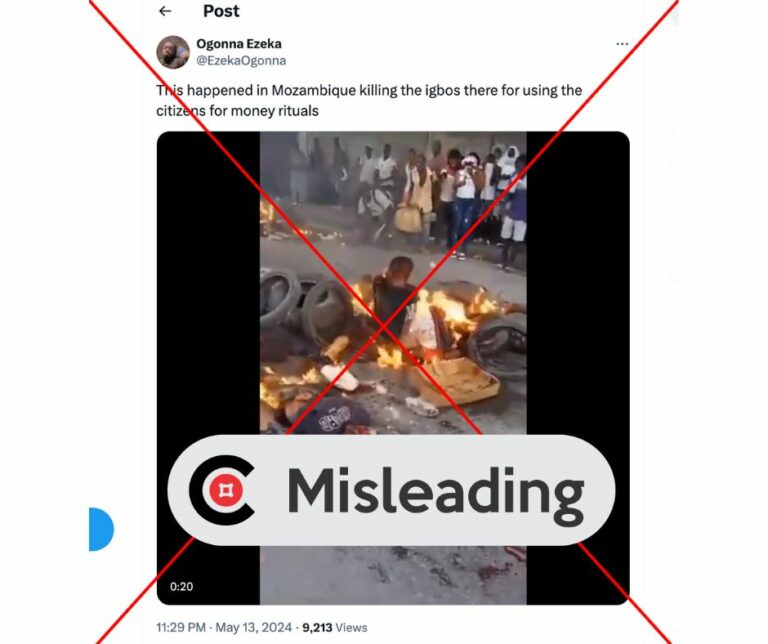
Video does not show Igbos in Mozambique killed over money rituals

A graphic video showing young men being set ablaze on the street after being beaten by mobs has surfaced online with a claim that it shows Igbos from Nigeria being killed for using people for money rituals in Mozambique. 

An X user, Ogonna Ezeka (@EzekaOgonna) posted the 30-second video with a caption that read:

“This happened in Mozambique killing the igbos there for using the citizens for money rituals.”

Another verified X user, @nononsensezone, reposted the same video with another caption thus:

“D**n. I just watched this video. It has to be one of the most inhumane videos have ever seen. Igbos is not every country you lot need to visit.”

The video has been circulated widely on X (formerly Twitter).

CLAIM

Video shows the killing of Igbos over money rituals allegation in Mozambique.

Screenshot of the viral video purportedly showing Igbos burnt in Mozambique over money ritual/ The claim is MISLEADING.

THE FINDINGS

Findings by The FactCheckHub show that the claim is MISLEADING.

The Igbo people are one of the major ethnic groups in Nigeria, concentrated in the southeast around the Niger River. They can also be found in the South-South part of the country.

The FactCheckHub subjected keyframes in the viral video to a Google reverse image search and the result shows that it has been online since April 2023.

Similarly, the incident in the footage, which has nothing to do with Igbos or money ritual, occurred in Haiti and not Mozambique.

An earlier and longer version of the exact video was published by Krudplug.net on April 25, 2023. It was also posted here by Daily Mail.

The news was widely reported by many media outlets including Al-Jazeera, BBC, New York PostAssociated Press and Voice of America. 

According to media reports, the 13 suspected gang members were beaten and burnt to death with gasoline-soaked tyres in the Republic of Haiti.

Haiti National Police explained  that officers in the city’s Canape Vert section stopped and searched a minibus for contraband and had confiscated weapons from suspects before they were “unfortunately lynched by members of the population.”

A resident who spoke to Associated Press (AP) recounted that members of the crowd took the suspected gangsters away from police, beat them and stoned them before putting tyres on them, pouring gasoline over them and burning them.

According to AP, the suspects involved were believed to be members of the Kraze Barye gang, which translates to “Breaking Barriers,” which is allegedly led by Haitan gang leader,  Vitel’Homme Innocent.

THE VERDICT

The claim that the video shows the killing of Igbos over money rituals allegation in Mozambique is MISLEADING; the video has been online since April 2023 while the incident occurred in Haiti and unrelated to money rituals or the Igbos.

This fact-check is republished from The FactCheckHub.

Presidency debunks N105,000 new minimum wage proposal

0

THE Nigerian government has refuted claims that the Minister of Finance and Coordinating Minister for the Economy, Wale Edun, proposed N105,000 in the new minimum wage template submitted to President Bola Tinubu. 

This was disclosed by the Special Adviser to the President on Information and Strategy, Bayo Onanuga, via his X account on Thursday, June 6.

The clarification followed widespread rumours and concern among Nigerians, stemming from a reported proposal of N105,000 new minimum wage by Western Post.

The report, which the platform has now taken down, noted that the template submitted by the Finance Minister proposed a new minimum wage of ₦105,000 (approximately $220 USD) per month for Nigerian workers.

The report also quoted a source noting that President Bola Tinubu was reviewing the proposal, and an official announcement would soon be made.

However, Onanuga described the claim as false, noting that the minister did not present such.

Onanuga wrote: “The Honourable Minister of Finance and Coordinating Minister for the Economy, Wale Edun, has not proposed N105,000 minimum wage.

“The contrary story being disseminated is false.”

The ICIR reported that following the 48-hour ultimatum issued by Tinubu, the Finance Minister submitted the projected cost implications of the new minimum wage to the President.

Edun, alongside Minister of Budget and National Planning, Atiku Bagudu, presented the details to the President in his office at the Presidential Villa in Abuja on Thursday, June 6.

Confirming the submission while addressing State House correspondents after meeting with the President, Edun noted that “there is no cause for alarm.”

Previously, the government had proposed a minimum wage of ₦60,000, which was outrightly rejected by organised labour and resulted in a nationwide strike.


READ ALSO:

Group condemns attack on Abia journalist by FCMB security guard

Video of Sanusi criticising Nigerian government is not recent

Video does not show Igbos in Mozambique killed over money rituals

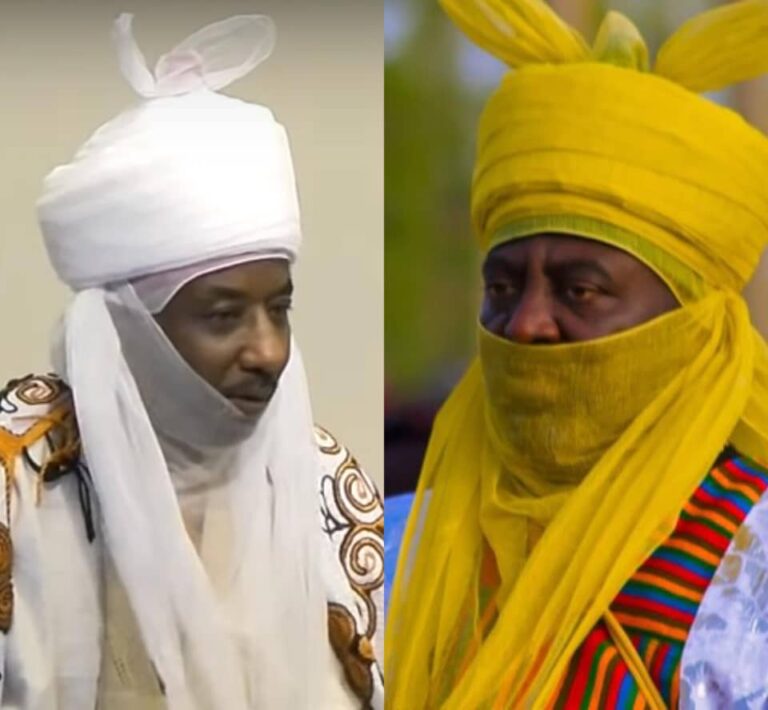
Kano emirship tussle: court fixes June 13 for ruling on jurisdiction

Despite leading in open defecation, Ebonyi state budgets less than 1% to tackle crisis


The organised labour embarked on the nationwide strike on Monday, June 3, shutting down the nation, including its banks, airports, schools, power and train stations.

However, on Tuesday, June 4, the president of the TUC, Festus Osifo, announced that the strike had been ‘relaxed’ for one week after a joint extraordinary national executive council meeting of the unions.

The announcement followed an agreement reached by the labour leaders with the federal government’s delegation at the Office of the Secretary to the Government of the Federation in  Abuja, on Monday night – the day the strike began.

Kano emirship tussle: court fixes June 13 for ruling on jurisdiction

0

A Federal High Court in Kano has fixed June 13, 2024 for ruling on the issue of jurisdiction in the case of Kano emirate tussle.

In an order passed on Thursday, June 6, the court, presided by Abdullahi Liman, also issued a court order restraining the reinstatement of Emir Muhammadu Sanusi II.

The suit was filed by Aminu Babba Dan Agundi and Sarkin Dawaki Babba of the Kano Emirate, seeking to restrain the respondents from enforcing the repealed law that reinstated Sanusi as the Kano emir.

The applicant also sought the enshrinement of his allegedly abused fundamental human rights, arguing that the government removed him unilaterally without his consent or notification.

Dan’agundi joined the state government, the state House of Assembly and its Speaker; the Attorney-General of the state; the state Commissioner of Police; the Inspector-General of Police; Nigeria Security and Civil Defence Corps; and the State Security Service (SSS) as respondents.

Meanwhile, while passing its ruling on May 25, the court, the court granted an ex-parte order stopping the state Governor Abba Yusuf from reinstating Muhammadu Sanusi II as Emir of the state.

It also stopped the state from implementing the new emirate law, which saw five emirs dethroned from their seats.

With the order of the court, the reinstatement of Muhammadu Sanusi II as Emir of Kano is expected to be put on hold.

However, the state governor ignored the order of the court, alleging that the High Court Judge Mohammed Liman passed the judgment while in America. 


There were also issues of right jurisdiction, with the state high court also restraining the police, the Department of State Services and the Nigerian Army from evicting Sanusi II, from the palace.

Meanwhile, when the case resumed for a hearing on the matter of jurisdiction, the Plaintiff and Defendant Counsels engaged in intense arguments over whether the State House of Assembly has the authority to repeal a law that had already been repealed previously. 

The counsel for the applicant, Mohammadu Wazir,  contended that the “the Federal Government has jurisdiction to entertain the case, whether the Federal Government has power to file the case or not.”

He further argued that his client, the Deposed Sarkin Dawaki Babba, was denied a fair hearing before the deposition of Emir Aminu Ado Bayero, resulting in an abuse of his rights. 

According to him, the entire process that led to the reinstatement of Emir Muhammadu Sanusi II was flawed and therefore should be declared invalid.

While presenting his case, counsel to the Emir Muhammadu Sanusi II, Muhamud A. Magaji, noted that the State House of Assembly has powers to amend, repeal, or even create a law that suits the state.

He said, “The House of Assembly needs not to consult the Plaintiff when making or repealing a Law on the Emirate titles and Chieftaincy Affairs because the whole issues rest with Kano State and nothing more,”

He also urged the court to reject the Plaintiff’s claim that it has jurisdiction to proceed with the case.

The presiding judge, Liman, however, adjourned the case to June 13, 2024, to rule on whether or not the court has jurisdiction to continue with the case.

Sanwo-Olu gifts N10m to LASU overall best student

0

THE Lagos State Governor, Babajide Sanwo-Olu, has gifted the overall best-graduating student of Lagos State University (LASU), Olaniyi Olawale, a N10 million for achieving the feat. 

In a post shared by Senior Special Assistant to the Governor on New Media, Jubril Gawat, Sanwolu rewarded Olawale at the university’s 27th convocation grand finale in Lagos, on Thursday, June 6.

While acknowledging the outstanding performances of the best-graduating students, Sanwo-Olu specifically congratulated Olawale, who graduated with a CGPA of 4.98 in Accounting Education from the university.

“FLASH: Governor of Lagos State, Mr #jidesanwoolu has announced a token of N10m for the overall best-graduating student of Lagos State University (#LASUOfficial), Olaniyi Mubaraq Olawale, Accounting Education, who graduated with a CGPA of 4.98.

“Mr Governor made this announcement today at the Lagos State University (LASU) Grand Finale of the 27th Convocation Ceremony,” Gawat wrote.

This development came some weeks after The ICIR reported how the management of the Usmanu Danfodiyo University, Sokoto, UDUS, failed to publicly acknowledge first-class students. 

Some of the first-class students who spoke with The ICIR expressed disappointment over what they described as the school management’s failure to acknowledge their outstanding academic achievements during the institution’s week-long convocation. 

They also noted that the overall best student of each year was robbed of the recognition they deserved, adding that among them was a student who achieved 4.96 grade points.

Apart from the vice-chancellor and the registrar’s announcement of the best graduates from 2018/19, 2019/20, 2020/21, and 2022/23 sessions, the university was said to have spent a whole day conferring honorary degrees.

Finance Minister meets Tinubu’s deadline, submits new minimum wage costs

0

FOLLOWING the 48-hour ultimatum issued by President Bola Tinubu, the Minister of Finance and Coordinating Minister of the Economy, Wale Edun, has submitted the projected cost implications of the new minimum wage to the President.

Edun, alongside Minister of Budget and National Planning, Atiku Bagudu, presented the details to the President in his office at the Presidential Villa in Abuja on Thursday, June 6.

Confirming the submission while addressing State House correspondents after meeting with the President, Edun noted that “there is no cause for alarm.”


Read also:

Tinubu orders finance minister to present new minimum wage template in 48 hours

What should Nigeria’s minimum wage be?

Labour declares nationwide strike over minimum wage


The ICIR on Tuesday, June 4, reported that the President had ordered the Minister of Finance to present a template for the proposed minimum wage, giving him a 48-hour ultimatum.

According to the Minister of Information and National Orientation, Mohammed Idris, the President is determined to go with whatever the tripartite committee working on the new wage sets, while also considering the welfare of Nigerians.

He added that the President directed the committee to work together to give Nigerians an “affordable, sustainable, and realistic” minimum wage.

THE organised labour in Nigeria had declared a nationwide strike which started on Monday, June 3, over the federal government’s failure to meet its demand for the new minimum wage.

The labour, led by the Nigeria Labour Congress (NLC) and the Trade Union Congress (TUC), shut down the nation, including its banks, airports, schools, power and train stations.

However, on Tuesday, June 4, the president of the TUC, Festus Osifo, announced that the strike had been ‘relaxed’ for one week after a joint extraordinary national executive council meeting of the unions.

The announcement followed an agreement reached by the labour leaders with the federal government’s delegation at the Office of the Secretary to the Government of the Federation in Abuja, on Monday night – the day the strike began.

.

Presco to acquire 100% stake in Ghana palm citing Nigeria’s currency problems

0

PRESCO Plc, a Nigerian subsidiary of Belgian Siat s.a. agro-industrial company, has cited Nigeria’s currency problems as a key rationale behind its proposed acquisition of 100 percent of Ghana Oil Palm Development Company Limited (GOPDC).

Presco Plc further cited revenue diversification as one of the reasons for its proposed acquisition of GOPDC.

The company, which specialises in oil palm produce, gave the reasons in a statement released on Tuesday, June 4, and signed by Patrick Uwadia, its company secretary.

It said, “Based on the available financial statements, Presco generated 100 per cent of its revenue in local currency (naira) in 2023, while GOPDC generated c.41 per cent of its revenue from export sales primarily in US Dollars and Euro.”

Presco explained that the acquisition would enable it to earn foreign currency in dollars and euros to mitigate the impact of adverse exchange rate movements on the company’s financial performance.

Since the Central Bank of Nigeria (CBN) floated the country’s foreign exchange market, many companies have been suffocating in their operations.

This has led to the steady exit of foreign companies away from Nigeria, arising from the huge foreign exchange losses that have negatively impacted their operations in the country.

Several multinational companies have pulled out of Nigeria, citing unfavourable business environments that have been worsened by foreign exchange problems in the country

GlaxoSmithKline (GSK), Sanofi-Aventis Nigeria Limited, Procter and Gamble (P&G), Jumia Food and Microsoft were among the companies that have exited Nigeria in the past year, The ICIR chronicled in a recent report.

The 100 percent acquisition of GOPDC, which earns about 41 percent of its revenue from export sales in foreign currencies, would enable Presco to hedge against foreign exchange losses that might arise from its operations in the Nigerian market.

A check by The ICIR on Presco’s 2023 audited financial statements shows that its total revenue of N102.42 billion was earned from the Nigerian geographical market.

Similarly, the N42.55 billion total revenue it reported in the first quarter of this year was also earned solemnly from the Nigerian market. This could raise concern as to why Presco is not making export sales to earn foreign currency, hence its determination to acquire Ghana oil palm.

“In line with with this objective, a detailed review of the strategic opportunities available to the Company was explored and the Board reached a decision to propose the acquisition of a 100% equity stake in GOPDC,” it stated.

Other reasons cited by Presco include the desire to increase its market share and customer base, leverage the economies of scale, increase the market value of the entry on the Nigerian stock market, and create access to more capital.

The GOPDC reported net revenue of 456.38 million Ghana Cedi (GH₵) in 2023, but the prospect is that its net revenue will grow to GH₵642.10 million in 2024, GH₵752.16 million in 2025, GH₵879.72 million in 2026, GH₵1.03 billion in 2027, and GH₵1.21 billion in 2027.

Presco said, “The Directors of Presco think that the Transaction would create significant value for shareholders, relevant stakeholders of the Company.”

It hinted that it has made an offer to SIAT SA to acquire 100 per cent of 70,580,000 ordinary shares of GOPDC which translates to a price of approximately USD1.77 for each ordinary share in GOPDC.

“The Acquisition consideration will be settled in phases, with an initial consideration payment of USD64,961,832, with the balance to be settled at a future time.

“Following the conclusion of the Transaction, GOPDC will become a subsidiary of Presco as out in the terms of the Acquisition,” it added.

Despite leading in open defecation, Ebonyi state budgets less than 1% to tackle crisis

A survey carried out by the Federal Ministry of Water Resource, the National Bureau of Statistics (NBS) and other international bodies, in 2022, revealed that about 48 million Nigerians still practice open defecation.

Nigeria has the second-highest global rate of open defecation with Ebonyi accounting for a significant portion. 

The World Health Organization (WHO) defines open defecation as the practice of defecating in fields, forests, bushes, bodies of water, or other open spaces. This act can pose a risk to human health increasing the chances for the contamination of diseases through air, water and the environment. 

According to the report, the states with the highest open defecation rate are Ebonyi (73 per cent), Plateau (56 per cent), Kogi (56 per cent),  Oyo (54 per cent), and Kwara (50 per cent). 

However, despite these, findings by The ICIR from the state budget revealed that the state is unprepared to combat this crisis. Assessment of the budget showed that only N285 million, representing 0.13 per cent of the total N202.13 billion budget, was allocated to address the ill practice in the state. 

WASHNORM report

The survey with the Nigeria ministries was in collaboration with  UNICEF, the World Bank, and the World Health Organisation (WHO), called the Water Sanitation and Hygiene National Outcome Routine Mapping (WASHNORM).

The report showed that in Nigeria, eight per cent of the population practices safe handwashing, 23 per cent do not have access to basic water supply services while 10 per cent have access to basic water, sanitation and hygiene services combined. 

The WASHNORM survey was conducted as a template to achieve 2023’s Sustainable Development Goal 6, which declares the importance of achieving “clean water and sanitation for all”.

Infographic showing ther percentage number of people with access to WASH facility between 2018-2021.

It further showed that there was a trend showing a drop of 3 million in the number of people with access to basic WASH services from 21 million in 2018 to 18 million in 2019. However, an additional 2 million people gained access to basic WASH services between 2019 and 2021.

On the state profile, while Eboyin ranks above average (60 per cent) on access to basic water supply service, it has the highest prevalence of open defecation cases. It is also the second state, next to Edo, without access to hygienic services.


This means that people living in states like Rivers, Delta and Lagos are 20 times more likely to have access to basic hygiene services than people in Ebonyi and Edo states.

2024 budget cannot address issue

To address open defecation, UNICEF said that affected countries must prioritise building more public toilets and increasing access to clean public water systems. 

The ICIR used the two solutions mentioned above as metrics to check the preparedness of Ebonyi state procurement of 1 No. SAS 4000 Tara meter with its accessories to address open defecation. Findings from the 2024 budget showed that only six projects were tied to these solutions.

The states allocated N50 million for the partnership to expand water, sanitation and hygiene (PEWASH) projects, N110 million to construct 55 hand boreholes in various cholera-prone communities in the 13 local governments of the states, N32.5 million for the rehabilitation of 65 non-functional boreholes, N16 million for the procurement of Tara meter with its accessories and N19.5 million for the repair of 13 boreholes. 

It also allocates N30 million would be used to construct two public toilets with solar-powered boreholes and overhead tanks at some strategic places. 

Further findings from the state budget showed that N631 million, representing 0.31 per cent was allocated to the Ministry of Environment, which has the mandate to handle environmental-related concerns like open defecation.

Project Amount
Partnership for Expanded Water, Sanitation and Hygiene (PEWASH) projects 50,000,000.00
Construction of 55 No hand pump boreholes in various Cholera prone communities of 13 L.G.A.s of the State @ N2,000,000.00 each.(PEWASH) 110,000,000.00
Rehabilitation of 65 No. Non functional boreholes in all the 13 L.G.As of the State (5 per L.G.A.) @ cost of N500,000.00 (PEWASH) 32,500,000.00
Procurement of 1 No. SAS 4000 Tara meter with its accessories at N16,000,000.00 (PEWASH) 16,000,000.00
Repair of 130 No. Boreholes in all the 13 L.G.A.s of the State 10 perl..A.) at the cost N150,000.00 (PEWASH) 19,500,000.00
Construction of 2No public toilets with solar-powered borehole and overhead tanks at some strategic places 30,000,000.00
Total 258,000,000.00


The ICIR reported that UNICEF said the Federal Government has to build at least 39 million toilets annually to end open defecation practices in Nigeria by 2025. This is an average of 1.1 million toilets around the states including the FCT. 

A public health physician, Adewumi Babatunde, told The ICIR, “Nigeria faces significant challenges in the implementation of WASH initiatives, particularly in underserved regions and among marginalised populations. Access to clean water remains limited, especially in rural areas, due to inadequate infrastructure and poor water treatment facilities. 

“Sanitation coverage is low, with open defecation practices persisting and insufficient proper toilet facilities. Hygiene practices, including handwashing, need improvement. Insufficient funding and investment hinder progress in WASH infrastructure and programs.”

According to him, strengthening institutional capacity for policy development, coordination, regulation, and monitoring are a few of the crucial steps to be taken to improve health.

CJN to earn N5.4m monthly as Senate passes bill seeking new salary structure for judicial officers

0

THE Nigerian Senate, on Wednesday , June 5, passed a bill proposing a new salary structure for judicial officers, including the Chief Justice of Nigeria (CJN). 

If signed into law, the bill will substantially increase the annual earnings of the CJN to N64 million.

Similarly, the President of the Court of Appeal will earn N62.4 million and the justices of the Supreme Court will earn N61.4 million annually.

The Senate President, Godswill Akpabio, declared the bill passed following majority support from senators, who expressed their decision through voice votes.

The Red Chamber passed the bill after deliberation on a report from its Committee on Judiciary, Human Rights, and Legal Matters, which its chairman, Tahir Monguno, presented.

This development came about 10 weeks after the House of Representatives passed the bill seeking to increase judicial officers’ salaries, allowances and benefits. 

On March 20, the Green Chamber passed the bill after the third reading.

A breakdown of the bill, as reported, showed that the CJN would receive a monthly salary of N5.4 million (N5,385,047.26) amounting to N64.8 million per annum.

It also showed that the CJN would receive a monthly basic salary of N1.1 million, and N4.3 million in regular allowances.

Beyond the CJN, the bill outlines salary adjustments for various tiers of the judiciary, with the justices of the Supreme Court earning a total package of N4.2 million, and the President of the Court of Appeal will earn a monthly package of N4.4 million.

The Chief Judge of the Federal High Court, President of the National Industrial Court, Chief Judge of FCT High Court, Grand Kadi FCT Shariah Court of Appeal, President of FCT Customary Court, Chief Judge of State High Court, Grand Kadi State Shariah Court of Appeal, and President, State Customary Court of Appeal are expected to earn N42.3 million as annual regular allowances.

Recall that President Bola Tinubu had in March, transmitted a letter to the Senate to approve a new bill seeking to provide new salaries and allowances for judicial officers in Nigeria.

The Senate President read the President’s request during the plenary on Wednesday,  March 20.

The proposed law seeks to prescribe salaries, allowances, and other fringe benefits for judicial officers.

In November 2022, former President Muhammadu Buhari directed the Revenue Mobilization Allocation and Fiscal Commission (RMAFC) to take measures for the immediate implementation of an enhanced salary and welfare package for judicial officers.

Buhari’s directive followed the National Industrial Court order in Abuja on the Revenue Mobilisation Allocation and Fiscal Commission (RMAFC) to increase the salaries and allowances of judges in the country.

In the judgement delivered by Osatohanmwen Obaseki-Osagie, the court noted that judges’ and justices’ salaries had stagnated for over 14 years.

Meanwhile, Tinubu, in his letter, said when approved, the bill titled “Judicial Office Holders, Salaries and Allowances, etc, Bill 2024,” would generate a new legal framework for the remuneration of judicial officers to improve their welfare.

The National Assembly granted the approval for the upward review of salaries for the judicial workers while civil and public servants are demanding for a new minimum wage – a rise from the current N30,000 to at least N100,000.

The workers’ leadership – the Nigeria Labour Congress (NLC) and the Trade Union Congress (TUC) – declared a nationwide strike on Monday, June 3, after the ultimatum issued to the federal government expired.

In addition to the minimum wage review, the workers asked the government to reverse the electricity tariff hike it announced in April.

The workers’ strike on Monday and Tuesday crippled the nation’s economy as schools, airports, train and power stations among other public institutions were shut down.

After reaching an agreement with the government the labour suspended the strike by one week, giving room to the government to further negotiate for an acceptable minimum wage.

The government had offered N60,000 which the workers rejected.

After ICIR investigation, Niger state approves N25bn for payment of pensions, gratuities

0

By Hamzat Ibrahim ABAGA

BARELY four months after an ICIR-funded investigation titled “Left to suffer: Retirees live in penury aa Niger government defaults on benefits” revealed how the Niger State government failed to pay retirees their retirement benefits, the state Governor Umar Bago on May 29 approved the immediate release of N25 billion for the payment of outstanding pensions and gratuities.

The governor made the announcement in Minna, the state capital to mark his one year in office.

The chairman, Niger State Retirees Pressure Group, Steven Daniel Zitta, confirmed to The ICIR that the state pension board was already preparing for the commencement of disbursement shortly after the announcement was made.

“The pension board reached out to us that they are preparing for the payment of the fund to the retirees. If you go to the office now, you will see that they have commenced work despite strike. And when the disbursement commences it is not going to be hidden, everyone will hear it”, Zida said.

The investigation revealed that several retirees, including Bello Mustapha, found it inconceivable that despite their dedicated years of active duty and commitment to serving the government of Niger State, they would eventually find themselves reduced to beggars as a result of the government’s failure to fulfil its obligation of paying their pension.

Mustapha retired in 2018 and has been waiting for his pension and gratuity.

To compound his misfortunes, he was diagnosed with a debilitating eye ailment that necessitated a surgical procedure. Although he managed to scrape together enough funds to cover the expenses for the initial operation, he was financially incapacitated when his doctor scheduled a second one.

Unfortunately, his troubles did not end there. In an unexpected turn of events, he experienced a partial loss of vision, which was a devastating blow. His problem aggravated in 2019 when he completely lost his sight.

Sharing his plight with The ICIR, Mustapha revealed that when his child secured university admission, he couldn’t afford the registration fees due to poverty and government negligence in disbursing his retirement benefits.

The report also shows that despite retiring in 2012 with an expected gratuity amounting to N2.5 million, Danladi Gwamna only received N85,000 initially, with officials later informing him of an investment scheme entitling him to a monthly benefit.

Fourteen years later, the outstanding balance of remuneration and the earmarked funds for his prospective investment remain unpaid to him. Speaking with The ICIR, Gwamna said his monthly pension initially stood at N23,000, only to be subsequently reduced to N14,500. He expressed shock over the rationale behind the reduction.

Due to the government’s failure to dispense pensions and gratuities, many retirees live in acute suffering, hopelessness, and fail to save their families from preventable deaths and related crises when they could do so if money were available.


READ ALSO:


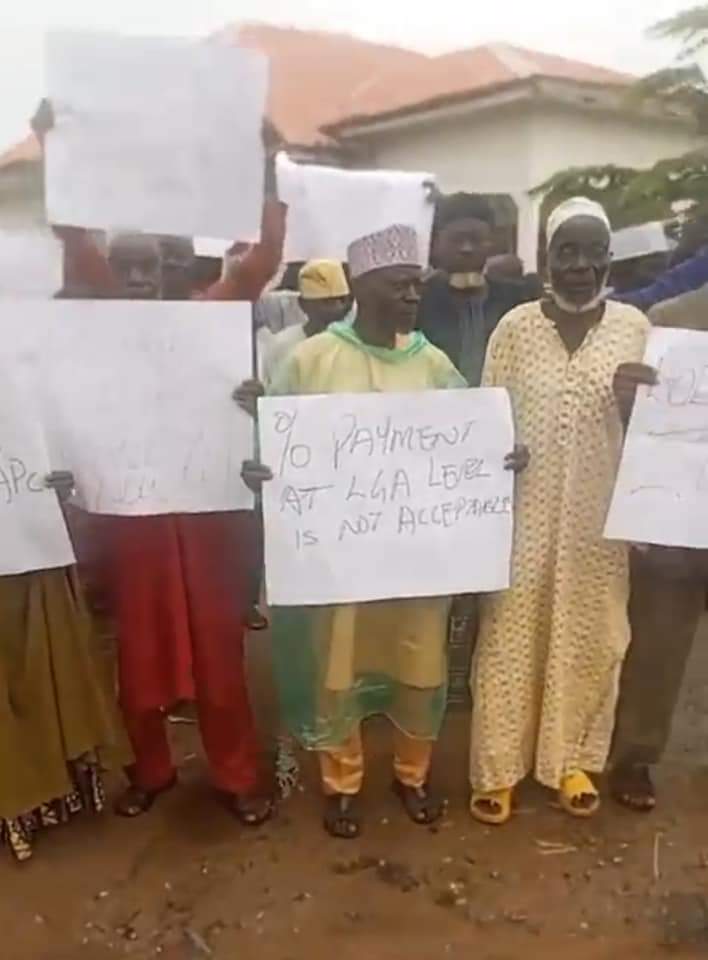
Despite an order by the state government in 2022, affirming the release of one billion naira for disbursement to retirees in the state, Zitta and some of his members said they were to get it.

Zitta recounted how his members had taken to the streets to protest seven times, demanding their entitlements without receiving them.

He, however, noted that the former Director-General of the Niger State Pension Board, Nasiru Saidu Namaska, gave them assurances of finalised arrangements for the payment.

Regrettably, Zitta said the assurance had yet to be fulfilled.