Home Blog Page 609

FG initiates policy to curb brain drain in health sector

0

THE Federal Ministry of Health and Social Welfare has announced the development of a National Policy on Health Workers’ Migration, which aims to address the migration of health workers from the country. 

According to the ministry’s deputy director of the Department of Health System, Health Planning Research and Statistics, Nwakaego Chukwuodinaka, the initiative has been submitted to the Federal Executive Council by the ministry.

Chukwuodinaka said this at a recent policy dialogue on health workers’ migration in Africa, which was organized by the African Health Observatory Platform (AHOP) and anchored by the World Health Organization (WHO).


Read Also:

Study lists absenteeism, others as healthcare challenges in Nigeria

Brain drain: Less than 45% of registered doctors in Nigeria renew licence – MDCN

Brain drain: How FG is replacing migrant doctors – Minister


“What we are requesting is to have a managed migration, and to be able to implement that policy, we need a nod from the FEC. One of the key components of the Health Workforce Policy is to incentivise those that are on ground working, especially those in the rural and underserved areas. (It also seeks) to sign a pact with the destination countries.

“The pact is for us to equally gain from them poaching our health workers in the area of bringing technology for us, infrastructure and exchange programmes to help those we are training in-country,” she said.

The ICIR reports that the migration of health workers, particularly doctors, nurses, and other essential healthcare professionals, has long been a significant challenge facing Nigeria’s healthcare system. Their exodus has left many healthcare facilities understaffed and struggling to meet the population’s healthcare needs.

On April 26, this organisation reported that only 45 per cent of registered doctors in Nigeria renewed their licence in 2023.

In September 2023, the former president of the Nigeria Medical Association (NMA) said Nigeria had fewer than 100,000 registered doctors, out of which 50,000 practised in Nigeria. He noted that for Nigeria to meet the World Health Organisation’s standard of doctors to patients ratio, the country must employ at least 250,000 medical doctors.

Most doctors have migrated to practise outside the nation due to poor remuneration, inadequate infrastructure, unemployment, workplace conditions, economic issues, and inflation, among others.

Doctors migration has continued to push many medical practitioners, particularly doctors and nurses, to seek a greener pasture abroad.

In response to this, Chukwuodinaka said the new policy would support those who have migrated and want to return home, including how they could be absorbed into the system.

While the policy details are yet to be unveiled, doctors and other medical practitioners may find it unwelcome, as in the case of the nurses against the Nursing and Midwifery Council of Nigeria (NMCN) new verification certification guidelines.

The ICIR reported how nurses, under the umbrella of the National Association of Nigeria Nurses and Midwives (NANNM), on Monday, February 12, protested in Abuja and Lagos against the council’s new verification certification guidelines.

Many nurses, mainly women, voiced discontent with what they perceived as an effort to impede their freedom to pursue career opportunities. 

If implemented, the new policy states that eligible applicants must have a minimum of two years’ post-qualification experience and hold a permanent practising license. 

The council also required letters of good standing from the applicant’s workplace and nursing training institution, adding that active practising licenses valid for at least six months prior to expiration are necessary, and the verification process takes a minimum of six months.


‘Brain drain in Nigeria’s healthcare very important issue’

On her part, the chairman of the Senate Committee, Secondary and Tertiary Health Services, Ipalibo Banigo, emphasised the importance of initiating strategies to mitigate brain drain in Nigeria.

She noted that brain drain among healthcare workers in Sub-Saharan Africa had been an important issue, adding that the availability of a quality and large number of health workforce across the various disciplines of health played a major role in health outcomes. 


“It is important that we are able to come up with strategies and ways to go about it to mitigate the brain drain, to improve the strength of our health care workers, and improve their retention for a better outcome to compare with the global standard of health.”

Speaking on budgetary allocations to the health sector, she bemoaned the abysmally low health funding, far below the 15 per cent Abuja Health Declaration in 2000.

Alleged defamation: Court gives Air Peace 7 days to answer FIJ’s queries

0

A LAGOS High Court has directed Air Peace to answer questions raised by the Foundation for Investigative Journalism (FIJ) over alleged defamation claims in a case instituted by the airline.

In the suit marked LD/ADR/4833/23, Air Peace accused FIJ of defamation in a report by the media house on its flight operations of October 12, 2022, from Lagos to Anambra.

Air Peace had maintained that it adhered to safety protocols and practices in compliance with safety directives and policies.


 Read Also:

As a defendant in the suit, The FIJ raised some questions for the airline to answer.

Responding to the questions, the airline challenged FIJ’s inquiries regarding the aircraft used and flight operation.

Air Peace described the inquiries as “scandalous and irrelevant” to the libel suit. 

Dissatisfied with the responses to the questions, FIJ applied to the court, compelling Air Peace to answer the questions initially objected to by the airline.

In the ruling, delivered on Thursday, July 25, The court, headed by trial judge Jose, upheld FIJ’s argument.

According to the judge, the request for the details of the first two aircraft designated to convey passengers is relevant to the facts in the issue and relates to the defendant’s case.

The court stated that answers to the questions could prove that the defendants were right. 

Consequently, the court directed Air Peace to answer Questions 1, 4, and 7 of the defendant’s interrogatories within seven days of issuing the order. 

Abimbola Ojenike and Jesulayomi Oyelami represented the FIJ in the case.

  1. The media house wants Air Peace to provide a comprehensive description and specification of aircraft 5N-BUL, which was initially scheduled to operate as Flight P47336 on October 12, 2022. 

According to FIJ, the description should include the make, year, engine type, and service information, including the most recent aircraft maintenance checks conducted before flight P47336 on October 12, 2022, particularly but not limited to any faults or repairs on the systems.

2. Comprehensive specifications of the technical issues discovered during flight P47336’s operation and the circumstances leading to the aircraft’s change from 5N-BUL to 5N-BQQ.

3. A comprehensive description and specification of the aircraft 5N-BQQ initially onboard the passengers for the operation of flight P47336 on October 12, 2022. The description should include make, year, engine type, and service information, including the most recent aircraft maintenance checks conducted before flight P47336, particularly but not limited to any system faults and repairs.

In October 2022, FIJ reported that passengers aboard an Air Peace aircraft flying from Lagos to Anambra managed to escape death after its engine stopped working three times at the take-off point.

FIJ reported that the aircraft, scheduled to take off at 11 a.m., was delayed for two hours after the airline’s management announced that the plane initially earmarked for the Anambra trip had suddenly developed a fault.

“The engine stopped three times, and there was no explanation until passengers asked to be allowed to leave the plane. The captain only gave a vague explanation when the passengers expressed their concerns. He said the DAC or something similar to that went off on us.

“This was supposed to be a substitute plane as the first couldn’t be used for technical reasons. If this lackadaisical attitude continues, I fear they may record a crash soon. If we had flown today, we likely would have crashed,” FIJ had quoted sources as saying in the report.

Following the report, Airpeace instituted legal action against FIJ, demanding N50 million in damages, N250 million in aggravated damages, and N5 million for legal action.

The suit was adjourned to May 23, 2024, for further hearing.

19 burnt to death as Dangote truck crashes into bus on Okene highway

0

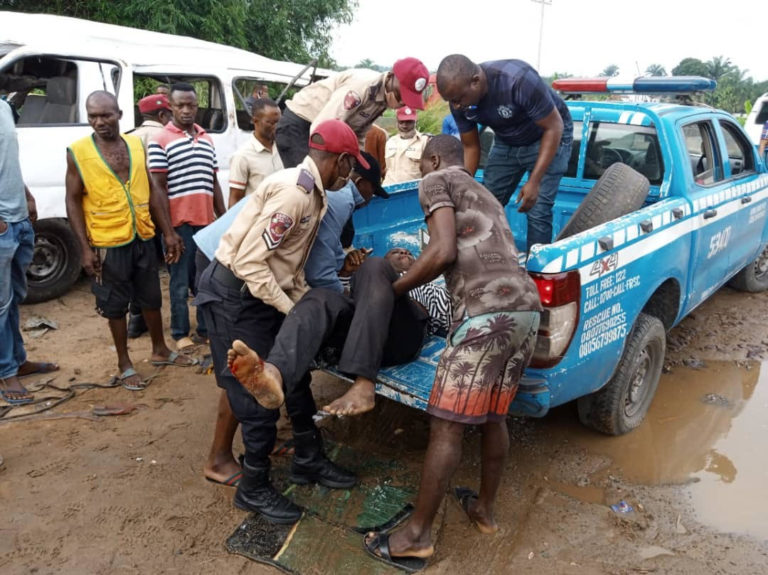
NINETEEN persons reportedly lost their lives in an auto crash at Okene bypass on the Okene-Lokoja highway in Kogi on Sunday, April 28.

The crash involved a Dangote Cement truck and a Toyota Hiace bus, the Public Education Officer of the Federal Road Safety Corps (FRSC), Assistant Corps Marshal Jonas Agwu, told journalists.

According to Agwu, the Toyota bus travelling from Kano was on its lane when the Dangote truck driver travelling from Port Harcourt wrongfully overtook a vehicle and collided head-on with the bus.

He said it took operatives of the FRSC, battling through the accompanying inferno, three hours to rescue two surviving victims of the crash.


Read Also:


“The impact of the collision resulted in an inferno that burnt the victims to death,” 

Agwu said the crash, caused by route violation and wrongful overtaking, involved 22 male persons.

“Unfortunately, 19 persons out of the 22 victims were killed, while one was injured. The two victims who got rescued by FRSC operatives survived without injuries because they complied with traffic regulations on the compulsory use of seatbelts.

“Corpses retrieved from the crash were deposited at Okene General Hospital.” 

The FRSC spokesperson added that the driver of the Dangote truck would be prosecuted by directives earlier issued by the Corps Marshal, Dauda Ali-Biu.

Ali Biu had called on the judiciary, the leadership of transport unions and other relevant stakeholders to join hands with the FRSC to restore sanity to Nigerian roads through speedy and effective prosecution. 

The accident on Sunday came barely one week after 14 persons died, and 13 others sustained various degrees of injuries in an accident at Aloma community in Ofu Local Government Area of Kogi State.


    NAFDAC dismisses report on Nestle’s sugar-coated infant milk

    0

    THE National Agency for Food and Drug Administration and Control (NAFDAC) has said the Nido infant milk formula, allegedly containing sugar or honey was not registered or sold in Nigeria.

    The Director-General of NAFDAC, Mojisola Adeyeye, stated this in a statement on Sunday, April 28.

    She said the agency’s attention was drawn to an online publication that alleged that one of the world’s largest consumer goods companies added sugar and honey to infant milk and cereal products sold in many poorer countries, contrary to international guidelines to prevent obesity and chronic diseases.

    Adeyeye noted that the online publication of April 17, 2024, was circulated widely to the general public.

    The Guardian UK published the report titled ‘Nestlé adds sugar to infant milk sold in poorer countries, report finds’. 


    Read Also:


    According to the report, samples of baby food products sold in Asia, Africa and Latin America were tested, and results revealed that sugar and honey were added in the form of sucrose in samples of Nido and Cerelac.

    Campaigners from Public Eye, a Swiss investigative organisation, sent samples of the Swiss multinational’s baby food products sold in Asia, Africa and Latin America to a Belgian laboratory for testing.

    The results and examination of product packaging revealed added sugar in the form of sucrose or honey in samples of Nido, a follow-up milk formula brand intended for use by infants aged one and above, and Cerelac, a cereal aimed at children aged six months and two years.

    It added that Nestlé’s main European markets, including the UK, contain formula for young children that contains no added sugar. While some cereals for older toddlers contain added sugar, none is in products targeted at babies between six months and one year.

    “Nestlé must put an end to these dangerous double standards and stop adding sugar in all products for children under three years old, in every part of the world,” the Public Eye’s agriculture and nutrition expert, Laurent Gaberell, was quoted to have said.

    In her statement on Sunday, the NAFDAC boss said, “The management of NAFDAC wishes to use this medium to reassure the public that the agency exercises due regulatory diligence in the registration of infant and young children foods distributed and used in Nigeria.

    “This is in line with relevant Codex Alimentarius international food standards (Codex) and more specifically, Nigerian Industrial Standards (NIS). This is applicable to all categories of infant and young children foods distributed by manufacturers, importers, and marketers of infant and young children foods operating within Nigeria.

    She said the product was not registered in Nigeria, not known to the agency, and not in circulation in the country.

    Adeyeye maintained that the range of Nestle Cerelac infant cereals distributed in the country was duly registered with NAFDAC and was in line with the Nigerian Industrial Standard for Foods for Infants and Young Children.

    “Processed Cereal Based foods (NIS 256:2010) and the Codex Standard for Processed Cereal-based Foods for Infants and Young Children (CXS 74-1981 was adopted in 1981, revised in 2006, amended in 2017, 2019, and 2023), as well as the applicable NAFDAC regulations for compliance with safety, quality, and labelling requirements.

    “Adequate, optimal nutrition during infancy and early childhood is essential to ensure the growth, health, and development of children to their full potential.

    “The Codex Alimentarius Commission (CAC) implements the Joint FAO/WHO Food Standards Programme, developing international food standards, guidelines, and codes of practice with the mandate to protect the health of consumers and ensure fair international food trade, Adeyeye explained.

    She added that iNAFDAC was fully aware of its responsibility to ensure the safety, wholesomeness, and quality of infant and young children’s foods offered for sale in Nigeria in compliance with the relevant standards and regulations. 

    Nigerian air strikes hit terrorist enclaves in 2 states

    0

    THE Air Components of Operations Whirl Punch and Delta Safe on Saturday knocked out terrorists’ hideouts in the Niger and Niger Delta states.

    The director of public relations and information at the Nigerian Air Force (NAF), Edward Gabkwet, disclosed this in a statement on Sunday, April 28.

    The ICIR reports the Niger Delta has been notorious for age-long illegal oil bunkery.

    In the statement on Sunday, Gabkwet said air strikes were executed against economic saboteurs siphoning crude oil from mutilated pipelines, destroying the environment and ecosystem of the state.


    Read Also:


    According to him, the surveillance of Ke (Kalabari), Egbema, Akaso Krakama, Krikama, and the military council valley revealed a fleet of illegal refining sites that were effectively destroyed.

    He hinted that a Cotonou boat fully loaded with crude oil was also observed at Akaso Krakama, which was about to depart southwards and was destroyed.

    “At Krikama, several cooking sites were observed and destroyed as well. In all, 18 illegal refining sites and three Cotonou boats were destroyed.”

    In the Niger state, Gabkwet said similar air strikes hit the enclaves of notorious terrorist kingpin Mallam Umar and several other commanders located in Alawa Forest in the Shiroro area of Niger state, following intelligence surveillance targeted at the location.

    The terrorist enclaves include clusters of huts amidst dense vegetation, with a significant presence of armed terrorists, he said.

    The NAF spokesperson explained that the terrorists were responsible for the recent attacks on ground troops at Bassa in Plateau State and the detonation of multiple improvised explosive devices (IED) along the Pandogari-Alawa road in Shiroro.

    “Accordingly, the Air Component promptly deployed its air assets to decisively eliminate the terrorists, resulting in effective and maximum damage to the targets.

    “A post-strike Battle Damage Assessment later confirmed the neutralisation of several of the terrorists and the destruction of their hideouts, with positive consequences on their ability to attack surface forces as well as innocent civilians within the area,” Gabkwet said.

    He said air strikes had substantially weakened the potency of terrorist elements in the Northwest and oil thieves in the Niger Delta regions.

    The statement added that NAF would continue collaborating with other security agencies through extensive situational awareness patrols and targeted interdiction of criminals’ safe havens.

    On February 12, The ICIR reported an attack by suspected gunmen in two villages of the Miango district of Bassa Local Government Area (LGA) of Plateau State that led to the death of about four people.

    PDP wins all 33 LGAs in Oyo council election

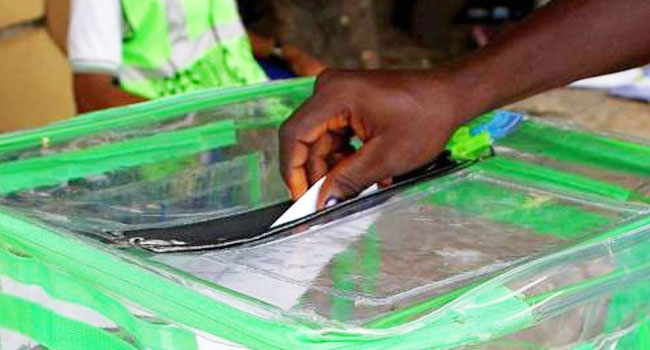
    The Peoples Democratic Party (PDP) candidates have won all the chairmanship seats in the 33 Local Government Areas (LGAs) in the Oyo state council election held on Saturday, April 27.

    The state Independent Electoral Commission (OYSIEC) announced the result on Sunday, April 28, at the Commission’s Conference Hall in Agodi, Ibadan.

    The announcement came amidst controversy over anomalies during the voting process.

    The chairman of OYSIEC, Isiaka Olagunju, confirmed the results and declared the candidates of the PDP winner following the announcement of the results from each of the 33 LGAs where the election took place. 

    Olagunju appreciated all electoral officers, party agents, and security personnel who participated in the process. However, he admitted that there was room for improvement and promised to provide the state government with a thorough report on the election as soon as it was completed.

    However, parties in some LGAs complained about anomalies they observed during the election, ranging from personnel and material delays to the unavailability of critical materials.

    Meanwhile, The African Action Congress (AAC) has expressed dissatisfaction with how the poll was conducted and has demanded that they be called off.

    During a press conference held at the party’s Ibadan headquarters, the AAC’s National Publicity Secretary, Femi Adeyeye, said the Oyo State government did not have a legitimate election.

     He demanded that the party’s chairman and another member who had been detained during the election process be released by security agencies.

    The ICIR reported that the LGA election was held amid tight security.

    The state Governor, Seyi Makinde, reportedly cast his vote at about 10.23 a.m. at polling unit 1, Ward 11 in Ibadan North East LGA.

    OYSIEC conducted the election, which was held across the 33 LGAs.


    Nearly 2 years after ICIR report, deplorable Giri village road receives facelift

    0

    ALMOST two years after The ICIR report, the road to Giri, a village located along the Abuja-Lokoja expressway, has received a minor facelift. 

    Giri is a rural community about eight kilometres from Gwagwalada, one of Abuja’s major towns.

    According to residents, the road, which was deplorable for many years, is now motorable.


    Read Also:

    The state of Giri Road before the facelift made life unbearable for the low-income residents, many of whom work in the city centre. Most were forced to relocate to other neighbouring villages. 

    The contract for rehabilitating the road was awarded in 2015, but it was abandoned a few months later after the contractor received an advance payment of N50 million. 

    An investigation by The ICIR in 2022 also revealed that the details of the road construction contract were shrouded in secrecy.

    Before and after image of Giri town road
    Before and after image of Giri town road

    A visit to the site in 2022 showed that the road had been abandoned and contractors were not working on it. No drainage was built, and erosion had eaten part of the road.

    A bridge linking the road had also collapsed during that period, making the road a nightmare for motorists.

    The 1.6km road was unpassable despite the government paying an initial N50 million to the contractor in 2015.

    “We are tired every time we hear they have started work on the road, but in the end, the contractors will disappear, while the road remains in a pathetic condition,” Umaru Gidado, a resident of Giri town, told The ICIR in 2022.

    State of drainage on Giri town road in 2022
    State of drainage on Giri town road in 2022

    Many residents who spoke to The ICIR reporter during the investigation narrated the ordeals they face daily on the road.

    However, confirming the present condition of the road in a chat with The ICIR on Friday, April 26, 2024, Abdulkareem Mumuni, a resident of the area, said the road had been improved, but more work needed to be done.

    Drainage being constructed on Giri road. Pictured by The ICIR on 26/04/2024
    Drainage is being constructed on Giri Road. Picture by The ICIR on 26/04/2024

    According to Mumuni, the collapsed bridge on the road reported by The ICIR in 2022 was reconstructed in 2023, while work on the road started in 2024.

    “Yes, the road is better now. They have not completed the road yet, but it is better than before. Cars can now move on it. The damaged bridge has been repaired, and they have done the drainage,” Mumuni said.

    He also appealed to the government to complete the road before the rainy season.

    It was also observed that drainage is currently being constructed on the road. Before now, there was no single drainage.

    According to the FCT audit report of 2019, the construction of the road was awarded to a contractor, Tinamat Biz Construction Ltd, for the sum of N157 million in 2015. 

    Present state of Giri road
    The present state of Giri road

    However, a visit to the contractor’s office in Wuse to find out why the road construction had not taken off despite payment of an initial N50 million showed that no company of such exists at the address listed on the CAC site.

    SERAP sues NNPC over alleged missing $2.04bn, N164bn oil revenues

    0

    THE Socio-Economic Rights and Accountability Project (SERAP) has filed a lawsuit against the Nigerian National Petroleum Company Limited (NNPCL) over what it termed “failure to account for and explain the whereabouts of the alleged missing $2.04 billion and N164 billion oil revenues.”

    According to SERAP, this followed the allegations documented in the recently published 2020 audited report by the Auditor-General of the Federation that the NNPC failed to remit the money into the federation account, saying that the funds may have been diverted.

    The SERAP disclosed this in a statement signed by its deputy director, Kolawole Oluwadare, on Sunday, April 28.


    Read Also:

    The suit marked FHC/ABJ/CS/549/2024 was filed on Friday, April 26, at the Federal High Court in Abuja.

    In the suit, SERAP is seeking “an order of mandamus to direct and compel the NNPC to account for and explain the whereabouts of the missing USD$2.04 billion and N164 billion oil revenues, as documented in a report by the Auditor-General.”

    In the statement, SERAP urged the NNPCL to hand over suspected perpetrators to the Independent Corrupt Practices and Other Related Offences Commission (ICPC) and the Economic and Financial Crimes Commission (EFCC) for investigation and prosecution.

    The group also urged the anti-graft agencies to ensure the full recovery and remittance of the missing funds to the federation account.

    SERAP stated that the failure to account for the missing oil revenues echoes the nation’s oil giant’s inability to maintain the principles of transparency and accountability.

    In condemning the missing oil revenues, SERAP lamented that “more funds would have likely been allocated to the fulfilment of economic and social rights of Nigerians, such as increased spending on public goods and services, had the NNPCL and its subsidiaries accounted for and remitted the disappeared public funds into the federation account.”

    SERAP added, “The missing oil revenues have also impeded Nigerians’ ability to enjoy their economic and social rights and denied them access to essential public goods and services, especially at the time of cost of living crisis in the country.”

    The SERAP argued that the NNPC had a legal responsibility to account for and explain the whereabouts of the disappeared money.

    “Without the full recovery and remittance of the missing USD$2.04 billion and N164 billion oil revenues, the dire economic situation may worsen, and Nigerians will continue to be denied access to basic public goods and services,” the group said.

    The SERAP said the Auditor-General of the Federation had reportedly documented complaints of missing public fund from the NNPC for many years.

    It added that the Auditor-General of the Federation was concerned that the funds might have been siphoned into private accounts, depriving the government of the necessary revenue to carry out its operations.

    A date for the hearing of the suit has not been fixed.

    Investors lose over N3trn in one month after CBN’s rate hike

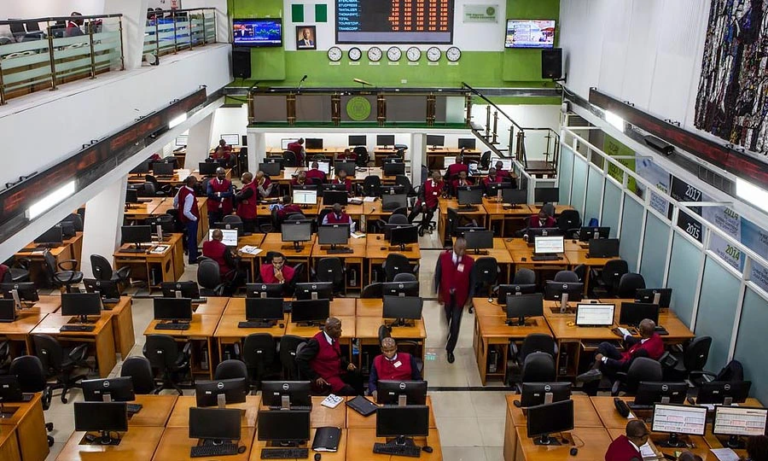
    NIGERIA’s stock market has been hit by the Central Bank of Nigeria’s (CBN) monetary policy tightening, as investors have lost over N3 trillion in just one month.

    The CBN had increased the monetary policy rate (MPR), otherwise known as the benchmark interest rate, by 200 basis points (bps) to 24.75 per cent on March 26, at the end of its two-day monetary policy committee (MPC) meeting.

    This came after it raised the benchmark interest rate by 400 basis points to 22.75 per cent earlier in February, resulting in a 600 basis point increase in MPR since the beginning of this year.

    The rate hike was intended to rein in inflation stoking the country’s economy and businesses and worsening citizens’ hardships. However, inflation has further surged since the last MPC meeting.


    Read Also:


    Stock market analysts had told The ICIR that the rate hike would negatively impact the equities market, lower investors’ confidence, and possibly erode attractive dividends companies might want to pay.

    As of the close of trading on Friday, April 26, investors had lost approximately N3.26 trillion, as the market capitalisation had dropped to N55.51 trillion from N58.78 as of Tuesday, March 26.

    In the review period, the All Share Index declined to 98,152.91 bps on Friday, April 26, from 103,952.47 bps as of March 26.

    An investment and portfolio analyst, Abel Ezekiel, told The ICIR that with the rate hike, investors would prefer to shift their portfolios from higher-risk stocks to the fixed-income market, where bonds and other fixed-income assets are bought and sold.

    “If MPR increases, the rate at which the government wants to borrow money from investors will rise. This will now make investors dump the stock market, bond market, treasury bill, and other fixed-income assets,” he explained.

    The tradeoff between equities and fixed-income assets has been evident since the last MPC meeting, even though some analysts believe the Nigerian stock market will likely dip further.

    In the period under review, all the sectoral indices trading on the Nigerian Exchange Limited (NGX) floor also declined.

    The bank sector index declined by 23.05 per cent from 993.50 bps to 764.50 bps, followed by the insurance index, which dropped by 3.40 per cent from 395.13 bps to 381.69 bps.

    The industrial index fell by 2.65 per cent from 4,832.29 bps to 4,704.32 bps, the consumer goods index by 2.51 per cent from 1,611.06 bps to 1,570.61 bps, and the oil and gas index by 1.69 per cent from 1,294.38 bps to 1,272.53 bps.

    The CBN rate hike has also dashed the expectation of attractive dividend payouts from quoted companies, especially manufacturing companies posting negative performance in their first-quarter financial results.

    On Friday, April 26, The ICIR reported that Nigerian Breweries (NB) Plc reported an N52.09 billion net loss in its first quarter (Q1) of 2024, up from the N10.72 billion loss posted in Q1 2023. This represents a 386.13 per cent loss in its bottom-line performance.

    The bearing sentiment in the stock market has resulted in sell-offs and profit booking in some highly-priced stocks and blue-chip companies. 

    In their weekly market review, Cowry Research analysts anticipate a week of gradual market gains driven by dividend qualifications, noting that entry opportunities emerge due to the market’s oversold condition.

    However, the Cowry Research analysts added, “Our outlook remains mixed, contingent on several factors, including macroeconomic reports and foreign exchange market activities.”

    Also, analysts at Comercio Partners said, “We expect a positive start to the next session,” despite the dismal performance in the Nigerian stock market. 

    FG begins demolition of Landmark Beach for coastal road project

    0

    THE federal government of Nigeria has begun demolishing structures on the right-of-way of the Lagos-Calabar coastal road project.

    The coastal road is designed to connect Lagos to Cross River, passing through Ogun, Ondo, Delta, Bayelsa, Rivers, and Akwa Ibom.

    On Saturday, April 27, the Minister of Works, Dave Umahi, flagged off the demolition exercise at the Mani Chula Beach, Oniru Waterfront, a section of the Landmark Beach.

    He said the beach was within the coastal corridor and legitimately in the federal government’s right-of-way, hinting that owners of affected structures along the coastal highway would be compensated.

    According to Umahi, the 700-kilometre Lagos-Calabar coastal road construction would cost N15 trillion, as each kilometre of the road would cost N4 billion.


    Read Also:


    Although some Nigerians opposed the project, he said the highway was necessary for the country’s economic development.

    The ICIR reports that the project has been criticised by concerned Nigerians, including the 2023 presidential candidate of the Labour Party (LP), Peter Obi, who described it as a misplaced priority and former Vice President Atiku Abubakar, who labelled it a fraud.

    In a statement, Obi said, “We must allocate resources towards repairing and completing existing infrastructure, crucial for the well-being and safety of our society, before embarking on new projects, no matter their perceived benefits.

    “Let’s prioritise the urgent needs of our people and ensure that our investments serve the collective good of the nation. In any development formula, the primary focus should be on completing and rehabilitating existing infrastructure rather than embarking on colossal new projects that may never reach completion within the next 30 years.”

    In an interview with CNN, the proprietor of Landmark Beach Resort, Paul Onwuanibe, said he received a notice to vacate his multimillion-dollar beach resort within seven days in late March due to the impending demolition.

    He estimated that the property worth over $200 million, accommodated more than 80 businesses, sustained over 4,000 direct jobs, and contributed more than N2 billion in taxes yearly.

    Onwuanibe noted that he purchased the land in 2007, well before the coastal highway plans were formulated, and was left with mixed feelings after receiving the demolition notice.

    According to him, his company had spent between $80 and $90 million developing the ecosystem, one-third of which was spent on the beach, for which it was still paying loans.

    While the planned coastal project would connect vital regions of the country, Onwuanibe feared it would come at a steep cost for tourism in Lagos and threaten foreign direct investment into the country if Landmark Beach was eventually torn down.

    “People who bring in money to make cities like this effective will be very concerned (with the proposed demolition of the beach resort). It will pose a huge threat to inward investment into the state and, most importantly, pose a threat to people who are already in the state trying to do things.

    “I have had widespread panic calls from my international and local investors as well as local debt providers threatening to pull the plug as they think this is material to our survival as a business,” he lamented.