AS the ninth season of Nigeria’s popular music competition, Nigerian Idol sets to commence, the organisers, Multichoice Nigeria has unveiled the judges for the new season.
The organisers on Saturday, April 6, revealed Omawunmi, Ric Hassansi, and 9ice as the judges while Ik Osakioduwa returns as the host.
According to the organisers, Omawunmi, who served as a guest judge in the music competition’s seventh season, would bring the value of her successful career spanning more than a decade to bear as a judge in this new season.
Similarly, Ric Hassani, a first-time judge in the competition, will be sharing his vital thoughts and experiences with candidates, encouraging them to embrace their uniqueness and achieve their aspirations.
Nigerian singer, Alexander Akande, better known as 9ice, is also on the roster of judges as he will be bringing his wealth of expertise and perspective, giving contestants an insight into the complexities of the music industry.
Speaking about the upcoming season, Busola Tejumola, MultiChoice’s Executive Head of Content and Channels, in West Africa, stated that the show has set the benchmark for other African music talent shows, and the current season is expected to follow suit.
“Nigerian Idol has continuously set the standard for music talent shows in Africa, and Season Nine promises to be no exception. With the new judges on board, viewers can expect unparalleled talent, excitement, and entertainment.
“We are proud to showcase the immense musical prowess that Nigeria has to offer and look forward to another unforgettable season”’, she said
With the theme, ‘Let Your Dreams Take Flight, the 9th season of the Nigerian Idol music talent competition will premiere on April 21, 2024.
The eighth season of the show was won by Delta-born singer and songwriter, Victory Gbakara. The show has provided a platform for young singers, leading to the discovery of notable artists such as Timi Dakolo, Mercy Chinwo, Omawumi, and Progress, among others.
Successfully selected fellows will participate in one of the fellowship’s categories including media entrepreneurship, niche building/business sustainability campus journalism, safety, fact-checking/data-driven, and women in journalism.
The programme includes a two-day workshop and a four-month mentoring session. Registration is ongoing and ends on April 22. Interested persons can apply here.
THE Inspector General of Police, Olukayode Egbetokun, has approved the posting of Police Public Relations Officers (PPROs) to various Commands and Formations.
This was disclosed by the Force Public Relations Officer, Olumuyiwa Adejobi, in a statement on Saturday, April 6.
A new Deputy Force Public Relations Officer for the Force Headquarters, Abuja, was also included in the approval.
The Force Headquarters said these appointments were meant to strengthen community engagement and strategic communication.
“The newly posted officers and their respective portfolios include CSP Isuku Victor Edailokun as Deputy Force Public Relations Officer, Force Headquarters Abuja; DSP Ukandu Joshua to PPRO Ebonyi; ASP Buhari Abdullahi to PPRO Gombe; ASP John Timfon to PPRO Akwa-Ibom; and ASP Hundeyin Isaac Sewanu to PPRO Ports Authority Police (Western) Lagos.
“The Inspector General of Police hereby reiterates his commitment to standardising and repositioning the Force in line with his vision statement while wishing the newly posted officers success in their new roles,” the statement reads.
Adejobi revealed that the newly posted officers have been tasked to be professional in their dealings and foster unalloyed relationships and improve relationships with members of the public.
He also released the names of the newly posted officers and their designations.
The officers and their new portfolios are Victor Edailokun as deputy Force public relations officer, Force Headquarters Abuja; Ukandu Joshua as PPRO Ebonyi; Buhari Abdullahi as PPRO Gombe; John Timfon as PPRO Akwa-Ibom; and Hundeyin Sewanu as PPRO Ports Authority Police (Western) Lagos.
THE Nigerian Electricity Regulatory Commission (NERC) has given the 11 Distribution Companies (DisCos) till April 11 to refund customers wrongly billed at the new rate.
The instruction was contained in a statement on Saturday, April 6, by the commission deputy general manager (DGM), Market Competition and Rates, Abba Terab.
NERC said the refund should be through energy tokens no later than April 11, and the DisCos should file evidence of compliance with the Commission by April 12.
It also directed all the DisCos to provide all affected customers with as much clarity as possible.
It said, “All DisCos shall ensure that only the newly approved Band A feeders listed in their April 2024 supplementary orders are maintained as Band A for the purpose of vending to prepaid customers and billing for post-paid customers on their networks.
“All DisCos are required to immediately post on their websites the schedule of approved Band A feeders that have been affected by the rate review.”
It further directed all DisCos to set up a portal on their websites by April 10, 2024, that allows customers to check their current Bands by entering their meter or account numbers.
“All customers wrongly billed at the new rate should be refunded through energy tokens no later than Thursday, April 11 2024, and file evidence of compliance with the Commission by April 12 2024.
“The Commission shall monitor compliance with the requirements listed above and shall continue to provide support to all stakeholders as required,” NERC added.
The ICIR reported that NERC had approved a tariff hike for Band A customers, who enjoy up to 20 hours of power supply.
The new rate hikes, mainly for customers in the industrial, highbrow estates, and residence areas, elicited reactions from electricity consumers and stakeholders.
The ICIR also reported that the Abuja DisCos (AEDC) had apologised to its customers for wrongful billing.
AMNESTY International has said that justice for the Rwanda genocide victims was more urgent than ever as the country will tomorrow, April 7, mark 30 years of remembrance.
Amnesty International in a statement on Saturday, April 6, called on the international community to urgently renew its commitment to ensure justice and accountability for the victims and the survivors.
The ICIR reports that the Republic of Rwanda will, on Sunday, April 7, begin the 30th commemoration of the 1994 genocide against the Tutsi in Rwanda.
An estimated 800,000 people were killed, including Hutu and others who opposed the genocide and the extremist government that orchestrated it.
Many perpetrators have been tried before national and community courts in Rwanda, the International Criminal Tribunal for Rwanda (ICTR), and courts in Europe and North America under the principle of universal jurisdiction. Recent developments underline the urgent need to pursue justice.
However, Amnesty International Regional Director for East and Southern Africa Tigere Chagutah said that justice delayed is justice denied.
“The confirmed deaths of several of the most-wanted genocide suspects before they could face justice, and the indefinite suspension of the trial of another indictee due to age-related illness, show the importance of maintaining momentum to deliver justice for survivors and relatives of victims in Rwanda.”
“To honour the memories of the victims of the genocide and to deliver justice for survivors and victims’ families, we urge states to recommit to the tireless and timely pursuit of justice, including through prosecuting suspected perpetrators through universal jurisdiction where appropriate,” Chagutah added.
Between May 2020 and November 2023, the International Residual Mechanism for Criminal Tribunals (IRMCT) Fugitive Tracking Team confirmed the deaths of four of the most wanted fugitives indicted by the ICTR.
These included Augustin Bizimana, minister of defence during the genocide; Protais Mpiranya, commander of the presidential guard; Phénéas Munyarugarama, commander of Gako military camp and the highest-ranking military officer in the Bugesera region during the genocide.
In August 2023, the trial of 90-year-old alleged chief genocide financier Félicien Kabuga, who was caught after 26 years on the run, was suspended indefinitely due to age-related illness.
According to Africa’s first Nobel Laureate in Literature, Wole Soyinka, the shade of Rwanda hangs over Nigeria as a nation.
He had warned that the incessant killings by suspected Fulani herders across Nigeria could be likened to the genocide that took place in Rwanda in 1994, The ICIR reported.
OPERATIVES of the Nigerian Army have killed three terrorists who were on their way to repair their motorcycles around Kidandan Village, Giwa Local Government of Kaduna State.
The troops were said to have laid an ambush for the terrorists following an intelligence report. This resulted in a fierce gun battle between the troops and the terrorists.
According to the statement, the troops eliminated three terrorists and recovered several weapons.
The post read, “In a recent successful counter-terrorism operation, Nigerian Army troops have neutralized a group of terrorists in an ambush operation in Kaduna State. Acting on credible intelligence, the troops targeted the terrorist group, known for using motorbikes to carry out nefarious activities in the region.
“During the operation on Friday, April 4, 2024, around Kidandan Village, Giwa Local Government of Kaduna State, the troops engaged the terrorists in a gun battle, neutralising three of them. The group was in transit to repair their motorbikes, which they used as mobility when unleashing their acts of terror on the populace in Kaduna State and across the Northwest region.
The operation also led to the recovery of one AK-47 rifle, one stock AK-47 rifle, four motorbikes, and one Motorola radio.
The Army urged citizens to support security agencies to tackle the scourge of insecurity ravaging many parts of the country.
Last year, the Defence Headquarters said 6,886 terrorists and other suspected criminals were killed by the military during various operations across the country in 2023.
THE Federal Government of Nigeria has unveiled plans to launch a new national identity card with payment and social service delivery capabilities.
The National Identity Management Commission (NIMC) disclosed this in a statement on its X handle on Saturday, April 6, signed by its head of corporate communication, Kayode Adegoke.
The card, to be powered by AfriGO, a national domestic card scheme, is launched by the Federal government through NIMC in collaboration with the Central Bank of Nigeria and the Nigeria Inter-bank Settlement System (NIBSS).
Adegoke said the national ID card, layered with verifiable national identity features, is backed by the NIMC Act No. 23 of 2007, noting that the Act mandates NIMC to enrol and issue a general multipurpose card (GMPC) to Nigerians and legal residents.
He said only registered citizens and legal residents with the national identification number (NIN) would be eligible to request the card, adding that the card would be produced according to International Civil Aviation Organisation (ICAO) standards and be positioned as the country’s default national identity card.
“In addition to this functionality, cardholders will also be able to use the cards as debit or prepaid cards by linking the same to bank accounts of their choice. The card shall enable eligible persons, especially those financially excluded from social and financial services, to have access to multiple government intervention programs.
“This card will address the demand for physical identification, enabling cardholders to prove their identity, access government and private social services, facilitate financial inclusion for disenfranchised Nigerians, empower citizens, as well as encourage increased participation in nation-building,” he said.
Key features of the card will include a machine-readable zone (MRZ) in conformity with ICAO for e-passport information, the identity card issue date and document number in line with the ICAO standard, and Nigeria’s quick response code (NQR) containing the national identification number.
It will also contain biometric authentication, such as fingerprint and pictures, as the primary medium for identity verification through the data on the card chip and offline capability that allows transactions in areas with limited network coverage or zero infrastructure connectivity.
“Request for cards by registered citizens and legal residents will be made available online, at any commercial bank, various agencies or agents participating in multiple and/or any NIMC offices nationwide,”
The Nigerian government has launched various identification schemes, including the national ID card, Bank Verification Number (BVN) and National Identification Number (NIN).
The ICIRreported that despite the multibillion naira NIMC had spent on national identification, its various schemes had failed the country.
“I don’t get it. We don’t need a new ID card, for God’s sake! Get people on the old one. KILODE? Why must we keep wasting money like this? This money would have helped with food inflation or even the power sector. I know the president listens to criticism. He’s going to stop it,” @IamEriOluwa commented.
“The most interesting thing about all things is that it is never in the masses’ favour but an avenue to loot and create an unnecessary inconvenience for the masses. From NATIONAL ID CARD, BVN, NIN and now, A new National ID CARD,” @Akewusolaf said.
PRESIDENT Bola Tinubu has approved the appointment of a managing director and two executive directors to serve on the management team of the National Education Loan Fund (NELFUND).
The appointees are Akintunde Sawyerr, Managing Director; Frederick Akinfala, Executive Director of Finance and Administration, and Mustapha Iyal as Executive Director, Operations.
The special Adviser on Media and Publicity to the president, Ajuri Ngelale, in a statement he signed Friday, April 5, 2024 said the appointments were in line with the determination of the president to secure Nigeria’s socio-economic future by ensuring sustainable higher education and critical skill development for all Nigerian students and the youth.
Tinubu signed the Student Loans (Access to Higher Education) Act (Repeal and Re-Enactment) Bill, 2024, into law on Wednesday, April 3 following approval by the senate on Wednesday, March 20.
The chairman of its committee on tertiary institutions and TETFUND, Muntari Dandutse, presented a report on the bill to the senate the same day.
Tinubu first signed the bill into law in June 2023 to enable students in need to access interest-free loans to pursue their education in any tertiary institution in the country.
However, its implementation was postponed. During the postponement, Executive Secretary of the Nigerian Education Loan Fund (NELFund), Akintunde Sawyer, said he could not give a specific date for the commencement of the programme.
Tinubu later wrote to the Senate on March 14, seeking a repeal of the Act and a re-enactment of the Students Loan Bill 2024.
Although the bill is touted to ease access to tertiary education for Nigerian students, members of the Academic Staff Union of Universities (ASUU) described it as an attempt by the government to abandon funding education in public universities.
Unlike the initial bill that was passed and subsequently repealed, the new Act removed the provision that required applicants’ families to earn an annual income of less than N500,000 before they could be eligible for the loan.
It also allows applicants to access loans that cover other fees aside from tuition, unlike the previous Act that limited applications to just tuition.
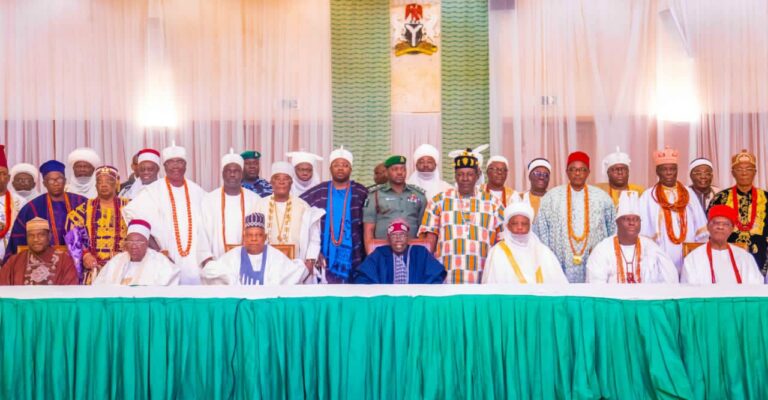
FINDINGS from the 2024 budget have revealed that the Federal Government approved N7.76 billion to cater for 16 capital projects for traditional rulers in Nigeria.
The ICIR analysis showed that the projects are to be implemented by eight federal ministries and departments.
The ministries are Information and Orientation, Agriculture and Food Security, Industry, Trade and Investment, Labour and Employment, Health and Social Welfare, Ministry of Science, Technology and Innovation, and Secretary to the Government of the Federation,
Some of the projects are the provision and supply of SUVs and cars for traditional rulers, which will gulp N400 million; training and empowerment of council of traditional rulers for N100 million; and training of traditional rulers on conflict resolution, which takes N50 million.
Categorising the project by location, three of the projects are for monarchs in Lagos, two projects each for leaders in Katsina and Ogun states, and one project each for monarchs in Akwa Ibom, Ondo, Oyo, Kogi, Plateau and Kaduna states.
In all, there are 13 projects with direct locations, and there are three others without specific locations.
The three projects without specific locations are procuring and distributing official vehicles to selected rulers in the six geopolitical zones for N5 billion and a N40 million allocation to support traditional rulers and chiefs.
Also, N447.09 million was budgeted for the partnership, strategy engagement and field operational support of traditional leaders to transform primary healthcare services.
These findings emerged weeks after the National Assembly was accused of alleged padding of the 2024 budget, which led to the suspension of Senator Abdul Ningi.
Analysis by The ICIR explained the allegation by juxtaposing it with the approved budget.
2024 budget for traditional rulers
Scary misappropriation in the budget
The ICIR filtered the 2024 budget, focusing on traditional rulers’ allocations.
The findings showed that the N7.76 billion allocation is more than the budget approved for the Nigeria Football Federation (NFF) and Nigerian Institute of Sport (NIS). In the 2024 budget, the NFF has N2.05 billion, while the NIS has N1.72 billion.
Also, the N7.76 billion for the monarchs is almost half the total allocation for the Federal Ministry of Women Affairs, which has N14.48 billion as budget.
The ICIR compared the projects for which the N7.76 billion was approved with the ministries’ mandates. The findings showed some appropriations might not have been appropriately done.
For instance, the Ministry of Agriculture and Food Security is expected to carry out the provisions and supplies of SUVs and cars to monarchs in the Ikeja Federal Constituency in Lagos State and the unspecified location of N40 million for support of traditional rulers by the same ministry.
Another is the procurement and distribution of vehicles for traditional rulers for N5 billion by the Ministry of Industry, Trade and Investment, whose mandate is to implement policies and programmes to attract investment and boost industrialisation.
Also, the Ministry of Labour and Employment is expected to construct and furnish the Takkas traditional ruler’s palace and cultural arena in Plateau State with N100 million.
The ICIR dug deeper, checking the eight ministries and departments’ proposed budget when President Bola Tinubu presented it to the National Assembly. Findings showed that the allocations made to the traditional rulers were not captured anywhere under these ministries in the proposed budget.
This means that the addition of N7.76 billion for monarchs was one of the reasons the proposed budget jumped from N27.5 trillion to N28.7 trillion, signed by the President.
This organisation also reviewed the approved budgets for previous years to compare the amount allocated for traditional rulers using the same filtering method.
In the 2023 approved budget, N721.31 million was allocated for seven projects across five ministries for monarchs.
Also, in the 2022 approved amended budget, the Federal Government earmarked N326.65 million for three projects, while in the 2021 budget, N607.37 million was for six capital projects for the monarchs.
Years
Amount
Number of Projects
2024
N7.22 billion
16
2023
N721.31 million
7
2022
N326.65 million
3
2021
N607.37 million
6
Table showing the capital projects and amounts budgeted for traditional rulers between 2021 and 2024. Source: Budget Office
Who takes care of traditional rulers?
While no constitutional provisions limit the capital projects that could be captured in the budget, the budgetary provisions for traditional rulers are usually captured at the subnational level.
The ICIR observed that most states provide a commission for traditional rulers or transfer the responsibility of traditional leaders’ welfare and related matters to the Local Government Commission.
A legal practitioner, Lukman Raji, who spoke to The ICIR, said it was a misplaced priority for the Federal Government to make provisions for traditional rulers in the budget when the state government budget takes care of it.
He said, “The traditional rulers are not even directly under the state government but under their local government. It is wrong, and it will be a misplaced priority for the Federal Government to jump the bridge by saying they want to take care of traditional rulers without necessarily amending the Constitution for that.”
Also, a senior research & policy analyst for BudgIT, Vahyala Kwaga, posited that it would be very difficult to end the inclusion of vague, frivolous, duplicated items in the federal budget because the scope of powers of the National Assembly over the budget is not clearly defined.
Kwaga said, “The budget proposal itself has not been demonstrated to have come from an analytically and fiscally rigorous process that takes into consideration revenue constraints and long-term plans. It is simply an incremental budget that allows business as usual.”
The ICIRreported how over N512 billion of frivolous items were passed in the 2024 appropriation budget.
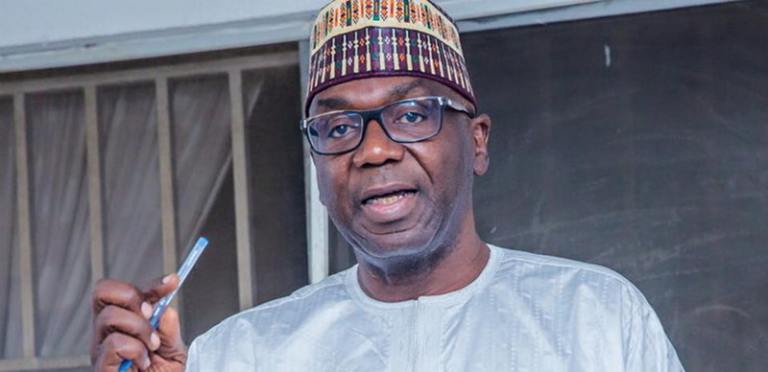
KWARA state government has reiterated its warning against charcoal production and threatened to sanction those violating the existing ban on the activity.
The state Commissioner for Environment, Shehu Ndanusa, disclosed this during a briefing in Ilorin, the state capital, on Friday, April 5.
“The law banning the production of charcoal in Kwara is still intact. Whoever is caught violating the law will be sanctioned accordingly”, he said.
He noted that a task force on charcoal production had been ordered to enforce compliance and seize vehicles conveying charcoal out of the state.
“Do not collect money from violators, make sure you confiscate the charcoal and the trucks and bring them to the Ministry of Environment for necessary actions,’’ he urged the enforcement team.
In 2018, Kwara state banned charcoal production and trade to protect the environment and preserve natural resources.
The state’s former governor, Abdulfatah Ahmed, signed an amendment bill prohibiting the production, transportation, storage or sale of charcoal into law.
The law also provides that offenders are liable to a fine not exceeding N100,000 or imprisonment for a term not exceeding two years—or both upon conviction.
Despite this law, The ICIRreported that tree felling has continued to thrive in the state.
The report also disclosed that between 2001 and 2018, 23,474 hectares of tree cover, representing 22 per cent, were lost to deforestation in the state.
Of this figure, 17,169 hectares were destroyed between 2011 and 2018.
The activity has persisted largely because of the hike in the cost of gas, which is forcing many Nigerians to turn to charcoal and other alternatives for their cooking needs.