Home Blog Page 63

Police confirm explosions in Maiduguri

0

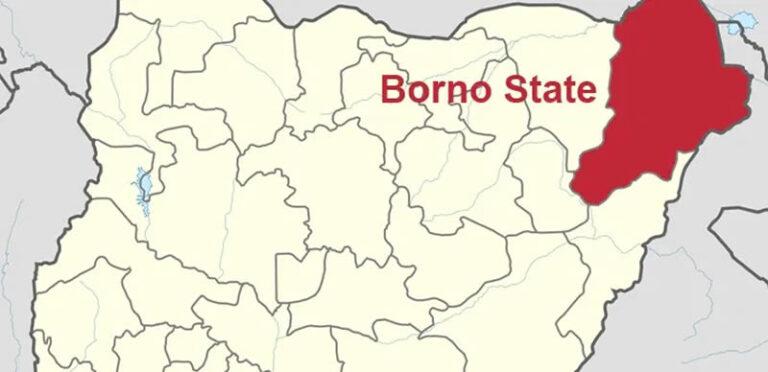
THE Borno State Police Command has confirmed an explosion in Maiduguri, the state capital.

In a statement by the police spokesperson, Nahum Keneth, on Monday , March 16, the command said the explosions were reported around 7:20 p.m. near Monday Market and the gate of the University of Maiduguri Teaching Hospital.

“Following reports of a suspected explosion at Maiduguri Monday Market  and UMTH gate at about 7:20pm, joint security operatives and emergency responders have been deployed. Police EOD Unit, Base 13 Maiduguri, is on ground,” the statement read.

The command advised residents to remain calm and avoid the affected areas while security operatives conduct assessments.

Daily Trust reported how residents were thrown into panic after hearing multiple loud explosions across the city shortly after Muslims broke their fast around 7 p.m.

The affected areas were reported to include the gate of the University of Maiduguri Teaching Hospital, Monday Market Roundabout and Elkanemi.

The report noted that the improvised explosive devices might have been planted by fighters linked to Boko Haram, although authorities have yet to officially confirm the cause of the explosions.

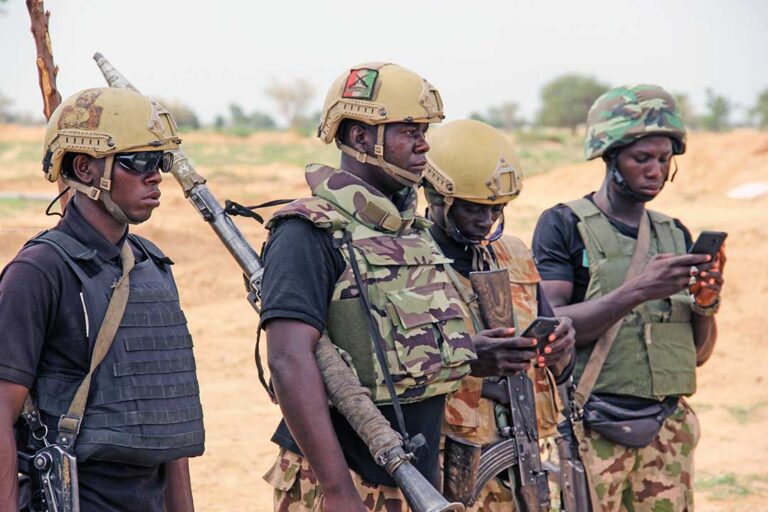
The incident occurred hours after suspected terrorists attacked a military location in Ajilari, an outskirt of Maiduguri, where they engaged the Nigeria military in a gun duel before retreating into the bush.

The latest explosions come amid a renewed wave of attacks by insurgent groups in Borno State and the wider North-East.

In recent weeks, fighters linked to Boko Haram and its splinter faction, Islamic State West Africa Province, have intensified assaults on military formations and communities across the region.

The attacks have targeted army bases, checkpoints and remote settlements, raising fresh concerns about the security situation in the state

Earlier this month, insurgents reportedly carried out coordinated raids on several military bases in the North-East, killing dozens of soldiers and carting away weapons and military hardware after briefly overrunning some positions.

Nigerian inflation drops to 15% in February – NBS

NIGERIA’s headline consumer ‌inflation slowed slightly in February, to 15.06 per cent year-on-year from 15.10 per cent in January, the ​National Bureau of Statistics (NBS) said ​on Monday.

The latest data was the 11th consecutive ⁠monthly slowdown, though the declines ​were minimal in January and February.

The ​Central Bank of Nigeria (CBN), which resumed monetary policy easing with a small interest rate cut last ​month, expects inflation ​to continue falling.

Consequently, food inflation, which has been the ‌main ⁠driver of headline inflation in Africa’s most populous country, picked up in February to 12.12 per cent year-on-year from ​8.89 per cent in ​January, the ⁠NBS said.

While the drop is minimal, it marks a persistent trend of moderation that policymakers at the Central Bank of Nigeria will be watching closely as they struggle to steer the economy toward price stability

The agency recently adopted a revamped methodology, using ​a 12-month reference period instead ​of ⁠a single month. This methodology has continued to impact on the downward trend of inflation, although most Nigerians believe it’s a sharp contrast when compared with the market realities.

The apex bank says that the lagged transmission of previous monetary tightening, exchange rate stability, and an enhanced food supply are helping to bring down inflation.

Nepal celebrates first transgender lawmaker

0

NEPAL is celebrating “historic milestone” as activist Bhumika Shrestha joins the national parliament, becoming the country’s first transgender lawmaker.

Shrestha, 37, was appointed to the 275-member House of Representatives through the proportional representation system, representing the Rastriya Swatantra Party.

“I am very excited but also feel the responsibility on my shoulders” Shrestha said.

She has been a vocal advocate for LGBTQ rights for years, working closely with the Blue Diamond Society (BDS), a leading organisation supporting sexual and gender minorities.

Celebrating her appointment, supporters visited the BDS office in Kathmandu, presenting her with flowers, scarves, and gifts, including a pen meant to symbolise her new legislative role.

She noted that her position would allow her to bring the concerns of gender minorities into national policymaking.

“Our constitution has provisions for our community, but they have not been translated into laws and policies. Our community expects me to raise our issues (in parliament).”

Nepal has some of the most progressive LGBTQ laws in South Asia. Discrimination based on gender or sexual orientation was outlawed in 2007, a third-gender option for official documents was introduced in 2013, and passports recognising an ‘others’ category were added in 2015. In 2023, the Supreme Court allowed same-sex and transgender couples to register their marriages.

Despite these reforms, members of the LGBTQ community have rarely held public office. The last was an openly gay man in 2008, also nominated through proportional representation. Today, more than 900,000 people in Nepal identify as sexual minorities, according to BDS.

Umisha Pandey, BDS president, described Shrestha’s election as a ‘historic’ moment, praising it as a step toward greater visibility and political inclusion for the country’s gender minorities.

“Our pains, our sufferings, our feelings, our stories and our every problem is only understood by us, not by others”.

Nigerian Police, FAAN differ over bandits’ arrest at Akure Airport

0

THE Ondo State Police Command, on Monday, March 16, denied a claim by the Federal Airports Authority of Nigeria (FAAN) that bandits were arrested at Akure Airport.

A statement by the command’s spokesperson, Abayomi Jimoh, said “no such incident occurred at the Akure Airport, and there was no security breach of any kind at the facility.”

While FAAN did not categorically report any security breach at the airport, it announced that four suspected bandits were apprehended “within the vicinity of the Akure Airport” following a joint security operation involving aviation security, the Army, Air Force, Police and other security agencies.  

In a press statement dated March 15, FAAN stated that “four suspected bandits were today apprehended within the vicinity of Akure Airport, Ondo State, following a coordinated security operation involving aviation and local security agencies.”

According to the organisation, the arrest followed a distress alert about suspicious individuals seen behind the airport perimeter near the Eleyewo community.

“The arrest followed a distress alert that suspicious individuals were sighted behind the airport perimeter towards the Eleyewo community. In response, security personnel comprising FAAN’s Aviation Security (AVSEC), the Nigerian Air Force (NAF), the Nigerian Army, the Nigeria Police Force (NPF), and other local security outfits immediately launched a joint search operation,” the statement read.

The agency further claimed that four suspects were eventually apprehended by the joint security team and were handed over to the Nigeria Police Force Area Command for further interrogation.

However, the police in Ondo State, whose officers participated in the arrest, dismissed the claim.

In a statement, the police said: “The Ondo State Police Command wishes to categorically refute the misleading reports currently circulating across some media platforms alleging that four bandits were arrested at the Akure Airport.”

The command stressed that the incident did not happen in the airport vicinity.

According to the police, operatives acted on intelligence about suspected kidnappers operating around the Eleyewo axis of Akure, which led to the arrest of two suspects.

“The command, however, received credible intelligence from a concerned citizen regarding the activities of suspected kidnappers around the Eleyewo axis of Akure. Acting swiftly on the tip-off, operatives of the command launched a targeted operation in the area which led to the arrest of two suspects,” the police said.

The command added that preliminary findings indicated the suspects were providing logistical support to kidnapping operations in the state.

“Preliminary investigation reveals that the suspects are kidnap logistics suppliers aiding kidnap activities within the state. They have since made useful confessional statements that are currently aiding ongoing investigations and efforts to apprehend other members of the criminal network.”

The police urged the public to ignore claims that bandits were arrested at the airport, warning that such reports could create unnecessary panic.

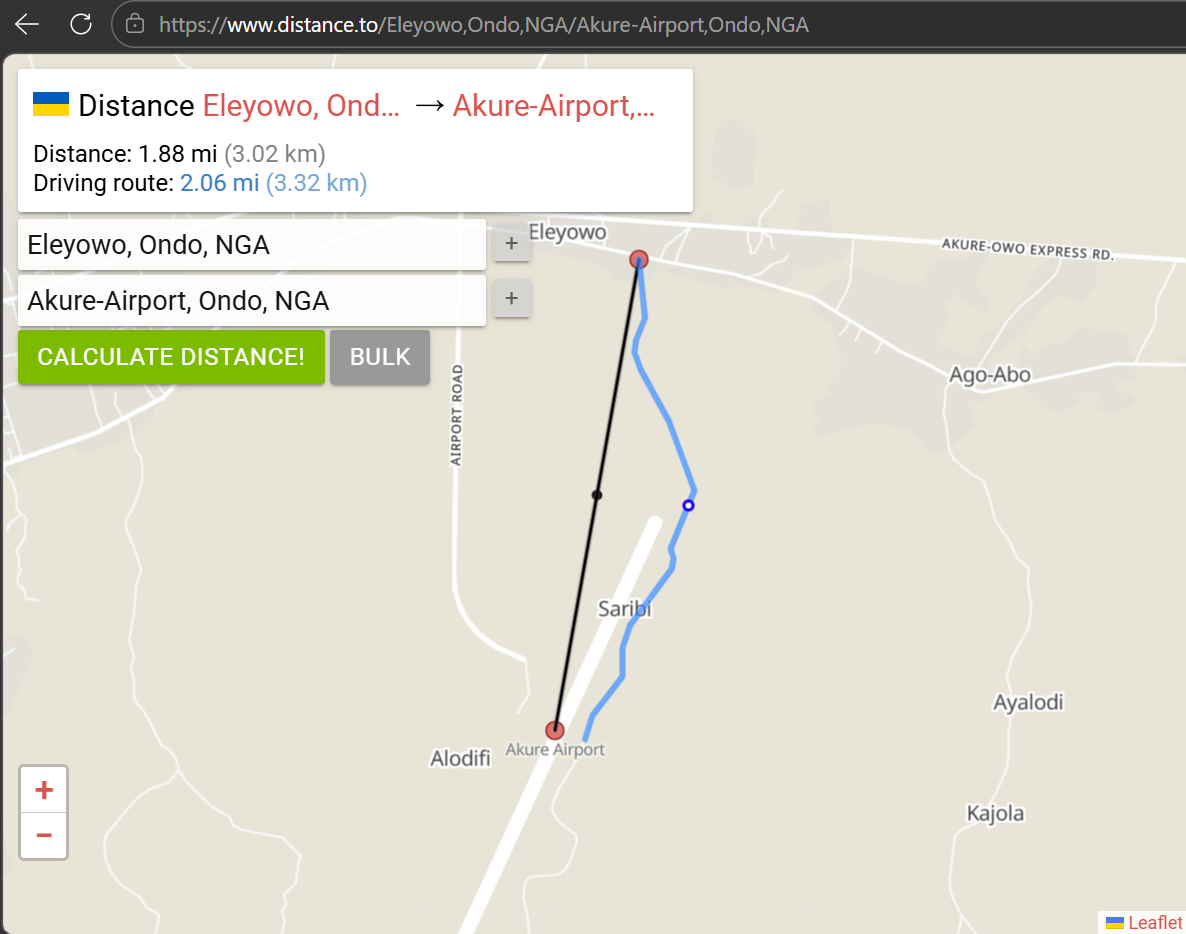
Meanwhile, The ICIR checks showed that the Eleyowo community where the bandits were arrested is just three kilometres from the airport, which makes the community qualify to be within the airport environment.

Distance between Eleyowo community and Akure Airport

Recent events show how bandits have been terrorising Akure North Local Government Area, where the airport is located.

The bandits have kidnapped and killed many people in communities within the local government, forcing residents to force the Akure-Owo road at different times.

Passengers injured as Abuja–Kaduna train coaches detach, collide near Jere

0

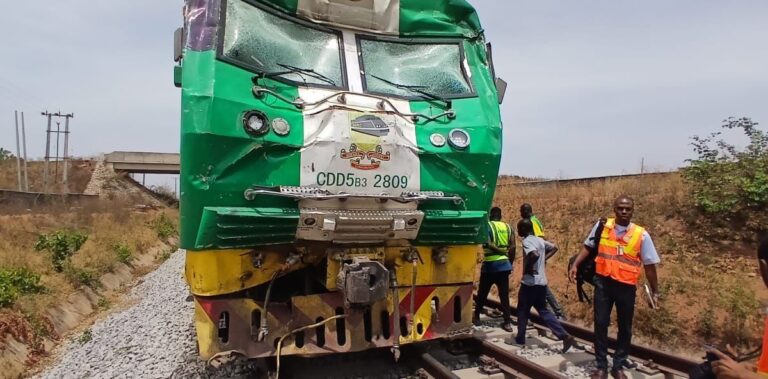
SEVERAL passengers were injured on Monday after coaches of the Abuja–Kaduna train reportedly detached and collided near Jere station, causing panic and leaving hundreds of travellers stranded.

A social media user, Sada Malumfashi, who identified as one of the passengers on board, said the incident occurred shortly after the train departed the Jere station. Malumfashi said a loud bang was heard and the train suddenly jolted to a halt.

“We heard a loud bang and the train jolted to a stop, flinging people across. Passengers got hit and most are bleeding and severely injured,” the passenger said.

According to Malumfashi, the train remained stationary for about 30 minutes before it eventually resumed its journey toward Kubwa. 

The passenger also complained that there was no immediate communication from the Nigerian Railway Corporation (NRC) on the incident.

A video sighted by The ICIR showed that the incident did not involve two separate trains as some posts online claim. Instead, the front coach detached during the journey, causing the rear section of the train to ram into the detached front coach.

The exact cause of the detachment remains unclear, and it could not immediately be confirmed how many passengers were injured in the incident.

Passengers were seen in the footage moving around the tracks, while others appeared visibly shaken by the impact.

Hundreds of passengers were also left stranded following the disruption along the Abuja–Kaduna rail corridor.

As of the time of filing this report, the Nigerian Railway Corporation had yet to issue an official statement on the cause of the incident or provide details of any casualties and the extent of damage to the train.

The ICIR reports that the Abuja-Kaduna rail corridor has recorded several accidents or derailments since inception, resulting in its closures. It has also been attacked by terrorists.


Japan, Australia reject Trump plan to secure Strait of Hormuz

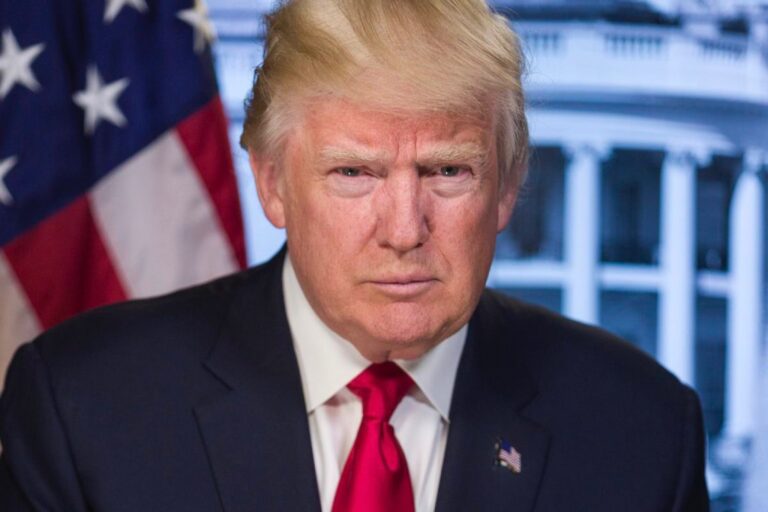
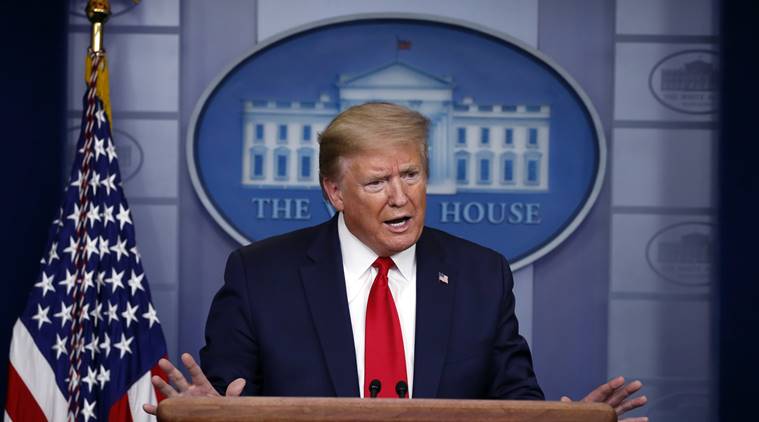
JAPAN and Australia have pushed back against United States President Donald Trump’s call for an international naval coalition to secure the strategic Strait of Hormuz.

The two nations said they had no plans to deploy warships to escort commercial vessels through the vital oil transit route.

Trump had urged major energy-importing nations to help reopen the waterway amid escalating tensions from the Iran–Israel conflict, which has rattled global energy markets and heightened fears over Middle East oil supplies, as nearly 20 per cent of the world’s oil shipments pass through the narrow maritime corridor.

Speaking aboard Air Force One on the way from Florida to Washington, Trump said countries that relied heavily on Gulf oil should take responsibility for safeguarding the route. 

“I’m demanding that these countries come in and protect their own territory because it is their territory. It’s the place from which they get their energy,” he said.

However, Japanese Prime Minister Sanae Takaichi said Tokyo had made no decision to send naval escorts, citing constitutional limits on military deployments despite the country sourcing about 95 per cent of its oil from the Middle East.

“We have not made any decisions whatsoever about dispatching escort ships. We are continuing to examine what Japan can do independently and what can be done within the ​legal framework,” Takaichi told parliament.

Similarly, Australia ruled out contributing naval forces, as the Transport Minister, Catherine King said Canberra recognised the strait’s importance but had neither been formally asked nor planned to take part in such an operation.

“We know how incredibly important that is, but that’s not something ​that we’ve been asked or that we’re contributing to,” King, a member of Prime Minister Anthony Albanese’s cabinet, said in an interview with state broadcaster ABC.

The hesitation from two key Indo-Pacific partners underscores the diplomatic challenge facing Washington as it seeks broader support to stabilise the chokepoint.

Trump also intensified pressure on European allies to help safeguard the Strait of Hormuz, warning that the future of NATO could be “very bad” if member states fail to support Washington’s efforts.

Trump said the United States had contacted several countries including China, France, South Korea and the United Kingdom urging them to participate.

He told the Financial Times on Sunday that he expected China to play a role in reopening the Strait of Hormuz ahead of his planned meeting with Chinese President Xi Jinping in Beijing later this month, warning that the trip could be postponed if Beijing failed to offer support.

However, the European governments are weighing whether to strengthen an existing maritime mission in the region, though diplomats say there is no immediate decision to extend operations into the Strait of Hormuz.

According to Reuters, a Downing Street spokesperson said on Sunday that British Prime Minister Keir Starmer had discussed the need to reopen the Strait of Hormuz with Trump and Canadian Prime Minister Mark Carney, while South Korea said it would carefully consider Washington’s request for support.

The standoff between US-Israel and Iran has already unsettled markets as oil prices climbed above $104 per barrel, while Asian equities slipped amid concerns over potential disruptions to Middle East energy infrastructure.

Similarly, the conflict, which has lasted for over two weeks, has disrupted regional aviation hubs such as Dubai, Doha and Abu Dhabi, forcing widespread flight cancellations and raising concerns about jet fuel supplies across parts of Asia.   

Iran’s Foreign Minister Abbas Araqchi dismissed claims that Tehran was seeking negotiations, saying the country remained prepared to defend itself “for as long as it takes.”

Nigerians react as bandits kill 12 soldiers, 8 vigilantes in Plateau

0

NIGERIANS have condemned the latest attack by gunmen on Nigerian military and vigilantes in Plateau State.

In the ambush, 12 soldiers and eight vigilantes on a joint patrol in Kanam Local Government Area were killed on Friday, March 13.

The team was ensuring security for Garga, Wanka, Kyaram, and Gyambau communities.

According to the Chairman of Kanam Development Association (KADA), Garba Aliyu, the gunmen came in large numbers, heavily armed, and opened fire on the patrol.

“Our local vigilantes fought bravely, but many lost their lives. The military officers were also killed in the exchange.”

KADA said the attackers reportedly invaded Kyaram, looted property and rustled cattle.

The group described the incident as part of a prolonged wave of insecurity affecting border communities with Taraba and Bauchi states.

“We mourn the loss of our defenders and call on authorities to step up protection for residents,” KADA said.

The association urged the state and federal governments to deploy more troops and establish permanent security outposts in the affected corridor to stem further attacks.

Reacting to the attack on social media, Nigerians including @chinaemere61124 tweeted on X, “It’s now a normal thing in Nigeria, lives are wasted like nothing.”

@damexhimself also concurred with @chinaemere61124 on X. He wrote, “it’s so sad that this type of news is now normalised.”

While @cryptoscalpin tweeted that “Ransom is what’s funding them,” another user @poshpoa4, was pessimistic about insecurity in the country, stating, “I am tired of this country Nigeria.”

Meanwhile, the Plateau State Government has expressed “deep concern” over the incident.

‎In a statment signed by the Commissioner for Information and Communication, Joyce Ramnap, the government said it acknowledged the anxiety the development might have generated among residents of Wanka, Kyaram, Gyambau and neighbouring settlements.
“‎While condemning the attack in strong terms, the state government commends the bravery and sacrifice of security personnel and local vigilantes who lost their lives in the course of confronting the attackers . Their courage and dedication in the face of danger remain a testament to their commitment to the safety of Plateau communities.
‎”The administration of the Executive Governor of Plateau State, Caleb Manasseh Mutfwang, remains resolute in its determination to safeguard the lives and property of all citizens. Government is working closely with the military and other security agencies to intensify surveillance, reinforce security presence, and strengthen response operations across vulnerable border communities.
“‎Residents of the affected areas and the general public are therefore urged to remain calm, vigilant, and law-abiding while security operatives continue with ongoing operations aimed at restoring lasting peace in the communities.”
The government said it was engaging traditional rulers, community leaders, and other critical stakeholders in Kanam Local Government Area to support ongoing peace and security efforts.
It urged resident to cooperate with security agencies by providing timely and credible information that would assist in tackling security threats.

Over 100 injured in Israel in 24 hours as military strikes Iran

0

THE Israeli Ministry of Health has said at least 108 people were taken to hospitals across the country over the past 24 hours as the conflict with Iran intensified.

In an update on Sunday, March 15, the ministry said most of the injured suffered minor wounds. Of the 108 casualties, 96 were treated for minor injuries, two were reported to be in moderate condition, while nine others are still undergoing medical assessment.

The ministry added that since the conflict began on February 28, 3,195 people were admitted for treatment, with 81 patients still hospitalised as of 07:00 GMT on Sunday.

It noted that some of the injuries might have occurred as residents rushed to reach shelters during air raid alerts rather than from direct missile or rocket strikes.

The update came as the Israel Defense Forces (IDF) announced it had launched a new wave of “wide scale” airstrikes targeting sites in western Iran.

In a statement posted on social media, the military said it had begun extensive strikes against what it described as infrastructure belonging to the Iranian regime.

“IDF has just begun a wave of extensive strikes targeting infrastructure of the Iranian terror regime in western Iran,” the military said.

In Lebanon, the IDF has issued new evacuation orders for those in the southern suburbs of Beirut.

It warned several neighbourhoods in southern suburbs of the Lebanese capital Beirut to evacuate ‘immediately’ ahead of Israeli military action.

The escalation followed another night of air raid sirens across Israel after missile and rocket attacks launched from Iran and by Hezbollah in Lebanon, according to reports.

Falling debris from intercepted missiles sparked a fire in the city of Holon, while fragments from Iranian projectiles were reported in areas near Tel Aviv in central Israel after the country’s air defence systems intercepted incoming rockets.

Amid the escalating hostilities, reports emerged that Israel has warned the United States it is running critically low on ballistic missile interceptors.

The latest developments came two weeks after the war between Israel and Iran erupted, with both sides exchanging missile strikes and air raids that have raised concerns about a wider regional conflict.

A Back to the Future Moment for the Nigerian Bar Association

0

By Chidi Anselm Odinkalu

When the then Chief of Army Staff, Ibrahim Babangida – a two-star general – turned the page on the military regime of Muhammadu Buhari in the last week of August 1985, political opposition was largely decimated in Nigeria. A mixture of brute force, regime nihilism, and carefully targeted lynching sold as a fight against rampant corruption had combined to quieten the coalition of restiveness comprising the press; organized labour and students; and politicians.

The only active constituency of opposition left were professionals, comprising some doctors in the Nigerian Medical Association (NMA) and lawyers in the Nigerian Bar Association (NBA). For Ibrahim Babangida, his route to regime longevity lay in co-opting both. From the medical profession, he persuaded Olikoye Ransome-Kuti, a respected pediatrician with activist pedigree, to become his Health Minister. Professor Ransome-Kuti was the elder brother of rebel musician, Fela Anikulapo-Kuti. Their other brother, Bekolari Ransome-Kuti, was one of the leaders of the protesting medical doctors.

The NBA was by far the most effective of the critical outposts in the country but it embodied two mutually contradictory camps. The president of the association at the time was Bola Ajibola, an Egba blueblood, who led the association in articulating activist opposition against the default of the Buhari regime to military tribunals in defiance of liberal notions of fair hearing before civilian judges. As “Special Military Tribunals increasingly replaced law courts”, Prince Bola Ajibola emerged as the unlikely face and voice of a constituency of enlightened values.

In opposition to Ajibola from within the Bar, a former national Public Secretary of the NBA, Chief Gani Fawehinmi, threw his considerable support behind the campaign of the Buhari regime against what was widely perceived as plunder by the civilian politicians whom it overthrew. For Gani, radical measures were required to course correct from the path to which the politicians had set the country. As far as he was concerned, the steps by the Buhari regime were consistent with that and deserved support.

This high-profile tension within the NBA on such an existential issue of regime survival added spice to the moment and, somewhat ironically, bolstered the association’s public standing. Ibrahim Babangida could not resist the allure of the gold-dust of the NBA for his mission of regime usurpation.

In one deft move, he decided to decapitate the association by making Bola Ajibola an offer to be his Attorney-General of the Federation and Justice Minister at a time that he knew Ajibola could not resist. After all, it was an invitation to undo the mess for which he led the NBA to an irretrievable falling out with Muhammadu Buhari. Ebele Nwokoye, the first Vice-President of the association served out the remainder of Ajibola’s tenure before being elected president for a two-year tenure until August 1987.

For the next six years, Bola Ajibola held sway in one of the most consequential tenures in the office of the Attorney-General of the Federation and Minister of Justice. When Taslim Elias died in August 1991 while serving as a judge of the International Court of Justice (ICJ) in The Hague, Babangida nominated Ajibola to serve out the remainder of the term of Judge Elias. To replace Ajibola as Attorney-General of the Federation and Minister of Justice, he returned and captured yet another president of the NBA, Clement Akpamgbo.

In succession to Clement Akpamgbo, Priscilla Kuye, then first Vice-President of the association, stepped up, becoming the first (and thus far the only) female president in the history of the NBA. The association was due to elect a new president the following year and Priscilla Kuye threw her hat into the ring for an elective mandate as president in her own right. It did not materialize.

The 1992 conference in Port Harcourt, Rivers State, at which the association was to conduct the election disintegrated in disarray and pandemonium amidst fisticuffs, ex parte court orders and allegations of wielded firearms. It was the year before the election that was supposed to exit the military from power in Nigeria.

A secret post-mortem convened by the senior-most surviving past-president of the NBA at the time, Frederick Rotimi Alade (FRA) Williams, identified several structural factors in the crisis, including polarization in the association, increased (political and security) interest in the office of NBA president, and “external influence”. Among the immediate causes, the report – which was never officially published – listed “too many participants” and “over-use of money” in the contest for the NBA presidency as well as what it called “election fever.”

Underlying the recommendations of the report was a sense that participation in the leadership elections of the association should be a privilege of longevity and networks at the Bar not a right of all members. At that time, there were fewer than 20,000 lawyers – both living and dead –  on the Roll of lawyers in Nigeria. It advised the NBA to consider a system described as “assured succession” or “hierarchical ascendancy” in which leadership would circulate among a magic circle of male, senior lawyers.

As the association resumed life six years later, participation in elections in the NBA evolved from a mass membership entitlement to a privilege of a small circle of delegates. These comprised the elected officers of the association, members of the National Executive Committee, selected delegates representing the branches pro-rated to the official size of each branch, as well as Life Benchers and Senior Advocates of Nigeria, SANs. The Association felt captured.

One decade later, the movement to open up elections in the NBA to every member caught fire on the back of new opportunities created by the digital revolution. It was increasingly a matter of when not if. In 2015, Augustine Alegeh, the president of the association, achieved a constitutional amendment mandating digital elections based on universal suffrage for every member of the association who meets the criterion of paying the annual Bar Practising Fees.

Since then, elections in the NBA have become even more intensely contested and more controversial too. A population used to opaque, backroom deals and tactile politics showed up as deeply suspicious of elections decided in the ether. A segment of senior lawyers in the association have since advocated a return to the discredited delegate or indirect system of leadership election and has gone as far as to blame the “so called universal suffrage” for  “indiscipline at the bar.”

2026 is another election year in the NBA. Already, two different judges of the High Court of Oyo State in Ibadan have issued orders restraining the NBA’s electoral processes.

One suspiciously audacious court order among the two effectively requires the association to only recognize one aspirant for the contest for the presidency of the NBA, on the ground that he is the “consensus candidate” of a body called “Egbe Amofin”, a society of lawyers of Yoruba descent. His name is Muyiwa Akinboro and his denial that he is desperately shopping for a judge to impose him as president of the NBA in 2026 increasingly rings hollow. By a rotational arrangement written into the NBA constitution, the presidency of the association this year will come from the old Western Nigeria.

There are a few problems with this order though. The “Egbe Amofin” is unknown to the constitutional organs of the NBA. Relatively few voters in the association belong to the body. The order of the High Court in Ibadan will subsist until 15 April, by which date the association will be struggling for time to accomplish an incident-free transition.

The idea of a president of the NBA imposed by order of a high court judge with no regard for the franchise of the members is no longer such a far-fetched proposition. Of course, that will guarantee an end to the NBA as we know it.

The points of coincidence with the Port Harcourt debacle of 1992 are tantalizing. It is the year preceding a national election in 2027. Externalities are very palpable. A woman is the ring as a leading candidate for the presidency of the association. Once again, court orders are in the picture, essentially to frustrate her. It may not be 1992 all over again but it sure does feel like, for the NBA, the more things change, the more they remain the same.

A lawyer and a teacher, Odinkalu can be reached at chidi.odinkalu@tufts.edu

Trump invites China, France, UK to help secure Strait of Hormuz

0

THE United States President Donald Trump has called on major world powers, including China, France and the United Kingdom, to deploy naval forces to help secure the strategic Strait of Hormuz amid its war with Iran.

In a post on his Truth media platform on Saturday, March 13, Trump said countries whose economies depend heavily on oil shipments through the waterway should work with the United States to keep the strait open.

“Many countries, especially those who are affected by Iran’s attempted closure of the Hormuz Strait, will be sending war ships, in conjunction with the United States of America, to keep the Strait open and safe,” Trump wrote.

He also mentioned Japan and South Korea as countries that could send ships to support the effort, saying they were among those most affected by disruptions to the vital global oil route.

The remarks came as tensions escalate in the Gulf following a series of maritime incidents linked to the ongoing conflict between the United States, Israel and Iran.

In recent days, there have been several attacks on commercial vessels navigating the Strait of Hormuz, including drone strikes and missiles that damaged ships and forced some tankers to alter their routes.

Reports also indicate mine explosions that struck cargo vessels in the narrow waterway.

The incidents have heightened concerns among global energy markets because the Strait of Hormuz is one of the world’s most critical oil transit chokepoints.

The waterway connects the Persian Gulf to the Gulf of Oman and the Arabian Sea, and a large share of the world’s crude oil exports pass through it daily.

Trump also claimed in his message that US forces had already destroyed much of Iran’s military but warned that smaller attacks such as drones, mines or short-range missiles could still threaten vessels passing through the area.

“In the meantime, the United States will be bombing the hell out of the shoreline, and continually shooting Iranian boats and ships out of the water,” he added.