Home Blog Page 63

Nigerians react as bandits kill 12 soldiers, 8 vigilantes in Plateau

0

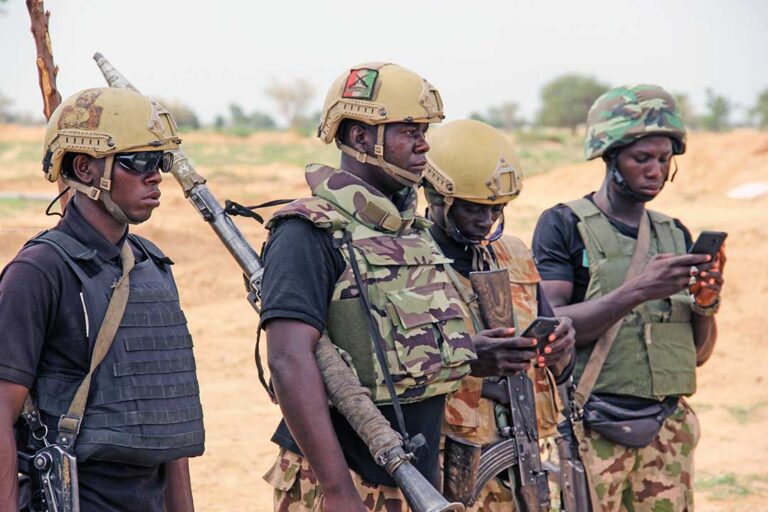
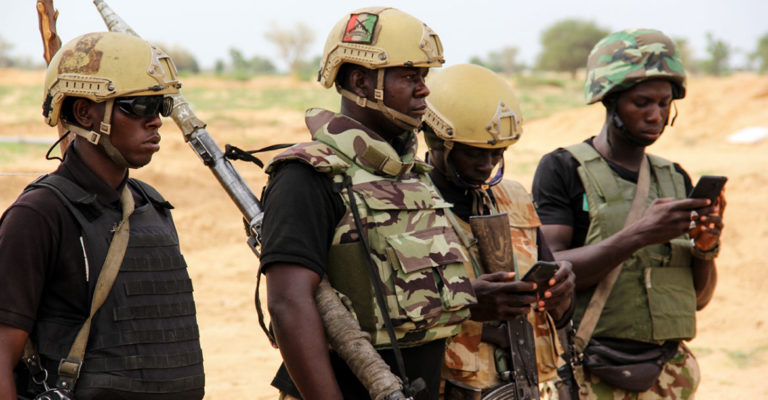
NIGERIANS have condemned the latest attack by gunmen on Nigerian military and vigilantes in Plateau State.

In the ambush, 12 soldiers and eight vigilantes on a joint patrol in Kanam Local Government Area were killed on Friday, March 13.

The team was ensuring security for Garga, Wanka, Kyaram, and Gyambau communities.

According to the Chairman of Kanam Development Association (KADA), Garba Aliyu, the gunmen came in large numbers, heavily armed, and opened fire on the patrol.

“Our local vigilantes fought bravely, but many lost their lives. The military officers were also killed in the exchange.”

KADA said the attackers reportedly invaded Kyaram, looted property and rustled cattle.

The group described the incident as part of a prolonged wave of insecurity affecting border communities with Taraba and Bauchi states.

“We mourn the loss of our defenders and call on authorities to step up protection for residents,” KADA said.

The association urged the state and federal governments to deploy more troops and establish permanent security outposts in the affected corridor to stem further attacks.

Reacting to the attack on social media, Nigerians including @chinaemere61124 tweeted on X, “It’s now a normal thing in Nigeria, lives are wasted like nothing.”

@damexhimself also concurred with @chinaemere61124 on X. He wrote, “it’s so sad that this type of news is now normalised.”

While @cryptoscalpin tweeted that “Ransom is what’s funding them,” another user @poshpoa4, was pessimistic about insecurity in the country, stating, “I am tired of this country Nigeria.”

Meanwhile, the Plateau State Government has expressed “deep concern” over the incident.

‎In a statment signed by the Commissioner for Information and Communication, Joyce Ramnap, the government said it acknowledged the anxiety the development might have generated among residents of Wanka, Kyaram, Gyambau and neighbouring settlements.
“‎While condemning the attack in strong terms, the state government commends the bravery and sacrifice of security personnel and local vigilantes who lost their lives in the course of confronting the attackers . Their courage and dedication in the face of danger remain a testament to their commitment to the safety of Plateau communities.
‎”The administration of the Executive Governor of Plateau State, Caleb Manasseh Mutfwang, remains resolute in its determination to safeguard the lives and property of all citizens. Government is working closely with the military and other security agencies to intensify surveillance, reinforce security presence, and strengthen response operations across vulnerable border communities.
“‎Residents of the affected areas and the general public are therefore urged to remain calm, vigilant, and law-abiding while security operatives continue with ongoing operations aimed at restoring lasting peace in the communities.”
The government said it was engaging traditional rulers, community leaders, and other critical stakeholders in Kanam Local Government Area to support ongoing peace and security efforts.
It urged resident to cooperate with security agencies by providing timely and credible information that would assist in tackling security threats.

Over 100 injured in Israel in 24 hours as military strikes Iran

0

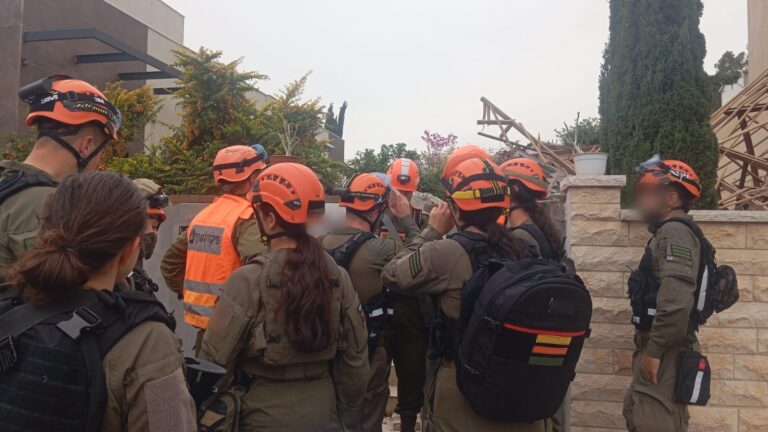
THE Israeli Ministry of Health has said at least 108 people were taken to hospitals across the country over the past 24 hours as the conflict with Iran intensified.

In an update on Sunday, March 15, the ministry said most of the injured suffered minor wounds. Of the 108 casualties, 96 were treated for minor injuries, two were reported to be in moderate condition, while nine others are still undergoing medical assessment.

The ministry added that since the conflict began on February 28, 3,195 people were admitted for treatment, with 81 patients still hospitalised as of 07:00 GMT on Sunday.

It noted that some of the injuries might have occurred as residents rushed to reach shelters during air raid alerts rather than from direct missile or rocket strikes.

The update came as the Israel Defense Forces (IDF) announced it had launched a new wave of “wide scale” airstrikes targeting sites in western Iran.

In a statement posted on social media, the military said it had begun extensive strikes against what it described as infrastructure belonging to the Iranian regime.

“IDF has just begun a wave of extensive strikes targeting infrastructure of the Iranian terror regime in western Iran,” the military said.

In Lebanon, the IDF has issued new evacuation orders for those in the southern suburbs of Beirut.

It warned several neighbourhoods in southern suburbs of the Lebanese capital Beirut to evacuate ‘immediately’ ahead of Israeli military action.

The escalation followed another night of air raid sirens across Israel after missile and rocket attacks launched from Iran and by Hezbollah in Lebanon, according to reports.

Falling debris from intercepted missiles sparked a fire in the city of Holon, while fragments from Iranian projectiles were reported in areas near Tel Aviv in central Israel after the country’s air defence systems intercepted incoming rockets.

Amid the escalating hostilities, reports emerged that Israel has warned the United States it is running critically low on ballistic missile interceptors.

The latest developments came two weeks after the war between Israel and Iran erupted, with both sides exchanging missile strikes and air raids that have raised concerns about a wider regional conflict.

A Back to the Future Moment for the Nigerian Bar Association

0

By Chidi Anselm Odinkalu

When the then Chief of Army Staff, Ibrahim Babangida – a two-star general – turned the page on the military regime of Muhammadu Buhari in the last week of August 1985, political opposition was largely decimated in Nigeria. A mixture of brute force, regime nihilism, and carefully targeted lynching sold as a fight against rampant corruption had combined to quieten the coalition of restiveness comprising the press; organized labour and students; and politicians.

The only active constituency of opposition left were professionals, comprising some doctors in the Nigerian Medical Association (NMA) and lawyers in the Nigerian Bar Association (NBA). For Ibrahim Babangida, his route to regime longevity lay in co-opting both. From the medical profession, he persuaded Olikoye Ransome-Kuti, a respected pediatrician with activist pedigree, to become his Health Minister. Professor Ransome-Kuti was the elder brother of rebel musician, Fela Anikulapo-Kuti. Their other brother, Bekolari Ransome-Kuti, was one of the leaders of the protesting medical doctors.

The NBA was by far the most effective of the critical outposts in the country but it embodied two mutually contradictory camps. The president of the association at the time was Bola Ajibola, an Egba blueblood, who led the association in articulating activist opposition against the default of the Buhari regime to military tribunals in defiance of liberal notions of fair hearing before civilian judges. As “Special Military Tribunals increasingly replaced law courts”, Prince Bola Ajibola emerged as the unlikely face and voice of a constituency of enlightened values.

In opposition to Ajibola from within the Bar, a former national Public Secretary of the NBA, Chief Gani Fawehinmi, threw his considerable support behind the campaign of the Buhari regime against what was widely perceived as plunder by the civilian politicians whom it overthrew. For Gani, radical measures were required to course correct from the path to which the politicians had set the country. As far as he was concerned, the steps by the Buhari regime were consistent with that and deserved support.

This high-profile tension within the NBA on such an existential issue of regime survival added spice to the moment and, somewhat ironically, bolstered the association’s public standing. Ibrahim Babangida could not resist the allure of the gold-dust of the NBA for his mission of regime usurpation.

In one deft move, he decided to decapitate the association by making Bola Ajibola an offer to be his Attorney-General of the Federation and Justice Minister at a time that he knew Ajibola could not resist. After all, it was an invitation to undo the mess for which he led the NBA to an irretrievable falling out with Muhammadu Buhari. Ebele Nwokoye, the first Vice-President of the association served out the remainder of Ajibola’s tenure before being elected president for a two-year tenure until August 1987.

For the next six years, Bola Ajibola held sway in one of the most consequential tenures in the office of the Attorney-General of the Federation and Minister of Justice. When Taslim Elias died in August 1991 while serving as a judge of the International Court of Justice (ICJ) in The Hague, Babangida nominated Ajibola to serve out the remainder of the term of Judge Elias. To replace Ajibola as Attorney-General of the Federation and Minister of Justice, he returned and captured yet another president of the NBA, Clement Akpamgbo.

In succession to Clement Akpamgbo, Priscilla Kuye, then first Vice-President of the association, stepped up, becoming the first (and thus far the only) female president in the history of the NBA. The association was due to elect a new president the following year and Priscilla Kuye threw her hat into the ring for an elective mandate as president in her own right. It did not materialize.

The 1992 conference in Port Harcourt, Rivers State, at which the association was to conduct the election disintegrated in disarray and pandemonium amidst fisticuffs, ex parte court orders and allegations of wielded firearms. It was the year before the election that was supposed to exit the military from power in Nigeria.

A secret post-mortem convened by the senior-most surviving past-president of the NBA at the time, Frederick Rotimi Alade (FRA) Williams, identified several structural factors in the crisis, including polarization in the association, increased (political and security) interest in the office of NBA president, and “external influence”. Among the immediate causes, the report – which was never officially published – listed “too many participants” and “over-use of money” in the contest for the NBA presidency as well as what it called “election fever.”

Underlying the recommendations of the report was a sense that participation in the leadership elections of the association should be a privilege of longevity and networks at the Bar not a right of all members. At that time, there were fewer than 20,000 lawyers – both living and dead –  on the Roll of lawyers in Nigeria. It advised the NBA to consider a system described as “assured succession” or “hierarchical ascendancy” in which leadership would circulate among a magic circle of male, senior lawyers.

As the association resumed life six years later, participation in elections in the NBA evolved from a mass membership entitlement to a privilege of a small circle of delegates. These comprised the elected officers of the association, members of the National Executive Committee, selected delegates representing the branches pro-rated to the official size of each branch, as well as Life Benchers and Senior Advocates of Nigeria, SANs. The Association felt captured.

One decade later, the movement to open up elections in the NBA to every member caught fire on the back of new opportunities created by the digital revolution. It was increasingly a matter of when not if. In 2015, Augustine Alegeh, the president of the association, achieved a constitutional amendment mandating digital elections based on universal suffrage for every member of the association who meets the criterion of paying the annual Bar Practising Fees.

Since then, elections in the NBA have become even more intensely contested and more controversial too. A population used to opaque, backroom deals and tactile politics showed up as deeply suspicious of elections decided in the ether. A segment of senior lawyers in the association have since advocated a return to the discredited delegate or indirect system of leadership election and has gone as far as to blame the “so called universal suffrage” for  “indiscipline at the bar.”

2026 is another election year in the NBA. Already, two different judges of the High Court of Oyo State in Ibadan have issued orders restraining the NBA’s electoral processes.

One suspiciously audacious court order among the two effectively requires the association to only recognize one aspirant for the contest for the presidency of the NBA, on the ground that he is the “consensus candidate” of a body called “Egbe Amofin”, a society of lawyers of Yoruba descent. His name is Muyiwa Akinboro and his denial that he is desperately shopping for a judge to impose him as president of the NBA in 2026 increasingly rings hollow. By a rotational arrangement written into the NBA constitution, the presidency of the association this year will come from the old Western Nigeria.

There are a few problems with this order though. The “Egbe Amofin” is unknown to the constitutional organs of the NBA. Relatively few voters in the association belong to the body. The order of the High Court in Ibadan will subsist until 15 April, by which date the association will be struggling for time to accomplish an incident-free transition.

The idea of a president of the NBA imposed by order of a high court judge with no regard for the franchise of the members is no longer such a far-fetched proposition. Of course, that will guarantee an end to the NBA as we know it.

The points of coincidence with the Port Harcourt debacle of 1992 are tantalizing. It is the year preceding a national election in 2027. Externalities are very palpable. A woman is the ring as a leading candidate for the presidency of the association. Once again, court orders are in the picture, essentially to frustrate her. It may not be 1992 all over again but it sure does feel like, for the NBA, the more things change, the more they remain the same.

A lawyer and a teacher, Odinkalu can be reached at chidi.odinkalu@tufts.edu

Trump invites China, France, UK to help secure Strait of Hormuz

0

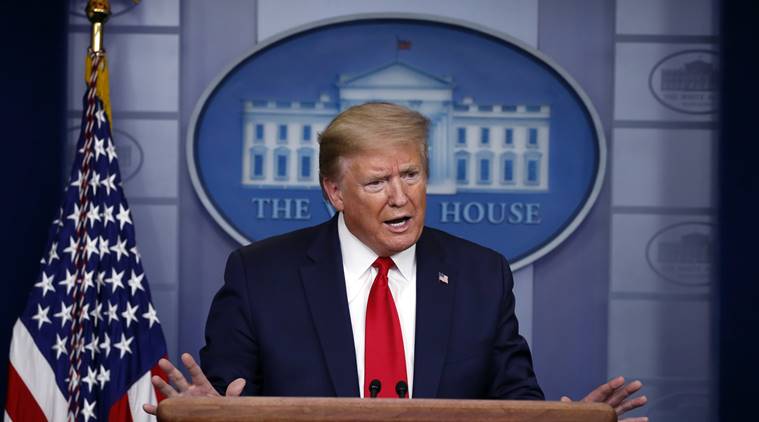
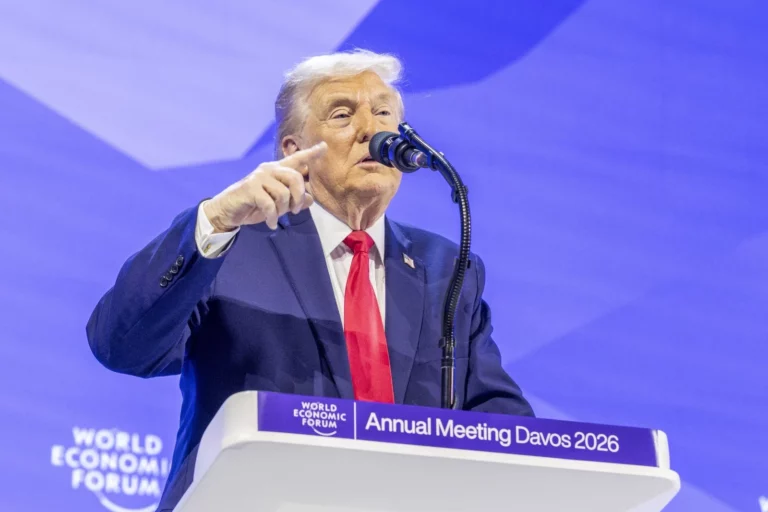
THE United States President Donald Trump has called on major world powers, including China, France and the United Kingdom, to deploy naval forces to help secure the strategic Strait of Hormuz amid its war with Iran.

In a post on his Truth media platform on Saturday, March 13, Trump said countries whose economies depend heavily on oil shipments through the waterway should work with the United States to keep the strait open.

“Many countries, especially those who are affected by Iran’s attempted closure of the Hormuz Strait, will be sending war ships, in conjunction with the United States of America, to keep the Strait open and safe,” Trump wrote.

He also mentioned Japan and South Korea as countries that could send ships to support the effort, saying they were among those most affected by disruptions to the vital global oil route.

The remarks came as tensions escalate in the Gulf following a series of maritime incidents linked to the ongoing conflict between the United States, Israel and Iran.

In recent days, there have been several attacks on commercial vessels navigating the Strait of Hormuz, including drone strikes and missiles that damaged ships and forced some tankers to alter their routes.

Reports also indicate mine explosions that struck cargo vessels in the narrow waterway.

The incidents have heightened concerns among global energy markets because the Strait of Hormuz is one of the world’s most critical oil transit chokepoints.

The waterway connects the Persian Gulf to the Gulf of Oman and the Arabian Sea, and a large share of the world’s crude oil exports pass through it daily.

Trump also claimed in his message that US forces had already destroyed much of Iran’s military but warned that smaller attacks such as drones, mines or short-range missiles could still threaten vessels passing through the area.

“In the meantime, the United States will be bombing the hell out of the shoreline, and continually shooting Iranian boats and ships out of the water,” he added.

Ex-Super Eagles midfielder dies at 62

0

FORMER Nigerian international and 1980 Africa Cup of Nations (AFCON) winner, Henry Nwosu, has passed away at the age of 62.

The legendary midfielder died at the Lagos State University Teaching Hospital (LASUTH), Ikeja, at approximately 4:00 am on Saturday, March 14, where he was receiving intensive care.

The news of his passing was confirmed by football icon, Segun Odegbami, in a statement shared on Facebook. Odegbami, who referred to the deceased by his popular nickname, “Youngest Millionaire”, expressed sorrow over the loss.

“After five days in hospital battling for his life, the one I call ‘Youngest Millionaire’ passed on at 4:00 am this morning at the Lagos State University Teaching Hospital, Ikeja, Lagos where he had been in Intensive Care since Wednesday,” Odegbami wrote.

“It is with deep pain in my heart that I have to be the conveyor of the news of the death of Henry Nwosu MON, the youngest of the victorious 1980 AFCON squad. May he rest peacefully with our Creator in Heaven,” Odegbami added.

Nwosu holds a revered place in the history of Nigerian football as the youngest member of the victorious 1980 AFCON squad that clinched the country’s first continental title.

A Member of the Order of the Niger (MON), who was celebrated for his technical skill and vision during a career that spanned the peak of the Green Eagles era, Nwosu had his career at home with New Nigeria Bank (NNB) and African Continental Bank (ACB)

He also featured for ASEC Mimosas in Ivory Coast and Racing FC Bafoussam in Cameroon.

His death marks the end of a chapter for a generation of athletes who brought immense pride to the nation on the football pitch.

Nwosu death came four days after the former senior male national football team’s coach, Adegboye Onigbode passed on.


US bombs Iran’s Kharg Island as missile hits US embassy in Baghdad

0

THE United States (US) has launched a major airstrike on Kharg Island, a strategic Iranian oil hub in the Persian Gulf, with the US President Donald Trump boasting that American forces destroyed military targets on the island.

He also issued a stern warning to Tehran against interfering with shipping through the Strait of Hormuz.

In a statement on Saturday, March 14, Trump said the operation was carried out by his country’s Central Command, describing it as one of the most powerful bombing raids in the Middle East.

Moments ago, at my direction, the United States Central Command executed one of the most powerful bombing raids in the History of the Middle East and totally obliterated every military target in Iran’s crown jewel, Kharg Island,” he said.

Trump noted that the strike targeted military installations on the island but deliberately avoided damaging oil infrastructure.

“Our weapons are the most powerful and sophisticated that the world has ever known but, for reasons of decency, I have chosen not to wipe out the oil infrastructure on the island,” he said, warning that the facilities could become targets if Iran interferes with shipping routes.

Should Iran, or anyone else, do anything to interfere with the Free and Safe Passage of Ships through the Strait of Hormuz, I will immediately reconsider this decision,” he added.

Trump also reiterated Washington’s stance on Iran’s nuclear programme, declaring that Tehran would “never have a nuclear weapon” and asserting that the country lacked the capacity to face America’s military strength.

Kharg Island, located about 25 kilometres off Iran’s coast in the Persian Gulf, is the country’s most important oil export terminal and handles the bulk of Iran’s crude shipments.

Because of its significance to global energy markets, any attack on the island is widely seen as a potential trigger for disruptions to international oil supplies and price volatility.

The Strait of Hormuz, which links the Persian Gulf to the Gulf of Oman and the Arabian Sea, is one of the world’s most critical energy chokepoints, with a large share of global oil shipments passing through the narrow waterway daily.

While the US noted that it had avoided critical oil infrastructure, Israel’s Air Force struck two oil refineries and two fuel depots on Saturday, March 7, sending thick black smoke billowing across Tehran and plunging parts of the Iranian capital into ‘apocalyptic’ darkness. 


Missile attack hits US embassy in Baghdad

Meanwhile, tensions in the Middle East intensified further after the US embassy in Baghdad came under missile attack on Saturday.

According to Aljazeera, a projectile struck a helipad inside the embassy compound located in the heavily fortified Green Zone, causing smoke to rise from the facility.

Officials who spoke with the platform, said the missile damaged part of the embassy’s air defence system, though there was no immediate confirmation of casualties or the extent of the damage.

The attack marks the second time the US embassy in Baghdad has been targeted since the start of the current conflict on February 28.

The ICIR reports that Iran-aligned armed groups operating in Iraq have repeatedly threatened to target US interests in the region in retaliation for strikes carried out by Washington and its allies.

The attack occurred shortly after US strikes reportedly hit positions belonging to Kataib Hezbollah, an Iran-backed armed group in Iraq, killing two members including a senior figure, according to security sources.

Several Tehran-aligned groups operating under the umbrella movement known as the Islamic Resistance in Iraq have claimed responsibility for drone and rocket attacks against US bases across the region.

Women entrepreneurs trained on record-keeping, new tax reforms

0

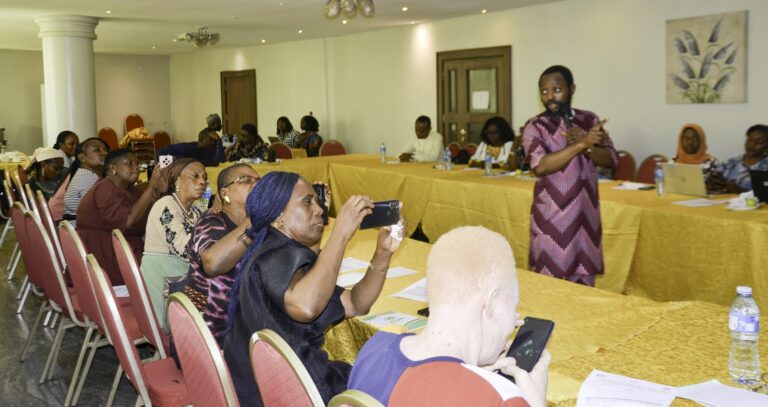
WOMEN leaders from across Nigeria’s informal business sector have received specialised training on record-keeping and compliance with the country’s new tax reforms at a two-day National Master Trainers’ Capacity Building Workshop held in Abuja.

The workshop, which took place on March 11 and 12 was organised by the Civil Society Legislative Advocacy Centre (CISLAC) in collaboration with Christian Aid and the Tax Justice and Governance Platform.

Designed as a “train-the-trainer” programme, the workshop aimed to equip leaders of nano and small women-owned businesses with practical knowledge about record-keeping and compliance with Nigeria’s new tax laws. Participants are expected to cascade the knowledge to members of their organisations and communities.

According to the statement made available to The ICIR, the event brought together representatives from several women-focused associations and informal sector groups, including the Association of Nigerian Women in Business Network (ANWBN), the Association of Women in Trade and Agriculture (AWITA), the Small‑scale Women Farmers Organisation of Nigeria (SWOFON), the Joint National Association of Persons With Disabilities (JONAPWD), the Female Drivers Association (FIWON) and the Federation of Informal Workers’ Association of Nigeria, alongside representatives from the media and civil society.

Speaking during the opening session, Auwal Ibrahim Musa Rafsanjani, Executive Director of CISLAC, represented by Magaji Mato said the workshop was organised in the spirit of the International Women’s Day 2026, which emphasises the theme “Give to Gain.”

He described women as critical drivers of Nigeria’s economy, particularly within the informal sector.

According to him, the sector accounts for more than half of Nigeria’s Gross Domestic Product and nearly 93 per cent of employment, citing estimates by the International Labour Organization. He noted that women entrepreneurs play a significant role as traders, farmers and innovators who sustain households and local economies across the country.

However, he added that many women running nano and small businesses face difficulties navigating the tax system due to limited access to information, poor record-keeping tools and uncertainty about tax compliance.

“It is within this context that this workshop becomes both timely and important,” he said, noting that the initiative aims to create a national network of master trainers who will act as knowledge multipliers within their associations and communities.

The workshop featured several simplified learning modules tailored to informal sector operators. These included: Understanding the new tax reforms in simple terms, tax compliance for informal businesses, simple record-keeping for small enterprises, how nano and small business owners can file tax returns.

Participants also took part in practical bookkeeping exercises and plenary discussions.

The training sessions were facilitated by Simeon Olatunde, Coordinator of the Tax Justice and Governance Platform in Kaduna State, alongside Sadiq Muhammad Mustapha and Chinedu Bassey.

By the end of the workshop, participants pledged to serve as “tax ambassadors” within their organisations and communities, helping to spread awareness about record-keeping and responsible tax practices.

The new tax laws came into effect on January 1, 2026, introducing a major reform of the tax system. The reforms are contained in four key legislations: Nigeria Tax Act (NTA), the Nigeria Tax Administration Act (NTAA), the Nigeria Revenue Service Act (NRSA), and the Joint Revenue Board Act (JRBA). These laws were signed in June 2025.

Timeline: Boko Haram, ISWAP attacks on Nigerian military bases since 2025

SINCE early 2025, Nigeria’s northeast, where Boko Haram and its splinter faction, the Islamic State West Africa Province (ISWAP), operate, has witnessed renewed attacks on military formations.

In recent months, insurgents have carried out coordinated assaults on several miliitary bases, killing soldiers, senior officers, civilians working closely with the Joint Task Force, destroying military assets and seizing weapons and vehicles. While some of the attacks were successful, others were repelled by troops.

In an investigation by The ICIR, a former top commander of the group said many Boko Haram/ISWAP commanders who had previously surrendered returned to the battlefield after the Nigerian government allegedly failed to fulfil promises made to them. According to him, authorities had pledged housing and vocational training as part of their reintegration.

The ICIR has documented all attacks launched by these groups on military bases from January 2025 to the most recent incidents. The findings show that 11 of the 12 attacks occurred in Borno State, while one took place in Yobe State.


An infographic spotlighting the timeline of attacks on military bases by Boko Haram/ISWAP insurgents

March 9, 2026 – Gujba, Yobe State

Terrorists attacked a military formation in Goniri, Gujba Local Government Area (LGA) of Yobe State on Sunday night through the early hours of Monday, March 9, 2026. During the attack, the terrorists destroyed military operational vehicles. However, troops of the Joint Task Force (North-East), Operation Hadin Kai, repelled the attack as the terrorists were eventually forced to retreat after suffering heavy casualties.

March 9 2026 – Kukawa, Borno State

In another attack by the Islamist terrorists during the early hours of the day stormed a town in Kukawa LGA, Borno State from multiple directions and launched an attack on the military camp in Borno State. They killed the Commanding Officer, identified as Umar Farouq, a Lieutenant Colonel who was in charge of military operations in Kukawa and other military officers. Farouq sustained critical injuries and died on his way to Maiduguri for medical treatment. Other soldiers lost their lives as a result of the attack.

March 5-6, 2026 – Konduga, Mainok, Jakana and Marte, Borno State.

The insurgents simultaneously attacked four military bases. The terrorists attacked Konduga, Mainok, and Jakana around 10:30 pm on Thursday night. They eventually launched another attack in Marte town around 3:00 am on Friday.

The Commanding Officer of 222 Battalion Konduga a Lieutenant Colonel, SI Iliyasu, was killed along with some soldiers during the attack.

According to Uba Sani, the Spokesperson for Operation Hadin Kai, the military, in repelling the attacks killed scores of Boko Haram terrorists.

March 1, 2026 – Bama, Borno State

The terrorists carried out a deadly attack on the Forward Operations Base, a military position in Mayanti, Bama LGA, Borno State. The terrorists killed its commander, Umar Ibrahim Mairiga alongside three soldiers and a hunter.

January 29, 2026 –Bama, Borno State

A forest guard attached to a military formation was killed and an army lieutenant was also declared missing when the insurgents attacked a military base in Kawuri community located in Bama LGA, Borno State. The attackers were also reported to have set fire to parts of the military base before retreating into the surrounding hills under the cover of darkness.

January 23, 2026 – Damasak, Malam-Fatori, Borno State

At least 20 Nigerian soldiers were reportedly killed while several others were injured in a suspected attack by fighters from the ISIL affiliate in West Africa Province (ISWAP) after the attackers targeted an army base in the remote Malam-Fatori town in Borno State. One of the surviving victims said the attack lasted for more than three hours.

In another attack, ISWAP fighters launched an attack on a military patrol and killed a Nigerian Army major in Damasak, headquarters of Mobbar LGA in Borno State. According to sources, the deceased officer was leading a foot patrol of about 30 soldiers when the team came under explosives and gun attack by the insurgents.

September 19, 2025 – Bama, Borno State

Suspected insurgents raided Banki, a town in Bama LGA in Borno State and seized ammunition and weapons from the military barracks. One soldier from 152 Battalion, stationed in the town, said the insurgents came in large numbers, forcing security forces to retreat after heavy gunfire.

May 30, 2025 – Gwoza, Borno State

Suspected terrorists attacked troops from Sector One’s 26 Task Force Brigade station at Bita military base in Gwoza Local Government Area of Borno State. In an effort to repel the attack on its base, the Nigerian Army killed at least 60 Boko Haram terrorists.

May 12, 2025 – Marte, Borno State

Suspected Boko Haram terrorists launched an attack on a Nigerian Army base in Marte Local Government Area of Borno State, resulting in casualties and the capture of some soldiers. Local and security sources confirmed that the incident occurred around 3 a.m. on Monday, at the Forward Operation Base of the 153 Task Force Battalion. During the encounter, several soldiers were killed, some were captured, and others fled towards Dikwa.

March 25, 2025 – Ngala, Borno/Cameroonian border

Armed fighters in light tactical vehicles stormed a military outpost in Wulgo, a village about 12 kilometres from the Cameroonian border town of Fotokol. According to Cameroon’s Defence Ministry, the armed men killed 12 soldiers and injured a dozen others.

March 24, 2025 – Damboa, Borno State

The terrorists struck an army base in the Wajiroko, Damboa LGA of Borno State and set military equipment on fire. The insurgents were suspected to have initially launched their attack using drones before advancing with a ground assault. One of the soldiers in the Wajiroko brigade said at least four soldiers were killed and several others injured, including the brigade commander. 

January 4, 2025 – Damboa, Borno State

According to the Defence Headquarters (DHQ), six soldiers were killed and several others missing during a terrorist attack on a military base at Sabon Gari in Damboa LGA of Borno State. In a statement by Edward Buba, Director of Defence Media Operations, 34 members of the ISWAP were killed, while 23 AK-47 weapons, and over 200 rounds of ammunition were recovered.  

Pregnant patient’s death: Bwari General Hospital, family disagree over lack of oxygen

1

OUTRAGE has greeted the death of a pregnant woman at the Bwari General Hospital in Abuja after the facility allegedly failed to provide the oxygen she needed.

This is even as the facility’s management has denied claims by a relative of the deceased that the absence of oxygen caused her death.

The case became public after the  deceased’s sister, Deka George, a social media influencer, shared the story while mourning her passing.

George said her sister, Evans Akinloye Chiamaka, was expecting a baby and developed health challenges that required her to be rushed to hospital.

She alleged that the medical facility could not provide oxygen when it was urgently needed. She wrote in her post, “Nigeria failed you. A whole general hospital didn’t have oxygen.”

However, the hospital’s Medical Director, Ibrahim Mijinyawa, a doctor, debunked the claim. He said the hospital had enough oxygen that it often shared with other facilities.

Mijinyawa challenged anyone who doubted him to come to the facility and check its oxygen plant. According to him, Global Fund recently donated an oxygen plant to the hospital, which he said the facility could not exhaust.

Although he could not discuss the real cause of death over the phone, the medical director said doctors, including consultants, and nurses did their best to save the woman’s life, but they could not.

“We have a brand-new oxygen plant donated by the Global Fund that is functional. We give oxygen to other hospitals. The issue that the woman did not receive oxygen, I don’t know how her sister got that kind of information.

“Unfortunately, the woman is no more. She had surgery. All that was needed to be done, we as human beings, our doctors on call, including our consultants and nurses did everything they needed to do. But the patient died. To say that we didn’t give oxygen, oxygen is the least of our problem,” he stated.

Meanwhile, the deceased’s sister expressed regret over missing calls from her sister shortly before her death. According to her, “I missed your calls because I was in court.”

Outrage

The incident has triggered widespread reactions online, with many Nigerians raising concerns about the condition of healthcare facilities and the availability of critical medical equipment in hospitals across the country.

Medical oxygen is very important in emergency treatment, especially for patients who have trouble breathing or are in critical condition. Health experts say when oxygen is not available at the right time, it can make a patient’s condition worse and could lead to death.

In many developing countries, including Nigeria, some cases that result in patients’ death are linked to weak health systems, poor funding, and shortages of essential medical supplies. According to the World Health Organization, basic resources such as oxygen, medicines, trained staff, and functional equipment are critical for saving lives in hospitals.

While the management of the Bwari General Hospital absolved the facility of negligence or alleged failure to provide oxygen the deceased needed to survive, cases of medical negligence abound in Nigeria.

Consequently, Nigerians are quick to blame hospitals when patients fail to make it out of the facilities.

Examples of medical negligence that were reported in Nigeria recently include the case in which Kano State Hospitals Management Board confirmed that surgical scissors were mistakenly left inside a patient’s body during surgery. It admitted negligence in the case.

The ICIR reported another case of medical negligencewhen author Chimamanda Ngozi Adichie accused a Lagos hospital of negligence after the death of one of her 21-month-old twin boys, Nkanu Nnamdi, who died on 6 January 2026 after a brief illness.

Why CBN deputy governor, Bala Bello, was ‘sacked’

By Sunday Micheal Ogwu

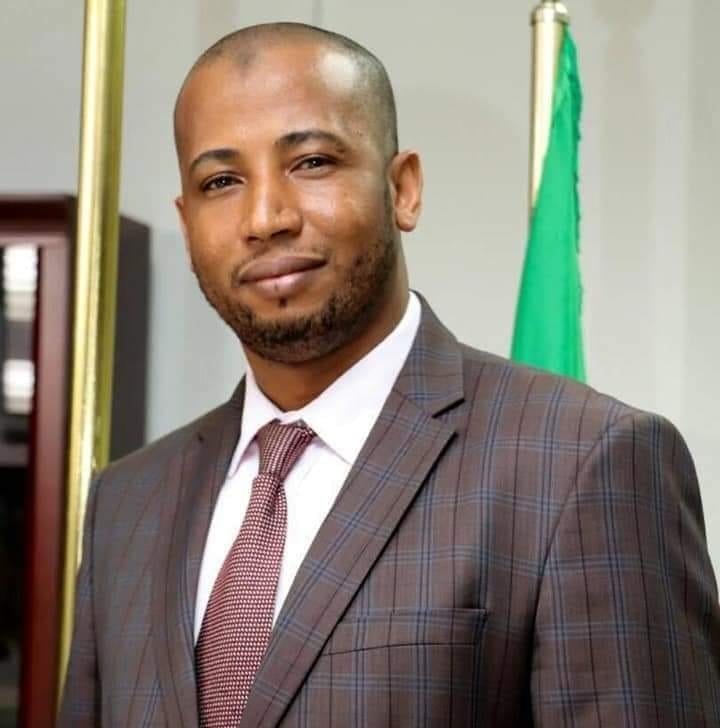
THE Central Bank of Nigeria (CBN) erupted in jubilation following the ‘sacking’ of Deputy Governor, Operations Directorate, Bala Mohammed Bello, just two and a half years after his appointment on October 5, 2023.

An investigation by Pinnacle Daily revealed that former staff and insiders described his dismissal as long overdue, citing years of alleged misconduct, controversial redeployments, and staff grievances during his tenure.

President Bola Tinubu, in a statement from his Special Adviser on Information and Strategy, Bayo Onanuga, has nominated former Securities and Exchange Commission Director-General Lamido Yuguda as Bello’s replacement, pending Senate confirmation.

Meanwhile, Bello has been appointed Special Adviser to the President on Political Economy, a move believed to both preserve political alliances and pacify northern discontent following recent appointments.

‘Bello’s SA appointment is to pacify the North’

The appointment of Bello as Special Adviser is based on two factors, according to top management sources from both the CBN and Aso Villa. Bello is believed to be a political ally of a senior security official close to the president, whose advice was sought on how best to manage the situation.

The second reason for his appointment was the need to address growing discontent in the North following Tinubu’s recent political appointments. This includes a general, Christopher Gwabin Musa’s replacement of Mohammed Badaru Abubakar as Minister of Defence and the replacement of the immediate past APC chairman, Abdullahi Ganduje, by Humanitarian Affairs Minister Nentawe Yelwata.

Pinnacle Daily’s investigation revealed that the last time a similar removal took place was during the tenure of Professor Chukwuma Soludo as CBN Governor.

This incident involved Obadiah Mailafia’s tenure as Deputy Governor of the CBN, which did not last the full five years. He was appointed in May 2005 and left office in March 2007, meaning his tenure lasted approximately one year and ten months instead of five years.

It should also be recalled that in September 2023, President Bola Tinubu removed the then Governor of the CBN, Godwin Emefiele, and all four Deputy Governors serving at the time – AIshah Ahmad, Folashodun Shonubi, Edward Lametek Adamu, and Kingsley Obiora.

The journey to the inevitable end of Bello as Deputy Governor

Senior management sources from the CBN disclosed that the sacking of Bello was connected to gross misconduct, which also led to the dismissal of Ibrahim Hassan Umar, a director, three weeks ago.

According to one of the sources, “the Bank has new houses for the Governor and the Deputy Governors, but Cardoso refused to take or move into his own, which was where Emefiele stayed. So, they had to buy him another one worth billions of naira. It was this transaction that caused the problem that Bello and the Director were involved in.”

Investigation further revealed that the details of the said director,  Umar, have been removed from the CBN website. Umar, a certified fraud examiner, was confirmed by Cardoso as the Director of the Development Finance Institutions Supervision Department on 3rd March 2025, after previously serving in an acting capacity as Director of Procurement under Bello as Deputy Governor, Corporate Services.
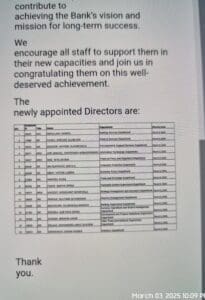
A senior source said an internal investigation was conducted, which found the Director and others guilty, leading to their sack. The insider also stated that there were several other indictments, which had earlier forced CBN Governor Cardoso to redeploy Bello from Corporate Services to Operations in a quiet reshuffling. This reshuffling saw Ms Emem Usoro take over Corporate Services.

“There was also a need to deal with this issue in a very mature manner, so as not to negatively affect the reputation of the bank, especially considering the recent positive performance and public perception,” said a senior management source.

Further findings revealed that there was no love lost between the staff of the apex bank and Bello. He supervised the controversial redeployments of staff from the CBN headquarters in Abuja to Lagos, with many of the affected staff eventually being sacked months later.

He also oversaw the removal of several directors, eventually resulting in their dismissal. The CBN conducted what it termed “disengagements based on reorganisation”. In March, April, and May 2024, staff members ranging from executives to senior and junior staff were arbitrarily and unilaterally disengaged, with only three months’ notice in lieu of severance.

Data on forced exits under the guise of reorganisation and restructuring in March, April, and May 2024 showed that a total of 218 staff were affected. Their bank loans were deducted in full from their gratuity payments, with some staff reportedly leaving with as little as N5,000 to N6,000, as their loan deductions exceeded their gratuity payments. Some were even said to owe the bank after deductions. The matter is currently in court.

Before the reorganisation exercise, “Bello redeployed his younger brother, Bashir Bello, from the Development Finance Department—a department whose staff were constantly fearful of their fate—to the Governor’s department,” said a senior management source.

Upon resuming at the CBN, he cancelled the registration of all accredited contractors, even though they were yet to complete their two-year term. He then registered a new set of contracting firms, which included registered enterprises and ventures, rather than solely limited liability companies as required by CBN’s procurement policies.

Bello was also involved in several spats with staff members, where he was alleged to have called them “incompetent” and “criminals” during his early days as Deputy Governor. He also objected to being addressed as ‘Mr Bello’, insisting instead on being addressed as ‘Dr’, despite not holding a Doctor of Philosophy (PhD), as stipulated by the Federal Ministry of Education.

In his official profile on the CBN website, it is stated that, “He was conferred with a Doctor of Business Administration (Honoris Causa) by Commonwealth University in conjunction with the London Graduate School and a Doctor of Philosophy (Honoris Causa) in Leadership and Management by ESAE University, Republic of Benin.”

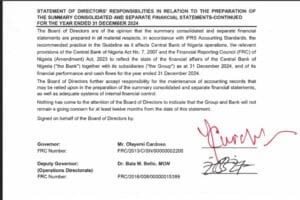
However, our investigation found that even in official documents signed by Bello, such as the 2024 financial statement of the CBN, he insists on being addressed as ‘Dr’. This is particularly notable given that Cardoso also holds an honorary degree but correctly uses ‘Mr’ as the prefix on his portrait and official documents.
This report is republished from Pinnacle Daily, read the original here.