Home Blog Page 647

[ANALYSIS] Ningi’s padding allegation and the 2024 budget in detail

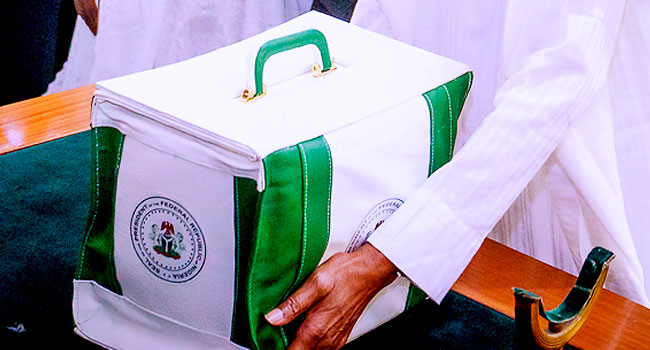
IN November 2023, President Bola Tinubu presented N25.7 trillion as the proposed budget for the 2024 fiscal year to the Joint National Assembly. This was his first budget presentation as the president of Nigeria since he assumed office in May 2023. 

The proposed budget had a capital expenditure of N8.7 trillion and a recurrent expenditure of N9.92 trillion. The budget deficit was placed at N9.18 trillion, with a projected revenue of N18 trillion. 

Days before the presentation, the Federal Executive Council (FEC), on November 27, had approved N26.01 trillion. Upon the presentation, the budget was increased by 5.73 per cent. 


Read Also:


After deliberation was made by the National Assembly, the president passed N28.7 trillion into law on January 1, 2024. This is an increase of N1.2 trillion or 4.36 per cent when compared to the proposed budget.

The breakdown

With a budget of N28.7 trillion passed by the president, the Ministries, Departments and Agencies of the government are expected to spend N24.45 trillion. The amount captures the personnel cost, overheads and capital expenditure of the MDAs. Some other payments including royalties, deductions, debt financing and others are also captured within the purview of this figure.

On another hand, about N1 trillion would be used to offset Statutory Transfer to five agencies namely Niger Delta Development Commission (N338.92 billion), Universal Basic Education Commission (N263.04 billion), National Human Right Commission (N5 billion), North East Development Commission (N131.52 billion), Basic Healthcare Provision Fund (N131.52 billion) and National Agency for Science and Engineering Infrastructure (N131.52 billion).

This would bring the budget to N25.45 trillion

Another N3.3 trillion was earmarked to cover the budget of 62 Government Owned Enterprise (N1.88 trillion), TETFund (N700 billion), National Judicial Council (N341.63 billion), National Assembly (N344.85 billion), Public Complaints Commission (N14.46 billion), and INEC (N40 billion).

This will bring the total budget to N28.78, as passed by the president.

The concerns 

The Senate suspended a Sentor, Abdul Ningi, for three months over the allegation he brought that the National Assembly padded the 2024 budget. The allegation was hinged on the unclarity of some items of the budget amounting to about N3 trillion. Also, there were allegations of some projects carried out by MDAs without a description and some constituency allocations higher than others. 

Findings by The ICIR revealed:

  • Unlike the MDA’s budget which is broken down by line items for both the capital and recurrent expenditure, statutory transfers made to some agencies, commissions and GOEs were not clearly explained.
  • By this, the public is denied access to the accountability of these agencies. For example, the NASS budget, NJU, TetFund, INEC etc.
  • Some capital projects carried out by MDAs do not have a specific location; hence the ability to monitor the procurement process including accountability becomes difficult. 
  • More than 100 capital projects to be implemented by several MDAs fall under frivolous allocations. See The ICIR report here
  • Several MDAs are carrying out projects not related to the mandate-responsibility of the MDAs

Additional findings 

A civic non-governmental organisation, BudgIT, disclosed in its report that 33 per cent of the projects worth N632 billion were inserted in the Ministry of Agriculture’s budget, raising its capital budget from N332 billion to N963 billion. 

Also, in other Ministries such as Science and Technology, 757 new projects worth N207 billion were added and 263 projects with a value of N242 billion were inserted by the National Assembly.

BudgIT also stated that about 15 MDAs are expected to carry out more than 600 capital projects which they do not have the technical capacity to execute. 

The civic organisation recommend that the judiciary explain the power of the National Assembly, make a ruling for the full disclosure of the budget of some agencies of the government and involve civic organisations in the budget deliberations.

FG opens land, air borders with Niger Republic

0

PRESIDENT Bola Tinubu has directed the opening of Nigeria’s land and air borders with the Republic of Niger and the lifting of other sanctions against the country with immediate effect.

This is contained in a statement issued by the president on his X handle on Wednesday, March 13.

He said the presidential directive was in compliance with the ECOWAS Authority of Heads of State and Government at its extraordinary summit on February 24, 2024, in Abuja.

In August 2023, Nigeria announced the closure of land borders connecting the country to Niger Republic. This move was in compliance with the decision of the Economic Community of West African States (ECOWAS) to suspend trading between Niger and member states until further notice.

The ECOWAS, under the leadership of Nigerian President Bola Tinubu, imposed sanctions on Niger Republic following a military coup, which ousted democratically elected President Mohamed Bazoum and ushered in Omar Tchiani, who was previously the head of the presidential guards.

The Community also imposed a no-flight zone on Niger Republic, cut off electricity supply from member-states, mobilised international support for the implementation of the provisions of the ECOWAS communique and reactivated the border drilling exercise.

In a joint statement on Monday, Mali and Burkina Faso backed the actions of the Nigerien military and threatened ECOWAS with war.

However, following the recent development by the ECOWAS on the directive of lifting economic sanctions on Niger, Mali and Burkina-Faso with immediate effect, Tinubu said Nigeria’s land and air borders with Niger are now opened.

The president also reversed the following sanctions:

  • Suspension of all commercial and financial transactions between Nigeria and Niger, as well as freeze of all service transactions, including utility services and electricity to Niger Republic.
  • Freeze of assets of the Republic of Niger in ECOWAS Central Banks and freeze of assets of the Republic of Niger, state enterprises, and parastatals in commercial banks.
  • Suspension of Niger from all financial assistance and transactions with all financial institutions, particularly EBID and BOAD.
  • Travel bans on government officials and their family members.                                                                                                                                                              Tinubu said he has also approved the lifting of financial and economic sanctions against the Republic of Guinea. 

Obi slams senate,says issues raised by Ningi not addressed

0

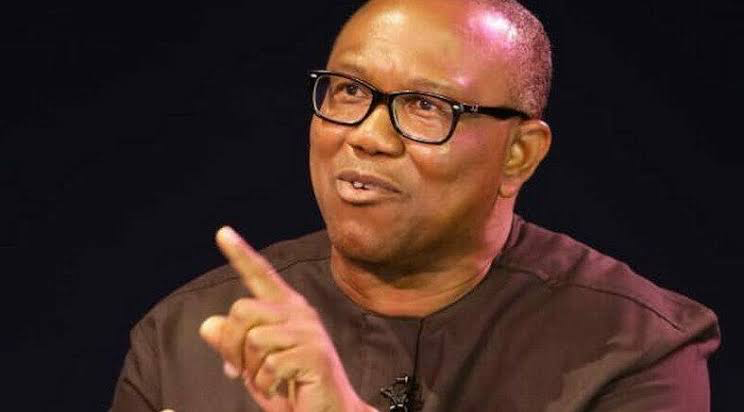
PRESIDENTIAL candidate of the Labour Party (LP) in the 2023 elections, Peter Obi, has expressed concerns over the alleged padding of the 2024 budget with N3 trillion, stating that the suspension of the whistle-blower senator, Abdul Ningi, has not addressed the vital issues emanating from the allegations.

Obi, in a statement on Wednesday, March 13, on X, also called the leadership of the National Assembly to explain to Nigerians the exact amounts allocated for constituency projects for appropriate monitoring of implementation by the public.

He mentioned that fresh allegations have emerged regarding the Senate leadership’s indiscriminate and uneven allocation of constituency projects.


Read Also: 


While also noting that although the Senate might have denied the allegations of padding the budget by N3.7 trillion and agreed that there was only N1.2 trillion padded, a civic society group, Budgit, through their official, has agreed with the whistle-blower Senator. 

He said Budgit alleged that there were no detailed project allocations for about N3.7trn in the 2024 Appropriation Act.

The ICIR had earlier reported how the senate was turned into an uproar on Tuesday, March 12, during the plenary that led to the suspension of Abdul Ningi, a senator, for three months over the allegation he brought that the National Assembly padded the 2024 budget.

Ningi, a member of the opposition Peoples Democratic Party (PDP), is the Senate Committee on Population chairman. He is a member of the opposition Peoples Democratic Party. 

Some senators from the northern part of the country had earlier rejected Ningi’s accusations, claiming the Senator from Bauchi State did not speak for them, even as the parties demanded an investigation into the allegation. 

On Monday, March 11, Ningi maintained that the 2024 budget could not account for N3.7 trillion.

However, reacting to his suspension, Obi said the senate suspension of the senator involved has not addressed the issue as still owes the Nigerian public a clear explanation over the various claims and counterclaims, including that of the executive arm.

“I had particularly elucidated in my earlier comment on what we can use the N3 trillion to achieve by showing that it is more than the national budget of the two most critical components of the human development index, health and education, combined.

“Now that the executive arm has accepted that the padded amount is only N1.2 trillion, it is still a very significant amount, when you consider that it is almost 5 times the N251.47 billion proposed for Universal Basic Education, which is the foundation of education, in the Country. Today in Nigeria, the greatest challenge to human resource development is education, which has been identified as most critical at the basic level,” he wrote.

According to him, the agreed padded amount of 1.2 trillion should have been utilised to ensure that approximately 20 million out-of-school children are taken off the streets and returned to schools.

“The N1.2 trillion, which the executive branch admitted to have been padded, if channelled into any of the critical areas of development, could have positively impacted the nation and uplifted the people.

“And if indeed the report from Budgit is true, that there is about N3.7 trillion without any detailed project allocations, I strongly urge the Senate to do more detailed work of channelling these funds into the critical areas of development – education,health and pulling people out of poverty, which will in turn, minimise the criminality we are facing today. We must, as a matter of urgency, put a stop to all the wastage of our scarce resources, amid the excruciating hardship in the country,” he added.

Senate grills Wike, FCT police commissioner, over insecurity

0

THE Minister of Federal Capital Territory (FCT) Nyesom Wike, and Police Commissioner Benneth Igwe are currently responding to inquiries from the National Assembly over the insecurity in Nigeria’s capital city.

The duo arrived at the National Assembly on Wednesday, March 13, in response to a Senate resolution for an interaction.

The ICIR gathered that the Senate had, on Wednesday, February 28, summoned Wike and the Commissioner of Police, Igwe, over the murder of Chris Agidy, an aide to Senator Ned Nwoko, by some kidnappers.


Read Also:


The Senate resolved that the FCT Minister and the police commissioner should appear to brief the Red Chamber on the increasing cases of kidnapping in the city.

The Senate’s decision stemmed from a motion put forward by Senator Nwoko regarding the abduction and murder of his senior legislative assistant, Agidy.

Meanwhile, during the Wednesday plenary, the Senate decided around 12:20 pm to postpone the first order of the day to another legislative session in order to convene a closed-door meeting with the two individuals in a Committee of the Whole. 

Subsequently, the Deputy Senate Leader, Oyelola Ashiru, moved a motion to this effect, which the Minority Leader seconded.

They are also expected to brief the chamber on security modalities in the FCT to find a lasting solution.

Ashiru said, “The minister and the commissioner will brief us on the modalities of security in the FCT.”

The ICIR reports that past and present administrations have made several promises to address insecurity within the FCT. However, many years later, abductions have persisted, and more residents are leaving their homes to escape attacks by bandits.

In December 2023, the FCTA named three area councils, Kuje, Abaji, and Bwari, as places with the highest records of kidnapping in the FCT.

Several kidnap cases were recorded within these areas during the festive period, including the mass abduction of about 23 residents of Dei-Dei, Bwari, and 12 others in Gbaupe, a rural community along Airport Road.

This incessant kidnapping has made many flee their homes, with some residents putting up their houses and properties for sale.

Similarly, in January 2024, The ICIR reported that over 380 persons were kidnapped between December 1, 2023, and January 3, 2024, across Nigeria under President Bola Tinubu.

According to data obtained by The ICIR from the Armed Conflict Location & Event Data Project (ACLED), a data bureau collecting data on the locations, dates, actors, fatalities, and types of all reported political violence and protest events worldwide, those abducted include men, women, farmers, children, and students.

The victims were taken hostage at various events that happened during the last month of 2023 and the first week of the new year, illustrating the escalating number of kidnapping cases in the country.

NFF begins vacant Super Eagles coach applicants’ reviews

0

THE leadership of the Nigeria Football Federation (NFF) will commence a review of the coaches who applied for the vacant positions of Super Eagles and the Golden Eaglets today.

The current Technical Director of the NFF-Austin Eguavoen, confirmed the review on Wednesday, March 12, during a sports radio program monitored by The ICIR.

The ICIR had reported that after Jose Peseiro’s departure as the Super Eagles head coach on Friday, March 1, the position of the country’s senior men’s football team had been left vacant.


Read Also:


The vacuum created propelled the NFF to call for applications to select and employ a new coach who would be saddled with the responsibilities of guiding the team for the 2025 Africa Cup Nations qualifiers in Morocco and the 2026 World Cup qualifiers.

The application began Friday, March 8 and ended yesterday, Tuesday, March 12.

Eguavoen, who spoke about the applicants, said: “I can’t tell you that honestly from the bottom of my heart. I can’t lie about it. You know there is a mail and website which applications go in there. Yesterday (Tuesday, March 12) was the deadline. So we will call the admin department now to bring all the applications to our department this morning (Wednesday, March 13).”

He hinted that the eventual coach of the Super Eagles would be mandated to give more chances for the country’s home-based players in the national team.

“I am a product of this league (NPL), then the league was stronger and more interesting, so to now shy from getting players from the league is wrong.

“That is one of the things we will tell the new coach that is coming on board. Our president, Ibrahim Gasau, has been hammering at that with the entire board and the technical committee. We will emphasise that whosoever will come on board as the head of the Super Eagles has to align, too,” he added.

Ahead of the friendly matches against Ghana and Mali scheduled for March 22 and 26, respectively, Eguaveon confirmed that the Super Eagles assistant coach, Findi George, will be in the dugout.

“Well, it is always normal when a vacancy occurs and the second assistant takes over. As we are concerned, Findi was second in command after Peseiro, and now that the vacuum is there and no coach on the ground, the onus is on Findi to do those games until we reach an agreement with whoever is going to be the new coach,” he said.

We need a coach our big players will respect- Agent

In an interview with The ICIR, Jolly Ogu, the football agent who played a crucial role in Coach Jose Peseiro’s journey to Nigeria, harped on hiring a coach who can command respect in the team.

“We need a coach that our big players will respect, and over the years, we have seen the more respected ones. Another factor is that the coach will be able to adapt to countries he comes to manage,” he said.


2024 budget: FG has over N512bn from frivolous line items-Report

A report by the Centre for Social Justice (CSJ) has revealed that a total of N512,365,165,877  from frivolous items passed in the 2024 appropriation budget.

The amount is spread across more than 24 Ministries, Departments and Agencies (MDAs) and can be saved from proper oversight by the Legislatures.

In November 2023, President Bola Tinubu presented N27.5 trillion to the Joint National Assembly as the proposed budget for the 2024 fiscal year. However, upon scrutiny by the Assembly, the budget was increased to N28.7 trillion and signed by the president on January 1, 2024.


Read Also:


However, CSJ noted that there are so many projects that are vaguely described and without location. Recently, the Senate suspended a Sentor, Abdul Ningi, a senator, for three months over the allegation he brought that the National Assembly padded the 2024 budget.

Findings by CSJ from the budget showed that the State House and Presidency vote is suffused with bloated routine maintenance, renovation and repair work, and purchase of SUVs and vehicles in the billions of naira.

MDA Amount (N)
STATE HOUSE 22,313,017,579
OFFICE OF THE CHIEF OF STAFF TO THE PRESIDENT 15,000,000,000
FEDERAL MINISTRY OF BUDGET AND ECONOMIC PLANNING – HQTRS 3,339,843,000
PRESIDENTIAL AIR FLEETS (STATE HOUSE) 10,250,000,000
SERVICE WIDE VOTE 358,510,543,962
FEDERAL MINISTRY OF HUMANITARIAN AFFAIRS AND POVERTY ALLEVIATION 10,000,000,000
NATIONAL SOCIAL INVESTMENT OFFICE 983,122,210
FEDERAL MINISTRY OF SPECIAL DUTIES & INTER – GOVERNMENTAL AFFAIRS HQTRS 763,863,500
FEDERAL MINISTRY OF AGRICULTURE AND FOOD SECURITY 44,853,489,924
FEDERAL MINISTRY OF COMMUNICATIONS AND DIGITAL ECONOMY HQTRS 814,316,746
NATIONAL AGENCY FOR THE CONTROL OF AIDS (NACA) 429,112,843
FEDERAL MINISTRY OF SOLID MINERALS DEVELOPMENT – HQTRS 7,929,000,000
FEDERAL MINISTRY OF WATER RESOURCES – HQTRS 16,008,911,498
FEDERAL MINISTRY OF TRANSPORT – HQTRS 2,175,000,000
FEDERAL MINISTRY OF AVIATION AND AEROSPACE DEVELOPMENT – HQTRS 2,500,000,000
FEDERAL MINISTRY OF POWER -HQTRS 1,555,000,025
NATIONAL RURAL ELECTRIFICATION AGENCY 6,970,000,000
FEDERAL MINISTRY OF NIGER DELTA HQTRS 3,471,459,974
FEDERAL MINISTRY OF SPORTS DEVELOPMENT – HQTRS 300,000,000
FEDERAL MINISTRY OF WOMEN AFFAIRS – HQTRS 209,975,430
FEDERAL MINISTRY OF ENVIRONMENT HEADQUARTERS 112,968,269
SMEDAN – H/QTRS 3,740,000,000
FEDERAL MINISTRY OF FINANCE – HQTRS 220,000,000
FEDERAL MINISTRY OF WORKS 729,857,663


Also, the vote of the Ministry of Agriculture and Food Security is suffused with projects that have no locations, class of beneficiaries and sometimes no clear deliverables. This is the case in over 90 per cent of the projects. 

The ICIR findings from the report showed that over N358 billion can be saved from the Service Wild Votes; N10 billion from the Federal Ministry of Humanitarian Affairs and Poverty Alleviation, and N2.5 billion from the Federal Ministry of Aviation and Aerospace Development among others.

The ICIR reported that Tinubu approved the implementation of the Stephen Oronsaye report, which recommended scrapping and merging Federal Government agencies. Going by the approval, if implemented, the Federal Government’s 263 statutory agencies as of 2012 could be reduced to 161, making 102 heads of those agencies lose their jobs. 

Smuggling promotes insecurity, unfair business practice – experts

0

SMUGGLING in Nigeria has a detrimental impact on the nation’s security and economy, stakeholders in the security sector say.

Some of them who spoke to The ICIR argued that smuggling threatens respectable companies and make it harder for the government to get import taxers and deliver necessary services to the people.

Accordingly, smuggling results in unfair competition, making it harrder for local firms to compete when smuggled items are sold for less than locally produced goods.


Read Also:

Furthermore, because smugglers may partake in other illicit activities like gun smuggling, smuggling can worsen insecurity. 

Recently, the media has placed a searchlight on the Nigerian Customs Service (NCS) activities. For instance, a report by Premium Times revealed that some Customs officials were arrested and detained by the Economic And Financial Crimes Commission (EFCC).

According to the report, at least 40 NCS employees, most of whom are in the service’s highest hierarchy, have been indicted in a thorough EFCC investigation into the proceeds of bribes made to customs officials by smugglers importing and exporting illegal items across the Nigerian borders.

In another report on the activities of smugglers done by Fisayo Soyombo for the Foundation For Investigative Journalism (FIJ), Soyombo narrated his experience with customs officers in when he acted as a smuggler to import bags of rice from the Benin Republic.

According to him, he got some bags of rice from Benin and brought them to Nigeria after successfully bribing some customs officers.

Amidst all these and more, stakeholders have called for more actions to secure the nation’s borders against the activities of smugglers.

Dangers of smuggling

According to a security analyst, Olayiwola Lawrence, Nigeria’s exposure to smuggled weapons entering the nation through its border posts has left the country in a complex situation. 

He said more people and groups are illegally obtaining weapons, and the growing amount of arms smuggling activity along the country’s borders indicates grave danger for both national and regional security. 

As a result, having illegal firearms makes it easier for individuals or groups to carry out dangerous activities such as terrorist attacks, kidnappings, conflicts, cult wars, and armed robberies, all of which have increased in Nigeria recently, experts say.

It has been observed that smuggling poses a risk to any nation’s security, with armed groups like Boko haram and bandits having free access to guns and weapons through the activities of smugglers.

Firearms used by armed groups in Nigeria are smuggled from Turkey, Libya, others – Report

AFTER a three-year study carried out by the Conflict Armament Research, CAR, an independent investigative organisation based in the UK, into the proliferation of weapons used by armed groups involved in Nigeria’s herder-farmer conflict, it shows that most of the guns were smuggled into the country from Libya, Turkey and Côte d’Ivoire.

Violence from clashes between herders and farmers in North–Central Nigeria has claimed the lives of more than 3,600 people and displaced 300,000 people since 2014, according to data obtained from Armed Conflict Location & Event Data, ACLED project.

The focal points in the study were Zamfara, Katsina, and Kaduna, which had been hit hard by attacks from armed bandits since 2017.

Experts view on the activities of smugglers in connection to the proliferation of illicit arms in Nigeria

Despite all attempts by relevant authorities to curb the tide of illegal smuggling of firearms in the country, studies show that the spread of illicit firearms across the country has continued to fuel insecurity.

A security expert at the SBM Intelligence, Emeka Okoro, said smuggling has adversely affected Nigeria’s security by fueling illegal trade, funding criminal activities, and undermining the stability of the nation’s economy. 

He added that it has contributed to the proliferation of illicit goods and weapons, thereby posing challenges for overall law enforcement and border control.

“To explain further, smuggling in Nigeria has led to the influx of contraband such as weapons, drugs, and counterfeit goods. This has not only posed a direct threat to public safety but has also contributed to the funding of criminal networks. 

“Additionally, it undermines the economy by fostering unfair competition and tax evasion, which affects legitimate businesses and government revenue. 

According to Okoro, ineffective border controls exacerbate these issues, making it crucial for authorities to address smuggling to enhance security. 

He claimed all these are made possible due to the porous nature of the country’s borders and, of course, the unholy activities of Customs officers who have embedded themselves within the Service.

Also speaking to The ICIR on the danger of smuggling to the security of Nigeria, The spokesperson for the Arewa youths for peace and security, Salihu Dantata Mahmud, said smuggling is a pathway to insecurity in Nigeria.

According to him, smuggling reduces the income from imported goods as taxes are not paid due to the backdoor entrance of such products against standard border entry. 

“Smuggling also weakens the economy of a country as internal productivity is affected since citizens sometimes sees this imported goods cheaper than locally produced goods. Smuggling also increases insecurity when illegal arms and amunition are imported through illegal border routes. It makes proliferation of arms to be at higher level. It also makes a country unstable and encourages laziness on productivity,” Mahmud stated.

He calls for more stringent measures at the borders to curb the activities of smugglers.

The experts concluded that smuggling impacted border settlements and the adjacent areas. 

Additionally, they concurred that smugglers would encounter drug use because drugs are among the commodities smuggled across porous borders, which can exacerbate the nation’s already high level of insecurity. 

Insecurity and higher crime rates in border settlements, the surrounding areas, and Nigeria as a whole can also be fostered by smuggling and the operations of smugglers. 

I can’t say when the students’ loan scheme will be launched – official

0

THE Executive Secretary of the Nigerian Education Loan Fund (NELFund), Akintunde Sawyer, has said he cannot give a date for the rollout of the student education loan scheme, initially expected to be launched this Thursday, March 14.

Sawyer said this on Tuesday, March 12, at Arise TV station, blaming the postponement on undisclosed issues.

The federal government has created a back-and-forth for the rollout of the scheme.

On March 7, The ICIR reported that the government clarified it was launching the scheme this month, and yesterday, March 11, a statement by the president’s aide, Ajuri Ngelale, stated that the President, Bola Tinubu, was to unveil the scheme this Thursday.

Conversely,on Arise TV on Tuesday, March 12, Sawyer said, “Unfortunately, I won’t be able to commit to a specific date,” promising that all stakeholders would be carried along to roll the scheme out meaningfully.

President Bola Tinubu had, on June 12, 2023, signed the Access to Higher Education Bill to enable students in need to access interest-free loans to pursue their education in any tertiary institution in the country.

NELFund was set up to support students in public tertiary institutions from all the states of the Federation who wish to apply for a loan on the scheme. The objective was to cover the total cost of their institutional fees.


Read Also:


According to Sawyer, the amount to be made available for each applicant would be 100 per cent of whatever course the student is studying.

He also said that each applicant would be required to start paying back the loan two years after their National Youth Service Corps (NYSC) to be conditioned on whether the applicant has a job or started earning income.

If any applicant does not have a job or earn income post-NYSC years, then the applicant cannot pay.

Although that was different from what NELFund was pushing to achieve, he said those who could pay earlier, not minding the two-year moratorium, were advised to do so.

While also explaining the condition to be attached to the income level of the guardians of applicants to qualify for the scheme, Sawyer said that could be difficult to determine.

He said that guardians who earn above N500,000 per annum would not be eligible and could not be in a reasonable position given the current economic climate in the country.

He stressed further that the NELFund examined the fate of those earning above and below N500,000 to provide proper guidelines.

Sawyer hinted that the Nigerian government intends to fund the scheme through contributions from various government agencies.

He asserted that agencies like the FIRS, Nigeria Immigration Service and Nigeria Customs Service would directly set aside one per cent of their revenues to the funding as provided in the law. However, Sawyer did not quote the specific law.

“There is also some revenue that can be recognised from the share of profits from oil.

“The exciting thing about this is that it is not limited to government contributions. There is room for high-networth individuals, corporations, non-government organisations, philanthropists, and general donors to contribute to this fund,” the NELFund boss said.

He believes the scheme could yield a lot of goodwill if adequately managed.

In response to Nigeria’s need to meet the United Nations Educational, Scientific and Cultural Organization (UNESCO), Sawyer recommended a 15 per cent allocation in the budget to education. At the same time, UNESCO seeks global best practices in the education sector, and Nigeria has to look at its peculiar problems.

“The commitment there is that education funding is on the rise, and I think that is good news,” he submitted.

Again, bandits demand N20m as ransom for 16 abducted students in Sokoto

0

FOLLOWING the ransom demand of N40 trillion for abducted residents in Kaduna, bandits in Sokoto state have made a similar demand.

The bandits who previously abducted 15 students from a Qur’anic school and a woman are now demanding a N20 million ransom.

The school proprietor, Liman Abubakar, made this known to Daily Trust on Tuesday, March 12.

On Sunday, March 10, The ICIR reported that the Sokoto State police command confirmed the abduction of 15 Tsangaya students by bandits at the Gidan Bakuso area of Gada Local Government Area of the State.

Reports indicate that the event happened on the school grounds around 1 a.m. on Saturday, March 9.

Confirming the incident in a chat with The ICIR on Saturday, the Sokoto state police command spokesperson, Ahmad Rufai, said 15 students were abducted within the school. At the same time, a woman was kidnapped outside the school.

“Yes, it is true. They invaded the school and took the Almajiri children and abducted a woman on their way out,” Rufai stated.

He said the tactical unit of the command had been mobilised to go after the bandits.

However, the school proprietor told newsmen that he has received call from bandits, requesting to pay a sum of N20 million for the release of the student.

Abubakar said: “I received two calls from them this morning (Tuesday). In the first call, they asked me whether I don’t care about the plight of my students, and that was why I didn’t contact them. I told them I didn’t have their contact.

“They then asked me to wait for another call around 11 am. Some minutes after 11 am, they called again and directed me to meet our village head and tell him to raise N20 million for the children.

“I wanted to plead with them, but they said they would not reduce anything from the money. I discussed the matter with the village head, but we have yet to conclude.”

The development was coming a few weeks after the ICIR reported the failure of the federal government and the security operatives to apprehend bandits via tracking of bandits’ phone contacts.

The ICIR reported that in 2021 and 2022, the federal government earmarked over N50 billion to the National Identity Management Commission (NIMC) for the procurement of various equipment, including biometric capture equipment, backend and frontend systems, and verification equipment crucial for the registration of National Identification Number (NIN), among other necessities.

Despite this substantial investment, coupled with the hardships many Nigerians endured to meet the registration deadline and link their NIN with SIM cards, the former Minister of Communication and Digital Economy, Isa Pantami and the security operatives face backlash due to the project’s ‘ineffectiveness and inefficiency’ in addressing insurgency and kidnapping cases.

Many Nigerians believed that politicians and public figures exploited the policy to have the police pursue their interests, with many expecting such dexterity to be applied in cases of kidnapping where the perpetrators are in constant digital communication with the victims’ families.

This was also as many Nigerians reacted to the demands of N40 trillion ransom by another group of bandits to free 16 kidnapped residents of the Gonin Gora area of Kaduna state.

Recall that 16 people were taken hostage on Wednesday, February 28, when bandits raided the Gonin-Gora neighbourhood in the Chikun Local Government Area, a suburb of Kaduna.

In a phone chat with The Nation Newspaper on Monday, March 11, a local community leader, John Yusuf, confirmed this information in Kaduna.

ICPC opposes motion to release Ndifon’s phones in UniCal sexual harrasment case

0

THE Independent Corrupt Practices and Other Related Offences Commission (ICPC) has opposed the motion asking for the Court to release the telephones of Cyril Ndifon, a professor and Sunny Anyanwu, his lawyer, to a National Computer Forensic Laboratory.

Ndifon, a suspended Dean of the Faculty of Law, University of Calabar (UNICAL) and Anyanwu are being tried by ICPC before James Omotosho at the Federal High Court, Abuja, over an alleged sexual misconduct and attempt to perverse the cause of justice.

The anti-corruption agency said their action contradicts sections 8, 18 and 19 of the Corrupt Practices and Other Related Offences Act, 2000 and Section 182 of the Penal Code Cap. 532 Laws of the Federal Capital Territory, Abuja, 2006.


Read Also:

At the resumed hearing on Tuesday, March 12, counsel to the two defendants, Joe Agi SAN, informed the Court of the two motions filed before the Court dated March 8, 2024.

He said the first motion was to seek leave of Court against the ruling on the no-case submission; the second motion hinged on a prayer for the Court to direct its registrar to make available exhibits N and O (telephones of the defendants) to the defendants’ applicants.

While counsel to the ICPC, Osuobeni Ekoi Akponimisingha did not oppose the first motion seeking the leave of the Court to appeal the ruling of the Court dismissing the Defendants’ No Case Submission. However, he contested the second motion on the ground that the purported laboratory the defendants asked the court to release the phones to was not in existence, nor did it have a known address.

“As at now, Sir, the National Computer Forensic Laboratory has not been established. If they have the address, let them provide it. To the best of my knowledge, there’s no such laboratory anywhere,” the lawyer stated. 

He thereafter prayed the court for an adjournment to enable the prosecution to respond to the motion seeking the court’s permission to release the defendants’ phones to the purported National Computer Forensic Laboratory.

The judge, Omotosho, thereafter adjourned the trial till March 19 for a hearing of the pending motion on notice.

The ICIR reported on March 7 that the court stated that evidence presented by the prosecution revealed that the suspended dean, Ndifon, demanded the nude photos of the second prosecution witness (Name withheld).

The court said there was a need for Ndifon to explain his intent and purpose for such a request.